1. Introduction
Rapid urbanization is reshaping urban land cover, surface energy balance, air quality, hydrological response, and ecosystem functioning across climatic regions [
1,
2,
3]. In semi-arid cities, these pressures are intensified by high solar radiation, limited moisture availability, sparse natural vegetation, dust-prone surfaces, and the replacement of permeable land by impervious materials; comparable arid-city studies show that these conditions can amplify outdoor thermal stress and health-relevant heat exposure [
4,
5,
6]. The resulting environmental burden is rarely expressed by a single variable: heat stress, vegetation condition, surface moisture, imperviousness, air pollution, albedo, and terrain interact spatially and may reinforce one another [
7]. Urban Environmental Stress (UES) is therefore treated in this study as a spatially integrated expression of multiple land-surface, atmospheric, and radiative pressures rather than as a direct measure of one isolated hazard.
Jaipur, the capital city of Rajasthan, India, provides a suitable semi-arid case for examining this problem. The city contains a dense historic core, expanding residential and industrial corridors, peri-urban agricultural land, scattered water bodies, and Aravalli hill terrain. These features create strong contrasts in vegetation, moisture availability, imperviousness, LST, aerosol loading, and topographic exposure. A scientifically robust UES assessment for Jaipur therefore requires a multi-sensor framework that can combine heterogeneous Earth-observation indicators while explicitly addressing indicator redundancy, spatial support, weighting, and cautious interpretation of short temporal records.
Remote sensing has become a central approach for diagnosing urban environmental stress because it provides repeated, spatially explicit observations of land cover, vegetation, moisture, thermal conditions, albedo, and atmospheric composition [
8]. Studies of urban heat exposure have shown that urban warming and demographic concentration together increase heat-related risk; for example, Tuholske et al. quantified global urban extreme-heat exposure across 13,115 cities and showed that exposure increased sharply from 1983 to 2016 [
7]. At the city scale, LST and SUHI studies consistently demonstrate that impervious surfaces, reduced vegetation, altered surface materials, and urban geometry modify sensible and latent heat fluxes [
9,
10,
11]. For India, long-term MODIS-based analysis by Nayak et al. showed persistent and statistically significant nighttime SUHI signals across major cities during 2000–2023, confirming the value of long satellite records for thermal characterization [
12].
A related body of work has used composite ecological indices to summarize multiple environmental conditions. The Remote Sensing Ecological Index (RSEI) tradition integrates greenness, wetness, dryness or built-up intensity, and heat, commonly using PCA to derive a composite ecological-quality score [
13]. Subsequent studies have extended this logic to multitemporal and large-area monitoring; for instance, the Continuous Remote Sensing Ecological Index (CRSEI) was developed to improve long-term ecological monitoring by generating more continuous and comparable remote-sensing ecological information [
14]. Regional studies in South Asian and arid settings also show that landscape configuration, changing land use, vegetation dynamics, and air-pollution interactions can strongly influence LST, SUHI, and thermal-field variability [
6,
15,
16,
17,
18,
19,
20]. These studies demonstrate the usefulness of combining complementary indicators, but they also reveal a recurring limitation: ecological indices often emphasize land-surface variables and do not fully represent atmospheric pollution, surface-radiative properties, or topographic controls that are important in dry urban environments.
Previous composite-index studies have used PCA, entropy weighting, machine learning, or weighted summation to combine multidimensional urban indicators [
9,
10,
14,
21,
22]. PCA reduces correlated variables to orthogonal components and can reveal dominant gradients in greenness, dryness, moisture, and heat, but the resulting loadings are sample-dependent and can change when the study area, date range, or indicator set changes. Entropy weighting similarly appears objective because weights are derived from data dispersion, but high spatial contrast does not necessarily mean high physical importance. In urban studies, this distinction is critical: a high-resolution built-up or imperviousness layer can receive a large entropy weight simply because it varies sharply across the urban-rural gradient, causing the final composite to behave more like a built-density surface than a balanced environmental-stress layer.
Indicator redundancy is another methodological issue that is often under-discussed. Vegetation, moisture, built-up, and thermal indices are physically connected and may also be algebraically related when calculated from the same spectral bands. The NDMI-NDBI relationship is a particularly clear example: when both indices use the same NIR and SWIR bands in opposite order, they contain the same information with reversed sign. If both are included in the same stress-oriented composite, the same spectral contrast is effectively counted twice. High-quality composite mapping therefore requires explicit polarity handling, collinearity diagnosis, and sensitivity testing rather than relying only on the apparent objectivity of PCA or entropy-derived weights.
Urban environmental stress is not limited to surface temperature or land cover. Air-quality proxies such as TROPOMI NO
2 and MAIAC AOD provide information on traffic, combustion, aerosol loading, and regional atmospheric burden. TROPOMI NO
2 has been used to evaluate spatial patterns of urban NOx emissions and can capture broad intra-urban emission heterogeneity when measurements are appropriately filtered and aggregated [
23,
24]. Validation studies also show that TROPOMI retrievals require careful interpretation because vertical profiles, cloud screening, wind conditions, and retrieval assumptions influence column values [
25]. Similarly, MAIAC AOD products have been evaluated over South Asia and other bright-surface regions, showing their usefulness for aerosol monitoring while also highlighting sensitivity to surface reflectance, retrieval geometry, and validation context [
26,
27].
Studies that combine heat and air pollution increasingly show that thermal stress and atmospheric burden can co-occur over dense traffic-industrial corridors and low-vegetation built fabric [
28,
29]. However, atmospheric products are generally coarser than optical land-surface indices and built-up layers. Directly resampling them to 10 or 30 m can improve map overlay but does not create true neighborhood-scale atmospheric measurements. Consequently, multi-sensor UES mapping must distinguish between the display resolution of a raster and the effective support of the underlying observation. This requirement is especially important in semi-arid cities, where coarse aerosol and NO
2 fields interact with fine-scale contrasts in imperviousness, vegetation, surface moisture, and terrain.
Scale mismatch is one of the central methodological challenges in urban EO fusion. Sentinel-2 and ESA WorldCover can describe land-surface structure at fine spatial resolution [
30], whereas MODIS, MAIAC, TROPOMI, and albedo products represent broader radiative or atmospheric fields. When these products are combined without scale-aware support, the final composite may imply a precision that the coarser products do not possess. A defensible UES framework should therefore use an analysis grid that is compatible with the coarsest influential products and should interpret fine spatial detail cautiously.
Temporal interpretation also requires caution. Long-term thermal studies such as Nayak et al. can estimate SUHI trends because they use multi-decadal MODIS observations [
12]. In contrast, short annual records are better interpreted descriptively unless supported by longer observations, uncertainty analysis, and appropriate trend testing. Composite scores introduce an additional comparability issue: if each year is normalized separately or weighted using year-specific entropy dispersion, a score from one year may not be physically comparable with a score from another year. These limitations are directly relevant to UES mapping because hotspot-transfer claims require fixed indicator definitions, fixed normalization ranges, and fixed weights across time.
The reviewed literature establishes the value of EO-based urban heat, ecological-index, and atmospheric-proxy studies, but four scientific gaps remain. First, many studies still assess heat, greenness, moisture, imperviousness, or air quality as separate domains, whereas semi-arid urban stress is produced by their co-location and interaction. Second, RSEI-type and entropy/PCA-based composites often provide limited discussion of indicator redundancy, polarity, and physical interpretability; this can lead to double counting or to composites dominated by the most spatially variable input. Third, coarse atmospheric and radiative products are frequently overlaid with fine land-surface layers without sufficient attention to spatial support. Fourth, temporal claims are sometimes inferred from short records or from sample-dependent normalization and weights, even though such scores are not automatically comparable across years.
These gaps are insufficiently resolved for Jaipur and comparable semi-arid Indian cities. The present study addresses them by constructing a scale-aware UES framework at 500 m support, orienting all indicators consistently toward stress, diagnosing and excluding the algebraically redundant NDBI layer, using equal weights for the primary UES surface to avoid built-fraction dominance, and retaining entropy, PCA, leave-one-out, clipping-threshold, and cross-scale products as sensitivity diagnostics. The framework therefore treats UES as a relative spatial-prioritization layer rather than as an absolute exposure metric or a temporally transferable score.
This study has two integrated objectives. The first objective is to develop a physically interpretable, scale-aware UES framework for Jaipur by integrating land-surface, thermal, atmospheric, radiative, and topographic EO indicators at a common 500 m support with consistent stress orientation and removal of redundant information. The second objective is to evaluate the robustness of the resulting UES surface through explicit tests of indicator redundancy, weighting sensitivity, leave-one-out influence, preprocessing thresholds, and spatial scale, so that the mapped hotspots can be interpreted as scientifically defensible relative priorities for urban environmental management.
2. Materials and Methods
2.1. Study Area
Jaipur, the capital city of Rajasthan, India, is located in a semi-arid climatic setting at the eastern margin of the Thar Desert and near the Aravalli hill system. The urban region contains a dense historic core, expanding residential and industrial corridors, peri-urban agricultural land, scattered water bodies, and vegetated or rocky hill slopes. These contrasts make Jaipur suitable for testing an integrated UES framework because thermal load, imperviousness, moisture availability, atmospheric burden, albedo, and terrain vary sharply across short distances. The analysis footprint was defined by the common valid raster extent used for the harmonized Earth-observation stack (
Table 1).
We derive a continuous UES map for Jaipur by fusing indicators of vegetation, moisture and water, surface albedo, topography, built-up intensity, thermal state, and air pollution. The primary composite is calculated on a 500 m UTM Zone 43N grid rather than by forcing all products to a 30 m output grid. This scale-aware choice reduces artificial fine-scale precision from coarse atmospheric and radiative products and avoids allowing the 10 m built-fraction layer to dominate the analysis simply because it contains sharper spatial contrast. Built-up context is represented using ESA WorldCover 2021 v200 (10 m), whose independent validation reports 76.7% overall accuracy. Short-wave albedo is obtained from MODIS MCD43A3 V6.1 (500 m), topography is represented by slope derived from SRTM 1-arc-second elevation, and air-quality proxies are taken from Sentinel-5P/TROPOMI tropospheric NO
2 and MODIS MAIAC AOD (
Table 2).
2.2. Harmonization and Index Formulation
All rasters are reprojected and resampled to a common 500 m UTM Zone 43N analysis grid. Bilinear resampling is used for continuous variables, and average resampling is used for the continuous built-fraction layer so that each 500 m pixel represents the mean built-up share inside the analysis cell. Coarser atmospheric and radiative products are interpreted as contextual fields at their effective support, not as newly created fine-resolution measurements. The optical indices are computed from Sentinel-2 L2A surface reflectance (bands noted parenthetically): the normalized difference vegetation index (Equation (1))
enhanced vegetation index (Equation (2))
the soil-adjusted vegetation index (Equation (3))
the moisture index (Equation (4))
the modified NDWI for open water enhancement (Equation (4))
and the built-up index (Equation (5))
2.3. Normalization and Stress Orientation
To place heterogeneous indicators on a comparable scale and direction, we first apply robust clipping to reduce outlier leverage (Equation (7)) and then min–max scaling (Equation (8)). For indicator
at pixel
(feature
), let
and
denote the 2nd and 98th percentiles across valid pixels
We then orient all retained indicators so that larger values imply greater stress (Equation (9)). If an indicator is beneficial (e.g., greenness, wetness, albedo, slope), we invert it; if it is a cost indicator (e.g., ST, built fraction, NO
2/AOD/PM
2.5), we keep it as is. NDBI was calculated and retained for diagnostic checking, but it was excluded from the final UES composite because it is algebraically redundant with NDMI when the same NIR and SWIR bands are used:
When PM
2.5 is available, the pollution proxy is constructed as the mean of its normalized components (Equation (10)).
ensuring a consistent stress direction among gases, aerosols, and particles. Documentation for ST, TROPOMI NO
2, and MAIAC AOD is provided in the cited product guides.
2.4. Balanced Composite Construction and Entropy Sensitivity
The primary UES map is calculated as an equal-weighted convex sum of the twelve retained stress-oriented indicators. This choice is deliberately conservative: it prevents the 10 m built-fraction layer from dominating the final index after resampling and avoids treating entropy-derived dispersion as a direct measure of environmental importance. Entropy weights are still calculated as a sensitivity diagnostic to show how strongly the result would change under a data-dispersion weighting scheme. For each indicator, define pixelwise proportions (Equation (11))
and compute the information entropy (Equation (12))
where
is the redundancy (dispersion) of the indicator
. Entropy-based weights follow as (Equation (13))
For each pixel
i, the final UES value is obtained by the balanced convex sum of the retained stress-oriented indicators (Equation (14)). The entropy-weighted surface is not used as the main result; it is reported only as a sensitivity surface to reveal how strongly a dispersion-based weighting scheme would alter the hotspot pattern:
Entropy weighting is widely used in environmental multi-indicator evaluation and remote-sensing ecological assessment because it gives greater weight to indicators with stronger spatial dispersion and lower weight to near-uniform variables. In this study, that property is treated cautiously: dispersion is informative for sensitivity analysis, but it is not assumed to equal environmental importance.
2.5. Temporal Compositing, Built Fraction, and SUHI Interpretation
To improve temporal consistency among heterogeneous datasets, all input layers were composited within matched annual analysis windows for each study year [
9]. Sentinel-2 Level-2A surface reflectance data were processed after cloud and shadow masking and used to derive vegetation, moisture, and built-up indices. Landsat-based surface temperature, MODIS short-wave albedo, MAIAC aerosol optical depth, and Sentinel-5P/TROPOMI NO
2 were aggregated over corresponding annual periods to improve cross-sensor comparability and reduce the influence of short-term meteorological variability. In this study, the composites were interpreted as annual representations of prevailing surface and atmospheric conditions rather than as single-date observations [
9].
Because the input datasets have different native spatial resolutions, all indicators were harmonized to a common analysis grid. Fine-resolution optical variables were interpreted as local land-surface descriptors, whereas coarser atmospheric and radiative products, including NO2, AOD, and albedo, were treated as spatially smoothed contextual fields after reprojection rather than as true parcel-scale measurements. This distinction is important to avoid over-interpreting artificial fine-scale detail introduced during resampling of coarse products.
Built-up intensity was represented using a continuous built-fraction layer rather than a binary urban mask. The built-fraction surface was used as one retained stress indicator and as the basis for defining urban and rural reference zones in the SUHI analysis. SUHI was calculated as the difference between the mean urban and the mean rural land surface temperature within the Jaipur study area. Urban pixels were defined as those with a built fraction greater than or equal to 0.6, whereas rural pixels were defined as those with a built fraction less than or equal to 0.1. Water bodies and invalid pixels were excluded from both classes. Because only seven annual values were available and the SUHI linear fit was weak, the manuscript does not use the SUHI slope as evidence of a reliable temporal trend. SUHI is interpreted as a spatial thermal-contrast indicator and as contextual thermal support for the UES map.
In addition, temporal trend values for short-wave albedo and AOD depend on the scaling conventions used during raster export and preprocessing. These indicators were therefore interpreted primarily as relative spatial and temporal proxies within the study framework rather than as direct changes in field-measured physical units. Future applications should standardize all exported layers using product-specific scale factors prior to trend estimation to improve reproducibility and cross-study comparability.
2.6. Baseline Comparison, Sensitivity Analysis, and External Comparison
To evaluate the reliability of the UES framework, additional diagnostic analyses were carried out beyond the primary composite formulation. First, entropy-weighted and previous composite surfaces were retained as sensitivity products and compared with the equal-weighted, no-NDBI primary surface using correlation-based and difference-based agreement statistics.
Second, redundancy and potential double counting among indicators were examined using correlation analysis and leave-one-out sensitivity testing. Correlation matrices were calculated from the stress-oriented indicators to identify strongly related variables within and across thematic groups. The equal-weighted UES was then recalculated repeatedly after excluding one indicator at a time, and the resulting maps were compared with the primary model to quantify the influence of individual variables on the final composite.
Third, sensitivity to preprocessing choices was assessed by varying the clipping thresholds used prior to min–max scaling. In addition to the main 2nd–98th percentile clipping scheme, alternative clipping ranges were tested and compared with the reference configuration to examine the stability of the resulting UES surface.
Fourth, to evaluate the impact of scale mismatch among input datasets, the UES framework was examined at multiple common spatial supports. Comparisons across resolutions were used to assess whether the main hotspot structure remained stable when the composite was evaluated at scales closer to the native support of the coarser atmospheric and radiative products.
Finally, external comparison was attempted using independent environmental burden layers where spatial overlap permitted. Zonal mean UES values were compared with available reference surfaces using correlation analysis. Where insufficient valid overlap prevented a reliable quantitative comparison, this limitation was recorded explicitly and considered in the interpretation of results.
Strict temporal comparability of UES scores was not assumed. Shannon entropy weights and min–max normalization are sample-dependent; therefore, a UES score from one year is not physically comparable with a UES score from another year unless all years are normalized against a fixed pooled reference range and combined with fixed weights. The manuscript therefore treats UES as a relative spatial diagnostic for the analyzed composite period and restricts time-evolution claims to independently calculated land-cover and individual-indicator summaries.
3. Results
3.1. Land-Use/Land-Cover (LULC) Dynamics Support Ongoing Urbanization
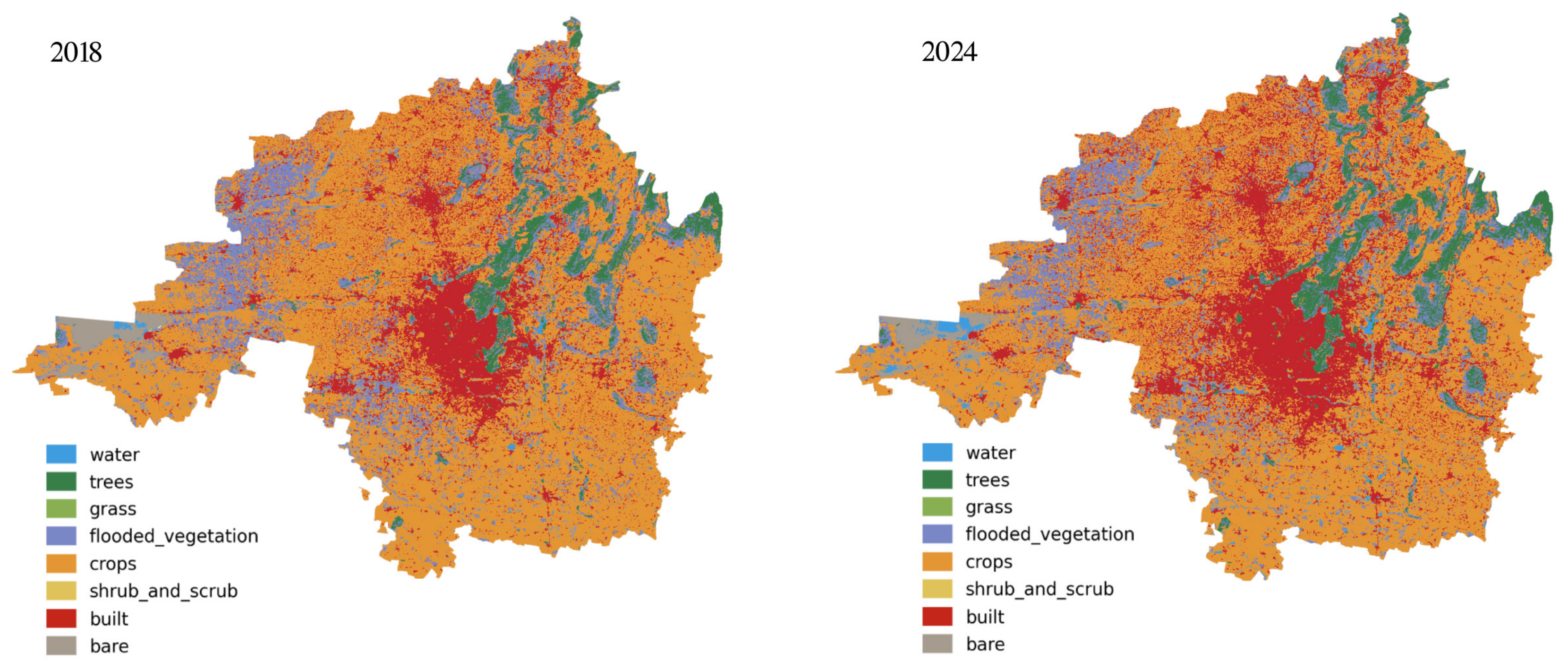
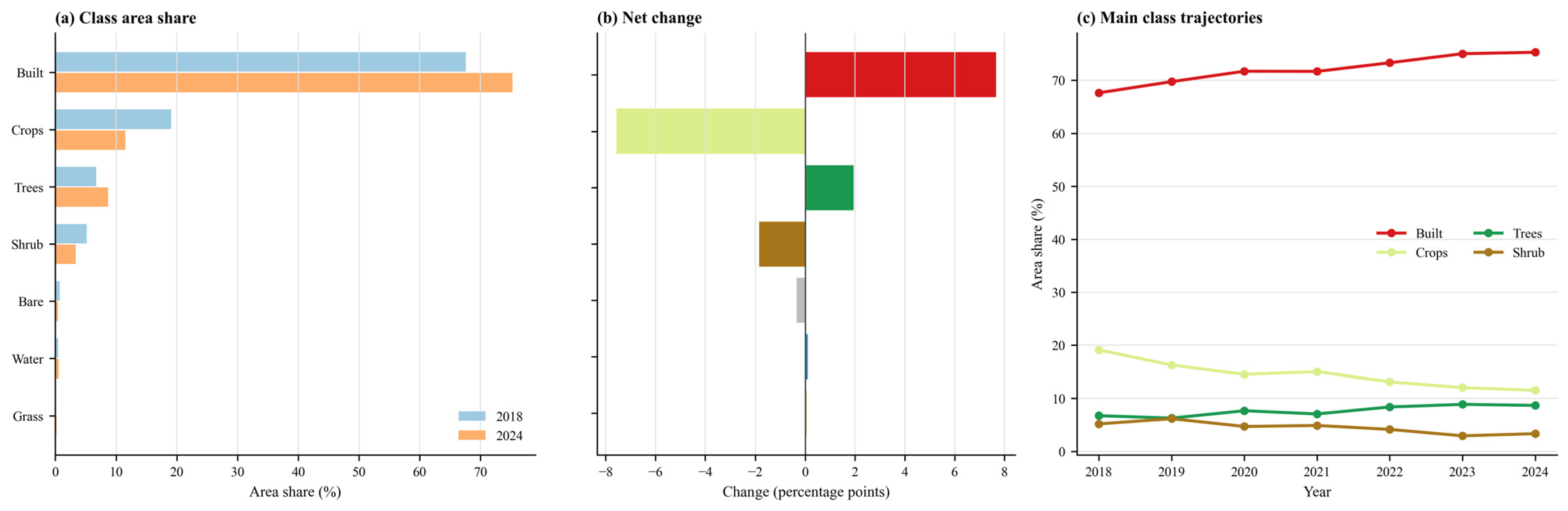
The bitemporal maps and class–area summaries show a coherent reorganization of Jaipur’s surface mosaic toward impervious, built cover (
Figure 1). In 2018, the landscape comprised a patchwork of built tracts interleaved with agriculture and shrub/scrub; by 2024, the built fabric was more continuous and spatially connected. Quantitatively, built increases from 67.6% to 75.3% of the region of interest, while Crops contract from 19.1% to 11.5% and Shrub & Scrub from 5.2% to 3.3%. Trees rise modestly from 6.7% to 8.7%, with gains concentrated along the Aravalli foothills and riparian belts; Water and Bare remain minor at 0.6% and 0.4% in 2024 (
Figure 2). The geometry of change is ring-and-corridor—dense infill within the historic core and radial expansion along major transport/industrial axes—which progressively fragments and converts the peri-urban agricultural belt.
These conversions have clear, well-understood consequences for the urban surface energy balance. Replacing vegetation and moist soils with buildings and pavements reduces evapotranspiration, lowers short-wave albedo, and increases heat storage, elevating near-surface temperature relative to rural surroundings—the defining mechanism of the urban heat island. Authoritative syntheses consistently document these pathways and their implications for cities, including stronger daytime and nighttime heat, higher cooling-energy demand, and degraded air quality.
Vegetation acts in the opposite direction by providing shade and evaporative cooling, which is reflected in the widely reported inverse relationship between vegetation indices (e.g., NDVI) and land surface temperature (LST). Built intensity and dry impervious surfaces generally show the opposite thermal behavior in urban settings. These relations have been demonstrated across diverse climates and are also evident in Indian contexts. In Jaipur specifically, remote-sensing analyses have linked seasonal patterns of the surface heat island to deficits in greenness and to elevation/topography, with stronger warming over densely urbanized tracts.
Taken together, the observed LULC trajectory—expansion and coalescence of built cover, contraction of cropland and shrubland, and only localized gains in trees—provides the surface foundation for intensifying thermal burden unless offset by countermeasures (cool-surface materials, shade/greening, and emission management). This interpretation is consistent with multi-city assessments showing persistent surface urban heat island signals across India’s metros over the last two decades.
3.2. Input-Driver Diagnostics for the Final Scale-Aware Urban-Stress Map
3.2.1. Vegetation Indices
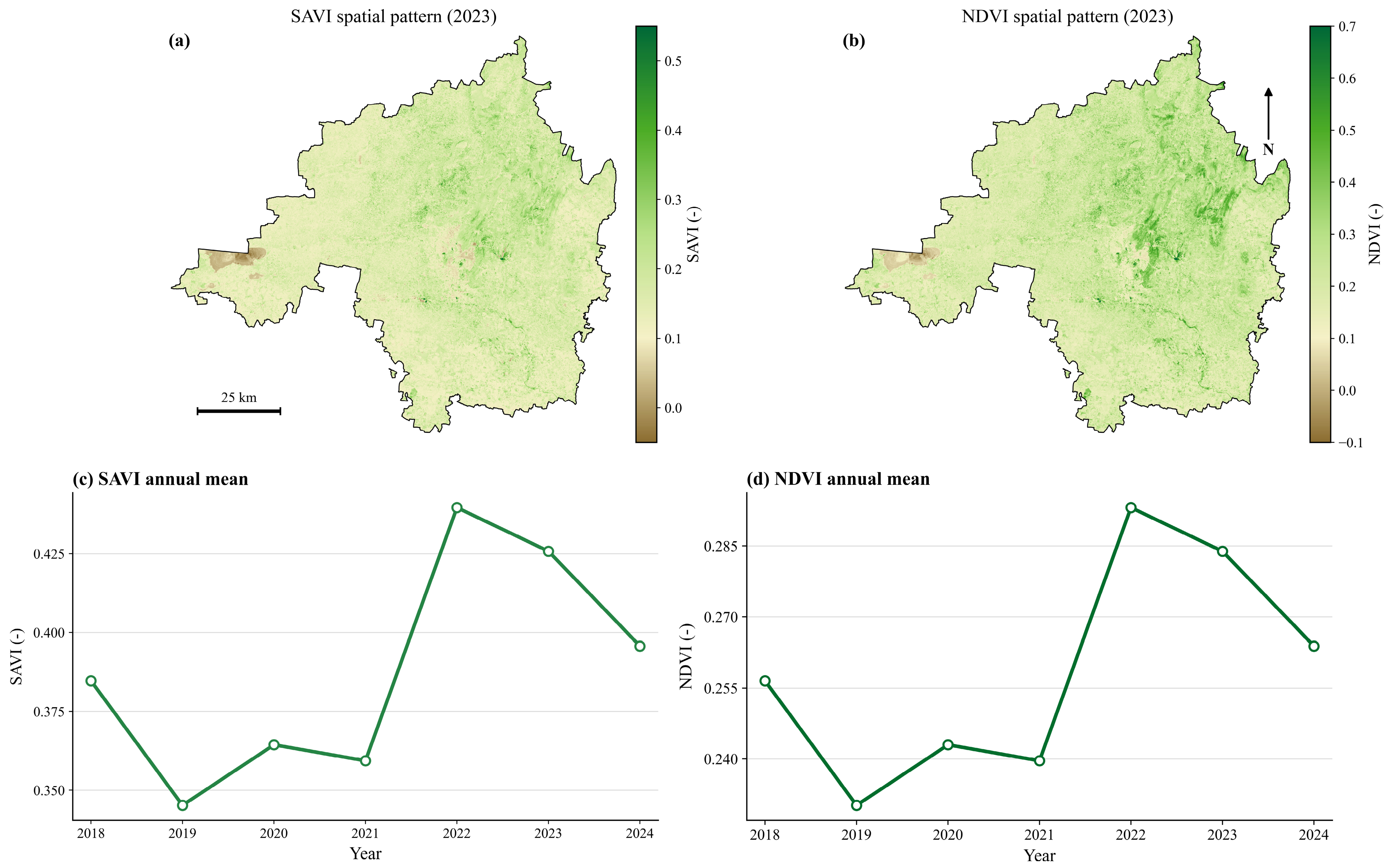
Spatial patterns from NDVI and SAVI maps show greener belts along the Aravalli foothills and peri-urban irrigated tracts, contrasted by sparse vegetation within the compact urban core. The annual city-mean values fluctuate over 2018–2024 and are interpreted descriptively rather than as a fitted trend because the record contains only seven observations (
Figure 3). Because vegetation reduces surface temperature through evapotranspiration and shading, these indicators are oriented as benefits before stress normalization.
3.2.2. Moisture/Water Indices
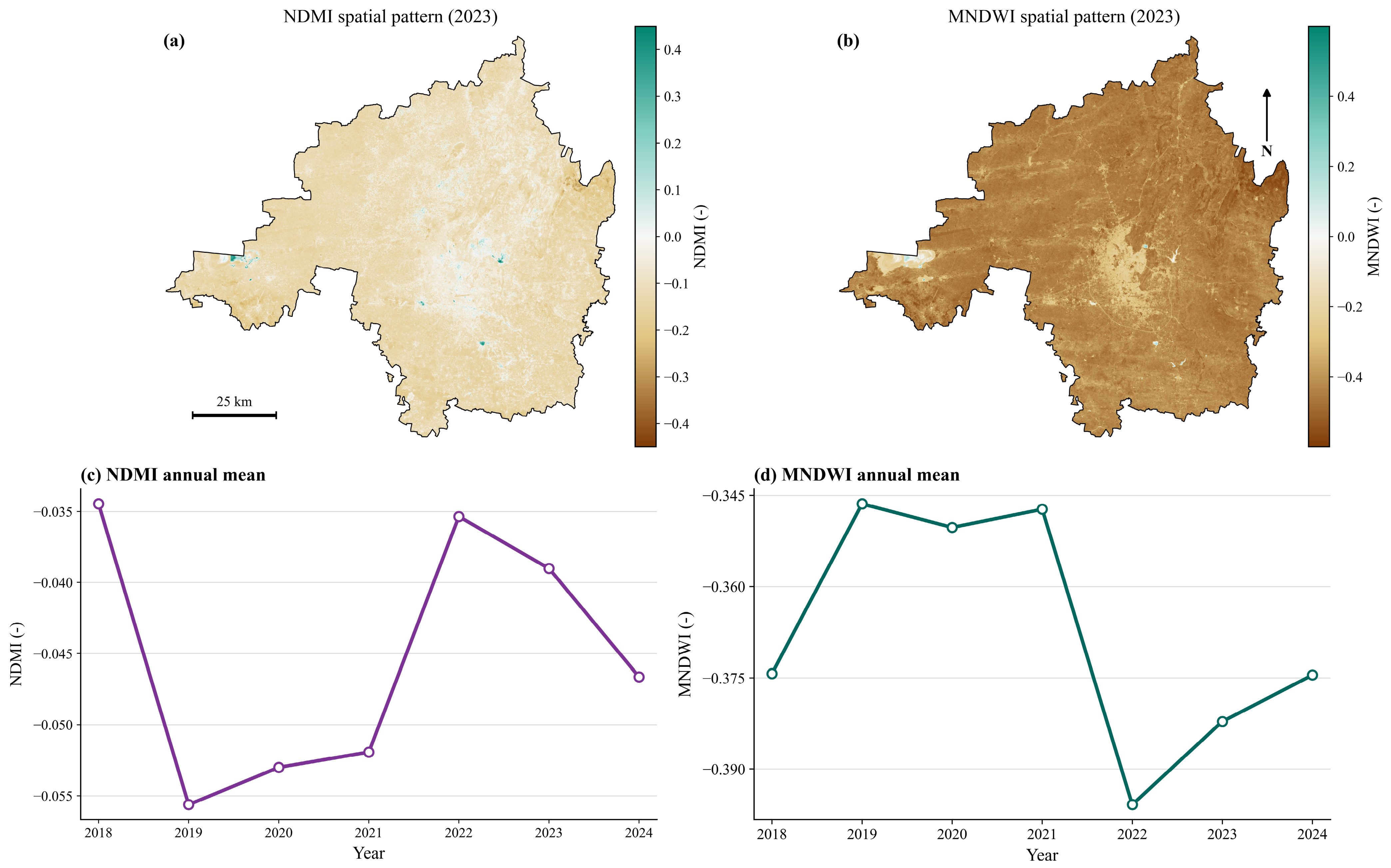
NDMI captures canopy/soil moisture and shows a coherent moisture deficit over the dense urban belt, with higher values on irrigated mosaics; MNDWI isolates surface-water features and their margins. The annual city-mean values show interannual variability rather than a statistically robust monotonic trend (
Figure 4). Because moisture availability enhances evaporative cooling and urban water bodies can create localized cool-island effects, both indicators are treated as benefit variables before stress orientation.
3.2.3. Built-Up Indices
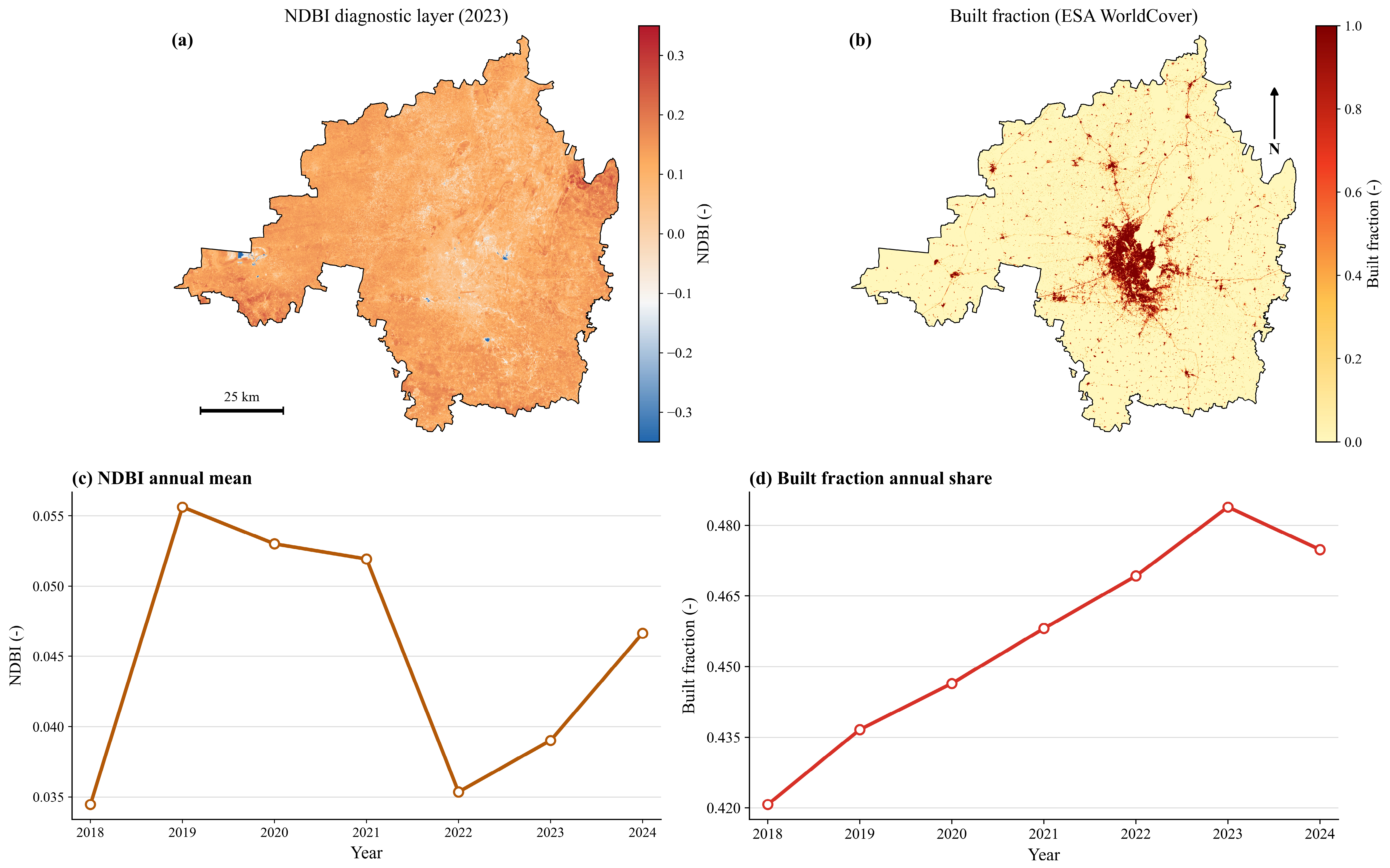
NDBI highlights impervious corridors and industrial axes, but it is presented here only as a diagnostic layer because it is algebraically redundant with NDMI when both are computed from the same NIR and SWIR bands. The final composite therefore uses built fraction as the independent imperviousness indicator. Built fraction reveals consolidation of Jaipur’s urban core and sprawl along transport corridors, with a steady descriptive increase over 2018–2024. Because imperviousness raises surface temperature through reduced moisture, lower albedo, and increased heat storage, a higher built fraction is treated as a cost (stress-increasing) in the final UES map (
Figure 5).
3.2.4. Thermal Metrics
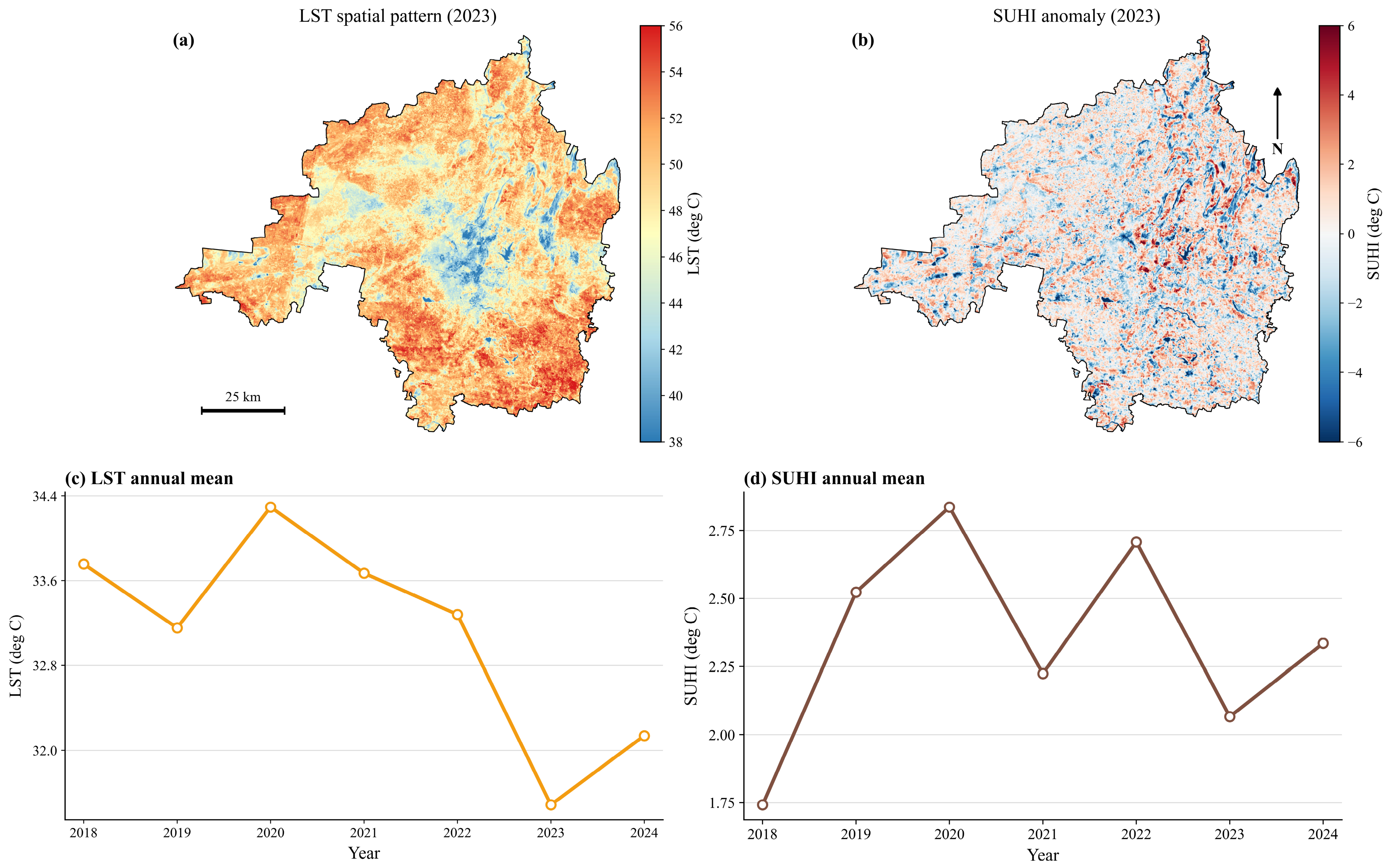
Landsat Collection-2 Level-2 surface temperature provides a physically interpretable LST product widely used in urban heat studies. City-mean LST and SUHI vary interannually across 2018–2024, but the seven-year record is too short to support inferential trend claims (
Figure 6). Thermal variables are therefore retained primarily for spatial stress mapping and interpreted descriptively in the annual plots.
3.2.5. Air-Quality Proxies
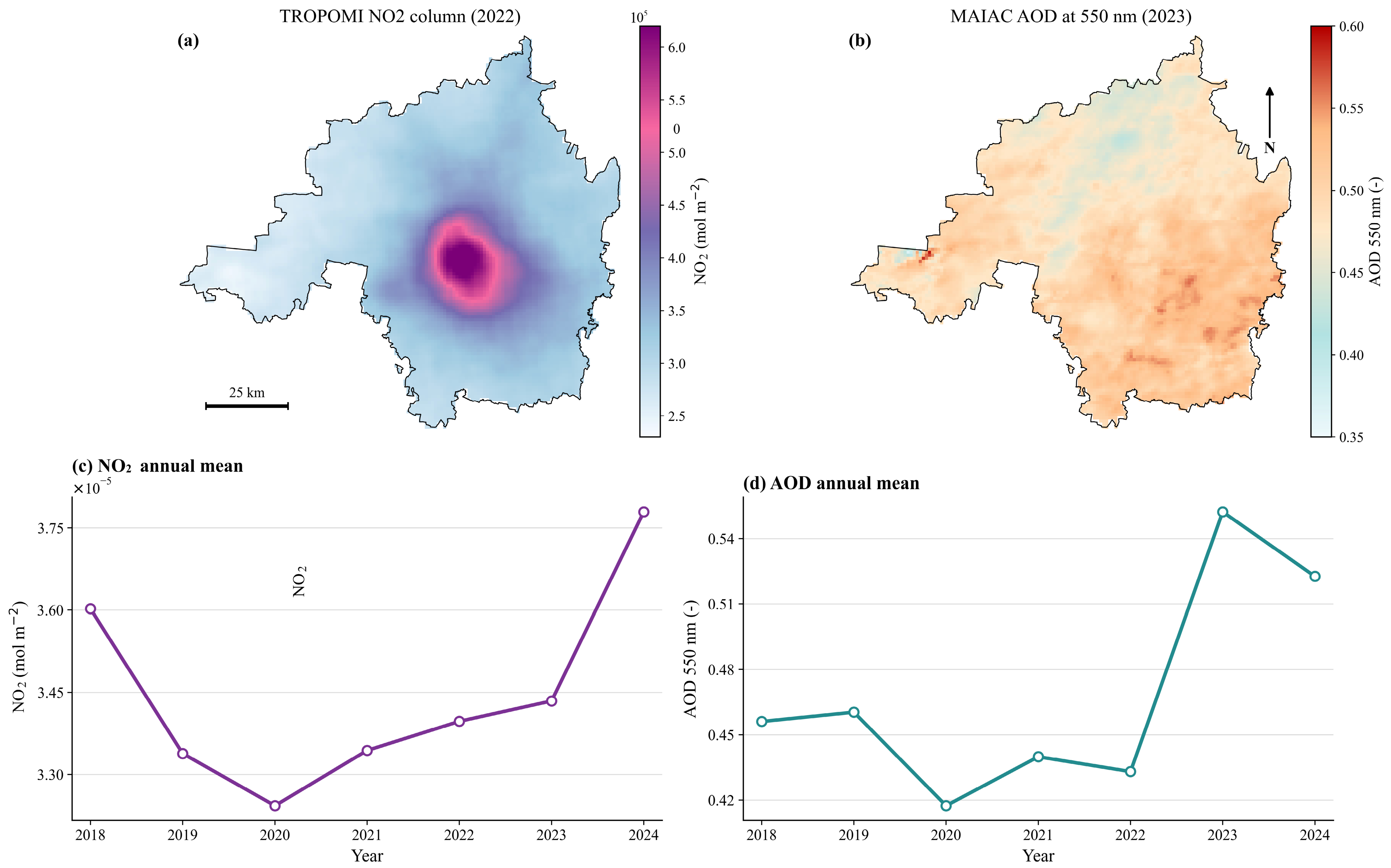
TROPOMI NO
2 resolves broad central enhancements consistent with traffic and industrial activity, while MAIAC AOD shows spatial gradients associated with aerosol loading and surface brightness (
Figure 7). Because both products have coarser native spatial support than the land-surface layers, they are used as contextual atmospheric burden indicators and not as parcel-scale exposure estimates.
3.2.6. Surface Radiative Properties and Topography
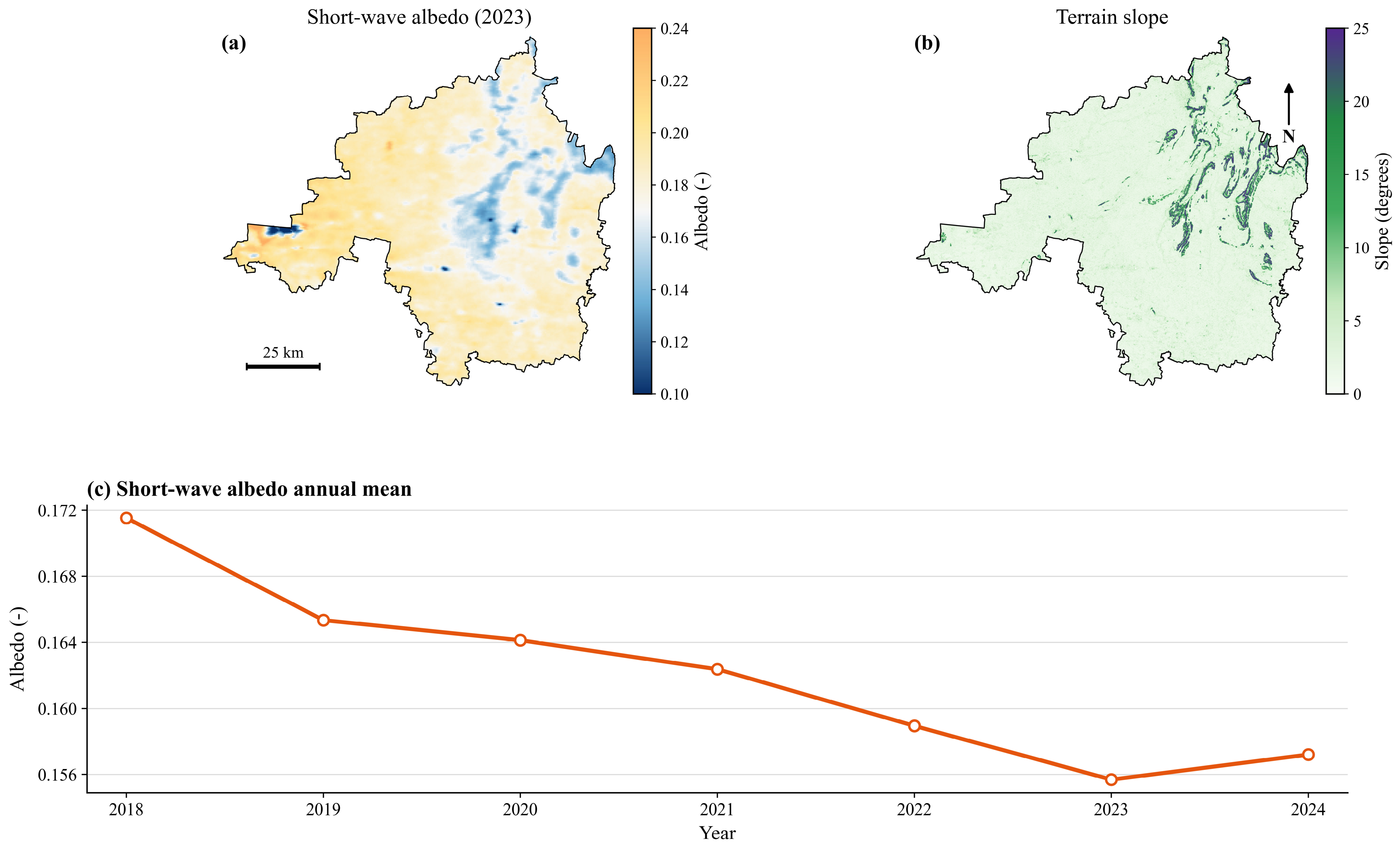
Short-wave albedo shows a descriptive decline across the study window, consistent with increasing dark/impervious cover that absorbs more solar energy. Because higher albedo surfaces (cool roofs, reflective pavements) reduce near-surface temperature and thermal stress, albedo is treated as beneficial in the fusion, while low-albedo zones amplify stress. Evidence from field and modeling studies demonstrates temperature reductions from high-albedo and super-cool surfaces (
Figure 8). Topography modulates heat by altering radiation receipt, elevation-temperature lapse, and ventilation; steeper/elevated flanks of the Aravalli generally register lower LST, helping explain the low-stress rim in the final composite.
3.3. Scale-Aware Urban Environmental Stress (UES) Analysis
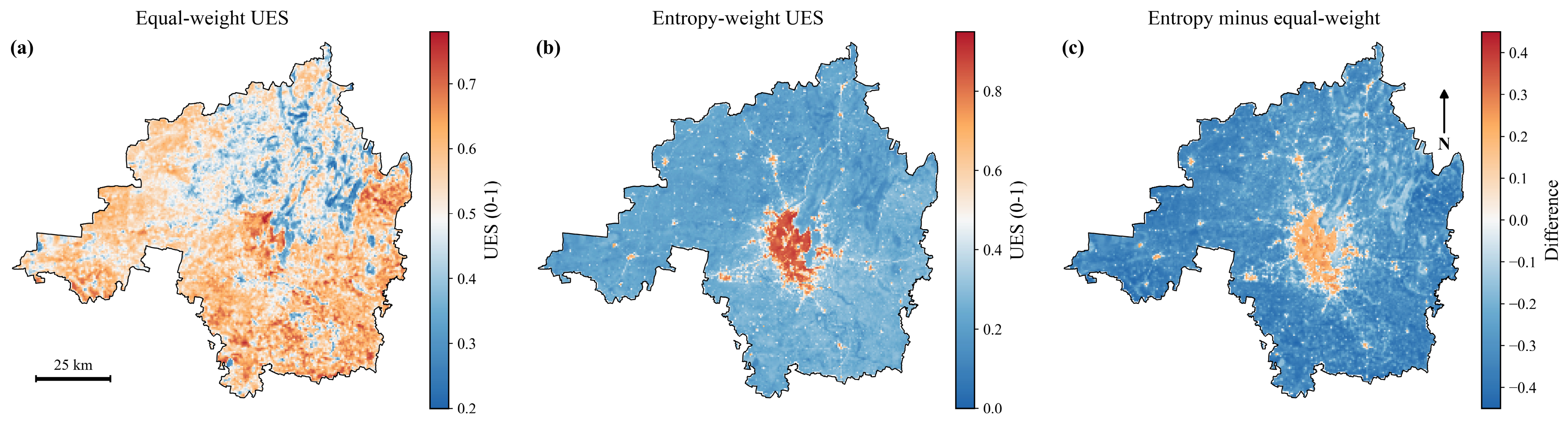
The final fused stress surface integrates vegetation condition (NDVI, EVI, SAVI), surface moisture/water (NDMI, MNDWI), imperviousness (built fraction), thermal state (LST, SUHI), air-quality proxies (NO2, AOD), and surface radiative/topographic controls (short-wave albedo, slope). NDBI is excluded from final fusion because it duplicates NDMI after stress orientation. Each retained indicator contributes equally to the primary UES surface, while entropy weighting is retained only as a diagnostic comparison.
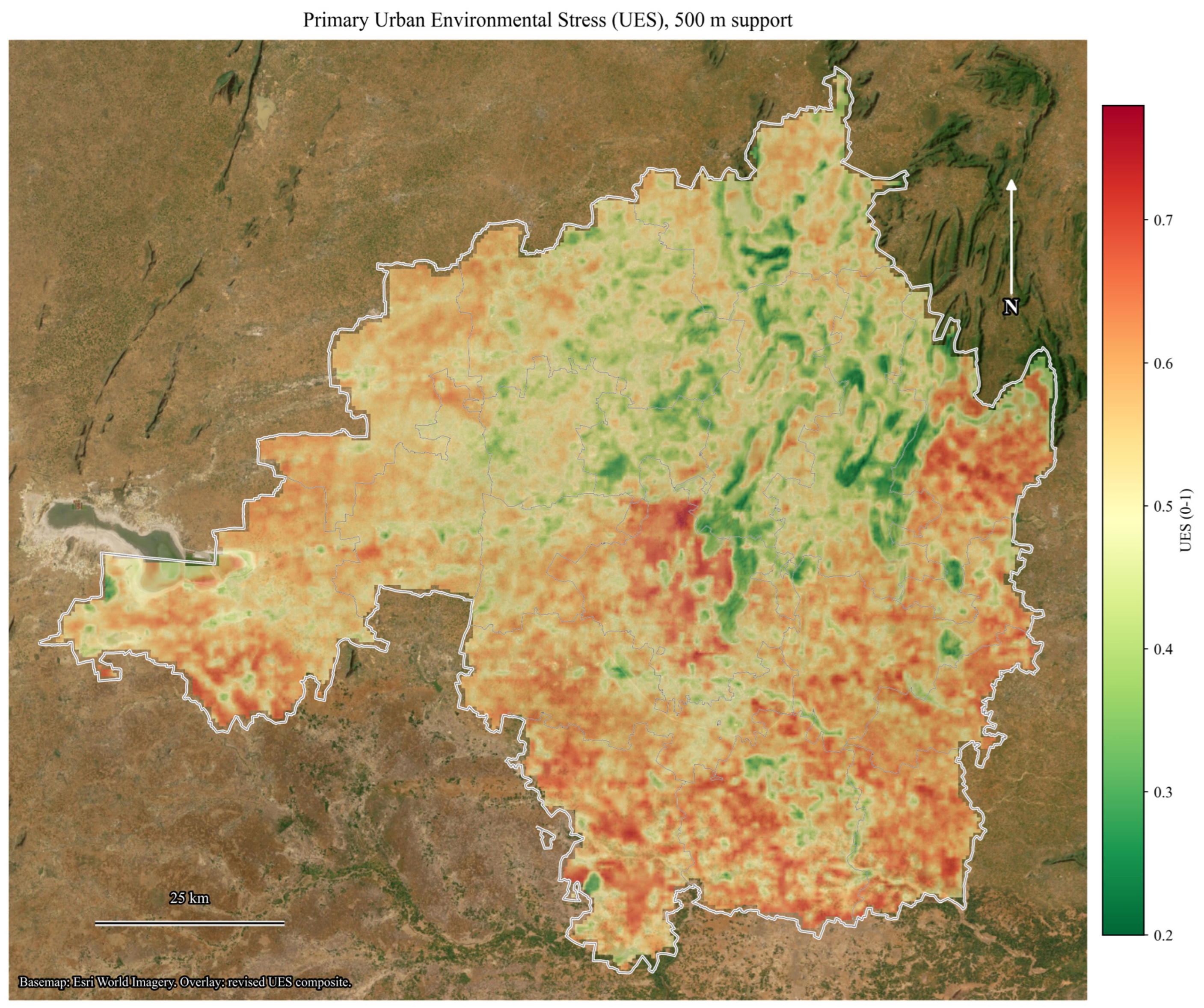
The equal-weighted, no-NDBI UES surface (0–1) shows a pronounced, spatially coherent hotspot over Jaipur’s dense urban core (
Figure 9). High-stress values form a near-continuous belt across dense impervious neighborhoods and along major development corridors radiating from the center. These patterns are interpreted as relative spatial priorities rather than absolute physical stress values.
In contrast, low-to-moderate stress prevails across the hilly and vegetated tracts on the northeastern flank and in peri-urban green belts. These areas benefit from higher canopy cover and terrain-induced heterogeneity, both of which are associated with cooler surfaces and improved microclimate. The mitigating role of urban vegetation observed here is consistent with evidence that tree cover can reduce exposure to extreme urban surface temperature.
Blue-green signatures modulate the composite further. Larger water bodies and adjoining riparian/parkland buffers register as local stress minima embedded within otherwise developed fabric. Such cool-island effects are well reported for urban water features, which can reduce neighborhood-scale surface temperatures and partially offset adjacent built-up heating.
Spatial covariates help explain the mapped gradients. Built fraction increases sharply toward the core and along transport/industrial axes, coinciding with peak UES. Diagnostic NDBI shows similar built-up corridors but is not included in the final composite. Vegetation and moisture indices weaken in the same footprint, reinforcing stress through reduced evaporative cooling, while short-wave albedo declines over expanding impervious surfaces and enhances radiative heat gain. These mechanisms are consistent with the remote-sensing ecological quality paradigm in which dryness/builtness and heat contribute positively to environmental stress while greenness and moisture mitigate it.
Air-quality proxies reinforce the spatial logic of UES. TROPOMI NO
2 columns peak over the dense traffic-industrial footprint and diminish toward the rural periphery, while MAIAC AOD highlights sectoral aerosol load consistent with urban activity and surface brightness. In the equal-weighted primary map, these pollution fields contribute as two retained stress indicators; in the entropy sensitivity map, their influence depends on spatial dispersion. Product documentation and independent evaluations support the use of TROPOMI NO
2 and MAIAC AOD for city-scale mapping and interpretation [
9,
29].
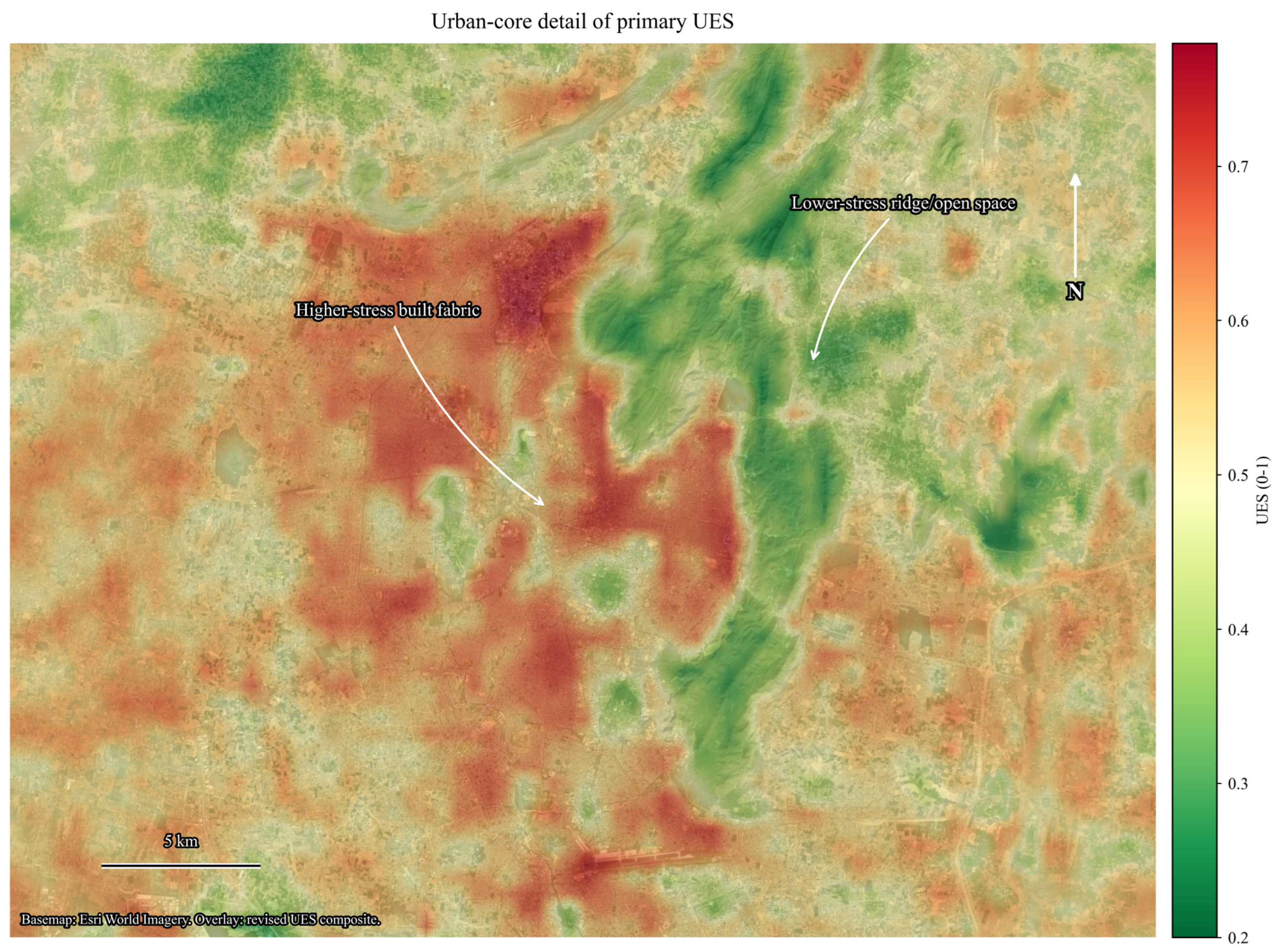
The urban-core detail map (
Figure 10) highlights local contrasts within the 500 m UES surface. It shows higher stress over contiguous impervious fabric and lower stress over ridge, open-space, and water-adjacent areas. The panel supports visual interpretation of spatial contrast within the composite.
Together, the scale-aware fusion produces a physically interpretable stress surface: imperviousness and pollution amplify heat-related stress, while vegetation, moisture, higher albedo, and complex topography reduce it. Because the final map uses equal weights at 500 m and excludes the algebraically redundant NDBI layer, the composite is interpreted as a balanced, relative spatial prioritization layer rather than as a built-density proxy.
3.4. Methodological Robustness and Diagnostic Evaluation
To evaluate the reliability of the UES framework, additional diagnostics examined indicator salience, redundancy among correlated variables, agreement with entropy-weighted sensitivity surfaces, leave-one-out behavior, and the effect of spatial scale on hotspot stability. These analyses improve transparency, assess whether the final map is dominated by a single input, and identify where interpretive caution is required.
The primary UES map assigns each retained indicator an equal weight of 0.0833 (
Table 3). This design prevents a single high-contrast land-cover variable from controlling the composite. In the diagnostic entropy run after NDBI removal, built fraction still received a weight of 0.546, confirming that entropy weighting would continue to make the composite largely a built-density surface. For this reason, entropy weighting is used only as a sensitivity diagnostic and not as the main UES result.
The analysis treats built fraction as one important driver among twelve retained indicators rather than as the controlling variable. Leave-one-out testing of the equal-weighted primary map shows that removing built fraction changes the map modestly (Pearson r = 0.983; mean absolute difference = 0.044). This supports the interpretation that built-up intensity is influential but not algorithmically dominant.
Potential redundancy among indicators was reassessed using a direct NDMI-NDBI diagnostic comparison (
Figure 11). In the original rasters, NDMI and NDBI are perfectly negatively correlated (r = −1.00; maximum absolute NDMI + NDBI difference = 8.94 × 10
−7) because the implemented formulas use the same NIR and SWIR bands with opposite signs. After stress orientation, the pair becomes perfectly positively correlated, confirming algebraic duplication rather than an independent environmental relationship. NDBI was therefore removed from the primary UES composite.
The heatmap shows pairwise linear relationships among the stress-oriented indicators. Strong correlations within thematic groups indicate potential redundancy, while mixed inter-theme relationships support the multidimensional character of the composite.
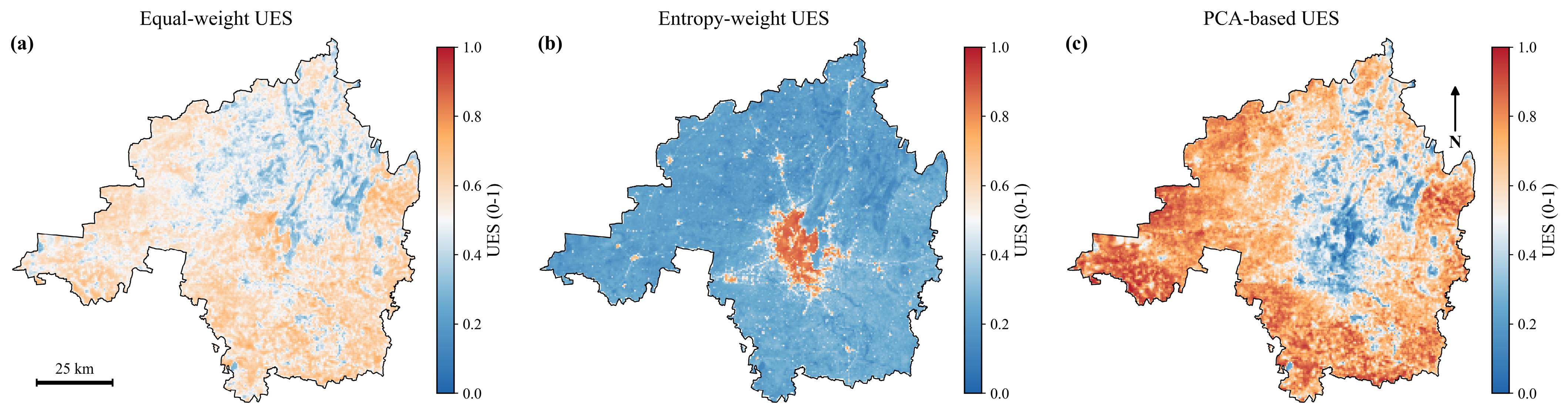
To determine whether entropy weighting materially changes the mapped stress surface, the equal-weighted primary UES was compared with the entropy-weighted no-NDBI sensitivity surface (
Table 4,
Figure 12). Agreement was limited to moderate (Pearson r = 0.345; Spearman ρ = 0.603; mean absolute difference = 0.280), and the diagnostic entropy model still assigned 0.546 weight to built fraction. These results confirm that entropy weighting would substantially reshape the map and reintroduce built-fraction dominance; accordingly, it is retained only as a sensitivity diagnostic.
Sensitivity testing further clarified the reliability of the final UES map (
Table 5,
Table 6 and
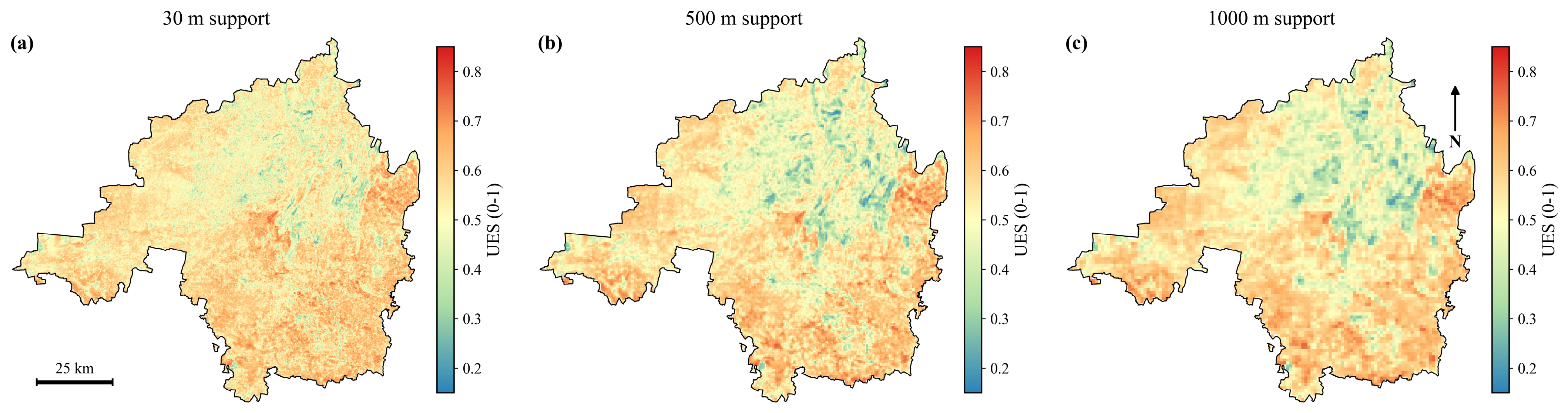
Table 7). Under the equal-weighted no-NDBI formulation, the removal of built fraction produced only a modest change (Pearson r = 0.983; mean absolute difference = 0.044), while removal of the other indicators produced similarly bounded changes. This indicates that the composite is not effectively a built-density map. Clipping-threshold tests show that the hotspot structure is stable under reasonable preprocessing choices, and cross-scale tests show that broad hotspot geometry persists across supports (
Figure 13). The 500 m grid is retained as the primary support because it balances indicator compatibility with spatial detail.
Together,
Table 5,
Table 6 and
Table 7 show that no single retained indicator controls the primary map, while hotspot geometry is scale-sensitive enough to justify using 500 m support for the primary interpretation. The final spatial distribution of the primary composite, alongside its divergence from the entropy-weighted model, is summarized in
Figure 14.
External validation was explored using independent PM2.5 and PESI layers at the zonal level. However, the available spatial overlap did not provide enough valid units for reliable correlation analysis, so quantitative external validation could not be reported at this stage. This limitation does not weaken the internal diagnostics presented here, including entropy-weight disclosure, baseline comparison, leave-one-out sensitivity, clipping sensitivity, and cross-scale stability analysis, but it does mean that empirical validation of the final UES surface remains incomplete. Future work should use better-matched administrative units, denser in situ environmental observations, and independent exposure, infrastructure-demand, or health datasets to strengthen validation.
5. Limitations and Future Work
The present study provides a transparent, scale-aware framework for mapping Urban Environmental Stress (UES) in Jaipur; however, several limitations should be considered when interpreting the results. First, the analysis integrates multi-sensor datasets with markedly different native spatial resolutions. Although all layers were harmonized to a 500 m common analysis grid, coarse products such as TROPOMI NO2, MAIAC AOD, and MODIS short-wave albedo should be interpreted as spatially smoothed contextual fields rather than as true fine-scale measurements. Consequently, some localized spatial variation in the final UES surface may partly reflect the reprojection and resampling of coarser atmospheric and radiative layers rather than purely neighborhood-scale processes.
Second, several indicators within the same thematic group are inherently correlated, particularly among vegetation, moisture, built-up, and thermal variables. The strongest issue was the NDMI-NDBI pair: because both were computed from the same NIR and SWIR bands in opposite order, they were algebraically redundant. The composite therefore removes NDBI and retains NDMI for moisture deficit while using built fraction for imperviousness. This reduces double counting and improves the physical interpretability of the final UES map.
Third, temporal comparability remains constrained by the compositing, normalization, and entropy-weighting strategy. Shannon entropy weights are relative to the sample domain, and min–max scaling depends on the selected value range. Consequently, a UES score in 2018 is not a physically absolute quantity that can be compared one-to-one with a UES score in 2024 unless a fixed multi-year reference range and fixed weights are imposed. The present study therefore interprets interannual UES patterns as relative spatial diagnostics within the harmonized analysis framework, not as strict physical time-series measurements. Future studies should apply pooled multi-year scaling, fixed reference benchmarks, CRSEI-like normalization strategies, and explicit unit harmonization to strengthen long-term temporal interpretation of UES surfaces [
10,
14].
Fourth, independent external validation of the final UES map remains incomplete. Although independent PM2.5 and PESI layers were examined for possible comparison, insufficient valid zonal overlap prevented reliable correlation-based validation. This does not replace the need for external validation, but the internal diagnostics reported in the manuscript, including baseline comparison, sensitivity testing, and cross-scale stability analysis, help clarify methodological robustness. Future work should prioritize better-matched administrative units, denser in situ environmental observations, and independent health, exposure, or infrastructure-demand datasets to strengthen empirical validation.
Fifth, satellite-derived surface temperature and atmospheric columns should not be interpreted as direct measurements of human thermal exposure or ground-level pollutant concentration. Landsat-derived LST represents daytime surface thermal conditions rather than air temperature, while TROPOMI NO2 and MAIAC AOD are city-scale atmospheric proxies rather than direct measures of population exposure. Their value in the present framework lies in capturing relative spatial gradients in environmental burden; a fuller assessment of urban stress should also integrate near-surface meteorological observations, ground-based air-quality monitoring, and socio-environmental vulnerability indicators.
Transferability and Future Applications
Despite these limitations, the proposed UES framework offers a reproducible basis for neighborhood-scale environmental diagnostics in a rapidly urbanizing semi-arid city. Future extensions should focus on improved external validation, more explicit treatment of cross-scale uncertainty, alternative weighting and normalization schemes, seasonal and event-based compositing, and closer integration with urban health, infrastructure, and planning datasets. Such advances would further strengthen the interpretability, transferability, and decision-support value of the UES framework for Jaipur and other rapidly growing cities.





 ,
,