Article

Factor Mobility and Urban–Rural Integration in China: Unpacking Direct, Indirect, and Spatial Spillover Effects at the County Level


1
Chongqing Jiangjin District People’s Government, Chongqing 402000, China
2
School of Public Policy and Administration, Chongqing University, Chongqing 400044, China
3
School of Geographical Sciences, Northeast Normal University, Changchun 130024, China
4
School of Architecture and Urban Planning, Chongqing University, Chongqing 400044, China
*
Author to whom correspondence should be addressed.
Land 2026, 15(6), 975; https://doi.org/10.3390/land15060975
Submission received: 20 April 2026 / Revised: 29 May 2026 / Accepted: 31 May 2026 / Published: 3 June 2026

Abstract

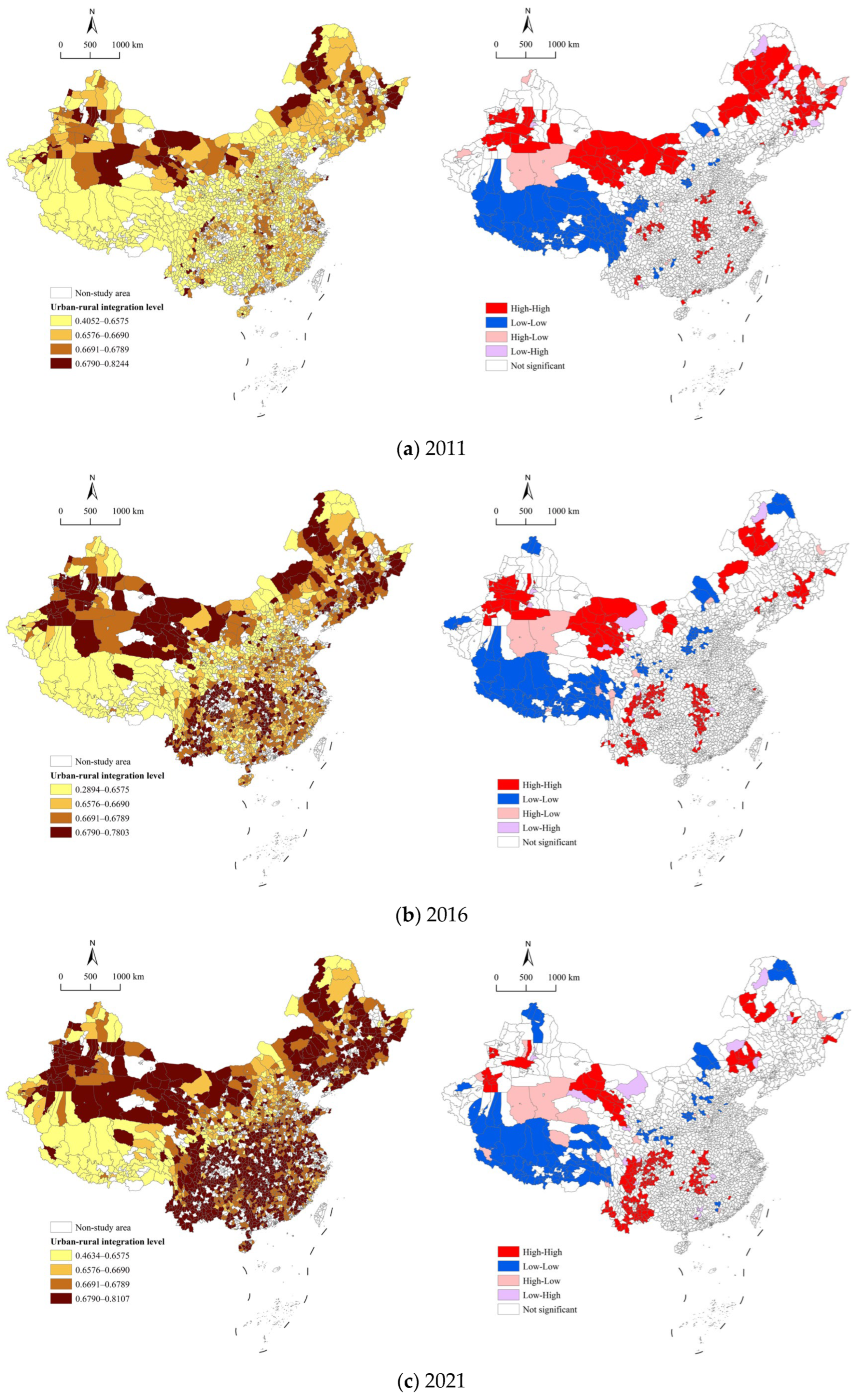
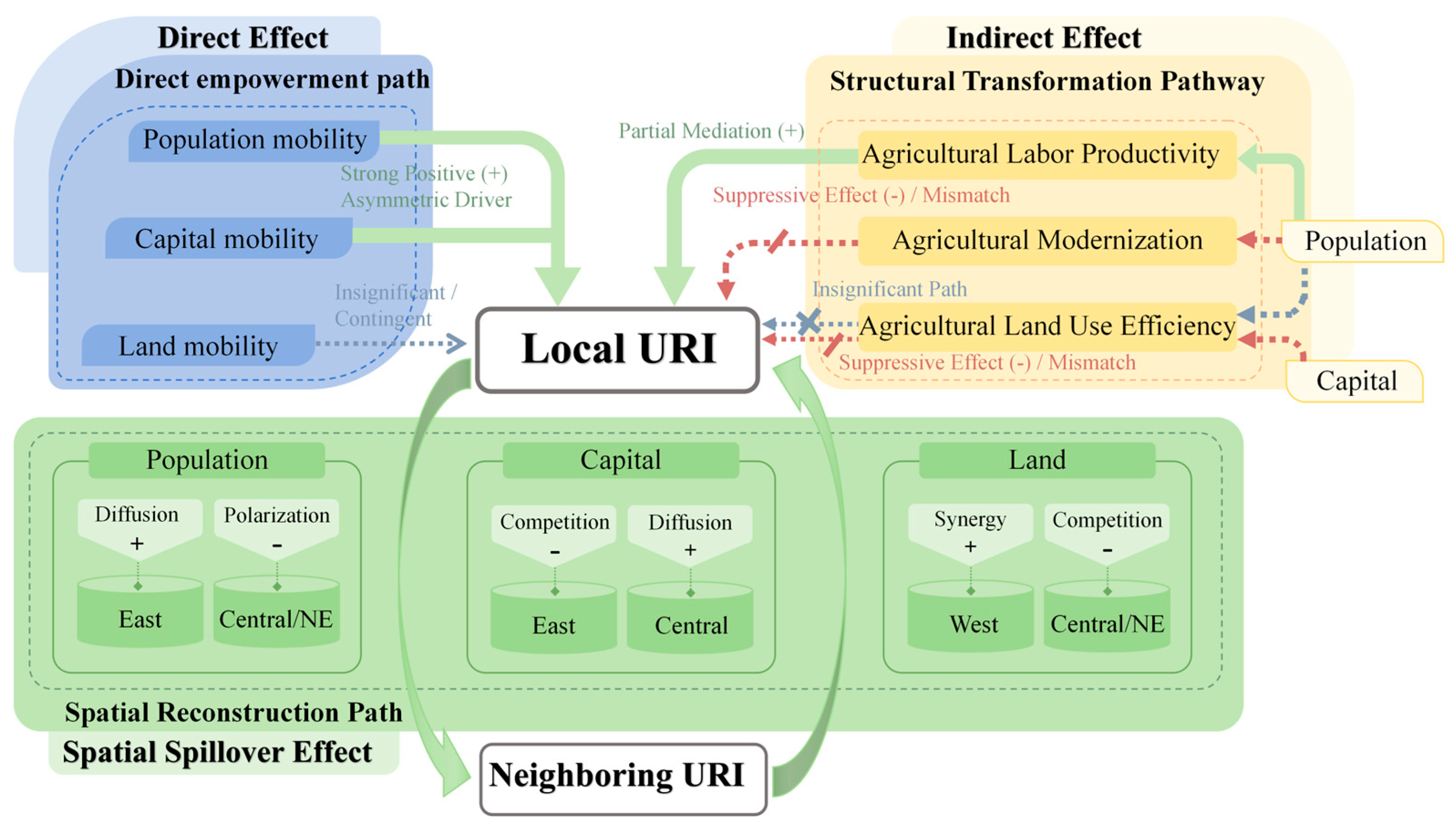
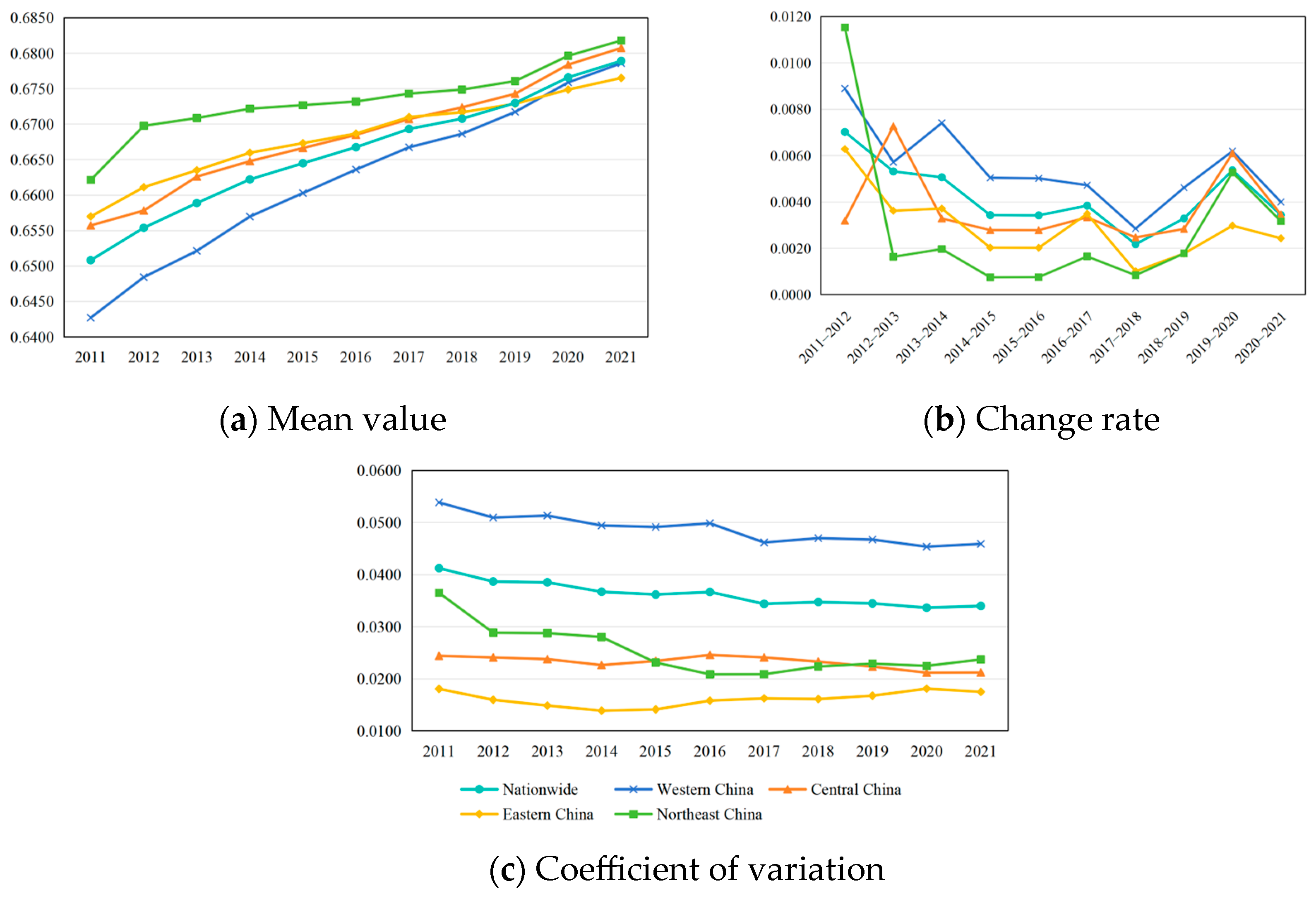
Urban–rural integration (URI) is essential for achieving sustainable regional development and addressing the long-standing urban–rural dual-structure divide. This study investigates the impact of factor mobility—specifically labor, capital, and land—on URI across 1712 Chinese counties. By constructing a multidimensional evaluation system for URI and employing a Spatial Durbin Model (SDM), we unpack the direct and indirect effects, as well as the spatial spillover effects of these factors. The results indicate that URI levels in China exhibit significant positive spatial autocorrelation and distinct regional disparities. Labor and capital mobility significantly promote URI, manifesting robust positive direct effects and spatial spillovers that benefit neighboring counties. By contrast, land mobility reveals a “structural mismatch,” whereby inefficient land-use conversion can hinder integration, particularly in less-developed regions. Heterogeneity analysis further shows that the effects of factor mobility are strongest in Eastern China, while Western regions face structural constraints. These findings suggest that sustainable urban–rural transformation requires not only the free flow of production factors but also a coordinated spatial strategy to mitigate regional imbalances. This study provides policy-relevant insights for policymakers aiming to optimize factor allocation and enhance grassroots-level sustainability within the framework of rural revitalization and integrated regional development.
Keywords: factor mobility; urban-rural integration; spatial spillover effects; spatial Durbin model; county-level China factor mobility; urban-rural integration; spatial spillover effects; spatial Durbin model; county-level China