Article

Life-Cycle Evolution and Adaptive Governance of Everyday Micro Spaces in an Old Urban District: The Case of Xi’an, China

1
School of Architecture, Chang’an University, Xi’an 710061, China
2
Shaanxi Huachuang Tianze Technology Industrial Development Co., Ltd., Xi’an 710086, China
*
Authors to whom correspondence should be addressed.
Land 2026, 15(6), 973; https://doi.org/10.3390/land15060973
Submission received: 5 May 2026 / Revised: 29 May 2026 / Accepted: 1 June 2026 / Published: 3 June 2026

Abstract

As China’s urban renewal shifts comprehensively toward stock optimisation, everyday micro spaces in high-density old districts have emerged as critical yet underexplored carriers for rebuilding grassroots social capital. However, existing research remains largely confined to static assessments of physical form, lacking systematic insight into the process-based evolution of micro spaces and their governance implications. The aim of this study is to develop a process-based analytical framework that explains how everyday micro spaces emerge, evolve, and stabilise in high-density old urban districts, and to translate that explanation into stage- and type-differentiated governance pathways. Drawing on purposive sampling observation of over 170 micro spaces and snowball-sampled in-depth interviews with 45 residents in Xi’an’s walled historic district, this study employs thematic analysis to examine micro space formation, activation, and governance dynamics. A three-dimensional analytical framework of “Spatial Type–Perceived Need–Life Cycle” is constructed, classifying micro spaces into three categories, identifying a three-tier, nine-level perceived needs spectrum, and tracing a five-stage evolutionary process of Discovery–Activity–Renovation–Management–Identity. The findings reveal that residents’ spontaneous practices and psychological ownership formation are the core endogenous drivers of micro space evolution. The primary structural constraints are ambiguous property rights, institutional vacuums, and a structural rupture at the Renovation-to-Management transition, which we conceptualise as the “high-risk window period”. This study proposes a full life-cycle adaptive governance paradigm. Through phased, type-differentiated interventions, it matches governance supply to the evolving demands of each stage. The paradigm offers both theoretical and practical guidance for stimulating the endogenous vitality of everyday micro spaces in old urban districts.

1. Introduction

In high-density old urban districts worldwide, the chronic scarcity of formal public spaces and the intense demand for accessible daily activity settings represent a persistent governance challenge [1,2]. In China, as urbanisation transitions from large-scale incremental expansion to stock quality optimisation, urban renewal has evolved beyond physical environment repair into a strategic action [3] for rebuilding grassroots social capital and enhancing urban liveability [4]. In high-density old urban districts constrained by scarce land and ageing demographics, residents, particularly the elderly, exhibit an intense dependency on daily activity spaces within a “one-kilometre radius” from their homes [5]. Through sustained everyday practices, residents spontaneously create numerous micro spaces, such as street corner shade trees, inter-building open areas, alley nodes, and community entrances. These spaces serve vital functions in neighbourhood socialisation, information exchange, and emotional support, forming the “capillary network” of public space in old urban districts [6].
The international literature on public space offers foundational resources. Jacobs [7] revealed the relationship between street-level daily life and community safety through her concept of “eyes on the street”. Whyte [8] showed that the vitality of small urban spaces depends on specific spatial configurations, including seating, sunlight, and social catalysts. Gehl [9] classified outdoor activities into necessary, optional, and social categories, demonstrating that spatial quality directly influences the frequency of social activities. Oldenburg [10] identified informal gathering places as “third places” essential for community belonging. Tactical urbanism [11] and do-it-yourself urbanism [12] highlighted how residents activate dormant spaces through low-cost, bottom-up interventions, while Franck and Stevens [13] introduced “loose space” to describe flexible environments that stimulate urban creativity. Varna and Tiesdell [14] developed a multi-dimensional publicness assessment model, and Mehta [15,16] identified environmental characteristics that support social behaviour. In the Chinese context, domestic research has concentrated on emotional design of small-scale public spaces [17,18], morphological and functional evaluation of pocket parks [19,20], planning principles for micro-green spaces [21], and behavioural studies of specific user groups [18,22].
Despite these contributions, including more recent work on small-space vitality [23] and place-based wellbeing [24], two fundamental gaps persist across the literature. First, the overwhelming majority of studies focus on static characteristics of physical form, lacking systematic investigation into the process-based evolutionary dynamics through which micro spaces emerge, develop, and stabilise. Second, even where flexible renewal practices have been explored, no study has established differentiated governance strategies aligned with distinct evolutionary stages. The structural mismatch between the “governance logic” of standardised renovation and the “living logic” of residents manifests in widespread “post-completion abandonment” and “five-year decay” [1]. The root cause lies precisely in the absence of a dynamic, stage-sensitive understanding of micro space evolution.
Grounded in this research gap, the aim of this study is to construct a process-based, stage-sensitive understanding of everyday micro space evolution and to derive corresponding adaptive-governance instruments. Three specific objectives operationalise this aim and are expressed as research questions: (RQ1) What perceived needs do everyday micro spaces fulfil in residents’ daily lives in old urban districts? (RQ2) How does the staged evolutionary process of micro spaces unfold from spontaneous formation to stable operation? (RQ3) How can differentiated governance strategies and institutional tools be matched to distinct evolutionary stages? Taking Xi’an’s historic district as a representative case, this study constructs a “Spatial Type–Perceived Need–Life Cycle” three-dimensional analytical framework through qualitative field research. Section 2 establishes the theoretical framework; Section 3 details the research design and methods; Section 4 presents empirical results; Section 5 discusses findings and governance implications; Section 6 draws conclusions.

2. Theoretical Framework

2.1. Conceptual Definition of Everyday Micro Spaces

Every day, micro spaces constitute the smallest and most widely distributed component of urban public space systems. Scholars have approached their definition from boundary characteristics [17], scale and morphology [25], functional attributes [26], and governance subjects [27] without reaching consensus. This study defines everyday micro spaces as small-scale urban spaces embedded in residents’ daily movement patterns that are spontaneously discovered by users and imbued with social meaning, emphasising three defining attributes: daily embeddedness (high frequency integration into everyday routines), bottom-up appropriation (emergent rather than planned use), and social meaning co-production (collectively constructed significance). This definition distinguishes everyday micro spaces both from formally planned pocket parks and single-intervention tactical installations, and from morphologically defined residual or negative spaces, capturing their self-organising, small-scale, and widely distributed character. Pocket parks are produced through top-down design with predetermined programmes; tactical urbanism interventions are project-bounded and time-limited; residual or negative spaces are identified primarily by morphological deficits rather than by lived use. Everyday micro spaces, by contrast, emerge from residents’ continuous spatial practices and gradually accumulate collective meaning, which is what distinguishes their self-organising, small-scale, and widely distributed character.

2.2. Theoretical Foundations

This study integrates seven theoretical perspectives. Regarding the perceived needs dimension, Maslow’s hierarchy of needs theory [28] provides the progressive structural prototype for the perceived needs spectrum, though this study emphasises the dynamic dominant relationship among need levels rather than simple linear progression. Gibson’s ecological theory of affordances [29] frames spatial physical characteristics as direct suppliers of behavioural possibilities, corresponding to the availability dimension of basic needs. Whyte’s “triangulation” effect [8] reveals the spatial element configurations that catalyse social interaction, corresponding to the attraction dimension of progressive needs.
Regarding the evolutionary dynamics dimension, Putnam’s social capital theory [30] demonstrates how repeated social interactions accumulate trust, establish norms, and reduce the costs of collective action. Lefebvre’s theory of the production of space [31] conceptualises space as a social product rather than a static container, providing the ontological foundation for the life-cycle model; the conceived–perceived–lived triad embedded in this work, together with Lefebvre’s right to the city [32] and his critique of everyday life [33], further frames residents’ spontaneous practices as everyday claims to co-produce urban space rather than as informal uses to be tolerated. Pierce and colleagues’ theory of psychological ownership [34,35] reveals the internal mechanisms by which individuals develop a sense of belonging toward non-owned objects through three mechanisms: control, intimate knowledge, and self-identity extension. This provides the core theoretical support for explaining why residents proactively maintain public micro spaces. Ostrom’s theory of common-pool resource governance [36] provides an institutional framework for analysing community self-governance of shared spaces, while requiring localised adaptation in the Chinese context, where collective-choice arenas are typically embedded in the residents’ committee–property management–homeowners’ association triad rather than in autonomous user assemblies. Scannell and Gifford’s [37] tripartite framework of place attachment further supplements the psychological ownership mechanism from an emotional perspective. In dialogue with Zhu [1], publicness is read along material, procedural, and symbolic dimensions, which map, respectively, onto the basic-needs tier, the negotiation mechanisms of the Renovation–Management transition, and the Identity-stage outcomes of micro spaces.

2.3. The “Spatial Type–Perceived Need–Life Cycle” Analytical Framework

Integrating the above theoretical perspectives, this study constructs a three-dimensional analytical framework (Figure 1) in which the three dimensions form an internally connected analytical whole. Spatial type determines the property rights structure and governance subjects (where and who governs); the perceived needs spectrum reveals the dynamic motivations behind residents’ use (why it is used); and the life-cycle model presents the evolutionary process from individual behaviour to collective order (how it evolves). Together, these three dimensions converge toward the practical question of “how to govern”, establishing the analytical foundation for the adaptive governance paradigm proposed in Section 5.

3. Materials and Methods

3.1. Study Area

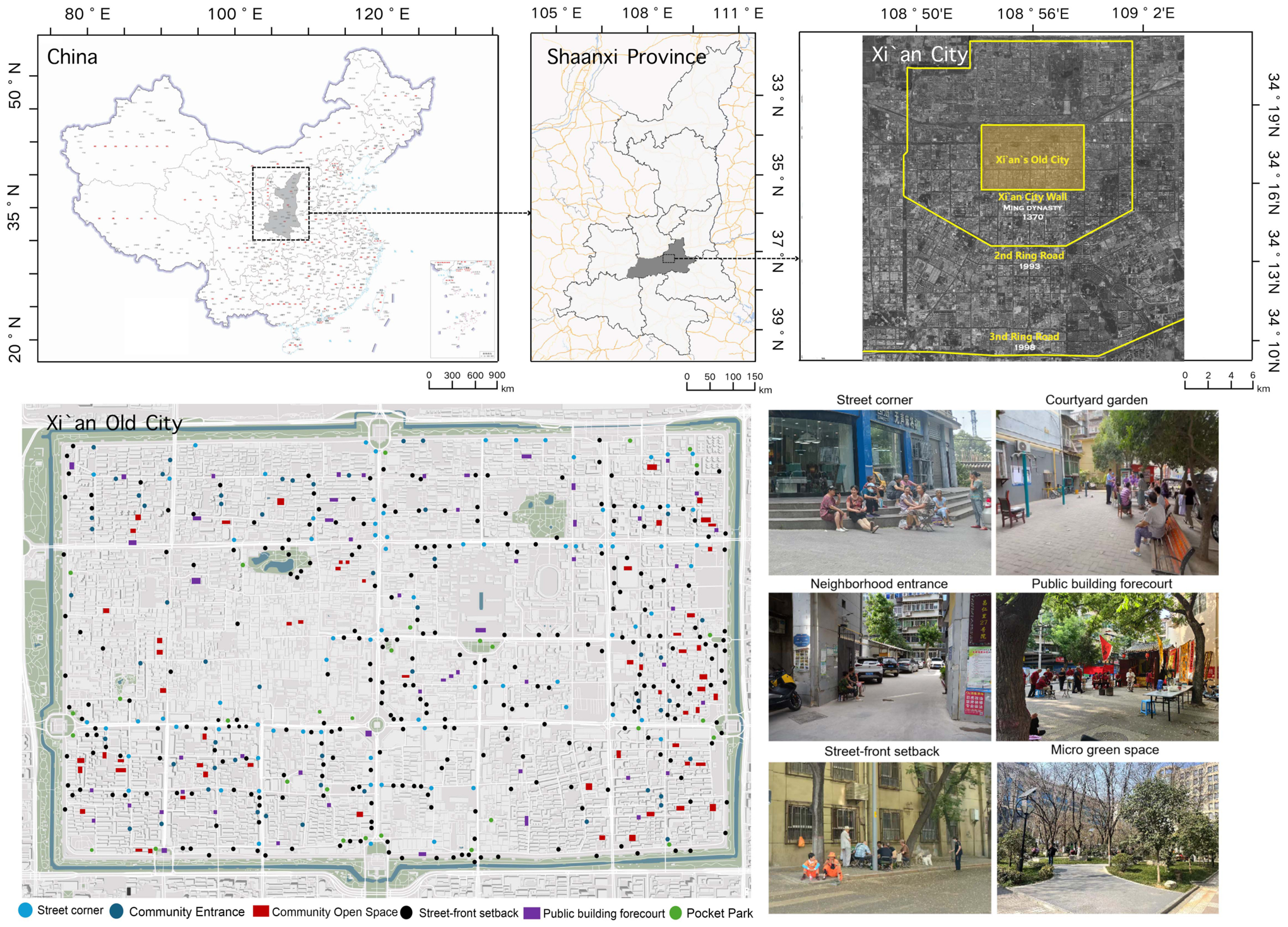
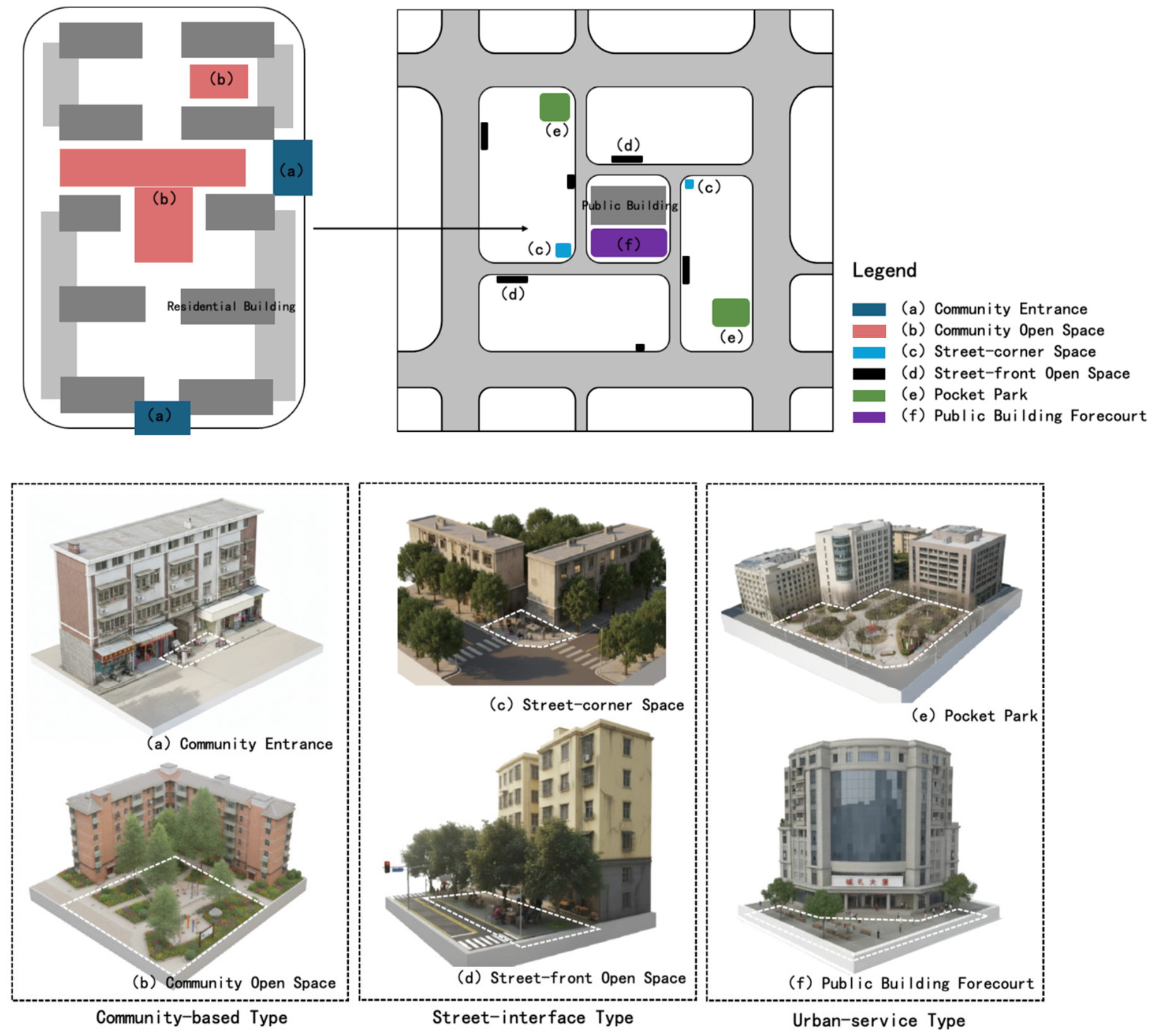
Xi’an’s historic district—the area enclosed by the Ming City Walls, covering approximately 11.32 km2—serves as the field site. The selection follows the logic of theoretical sampling [38] justified on four grounds. Demographically, the area exhibits a pronounced ageing profile, with the proportion of residents aged 60 and above significantly exceeding the Xi’an municipal average, generating intense demand for accessible daily activity spaces—a structural condition shared with other high-density Asian historic cores. Spatially, per capita park and green space falls substantially below national standards, producing high dependence on informal micro spaces. Historically, over a millennium of urban history has endowed the area’s micro spaces with rich place-based meaning, rendering spontaneous spatial practices particularly active. This historical depth, together with the strict height-control regime around the city wall that intensifies horizontal contestation over micro spaces, constitutes the particularity of the Xi’an case. In terms of research representativeness, ongoing urban renewal policies have rendered the tensions between governance logic and living logic especially pronounced and visible, making the site well-suited for examining the structural contradictions constituting this study’s core inquiry. The geographic distribution of the surveyed micro spaces is presented in Figure 2 and Figure 3.

3.2. Data Collection

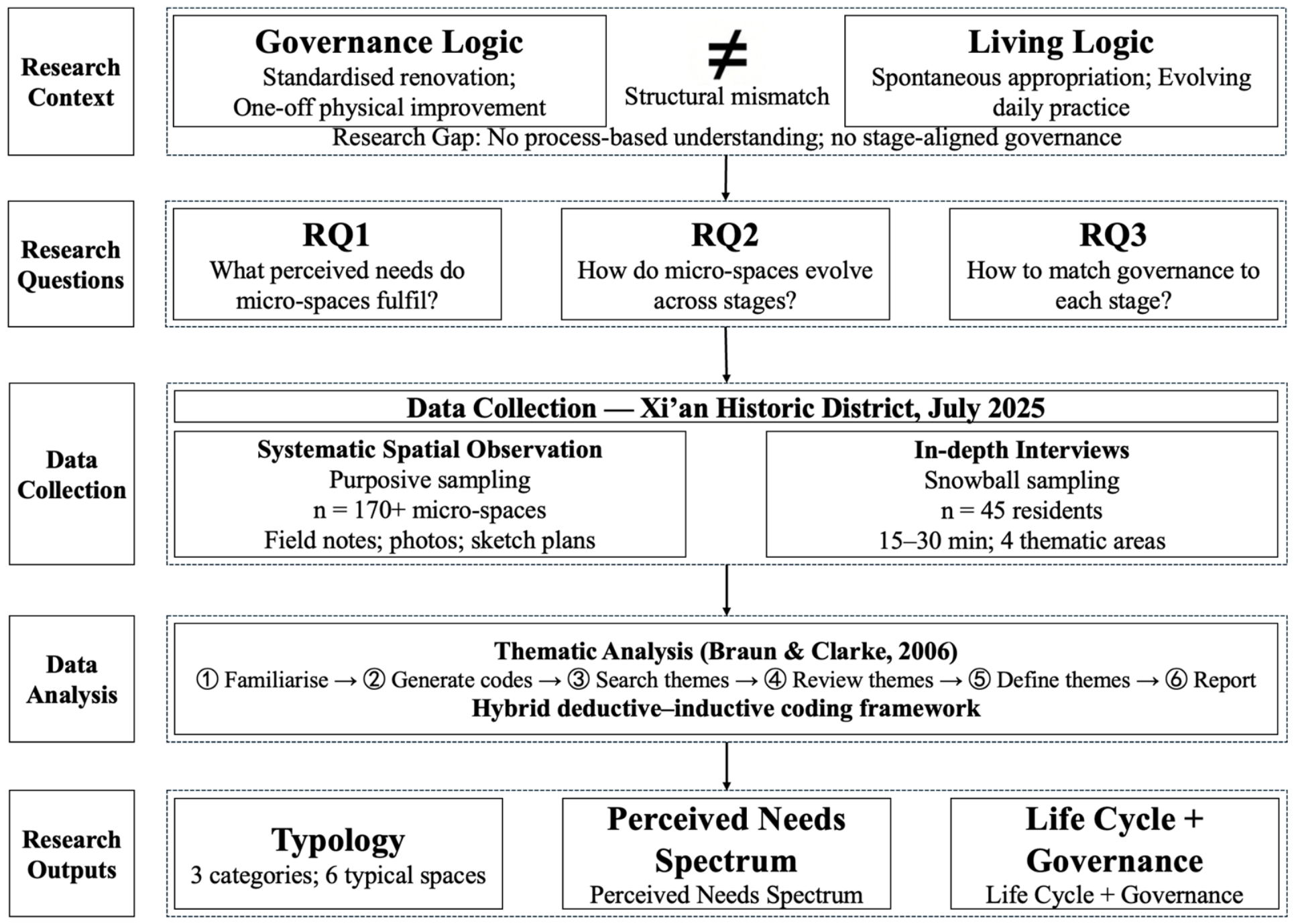
Fieldwork in July 2025 combined two complementary data collection strategies: systematic spatial observation and in-depth resident interviews. For systematic spatial observation, a purposive sampling approach was adopted, with the research team conducting systematic walking surveys along primary streets, secondary lanes, and internal community pathways throughout the historic district; eligibility required location within 500 m of a residential cluster, a footprint of 5–500 m2, and observed use during both 08:00–11:00 and 15:00–19:00 time-slots. Over 170 micro spaces were identified and documented, with field archives compiled from photographs, behavioural annotations, and sketch plans. Observation dimensions encompassed spatial location and scale, user group composition and activity intensity, primary activity types, physical traces of self-initiated modification, and boundary conditions. For in-depth, semi-structured interviews, a snowball sampling strategy was employed, using key “place stewards” identified during spatial observation as initial contacts to expand the participant network, with seeds distributed across four sub-districts and six space sub-types, and recruitment closed at theoretical saturation. A total of 45 residents were interviewed (see Appendix A, Table A1 for participant profile), spanning age groups from 12 to 75 years and residential tenure from 5 to over 40 years, with role types including ordinary users, place stewards, community organisers, and two enforcement/management personnel. Each interview lasted 15–30 min and centred on four thematic areas: the experience of discovering and first using the space; motivations for use and habitual activity patterns; experiences of and motivations for participating in physical modification; and emotional attachment to and identification with the space. The life-cycle evolution model is encapsulated by the four interview themes, so that the questions could trace each participant’s progression across the proposed stages; within each area, open prompts (e.g., “How did you first come to use this space?”) were used rather than closed questions, allowing participants to articulate their own narratives. All interviews were audio-recorded and transcribed verbatim; the July window captures peak outdoor activity but inevitably under-represents winter and rainy-day uses, a limitation revisited in Section 5.5. The overall research design is illustrated in Figure 4.

3.3. Data Analysis

Interview data were analysed following the six-phase thematic analysis procedure established by Braun and Clarke [39]: (1) familiarising with the data through repeated reading of transcripts; (2) generating initial codes through line-by-line annotation (e.g., “self-provided furniture”, “administrative clearance”, “neighbourhood acquaintance”); (3) searching for themes by clustering initial codes into candidate thematic groups; (4) reviewing and refining themes against original data for internal consistency; (5) defining and naming themes (e.g., “discovery stage”, “high-risk window period”); and (6) producing an integrated analytical report. The coding framework employed a hybrid deductive–inductive approach: deductive codes were derived from pre-established theoretical dimensions (need levels, evolutionary stages), while inductive codes emerged organically from field data. Representative coding examples are presented in Appendix A, Table A2.

3.4. Research Quality

Three mechanisms were employed to ensure the trustworthiness of the findings. Data triangulation was achieved by simultaneously collecting spatial observation records, photographs, and resident interviews for each typical case, with convergent evidence mutually corroborating analytical interpretations. Member checking was conducted by sharing preliminary analytical results with four participating place stewards, whose feedback informed adjustments to several stage-characteristic formulations. Researcher reflexivity was maintained by recognising that the research team’s architectural background, while advantageous for identifying physical spatial characteristics, carries a potential design-led interpretation bias. This bias was systematically mitigated through repeated team discussion, with consistent priority accorded to residents’ own discourses in analytical decision-making.
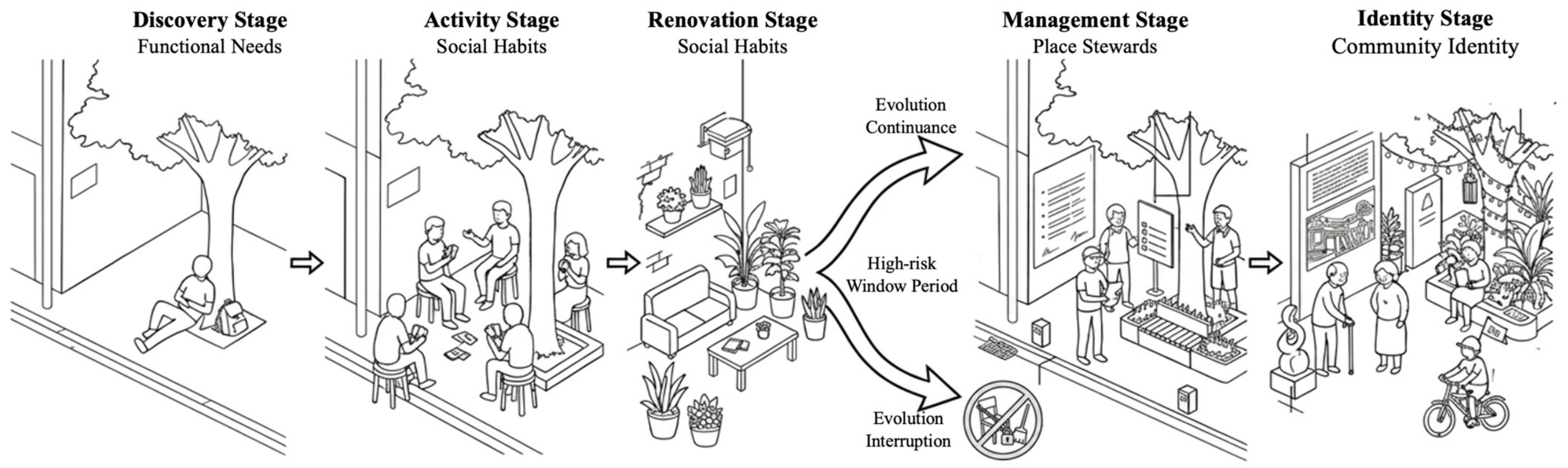
During the preparation of this study, the authors used an AI-based image generation tool (Nano Banana Pro) to produce the base graphic layout of Figure 5 (life-cycle evolution diagram), which was subsequently substantially modified, annotated, and redesigned by the authors. The authors have reviewed and edited the output and take full responsibility for the content of this publication.

4. Results

4.1. Typological Classification of Micro Spaces

Based on the comprehensive dimensions of spatial location, property rights attributes, governance subjects, and core characteristics, the 170+ surveyed micro spaces were classified into three major categories (Table 1). Within each category, two functionally distinct sub-types are further distinguished—community entrances and community open spaces under the community-based category; street corner spaces and street-front open spaces under the street-interface category; pocket parks and public-building forecourts under the urban-service category—yielding the six sub-types presented in the case narratives (Section 4.3.1, Section 4.3.2, Section 4.3.3, Section 4.3.4, Section 4.3.5 and Section 4.3.6). The category-level distinction captures property-rights regime and governance subject; the sub-type distinction captures spatial morphology and location. The differentiation in property rights structures across these three types directly determines divergent evolutionary trajectories: community-based spaces carry inherently high psychological ownership and hold the greatest evolutionary potential; street-interface spaces face compliance pressure throughout their entire life cycle; and urban-service spaces exhibit an inverted evolutionary pattern in which physical renovation precedes, rather than follows, the activation of resident use.

4.2. Perceived Needs Spectrum

Drawing on the 45 resident interviews and integrating Maslow’s hierarchical framework [28] with urban public space perception research [40,41], this study constructs a three-tier, nine-level perceived needs spectrum for the micro space context (Table 2; detailed version in Appendix A Table A3). The defining characteristic of this spectrum is the emphasis on the dynamic dominant relationship among need levels rather than linear progression: in the discovery stage, basic needs (availability) govern initial use decisions; as use frequency increases, progressive needs (attraction) become the principal determinants of continued engagement; and the fulfilment of advanced needs (identity) constitutes the psychological precondition for micro spaces to advance toward management and recognition stages.

4.3. Life-Cycle Evolution: Empirical Evidence

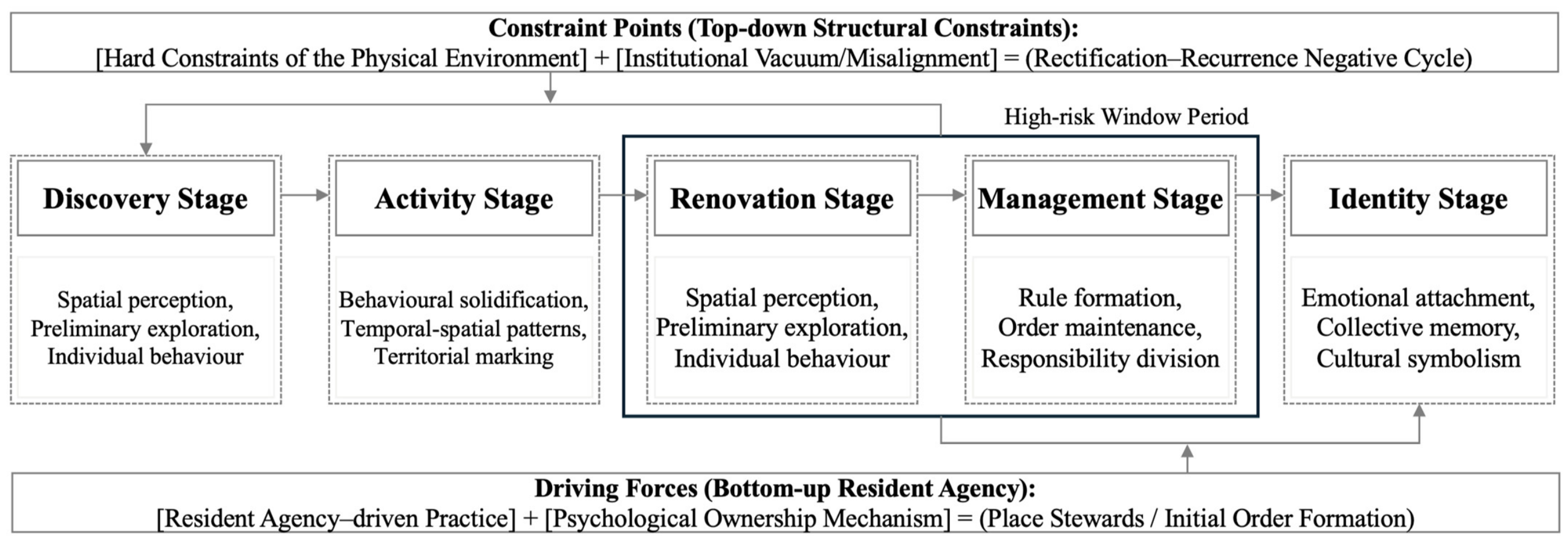
Synthesising Lefebvre’s theory of the production of space [31] with the field evidence, micro space evolution is analysed as a five-stage sequential process: Discovery–Activity–Renovation–Management–Identity (Figure 5). This process is not unilinear: spaces may regress or cycle between stages, with the Renovation–Management transition representing the most structurally fraught juncture—termed the “high-risk window period” and discussed in detail in Section 5.3. The following six case narratives present the empirical realisation of evolutionary trajectories (Figure 6, Figure 7, Figure 8, Figure 9, Figure 10 and Figure 11).

4.3.1. Community Entrances (Community-Based Type)

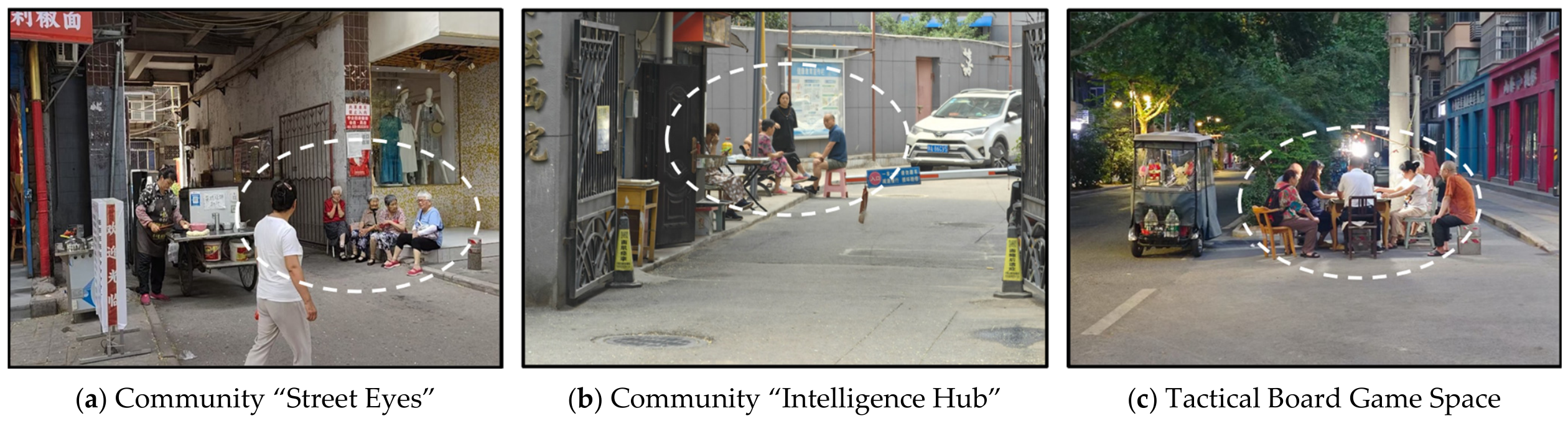
Community entrances possess a dual character as both physical gateways and psychological landmarks. In contexts where strict access control is absent, entrances often evolve into spontaneous gathering points for elderly residents, functioning as “eyes on the street” [7] and informal community intelligence hubs (Figure 6a,b). Through self-provided tables and chairs, potted plants, and improvised sun canopies, residents transform mono-functional circulation spaces into composite settings for chess play and neighbourhood interaction (Figure 6c). One resident articulated the affective dimension: “Seeing the old neighbours sitting at the entrance, my heart feels settled.” (Participant F12, female, 68 years old, 36 years’ residence). From a life-cycle perspective, this space type has successfully evolved into the Renovation stage; however, the informal self-organisation order and administrative safety red lines create a structural mismatch that traps these spaces in a recurring cycle of “renovation–clearance–re-renovation”, preventing stable progression to an institutionalised Management stage.

4.3.2. Community Open Spaces (Community-Based Type)

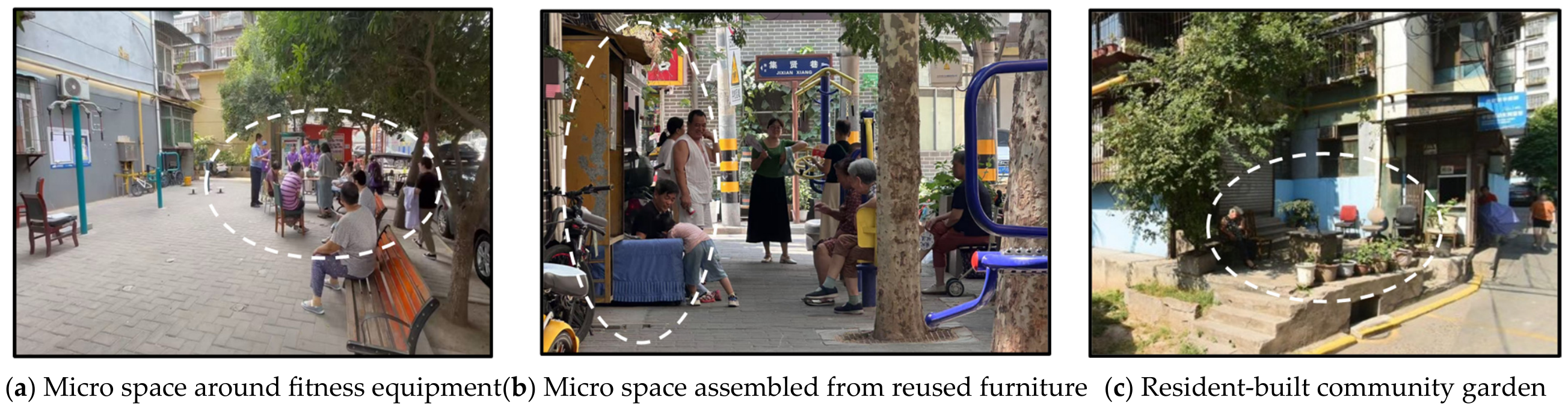
Interstitial green spaces and corner plots within residential compounds exhibit particularly strong psychological ownership. Residents tend to appropriate these spaces through salvaged furniture, foam containers, or potted plants to spontaneously develop informal gardens (Figure 7b,c), bestowing aesthetic value on otherwise negative spaces. One resident expressed quintessential self-extension: “Seeing the flowers I planted blooming, this place truly feels like home.” (Participant M23, male, 72, 41 years’ residence); another added: “I come to water the plants every morning—the neighbours know this is under my care, and they all treat it well.” (Participant F31, female, 65, 28 years’ residence). These practices drive the space from the Activity stage into deep Renovation, fulfilling multi-level needs from comfort and aesthetic appeal to emotional experience. Yet at the critical juncture of transitioning to the Management stage, the absence of public covenant constraints renders intensive individual intervention liable to deviate into exclusionary private appropriation, precipitating the risk of neighbourhood complaints and forced demolition.

4.3.3. Street-Corner Spaces (Street-Interface Type)

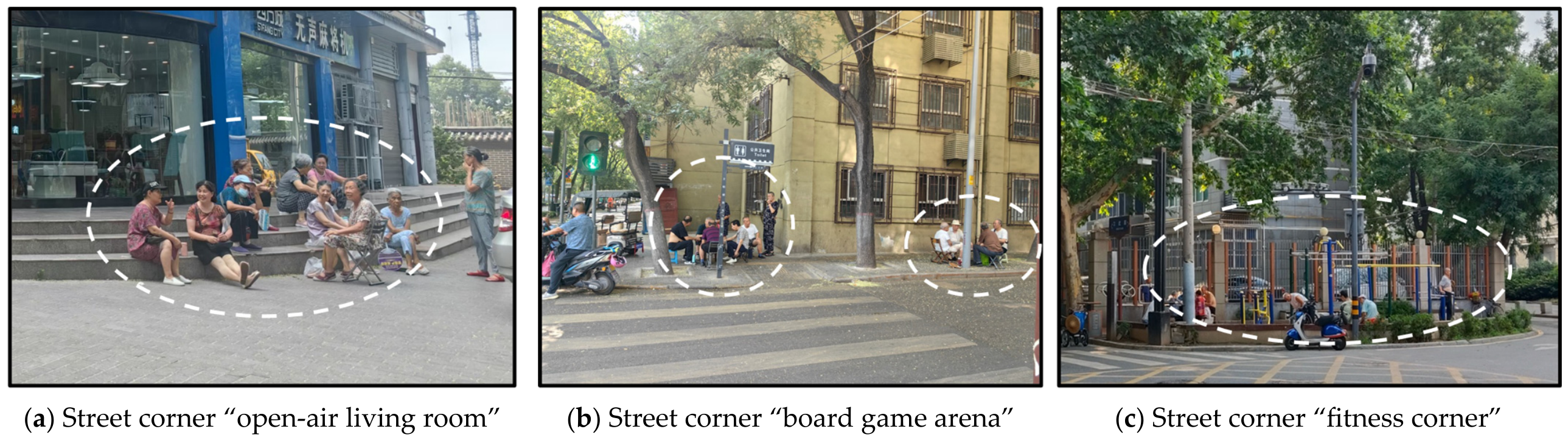
Street corner spaces naturally combine transit function with “social theatre” character. Residents construct impromptu outdoor living rooms and chess venues through folding chairs, tree pits, kerbs, and pavement edges (Figure 8a,b), substantially activating street vitality. One resident captured the spatial embeddedness: “Step out the door and everyone’s here getting some air—you hear the latest news right away.” (Participant M08, male, 74, 52 years’ residence). High accessibility sustains these spaces stably in the Activity stage; however, their location in the ambiguous zone between land-use red lines and municipal management boundaries means that intensive life spillover readily conflicts with pedestrian flow and is vulnerable to administrative clearance. Only a small number of cases (Figure 8c) have been successfully transformed into attributed “old spots” through collaborative efforts between the government and residents.

4.3.4. Street-Front Open Spaces (Street-Interface Type)

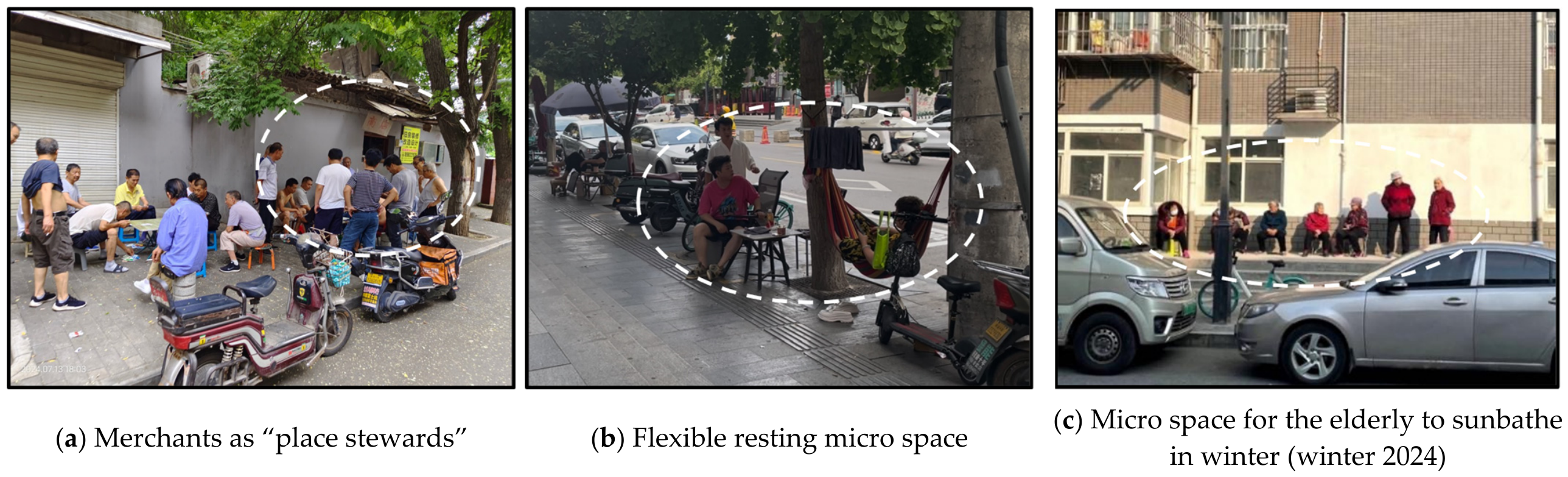
Street-front open spaces, the most numerous micro space type in the old urban district, fundamentally represent life spillover consequent upon the scarcity of community public resources. This type is critically dependent on the sustained engagement of place stewards. One long-established merchant described the emergence of this stewardship role: “I like chess, so I set up a chess table at my shop entrance; it is been over ten years now… everyone who comes to play knows to look after the table.” (Participant M03, male, 55, 15 years in business). Once subjected to urban appearance enforcement or merchant turnover, spatial order immediately dissolves, locking these spaces in the elementary Discovery–Activity cycle without the institutional support needed to accumulate stable social capital.

4.3.5. Pocket Parks (Urban-Service Type)

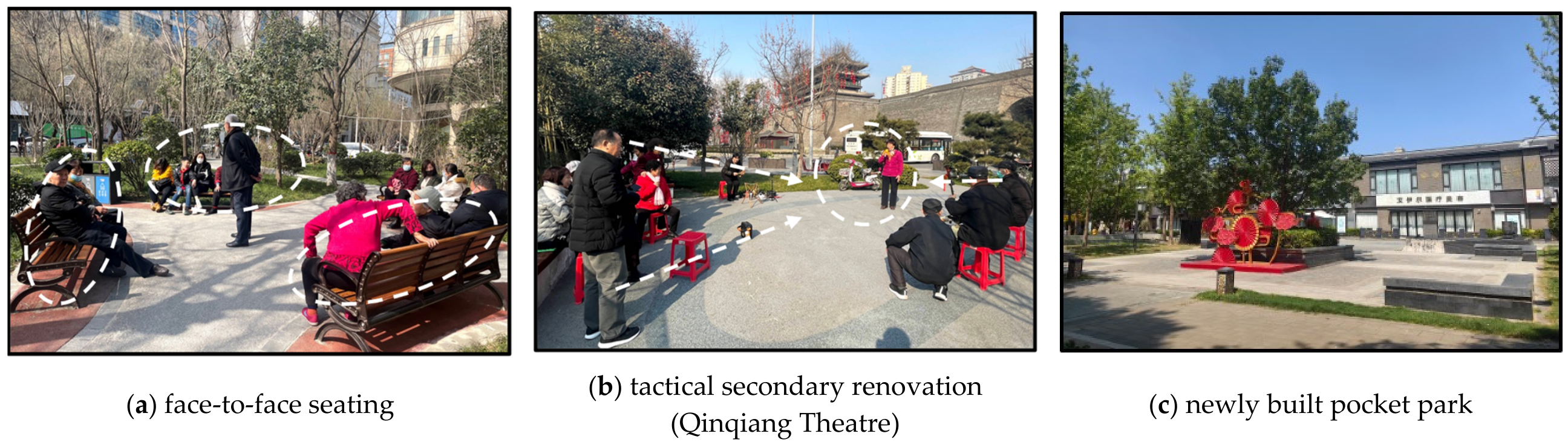
Well-designed pocket parks, particularly those with enclosed or face-to-face seating, readily become high-frequency neighbourhood social magnets (Figure 10a), while open hardscape areas are often self-transformed by residents into vibrant stages for traditional Qin Opera rehearsals and public dancing through tactical second-generation modifications (Figure 10b). However, a pronounced “space without place” phenomenon is also observed (Figure 10c): one resident remarked candidly, “I visited that new park once—it was too open, uncomfortable to sit there, and the wind was strong.” (Participant F27, female, 59, 22 years’ residence). The fundamental cause is that pocket parks exhibit an inverted evolutionary pattern, skipping the Discovery and Activity stages in which residents would normally develop familiarity and ownership before renovation occurs. This pattern is consistent with Cattell and colleagues’ [42] finding that the social value of daily public spaces depends on authentic activation through lived use.

4.3.6. Public Building Forecourts (Urban-Service Type)

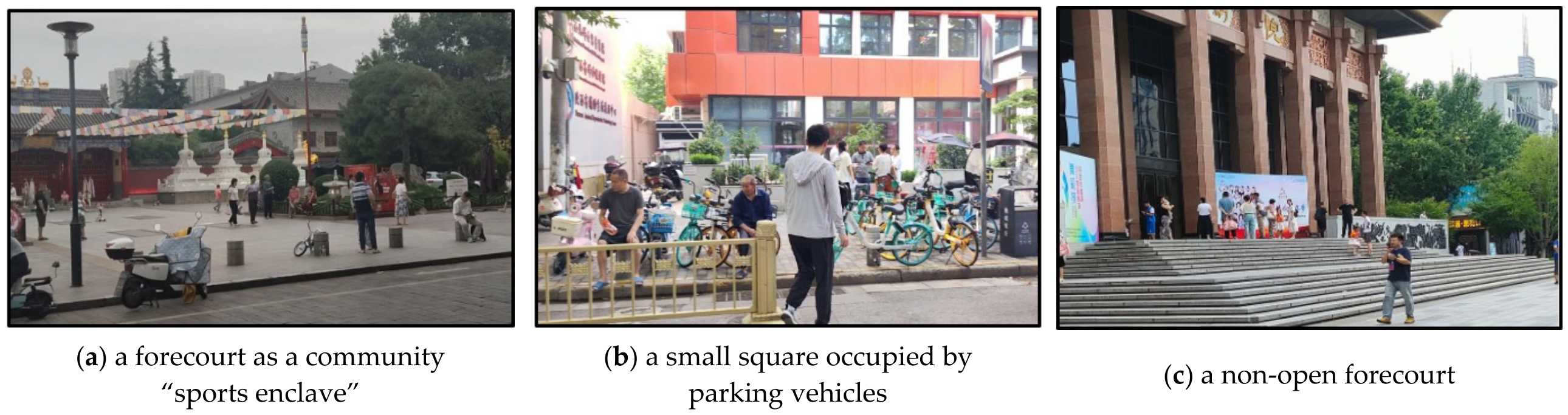
Public building forecourts, appended to health service stations, markets, sub-district offices, and schools, display a pronounced “functional accompaniment” character. A small number of spacious forecourts serve as the old district’s rare “sports enclaves”, hosting badminton and children’s skateboarding (Figure 11a); the great majority of constrained forecourts are routinely occupied by motor vehicles or queuing pedestrian flows (Figure 11b), or are formally controlled by institutional proprietors who prioritise operational efficiency over community public interest (Figure 11c). Lacking fine-grained time-sharing mechanisms, these spaces remain inaccessible to residents even during non-operating hours, preventing transition from single-function transit nodes to multifunctional community living rooms.
A cross-case comparative matrix of the six space types across the five evolutionary stages is presented in Appendix A, Table A4.

5. Discussion

5.1. Endogenous Drivers: Resident Agency and Psychological Ownership Formation

The endogenous drivers of micro space evolution originate in residents’ sustained daily practices and environmental adaptation rather than in top-down policy initiatives. Micro spaces are deeply embedded in high-frequency daily-life chains such as commuting, grocery shopping, and childcare. Their low threshold and high accessibility enable rapid responsiveness to residents’ basic needs for comfort and convenience. This incidental function-motivated use, accumulated over time, is gradually transformed into habitual behavioural patterns, propelling spaces from discovery into activity, and confirming Putnam’s [30] argument that repeated social interactions build trust, establish norms, and reduce collective action costs.
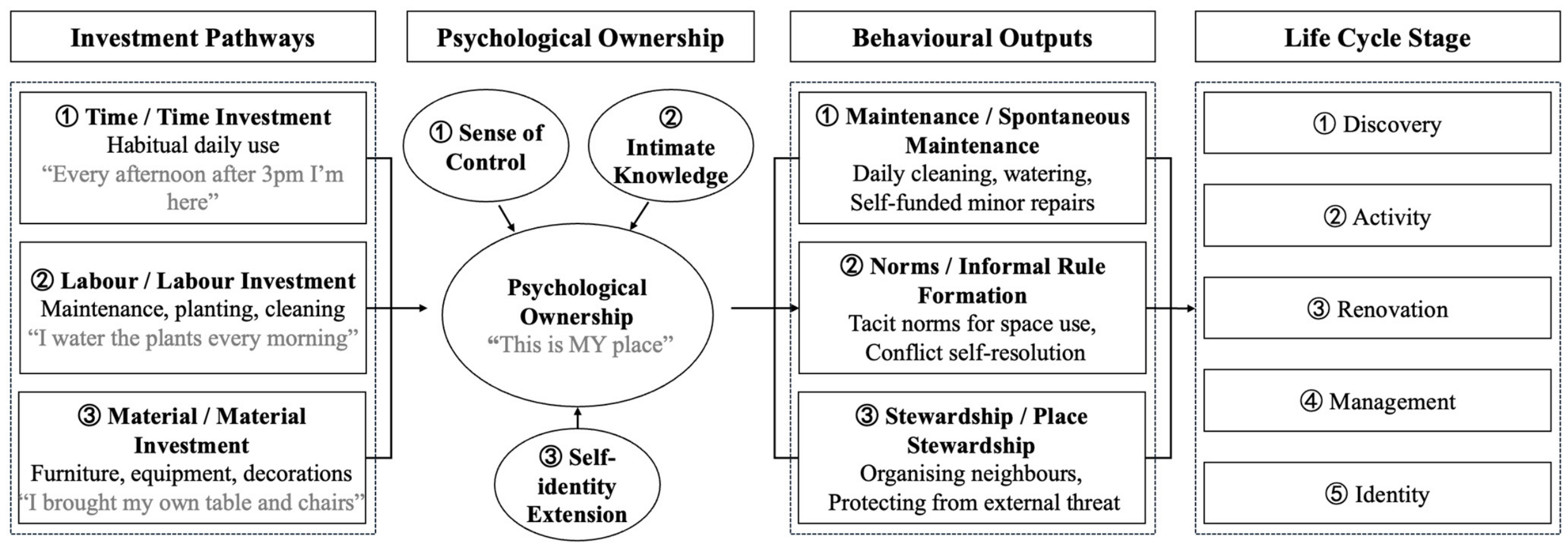
As evolution deepens, the motivational mechanism transitions from functional need to psychological belonging. When residents invest labour and material resources in spatial micro-renewal, psychological ownership as theorised by Pierce and colleagues [34,35] is generated: residents start to regard the public micro space as “their place” and spontaneously assume maintenance responsibilities, forming the critical “place steward” role. This mechanism closely parallels Scannell and Gifford’s [37] tripartite place attachment framework: affective investment through behavioural engagement is converted into cognitive belonging, establishing a stable person–place relationship. The psychological ownership formation mechanism and its implications for place stewardship are illustrated in Figure 12. It is noteworthy that even for government-supplied pocket parks, the capacity to transition from “physical space” to “social place” remains contingent on residents’ active second-generation engagement, consistent with the international literature on user appropriation [13] and Cattell and colleagues’ [42] findings on everyday public spaces.

5.2. Structural Constraints: Ambiguous Property Rights and Institutional Vacuums

Counterbalancing the endogenous drivers are structural constraints at both physical and institutional levels. At the physical level, old residential compounds universally face the hard constraints of spatial scarcity, sensitivity of fire escape clearways, and ageing infrastructure. For street-interface spaces, once residents’ dwell activity exceeds physical boundaries, conflict with pedestrian transit function becomes unavoidable. The dilemma is candidly articulated by one enforcement officer: “We understand that elderly people need activity space, but they blocked the fire escape—if an accident happened, who would be responsible?” The fundamental incompatibility between the rigidity of safety compliance requirements and the flexibility of resident living needs cannot be resolved through any single administrative instrument.
At the institutional level, micro spaces are chronically caught in the interstices of China’s binary public–private governance system, exhibiting a characteristic institutional vacuum: existing property management systems typically decline responsibility, while municipal maintenance cannot penetrate the capillary scale of community interiors. This void of “neither public nor private” ownership results in the absence of a long-term maintenance responsibility. This pattern closely mirrors the commons governance dilemma described by Ostrom [36]: absent clear property rights definitions and community self-governance rules, micro spaces are prone to degradation under the dual pressure of administrative clearance and excessive individual appropriation. At a deeper level, the static administrative rights-definition logic cannot adapt to dynamic spatial use demand, with residents’ flexible time–space occupation routinely classified as “violation” by rigid management ordinances—a supply–demand mismatch constituting the institutional root cause of the “remediation–recurrence–re-remediation” negative cycle (Figure 13).

5.3. The Critical Juncture: The “High-Risk Window Period”

This study introduces the concept of the “high-risk window period”, identifying the structural rupture at the Renovation-to-Management stage transition as the critical determinant of micro space evolutionary outcomes—constituting this paper’s core theoretical contribution: unlike the user-internal stages of Discovery and Activity or the consolidative Identity stage, this transition is the only one at which residents’ material investment must publicly encounter property authority and safety compliance, and where failure typically produces irreversible demolition rather than recoverable dormancy. During this period, residents’ intensive engagement—self-constructed canopies, planted vegetation, repositioned seating—strengthens place identity but simultaneously risks triggering administrative penalties upon transgressing property rights and safety boundaries. In a substantial proportion of cases, self-constructed sunshades, planted flowers, and repositioned chairs were dismantled under legitimate administrative authority. Although legally justifiable, these actions routinely interrupt the natural evolutionary process, dampen resident participatory enthusiasm, and push spaces back into dormancy.
This finding resonates with the core argument of Healey’s collaborative planning theory [43]: effective planning intervention lies not in enforcing predetermined blueprints but in providing deliberation platforms at critical junctures to channel diverse stakeholders’ interests into institutional pathways. The high-risk window period is precisely such a critical juncture: where negotiation mechanisms and flexible rules can be introduced, and where spontaneous practices can be absorbed into a co-governance framework with institutional legitimacy, spaces can break through the bottleneck and enter a virtuous Identity stage. Conversely, where rigid interruption or laissez-faire prevails, evolutionary trajectories bifurcate—either regressing to passive dormancy or devolving into exclusionary private appropriation.

5.4. A Full Life-Cycle Adaptive Governance Paradigm

Based on the foregoing analysis, this study proposes a full life-cycle adaptive governance paradigm that shifts from “one-off physical renovation” to “continuous process accompaniment”, dynamically adjusting intervention intensity and strategy type according to evolutionary stage (Appendix A Table A5; Figure 13). During the Discovery and Activity stages, governance should adopt a “targeted acupuncture” micro-intervention strategy: establishing observable baseline archives through heat map monitoring and behavioural annotation; setting negative lists around fire safety and transit clearway red lines; and demarcating flexible boundaries that pre-reserve informal trial space for residents’ spontaneous life spillover, deliberately avoiding premature administrative formalisation.
At the Renovation stage, governance must address the critical threshold of legitimacy confirmation, shifting focus to enabling co-construction and stakeholder negotiation. A layered investment mechanism should be established in which government investment secures the structural skeleton—drainage, hardscape, barrier-free infrastructure—while soft elements such as seating, vegetation, and murals are left to residents to populate through material kits and design consultation. A negotiation mechanism linking renovation rights to subsequent maintenance obligations through co-construction agreements converts individualised spontaneous renovation into collective action with contractual accountability. During the Management and Identity stages, governance shifts to institutional embedding of rules and cultivation of place spirit. A concise micro space self-governance covenant should be developed through a tripartite platform of residents’ committee, homeowners’ association, and property management, supplemented by space naming, community memory exhibitions, and regularised neighbourhood celebration activities.
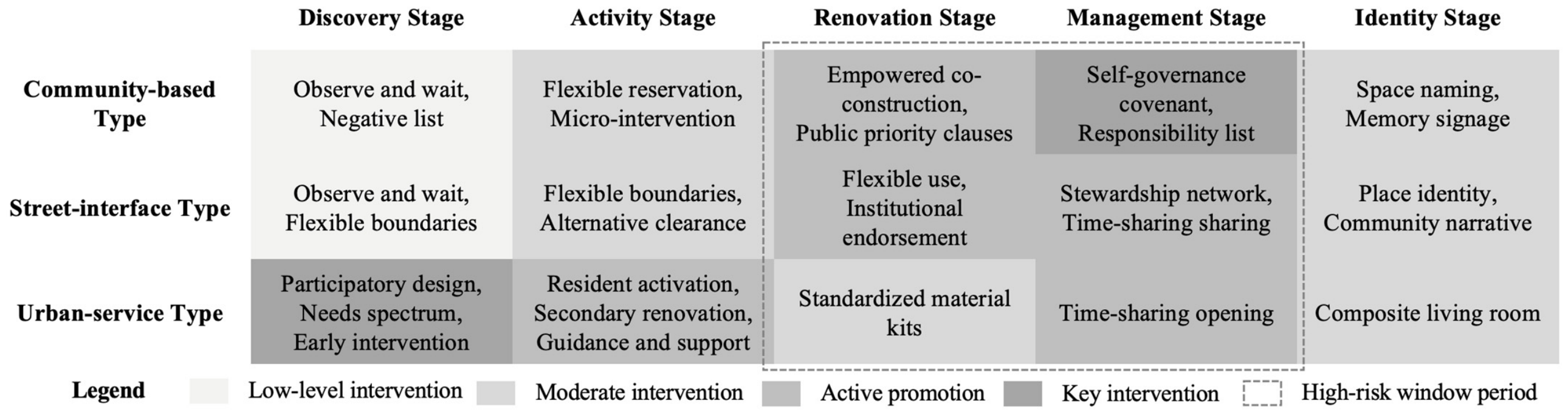
At the level of type-differentiated governance (Figure 14), community-based spaces require governance concentrated from the Renovation to Identity stages, with a tripartite covenant signed by the residents’ committee, property management and homeowners’ association within thirty days of Renovation onset, and with co-construction agreements explicitly embedding “public-priority” boundary clauses to prevent territorial appropriation, supplemented by cultural instruments such as space naming to reinforce collective identity. Street-interface spaces require flexible boundaries in lieu of forced clearance during early stages, a joint “flexible use certification” from property authorities and sub-district offices during the Renovation stage, defining permitted hours, footprint, and reversibility requirements, and cultivation of a stable place steward network with time-sharing mechanisms in the Management stage. For urban-service spaces, pocket parks require front-loaded participatory design mechanisms (a six-month soft-opening workshop with surrounding residents) to restore the skipped Discovery and Activity stages; public building forecourts require negotiation of “non-operating-hours opening agreements” to convert enclosed administrative spaces into flexibly shared community resources. To prevent these instruments from over-standardising everyday practice, they are designed with a negative-list logic, a reversibility test for any window-period intervention, and light-touch certification that confers legitimation rather than full project approval—preserving informality, flexibility, and residents’ autonomy as constitutive features of micro space life.

5.5. Dialogue with International Research and Study Limitations

This study’s findings engage in productive dialogue with several frontiers of international urban research. The high-risk window period concept resonates with the deep tension in temporary urbanism research [11,13,44]: flexible intervention activates latent potential, but without an institutionalisation channel from “informal” to “legitimate”, self-generated energy dissipates under administrative pressure—a dynamic with universal relevance in high-density historic districts globally. The identification of psychological ownership as the core evolutionary driver aligns closely with Cattell and colleagues’ [42] findings on everyday public spaces and community wellbeing, evidencing that the emotional meaning residents invest in space—rather than physical conditions—is the fundamental source of sustained vitality. Comparison with Shin’s [38] study of Beijing’s Nanluoguxiang demonstrates the common constraints of old urban district governance: the tension between historically accumulated spatial property rights complexity and standardising contemporary management logic is shared across high-density Asian historic districts. Ostrom’s governance design principles [36] receive partial validation in the Xi’an context while also revealing their application boundaries in China’s specific institutional environment. Folke and colleagues’ adaptive governance framework [45] offers a productive analogy: like complex ecosystems, micro space communities require governance approaches sensitive to internal dynamics rather than imposed external equilibrium.
Four limitations of this study warrant explicit acknowledgement. First, the single-case qualitative research design limits generalisability; the theoretical findings require validation through multi-city comparative studies, and Xi’an’s specific historical–cultural context may represent enabling conditions not universally present. Second, the fieldwork was concentrated in a single month (July 2025), precluding longitudinal tracking of complete evolutionary cycles within individual micro spaces; the summer window also under-represents winter and rainy-day uses, though the high-risk window diagnosis remains robust because it concerns institutional rather than climatic dynamics. Third, the participant base skews toward middle-aged and elderly residents, insufficiently capturing younger residents’ spatial preferences and digital-age micro space use patterns. Fourth, the study is grounded in qualitative methods alone. The external validity of the findings would be further strengthened by several extensions: complementary quantitative validation through user-counts, sensor-based footfall data, and structured questionnaires on a larger sample; systematic multi-province comparison across other Chinese walled historic districts; cross-national comparison with high-density European and Asian historic cores; and a multi-region expert Delphi consultation on Figure 12, Figure 13 and Figure 14. Future research can productively advance in the directions of multi-city comparative study, longitudinal tracking including a winter follow-up design, social network analysis, and digital technology-assisted identification and monitoring.

6. Conclusions

Every day, micro spaces in old urban districts, as the most immediate and frequent interfaces of residents’ daily lives, serve as direct indicators of the precision and human-centredness of urban renewal. This study constructed a “Spatial Type–Perceived Need–Life Cycle” three-dimensional analytical framework to reveal the internal dynamics of everyday micro space evolution. Through empirical investigation of over 170 micro spaces and in-depth interviews with 45 residents in Xi’an’s historic district, it identified residents’ spontaneous agency and psychological ownership formation as the core endogenous drivers, and ambiguous property rights, institutional vacuums, and the structural rupture at the Renovation-to-Management stage transition as the primary structural constraints. Building on these findings, the study proposes a full life-cycle adaptive governance paradigm integrating phased and type-differentiated intervention strategies.
Returning to the three research questions posed at the outset, (RQ1) the perceived needs that everyday micro spaces fulfil are arranged along a three-tier, nine-level spectrum (availability–attraction–identity) whose dominant tier shifts dynamically as the space evolves (Table 2); (RQ2) the staged evolutionary process unfolds as Discovery → Activity → Renovation → Management → Identity, with the Renovation–Management transition identified as the structural bottleneck (Section 5.3); and (RQ3) differentiated governance strategies are matched to each stage and each space type, with explicit actor–instrument–timing combinations and three preserving-informality principles (Section 5.4, Appendix A Table A5). The theoretical contributions operate at three levels. First, the systematic introduction of psychological ownership theory into micro space governance analysis reveals the internal mechanism through which residents transition from “users” to “stewards”—positioning residents, merchants, elderly users, and place stewards as primary producers rather than passive beneficiaries of micro space. Second, the introduction of the high-risk window period concept identifies the Renovation-to-Management structural rupture as the critical determinant of micro space evolutionary failure, providing a process-based mechanistic explanation for the “post-completion neglect” phenomenon widely observed in urban renewal practice. Third, the construction of a full life-cycle adaptive governance paradigm achieves a theoretical reorientation from static spatial assessment to dynamic governance process analysis, providing theoretical grounding for the policy transition from “one-off renovation to long-term governance”, with policy instruments framed as enabling light-touch arrangements rather than translational devices that absorb spontaneous practice into administrative grids. For practitioners and policymakers, the core implication is that activating the endogenous vitality of everyday micro spaces requires not greater material investment, but recognition of evolutionary stages, identification of critical junctures, and timely institutional supply to legitimate residents’ spontaneous energy into collective action.

Author Contributions

Conceptualization, Y.W. and K.Y.; methodology, Y.W.; formal analysis, Y.W. and S.L.; investigation, R.Z., S.L., and Q.Z.; data curation, R.Z. and S.L.; writing—original draft preparation, Y.W.; writing—review and editing, Y.W. and K.Y.; visualization, Y.W.; supervision, K.Y.; project administration, K.Y.; funding acquisition, Y.W. All authors have read and agreed to the published version of the manuscript.

Funding

This research was funded by The Social Science Foundation of Shaanxi Province, grant number 2024J043; The Natural Science Foundation of Shaanxi Province, grant number 2025JC-YBQN-556; The Fundamental Research Funds for the Central Universities, CHD, grant number 300102415110; and The Art Science Planning Project of Shaanxi Province, grant number SYG2025015.

Institutional Review Board Statement

Ethical review and approval were waived for this study. The research involved non-interventional qualitative observation and semi-structured interviews with community residents in public and semi-public outdoor spaces. No sensitive personal data or medical information was collected. In accordance with applicable ethical guidelines for social science research in China, formal Institutional Review Board approval is not required for this type of observational and interview-based qualitative research conducted in community settings. All participants were fully informed of the research purpose, their right to withdraw at any time without consequence, and the anonymisation procedures applied to all data.

Informed Consent Statement

Verbal informed consent for participation was obtained from all subjects involved in the study prior to each interview. Verbal consent was adopted rather than written consent, given the informal ethnographic nature of the community field interviews, the minimal risk posed to participants, and the community-embedded social context in which requesting signed documentation would have introduced an institutional formality inappropriate to the naturalistic research setting. A standardised verbal consent protocol was applied consistently across all 45 interviews, covering research purpose, data use, anonymisation guarantees, and the right to withdraw.

Data Availability Statement

The qualitative interview data and field observation records supporting the reported results are not publicly available due to privacy and confidentiality protections agreed with research participants. Anonymised data may be made available on reasonable request from the corresponding author (Y.W.).

Acknowledgments

The authors gratefully acknowledge the residents of Xi’an’s historic district for their generous time, openness, and willingness to share their everyday spatial experiences. The authors also thank the community workers and enforcement personnel who offered comparative institutional perspectives. All field photographs in Figure 3, Figure 6, Figure 7, Figure 8, Figure 9, Figure 10 and Figure 11 were taken by all authors during the July 2025 fieldwork. During the preparation of this manuscript, the authors used the Nano Banana Pro image generation model to produce the base graphic layout of Figure 5 (life-cycle evolution diagram), which was subsequently substantially modified, annotated, and redesigned by the authors. The authors have reviewed and edited the output and take full responsibility for the content of this publication.

Conflicts of Interest

Author Qiong Zhang was employed by the company Shaanxi Huachuang Tianze Technology Industrial Development Co., Ltd. The remaining authors declare that the research was conducted in the absence of any commercial or financial relationships that could be construed as a potential conflict of interest.

Appendix A

Table A1. Participant profile summary (n = 45).
CategoryGroupn%
Age12–30 years511.1
31–50 years1022.2
51–65 years1635.6
66 years and above1431.1
Residential tenure5–10 years817.8
11–20 years1226.7
21–40 years1737.8
40+ years817.8
Role typeOrdinary user2657.8
Place steward1328.9
Community organiser48.9
Enforcement/management24.4
Table A2. Examples of thematic analysis coding procedure.
Raw Data ExtractInitial CodeTheme
“At first I just rested under the tree when passing by; later I found several old neighbours there every afternoon, gradually got familiar, and started bringing a stool to play chess.” (Participant M17, male, 71, 33 years’ residence)Incidental use → capitalised behaviourDiscovery stage → Activity stage transition
“I like chess, so I set up a chess table at my shop entrance; it’s been over ten years now… everyone who comes to play chess automatically maintains order.” (Participant M03, male, 55, 15 years in business)Active resource investment; informal norm emergencePsychological ownership formation
“We understand that elderly people need activity space, but they blocked the fire escape—if an accident happened, who would be responsible?” (Enforcement officer)Administrative rigidity; safety red lineProperty rights ambiguity and institutional vacuum
Table A3. Perceived needs spectrum of everyday micro spaces (detailed version).
Need TierSub-DimensionCore ContentTypical Spatial ManifestationsRepresentative Resident Quote
Basic Needs
(Availability)
SafetyEnvironment free of hazards; clear sightlines; night-time securityAdequate lighting; unobstructed sightlines; even paving“There are always people here during the day, so we elderly feel safe.” (F09, female, 70)
ComfortAppropriate microclimate; amenities supporting dwellTree canopy; comfortable seating; soft-surface paving“There’s a big tree—it’s cool to sit there in summer.” (M14, male, 66)
ConvenienceHigh accessibility; complete barrier-free facilities; proximate servicesBarrier-free ramps; nearby convenience store; spatial location“Just a few steps out the door—convenient.” (F33, female, 78)
Progressive Needs
(Attraction)
Social facilitationSupports weak-tie contact and incidental conversationSemi-enclosed nodes; face-to-face seating; chess and card tables“Step out the door, and everyone’s here getting some air—you hear the latest news right away.” (M08, male, 74)
Leisure and recreationAccommodates diverse daily recreational activitiesChildren’s play equipment; fitness apparatus; flexible ground“The children play here, and we adults have somewhere to chat.” (F21, female, 45)
Aesthetic appealClean interface; landscape beauty; material coherenceWall beautification; flowering plants; coordinated furniture“After the flowers were planted, it looked so much better—you want to come and sit.” (F16, female, 62)
Advanced Needs
(Identity)
Emotional experienceGenerates a sense of belonging and territorialityFamiliar “old spot”; intimate corners; self-initiated maintenance“Seeing the old neighbours sitting at the entrance, my heart feels settled.” (F12, female, 68)
Intergenerational learningSupports cross-generational transmission and information exchangeNotice boards; shared bookshelves; garden planting boxes“Children come to ask me how to grow vegetables—that makes me happy.” (M29, male, 73)
Cultural cultivationCarries collective memory and community narrativePreserved historical objects; memorial plaques; festival decorations“This locust tree has been here for decades—nobody wants to see it cut down.” (M41, male, 80)
Table A4. Cross-case evolutionary stage characteristics matrix of six micro space types.
Spatial TypeDiscoveryActivityRenovationManagementIdentityKey Obstacle
Community entranceIncidental transit stopStable gathering group formsSelf-provided facilities/canopy 1Frequently cleared; unstableAcquaintance-level identitySafety red line conflict
Community open spaceIdle corner discoveredIndividual territorialisationGardening/salvaged furniture 1Commons private use riskDeep emotional attachmentPublic boundary erosion
Street corner spaceTransit stopSelf-made outdoor salonMinimal modificationRepeated clearance cycleRare successful casesAmbiguous boundary/clearance
Street-front open spaceLife spilloverSteward-maintained activityDependent on the merchant; limitedCollapses with merchant changeDifficult to accumulateSteward dependency
Pocket parkSkipped (inverted) 1Skipped (inverted) 1Government-builtVitality lacking/2nd-gen. mod.Achievable with good designDiscovery/Activity stage absent
Public building forecourtFunction-accompaniedSpontaneous activity emergesModifications restrictedFunction monopoly; difficult to openExtremely difficultManagement monopoly
1 Denotes a critical obstacle node or anomalous characteristic at that evolutionary stage for the respective space type.
Table A5. Phased adaptive governance strategies for everyday micro spaces.
Evolutionary StageGovernance ObjectiveCore StrategyKey Governance Instruments
Discovery; ActivityPotential identification;
Flexible reservation
Baseline management: safety and transit red lines as rigid constraints; permit limited informality; avoid premature clearanceHeat map monitoring and behavioural annotation; negative list and flexible boundaries; basic safety patch kit
RenovationEnabling co-construction;
Legitimacy reconstruction
Layered investment: government supplies structural skeleton; residents supply soft content. Interest negotiation: link renovation rights to maintenance responsibilitiesStandardised material kit; community deliberation council; co-construction agreement
Management; IdentityRule internalisation;
Long-term operation
Institutional embedding: micro-covenant establishing responsibility subjects. Value co-creation: strengthen place memory and symbolic meaning; cultivate stewardsMaintenance rotation roster; responsibility list; community micro-fund; space naming and memory plaques

References

  1. Zhu, J. Public space and its publicness in people-oriented urban regeneration: A case study of Shanghai. J. Urban Aff. 2025, 47, 2319–2338. [Google Scholar] [CrossRef]
  2. Hui, E.C.-M.; Chen, T.; Lang, W.; Ou, Y. Urban community regeneration and community vitality revitalization through participatory planning in China. Cities 2021, 110, 103072. [Google Scholar] [CrossRef]
  3. Wang, M.; Zhang, F.; Wu, F. Governing urban redevelopment: A case study of Yongqingfang in Guangzhou, China. Cities 2022, 120, 103420. [Google Scholar] [CrossRef]
  4. Li, Y.; Zhang, S.; Zhu, D. Co-creation of community micro-renewals: Model analysis and case studies in Shanghai, China. Habitat Int. 2023, 142, 102951. [Google Scholar] [CrossRef]
  5. Salmistu, S.; Kotval, Z. Spatial interventions and built environment features in developing age-friendly communities from the perspective of urban planning and design. Cities 2023, 141, 104417. [Google Scholar] [CrossRef]
  6. Zhou, C.; An, Y.; Zhao, J.; Xue, J.; Fu, L.; Cao, M. How do mini-parks serve in groups? A visit analysis of mini-park groups in the neighbourhoods of Nanjing. Cities 2022, 129, 103804. [Google Scholar] [CrossRef]
  7. Jacobs, J. The Death and Life of Great American Cities; Random House: New York, NY, USA, 1961. [Google Scholar]
  8. Whyte, W.H. The Social Life of Small Urban Spaces; The Conservation Foundation: Washington, DC, USA, 1980. [Google Scholar]
  9. Gehl, J. Life Between Buildings: Using Public Space; Island Press: Washington, DC, USA, 2011. [Google Scholar]
  10. Oldenburg, R. The Great Good Place; Paragon House: New York, NY, USA, 1989. [Google Scholar]
  11. Lydon, M.; Garcia, A. Tactical Urbanism: Short-Term Action for Long-Term Change; Island Press: Washington, DC, USA, 2015. [Google Scholar]
  12. Douglas, G.C.C. Do-it-yourself urban design: The social practice of informal “improvement” through unauthorized alteration. City Community 2014, 13, 5–25. [Google Scholar] [CrossRef]
  13. Franck, K.A.; Stevens, Q. Loose Space: Possibility and Diversity in Urban Life; Routledge: London, UK, 2007. [Google Scholar]
  14. Varna, G.; Tiesdell, S. Assessing the publicness of public space: The star model of publicness. J. Urban Des. 2010, 15, 575–598. [Google Scholar] [CrossRef]
  15. Mehta, V. Lively streets: Determining environmental characteristics to support social behavior. J. Plan. Educ. Res. 2007, 27, 165–187. [Google Scholar] [CrossRef]
  16. Li, Y.; Tao, Y.; Qian, Q.K.; Mlecnik, E.; Visscher, H.J. Critical factors for effective resident participation in neighborhood rehabilitation in Wuhan, China: From the perspectives of diverse stakeholders. Landsc. Urban Plan. 2024, 244, 105000. [Google Scholar] [CrossRef]
  17. Liu, R.L.; Wang, L.J. Returning to emotional daily spirit: An analysis of the connotation of urban small-scale public spaces. Urban Dev. Res. 2021, 28, 40–47. (In Chinese) [Google Scholar]
  18. Sun, X.Y.; Wang, L.J.; Liao, P.; Xu, S.Y. Research on spontaneous participation of the elderly in street corner small public spaces in old urban districts. Archit. J. 2021, S1, 65–69. (In Chinese) [Google Scholar]
  19. Wu, Q.; Li, Z.G.; Wu, M. Research progress and development trends in urban pocket parks. J. Geo-Inf. Sci. 2023, 25, 2439–2455. (In Chinese) [Google Scholar]
  20. Dong, J.; Guo, R.; Guo, F.; Luo, L.; Huang, Y.; Liu, M. Pocket parks—A systematic literature review. Environ. Res. Lett. 2023, 18, 083003. [Google Scholar] [CrossRef]
  21. Zhou, C.H. Basic attributes and key planning issues of urban micro-green spaces. Urban Plan. Int. 2022, 37, 105–113. (In Chinese) [Google Scholar]
  22. Sun, X.; Wang, L.; Wang, F.; Soltani, S. Behaviors of seniors and impact of spatial form in small-scale public spaces in Chinese old city zones. Cities 2020, 107, 102894. [Google Scholar] [CrossRef]
  23. Carmona, M. Public Places, Urban Spaces: The Dimensions of Urban Design, 3rd ed.; Routledge: London, UK, 2024. [Google Scholar]
  24. Mouratidis, K. Urban planning and quality of life: A review of pathways linking the built environment to subjective well-being. Cities 2021, 115, 103229. [Google Scholar] [CrossRef]
  25. Liu, R.L. Emotional Design Research on Urban Small-Scale Public Spaces. Ph.D. Thesis, Tianjin University, Tianjin, China, 2020. (In Chinese) [Google Scholar]
  26. Zhou, D.L.; Hu, J.P.; Wu, L.J. Analysis of vitality-oriented characteristics and management guidelines for small public spaces: A case study of central Guangzhou. Urban Dev. Res. 2021, 28, 24–28. (In Chinese) [Google Scholar]
  27. Chongqing Municipal Bureau of Planning and Natural Resources. Guidelines for the Renewal of Urban Small Public Spaces in Chongqing (Trial); Chongqing Municipal Bureau of Planning and Natural Resources: Chongqing, China, 2022. (In Chinese)
  28. Maslow, A.H. A theory of human motivation. Psychol. Rev. 1943, 50, 370–396. [Google Scholar] [CrossRef]
  29. Gibson, J.J. The Ecological Approach to Visual Perception; Houghton Mifflin: Boston, MA, USA, 1979. [Google Scholar]
  30. Putnam, R.D.; Leonardi, R.; Nanetti, R.Y. Making Democracy Work: Civic Traditions in Modern Italy; Princeton University Press: Princeton, NJ, USA, 1994. [Google Scholar]
  31. Lefebvre, H. The Production of Space; Nicholson-Smith, D., Translator; Blackwell: Oxford, UK, 1991. [Google Scholar]
  32. Lefebvre, H. Le Droit à la Ville; Anthropos: Paris, France, 1968. [Google Scholar]
  33. Lefebvre, H. Critique of Everyday Life, Volume I; Verso: London, UK, 1991. [Google Scholar]
  34. Pierce, J.L.; Kostova, T.; Dirks, K.T. Toward a theory of psychological ownership in organizations. Acad. Manag. Rev. 2001, 26, 298–310. [Google Scholar] [CrossRef]
  35. Pierce, J.L.; Jussila, I.; Cummings, A. Psychological ownership within the job design context: Revision of the job characteristics model. J. Organ. Behav. 2009, 30, 477–496. [Google Scholar] [CrossRef]
  36. Ostrom, E. Governing the Commons: The Evolution of Institutions for Collective Action; Cambridge University Press: Cambridge, UK, 1990. [Google Scholar]
  37. Scannell, L.; Gifford, R. Defining place attachment: A tripartite organizing framework. J. Environ. Psychol. 2010, 30, 1–10. [Google Scholar] [CrossRef]
  38. Shin, H.B. Urban conservation and revalorisation of dilapidated historic quarters: The case of Nanluoguxiang in Beijing. Cities 2010, 27, S43–S54. [Google Scholar] [CrossRef]
  39. Braun, V.; Clarke, V. Using thematic analysis in psychology. Qual. Res. Psychol. 2006, 3, 77–101. [Google Scholar] [CrossRef]
  40. Wang, Y.R.; Zhou, Q.H. Urban space and its design strategies from the perspective of perceived experience of characteristic groups. Urban Plan. Int. 2025, 40, 135–144. (In Chinese) [Google Scholar]
  41. Wang, Y.R.; Zhou, Q.H.; Yang, X.D.; Jia, D. Discussion on urban space types based on perceived experience. Planners 2022, 38, 135–140. (In Chinese) [Google Scholar]
  42. Cattell, V.; Dines, N.; Gesler, W.; Curtis, S. Mingling, observing, and lingering: Everyday public spaces and their implications for well-being and social relations. Health Place 2008, 14, 544–561. [Google Scholar] [CrossRef] [PubMed]
  43. Healey, P. Collaborative Planning: Shaping Places in Fragmented Societies; Macmillan: London, UK, 1997. [Google Scholar]
  44. Zhu, J. Micro-regeneration in Shanghai and the public-isation of space. Habitat Int. 2023, 132, 102741. [Google Scholar] [CrossRef]
  45. Folke, C.; Hahn, T.; Olsson, P.; Norberg, J. Adaptive governance of social-ecological systems. Annu. Rev. Environ. Resour. 2005, 30, 441–473. [Google Scholar] [CrossRef]
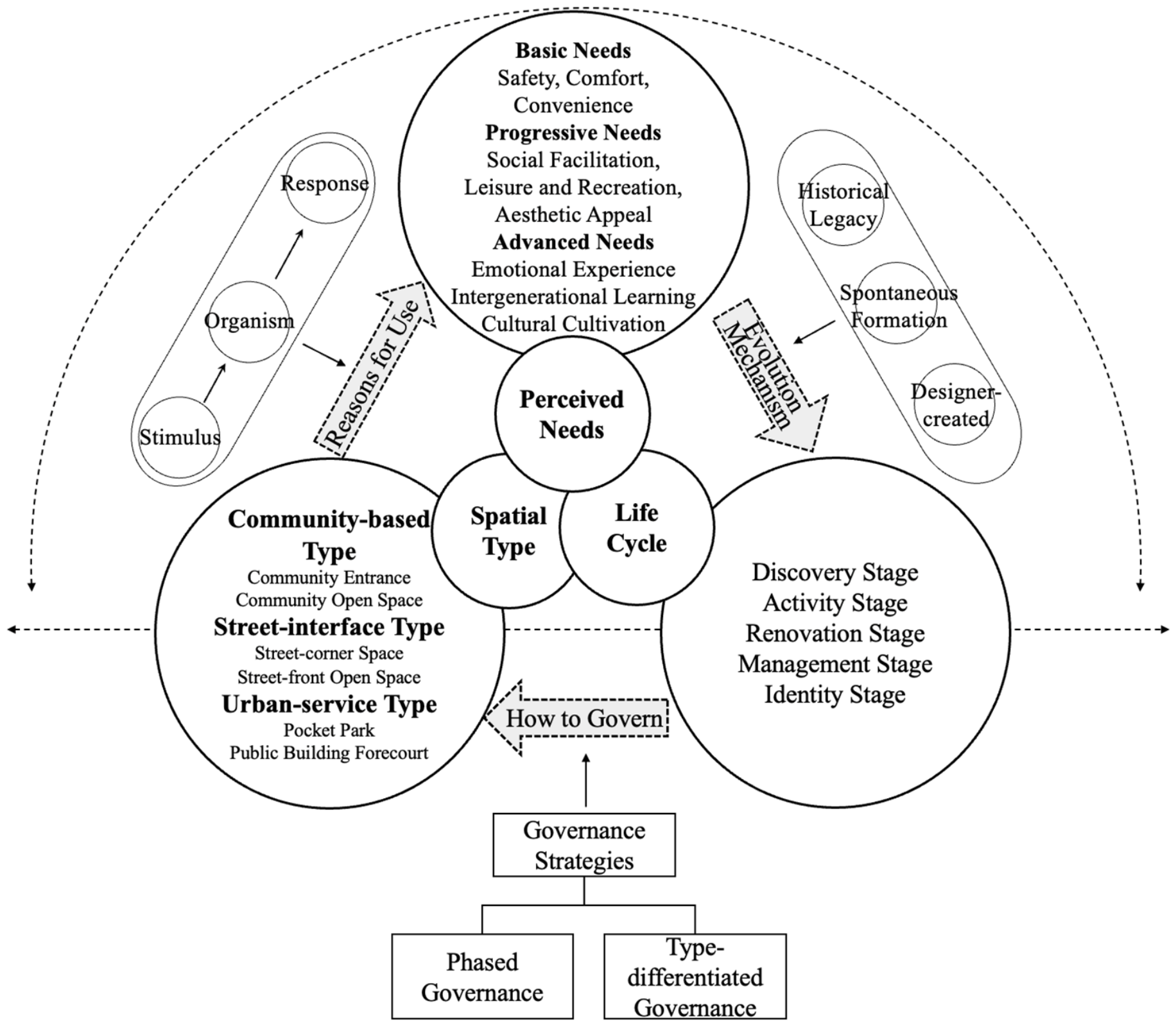
Figure 1. Three-dimensional analytical framework for everyday micro spaces in old urban districts, illustrating the interconnections among spatial type, perceived needs spectrum, and life-cycle model.
Land 15 00973 g001
Figure 2. Distribution map of everyday micro spaces surveyed in Xi’an’s historic district (within the Ming City Walls), showing the locations of 170+ micro spaces classified by type.
Land 15 00973 g002
Figure 3. Three-dimensional representations of the six typical micro space types: (a) community entrance; (b) community open space; (c) street-corner space; (d) street-front open space; (e) pocket park; (f) public building forecourt.
Land 15 00973 g003
Figure 4. Research design flowchart illustrating the overall methodological approach, from research context and gap identification through data collection, thematic analysis, and framework-based output [39].
Land 15 00973 g004
Figure 5. Schematic diagram of the life-cycle evolutionary process of everyday micro spaces, illustrating the five stages (Discovery–Activity–Renovation–Management–Identity).
Land 15 00973 g005
Figure 6. Typical scenes of community entrance spaces.
Land 15 00973 g006
Figure 7. Typical scenes of community open spaces.
Land 15 00973 g007
Figure 8. Typical scenes of street corner spaces.
Land 15 00973 g008
Figure 9. Typical scenes of street-front open spaces.
Land 15 00973 g009
Figure 10. Typical scenes of pocket park spaces.
Land 15 00973 g010
Figure 11. Typical scenes of public building forecourt spaces.
Land 15 00973 g011
Figure 12. Psychological ownership formation mechanism and place stewardship pathway, illustrating investment pathways (time, labour, material), psychological ownership formation routes (sense of control, intimate knowledge, self-identity extension), behavioural outputs (spontaneous maintenance, informal rule formation, place stewardship), enabling conditions (top), and constraining forces (bottom).
Land 15 00973 g012
Figure 13. Drivers and constraints of everyday micro space life-cycle evolution, illustrating the interplay between endogenous resident agency (bottom) and structural constraints (top), and the “high-risk window period” at the Renovation–Management transition.
Land 15 00973 g013
Figure 14. Type-differentiated governance strategies matrix for everyday micro spaces across the five evolutionary stages, showing intervention approaches for community-based, street-interface, and urban-service space categories.
Land 15 00973 g014
Table 1. Typological classification of everyday micro spaces.
Spatial CategoryTypical SpacesGovernance & PropertyEvolutionary Profile
Community-basedCommunity entrances; open spacesResident co-owned; homeowners’ association/property managementHigh psychological ownership; bottleneck at Renovation–Management transition
Street-interfaceStreet corner; street-front open spacesInterwoven public–private; urban management + merchants + residentsStable in Activity stage; compliance-threshold bottleneck
Urban-servicePocket parks; public-building forecourtsMunicipal/institutional; sub-district + landscape departmentInverted evolution; vitality-activation challenge
Table 2. Perceived needs spectrum of everyday micro spaces (simplified).
Need TierCore Content (Three Sub-Dimensions)Representative Spatial Cues
Basic Needs (Availability)Safety; comfort; convenienceLighting, canopy seating, barrier-free access, proximity to services
Progressive Needs (Attraction)Social facilitation; leisure and recreation; aesthetic appealSemi-enclosed nodes, chess/card tables, play and fitness equipment, flowering plants
Advanced Needs (Identity)Emotional experience; intergenerational learning; cultural cultivationFamiliar “old spots”, shared bookshelves, preserved historic objects
Disclaimer/Publisher’s Note: The statements, opinions and data contained in all publications are solely those of the individual author(s) and contributor(s) and not of MDPI and/or the editor(s). MDPI and/or the editor(s) disclaim responsibility for any injury to people or property resulting from any ideas, methods, instructions or products referred to in the content.