Life-Cycle Evolution and Adaptive Governance of Everyday Micro Spaces in an Old Urban District: The Case of Xi’an, China

Abstract
1. Introduction
2. Theoretical Framework
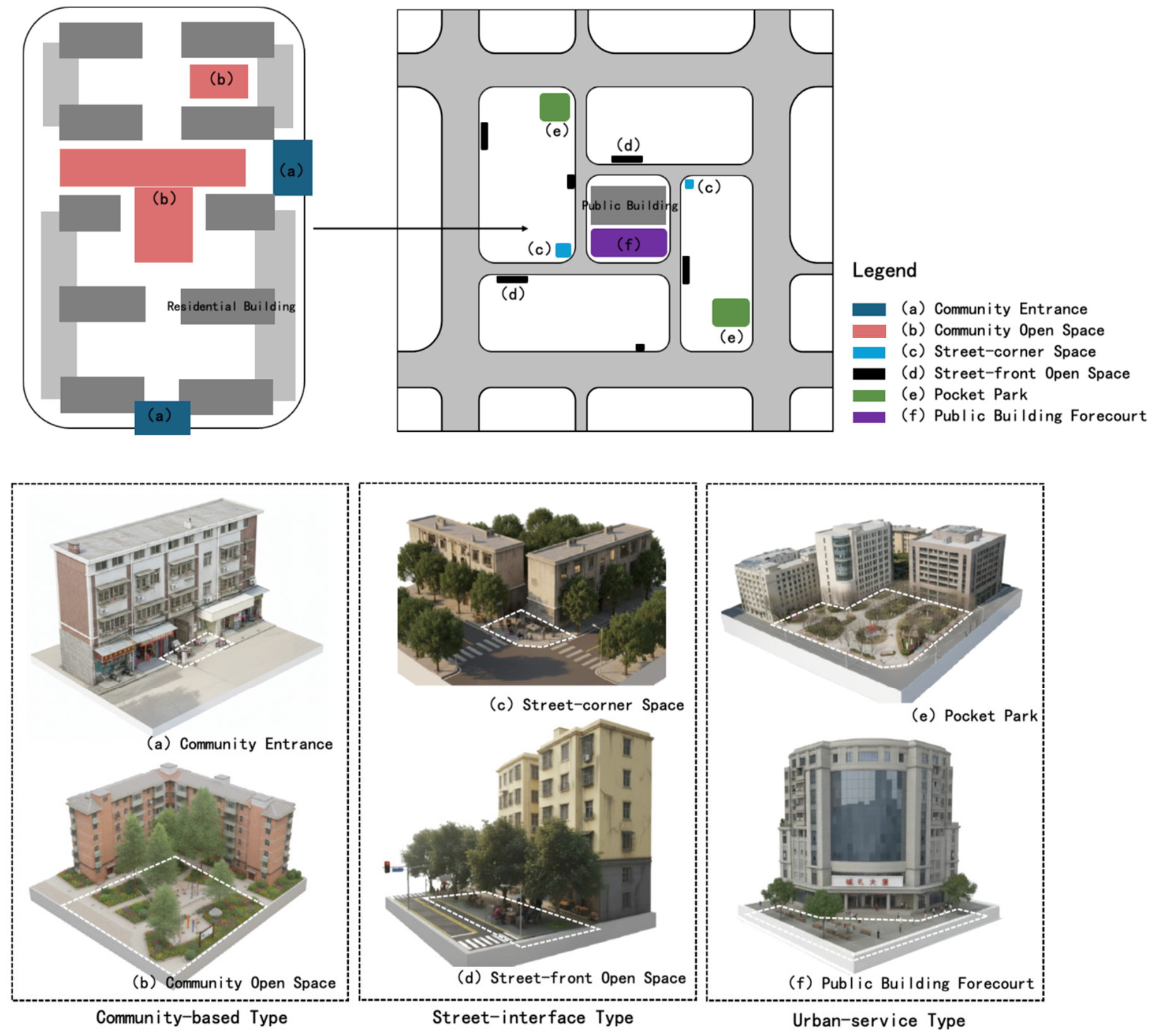
2.1. Conceptual Definition of Everyday Micro Spaces
2.2. Theoretical Foundations
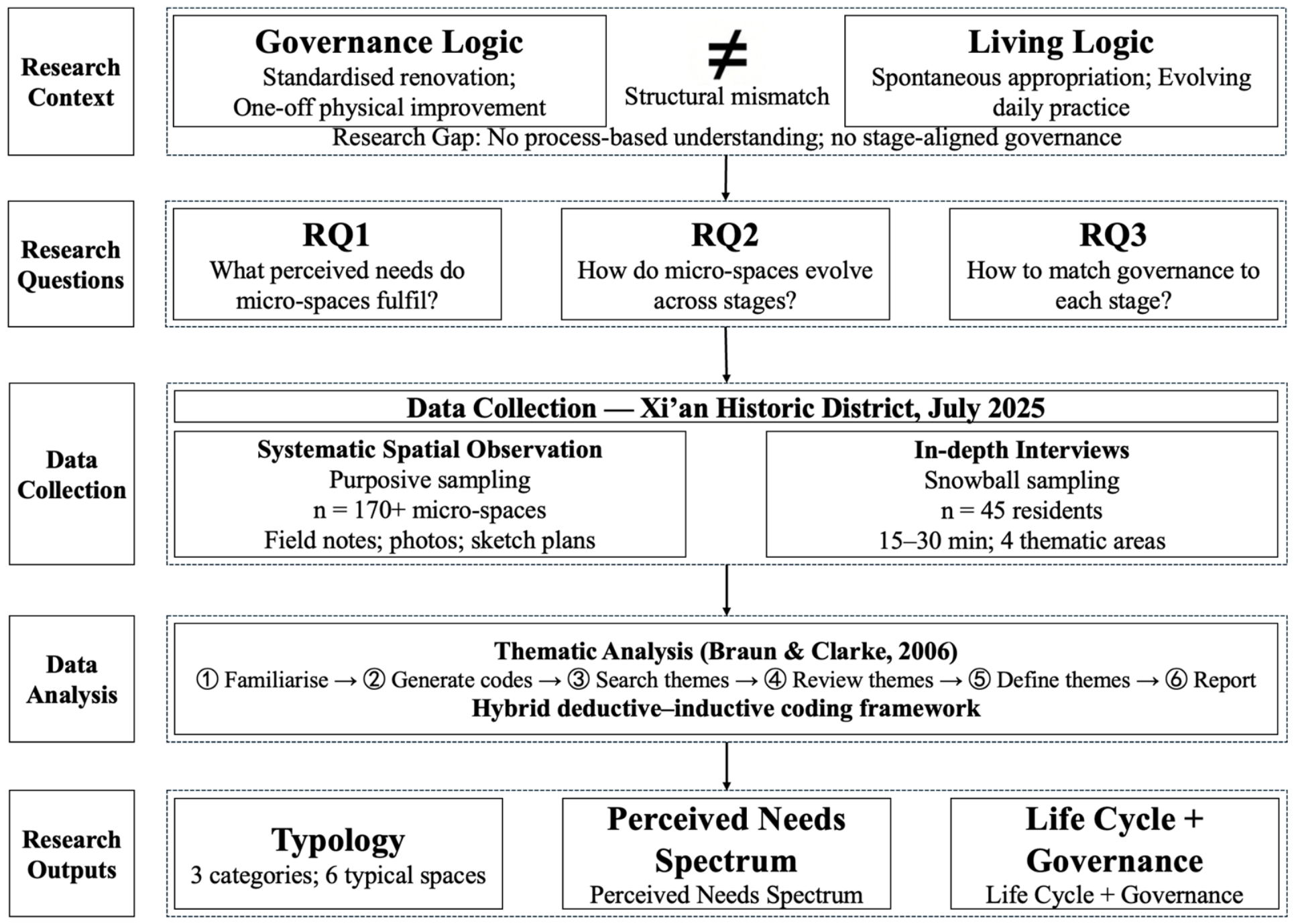
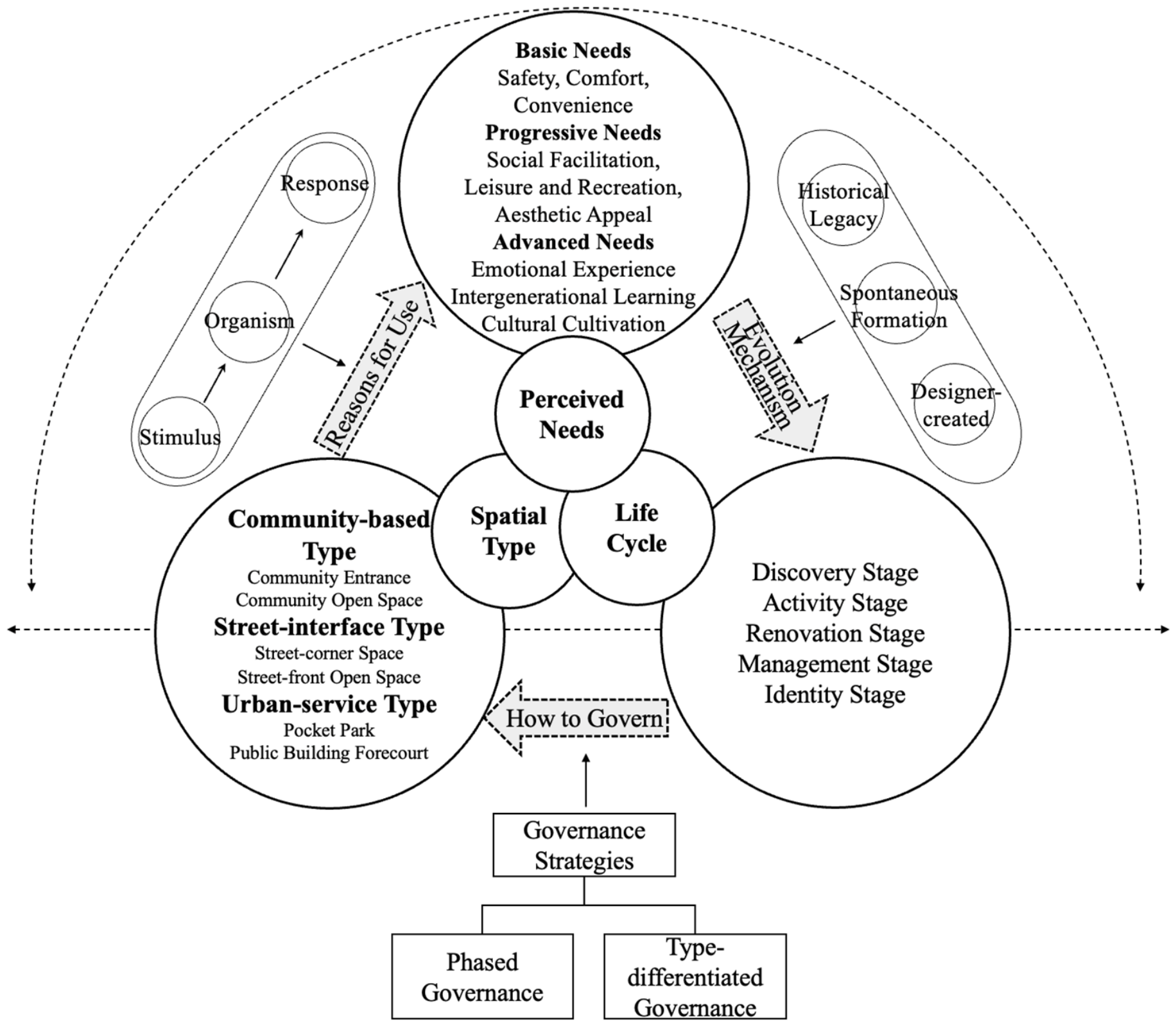
2.3. The “Spatial Type–Perceived Need–Life Cycle” Analytical Framework
3. Materials and Methods
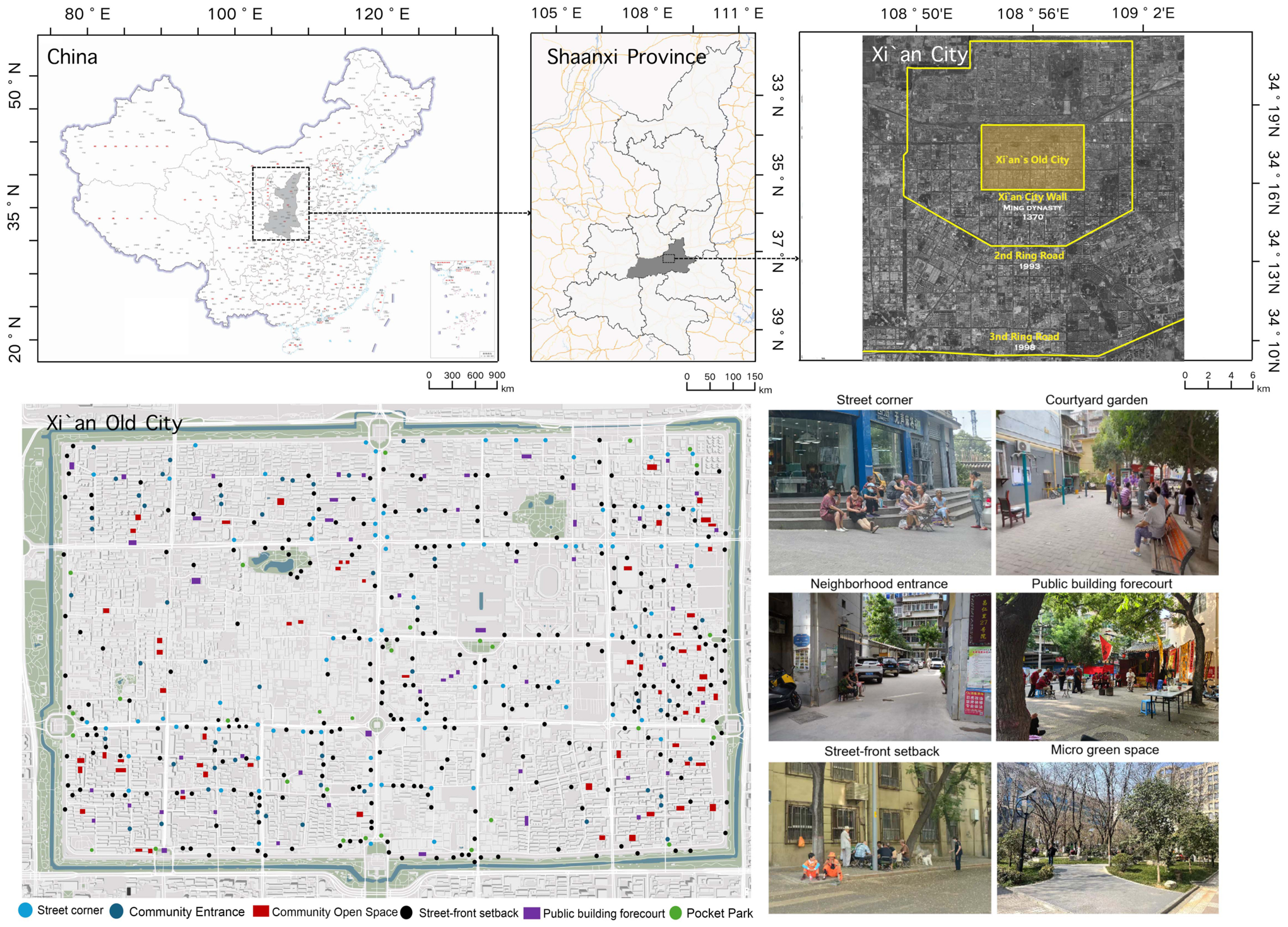
3.1. Study Area
3.2. Data Collection
3.3. Data Analysis
3.4. Research Quality
4. Results
4.1. Typological Classification of Micro Spaces
4.2. Perceived Needs Spectrum
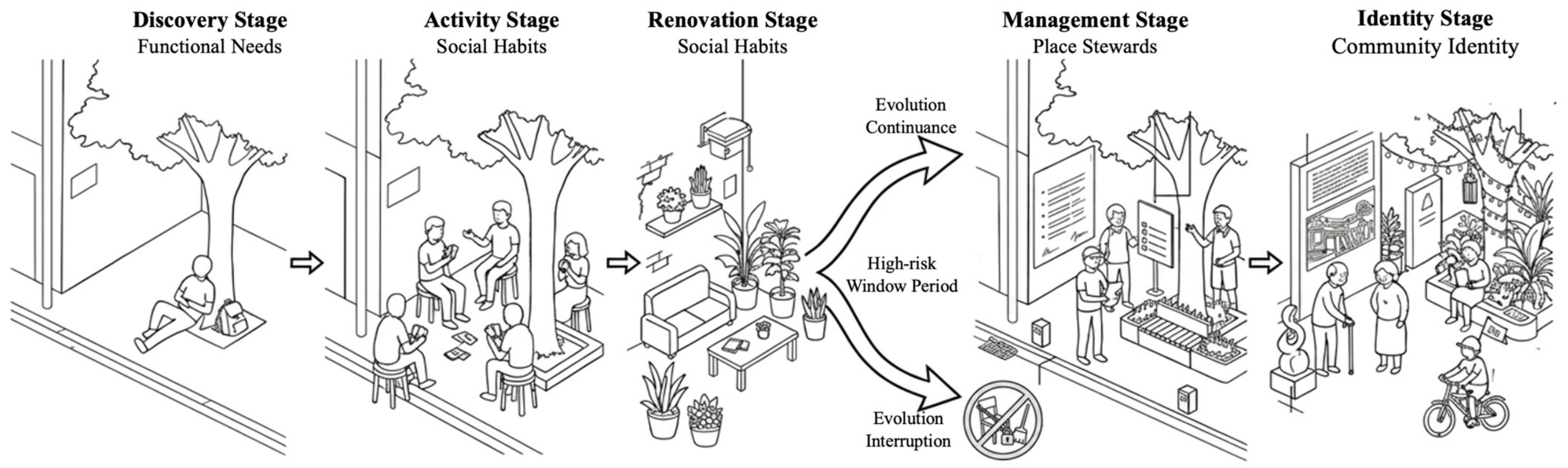
4.3. Life-Cycle Evolution: Empirical Evidence
4.3.1. Community Entrances (Community-Based Type)
4.3.2. Community Open Spaces (Community-Based Type)
4.3.3. Street-Corner Spaces (Street-Interface Type)
4.3.4. Street-Front Open Spaces (Street-Interface Type)
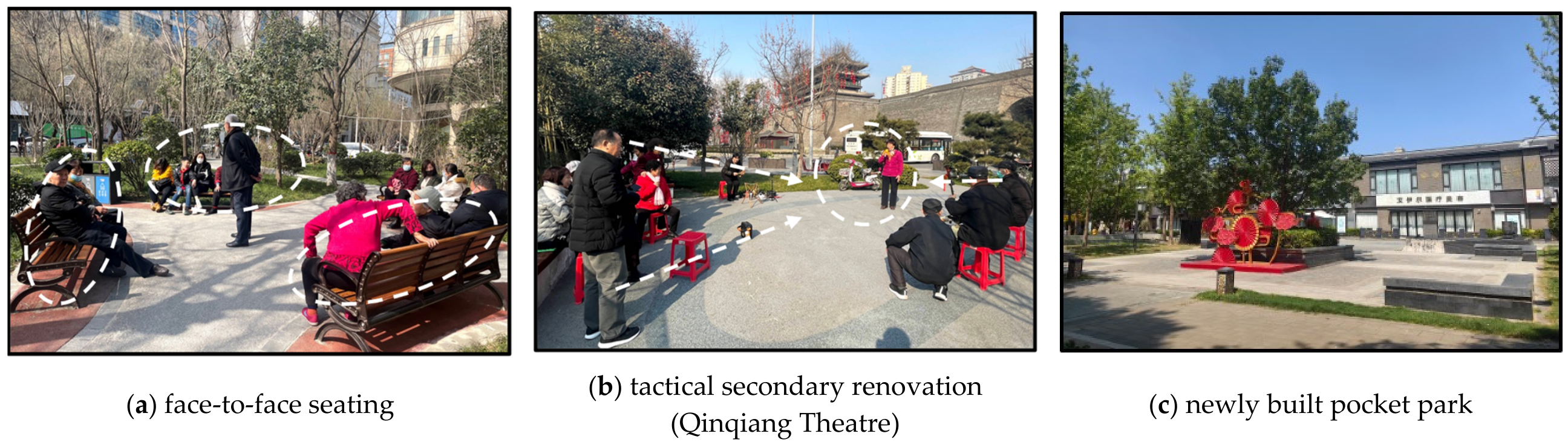
4.3.5. Pocket Parks (Urban-Service Type)
4.3.6. Public Building Forecourts (Urban-Service Type)
5. Discussion
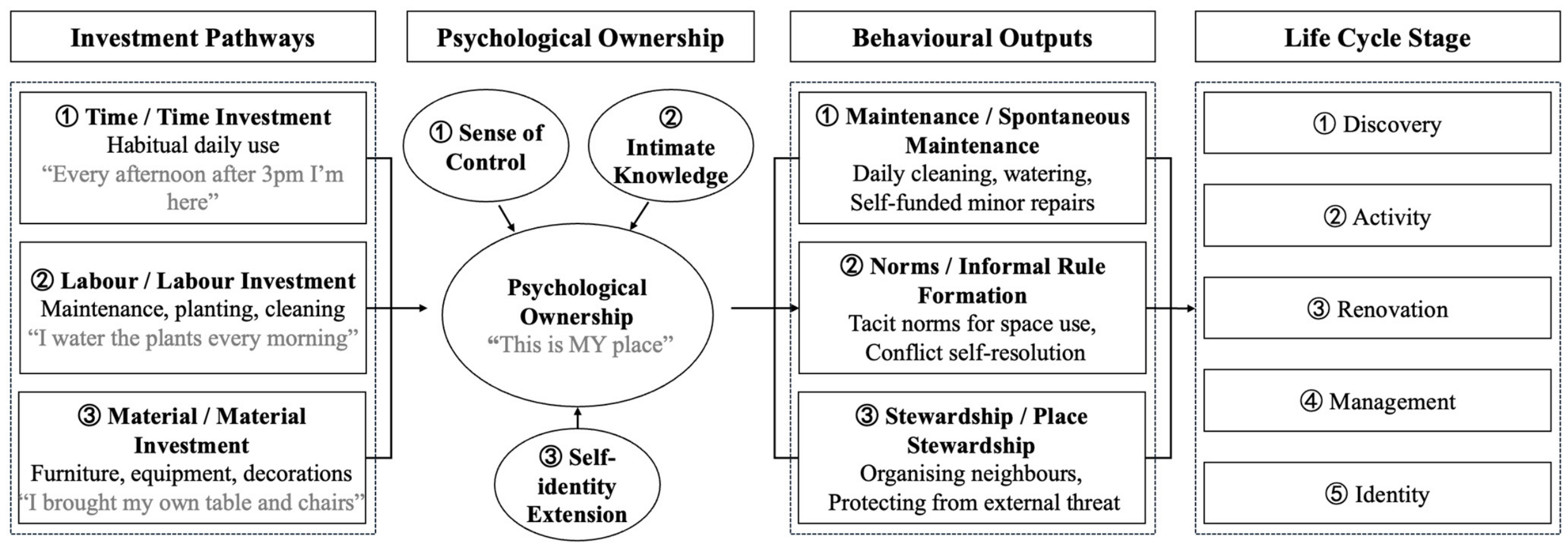
5.1. Endogenous Drivers: Resident Agency and Psychological Ownership Formation
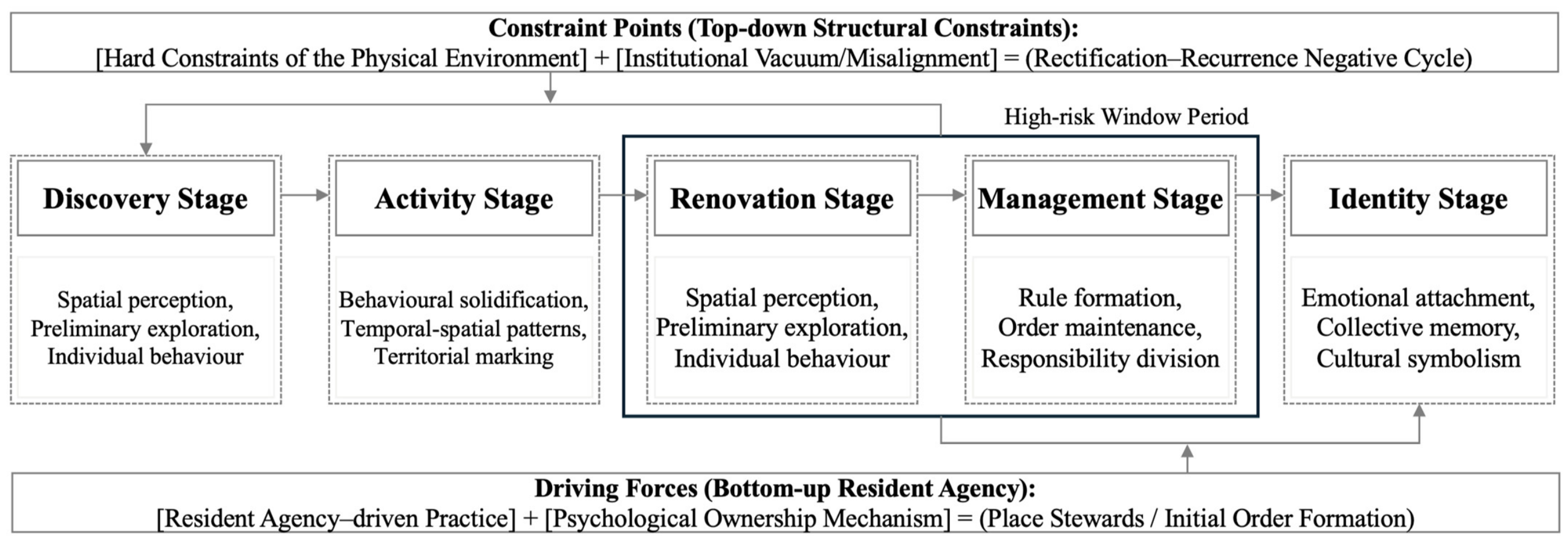
5.2. Structural Constraints: Ambiguous Property Rights and Institutional Vacuums
5.3. The Critical Juncture: The “High-Risk Window Period”
5.4. A Full Life-Cycle Adaptive Governance Paradigm
5.5. Dialogue with International Research and Study Limitations
6. Conclusions
Author Contributions
Funding
Institutional Review Board Statement
Informed Consent Statement
Data Availability Statement
Acknowledgments
Conflicts of Interest
Appendix A

| Category | Group | n | % |
|---|---|---|---|
| Age | 12–30 years | 5 | 11.1 |
| 31–50 years | 10 | 22.2 | |
| 51–65 years | 16 | 35.6 | |
| 66 years and above | 14 | 31.1 | |
| Residential tenure | 5–10 years | 8 | 17.8 |
| 11–20 years | 12 | 26.7 | |
| 21–40 years | 17 | 37.8 | |
| 40+ years | 8 | 17.8 | |
| Role type | Ordinary user | 26 | 57.8 |
| Place steward | 13 | 28.9 | |
| Community organiser | 4 | 8.9 | |
| Enforcement/management | 2 | 4.4 |
| Raw Data Extract | Initial Code | Theme |
|---|---|---|
| “At first I just rested under the tree when passing by; later I found several old neighbours there every afternoon, gradually got familiar, and started bringing a stool to play chess.” (Participant M17, male, 71, 33 years’ residence) | Incidental use → capitalised behaviour | Discovery stage → Activity stage transition |
| “I like chess, so I set up a chess table at my shop entrance; it’s been over ten years now… everyone who comes to play chess automatically maintains order.” (Participant M03, male, 55, 15 years in business) | Active resource investment; informal norm emergence | Psychological ownership formation |
| “We understand that elderly people need activity space, but they blocked the fire escape—if an accident happened, who would be responsible?” (Enforcement officer) | Administrative rigidity; safety red line | Property rights ambiguity and institutional vacuum |
| Need Tier | Sub-Dimension | Core Content | Typical Spatial Manifestations | Representative Resident Quote |
|---|---|---|---|---|
| Basic Needs (Availability) | Safety | Environment free of hazards; clear sightlines; night-time security | Adequate lighting; unobstructed sightlines; even paving | “There are always people here during the day, so we elderly feel safe.” (F09, female, 70) |
| Comfort | Appropriate microclimate; amenities supporting dwell | Tree canopy; comfortable seating; soft-surface paving | “There’s a big tree—it’s cool to sit there in summer.” (M14, male, 66) | |
| Convenience | High accessibility; complete barrier-free facilities; proximate services | Barrier-free ramps; nearby convenience store; spatial location | “Just a few steps out the door—convenient.” (F33, female, 78) | |
| Progressive Needs (Attraction) | Social facilitation | Supports weak-tie contact and incidental conversation | Semi-enclosed nodes; face-to-face seating; chess and card tables | “Step out the door, and everyone’s here getting some air—you hear the latest news right away.” (M08, male, 74) |
| Leisure and recreation | Accommodates diverse daily recreational activities | Children’s play equipment; fitness apparatus; flexible ground | “The children play here, and we adults have somewhere to chat.” (F21, female, 45) | |
| Aesthetic appeal | Clean interface; landscape beauty; material coherence | Wall beautification; flowering plants; coordinated furniture | “After the flowers were planted, it looked so much better—you want to come and sit.” (F16, female, 62) | |
| Advanced Needs (Identity) | Emotional experience | Generates a sense of belonging and territoriality | Familiar “old spot”; intimate corners; self-initiated maintenance | “Seeing the old neighbours sitting at the entrance, my heart feels settled.” (F12, female, 68) |
| Intergenerational learning | Supports cross-generational transmission and information exchange | Notice boards; shared bookshelves; garden planting boxes | “Children come to ask me how to grow vegetables—that makes me happy.” (M29, male, 73) | |
| Cultural cultivation | Carries collective memory and community narrative | Preserved historical objects; memorial plaques; festival decorations | “This locust tree has been here for decades—nobody wants to see it cut down.” (M41, male, 80) |
| Spatial Type | Discovery | Activity | Renovation | Management | Identity | Key Obstacle |
|---|---|---|---|---|---|---|
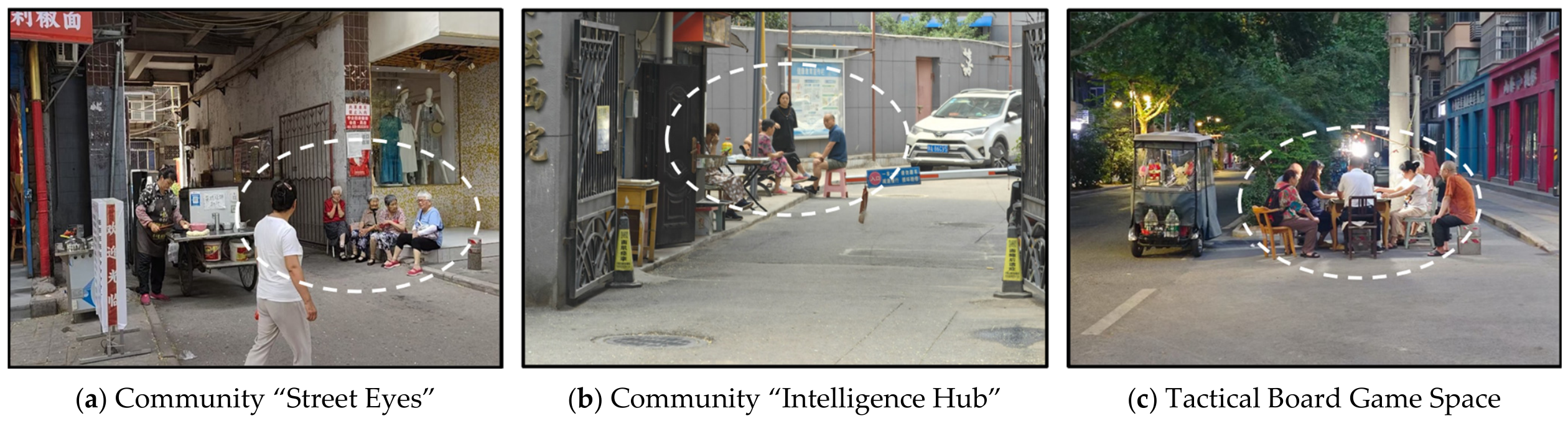
| Community entrance | Incidental transit stop | Stable gathering group forms | Self-provided facilities/canopy 1 | Frequently cleared; unstable | Acquaintance-level identity | Safety red line conflict |
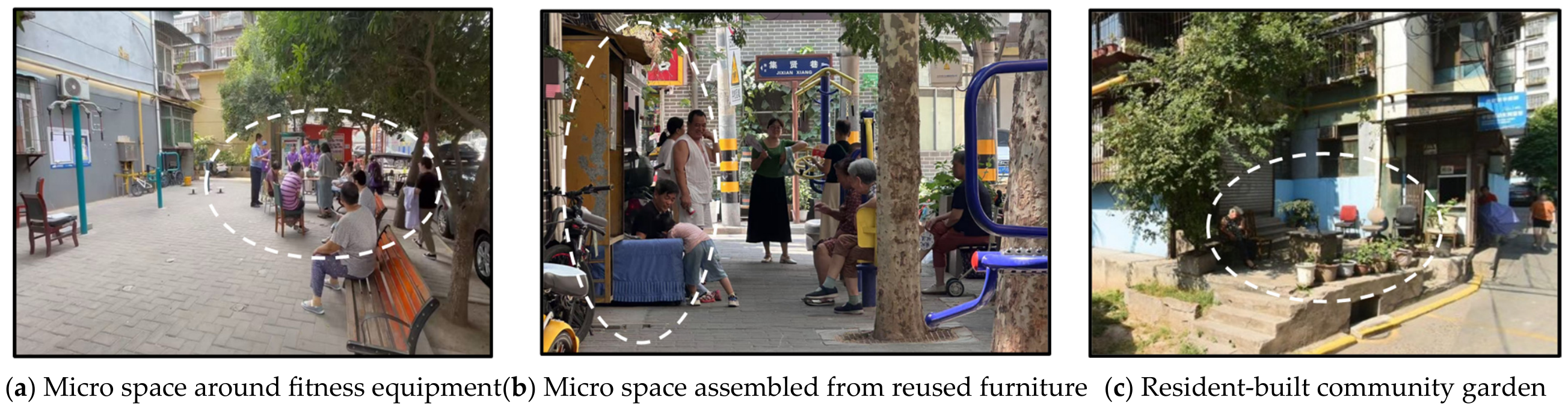
| Community open space | Idle corner discovered | Individual territorialisation | Gardening/salvaged furniture 1 | Commons private use risk | Deep emotional attachment | Public boundary erosion |
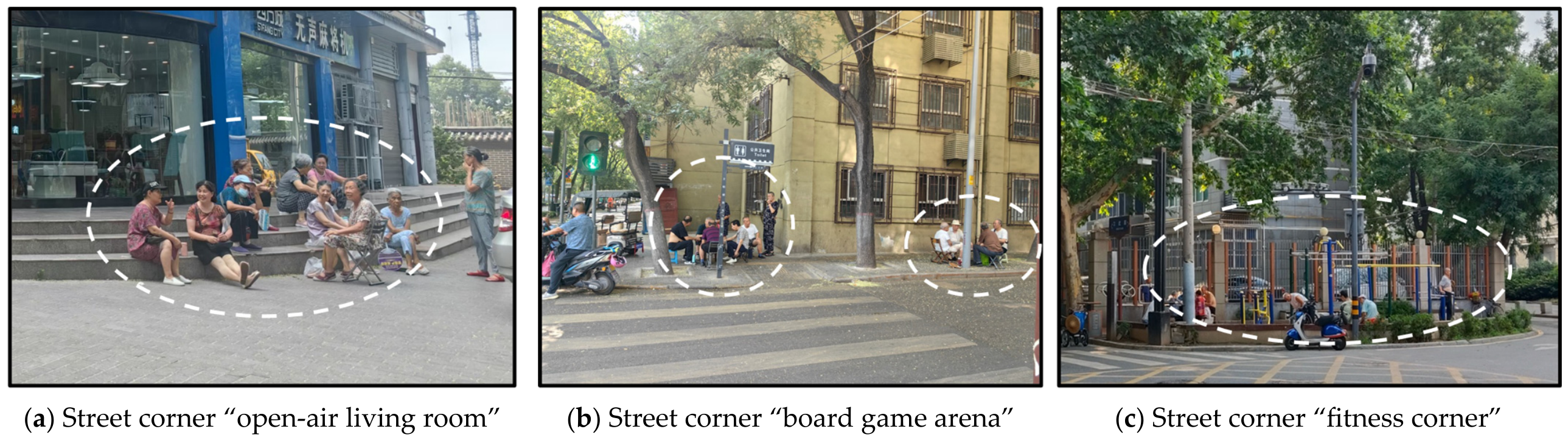
| Street corner space | Transit stop | Self-made outdoor salon | Minimal modification | Repeated clearance cycle | Rare successful cases | Ambiguous boundary/clearance |
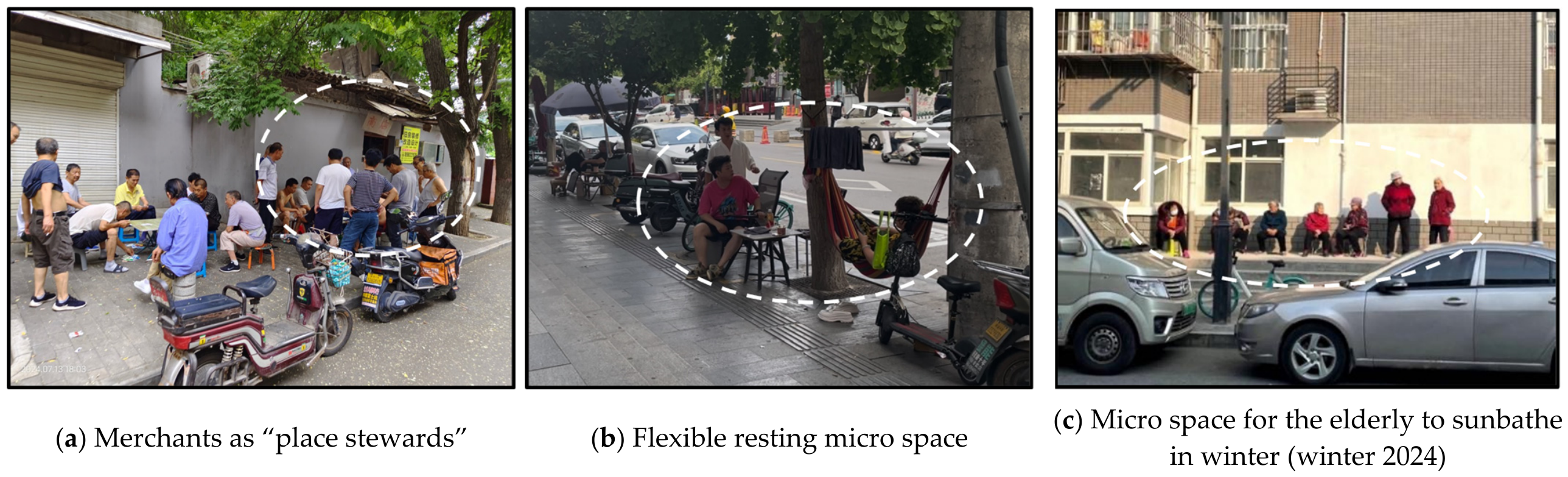
| Street-front open space | Life spillover | Steward-maintained activity | Dependent on the merchant; limited | Collapses with merchant change | Difficult to accumulate | Steward dependency |
| Pocket park | Skipped (inverted) 1 | Skipped (inverted) 1 | Government-built | Vitality lacking/2nd-gen. mod. | Achievable with good design | Discovery/Activity stage absent |
| Public building forecourt | Function-accompanied | Spontaneous activity emerges | Modifications restricted | Function monopoly; difficult to open | Extremely difficult | Management monopoly |
| Evolutionary Stage | Governance Objective | Core Strategy | Key Governance Instruments |
|---|---|---|---|
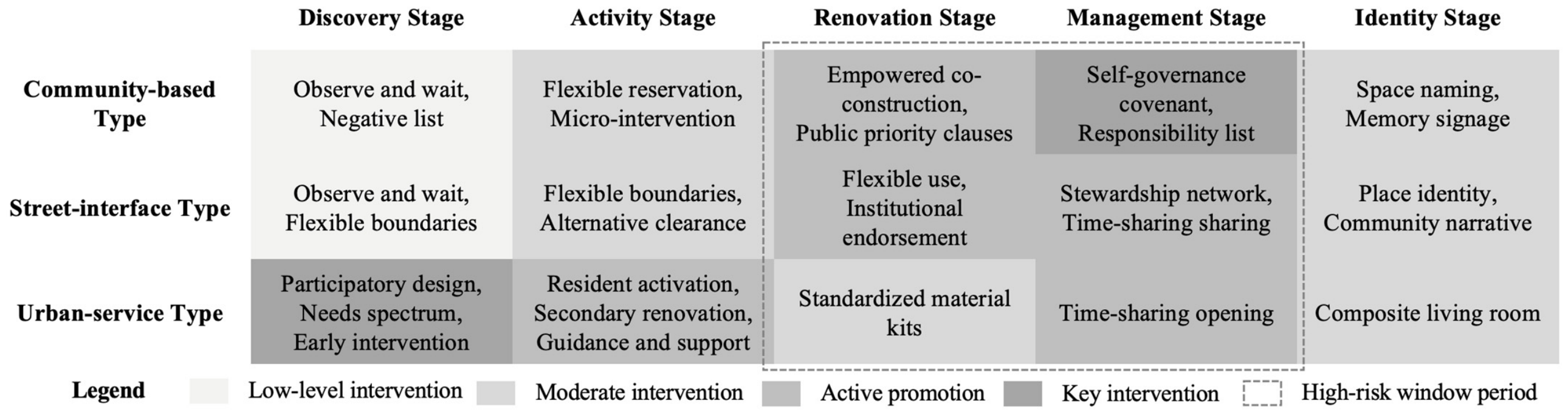
| Discovery; Activity | Potential identification; Flexible reservation | Baseline management: safety and transit red lines as rigid constraints; permit limited informality; avoid premature clearance | Heat map monitoring and behavioural annotation; negative list and flexible boundaries; basic safety patch kit |
| Renovation | Enabling co-construction; Legitimacy reconstruction | Layered investment: government supplies structural skeleton; residents supply soft content. Interest negotiation: link renovation rights to maintenance responsibilities | Standardised material kit; community deliberation council; co-construction agreement |
| Management; Identity | Rule internalisation; Long-term operation | Institutional embedding: micro-covenant establishing responsibility subjects. Value co-creation: strengthen place memory and symbolic meaning; cultivate stewards | Maintenance rotation roster; responsibility list; community micro-fund; space naming and memory plaques |
References
- Zhu, J. Public space and its publicness in people-oriented urban regeneration: A case study of Shanghai. J. Urban Aff. 2025, 47, 2319–2338. [Google Scholar] [CrossRef]
- Hui, E.C.-M.; Chen, T.; Lang, W.; Ou, Y. Urban community regeneration and community vitality revitalization through participatory planning in China. Cities 2021, 110, 103072. [Google Scholar] [CrossRef]
- Wang, M.; Zhang, F.; Wu, F. Governing urban redevelopment: A case study of Yongqingfang in Guangzhou, China. Cities 2022, 120, 103420. [Google Scholar] [CrossRef]
- Li, Y.; Zhang, S.; Zhu, D. Co-creation of community micro-renewals: Model analysis and case studies in Shanghai, China. Habitat Int. 2023, 142, 102951. [Google Scholar] [CrossRef]
- Salmistu, S.; Kotval, Z. Spatial interventions and built environment features in developing age-friendly communities from the perspective of urban planning and design. Cities 2023, 141, 104417. [Google Scholar] [CrossRef]
- Zhou, C.; An, Y.; Zhao, J.; Xue, J.; Fu, L.; Cao, M. How do mini-parks serve in groups? A visit analysis of mini-park groups in the neighbourhoods of Nanjing. Cities 2022, 129, 103804. [Google Scholar] [CrossRef]
- Jacobs, J. The Death and Life of Great American Cities; Random House: New York, NY, USA, 1961. [Google Scholar]
- Whyte, W.H. The Social Life of Small Urban Spaces; The Conservation Foundation: Washington, DC, USA, 1980. [Google Scholar]
- Gehl, J. Life Between Buildings: Using Public Space; Island Press: Washington, DC, USA, 2011. [Google Scholar]
- Oldenburg, R. The Great Good Place; Paragon House: New York, NY, USA, 1989. [Google Scholar]
- Lydon, M.; Garcia, A. Tactical Urbanism: Short-Term Action for Long-Term Change; Island Press: Washington, DC, USA, 2015. [Google Scholar]
- Douglas, G.C.C. Do-it-yourself urban design: The social practice of informal “improvement” through unauthorized alteration. City Community 2014, 13, 5–25. [Google Scholar] [CrossRef]
- Franck, K.A.; Stevens, Q. Loose Space: Possibility and Diversity in Urban Life; Routledge: London, UK, 2007. [Google Scholar]
- Varna, G.; Tiesdell, S. Assessing the publicness of public space: The star model of publicness. J. Urban Des. 2010, 15, 575–598. [Google Scholar] [CrossRef]
- Mehta, V. Lively streets: Determining environmental characteristics to support social behavior. J. Plan. Educ. Res. 2007, 27, 165–187. [Google Scholar] [CrossRef]
- Li, Y.; Tao, Y.; Qian, Q.K.; Mlecnik, E.; Visscher, H.J. Critical factors for effective resident participation in neighborhood rehabilitation in Wuhan, China: From the perspectives of diverse stakeholders. Landsc. Urban Plan. 2024, 244, 105000. [Google Scholar] [CrossRef]
- Liu, R.L.; Wang, L.J. Returning to emotional daily spirit: An analysis of the connotation of urban small-scale public spaces. Urban Dev. Res. 2021, 28, 40–47. (In Chinese) [Google Scholar]
- Sun, X.Y.; Wang, L.J.; Liao, P.; Xu, S.Y. Research on spontaneous participation of the elderly in street corner small public spaces in old urban districts. Archit. J. 2021, S1, 65–69. (In Chinese) [Google Scholar]
- Wu, Q.; Li, Z.G.; Wu, M. Research progress and development trends in urban pocket parks. J. Geo-Inf. Sci. 2023, 25, 2439–2455. (In Chinese) [Google Scholar]
- Dong, J.; Guo, R.; Guo, F.; Luo, L.; Huang, Y.; Liu, M. Pocket parks—A systematic literature review. Environ. Res. Lett. 2023, 18, 083003. [Google Scholar] [CrossRef]
- Zhou, C.H. Basic attributes and key planning issues of urban micro-green spaces. Urban Plan. Int. 2022, 37, 105–113. (In Chinese) [Google Scholar]
- Sun, X.; Wang, L.; Wang, F.; Soltani, S. Behaviors of seniors and impact of spatial form in small-scale public spaces in Chinese old city zones. Cities 2020, 107, 102894. [Google Scholar] [CrossRef]
- Carmona, M. Public Places, Urban Spaces: The Dimensions of Urban Design, 3rd ed.; Routledge: London, UK, 2024. [Google Scholar]
- Mouratidis, K. Urban planning and quality of life: A review of pathways linking the built environment to subjective well-being. Cities 2021, 115, 103229. [Google Scholar] [CrossRef]
- Liu, R.L. Emotional Design Research on Urban Small-Scale Public Spaces. Ph.D. Thesis, Tianjin University, Tianjin, China, 2020. (In Chinese) [Google Scholar]
- Zhou, D.L.; Hu, J.P.; Wu, L.J. Analysis of vitality-oriented characteristics and management guidelines for small public spaces: A case study of central Guangzhou. Urban Dev. Res. 2021, 28, 24–28. (In Chinese) [Google Scholar]
- Chongqing Municipal Bureau of Planning and Natural Resources. Guidelines for the Renewal of Urban Small Public Spaces in Chongqing (Trial); Chongqing Municipal Bureau of Planning and Natural Resources: Chongqing, China, 2022. (In Chinese)
- Maslow, A.H. A theory of human motivation. Psychol. Rev. 1943, 50, 370–396. [Google Scholar] [CrossRef]
- Gibson, J.J. The Ecological Approach to Visual Perception; Houghton Mifflin: Boston, MA, USA, 1979. [Google Scholar]
- Putnam, R.D.; Leonardi, R.; Nanetti, R.Y. Making Democracy Work: Civic Traditions in Modern Italy; Princeton University Press: Princeton, NJ, USA, 1994. [Google Scholar]
- Lefebvre, H. The Production of Space; Nicholson-Smith, D., Translator; Blackwell: Oxford, UK, 1991. [Google Scholar]
- Lefebvre, H. Le Droit à la Ville; Anthropos: Paris, France, 1968. [Google Scholar]
- Lefebvre, H. Critique of Everyday Life, Volume I; Verso: London, UK, 1991. [Google Scholar]
- Pierce, J.L.; Kostova, T.; Dirks, K.T. Toward a theory of psychological ownership in organizations. Acad. Manag. Rev. 2001, 26, 298–310. [Google Scholar] [CrossRef]
- Pierce, J.L.; Jussila, I.; Cummings, A. Psychological ownership within the job design context: Revision of the job characteristics model. J. Organ. Behav. 2009, 30, 477–496. [Google Scholar] [CrossRef]
- Ostrom, E. Governing the Commons: The Evolution of Institutions for Collective Action; Cambridge University Press: Cambridge, UK, 1990. [Google Scholar]
- Scannell, L.; Gifford, R. Defining place attachment: A tripartite organizing framework. J. Environ. Psychol. 2010, 30, 1–10. [Google Scholar] [CrossRef]
- Shin, H.B. Urban conservation and revalorisation of dilapidated historic quarters: The case of Nanluoguxiang in Beijing. Cities 2010, 27, S43–S54. [Google Scholar] [CrossRef]
- Braun, V.; Clarke, V. Using thematic analysis in psychology. Qual. Res. Psychol. 2006, 3, 77–101. [Google Scholar] [CrossRef]
- Wang, Y.R.; Zhou, Q.H. Urban space and its design strategies from the perspective of perceived experience of characteristic groups. Urban Plan. Int. 2025, 40, 135–144. (In Chinese) [Google Scholar]
- Wang, Y.R.; Zhou, Q.H.; Yang, X.D.; Jia, D. Discussion on urban space types based on perceived experience. Planners 2022, 38, 135–140. (In Chinese) [Google Scholar]
- Cattell, V.; Dines, N.; Gesler, W.; Curtis, S. Mingling, observing, and lingering: Everyday public spaces and their implications for well-being and social relations. Health Place 2008, 14, 544–561. [Google Scholar] [CrossRef] [PubMed]
- Healey, P. Collaborative Planning: Shaping Places in Fragmented Societies; Macmillan: London, UK, 1997. [Google Scholar]
- Zhu, J. Micro-regeneration in Shanghai and the public-isation of space. Habitat Int. 2023, 132, 102741. [Google Scholar] [CrossRef]
- Folke, C.; Hahn, T.; Olsson, P.; Norberg, J. Adaptive governance of social-ecological systems. Annu. Rev. Environ. Resour. 2005, 30, 441–473. [Google Scholar] [CrossRef]



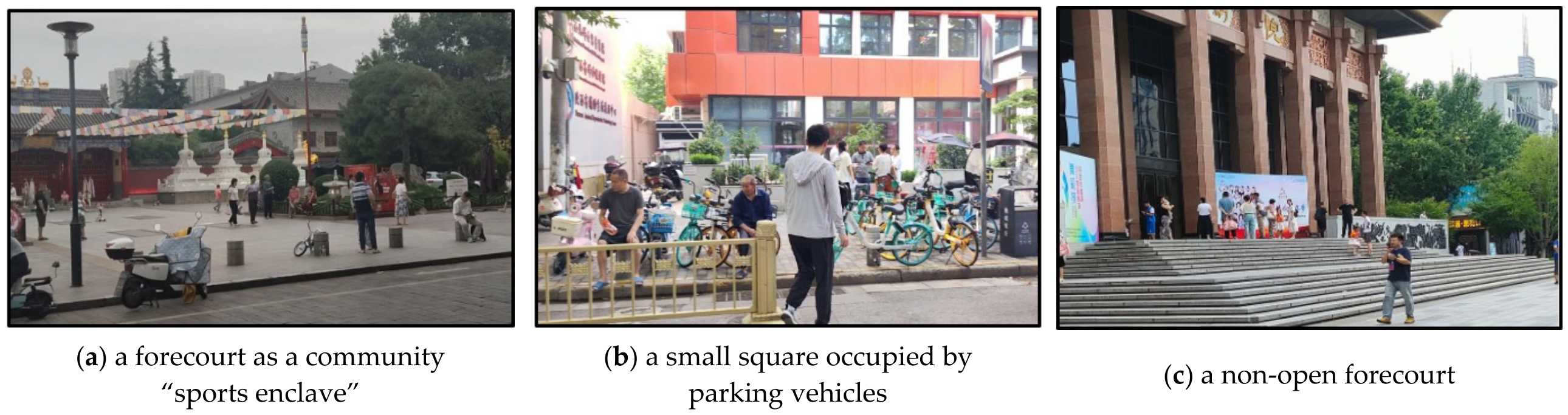


| Spatial Category | Typical Spaces | Governance & Property | Evolutionary Profile |
|---|---|---|---|
| Community-based | Community entrances; open spaces | Resident co-owned; homeowners’ association/property management | High psychological ownership; bottleneck at Renovation–Management transition |
| Street-interface | Street corner; street-front open spaces | Interwoven public–private; urban management + merchants + residents | Stable in Activity stage; compliance-threshold bottleneck |
| Urban-service | Pocket parks; public-building forecourts | Municipal/institutional; sub-district + landscape department | Inverted evolution; vitality-activation challenge |
| Need Tier | Core Content (Three Sub-Dimensions) | Representative Spatial Cues |
|---|---|---|
| Basic Needs (Availability) | Safety; comfort; convenience | Lighting, canopy seating, barrier-free access, proximity to services |
| Progressive Needs (Attraction) | Social facilitation; leisure and recreation; aesthetic appeal | Semi-enclosed nodes, chess/card tables, play and fitness equipment, flowering plants |
| Advanced Needs (Identity) | Emotional experience; intergenerational learning; cultural cultivation | Familiar “old spots”, shared bookshelves, preserved historic objects |
Disclaimer/Publisher’s Note: The statements, opinions and data contained in all publications are solely those of the individual author(s) and contributor(s) and not of MDPI and/or the editor(s). MDPI and/or the editor(s) disclaim responsibility for any injury to people or property resulting from any ideas, methods, instructions or products referred to in the content. |
© 2026 by the authors. Licensee MDPI, Basel, Switzerland. This article is an open access article distributed under the terms and conditions of the Creative Commons Attribution (CC BY) license.
Share and Cite
Wang, Y.; Zhang, R.; Liu, S.; Zhang, Q.; Yu, K. Life-Cycle Evolution and Adaptive Governance of Everyday Micro Spaces in an Old Urban District: The Case of Xi’an, China. Land 2026, 15, 973. https://doi.org/10.3390/land15060973
Wang Y, Zhang R, Liu S, Zhang Q, Yu K. Life-Cycle Evolution and Adaptive Governance of Everyday Micro Spaces in an Old Urban District: The Case of Xi’an, China. Land. 2026; 15(6):973. https://doi.org/10.3390/land15060973
Chicago/Turabian StyleWang, Yirui, Ruijie Zhang, Sijie Liu, Qiong Zhang, and Kanhua Yu. 2026. "Life-Cycle Evolution and Adaptive Governance of Everyday Micro Spaces in an Old Urban District: The Case of Xi’an, China" Land 15, no. 6: 973. https://doi.org/10.3390/land15060973
APA StyleWang, Y., Zhang, R., Liu, S., Zhang, Q., & Yu, K. (2026). Life-Cycle Evolution and Adaptive Governance of Everyday Micro Spaces in an Old Urban District: The Case of Xi’an, China. Land, 15(6), 973. https://doi.org/10.3390/land15060973