Systematic Review

Towards Sustainable Urban Development: A Systematic Review of Challenges in Urban Infrastructure Planning and Development in the Global South

by
Frew Fentahun Enyew
1,2,3,
Sayeh Kassaw Agegnehu
1,
Thomas Bauer
2,
Tatjana Fischer
3,*,
Reinfried Mansberger
2 and
Gernot Stoeglehner
3
1
Department of Land Administration and Surveying, Institute of Land Administration, Debre Markos University, Debre Markos 269, Ethiopia
2
Department of Ecosystem Management, Climate and Biodiversity, BOKU University Vienna, Peter-Jordan-Strasse 82, 1190 Vienna, Austria
3
Department of Landscape, Water and Infrastructure, BOKU University Vienna, Peter-Jordan-Strasse 82, 1190 Vienna, Austria
*
Author to whom correspondence should be addressed.
Land 2026, 15(6), 966; https://doi.org/10.3390/land15060966
Submission received: 13 March 2026 / Revised: 20 May 2026 / Accepted: 29 May 2026 / Published: 1 June 2026

Abstract

Urban infrastructure is crucial to urban development and determines urban functionality, resilience, and sustainability. Effective planning for urban infrastructure development and municipal services driving economic development and improving the quality of urban life. However, many urban areas of countries in the Global South suffer from contextually inappropriate urban planning. This has led to uncontrolled expansion, urban sprawl and inadequate public infrastructure. This study answers the following research questions: What are the main challenges in urban and infrastructure planning, and what are possible solutions to mitigate them for sustainable urban development? Based on a review of 75 studies, keyword co-occurrence analysis and thematic analysis reveal seven key challenges in urban infrastructure planning: governance and institutional challenges; economic constraints and funding gaps; environmental and climate change challenges; urbanization and population growth; technological gaps and innovation difficulties; political instability and conflict; and social inequality and exclusion. To mitigate these issues, this study suggests that the concerned policymakers in the Global South prioritize governance and institutional reform, adopt technological and nature-based solutions and strengthen public–private partnerships, community-based engagement, and capacity building.

1. Introduction

While infrastructure is described in various ways and applied in various forms by different professionals, it is fundamentally a network of interconnected physical, socio-economic, and environmental facilities, utilities, and services that support effective working, living, and recreation [1,2]. As a cornerstone of urban development, infrastructure determines urban functionality, resilience, and sustainability. It primarily concerns public works involving federal, state, local, and/or municipal administrations, with stages including planning, budgeting, engineering, financing, and execution [3]. Consequently, infrastructure planning is the process of organizing, building, and integrating utilities and services to meet both current and future needs of the people [4].
Countries of the Global South, in the literature, are also named developing countries, where rapid population growth and urbanization are outpacing infrastructure development, straining essential services for energy, water, sanitation, transport, waste management, housing, health, and education. The global urban population increased from 0.8 billion (30%) in 1950 to 4.2 billion (55%) in 2018, with projections reaching 6.7 billion (68%) by 2050 [5]. Most of this growth occurs in low- and middle-income countries, where cities often expand informally into peri-urban areas under conditions of poverty and weak planning. Cities in the Global South are growing rapidly and a growing share of residents live in informal settlements or slums that lack formal land titles and basic services. In 2019, over one billion people, roughly one-third of all urban dwellers, inhabited such areas—a figure expected to double by 2030—characterized by inadequate housing, insecure tenure, and little or no access to piped water, sewage, or electricity [6].
Driven by rapid population growth and migration, this haphazard and unplanned urban expansion frequently undermines productivity, inclusivity, and resilience [7]. This results in extensive peri-urban sprawl and mixed urban–rural fringes. These peri-urban zones often fall under multiple jurisdictions, leading to institutional fragmentation and planning gaps. An increase in city size and density creates huge demands on technical and social infrastructure. However, in many cities, the capacity for new connections, networks, and facilities lags significantly behind the need [8].
To enhance the efficiency of urban areas, it is imperative to support economic activities by providing physical and social infrastructure, transport systems, and balanced residential development. Consequently, urban and infrastructure planning, development, and management are essential to accelerating urbanization, offering substantial benefits to urban dwellers [9,10]. Well-planned and managed and adequately financed cities and towns are strongly committed to creating economic, social, environmental, and other non-quantifiable values significantly improving quality of life for all residents [11].
Urban infrastructure is closely linked to productivity and to broader macro-economic development. This connection has promoted increased efforts to improve urban infrastructure to enhance economic productivity, particularly in developing countries, by improving the availability of infrastructure [12]. However, upgrading infrastructure and services requires prudent investment and the efficient use of limited municipal resources. Thus, especially for developing countries, strategic planning for comprehensive infrastructure development is vital to driving urban development [13].
In most poorly designed urban areas, urban infrastructure planning is often detached from actual social, economic, financial, or institutional conditions. This misalignment leads to disorganized expansion and inadequate public infrastructure. Developers of all sizes tend not to consider broader community concerns that accompany their investments [14]. It is therefore imperative to understand the challenges of planning urban infrastructure development in the Global South to improve infrastructure delivery.
Existing reviews have addressed papers on topics such as urban infrastructure planning [15]; the value of urban green infrastructure [16]; sustainable infrastructure [17]; sustainable urban infrastructure development and policy planning [18]; and sustainable urban infrastructure [19,20]. However, these studies do not comprehensively identify the challenges in urban infrastructure planning and development for sustainable urban growth. This review employs quantitative analysis complemented by qualitative analysis to answer the following research questions: (i) What are the primary challenges to urban infrastructure planning and development for sustainable urban growth in the Global South? (ii) What potential solutions can mitigate these infrastructure planning and development challenges to ensure sustainable urban development in the cities of the Global South?
Recognizing the various pressures facing urban regions, this research study focuses on technical urban infrastructure. By identifying core obstacles and examining potential solutions, this study seeks to provide a roadmap to promote sustainable urban development through provision of technical infrastructure in cities of the Global South.

2. Materials and Methods

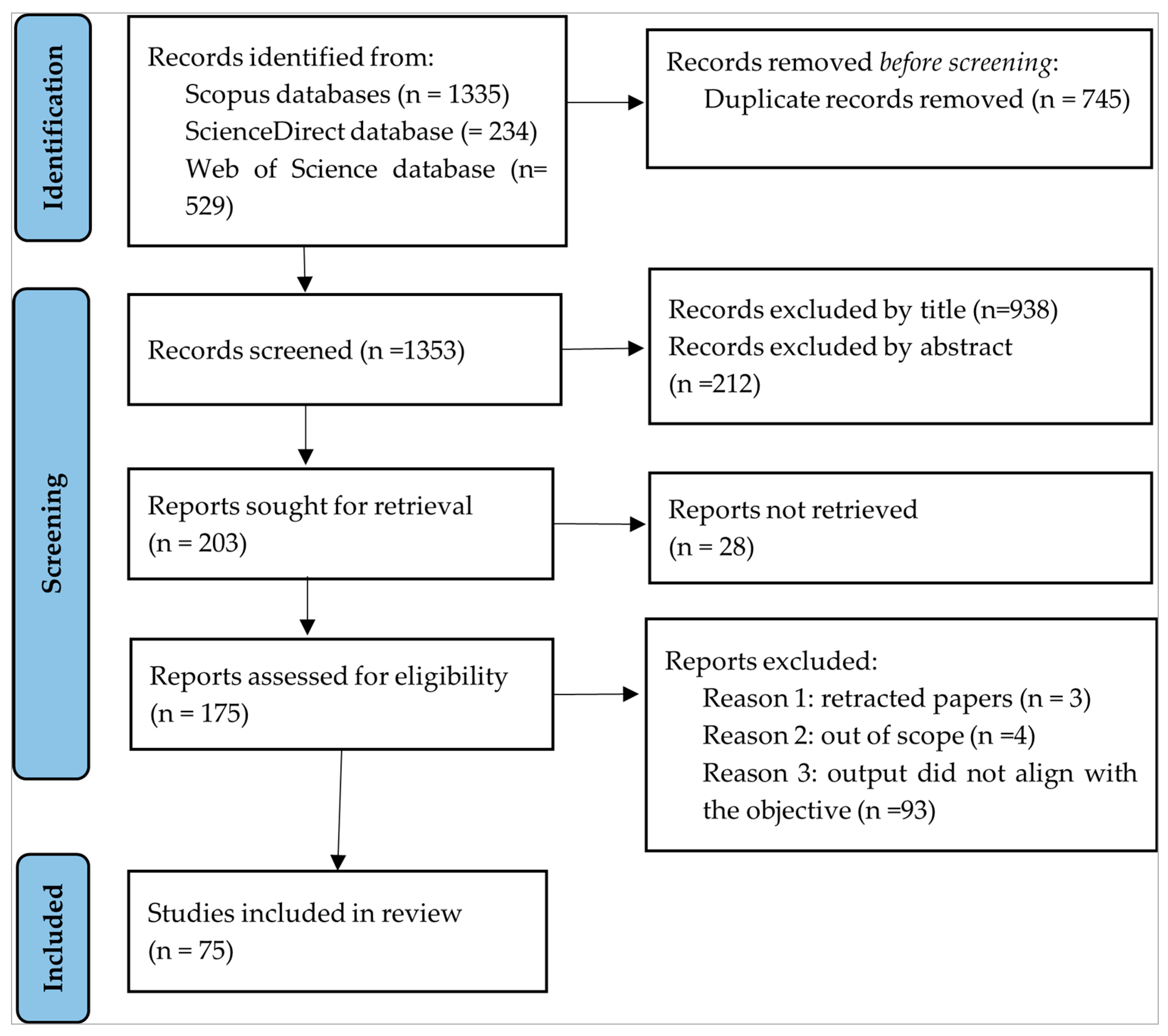
The methodology for this review was structured around three major tasks: literature selection, keyword co-occurrence analysis, and thematic analysis. The Preferred Reporting Items for Systematic Reviews and Meta-Analyses (PRISMA) 2020 framework was used to select the literature (see also Figure 1). The Visualization of Similarities (VOSviewer) version 1.6.20 (Nees Jan van Eck and Ludo Waltman, Leiden University, Netherlands) was utilized to conduct keyword co-occurrence analysis, as it is important to understand the clusters within the literature and the related challenges in each theme-based category. Additionally, ATLAS.ti 25 (Lumivero, Berlin) was used to code and categorize the key challenges in urban infrastructure planning and development within the developing countries. R software (version 4.3.3) was also used to identify the studies for each cluster and to analyze evolutionary trends among clusters.

2.1. Selection of Sources

This systematic review follows the Preferred Reporting Items for Systematic Reviews and Meta-Analyses (PRISMA) statement to select the most relevant studies. This review was conducted in accordance with the PRISMA 2020 guidelines [21] and assessed adherence to these guidelines.
The researchers used a two-phase process to select appropriate papers.
Phase 1: An initial keyword search using the terms listed below yielded 6417 papers from Scopus (4295), ScienceDirect (706), and Web of Science (1416). These results were subsequently filtered by publication year, document type, and language, reducing the pool to 4514 papers. To ensure geographic relevance, these documents were screened manually in Microsoft Excel based on their titles and abstracts and, in some cases, by reading the full text. This process identified 2098 studies specifically focused on the Global South.
Step 1—Search strategy: The literature search was conducted between 1st and 2nd January 2025. To capture the challenges in infrastructure planning, the terms “Challeng*” OR “Problem*” OR “Barrier*” were employed. They were connected with the search terms “Urban infrastructure” OR “Urban infrastructure development” OR “Urban infrastructure development planning” OR “Urban infrastructure planning” OR “Infrastructure planning” AND “Pub”. As other filters, “Year (2013–2024)” AND “Document Type (Article and conference paper)” AND “Language (English)” were chosen. The keywords without asterisks and their full versions were used to search the ScienceDirect database for the literature, since the database’s search engine does not allow asterisks.
Phase 2: Following the initial identification of studies centered on the Global South, the final selection was conducted according with the PRISMA (Preferred Reporting Items for Systematic Reviews and Meta-Analyses) guidelines [21] in the following steps.
Step 2—Eligibility criteria: The inclusion criteria were restricted to peer-reviewed articles (90%) and conference papers (10%) published in English between 2013 and 2024. The year 2013 as baseline year is strategically significant. It marks a milestone, as infrastructure development and investment gained a greater focus from the African Development Bank Group in the African Transformation Strategy Plan from 2013 to 2022 [22]. In addition, the Asia Pacific Economic Cooperation (APEC) members’ regional meeting established a Multi-Year Plan on infrastructure development and investment [23].
To ensure thematic relevance, this study considered only selected peer-reviewed articles and conference papers that include the term "challenges in infrastructure planning" in their titles, abstracts, results, discussions, and/or recommendations. The inclusion criteria were focused on the challenges in urban infrastructure planning and development in the frame of sustainable urban development. It also encompassed various sectors of technical urban infrastructure, such as water, energy, and transportation systems, sanitation and sewerage systems, and strategies addressing these challenges.
Step 3—Document screening: In this stage, the 2098 records identified in the previous phase, comprising 1335 from Scopus, 529 from Web of Science, and 234 from Science Direct, underwent a rigorous screening. First, 745 duplicate records were identified and removed. The remaining records were then screened based on titles and abstracts, leading to the exclusion of 938 and 212 studies, respectively. To minimize researcher bias and ensure selection accuracy, this initial screening was conducted in close consultation with the co-authors.
Following the initial screening, a full-text review was performed on the remaining papers. This led to the exclusion of 100 additional articles: four were determined to be out of scope, three had been retracted by their respective journals, and 93 studies were excluded because their findings did not align with the specific research objectives regarding infrastructure planning challenges. Any discrepancies in the selection process were discussed and reconciled among the co-authors to ensure a consensus-based final sample. Finally, 75 studies were selected for comprehensive qualitative and quantitative analyses (Figure 1). Following the selection of relevant studies, the Critical Appraisal Skills Programme (CASP) appraisal tool was used to evaluate their quality.

2.2. Coding Process and Theme Development

A two-step process, comprising a bibliometric and a thematic analysis, was employed to systematically review the challenges in urban infrastructure planning.
The first step involved a keyword co-occurrence analysis (bibliometric analysis) conducted via VOS viewer (version 1.6.20). This software program employs the Visualization of Similarities (VOS) technology [24] to map significant keywords providing a broad insight into the challenges and potential solutions.
To ensure the integrity of the network, the dataset was refined through semantic merging. Keywords with identical meanings and their plural forms were consolidated (see Table A2). Text files from Scopus, Web of Science, and ScienceDirect were used for this purpose. The keywords were subsequently evaluated based on frequency of occurrence and total link strength to identify thematic clusters and relationships (Table A1). By setting a minimum occurrence threshold of two, the network analysis produced a visualization of thematic clusters that served as the basis for the subsequent detailed thematic analysis.
In the second step, a thematic analysis was conducted using Boyatzis’s qualitative content analysis methodology [25]. This approach addressed the inherent limitations of bibliometric mapping by facilitating an in-depth examination of the literature’s content.
During the code development phase, the authors considered five elements of code: label, definition, indicators, description, and examples. Six major coding categories were established: challenge theme, sub-theme, geographic location (country), year of publication, and keyword. To enhance the precision of the analysis, keywords were further refined by excluding terms related to research locations and methodological terms (Table A2), ensuring that the coding process focused strictly on thematic substance.
Using these refined keywords, the abstracts, results, and discussion sections of the selected articles were thoroughly reviewed and systematically coded with ATLAS.ti 25. The concepts associated with each keyword were synthesized into distinct challenges and solutions, along with their corresponding key topics. This iterative process provided a comprehensive overview of the subject matter across the selected documents and ensured that the identified key topics aligned with this study’s objectives.
To ensure the reliability of the findings, the primary author initially developed the coding scheme through repeated reading, coding and refinement. Each coding round guided further revisions, allowing themes to emerge inductively and keeping the classification data-driven to maintain coherence and analytical rigor [26,27].
Feedback was solicited continuously from the co-authors, and the final coding framework was reconciled and endorsed through a consensus-based discussion.

3. Results

3.1. Background Information of the Studies Included in This Review

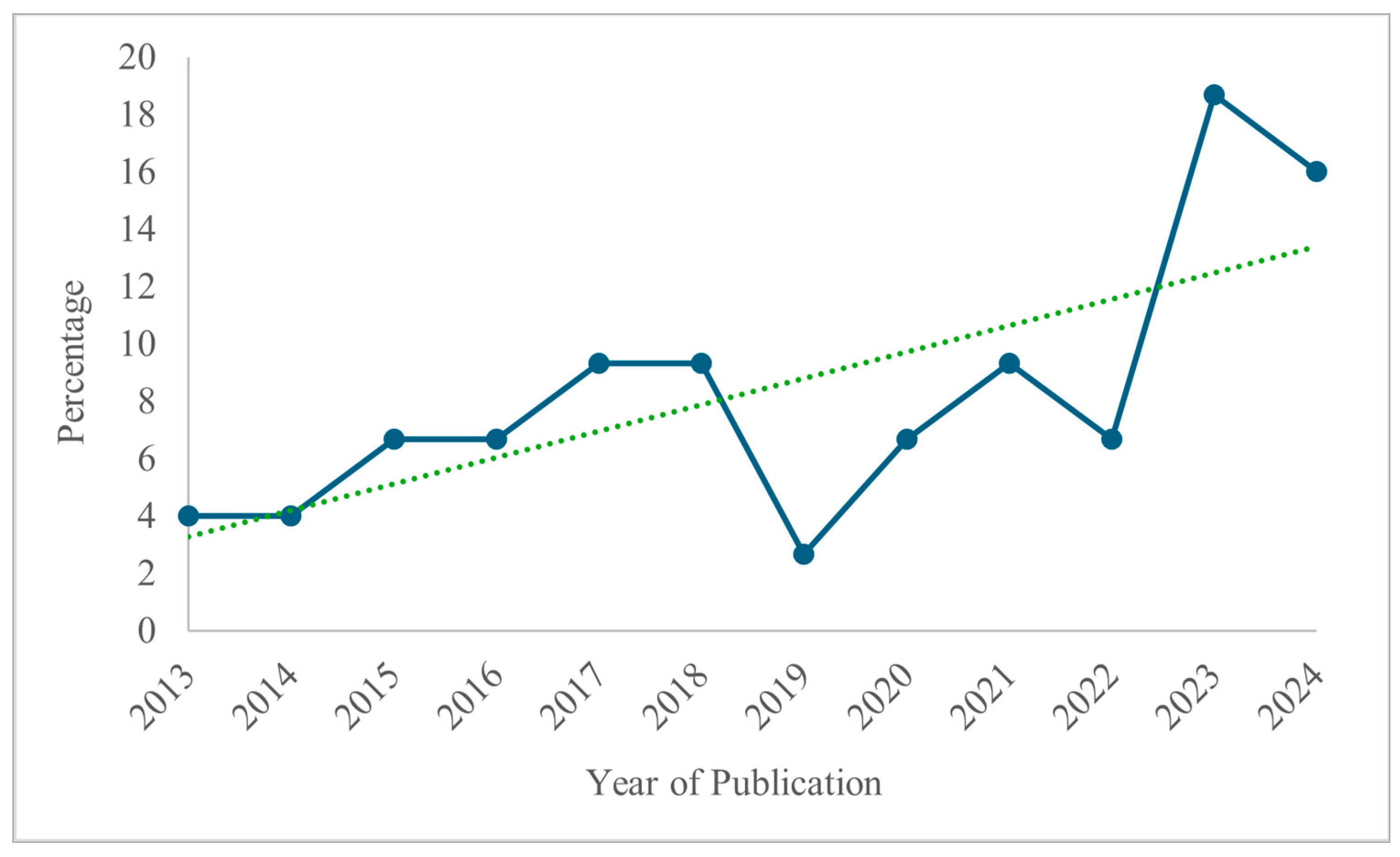
Analysis of the publication years for the 75 selected studies reveals an upward trajectory in research interest regarding urban infrastructure planning for sustainable urban development in the Global South. At the beginning of the survey period, annual output accounted for approximately 4% of the total sample. While the lowest output was recorded in 2019 (2.67%), and the subsequent volumes between 2019 and 2022 did not immediately match earlier heights, the overall trajectory remains positive. However, a significant surge occurred over the following decade, peaking in 2023 with 18.67% of the total papers, followed by 16% in 2024. The slight decline in 2024 may simply reflect indexing delays rather than a decrease in research momentum. Ultimately, the data illustrate robust and increasing commitment to addressing infrastructure planning within the Global South (Figure 2).
This trend likely reflects a growing global emphasis on sustainable urban growth, driven by international policy frameworks such as the United Nations Sustainable Development Goals, particularly Goal 11 (Sustainable Cities and Communities). It also reflects rising concerns regarding rapid urbanization, critical infrastructure deficits, and climate resilience in developing contexts.
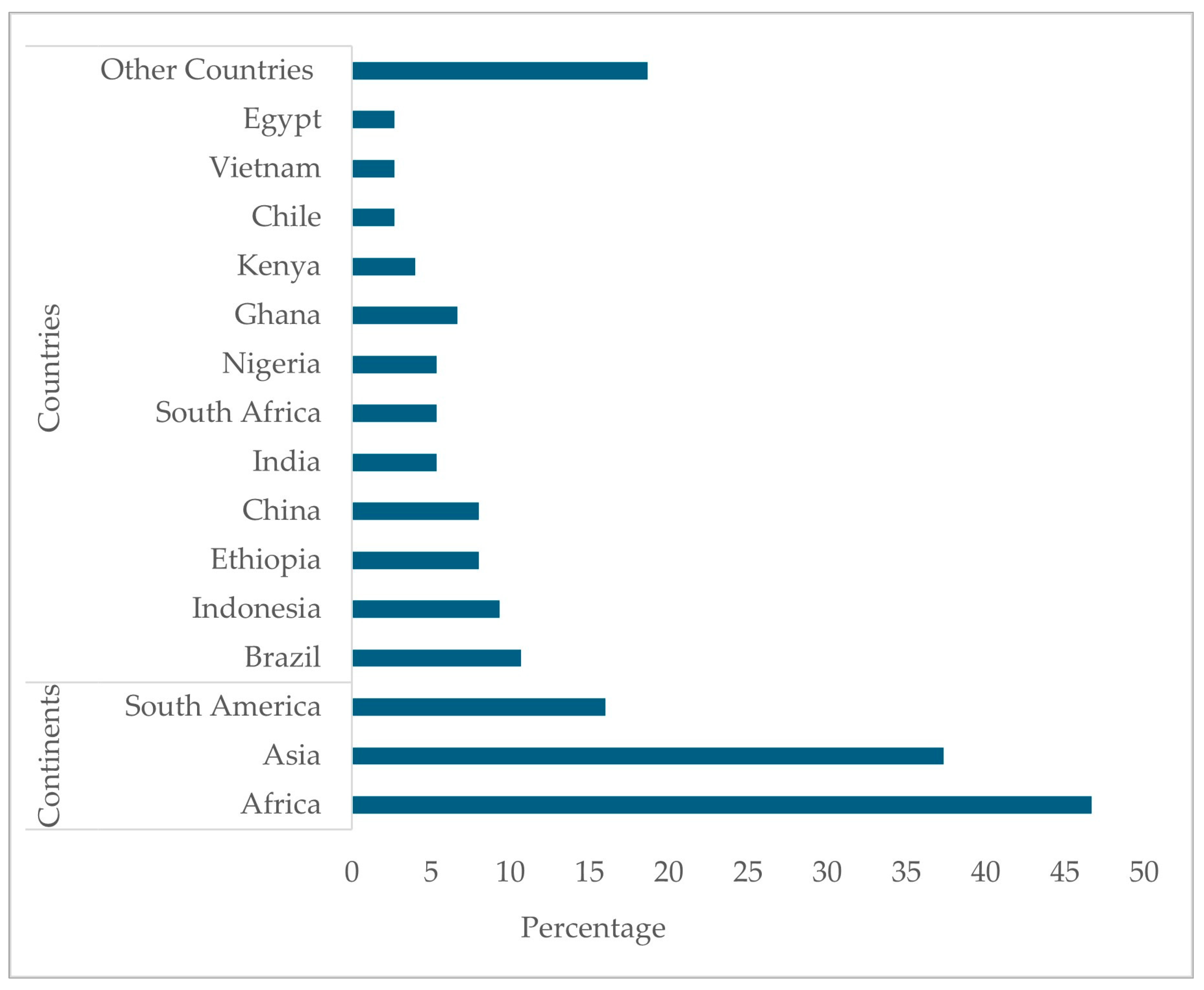
The 75 selected articles span 26 countries across three continents, presenting a diverse yet uneven distribution of research. As documented in Figure 3, the highest concentration of research was conducted in Africa (46.67%), followed by Asia (37.33%) and South America (16%).
This distribution indicates a significant research focus on African contexts, likely reflecting the high visibility and urgency of infrastructure challenges in the continent’s rapidly urbanizing regions. This trend may also be influenced by the priorities of international funding bodies and global development agendas. Conversely, the relatively low representation of South American studies may indicate a language bias, as the inclusion criteria were restricted only to studies published in the English language. Overall, these patterns show that the volume of available research is shaped by a combination of problem intensity, research investment and linguistic accessibility.
At the national level, Brazil, Indonesia, Ethiopia, and China represent 10.67%, 9.33%, 8%, and 8%, respectively. The remaining countries, including Salvador, Peru, the Republic of Guinea, Tanzania, Mozambique, Bangladesh, Iran, the Philippines, Malaysia, Thailand, and Yemen, are categorized as "Other countries" in Figure 3, with each representing 1.33% of the total sample.
This geographic distribution highlights a strong scholarly focus on rapidly urbanizing regions within Africa and Asia while underscoring the need for further comparative research across the diverse landscapes of the Global South.

3.2. Study Characteristics

The core characteristics of the 75 selected studies—including authors’ names, geographical focus, primary objectives, research designs, and identified key challenges—are synthesized in Table A3. Highlighting these parameters facilitated a comprehensive synthesis of findings and developed themes and allowed for a deeper analysis of the geographical variations in infrastructure challenges in the Global South.

3.3. Quality Appraisal of Selected Studies

The included studies were grouped by research design, and the Critical Appraisal Skills Programme (CASP) method was employed to assess their respective strengths and weaknesses. The CASP framework provides specialized checklists tailored to various study types [28] to ensure robust and specific evaluation. This widely adopted approach accesses studies across the following core sections: Section A: Are the results of the study valid? Section B: What are the results? Section C: Will the results help locally? The results of the CASP check are demonstrated in detail in Table A4 and Table A5.

3.4. Quantitative Keyword Co-Occurrence Analysis: Bibliometric Approach

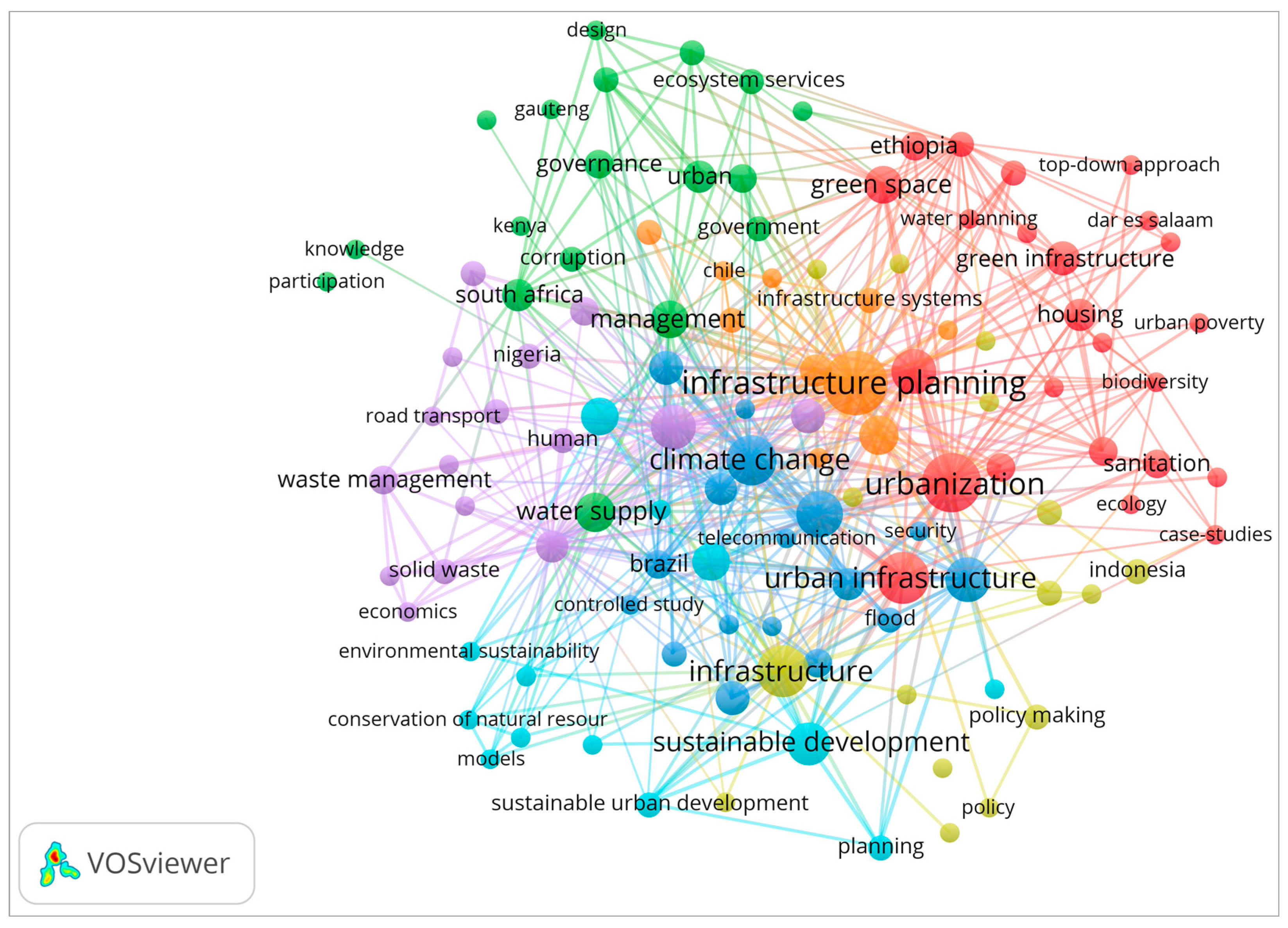
The selected papers for this review contained 696 unique author keywords recognized by VOS viewer (version 1.6.20). To ensure thematic significance, a minimum occurrence of two was applied, reducing the set to 114 qualified keywords. These were used to generate a keyword co-occurrence network, which revealed seven distinct clusters (see Table 1 and Figure 4).
In Figure 4, each node (circle) represents a specific term. Its size is proportional to the frequency with which the term appears in their titles, abstracts, or keyword lists. The proximity of nodes and the thickness of the connecting lines represent the total link strength (TLS); a thicker line indicates a higher frequency of co-occurrence between two keywords [29].
Table 1. A bibliometric classification scheme for the literature on urban infrastructure planning and development. It represents the most frequent author keywords, thematic clusters, and studies that contribute more keywords to the development of the cluster.
ClusterKeywordsThemeMain Articles
1Urbanization, urban planning, urban infrastructure, green space, green infrastructure, Ethiopia, economic and social effects, Addis Ababa, population statistics, housing, institutional framework, sanitationUrbanization and urban planning[30,31,32,33,34,35,36,37,38,39,40,41]
2Water supply, management, South Africa, governance approach, governance, government, planning principles, ecosystem services, corruptionUrban water governance and management[36,41,42,43,44,45,46,47,48,49]
3Climate change, urban area, urban growth, vulnerability, developing countries, investment, adaptation, Brazil, barriers, scenario analysis, floodClimate change and urban resilience [47,48,50,51,52,53,54,55,56]
4Infrastructure, economic development, Ghana, Indonesia, policy making, regulatory framework, decision making, infrastructure construction, water quality, policy, financeInfrastructure, policy, and development nexus[36,57,58,59,60,61,62]
5City, informal settlement article, waste management, solid waste, participatory approach, public-private partnership, human, private sectorUrban governance and city systems[33,36,43,63,64,65,66,67]
6Urban development, sustainable development, sustainability, sustainable urban development, planning, Sustainable urban development and planning[32,34,36,48,53,68,69,70]
7Infrastructure planning, infrastructure development, water management, resilience, infrastructure systems, integrated approachInclusive infrastructure planning and resilience [32,34,39,65,67,71,72]
Cluster 1: Urbanization and its Effects (red nodes in Figure 4). This cluster focuses on “urbanization” with a high total link strength (TLS) of 133 and occurs 17 times (Table A1). As a primary driving force, urbanization reflects the rapid transformation of cities in response to demographic shifts, migration, and economic development. Studies within this cluster [30,31,33] demonstrate that urbanization and rapid population growth reshape land-use patterns; increase pressure on infrastructure, housing, and public services; outpace institutional capacity; and lead to uneven development.
The frequent co-occurrence of keywords “urbanization”, “urban planning” (13 occurrences), and “urban infrastructure” (10 occurrences) reflects a strategic response to these pressures. Robust planning and institutional frameworks are essential to managing infrastructure, including water and sanitation systems, housing, and green infrastructure, especially in regions facing resource constraints and institutional fragmentation. Weak planning systems and institutional frameworks hinder effective service delivery, resulting in deficits in sanitation, housing, and basic urban services [35,39,40].
The presence of keywords such as "green space" and "green infrastructure" in this cluster indicates a critical ecological dimension. The loss of green areas due to rapid expansion undermines resilience and environmental quality [32,34]. Collectively, the keywords and references in this cluster indicate that urbanization is a multidimensional process requiring integrated planning, institutional strengthening, and ecological protection to support sustainable and equitable urban development.
Cluster 2: Water Governance and Management (green nodes in Figure 4). This cluster underscores the critical importance of reliable access to clean water in urban contexts. The keyword “water supply” has a higher TLS (63) and occurs eight times in this cluster (Table A1). It is presented as both a fundamental service and a pressing challenge in rapidly growing cities. Population growth, climate variability, and aging infrastructure strain water systems, leading to inequitable access [42,44,47]. In this context, water scarcity is not only a technical issue but also a social and political concern, closely linked to urban resilience and sustainability.
Next to water supply, the keyword “management” (TLS of 58; seven occurrences) indicates the institutional and operational capacity required for reliable and equitable water provision. Research indicates that effective management depends on transparent governance approaches, strong planning principles, and the integration of ecosystem services [43,48]. Conversely, poor management often leads to inefficiencies, corruption, and inequitable distribution, whereas strong governance frameworks can enhance transparency, accountability and long-term sustainability. This theme connects directly to the broader governance approach, underscoring that institutional reforms and community participation are essential to addressing water challenges in urban areas.
“South Africa” has a high TLS (57) and occurs four times in this cluster (Table A1). This indicates a specific regional focus where water supply and management issues are particularly acute and well documented. Studies conducted in Gauteng (South Africa) and other South African urban centers reveal how historical inequalities, rapid urbanization, and governance gaps exacerbate water insecurity [36,45].
Furthermore, the presence of keywords such as “governance”, “government”, “ecosystem services”, and “corruption” within this cluster indicates a clear demand for integrated governance, ecological stewardship, and institutional reform.
Cluster 3: Climate Change and Urban Resilience (purple nodes in Figure 4). This cluster centers on the keyword “climate change”, which has the highest TLS, 86, and occurs 12 times (Table A1). This indicates its central role in shaping urban vulnerability and development trajectories. It intensifies systematic risks including heat stress, extreme rainfall, and flooding, particularly in rapidly expanding urban areas [47,51,56]. As cities grow often in unplanned or exposed locations, their sensitivity to climate hazards increases, making climate change a critical challenge for urban systems in the Global South.
The keywords “urban area” and “urban growth” occur 11 and 10 times, respectively (see Table A1). They highlight the spatial and demographic pressures that amplify these risks. In many developing countries, expanding urban footprints often encroach upon floodplains, wetlands, and other ecologically sensitive zones. This expansion increases vulnerability, particularly for low-income populations living in informal or poorly serviced settlements. Research indicates that vulnerability is not only shaped by physical exposure, but also by socio-economic inequalities, weak governance, and limited access to infrastructure [50,52].
Finally, the cluster underscores the importance of “adaptation” and “investment” to address climate risks. Studies such as those by [54,55] state that the need for proactive adaptation strategies ranges from nature-based solutions to improved planning and resilient infrastructure. However, barriers such as financial constraints, institutional fragmentation, and limited technical capacity often hinder effective adaptation.
Cluster 4: Infrastructure, Policy, and Development Nexus (yellow nodes in Figure 4). This cluster is dominated by the keyword “infrastructure” with a TLS of 87 and 12 occurrences (see Table A1). “Infrastructure” plays a fundamental role in shaping urban development, economic growth, and social well-being. It is portrayed as both a driver of modernization and a persistent challenge in rapidly urbanizing regions. The reviewed literature highlights how infrastructure investment enhances connectivity, productivity, and resilience while simultaneously exposing gaps in governance, financing, and equitable access [36,57,60].
The close association of keywords such as “economic development”, “policymaking”, “regulatory frameworks”, and “decision-making” reflects the institutional dimension of service provision. The success and sustainability of infrastructure projects rely on coherent policies, transparent governance, strategic planning, and effective financing mechanisms [59,61]. Conversely, poorly designed or poorly regulated infrastructure often results in inefficiencies, environmental degradation, and social inequality.
Practical concerns such as “infrastructure construction”, “water quality”, and “finance”, illustrate the operational challenges of building and maintaining resilient infrastructure systems. The studies in this cluster emphasize that financing mechanisms, construction standards, and environmental safeguards are crucial to ensuring long-term public benefits [58,62].
Cluster 5: Urban Governance and City Systems (blue nodes in Figure 4. Cluster 5 is anchored by the keyword “city”, which exhibits a high TLS of 87 and occurs 10 times (Table A1). This highlights the urban space as the primary nexus where governance, infrastructure, and social dynamics converge. Within this cluster, cities are framed as dualities. They are hubs of opportunity and, at the same time, sites of inequality, where rapid urban growth creates challenges in housing, transport, and service provision [33,36,40]. The city environment embodies the complexity of urbanization, where formal and informal systems constantly interact to shape everyday life.
Another thematic focus within this cluster is “informal settlements” reflecting the precarious housing conditions and inadequate access to water, sanitation, and infrastructure experienced by marginalized populations. Studies such as [43,67] state that informal settlements are both a symptom of rapid urbanization and a critical governance challenge. They highlight the need for inclusive planning that recognizes the realities of informal urban growth rather than treating it as a peripheral issue. This perspective connects directly to the participatory approach, which emphasizes community involvement in decision-making and planning processes.
Cluster 6: Sustainable Urban Development and Planning (light blue nodes in Figure 4). The cluster focuses on the processes and strategies that drive the growth and transformation of cities. Given its high TLS and high frequency of occurrence, “urban development” is portrayed as both a driver of modernization and a challenge to sustainability. References such as [32,36,59] emphasize how urban development influences housing, infrastructure, and resource allocation while also creating pressures on ecosystems and social equity. In rapidly growing cities, development often outpaces institutional capacity, leading to issues of congestion, pollution, and uneven access to services.
The keyword “sustainable development” is closely linked to urban development representing the necessity of balancing economic growth with environmental protection and social inclusion. Studies within this cluster [34,70,73] argue that achieving sustainable urban development requires integrated planning, conservation of natural resources, and environmental protection measures. These findings underscore the importance of embedding sustainability principles directly into urban policies to ensure that development does not compromise ecological health or the needs of future generations.
Furthermore, keywords such as “environmental sustainability”, and “production and consumption” reinforce the idea that urban development must be reoriented toward long-term resilience. The cluster also includes practical dimensions such as “planning”, “models”, and “impacts”, which serve as essential tools and metrics for modern urban development strategies. Research [68,74] indicates how planning frameworks and urban models inform development decisions, while surveys and impact assessments provide evidence for policy adjustments.
Cluster 7: Inclusive Infrastructure Planning and Resilience (orange nodes in Figure 4). This cluster focuses on “infrastructure planning”, which holds the highest TLS (170) and occurs 20 times (Table A1) in the entire database. Its extensive connectivity to nearly all other keywords underscores its role as the conceptual backbone of this review. “Infrastructure planning” is portrayed as the vital link between physical systems and governance, resilience, and environmental management. Research within this cluster [39,47,72] argues that effective planning ensures that infrastructure systems for water, housing, energy, and transportation are designed to meet the demands of rapid urbanization while minimizing ecological impacts. Infrastructure planning is presented as a strategic process that determines how cities prepare for long-term development, environmental pressures, and population growth.
Closely linked is “infrastructure development”, which reflects the operational implementation of planned systems such as transport, water, and energy networks. The literature [65,67] shows that development efforts have to be aligned with planning frameworks to ensure efficiency, equity, and sustainability. Furthermore, the inclusion of “water management” in this cluster shows the importance of integrating sector-specific systems into broader planning processes. Water management is a critical component of urban infrastructure that requires coordinated governance and long-term investment to address scarcity, quality, and distribution challenges [32,34].
The cluster also includes keywords such as “resilience”, “infrastructure systems”, and “integrated approaches”. These keywords reflect a shift toward holistic, systems-based thinking in infrastructure planning. The referenced literature in this cluster emphasizes that resilient infrastructure must be designed to withstand climate risks, demographic pressures, and operational disruptions. Integrated approaches combining engineering, environmental management, and social considerations are increasingly recognized as essential to building adaptive, efficient, and sustainable infrastructure systems. Collectively, this cluster reveals infrastructure planning as a multidimensional field where strategic vision, coordinated development, and resilience-oriented design converge to shape robust urban futures.
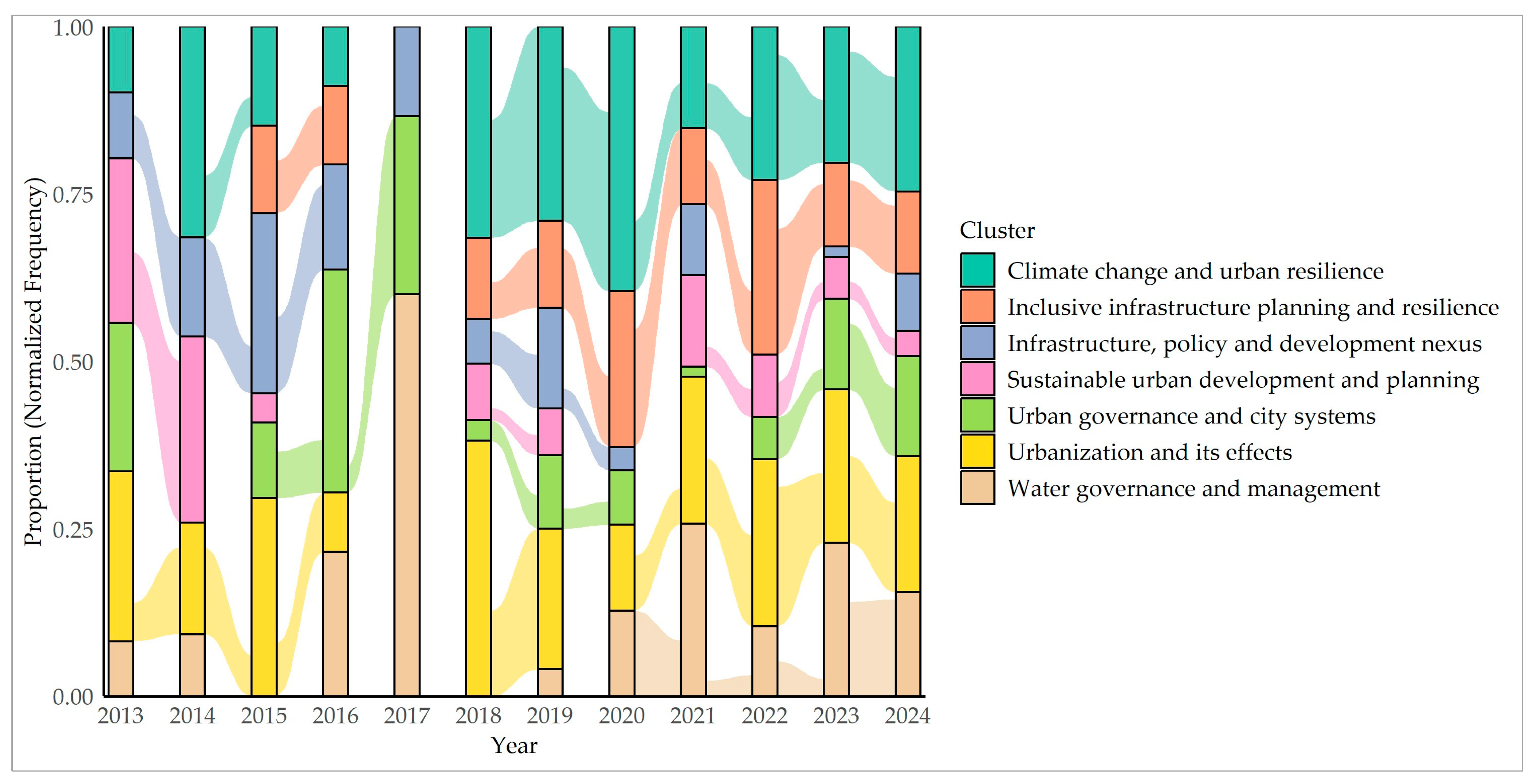
In addition to the keyword-based cluster description, the evolution of these themes was analyzed over the study period. The timeline is divided into three distinct phases (2013–2017, 2018–2020, and 2021–2024) to highlight shifting research priorities. As illustrated in Figure 5, the data reveal a clear progression from foundational, broad themes to more integrated, resilience-focused urban infrastructure research aligning with contemporary urban sustainability and resilience priorities.
During the first phase (2013–2017), research primarily concentrated on clusters such as urban governance and city systems, sustainable urban development and planning, and infrastructure, policy, and development nexus. This focus indicates an early emphasis on establishing the conceptual and institutional framework.
The next period (2018–2020) marked a notable expansion and diversification of research with a substantial growth in the urbanization and its effects and the climate change and urban resilience clusters. This reflects an increasing awareness of the external pressures acting upon urban systems in the Global South.
Between 2021 and 2024, in the final phase, research output intensified and became more thematically consolidated. Urbanization and its effects emerges as the dominant cluster, accompanied by consistent growth in clusters such as climate change and urban resilience, and inclusive infrastructure planning and resilience. The presence of sustainable urban development and planning has been diminishing since 2015.

3.5. Qualitative Content Analysis: Thematic Approach

Using bibliometric analysis as the primary orientation and keywords for thematic grouping, approximately twenty-three key challenges were initially identified and categorized into eight core themes. However, the theme “sustainable development” is integrated across the other seven areas, a structural choice designed to enhance the clarity and coherence of the analysis, and the themes are reduced to seven core themes (Table 2).

3.5.1. Governance and Institutional Challenges

The reviewed literature indicates that urban infrastructure development relies heavily on good governance and a high-quality institutional framework. However, the realization of sustainable and resilient infrastructure is often hindered by significant institutional problems across the Global South. A primary driver of this stagnation is the lack of awareness, coordination, and integration of sustainability principles [31,75,76,77,78,79,83]. In Ethiopia, for instance, the absence of comprehensive frameworks, design standards, and public engagement often results in urban infrastructure planning that neglects sustainability [76].
Furthermore, weak coordination and integration among government bodies, civil society, private institutions, and stakeholders exacerbate inefficiencies in public investment and policy implementation regarding urban and infrastructure planning [44,63,75,78,82]. This is compounded, particularly in African cities, by weak urban management and decentralization policies. Ambiguities in the devolution of responsibilities between federal and local governments often undermine accountability and effective service delivery. Finally, the growing informalization of urban spaces, coupled with inadequate land-use management, further exacerbates social tension and infrastructure shortages [81].
Insufficient institutional and professional capacity poses another significant challenge in the Global South [36,44]. Many urban planning institutions lack sufficiently qualified personnel, including engineers, contractors, and accountants, who are required for planning, executing, and maintaining infrastructure projects. This personal shortage directly impairs the project and its efficacy over time [51]. Moreover, weak institutional frameworks are often responsible for ineffective implementation of urban green infrastructure, particularly due to a lack of robust strategic guidelines for the conservation and management of green spaces [78,80].
Beyond capacity issues, systematic corruption and a lack of governmental transparency present formidable challenges, particularly in Africa and South America [33,43,79]. In many developing areas, political interference and excessive bureaucracy have marred infrastructure projects, resulting in poorly executed or incomplete developments. Such political interventions often create a mismatch between the short-term agendas of politicians and the long-term objectives of infrastructure projects [71]. This decreases public confidence in state institutions and promotes uneven infrastructure funding, where affluent areas tend to receive greater attention compared with underserved communities [51].
Another predicament confronting urban infrastructure development in the Global South is the land acquisition process. This activity often tends to suffer from cost overruns and time delays caused by inadequate compensation schemes, bureaucratic inefficiencies, and unclear valuation techniques. Such challenges arise from insufficient negotiation mechanisms to align compensation with market values, inadequate systems for tracking payments, and weak regulatory enforcement to deter land price speculation. Furthermore, planning inefficiencies often arise from institutional weaknesses. These include ineffective communication between planning agencies and government decision-makers, inter-sectoral conflicts, and excessive bureaucratic procedures [51].

3.5.2. Economic Constraint and Funding Gap

The reviewed literature underscores that economic constraints and funding shortages are significant factors hindering infrastructure planning and development in developing countries. A prominent issue is the vast disparity between available financial resources and the massive investment required for urban infrastructure and public goods [60,76,78]. Limited financial resources of local governments and high costs tend to discourage the implementation of large-scale projects [31,62,68,88]. For example, local authorities in Semarang lack the capacity to fund multi-sector activities. Likewise, volatility in funding sources and low-cost recovery options in Indonesia exacerbate inefficiency in the management of water [34].
These financial limitations represent a recurring theme throughout this review. Limited resources and appropriations pose a significant impediment [30,87,89,90]. In Ethiopia, for instance, budgetary allocations prioritize basic infrastructure, leaving green initiatives chronically underfunded. Similarly, urban service delivery in India suffers from inadequate user charges and subsidies, leading to unsustainable operations and weak conservation incentives. Ultimately, low investment levels across African cities, coupled with inappropriate financing instruments, delay infrastructure development [86].
The legacy of colonial and donor-driven development continues to hinder progress, reproducing systemic weaknesses that complicate infrastructure development across African cities [48,81]. For example, reliance on external funding in Ghana restricts proactive measures and centralizes technical expertise, leaving local agencies focused on maintenance rather than implementation [67].

3.5.3. Environmental and Climate Change Challenges

The reviewed studies indicate that climate change and shifting environmental conditions create severe challenges to urban infrastructure planning by increasing the intensity and frequency of natural hazards such as droughts, floods, heatwaves, and precipitation patterns [32,43,44,49,50,54,55,56,74,75,78,92,93,94,95]. For instance, rising sea levels and the increasing occurrence of extreme weather events urge urban planners to rethink the layout and resilience of basic infrastructure such as roads, bridges, drainage systems, and buildings. Furthermore, these environmental conditions directly affect resource availability, necessitating the integration of sustainability and adaptation strategies into modern urban planning.

3.5.4. Rapid Urbanization and Population Growth

Urban infrastructure planning and development in developing countries are challenged by rapid urbanization, coupled with accelerating population growth [32,37,38,51,52,53,70,77,86,96,97,98]. Frequently, urban areas expand without proper planning, resulting in insufficient infrastructure development. For example, in African cities, urbanization is largely unregulated and driven by spontaneous development, resulting in poor infrastructure and substandard basic services, particularly supply of water, sanitation, energy, and transport.
Furthermore, this rapid and uncontrolled urbanization has led to environmental degradation, the expansion of slum areas and informal settlements. These conditions heightened flood risk and resulted in inadequate housing, increased pollution, and poor access to basic services such as safe drinking water and drainage systems [53,96]. This is a common phenomenon in African cities, where informal settlements account for a significant share of urban dwellings. In Lagos (Nigeria), for instance, these infrastructure deficits are further exacerbated by governance failures, corruption, and neglect, resulting in severe environmental and social challenges [69].

3.5.5. Technological Gap and Innovation Difficulties

Technological shortcomings and innovation barriers in infrastructure planning manifest as the underutilization of advanced technologies for sustainability, uncertainty surrounding the evolution of renewables, and limited capacity for grid integration [51,61,73,76,102]. In Belem (Brazil), for instance, the urban expansion rate reached 82% between 2000 and 2010, outpacing the development of basic infrastructures like waste management and sanitation systems. This gap underscores a critical lack of technological adaptation and generic capacities to support sustainable urbanization [42,51,52].
Beyond hardware and integration, planning urban infrastructure is further hampered by data-related challenges. This includes a scarcity of adequate and accurate data, weak integration of green–gray synergies, and fragmented data-sharing routines. Furthermore, the use of outdated and ineffective planning tools continues to stifle proactive urban development [35,38,45,58,61,71,78,87,103].

3.5.6. Political Instability and Conflict

The reviewed articles highlight that political instability and violence create significant challenges for urban infrastructure planning, especially in regions experiencing fragility and conflict. In the Middle East, particularly Yemen, the prolonged armed conflict since 2015 has severely affected water and energy supply infrastructure, resulting in capacity degradation, the bankruptcy of state providers, and damage of critical systems [57,67,72,89]. Similarly, in Ethiopia, the prevailing political instability and the lack of institutional security have exacerbated issues related to urban drinking water systems. These circumstances, combined with insufficient regulation and technical capacity, have left decentralized governmental bodies unable to deliver standard water services [32,72].
Administrative failures and a lack of political will further stifle sustainable infrastructure planning. Issues, such as ineffective governmental management, policy contradictions, and the persistence of overlapping, outdated, and inconsistent practices create an environment that is hostile to sustainable infrastructure planning [42,44,65,67,78,91]. These challenges are intensified by the interference of politicians and limited regional and national policies regarding green infrastructure. Ultimately, weak land administration and management practices, along with insufficient land-use regulations, contribute to poor implementation of green infrastructure [41].

3.5.7. Social Inequality and Exclusion

Finally, urban infrastructure planning and development are challenged by social inequality and exclusion, which manifest as uneven access to basic services such as transportation, housing, water, and sanitation [40,46,47]. Marginalized communities often live in areas with poor infrastructure, limited public services, and inadequate connectivity to economic hubs. This spatial inequality reinforces broader socio-economic disparities, as excluded communities face systematic barriers to education, healthcare, and employment due to biased or inefficient infrastructure planning [69,89].
Social exclusion perpetuates cycles of poverty and systematic neglect within these communities [40,51]. When marginalized groups are excluded from planning processes, their specific needs are often overlooked, resulting in a persistent decline in living standards and the continued underdevelopment of critical infrastructure in the areas where it is needed the most.

4. Discussion

4.1. Challenges in Urban Infrastructure Planning Towards Sustainable Urban Development

This study reveals that challenges in urban infrastructure planning in the Global South stem from interconnected governance and institutional challenges, economic constraints and funding shortages, environmental and climate change, rapid urbanization and population growth, political instability, technological challenges, and socio-economic inequality and exclusion (Table 2).
Specifically, the absence of adequate awareness, coordination and integration of sustainability principles, and insufficient institutional and professional capacity create a significant challenge for the implementation of effective urban infrastructure planning [31,75,76,77,78,79,83]. This might be due to policymakers’ focus on economic development alone and the absence of inclusive capacity-building and awareness-raising programs that address current needs. Furthermore, the literature suggests that corruption, mismanagement, and ineffective land acquisition processes for infrastructure development pose significant challenges to the administration of infrastructure projects [33,43,79]. Such deficiencies are largely attributed to a lack of transparency, governance accountability, community-based monitoring systems, effective communication between planning agencies and government decision-makers, inter-sectoral conflicts, and excessive bureaucratic procedures. These systematic failures are confirmed by the bibliometric analysis (Clusters 1 and 2), which identifies poor governance and weak institutional frameworks as significant challenges for urban infrastructure planning.
The thematic analysis further identifies economic constraints and funding gaps as critical barriers, specifically highlighting the huge disparity between available financial resources and investment needs [60,76,78]. Insufficient financial resources, high costs, and limited budgets in local governments [31,62,68,88] pose significant challenges for urban infrastructure development. Financial constraints reduce investment in infrastructure projects, leading to substandard facilities and services. For example, in Ethiopia, these financial limitations prevent the adoption of sustainable designs [76], delaying the implementation of inclusive strategies and comprehensive standards.
Similarly, the development of sustainable urban green infrastructure in Guinea is hampered by deep-rooted political and economic uncertainties, systemic corruption, and financial constraints [78]. Despite the stated commitment of municipal councils to the well-being of their citizens, they lack the necessary capital to support green infrastructure development. The scarcity of resources is often exacerbated by high transaction costs and fragmented decision making across agencies, which complicates the successful integration of multi-sectoral developments.
Poverty intensifies the infrastructure crisis, as poor households are disproportionally exposed to high informal costs while possessing fewer financial resources. In Belem (Brazil), infrastructure deficits affect all demographics, but poorer families specifically are impacted by the issue of contaminated water, which affects their drinking and recreational activities [51]. Infrastructure cost competitiveness in Africa is a significant hindrance, as most households survive on low daily incomes [81]. Urban dwellers face heightened pressures from cash-based service provision, which prioritizes prosperous neighborhoods while neglecting the interests of poor communities.
Furthermore, reliance on foreign funding is an intrinsic challenge to long-term development. In Vanuatu, for instance, external funding enables flagship infrastructure projects despite limited domestic economic capability [48]. Similarly, evidence from Ghana suggests that donor-driven models often limit local agencies to maintenance-oriented roles [67]. These systemic issues stem from a lack of effective strategies for mobilizing financial resources, the misuse of existing financial resources, heavy reliance on international donors, and poverty. These findings align with the bibliometric results for Cluster 4, which highlight the need for robust and effective financial mechanisms.
Environmental shifts and climate change aggravate the incidence of natural hazards, including floods, droughts, extreme heat, and sea-level rise [32,44,56,75,92], posing further challenges for urban infrastructure planning. For instance, the city of Tshwane (South Africa) faces challenges from unmanaged green spaces, leading to environmental degradation [44]. Similarly, Mumbai city (India) is also increasingly susceptible to extreme heat, flooding, and sea-level rise. These vulnerabilities result often from an absence of inclusive urban planning that fails to incorporate green space management and nature-based ecological intervention mechanisms, such as nature-based solutions for carbon sequestration and biodiversity protection.
The bibliometric analysis of Cluster 3 supports this finding, stating that the expansion of cities in the Global South, particularly in unplanned locations, increases sensitivity to climate hazards, making climate change a defining challenge for urban systems. Furthermore, water scarcity and poor sanitation remain pertinent environmental issues in Sub-Saharan Africa. When combined with rapid urbanization and climate unpredictability, these inadequate infrastructures may hinder countries like Ethiopia from achieving universal water access by 2030.
The thematic analysis further identifies rapid urbanization and population growth as pressing challenges that consistently overburden existing facilities and resources [32,38,39,51,53,69,77,86,96,97,98]. This demographic pressure has led to inadequate infrastructure, with informal settlements expanding due to limited budgets. Such settlements often lack basic amenities, such as adequate housing, sanitation, and waste disposal systems, thereby accelerating urban decline.
Rapid urbanization severely impacts urban infrastructure planning, especially in developing countries. Belém and Piura (South America) are fast-growing cities with increased flood vulnerability and diminished adaptive capacity [51,75]. Urbanization has led to socio-environmental degradation in river channels, a loss of ecosystem functions, increased pollution, sedimentation, and flooding with contaminated water. In Piura, biodiversity loss and heightened exposure to natural disasters such as floods result from settlements along riverbanks and inadequate planning.
Population growth further intensifies the strain on urban infrastructure by overburdening existing facilities and finite resources. This has led to inadequate infrastructure in many African cities, with informal settlements expanding due to limited budgets. Such settlements often lack basic amenities, including housing, sanitation, and waste disposal systems, thereby accelerating urban decline [51,82]. This may hinder the achievement of Sustainable Development Goal (SDG) 11, particularly Target 11.1 (ensure access for all to adequate, safe, and affordable housing and basic services, and upgrade slums) by 2030.
Regional examples illustrate the breadth of this challenge. Palu City in Indonesia struggles to manage waste due to high population density, sociocultural diversity, and limited community engagement [97]. Mekelle city (Ethiopia) similarly suffers from insufficient sewage and waste management infrastructure, leading to water pollution from domestic and industrial waste [32]. In Egypt, the government’s failure to provide adequate housing to low-income citizens has contributed to the growth of informal settlements, leading to urban challenges [39]. Likewise, Nigeria’s rapid urbanization has lagged behind infrastructure investment, resulting in housing shortages, underdeveloped drainage systems, pollution, and the proliferation of slums, which exacerbate poverty, environmental degradation, and urban vulnerability [53].
These deficiencies may stem from a lack of adaptive and integrative planning interventions designed to mitigate the social, economic, and environmental impacts of rapid urbanization and population growth. The bibliometric analysis of Clusters 1, 5, 6, and 7 indicates that inclusive and integrated planning in both formal and informal urban growth helps to maintain an effective planning process for sustainable urban development.
Technological gaps and difficulties in innovation include limited adaptation of modern technology, inadequate data, and planning tools that create challenges in urban infrastructure planning [42,51,58,61,70,78,87,103]. This stems from the complex and extensive constraints of adapting contemporary technology in urban infrastructure planning, particularly in developing countries. For instance, in Belém (Brazil), rapid urban growth has overwhelmed the provision of basic infrastructure such as sanitation and waste management. This deficiency attests to the city’s failure to adapt to contemporary technological opportunities that could enable sustainable urbanization. Furthermore, the municipality’s flood risk management is severely undermined by inefficient public and private efforts to raise awareness and implement effective prevention strategies [51]. These situations expose residents to persistent flood risks, underscoring the need for technological innovation to strengthen resilience and safety.
Weak planning capabilities and poor data quality further exacerbate the challenges of urban infrastructure planning. Robust data, such as demand patterns, geographic data, and infrastructure inventories, are necessary for effective planning. However, the acquisition of such data can be prohibitively expensive in resource-constrained settings [103]. For instance, the lack of comprehensive project details and supporting proposals in Indonesia indicates a disparity between the strategic framework and actionable plans [58]. Similarly, land-use plans by local governments in African cities are inadequately enforced and aggravated by a shortage of planning professionals and insufficient infrastructure investment frameworks [60]. These deficiencies hinder urban development and diminish confidence in private investment. Thus, there is an urgent need for robust data systems and comprehensive planning tools to ensure adequate infrastructure development.
Furthermore, political instability and conflict, often characterized by an absence of political commitment and inconsistent policies, have a substantial impact on urban infrastructure planning [32,41,42,65,72,78]. In regions affected by fragility and instability, such as Yemen, protracted periods of armed conflict have devastated the infrastructure for water and energy provision, causing tremendous capacity losses and the financial collapse of public providers [72]. This political instability poses a direct threat to the achievement of Sustainable Development Goal (SDG) 9 (Target 9.1) regarding resilient infrastructure for economic development, as well as SDG 7 (Target 7.1) concerning universal access to modern energy by 2030. Similarly, in Ethiopia, weak governance and persistent political instability have exacerbated problems with urban drinking water infrastructure, severely limiting the ability of decentralized government bodies to provide stable, regular water services [32]. These cases underscore the fundamental importance of stable politics as a prerequisite for effective infrastructure planning and construction.
Political instability, systemic corruption, and resource scarcity frequently hinder the implementation of sustainable infrastructure initiatives [78]. Moreover, inadequate policies, outdated frameworks, and poorly executed strategies result in significant delays and inefficiencies. For instance, ineffective government officials and conflicting policies in Iran discourage private-sector investment in road infrastructure projects [65]. Governance reforms and insights from successful practices in comparable contexts are crucial to overcoming these barriers and enhancing private-sector participation.
In sub-Saharan Africa, urbanization combined with political instability has intensified water scarcity, and weak governance arrangements and institutional frameworks obstruct equitable access to safe drinking water (SDG 6 Target 6.1) [32]. These systemic failures are often rooted in a weak institutional setup where political cycles dictate priorities. As a result, policymakers favor short-term political gains over long-term infrastructure requirements. In this context, the bibliometric analysis of Cluster 4 underscores the indispensable role of policy coherence in ensuring the successful implementation of large-scale infrastructure projects.
Lastly, social inequality and exclusion, including social segregation and inequitable access to infrastructure, present fundamental challenges to urban infrastructure planning [40,46,47,51,69,89], particularly in rapidly urbanizing developing countries. Socio-spatial segregation is evident in Belém (Brazil), where the wealthy classes occupy high-rise apartments. Meanwhile, the poor are relegated to informal settlements on low-lying, unstable terrain. This segregation is also intensified by real estate-led urban development and a lack of urban planning, which pushes traditional riverside communities to deserted urban peripheries [51]. These patterns of exclusion are often rooted in historical disparities and the implementation of non-inclusive policies that disregard the legal and social status of marginalized residents. This finding is supported in Clusters 2, 3, 4, and 6, where socio-economic inequity arises from the non-consideration of marginalized residents, poor management and regulated infrastructure, and rapid urban growth.
The development of Brasília, the Federal District of Brazil, further exemplifies the abrupt socio-economic contrasts inherent in urban infrastructure. As the city has been planned by the rich with adequate water infrastructure, the poor immigrants settle in slums, where infrastructure receives limited investment [47]. This disparity in access to essential water and sanitation facilities represents a systemic injustice driven by inequities in land ownership and housing quality. These imbalances disproportionately affect marginalized groups, including women, ethnic minorities, and people with disabilities, thereby perpetuating cycles of poverty and exclusion. Such structural inequality poses a significant barrier to achieving Sustainable Development Goal (SDG) 6 (Target 6.2), which mandates equitable sanitation and hygiene for all.
The evolutionary trends of the research clusters reveal a marked shift in scholarly focus: from 2017 to 2020, there was a substantial increase in studies addressing urbanization and its effects, climate change, and urban resilience. This shift indicates growing academic attention toward the practical implications of rapid urban growth, environmental pressures, and the emerging global resilience agenda. From 2021 to 2024, climate change and urban resilience continue to grow, and inclusive infrastructure planning and resilience are becoming dominant. This progression reflects a mature research environment increasingly dedicated to climate adaptation, sustainable infrastructure development, and the socio-environmental issues arising from rapid urban transformation. The presence of the sustainable development and planning cluster gradually declined throughout the study period, indicating that it is a cross-cutting thematic cluster, consolidating other clusters rather than remaining standalone.

4.2. The Way Forward to Mitigate the Effect of Challenges in Urban Infrastructure Planning

The papers reviewed in this study underscore that addressing the multifaceted challenges of urban infrastructure planning in developing countries, ranging from governance deficits and funding gaps to rapid urbanization, climate volatility, and political conflict, demands a bundle of well-designed and balanced strategic interventions. Based on the synthesized evidence, these strategies can be categorized into three pillars: Strengthening governance and institutional reform; integration of technological and nature-based solutions; and fostering collaborative frameworks and human capacity.

4.2.1. Strengthening Governance and Institutional Reform

Enhancing governance and institutional reform is a prerequisite for sustainable urban development in the Global South. Research highlights the importance of empowered coordination mechanisms that bridge sectoral divides, formalize collaborative processes, and integrate community participation throughout project cycles [42]. These mechanisms should be supported by strong compliance and monitoring systems and by targeted capacity development for technical and professional roles [30,78].
To ensure that national frameworks lead to accountable and cohesive delivery at city and project levels, it is vital to clearly define institutional mandates, to minimize political interference, and to improve transparency through performance evaluations and public disclosures [57,101]. Additionally, protecting planning and procurement processes from political influence, implementing cascading policy instruments, and strengthening anti-corruption measures are essential to maintaining public trust and creating stable delivery environments [45,89].
Governance reforms play a critical role in ensuring the long-term servicing and financing of infrastructure by clarifying institutional responsibilities, enhancing intergovernmental coordination, and promoting transparency. Instruments such as fiscal decentralization, performance-based budgeting, and public–private partnerships further ensure that infrastructure investments remain financially sustainable and adaptive to evolving urban challenges.
Governance reforms must simultaneously address the challenges arising from rapid urbanization, which is exacerbating service deficiencies and placing a heavy strain on institutions. Upgrading fundamental infrastructure through programmatic approaches, integrated with land-use planning, is crucial to managing growth pressures and mitigating socio-environmental risks [86]. Incorporating participatory diagnostics and collaboratively developed solutions into planning cycles enhances legitimacy and increases the effective utilization of services, especially within informal and peri-urban settlements [42,99].
Reducing socio-economic inequalities is equally integral to governance strengthening. Embedding access metrics into planning and performance frameworks ensures that infrastructure expansion is linked to distributional outcomes, while tariff and connection policies tailored to low incomes support universal access [85,103].
Participatory oversight mechanisms that empower marginalized groups enhance accountability and ensure that infrastructure systems reflect diverse needs. Linking service expansion with distributional monitoring enables planners to recalibrate investments to close spatial and social gaps in access and outcomes [51,85]. Together, these measures constitute a coherent governance framework capable of fostering equitable, resilient, and politically robust urban infrastructure development.

4.2.2. Integration of Technological and Nature-Based Solutions

To bridge technological gaps, cities must invest in scalable information and communication technology that directly enhances service accessibility and revenue stability. These investments should be paired with the institutionalization of data systems and analytical tools to facilitate planning, monitoring, and stakeholder feedback [86]. By coupling these technologies with targeted training and participatory practices, innovations are more likely to be absorbed by institutions and communities, rather than remaining isolated, thereby strengthening the adaptive capacity of interdependent urban systems [90].
The reviewed papers identify the integration of green infrastructure and climate-responsive planning as key strategies for resilience. This approach requires participatory processes that connect physical and human infrastructure [95]. Effective green infrastructure planning is assessed against principles such as green–gray integration, ecological connectivity, multifunctionality, and social inclusiveness with the aim to provide resilient infrastructure facing the impacts of climate change. Participatory action plans indicate a move from government to governance, incorporating green elements aligned with regional standards [90].
To reduce degradation and to mitigate climate risks, strategies should embed green infrastructure into legal and sectoral plans. This involves the establishment of ecological networks and multifunctional spaces designed to manage floods, to support social activities, and to conserve ecosystems. Moreover, fostering planning coalitions with municipal agencies, non-governmental organizations, and research institutions is essential to addressing policy complexities. Focusing on collaborative design and governance in flood-prone areas aligns investments with long-term adaptation strategies [95]. Finally, adopting resilient design principles, such as redundancy, robustness, flexibility, and safe-to-fail approaches, ensures that infrastructure continues functioning under stress, while transitioning to low-carbon systems like renewable energy and sustainable mobility secures long-term environmental sustainability.

4.2.3. Fostering Collaborative Frameworks and Human Capacity

Practical strategies to optimize infrastructure delivery include coordinated, cross-utility works to avoid repeated disruptions and to reduce costs. Demand stimulation and flexible tariff/payment systems are necessary to stabilize revenue. The adaption of data-driven credit models that leverage payment histories can unlock new financing streams by providing the bankability of low-income markets.
When paired with strong project governance to accelerate approvals and reduce administrative bottlenecks, these measures can convert scarce funds into timely, reliable infrastructure delivery by tightening the links among user demand, financial planning, and capital mobilization [101]. Community engagement that increases willingness to connect and pay can improve revenue adequacy, where affordability-constrained segments benefit from flexible payment technologies [73].
Furthermore, applying different types of land value capture mechanisms is essential to minimizing the constraints of economic and funding gaps. Among these mechanisms, the property tax stands out as a sustainable, economically efficient, and predictable instrument that provides reliable local revenue [88]. Other vital mechanisms include betterment levies that secure a share of the unearned uplift generated by administrative decisions and nearby public investment, as well as development charges tied to the direct connection between infrastructure provision and increases in serviced land values.
Municipal instruments also include land leasing/long leases, as used in China to finance massive urban infrastructure through proceeds from selling long leases on state-acquired urban land [60]. Additionally, the sale of development rights is a core municipal value capture instrument, while ground rent provides an ongoing land-based income stream that complements property taxes to support infrastructure and services over time [88].
Enhancing workforce skills is essential to addressing the complexity of urban infrastructure planning. Short-term and long-term training programs for the workforce, such as urban planners and engineers, on emerging technologies and sustainable principles will equip them to frame and implement successful solutions. Educational initiatives are required to build technical skills, innovative approaches, and sustainability principles [103]. Capacity development facilitates knowledge sharing and collaboration with professionals, expanding the collective knowledge applicable to urban infrastructure planning. Investment in capacity-building programs and training provides urban areas with a capable workforce to drive sustainable urban development.

4.3. Comparison with Other Studies

We evaluated and compared the methodological approaches and findings of the current paper with previous related review studies. Review studies by [105,106] build on quantitative (e.g., descriptive background information, and study findings) and qualitative (e.g., thematic analysis) methods. Nevertheless, neither paper specifies how information was extracted, the coding procedures, or whether coding was conducted manually or with software support. The study by [107] uses a narrative approach to present information. In contrast, the current study employs both bibliometric (quantitative methods, such as keyword co-occurrence analysis and evolutionary trends among clusters) and thematic (qualitative) analyses. Thus, the combined use of bibliometric and thematic approaches helps grasp in-depth information, extract keywords, follow a clear procedure, and understand the transformation of urban studies.
Financial (funding gaps and budget constraints, cost overruns, and project delays), political and regulatory (policy uncertainty and weak governance), and environmental and social (particularly the land acquisition process) challenges were identified by [105]. The author mentioned taxation and community levies as solutions for challenges. Likewise, studies by [106] identify inadequate funding, weak institutional capacity, lack of public awareness and participation, and corruption as challenges and propose policy reforms, capacity building, increased public engagement, and enhanced transparency and accountability as solutions. Social (e.g., growth of slums and informal settlements, weak governance, social exclusion, and weak community and civic engagement), economic (e.g., urban poverty, weak municipal finance, and fragmented economic planning), environmental (e.g., climate change and weak environmental regulation and enforcement), and infrastructure and basic services (e.g., inadequate access to water and sanitation, unreliable services, poor waste management, and unreliable power supply) challenges were identified by [107]. Although the study does not explicitly present solutions in a dedicated section, it lists integrated slum upgrading, inclusive governance, participatory budgeting, local economic development, stronger municipal finance, coordinated planning, climate adaptation, expanded utilities, and community-led sanitation as ways out. The findings of the three studies aligned with our identified challenges, including governance and institutional weaknesses, socio-economic inequities and exclusion, environmental and climate-related pressures, and economic constraints and funding gaps. However, our study further identifies challenges such as political instability and conflict, technological gaps and innovation difficulties, and the pressures of rapid urbanization and population growth. Exploring additional dimensions enables better outcomes, highlighting the complexity of the challenges and the need to formulate appropriate solutions.

4.4. Strengths and Limitations of This Study

This review draws upon reputable databases and peer-reviewed articles, employing a robust methodology that integrates quantitative (bibliometric) analysis with qualitative thematic synthesis. Despite these strengths, certain limitations persist. First, the findings are not supported by primary data from key stakeholders in the infrastructure sector, such as policymakers, planners, and practitioners, whose lived perspectives would validate this study’s conclusions. Second, this review is restricted to English-language publications, potentially excluding important research findings published in other languages. Finally, while this study strictly adheres to PRISMA guidelines to ensure transparency and rigor, it was not formally registered with a PRISMA protocol.

5. Conclusions

This review investigates the multidimensional challenges in urban infrastructure planning and explores ways to mitigate their effects. This study analyses conference papers and peer-reviewed articles published between 2013 and 2024. This study reveals that planning urban infrastructure in the Global South is shaped by a complex nexus of challenges. These include rapid urbanization, institutional deficits, socio-economic exclusion, climate vulnerability, and chronic funding gaps.
The analysis identifies several persistent hurdles, including weak governance arrangements, fragmented policy frameworks, fiscal deficiencies, and the exclusion of informal settlements. While innovative planning solutions and people-oriented approaches have been devised, their scalability is often constrained by structural and contextual issues.
The findings reveal a growing recognition of the need for cohesive, inclusive, and responsive planning strategies aligned with the principles of sustainable urban development. However, a dire disconnect persists between policy intent and implementation capacity, driven by political instability, lack of data-driven planning, and weak stakeholder engagement. To address these deficiencies, future research needs to emphasize comparative case studies, participatory planning processes, and resilient infrastructure systems adaptable to local contexts.
Furthermore, institutional capacity building, cross-sectoral coordination, and leveraging digital technologies emerge as critical development imperatives. Ultimately, the success of sustainable urban development in the Global South hinges not merely on technical interventions but also on transformative governance that empowers local communities and prioritizes social and environmental justice. This review calls for a paradigm shift away from reactive planning towards a proactive, adaptive, and just urban future.
This study helps policymakers, planners, stakeholders, and researchers to understand the challenges of urban infrastructure development in the Global South and possible solutions. It enables policymakers to design integrated, cross-sector reforms that strengthen institutional frameworks and prioritize investments that promote resilience and equity. For planners and practitioners, this study offers actionable insights by advocating inclusive planning, nature-based and technological solutions, and multi-stakeholder collaboration.
Furthermore, private-sector actors, non-governmental organizations, and development partners can utilize these findings to strategically target their efforts, particularly in areas of capacity building, public–private partnerships, and community-led engagement. Finally, for the academic community, this study serves as a critical diagnostic tool, highlighting overlooked gaps and charting new directions for future investigation into sustainable urban transformation.
While the current review focuses on identifying challenges and potential solutions for technical infrastructure planning and development, future research should investigate social infrastructure planning and development and its integration with technical infrastructure, in alignment with the United Nations Sustainable Development Goals.
Furthermore, future studies should be conducted in a regional setting, incorporating primary data from stakeholders to yield more context-specific insights. Most of the papers reviewed in this study used questionnaires developed from the existing literature; the current researchers recommend combining stakeholders’ input with the literature to develop research questionnaires to obtain actionable study outputs. Finally, future studies focus on cross-coordination within the infrastructure sector to achieve a more integrated infrastructure system.

Author Contributions

Conceptualization, F.F.E., S.K.A., T.F., R.M. and G.S.; methodology, F.F.E., T.F., R.M. and G.S.; software, F.F.E.; formal analysis, F.F.E.; investigation, F.F.E.; data curation, F.F.E.; writing—original draft preparation, F.F.E.; writing—review and editing, F.F.E., S.K.A., T.B., T.F., R.M. and G.S.; supervision, S.K.A., T.B., T.F., R.M. and G.S.; project administration, T.B.; funding acquisition, S.K.A. and T.B. All authors have read and agreed to the published version of the manuscript.

Funding

This research study was funded by Austria’s Agency for Education and Internationalization (OeAD) through the Austrian Development Cooperation: Austrian Partnership Program in Higher Education and Research for Development (APPEAR) program embedded in the project “Implementation of Academic Geomatics Education in Ethiopia for Supporting Sustainable Development (Edu4GEO2)”, project number 310_AAP.

Institutional Review Board Statement

Not applicable.

Data Availability Statement

Not applicable.

Acknowledgments

The authors would like to thank three anonymous reviewers for their comments, which greatly helped to improve an earlier version of the manuscript.

Conflicts of Interest

The authors declare that they have no known competing financial interests or personal relationships that could have appeared to influence the work reported in this paper.

Appendix A. Keyword Co-Occurrence Analysis

Table A1. The keyword information for all clusters.
IDKeywordCTLSOccIDKeywordCTLSOccIDKeywordCTLSOcc
652Urbanization113517690Water supply26388Adaptation3325
637Urban planning111110339Management258753Brazil3304
630Urban infrastructure18113545South Africa257539Barriers3275
233Green space1587223Governance approach2394499Scenario analysis3263
230Green infrastructure1466222Governance2344207Flood3233
190Ethiopia1384225Government2313184Environmental policy3212
153Economic and social effects1374391Planning principles2293103Controlled study3182
13Addis Ababa1353161Ecosystem services2273214Future prospect3152
411Population statistics1344220Global south2273292Innovation3102
256Housing1315610Urban2255500Security3102
295Institutional framework1303106Corruption2233589Telecommunication382
685Water planning1252215Gauteng2232277Infrastructure49613
114Dar es salaam1232123Design2182155Economic development4322
587Tanzania1232586Systems2172216Ghana4202
566Sub-Saharan Africa1222322Kenya2162272Indonesia4193
495Sanitation1194211Framework2142402Policy making4183
512Sewage1172323Knowledge262468Regulatory framework4172
639Urban population1172379Participation232115Decision making4162
552Stakeholder1162612Urban area310511280Infrastructure construction4152
596Top-down approach116275Climate change38612686Water quality4142
48Biodiversity1152624Urban growth37410396Policy4122
151Ecology1152659Vulnerability3566148Dynamics4102
640Urban poverty1102128Developing countries3516204Finance4103
63Case-studies172312Investment3334657Vietnam4102
326Land492489Road transport5252387Impacts6202
17Africa483599Traffic and transport5242285Infrastructure planning717020
237Groundwater442490Roads and streets5212281Infrastructure development7488
72City58410603Transport infrastructure5192683Water management7445
32Article5685615Urban development6667298Integrated approach7223
666Waste management5464575Sustainable development6659475Resilience7203
274Informal settlement5456572Sustainability6547290Infrastructure systems7193
541Solid waste5453578Sustainable urban development6403559Stormwater7172
380Participatory approach5404100Conservation of natural resources6332
158Economics5392187Environmental protection6332
419Priority journal5392352Models6332
448Public-private partnership5383261Environmental sustainability6292
257Human5353188Production and consumption6262
371Nigeria5313427Planning6233
Keyword co-occurrence analysis of selected 75 studies which appeared two times or more. Keywords are sorted by their total link strength, C represents the cluster, ID represents the number provided for each keyword in the respective cluster, Occ represents the number of keyword co-occurrences, and TLS shows the total link strength.
Table A2. Keywords excluded from thematic analysis.
No.Location NamesNo.Plural Words
1Nigeria1Urban Areas
2Priority Journal2Climate-changes
3Article3Developing Countries
5Gauteng4Investments
6Global South5Informal Settlements
7South Africa6Floods
8Kenya7Cities
9TanzaniaNoMethodological Words
10Ethiopia1Models
11Dar es salaam2Case-studies
12Addis Ababa 3Surveys
13Africa4Network Analysis
14BrazilNoRepeated Keywords
15Indonesia1Infrastructural Development
16Sub-Saharan Africa2Greenspace
17Smart City3Dar es Salaam (Tanzania)
18Ghana4Dar es Salaam (Dar es Salaam)
19Storm Water
20Chile
21Developed World
22Vietnam

Appendix B. Study Characteristics and Quality Assessment of the Selected Studies

Table A3. Characteristics of the selected studies for this review.
No.AuthorCountryObjective of the StudyStudy DesignMajor Challenges Identified by the Study
1[30]IndiaInstitutional features and devolution mechanisms of the federal frameworkQualitativeLimited financial resources and insufficient capacity of city governments for planning
2[31]IndonesiaExamine septage management Cross-sectionalInsufficient financing, and regulatory and institutional gaps with weak enforcement
3[32]EthiopiaInvestigate the issues and challenges of the urban drinking water systemQualitativeWeak institutional and governance arrangements, and rapid urbanization and population growth
4[33]NigeriaKaduna’s population and demographic changesQualitativeCorruption and weak financial discipline
5[34]IndonesiaSocio-economic, cultural and political challenges influencing BGI adoptionCross-sectionalFunding and financial constraints
6[35]Ethiopia and TanzaniaConditions and opportunities for establishing a functional green infrastructureQualitativeLow adaptive capacity and fragmented regimes, and limited institutional capacity and commitment to green infrastructure
7[36]South AfricaDemonstrate how trends in the energy, water and waste infrastructure sectors can help cities QualitativeFragmented governance and capacity gaps, short political cycles vs. long-term transition needs, and policy contradictions and institutional ambiguity in water management
8[37]NigeriaIdentify the key variables that influenced the outcomes of past housing programsQualitativeRapid population growth and urbanization, unsustainable and inconsistent funding, and land acquisition and tenure bottlenecks
9[38]AfricaPinpoint the challenges and opportunities QualitativeLimited integration of ecological knowledge in planning, rapid scale and pace of urban expansion, and weak planning institutions and governance
10[39]EgyptSolution model for improving the infrastructure networksQuantitative spatial modelingRapid urban expansion, data gaps and uncertainty, and physical and urban-form constraints
11[40]TanzaniaSocial and economic impacts of the simplified sewerage systemsCross-sectionalInequalities and networked injustices in access to services
12[41]EthiopiaExperts’ perceptions on the planning and governance of green infrastructureCross-sectionalGovernance model and political interference, and weak policy integration and implementation
13[42]South AfricaWays to operationalize green infrastructure spatial planningQualitativeLimited political capacity/will, conflicting policies and interpretations, and limited technical skills and support
14[43]AfricaThe capacity and limitations of African cities in building resilient infrastructureConceptual frameworkPolitical influence, weak governance, and corruption; climate change pressures; poor coordination across regional, national, and urban authorities; and limited ability to adapt systems to current needs
15[44]South AfricaInvestigate green infrastructure planningCross-sectionalSocial equity, safety, and access; governance and policy; and environmental issues
16[45]GhanaCorruption vs. procurement processCross-sectionalKnowledge and policy gaps, high susceptibility of procurement to corruption, and governance and political–economic distortions
17[46]IndonesiaParticipatory approaches in building knowledge and expertiseQualitativePolitical–economic domination, historical and persistent inequality of access, and fragmented governance and knowledge
18[47]BrazilDeeply uncertain pathways framework Cross-sectional Historical socio-economic inequity and uneven infrastructure access, Rapid population growth and unplanned urbanization
19[48]VanuatuAn integrated modeling methodology in strategic planning processesQualitativeRapid urban growth; governance, capacity, and acceptance barriers; climate variability and change
20[49]BrazilRisk management tools for urban resilient infrastructure planningQualitativeIntensifying climate risks and difficult integration of diverse infrastructure subsystems
21[50]ChinaVulnerability assessment of urban water infrastructureConceptual frameworkClimate change (e.g., flooding and drought)
22[51]BrazilConceptual framework to analyze urban adaptationCross-sectionalRapid urban growth, weak specific adaptive capacities, governance failures, corruption, and inadequate maintenance
23[52]BrazilDevelop methods for the space–time dynamics of internet demandPredictive modelingAddress rapid population and economic growth, environmental threats, and network security
24[53]NigeriaClimate change impacts vs. sustainable urban developmentQualitativeRapid urbanization, policy failure, poor governance, lack of political will, and environmental and social externalities
25[54]SalvadorSalvador’s Resilience StrategyConceptual frameworkRapid urbanization, socio-spatial segregation, and poverty
26[55]GhanaExamine social, economic, and institutional driversCross-sectionalLack of drainage construction, environmental issues, institutional capacity, and coordination gaps
27[56]BrazilUrban living labs as a strategy for increasing critical infrastructure resilienceQualitativeFinancial constraints and dependency on public funding
28[57]VietnamCritical factors affecting the efficient use of public investments in infrastructureCross-sectionalLack of transparency and accountability, politicized decision making and commitment gaps, and corruption in infrastructure construction
29[58]IndonesiaMain developments in Indonesia’s infrastructure sectorCross-sectionalGovernance and management weaknesses, and legal and regulatory uncertainty
30[59]VietnamAnalyze access to waterCross-sectionalUnequal access and fragmented provision, environmental pressures, and institutional and coordination challenges
31[60]AfricaPreconditions for productive and inclusive urban growthQualitativeInsufficient local fiscal capacity and overreliance on national/international sources, and coordination failures across land governance, infrastructure provision, and financing
32[61]BangladeshNational-level barrier interactionQualitativeLimited grid integration facilities and uncertainty, and shortage of adequately trained manpower
33[62]ChinaFinancialization of water infrastructureCross-sectionalFunding gap and fiscal constraints
34[63]NigeriaEffectiveness of this public–private-sector collaboration modelCross-sectionalTenure and household size shape disposal choices
35[64]BrazilPerspectives of people with disabilities on access to health careQualitativeUneven implementation of existing accessibility standards
36[65]IranPerceived barriers inhibiting private-sector investmentCross-sectionalPolitical barriers: ineffective policies, lack of financial and investment safety, and corruption
37[66]South AfricaExplore the barriers to the effective implementation of integrated waste management plansQualitativeCorruption, lack of skilled human capacity, insufficient budgeting, and non-cost-reflective tariffs
38[67]GhanaBarriers to mainstreaming green stormwater infrastructureQualitativeFunding and capacity deficits, and policy/regulatory deficiency
39[68]ChinaProviding a referential basis for sustainable infrastructure developmentQualitativeFiscal and delivery constraints such as limited public funds
40[69]NigeriaUrban informality and infrastructure planningCross-sectionalSocial equity and rapid urbanism
41[70]KenyaRole of urban green spacesQualitativePopulation growth and urbanization, and governance challenges
42[71]ChileChallenges, drivers, and benefits of implementing integrated urban infrastructure managementQualitativeInteragency coordination challenges, difficulties integrating data and information, and excessive bureaucracy and political intervention
43[72]YemenConflict resilience of water and energy supply infrastructure QualitativePolitical instability and conflicts, and regulatory and institutional gaps
44[73]BrazilUrban slums and the management of the urban infrastructure network Cross-sectionalPractical barriers to distributed energy in slums: community willingness to adopt and govern the technology
45[74]ChinaAnalyze ecological and environmental problems QualitativeEnvironmental assessment after construction and rapid urbanization
46[75]PeruInfrastructure management humanistic approach Cross-sectionalGovernance and institutional capacity gaps, and environmental issues
47[76]EthiopiaExistential trends and practices of urban bridge designQualitativeLack of technological adaptability, limited collaboration, low sustainability awareness, and budget constraints
48[77]EthiopiaFormulating key guiding principles and methods for the effective design of transport infrastructureCross-sectionalRapid population growth and urbanization, institutional fragmentation and weak coordination, and professional capacity
49[78]GuineaSets out existing institutional structures, plans, and policies for creating urban green infrastructure Cross-sectionalInsufficient financial and human resources, lack of coordination and political commitment, lack of clear policies and planning strategies
50[79]PhilippinesExamines how double exposure drives planning decisions QualitativeSocial inequality, informal settlements, and fragmented and decentralized governance
51[80]EgyptTemporal coordination of water, sewer, and road intervention activitiesConceptual frameworkLack of integration and willingness to share information
52[81]AfricaAfrican urban infrastructure and service deliveryConceptual frameworkGovernance challenges, very low household budgets and limited ability to pay, and sustainability constraints
53[82]IndonesiaIdentify sanitation problems and efforts QualitativeInstitutional/coordination gaps and economic constraints
54[83]MalasiaIneffective communication vs. infrastructure development Cross-sectionalComplex, multi-stakeholder infrastructure projects are vulnerable to ineffective communication
55[84]GhanaUrban deployment of towers and a sustainable approach Cross-sectionalLand acquisition and land use, and stakeholder engagement shortcomings
56[85]AfricaChallenges and opportunities in infrastructure development, inequality, and employmentQualitativeUnequal access to infrastructure, funding shortfalls, bureaucratic delays, and insufficient technical capacity
57[86]AfricaUrbanization and urban growth vs. sustainable urban infrastructure developmentConceptual frameworkRapid urbanization, chronic underinvestment and financing gaps, deficiency, inadequacy, and inequitable access
58[87]IndiaUnderstand the challenges in India’s prevailing water supply policiesQualitativeTechnology and feasibility gaps, limited metering, and weak billing/collection systems
59[88]GhanaProperty taxation vs. financing urban infrastructureCross-sectionalDependence on uncertain intergovernmental transfers
60[89]ChilePolitical and institutional barriers vs. sustainability in the infrastructure sector QualitativePolitical cycles/interference, lack of long-term, integrated planning, and inter-sectoral/multilevel coordination
61[90]EthiopiaUrban green infrastructure planning principles vs. green space planning practices QualitativeFinancial constraints, poor stakeholder and community participation, Weak inter-sectoral collaboration, insufficient professional capacity, and inadequate staffing
62[91]IndonesiaDevelopment policy of green infrastructure planningQualitativePolicy fragmentation and misalignment, and overlapping policies
63[92]Saudi ArabiaChallenges of residents’ well-being, green infrastructure development, and policy interventionCross-sectionalClimate change risks, unsustainable urban water flow, and high emissions and air pollution
64[93]KenyaHow water sector professionals perceive climate-specific and general risksCross-sectionalFinancial constraints and system losses, and climate-change risks
65[94]IndiaAlign urban development with climate changeIntegrated assessmentRisk from intense precipitation, flooding, and heat; lack of capacity of local governments
66[95]TurkeyFinding solutions to problems faced by citiesQualitativeRecurrent urban flooding, short-term heavy rainfall, frequent storms and flash floods; Water stress and basin-level imbalances
67[96]EthiopiaUrban growth, supply and distribution system, and groundwater resources managementCross-sectionalRapid urban expansion, and governance and planning gaps
68[97]IndonesiaReducing waste vs. participation level of heterogeneous communityCross-sectionalRapid population growth, insufficient community participation, and institutional weaknesses
69[98]ThailandUrban expansion vs. land use and infrastructure developmentCross-sectionalIncreasing urbanization pressure and urban sprawl
70[99]KenyeInfrastructure delivery and livelihood improvementsQualitativeMisalignment of the infrastructure–livelihood nexus, and governance and implementation issues
71[100]MozambiqueInvestment in informal settlements under limited resourcesConceptual model Financial constraints and investment prioritization under scarcity, institutional capacity, and coordination
72[101]IndiaCapacity development vs. infrastructure project deliveryQualitativeSkill gaps, lack of local data, land acquisition disputes, and fragmented governance and institutional overlaps
73[102]BrazilBig and open linked data can help reconceptualize urban infrastructureQualitativeOrganizational and technical challenges in data-enabled management
74[103]AfricaPotential of disruptive data science and sensor technologies QualitativeShortage of relevant digital skills, digital infrastructure gaps, and data access constraints
75[104]ChinaCharacterize temporal growth patterns and spatial inequalitiesCross-sectionalData and measurement gaps and high urban population density
Table A4. CASP checklist for descriptive/cross-sectional studies.
No.AuthorsCSQ1CSQ2CSQ3CSQ4CSQ5CSQ6CSQ7CSQ8CSQ9CSQ10CSQ11
1[31]YesYesYesYesYesYesYesYesYesYesYes
2[34]YesYesYesCan’t tellYesYesYesYesYesYesYes
3[40]YesYesYesCan’t tellYesYesYesYesNoYesYes
4[41]YesYesYesYesYesYesYesYesYesYesYes
5[44]YesYesYesYesYesYesYesYesYesYesYes
6[45]YesYesYesYesYesYesYesYesYesYesYes
7[47]YesYesYesYesYesYesYesYesYesYesYes
8[51]YesYesYesCan’t tellYesYesYesYesYesYesYes
9[55]YesYesYesYesYesYesYesYesYesYesYes
10[57]YesYesYesCan’t tellNoYesYesYesYesYesYes
11[58]YesYesYesYesYesYesYesYesYesYesYes
12[59]YesYesYesYesNoYesYesYesYesYesYes
13[62]YesYesYesYesYesYesYesYesYesYesYes
14[63]YesYesYesYesYesYesYesYesYesYesYes
15[65]YesYesYesYesYesYesYesYesYesYesYes
16[69]YesYesYesYesYesYesYesYesNoYesYes
17[73]YesYesYesYesYesYesYesYesYesYesYes
18[75]YesYesYesYesYesYesYesYesNoYesYes
19[77]YesYesYesYesYesYesYesYesYesYesYes
20[78]YesYesYesNoYesYesYesYesYesYesYes
21[83]YesYesYesNoNoYesYesYesNoYesCan‘t tell
22[84]YesYesYesYesNoYesYesYesYesYesYes
23[88]YesYesCan’t tellNoYesYesYesYesNoYesYes
24[92]YesYesYesYesYesYesYesYesYesYesYes
25[93]YesYesYesYesYesYesYesYesYesYesYes
26[96]YesYesYesYesYesYesYesNoYesYesYes
27[97]YesYesCan’t tellYesYesYesYesYesNoYesNo
28[98] YesYesYesYesYesYesYesYesNoYesYes
29[104]YesYesYesYesYesYesYesYesYesYesYes
Note: CSQ1 = Did the study address a clearly focused issue? CSQ2 = Did the authors use an appropriate method to answer their question? CSQ3 = Were the subjects recruited in an acceptable way? CSQ4 = Were the measures accurately measured to reduce bias? CSQ5 = Were the data collected in a way that addressed the research issue? CSQ6 = Did the study have enough participants to minimize the chance of playing? CSQ7 = How are the results presented and what is the main result? CSQ8 = Was the data analysis sufficiently rigorous? CSQ9 = Is there a clear statement of findings? CSQ10 = Can the results be applied to the local population? CSQ11 = How valuable is the research?
Table A5. CASP checklist for qualitative research.
No.AuthorsQQ1QQ2QQ3QQ4QQ5QQ6QQ7QQ8QQ9QQ10
1[30]YesYesYesYesYesYesNoYesYesYes
2[32]YesYesYesCan’t tellYesYesNoYesYesYes
3[33]YesyesYesYesYesYesNoYesYesYes
4[35]YesYesYesCan’t tellYesYesNoYesYesNo
5[36]YesYesYesYesYesYesNoYesYesYes
6[37]YesYesYesCan’t tellCan’t tellYesNoYesYesNo
7[38]YesYesYesYesYesYesNoYesYesNo
8[42]YesYesYesYesYesYesYesYesYesYes
9[46]YesYesYesYesYesCan’t tell NoYesYesNo
10[48]YesYesYesCan’t tellYesYesNoYesYesYes
11[49]YesYesYesYesYesYesNoYesYesYes
12[53]YesYesYesYesYesYesYesYesYesYes
13[56]YesYesYesYesYesYesNoYesYesYes
14[60]YesYesYesYesYesYesYesYesYesYes
15[61]YesYesYesYesYesYesYesYesYesYes
16[63]YesYesYesYesYesYesYesYesYesNo
17[66]YesYesYesYesYesYesYesYesYesYes
18[67]YesYesYesYesYesYesYesYesYesYes
19[68]YesYesYesYesYesyesNo yesNo No
20[70]YesYesYesYesYesYesYesYesYesYes
21[71]YesYesYesYesYesYesNo YesYesYes
22[72]YesYesYesNoYesYesNo YesYesYes
23[74]YesYesYesCan’t tellYesYesYesNoYesNo
24[76]YesYesYesYesYesYesNoYesYesYes
25[79]YesYesYesYesYesYesNoYesYesNo
26[82]YesYesYesNo No YesNoYesYesNo
27[85]YesYesYesYesYesYesYesYesYesYes
28[87]YesyesyesCan’t tellYesYesYesYesYesYes
29[89]YesYesYesYesYesYesYesYesYesYes
30[90]YesYesYesYesYesYesNoYesYesNo
31[91]YesYesYesYesYesYesYesYesYesYes
32[95]YesYesYesYesYesYesNoYesYesYes
33[99]YesYesYesNoYesYesNoYesYesNo
34[101]YesYesYesYesYesYesYesYesYesYes
35[102]YesYesYesYesYesYesYesYesYesYes
36[103]YesYesYesYesYesYesYesYesYesYes
Note: QQ1 = Was there a clear statement of the aims of the research? QQ2 = Is a qualitative methodology appropriate? QQ3 = Was the research design appropriate to address the aims of the research? QQ4 = Was the recruitment strategy appropriate to the aims of the research? QQ5 = Was the data collected in a way that addressed the research issue? QQ6 = Has the relationship between researcher and participants been adequately considered? QQ7 = Have ethical issues been taken into consideration? QQ8 = Was the data analysis sufficiently rigorous? QQ9 = Is there a clear statement of findings? QQ10 = How valuable is the research?

References

  1. Otegbula, A. Economic evaluation of poor road infrastructure in Lagos: A focus on urban Households. Glob. J. Hum. Soc. Sci. 2011, 11, 1–9. [Google Scholar]
  2. Soyinka, O.; Siu, K.W.M.; Lawanson, T.; Adeniji, O. Assessing smart infrastructure for sustainable urban development in the Lagos metropolis. J. Urban Manag. 2016, 5, 52–64. [Google Scholar] [CrossRef]
  3. Goodman, A.S.; Hastak, M. Infrastructure Planning, Engineering, and Economics, 2nd ed.; McGraw-Hill Education: New York, NY, USA, 2015; Available online: https://www.accessengineeringlibrary.com/content/book/9780071850131 (accessed on 6 January 2025).
  4. Siu, K.W.M. Urban Renewal and Design: City, Street, Street Furniture; School of Design, Hong Kong Polytechnic University: Hong Kong, China, 2007. [Google Scholar]
  5. UNDESA. World Urbanization Prospects; UNDESA: New York, NY, USA, 2018; Volume 12, Available online: https://www.un.org/en/desa/2018-revision-world-urbanization-prospects (accessed on 25 December 2025).
  6. Ross, A.G.; Rahman, M.; Alam, M.; Zaman, K.; Qadri, F. Can we ‘WaSH’ infectious diseases out of slums? Int. J. Infect. Dis. 2020, 92, 130–132. [Google Scholar] [CrossRef] [PubMed]
  7. Dashora, L.K.; Firoz, C.M.; Shaw, R. Understanding urbanization, urban sustainability, and environmental transition challenges in Global South. In Urban Sustainability: Navigating Environmental Transition Challenges in Global South; Springer: Singapore, 2025; pp. 1–8. [Google Scholar]
  8. Hodson, R. Growing cities face mounting challenges. Nature 2025, 648, S1. [Google Scholar] [CrossRef] [PubMed]
  9. Anguluri, R.; Narayanan, P. Role of green space in urban planning: Outlook towards smart cities. Urban For. Urban Green. 2017, 25, 58–65. [Google Scholar] [CrossRef]
  10. James, P.; Tzoulas, K.; Adams, M.D.; Barber, A.; Box, J.; Breuste, J.; Elmqvist, T.; Frith, M.; Gordon, C.; Greening, K.L.; et al. Towards an integrated understanding of green space in the European built environment. Urban For. Urban Green. 2009, 8, 65–75. [Google Scholar] [CrossRef]
  11. UN-Habitat. The Value of Sustainable Urbanization; UN-Habitat: Nairobi, Kenya, 2020; Volume 2. [Google Scholar]
  12. Kitila, A.W. Sectoral integration of urban service sectors of Dire Dawa, Ethiopia, East Africa. Int. J. Sci. Basic Appl. Res. (IJSBAR) 2015, 24, 137–147. [Google Scholar]
  13. Jordán, R.; Infante, B. A strategic planning approach for developing eco-efficient and socially inclusive urban infrastructure. Local Environ. 2012, 17, 533–544. [Google Scholar] [CrossRef]
  14. Collier, P.; Glaeser, E.L.; Venables, T.; Manwaring, P. Urban Land Use Planning for Economic Growth; IGC Policy Framing Paper; IGC: Stroudsburg, PA, USA, 2020; 50p, Available online: https://www.theigc.org/wp-content/uploads/2020/10/Urban-land-use-planning-21-august-low-res.pdf (accessed on 6 January 2025).
  15. Malekpour, S.; Brown, R.R.; de Haan, F.J. Strategic planning of urban infrastructure for environmental sustainability: Understanding the past to intervene for the future. Cities 2015, 46, 67–75. [Google Scholar] [CrossRef]
  16. Molla, M.B. The value of urban green infrastructure and its environmental response in urban ecosystem: A literature review. Int. J. Environ. Sci. 2015, 4, 89–101. Available online: https://www.crdeepjournal.org/wp-content/uploads/2015/04/Vol-4-2-9-IJES.pdf (accessed on 2 April 2026).
  17. Thomé, A.M.T.; Ceryno, P.S.; Scavarda, A.; Remmen, A. Sustainable infrastructure: A review and a research agenda. J. Environ. Manag. 2016, 184, 143–156. [Google Scholar] [CrossRef]
  18. Folahanmi Bayeroju, O.; Sanusi, A.N.; Queen, Z.; Nwokediegwu, S. Review of circular economy strategies for sustainable urban infrastructure development and policy planning. Int. Sci. Ref. Res. J. 2021, 4, 124–144. [Google Scholar]
  19. Du, H.; Liu, D.; Lu, Z.; Crittenden, J.; Mao, G.; Wang, S.; Zou, H. Research development on sustainable urban infrastructure from 1991 to 2017: A bibliometric analysis to inform future innovations. Earth’s Futur. 2019, 7, 718–733. [Google Scholar] [CrossRef]
  20. Ferrer, A.L.C.; Thomé, A.M.T.; Scavarda, A.J. Sustainable urban infrastructure: A review. Resour. Conserv. Recycl. 2018, 128, 360–372. [Google Scholar] [CrossRef]
  21. Page, M.J.; McKenzie, J.E.; Bossuyt, P.M.; Boutron, I.; Hoffmann, T.C.; Mulrow, C.D.; Shamseer, L.; Tetzlaff, J.M.; Akl, E.A.; Brennan, S.E.; et al. The PRISMA 2020 statement: An updated guideline for reporting systematic reviews. J. Clin. Epidemiol. 2021, 134, 178–189. [Google Scholar] [CrossRef]
  22. African Development Bank Group. At the Center of Africa’s Transformation: Strategy for 2013–2022; African Development Bank Group: Abidjan, Côte d’Ivoire, 2013; p. 44. [Google Scholar]
  23. APEC. Leaders Declaration Annex B—APEC Multi Year Plan on Infrastructure Development and Investment; APEC Secretariat: Singapore, 2013; Available online: https://www.apec.org/meeting-papers/leaders-declarations/2013/2013_aelm/2013_aelm_annexb (accessed on 18 February 2025).
  24. van Eck, N.J.; Waltman, L. Software survey: VOSviewer, a computer program for bibliometric mapping. Scientometrics 2010, 84, 523–538. [Google Scholar] [CrossRef] [PubMed]
  25. Boyatzis, R.E. Transforming Qualitative Information: Thematic Analysis and Code Development; Sage: Thousand Oaks, CA, USA, 1998. [Google Scholar]
  26. Neale, J. Iterative categorization (IC): A systematic technique for analysing qualitative data. Methods Tech. 2016, 111, 1096–1106. [Google Scholar] [CrossRef]
  27. Shannon, S.E. Three Approaches to Qualitative Content Analysis. Qual. Health Res. 2005, 15, 1277–1288. [Google Scholar] [CrossRef]
  28. Long, H.A.; French, D.P.; Brooks, J.M. Optimising the value of the critical appraisal skills programme (CASP) tool for quality appraisal in qualitative evidence synthesis. Res. Methods Med. Health Sci. 2020, 1, 31–42. [Google Scholar] [CrossRef]
  29. Van Eck, N.J.; Waltman, L. Visualizing bibliometric networks. In Measuring Scholarly Impact: Methods and Practice; Springer: Cham, Switzerland, 2014; pp. 285–320. [Google Scholar]
  30. Ahluwalia, I.J. Urban governance in India. J. Urban Aff. 2019, 41, 83–102. [Google Scholar] [CrossRef]
  31. Bao, P.N.; Abfertiawan, M.S.; Kumar, P.; Hakim, M.F. Challenges and opportunities for septage management in the urban areas of Indonesia—Case study in Bandung City. J. Eng. Technol. Sci. 2020, 52, 481–500. [Google Scholar] [CrossRef]
  32. Beker, B.A.; Kansal, M.L. Complexities of the urban drinking water systems in Ethiopia and possible interventions for sustainability. Environ. Dev. Sustain. 2024, 26, 4629–4659. [Google Scholar] [CrossRef]
  33. Bununu, Y.A.; Ludin, A.N.M.; Hosni, N. City profile: Kaduna. Cities 2015, 49, 53–65. [Google Scholar] [CrossRef]
  34. Drosou, N.; Soetanto, R.; Hermawan, F.; Chmutina, K.; Bosher, L.; Hatmoko, J. Key factors influencing wider adoption of blue–green infrastructure in developing cities. Water 2019, 11, 1234. [Google Scholar] [CrossRef]
  35. Herslund, L.; Backhaus, A.; Fryd, O.; Jørgensen, G.; Jensen, M.B.; Limbumba, T.M.; Liu, L.; Mguni, P.; Mkupasi, M.; Workalemahu, L.; et al. Conditions and opportunities for green infrastructure—Aiming for green, water-resilient cities in Addis Ababa and Dar es Salaam. Landsc. Urban Plan. 2018, 180, 319–327. [Google Scholar] [CrossRef]
  36. Hyman, K. Urban infrastructure and natural resource flows: Evidence from Cape Town. Sci. Total Environ. 2013, 461–462, 839–845. [Google Scholar] [CrossRef]
  37. Jambol, D.D.; Molwus, J.J.; Daniel, M.M. Re-thinking the approaches to mass housing delivery in Nigeria: Lessons from past housing programme implementation. In Proceedings of the 29th Annual Association of Researchers in Construction Management Conference (ARCOM), Reading, UK, 2–4 September 2013; Volume 2013, pp. 285–295. [Google Scholar]
  38. Komacek, T.D.; López-ballesteros, A.; Beck, J.; Bombelli, A. Urbanization in Africa: Challenges and opportunities for conservation. Environ. Res. Lett. 2017, 13, 015002. [Google Scholar] [CrossRef]
  39. Sedrak, M.; El Khaldi, Y.; Khedr, S.; El Saudy, M.; Emam, E.; El Gendy, A. Solution model for infrastructure planning and design for urban slums: Egyptian case study. In Towards Sustainable Cities in Asia and the Middle East. GeoMEast 2017. Sustainable Civil Infrastructures; Springer: Cham, Switzerland, 2018. [Google Scholar] [CrossRef]
  40. Yap, C.; Mcfarlane, C.; Ndezi, T.; Makoba, F.D. Sanitation challenges in Dar es Salaam: The potential of Simplified Sewerage Systems. Environ. Urban. 2023, 35, 12–29. [Google Scholar] [CrossRef]
  41. Yirga Ayele, B.; Megento, T.L.; Habetemariam, K.Y. Governance of green infrastructure planning in Addis Ababa, Ethiopia. Land Use Policy 2021, 111, 105777. [Google Scholar] [CrossRef]
  42. Breed, C.A.; Du Plessis, T.; Engemann, K.; Pauleit, S.; Pasgaard, M. Moving green infrastructure planning from theory to practice in sub-Saharan African cities requires collaborative operationalization. Urban For. Urban Green. 2023, 89, 128085. [Google Scholar] [CrossRef]
  43. Chirisa, I.; Bandauko, E.; Mazhindu, E.; Kwangwama, N.A.; Chikowore, G. Building resilient infrastructure in the face of climate change in African cities: Scope, potentiality and challenges. Dev. S. Afr. 2016, 33, 113–127. [Google Scholar] [CrossRef]
  44. Breed, C.A.; Engemann, K.; Pasgaard, M. A transdisciplinary multiscaled approach to engage with green infrastructure planning, restoration and use in sub-Saharan Africa. Urban Ecosyst. 2024, 27, 895–907. [Google Scholar] [CrossRef]
  45. Owusu, E.K.; Chan, A.P.C.; Wang, T. Tackling corruption in urban infrastructure procurement: Dynamic evaluation of the critical constructs and the anti-corruption measures. Cities 2021, 119, 103379. [Google Scholar] [CrossRef]
  46. Padawangi, R. Building knowledge, negotiating expertise: Participatory water supply advocacy and service in globalizing Jakarta. East Asian Sci. Technol. Soc. 2017, 11, 71–90. [Google Scholar] [CrossRef]
  47. Araújo, B.M.; Gold, D.F.; Lau, L.B.; Reed, P.M.; Alves, C.M.A. Exploring equity challenges within deeply incertain water supply unvestment pathways in the Federal District of Brazil. J. Water Resour. Plan. Manag. 2024, 150, 1–15. [Google Scholar] [CrossRef]
  48. Poustie, M.S.; Deletic, A. Modeling integrated urban water systems in developing countries: Case study of Port Vila, Vanuatu. Ambio 2014, 43, 1093–1111. [Google Scholar] [CrossRef]
  49. de Magalhães, R.F.; Danilevicz, Â.d.M.F.; de Souza, J.S.; Echeveste, M.E. The risk management tools’role for urban infrastructure resilience building. Urban Clim. 2022, 46, 101296. [Google Scholar] [CrossRef]
  50. Dong, X.; Jiang, L.; Zeng, S.; Guo, R.; Zeng, Y. Vulnerability of urban water infrastructures to climate change at city level. Resour. Conserv. Recycl. 2020, 161, 104918. [Google Scholar] [CrossRef]
  51. Mansur, A.V.; Brondizio, E.S.; Roy, S.; de Miranda Araújo Soares, P.P.; Newton, A. Adapting to urban challenges in the Amazon: Flood risk and infrastructure deficiencies in Belém, Brazil. Reg. Environ. Change 2018, 18, 1411–1426. [Google Scholar] [CrossRef]
  52. Libório, M.P.; Laudares, S.; Silva, I.S.; da Cunha Costa, R.; Bernardes, P.; Saviott, P.S. Space-time internet demand dynamic: Future cities in the Brazilian telecommunication scenario. R. Ra’e Ga 2018, 44, 8–20. [Google Scholar] [CrossRef]
  53. Oloke, O.C.; Fayomi, O.S.I.; Oluwatayo, A.; Adagunodo, T.A.; Akinwumi, I.I.; Amusan, L.M. The nexus of climate change, urban infrastructure and sustainable development in developing countries. IOP Conf. Ser. Earth Environ. Sci. 2021, 665, 012051. [Google Scholar] [CrossRef]
  54. de Andrade Silva, A.M.; Lazaro, L.L.B.; Andrade, J.C.S.; Monteiro, B.A.L.; Prado, A.F.R. Salvador: Profile of a resilient city? Cities 2022, 127, 103727. [Google Scholar] [CrossRef]
  55. Owusu, M.; Nursey-Bray, M. Socio-economic and institutional drivers of vulnerability to climate change in urban slums: The case of Accra, Ghana. Clim. Dev. 2019, 11, 687–698. [Google Scholar] [CrossRef]
  56. Amorim, E.E.R.; Menezes, M.; Fernandes, K.V. Urban living labs and critical infrastructure. In Proceedings of the 2022 IEEE International Smart Cities Conference (ISC2), Pafos, Cyprus, 26–29 September 2022. [Google Scholar] [CrossRef]
  57. Giang, D.T.H.; Pheng, L.S. Critical factors affecting the efficient use of public investments in infrastructure in Vietnam. J. Infrastruct. Syst. 2015, 21, 1–10. [Google Scholar] [CrossRef]
  58. McCawley, P. Infrastructure policy in Indonesia, 1965–2015: A survey. Bull. Indones. Econ. Stud. 2015, 51, 263–285. [Google Scholar] [CrossRef]
  59. Wright-Contreras, L.; March, H.; Schramm, S. Fragmented landscapes of water supply in suburban Hanoi. Habitat Int. 2017, 61, 64–74. [Google Scholar] [CrossRef]
  60. Turok, I. Getting urbanization to work in Africa: The role of the urban land-infrastructure-finance nexus. Area Dev. Policy 2016, 1, 30–47. [Google Scholar] [CrossRef]
  61. Mahmud, H.; Roy, J. Barriers to overcome in accelerating renewable energy penetration in Bangladesh. Sustainability 2021, 13, 7694. [Google Scholar] [CrossRef]
  62. Wang, Z.; Ouyang, R.; Li, Y.; Wang, H.; Cheng, Z. Investigating the financialization of water infrastructure in China: A public policy perspective. Water Policy 2024, 26, 506–523. [Google Scholar] [CrossRef]
  63. Opoko, A.P.; Oluwatayo, A.A. Private sector participation in domestic waste management in informal settlements in Lagos, Nigeria. Waste Manag. Res. 2016, 34, 1217–1223. [Google Scholar] [CrossRef]
  64. Reichenberger, V.; de Carvalho, M.E.L.; Shakespeare, T.; Hameed, S.; Lyra, T.M.; de Albuquerque, M.d.S.V.; Penn-Kekana, L.; de Brito, C.M.M.; Köptcke, L.S.; Kuper, H. Access to primary healthcare services among adults with disabilities in Brazil. Rev. Saude Publica 2024, 58, 45. [Google Scholar] [CrossRef] [PubMed]
  65. Chan, D.W.M.; Sarvari, H.; Husein, A.A.J.A.; Awadh, K.M.; Golestanizadeh, M.; Cristofaro, M. Barriers to attracting private sector investment in public road infrastructure projects in the developing country of Iran. Sustainability 2023, 15, 1452. [Google Scholar] [CrossRef]
  66. Mukwevho, P.; Radzuma, P.; Roos, C. Exploring barriers to the effective implementation of integrated waste management plans in developing economies: Lessons learned from South African municipalities. Sustainability 2024, 16, 9643. [Google Scholar] [CrossRef]
  67. Ibrahim, A.; Bartsch, K.; Sharifi, E. Overarching barriers to mainstream green stormwater infrastructure in Ghana: Towards good green governance. Environ. Sci. Policy 2023, 147, 15–28. [Google Scholar] [CrossRef]
  68. Zhao, L. Problems and countermeasures on urban infrastructure construction of Shenyang. Adv. Mater. Res. 2013, 779, 1639–1642. [Google Scholar] [CrossRef]
  69. Soyinka, O.; Siu, K.W.M. Urban Informality and Infrastructure Planning in Hong Kong and Lagos Metropolis for Sustainable Urban Design. Spaces Flows An Int. J. Urban ExtraUrban Stud. 2018, 9, 1–27. [Google Scholar] [CrossRef]
  70. Mwanzu, A.; Nguyu, W.; Nato, J.; Mwangi, J. Promoting Sustainable Environments through Urban Green Spaces: Insights from Kenya. Sustainability 2023, 15, 11873. [Google Scholar] [CrossRef]
  71. Araya, F.; Vasquez, S. Challenges, drivers, and benefits to integrated infrastructure management of water, wastewater, stormwater and transportation systems. Sustain. Cities Soc. 2022, 82, 103913. [Google Scholar] [CrossRef]
  72. Al-Saidi, M.; Roach, E.L.; Al-Saeedi, B.A.H. Conflict resilience of water and energy supply infrastructure: Insights from Yemen. Water 2020, 12, 3269. [Google Scholar] [CrossRef]
  73. Jean, W.; Brasil, A.C.P.; da Silva, E.C.M. Smart grid systems infrastructures and distributed solar power generation in urban slums–a case study and energy policy in Rio de Janeiro. AIMS Energy 2023, 11, 486–502. [Google Scholar] [CrossRef]
  74. Li, F.; Wang, R. Urban ecological infrastructure: Challenges, construction and management. In ICSI 2014: Creating Infrastructure for a Sustainable World—International Conference on Sustainable Infrastructure 2014; American Society of Civil Engineers: Reston, VA, USA, 2014; pp. 604–608. [Google Scholar] [CrossRef]
  75. Chang, C.M.; Salinas, G.T.; Gamero, T.S.; Schroeder, S.; Vélez Canchanya, M.A.; Mahnaz, S.L. An infrastructure management humanistic approach for smart cities development, evolution, and sustainability. Infrastructures 2023, 8, 127. [Google Scholar] [CrossRef]
  76. Hailemariam, L.M.; Nuramo, D.A. Exploring the design practice, trends, and gaps of urban bridges in Ethiopia towards sustainability. Adv. Civ. Eng. 2023, 1211492, 14. [Google Scholar] [CrossRef]
  77. Hailemariam, L.M.; Nuramo, D.A. Factor analysis of key parameters for effective design delivery of urban transport infrastructure in Ethiopia. Heliyon 2024, 10, e34681. [Google Scholar] [CrossRef] [PubMed]
  78. Keita, K.; Kourouma, S. Assessment of policy and legal frameworks of urban green infrastructure development: Republic of Guinea. Buildings 2023, 13, 1945. [Google Scholar] [CrossRef]
  79. Meerow, S. Double exposure, infrastructure planning, and urban climate resilience in coastal megacities: A case study of Manila. Environ. Plan. A 2017, 49, 2649–2672. [Google Scholar] [CrossRef]
  80. Osman, H. Coordination of urban infrastructure reconstruction projects. Struct. Infrastruct. Eng. 2016, 12, 108–121. [Google Scholar] [CrossRef]
  81. Pieterse, E.; Parnell, S.; Haysom, G. African dreams: Locating urban infrastructure in the 2030 sustainable developmental agenda. Area Dev. Policy 2018, 3, 149–169. [Google Scholar] [CrossRef]
  82. Tarlani, T.; Nurhasanah, H.; Destiani, A.T. Challenges and efforts for sanitation access growth in Indonesia. IOP Conf. Ser. Mater. Sci. Eng. 2020, 830, 032069. [Google Scholar] [CrossRef]
  83. Wan Ismail, W.N.; Adnan, H.; Isa, S.S.M.; Jenuwa, N.; Yusop, N. Assessment on the factors influencing ineffective communication among stakeholders in infrastructure development. Plan. Malays. 2024, 22, 32–44. [Google Scholar] [CrossRef]
  84. Buertey, J.T.; Atsrim, F.; Emmanuel, A.K.; Boateng, K. Managing the deployment of telecommunication towers in Ghana: An urban-integrated sustainable approach. Urban Plan. Transp. Res. 2024, 12, 24. [Google Scholar] [CrossRef]
  85. Zreik, M.; Iqbal, B.A.; Hassan, M.; Syed Marzuki, S.Z. Infrastructure development, inequality, and employment in Sub-Saharan Africa from the professional perspectives of Kenya, Ghana, and Tanzania. Discov. Glob. Soc. 2024, 2, 78. [Google Scholar] [CrossRef]
  86. El-Bouayady, R.; Radoine, H. Urbanization and sustainable urban Infrastructure development in Africa. Environ. Ecol. Res. 2023, 11, 385–391. [Google Scholar] [CrossRef]
  87. Jana, A.; Sarkar, A.; Thomas, N.; Krishna Priya, G.S.; Bandyopadhyay, S.; Crosbie, T.; Ghanem, D.A.; Waller, G.; Pillai, G.G.; Newbury-Birch, D. Rethinking water policy in India with the scope of metering towards sustainable water future. Clean Technol. Environ. Policy 2021, 23, 2471–2495. [Google Scholar] [CrossRef]
  88. Mabe, J.B.; Kuusaana, E.D. Property taxation and its revenue utilisation for urban infrastructure and services in Ghana: Evidence from Sekondi-Takoradi metropolis. Prop. Manag. 2016, 34, 297–315. [Google Scholar] [CrossRef]
  89. Misleh, D.; Dziumla, J.; La Garza, M.D.; Guenther, E. Sustainability against the logics of the state: Political and institutional barriers in the Chilean infrastructure sector. Environ. Innov. Soc. Transit. 2024, 51, 100842. [Google Scholar] [CrossRef]
  90. Girma, Y.; Terefe, H.; Pauleit, S.; Kindu, M. Urban green infrastructure planning in Ethiopia: The case of emerging towns of Oromia special zone surrounding Finfinne. J. Urban Manag. 2019, 8, 75–88. [Google Scholar] [CrossRef]
  91. Faisal, B.; Dahlan, M.Z.; Chaeriyah, S.; Hutriani, I.W.; Amelia, M. Analysis of green infrastructure development policy in Indonesia: An adaptive strategy for sustainable landscape development. IOP Conf. Ser. Earth Environ. Sci. 2022, 1092, 012013. [Google Scholar] [CrossRef]
  92. Aljoufie, M.; Tiwari, A. Valuing green infrastructure in Jeddah: A city lost in grey infrastructure. J. Arch. Urban. 2015, 39, 248–259. [Google Scholar] [CrossRef]
  93. Connolly, K.; Mbutu, M.; Bartram, J.; Fuente, D. Perceptions of climate-related risk among water sector professionals in Africa—Insights from the 2016 African Water Association Congress. Int. J. Hyg. Environ. Health 2018, 221, 838–846. [Google Scholar] [CrossRef]
  94. Pathak, M.; Shukla, P.R.; Garg, A.; Dholakia, H. Integrating climate change in city planning: Framework and case studies. In Cities and Sustainability. Springer Proceedings in Business and Economics; Springer: New Delhi, India, 2015; pp. 151–177. [Google Scholar] [CrossRef]
  95. Tuğaç, Ç. Evaluation of urban infrastructure policies in Turkey for climate resilience and adaptation. Sustain. Resilient Infrastruct. 2023, 8, 190–202. [Google Scholar] [CrossRef]
  96. Ayele, S.; Workneh, Z.G.; Meshesha, B.T. Water challenges of Dire Dawa city of Ethiopia: An assessment of urban growth and groundwater supply. Environ. Chall. 2023, 12, 100738. [Google Scholar] [CrossRef]
  97. Gafur, A.; Selintung, M.; Rahim, M.R.; Patanduk, J. Community-based solid waste Management models in the heterogeneus region of Palu. Int. J. Civ. Eng. Technol. 2017, 8, 1181–1190. [Google Scholar]
  98. Padon, A.; Iamtrakul, P.; Thanapirom, C. The study of urbanization effect on the land use changes and urban infrastructures development in the metropolitan Areas, Thailand. IOP Conf. Ser. Earth Environ. Sci. 2021, 738, 100738. [Google Scholar] [CrossRef]
  99. Wainaina, G.K.; Truffer, B. The missing link for effective informal settlement upgrading: Appropriation shaping the outcome of new infrastructure. Urban Stud. 2024, 61, 2309–2327. [Google Scholar] [CrossRef]
  100. Cabrita, S.; Matos, J.S.; Ferreira, F. Critical infrastructures in informal settlements of Maputo City, Mozambique: The importance of interdependencies for interventions prioritization. Urban Sci. 2024, 8, 195. [Google Scholar] [CrossRef]
  101. An, Y.; Hall, R.P.; Yoon, T. The complex relationship between capacity and infrastructure project delivery: The case of the Indian national urban renewal mission. Sustainability 2021, 13, 9356. [Google Scholar] [CrossRef]
  102. Ersoy, A.; Alberto, K.C. Understanding urban infrastructure via big data: The case of Belo Horizonte. Reg. Stud. Reg. Sci. 2019, 6, 374–379. [Google Scholar] [CrossRef]
  103. Onyeji-Nwogu, I.; Bazilian, M.; Moss, T. Big data and the electricity sector in African countries. World Dev. Perspect. 2020, 17, 100170. [Google Scholar] [CrossRef]
  104. Duan, L.; Song, L.; Wang, W.; Jian, X.; Heijungs, R.; Chen, W.Q. Urbanization inequality: Evidence from vehicle ownership in Chinese cities. Humanit. Soc. Sci. Commun. 2024, 11, 703. [Google Scholar] [CrossRef]
  105. Mustapha, I.K. Infrastructure Financing: Trends, Challenges, and Future Directions. Int. J. Entrep. Bus. Dev. 2025, 8, 177–190. [Google Scholar] [CrossRef]
  106. Unegbu, H.; Yawas, D.S.; Dan-asabe, B.; Alabi, A.A. Sustainable Urban Planning and Development: A Systematic Review of Policies and Practices in Nigeria. J. Sustain. Dev. Innov. 2024, 1, 38–53. [Google Scholar] [CrossRef]
  107. Keivani, R. A review of the main challenges to urban sustainability. Int. J. Urban Sustain. Dev. 2010, 1, 5–16. [Google Scholar] [CrossRef]
Figure 1. PRISMA 2020 [21] flow diagram for selecting studies for this review.
Land 15 00966 g001
Figure 2. Distribution of included studies by year of publication (2013–2024). The dashed line indicates the publication trend over time, with a peak observed in 2023.
Land 15 00966 g002
Figure 3. Distribution of included studies by geographic location, which shows the number of publications (in percent) in continents and at the country level.
Land 15 00966 g003
Figure 4. Co-occurrence network of author keywords showing the main thematic clusters and the strength of relationships among frequently used terms in the included studies.
Land 15 00966 g004
Figure 5. Sankey/alluvial diagram: Evolution of trends among clusters using the frequency of keywords across clusters over the study period.
Land 15 00966 g005
Table 2. The main identified challenges affecting urban infrastructure planning and development, along with their themes. The associated references indicate the extent to which each challenge is covered and discussed in the studies.
Main Arguments (Challenges of Urban Infrastructure Planning and Development) Derived from KeywordsThemeArticles
Corruption and mismanagement, lack of integration (collaboration), lack of professional capacity, weak institutional capacity, low individual and public awareness, lack of accountability and transparency, and land acquisition methods Governance and institutional challenges[31,33,36,43,44,51,63,71,75,76,77,78,79,80,81,82,83,84,85]
Limited financial resources, poverty, and dependence on external fundingEconomic constraints and funding gap [30,31,34,48,51,60,62,67,68,76,78,81,85,86,87,88,89,90]
Impact of political instability, political will/commitment, and absent or inconsistent policies Political instability and conflict[32,41,42,57,65,67,72,78,89,91]
Environmental degradation and vulnerability to climate change (e.g., flooding and drought)Climate change [32,43,44,49,50,54,55,56,74,75,78,92,93,94,95]
Rapid urbanization and population growth, informal settlement, and rapid urban growth Urbanization and population growth [32,37,38,39,51,52,53,69,70,75,77,86,96,97,98,99,100]
Social segregation and inequitable access to infrastructure Social inequalities and exclusion [40,46,47,51,69,85,89]
Limited adaptation of modern technology, and inadequate data and planning tools Technological gap and innovation difficulties[35,38,42,51,52,58,61,71,73,76,78,87,101,102,103,104]
Disclaimer/Publisher’s Note: The statements, opinions and data contained in all publications are solely those of the individual author(s) and contributor(s) and not of MDPI and/or the editor(s). MDPI and/or the editor(s) disclaim responsibility for any injury to people or property resulting from any ideas, methods, instructions or products referred to in the content.