1. Introduction
Against a backdrop of accelerating global climate change, increasingly frequent extreme heat events, and rising environmental uncertainty, Nature-based Solutions (NbS) are widely recognized as a critical pathway for addressing climate adaptation and public health challenges [
1,
2,
3]. Their principal urban manifestation, Blue-Green Infrastructure (BGI) plays a key role in mitigating heat exposure, improving air quality, regulating stormwater, and promoting psychological restoration. While these benefits span both physical and psychological domains, the present review is primarily concerned with psychological and perceptual aspects of health, such as restoration, affective responses, perceived safety, and subjective well-being, rather than with direct physical health mechanisms such as exercise, air quality, or heat exposure. However, a growing body of evidence suggests that these potential health benefits are not distributed equitably across social groups [
4]. How to achieve fair and sustainable urban green space (UGS) provision and management under conditions of limited resources has thus become a central issue in contemporary urban research [
5,
6,
7,
8]. This disparity does not stem solely from the uneven spatial distribution of green spaces, it is also closely linked to individuals’ actual opportunities to encounter nature in their daily lives [
9]. Whether individuals truly benefit from BGI ultimately depends on their real-world exposure processes—that is, their exposure pathways [
10], which are profoundly shaped by mobility conditions, activity patterns, temporal constraints, and spatial accessibility [
11]. It should be noted that, the “exposure” in this review refers not simply to the presence or spatial availability of urban nature, but to the ways in which individuals come into contact with Urban Wildscapes in everyday life. Such exposure may include visual contact, incidental encounters along daily routes, on-site experience, or activity-based use, and is shaped by mobility conditions, accessibility, duration, frequency, activity patterns, and temporal constraints.
Within this context, a particular type of urban space characterized by low management intervention and spontaneous vegetation growth has attracted growing scholarly attention [
12,
13]. Jorgensen and Keenan termed such spaces “Urban Wildscapes” (UWS) [
14]. In other studies they are variously referred to as “Urban Wilderness” [
15], “Informal Green Space (IGS)” [
16], or “wasteland” [
17]. Existing research indicates that these spaces can expand urban green space exposure opportunities and enhance green space equity [
18,
19], while also demonstrating significant potential for fostering urban biodiversity [
20], strengthening socio-ecological resilience [
13,
21], and providing opportunities for psychological restoration [
22,
23,
24]. Furthermore, because UWS can emerge spontaneously and be distributed widely across the urban fabric, they may help offset some of the socioeconomic inequalities associated with formal green space provision, thereby serving as an important complementary pathway toward health equity [
25,
26]. Recent studies have further examined public perceptions of informal green spaces and urban wildscapes in relation to walking, visual preference, and urban land governance, indicating that UWS-related research is increasingly moving toward questions of everyday use, perception, and planning integration [
27,
28]. Nevertheless, compared with conventional urban green spaces, UWS tend to provoke public concerns about safety, order, and aesthetics owing to their “informal” and “low-managed” character [
29,
30,
31]. Although some studies suggest that public attitudes toward urban “wildness” are gradually becoming more open [
32,
33,
34], the retention and development of these spaces remains largely contingent on public perception and acceptance [
35]. Understanding how the public perceives and evaluates UWS therefore constitutes a critical link between their latent potential and practical implementation [
4,
36]. It is worth noting that UWS and conventional UGS are not mutually exclusive categories. UGS typically refer to intentionally designed and actively managed vegetated spaces such as parks, gardens, and street greenery, whereas UWS are characterized by low management intervention and spontaneous vegetation growth. In some planning systems and regional contexts, UWS is increasingly being included within the broader UGS management framework as a distinct but complementary category. For instance, cities such as Berlin have explicitly incorporated spontaneously vegetated sites into their urban greenspace planning frameworks, recognizing them as legitimate components of urban nature alongside formally designed parks and gardens [
37]. This shift resonates with several lines of contemporary landscape planning theory, including Kowarik’s “fourth nature” framework and urban rewilding approaches, which collectively argue that spontaneous, self-organizing vegetation should be treated as a valuable form of urban nature rather than as a deficit to be redesigned [
38,
39]. From this perspective, public perception and evaluation play an important role in determining how UWS are positioned within urban green-space planning and management.
In recent years, research on public perceptions, preferences, and acceptance of UWS has grown substantially, encompassing diverse study subjects, methods, and evaluation dimensions [
12,
40]. These studies offer important perspectives on human–nature relationships; however, the existing literature exhibits considerable variation in research design and methodological choices, which in turn shapes how the role and significance of UWS are understood. With respect to study subjects, for instance, the spatial types examined vary widely across studies—from vacant lots and brownfields to street verges and certain urban parks—and differences in usage patterns and exposure contexts among these types limit the comparability of findings [
8,
12,
41]. Significant differences also exist in evaluation methods and media. Some studies employ standardized scale-based methods, such as Likert scales and semantic differential methods, to measure public preferences for and acceptance of UWS [
12,
33], while others use interviews, participant observation, and text mining to explore subjective perceptions and discursive expression [
42,
43,
44]. Evaluation media range from on-site visits to photographic presentations, virtual models, and text-based experiential descriptions [
44,
45,
46]. With respect to evaluation dimensions, existing studies tend to draw on established preference models [
47], focusing on naturalness, aesthetic quality, tidiness, and perceived safety, yet they generally lack a clearly structured and integrable psychological evaluation framework. Variation in the selection and operationalization of dimensions makes systematic comparison difficult and constrains a comprehensive understanding of how the public interprets and responds to UWS.
More critically, existing research relies heavily on image-based or text-based situational construction, asking participants to evaluate environments in the absence of direct spatial experience. While this design approach enhances experimental controllability, it also raises a fundamental question: can evaluations based on presented environments adequately reflect individuals’ actual environmental exposure processes in everyday life? In real-world contexts, individuals’ contact with urban natural spaces is often a dynamic process shaped by daily travel routes, activity rhythms, and temporal allocation [
11]. Consequently, the approaches commonly used in this literature may be better understood as capturing perceptions of environmental representations rather than exposure processes as they unfold in everyday life.
This issue is particularly salient in the context of climate adaptation and health equity research. The health benefits afforded by BGI are not determined solely by the spaces themselves; rather, they are realized incrementally through individuals’ actual contact across time and space [
10]. If related research fails to account for differences in mobility and exposure pathways, it may be ill-equipped to address questions of environmental justice and socio-ecological resilience. It is therefore necessary to revisit existing public perception research on UWS through the lens of “exposure pathways,” and to critically examine whether current studies can truly reflect real-world human–environment interaction processes.
Against this background, this paper employs a systematic review approach to synthesize and analyze existing empirical studies on public perception and evaluation of UWS. Specifically, this paper pursues three objectives: (1) to systematically map the spatial types, evaluation methods and media, and psychological dimensions employed in existing empirical studies on public evaluation of UWS; (2) to examine the structural couplings among these methodological choices and assess the extent to which they capture lived environmental exposure rather than mediated representations; and (3) to identify methodological gaps and articulate directions for future research that more directly engage with the mechanisms through which UWS may contribute to psychological health and socio-ecological resilience. By revisiting public perception research through the lens of “exposure pathways and health equity,” and treating mobility as a key perspective for understanding disparities in environmental exposure, this paper does not aim to assess the validity of individual studies, but rather to examine how methodological choices shape our understanding of UWS. The goal is to offer new theoretical perspectives and methodological insights for future research on urban natural spaces.
It should be emphasized that this review does not directly synthesize clinical, physiological, or behavioral health outcomes. Rather, it examines how existing UWS evaluation studies address psychological and perceptual dimensions that are relevant to health, and how methodological choices may shape the interpretation of UWS’ potential health implications.
2. Materials and Methods
2.1. Database and Search Strategy
This study conducted its literature search using the Web of Science (WOS) Core Collection database (search date: June 2025). Given that UWS represents an emerging concept whose related terminology varies considerably across studies and encompasses multiple overlapping or adjacent spatial categories (e.g., informal green space, urban wilderness), this study intentionally adopted a relatively broad inclusion strategy to maximize coverage of conceptually relevant research.
The search strategy combined keywords identified through prior literature reading and snowballing, constructing query strings using Boolean operators (AND, OR). To focus the search on studies related to public perception and evaluation, terms associated with “perception,” “preference,” and “evaluation” were incorporated. Wildcards (*) were applied to selected keywords to enhance comprehensiveness. No date restrictions were imposed so as to ensure full coverage of the field.
The search string was as follows:
TS = ((“urban wildscape*” OR “urban wilderness” OR “urban wasteland*” OR “vacant lot*” OR “informal green space*” OR “loose space*” OR “spontaneous vegetation” OR “ruderal vegetation” OR “urban rewilding” OR “abandoned land” OR “unmanaged green space*” OR “novel urban ecosystem*” OR “spontaneous plant*” OR “sustainable landscape pattern” OR “wild nature area” OR “wild space*”) AND (“perception” OR “preference” OR “attitude” OR “evaluation” OR “visual assessment” OR “aesthetic appreciation” OR “acceptance”))
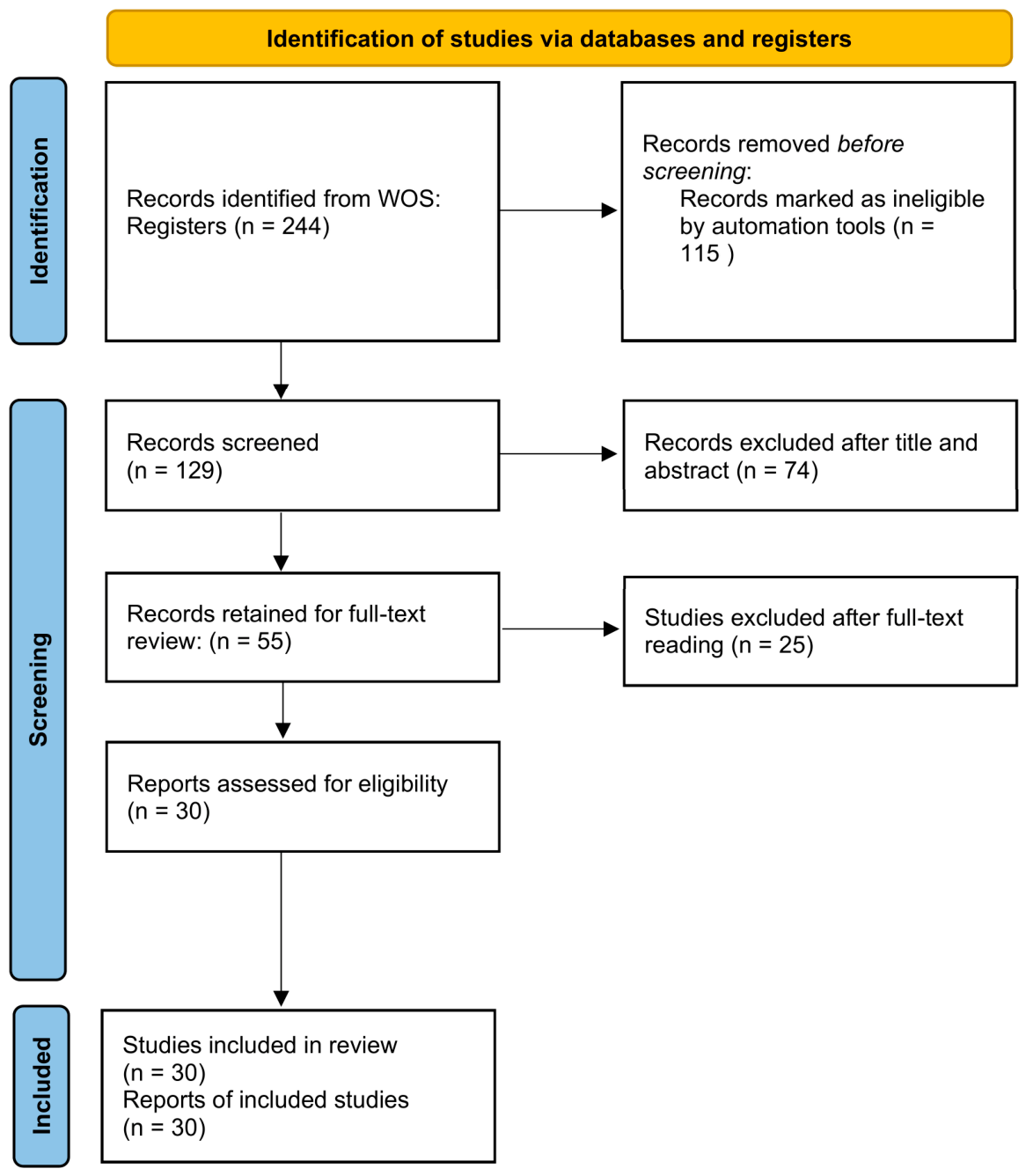
The initial search retrieved 244 records. These were subsequently filtered to include only English-language publications within relevant disciplines—including urban studies, environmental science, geography, and landscape architecture—yielding 139 records. Review articles were then excluded, leaving 129 empirical studies.
During the title and abstract screening phase, these 129 records were assessed and studies unrelated to public perceptions of urban green spaces (e.g., those focused primarily on insects, plants, or non-urban contexts) were excluded. Full-text screening was then conducted against predefined inclusion and exclusion criteria. Inclusion criteria were: (1) the study subject involves spontaneously vegetated, naturalistically managed, or informal urban green spaces. Especially brownfields were included only when they were examined as urban spaces characterized by spontaneous vegetation, informal use, low management, or naturalistic succession. Brownfields that were treated solely as contaminated land, redevelopment sites, or industrial land without public perception or landscape evaluation were not included; (2) the study examines public perceptions, evaluations, or preferences regarding such spaces; and (3) an empirical research methodology is employed. Exclusion criteria were: (1) the study focuses on urban wildlife, insects, or plant ecological processes rather than landscape evaluation; (2) the study setting is rural or non-urban; and (3) the study is limited to ecological monitoring without any assessment of public perception or evaluation.
Following full-text screening, 55 articles were retained for detailed review, of which 30 met all criteria and were included in the systematic analysis. This study follows the PRISMA (Preferred Reporting Items for Systematic Reviews and Meta-Analyses) protocol; the flowchart is presented in
Figure 1.
Although the search strategy was designed to capture a broad range of terms associated with Urban Wildscapes, some studies using more specific terms such as “derelict land” or “contaminated land” may not have been fully captured. However, related studies were expected to be partly retrieved through overlapping terms such as “urban wasteland”, “vacant lot”, “abandoned land”, and “unmanaged green space”. The final corpus of 30 studies reflects the focused scope of the inclusion criteria rather than a scarcity of relevant research. While a substantial body of UWS-related research exists from ecological, public-health, zoological, and botanical perspectives, the present review specifically retained studies engaging empirically with public evaluation and perception of UWS in urban contexts. Studies addressing biodiversity surveys, ecosystem-service quantification, peri-urban wildlife encounters, or non-perception-based ecological assessment were therefore not included. This focused scope ensures thematic homogeneity across the corpus and enables consistent cross-study comparison of methodological characteristics.
2.2. Systematic Analysis
A systematic content analysis was conducted on all 30 included studies. For each study, key information was extracted according to a predefined analytical framework, comprising: (1) the UWS spatial types examined; (2) the evaluation methods employed; (3) the media used for evaluation; and (4) the psychological dimensions addressed in public evaluation.
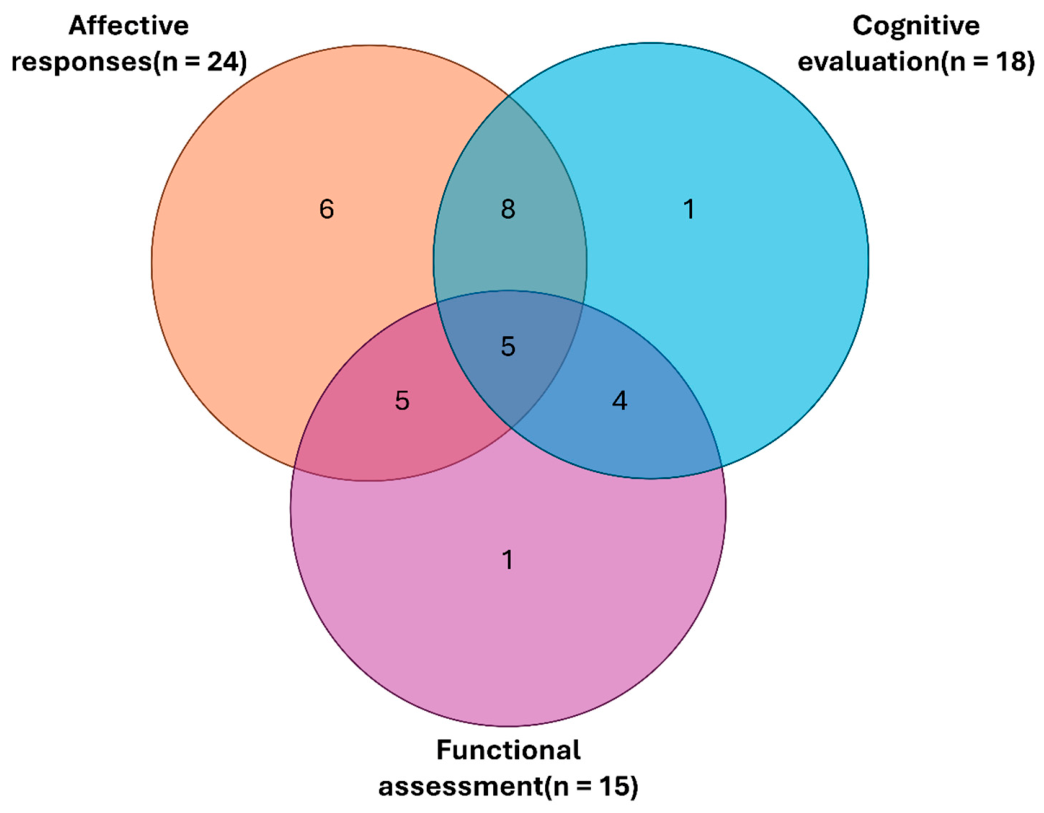
To establish comparability across studies and to address the heterogeneity in evaluation dimensions found in the existing literature, this paper developed a three-dimensional psychological evaluation framework for systematically classifying the evaluation content documented in the included studies. This framework encompasses: (1) affective responses (e.g., liking/disliking, emotional arousal, and sense of relaxation—direct emotional experiences); (2) cognitive evaluation (e.g., naturalness, perceived safety, and management status—reflecting rational appraisal of environmental attributes); and (3) functional assessment (e.g., suitability for use, ecological function, and accessibility—representing behavior-related judgments). The framework was constructed by synthesizing insights from the included literature alongside Albert Mehrabian and James A. Russel’s Stimulus-Organism-Response (S-O-R) model [
48] and Rosenberg and Hovland’s tricomponent attitude model [
49]. Through the combination of inductive analysis and theoretical grounding, a unified classification system was developed to support systematic cross-study comparison.
In parallel, to facilitate systematic comparison of methodological approaches across studies, a classification scheme for public evaluation methods was developed based on an initial reading of all included studies, drawing also on established typologies from landscape visual assessment research [
50,
51]. Methods were categorized into five types: (1) scale-based methods; (2) choice-based methods; (3) ranking and comparative methods; (4) qualitative methods; and (5) mixed methods. This classification aids in identifying differences in data collection approaches and modes of information expression and provides a basis for subsequent analysis of the relationship between methodological choices and evaluation dimensions. See
Table 1 for detailed classification information.
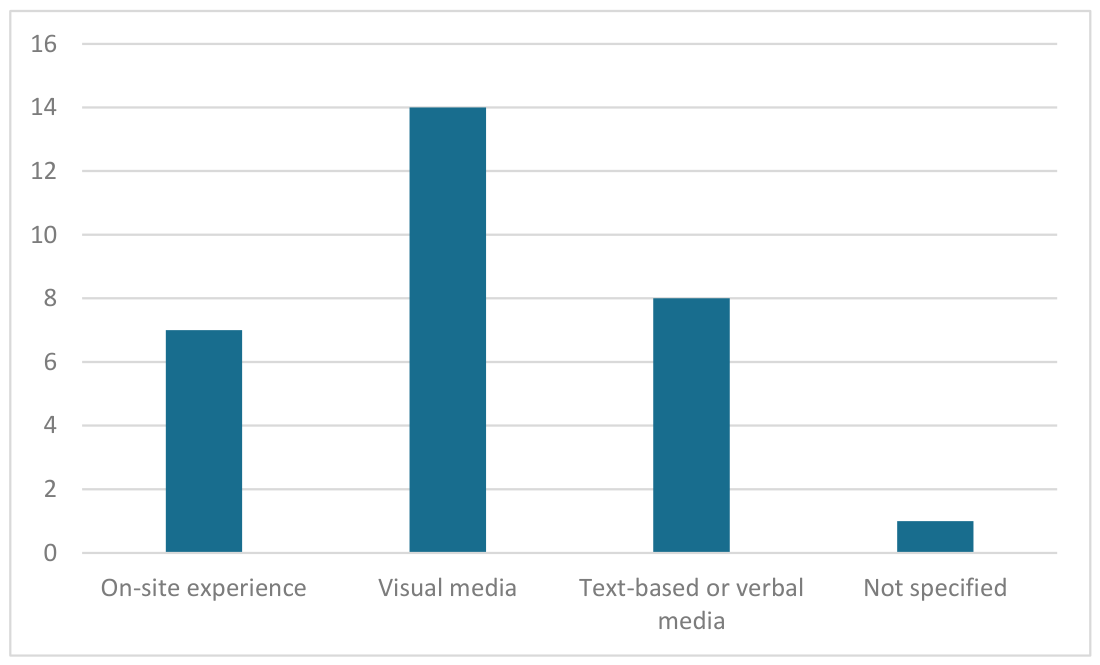
Additionally, to identify differences in how environmental information is presented across studies and to examine the potential implications thereof, the type of evaluation medium employed in each study was recorded. Three categories were distinguished: (1) on-site experience; (2) visual media (e.g., photographs or images); and (3) text-based or verbal media. This classification is grounded in the included literature and informed by distinctions drawn in environmental perception research between direct experience and mediated representation [
52]. Differences in information dimensions and modes of perception across media types may influence the formation of public evaluation outcomes and relate to variations in environmental exposure [
53,
54].
4. Discussion
4.1. Spatial Bias in Exposure Opportunities: Uneven Representation of Everyday Nature Contact
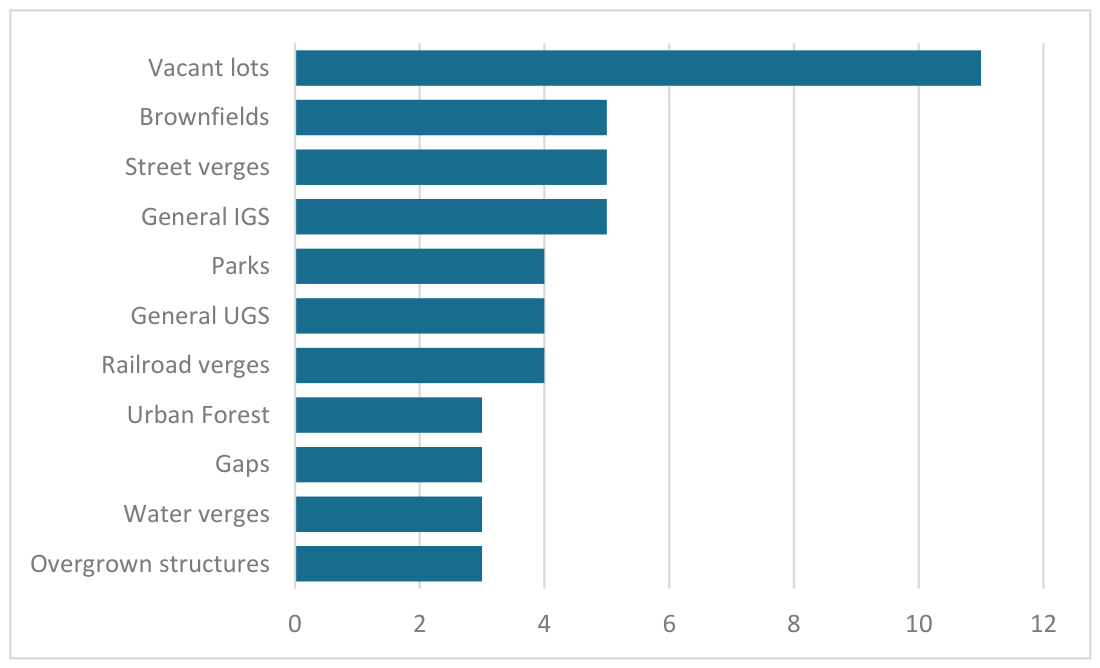
The statistical analysis of 30 empirical studies reveals a pronounced imbalance in the spatial types selected for UWS public evaluation research (
Figure 2). The most frequently studied type is vacant lots—representative of idle or abandoned urban land—followed by street verges and brownfields. This distribution indicates that current research tends to gravitate toward urban spaces characterized by “low management,” “marginality,” or “informality.”
This distributional pattern does not merely reflect variation in research subject selection; more importantly, it may shape the environmental exposure contexts represented in the literature. Vacant lots and brownfields typically have low levels of management and uncertain accessibility, such that individuals’ relationships with these spaces tend to involve incidental contact or visual exposure rather than purposive use [
60]. Street verges, railroad verges, and similar spaces are more likely to be embedded in daily mobility routes, generating high-frequency, low-intensity everyday exposure. By contrast, parks and urban forests—spaces capable of supporting extended stays, restorative experiences, and behavioral engagement—receive comparatively limited attention in the existing literature.
This means that different UWS types differ not only morphologically but also potentially in the pathways through which health benefits are realized. The existing literature’s concentration on vacant lots suggests a tendency to examine immediate visual perceptions or incidental environmental encounters, with insufficient attention to sustained exposure embedded in everyday life routes and to the spatial experiences associated with dwelling, activity, and restoration. As a result, the field may be better positioned to capture immediate judgments of UWS than to illuminate the cumulative health benefits that accrue through long-term contact and actual use.
From the perspectives of health equity and socio-ecological resilience, this is a particularly consequential observation. Existing evidence indicates that the health-promoting effects of natural environments tend to accumulate through repeated contact, behavioral engagement, and sustained exposure rather than arising from isolated visual encounters [
61,
62]. If research primarily focuses on spatial types characterized by low frequency of use or visual contact, it may constrain our understanding of how BGI contributes to everyday restoration, physical activity, and social interaction. Furthermore, differences across space types in terms of accessibility, dwelling potential, and use safety imply that potential benefits may not be distributed equally across social groups—a concern directly relevant to core questions in socio-ecological resilience regarding adaptive capacity and resource access [
63].
It is also notable that some studies refrain from identifying specific spatial types, instead using umbrella terms such as “IGS” or “UGS.” While such choices reflect the conceptual openness and inclusivity of the UWS concept, they simultaneously obscure differences in structural characteristics, accessibility, and patterns of use across space types, potentially masking distinct roles in actual contact processes and health benefit pathways. This does not invalidate existing studies, but indicates a methodological tendency. Future research should therefore make more systematic efforts to incorporate diverse UWS spatial types and to specify the type of green space under study as clearly as possible, in order to more comprehensively understand the mechanisms through which UWS contribute to health promotion and socio-ecological resilience.
It is important to note that the broad range of spatial types included in this review also requires caution when interpreting the findings. UWS is an umbrella concept that covers heterogeneous spaces with different land-use histories, vegetation structures, accessibility conditions, and social meanings. Therefore, the conclusions of this review should be understood as identifying methodological tendencies in UWS-related public evaluation research, rather than as making uniform claims about the effects or values of all UWS types.
4.2. From Real-World Exposure to Mediated Evaluation: The Dominance of Visual-Based Approaches
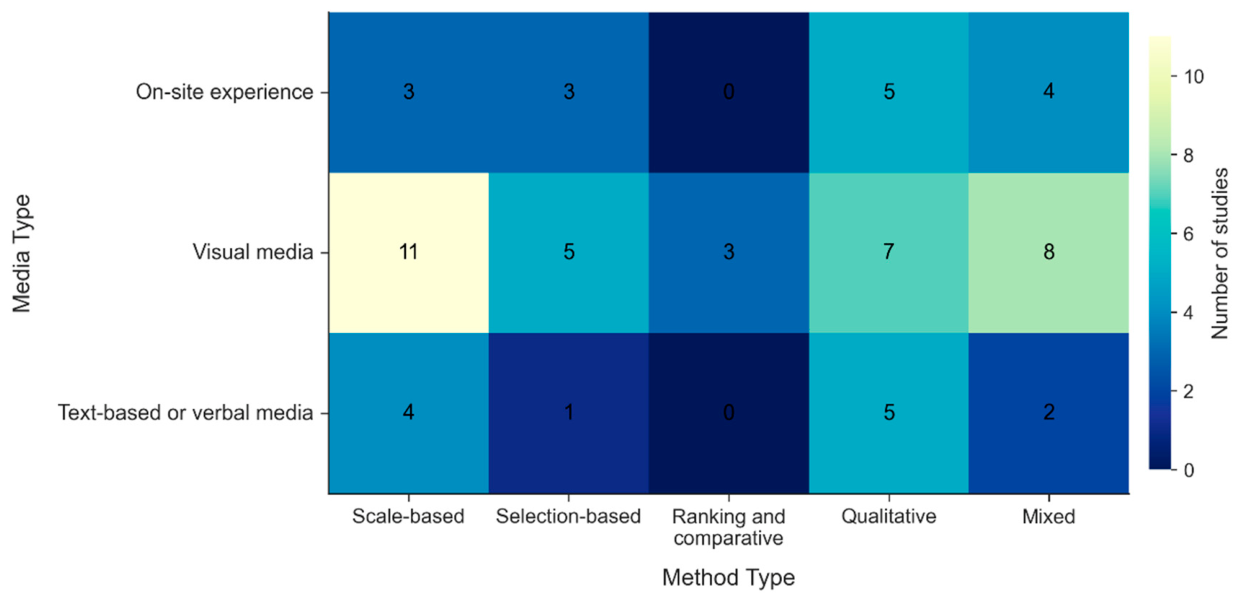
The present study further demonstrates that current UWS public evaluation research exhibits a pronounced structural concentration in methodological and media choices, with the “visual media–scale-based methods” paradigm occupying a dominant position (
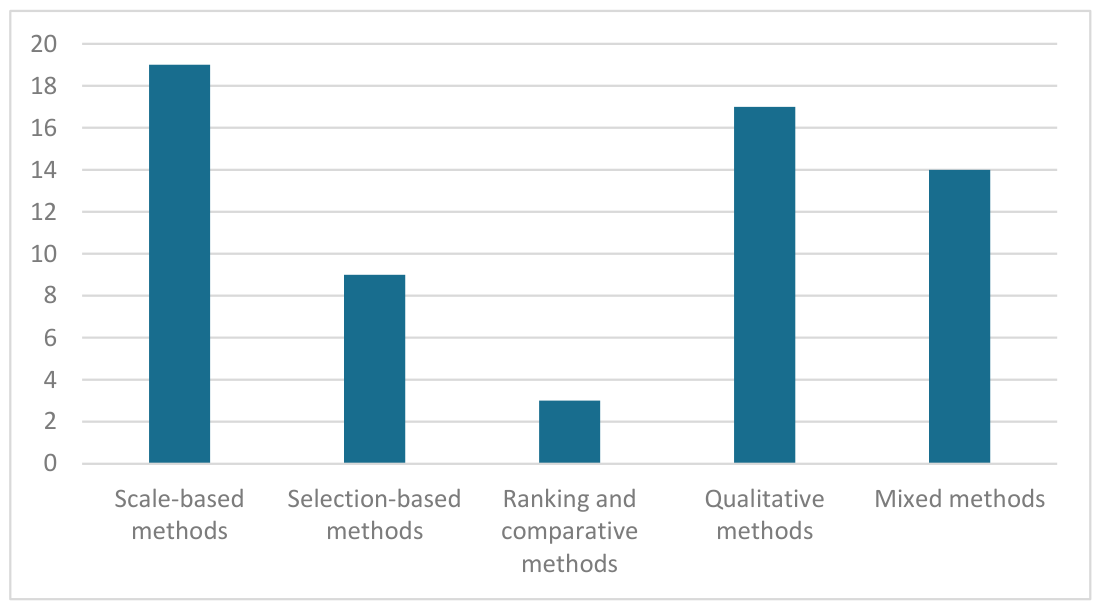
Figure 5). Visual media constitute the most frequently employed information source, and scale-based methods are the most widely used among all evaluation approaches; their coupling is strongly apparent in the cross-tabulation analysis. This indicates that existing research relies heavily on standardized visual stimuli paired with structured rating instruments to measure public perceptions and evaluations of UWS.
While this research paradigm offers clear advantages in terms of experimental controllability and cross-study comparability, it also means that existing research is often not directly examining individuals’ actual contact processes with their environments, but rather their responses to presented environments. Compared with on-site experience, image-based evaluation lacks multi-sensory information such as sound, smell, temperature, and spatial behavior, and cannot capture the processes of dwelling, traversal, and activity within an environment [
61,
64]. Such research therefore tends to measure immediate perceptions of landscape appearance rather than holistic environmental experience [
47,
65].
Further consideration of media classification reveals that environmental information enters the evaluation process through three main channels in the current literature: on-site experience, corresponding to relatively direct environmental contact; visual media, corresponding to visual representations of the environment; and text/verbal media, corresponding to indirect evaluation based on memory, experience, and cognitive reconstruction. In other words, the “environment” being evaluated in existing research is not always the environment that participants are currently experiencing, but often an environmental representation mediated by images or language. Particularly under conditions of strong coupling between visual media and scale-based methods, public evaluations are constructed more on the basis of “presented environments” than on “experienced environments”.
It is noteworthy that some studies have begun to explore the use of unstructured data—such as visitor-generated photographs or resident complaint texts—to identify public attitudes and preferences. This approach, in some respects, is more closely aligned with how individuals express themselves in real contexts, and extends the range of data sources and technical pathways available to UWS research. However, even such behavioral expression data fundamentally rely on images or text to represent the environment indirectly, reflecting individuals’ selective documentation and expression of environmental encounters rather than the full scope of their actual contact experiences. Thus, while innovations in methods and media have broadened evaluative pathways, they have not substantially changed the fact that many studies still rely on mediated representations rather than direct exposure.
From an environmental exposure perspective, therefore, current UWS public evaluation research tends to privilege mediated representations over direct environmental contact. This tendency does not imply that the existing literature lacks value; rather, it draws attention to the fact that current research more accurately reflects how the public responds to UWS as presented to them than how individuals actually encounter, use, and benefit from these spaces in their daily lives. This does not invalidate existing studies, but indicates a methodological tendency.
4.3. How Evaluation Methods Shape the Measurement of Psychological Dimensions
In the analysis of psychological dimensions, the present study finds that current UWS public evaluation research exhibits pronounced imbalances in evaluative content: affective responses are the most broadly covered dimension, cognitive evaluation are intermediate, and functional assessment are comparatively underrepresented. Most studies encompass two or more dimensions simultaneously, yet the number of studies integrating affective, cognitive, and functional dimensions together remains limited. This suggests that the field continues to prioritize how the public “feels about” or “perceives” UWS over how these spaces function in actual use.
From a psychological health perspective, this structural bias carries important implications. Affective responses typically reflect individuals’ immediate emotional reactions to an environment—liking, relaxation, or discomfort. Cognitive evaluation involves assessments of spatial characteristics such as tidiness, naturalness, and orderliness. Functional assessment, by contrast, pertain directly to whether a space supports actual processes of dwelling, activity, restoration, and social interaction. In other words, the three dimensions are not merely different measurement categories; they may also correspond to different levels of health-producing mechanisms. If research concentrates primarily on affective and cognitive dimensions, it may be better positioned to reveal how the public interprets and appraises UWS than to reveal how these spaces influence health outcomes through actual use and sustained contact [
61,
66].
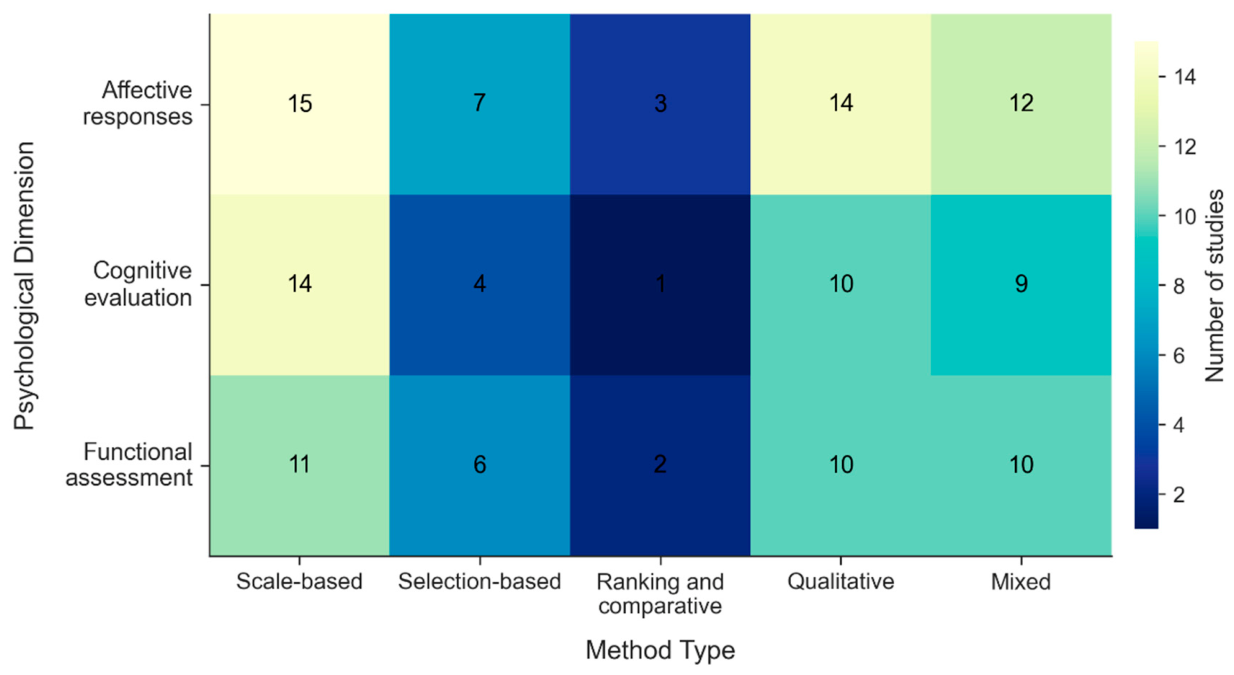
More critically, the cross-analysis of “psychological dimensions × evaluation methods” conducted in this study indicates that the representation of different dimensions is not entirely independent of methodological choices. The affective dimension is highly covered across virtually all methods; cognitive evaluations are concentrated in scale-based methods; and functional assessments are more dependent on qualitative or mixed methods. This suggests that the “public evaluation structure” presented in existing research may be partly shaped by the methods themselves. Approaches relying on visual stimuli and structured scale-based methods tend to reinforce the measurement of affective and cognitive dimensions, while functional assessment, which are more closely related to actual use processes, behavioral engagement, and health outcomes, are more difficult to capture in one-time, standardized evaluation contexts.
There may therefore be a close relationship in current UWS research between “what gets measured” and “what methods are used to measure it”. In other words, the psychological dimension structure observed in the existing literature may partly reflect perceptions shaped by research design, rather than environmental experience itself. This finding has important implications for understanding the knowledge base of UWS research: if current methods more readily capture affective and cognitive responses while less effectively measuring functional assessment, our understanding of the social significance and health mechanisms of UWS may be correspondingly skewed toward “subjective perception” at the expense of “actual use”.
On this basis, future research should more systematically integrate affective, cognitive, and functional dimensions within its evaluation frameworks—in particular by strengthening the measurement of functional assessment and their relationship to behavioral processes, for example by incorporating indicators such as activity type, frequency of use, and mode of environmental contact, so as to more comprehensively understand the pathways through which UWS contribute to health equity and socio-ecological resilience.
4.4. Missing Mobility and Temporal Dynamics of Exposure
Building on the analyses of spatial types, evaluation methods, media, and psychological dimension distributions, it becomes apparent that while current UWS public evaluation research has accumulated substantial perceptual evidence, the field largely omits the dynamic temporal and spatial dimensions of environmental exposure. In particular, factors such as individuals’ daily travel routes, activity ranges, dwelling duration, and frequency of contact are insufficiently represented in the existing literature.
This gap matters because environmental exposure is not a static occurrence, but is embedded in the flow of everyday life [
11,
67]. Whether individuals can genuinely benefit from urban natural spaces depends not only on whether such spaces exist, but also on whether they can be accessed and used at specific times and in specific circumstances. Environmental exposure is, in essence, a dynamic process jointly shaped by spatial supply, mobility conditions, and temporal structure [
68].
However, existing research predominantly employs one-time image evaluations, questionnaire measurements, or retrospective accounts, situating all participants in a homogenized evaluation context. While this design facilitates variable control, it simultaneously suppresses the real-world differences among individuals in travel modes, activity patterns, and temporal constraints. In image-based evaluation tasks in particular, all participants are exposed to the same stimulus, which can flatten real-world differences in environmental contact opportunities. As a result, what research captures tends to be responses to standardized environmental representations rather than reflections of how individuals actually encounter, enter, dwell in, and use UWS in their everyday lives.
The issue, therefore, is not simply that mobility has been neglected, but that the field lacks, at a deeper level, an adequate account of the dynamic character of environmental exposure. If future research is to more closely approximate the real-world mechanisms through which UWS function, it will be necessary to further incorporate activity space analysis, mobility trajectory data, time-weighted exposure, and multi-temporal-scale contact records, thereby advancing public perception research from static representation toward dynamic exposure analysis.
4.5. Implications for Health Equity and Socio-Ecological Resilience
The analyses presented above indicate that current UWS public evaluation research exhibits structural biases at all three levels—spatial types, methods and media, and psychological dimensions—and that these biases do not merely affect how we understand public perceptions; they may also further shape how we conceptualize environmental exposure opportunities and their social distribution.
At the spatial level, research subjects are predominantly marginal or low-managed spaces, with insufficient attention to spaces embedded in daily life routes, supporting sustained use, or facilitating restorative experience. This means that different exposure contexts are unevenly represented in the research, which may affect how we understand populations’ actual contact opportunities [
69,
70]. At the methodological and media level, the dominance of visual media and scale-based methods approaches situates public evaluations primarily on standardized representations rather than reflecting individuals’ differentiated contact processes in real contexts. At the psychological dimension level, the predominantly affective and cognitive evaluation structure, while illuminating how the public perceives UWS, gives insufficient attention to functional dimensions related to behavioral engagement and actual use. Also limiting understanding of how different groups obtain health benefits through contact with and use of UWS.
In the context of health equity, this is especially critical [
71]. The potential benefits of BGI do not automatically translate into realized benefits for all; their actualization is mediated by accessibility, time resources, mobility conditions, and social vulnerability. If research rests primarily on homogenized, decontextualized evaluation designs, it may underestimate the structural disparities in natural contact opportunities across social groups, thereby weakening the identification of environmental justice concerns.
From the perspective of socio-ecological resilience, the role of urban natural spaces depends not only on their ecological existence, but also on whether they can be effectively accessed, understood, and used by diverse populations [
72]. If certain groups face barriers to actual contact with these spaces due to limited mobility, constrained activity routes, or lifestyle rhythms that are out of step with spatial availability, then even where UWS exist in the city, their adaptive and health-promoting potential may not be fully realized. Future research should therefore build on perceptual evaluation by further integrating environmental exposure opportunities, actual use processes, and population-level differences into a unified analytical framework, so as to more comprehensively understand how UWS function across different social contexts and the potential inequalities that may arise [
73].
4.6. Toward an Exposure–Mobility–Perception Framework
Synthesizing the analyses above, this paper argues that future UWS research should move beyond “perceptual evaluation” toward an integrated “exposure–mobility–perception” analytical framework. Existing research has established an important foundation for understanding how the public perceives and interprets UWS; however, if we are to more fully illuminate the mechanisms through which these spaces contribute to climate adaptation, health promotion, and socio-ecological resilience, it is necessary to couple perception research much more closely with real-world environmental contact processes.
Concretely, future research can advance on at least three fronts. First, with respect to study subjects, greater clarity is needed regarding the spatial attributes and use contexts of different UWS types, and distinctions should be drawn among visual exposure, daily commuting exposure, and dwelling-type contact as different exposure pathways. Second, with respect to research design, approaches should be combined with on-site surveys, activity space methods, GPS trajectories, time-weighted exposure measures, and behavioral data to address the limitations of purely image-based evaluation or retrospective accounts in representing real contact processes. Third, with respect to the evaluation framework, functional dimensions should be more systematically integrated alongside affective and cognitive evaluation, so as to build a more complete understanding of how public perceptions translate into use behaviors, contact opportunities, and health outcomes.
By moving from “static evaluation” to “dynamic exposure,” from “presented environments” to “experienced environments,” and by further attending to differences in mobility and contact opportunity across social groups, UWS research can more accurately address the real-world challenges of BGI in climate adaptation, health equity, and socio-ecological resilience. The findings of this paper also suggest that our understanding of UWS should not remain anchored in whether the public “likes” a type of space, but should extend further to ask whether people can actually access these spaces, and how such contact translates into health and adaptation benefits across different social contexts.
5. Conclusions
This study systematically reviewed 30 empirical studies on public evaluation of Urban Wildscapes (UWS), examining structural characteristics across three dimensions: spatial types, evaluation methods and media, and psychological dimensions. The results reveal pronounced imbalances at all three levels. Spatially, research concentrates on marginal types such as vacant lots, while spaces embedded in daily activity routes or supporting sustained dwelling and use receive comparatively limited attention. Methodologically, a “visual media–scale-based methods” paradigm predominates, grounding public evaluation in responses to presented environments rather than actual environmental contact processes. At the psychological level, affective and cognitive responses are emphasized, while functional assessment—more closely tied to actual use, behavioral engagement, and the realization of psychological health outcomes—remains comparatively underrepresented.
Taken together, these patterns indicate that current UWS public evaluation research remains centered on “perceptual evaluation,” with insufficient attention to individuals’ real-world exposure processes. This limitation is particularly consequential for climate adaptation and health equity, since the psychological benefits of blue–green infrastructure are realized incrementally through actual contact across time and space—a process jointly shaped by mobility, activity patterns, and temporal constraints. Evaluation designs that rely primarily on standardized visual or scenario-based tasks may therefore fail to reflect disparities in real-world contact opportunities across populations.
Based on these findings, three main research gaps can be identified. First, existing studies insufficiently distinguish among different UWS types and their specific exposure contexts. Second, current evaluation approaches remain strongly dependent on visual media and standardized rating methods, which limit the ability to capture lived, multi-sensory, and activity-based exposure. Third, functional and behavioral dimensions related to actual use, duration, frequency of contact, and health-relevant mechanisms remain underrepresented. Future research should therefore: (1) define UWS types more precisely according to spatial characteristics, accessibility, and use contexts; (2) combine perception-based methods with on-site surveys, mobility data, activity-space analysis, and time-weighted exposure measures; and (3) integrate affective, cognitive, and functional dimensions to better understand how UWS contribute to psychological health, health equity, and socio-ecological resilience.
The contribution of this paper lies not only in synthesizing the main strands of existing UWS public evaluation research, but also in revealing how the current research paradigm has, to a significant extent, transformed “actual environmental contact” into “measurable perceptual representations.” These findings support a shift from perception-based assessment toward a more integrated exposure–mobility–perception framework for future UWS research.




 ,
,