Article

Influence of Beaver Dam Analogs on Riparian Vegetation and Sediment Deposition in a Rangeland Stream in Northern Utah

1
College of Agricultural Sciences, Oregon State University, Corvallis, OR 97331, USA
2
School of Science, Marist University, Poughkeepsie, NY 12601, USA
3
Utah State Division of Water Quality, Salt Lake City, UT 84116, USA
*
Author to whom correspondence should be addressed.
These authors contributed equally to this work.
Land 2026, 15(6), 1011; https://doi.org/10.3390/land15061011 (registering DOI)
Submission received: 25 April 2026 / Revised: 23 May 2026 / Accepted: 28 May 2026 / Published: 8 June 2026
(This article belongs to the Special Issue Wetland Biodiversity and Habitat Conservation)

Abstract

Wetland restoration plays a crucial role in enhancing hydrologic resilience amidst the challenges posed by climate change and evolving land uses. The historical reduction in beaver populations due to the fur trade and alterations to riparian zones have compromised the ecological stability of many landscapes. Presently beaver populations are increasing as there are now protections in place for them. In response, Beaver Dam Analogs (BDAs) have emerged as an effective restoration strategy, particularly in regions where natural beaver activity is limited due to inadequate habitat conditions. BDAs are a human-made structure that mimics the function and form of natural beaver dams. This paper focuses on a restoration project within the Fish Creek area between the year 2019 and 2021, which is a part of the Weber River watershed in northern Utah, where BDAs were installed to rehabilitate a degraded wetland and rectify an incised channel network. Over the initial two years following the installation (2019–2021), significant ecological transformations were observed. Notably, there was an increase in the areal coverage of sediments that sizes ranged from 1 to 256 mm within the stream channel, alongside a corresponding decrease in coarser substrates. These changes facilitated a reduced channel slope, indicating substantial sediment deposition above the installed BDAs. Concurrently, there was an expansion in riparian vegetation along an approximate stretch of 40 m, primarily grasses, reflecting an adjustment in habitat conditions favorable to riparian recovery. The preliminary outcomes from this study contribute to a broader understanding of the dynamics involved in BDA-driven restoration efforts in semiarid regions like the western United States, highlighting the potential shifts in riparian habitats prompted by such interventions.

1. Introduction

Beavers are ecological engineers that alter river systems and promote wetland areas with their damming and herbivory of woody vegetation. Historically, the North American beaver (Castor canadensis) had significant importance in river systems, especially in low order streams, due to the proportionate effect of damming on the stream ecosystems. A term often used is the “beaver-meadow complex”, which cites the wetland and multi-thread channel created from beaver dams on headwater streams [1]. The beaver-meadow complex has associated physical changes which promote the complex itself, which include: a net reduction in the slope of the channel above the dam, more significant channel and habitat heterogeneity, sediment aggregation above the dam while it is intact, greater overbank flooding, increased water storage and attenuation of flood peaks [1,2]. These characteristics of the environment produced by beavers and their presence as ecosystem engineers support many other organisms within river and wetland ecosystems [3].
Beavers promote many hydrologic processes, such as shallow groundwater resilience and recharge, productive valley bottoms, fine sediment retention [3], that are ecologically advantageous for landowners. However, negative perceptions of beavers have developed within the agricultural community in the past century [4]. For example, beaver activity adjacent to infrastructure such as road crossings and water diversions play a key role in perpetuating beaver/human conflicts. One of the most apparent and recognized advantages of beavers and dam structures is water storage, which is implemented for water management throughout the western U.S. in rangeland streams [5]. The increased availability of water and productivity of riparian vegetation from beaver dams can support human uses in arid regions like the western U.S. for irrigation and livestock production [6,7]. Besides direct stream productivity, beaver dams can also act as fire breaks among mountain streams, often in forested areas [8]. Wildfire regimes that have been altered by human fire suppression activities and climate change have increased the potential for progressively intense wildfires. At a broad scale, beaver-meadow complexes may help mitigate wildfire risks by playing a significant role in riparian vegetation fire resistance [8]. Beaver-impounded streams have shown higher resistance to burn events compared to non-dammed streams, indicating that beavers can increase landscape resistance to wildfires [9].
Although beavers are a critical element to ecological resiliency and integrity within headwater streams as ecosystem engineers [10], historically, they have not been valued for their wide range of benefits. Beaver trapping, deforestation, intensive mining, and grazing have all historically decreased beaver populations in the U.S. Rocky Mountains [11,12]. Increased awareness of the ecosystem services that beavers provide have led to the conservation and protection of the species. However, landscapes and river systems have changed, making it difficult for beaver re-introductions in particular locations because of channel downcutting and heavy riparian grazing (i.e., loss of food sources, such as willows). For decades, stream restoration practitioners have struggled with practical approaches to restore incised streams [13]. They described a conceptual framework to consider restoration actions on incised streams. Many of the approaches are highly invasive and expensive to implement. Recently, the concept of relying on natural hydrologic processes to restore riverscapes has taken hold among some restoration practitioners [14]. The key recognition that riverscapes have become structurally starved by the removal of beaver dams and large wood has refocused active restoration approaches towards strategies that improve or restore key structural components. Where socially acceptable, beaver reintroduction is a key strategy. However, where beaver reintroduction is infeasible, BDAs, structures that mimic natural beaver dams, are a relatively low-cost restoration practice [15].
While BDA restoration is a relatively new type of wetland and stream restoration practice, studies have quantified the changes associated with implementing BDAs and shown that they can initiate the same processes as natural beaver dams [5,15,16]. However, the impacts of BDAs have not been studied in this particular ecosystem. Regardless, BDAs have been shown to be an effective restoration strategy for reducing stream bank erosion and increasing stream channel geomorphological heterogeneity, given that the artificial dams are built with posts driven into the substrate at a substantial depth to avoid dam breaches [17]. Riparian vegetation is a key aspect of this type of restoration, yet to our knowledge, there has not been an analysis of total riparian vegetation change after installing BDAs. It has been shown that willow cuttings planted near BDAs exhibited 1.3 times more growth than those on un-impounded locations and promoted a restoration trajectory on a low-gradient stream lacking woody riparian vegetation [16]. Woody vegetation has been the flora of interest for the ultimate goal of re-introducing beavers or natural recovery of beaver populations, but quantification of all classes of riparian vegetation change has not been extensively documented. Orr et al. [16] have quantified growth rates in woody riparian vegetation, but this still leaves a gap in knowledge of total riparian vegetation’s response to BDAs.
Therefore, in this study, we assess stream dynamics and total vegetation change in response to the implementation of BDAs. The change in riparian vegetation is explored in conjunction with stream channel morphologic and substrate changes. A set of BDAs are analyzed over a period from 2019 to 2021, a relatively short time frame for most stream and river restoration projects. The questions to be addressed in this study are as follows: (1) What are the effects of BDAs on stream morphology and substrate at this site? (2) What are the effects of BDAs on areal coverage of riparian vegetation? (3) What are the integrated effects of BDAs on this riparian ecosystem? (4) What are the implications from this study for restoration elsewhere via BDAs?

2. Materials and Methods

2.1. Study Site

Fish Creek, located in northern Utah, is roughly 10 km northwest of the Uinta Mountains near Coalville, Utah. Fish Creek is a low-order headwater stream and part of the Weber watershed (Figure 1). The reach used for this study is just over 1900 m above sea level and is mainly fed from snowpack runoff. The study site resides within the private property of the G-Bar Ranch, who have been working with Trout Unlimited to help restore their property associated with Fish Creek. In the semi-arid region of northern Utah, Fish Creek experiences peak flow during snowmelt, typically in late spring. The reach displayed in Figure 1 is approximately 225 m. Unmanned aerial vehicles (UAVs) were used to capture images of the site in July 2019, before BDA installation, and then again in July 2021, 2 years after the original BDA installations.

2.2. Vegetation Categorization

The vegetation classification was completed through manual delineation using high-resolution aerial imagery. Vegetation types were classified into three general categories: tall shrub, short shrub, and grass-dominated cover. Grass areas were identified primarily by evaluating the density and continuity of green herbaceous cover within the project area. Tall and short shrub areas were differentiated by examining visible canopy structure and shadow patterns in the imagery, with longer and more defined shadows used as indicators of taller woody vegetation and shorter, less pronounced shadows used to identify lower-growing shrub cover. A normalized vegetation index was not used because of the relatively small project area and the need for fine-scale interpretation; therefore, manual delineation was preferred to more accurately capture vegetation boundaries and distinguish between cover types.

2.3. Remote Sensing and Geoprocessing

Unmanned aerial vehicles (UAVs) surveyed the site in July 2019 before BDA installation and in July 2021. The drone used to capture the aerial images was a DJI Phantom 1, and the camera used on the drone was a GoPro Hero 3 (12 megapixels), which provided the images, which were then rasterized and created into a photomosaic to represent the study site. We deployed a DJI Phantom 1 Drone equipped with a GoPro Hero 3 Black Edition camera on a gimbal with the camera aimed at Nadir to collect all imagery. The 2018 flight included 340 images collected at 2 s intervals, resulting in 60–80% overlap. The 2021 flight included 715 images but covered a slightly larger area. The flight elevations ranged from 120 to 150 feet above ground level. Using the aerial images and ground reference elevations, digital surface models (DSMs) were created to represent the surface of the study site with associated elevations. The DSMs were created with a precision of 5 cm laterally and vertically. With these models, the stream bed dynamics could be analyzed between the two time periods that displayed the effect of the BDAs on sediment deposition within the stream channel. The software used to create the DSMs was Pix4D version 4.6.
Once the DSM files were created, the data analysis was performed in QGIS 3.20.3. To ensure the accuracy of each model, 20 reference points were created using a GPS unit to represent the elevation accurately. The Pix4D software used the ground reference points and the photomosaic of images to calculate elevation for every pixel of the image. This was calculated by comparing the focal length from the camera to the ground and then referencing this length between the camera and ground with the ground points taken with the GPS unit. The GPS instrument used was Bad Elf Flex (model BE-5500GPS). Once this was complete, elevational analysis could be performed between the two data sets to examine the changes in the stream channel before and after BDA installation. Streambed elevation changes between the two analysis years were also verified using static reference points (e.g., large rocks outside the floodplain) to enhance confidence in our results indicating relative elevation changes in sediment upstream of BDA sites.
Lastly, using QGIS, polygons were created to quantify the dominant land cover type within each data set. Within the stream channel, which was classified as the ordinary high-water mark, the visible channel in which the stream flows under stable conditions, the sediment type was classified by coarseness. With the resolution of the aerial images, general substrate types were discernable at a coarseness boundary between pebbles and sand. The dominant vegetation outside the stream channel was used to classify the riparian areal coverage using data from the aerial images, and the DSMs and a green chromatic coordinate index Dafflon et al. [18] generated from the aerial images categorized the dominant vegetation type, where vegetation was visually present. Categories of vegetation were divided between herbaceous plants, small woody plants (>3 m), and large woody plants (<3 m) based upon crown height, and then this was spatially represented in the form of polygons. A 10 m buffer from the center of the stream (thalweg) was created to represent the area of interest for analysis. Polygons were created to represent these areas spatially, and algorithms within the software were used to calculate the square area of each type of habitat.

3. Results

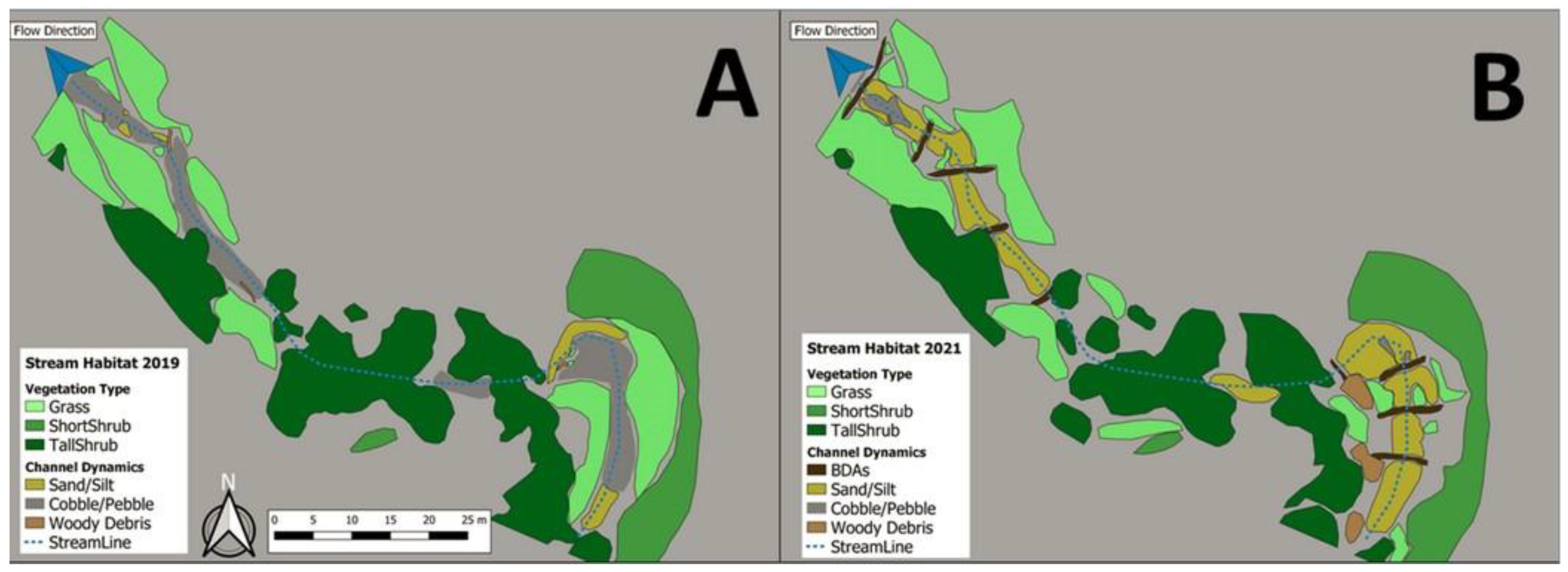
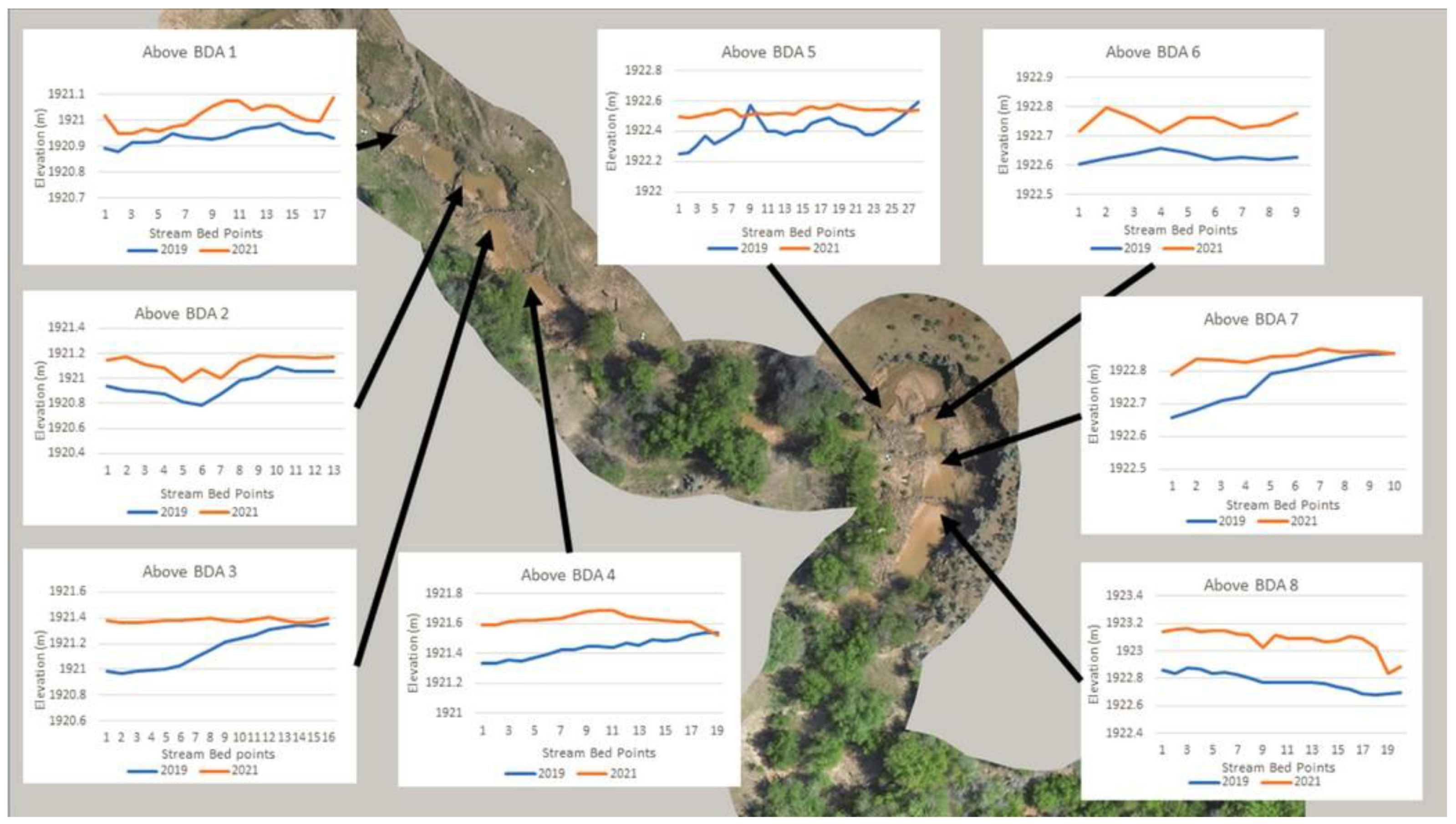
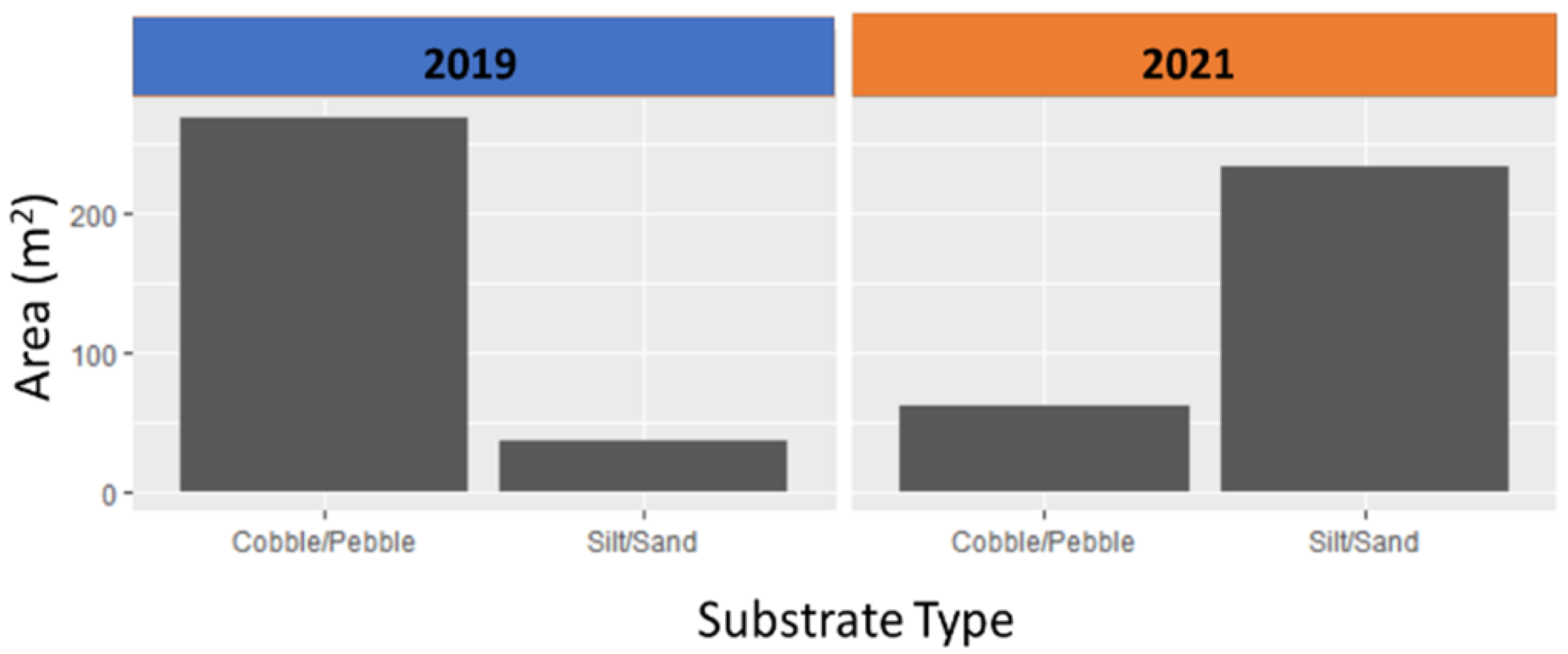
The composition of the stream channel dramatically shifted from 2019, before BDA installation, to 2021, changing from a mainly cobble and pebble substrate to a sand or silt channel (Figure 2). This shift in stream channel type is consistent with the change in the slope of the channel above each BDA (Figure 3). While the depositional aspects in the stream channel were observable, comparing the slopes between each BDA can provide confirmation of sediment deposition. The channel heterogeneity was not quantified, but visually, it can be seen that the reach after BDA installation was more diverse in stream channel composition (Figure 3).
As seen in Figure 4, the elevation of the stream channel increased in every reach in 2021 studied within our site, indicating that the BDA structures were successful in the deposition of sediments and aggrading the stream channel. The slope of these stream channel reaches was calculated (linear model), and all are significantly different between pre- and post-installation of BDAs, within a 95% confidence interval (p = 0.02, Student’s t-test).
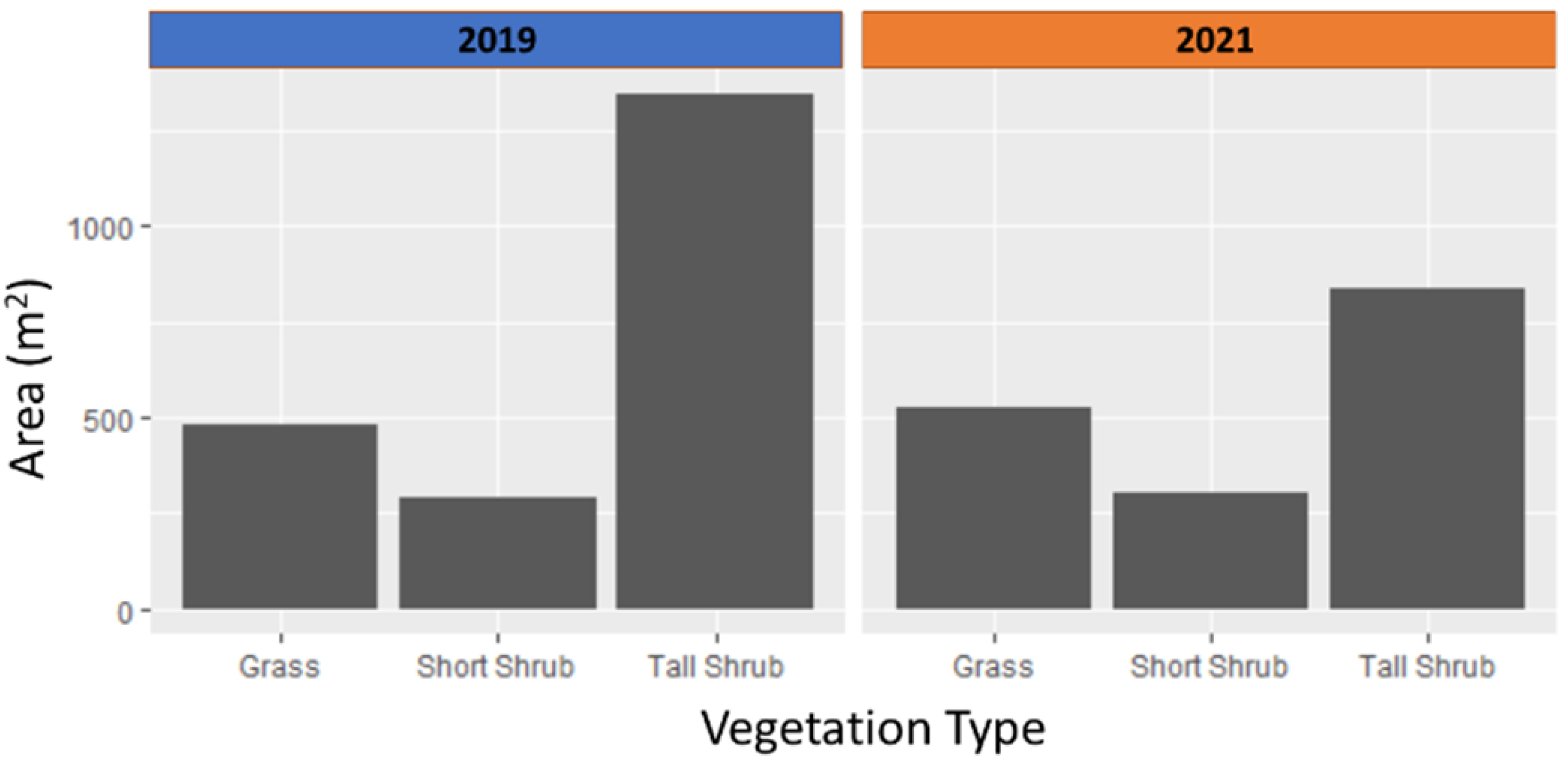
Beyond changes in slope of the stream channel (Figure 4), the shifts in land cover and sediment type (Figure 3) can also be quantified. The sand and silt sediment type increased 630% in area within the channel, while the cobble and pebble area within the channel decreased 77% (Figure 5). Regarding changes in land cover vegetation type, the grass-dominated area within the 2021 post-BDA period increased 40 square meters from the 2019 pre-installment period (Figure 6). The non-woody riparian vegetation expanded between pre- and post-BDA installation. While the shrub cover type, representing the oldest-growth vegetation within the riparian zone, decreased most dramatically from the loss of large woody vegetation, the small woody vegetation showed a minor increase in areal coverage (Figure 6).
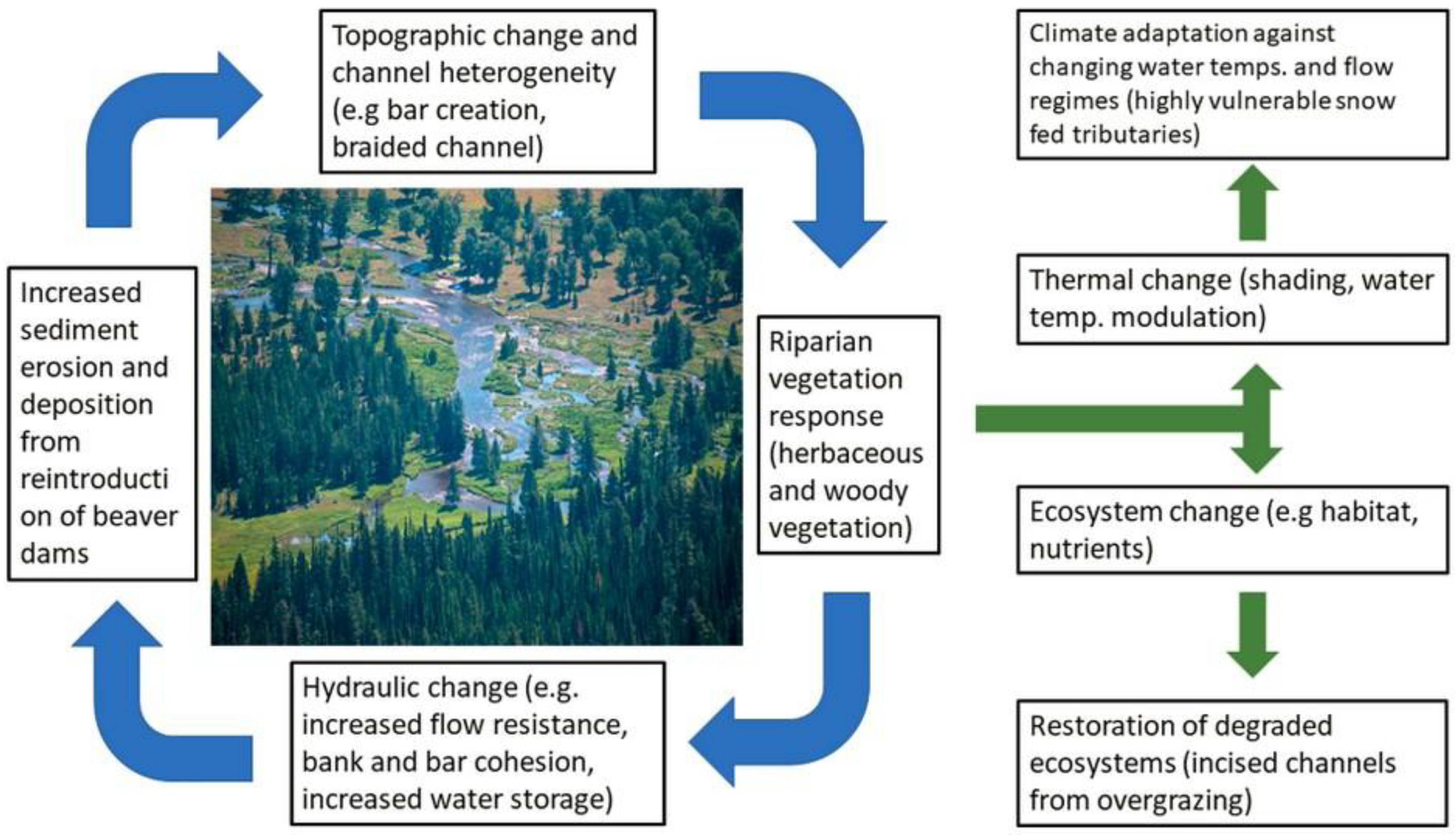
BDA restoration at this northern Utah site enhanced fine sediment deposition rates within an incised stream channel and promoted riparian vegetation response, which generally enhances colonization, expands ecosystem services, and improves resilience of sites to a changing climate (Figure 7). While it was not all types of riparian vegetation that increased or decreased in areal coverage, the loss of larger shrub vegetation and expansion of short riparian vegetation were consistent with the study’s shorter 2-year time frame. The decreased slope of the stream channel reaches above each BDA was significant, and substrate type shifted in connection with this change in channel slope. These depositional features were compared with the vegetation shift pre- and post-BDA implementation. This can help show the effects of the substrate on riparian vegetation.

4. Discussion

4.1. Geomorphology

The installation of BDAs induced significant sediment deposition both in the active channel and on the floodplain. Floodplain deposits also included significant amounts of wood. Along with the deposition of sediments above each BDA, a drastic shift in sediment type from coarse to fine sediment within the stream channel occurred. With an increase in fine sediments within the stream, the retention of these sediments shows the effectiveness of the BDA structures in flattening the local channel slope, reducing stream velocity, and reconnecting the historical floodplain [15]. BDAs are functioning as tools to reconnect the stream to its original floodplain by raising the elevation of the stream channel behind dam structures [15]. Although we did not measure it directly, field observations of fine sediment and woody debris deposition on the floodplain, outside the channel, are strong evidence that BDAs forced water back onto the historical floodplain during high water events over the 2-year period. Significant deposition upstream of BDAs was also found by others, such as Pearce et al. [17], and was most dependent upon the BDA structure remaining intact. Large fluctuations in suspended sediment type with streams can be problematic for aquatic biota, but further studies would need to be conducted to examine the impacts of high deposition rates of fine sediment over the timeline of a BDA restoration project.

4.2. Riparian Vegetation

The short-term effects of BDAs can be seen most clearly within the surface analysis of the stream channel, but even in this short time frame, a change in riparian vegetation was also seen. Larger woody vegetation decreased most dramatically (38%), and smaller woody vegetation and herbaceous/grass vegetation slightly increased (0.05%, 0.08%) in covered land area over the 2 years. Relative to the time since the BDAs’ installment, 2 years, the decrease in large woody vegetation could be considered notable but should be evaluated as findings that are only related to the short-term riparian response to BDA implementation (2 years), as opposed to what may grow in the years and decades to come. Using this, vegetation area change can be represented as a function of stream channel change. Shrub vegetation changes in the form of new growth may not be significant in the 2-year time frame of this study due to their relative growth rates. Understanding that there will always be time between the sediment movement and woody riparian vegetation recruitment is vital when predicting the riparian zone change over time. Similar findings are present in Levine and Meyer’s study [2], which showed that overbank deposition is the primary floodplain constructional process related to beaver damming. The short-term riparian growth is consistent with the substrate shift from coarse to fine sediment, which would support herbaceous riparian growth and demonstrates the expansion of the floodplain creating greater channel and habitat heterogeneity [2,19].
Headwaters are highly susceptible to ecological degradation from a wide range of human activities, including channel alteration, water diversion, land modification by agriculture, livestock grazing, mining, urbanization, and changing climate [10,20]. The study site of Fish Creek is on a parcel of land which has been heavily grazed by cattle for nearly 100 years. In this scenario, the land modification from livestock grazing is the most probable reason for the ecological degradation seen within Fish Creek. As BDA restoration is implemented in degraded headwater streams, the riparian response time is an important consideration for land managers as they plan the future restoration goals of the project, especially if they plan to use the wetland area for any type of livestock use [21].
The potential for a transition in headwater streams from perennial streams to intermittent or ephemeral streams is a strong possibility due to climate change alone as documented by Colvin et al. [10], but incised channels are at even greater risk to this change in flow regime due to their altered ground water levels and absence of overall riparian vegetation [15]. This makes beaver-related restoration more desirable in incised streams that have been hydrologically impacted by climate change. Streams which have been historically snow fed will face major water storage challenges in the future as the water supply changes drastically in its type of precipitation delivery from snow to rain in the Wasatch and Uinta mountains [22]. As a stream becomes incised, the stream channel is no longer connected to its original flood plain and the water table drops, losing connectivity to the valley bottom, and BDAs can be used in areas lacking the habitat for beavers to artificially raise the stream bed through sediment aggregation above each structure [15]. As seen in our study, the channel elevation increased above each BDA supporting this technique, but the importance of this elevation increase is to create and re-build a resilient habitat with diverse riparian vegetation types for the uncertain precipitation conditions in the future. As the Uinta range experiences less snowpack and more precipitation in the form of rain, the retention and storage of water in headwaters will be mandatory to ensure the stability of the stream ecosystem.

4.3. Restoration Implications

BDAs present a desirable stream restoration practice for a multitude of reasons, and it is not primarily understood the exact effects which these artificial structures have on the riparian zone in a short time frame (Figure 7). This restoration method can be very helpful to land managers balancing demands of stream health and stream use due to land use, such as livestock. It also must be considered for watershed-scale restoration as the headwater streams can heavily influence downstream water quality and availability. The perception of beavers by many ranchers in the rangelands of the western U.S has changed from the traditional view as a nuisance to now seeing them as a benefit to arid stream systems [4]. Combining the ecological benefits that beavers provide relating to wildlife and land use goals of property owners (often grazing cattle) is important and can be seen as most effective with grazing management strategies related to the beaver restoration of valley bottoms [4]. Beaver-meadow complexes also promote fire breaks within watersheds and can mitigate catastrophic fire risk compared to non-dammed areas [9]. Beaver dams have played a significant role in protecting the riparian vegetation during wildfires as shown by Fairfax and Whittle [8], and for land managers who seek to use BDA restoration as a wildfire adaption strategy, the timeline of riparian recruitment will be necessary for an effective plan against the threats of wildfires. With increased human development and degradation on low-order streams, as argued by Colvin et al. [10], restoration practices being implanted need to be understood with their direct long- and short-term impacts on the vital ecological aspects associated with the restoration. Human impacts such as climate change are projected to increase drought throughout portions of the semi-arid western U.S. and cause precipitation change from snow to rain in the Wasatch and Uinta mountains by 60% in the mid-21st century [22,23]. Climate change adaptation could be another reason for beaver-related restoration with many of the changes being felt in the western U.S. having the potential to be lessened through the enhanced diversity in stream morphology and vegetation associated with beaver-related restoration. With water temperature being strongly affected by low stream flows, especially in late summer, beaver dams pose a solution through their increased surface water availability, enhanced ground water connectivity, and total water storage [24,25]. Beaver dam restoration is a dynamic, low tech, and naturalistic approach and has the potential to be a powerful tool for conservation and land use mitigation and an adaptation tool for the future if implemented at a large scale. This study can contribute to the understanding of the relationship between stream channel morphology and the short-term riparian vegetation in response to BDAs. As this practice is better understood, decisions about future restoration projects can be supported by predictable outcomes, time frame for vegetation response, and vegetation type of BDA implementation.
Given that overbank flooding is the primary proxy for riparian expansion, it can be assumed that the number of high-water events and presence of correctly designed and installed BDAs, based on Pearce et al. [17], could potentially predict the amount of riparian expansion after BDA installation. Using the data from the UAV survey regarding sediment dynamics and vegetation response, paired with stream discharge data, could potentially produce a predictive model to help quantify the amount of riparian vegetation change over time. The value of these types of models would be beneficial in proposing BDA restoration to private landowners as well as organizations focused on stream restoration.
Timelines for restoration projects are also very important to consider given the logistics of the restoration effort and the biota related to the ecosystem of concern. A common land use which has created degraded headwaters is agricultural practices. Specifically, the management of livestock on open streams has led to incised stream channels, which BDA restoration offers a solution. The importance of a timeline of riparian vegetation recruitment after BDA installation for land managers using their land for livestock is essential in insuring a proper and effective restoration effort. Implementation of beaver-related restoration methods has grown in popularity, but the long-term effects have not been evaluated when beavers leave or beaver structures are not maintained [5]. The timeline of beaver-related restoration is vital for assessing the long-term effects of these practices, and through understanding the short-term impacts that are contributing to the long-term effects, we can provide practitioners with the supplemental knowledge needed for an effective restoration project. If the land and stream, which have historically been used for livestock, are going back to that same land use, the timeline for full riparian zone recovery is necessary to avoid major setbacks in time related to the restoration of the stream. Understanding and considering human dimensions of beaver-related restoration will ensure this new restoration technique will not be undermined from the perspective of uncertainty from the stakeholders.

4.4. Limitations of Future Studies

The use of aerial surveys and the creation of DSMs allowed for a repeatable, high resolution elevation analysis along the study reach of Fish Creek (Figure 4). Potential errors in this study are most likely to arise from our lower-cost remote sensing technique that uses aerial images to produce DSM. It has been noted in other studies, such as Sanhueza et al. [24], that photography-based UAV technology is most beneficial to survey channels and riverine environments when vegetation is absent. Knowing that the DSMs would not be created precisely in heavily vegetated areas in the study site, the study area was biased towards areas with more available open space, such as rangeland systems. The second most likely area for the potential inaccuracy of the data presented in this study is the exact precision in the quantification of the habitat area. Freehand polygons were created using multiple site variables, to validate the type of habitat present, but more precision could be achieved with more advanced datasets using algorithms to create the polygons automatically based on land cover type. This study helps us better understand beaver-related restoration, but more research is needed on the long-term impacts [25,26,27,28], such as woody vegetation growth, water balance, and fire resilience with regards to BDA projects. Additionally, understanding impacts of the lower watershed from BDA practices and beaver adaptation strategies such as beaver deceivers and pond levelers after beaver reintroduction will allow for a more holistic view of beaver-related restoration.

Author Contributions

Conceived the study design and research: L.H.; Formatted and reviewed for the publication’s application: N.W.; Provided data and ensured accuracy of the remote sensing techniques: P.B.; Provided oversight on analysis, figure design, and writing: Z.K. All authors have read and agreed to the published version of the manuscript.

Funding

This research was funded by Utah Division of Wildlife Resources and Sage Land Collaborative.

Data Availability Statement

No new data were created or analyzed in this study.

Acknowledgments

We want to thank everyone who was a part of this restoration effort, including the volunteers and Sage Land Collaborative, and the Utah Division of Wildlife Resources, for funding and making this project possible. We also acknowledge G-Bar Ranch as the property owners of this site and their willingness to restore their property for conservation. Lastly, we want to acknowledge Trout Unlimited for helping with this project and the opportunity to access the data associated with this site.

Conflicts of Interest

The authors declare no conflict of interest.

Abbreviations

The following abbreviations are used in this manuscript:
BDABeaver Dam Analog
UAVUnmanned Aerial Vehicles
DSMDigital Surface Model

References

  1. Polvi, L.E.; Wohl, E. The beaver meadow complex revisited—The role of beavers in post-glacial floodplain development. Earth Surf. Process. Landf. 2012, 37, 332–346. [Google Scholar] [CrossRef]
  2. Levine, R.; Meyer, G.A. Beaver dams and channel sediment dynamics on Odell Creek, Centennial Valley, Montana, USA. Geomorphology 2014, 205, 51–64. [Google Scholar] [CrossRef]
  3. Brazier, R.E.; Puttock, A.; Graham, H.A.; Auster, R.E.; Davies, K.H.; Brown, C.M.L. Beaver: Nature’s ecosystem engineers. WIREs Water 2021, 8, e1494. [Google Scholar] [CrossRef]
  4. Charnley, S.; Gosnell, H.; Davee, R.; Abrams, J. Ranchers and Beavers: Understanding The Human Dimensions of Beaver-Related Stream Restoration on Western Rangelands. Rangel. Ecol. Manag. 2020, 73, 712–723. [Google Scholar] [CrossRef]
  5. Pilliod, D.S.; Rohde, A.T.; Charnley, S.; Davee, R.R.; Dunham, J.B.; Gosnell, H.; Grant, G.E.; Hausner, M.B.; Huntington, J.L.; Nash, C. Survey of Beaver-related Restoration Practices in Rangeland Streams of the Western USA. Environ. Manag. 2018, 61, 58–68. [Google Scholar] [CrossRef]
  6. Hough-Snee, N.; Roper, B.B.; Wheaton, J.M.; Budy, P.; Lokteff, R.L. Riparian vegetation communities change rapidly following passive restoration at a northern Utah stream. Ecol. Eng. 2013, 58, 371–377. [Google Scholar] [CrossRef]
  7. Swanson, S.R.; Wyman, S.; Evans, C. Practical grazing management to meet riparian objectives. J. Rangel. Appl. 2015, 2, 1–28. [Google Scholar]
  8. Fairfax, E.; Whittle, A. Smokey the Beaver: Beaver-dammed riparian corridors stay green during wildfire throughout the western USA. Ecol. Appl. 2020, 30, e02225. [Google Scholar] [CrossRef]
  9. Weirich, J. Beaver Moderated Fire Resistance in the North Cascades and Potential for Climate Change Adaptation. Master’s Thesis, Eastern Washington University, Cheney, WA, USA, 2021. [Google Scholar]
  10. Colvin, S.A.R.; Sullivan, S.M.P.; Shirey, P.D.; Colvin, R.W.; Winemiller, K.O.; Hughes, R.M.; Fausch, K.D.; Infante, D.M.; Olden, J.D.; Bestgen, K.R.; et al. Headwater Streams and Wetlands are Critical for Sustaining Fish, Fisheries, and Ecosystem Services. Fisheries 2019, 44, 73–91. [Google Scholar] [CrossRef]
  11. Wohl, E. Human impacts to mountain streams. Geomorphology 2006, 79, 217–248. [Google Scholar] [CrossRef]
  12. Naiman, R.J.; Johnston, C.A.; Kelley, J.C. Alterations of North American streams by beaver. Bioscience 1988, 38, 753–762. [Google Scholar] [CrossRef]
  13. Rosgen, D.L. A geomorphological approach to restoration of incised rivers. In Proceedings of the Conference on Management of Landscapes Disturbed by Channel Incision, Oxford, MS, USA, 19–22 May 1997. [Google Scholar]
  14. Silverman, N.L.; Allred, B.W.; Donnelly, J.P.; Chapman, T.B.; Maestas, J.D.; Wheaton, J.M.; White, J.; Naugle, D.E. Low-tech riparian and wet meadow restoration increases vegetation productivity and resilience across semiarid rangelands. Restor. Ecol. 2019, 27, 269–278. [Google Scholar] [CrossRef]
  15. Pollock, M.M.; Beechie, T.J.; Wheaton, J.M.; Jordan, C.E.; Bouwes, N.; Weber, N.; Volk, C. Using beaver dams to restore incised stream ecosystems. BioScience 2014, 64, 279–290. [Google Scholar] [CrossRef]
  16. Orr, M.R.; Weber, N.P.; Noone, W.N.; Mooney, M.G.; Oakes, T.M.; Broughton, H.M. Short-Term Stream and Riparian Responses to Beaver Dam Analogs on a Low-Gradient Channel Lacking Woody Riparian Vegetation. Northwest Sci. 2020, 93, 171–184. [Google Scholar] [CrossRef]
  17. Pearce, C.; Vidon, P.; Lautz, L.; Kelleher, C.; Davis, J. Short-term impact of beaver dam analogues on streambank erosion and deposition in Semi-Arid landscapes of the Western USA. River Res. Appl. 2021, 37, 1032–1037. [Google Scholar] [CrossRef]
  18. Dafflon, B.; Oktem, R.; Peterson, J.; Ulrich, C.; Tran, A.P.; Romanovsky, V.; Hubbard, S.S. Coincident aboveground and belowground autonomous monitoring to quantify covariability in permafrost, soil, and vegetation properties in Arctic tundra. J. Geophys. Res. Biogeosci. 2017, 122, 1321–1342. [Google Scholar] [CrossRef]
  19. Wohl, E.; Lane, S.N.; Wilcox, A.C. The science and practice of river restoration. Water Resour. Res. 2015, 51, 5974–5997. [Google Scholar] [CrossRef]
  20. Klos, P.Z.; Link, T.E.; Abatzoglou, J.T. Extent of the rain-snow transition zone in the western US under historic and projected climate. Geophys. Res. Lett. 2014, 41, 4560–4568. [Google Scholar] [CrossRef]
  21. Caruso, B.S. Science and policy integration issues for stream and wetland jurisdictional determinations in a semi-arid region of the western US. Wetl. Ecol. Manag. 2011, 19, 351–371. [Google Scholar] [CrossRef]
  22. Constantz, J. Interaction between stream temperature, streamflow, and groundwater exchanges in alpine streams. Water Resour. Res. 1998, 34, 1609–1615. [Google Scholar] [CrossRef]
  23. Weber, N.; Bouwes, N.; Pollock, M.M.; Volk, C.; Wheaton, J.M.; Wathen, G.; Wirtz, J.; Jordan, C.E. Alteration of stream temperature by natural and artificial beaver dams. PLoS ONE 2017, 12, e0176313. [Google Scholar] [CrossRef]
  24. Sanhueza, D.; Picco, L.; Ruiz-Villanueva, V.; Iroumé, A.; Ulloa, H.; Barrientos, G. Quantification of fluvial wood using UAVs and structure from motion. Geomorphology 2019, 345, 106837. [Google Scholar] [CrossRef]
  25. Davis, J.; Lautz, L.; Kelleher, C.; Vidon, P.; Russoniello, C.; Pearce, C. Evaluating the geomorphic channel response to beaver dam analog installation using unoccupied aerial vehicles. Earth Surf. Process. Landf. 2021, 46, 2349–2364. [Google Scholar] [CrossRef]
  26. Karlsten, A. Quantifying the Physical Effects of Stream Restoration: With Unmanned Aerial Vehicles and Geographical Information Systems. Master’s Thesis, Umea University, Umea, Sweden, 2019. [Google Scholar]
  27. O’sullivan, M.; Huallacháin, D.; Antunes, P.O.; Jennings, E.; Kelly-Quinn, M. The impacts of cattle access to headwater streams on hyporheic zones. Biol. Environ. 2019, 119B, 13–27. [Google Scholar] [CrossRef]
  28. Scamardo, J.; Wohl, E. Sediment storage and shallow groundwater response to beaver dam analogues in the Colorado Front Range, USA. River Res. Appl. 2020, 36, 398–409. [Google Scholar] [CrossRef]
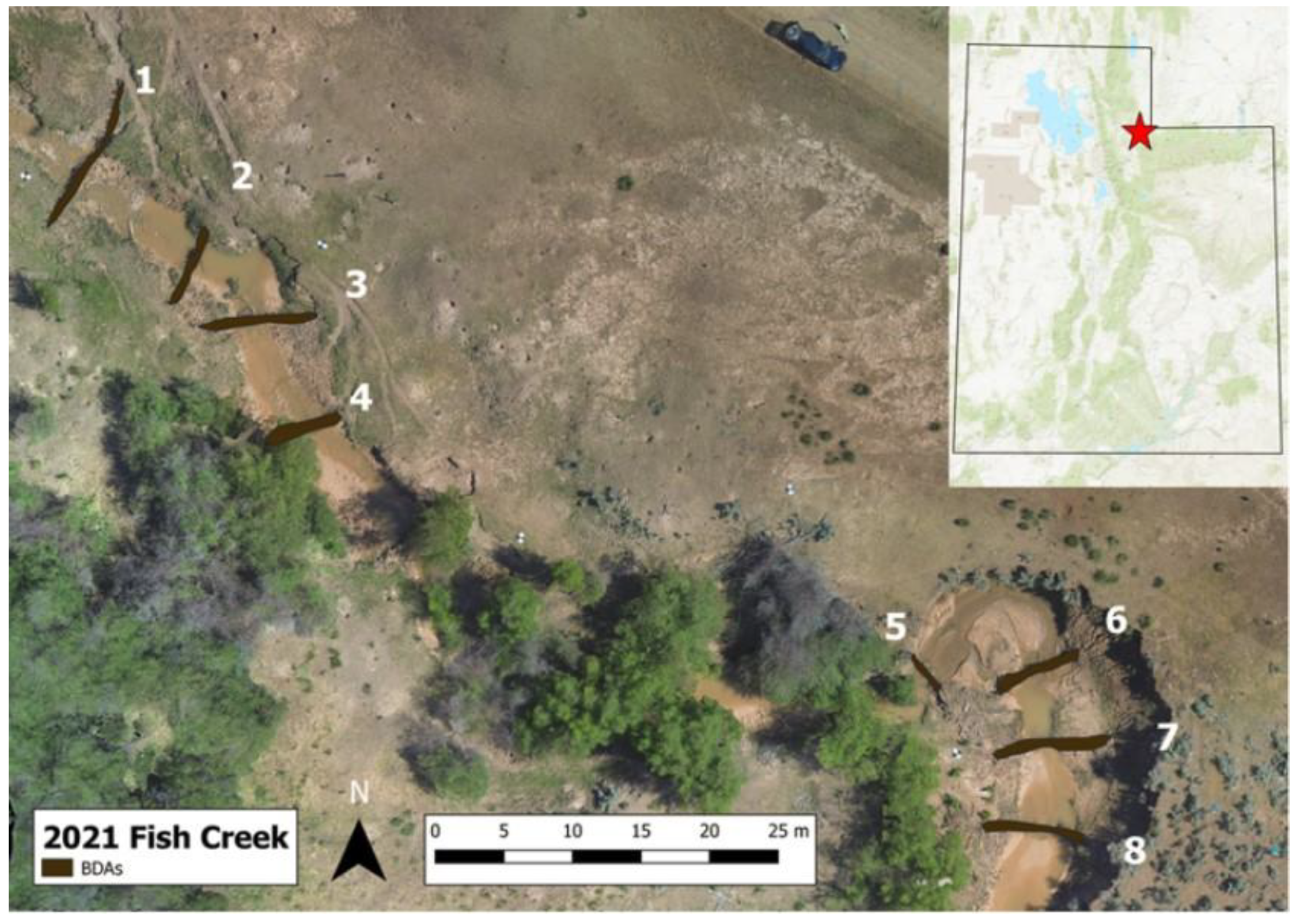
Figure 1. Map of the study area with 8 individual beaver dam analogs (BDAs) in place. Only the BDAs that were used for results and analysis of this restoration project are displayed. Elevation is approximately 1924 m (40.906378° N, 111.218342° W).
Land 15 01011 g001
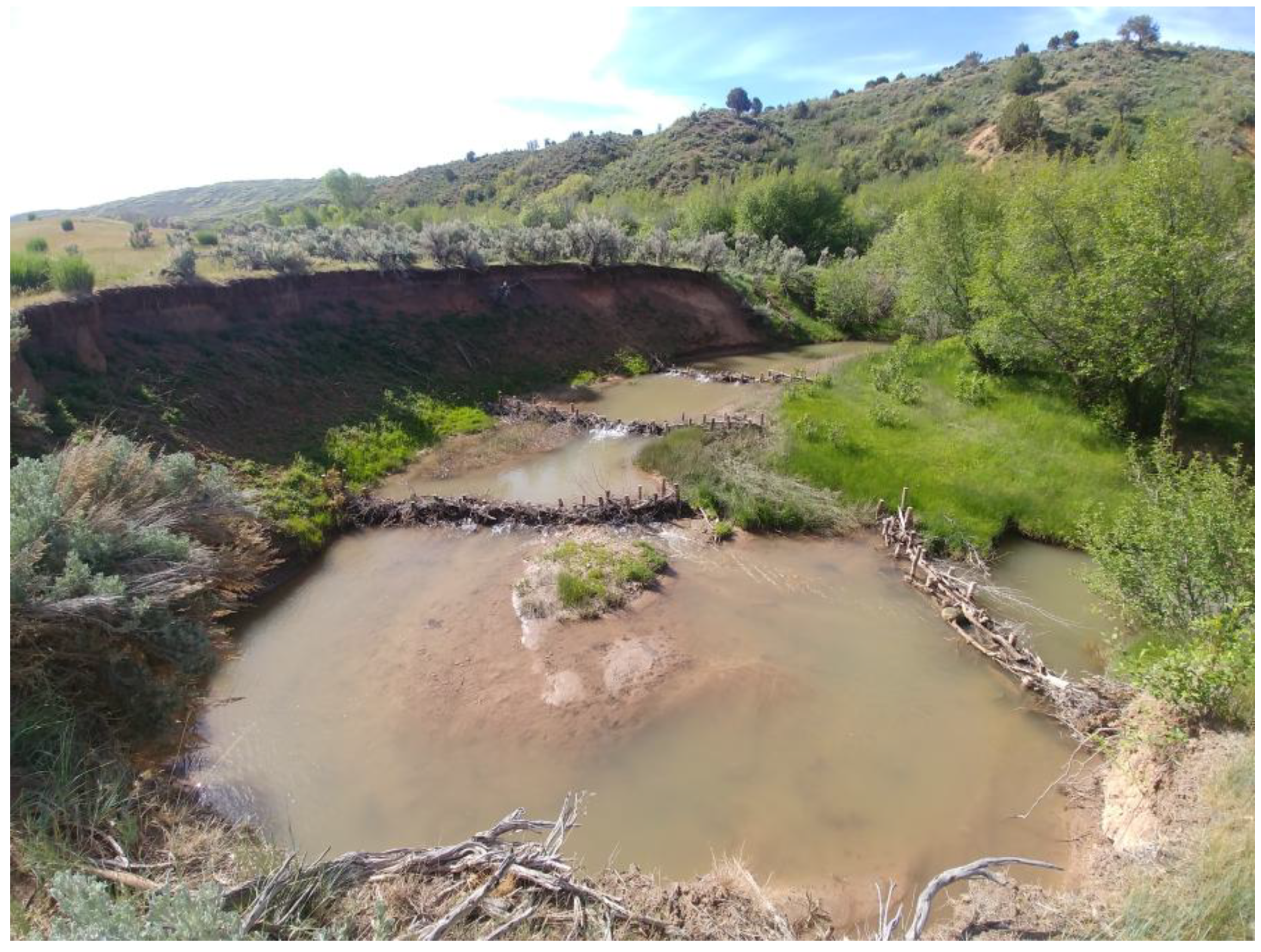
Figure 2. Image of a Beaver Dam Analog (BDA) in Utah. (40.906378° N, 111.218342° W).
Land 15 01011 g002
Figure 3. (A) Dominant land cover type map for Fish Creek in 2019 before BDA installations. (B) Dominant land cover type map for Fish Creek in 2021 after BDA installations. Colors represent land cover type based upon the aerial images captured via drone and analysis via the green chromatic coordinate index, while neutral gray indicates areas lacking visual evidence of vegetation or substrate type.
Land 15 01011 g003
Figure 4. Evaluation of the stream channel upstream of each BDA is represented, displaying the depositional features of each BDA relating to the elevation change from 2019 to 2021. The slopes of each reach have a significant difference from 2019 to 2021 (p = 0.02)) Elevation is approximately 1924 m.
Land 15 01011 g004
Figure 5. Substrate type quantified as areal coverage to represent the response of channel surface sediment size to the installation of BDAs.
Land 15 01011 g005
Figure 6. Dominant land cover type quantified into areal coverage within the study site to show the response of riparian vegetation to BDA installation.
Land 15 01011 g006
Figure 7. Conceptual diagram, which expands upon (green arrows) Wohl et al. [19] (blue arrows), to illustrate one set of potential eco-geomorphic impacts associated with beaver dam restoration, where reintroduction of beaver-related features can produce sediment transport and deposition and associated geomorphic changes that can create colonization sites for riparian vegetation, helping watersheds adapt to climate change.
Land 15 01011 g007
Disclaimer/Publisher’s Note: The statements, opinions and data contained in all publications are solely those of the individual author(s) and contributor(s) and not of MDPI and/or the editor(s). MDPI and/or the editor(s) disclaim responsibility for any injury to people or property resulting from any ideas, methods, instructions or products referred to in the content.