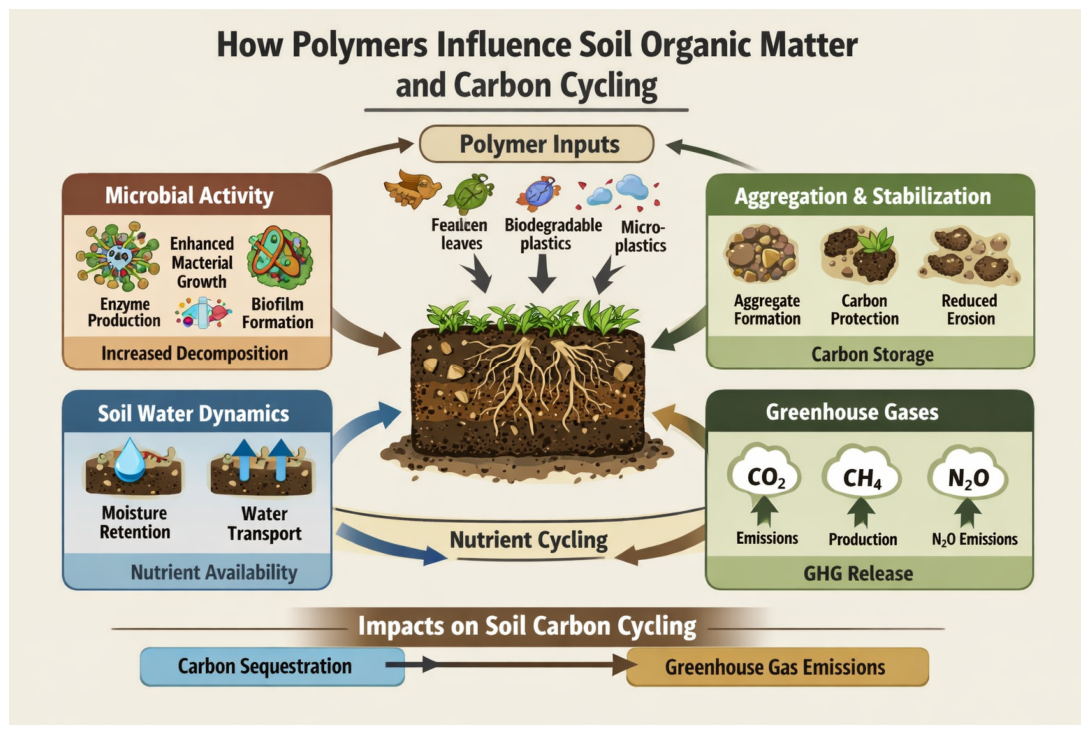
Hidden Carbon: How Polymers Influence Soil Organic Matter and Carbon Cycling

 ,
,  ,
,  ,
,  , , ,
, , , 
Abstract
1. Introduction
2. Materials and Methods
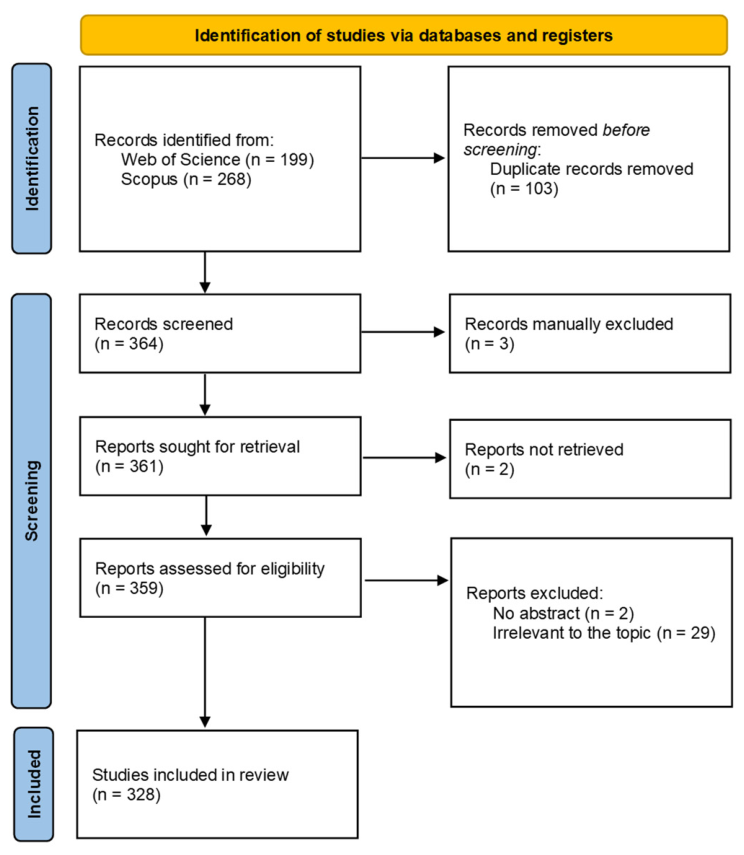
2.1. Bibliometric Assessment
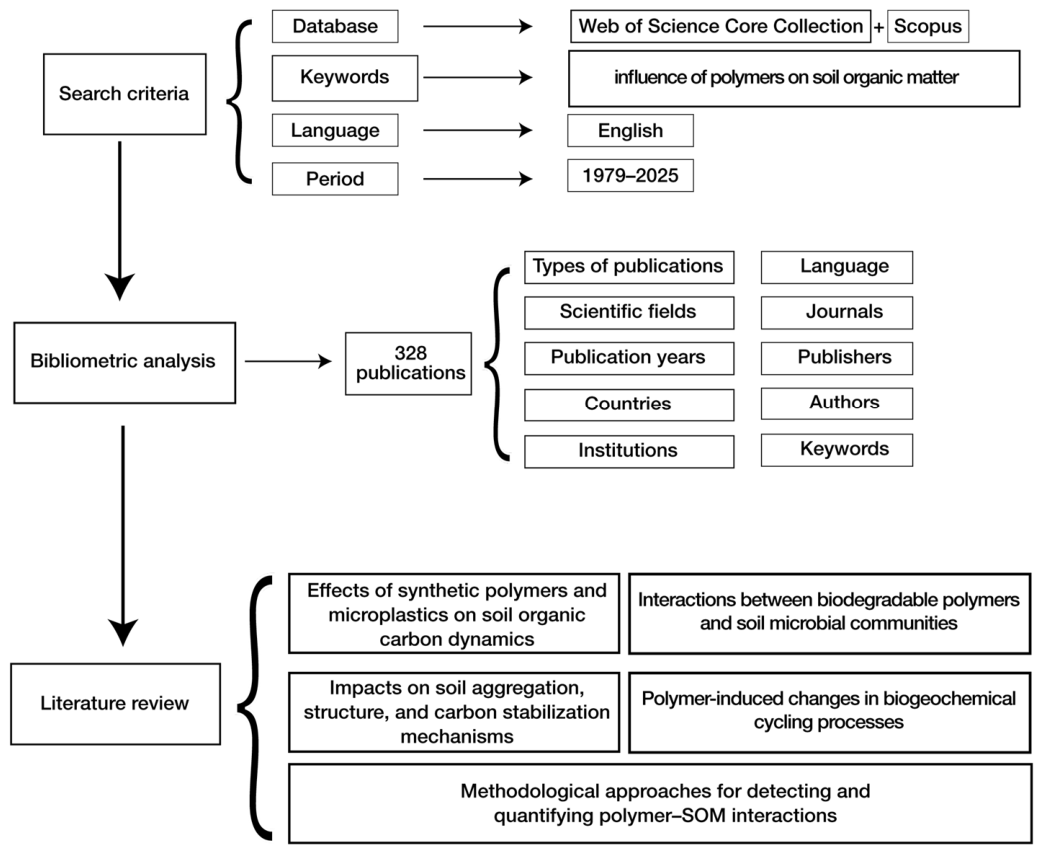
Literature Search Strategy
- -
- (“influence of polymers on soil organic matter”) OR (“influence of polymers on soil organic carbon”)
- -
- (polymer OR microplastic* OR nanoplastic* OR “plastic debris”) AND (“soil organic matter” OR “soil organic carbon” OR SOC OR SOM)
- -
- (natural polymer* OR biodegradable polymer* OR polyester microfibers OR polyacrylate* OR nanopolymer* OR geopolymer* OR polypropylene OR polyethylene) AND (soil* AND (organic matter OR organic carbon))
- -
- Peer-reviewed research article, review paper, book chapter, or conference proceeding;
- -
- Explicit examination of polymers, microplastics, nanoplastics, or related materials in soil systems;
- -
- Direct or indirect assessment of impacts on soil organic matter, soil organic carbon, soil aggregation, microbial activity, or carbon cycling;
- -
- Complete and accessible bibliographic metadata.
- -
- Non-peer-reviewed publications;
- -
- Studies not involving soil systems;
- -
- Studies where polymers were incidental contaminants without analysis of soil organic matter or carbon dynamics;
- -
- Inaccessible full texts or incomplete abstracts;
- -
- Insufficient methodological transparency.
2.2. Qualitative Content Analysis
- Effects of synthetic polymers and microplastics on soil organic carbon dynamics;
- Interactions between biodegradable polymers and soil microbial communities;
- Impacts on soil aggregation, structure, and carbon stabilization mechanisms;
- Polymer-induced changes in biogeochemical cycling processes;
- Methodological approaches for detecting and quantifying polymer–SOM interactions.
3. Results and Discussion
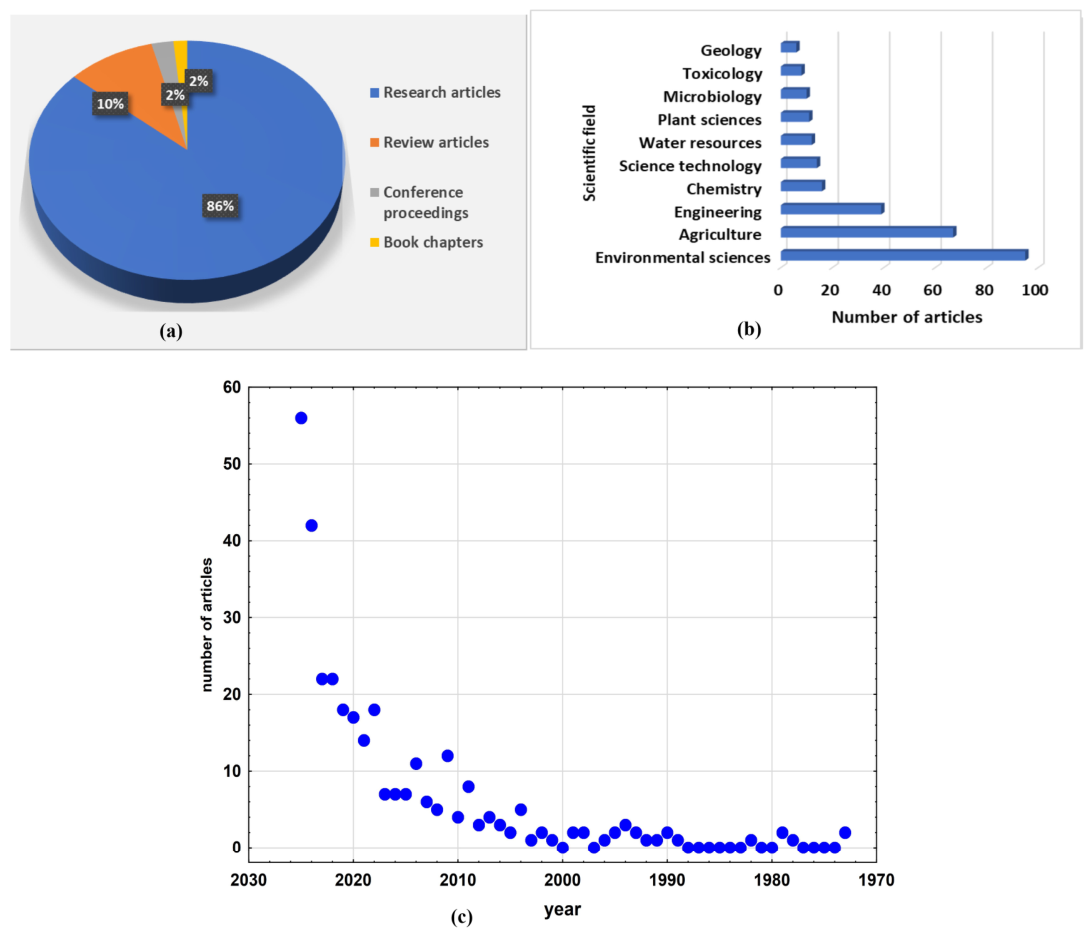
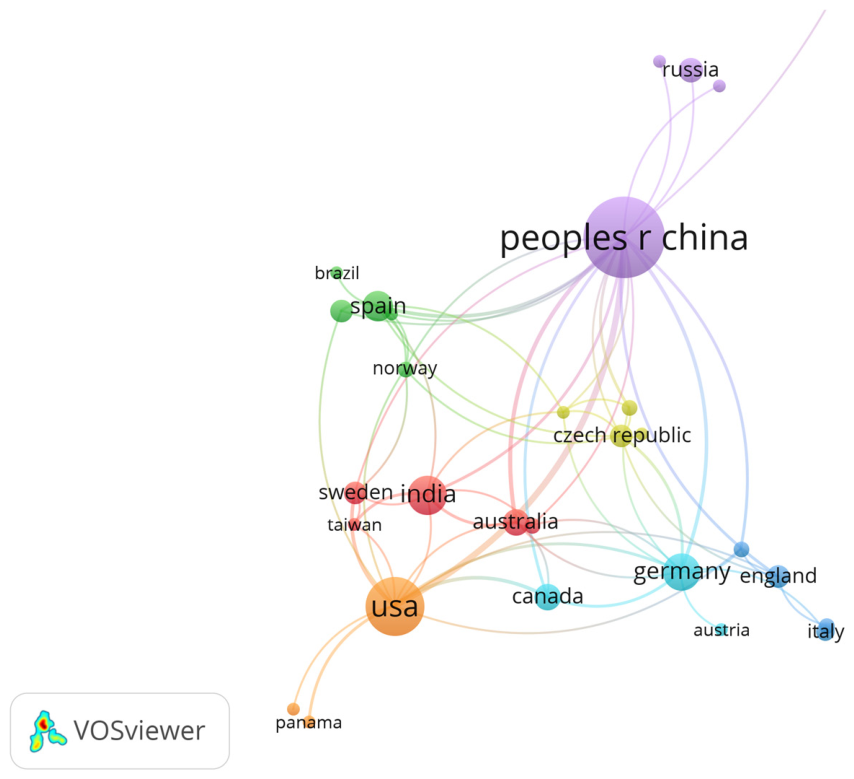
3.1. A Bibliometric Review
3.2. Literature Review
3.2.1. Global Research Trends on Polymer–Soil Organic Matter Interactions
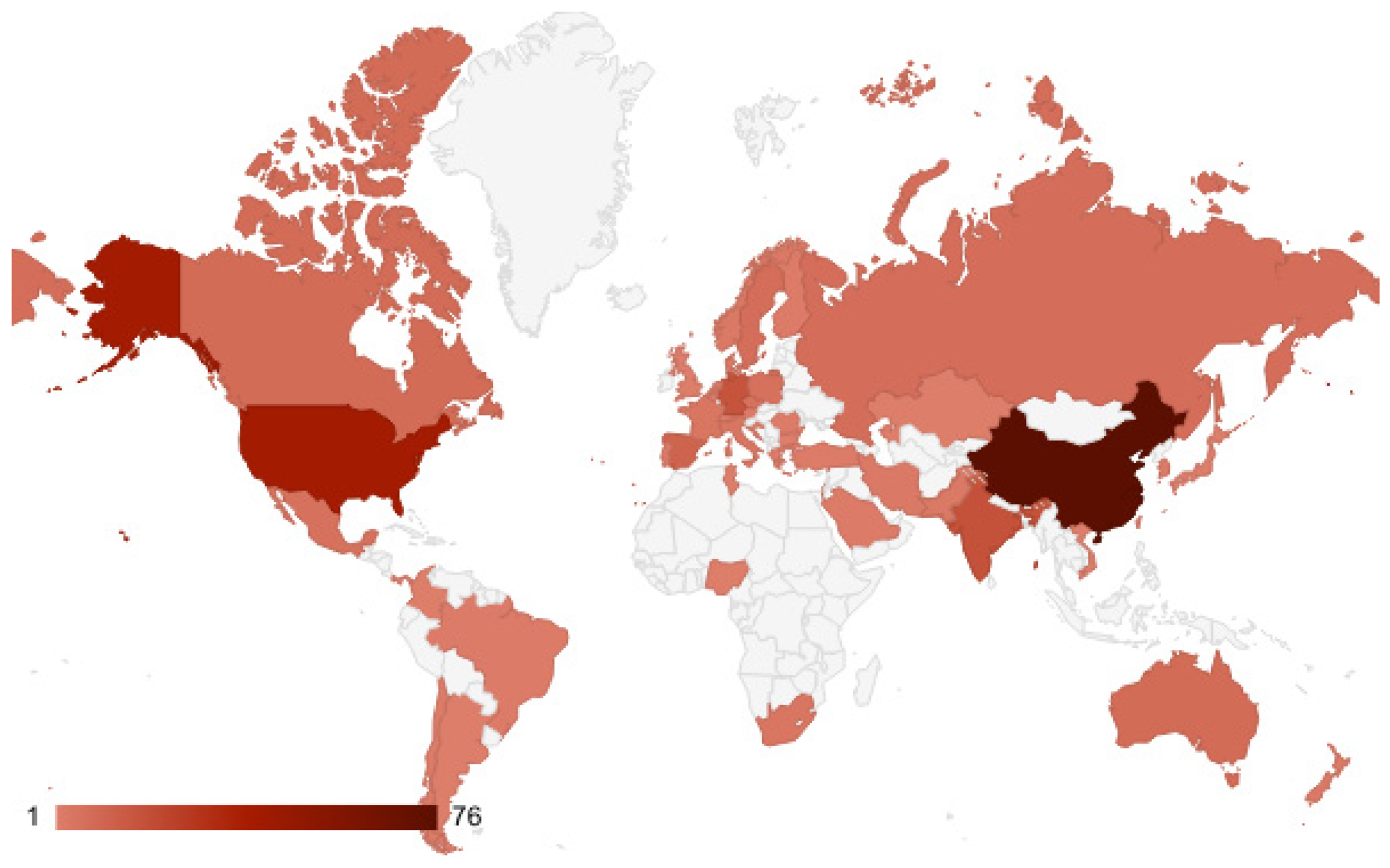
- -
- A particularly intensive research activity in East Asia.
- -
- A balanced but smaller contribution from Europe.
- -
- Limited representation from Africa, South America (except Chile), and high-mountain regions.
- -
- Microplastics in soil systems (transport, retention, vertical migration, aggregation, pollution characterization).
- -
- Biodegradable polymers and bioplastics (degradation, carbon mineralization, soil interaction).
- -
- Carbon cycling and greenhouse gas emissions (CO2, CH4, carbon dynamics, microbial carbon pump).
- -
- Soil physical properties and aggregation (dispersion, aggregation, aggregate-associated carbon).
- -
- Polymer–mineral interactions (clay minerals, carbonate media, humic substances).
- -
- Methodological developments (analytical techniques, polymer quantification, removal of SOM for analysis).
- -
- Early studies (1990s–early 2010s) primarily investigated polymer effects on soil physical behavior and dispersion.
- -
- Mid-period studies (2010–2018) increasingly examined degradation processes and environmental interactions.
- -
- Recent studies (2020–2026) strongly emphasize microplastics, biodegradable plastics, greenhouse gas emissions, and detailed biogeochemical processes.
- -
- Laboratory incubation experiments focused on CO2 and CH4 emissions.
- -
- Column and leaching experiments examining transport and migration.
- -
- Soil aggregation and physical stability analyses.
- -
- Microbial and biochemical assessments.
- -
- Analytical and spectroscopic characterization methods.
- Polymers as contaminants (microplastics in soil ecosystems).
- Polymers as soil amendments (hydrogels, superabsorbents, biodegradable materials).
- Polymers as drivers of carbon cycle alteration (mineralization, priming, greenhouse gas fluxes).
3.2.2. Different Categories of Polymers and Their Influence on Soil Organic Matter
Microplastics (MPs)
Biodegradable Polymers
Polyester Microfibers (PMF)
Polypropylene (PP)
Polyethylene (PE)
Polyacrylates (Superabsorbent Polymers)
Nanopolymers and Engineered Nanoparticles
Geopolymers
Natural Biopolymers
- Cutin and Suberin
- Polysaccharides and soil aggregate dynamics: implications for natural polymer function
- Structural role of soil polysaccharides in aggregation
- Emerging context: bioplastics and polysaccharide-based materials
- Integrated Interpretation
- Recalcitrant structural biopolymers (cutin, suberin)
- -
- Intrinsically resistant aliphatic matrices.
- -
- Contribute directly to stable SOM pools and mineral-associated fractions.
- -
- Serve as long-term carbon reservoirs.
- Labile polysaccharides (plant- or microbially derived)
- -
- Rapidly decomposed and microbially transformed.
- -
- Drive aggregate formation via transient biological binding agents.
- -
- Facilitate physical protection of SOM within microaggregates.
- -
- Undergo transformation into more stabilized humic-associated fractions.
Synthesis
- -
- Apparent increases in measured SOC (microplastics);
- -
- Redistribution of carbon within aggregate fractions (PMF, MPs);
- -
- Stimulation or suppression of microbial activity and enzyme functions (MPs, PBAT, PE);
- -
- Alteration of DOC, DON, and nutrient pools (biodegradable polymers);
- -
- Modification of SOM–metal interactions and pollutant degradation;
- -
- Indirect SOM changes through pH and moisture regulation (polyacrylates, hydrogels).
3.2.3. Mechanisms of Polymer Effects on Soil Organic Matter Transformation
Effects of Microplastics on Soil Physicochemical Properties and Aggregate Stability
Microplastics and Soil Organic Carbon (SOC) Storage and Mineralization
Dissolved Organic Matter (DOM) Dynamics and Mineral Associations
Greenhouse Gas Emissions and Biogeochemical Feedbacks
Superabsorbent Polymers and Soil Carbon Persistence
Synthesis and Implications for Soil Organic Matter Dynamics
- -
- Physical effects—modification of soil structure, aggregation, and water retention;
- -
- Chemical effects—release of labile DOM and alteration of sorption processes;
- -
- Biological effects—shifts in microbial community composition, enzyme activity, carbon use efficiency, and priming responses.
3.2.4. Factors Controlling Polymer-Induced Changes in Soil Organic Carbon Dynamics
Microplastics and Soil Organic Carbon Mineralization
Polymer–Dissolved Organic Matter Interactions and Carbon Mobility
Organic Polyanions, Clay Dispersion, and SOM Stabilization
Synthetic and Biopolymer Amendments: Aggregate Stability and Transformation Products
Redox-Mediated Polymerization and Organo–Mineral Associations
Synthesis of Controlling Factors
- Polymer concentration—Nonlinear responses are common; low and high doses can produce contrasting effects on SOM mineralization.
- Water regime—Redox conditions and moisture dynamics modulate enzymatic activity and SOC turnover.
- Ionic strength and pH—Electrostatic interactions govern polymer adsorption, dispersion, and mobility.
- Presence of polyvalent cations—Essential for stabilizing organo–mineral complexes via cation bridging.
- Polymer degradability and transformation products—Biodegradation pathways determine secondary impacts on soil physical and biochemical properties.
- DOM composition—Hydrophobic fractions enhance polymer mobility, while competition for sorption sites modulates interactions.
3.2.5. Analytical Approaches for Determining the Influence of Polymers on Soil Organic Matter
Elemental and Structural Characterization of Polymers and SOM
Polymer–SOM Interactions and Mobility in Solid Matrices
Extraction and Fractionation Approaches in Organic-Rich Soils
Polymer Degradation and Environmental Controls in Soil
Mineral–Organic Interactions and Transformation Pathways
Synthesis and Implications
- -
- Polymer chemistry (aromaticity, polarity, functional groups) governs selective interactions with SOM domains.
- -
- SOM heterogeneity and biological constituents (e.g., enzymes, EPS) modulate polymer mobility and transformation.
- -
- Environmental conditions (temperature, moisture, redox state) strongly influence degradation and mineral interactions.
- -
- Operationally defined SOM fractions are critical for interpreting polymer-associated contaminant and nutrient dynamics.
3.2.6. Research Gaps, Management Actions and Future Directions
Research Gaps
Management Actions
Future Research Directions
4. Conclusions
Author Contributions
Funding
Data Availability Statement
Conflicts of Interest
References
- Plastics Europe. Plastics—The Fast Facts 2023: An Analysis of European Plastics Production, Demand and Waste Data; Plastics Europe: Brussels, Belgium, 2023. [Google Scholar]
- Geyer, R.; Jambeck, J.R.; Law, K.L. Production, use, and fate of all plastics ever made. Sci. Adv. 2017, 3, e1700782. [Google Scholar] [CrossRef]
- Andrady, A.L. Microplastics in the marine environment. Mar. Pollut. Bull. 2011, 62, 1596–1605. [Google Scholar] [CrossRef]
- Thompson, R.C.; Olsen, Y.; Mitchell, R.P.; Davis, A.; Rowland, S.J.; John, A.W.G.; McGonigle, D.; Russell, A.E. Lost at sea: Where is all the plastic? Science 2004, 304, 838. [Google Scholar] [CrossRef]
- Rillig, M.C. Microplastic in terrestrial ecosystems and the soil? Environ. Sci. Technol. 2012, 46, 6453–6454. [Google Scholar] [CrossRef]
- Horton, A.A.; Walton, A.; Spurgeon, D.J.; Lahive, E.; Svendsen, C. Microplastics in freshwater and terrestrial environments: Evaluating the current understanding to identify the knowledge gaps and future research priorities. Sci. Total Environ. 2017, 586, 127–141. [Google Scholar] [CrossRef]
- Bläsing, M.; Amelung, W. Plastics in soil: Analytical methods and possible sources. Sci. Total Environ. 2018, 612, 422–435. [Google Scholar] [CrossRef] [PubMed]
- Nizzetto, L.; Futter, M.; Langaas, S. Are agricultural soils dumps for microplastics of urban origin? Environ. Sci. Technol. 2016, 50, 10777–10779. [Google Scholar] [CrossRef] [PubMed]
- de Souza Machado, A.A.; Kloas, W.; Zarfl, C.; Hempel, S.; Rillig, M.C. Microplastics as an emerging threat to terrestrial ecosystems. Glob. Change Biol. 2018, 24, 1405–1416. [Google Scholar] [CrossRef]
- Rillig, M.C.; Ingraffia, R.; de Souza Machado, A.A. Microplastic incorporation into soil in agroecosystems. Front. Plant Sci. 2017, 8, 1805. [Google Scholar] [CrossRef]
- Spârchez, G.; Dincă, L.C.; Marin, G.; Dincă, M.; Enescu, R.E. Variation of eutric cambisols’ chemical properties based on altitudinal and geomorphologic zoning. Environ. Eng. Manag. J. 2017, 16, 2911–2918. [Google Scholar] [CrossRef]
- Dincă, L.; Spârchez, G.; Dincă, M. Romanian forest soil GIS map and database and their ecological implications. Carpathian J. Earth Environ. Sci. 2014, 9, 133–142. [Google Scholar]
- Vasile, D.; Petrițan, A.-M.; Tudose, N.C.; Toiu, F.L.; Scărlătescu, V.; Petrițan, I.C. Structure and spatial distribution of dead wood in two temperate old-growth mixed European beech forests. Not. Bot. Horti Agrobot. Cluj-Napoca 2017, 45, 639–645. [Google Scholar] [CrossRef]
- Tudose, N.C.; Petrițan, I.C.; Toiu, F.L.; Petrițan, A.-M.; Marin, M. Relation between topography and gap characteristics in a mixed sessile oak–beech old-growth forest. Forests 2023, 14, 188. [Google Scholar] [CrossRef]
- Mustățea, M.; Clius, M.; Tudose, N.C.; Cheval, S. An enhanced Machado Index of naturalness. Catena 2022, 212, 106091. [Google Scholar] [CrossRef]
- Tudose, N.C.; Marin, M.; Cheval, S.; Ungurean, C.; Davidescu, Ș.O.; Tudose, O.N.; Mihalache, A.L.; Davidescu, A.A. SWAT model adaptability to a small mountainous forested watershed in central Romania. Forests 2021, 12, 860. [Google Scholar] [CrossRef]
- Marin, M.; Clinciu, I.; Tudose, N.C.; Ungurean, C.; Mihalache, A.L.; Mărțoiu, N.E.; Tudose, O.N. Assessment of seasonal surface runoff under climate and land use change scenarios for a small forested watershed: Upper Tarlung watershed (Romania). Water 2022, 14, 2860. [Google Scholar] [CrossRef]
- Murariu, G.; Stanciu, S.; Dincă, L.; Munteanu, D. GIS applications in monitoring and managing heavy metal contamination of water resources. Appl. Sci. 2025, 15, 10332. [Google Scholar] [CrossRef]
- Dincă, L.; Murariu, G.; Lupoae, M. Understanding the ecosystem services of riparian forests: Patterns, gaps, and global trends. Forests 2025, 16, 947. [Google Scholar] [CrossRef]
- Marin, M.; Tudose, N.C.; Ungurean, C.; Mihalache, A.L. Application of life cycle assessment for torrent control structures: A review. Land 2024, 13, 1956. [Google Scholar] [CrossRef]
- Mihalache, A.L.; Marin, M.; Davidescu, Ș.O.; Ungurean, C.; Adorjani, A.; Tudose, N.C.; Davidescu, A.A.; Clinciu, I. Physical status of torrent control structures in Romania. Environ. Eng. Manag. J. 2020, 19, 861–872. [Google Scholar] [CrossRef]
- Davidescu, Ș.O.; Clinciu, I.; Tudose, N.C.; Ungurean, C. An evaluating methodology for hydrotechnical torrent-control structures condition. Ann. For. Res. 2012, 55, 125–143. [Google Scholar] [CrossRef]
- Oprică, R.; Tudose, N.C.; Davidescu, Ș.O.; Zup, M.; Marin, M.; Comanici, A.N.; Criț, M.N.; Pitar, D. Gender inequalities in Transylvania’s largest peri-urban forest usage. Ann. For. Res. 2022, 65, 57–69. [Google Scholar] [CrossRef]
- Achim, F.; Dincă, L.; Chira, D.; Răducu, R.; Chirca, A.; Murariu, G. Sustainable management of willow forest landscapes: A review of ecosystem functions and conservation strategies. Land 2025, 14, 1593. [Google Scholar] [CrossRef]
- Boots, B.; Russell, C.W.; Green, D.S. Effects of microplastics in soil ecosystems: Above and below ground. Environ. Sci. Technol. 2019, 53, 11496–11506. [Google Scholar] [CrossRef]
- Kleber, M.; Eusterhues, K.; Keiluweit, M.; Mikutta, C.; Mikutta, R.; Nico, P.S. Mineral–organic associations: Formation, properties, and relevance in soil environments. Adv. Agron. 2015, 130, 1–140. [Google Scholar]
- Tourinho, P.S.; Kočí, V.; Loureiro, S.; van Gestel, C.A.M. Partitioning of chemical contaminants to microplastics: Sorption mechanisms, environmental distribution and effects on toxicity and bioaccumulation. Environ. Pollut. 2019, 252, 1245–1256. [Google Scholar] [CrossRef]
- Lehmann, J.; Kleber, M. The contentious nature of soil organic matter. Nature 2015, 528, 60–68. [Google Scholar] [CrossRef]
- Huang, J.; Kogbara, R.B.; Hariharan, N.; Masad, E.A.; Little, D.N. A state-of-the-art review of polymers used in soil stabilization. Constr. Build. Mater. 2021, 305, 124685. [Google Scholar] [CrossRef]
- Almajed, A.; Lemboye, K.; Moghal, A.A.B. A critical review on the feasibility of synthetic polymers inclusion in enhancing the geotechnical behavior of soils. Polymers 2022, 14, 5004. [Google Scholar] [CrossRef]
- Leonov, V.D.; Tiunov, A.V. Interaction of invertebrates and synthetic polymers in soil: A review. Russ. J. Ecol. 2020, 51, 503–517. [Google Scholar] [CrossRef]
- Sethi, D.; Mohanty, S.; Mohapatra, K.K.; Dash, P.K.; Sahoo, S.K.; Padhan, K.; Pattanayak, S.K. Exploring the influence of polymers on soil ecosystems: Perspective from agricultural contexts. Front. Chem. Eng. 2024, 6, 1485534. [Google Scholar] [CrossRef]
- Murphy, B.W. Impact of soil organic matter on soil properties—A review with emphasis on Australian soils. Soil Res. 2015, 53, 605–635. [Google Scholar] [CrossRef]
- McGill, W.B. Review and classification of ten soil organic matter (SOM) models. In Evaluation of Soil Organic Matter Models: Using Existing Long-Term Datasets; Springer: Berlin/Heidelberg, Germany, 1996; pp. 111–132. [Google Scholar] [CrossRef]
- Alvyra, S.; Kateryna, F.; Lucian, D.; Gabriel, M. Advances in understanding carbon storage and stabilization in temperate agricultural soils. Agriculture 2025, 15, 2489. [Google Scholar] [CrossRef]
- Li, Q.; Wang, L.; Fu, Y.; Lin, D.; Hou, M.; Li, X.; Wang, Z. Transformation of soil organic matter subjected to environmental disturbance and preservation of organic matter bound to soil minerals: A review. J. Soils Sediments 2023, 23, 1485–1500. [Google Scholar] [CrossRef]
- Tudor, C.; Constandache, C.; Dincă, L.; Murariu, G.; Badea, N.O.; Tudose, N.C.; Marin, M. Pine afforestation on degraded lands: A global review of carbon sequestration potential. Front. For. Glob. Change 2025, 8, 1648094. [Google Scholar] [CrossRef]
- Page, M.J.; McKenzie, J.E.; Bossuyt, P.M.; Boutron, I.; Hoffmann, T.C.; Mulrow, C.D.; Shamseer, L.; Tetzlaff, J.M.; Akl, E.A.; Brennan, S.E.; et al. The PRISMA 2020 statement: An updated guideline for reporting systematic reviews. BMJ 2021, 372, n71. [Google Scholar] [CrossRef]
- VOSviewer. VOSviewer, 2025. Available online: https://www.vosviewer.com/ (accessed on 10 January 2026).
- Clarivate. Web of Science Core Collection, 2025. Available online: https://clarivate.com/products/scientific-and-academic-research/research-discovery-and-workflow-solutions/webofscience-platform/web-of-science-core-collection/ (accessed on 8 January 2026).
- Microsoft Corporation. Microsoft Excel, 2025. Available online: https://www.microsoft.com/microsoft-365/excel (accessed on 12 January 2026).
- Elsevier. Scopus, 2025. Available online: https://www.elsevier.com/products/scopus (accessed on 10 January 2026).
- Google Developers. GeoChart, 2025. Available online: https://developers.google.com/chart/interactive/docs/gallery/geochart (accessed on 15 January 2026).
- Bratu, I.; Dincă, L.; Schiteanu, I.; Mocanu, G.; Murariu, G.; Stanciu, M.; Zhiyanski, M. Sports in natural forests: A systematic review of environmental impact and compatibility for readability. Sports 2025, 13, 250. [Google Scholar] [CrossRef]
- Buciumeanu, E.C.; Guță, I.C.; Vizitiu, D.E.; Dincă, L.; Murariu, G. From vines to ecosystems: Understanding the ecological effects of grapevine leafroll disease. Appl. Sci. 2025, 15, 11920. [Google Scholar] [CrossRef]
- Budău, R.; Timofte, C.S.C.; Mirisan, L.V.; Bei, M.; Dincă, L.; Murariu, G.; Racz, K.A. Living landmarks: A review of monumental trees and their role in ecosystems. Plants 2025, 14, 2075. [Google Scholar] [CrossRef] [PubMed]
- Dincă, L.; Coca, A.; Tudose, N.C.; Marin, M.; Murariu, G.; Munteanu, D. The role of trees in sand dune rehabilitation: Insights from global experiences. Appl. Sci. 2025, 15, 7358. [Google Scholar] [CrossRef]
- Budău, R.; Vicaș, S.I.; Bei, M.F.; Dejeu, D.A.; Dincă, L.; Chira, D. The genus Leccinum: Global advances in taxonomy, ecology, nutritional value, and environmental significance. J. Fungi 2026, 12, 70. [Google Scholar] [CrossRef]
- Chețan, F.; Moraru, P.I.; Rusu, T.; Șimon, A.; Dincă, L.; Murariu, G. From contamination to mitigation: Addressing cadmium pollution in agricultural soils. Agriculture 2025, 15, 2179. [Google Scholar] [CrossRef]
- Dincă, L.; Constandache, C.; Murariu, G.; Antofie, M.M.; Drăghici, T.; Bratu, I. Environmental archaeology through tree rings: Dendrochronology as a tool for reconstructing ancient human–environment interactions. Heritage 2025, 8, 482. [Google Scholar] [CrossRef]
- Munteanu, D.; Murariu, G.; Lupoae, M.; Dincă, L.; Chira, D.; Popa, A.S. Global perspectives on the medicinal potential of pines (Pinus spp.). Forests 2025, 16, 1772. [Google Scholar] [CrossRef]
- Dincă, L.; Murariu, G.; Chira, D.; Opră, B. Green street management practices and performance: A global review integrating bibliometric and qualitative analyses. Sustainability 2026, 18, 1732. [Google Scholar] [CrossRef]
- Enescu, C.M.; Mihalache, M.; Ilie, L.; Dinca, L.; Chira, D.; Vasić, A.; Murariu, G. Advancing the Sustainability of Poplar-Based Agroforestry: Key Knowledge Gaps and Future Pathways. Sustainability 2025, 18, 341. [Google Scholar] [CrossRef]
- Munteanu, D.; Moldovanu, S.; Murariu, G.; Dinca, L. Sustainable Estimation of Tree Biomass and Volume Using UAV Imagery: A Comprehensive Review. Sustainability 2026, 18, 1095. [Google Scholar] [CrossRef]
- Peticilă, A.; Iliescu, P.G.; Dinca, L.; Popa, A.-S.; Murariu, G. Vegetation Indices from UAV Imagery: Emerging Tools for Precision Agriculture and Forest Management. AgriEngineering 2025, 7, 431. [Google Scholar] [CrossRef]
- Dinca, L.; Lupoae, M.; Murariu, G.; Tupu, E.; Munteanu, D. Conservation Biodiversity in Silver Fir (Abies alba Mill.) Forests: A Bibliometric Review. Int. J. Conserv. Sci. 2025, 16, 1529–1544. [Google Scholar] [CrossRef]
- Dincă, L.; Crișan, V.; Murariu, G.; Țupu, E. Oxalis acetosella in Forests: A Systematic Bibliometric Study over the Last 47 Years. Sci. Pap. Ser. B Hortic. 2025, 69, 756–761. [Google Scholar]
- Slepetiene, A.; Belova, O.; Fastovetska, K.; Dincă, L.; Murariu, G. Managing Boreal Birch Forests for Climate Change Mitigation. Land 2025, 14, 1909. [Google Scholar] [CrossRef]
- Tupu, E.; Dincă, L.; Murariu, G.; Drasovean, R.; Munteanu, D.; Soare, I.; Mocanu, G.D. Air Pollution as a Driver of Forest Dynamics: Patterns, Mechanisms, and Knowledge Gaps. Forests 2026, 17, 81. [Google Scholar] [CrossRef]
- Zhang, G.S.; Zhang, F.X.; Li, X.T. Effects of Polyester Microfibers on Soil Physical Properties: Perception from a Field and a Pot Experiment. Sci. Total Environ. 2019, 670, 1–7. [Google Scholar] [CrossRef] [PubMed]
- Lin, X.; Lin, S.; Peng, L.; Chen, M.; Cheng, X.; Xie, S.; Mehmood, T. Effects of Polypropylene Microplastics on Carbon Dioxide Dynamics in Intertidal Mangrove Sediments. Environ. Pollut. 2024, 346, 123682. [Google Scholar] [CrossRef]
- Wang, W.; Zhang, Z.; Gao, J.; Wu, H. The Impacts of Microplastics on the Cycling of Carbon and Nitrogen in Terrestrial Soil Ecosystems: Progress and Prospects. Sci. Total Environ. 2024, 915, 169977. [Google Scholar] [CrossRef]
- Liu, D.; Yang, Z.; Zhang, Z.; Lou, Y.; Song, D.; Chen, Y. Influence of Microplastics on Soil Aggregate Formation: Insights into Biological Binding Agents. J. Hazard. Mater. 2026, 503, 141050. [Google Scholar] [CrossRef]
- Li, Y.; Song, J.; Liu, T.; Lv, J.; Jiang, J. Influence of Reusable Polypropylene Packing on Ammonia and Greenhouse Gas Emissions during Sewage Sludge Composting—A Lab-Scale Investigation. Environ. Sci. Pollut. Res. 2021, 28, 40653–40664. [Google Scholar] [CrossRef] [PubMed]
- Du, A.; Li, Y.; Jian, Q.; Zhang, K.; Luo, Y.; Yan, J.; Ma, Y. Multidimensional Characterization of Microplastic Pollution in Subtropical Urban Soils: Combining Geospatial Analysis and Polymer Risk Indexing. J. Hazard. Mater. 2025, 498, 139898. [Google Scholar] [CrossRef] [PubMed]
- Kumari, A.; Chakraborty, S. Influence of Soil Characteristics and Agricultural Practices on Microplastic Concentrations in Sandy Soils and Their Association with Heavy Metal Contamination. Environ. Monit. Assess. 2024, 197, 111. [Google Scholar] [CrossRef]
- Zhang, G.S.; Zhang, F.X. Variations in Aggregate-Associated Organic Carbon and Polyester Microfibers Resulting from Polyester Microfibers Addition in a Clayey Soil. Environ. Pollut. 2020, 258, 113716. [Google Scholar] [CrossRef]
- Gao, J.; Pan, S.; Li, P.; Wang, L.; Hou, R.; Wu, W.M.; Hou, D. Vertical Migration of Microplastics in Porous Media: Multiple Controlling Factors under Wet–Dry Cycling. J. Hazard. Mater. 2021, 419, 126413. [Google Scholar] [CrossRef]
- Lu, X.; Wang, L.; Guggenberger, G.; Sun, Y.; Hu, R.; Li, T. Water Level Regimes Can Regulate the Influences of Microplastic Pollution on Carbon Loss in Paddy Soils: Insights from Dissolved Organic Matter and Carbon Mineralization. J. Environ. Manag. 2025, 381, 125296. [Google Scholar] [CrossRef]
- Wang, Y.; Zhao, C.; Lu, A.; Dong, D.; Gong, W. Unveiling the Hidden Impact: How Biodegradable Microplastics Influence CO2 and CH4 Emissions and Volatile Organic Compounds (VOCs) Profiles in Soil Ecosystems. J. Hazard. Mater. 2024, 471, 134294. [Google Scholar] [CrossRef] [PubMed]
- Huo, Y.; Dijkstra, F.A.; Possell, M.; Singh, B. Mineralisation and Priming Effects of a Biodegradable Plastic Mulch Film in Soils: Influence of Soil Type, Temperature and Plastic Particle Size. Soil Biol. Biochem. 2024, 189, 109257. [Google Scholar] [CrossRef]
- Shi, J.; Lu, L.; Sun, Y.; Rillig, M.C.; Peng, Y.; Duan, Z.; Wang, J. A Double-Edged Sword of Biodegradable Microplastics on the Soil Microbial Carbon Pump. Glob. Change Biol. 2025, 31, e70313. [Google Scholar] [CrossRef]
- Fojt, J.; Denková, P.; Brtnicky, M.; Holatko, J.; Rezacova, V.; Pecina, V.; Kucerik, J. Influence of Poly-3-Hydroxybutyrate Micro-Bioplastics and Polyethylene Terephthalate Microplastics on the Soil Organic Matter Structure and Soil Water Properties. Environ. Sci. Technol. 2022, 56, 10732–10742. [Google Scholar] [CrossRef]
- Beltrán-Sanahuja, A.; Benito-Kaesbach, A.; Sánchez-García, N.; Sanz-Lázaro, C. Degradation of Conventional and Biobased Plastics in Soil under Contrasting Environmental Conditions. Sci. Total Environ. 2021, 787, 147678. [Google Scholar] [CrossRef]
- Šerá, J.; Huynh, F.; Ly, F.; Vinter, Š.; Kadlečková, M.; Krátká, V.; Wallis, C. Biodegradable Polyesters and Low Molecular Weight Polyethylene in Soil: Interrelations of Material Properties, Soil Organic Matter Substances, and Microbial Community. Int. J. Mol. Sci. 2022, 23, 15976. [Google Scholar] [CrossRef]
- Fu, L.; Zhou, N. The Influence of Biodegradable Polymer Materials on Heavy Metal Activity in Soil Based on Analysis of Big Data. J. Phys. Conf. Ser. 2021, 1744, 032154. [Google Scholar] [CrossRef]
- Senko, O.; Maslova, O.; Stepanov, N.; Aslanli, A.; Lyagin, I.; Efremenko, E. Role of Humic Substances in the (Bio)Degradation of Synthetic Polymers under Environmental Conditions. Microorganisms 2024, 12, 2024. [Google Scholar] [CrossRef] [PubMed]
- Ali, A.; Malik, A.; Kausar, R.; Akram, M.I.; Akmal, M. Effects of Hydrogels on Citrus Yield and Soil Physico-Chemical Properties in Rainfed Area of District Attock. Soil Environ. 2021, 40, 157–164. [Google Scholar]
- Sroka, K.; Sroka, P.; Santos, L.; Baptista, C. CO2 Emission from Soils under the Influence of Calcium Carbonate Addition and Polymer Superabsorbent Application. Appl. Sci. 2025, 15, 12708. [Google Scholar] [CrossRef]
- Guarda-Reyes, M.J.; Calabi-Floody, M.; Biron, P.; Saldivar-Diaz, M.; de la Luz Mora, M.; Rumpel, C. Impact of a Biodegradable Superabsorbent Nanocomposite on Water Retention, Aggregation, and Carbon Dynamics in Contrasting Soils. J. Soil Sci. Plant Nutr. 2026, 26, 1717–1730. [Google Scholar] [CrossRef]
- Gu, B.; Doner, H.E. Dispersion and Aggregation of Soils as Influenced by Organic and Inorganic Polymers. Soil Sci. Soc. Am. J. 1993, 57, 709–716. [Google Scholar] [CrossRef]
- Ai, J.; Wang, B.; Gao, X.; Yuan, Y.; Zhou, S.; Yin, X.; Sun, H. Effect of Biosurfactants on the Transport of Polyethylene Microplastics in Saturated Porous Media. Sci. Total Environ. 2024, 954, 176636. [Google Scholar] [CrossRef] [PubMed]
- Xiao, M.; Shahbaz, M.; Liang, Y.; Yang, J.; Wang, S.; Chadwick, D.R.; Jones, D.; Chen, J.; Ge, T. Effect of Microplastics on Organic Matter Decomposition in Paddy Soil Amended with Crop Residues and Labile C: A Three-Source-Partitioning Study. J. Hazard. Mater. 2021, 416, 126221. [Google Scholar] [CrossRef] [PubMed]
- Guo, Q.Q.; Xiao, M.R.; Ma, Y.; Niu, H.; Zhang, G.S. Polyester Microfiber and Natural Organic Matter Impact Microbial Communities, Carbon-Degrading Enzymes, and Carbon Accumulation in a Clayey Soil. J. Hazard. Mater. 2021, 405, 124701. [Google Scholar] [CrossRef]
- Andreetta, A.; Dignac, M.F.; Carnicelli, S. Biological and Physico-Chemical Processes Influence Cutin and Suberin Biomarker Distribution in Two Mediterranean Forest Soil Profiles. Biogeochemistry 2013, 112, 41–58. [Google Scholar] [CrossRef]
- Bottone, A.; Boily, J.F.; Shchukarev, A.; Andersson, P.L.; Klaminder, J. Sodium Hypochlorite as an Oxidizing Agent for Removal of Soil Organic Matter before Microplastics Analyses. Microchem. J. 2022, 51, 112–122. [Google Scholar] [CrossRef] [PubMed]
- Fan, W.; Dong, S.; Chen, X.; Su, X.; Yu, Q.; Sheng, L. Effects of Soil Components on Microplastics Transport and Retention in Natural Soils: Various Microplastics Types and Sizes. Water Air Soil Pollut. 2025, 236, 468. [Google Scholar] [CrossRef]
- Adrian, Y.F.; Schneidewind, U.; Bradford, S.A.; Šimůnek, J.; Klumpp, E.; Azzam, R. Transport and Retention of Engineered Silver Nanoparticles in Carbonate-Rich Sediments in the Presence and Absence of Soil Organic Matter. Environ. Pollut. 2019, 255, 113124. [Google Scholar] [CrossRef] [PubMed]
- Kwarkye, N.; Lehmann, E.; Vitz, J.; Nischang, I.; Schubert, U.S.; Ritschel, T.; Totsche, K.U. Tailor-Made Polymer Tracers Reveal the Role of Clay Minerals on Colloidal Transport in Carbonate Media. J. Colloid Interface Sci. 2025, 678, 609–618. [Google Scholar] [CrossRef] [PubMed]
- Karnchanasest, B.; Hawker, D.W. A Column Test for Leaching of Organochlorines from Soil by Amphiphilic Nonionic Nanopolymers. J. Environ. Sci. Health Part B 2011, 46, 411–418. [Google Scholar] [CrossRef]
- Bhuvaneswari, M.; Gopal, V.; Vinoth, R.; Aakash, R.; Swetha, N.M.; Krishnamurthy, R.R.; Ayyamperumal, R. Emerging Contaminants in Urban Soils: Characterization, Sources, and Environmental Impacts of Microplastics in Southern India. Phys. Chem. Earth Parts A/B/C 2025, 140, 104022. [Google Scholar] [CrossRef]
- Breuckmann, M.; Wacker, G.; Hanning, S.; Otto, M.; Kreyenschmidt, M. Quantification of C, H, N and O in Polymers Using WDXRF Scattering Spectra and PLS Regression Depending on the Spectral Resolution. J. Anal. At. Spectrom. 2022, 37, 861–869. [Google Scholar] [CrossRef]
- Li, Y.; Sun, K.; Xu, D.; Gao, B. Microplastics Alter CO2 Emissions in the Soils of the Water Fluctuation Belt of the Three Gorges Reservoir in China. Cell Rep. Sustain. 2025, 2, 100385. [Google Scholar] [CrossRef]
- Steinmetz, Z.; Wollmann, C.; Schaefer, M.; Buchmann, C.; David, J.; Tröger, J.; Schaumann, G.E. Plastic Mulching in Agriculture: Trading Short-Term Agronomic Benefits for Long-Term Soil Degradation? Sci. Total Environ. 2016, 550, 690–705. [Google Scholar] [CrossRef]
- Weithmann, N.; Möller, J.N.; Löder, M.G.; Piehl, S.; Laforsch, C.; Freitag, R. Organic Fertilizer as a Vehicle for the Entry of Microplastic into the Environment. Sci. Adv. 2018, 4, eaap8060. [Google Scholar] [CrossRef]
- Corradini, F.; Meza, P.; Eguiluz, R.; Casado, F.; Huerta-Lwanga, E.; Geissen, V. Evidence of Microplastic Accumulation in Agricultural Soils from Sewage Sludge Disposal. Sci. Total Environ. 2019, 671, 411–420. [Google Scholar] [CrossRef]
- He, P.; Chen, L.; Shao, L.; Zhang, H.; Lü, F. Municipal Solid Waste (MSW) Landfill: A Source of Microplastics? Evidence of Microplastics in Landfill Leachate. Water Res. 2019, 159, 38–45. [Google Scholar] [CrossRef]
- Naqash, N.; Prakash, S.; Kapoor, D.; Singh, R. Interaction of Freshwater Microplastics with Biota and Heavy Metals: A Review. Environ. Chem. Lett. 2020, 18, 1813–1824. [Google Scholar] [CrossRef]
- Scheurer, M.; Bigalke, M. Microplastics in Swiss Floodplain Soils. Environ. Sci. Technol. 2018, 52, 3591–3598. [Google Scholar] [CrossRef]
- Bullinger-Weber, G.; Le Bayon, R.-C.; Thébault, A.; Schlaepfer, R.; Guenat, C. Carbon Storage and Soil Organic Matter Stabilisation in Near-Natural, Restored and Embanked Swiss Floodplains. Geoderma 2014, 228, 122–131. [Google Scholar] [CrossRef]
- Zhu, L.; Zhao, S.; Bittar, T.B.; Stubbins, A.; Li, D. Photochemical Dissolution of Buoyant Microplastics to Dissolved Organic Carbon: Rates and Microbial Impacts. J. Hazard. Mater. 2020, 383, 121065. [Google Scholar] [CrossRef]
- Blagodatskaya, E.; Kuzyakov, Y. Mechanisms of Real and Apparent Priming Effects and Their Dependence on Soil Microbial Biomass and Community Structure: Critical Review. Biol. Fertil. Soils 2008, 45, 115–131. [Google Scholar] [CrossRef]
- Zhang, S.; Han, B.; Sun, Y.; Wang, F. Microplastics Influence the Adsorption and Desorption Characteristics of Cd in an Agricultural Soil. J. Hazard. Mater. 2020, 388, 121775. [Google Scholar] [CrossRef] [PubMed]
- Qi, R.; Jones, D.L.; Li, Z.; Liu, Q.; Yan, C. Behavior of Microplastics and Plastic Film Residues in the Soil Environment: A Critical Review. Sci. Total Environ. 2020, 703, 134722. [Google Scholar] [CrossRef]
- Liu, H.; Yang, X.; Liu, G.; Liang, C.; Xue, S.; Chen, H.; Geissen, V. Response of Soil Dissolved Organic Matter to Microplastic Addition in Chinese Loess Soil. Chemosphere 2017, 185, 907–917. [Google Scholar] [CrossRef]
- Ma, R.; Xu, Z.; Sun, J.; Li, D.; Cheng, Z.; Niu, Y.; Wang, T. Microplastics Affect C, N, and P Cycling in Natural Environments: Highlighting the Driver of Soil Hydraulic Properties. J. Hazard. Mater. 2023, 459, 132326. [Google Scholar] [CrossRef]
- Deng, W.; Wang, Y.; Fu, M.; Wang, Z.; Di, X.; Wang, J.; Liu, W. The Spatiotemporal Successions of Bacterial and Fungal Plastisphere Communities and Their Effects on Microplastic Degradation in Soil Ecosystems. Environ. Sci. Technol. 2025, 59, 15408–15419. [Google Scholar] [CrossRef]
- An, Q.; Zhou, T.; Wen, C.; Yan, C. The Effects of Microplastics on Heavy Metals Bioavailability in Soils: A Meta-Analysis. J. Hazard. Mater. 2023, 460, 132369. [Google Scholar] [CrossRef] [PubMed]
- Chen, G.; Huang, X.; Chen, P.; Gong, X.; Wang, X.; Liu, S.; Tan, X. Polystyrene influence on Pb bioavailability and rhizosphere toxicity: Challenges for ramie (Boehmeria nivea L.) in soil phytoremediation. Sci. Total Environ. 2024, 954, 176322. [Google Scholar] [CrossRef]
- Ding, Z.Y.; Yuan, Z.W.; Hua, Z.W.; Hu, X.Y.; Chai, C.Y.; Zhang, L.; Zhang, H. Influence of polyethylene microplastics on carbendazim degradation by Rhodococcus sp. XY-1: Molecular mechanisms and soil bioremediation effects. Ecotoxicol. Environ. Saf. 2025, 303, 118917. [Google Scholar] [CrossRef]
- Yu, Y.; Wang, Y.; Tang, D.W.; Xue, S.; Liu, M.; Geissen, V.; Yang, X. Soil CN and microbial community were altered by polybutylene adipate terephthalate microplastics. J. Hazard. Mater. 2025, 493, 138328. [Google Scholar] [CrossRef] [PubMed]
- Zubris, K.A.V.; Richards, B.K. Synthetic fibers as an indicator of land application of sludge. Environ. Pollut. 2005, 138, 201–211. [Google Scholar] [CrossRef] [PubMed]
- Ryan, S.; Kell, A.J.; van Faassen, H.; Tay, L.L.; Simard, B.; MacKenzie, R.; Tanha, J. Single-domain antibody-nanoparticles: Promising architectures for increased Staphylococcus aureus detection specificity and sensitivity. Bioconjugate Chem. 2009, 20, 1966–1974. [Google Scholar] [CrossRef] [PubMed]
- Gunsolus, I.L.; Mousavi, M.P.; Hussein, K.; Bühlmann, P.; Haynes, C.L. Effects of humic and fulvic acids on silver nanoparticle stability, dissolution, and toxicity. Environ. Sci. Technol. 2015, 49, 8078–8086. [Google Scholar] [CrossRef]
- Luo, Z.; Zhang, B. Effect of humic acid and fulvic acid on mechanical and durability properties of geopolymer stabilized soft soil. Constr. Build. Mater. 2023, 409, 133875. [Google Scholar] [CrossRef]
- Mizuta, K.; Taguchi, S.; Sato, S. Soil aggregate formation and stability induced by starch and cellulose. Soil Biol. Biochem. 2015, 87, 90–96. [Google Scholar] [CrossRef]
- Guggenberger, G.; Elliott, E.T.; Frey, S.D.; Six, J.; Paustian, K. Microbial contributions to the aggregation of a cultivated grassland soil amended with starch. Soil Biol. Biochem. 1999, 31, 407–419. [Google Scholar] [CrossRef]
- Cheshire, M.V.; Mundie, C.M.; Shepherd, H. Transformation of 14C glucose and starch in soil. Soil Biol. Biochem. 1969, 1, 117–130. [Google Scholar] [CrossRef]
- Novák, B. Effect of starch and inorganic nitrogen on microbial transformations of organic compounds in soil. Folia Microbiol. 1980, 25, 140–143. [Google Scholar] [CrossRef]
- Martin, J.P. Decomposition and binding action of polysaccharides in soil. Soil Biol. Biochem. 1971, 3, 33–41. [Google Scholar] [CrossRef]
- Acton, C.J.; Rennie, D.A.; Paul, E.A. The relationship of polysaccharides to soil aggregation. Can. J. Soil Sci. 1963, 43, 201–209. [Google Scholar] [CrossRef]
- Lakshmi, A.S.; Saravanakumar, M.P. Ageing behavior of starch-based food packaging bioplastics in riparian sediments and sediment-derived dissolved organic matter in the soil environment. J. Hazard. Mater. 2024, 480, 135778. [Google Scholar] [CrossRef]
- Xu, B.; Liu, F.; Cryder, Z.; Huang, D.; Lu, Z.; He, Y.; Xu, J. Microplastics in the soil environment: Occurrence, risks, interactions and fate—A review. Crit. Rev. Environ. Sci. Technol. 2020, 50, 2175–2222. [Google Scholar] [CrossRef]
- Rillig, M.C.; Leifheit, E.; Lehmann, J. Microplastic effects on carbon cycling processes in soils. PLoS Biol. 2021, 19, e3001130. [Google Scholar] [CrossRef]
- Ren, Z.; Gui, X.; Xu, X.; Zhao, L.; Qiu, H.; Cao, X. Microplastics in the soil–groundwater environment: Aging, migration, and co-transport of contaminants—A critical review. J. Hazard. Mater. 2021, 419, 126455. [Google Scholar] [CrossRef]
- Yu, H.; Zhang, Z.; Zhang, Y.; Fan, P.; Xi, B.; Tan, W. Metal type and aggregate microenvironment govern the response sequence of speciation transformation of different heavy metals to microplastics in soil. Sci. Total Environ. 2021, 752, 141956. [Google Scholar] [CrossRef] [PubMed]
- Ju, T.; Yang, K.; Ji, D.; Chang, L.; Alquiza, M.D.J.P.; Li, Y. Microplastics influence nutrient content and quality of salt-affected agricultural soil under plastic mulch. Environ. Res. 2025, 264, 120376. [Google Scholar] [CrossRef] [PubMed]
- Li, R.; Xi, B.; Tan, W.; Yuan, Y. Spatiotemporal heterogeneous effects of microplastics input on soil dissolved organic matter (DOM) under field conditions. Sci. Total Environ. 2022, 847, 157605. [Google Scholar] [CrossRef]
- Zhou, J.; Feng, W.; Brown, R.W.; Yang, H.; Shao, G.; Shi, L.; Zamanian, K. Microplastic contamination accelerates soil carbon loss through positive priming. Sci. Total Environ. 2024, 954, 176273. [Google Scholar] [CrossRef]
- Lee, Y.K.; Murphy, K.R.; Hur, J. Fluorescence signatures of dissolved organic matter leached from microplastics: Polymers and additives. Environ. Sci. Technol. 2020, 54, 11905–11914. [Google Scholar] [CrossRef]
- Feng, Y.; Chen, S.; Han, L.; Wang, B.; Sun, H.; Xie, W.; Xue, L. Hydrochar and microplastics disturb soil dissolved organic matter and prominently mitigate ammonia volatilization from wheat growing soil. Appl. Soil Ecol. 2022, 178, 104552. [Google Scholar] [CrossRef]
- Shi, J.; Tanentzap, A.J.; Sun, Y.; Wang, J.; Xing, B.; Rillig, M.C.; Wang, J. Microplastics generate less mineral protection of soil carbon and more CO2 emissions. Adv. Sci. 2025, 12, 2409585. [Google Scholar] [CrossRef] [PubMed]
- Jiang, T.; Kaal, J.; Liang, J.; Zhang, Y.; Wei, S.; Wang, D.; Green, N.W. Composition of dissolved organic matter (DOM) from periodically submerged soils in the Three Gorges Reservoir areas as determined by elemental and optical analysis, infrared spectroscopy, pyrolysis-GC–MS and thermally assisted hydrolysis and methylation. Sci. Total Environ. 2017, 603, 461–471. [Google Scholar] [CrossRef] [PubMed]
- Shi, J.; Wang, Z.; Peng, Y.; Zhang, Z.; Fan, Z.; Wang, J.; Wang, X. Microbes drive metabolism, community diversity, and interactions in response to microplastic-induced nutrient imbalance. Sci. Total Environ. 2023, 877, 162885. [Google Scholar] [CrossRef]
- Zhou, J.; Jia, R.; Brown, R.W.; Yang, Y.; Zeng, Z.; Jones, D.L.; Zang, H. The long-term uncertainty of biodegradable mulch film residues and associated microplastics pollution on plant–soil health. J. Hazard. Mater. 2023, 442, 130055. [Google Scholar] [CrossRef]
- Liu, Y.; Wang, W.; He, J. Microplastic effects on carbon cycling in terrestrial soil ecosystems: Storage, formation, mineralization, and microbial mechanisms. Sci. Total Environ. 2024, 954, 176658. [Google Scholar] [CrossRef]
- Wang, Q.; Wang, J.; Wang, X.; Kumar, N.; Pan, Z.; Peiffer, S.; Wang, Z. Transformations of ferrihydrite–extracellular polymeric substance coprecipitates driven by dissolved sulfide: Interrelated effects of carbon and sulfur loadings. Environ. Sci. Technol. 2023, 57, 4342–4353. [Google Scholar] [CrossRef]
- Cervini-Silva, J.; Gilbert, B.; Fakra, S.; Friedlich, S.; Banfield, J. Coupled redox transformations of catechol and cerium at the surface of a cerium (III) phosphate mineral. Geochim. Cosmochim. Acta 2008, 72, 2454–2464. [Google Scholar] [CrossRef][Green Version]
- Cao, X.; Lattao, C.; Pignatello, J.J.; Mao, J.; Schmidt-Rohr, K. Sorption selectivity in natural organic matter probed with fully deuterium-exchanged and carbonyl-13C-labeled benzophenone and 1H–13C NMR spectroscopy. Environ. Sci. Technol. 2014, 48, 8645–8652. [Google Scholar] [CrossRef] [PubMed]
- Jezierski, A.; Czechowski, F.; Jerzykiewicz, M.; Golonka, I.; Drozd, J.; Bylinska, E.; Seaward, M.R. Quantitative EPR study on free radicals in natural polyphenols interacting with metal ions and other environmental pollutants. Spectrochim. Acta Part A Mol. Biomol. Spectrosc. 2002, 58, 1293–1300. [Google Scholar] [CrossRef] [PubMed]
- Fomba, K.W.; Galvosas, P.; Roland, U.; Kärger, J.; Kopinke, F.D. New option for characterizing the mobility of organic compounds in humic acids. Environ. Sci. Technol. 2009, 43, 8264–8269. [Google Scholar] [CrossRef]
- Akanbi, M.O.; Hernandez, L.M.; Mobarok, M.H.; Veinot, J.G.C.; Tufenkji, N. QCM-D and nanotweezer measurements to characterize the effect of soil cellulase on the deposition of PEG-coated TiO2 nanoparticles in model subsurface environments. Environ. Sci. Nano 2018, 5, 2172–2183. [Google Scholar] [CrossRef]
- Hurley, R.R.; Lusher, A.L.; Olsen, M.; Nizzetto, L. Validation of a method for extracting microplastics from complex, organic-rich environmental matrices. Environ. Sci. Technol. 2018, 52, 7409–7417. [Google Scholar] [CrossRef]
- Bagherifam, S.; Brown, T.C.; Baglieri, A.; Sarkar, B.; Rinklebe, J. Fractionation of water-soluble organic matter (WSOM) with polyvinylpyrrolidone: A study on antimony associated with WSOM in contaminated soils. J. Environ. Sci. 2025, 157, 303–313. [Google Scholar] [CrossRef]
- Portet-Koltalo, F.; Bassimon, C.; Merlet-Machour, N.; Crampon, M.; Baraud, F.; Leleyter, L.; Legohlisse, S. Development of an eco-friendly alternative to a standard cyclodextrin extraction method for understanding the relationship between the bioaccessibility of polyaromatic compounds and some industrial soil properties. Environ. Sci. Pollut. Res. 2025, 32, 15136–15149. [Google Scholar] [CrossRef] [PubMed]
- Beșliu, E.; Budeanu, M.; Apostol, E.N.; Radu, R.G. Microenvironment impact on survival rate, growth and stability traits in a half-sib test of pendula and pyramidalis varieties of Norway spruce. Forests 2022, 13, 1691. [Google Scholar] [CrossRef]
- Beșliu, E.; Curtu, A.L.; Budeanu, M.; Apostol, E.N.; Ciocîrlan, M.I. Exploring the effects of the assisted transfer of European beech (Fagus sylvatica L.) provenances in the Romanian Carpathians. Not. Bot. Horti Agrobot. Cluj-Napoca 2024, 52, 13968. [Google Scholar] [CrossRef]
- Budeanu, M.; Apostol, E.N.; Radu, G.R.; Ioniță, L. Genetic variability and juvenile–adult correlations of Norway spruce (Picea abies) provenances tested in multisite comparative trials. Ann. For. Res. 2021, 64, 105–122. [Google Scholar] [CrossRef]
- Budeanu, M.; Apostol, E.N.; Dincă, L.; Pleșca, I.M. In situ conservation of narrow-crowned Norway spruce ideotype (Picea abies pendula form and columnaris variety) in Romania. Int. J. Conserv. Sci. 2021, 12, 1139–1152. [Google Scholar]
- Budeanu, M.; Popescu, F.; Beșliu, E.; Apostol, E.N. Diallel crossing (10 × 10) in Swiss stone pine: Juvenile–adult correlations and genetic gain for predicting forward selection. Ann. For. Res. 2024, 67, 109–120. [Google Scholar] [CrossRef]
- Budeanu, M.; Beșliu, E. Phenotypic variability, inheritance rate and selection strategy of Pinus cembra half-sib families in two common garden experiments in the Southern Carpathians. Austrian J. For. Sci. 2025, 142, 191–214. [Google Scholar]





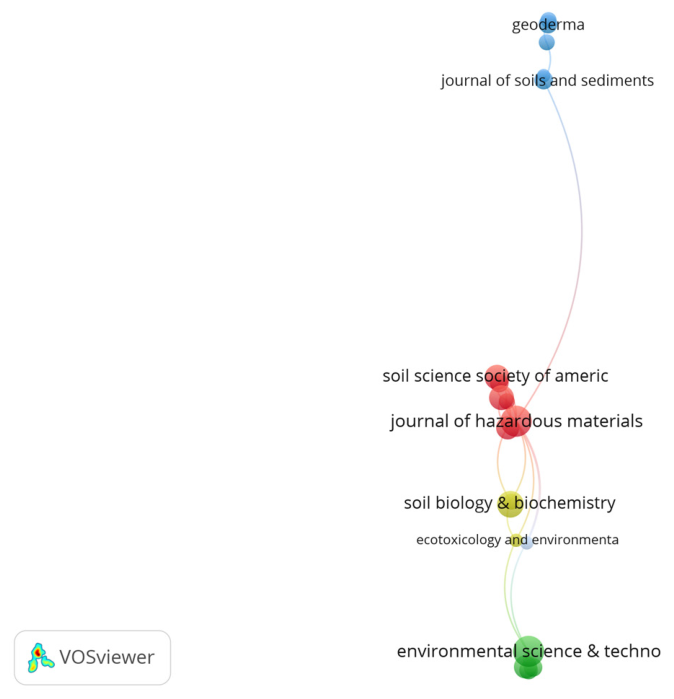
| Cur. No. | Journal | Documents | Citations | Total Link Strength |
|---|---|---|---|---|
| 1 | Journal of Hazardous Materials | 11 | 1132 | 13 |
| 2 | Environmental Science & Technology | 11 | 1582 | 7 |
| 3 | Environmental Research | 3 | 44 | 4 |
| 4 | Journal of Environmental Management | 3 | 900 | 4 |
| 5 | Sustainability | 4 | 50 | 4 |
| 6 | Applied Soil Ecology | 7 | 128 | 3 |
| 7 | Journal of Soils and Sediments | 4 | 68 | 3 |
| 8 | Geoderma | 4 | 265 | 2 |
| 9 | Environmental Pollution | 6 | 351 | 1 |
| 10 | Soil Biology & Biochemistry | 8 | 320 | 1 |
| 11 | Soil Science Society of America Journal | 7 | 237 | 1 |
| 12 | Water Research | 4 | 190 | 1 |
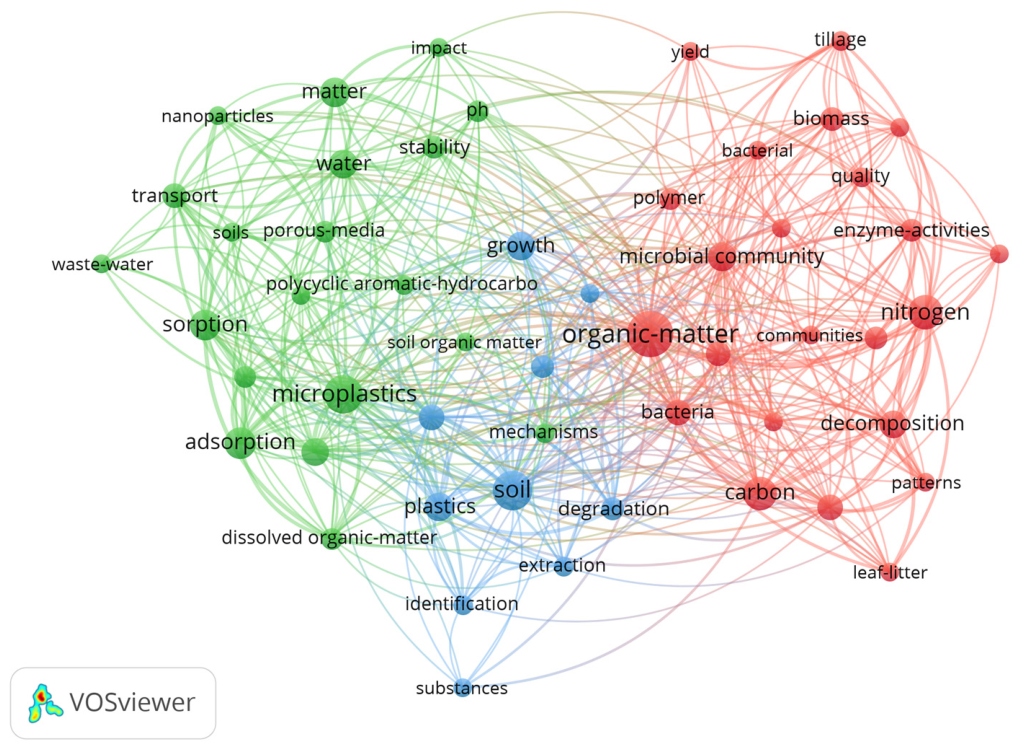
| Crt. No. | Keyword | Occurrences | Total Link Strength |
|---|---|---|---|
| 1 | organic matter | 38 | 104 |
| 2 | microplastics | 26 | 83 |
| 3 | soil | 27 | 66 |
| 4 | nitrogen | 21 | 61 |
| 5 | carbon | 20 | 55 |
| 6 | plastics | 14 | 47 |
| 7 | sorption | 16 | 46 |
| 8 | pollution | 13 | 45 |
| 9 | microbial community | 14 | 44 |
| 10 | adsorbtion | 17 | 43 |
| 11 | water | 14 | 41 |
| 12 | diversity | 12 | 40 |
| 13 | sediments | 12 | 39 |
| 14 | bacteria | 12 | 38 |
| 15 | growth | 14 | 38 |
| 16 | decomposition | 13 | 37 |
| Polymer Type | Soil System/ Environment | Main Effects on SOM & Carbon Cycling | Key Mechanisms | Representative Studies |
|---|---|---|---|---|
| Conventional microplastics (PE, PP, PET) | Agricultural soils, paddy soils, mangrove sediments | Altered CO2 emissions, disrupted SOM turnover, changes in aggregate-associated C | Physical soil structure modification; microbial habitat alteration | Zhang et al., 2019 [60]; Lin et al., 2024 [61]; Wang et al., 2024 [62]; Liu et al., 2026 [63]; Li et al., 2021 [64]; Du et al., 2025 [65]; Kumari and Chakraborty, 2024 [66]; Zhang and Zhang, 2020 [67]; Gao et al., 2021 [68]; Lu et al., 2025 [69]; Wang et al., 2024 [70] |
| Biodegradable plastics (PLA, PHB, PBAT) | Agricultural soils, controlled degradation studies | Enhanced or altered SOM mineralization; priming effects on native carbon | Microbial co-metabolism; labile carbon release | Huo et al., 2024 [71]; Shi et al., 2025 [72]; Fojt et al., 2022 [73]; Beltrán-Sanahuja et al., 2021 [74]; Sera et al., 2022 [75]; Fu and Zhou, 2021 [76]; Senko et al., 2024 [77] |
| Superabsorbent polymers/hydrogels | Arid and semi-arid soils | Increased water retention; changes in carbon dynamics and aggregation | Improved moisture availability; aggregation stabilization | Ali et al., 2021 [78]; Sroka et al., 2025 [79]; Guarda-Reyes et al., 2026 [80]; Gu and Doner, 1993 [81]; Ai et al., 2024 [82] |
| Polymer effects on microbial processes | Forest, paddy, and clay soils | Changes in microbial carbon pump, enzyme activity, SOM decomposition | Microbial community shifts; enzyme regulation | Xiao et al., 2021 [83]; Guo et al., 2021 [84]; Andreetta et al., 2013 [85]; Bottone et al., 2022 [86] |
| Polymer transport & soil structure interactions | Sandy, carbonate-rich, and porous soils | Modified transport/retention of organic carbon and contaminants | Sorption, aggregation, mineral interactions | Fan et al., 2025 [87]; Adrian et al., 2019 [88]; Kwarkye et al., 2025 [89]; Ai et al., 2024 [82]; Karnchanasest and Hawker, 2011 [90]; Bhuvaneswari et al., 2025 [91]; Breuckmann et al., 2022 [92]; Li et al., 2025 [93] |
Disclaimer/Publisher’s Note: The statements, opinions and data contained in all publications are solely those of the individual author(s) and contributor(s) and not of MDPI and/or the editor(s). MDPI and/or the editor(s) disclaim responsibility for any injury to people or property resulting from any ideas, methods, instructions or products referred to in the content. |
© 2026 by the authors. Licensee MDPI, Basel, Switzerland. This article is an open access article distributed under the terms and conditions of the Creative Commons Attribution (CC BY) license.
Share and Cite
Slepetiene, A.; Fastovetska, K.; Skersiene, A.; Ceseviciene, J.; Parasotas, I.; Belova, O.; Dinca, L.; Murariu, G. Hidden Carbon: How Polymers Influence Soil Organic Matter and Carbon Cycling. Land 2026, 15, 716. https://doi.org/10.3390/land15050716
Slepetiene A, Fastovetska K, Skersiene A, Ceseviciene J, Parasotas I, Belova O, Dinca L, Murariu G. Hidden Carbon: How Polymers Influence Soil Organic Matter and Carbon Cycling. Land. 2026; 15(5):716. https://doi.org/10.3390/land15050716
Chicago/Turabian StyleSlepetiene, Alvyra, Kateryna Fastovetska, Aida Skersiene, Jurgita Ceseviciene, Irmantas Parasotas, Olgirda Belova, Lucian Dinca, and Gabriel Murariu. 2026. "Hidden Carbon: How Polymers Influence Soil Organic Matter and Carbon Cycling" Land 15, no. 5: 716. https://doi.org/10.3390/land15050716
APA StyleSlepetiene, A., Fastovetska, K., Skersiene, A., Ceseviciene, J., Parasotas, I., Belova, O., Dinca, L., & Murariu, G. (2026). Hidden Carbon: How Polymers Influence Soil Organic Matter and Carbon Cycling. Land, 15(5), 716. https://doi.org/10.3390/land15050716