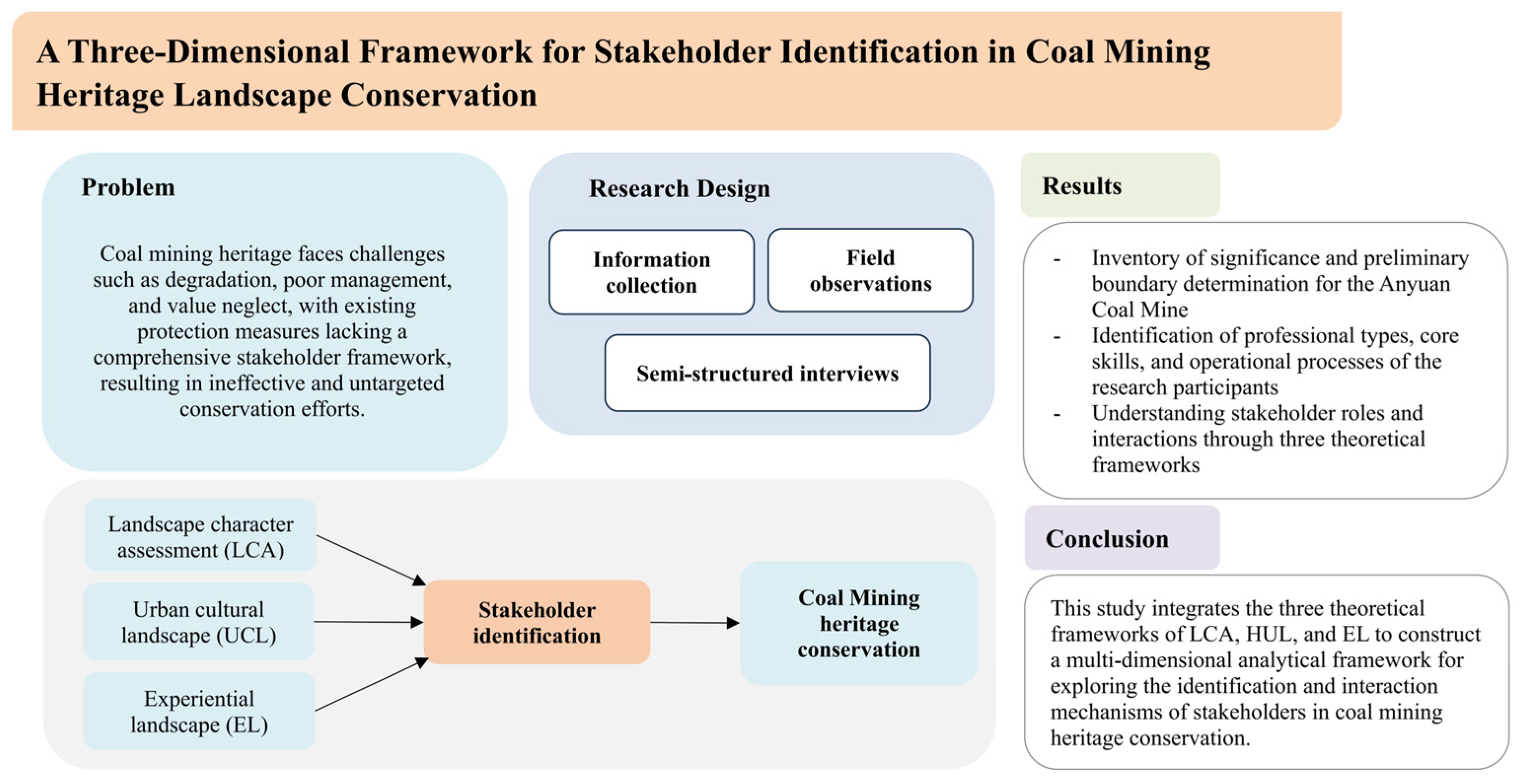
A Three-Dimensional Landscape Framework for Stakeholder Identification in Coal Mining Heritage Conservation


Abstract
1. Introduction
2. Theoretical Background
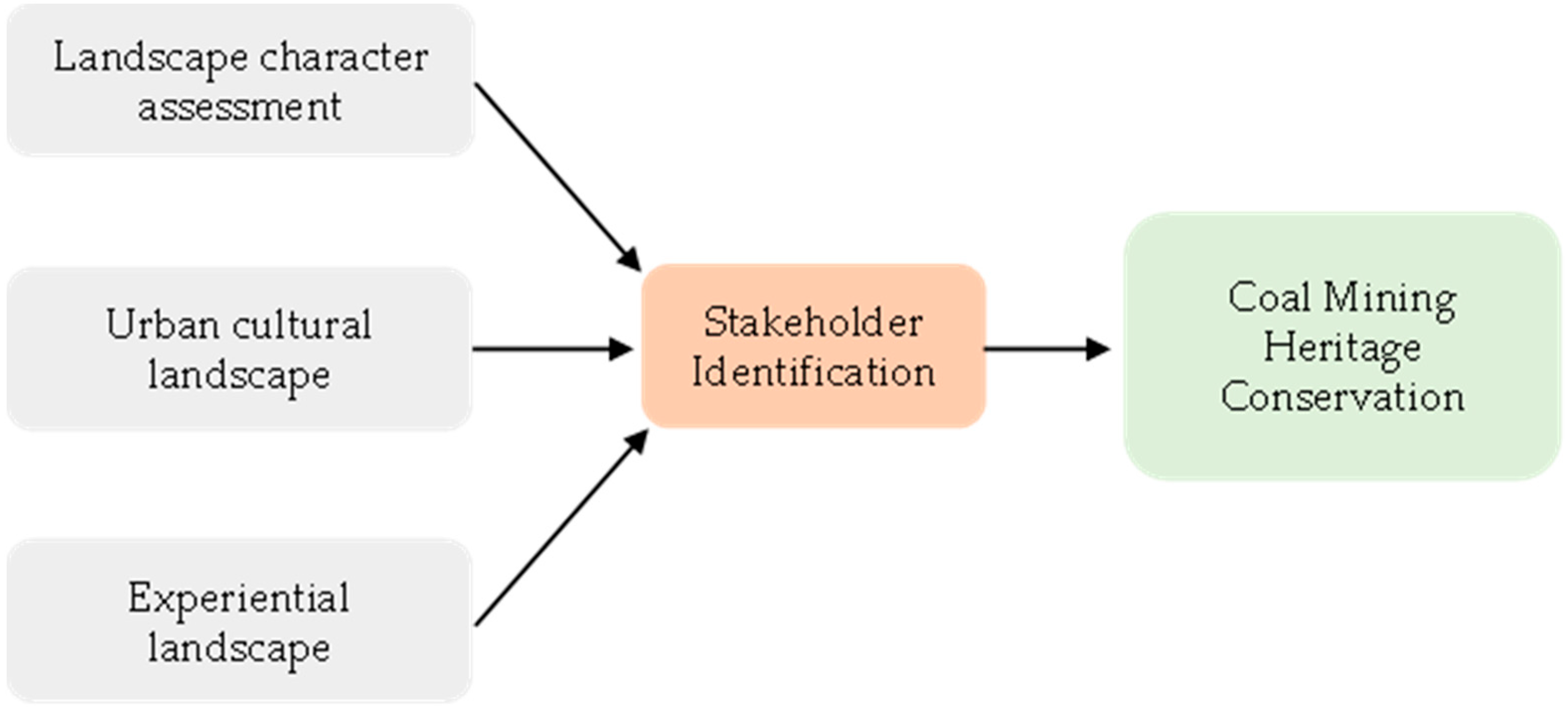
A Multidimensional Perspective on Stakeholder Identification
3. Materials and Methods
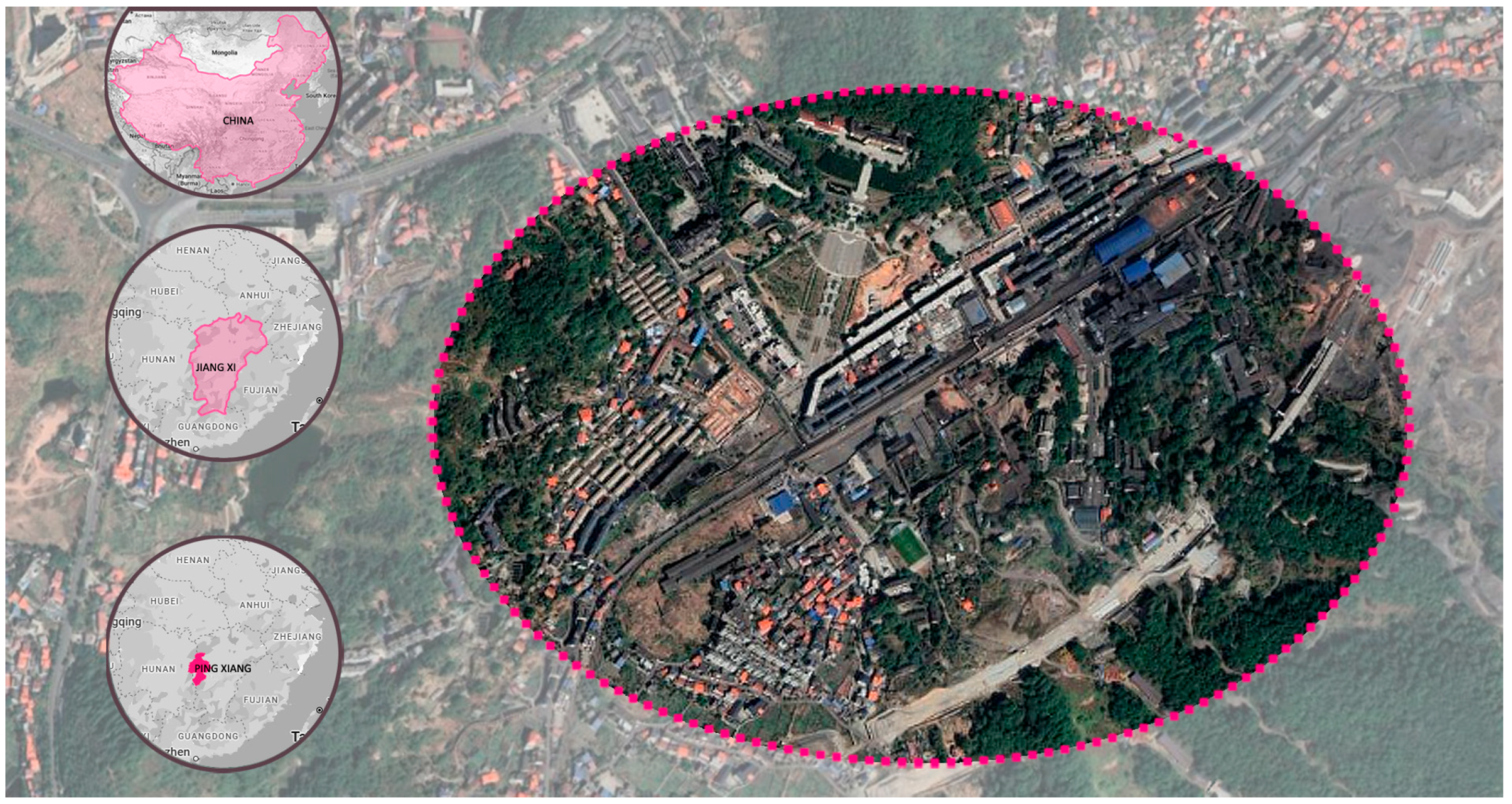
3.1. Study Area
3.2. Data Sources
3.2.1. Information Collection
3.2.2. Field Observations
3.2.3. Semi-Structured Interviews
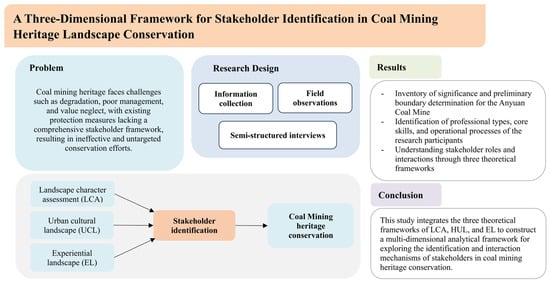
3.3. Research Design
- (1)
- Defining the preliminary boundaries
- (2)
- Identifying Key Stakeholders
- (3)
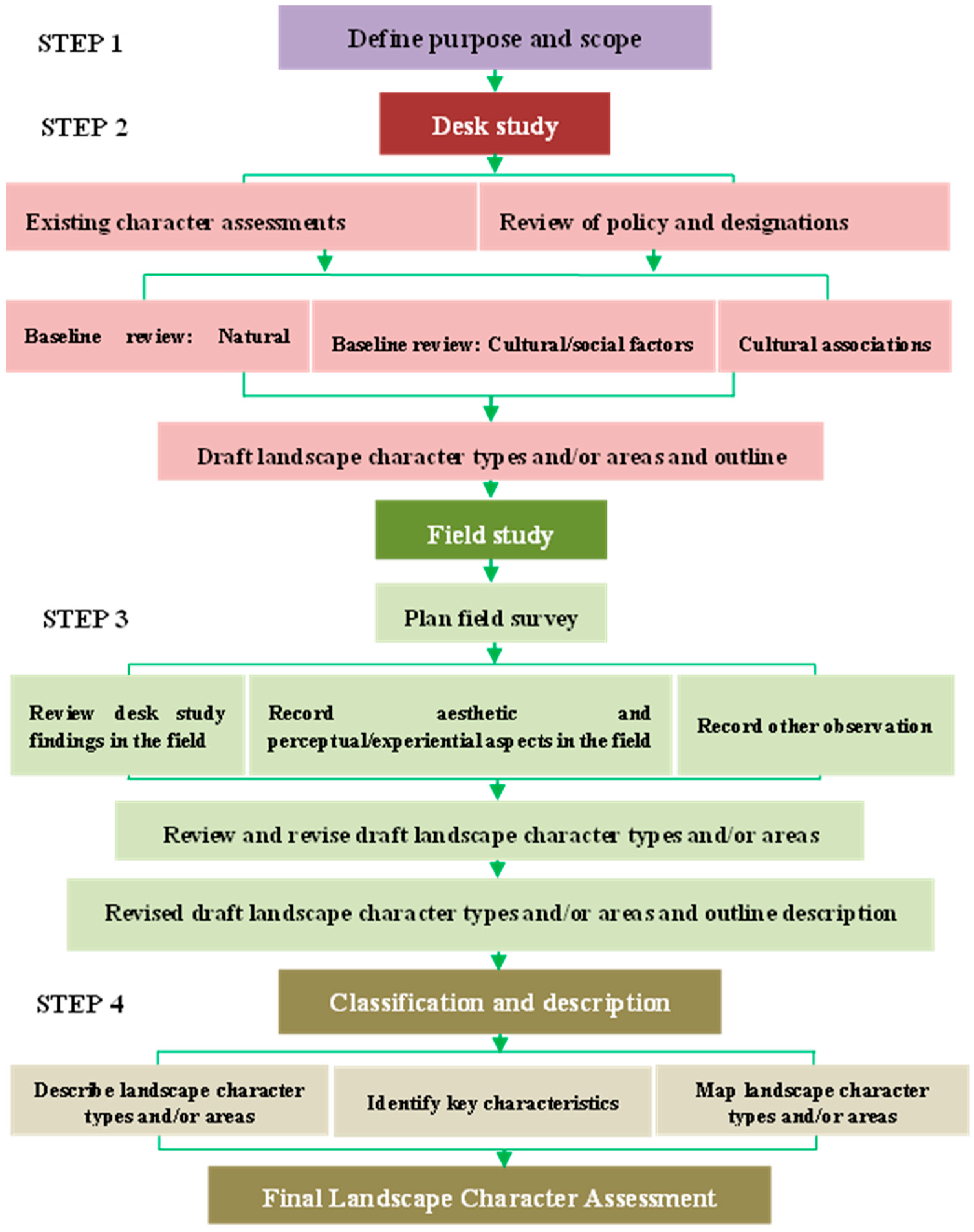
- Analytical procedure
4. Results
4.1. Inventory of Significance and Determination of the Preliminary Study Boundary for the Anyuan Coal Mine
4.1.1. Historical Evolution and Architectural Heritage of the Anyuan Coal Mine
- Initial construction phase (1898–1906):This phase marks the establishment of the core production facilities, workers’ residential areas, and office buildings of the Anyuan Coal Mine, laying the material and spatial foundations for subsequent industrial expansion. The architecture of this period combined early industrial forms with local construction techniques, reflecting the initial stage of China’s industrial modernisation in the late Qing period. These buildings not only record the development of industrial technology but also preserve traces of broader social and institutional transformation and thus constitute important material evidence of China’s early industrialisation [73,74]. Many of these early buildings still retain their original spatial layout and architectural characteristics, making them valuable for understanding the transition from a traditional to a modern industrial society.
- Rise of the workers’ movement (post-1921):Following the closure of the Hanyang Iron Works and the economic crisis after 1921, Anyuan emerged as a major site in the history of the Chinese workers’ movement. This period saw the emergence of a series of buildings and commemorative spaces associated with workers’ organisation, education, and revolutionary mobilisation, including the Workers’ Club, consumer cooperatives, conference buildings, and monuments. These spaces not only accommodated collective activities and social mobilisation but also marked the awakening of workers’ political consciousness and the practice of social reform [75,76]. At the material level, these heritage buildings reflect the historical process through which the working class fought for rights and participated in politics. At the cultural level, they contributed to the construction of collective memory and local working-class identity and became an integral part of Chinese revolutionary culture [16,77].
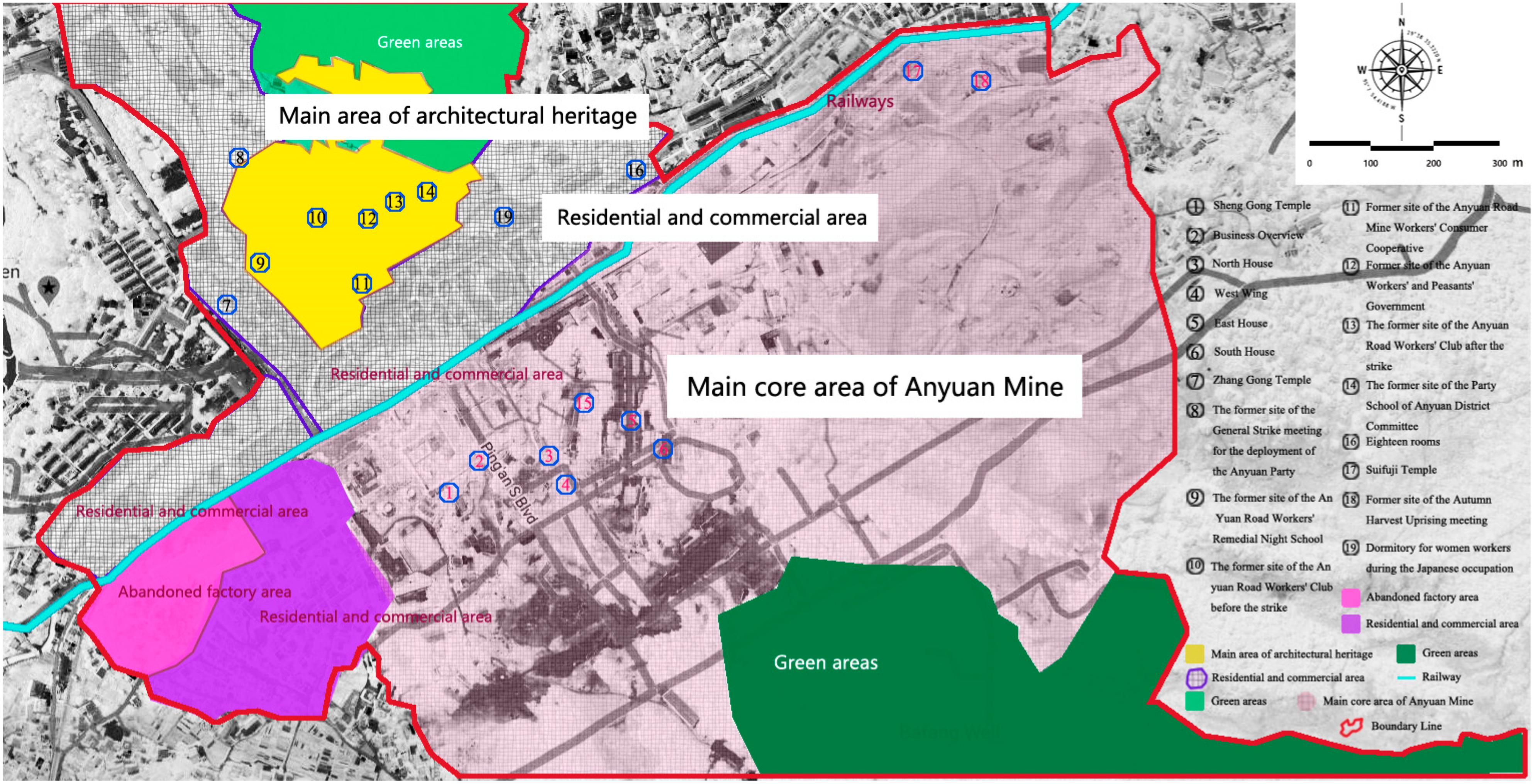
4.1.2. Preliminary Study Boundary of the Anyuan Coal Mine
4.1.3. Landscape Characterisation: Natural and Cultural Dimensions
4.2. Identification of Stakeholder Types, Core Competencies, and Roles
4.2.1. Stakeholder Categories
- (1)
- Mine conservation specialists
- (2)
- Community stakeholders
- (3)
- Experiential landscape stakeholders
4.2.2. Participant Selection and Role Analysis
4.3. Understanding Stakeholder Roles and Interactions Through Three Theoretical Frameworks
4.3.1. Stakeholder Roles in the Material Dimension: An LCA-Based Analysis
4.3.2. Stakeholder Roles in the Socio-Cultural Dimension: An HUL-Based Analysis
4.3.3. Stakeholder Roles in the Experiential Dimension: An EL-Based Analysis
4.3.4. Summary of Stakeholder Roles Across the Three Dimensions
5. Discussion
5.1. Theoretical Implications of the Integrated Three-Dimensional Framework
5.2. Practical Implications for Coal Mining Heritage Governance
5.3. Limitations and Future Research
6. Conclusions
Author Contributions
Funding
Institutional Review Board Statement
Data Availability Statement
Acknowledgments
Conflicts of Interest
Abbreviations
| HUL | Historic Urban Landscape |
| EL | Experiential Landscape |
| LCA | Landscape Character Assessment |
References
- Wu, X.; Yu, L.; Fang, H.; Wu, J. Research on the protection and reuse of industrial heritage from the perspective of public participation—A case study of northern mining area of Pingdingshan, China. Land 2021, 11, 16. [Google Scholar] [CrossRef]
- Berta, M.; Bottero, M.; Ferretti, V. A mixed methods approach for the integration of urban design and economic evaluation: Industrial heritage and urban regeneration in China. Environ. Plan. B Urban Anal. City Sci. 2018, 45, 208–232. [Google Scholar] [CrossRef]
- Xu, H.; Long, Y. Research on the protection and renewal of industrial heritage in Wuhan against the backdrop of rapid urbanization. In Proceedings of the 2017 6th International Conference on Energy and Environmental Protection (ICEEP 2017), Zhuhai, China, 29–30 June 2017; Atlantis Press: Dordrecht, The Netherlands, 2017; pp. 656–659. [Google Scholar]
- Liu, Q.; Zainal Abidin, N.A.; Maliki, N.Z.; Zhang, K.; Li, Z.; Liu, S. Landscape Character Assessment (LCA) in Historic Coal Mining Settings for Landscape Conservation: A Systematic Review. Land 2024, 13, 1396. [Google Scholar] [CrossRef]
- Lin, C.H.; Wang, W.C.; Nyaupane, G.P. The intersection of landscape values for tourists and residents in a mining heritage destination: A case study of Jiufen in Taiwan. Int. J. Herit. Stud. 2024, 30, 298–317. [Google Scholar] [CrossRef]
- Qi, L.; Abidin, N.A.Z.; Maliki, N.Z.; Sha, L. Exploring landscape character assessment opportunities as a main approach for strengthening sustainability landscape conservation strategy for industrial heritage landscape settings. In IOP Conference Series: Earth and Environmental Science; IOP Publishing: Bristol, UK, 2024; Volume 1394, p. 012011. [Google Scholar]
- Guo, S.; Yang, S.; Liu, C. Mining heritage reuse risks: A systematic review. Sustainability 2024, 16, 4048. [Google Scholar] [CrossRef]
- Varriale, R.; Aldighieri, B.; Genovese, L. Dismissed Mines: From the Past to the Future. Heritage 2023, 6, 2152–2185. [Google Scholar] [CrossRef]
- Brown, M.; Shackel, P. Anthracite memories: Semantic tagging and coal mining oral histories. Int. J. Herit. Stud. 2023, 29, 1178–1194. [Google Scholar] [CrossRef]
- Szewczyk-Świątek, A. Sustainable Transformation of Post-Mining Areas: Discreet Alliance of Stakeholders in Influencing the Public Perception of Heavy Industry in Germany and Poland. Sustainability 2025, 17, 8567. [Google Scholar] [CrossRef]
- Pasqualetti, M.J.; Frantál, B. The evolving energy landscapes of coal: Windows on the past and influences on the future. Morav. Geogr. Rep. 2022, 30, 228–236. [Google Scholar] [CrossRef]
- Pijet-Migoń, E.; Migoń, P. New geo-and mining heritage-based tourist destinations in the Sudetes (SW Poland)—Towards more effective resilience of local communities. Sustainability 2024, 16, 5626. [Google Scholar] [CrossRef]
- Liang, D. Classification and Evaluation of Mining Relics in China. Ph.D. Thesis, China University of Geosciences, Beijing, China, 2017. Intellectual Property. Available online: https://kns.cnki.net/kcms2/article/abstract?v=m07J8nP_wCHu0mvIhzLXboZCYN49T0aHZyE5eSEQLsfuj6gLMXJ2RC6Ri2YejpVxIGH-ihejr_iseLvAEZH3G0PDtTBMgL7zSjKmodHuEy773Gz3YvXfCn8VRawT6WgS0B5ew5TbyEg-gpB8oWJfehGt6Bk6IIAHp1HzlLo-_ItWI3Xwq73VFkSWQY2bPCYu&uniplatform=NZKPT&language=CHS (accessed on 18 January 2022).
- Meng, L.; Lin, B.G.; Zhang, H.Z.; Bu, R. Sustainable Development Evaluation on the Landscape Design of Industrial Heritage Park: A Case Study of Tao Sichuan, China. J. Environ. Public Health 2023, 2023, 1564614. [Google Scholar] [CrossRef] [PubMed]
- Nicu, I.C.; Stalsberg, K.; Rubensdotter, L.; Martens, V.V.; Flyen, A.C. Coastal erosion affecting cultural heritage in Svalbard. A case study in Hiorthhamn (Adventfjorden)—An abandoned mining settlement. Sustainability 2020, 12, 2306. [Google Scholar] [CrossRef]
- Qian, Z. Heritage conservation as a territorialised urban strategy: Conservative reuse of socialist industrial heritage in China. Int. J. Herit. Stud. 2023, 29, 63–80. [Google Scholar] [CrossRef]
- Magaz-molina, J.; Layuno Rosas, Á.; Faria, J. The fade of fossil fuel power stations in Southwestern Europe: Industrial built heritage considerations on climate change policies. Built Herit. 2025, 9, 18. [Google Scholar] [CrossRef]
- Biddau, F.; Rizzoli, V.; Cottone, P.; Sarrica, M. These industries have polluted consciences; we are unable to envision change: Sense of place and lock-in mechanisms in Sulcis coal and carbon-intensive region, Italy. Glob. Environ. Change 2024, 86, 102850. [Google Scholar] [CrossRef]
- Ministry of Culture and Tourism; State Administration of Cultural Heritage. On Learning and Implementing General Secretary Xi Jinping’s Important Speech at the 39th Collective Study Session of the Political Bureau of the Central Committee of the Communist Party of China (CPC) Notice on the Important Speech of Xi Jinping, General Secretary of the Political Bureau of the Central Committee of the Communist Party of China; Ministry of Culture and Tourism of The People’s Republic of China: Beijing, China, 2022. Available online: https://www.mct.gov.cn/whzx/whyw/202206/t20220602_933335.htm (accessed on 11 January 2023).
- Cao, Y.; Yang, J.P.; Wang, Y.; Zhang, N. Preservation and reuse of mining heritage based on community renewal—The case of Jiaozuo Zhongfu Mining Heritage. Ind. Build. 2022, 52, 52–58. [Google Scholar] [CrossRef]
- Gao, M.; Tian, Y. Construction of Public Participation Cloud Platform for industrial heritage protection under the background of smart city. In Proceedings of the 2020 International Conference on Artificial Intelligence and Computer Engineering (ICAICE), Beijing, China, 23–25 October 2020; IEEE: New York, NY, USA, 2020; pp. 124–129. [Google Scholar]
- Yang, X.S.; Xu, H.; Wall, G. Creative destruction: The commodification of industrial heritage in Nanfeng Kiln District, China. In Tourism Places in Asia; Routledge: Oxfordshire, UK, 2021; pp. 54–77. [Google Scholar]
- Andrade, M.J.; Jiménez-Morales, E.; Rodríguez-Ramos, R.; Martínez-Ramírez, P. Reuse of port industrial heritage in tourist cities: Shipyards as case studies. Front. Archit. Res. 2024, 13, 164–183. [Google Scholar] [CrossRef]
- Anyuan Memorial Hall. Wall Text Displayed in the Exhibition Building of the Anyuan Memorial Hall; Museum Exhibition Text; Anyuan Memorial Hall: Pingxiang, China, 2024. [Google Scholar]
- Huq, S.A.; Puthuvayi, B. Stakeholders’ satisfaction assessment in heritage conservation: Case study of a project performance model for Thiruvananthapuram Fort Area, Kerala, India. Front. Archit. Res. 2024, 13, 285–304. [Google Scholar] [CrossRef]
- Zhang, S.; He, X.; Zhang, A.; Sun, J.; Li, Z. Research on the Influence Mechanism of Heritage Value Perception and Place Identity on Heritage Responsibility Behavior—A Case Study of the Shaanxi Section of Baocheng Railway Industrial Heritage. Land 2025, 14, 1804. [Google Scholar] [CrossRef]
- Hasan, M.H.; Chowdhury, M.A.; Wakil, M.A. Community engagement and public education in northwestern part of Bangladesh: A study regarding heritage conservation. Heliyon 2022, 8, e09005. [Google Scholar] [CrossRef]
- Mukherjee, A.; Banerji, H. Disparities in expert and community perceptions of industrial heritage and implications for urban well-being in West Bengal, India. npj Herit. Sci. 2025, 13, 44. [Google Scholar] [CrossRef]
- Dale, V.H.; Kline, K.L.; Parish, E.S.; Eichler, S.E. Engaging stakeholders to assess landscape sustainability. Landsc. Ecol. 2019, 34, 1199–1218. [Google Scholar] [CrossRef]
- Urban Planning Society of China. Guidelines for the Compilation of Conservation and Utilization Planning of Industrial Heritage in Old Industrial Areas (T/UPSC 0009-2021); Urban Planning Society of China: Beijing, China, 2021; Available online: https://www.planning.org.cn/news/uploads/2021/12/61cc08f720901_1640761591.pdf (accessed on 18 May 2022).
- Ostręga, A.; Cała, M. Assessing the value of landscape shaped by the mining industry–a case study of the town of Rydułtowy, Poland. Arch. Min. Sci. 2020, 65, 3–18. [Google Scholar]
- Ren, S.; Chen, X. Emotional and semantic analysis of landscape elements in heritage parks: Insights from social media data on visitor perception. Built Herit. 2025, 9, 32. [Google Scholar] [CrossRef]
- Wang, R.; Liu, G.; Zhou, J.; Wang, J. Identifying the critical stakeholders for the sustainable development of architectural heritage of tourism: From the perspective of China. Sustainability 2019, 11, 1671. [Google Scholar] [CrossRef]
- Jelen, J. Mining heritage and mining landscape Krušnohoří/Erzgebirge as a part of the UNESCO Heritage. Land 2022, 11, 955. [Google Scholar] [CrossRef]
- Terkenli, T.S.; Gkoltsiou, A.; Kavroudakis, D. The interplay of objectivity and subjectivity in landscape character assessment: Qualitative and quantitative approaches and challenges. Land 2021, 10, 53. [Google Scholar] [CrossRef]
- Wang, Y.; Yang, D.; Lu, Y.; Gao, C. A character-based conceptual framework to integrate landscape services into landscape planning. Landsc. Res. 2025, 50, 1222–1238. [Google Scholar] [CrossRef]
- Gkoltsiou, A.; Paraskevopoulou, A. Landscape character assessment, perception surveys of stakeholders and SWOT analysis: A holistic approach to historical public park management. J. Outdoor Recreat. Tour. 2021, 35, 100418. [Google Scholar] [CrossRef]
- Tudor, C. An approach to landscape character assessment. Nat. Engl. 2014, 65, 101716. [Google Scholar]
- Bandarin, F.; Van Oers, R. (Eds.) Reconnecting the City: The Historic Urban Landscape Approach and the Future of Urban Heritage; John Wiley & Sons: Hoboken, NJ, USA, 2014. [Google Scholar]
- UNESCO. Recommendation on the Historic Urban Landscape; United Nations Educational, Scientific and Cultural Organization: Paris, France, 2011. [Google Scholar]
- Rey-Pérez, J.; Pereira Roders, A. Historic urban landscape: A systematic review, eight years after the adoption of the HUL approach. J. Cult. Herit. Manag. Sustain. Dev. 2020, 10, 233–258. [Google Scholar] [CrossRef]
- Yu, R.Q.; Xu, H.; Wang, J.Y.; Zhou, L. Study on Industry Building Heritage of Mining Industry in Jiangxi Province—Take Pingxiang Anyuan Coal Mine as a Example. Archit. Cult. 2020, 8, 140–142. [Google Scholar]
- Jiang, J.; Zhou, T.; Han, Y.; Ikebe, K. Urban heritage conservation and modern urban development from the perspective of the historic urban landscape approach: A case study of Suzhou. Land 2022, 11, 1251. [Google Scholar] [CrossRef]
- Ginzarly, M.; Houbart, C.; Teller, J. The Historic Urban Landscape approach to urban management: A systematic review. Int. J. Herit. Stud. 2019, 25, 999–1019. [Google Scholar] [CrossRef]
- Thwaites, K.; Simkins, I. Experiential Landscape: An Approach to People, Place and Space; Routledge: Oxfordshire, UK, 2006. [Google Scholar]
- Li, J.; Luo, J.; Deng, T.; Tian, J.; Wang, H. Exploring perceived restoration, landscape perception, and place attachment in historical districts: Insights from diverse visitors. Front. Psychol. 2023, 14, 1156207. [Google Scholar] [CrossRef]
- Ireland, T.; Brown, S.; Bagnall, K.; Lydon, J.; Sherratt, T.; Veale, S. Engaging the everyday: The concept and practice of ‘everyday heritage’. Int. J. Herit. Stud. 2025, 31, 192–215. [Google Scholar] [CrossRef]
- Riska, M.; Mariana, Y.; Himmayani, V. Horticultural exhibition with experiential landscape approach in mekarsari tourism Park. AIP Conf. Proc. 2023, 2594, 040002. [Google Scholar] [CrossRef]
- Tenzer, M. Social landscape characterisation: A people-centred, place-based approach to inclusive and transparent heritage and landscape management. Int. J. Herit. Stud. 2024, 30, 269–284. [Google Scholar] [CrossRef]
- Pingxiang City Records Compilation Committee. Pingxiang Prefecture Level City in Jiangxi, 1st ed.; Office of the Local Records Compilation Committee of Jiangxi Province: Nanchang, China, 1996; Available online: https://xianzhi8.com/product.php?id=1526 (accessed on 13 March 2022).
- Luo, Y.; Peng, X. The Development Path of Industrialisation in Modern Industrial and Mining Cities and Its Implications—Taking Ping Xiang City as an Example. Ping Xiang Coll. J. 2019, 2, 15–18. [Google Scholar]
- Rhodes, M.A., II; Hannum, K.L. UNESCO, mining heritage and the scalar sustainability of tourism geographies at industrial World Heritage Sites. J. Tour. Futures 2024. Epub ahead of printing. [Google Scholar] [CrossRef]
- Zainal Abidin, N.A. Assessing the Landscape Character of Malaysia’s Heritage Urban River Corridors. Ph.D. Thesis, Queensland University of Technology, Brisbane, QLD, Australia, 2017. [Google Scholar]
- Corner, J. Recovering Landscape: Essays in Contemporary Landscape Theory; Princeton Architectural Press: Cambridge, MA, USA, 1999. [Google Scholar]
- Herrington, S. A phenomenological method for the landscape studio. In Teaching Landscape; Routledge: Oxfordshire, UK, 2019; pp. 80–94. [Google Scholar]
- Han, S.; Song, D.; Xu, L.; Ye, Y.; Yan, S.; Shi, F.; Zhang, Y.; Liu, X.; Du, H. Behaviour in public open spaces: A systematic review of studies with quantitative research methods. Build. Environ. 2022, 223, 109444. [Google Scholar] [CrossRef]
- Liu, S.; Zhu, Z.; Gao, Y.; Wang, S. Assessing the dynamic vitality of public spaces in tourism-oriented traditional villages: A collaborative active perception method. Herit. Sci. 2024, 12, 346. [Google Scholar] [CrossRef]
- Pistone, I.; Acierno, A.; Pagliano, A. Phygital Enjoyment of the Landscape: Walkability and Digital Valorisation of the Phlegraean Fields. Sustainability 2025, 17, 10729. [Google Scholar] [CrossRef]
- DeWalt, K.M.; DeWalt, B.R. Participant Observation A Guide for Fieldworkers, 2nd ed.; Library of Congress Cataloging: Washington, DC, USA, 2007.
- Vidich, A.J.; Shapiro, G. A comparison of participant observation and survey data. Am. Sociol. Rev. 1955, 20, 28–33. [Google Scholar] [CrossRef]
- Bideau, F.G.; Deng, H.; Roux, H. Dominant discourses framing the reuse of industrial heritage in the context of mega-events: A relationship matrix approach. Built Herit. 2024, 8, 45. [Google Scholar] [CrossRef]
- Rubin, H.J.; Rubin, I.S. Qualitative Interviewing: The Art of Hearing Data; SAGE Publications, Inc.: Thousand Oaks, CA, USA, 2011. [Google Scholar]
- Nag, A. From mine reclamation to geo-heritage tourism: Assessing stakeholder perceptions and sustainable practices at barr conglomerate, Pali, Rajasthan, India. Discov. Sustain. 2025, 6, 1041. [Google Scholar] [CrossRef]
- Falk, M.T.; Hagsten, E. Intangible Cultural Heritage differently exposed across continents. npj Herit. Sci. 2025, 13, 600. [Google Scholar] [CrossRef]
- Law, J.; Ong, J.W.; Aziz, K.A. Cultural heritage safeguarding through social entrepreneurship: A case study analysis in George Town UNESCO World heritage site, Malaysia. Cogent Bus. Manag. 2024, 11, 2347964. [Google Scholar] [CrossRef]
- Radzuan, A.W.; Osman, N.I.M.; Mohd Norazman, M.S.; MohdShaari, S.N.D. Community-driven approaches to safeguarding intangible cultural heritage of Malaysia. J. Tour. Hosp. Environ. Manag. 2024, 9, 94–103. [Google Scholar] [CrossRef]
- Basyar, M.R.; Mardiyanta, A.; Setijaningrum, E. Multi-stakeholder analysis in building tourism resilience: Collaborative governance implementation in the Majapahit house heritage area, Indonesia. Tour. Hosp. 2025, 6, 5. [Google Scholar] [CrossRef]
- Liorančaitė-Šukienė, A.; Jurėnienė, V. Heritage Management Models for Sustainable Community Tourism Development. Tour. Hosp. 2025, 6, 111. [Google Scholar] [CrossRef]
- Mandić, A.; Séraphin, H.; Vuković, M. Engaging stakeholders in cultural tourism Living Labs: A pathway to innovation, sustainability, and resilience. Technol. Soc. 2024, 79, 102742. [Google Scholar] [CrossRef]
- White, E.; Adu-Ampong, E.A. In the potter’s hand: Tourism and the everyday practices of authentic intangible cultural heritage in a pottery village. J. Herit. Tour. 2024, 19, 781–800. [Google Scholar] [CrossRef]
- Patton, M.Q. Qualitative Research & Evaluation Methods; SAGE Publications, Inc.: Thousand Oaks, CA, USA, 2002. [Google Scholar]
- Duaja, M.D.; Januardi, K. Implementing new-era conservation strategies for heritage sites. Int. J. Fin. Banking Stud. 2025, 14, 177–185. [Google Scholar]
- Sun, B.; Ikebe, K. Characteristics of heritage of industrial modernization and urban spatial distribution in Shenyang, China. J. Asian Archit. Build. Eng. 2023, 22, 1823–1840. [Google Scholar] [CrossRef]
- Wang, C.; Chen, G.; Liang, Y. Spatiotemporal evolution and influencing factors of urban industry in modern China (1840–1949): A case study of Nanjing. ISPRS Int. J. Geo-Inf. 2024, 13, 144. [Google Scholar] [CrossRef]
- Ai, J.; Kim, M. Spatial Remodeling of Industrial Heritage from the Perspective of Urban Renewal: A Case Study of Coal Mine Site in Jiaozuo City. Land 2024, 13, 1901. [Google Scholar] [CrossRef]
- Gillette, M.B.; Boyd, E. Mining for tourists in China: A digital ethnography of user-generated content from coal mining heritage parks. J. Herit. Tour. 2024, 19, 1–19. [Google Scholar] [CrossRef]
- Li, X.Y.; Duan, Y.P. Research on the renewal strategy of industrial heritage based on the theory of “place-event”: Take Anyuan Coal Mine as an example. Contemp. Archit. 2021, 4, 102–105. [Google Scholar]
- Tian, Y. Research on the Industrial Heritage of Han Ye Ping in the Perspective of Cultural Routes. Ph.D. Thesis, Wuhan University of Technology, Wuhan, China, 2009. Available online: https://kns.cnki.net/kcms2/article/abstract?v=m07J8nP_wCHJSE_PKRi-Sb8QL5BSmvqwrOZp8n2UGOxCgeYKuEby8II70YgmblfbrcygLPkxFtFkBGwzJV3GdNQAT6cXUYBOvjQgNxFsHMFnUvUcL8MBInLzLIQpvMsN3stEeDzz1dQsX6KtrIcUY6lBQbvgn2CWqSxFjKh94hzEBe-fauRM0A==&uniplatform=NZKPT&language=CHS (accessed on 17 July 2022).
- Sun, Q.Y.; Zhang, Y.J. Landscape character identification and its value assessment in natural areas: A case study of Qinghai Lake Basin. Chin. Landsc. Archit. 2020, 36, 76–81. [Google Scholar]
- Zhang, T.; Wang, L.; Zang, K. Research on the Accumulation Process and Value of Zhongshan Road Block in Xiamen from the Perspective of Urban Historical Landscape. Geogr. Sci. Res. 2025, 14, 797. [Google Scholar]
- Zhang, M. The state-led approach to industrial heritage in China’s mega-events: Capital accumulation, urban regeneration, and heritage preservation. Built Herit. 2024, 8, 30. [Google Scholar] [CrossRef]
- Sari, K.E.; Sukesi, K. The Development of HUL (Historic Urban Landscape) concept for community based conservation in Surabaya City. Jt. J. Nov. Carbon Resour. Sci. Green Asia Strategy 2024, 11, 1125–1135. [Google Scholar]



| Buildings Before 1921 | Buildings After 1921 |
|---|---|
|
|
|
|
|
|
|
|
|
|
|
|
|
|
|
|
| |
|
| Characters | No | Landscape Character Areas and Types | ||
|---|---|---|---|---|
| Natural—Rural—Semi-Natural | Geological remains | 1 | Anyuan coal mine area |  |
| Ecological landscape | 2 | Undulating sand dune forest | ||
| Scenic landscape | 3 | Undulating scenic planting |  | |
| Abandoned factory landscape | 4 | Flat Abandoned Factory Park Recreation Area |  | |
| Characters | No | Coal Mining Heritage | Built Time | Type | ||
|---|---|---|---|---|---|---|
| Cultural Landscapes | Heritage Settlement | 5 | Zhanggong Temple | 1906 | Municipal Cultural Relics Protection Unit |  |
| 6 | The former site of the general strike meeting for the Anyuan party deployment | 1922 | No | |||
| 8 | The former site of the Anyuan road workers’ club before the strike | 1922 | No | |||
| 9 | The former site of the Anyuan road Mine Worker’ Consumer cooperative | 1922 | No | |||
| 10 | The former site of the Anyuan Workers’ and Peasants’ Government | 1930 | No | |||
| 11 | Site of Negotiation for Anyuan Rails and Mine Workers’ Strike- Gongwu Zonghui | 1906 | 1906 | 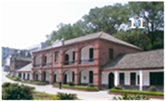 | ||
| 12 | The former site of the Anyuan Workers’ Club after the strike | 1924 | No | 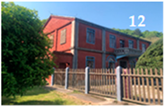 | ||
| 14 | Senggong Temple | 1898 | Provincial Important Cultural Heritage Unit |  | ||
| Main Core Settlement of Anyuan Coal Mining | 15 | North House | 1980s | No |  | |
| 16 | West House | 1980s | No |  | ||
| 17 | East House | 1980s | No |  | ||
| 18 | South House | 1980s | No | |||
| 19 | Suifeji Temple | 1900 | District level conservation unit | |||
| 20 | Former site of the Autumn-Harvest Uprising meeting | 1927 | No | 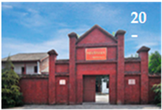 | ||
| 21 | Zongping Lane | 1989 | Provincial Important Cultural Heritage Unit |  | ||
| 22 | Anyuan electric power station | 1987 | Municipal Cultural Relics Protection Unit |  | ||
| Abandoned factory | 23 | Side urban Settlement | Municipal Cultural Relics Protection Unit | |||
| Regular Settlement | 24 | Flat Medium density Settlement Area | ||||
| 25 | Medium density and Dilapidated settlement areas on slightly rugged land | |||||
| 26 | Flat Commercial and Settlement Area |  | ||||
| Comm-Settle Railway track | 27 | Old green train railway track |  | |||
| Type of Occupation | Outstanding Project | Involvements |
|---|---|---|
| Architect engineer | ‘The Pingxiang Anyuan Mining Area Historical and Cultural Heritage Enhancement and Restoration Project’ | Participate in the project’s overall planning and design, supervise construction, and contribute to post-construction maintenance and support. |
| Landscape engineer | ‘The Pingxiang Anyuan Mining Area Historical and Cultural Heritage Enhancement and Restoration Project’ | Participate in the project’s overall planning and design, supervise construction, and contribute to post-construction maintenance and support. |
| Environmental protection engineer | ‘The Pingxiang Anyuan Mining Area Historical and Cultural Heritage Enhancement and Restoration Project’ | Participate in the project’s development action plan and construction monitoring and continue to contribute to post-completion maintenance and protection. |
| Occupation | Responsibilities | Skills and Insightful Knowledge Essential for This Research | Key Operational Tasks |
|---|---|---|---|
| Architect Engineer | Participate in identifying and solving heritage site issues and provide decision-making support. | Identify site issues, develop solutions, and enhance site opportunities. | Conduct regular site visits, perform on-site inspections, and provide decision-making support. |
| Landscape Engineer | Participate in heritage sites’ planning and design and support the decision-making process. | Address site-related issues and enhance site opportunities. | Participate in design and planning, conduct on-site inspections, and support preservation efforts. |
| Environmental Protection Engineer | Participate in the development and supervision of environmental protection measures. | Identify and solve environmental protection issues and promote environmental protection measures. | Participate in environmental action plan development and monitoring and ensure their implementation. |
| Heritage lecturer | Explain the coal mining heritage’s historical and cultural background and provide interpretive services. | Gain in-depth knowledge of the coal mining history, specialise in interpreting significant sites, and promote public awareness and understanding. | Interpret historical events, provide heritage knowledge, and ensure that the public understands cultural preservation strategies. |
| Mine technical manager | Understand the coal mining production process, industry supply chain, equipment, and technology, and be familiar with the construction of the mining area, disaster events, and worker organisations. | Be familiar with the mining areas’ processes, technology, and equipment and knowledgeable about the historical background, culture, and modern development. | Track construction and cultural and disaster events; visit designated locations; collect, organise, and process data. |
| Community manager | Understand the local community’s culture and activities and be familiar with the recent community organisations and their impacts. | Understand community culture and activities and their role in landscape preservation. | Track cultural activities, visit designated locations, collect data, and participate in community events. |
| Worker | Understand the coal mining production process, industry supply chain, equipment, and technology and be familiar with the construction of the mining area, disaster events, and worker organisations. | Be familiar with the technology and equipment in the mining area’s work environment and understand its historical and cultural background. | Track construction, cultural, and disaster events, visit designated locations, collect data, and participate in daily work. |
| Inhabitant | Understand the local community’s culture and activities and be familiar with recent event organisation and its impacts. | Understand community culture and activities and provide clues and information related to landscape preservation. | Track cultural activities, visit designated locations, collect data, and participate in local events. |
| Experience | Age | Sex | Nationality | Locality Status | |
|---|---|---|---|---|---|
| Architect Engineer | 13 years | 42 years old | Male | China | Local indigenous |
| Landscape Engineer | 12 years | 42 years old | Male | China | Local indigenous |
| Environmental Protection Engineer | 12 years | 42 years old | Male | China | Local indigenous |
| Heritage lecturer | 5 years | 35 years old | Female | China | Local indigenous |
| Mine technical manager | 25 years | 53 years old | Male | China | Local indigenous |
| Community manager | 11 years | 58 years old | Female | China | Local indigenous |
| Worker | 21 years | 46 years old | Male | China | Local indigenous |
| Inhabitant | 59 years | 59 years old | Male | China | Local indigenous |
Disclaimer/Publisher’s Note: The statements, opinions and data contained in all publications are solely those of the individual author(s) and contributor(s) and not of MDPI and/or the editor(s). MDPI and/or the editor(s) disclaim responsibility for any injury to people or property resulting from any ideas, methods, instructions or products referred to in the content. |
© 2026 by the authors. Licensee MDPI, Basel, Switzerland. This article is an open access article distributed under the terms and conditions of the Creative Commons Attribution (CC BY) license.
Share and Cite
Liu, Q.; Abidin, N.A.Z.; Maliki, N.Z.; Ge, W. A Three-Dimensional Landscape Framework for Stakeholder Identification in Coal Mining Heritage Conservation. Land 2026, 15, 622. https://doi.org/10.3390/land15040622
Liu Q, Abidin NAZ, Maliki NZ, Ge W. A Three-Dimensional Landscape Framework for Stakeholder Identification in Coal Mining Heritage Conservation. Land. 2026; 15(4):622. https://doi.org/10.3390/land15040622
Chicago/Turabian StyleLiu, Qi, Nor Arbina Zainal Abidin, Nor Zarifah Maliki, and Wanbao Ge. 2026. "A Three-Dimensional Landscape Framework for Stakeholder Identification in Coal Mining Heritage Conservation" Land 15, no. 4: 622. https://doi.org/10.3390/land15040622
APA StyleLiu, Q., Abidin, N. A. Z., Maliki, N. Z., & Ge, W. (2026). A Three-Dimensional Landscape Framework for Stakeholder Identification in Coal Mining Heritage Conservation. Land, 15(4), 622. https://doi.org/10.3390/land15040622