Bio-Inspired Geocomputation for Cross-Scale Ecological Security Patterns in Urban Agglomerations: An Integrated Framework from Data Fusion to Network Optimization


Abstract
1. Introduction
2. Materials and Methods
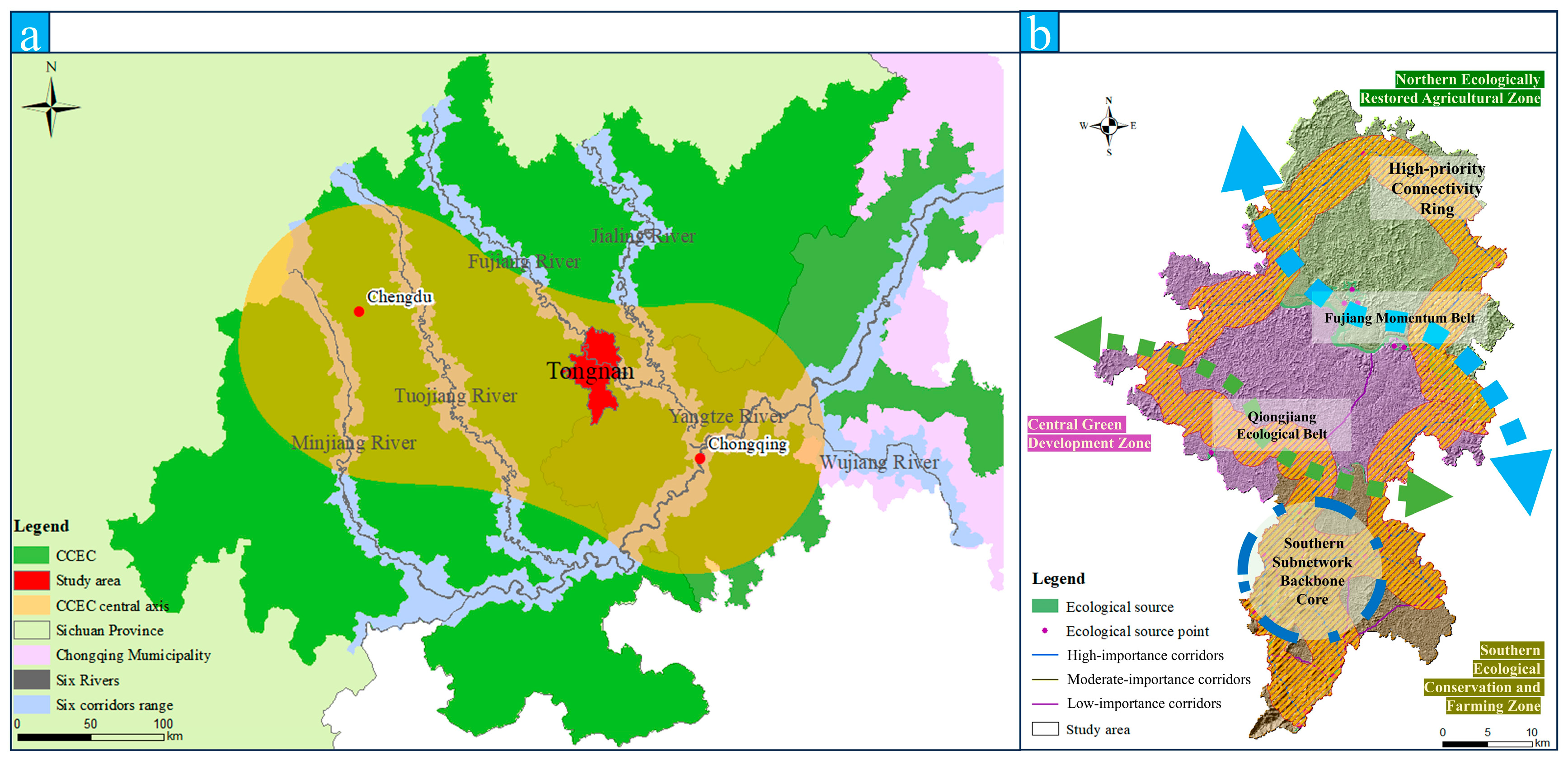
2.1. Study Area
2.2. Data Sources
2.3. Methodology
2.3.1. Identification of Ecological Sources
- (1)
- Functional Ecological Sources
- (2)
- Structural Ecological Sources
- (3)
- Policy-Integrated Ecological Sources
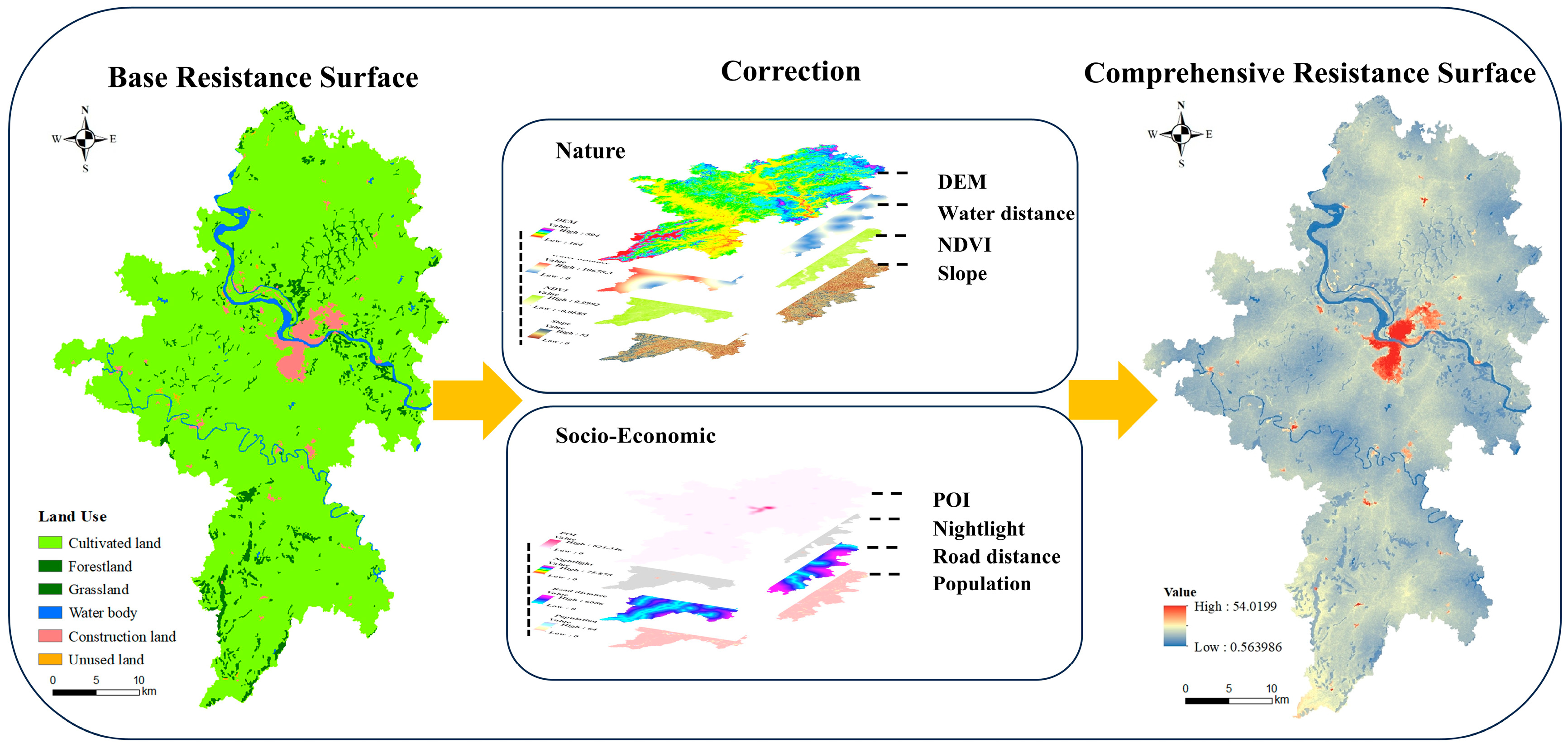
2.3.2. Construction of Ecological Resistance Surface
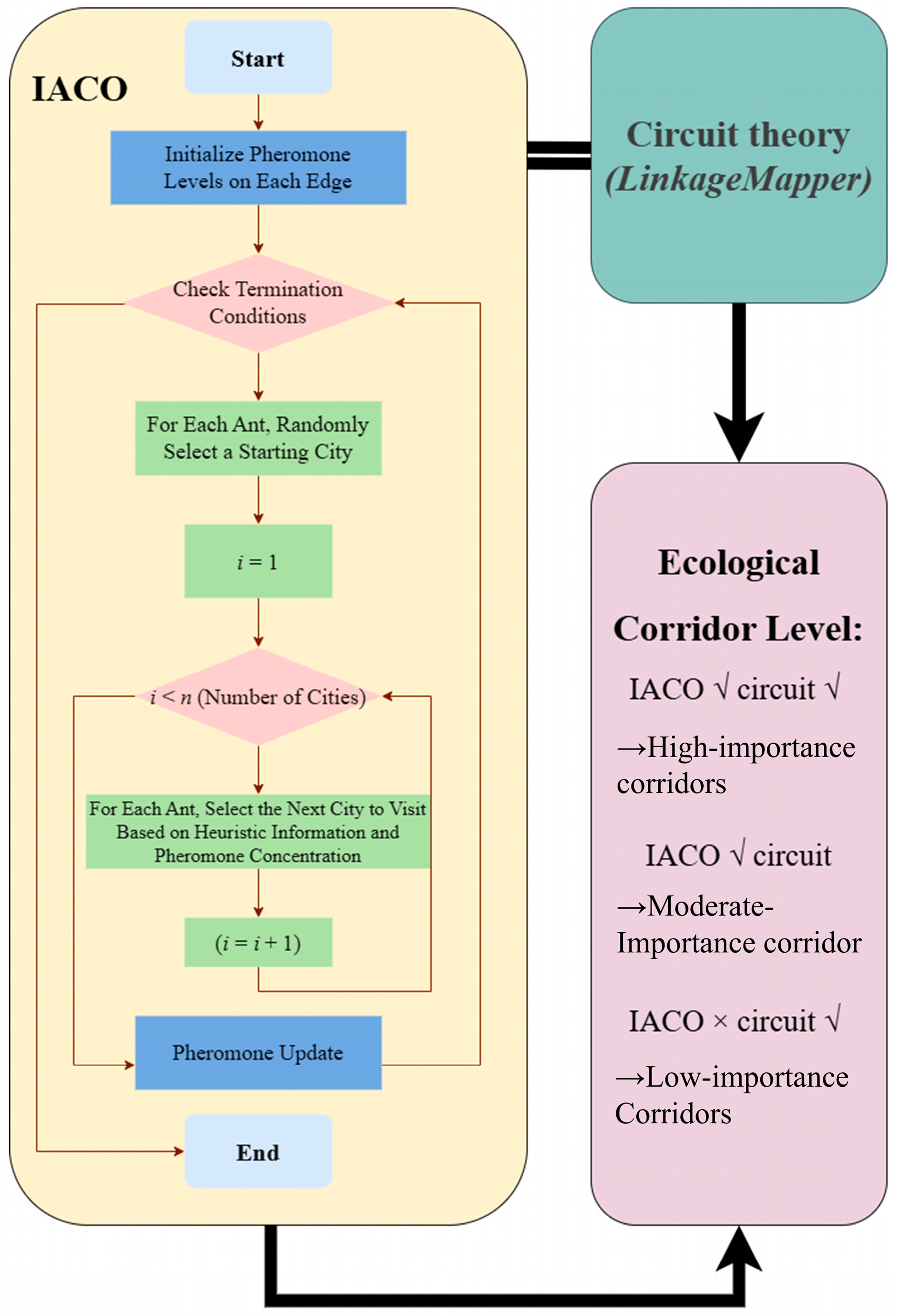
2.3.3. Extraction of Ecological Corridors and Ecological Barrier Points
- (1)
- Extraction of Ecological Corridors.
- (2)
- Extraction of Ecological Barrier Points.
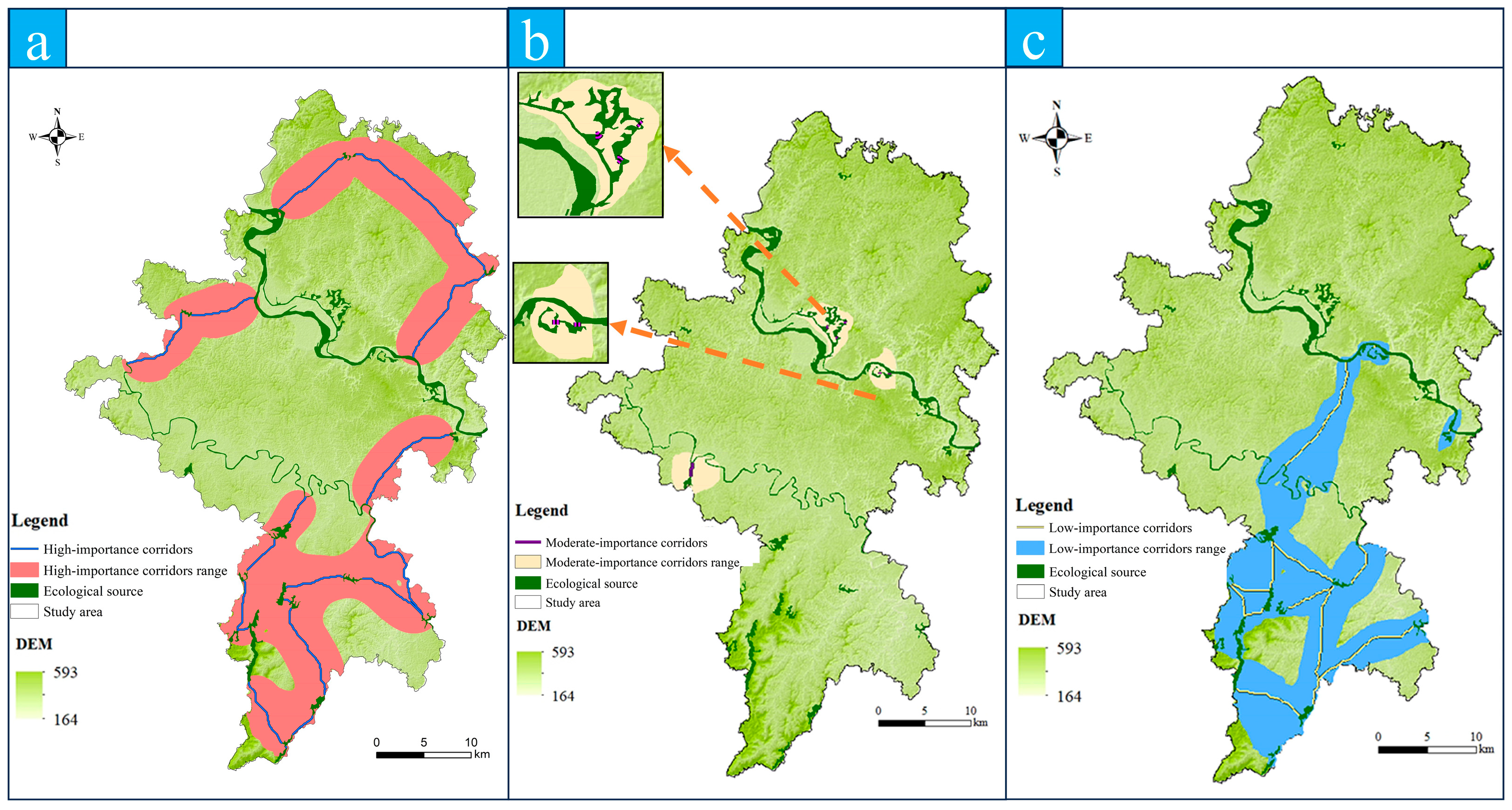
2.3.4. Determination of the Range of Ecological Corridors
2.3.5. Topological Characteristics of the Network
2.3.6. Robustness and Uncertainty Assessment Framework
- (1)
- Parameter Sensitivity Analysis
- (2)
- Temporal Persistence Validation
- (3)
- Comparative Methodological Validation
- (4)
- Spatial Consistency with Authoritative Plans
3. Results
3.1. Construction of the Ecological Security Pattern
3.1.1. Ecological Sources Identification
- (1)
- Functional Ecological Sources identification
- (2)
- Structural Ecological Sources identification
- (3)
- Policy-Integrated Ecological Sources identification
3.1.2. Ecological Resistance Surface Construction
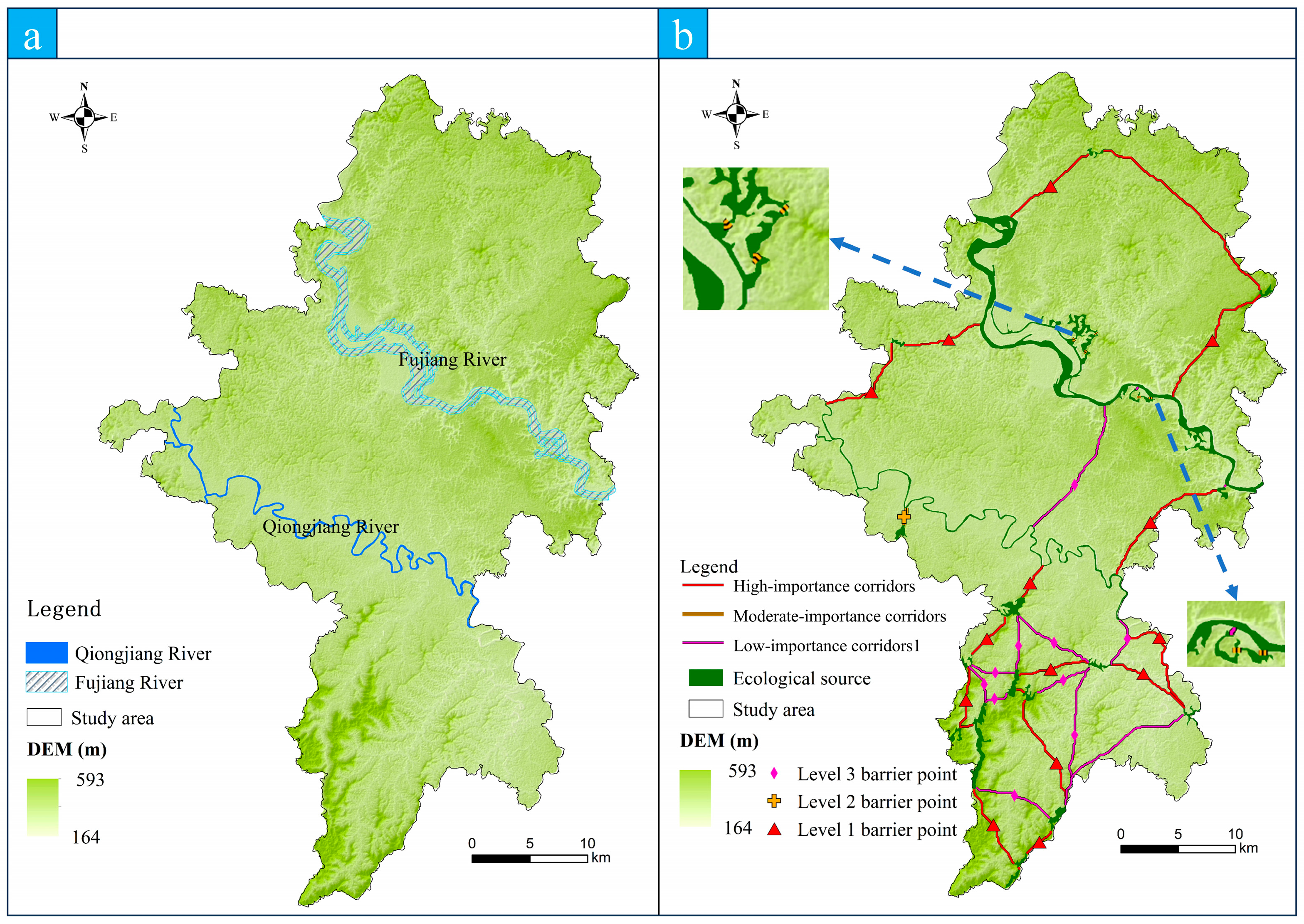
3.1.3. Ecological Corridors Extraction and Ecological Barrier Points Identification
- (1)
- Hierarchical Spatial Patterns of Ecological Corridors
- (2)
- Spatial Configuration of Critical Ecological Barriers
3.1.4. Range Delineation and Classification of Ecological Corridors
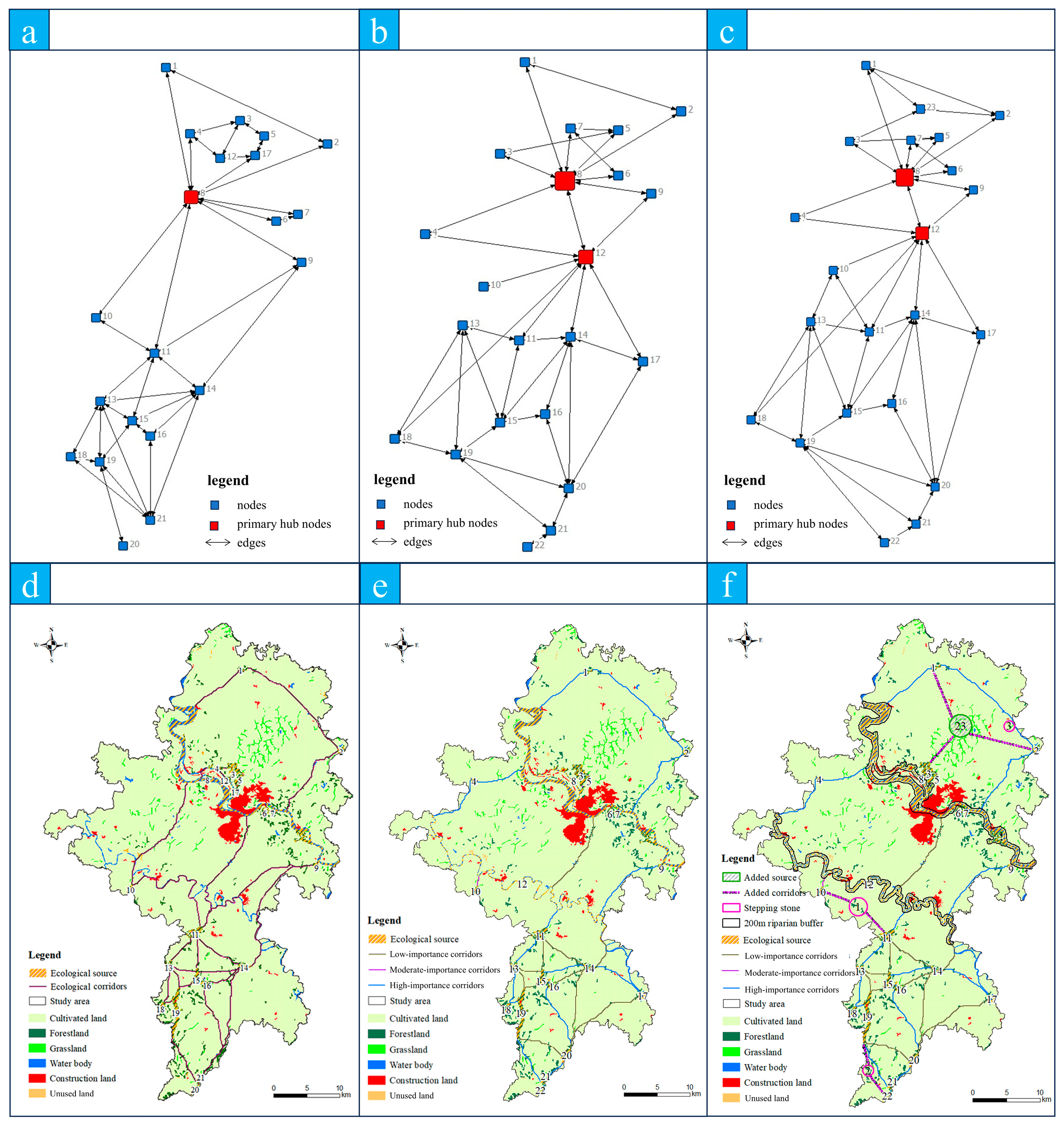
3.2. Topological Analysis of the Ecological Network
3.2.1. Degree Centrality
3.2.2. Betweenness Centrality
3.2.3. Closeness Centrality
3.2.4. Clustering Coefficient
3.3. Optimization of the Ecological Network
3.3.1. Critical Node Identification and Priority Interventions
3.3.2. Intervention for Isolated Nodes and Connectivity Enhancement
3.3.3. Long-Corridor Optimization Using Stepping Stones
3.3.4. Addressing Low Clustering and Ecological Blind Spots
3.4. Integration of Ecological Security Pattern
3.4.1. One Core
3.4.2. One Ring
3.4.3. Two Belts
3.4.4. Three Zones
3.5. Validation of Framework Robustness
3.5.1. Ecological Relevance of Network Components
- (1)
- Habitat Suitability of Ecological Sources
- (2)
- Spatial Congruence with Conservation Frameworks
3.5.2. IACO Parameter Sensitivity and Stability Validation
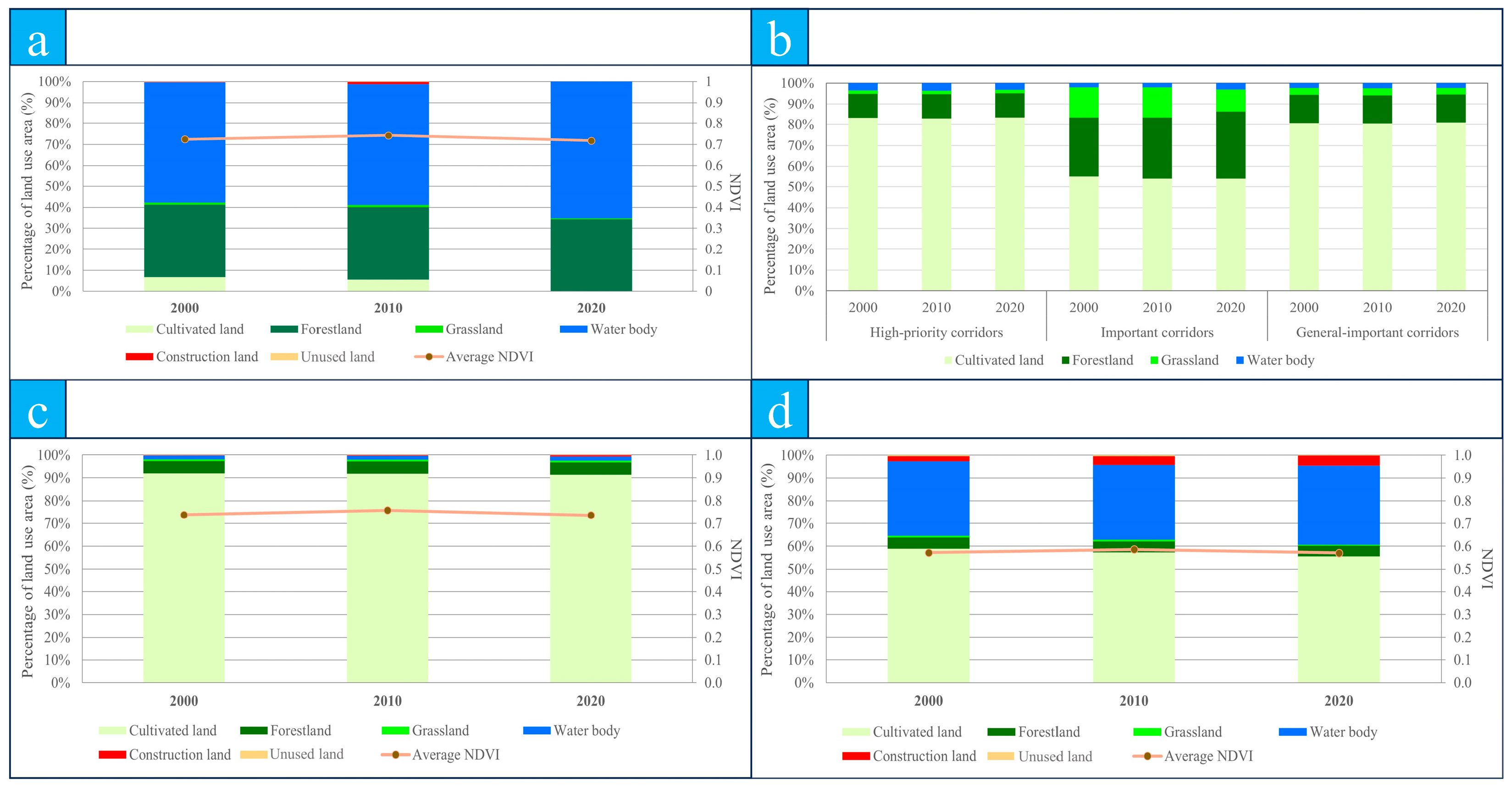
3.5.3. Temporal Persistence of the ESP (2000–2020)
4. Discussion
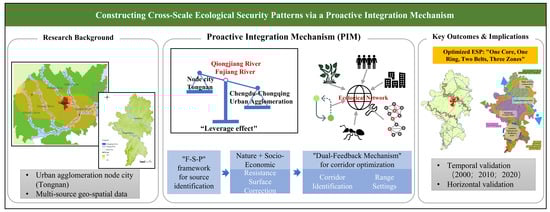
4.1. Proactive Integration Mechanisms: A Computational Solution to Cross-Scale Mismatches
4.2. “F-S-P” Framework: A Paradigm Shift from Isolated to Integrated Source Identification
4.3. “Dual-Feedback Mechanism”: Capturing Ecological Realism in Corridor Dynamics
- (1)
- Coupling Physical and Biological Logic
- (2)
- Dynamic and Adaptive Simulation
4.4. Validation of ESP Construction and Optimization
4.4.1. Temporal Persistence and Stability of the ESP Components
4.4.2. Network Optimization Validation: A Comparison of Traditional, Pre-Optimization, and Optimization Methods
4.5. Comparative Analysis of the PIM Framework
4.5.1. Systematic Comparison with Alternative Approaches
- (1)
- Systematic Conservation Planning (Marxan & Marxan Connect)
- (2)
- Hierarchical Multi-scale ESP Frameworks
- (3)
- Advanced Graph-Theoretic Models
- (4)
- Synthesis
4.5.2. Explicit Articulation of Added Value
4.6. Computational Efficiency and Scalability of the PIM Framework
4.7. Limitations and Future Research Directions
4.7.1. Key Limitations and Future Extensions
- (1)
- Algorithm specialization
- (2)
- Temporal dynamics and scenario analysis
- (3)
- Spatial transferability and robustness testing
- (4)
- Uncertainty quantification
4.7.2. Transferability Guidelines for Cross-Regional Application
5. Conclusions
Supplementary Materials
Author Contributions
Funding
Data Availability Statement
Conflicts of Interest
References
- Batty, M. The size, scale, and shape of cities. Science 2008, 319, 769–771. [Google Scholar] [CrossRef]
- Chen, M.; Chen, L.; Cheng, J.; Yu, J. Identifying interlinkages between urbanization and Sustainable Development Goals. Geogr. Sustain. 2022, 3, 339–346. [Google Scholar] [CrossRef]
- Fotheringham, A.S.; Yang, W.; Kang, W. Multiscale geographically weighted regression (MGWR). Ann. Am. Assoc. Geogr. 2017, 107, 1247–1265. [Google Scholar] [CrossRef]
- Zhou, H.; Sun, B.; Zhang, T. The evolution of urban employment spatial structure in China: From the perspective of monocentricity and polycentricity. Cities 2024, 147, 104824. [Google Scholar] [CrossRef]
- IPBES. Summary for Policymakers of the Global Assessment Report on Biodiversity and Ecosystem Services; IPBES Secretariat: Bonn, Germany, 2019. [Google Scholar] [CrossRef]
- Yu, H.; Xiao, H.; Gu, X. Integrating species distribution and piecewise linear regression model to identify functional connectivity thresholds to delimit urban ecological corridors. Comput. Environ. Urban Syst. 2024, 113, 102177. [Google Scholar] [CrossRef]
- Batten, D.F. Network cities: Creative urban agglomerations for the 21st century. Urban Stud. 1995, 32, 313–327. [Google Scholar] [CrossRef]
- Wang, Y.; Cai, Y.; Xie, Y.; Chen, L.; Zhang, P. An integrated approach for evaluating dynamics of urban eco-resilience in urban agglomerations of China. Ecol. Indic. 2023, 146, 109859. [Google Scholar] [CrossRef]
- Anselin, L.; Cho, W.K.T. Spatial effects and ecological inference. Political Anal. 2002, 10, 276–297. [Google Scholar] [CrossRef]
- Östh, J.; Reggiani, A.; Galiazzo, G. Spatial economic resilience and accessibility: A joint perspective. Comput. Environ. Urban Syst. 2015, 49, 148–159. [Google Scholar] [CrossRef]
- Tong, D.; Crosson, C.; Zhong, Q.; Li, Y. Optimize urban food production to address food deserts in regions with restricted water access. Landsc. Urban Plan. 2020, 202, 103859. [Google Scholar] [CrossRef]
- Nie, H.; Zhao, Y.; Zhu, J.; Ning, A.; Zheng, W. Ecological security pattern construction in typical oasis area based on ant colony optimization: A case study in Yili River Valley, China. Ecol. Indic. 2024, 169, 112770. [Google Scholar] [CrossRef]
- Yu, K. Security patterns and surface model in landscape ecological planning. Landsc. Urban Plan. 1996, 36, 1–17. [Google Scholar] [CrossRef]
- Zhou, G.; Huan, Y.; Wang, L.; Lan, Y.; Liang, T.; Shi, B.; Zhang, Q. Linking ecosystem services and circuit theory to identify priority conservation and restoration areas from an ecological network perspective. Sci. Total Environ. 2023, 873, 162261. [Google Scholar] [CrossRef] [PubMed]
- Huang, X.; Xiu, L.; Lu, Z.; Wang, J. Ecological networks construction and optimization in the Longdong Loess Plateau: The advantages of self-organizing map and complex networks. Ecol. Indic. 2025, 170, 113138. [Google Scholar] [CrossRef]
- Spear, S.F.; Balkenhol, N.; Fortin, M.; McRae, B.H.; Scribner, K. Use of resistance surfaces for landscape genetic studies: Considerations for parameterization and analysis. Mol. Ecol. 2010, 19, 3576–3591. [Google Scholar] [CrossRef]
- Wang, Z.; Zhao, X.; Lijuan, C.; Lei, Y.; Guo, Z.; Wang, J.; Li, J.; Zhai, X.; Rumiao, W.; Li, W. Identification and optimization of urban wetland ecological networks in highly urbanized areas: A case study of Haidian District, Beijing. Ecol. Indic. 2025, 170, 113028. [Google Scholar] [CrossRef]
- Xiang, K.; Chen, L.; Li, W.; He, Z. Construction and optimization strategy of ecological security pattern in county-level cities under spatial and temporal variation of ecosystem services: Case study of Mianzhu, China. Land 2024, 13, 936. [Google Scholar] [CrossRef]
- Hou, W.; Xiong, Z.; Wang, C.; Chen, H. Enhanced ant colony algorithm with communication mechanism for mobile robot path planning. Robot. Auton. Syst. 2022, 148, 103949. [Google Scholar] [CrossRef]
- Wang, L.; Wang, H.; Yang, X.; Gao, Y.; Cui, X.; Wang, B. Research on smooth path planning method based on improved ant colony algorithm optimized by Floyd algorithm. Front. Neurorobotics 2022, 16, 955179. [Google Scholar] [CrossRef] [PubMed]
- Peng, J.; Zhao, S.; Dong, J.; Liu, Y.; Meersmans, J.; Li, H.; Wu, J. Applying ant colony algorithm to identify ecological security patterns in megacities. Environ. Model. Softw. 2019, 117, 214–222. [Google Scholar] [CrossRef]
- Ding, M.; Liu, W.; Xiao, L.; Zhong, F.; Lu, N.; Zhang, J.; Zhang, Z.; Xu, X.; Wang, K. Construction and optimization strategy of ecological security pattern in a rapidly urbanizing region: A case study in central-south China. Ecol. Indic. 2022, 136, 108604. [Google Scholar] [CrossRef]
- Liu, X.; Su, Y.; Li, Z.; Zhang, S. Constructing ecological security patterns based on ecosystem services trade-offs and ecological sensitivity: A case study of Shenzhen metropolitan area, China. Ecol. Indic. 2023, 154, 110626. [Google Scholar] [CrossRef]
- Deng, W.; Li, S.; Wei, G.; Bai, L.; Liu, Y. Analyzing industry ecological sustainability from the perspective of spatial association network: A case study of the urban agglomeration in the middle reaches of the Yangtze River. Ecol. Indic. 2025, 170, 113071. [Google Scholar] [CrossRef]
- Shen, S.; Dragićević, S.; Dujmović, J. GIS-based Logic Scoring of Preference method for urban densification suitability analysis. Comput. Environ. Urban Syst. 2021, 89, 101654. [Google Scholar] [CrossRef]
- Daigle, R.M.; Metaxas, A.; Balbar, A.C.; McGowan, J.; Treml, E.A.; Kuempel, C.D.; Possingham, H.P.; Beger, M. Operationalizing ecological connectivity in spatial conservation planning with Marxan Connect. Methods Ecol. Evol. 2020, 11, 570–579. [Google Scholar] [CrossRef]
- Hilty, J.; Worboys, G.L.; Keeley, A.; Woodley, S.; Lausche, B.; Locke, H.; Carr, M.; Pulsford, I.; Pittock, J.; White, J.W.; et al. Guidelines for Conserving Connectivity Through Ecological Networks and Corridors; IUCN: Gland, Switzerland, 2020. [Google Scholar] [CrossRef]
- Lopane, F.D.; Kalantzi, E.; Milton, R.; Batty, M. A land-use transport-interaction framework for large scale strategic urban modeling. Comput. Environ. Urban Syst. 2023, 104, 102007. [Google Scholar] [CrossRef]
- Che, Y.; Li, X.; Shi, Q.; Liu, X. A simple and reliable method for estimating building-scale height based on multisource datasets. IEEE J. Sel. Top. Appl. Earth Obs. Remote Sens. 2024, 17, 8302–8312. [Google Scholar] [CrossRef]
- Wan, H.; Chen, J.; Huang, Z.; Xia, R.; Wu, B.; Sun, L.; Yao, B.; Liu, X.; Xing, M. AFSar: An anchor-free SAR target detection algorithm based on multiscale enhancement representation learning. IEEE Trans. Geosci. Remote Sens. 2021, 60, 5219514. [Google Scholar] [CrossRef]
- Zhang, Y.; Yang, R.; Sun, M.; Lu, Y.; Zhang, L.; Yin, Y.; Li, X. Identification of spatial protection and restoration priorities for ecological security pattern in a rapidly urbanized region: A case study in the Chengdu–Chongqing Economic Circle, China. J. Environ. Manag. 2024, 366, 121789. [Google Scholar] [CrossRef]
- Central Committee of the Communist Party of China, State Council. China Issues Master Plan for Chengdu–Chongqing Economic Circle. 2021. Available online: http://english.www.gov.cn/policies/latestreleases/202110/20/content_WS6170174dc6d0df57f98e392f.html (accessed on 1 January 2025).
- Shen, Z.; Yin, H.; Kong, F.; Wu, W.; Sun, H.; Su, J.; Tian, S. Enhancing ecological network establishment with explicit species information and spatially coordinated optimization for supporting urban landscape planning and management. Landsc. Urban Plan. 2024, 248, 105079. [Google Scholar] [CrossRef]
- General Office of the People’s Government of Chongqing Municipality, General Office of the People’s Government of Sichuan Province. Chengdu–Chongqing Economic Circle ‘Six Rivers’ Ecological Corridor Construction Plan (2022–2035). 2023. Available online: https://www.cq.gov.cn/zwgk/zfxxgkml/szfwj/cylhfw/202311/t20231121_12584968.html (accessed on 8 May 2020).
- Hermoso, V.; Morán-Ordóñez, A.; Lanzas, M.; Brotons, L. Designing a network of green infrastructure for the EU. Landsc. Urban Plan. 2020, 196, 103732. [Google Scholar] [CrossRef]
- Zhang, S.; Jiang, H.; Yu, H.; Feng, X.; Fan, M. Construction of landscape ecological network based on MCR risk assessment model: A case study of Liaoning Province, China. Ecol. Indic. 2024, 166, 112549. [Google Scholar] [CrossRef]
- Zhou, Y.; Yao, J.; Li, P.; Li, B.; Luo, Y.; Ning, S. Multilevel green space ecological network collaborative optimization from the perspective of scale effect. Ecol. Indic. 2024, 166, 112562. [Google Scholar] [CrossRef]
- Wang, L.; Zhao, T.; Zhu, W.; Zhu, L. The spatiotemporal characteristics of soil erosion in the Qinling-Daba Mountains based on RUSLE model. J. Soil Water Conserv. 2024, 38, 113–121. [Google Scholar] [CrossRef]
- Zhang, W.B.; Fu, J.S. Rainfall erosivity estimation under different rainfall amount. Resour. Sci. 2003, 25, 35–41. [Google Scholar]
- Zhong, X.; Zhang, S.; Wu, R.; Jing, Y.; Men, L.; Zhou, T. Analysis of dynamic changes and driving forces of soil erosion in Tuojiang River Basin. Res. Soil Water Conserv. 2022, 29, 43–49+56. [Google Scholar] [CrossRef]
- Zhou, P. Research on Optimization of Territorial Space Pattern and Functional Improvement Path in Taihang Mountain Area. Doctoral Dissertation, University of Chinese Academy of Sciences (Institute of Mountain Hazards and Environment, Chinese Academy of Sciences & Ministry of Water Resources), Beijing, China, 2020. [Google Scholar]
- Zhou, W.; Liu, G.; Pan, J. Empirical estimation of soil available water capacity: A case study of black soil in Northeast China. J. Arid Land Resour. Environ. 2003, 17, 88–95. [Google Scholar] [CrossRef]
- Raatikainen, M.; Skön, J.P.; Leiviskä, K.; Kolehmainen, M. Intelligent analysis of energy consumption in school buildings. Appl. Energy 2016, 165, 416–429. [Google Scholar] [CrossRef]
- Zhang, F.; Jia, Y.; Liu, X.; Li, T.; Gao, Q. Application of MSPA-MCR models to construct ecological security pattern in the basin: A case study of Dawen River basin. Ecol. Indic. 2024, 160, 111887. [Google Scholar] [CrossRef]
- Zhang, X.; Ouyang, M.; Zhang, F.; Wang, J. Study on the genetic structure of wild and hatchery populations of Procypris rabaudi Tchang, an endemic fish in the upper Yangtze River. Fish. Res. 2022, 245, 106134. [Google Scholar] [CrossRef]
- Jiang, K.; Mo, S.; Yu, K.; Li, P.; Li, Z. Analysis on the relationship between runoff erosion power and sediment transport in the Fujiang River basin and its response to land use change. Ecol. Indic. 2024, 159, 111690. [Google Scholar] [CrossRef]
- Song, S.; Gong, Y.; Yu, Y. Integrating pattern, process, and function in urban landscape ecological network planning: A case study of Harbin central city. Ecol. Indic. 2024, 159, 111671. [Google Scholar] [CrossRef]
- Xu, J.; Wang, S.; Xiao, Y.; Xie, G.; Wang, Y.; Zhang, C.; Li, P.; Lei, G. Mapping the spatiotemporal heterogeneity of ecosystem service relationships and bundles in Ningxia, China. J. Clean. Prod. 2021, 294, 126216. [Google Scholar] [CrossRef]
- Adriaensen, F.; Chardon, J.P.; De Blust, G.; Swinnen, E.; Villalba, S.; Gulinck, H.; Matthysen, E. The application of ‘least-cost’ modelling as a functional landscape model. Landsc. Urban Plan. 2003, 64, 233–247. [Google Scholar] [CrossRef]
- Yu, K.J.; Wang, S.S.; Li, D.H.; Li, C.B. The function of ecological security patterns as an urban growth framework in Beijing. Acta Ecol. Sin. 2009, 29, 1189–1204. [Google Scholar]
- Wang, T.; Huang, Y.; Cheng, J.; Xiong, H.; Ying, Y.; Feng, Y.; Wang, J. Construction and optimization of watershed-scale ecological network based on complex network method: A case study of Erhai Lake Basin in China. Ecol. Indic. 2024, 160, 111794. [Google Scholar] [CrossRef]
- Chen, J.; Xue, J.; Gu, K.; Wang, Y. Balancing urban expansion with ecological integrity: An ESP framework for rapidly urbanizing small and medium-sized cities, with insights from Suizhou, China. Ecol. Inform. 2024, 80, 102508. [Google Scholar] [CrossRef]
- Han, Z.; Cui, S.; Yan, X.; Liu, C.; Li, X.; Zhong, J.; Wang, X. Guiding sustainable urban development via a multi-level ecological framework integrating natural and social indicators. Ecol. Indic. 2022, 141, 109142. [Google Scholar] [CrossRef]
- Qian, M.; Huang, Y.; Cao, Y.; Wu, J.; Xiong, Y. Ecological network construction and optimization in Guangzhou from the perspective of biodiversity conservation. J. Environ. Manag. 2023, 336, 117692. [Google Scholar] [CrossRef]
- Cao, W.; Li, X.; Lyu, X.; Dang, D.; Wang, K.; Li, M.; Liu, S. To explore the effectiveness of various ecological security pattern construction methods in many growth situations in the future: A case study of the West Liaohe River Basin in Inner Mongolia. Sci. Total Environ. 2024, 948, 174607. [Google Scholar] [CrossRef]
- Chen, X.; Hu, Y.; Tang, P.; Zhang, H.; Jin, J.; Mao, S. A new robot navigation algorithm based on bi-directional collaborative ant colony optimization. IEEE Sens. J. 2025, 25, 14295–14306. [Google Scholar] [CrossRef]
- Li, W.; Liu, Y.; Lin, Q.; Wu, X.; Hao, J.; Zhou, Z.; Zhang, X. Identification of ecological security pattern in the Qinghai-Tibet Plateau. Ecol. Indic. 2025, 170, 113057. [Google Scholar] [CrossRef]
- Dong, J.; Peng, J.; Liu, Y.; Qiu, S.; Han, Y. Integrating spatial continuous wavelet transform and kernel density estimation to identify ecological corridors in megacities. Landsc. Urban Plan. 2020, 199, 103815. [Google Scholar] [CrossRef]
- Li, K.; Hou, Y.; Randall, M.T.; Skov-Petersen, H.; Li, X. The spatio-temporal trade-off between ecosystem and basic public services and the urbanization driving force in the rapidly urbanizing region. Sustain. Cities Soc. 2024, 111, 105554. [Google Scholar] [CrossRef]
- Dong, Z. A Study of Fish Diversity and Spatial and Temporal Distribution of Procypris rabaudi in the Upper Yangtze River Based on Environmental DNA Technology. Doctoral Dissertation, Southwest University, Chongqing, China, 2024. [Google Scholar]
- Zeng, W.; He, Z.; Bai, W.; He, L.; Chen, X.; Chen, J. Identification of ecological security patterns of alpine wetland grasslands based on landscape ecological risks: A study in Zoigê County. Sci. Total Environ. 2024, 928, 172302. [Google Scholar] [CrossRef] [PubMed]
- Li, H.Q.; Han, Z.X.; Wu, S.B.; Cao, C.L.; Ran, J.S.; Chen, C.; Yue, B.S. Sun-bathing habitat selection by golden pheasants in Damu Mountains Nature Reserve, China. J. Southwest Univ. Nat. Sci. Ed. 2012, 34, 68–71. [Google Scholar] [CrossRef]
- Feng, Y.; Sun, M.; Pan, Y.; Zhang, C. Fostering inclusive green growth in China: Identifying the impact of the regional integration strategy of Yangtze River Economic Belt. J. Environ. Manag. 2024, 358, 120952. [Google Scholar] [CrossRef]
- Hull, V.; Xu, W.; Liu, W.; Zhou, S.; Viña, A.; Zhang, J.; Tuanmu, M.; Huang, J.; Linderman, M.; Chen, X.; et al. Evaluating the efficacy of zoning designations for protected area management. Biol. Conserv. 2011, 144, 3028–3037. [Google Scholar] [CrossRef]
- Li, S.; Dai, W.; Wang, Z.; Wu, Z.; Wang, J. Detecting range shrinking from historical amphibian species occurrences under influence of human impacts: A case study using the Chinese giant salamander, Andrias davidianus. Ecol. Evol. 2024, 14, e70595. [Google Scholar] [CrossRef]
- Liu, D.; Li, X.; Song, Z. No decline of genetic diversity in elongate loach (Leptobotia elongata) with a tendency to form population structure in the upper Yangtze River. Glob. Ecol. Conserv. 2020, 23, e01072. [Google Scholar] [CrossRef]
- Jiang, H.; Peng, J.; Liu, M.; Dong, J.; Ma, C. Integrating patch stability and network connectivity to optimize ecological security pattern. Landsc. Ecol. 2024, 39, 54. [Google Scholar] [CrossRef]
- Liu, M.; Peng, J.; Dong, J.; Jiang, H.; Xu, D.; Meersmans, J. Trade-offs of landscape connectivity between regional and interregional s in a junction area of Beijing-Tianjin-Hebei region. Appl. Geogr. 2024, 167, 103272. [Google Scholar] [CrossRef]
- Long, Q.; Gao, X.; Hu, Y.; Hu, Y.; Wang, Z.; Mao, W.; Lu, X. Optimization of ecological network to improve water conservation services in the Nianchu River Basin. J. Environ. Manag. 2024, 372, 123368. [Google Scholar] [CrossRef]
- Arribas-Bel, D.; Nijkamp, P.; Scholten, H. Multidimensional urban sprawl in Europe: A self-organizing map approach. Comput. Environ. Urban Syst. 2011, 35, 263–275. [Google Scholar] [CrossRef]
- Berahmand, K.; Bouyer, A.; Samadi, N. A new centrality measure based on the negative and positive effects of clustering coefficient for identifying influential spreaders in complex networks. Chaos Solitons Fractals 2018, 110, 41–54. [Google Scholar] [CrossRef]
- Chen, D.; Zhao, Q.; Jiang, P.; Li, M. Incorporating ecosystem services to assess progress towards sustainable development goals: A case study of the Yangtze River Economic Belt, China. Sci. Total Environ. 2022, 806, 151277. [Google Scholar] [CrossRef]
- Munter, A.; Volgmann, K. The metropolization and regionalization of the knowledge economy in the Multi-Core Rhine-Ruhr metropolitan region. Eur. Plan. Stud. 2014, 22, 2542–2560. [Google Scholar] [CrossRef]
- Huo, F.; Ren, W.; Ran, R.; Liu, Y.; Sui, D. An improved ant colony algorithm and its application in TSP. In Proceedings of the 2010 8th World Congress on Intelligent Control and Automation, Jinan, China, 7–9 July 2010; pp. 2994–2997. [Google Scholar] [CrossRef]
- Albert-László, B.; Albert, R. Emergence of scaling in random networks. Science 1999, 286, 509–512. [Google Scholar] [CrossRef]
- Xu, D.; Peng, J.; Jiang, H.; Dong, J.; Liu, M.; Chen, Y.; Wu, J.; Meersmans, J. Incorporating barriers restoration and stepping stones establishment to enhance the connectivity of watershed ecological security patterns. Appl. Geogr. 2024, 170, 103347. [Google Scholar] [CrossRef]
- Guo, Z.; Zhu, C.; Fan, X.; Li, M.; Xu, N.; Yuan, Y.; Guan, Y.; Lyu, C.; Bai, Z. Analysis of ecological network evolution in an ecological restoration area with the MSPA-MCR model: A case study from Ningwu County, China. Ecol. Indic. 2025, 170, 113067. [Google Scholar] [CrossRef]
- Lu, Y.; Huang, D.; Tong, Z.; Liu, Y.; He, J.; Liu, Y. A conceptual framework for constructing and evaluating directed ecological networks: Evidence from Wuhan Metropolitan Area, China. Environ. Impact Assess. Rev. 2024, 106, 107464. [Google Scholar] [CrossRef]
- Zhao, Z.; Li, X.; Zhou, X. Optimization of transportation routing problem for fresh food in time-varying road network: Considering both food safety reliability and temperature control. PLoS ONE 2020, 15, e0235950. [Google Scholar] [CrossRef]
- Saito-Shida, S.; Kashiwabara, N.; Shiono, K.; Nemoto, S.; Akiyama, H. Development of an analytical method for determination of total ethofumesate residues in foods by gas chromatography-tandem mass spectrometry. Food Chem. 2020, 313, 126132. [Google Scholar] [CrossRef]
- Su, Y.; Chen, X.; Liao, J.; Zhang, H.; Wang, C.; Ye, Y.; Wang, Y. Modeling the optimal ecological security pattern for guiding the urban constructed land expansions. Urban For. Urban Green. 2016, 19, 35–46. [Google Scholar] [CrossRef]
- Xu, W.; Wang, J.; Zhang, M.; Li, S. Construction of landscape ecological network based on landscape ecological risk assessment in a large-scale opencast coal mine area. J. Clean. Prod. 2021, 286, 125523. [Google Scholar] [CrossRef]
- Zhang, X.; Du, H.; Wang, Y.; Chen, Y.; Ma, L.; Dong, T. Watershed landscape ecological risk assessment and landscape pattern optimization: Take Fujiang River Basin as an example. Hum. Ecol. Risk Assess. Int. J 2021, 27, 2254–2276. [Google Scholar] [CrossRef]
- Wang, R. Ecological network analysis of China’s energy-related input from the supply side. J. Clean. Prod. 2020, 272, 122796. [Google Scholar] [CrossRef]
- Chen, G.; Li, X.; Liu, X.; Chen, Y.; Liang, X.; Leng, J.; Xu, X.; Liao, W.; Qiu, Y.A.; Wu, Q.; et al. Global projections of future urban land expansion under shared socioeconomic pathways. Nat. Commun. 2020, 11, 537. [Google Scholar] [CrossRef] [PubMed]
- Xia, Z.; Huang, J.; Huang, Y.; Liu, K.; Zhu, R.; Shen, Z.; Yuan, C.; Liu, L. A social-ecological approach for identifying and mapping ecosystem service trade-offs and conservation priorities in peri-urban areas. Ambio 2024, 53, 1522–1540. [Google Scholar] [CrossRef]
- Zhang, Y.; Lu, X.; Liu, B.; Wu, D.; Fu, G.; Zhao, Y.; Sun, P. Spatial relationships between ecosystem services and socioecological drivers across a large-scale region: A case study in the Yellow River Basin. Sci. Total Environ. 2021, 766, 142480. [Google Scholar] [CrossRef]
- Xiang, Q.; Yu, H.; Huang, H.; Li, F.; Ju, L.; Hu, W.; Yu, P.; Deng, Z.; Chen, Y. Assessing the resilience of complex ecological spatial networks using a cascading failure model. J. Clean. Prod. 2024, 434, 140014. [Google Scholar] [CrossRef]
- Egerer, M.; Fouch, N.; Anderson, E.C.; Clarke, M. Socio-ecological connectivity differs in magnitude and direction across urban landscapes. Sci. Rep. 2020, 10, 4252. [Google Scholar] [CrossRef] [PubMed]



| Data Type | Year | Resolution | Data Source | Data URL |
|---|---|---|---|---|
| CNLUCC | 2020 | 30 m | Resource and Environmental Science Data Platform | https://www.resdc.cn/DOI/doi.aspx?DOIid=54 (accessed on 20 August 2025) |
| Annual precipitation | 2020 | 1 km | National Earth System Science Data Center, National Science & Technology Infrastructure of China | https://www.geodata.cn/main/face_science_detail?id=56226&guid=113786088533256 (accessed on 15 October 2025) |
| Evapotranspiration | 2020 | 1 km | National Earth System Science Data Center, National Science & Technology Infrastructure of China | https://www.geodata.cn/data/datadetails.html?dataguid=34595274939620&docId=465 (accessed on 15 October 2025) |
| Soil attribute data | - | 30 m | National Cryosphere Desert Data Center | https://www.ncdc.ac.cn/portal/metadata/1fdf7dc7-7ecb-4e1f-a5df-30f7196756a8 (accessed on 20 August 2025) |
| DEM | - | 30 m | Geospatial Data Cloud | https://www.gscloud.cn/sources/details/aeab8000652a45b38afbb7ff023ddabb?pid=302 (accessed on 20 August 2025) |
| Road, water, and settlement distribution data | 2020 | shapefile | OpenStreetMap | https://www.ncdc.ac.cn/portal/metadata/1fdf7dc7-7ecb-4e1f-a5df-30f7196756a8 (accessed on 20 August 2025) |
| Night light | 2020 | 30 m | National Earth System Science Data Center, National Science & Technology Infrastructure of China | https://www.geodata.cn/main/face_science_detail?guid=8213124601985&docId= (accessed on 15 October 2025) |
| Population density | 2020 | 30 m | Resource and Environmental Science Data Platform | https://www.resdc.cn/DOI/DOI.aspx?DOIID=32 (accessed on 15 October 2025) |
| POI | 2020 | 30 m | Bigemap | http://www.bigemap.com/ (accessedon 15 October 2025) |
| Administrative division | 2020 | shapefile | YUDITU | https://yuditu.com/bzdt/index.html?Name=%E6%BD%BC%E5%8D%97%E5%8C%BA%E8%A1%8C%E6%94%BF%E5%8C%BA%E5%88%92 (accessed on 20 August 2025) |
| NDVI | 2020 | 30 m | National Science & Technology infrastructure | https://www.nesdc.org.cn/sdo/detail?id=60f68d757e28174f0e7d8d49 (accessed on 15 October 2025) |
| Landscape Type | Ecological Significance |
|---|---|
| Core | Serves as a “source” for various ecological processes and is of great significance for species reproduction and biodiversity conservation. |
| Islet | Disconnected and fragmented small patches with low connectivity between patches, resulting in limited material and energy exchange and transfer within the patches. |
| Perforation | Transitional zones between core and non-green landscape patches, consisting of small patches at the edges of the interior patches, which are independent and have low connectivity. |
| Edge | Transitional zone between the edge of a core and the surrounding non-green landscape, helping to reduce the impact of external environmental and anthropogenic disturbances. |
| Loop | Channels for the exchange of materials and energy within the same core, serving as shortcuts for material and energy exchange within the core area. |
| Bridge | Narrow areas connecting different core patches, facilitating species migration and landscape connectivity within the area. |
| Branch | Channels connecting only one end to the main patch, serving as pathways for species dispersion and energy exchange with the surrounding landscape. |
| Land Use | Resistance Value |
|---|---|
| Water body | 10 |
| Forestland, Grassland | 30 |
| Cultivated land | 50 |
| Unused land | 70 |
| Construction land | 90 |
| Indices | Traditional | Pre-Optimization | Optimization |
|---|---|---|---|
| Nodes | 20 | 22 | 23 |
| Edges | 35 | 37 | 42 |
| Freeman’s degree centralization | 29.74 | 28.57 | 25.32 |
| Normalized heterogeneity (%) | 1.40 | 1.57 | 1.03 |
| Un-normalized centralization | 2242 | 2331 | 2509 |
| Freeman’s betweenness centralization (%) | 59.00 | 52.86 | 49.37 |
| Freeman’s closeness centralization (%) | 34.68 | 37.78 | 37.07 |
| Overall graph clustering coefficient (Unweighted) | 0.562 | 0.602 | 0.563 |
| Weighted Overall graph clustering coefficient | 0.391 | 0.331 | 0.351 |
| Approaches | α | β | γ |
|---|---|---|---|
| Traditional | 0.405 | 1.667 | 0.614 |
| Pre-optimization | 0.410 | 1.682 | 0.617 |
| Optimization | 0.488 | 1.826 | 0.667 |
Disclaimer/Publisher’s Note: The statements, opinions and data contained in all publications are solely those of the individual author(s) and contributor(s) and not of MDPI and/or the editor(s). MDPI and/or the editor(s) disclaim responsibility for any injury to people or property resulting from any ideas, methods, instructions or products referred to in the content. |
© 2026 by the authors. Licensee MDPI, Basel, Switzerland. This article is an open access article distributed under the terms and conditions of the Creative Commons Attribution (CC BY) license.
Share and Cite
Xiao, Y.; Liu, F. Bio-Inspired Geocomputation for Cross-Scale Ecological Security Patterns in Urban Agglomerations: An Integrated Framework from Data Fusion to Network Optimization. Land 2026, 15, 602. https://doi.org/10.3390/land15040602
Xiao Y, Liu F. Bio-Inspired Geocomputation for Cross-Scale Ecological Security Patterns in Urban Agglomerations: An Integrated Framework from Data Fusion to Network Optimization. Land. 2026; 15(4):602. https://doi.org/10.3390/land15040602
Chicago/Turabian StyleXiao, Yue, and Feng Liu. 2026. "Bio-Inspired Geocomputation for Cross-Scale Ecological Security Patterns in Urban Agglomerations: An Integrated Framework from Data Fusion to Network Optimization" Land 15, no. 4: 602. https://doi.org/10.3390/land15040602
APA StyleXiao, Y., & Liu, F. (2026). Bio-Inspired Geocomputation for Cross-Scale Ecological Security Patterns in Urban Agglomerations: An Integrated Framework from Data Fusion to Network Optimization. Land, 15(4), 602. https://doi.org/10.3390/land15040602