Review

Categorizing the School Neighbourhood Built Environment and Its Associations with Physical Health Among Children and Adolescents: A Scoping Review

by
Iris Díaz-Carrasco
1,*,
Sergio Campos-Sánchez
1,
Javier Molina-García
2,3 and
Palma Chillón
4
1
Department of Urban and Spatial Planning, School of Architecture, University of Granada, 18009 Granada, Spain
2
AFIPS Research Group, Department of Teaching of Physical Education, Arts and Music, University of Valencia, Avda. dels Tarongers, 4, 46022 Valencia, Spain
3
Epidemiology and Environmental Health Joint Research Unit, The Foundation for the Promotion of Health and Biomedical Research of the Valencian Community (FISABIO), the University of Jaume I (UJI) and the University of Valencia (UV), Avda FISABIO-UJI-UV, de Catalunya, 21, 46020 Valencia, Spain
4
Department of Physical Education and Sports, Faculty of Sport Sciences, Sport and Health University Research Institute (iMUDS), University of Granada, 18011 Granada, Spain
*
Author to whom correspondence should be addressed.
Land 2026, 15(4), 589; https://doi.org/10.3390/land15040589
Submission received: 13 February 2026 / Revised: 30 March 2026 / Accepted: 1 April 2026 / Published: 3 April 2026
(This article belongs to the Special Issue Healthy and Inclusive Urban Public Spaces)

Abstract

The aim of this scoping review is to categorize and examine the relationships between school neighbourhood built environment categories and the physical health of children and adolescents worldwide. The search strategy initially found 8837 studies in four databases (Web of Science, PubMed, SportDiscus and Transportation Research Board) and after applying the inclusion and exclusion criteria 55 articles were included. The findings report on seven school neighbourhood built environment categories: building, connectivity and network, food environment, greenness, land use, safety and other variables. Interestingly, the connectivity and network category comprises 32 variables. Likewise, this category, together with the food environment, shows a clear predominance, with both categories accounting for 71.04% of all significant associations. The greenness category stands out due to its association density similarly to the predominant categories. The physical health categories were body composition, mode of commuting, physical activity, sedentary behaviour and weight status. Complementary weighted cross-tabulation analyses showed that when associations were weighted by participant sample size and school sample size, the food environment–weight status relationship became the most prominent, whereas connectivity-related associations became less dominant. The findings indicate preferential links between school neighbourhood built environment and physical health domains, with the connectivity and network category mainly associated with commuting mode and physical activity, and the food environment was primarily linked to weight status and dietary intake. Consequently, special attention must be given to urban planning and policies in the school neighbourhood built environment.

1. Introduction

Urbanization is one of the most transformative forces shaping the health of contemporary populations. As cities expand globally, the physical design of the built environment increasingly determines the opportunities and constraints for health-promoting behaviours, particularly in children and adolescents [1]. The Healthy Cities movement, promoted since the late 1980s by the World Health Organization (WHO), has long advocated for urban planning approaches that embed health considerations into city governance, and interest in this agenda has grown steadily in recent decades [1]. Today, understanding how urban environments influence health outcomes is widely recognized as an urgent public health priority [2], as the environments in which young people live, study, and commute are powerful modulators of their physical health trajectories. For this reason, this interconnection has attracted considerable attention in the fields of public health, transportation and urban planning [3,4,5].
The school context is particularly strategic as the place where children and adolescents spend a substantial portion of their daily lives. Within this broader field, the school neighbourhood built environment has emerged as a specific and operationally distinct unit of analysis, defined as the urban and architectural components surrounding the school [6]. The term school neighbourhood built environment had been used in diverse articles [7,8,9]. Studies have examined this environment across a range of spatial boundaries, from the immediate school frontage to buffers of up to 5000 m, with 800 m and 1000 m buffers being the most frequently employed [6].
Despite this growing body of research [10,11,12], the field has faced challenges related to conceptual fragmentation and the lack of a unified categorical framework. Variables describing the school neighbourhood built environment have been operationalized in heterogeneous ways across studies, often reflecting disciplinary silos—urban planning, transport geography, public health, and nutritional epidemiology have each contributed to their own frameworks, variables, and spatial units of analysis [6].
Finally, it is important to note that a previous systematic review was conducted based on the same research protocol, including identical inclusion and exclusion criteria, with the specific aim of characterizing the bibliometric profile and methodological procedures of the existing literature on the school neighbourhood built environment and physical health in children and adolescents. This earlier article detailed the instruments used to compute the variables, as well as the setting and GIS analysis buffers, among other methodological aspects [6]. Consequently, this scoping review builds upon the previous article by pursuing five new objectives. First, it systematically identifies and categorizes the school neighbourhood built environment and physical health variables examined in the included studies. Second, it examines the relationships between these categories, with the explicit aim of analyzing association patterns, relational density, and potential structural asymmetries between school neighbourhood built environment and physical health categories. Third, it conducts weighted cross-tabulations to explore whether the distribution of associations varies when accounting for study-level characteristics, specifically participant sample size, percentage of girls and school sample size. Fourth, this study stratifies the cross-tabulation analysis by geographic region to examine differing patterns across continents. Finally, it evaluates the methodological quality of the included studies to contextualize the robustness of the evidence.

2. Materials and Methods

The present scoping review was evaluated in accordance with the Preferred Reporting Items for Systematic reviews and Meta-Analyses extension for Scoping Reviews (PRISMA-ScR) [13] provided in Supplementary Material A.

2.1. Inclusion and Exclusion Criteria

The following sections outline the specific inclusion and exclusion criteria employed in this scoping review. These criteria were carefully selected to define the characteristics of the study population, including their physical health conditions and specific details regarding the location and nature of the school neighbourhood built environment, as well as the research period (Table 1). This selection ensures alignment with the research objectives and relevance to the study’s overall aims.

2.2. Search Strategy

The search terms were related to the following topics: age, education centre, school neighbourhood built environment and physical health. Search terms were combined with different Boolean operators (i.e., “OR” and “AND”). In addition, every search strategy was adapted according to the characteristics of each database. Consequently, the search was performed in titles and abstracts in PubMed, titles and/or abstracts in Web of Science, abstracts in SportDiscus and full texts in the Transportation Research Board (TRB) library.
The Population–Intervention–Comparison–Outcomes (PICO) strategy was used to frame the research question and the evidence search [14,15]. Specifically, the search strategy included 124 distinct terms: 22 describing the population, 56 corresponding to school neighbourhood built environment-related concepts, and 46 pertaining to physical health-related concepts (Supplementary Material B).

2.3. Study Selection

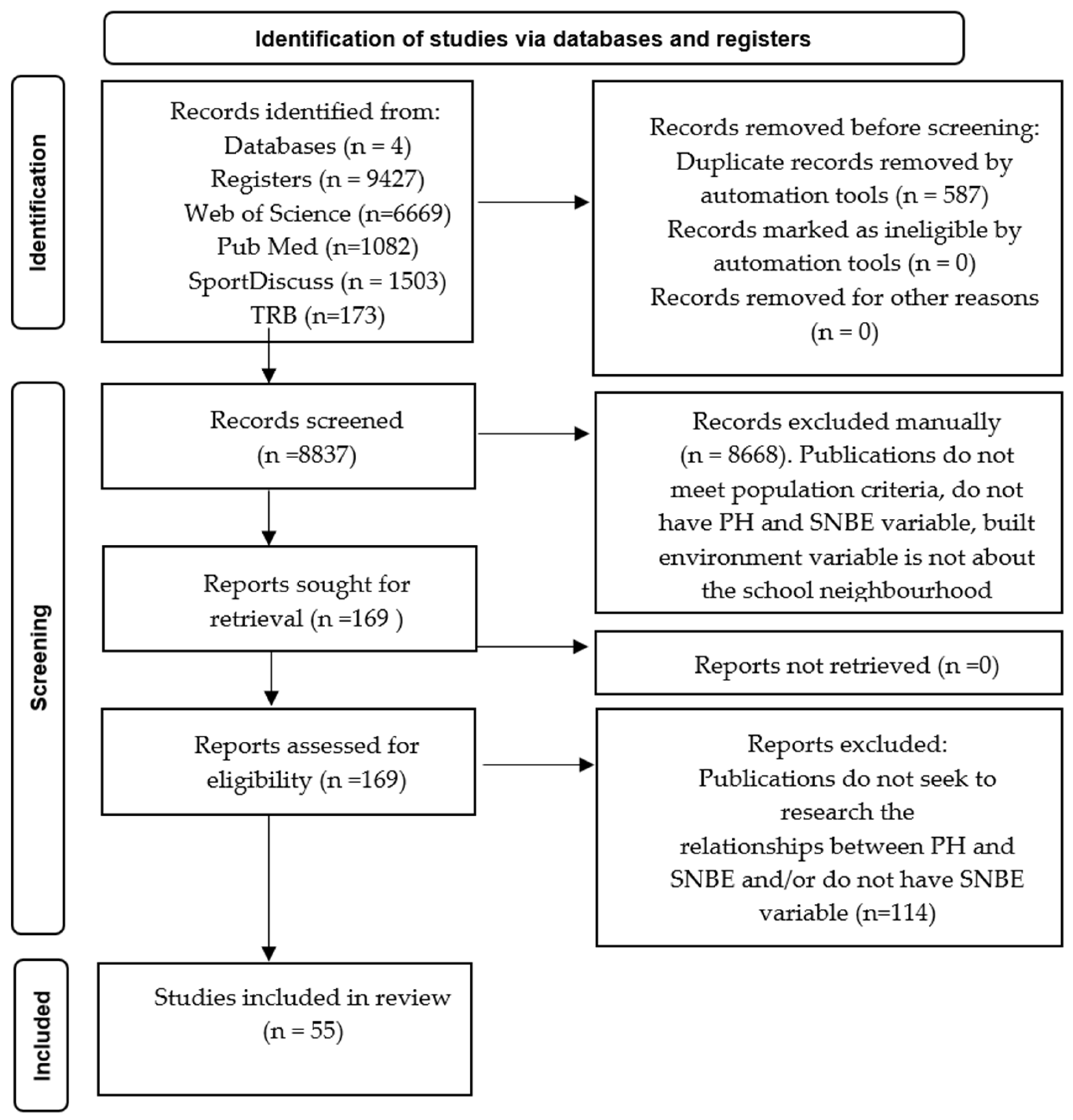
The flowchart of the study selection process is presented in Figure 1. The initial search strategy produced 9427 articles. In particular, 6669 were found in Web of Science, 1082 in PubMed, 1503 in SportDiscus and 173 in TRB. Duplicate references (590) were then removed with the “Duplicate items” Zotero bibliographic tool, resulting in 8837 articles.
As recommended in the literature, the final selection has been carried out in three steps [16]. In the first step, titles and abstracts were screened (8837 articles) by I.D.-C. paired with P.C. and S.C.-S. The mean concordance among the researchers stood at 97.31% (I.D.-C. paired with P.C.) and 94.39% (I.D.-C. paired with S.C.-S.).
In the second step, full-text articles of eligible studies (169 articles) were reviewed for inclusion by the same pairs as in the first step. This led to a reduction of 82.85% (I.D.-C. paired with P.C.) and 88.17% (I.D.-C. paired with S.C.-S.) in the second stage. Furthermore, following deliberations to address disparities, the authors achieved complete consensus, reaching 100% agreement. Finally, after careful screening, 55 articles were selected (Figure 1).

2.4. Data Extraction and Analysis

All eligible studies were included in the scoping review regardless of whether the results reported significant or non-significant associations. However, in the results synthesis, only statistically significant associations were defined and related across categories. These associations include both positive and negative associations—that is, school neighbourhood built environment characteristics that either improve or worsen physical health outcomes (regardless of the statistical sign). This approach was adopted because statistically significant results represent empirically verifiable associations that can be reliably categorized and interpreted within a structured analytical framework. Non-significant associations should not be interpreted in terms of direction or effect, as statistical non-significance does not provide sufficient evidence to support such interpretations. This approach was adopted to ensure analytical interpretability and to optimize the signal-to-noise ratio within the data synthesis. Given the high volume of findings, prioritizing statistically significant associations also allowed for a clearer identification of scientific validated patterns. For context, a single study in the sample [17] reported 47 non-significant associations compared to 5 significant ones; documenting all such null results across the 55 included articles would have obscured the evidence and hindered the development of a scientifically tested categorical framework.
The information extracted from the selected studies was summarized using Excel. The RStudio 4.3.2 software was used to analyze and to plot the data obtained from the included articles. The DBI package facilitated database connections. For data manipulation, the dplyr, tidyr, and stringr packages provided efficient tools for filtering, transforming, and reshaping data. The ggplot2 package was used for creating high-quality data visualizations.
The primary analysis consisted of a frequency-based cross-tabulation of significant associations between school neighbourhood built environment categories and physical health categories. Each reported association was treated as an analytical observation, and contingency tables were used to calculate the number of associations corresponding to each combination of school neighbourhood built environment and physical health categories. The results were visualized using stacked horizontal bar charts.
To complement the primary frequency analysis, additional weighted cross-tabulations were conducted to explore whether the distribution of associations varied when accounting for study-level characteristics. Specifically, associations were weighted using two variables reported in the included studies: (1) total sample size and (2) the number of schools included in the study (school sample). For each weighting scheme, weighted frequencies were calculated by summing the corresponding values across school neighbourhood built environment (school neighbourhood built environment)–physical health (PH) category combinations. Values indicating missing information (e.g., “–” or “not reported”) were treated as missing data and excluded from the weighting procedure. The weighted distributions were visualized using stacked bar charts analogous to those used in the primary analysis, allowing comparisons between unweighted and weighted patterns of associations.
In order to take into account different social and economic determinants of health [18,19] several analyses were conducted. Firstly, an exploratory sensitivity analysis using weighted cross-tabulations was conducted to examine whether gender composition influenced the observed associations between categories. Secondly, to account for contextual differences, we stratified the synthesis of associations by regions and conducted frequency-based cross-tabulations to compare patterns across regions.

2.5. Study Quality Assessment

Following the recommendations of a recent systematic review [20] the quality of the identified studies was determined using a scientific literature questionnaire [21]. Consequently, three evaluators conducted individual assessments of study quality by categorizing them according to 15 predefined criteria. Each criterion was assigned a score of either 1 or 0, depending on its fulfilment. Criteria had a yes (1 point); no (0 points); or unclear (0 points) answer format. As a result, every reviewed article was scored on a scale ranging from 0 to 15 points. Following the same methodology employed for the study selection, the authors were divided into pairs (I.D.-C. paired with S.C.-S. and P.C.). After deliberations to address disparities, the authors achieved complete consensus, reaching 100% agreement. The description of the questions is shown in Supplementary Material C.

3. Results

The Results section is structured into six main headings according to the objectives of the current scoping review: (Section 3.1) The categorization: Identifying School Neighbourhood Built Environment and Physical Health Variables; (Section 3.2) Relationship Between the School Neighbourhood Built Environment Category and the Physical Health Category; (Section 3.3) A Weighted Cross-Tabulation Approach; (Section 3.4) Association Density; (Section 3.5) The Context: Regional Variations; (Section 3.6) Study Quality Assessment.

3.1. The Categorization: Identifying School Neighbourhood Built Environment and Physical Health Variables

In this scoping review, we identified a total of 45 articles that showed significant associations between school neighbourhood built environment and physical health (Supplementary Material D). Notably, 10 out of the 55 articles reviewed (18.2%) did not report significant findings [22,23,24,25,26,27,28,29,30,31].
Given the diverse nature of the variables relating to the built environment used in the current scoping review and the absence of universally accepted definitions in the articles analyzed, we have compiled a comprehensive list defining seven school neighbourhood built environment categories according to their conceptual characteristics: building, connectivity and network, greenness, food environment, land use, safety and other variables. The building category included variables describing architectural and urban planning characteristics of buildings, particularly those without an assigned function or that are functionally obsolete. Connectivity and network was the most extensive category, encompassing 32 variables associated with street layout, pedestrian and cycling infrastructure, traffic features, and accessibility-related elements. Due to the internal conceptual heterogeneity and the predominance of the connectivity and network category, this scoping review further subdivided the identified variables into three analytically distinct sub-dimensions: structural, functional, and operational. The structural sub-dimension comprised 11 variables reflecting street morphology and network configuration, representing the relatively stable geometric and topological properties of the street network. The functional sub-dimension included 13 variables capturing the presence and quality of pedestrian, cycling, and public transport infrastructure, reflecting the infrastructural capacity of the school neighbourhood environment to support active mobility. Finally, the operational sub-dimension encompassed eight variables related to traffic dynamics, regulation, and perceived traffic conditions, representing the dynamic functioning and management of the street environment.
The greenness category included eight variables capturing natural and vegetated environmental features. The food environment category consisted of 23 variables reflecting the availability and type of food outlets and retail environments. The land use category comprised variables characterizing the functional allocation of buildings and land uses including residential, recreational, industrial, and service-related land uses, as well as facilities supporting physical activity. The safety category was composed of variables addressing traffic-related safety and perceived safety conditions. Finally, the “other variables” category was created to group variables that could not form a distinct category, as at least two different variables and two different associations per each variable were required to define a new category. The building category comprised three variables, representing the minimum number observed, and the connectivity and network category was the most extensive category with a maximum of 32 variables. Across all categories, the number of variables ranged from 3 to 32, with a mean of 12.6 variables per category and a median of 8 variables (Table 2).
The physical health variables identified in the review were organized into seven categories based on conceptual similarity: beverage and food intake, body composition, mode of commuting, physical activity, respiratory, sedentary and weight status (Table 3). The beverage and food intake category comprised nine variables related to dietary behaviours and food consumption patterns. Physical activity also included nine variables, capturing different intensities and contexts of activity. The weight status category consisted of six variables reflecting anthropometric and weight-related outcomes, while the mode of commuting category included five variables associated with travel behaviours to and from school. Body composition comprised four variables describing adiposity-related measures or body fat-related variables. The respiratory health category included variables that directly reflect respiratory physical health conditions, for example wheeze during commuting to and from school. Finally, sedentary behaviour was represented by a single variable as multiple associations with the school neighbourhood built environment were identified. Across all physical health categories, the number of variables ranged from 1 to 9, with a mean of 5.1 variables per category and a median of 5 variables.

3.2. Relationship Between the School Neighbourhood Built Environment Category and the Physical Health Category

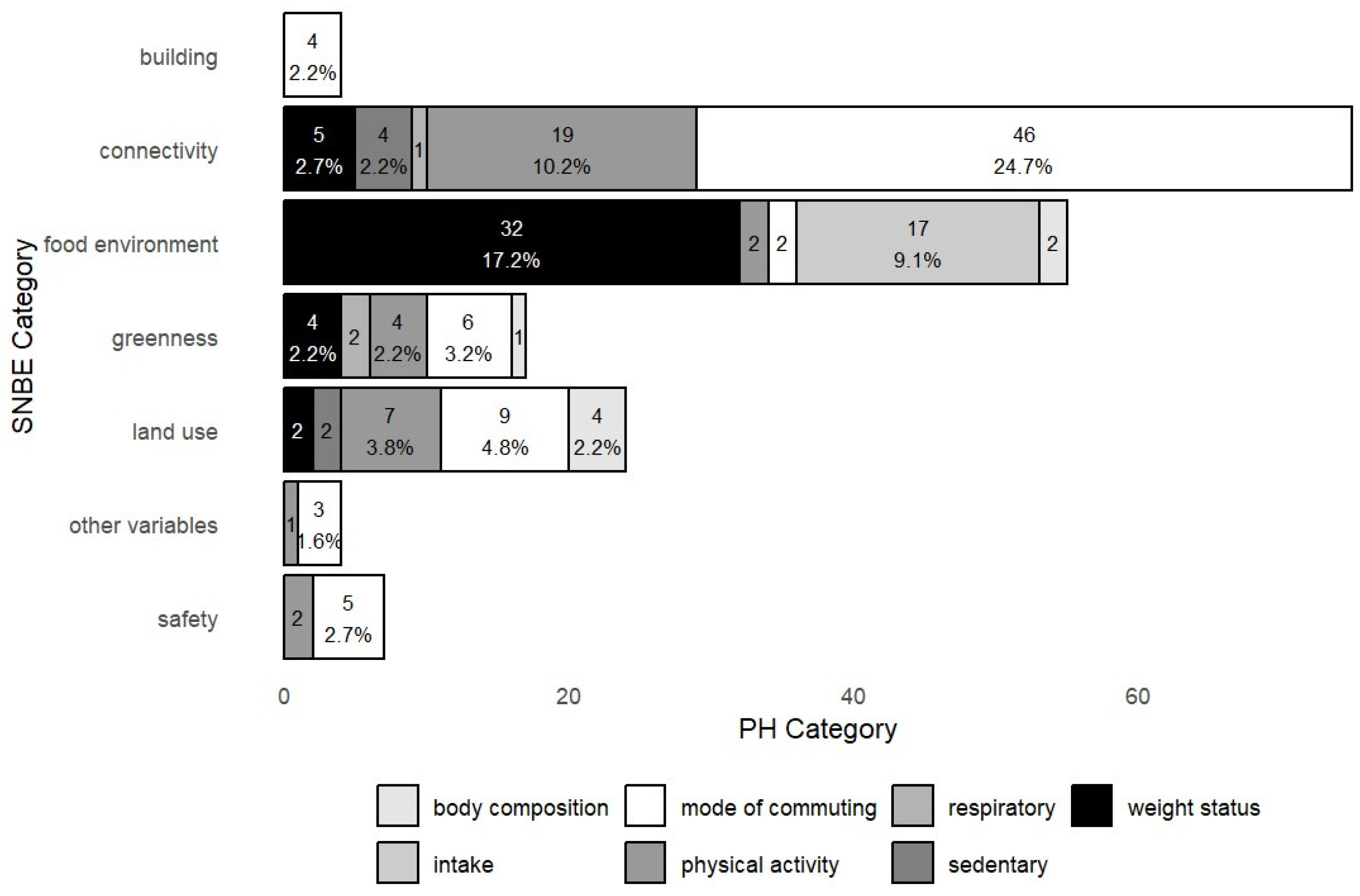
Regarding the associations among the categories listed below, it is important to highlight the connectivity and network category, which accounts for 40.4% of the total, and the food environment category, which represents 30.63%. Together, these two categories are the most influential, comprising 71.03% of the overall results. The findings based on categories are as follows (Figure 2):
Building (four significances within one physical health category, representing 2.1% of the total findings): Building variables are associated with mode of commuting in four instances (2.2%) [32,33].
Connectivity and network (75 significances, among five physical health categories, representing 40.4% of the total findings): It is the category with the highest number of significances. Connectivity is strongly associated with mode of commuting in 46 instances (24.7%) [4,8,11,12,32,33,34,35,36,37,38,39,40,41] and physical activity in 19 instances (10.2%) [39,41,42,43,44,45,46,47]. It also has associations with weight status in five instances (2.7%) [10,48], sedentary behaviour among four instances (2.2%) [45,46] and respiratory health in one instance (0.5%) [49].
Food Environment (55 significances, among six physical health categories representing 30,64% of the total findings): It is the second category with the highest number of significant associations. Food environment is significantly related to weight status in 32 instances (17.2%) [50,51,52,53,54,55,56] and dietary beverage and food intake in 17 instances (9.1%) [17,50,57,58,59,60]. It also shows associations with mode of commuting [32,33], physical activity [44] and body composition in two instances (1.1%) [54,61] each.
Greenness (17 significances, among five physical health categories, representing 9.1% of the total findings): Greenness has notable associations with mode of commuting in 6 significances (3.2%), physical activity in 4 significances (2.2%) and weight status in three instances (1.6%). It is also related to respiratory health and body composition in two instances (1.1%) each.
Land use (21 significances, among five physical health categories, representing 11.29% of the total findings): Land use is linked to mode of commuting in nine instances (4.8%) [8,12,32,33,62], physical activity in seven instances (3.8%) [42,45,46,63] and body composition in four instances (2.2%) [64]. It also shows a minor association with sedentary behaviour [45,46] and weight status [64], with each category reaching two significances (0.5%).
Safety (seven significances among two physical health categories, representing 3.76% of the total findings): The safety category is associated with mode of commuting in five instances (2.7%) [8,35,65,66] and physical activity in two instances (1.1%) [46].
Other variables (four significances, among one physical health category, representing 2.1% of the total findings): This category shows three associations with mode of commuting (1.6%) [62,66], and one with physical activity (0.5%) [41].

3.3. A Weighted Cross-Tabulation Approach

The weighted cross-tabulation analyses were conducted to complement the frequency-based analysis by accounting for differences in study sample characteristics (Supplementary Material E). Three complementary weighting strategies were applied: weighting by participant sample size, school sample size, and percentage of girls within the study samples.

3.3.1. Weighted Cross-Tabulations by Sample Size

When associations were weighted according to participant sample size (n = 3,836,471 weighted units), a highly uneven distribution of associations across categories was observed. The most prominent pattern corresponded to the relationship between the food environment and weight status, which represented 75.27% of the total weighted frequency. The second most prevalent intersection was the connectivity and network category paired with mode of commuting (11.88%) (Supplementary Material E).

3.3.2. Weighted Cross-Tabulations by School Sample

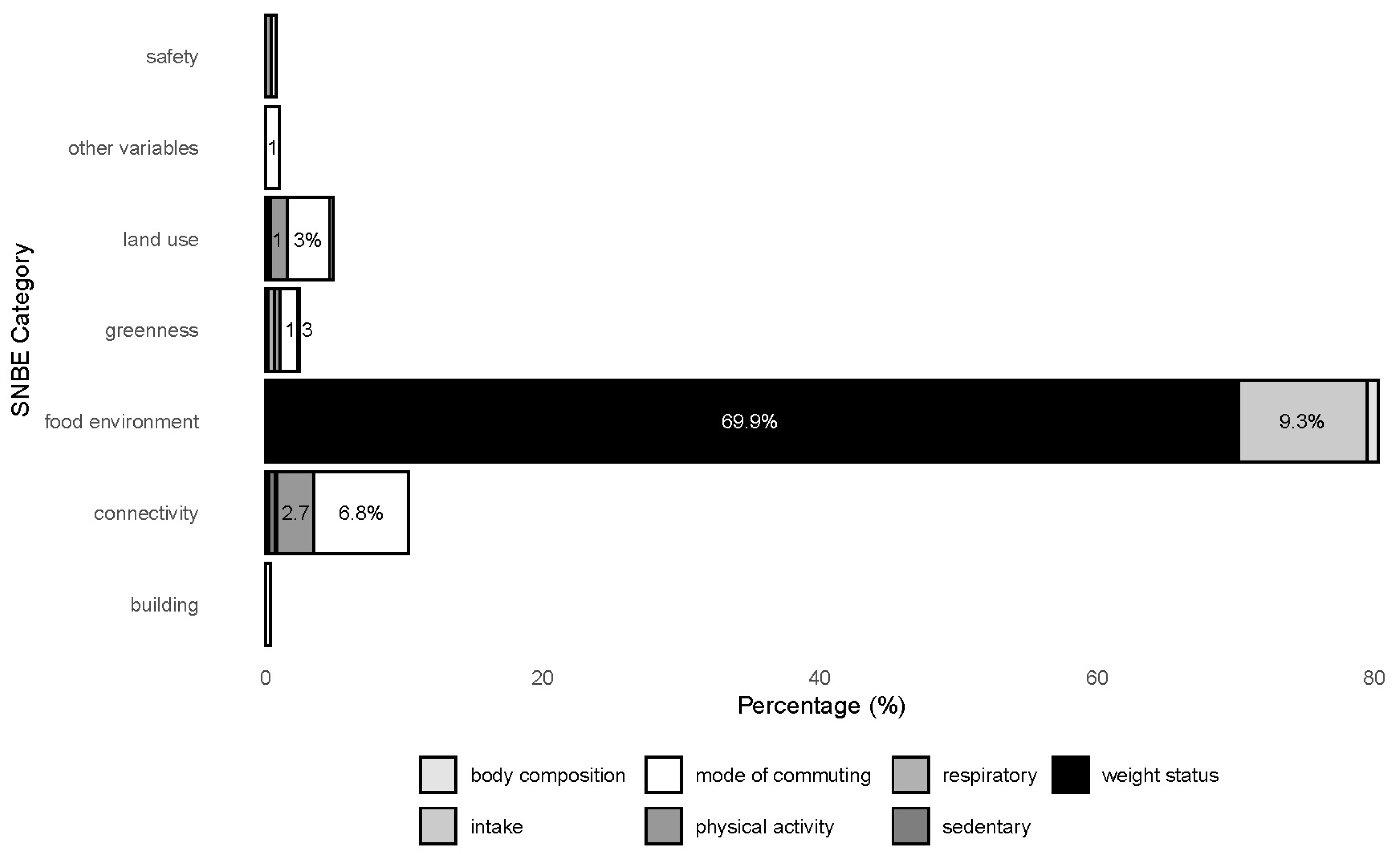
When weighting was performed according to the number of schools included in each study (n = 44,517 weighted units; 17 values not reported), a similar pattern was observed. The association between the food environment and weight status remained the dominant relationship, accounting for 69.94% of the weighted frequency. Connectivity and network variables also showed relevant contributions, particularly in relation to mode of commuting (6.84%) and physical activity (2.70%). Associations involving land use and commuting behaviours (3.04%) and greenness and commuting behaviours (1.28%) also appeared with moderate weighted representation (Figure 3).

3.3.3. Girl Sample: A Weighted Study Analysis

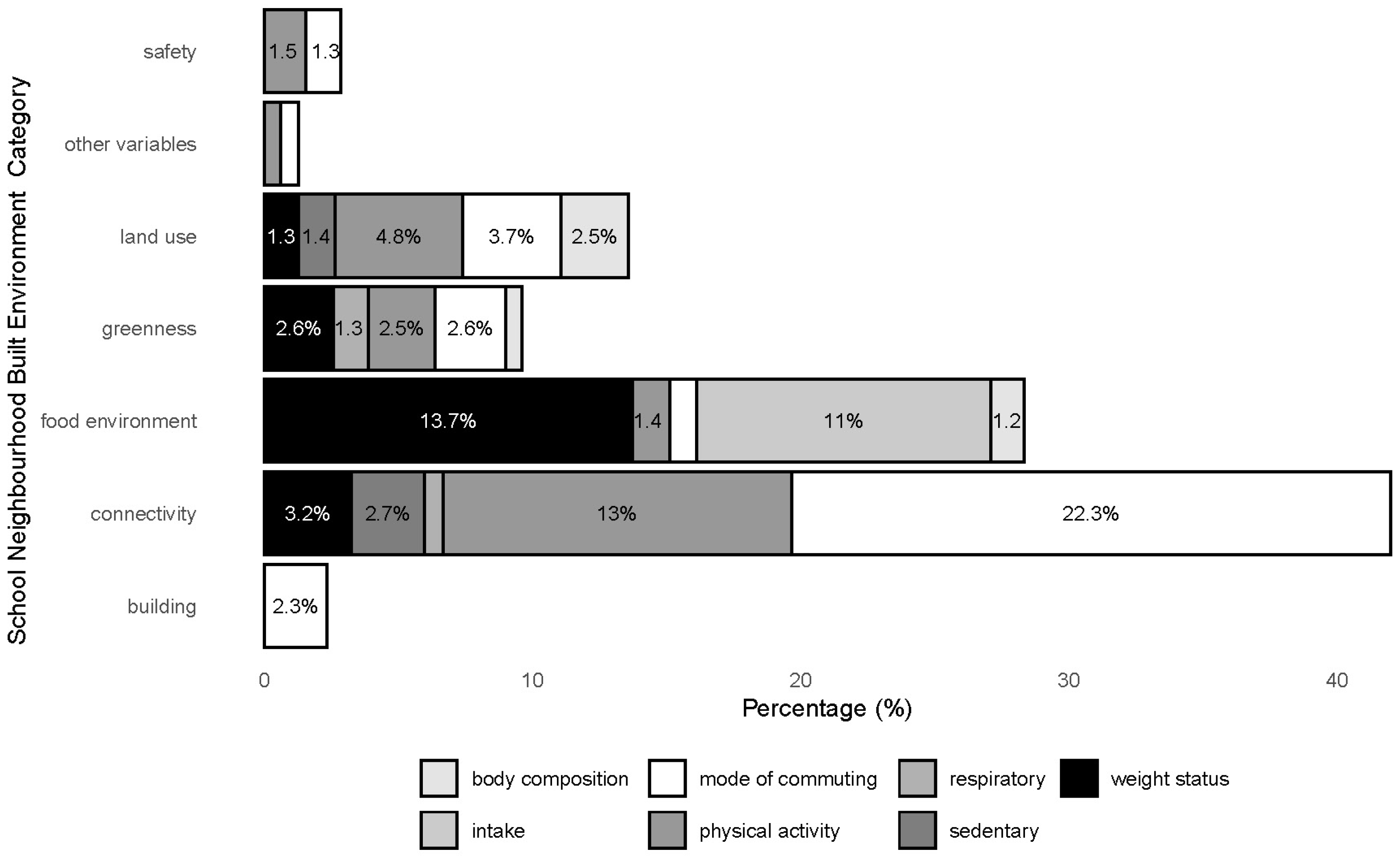
The third weighted cross-tabulation examined the distribution by proportion of girls in the study samples (32 not-reported values). This analysis yielded a substantially different distributional pattern relative to the overall and school samples. The most prominent associations were observed between connectivity and network variables and mode of commuting (22.32%), followed by connectivity and physical activity (13.02%), and food environment and weight status (13.73%). Other relevant relationships included associations between food environment and dietary intake (10.97%), land use and physical activity (4.77%), and land use and commuting behaviours (3.66%). Greenness variables also showed moderate contributions across several health domains, including commuting behaviour, physical activity, and weight status (Figure 4).

3.4. Association Density

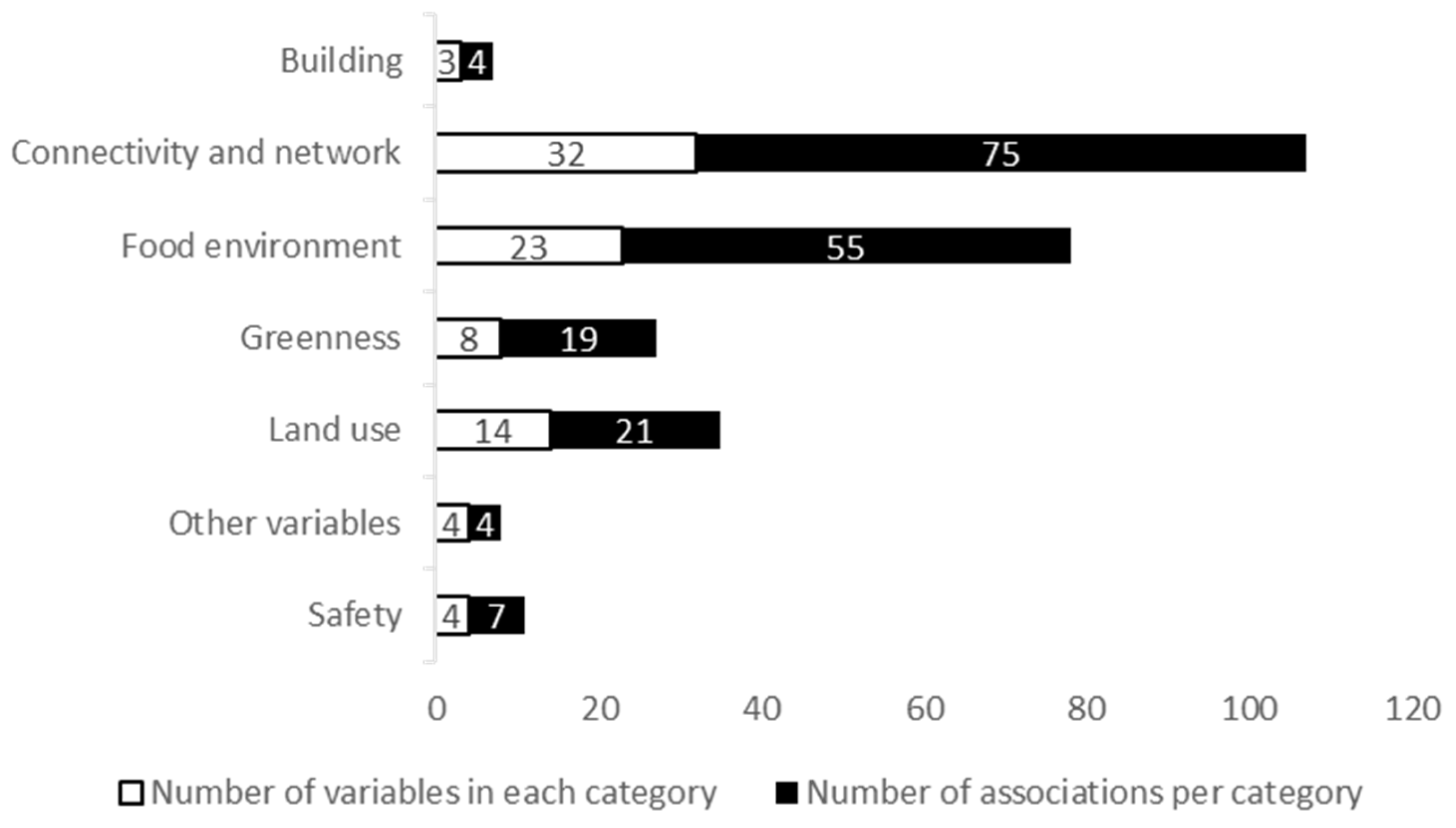
The association density was calculated in order to under to understand the distribution of the results. The food environment category exhibited the highest association densities, with 55 significant associations derived from 23 variables, yielding an association density of 2.39. This was followed by the greenness category, which presented 19 significant associations derived from eight variables, resulting in an association density of 2.38. Similarly, the connectivity and network category, comprising 32 variables, yielded 75 significant associations, corresponding to an association density of 2.34. Intermediate distributions were observed for safety, with a density of 1.74 with four variables and seven associations, and land use, with an association density of 1.50 which included 14 variables and accounted for 21 associations. The lowest distributions were observed for buildings and other variables, which showed 1.33 and 1 respectively. Overall, the ratio of associations to variables ranged from 1.00 to over 2.39 across categories (Figure 5).

3.5. The Context: Regional Variations

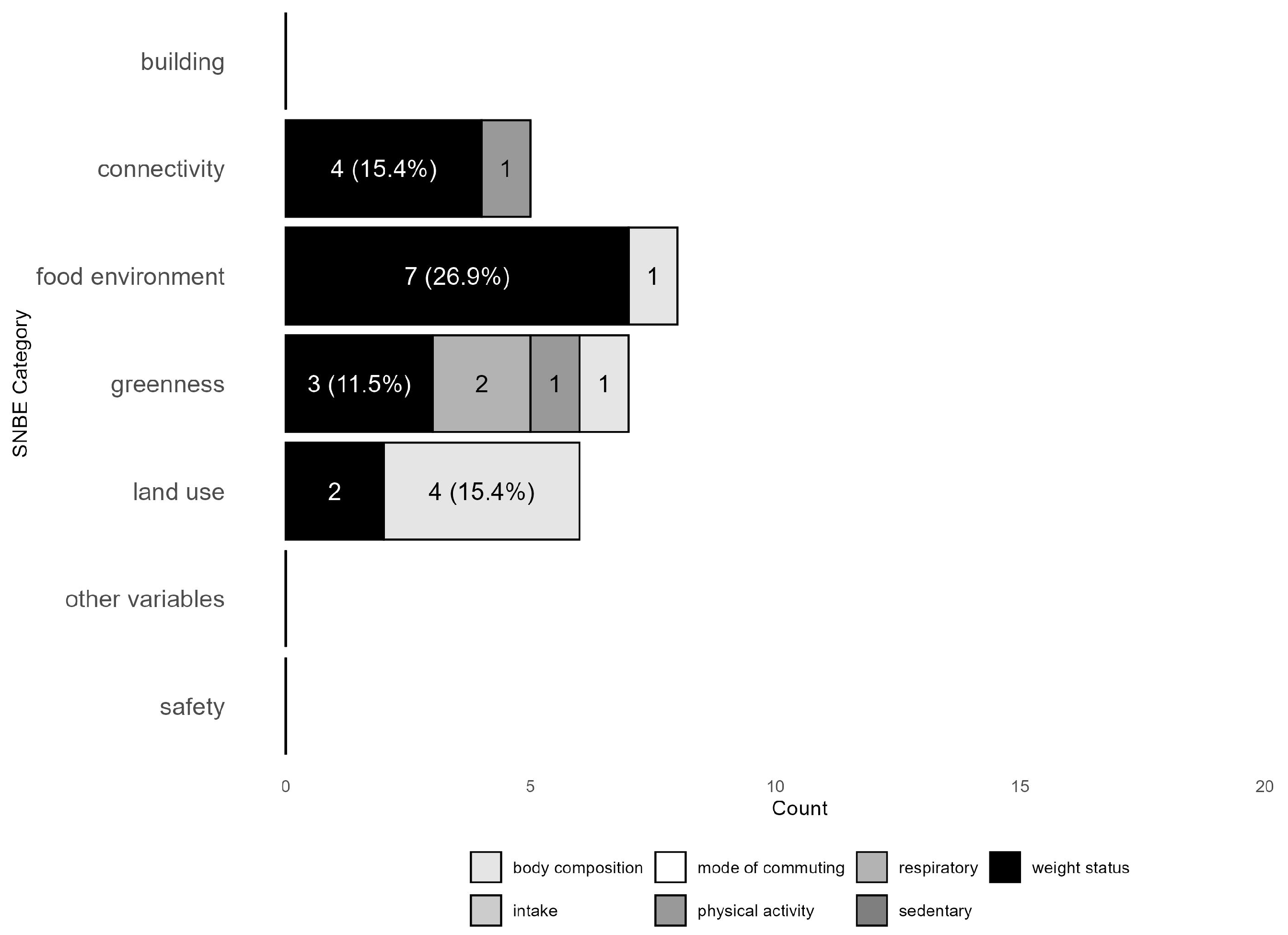
To examine contextual variations in the relationships between categories, frequency-based cross-tabulations stratified by regions were performed (Supplementary Material E). A total of 26 school neighbourhood built environment–health outcome associations were identified for Asian studies (Figure 6). The food environment was the most frequently studied school neighbourhood built environment category (n = 8; 26.9% of associations attributed to weight status). It is important to clarify that the studies on the food environment are predominantly conducted in East Asian contexts, specifically China, Japan, and Taiwan [48,54,55,67]. The regional cross-tabulation analysis is followed by land use (n = 6; 15.4% linked body composition) and connectivity (n = 5; 15.4% linked to weight status). Greenness was associated with a diverse set of outcomes, including weight status (n = 3; 11.5%), respiratory health (n = 2), physical activity (n = 1), and sedentary behaviour (n = 1). The building, other variables, and safety categories yielded no observations in this region (Supplementary Material E).
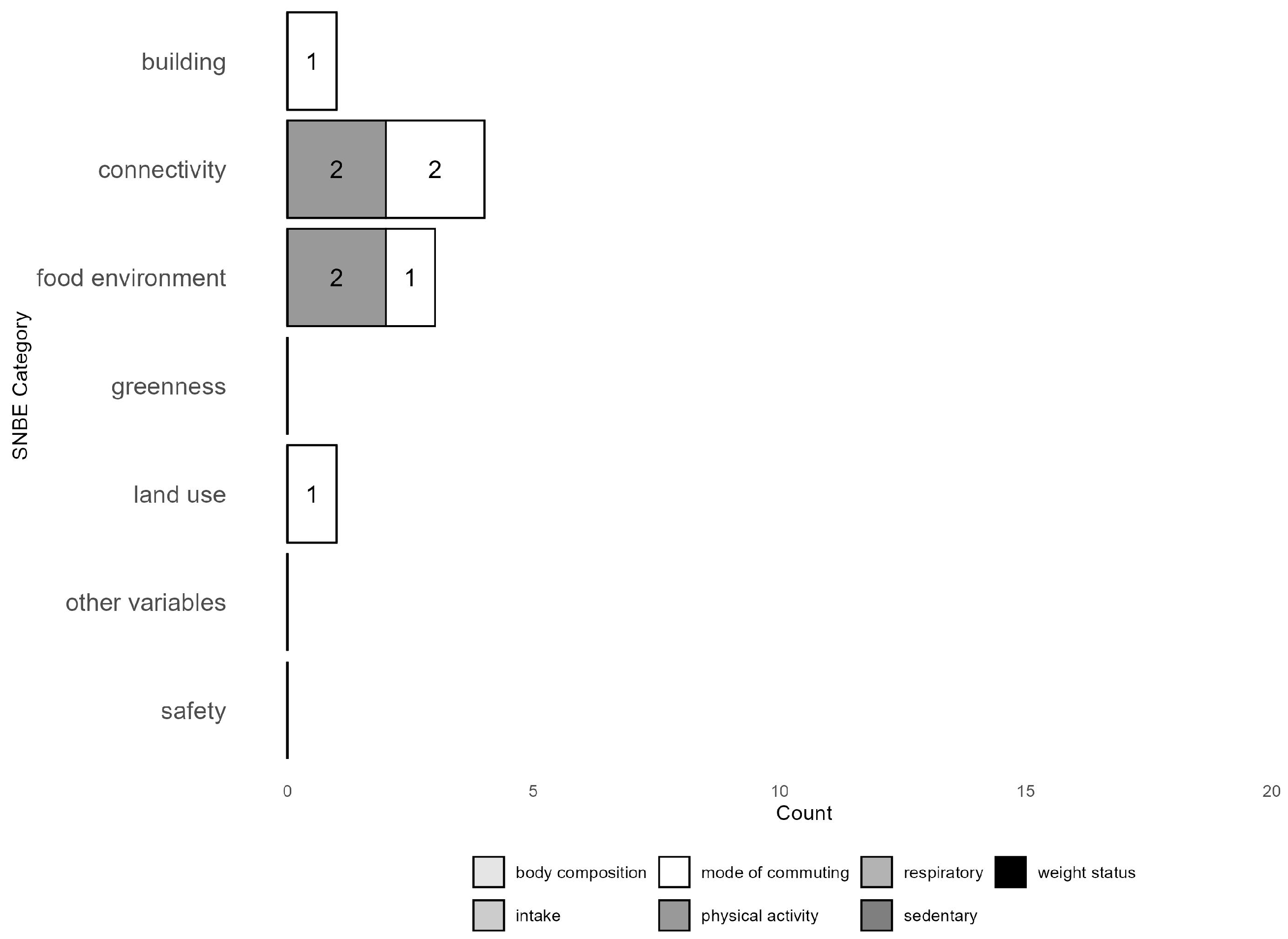
Across Central America a total of nine associations were identified. Connectivity emerged as the most prominent school neighbourhood built environment category, accounting for 44.4% of the total associations (n = 4). This specific school neighbourhood built environment feature showed a balanced relationship with physical health, being equally associated with both the mode of commuting (n = 2, 22.2%) and physical activity (n = 2, 22.2%). The food environment constituted the second most frequently associated school neighbourhood built environment category, representing 33.3% of the total observations (n = 3). Its relationship with physical health was predominantly linked to physical activity (n = 2, 22.2%), alongside a secondary association with the mode of commuting (n = 1, 11.1%). Finally, the school neighbourhood built environment categories of building and land use were less frequently observed, each accounting for a single association (n = 1, 11.1%, respectively, Figure 7).
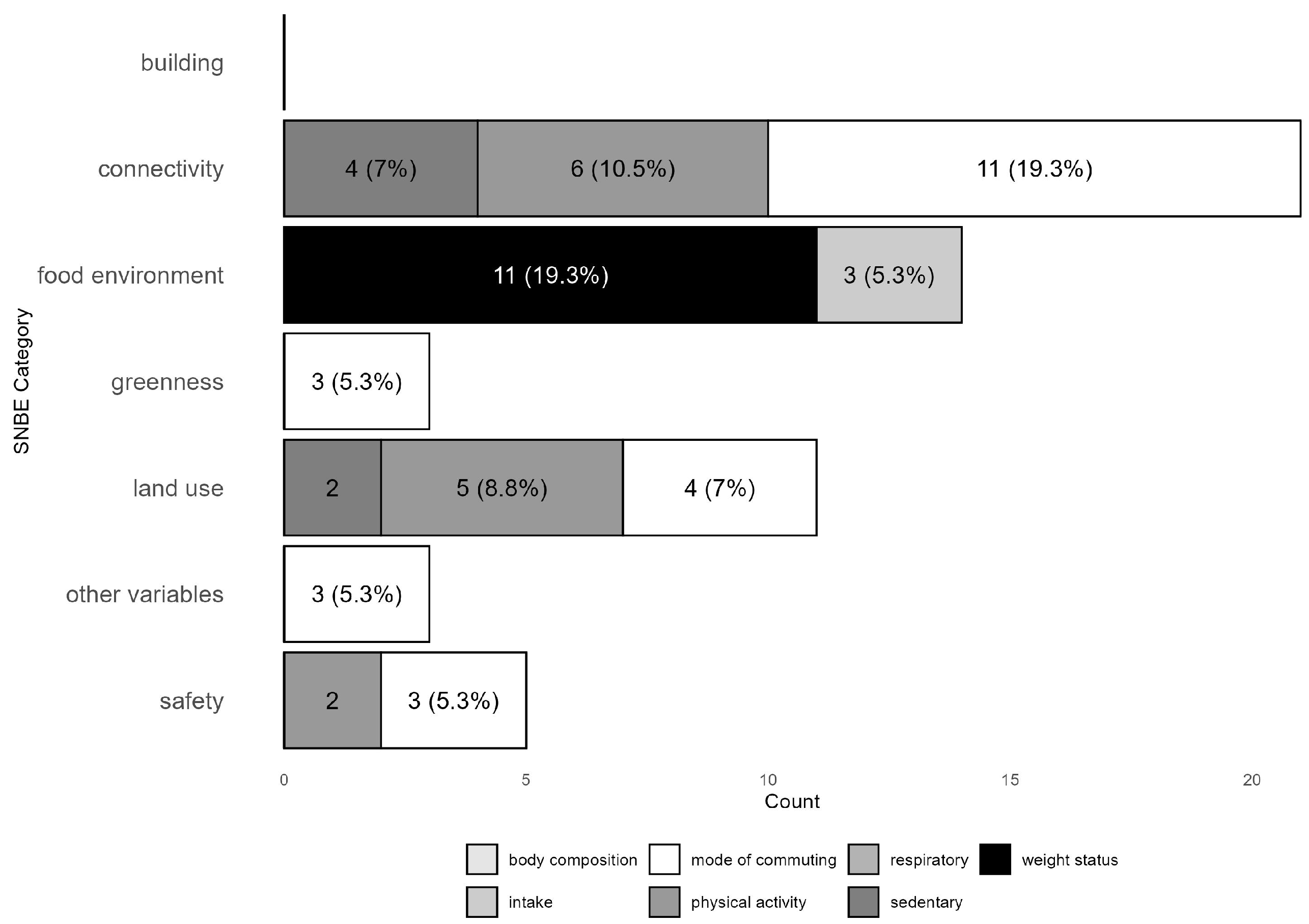
Europe exhibited the greatest diversity in school neighbourhood built environment–health outcome combinations (n = 57 total associations). Connectivity emerged as the most widely associated school neighbourhood built environment category, representing 36.8%. This specific school neighbourhood built environment feature demonstrated diverse relationships with physical health, being primarily linked to the mode of commuting (n = 11, 19.3%), followed by physical activity (n = 6, 10.5%) and sedentary behaviours (n = 4, 7.0%). The food environment constituted the second most frequently observed school neighbourhood built environment category, accounting for 24.6% of the total associations (n = 14). Unlike connectivity, the relationship of this school neighbourhood built environment factor with physical health was highly specific, being predominantly associated with weight status (n = 11, 19.3%) and, to a lesser extent, with intake (n = 3, 5.3%). Land use accounted for 19.3% of the total school neighbourhood built environment associations (n = 11). This category related to multiple physical health outcomes, specifically demonstrating connections to physical activity (n = 5, 8.8%), the mode of commuting (n = 4, 7.0%), and sedentary behaviours (n = 2, 3.5%). Finally, safety represented 8.8% of the observations (n = 5) and showed relationships with both the mode of commuting (n = 3, 5.3%) and physical activity (n = 2, 3.5%). Finally, greenness (n = 3, 5.3%) and other variables (n = 3, 5.3%) within the school neighbourhood built environment were exclusively associated with one specific physical health outcome: the mode of commuting (Figure 8).
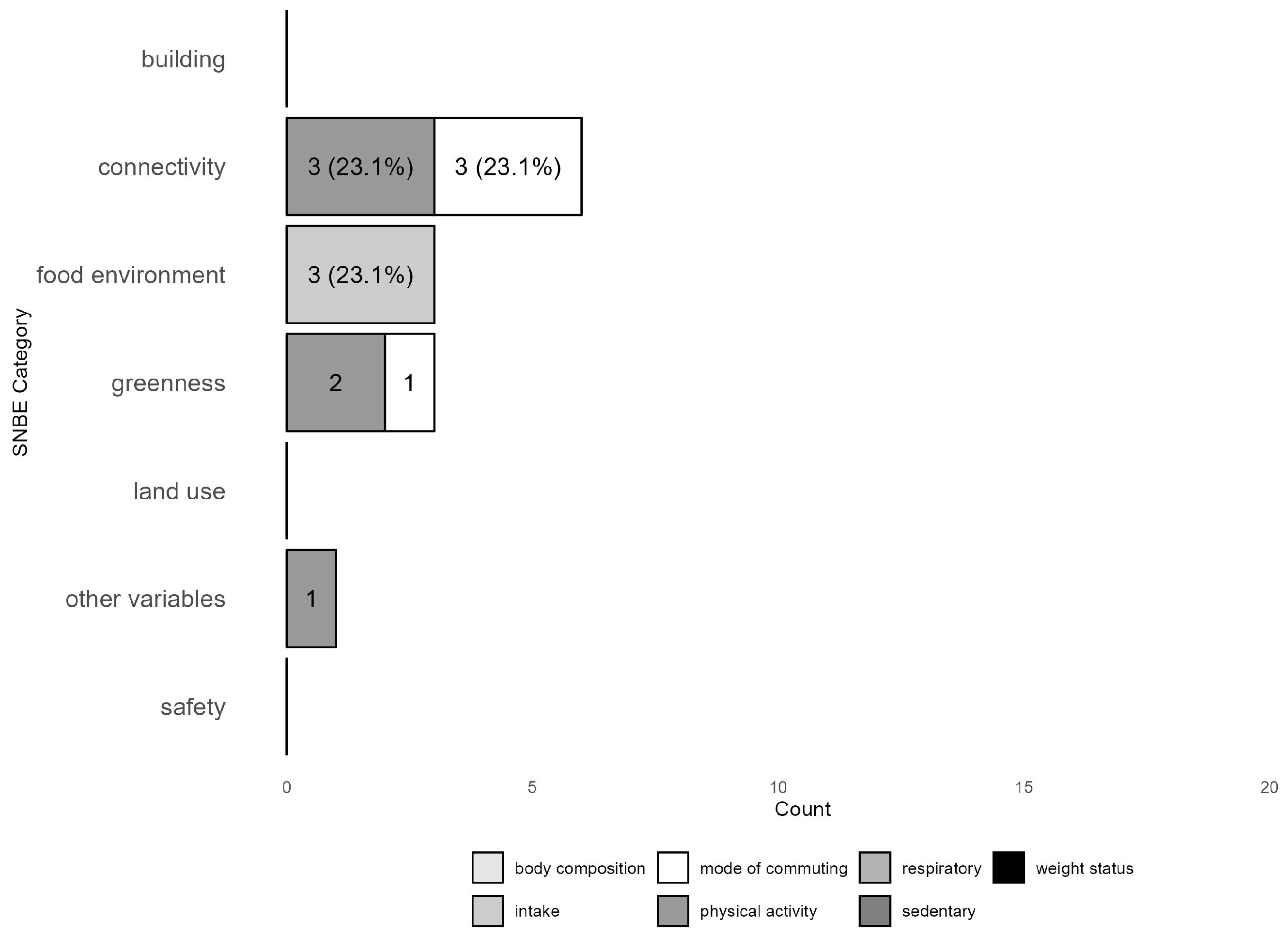
Thirteen associations were identified across international studies. Connectivity was the most studied school neighbourhood built environment category, with equal proportions linked to physical activity (n = 3; 23.1%) and mode of commuting (n = 3; 23.1%). Food environment associations were exclusively linked to beverage and food intake (n = 3; 23.1%), and greenness was associated with physical activity (n = 2) and mode of commuting (n = 1) (Figure 9).
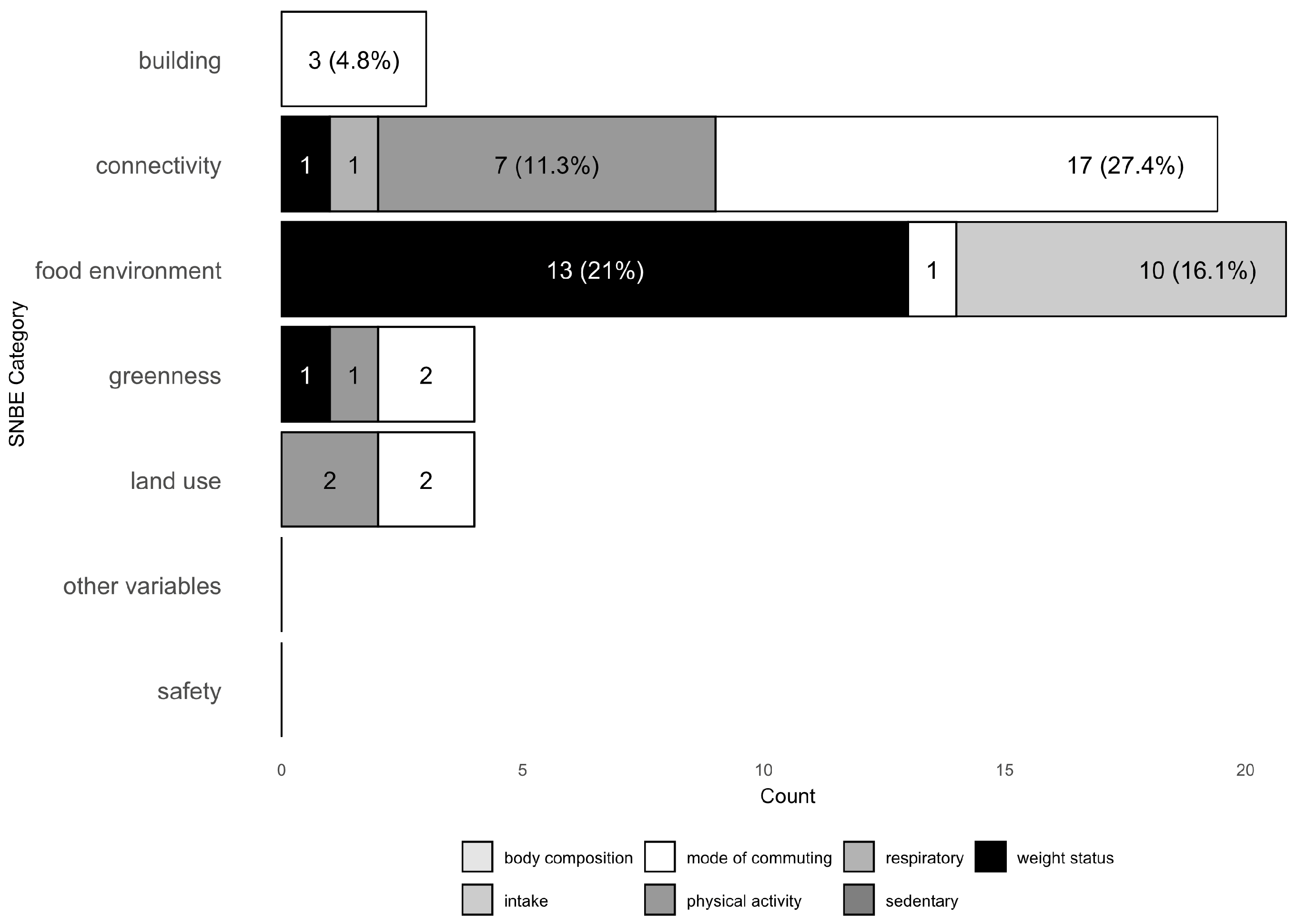
The largest absolute number of associations was recorded in North America (n = 62). Connectivity was the leading school neighbourhood built environment category (n = 26), with a substantial proportion linked to mode of commuting (n = 17; 27.4%) and physical activity (n = 7; 11.3%). The food environment was strongly associated with weight status (n = 13; 21%) and beverage and food intake (n = 10; 16.1%). Greenness and land use presented low but diverse profiles, while building-related variables were exclusively linked to mode of commuting (n = 3; 4.8%). Safety generated no associations in this region (Figure 10).
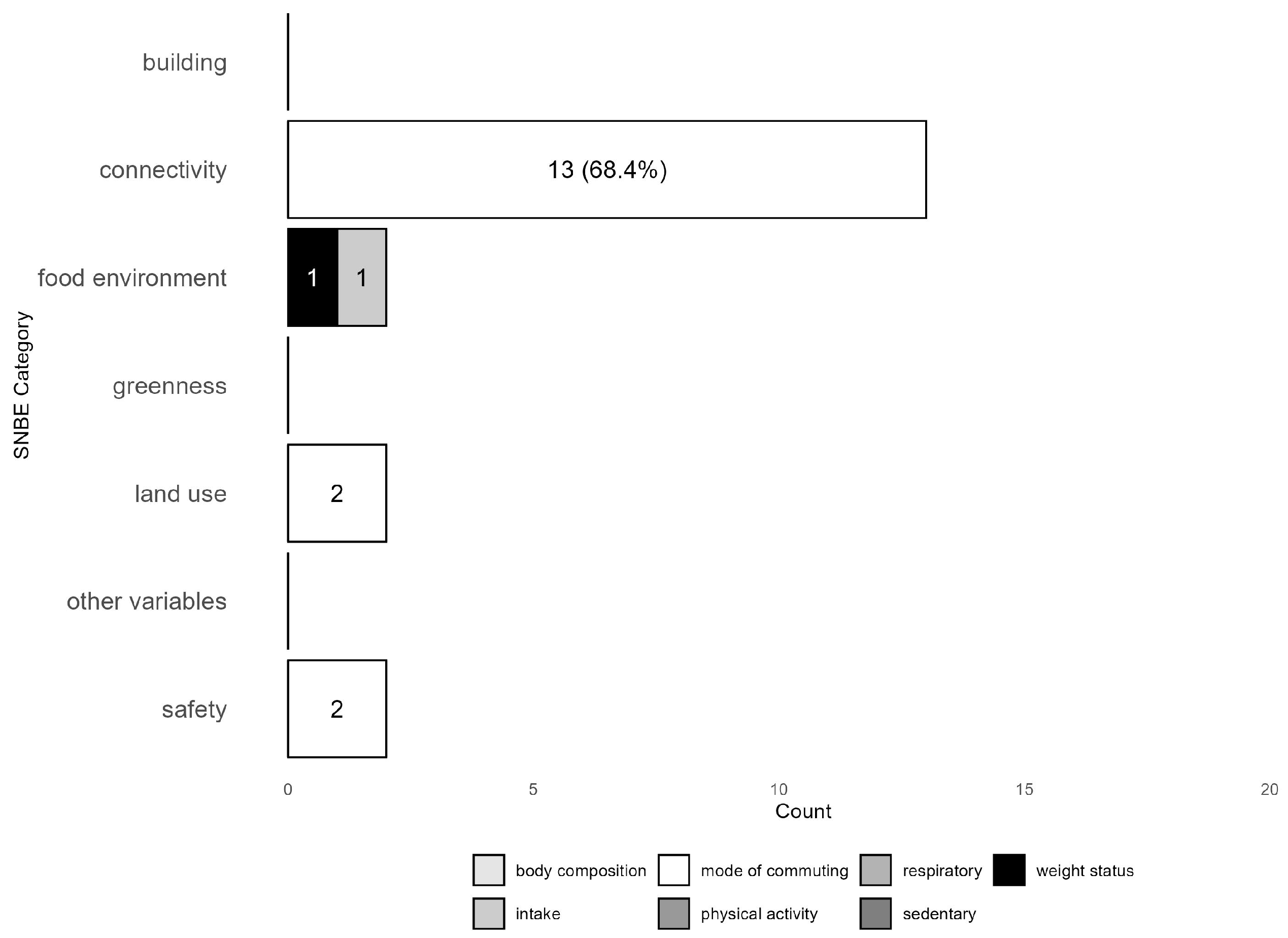
Oceania displayed the most concentrated pattern of all regions (n = 19), with connectivity linked to mode of commuting (n = 13; 68.4%). Food environment associations were minimal (weight status n = 1; beverage and food intake n = 1), and land use and safety were exclusively linked to mode of commuting (n = 2 each). Greenness, building, and other variable categories yielded no observations (Figure 11).

3.6. Study Quality Assessment

Following the same methodology employed for the study selection, the authors were divided into pairs (I.D.-C. paired with S.C.-S. and P.C.). The percentage of agreement among the researchers for the quality assessment was 82.80% (I.D.-C. paired with Y.Y.-Y) and 85.47% (I.D.-C. paired with P.C.). Following deliberations to address disparities, the authors achieved complete consensus, reaching 100% agreement. Descriptions of the questions and the results are shown in Supplementary Material D.
After analyzing the quality of the studies, 63.63% obtained a score exceeding 10 out of 15 points. The questions with 15 points (maximum score) were “objective in the study”, study design”, “description of the study population”, “description of the measures used” and “description of the data source and data collection”. The questions with the lowest scores were “randomization of the sample” (10.91%) and “indication of participants with missing data” (41.82%).

4. Discussion

This scoping review synthesizes evidence on categories based on the associations between school neighbourhood built environment characteristics and physical health outcomes by examining its internal structure. Seven school neighbourhood built environment categories are proposed: building, connectivity and network, food environment, greenness, land use, safety and other variables. In particular, associations were found between school neighbourhood built environment and physical health in five categories: body composition, mode of commuting, physical activity, sedentary behaviour and weight status. The findings also demonstrate that certain school neighbourhood built environment categories tend to be preferentially associated with specific physical health domains and that these associations vary both across the weighted cross-tabulated sample and when stratified by region.
A central finding of this review is the predominance of the connectivity and network and food environment categories, which together account for 46.75% of the data variability and more than 70% of all significant associations. This predominance is evidenced by the growing number of systematic reviews that specifically examine the relationships between various dimensions of the food environment and physical health outcomes [68,69,70,71] and the connectivity and network category [72,73]. However, despite the clear dominance of the connectivity and network category, the findings also reveal gaps within this highly represented domain. For example, variables such as public transit, which was associated with physical activity in another scoping review among children, adults, and older populations [74], were not found in the present review. This absence suggests that, even within the most extensively studied and operationalized school neighbourhood built environment category, some dimensions of the built environment may remain underexplored, probably due to the complexity of urban planning [6].
The connectivity and network category showed a predominant relationship with mode of commuting and physical activity outcomes, which is consistent with findings from systematic reviews reporting that the transport infrastructure is associated with physical activity and active commuting among children and adolescents [75,76]. When the analysis was stratified by region, two particularly relevant aspects emerged within the connectivity and network category. First, this category appeared as the dominant domain in four of the six regions analyzed—Central America, Europe, Oceania and in the international context—highlighting the global relevance of connectivity-related school neighbourhood built environment features for children’s and adolescent’s physical health. Second, in Oceania, it is especially relevant, and the associations between connectivity and physical health were exclusively related to the mode of commuting category. This concentration might reflect a strong research tradition in antipodean cities focusing on children’s active mobility led by influential scholars such as Sandra Mandic, Erika Ikeda, Billie Giles-Corti or Anna Timperio, among others, whose work has extensively examined how neighbourhood built environment shapes children’s travel behaviour [11,65,77,78]. However, this scoping review reveals a divergent pattern in Asia as the only context where no significant associations were observed between network connectivity and commuting mode. This discrepancy may be attributed to contrasting urban densities; for instance, while Australia maintains a sparse population density of 3.3 inhabitants/km2, Taiwan exhibits a high-density threshold of 652.1 inhabitants/km2 [79]. Such high-density environments in Asia pushed strategic sustainable policies in some countries, including private vehicle restrictions and public transport investment, which improve the robustness of public transport ecosystems [80]. Consequently, these structural factors drive exceptionally high rates of active school commuting, with a baseline prevalence of 55% across Asia, reaching 82% [81] in China and between 87% and 93% in Japan [82]. These figures suggest that in some Asian contexts, active travel exhibits a structural ubiquity which potentially shifts research priorities toward other physical health determinants, as modal choice does not currently constitute a priority public health concern in the region.
When associations between the school neighbourhood built environment and physical health were weighted by participant sample size, the relative contribution of connectivity decreased from 40.4% to 11.88% and a comparable pattern was observed when weighting by school sample size, representing 6.84%. These differences suggest that while connectivity-related variables are the most frequently examined built environmental domains in the literature, their relative prominence is sensitive to the characteristics of the study populations considered. Moreover, the comparison across analytical approaches indicates that some associations identified in the frequency analysis diminish or disappear when weighting procedures are applied. This pattern may reflect that certain relationships are supported by a limited number of studies with relatively small samples, whereas others—particularly those based on large population datasets—gain prominence when sample size is considered.
The food environment category exhibited a stronger tendency toward associations with weight status and dietary beverage and food intake, aligning with scoping reviews indicating consistent relationships between these categories [83,84]. Interestingly, no association was found between the food environment category and the sedentary category, which may indicate that other built environmental or youth behaviours [85] play a more relevant role in shaping sedentary patterns among children and adolescents. It is interesting to highlight that when weighting procedures were applied, the connectivity and network category, which dominated the general analysis, became the second most prominent group of associations, while the food environment category clearly dominated the results. This shift suggests that studies examining the food environment, which is directly related to dietary behaviours and nutrition, tend to involve substantially larger school samples [52,53,60] and population samples compared with studies focusing on other built environmental domains. Moreover, in the regions analyzed, the food environment category had the highest percentage of associations in both East Asia and North America, which might reflect a trend in which the obesogenic potential of school neighbourhoods has been most intensively studied due to the growing concern that dietary patterns are shifting toward greater consumption of highly processed grains and carbohydrate-rich foods, alongside declining fibre intake [86]. This transition occurred in the United States and other high-income countries between the 1960s and 1980s and, since the 2010s, has been unfolding across Asia [87], a trend reflected in the rising prevalence of obesity in both high-income countries and East Asia [88].
It is interesting to note that although the greenness category comprised a smaller number of variables and fewer absolute associations than the connectivity and network or food environment categories, it has the same density of associations, suggesting that greenness-related variables tend to capture school neighbourhood built environment dimensions that show consistent associations with physical health outcomes. This finding aligns with evidence from systematic reviews reporting positive associations between access to green spaces and health outcomes among children, particularly in relation to mental health [89,90].
The category safety is operationalized using a substantially smaller set of variables. This structural asymmetry may reflect the predominant focus on traffic-related safety indicators [91], given that all the included studies were conducted in high-income countries and particularly across Europe and Oceania, where research on school neighbourhood built environment is focused on road safety over other safety dimensions, such as crime-related risks. The paucity of significant findings may be attributed to inherent measurement limitations [92] and the persistent geographical bias in the literature. As previously reported, there is an underrepresentation of research conducted in the African continent and a scarcity of studies from Latin American contexts [6].
It is noteworthy that the frequency analysis and the analysis weighted by the percentage of girls show a broadly similar distribution of associations across categories. This similarity may be explained by the gender composition of the included samples, as the mean percentage of female participants across the studies was 49.2%, and with the exception of one article, the proportion of girls exceeded 45% in most samples. It must be noted that 37 associations drawn from eight articles did not report the number or percentage of girls in their samples, which introduces a non-trivial source of uncertainty into the present interpretation. The gender distribution of those unreported samples may deviate substantially from parity, which could result in a shift in patterns across the categories, as gender differences in the associations between the built environment and physical health have previously been reported [53,54].
Lastly, the categorization of variables has generated answers, being the first in the context of the school neighbourhood built environment related to physical health, but also questions. Particularly, the categorization of ‘’safety’’ has been debated as there are numerous definitions of what variables or concepts safety includes; e.g., the presence of crossing aids is identified as a safety component in [66], as well as safety concerns related to traffic volume, location of cycling infrastructure and the responsibility of road users [93]. Generally, these variables are also considered an urban infrastructure element so it could also be part of the connectivity and network category. However, since safety refers to a set of multiple variables and the scientific literature is also recognized as a category [8,33], due to its importance finally we decided to list them as separate categories. This diversity of definitions also applies to other categories such as connectivity and network. For that reason, i.e., the wide range of variables to define a specific built environment, it would be interesting to define different built environments to create a global definition of how a built environment can be defined to avoid incorrect comparisons and increase accuracy.

4.1. Limitation, Strengths and Future Research

The limitations of this research reside in the paper selection process, which only considered articles written in English and excluded studies published before the 21st century. Moreover, another limitation of this scoping review relates to the synthesis strategy adopted for reporting associations. Although all eligible studies were included in the review regardless of whether they reported statistically significant results, only statistically significant associations were categorized and analyzed in the result synthesis. This approach was adopted because significant associations allow for the identification and classification of empirically supported (statistically valid) relationships between school neighbourhood built environment variables and physical health outcomes.
Another limitation of this review relates to the limited incorporation of equity-oriented analyses in this scoping review, particularly regarding gender differences. Only 14.4% of the articles analyzed the associations separately by gender. This limited availability of gender-stratified or gender interaction analyses made it impossible to conduct a synthesis of potential differences between boys and girls. Future research should therefore prioritize gender-sensitive approaches, incorporating gender-disaggregated analyses in order to better understand how built environmental factors may influence health differently across genders, as previous studies pointed out the different behaviours within the same gender [94,95] as well as between genders.
Interestingly, not even a single school neighbourhood built environment category has been investigated across all the physical health categories (Figure 3). Categories like building, safety or other variables might need further exploration, as the associations between school neighbourhood built environment and physical health in the categories mentioned above account for less than 4% of the total. This underscores the need to increase interdisciplinary research to be able to compare various studies that have examined the same variable associations. In doing so, there will be more evidence to support modifying the built environment within school neighbourhoods as an intervention to prevent or improve physical health. Moreover, to better understand the existing contradictions and inconsistencies in the literature, it is recommended for future research to perform a granular analysis of the specific associations that act as determinants of health in children and adolescents. Such an approach would allow for a clearer distinction between health-promoting factors and those that are detrimental or remain inconclusive. In addition, future research should prioritize the use of random sampling strategies to enhance the accuracy and representativeness of findings [6], particularly given that the quality assessment in this scoping review identified randomisation of the sample as one of the lowest-scoring criteria. Low random sampling in built environment research has also been reported in another review [96].
Lastly, it would be interesting to apply standard methodologies in order to analyze the complexity of the school neighbourhood built environment. For instance, an avenue to strengthen the greenness category would be the incorporation of structured ecosystem assessment frameworks. Córdoba-Hernández and Camerin (2024) [97], building on the European MAES (Mapping and Assessment of Ecosystems and their Services) framework, proposed a flexible methodology that integrates ecosystem service identification, ecosystem capacity assessment, and the evaluation of land planning decisions. Applied to the school neighbourhood built environment, such an approach could move the greenness category beyond surface-level indicators (e.g., park presence) toward a more functional understanding of how ecosystems operate within school neighbourhood built environments.
Another approach would be the socio-ecological approach proposed by Urie Bronfenbrenner for studying human development that focuses on the progressive, mutual accommodation between an active, growing human being and the changing properties of the immediate and remote environments in which they live. The model conceives the ecological environment as a series of nested structures, where each level is contained within the next. These levels include the microsystem (the immediate setting like home or school containing the person), the mesosystem (the interrelations between two or more settings in which the person participates), the exosystem (external settings that affect the individual indirectly, such as a parent’s workplace), and the macrosystem (the overarching patterns of ideology and organization common to a culture or subculture) [98]. Several mediators and effect modifiers of built environment–health relationships were not examined in this scoping review because the included studies reported heterogenous and different socioeconomic variables, making comparisons across studies unfeasible. For instance, one study reported on ethnicity and the deprivation index (among other variables) [8], another examined the connection to community resources [26], and a third explored new immigrants [34]. Factors such as socioeconomic deprivation, social vulnerability, and environmental burdens may have substantially influenced the associations observed between categories. Evidence from previous research suggested that “equal” urban interventions were not sufficient, as deprived neighbourhoods often required more targeted and context-sensitive investments—not only in urban design, but also in social and educational policies [99]. Future research would benefit from adopting integrative analytical approaches capable of examining multiple equity dimensions and contextual variability in order to better capture the complexity of the school neighbourhood built environments and their influence on children’s and adolescents’ health outcomes.
This scoping review presents several strengths that support its methodological rigour and scientific value. First, the review was conducted in strict adherence to the PRISMA extension for Scoping Reviews (PRISMA-ScR), ensuring transparency and reproducibility throughout the entire process. Second, the search strategy was exceptionally comprehensive, combining 124 distinct search terms across four complementary databases—Web of Science, PubMed, SportDiscus, and the Transportation Research Board library—thereby maximizing coverage across health, sport science, and transport disciplines. This cross-disciplinary approach is particularly appropriate given the inherently interdisciplinary nature of the main scope. Third, the scale of the screening process is a methodological asset: 8837 articles were evaluated over a 22-year period (2000–2023), with a two-stage, dual-reviewer selection process that achieved high inter-rater concordance (ranging from 94.39% to 97.31%) and full consensus upon resolution of discrepancies. Fourth, this review introduces the first systematic categorization of school neighbourhood built environment variables in relation to physical health outcomes in children and adolescents, proposing seven built environment categories comprising 88 variables and seven physical health categories with 36 variables, a framework that provides both conceptual clarity and a replicable structure for future research. Fifth, the scoping suggested that certain school neighbourhood built environment categories tend to be preferentially associated with specific physical health domains. Finally, the quantitative analysis of association density adds analytical depth and allows for more nuanced interpretation of the relative importance and exploratory potential of each category.

4.2. Policy Implications

This study offers an interdisciplinary perspective, laying out the school neighbourhood built environment categories that found diverse associations with the physical health of children and adolescents. These results highlight the need for urban planning policies within the school neighbourhood built environment, especially in the categories of building, connectivity and network, food environment, greenness, land use and safety.
It is recommended to create policies by linking spatial planning, programmatic action, institutional coordination, and monitoring and evaluation, such as an active City Master Plan [100]. Stakeholder engagement is crucial in order to develop healthier policies, including with local governments, agencies, and departments from various sectors such as health, environment, and urban planning, as each discipline has its own expertise. For instance, regarding the connectivity and network category, in order to improve the levels of physical activity and increase active commuting, it would be beneficial to create and expand spaces for walking buses (organized student groups that actively commute to and from school along fixed routes at scheduled times) alongside improvements to pedestrian infrastructure through improving road safety measures and the removal of architectural barriers [101].
Concerning the food environment category, it should be noted that there are several examples of food policies specifically designed for indoor school settings; however, these policies vary widely in their approaches and implementations [102]. Nevertheless, there are no such policies regarding the improvement of the school neighbourhood built environment to create healthier environments. From these findings, we can suggest that school neighbourhood built environments should be prioritized and protected through comprehensive food environment policies around educational centres, among other policies, especially in order to improve the weight status and the beverage and food intake of children and adolescents.
Likewise, regarding land use, increasing residential density within the school neighbourhood built environment may represent a relevant planning strategy in order to improve active modes of commuting. Higher residential density can be achieved through greater building density, for example by increasing building height and incorporating collective housing typologies within the urban fabric [103]. Such configurations may support more active mobility patterns, as previous evidence suggests that students may choose school routes with higher residential density rather than the shortest path between home and school [103].
Additionally, it is suggested to create an international framework to establish mandatory law or recommendations for the school neighbourhood built environment to improve health among children and adolescents. These suggestions could be framed within current agreements such as the Sustainable Development Goals [104]. Particularly interesting is Spanish Royal Decree 1052/2022, of 27 December 2002, regulating low-emission zones, where it is specified that zones of special sensitivity, such as the school neighbourhood built environment, may be created to protect the most vulnerable sectors of the population, including children and adolescents. This regulation specifically addresses air quality limits and noise pollution levels, along with a sanctioning regime for access, circulation, and parking. While it represents a pioneering and significant advancement in improving the Spanish school neighbourhood built environment, it does not adequately address the conditions and characteristics of urban infrastructure, which are directly linked to urban planning. Summarizing, currently, several countries are drafting legislation to create healthier school neighbourhood built environments, but such efforts remain limited and have yet to be widely implemented.

5. Conclusions

This scoping review offers a proposal of how we can define the school neighbourhood built environment and the physical health of children and adolescents, by revealing the internal structure of the categories based on the variables used and the relationships between these proposed categories. Particularly, this scoping review suggests that the school neighbourhood built environment is defined by seven built environment categories: building, connectivity and network, food environment, greenness, land use, safety and other variables. It is composed of a diverse, heterogeneous, and asymmetrical range of variables across categories. Especially complex is the definition of the connectivity and network category, with 32 variables divided into three subcategories: structural variables, functional variables and operational variables. Likewise, this category, together with the food environment, shows a clear predominance, with both categories jointly accounting for 71.04% of all significant associations. Although the connectivity and network category appears to be most frequently associated in the literature, the weighted analyses indicate that the food environment category carries a much greater empirical weight when considering the scale of the studied populations.
The greenness category emerges as particularly noteworthy, showing an association density similar to that of the predominant categories. Regarding the physical health categories, we found associations between the school neighbourhood built environment and body composition, mode of commuting, physical activity, sedentary behaviour and weight status. Moreover, the findings also demonstrate that certain school neighbourhood built environment categories tend to be preferentially associated with specific physical health domains. The connectivity and network category shows a predominant relationship with mode of commuting and physical activity outcomes, and the food environment category exhibits a tendency toward associations with the weight status category and dietary beverage and food intake category.
Regional stratification of the frequency-based cross-tabulations revealed distinct geographic patterns in built environment influences. In Oceania, a trend emerged where associations between network connectivity and physical health were exclusively through the commuting mode category. Furthermore, the food environment appeared to be predominant across both East Asia and North America. Regarding the safety category, the existing research is exclusively based in Europe and Oceania. The associations in these regions remains characterized by a thematic concentration on road safety.
It should be noted that, although all eligible studies were included in the review, only statistically significant associations were used to construct the categorization framework. This decision was made to ensure analytical precision, as non-significant associations do not provide rigorous evidence to support interpretations regarding the direction or effect of relationships. To conclude, this scoping review aims to contribute to the scientific community by providing a structured framework for defining the school neighbourhood built environment and physical health, clarifying their conceptual definitions, the relative weight of variables, the patterns of associations between categories and the regional differences between categories.

Supplementary Materials

The following supporting information can be downloaded at https://www.mdpi.com/article/10.3390/land15040589/s1: Supplementary Material A: Preferred Reporting Items for Systematic reviews and Meta-Analyses extension for Scoping Reviews (PRISMA-ScR) Checklist; Supplementary Material B: Search terms and PICO strategy; Supplementary Material C: Results of the quality assessment; Supplementary Material D: Scopyng review Data; Supplementary Material E: Analysis tables.

Author Contributions

Conceptualization: I.D.-C., P.C. and S.C.-S.; methodology: I.D.-C., P.C. and S.C.-S.; software: I.D.-C.; formal analysis: I.D.-C.; investigation: I.D.-C.; data curation: I.D.-C.; writing—original draft preparation: I.D.-C.; writing—review and editing: I.D.-C., P.C., S.C.-S. and J.M.-G.; visualization: I.D.-C.; funding acquisition: I.D.-C., P.C. and S.C.-S. All authors have read and agreed to the published version of the manuscript.

Funding

This research was primarily funded by the European Regional Development Fund (EU FEDER) and the Regional Ministry of Economic Transformation, Industry, Knowledge and Universities, Junta de Andalucía (project reference B-CTS-160-UGR20). Moreover, I.D.-C was supported by the Spanish Ministry of Science, Innovation and Universities and the State Research Agency (PTA2023-023892-I).

Data Availability Statement

The original contributions presented in the study are included in the article/Supplementary Material. Further inquiries can be directed to the corresponding author.

Conflicts of Interest

The authors declare no conflicts of interest.

Abbreviations

The following abbreviations are used in this manuscript:
ACSActive commuting to and from (to/from) school
BMIBody Mass Index
GISGeographic Information System
MPAModerate Physical Activity
MVPAModerate to Vigorous Physical Activity
PAPhysical Activity
PEDSPedestrian Environment Data Scan
physical healthPhysical Health
VPAVigorous Physical Activity

References

  1. Rydin, Y.; Bleahu, A.; Davies, M.; Dávila, J.D.; Friel, S.; De Grandis, G.; Groce, N.; Hallal, P.C.; Hamilton, I.; Howden-Chapman, P.; et al. Shaping Cities for Health: Complexity and the Planning of Urban Environments in the 21st Century. Lancet 2012, 379, 2079–2108. [Google Scholar] [CrossRef]
  2. Rodríguez, D. Urban Health 2021. Available online: https://www.who.int/news-room/fact-sheets/detail/urban-health (accessed on 31 March 2026).
  3. Handy, S.L.; Boarnet, M.G.; Ewing, R.; Killingsworth, R.E. How the Built Environment Affects Physical Activity: Views from Urban Planning. Am. J. Prev. Med. 2002, 23, 64–73. [Google Scholar] [CrossRef] [PubMed]
  4. Carlson, J.A.; Sallis, J.F.; Kerr, J.; Conway, T.L.; Cain, K.; Frank, L.D.; Saelens, B.E. Built Environment Characteristics and Parent Active Transportation Are Associated with Active Travel to School in Youth Age 12–15. Br. J. Sports Med. 2014, 48, 1634–1639. [Google Scholar] [CrossRef] [PubMed]
  5. Williams, A.J.; Wyatt, K.M.; Hurst, A.J.; Williams, C.A. A Systematic Review of Associations between the Primary School Built Environment and Childhood Overweight and Obesity. Health Place 2012, 18, 504–514. [Google Scholar] [CrossRef] [PubMed]
  6. Díaz-Carrasco, I.; Campos-Sánchez, S.; Queralt, A.; Chillón, P. A Systematic Review of the Bibliometrics and Methodological Research Used on Studies Focused on School Neighborhood Built Environment and the Physical Health of Children and Adolescents. Children 2025, 12, 943. [Google Scholar] [CrossRef]
  7. Pocock, T.; Moore, A.; Molina-García, J.; Queralt, A.; Mandic, S. School Neighbourhood Built Environment Assessment for Adolescents’ Active Transport to School: Modification of an Environmental Audit Tool and Protocol (MAPS Global-SN). Int. J. Environ. Res. Public Health 2020, 17, 2194. [Google Scholar] [CrossRef]
  8. Rahman, M.L.; Pocock, T.; Moore, A.; Mandic, S. Active Transport to School and School Neighbourhood Built Environment across Urbanisation Settings in Otago, New Zealand. Int. J. Environ. Res. Public Health 2020, 17, 9013. [Google Scholar] [CrossRef]
  9. Rahman, M.L.; Moore, A.B.; Mandic, S. Adolescents’ Perceptions of School Neighbourhood Built Environment for Walking and Cycling to School. Transp. Res. Part F Traffic Psychol. Behav. 2022, 88, 111–121. [Google Scholar] [CrossRef]
  10. Özbil, A.; Yeşiltepe, D.; Argın, G. Home and School Environmental Correlates of Childhood BMI. J. Transp. Health 2020, 16, 100823. [Google Scholar] [CrossRef]
  11. Ikeda, E.; Mavoa, S.; Cavadino, A.; Carroll, P.; Hinckson, E.; Witten, K.; Smith, M. Keeping Kids Safe for Active Travel to School: A Mixed Method Examination of School Policies and Practices and Children’s School Travel Behaviour. Travel Behav. Soc. 2020, 21, 57–68. [Google Scholar] [CrossRef]
  12. Campos-Sánchez, F.S.; Abarca-Álvarez, F.J.; Molina-García, J.; Chillón, P. A GIS-Based Method for Analysing the Association Between School-Built Environment and Home-School Route Measures with Active Commuting to School in Urban Children and Adolescents. Int. J. Environ. Res. Public Health 2020, 17, 2295. [Google Scholar] [CrossRef]
  13. Tricco, A.C.; Lillie, E.; Zarin, W.; O’Brien, K.K.; Colquhoun, H.; Levac, D.; Moher, D.; Peters, M.D.J.; Horsley, T.; Weeks, L.; et al. PRISMA Extension for Scoping Reviews (PRISMA-ScR): Checklist and Explanation. Ann. Intern. Med. 2018, 169, 467–473. [Google Scholar] [CrossRef] [PubMed]
  14. Santos, C.M.D.C.; Pimenta, C.A.D.M.; Nobre, M.R.C. The PICO Strategy for the Research Question Construction and Evidence Search. Rev. Lat.-Am. Enferm. 2007, 15, 508–511. [Google Scholar] [CrossRef] [PubMed]
  15. Eriksen, M.B.; Frandsen, T.F. The Impact of Patient, Intervention, Comparison, Outcome (PICO) as a Search Strategy Tool on Literature Search Quality: A Systematic Review. J. Med. Libr. Assoc. JMLA 2018, 106, 420–431. [Google Scholar] [CrossRef] [PubMed]
  16. Gunnell, K.; Poitras, V.J.; Tod, D. Questions and Answers about Conducting Systematic Reviews in Sport and Exercise Psychology. Int. Rev. Sport Exerc. Psychol. 2020, 13, 297–318. [Google Scholar] [CrossRef]
  17. Van Hulst, A.; Barnett, T.A.; Gauvin, L.; Daniel, M.; Kestens, Y.; Bird, M.; Gray-Donald, K.; Lambert, M. Associations Between Children’s Diets and Features of Their Residential and School Neighbourhood Food Environments. Can. J. Public Health 2012, 103, S48–S54. [Google Scholar] [CrossRef]
  18. Health Equity Through Action on the Social Determinants of Health; World Health Organization: Geneva, Switzerland, 2008.
  19. Krieger, N. Methods for the Scientific Study of Discrimination and Health: An Ecosocial Approach. Am. J. Public Health 2012, 102, 936–944. [Google Scholar] [CrossRef]
  20. Terrón-Pérez, M.; Molina-García, J.; Martínez-Bello, V.E.; Queralt, A. Relationship between the Physical Environment and Physical Activity Levels in Preschool Children: A Systematic Review. Curr. Environ. Health Rep. 2021, 8, 177–195. [Google Scholar] [CrossRef]
  21. van Uffelen, J.G.Z.; Wong, J.; Chau, J.Y.; van der Ploeg, H.P.; Riphagen, I.; Gilson, N.D.; Burton, N.W.; Healy, G.N.; Thorp, A.A.; Clark, B.K.; et al. Occupational Sitting and Health Risks: A Systematic Review. Am. J. Prev. Med. 2010, 39, 379–388. [Google Scholar] [CrossRef]
  22. Asirvatham, J.; Thomsen, M.R.; Nayga, R.M.; Goudie, A. Do Fast Food Restaurants Surrounding Schools Affect Childhood Obesity? Econ. Hum. Biol. 2019, 33, 124–133. [Google Scholar] [CrossRef]
  23. Buck, C.; Bornhorst, C.; Pohlabeln, H.; Huybrechts, I.; Pala, V.; Reisch, L.; Pigeot, I.; IDEFICS; I Family Consortia. Clustering of Unhealthy Food around German Schools and Its Influence on Dietary Behavior in School Children: A Pilot Study. Int. J. Behav. Nutr. Phys. Act. 2013, 10, 65. [Google Scholar] [CrossRef] [PubMed]
  24. Egli, V.; Hobbs, M.; Carlson, J.; Donnellan, N.; Mackay, L.; Exeter, D.; Villanueva, K.; Zinn, C.; Smith, M. Deprivation Matters: Understanding Associations between Neighbourhood Deprivation, Unhealthy Food Outlets, Unhealthy Dietary Behaviours and Child Body Size Using Structural Equation Modelling. J. Epidemiol. Community Health 2020, 74, 460–466. [Google Scholar] [CrossRef] [PubMed]
  25. Forsyth, A.; Wall, M.; Larson, N.; Story, M.; Neumark-Sztainer, D. Do Adolescents Who Live or Go to School near Fast-Food Restaurants Eat More Frequently from Fast-Food Restaurants? Health Place 2012, 18, 1261–1269. [Google Scholar] [CrossRef] [PubMed]
  26. Leatherdale, S.T. A Cross-Sectional Examination of School Characteristics Associated with Overweight and Obesity among Grade 1 to 4 Students. BMC Public Health 2013, 13, 982. [Google Scholar] [CrossRef]
  27. Molina-García, J.; Queralt, A. Neighborhood Built Environment and Socioeconomic Status in Relation to Active Commuting to School in Children. J. Phys. Act. Health 2017, 14, 761–765. [Google Scholar] [CrossRef]
  28. Panter, J.; Corder, K.; Griffin, S.J.; Jones, A.P.; van Sluijs, E.M.F. Individual, Socio-Cultural and Environmental Predictors of Uptake and Maintenance of Active Commuting in Children: Longitudinal Results from the SPEEDY Study. Int. J. Behav. Nutr. Phys. Act. 2013, 10, 83. [Google Scholar] [CrossRef]
  29. Richmond, T.K.; Spadano-Gasbarro, J.L.; Walls, C.E.; Austin, S.B.; Greaney, M.L.; Wang, M.L.; Mezegebu, S.; Peterson, K.E. Middle School Food Environments and Racial/Ethnic Differences in Sugar-Sweetened Beverage Consumption: Findings from the Healthy Choices Study. Prev. Med. 2013, 57, 735–738. [Google Scholar] [CrossRef]
  30. Rocha, L.L.; Pessoa, M.C.; Gratao, L.H.A.; do Carmo, A.S.; Cordeiro, N.G.; Cunha, C.D.F.; de Oliveira, T.R.P.R.; Mendes, L.L. Characteristics of the School Food Environment Affect the Consumption of Sugar-Sweetened Beverages Among Adolescents. Front. Nutr. 2021, 8, 742744. [Google Scholar] [CrossRef]
  31. Williams, J.; Scarborough, P.; Townsend, N.; Matthews, A.; Burgoine, T.; Mumtaz, L.; Rayner, M. Associations between Food Outlets around Schools and BMI among Primary Students in England: A Cross-Classified Multi-Level Analysis. PLoS ONE 2015, 10, e0132930, Erratum in PLoS ONE 2016, 11, e0147164. https://doi.org/10.1371/journal.pone.0147164. [Google Scholar] [CrossRef]
  32. Torres, M.A.; Oh, H.W.; Lee, J. The Built Environment and Children’s Active Commuting to School: A Case Study of San Pedro De Macoris, the Dominican Republic. Land 2022, 11, 1454. [Google Scholar] [CrossRef]
  33. Dalton, M.A.; Longacre, M.R.; Drake, K.M.; Gibson, L.; Adachi-Mejia, A.M.; Swain, K.; Xie, H.; Owens, P.M. Built Environment Predictors of Active Travel to School Among Rural Adolescents. Am. J. Prev. Med. 2011, 40, 312–319. [Google Scholar] [CrossRef] [PubMed]
  34. Rothman, L.; Hagel, B.; Howard, A.; Cloutier, M.S.; Macpherson, A.; Aguirre, A.N.; McCormack, G.R.; Fuselli, P.; Buliung, R.; HubkaRao, T.; et al. Active School Transportation and the Built Environment across Canadian Cities: Findings from the Child Active Transportation Safety and the Environment (CHASE) Study. Prev. Med. 2021, 146, 106470. [Google Scholar] [CrossRef] [PubMed]
  35. Aarts, M.J.; Mathijssen, J.J.P.; van Oers, J.A.M.; Schuit, A.J. Associations between Environmental Characteristics and Active Commuting to School among Children: A Cross-Sectional Study. Int. J. Behav. Med. 2013, 20, 538–555. [Google Scholar] [CrossRef] [PubMed]
  36. Molina-García, J.; Campos, S.; García-Massó, X.; Herrador-Colmenero, M.; Gálvez-Fernández, P.; Molina-Soberanes, D.; Queralt, A.; Chillón, P. Different Neighborhood Walkability Indexes for Active Commuting to School Are Necessary for Urban and Rural Children and Adolescents. Int. J. Behav. Nutr. Phys. Act. 2020, 17, 124. [Google Scholar] [CrossRef]
  37. Kim, H.J.; Lee, C. Does a More Centrally Located School Promote Walking to School? Spatial Centrality in School-Neighborhood Settings. J. Phys. Act. Health 2016, 13, 481–487. [Google Scholar] [CrossRef]
  38. Oluyomi, A.O.; Lee, C.; Nehme, E.; Dowdy, D.; Ory, M.G.; Hoelscher, D.M. Parental Safety Concerns and Active School Commute: Correlates across Multiple Domains in the Home-to-School Journey. Int. J. Behav. Nutr. Phys. Act. 2014, 11, 32. [Google Scholar] [CrossRef]
  39. Lee, S.; Lee, C.; Nam, J.W.; Abbey-Lambertz, M.; Mendoza, J.A. School Walkability Index: Application of Environmental Audit Tool and GIS. J. Transp. Health 2020, 18, 100880. [Google Scholar] [CrossRef]
  40. Burford, K.; Ganzar, L.A.; Lanza, K.; Kohl, H.W.; Hoelscher, D.M. School-Level Economic Disparities in Police-Reported Crimes and Active Commuting to School. Int. J. Environ. Res. Public Health 2021, 18, 10885. [Google Scholar] [CrossRef]
  41. Fernandez-Barres, S.; Robinson, O.; Fossati, S.; Marquez, S.; Basagana, X.; de Bont, J.; de Castro, M.; Donaire-Gonzalez, D.; Maitre, L.; Nieuwenhuijsen, M.; et al. Urban Environment and Health Behaviours in Children from Six European Countries. Environ. Int. 2022, 165, 107319. [Google Scholar] [CrossRef]
  42. Hobin, E.P.; Leatherdale, S.T.; Manske, S.; Dubin, J.A.; Elliott, S.; Veugelers, P. A Multilevel Examination of Gender Differences in the Association between Features of the School Environment and Physical Activity among a Sample of Grades 9 to 12 Students in Ontario, Canada. BMC Public Health 2012, 12, 74. [Google Scholar] [CrossRef]
  43. Graziose, M.M.; Gray, H.L.; Quinn, J.; Rundle, A.G.; Contento, I.R.; Koch, P.A. Association Between the Built Environment in School Neighborhoods with Physical Activity Among New York City Children, 2012. Prev. Chronic Dis. 2016, 13, E110. [Google Scholar] [CrossRef]
  44. Lee, R.E.; Soltero, E.G.; Jáuregui, A.; Mama, S.K.; Barquera, S.; Jauregui, E.; Lopez y Taylor, J.; Ortiz-Hernández, L.; Lévesque, L. Disentangling Associations of Neighborhood Street Scale Elements With Physical Activity in Mexican School Children. Environ. Behav. 2016, 48, 150–171. [Google Scholar] [CrossRef]
  45. Gerards, S.M.P.L.; Van Kann, D.H.H.; Kremers, S.P.J.; Jansen, M.W.J.; Gubbels, J.S. Do Parenting Practices Moderate the Association between the Physical Neighbourhood Environment and Changes in Children’s Time Spent at Various Physical Activity Levels? An Exploratory Longitudinal Study. BMC Public Health 2021, 21, 168. [Google Scholar] [CrossRef] [PubMed]
  46. Mantjes, J.A.; Jones, A.P.; Corder, K.; Jones, N.R.; Harrison, F.; Griffin, S.J.; van Sluijs, E.M.F. School Related Factors and 1yr Change in Physical Activity amongst 9-11 Year Old English Schoolchildren. Int. J. Behav. Nutr. Phys. Act. 2012, 9, 153. [Google Scholar] [CrossRef] [PubMed]
  47. Janssen, I.; King, N. Walkable School Neighborhoods Are Not Playable Neighborhoods. Health Place 2015, 35, 66–69. [Google Scholar] [CrossRef]
  48. Oishi, K.; Aoki, T.; Harada, T.; Tanaka, C.; Tanaka, S.; Tanaka, H.; Fukuda, K.; Kamikawa, Y.; Tsuji, N.; Komura, K.; et al. Association of Neighborhood Food Environment and Physical Activity Environment with Obesity: A Large-Scale Cross-Sectional Study of Fifth- to Ninth-Grade Children in Japan. Inq. J. Health Care Organ. Provis. Financ. 2021, 58, 00469580211055626. [Google Scholar] [CrossRef]
  49. McConnell, R.; Islam, T.; Shankardass, K.; Jerrett, M.; Lurmann, F.; Gilliland, F.; Gauderman, J.; Avol, E.; Kunzli, N.; Yao, L.; et al. Childhood Incident Asthma and Traffic-Related Air Pollution at Home and School. Environ. Health Perspect. 2010, 118, 1021–1026. [Google Scholar] [CrossRef]
  50. Seliske, L.; Pickett, W.; Rosu, A.; Janssen, I. Identification of the Appropriate Boundary Size to Use When Measuring the Food Retail Environment Surrounding Schools. Int. J. Environ. Res. Public Health 2012, 9, 2715–2727. [Google Scholar] [CrossRef]
  51. Seliske, L.M.; Pickett, W.; Boyce, W.F.; Janssen, I. Association between the Food Retail Environment Surrounding Schools and Overweight in Canadian Youth. Public Health Nutr. 2009, 12, 1384–1391. [Google Scholar] [CrossRef]
  52. Sanchez, B.N.; Sanchez-Vaznaugh, E.V.; Uscilka, A.; Baek, J.; Zhang, L. Differential Associations Between the Food Environment Near Schools and Childhood Overweight Across Race/Ethnicity, Gender, and Grade. Am. J. Epidemiol. 2012, 175, 1284–1293. [Google Scholar] [CrossRef]
  53. Jia, P.; Xue, H.; Cheng, X.; Wang, Y. Effects of School Neighborhood Food Environments on Childhood Obesity at Multiple Scales: A Longitudinal Kindergarten Cohort Study in the USA. BMC Med. 2019, 17, 99. [Google Scholar] [CrossRef] [PubMed]
  54. Chiang, P.-H.; Wahlqvist, M.L.; Lee, M.-S.; Huang, L.-Y.; Chen, H.-H.; Huang, S.T.-Y. Fast-Food Outlets and Walkability in School Neighbourhoods Predict Fatness in Boys and Height in Girls: A Taiwanese Population Study. Public Health Nutr. 2011, 14, 1601–1609. [Google Scholar] [CrossRef] [PubMed]
  55. Li, M.; Dibley, M.J.; Yan, H. School Environment Factors Were Associated with BMI among Adolescents in Xi’an City, China. BMC Public Health 2011, 11, 792. [Google Scholar] [CrossRef] [PubMed]
  56. Smagge, B.A.; van der Velde, L.A.; Kiefte-de Jong, J.C. The Food Environment Around Primary Schools in a Diverse Urban Area in the Netherlands: Linking Fast-Food Density and Proximity to Neighbourhood Disadvantage and Childhood Overweight Prevalence. Front. Public Health 2022, 10, 838355. [Google Scholar] [CrossRef]
  57. Shareck, M.; Lewis, D.; Smith, N.R.; Clary, C.; Cummins, S. Associations between Home and School Neighbourhood Food Environments and Adolescents’ Fast-Food and Sugar-Sweetened Beverage Intakes: Findings from the Olympic Regeneration in East London (ORiEL) Study. Public Health Nutr. 2018, 21, 2842–2851. [Google Scholar] [CrossRef]
  58. Svastisalee, C.; Pedersen, T.P.; Schipperijn, J.; Jorgensen, S.E.; Holstein, B.E.; Krolner, R. Fast-Food Intake and Perceived and Objective Measures of the Local Fast-Food Environment in Adolescents. Public Health Nutr. 2016, 19, 446–455. [Google Scholar] [CrossRef]
  59. He, M.Z.; Tucker, P.; Irwin, J.D.; Gilliland, J.; Larsen, K.; Hess, P. Obesogenic Neighbourhoods: The Impact of Neighbourhood Restaurants and Convenience Stores on Adolescents’ Food Consumption Behaviours. Public Health Nutr. 2012, 15, 2331–2339. [Google Scholar] [CrossRef]
  60. Heroux, M.; Iannotti, R.J.; Currie, D.; Pickett, W.; Janssen, I. The Food Retail Environment in School Neighborhoods and Its Relation to Lunchtime Eating Behaviors in Youth from Three Countries. Health Place 2012, 18, 1240–1247. [Google Scholar] [CrossRef]
  61. Fitzpatrick, C.; Datta, G.D.; Henderson, M.; Gray-Donald, K.; Kestens, Y.; Barnett, T.A. School Food Environments Associated with Adiposity in Canadian Children. Int. J. Obes. 2017, 41, 1005–1010. [Google Scholar] [CrossRef]
  62. Stock, C.; Bloomfield, K.; Ejstrud, B.; Vinther-Larsen, M.; Meijer, M.; Gronbaek, M.; Grittner, U. Are Characteristics of the School District Associated with Active Transportation to School in Danish Adolescents? Eur. J. Public Health 2012, 22, 398–404. [Google Scholar] [CrossRef]
  63. Nichol, M.; Janssen, I.; Pickett, W. Associations Between Neighborhood Safety, Availability of Recreational Facilities, and Adolescent Physical Activity Among Canadian Youth. J. Phys. Act. Health 2010, 7, 442–450. [Google Scholar] [CrossRef] [PubMed]
  64. Chiang, P.-H.; Huang, L.-Y.; Lee, M.-S.; Tsou, H.-C.; Wahlqvist, M.L. Fitness and Food Environments around Junior High Schools in Taiwan and Their Association with Body Composition: Gender Differences for Recreational, Reading, Food and Beverage Exposures. PLoS ONE 2017, 12, e0182517. [Google Scholar] [CrossRef] [PubMed]
  65. Ikeda, E.; Hinckson, E.; Witten, K.; Smith, M. Assessment of Direct and Indirect Associations between Children Active School Travel and Environmental, Household and Child Factors Using Structural Equation Modelling. Int. J. Behav. Nutr. Phys. Act. 2019, 16, 32. [Google Scholar] [CrossRef] [PubMed]
  66. Van Kann, D.H.H.; Kremers, S.P.J.; Gubbels, J.S.; Bartelink, N.H.M.; de Vries, S.I.; de Vries, N.K.; Jansen, M.W.J. The Association Between the Physical Environment of Primary Schools and Active School Transport. Environ. Behav. 2015, 47, 418–435. [Google Scholar] [CrossRef]
  67. Zhou, S.; Cheng, Y.; Cheng, L.; Wang, D.; Li, Q.; Liu, Z.; Wang, H.J. Association between Convenience Stores near Schools and Obesity among School-Aged Children in Beijing, China. BMC Public Health 2020, 20, 150. [Google Scholar] [CrossRef]
  68. Caruso, O.T.; Mceachern, L.W.; Minaker, L.M.; Gilliland, J.A. The Influence of the School Neighborhood Food Retail Environment on Unhealthy Food Purchasing Behaviors Among Adolescents: A Systematic Review. J. Nutr. Educ. Behav. 2024, 56, 145–161. [Google Scholar] [CrossRef]
  69. Jia, P.; Luo, M.; Li, Y.; Zheng, J.-S.; Xiao, Q.; Luo, J. Fast-Food Restaurant, Unhealthy Eating, and Childhood Obesity: A Systematic Review and Meta-Analysis. Obes. Rev. 2021, 22, e12944. [Google Scholar] [CrossRef]
  70. Jiang, J.; Lau, P.W.C.; Li, Y.; Gao, D.; Chen, L.; Chen, M.; Ma, Y.; Ma, T.; Ma, Q.; Zhang, Y.; et al. Association of Fast-Food Restaurants with Overweight and Obesity in School-Aged Children and Adolescents: A Systematic Review and Meta-Analysis. Obes. Rev. 2023, 24, e13536. [Google Scholar] [CrossRef]
  71. Xin, J.; Zhao, L.; Wu, T.; Zhang, L.; Li, Y.; Xue, H.; Xiao, Q.; Wang, R.; Xu, P.; Visscher, T.; et al. Association between Access to Convenience Stores and Childhood Obesity: A Systematic Review. Obes. Rev. 2021, 22, e12908. [Google Scholar] [CrossRef]
  72. Gras-Garcia, E.M.; Ruiz-Azarola, A. Walkability, Right to the City and Right to Health: Pathways toward Equity and Justice—A Systematic Mixed-Methods Review. Cities Health 2025, 1–19. [Google Scholar] [CrossRef]
  73. Lovasi, G.S.; Grady, S.; Rundle, A. Steps Forward: Review and Recommendations for Research on Walkability, Physical Activity and Cardiovascular Health. Public Health Rev. 2011, 33, 484–506. [Google Scholar] [CrossRef] [PubMed]
  74. Zhang, Y.; Koene, M.; Chen, C.; Wagenaar, C.; Reijneveld, S.A. Associations between the Built Environment and Physical Activity in Children, Adults and Older People: A Narrative Review of Reviews. Prev. Med. 2024, 180, 107856. [Google Scholar] [CrossRef] [PubMed]
  75. Davison, K.K.; Lawson, C.T. Do Attributes in the Physical Environment Influence Children’s Physical Activity? A Review of the Literature. Int. J. Behav. Nutr. Phys. Act. 2006, 3, 19. [Google Scholar] [CrossRef] [PubMed]
  76. Ding, D.; Sallis, J.F.; Kerr, J.; Lee, S.; Rosenberg, D.E. Neighborhood Environment and Physical Activity among Youth: A Review. Am. J. Prev. Med. 2011, 41, 442–455. [Google Scholar] [CrossRef]
  77. Giles-Corti, B.; Wood, G.; Pikora, T.; Learnihan, V.; Bulsara, M.; Van Niel, K.; Timperio, A.; McCormack, G.; Villanueva, K. School Site and the Potential to Walk to School: The Impact of Street Connectivity and Traffic Exposure in School Neighborhoods. Health Place 2011, 17, 545–550. [Google Scholar] [CrossRef]
  78. Timperio, A.; Ball, K.; Salmon, J.; Roberts, R.; Giles-Corti, B.; Simmons, D.; Baur, L.A.; Crawford, D. Personal, Family, Social, and Environmental Correlates of Active Commuting to School. Am. J. Prev. Med. 2006, 30, 45–51. [Google Scholar] [CrossRef]
  79. Motomura, M.; Koohsari, M.J.; Lin, C.-Y.; Ishii, K.; Shibata, A.; Nakaya, T.; Kaczynski, A.T.; Veitch, J.; Oka, K. Associations of Public Open Space Attributes with Active and Sedentary Behaviors in Dense Urban Areas: A Systematic Review of Observational Studies. Health Place 2022, 75, 102816. [Google Scholar] [CrossRef]
  80. Barter, P.; Kenworthy, J.; Laube, F. Lessons from Asia on Sustainable Urban Transport. In Making Urban Transport Sustainable; Palgrave-Macmillan: London, UK, 2013. [Google Scholar]
  81. Maulida, R.; Ikeda, E.; Oni, T.; van Sluijs, E.M.F. Descriptive Epidemiology of the Prevalence of Adolescent Active Travel to School in Asia: A Cross-Sectional Study from 31 Countries. BMJ Open 2022, 12, e057082. [Google Scholar] [CrossRef]
  82. Aubert, S.; Barnes, J.D.; Demchenko, I.; Hawthorne, M.; Abdeta, C.; Abi Nader, P.; Adsuar Sala, J.C.; Aguilar-Farias, N.; Aznar, S.; Bakalár, P.; et al. Global Matrix 4.0 Physical Activity Report Card Grades for Children and Adolescents: Results and Analyses from 57 Countries. J. Phys. Act. Health 2022, 19, 700–728. [Google Scholar] [CrossRef]
  83. Engler-Stringer, R.; Le, H.; Gerrard, A.; Muhajarine, N. The Community and Consumer Food Environment and Children’s Diet: A Systematic Review. BMC Public Health 2014, 14, 522. [Google Scholar] [CrossRef]
  84. Osei-Assibey, G.; Dick, S.; Macdiarmid, J.; Semple, S.; Reilly, J.J.; Ellaway, A.; Cowie, H.; McNeill, G. The Influence of the Food Environment on Overweight and Obesity in Young Children: A Systematic Review. BMJ Open 2012, 2, e001538, Erratum in BMJ Open 2013, 3, e001538corr1. https://doi.org/10.1136/bmjopen-2012-001538corr1. [Google Scholar] [CrossRef]
  85. Tremblay, M.S.; LeBlanc, A.G.; Kho, M.E.; Saunders, T.J.; Larouche, R.; Colley, R.C.; Goldfield, G.; Gorber, S.C. Systematic Review of Sedentary Behaviour and Health Indicators in School-Aged Children and Youth. Int. J. Behav. Nutr. Phys. Act. 2011, 8, 98. [Google Scholar] [CrossRef] [PubMed]
  86. Popkin, B.M.; Keyou, G.; Zhai, F.; Guo, X.; Ma, H.; Zohoori, N. The Nutrition Transition in China: A Cross-Sectional Analysis. Eur. J. Clin. Nutr. 1993, 47, 333–346. [Google Scholar] [PubMed]
  87. Popkin, B.M. Nutrition Transition and the Global Diabetes Epidemic. Curr. Diabetes Rep. 2015, 15, 64. [Google Scholar] [CrossRef] [PubMed]
  88. Kerr, J.A.; Patton, G.C.; Cini, K.I.; Abate, Y.H.; Abbas, N.; Abd Al Magied, A.H.; Abd ElHafeez, S.; Abd-Elsalam, S.; Abdollahi, A.; Abdoun, M.; et al. Global, Regional, and National Prevalence of Child and Adolescent Overweight and Obesity, 1990–2021, with Forecasts to 2050: A Forecasting Study for the Global Burden of Disease Study 2021. Lancet 2025, 405, 785–812. [Google Scholar] [CrossRef]
  89. Aghabozorgi, K.; van der Jagt, A.; Bell, S.; Brown, C. Assessing the Impact of Blue and Green Spaces on Mental Health of Disabled Children: A Scoping Review. Health Place 2023, 84, 103141. [Google Scholar] [CrossRef]
  90. Vanaken, G.-J.; Danckaerts, M. Impact of Green Space Exposure on Children’s and Adolescents’ Mental Health: A Systematic Review. Int. J. Environ. Res. Public Health 2018, 15, 2668. [Google Scholar] [CrossRef]
  91. Amiour, Y.; Waygood, E.O.D.; van den Berg, P.E.W. Objective and Perceived Traffic Safety for Children: A Systematic Literature Review of Traffic and Built Environment Characteristics Related to Safe Travel. Int. J. Environ. Res. Public Health 2022, 19, 2641. [Google Scholar] [CrossRef]
  92. Foster, S.; Giles-Corti, B. The Built Environment, Neighborhood Crime and Constrained Physical Activity: An Exploration of Inconsistent Findings. Prev. Med. 2008, 47, 241–251. [Google Scholar] [CrossRef]
  93. Pocock, T.; Moore, A.; Keall, M.; Mandic, S. Physical and Spatial Assessment of School Neighbourhood Built Environments for Active Transport to School in Adolescents from Dunedin (New Zealand). Health Place 2019, 55, 1–8. [Google Scholar] [CrossRef]
  94. Ghani, F.; Rachele, J.N.; Loh, V.H.; Washington, S.; Turrell, G. Do Differences in Social Environments Explain Gender Differences in Recreational Walking across Neighbourhoods? Int. J. Environ. Res. Public Health 2019, 16, 1980. [Google Scholar] [CrossRef]
  95. Nichani, V.; Koohsari, M.J.; Oka, K.; Nakaya, T.; Shibata, A.; Ishii, K.; Yasunaga, A.; Turley, L.; McCormack, G.R. Associations between the Traditional and Novel Neighbourhood Built Environment Metrics and Weight Status among Canadian Men and Women. Can. J. Public Health 2020, 112, 166–174. [Google Scholar] [CrossRef]
  96. Ortegon-Sanchez, A.; Vaughan, L.; Christie, N.; McEachan, R.R.C. Shaping Pathways to Child Health: A Systematic Review of Street-Scale Interventions in City Streets. Int. J. Environ. Res. Public Health 2022, 19, 5227. [Google Scholar] [CrossRef]
  97. Córdoba Hernández, R.; Camerin, F. The Application of Ecosystem Assessments in Land Use Planning: A Case Study for Supporting Decisions toward Ecosystem Protection. Futures 2024, 161, 103399. [Google Scholar] [CrossRef]
  98. Bronfenbrenner, U. The Ecology of Human Development: Experiments by Nature and Design; Harvard University Press: Cambridge, MA, USA, 1979. [Google Scholar]
  99. Gelormino, E.; Melis, G.; Marietta, C.; Costa, G. From Built Environment to Health Inequalities: An Explanatory Framework Based on Evidence. Prev. Med. Rep. 2015, 2, 737–745. [Google Scholar] [CrossRef]
  100. Palacio, C.F.L.; Abad, J.A.B.; Bauer, R.; Solano, A.M.; Lorenzo, A.A.; Jiménez, A. Active City Master Plans: A Methodology to Promote Active Behavior and Health via Urban Planning—Lessons from the Torrelodones (Spain) Pilot Study. Land 2026, 15, 289. [Google Scholar] [CrossRef]
  101. Lahoz Palacio, C.F.; Martínez-Arrarás Caro, C.; Blasco Abad, J.A.; Jiménez Gutiérrez, A. TORRELODONES CIUDAD ACTIVA. Plan Director; Zenodo: Torrelodones, Spain, 2022. [Google Scholar]
  102. Xiomara Monroy-Parada, D.; Prieto-Castillo, L.; Ordaz-Castillo, E.; Bosqued, M.J.; Rodríguez-Artalejo, F.; Royo-Bordonada, M.Á. Mapa de Las Políticas Nutricionales Escolares En España. Gac. Sanit. 2021, 35, 123–129. [Google Scholar] [CrossRef]
  103. Díaz-Carrasco, I.; Chillón, P.; Campos-Garzón, P.; Molina-García, J.; Campos-Sánchez, S. Route Choice of Spanish Adolescent Walking Commuters: A Comparison of Actual and Shortest Routes to School. Land 2025, 14, 1821. [Google Scholar] [CrossRef]
  104. United Nations. Transforming Our World: The 2030 Agenda for Sustainable Development; UN: Geneva, Switzerland, 2015. [Google Scholar]
Figure 1. PRISMA flowchart of the scoping review process.
Land 15 00589 g001
Figure 2. Relationships between school neighbourhood built environment and physical health categories based on frequency.
Land 15 00589 g002
Figure 3. Weighted cross-tabulations by school sample.
Land 15 00589 g003
Figure 4. Weighted cross-tabulations by sample size (percentage of girls).
Land 15 00589 g004
Figure 5. Density of associations per variable across school neighbourhood built environment categories.
Land 15 00589 g005
Figure 6. Asia cross-tabulation analysis.
Land 15 00589 g006
Figure 7. Central America cross-tabulation analysis.
Land 15 00589 g007
Figure 8. Europe cross-tabulation analysis.
Land 15 00589 g008
Figure 9. International cross-tabulation analysis.
Land 15 00589 g009
Figure 10. North America cross-tabulation analysis.
Land 15 00589 g010
Figure 11. Oceania cross-tabulation analysis.
Land 15 00589 g011
Table 1. Inclusion and exclusion criteria.
InclusionExclusion
Publication timeFrom 1 January 2000 to 10 March 2023Outside the specified inclusion criteria
PopulationChildren and adolescents between 3 and 18 years old, enrolled in kindergarten, primary school or high schoolOutside the specified inclusion criteria
LanguageEnglishOutside the specified inclusion criteria
Type of publicationPeer-reviewed papersGrey literature: congress communications, protocol studies or editorials
Study designCross-sectional, longitudinal, and interventional designs (i.e., randomized trials and non-randomized studies)Outside the specified inclusion criteria.
School neighbourhood built environment variablesSchool neighbourhood built environment variables specified in the search strategy.
The variables must have been analyzed for the school neighbourhood built environment, so the distance to the school must appear or the school environment must be explicitly mentioned
School environment (indoor)
Physical health variablePhysical health variables specified in the search strategyStudies focused on health outcomes or chronic conditions that were not physical health (i.e., related to mental health or social health)
Relationship between variablesThere must be at least one association between at least two variables (physical health vs. school neighbourhood built environment). The association may be significant or non-significant. If it is significant, both positive and negative associations will be included.
Table 2. Categorization of school neighbourhood built environment variables.
School Neighbourhood Built Environment CategorySchool Neighbourhood Built Environment Variables
(88 Variables)
Building
(3 variables)
abandoned buildings; building continuity; taller building
Connectivity and Network
(32 variables)
(1) Structural sub-dimension: accessibility, closeness centrality, connected node, intersection, local road, major road, pedestrian route directness, setback, verge road, walkability index, and walk score.
(2) Functional sub-dimension: bicycled shed, bike lanes/paths and bike racks, cyclability, cycle lane, sidewalk, sidewalk width, curbs, crossing, safe crossing, frontage street conditions, path obstruction, public transportation density, and train stations.
(3) Operational sub-dimension: traffic lights, traffic signal, traffic volume, traffic perception, parking, parked cars, illegal parking, and invest nearest road
Greenness
(8 variables)
green space; green strips; greenness index; natural environment; NDVI; park; park access; trees
Food environment
(23 variables)
all fast food; all food retailers; amenities; bars; cafés; convenience outlet; convenience outlet; dairy product outlet; fast food; fast food outlet; fast food restaurants; food outlet; food retailer; fruit/vegetable markets; FSR; grillrooms and kebab shops; health/dietic food outlet; meat/fish markets; perceived food outlet; retail food environment; supermarket; take away; unhealthful food environment
Land use
(14 variables)
condominium buildings, farming; fitness centre; gymnasium and sports stadiums; HHI; internet cafe; land use: industrial; land use: mixed index; PA facilities; reading material rental shops; recreational facilities; residential density; single houses; sport facilities
Safety
(4 variables)
traffic accidents; safety index; traffic safety; safety concerns
Other (4) variablesaesthetics; blue space, litter; school district size
Acronyms: Full-Service Restaurants (FSR); Healthy Eating Index (HEI); Herfindahl–Hirschman Index (HHI); intersection density, dwelling density, and points of interest (Can-ALE); Normalized Difference Vegetation Index (NDVI).
Table 3. Categorization of physical health variables.
Physical Health CategoryVariables
(36 Variables)
Beverage and food intake
(9 variables)
delivered/take-out food intake, excess junk food intake, fast food intake, FVI, HEI, less snack intake, sugar-sweetened beverage intake, sugar-sweetened intake, unhealthy intake
Body composition
(4 variables)
abdominal fatness, adiposity, tricep skinfold thickness, waist circumference
Mode of commuting
(5 variables)
ACS, bicycling, public transport, non-ACS, wheel
PA
(9 variables)
MPA, MVPA, outdoor play, outside PA, PA, PA habit strength, PA light, SOPA, VPA
Respiratory
(2 variables)
asthma, wheeze
Sedentary
(1 variable)
sedentary
Weight status
(6 variables)
Akaike’s weight, BMI, height, obesity, overweight, weight
Acronyms: active commuting to and from school (ACS); Body Mass Index (BMIfruit and vegetable intake (FVI); Healthy Eating Index (HEI); Moderate Physical Activity (MPA); Moderate to Vigorous Physical Activity (MVPA); physical activity (PA); sports and other organized physical activities (SOPA); Vigorous Physical Activity (VPA).
Disclaimer/Publisher’s Note: The statements, opinions and data contained in all publications are solely those of the individual author(s) and contributor(s) and not of MDPI and/or the editor(s). MDPI and/or the editor(s) disclaim responsibility for any injury to people or property resulting from any ideas, methods, instructions or products referred to in the content.