Article

Classification System and Characteristic Analysis of Cultural Route Landscapes in the Nanling Corridor: An Empirical Study on the Hunan–Guangdong Ancient Road

1
School of Architecture, South China University of Technology, Guangzhou 510641, China
2
Guangzhou Key Laboratory of Landscape Architecture, South China University of Technology, Guangzhou 510641, China
*
Author to whom correspondence should be addressed.
Land 2026, 15(4), 543; https://doi.org/10.3390/land15040543
Submission received: 14 February 2026 / Revised: 20 March 2026 / Accepted: 24 March 2026 / Published: 26 March 2026
(This article belongs to the Special Issue Natural Landscape and Cultural Heritage (Second Edition))

Abstract

Cultural routes, an important concept in heritage conservation, represent an innovative paradigm that is reshaping the contemporary trajectory of cultural heritage research. The Nanling Corridor satisfies the four core criteria for cultural routes—temporal continuity, spatial distribution, cross-cultural attributes, and specific historical functional roles—and stands as a paradigmatic indigenous cultural route in China. Focusing on the Hunan–Guangdong Ancient Road—a core segment of the Nanling Corridor—this study integrates historical document analysis, representative sample field surveys, and a historical restoration method to systematically classify and characterize the ancient road’s landscape features. The study findings indicate that the Hunan–Guangdong border region within the Nanling area is endowed with a distinctive natural geographical setting and a complex socio-cultural context. Against this background, landscape elements are categorized into two primary clusters: those directly associated with the ancient road and those indirectly linked to it. The directly associated landscapes are further subdivided into four categories: the cross-territorial route, meso-scale hubs enabling land–water transfer, widely distributed micro-scale ancillary facilities, and intangible engineering techniques. The indirectly associated landscapes encompass four dimensions—military defense, population migration, commercial trade, and religious practice—each demonstrating unique landscape attributes while sharing homologous formative mechanisms. This study aims to provide a China-focused research reference for the international theory of cultural routes through the systematic study of the landscapes along the Hunan–Guangdong Ancient Road within the Nanling Corridor.

1. Introduction

In the early 1990s, a retrospective review of the two-decade-long evolution of World Heritage revealed three critical imbalances: a disparity in the quantity of cultural versus natural heritage sites, an uneven geographical distribution of heritage assets, and a mismatch in the capacity for heritage protection and management. In response to these challenges, the World Heritage Committee launched a Global Strategy, with the objective of creating a balanced and credible World Heritage List. The implementation of this strategy catalyzed a transformative shift in the World Heritage paradigm, prompting a re-evaluation of the interplay between nature and culture, as well as a renewed understanding of engagement with diverse stakeholders. Against this backdrop, new categories of heritage—including cultural routes, cultural landscapes, and heritage corridors—along with holistic observation perspectives, have begun to emerge.
As per the definitions stipulated in the Charter on Cultural Routes adopted by the International Council on Monuments and Sites (ICOMOS) in 2008, any exchange route—whether overland, maritime, or otherwise—qualifies as a “cultural route” if it meets the following criteria: (1) originating from and embodying human interactions; (2) facilitating cross-cultural exchange and mutual enrichment across temporal and spatial dimensions, as evidenced by both tangible and intangible heritage; and (3) integrating cultural heritage and associated historical contexts into a dynamic system, with the additional prerequisites of clear boundaries, distinct dynamism, specific historical functions, and defined service objectives [1].
Cultural routes and cultural landscapes represent two distinct academic concepts. The defining feature of cultural routes lies in their intangibility and spatial dynamism—attributes not inherent to cultural landscapes [2]. When compared with heritage corridors, cultural routes share both connections and distinctions. Both are rooted in the historical pathways of human migration and communication, embodying dynamic characteristics. However, cultural routes emphasize cultural and social significance, whereas heritage corridors primarily function as a local development strategy centered on economic revitalization [3].
In recent years, global research on cultural routes has centered on diverse dimensions, including the evaluation of tourism development value, the comparison of protection process-monitoring mechanisms, sustainable heritage management strategies, cultural ecological service systems, and the optimization of cultural experience models [4,5,6,7,8]. The integration of theoretical discourse and technical implementation has underscored the role of cultural routes in integrating, driving, and elevating multiple domains such as cultural heritage preservation, cultural tourism development, and cultural economic growth.
Based on the Charter of Cultural Routes and in combination with the relevant contents of the additional documents of the 1994 Madrid Conference [9], it can be concluded that the basic criteria for identifying cultural routes include the possession of temporal, spatial, and (cross-)cultural characteristics, as well as their specific historical functions and roles.
As shown in Table 1, the Nanling Corridor, an ethnological concept first proposed in the 1980s by Fei Xiaotong [10]—a foundational figure in Chinese sociology, anthropology, and ethnology—satisfies these criteria.
Temporally, it spans a continuous historical trajectory from the Pre-Qin period to the present day.
Spatially, it serves as a pivotal nexus connecting the Eurasian continent with the South China Sea, the Central Plains with Lingnan’s coastal regions, the Yangtze River basin with the Pearl River basin, and the Huai River salt-producing areas with those of Guangdong and Guangxi.
Culturally, it facilitates the interaction and integration of Central Plains culture, Lingnan culture, ethnic minority cultures, and Western cultures.
Functionally, it has played a critical role in military defense, population migration, commercial trade, and religious transmission throughout history.
Based on the definition of the constituent elements of cultural routes in the Charter on Cultural Routes, cultural routes typically include natural and cultural backgrounds, the route itself, and other basic elements related to the historical functions of the route [1]. As a representative regional cultural route, the Nanling Corridor encompasses multiple clusters of ancient road systems, such as the Hunan–Guangdong Ancient Road, Hunan–Guangxi Ancient Road, and Guangdong–Jiangxi Ancient Road.
This paper takes the Hunan–Guangdong Ancient Road as a case study, defining the counties and cities it passes through as the natural environment and humanistic foundation. The ancient road itself and the hub settlements, docks, bridges, post pavilions, inscriptions, street trees, and local traditional knowledge related to the maintenance and repair of the road are collectively classified as the “directly associated landscapes” of the Hunan–Guangdong Ancient Road. Elements that are not core components of the Hunan–Guangdong Ancient Road but are related to its historical functions (e.g., military, migration, trade, and religion) are defined as “indirectly associated landscapes”. Both types of associated landscapes include tangible and intangible elements. By coupling the three parts in a “region–line–point” framework, this study aims to explore the classification system and characteristic patterns of the cultural route landscapes of the Nanling Corridor within a local context.

2. Materials and Methods

2.1. Research Area

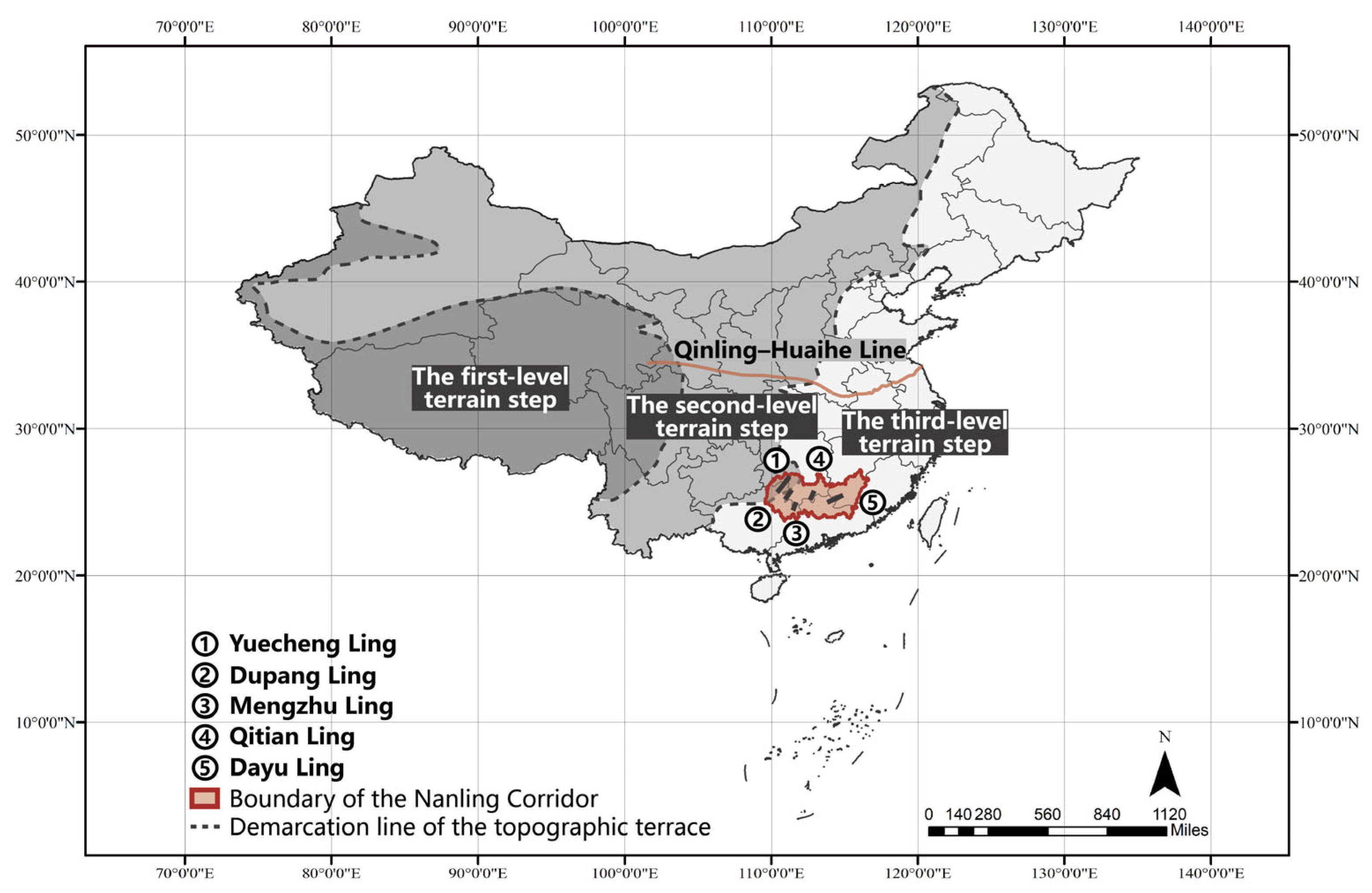
The Nanling Corridor is situated in Southern China, south of the Qinling–Huaihe Line, at the junction of the second and third terrain steps, with geographical coordinates spanning 23°50′ N–26°55′ N to 109°36′ E–115°35′ E (Figure 1). This study selects the Hunan–Guangdong Ancient Road as a case study, and the research scope is stratified into two levels: the Nanling Mountains and the core Hunan–Guangdong border region within the Nanling Mountains.
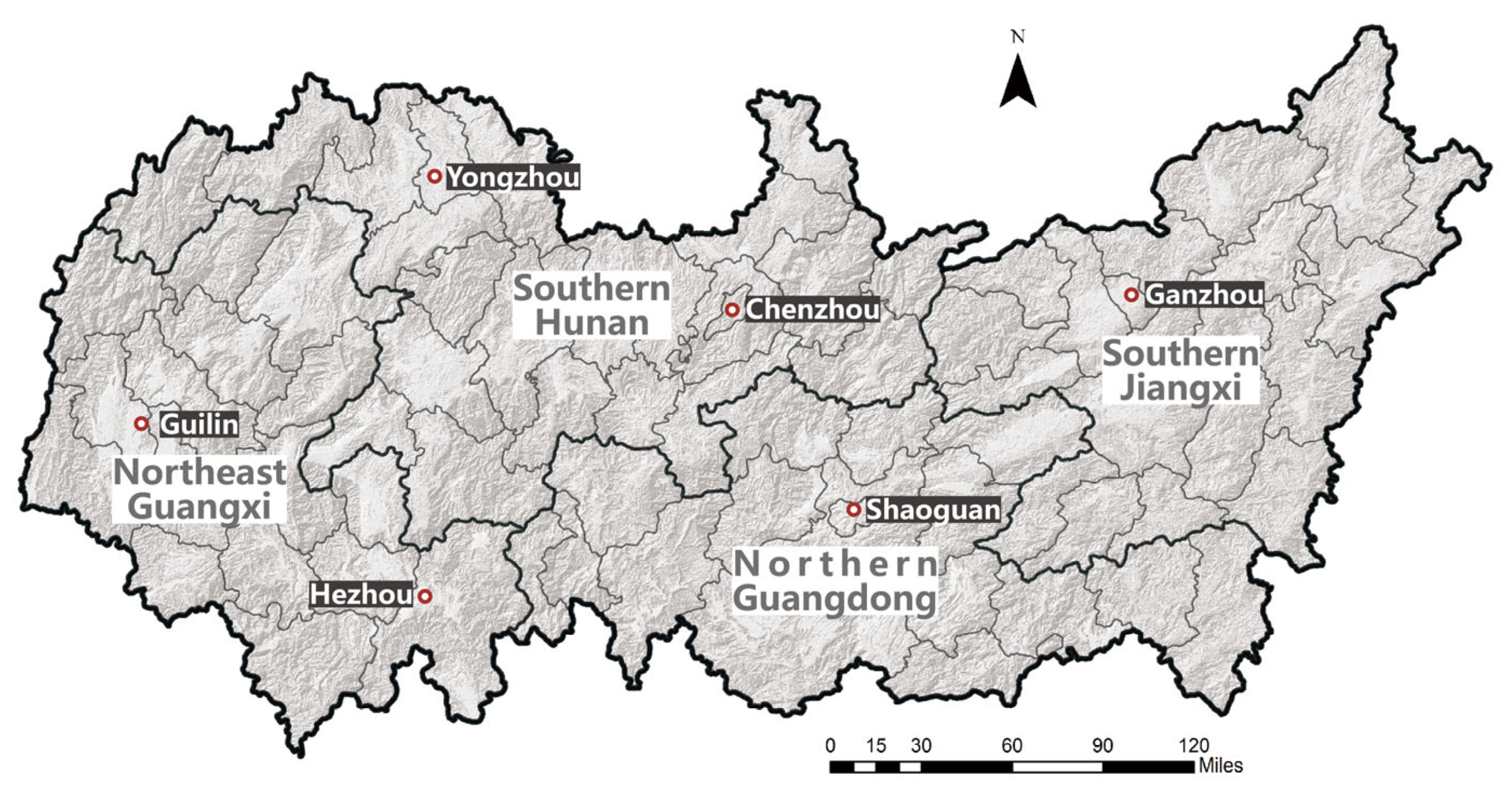
The Nanling Mountains, which roughly align with the spatial extent of the Nanling Corridor, comprise five major mountain ranges: Dayu Ridge, Yuecheng Ridge, Mengzhu Ridge, Qitian Ridge, and Dupang Ridge. Geographically, they extend westward to the Danan Mountain (80 li south of the Xuefeng Mountain), eastward beyond the southern tip of the Wuyi Mountain, northward connecting to the Zhuguang Mountain, and southward meeting the Jiulian Mountain [11]. Administratively, they cover four sub-regions: Southern Hunan, Northern Guangdong, Northeastern Guangxi, and Southern Jiangxi (Figure 2).
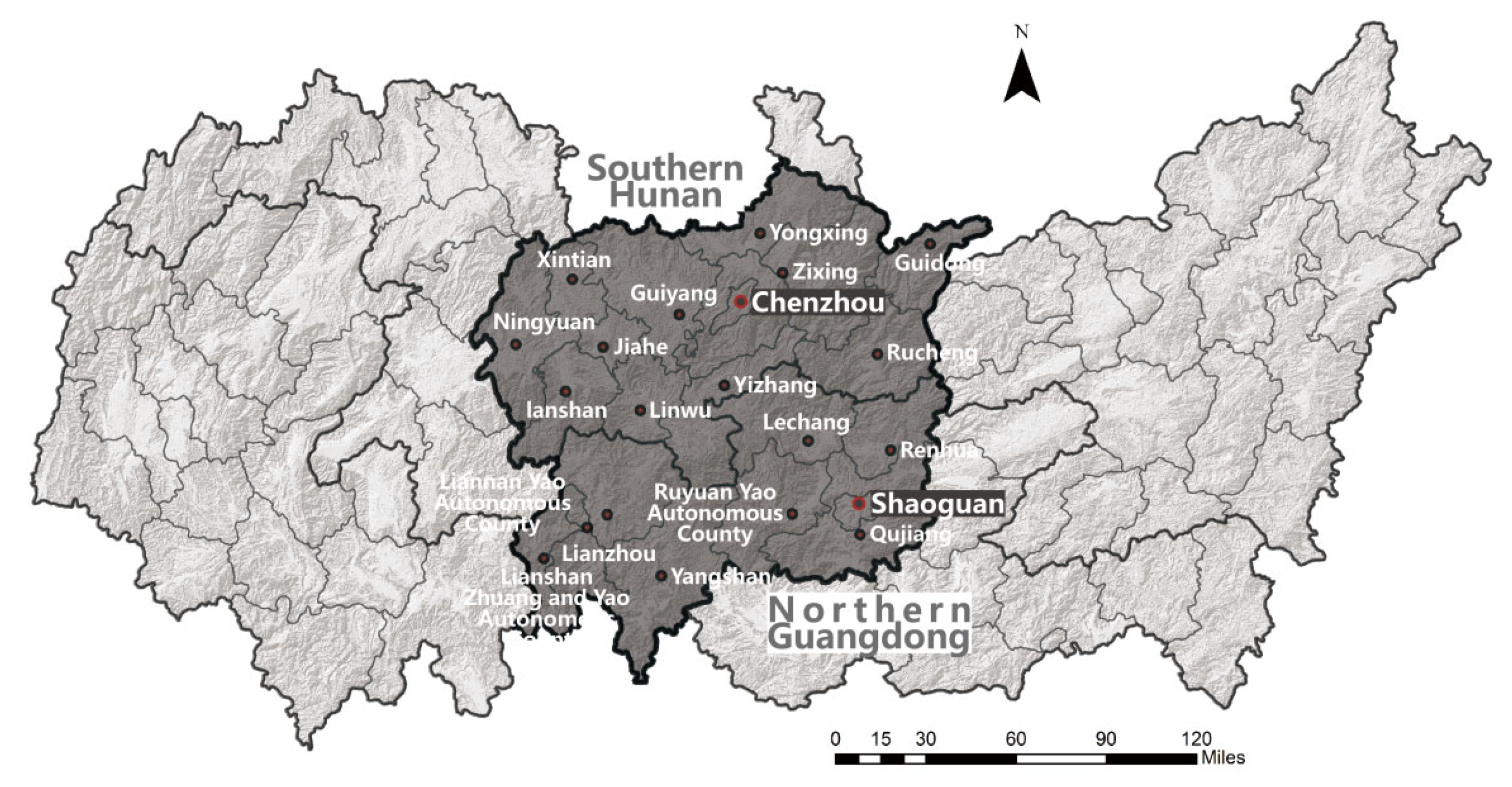
The core Hunan–Guangdong border region of the Nanling Mountains is located within Southern Hunan and Northern Guangdong. It encompasses counties and cities traversed by the five main routes of the Hunan–Guangdong Ancient Road and their associated branch roads, primarily covering most counties/districts in Chenzhou (Southern Hunan), partially counties in Yongzhou (Southern Hunan), and partially counties/districts in Shaoguan and Qingyuan (Northern Guangdong). Most of these administrative units are adjacent to the Hunan–Guangdong provincial border (Figure 3).

2.2. Research Methods

2.2.1. Literature Review and Historical Analysis Method

This study systematically reviews and organizes local historical documents (including gazetteers, archives, and folk records) from three key periods—late Qing Dynasty, Republic of China, and 1980s–1990s—pertaining to the Hunan–Guangdong border region of the Nanling Mountains. By synthesizing contemporary scholarly research findings, we utilize the core nodes of the region’s ancient roads as geographic coordinates and delineate three hierarchical linear spaces: critical ancient thoroughfares, official post roads, and folk village-access roads. The superimposition of these three-level road networks yields a comprehensive historical road network map of the entire study area.

2.2.2. Field Investigation and Sample Recording Method

Field surveys were conducted across cities, counties, towns, and villages in the Hunan–Guangdong border region of the Nanling Mountains. Integrating drone aerial photography (DJI Mini 3 Pro, DJI, Shenzhen, China), precision distance measurements (Leica DISTO X310, Leica Camera AG, Wetzlar, Germany), historical image map cross-referencing (Google Maps), and GIS-based spatial processing (ArcGIS 10.2, topographic data derived from Geospatial Data Cloud, http://www.gscloud.cn), we collected first-hand empirical data on road-adjacent tangible landscapes, including cities, settlements, wharves, bridges, ancient pavilions, and inscriptions. This process enabled the preliminary contextualization, in-depth experiential observation, professional identification, and systematic documentation of the region’s landscape characteristics.
The authors’ decade-long field research in the Hunan–Guangdong border region within the Nanling Mountains is structured into three distinct phases:
The first phase (2012–2013) centered on field visits to Northern Guangdong’s Shaoguan area, laying the groundwork for the preliminary understanding of the local landscape.
The second phase (2016–2018) focused on surveying ancient architecture in Southern Hunan’s Chenzhou area, yielding systematic findings from targeted architectural investigations.
The third phase (2021–2023) expanded to large-scale, in-depth research across Chenzhou, Qingyuan, Shaoguan, and Yongzhou. Guided by the List of Traditional Chinese Villages, this phase encompassed over 100 settlements, cross-provincial ancient roads, and associated infrastructure such as bridges and pavilions along these routes (Table 2).

2.2.3. Layered Dissection and Historical Restoration Method

The historical restoration method refers to the process of contextualizing synchronically presented cultural materials within a diachronic framework, thereby illuminating the historical trajectory of cultural development [12]. Employing the historical restoration method, we stratify and categorize indirectly road-linked synchronic landscapes in the study area into four functional dimensions: military garrison, migration, trade and transportation, and religious dissemination. Based on the selection criteria that the samples should have sufficient historical research materials and contemporary research achievements and should largely reflect the regional characteristics of the area, two typical landscape samples are selected from each category of landscape levels. The analysis of these samples follows a structured framework—“historical context–route trajectory–tangible landscape features–intangible cultural customs”—to reconstruct the dynamic developmental and evolutionary processes of the ancient road landscape system.

3. Results

3.1. Natural and Human–Environmental Context of the Hunan–Guangdong Border Region Within the Nanling Corridor

3.1.1. Natural Geographic Environment

The Nanling Mountains span two major tectonic domains—the Yangtze Plate and the Cathaysia Block [13]—underpinning a distinctive tripartite lithologic landform system dominated by granite, red sandstone, and karst formations. Topographically, the region is characterized by undulating mountainous and hilly terrain, accompanied by abundant mineral deposits.
Climatically, it lies in the transitional zone between the mid-subtropical and southern subtropical belts, where water resources are sustainably replenished, forest vegetation thrives, and agroecological conditions are favorable for cultivation. Vertical zonation driven by altitude gradients produces variations in temperature and precipitation across the mountain range, which in turn leads to pronounced vertical differentiation in forest vegetation distribution and agricultural crop growth patterns.
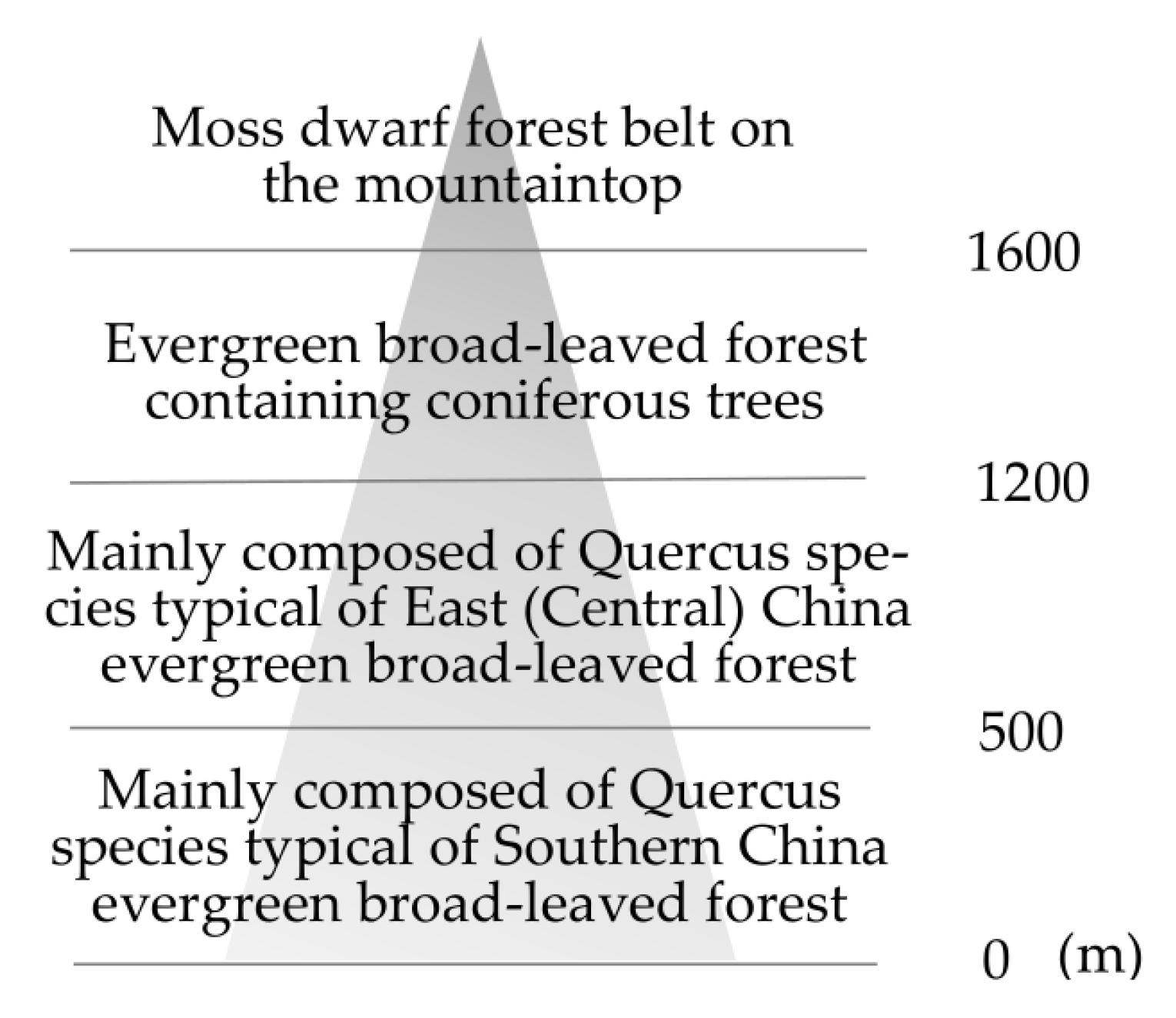
As illustrated in Figure 4, within the border region of Hunan and Guangdong Provinces lies the Mangshan Mountain, where distinct vertical vegetation zones are observed across different altitudes:
Below 500 m, the vegetation consists of evergreen broad-leaved forests dominated by Quercus species native to South China;
Between 500 and 1200 m, the dominant vegetation shifts to evergreen broad-leaved forests featuring Quercus species typical of East (Central) China;
From 1200 to 1600 m, the evergreen broad-leaved forests are interspersed with coniferous species such as Cunninghamia lanceolata and Tsuga chinensis;
Above 1600 m, the summit area is covered by a mossy dwarf forest belt.
In the mountainous regions of Northern Guangdong, agroclimatic conditions exhibit distinct altitudinal zonation, which directly dictates the suitability of crop cultivation and agricultural production patterns:
Below 400 m above sea level: The thermal regime is sufficiently favorable to sustain double-cropping rice and overwintering crops, enabling a triple-cropping system annually. This zone is well suited for the cultivation of cash crops and fruit trees such as citrus, peanuts, and mulberry for sericulture.
400–600 m: A mixed cropping pattern of double-cropping and single-cropping rice prevails. This altitudinal belt is optimal for the development of economic forestry, including Camellia oleifera, Cunninghamia lanceolata, and pine species.
600–800 m: The cropping system transitions to either double-cropping or single-cropping depending on microclimatic variations. This zone serves as a key production area for timber species (Cunninghamia lanceolata and pine) as well as forest by-products like shiitake mushrooms and black fungus.
800–1100 m: Thermal conditions become restrictive, supporting only single-cropping rice. Given its ecological function, this area is primarily designated for the establishment of water conservation forests (Table 3).

3.1.2. Social and Cultural Background

The Nanling Mountains, historically referred to as the “Five Ranges” (Wuling), was first described by the term “Five Ranges” in the section on “Lingnan” within Shiji and Hou Hanshu, where the character “ling” specifically denotes the “Five Ranges” [14,15]. When it comes to the specific geographical locations of the “Five Ranges”, historical records present inconsistencies. Its two representative accounts include the following: one documented in Guangzhou Ji by Pei Yuan of the Jin Dynasty, which lists the ranges as Dayu, Shian, Linhe, Guiyang, and Jieyang [14], and another recorded in Shuijing Zhu by Li Daoyuan of the Northern Wei Dynasty, which identifies them as Dayu, Yuecheng, Mengzhu, Qitian, and Dupang [16]. In fact, the term “Wuling” carries multiple connotations beyond its primary reference to five mountain ranges. It may also denote the five passes leading into the Lingnan region or, alternatively, the mountain ranges situated between these passes [17]. This study follows the perspective proposed by Li Daoyuan of the Northern Wei Dynasty, defining the “Five Ridges” as a mountainous region primarily composed of five major mountain ranges: Dayu Ridge, Yuecheng Ridge, Mengzhu Ridge, Qitian Ridge, and Dupang Ridge.
The diverse understanding of the term “Five Ridges” (Wuling) reveals that, in the perception of many, this term is often treated as a general designation. Based on one view, “All lofty, east–west trending mountain ridges that traverse the north–south axis are referred to as the Five Ridges, with no specific individual names assigned to them” [18]. Beyond this, ancient people regarded the Five Ridges as a natural barrier demarcating the “inner realm” (huanei) and “outer realm” (huawai) [18]. Zheng Qiao further explicitly stated that “South of the Five Ridges lies the southern border of Jingzhou; the prefectures and counties established there fall outside the boundaries of the Nine Provinces” [19]. Here, the Five Ridges are no longer merely a natural barrier dividing the north and the south or a strategic thoroughfare controlling Hunan, Guangdong, Guangxi, and Jiangxi. Instead, they have evolved into a symbolic boundary marker that distinguishes between the Han and non-Han groups, as well as between the “inner” and “outer” realms. This transformation summarizes the geographical concepts of “Lingnan” (south of the Five Ridges) and “Lingbei” (north of the Five Ridges) in cultural dichotomies: “within the civilized world” versus “beyond the civilized world” and “civilization” versus “barbarism.”
Long perceived as a remote, desolate malaria-stricken region in ancient times, the Nanling area was gradually integrated into the unified administrative framework of successive central regimes, driven by political consolidation and the southward migration of population and cultural influences from the Central Plains. As shown in Table 4, in terms of administrative subordination, the territorial adjustments in the Hunan–Guangdong border region of the Nanling Mountains were most prominently reflected in the changing jurisdiction of Lianyang (present-day Lianzhou). During the Ming and Qing Dynasties, the border region had evolved into a political and administrative structure known as the “One Prefecture and Three Zhili States,” which was primarily composed of Shaozhou Prefecture, Chenzhou Zhili State, Guiyang Zhili State, and Lianzhou Zhili State.
In terms of population composition, the Xiangnan region is predominantly inhabited by the Xiang-Gan ethnic group. The Hakka ethnic group is relatively concentrated in Northern and Northeastern Guangdong Province. Specifically, Renshou, Shixing, and Wengyuan in Northern Guangdong are categorized as pure Hakka counties, whereas Shaoguan, Lechang, Ruyuan, Lianzhou, Lianshan, and Yangshan are non-pure Hakka counties. Additionally, Xiangnan was among the earliest destinations for the outward migration of the Hakka people from the core of the Gan-Min-Guang Hakka region. As a result, Rucheng, Chenzhou, and Yizhang in Xiangnan are classified as non-pure Hakka counties, where the Hakka people coexist with the Xiang-Gan people [20].
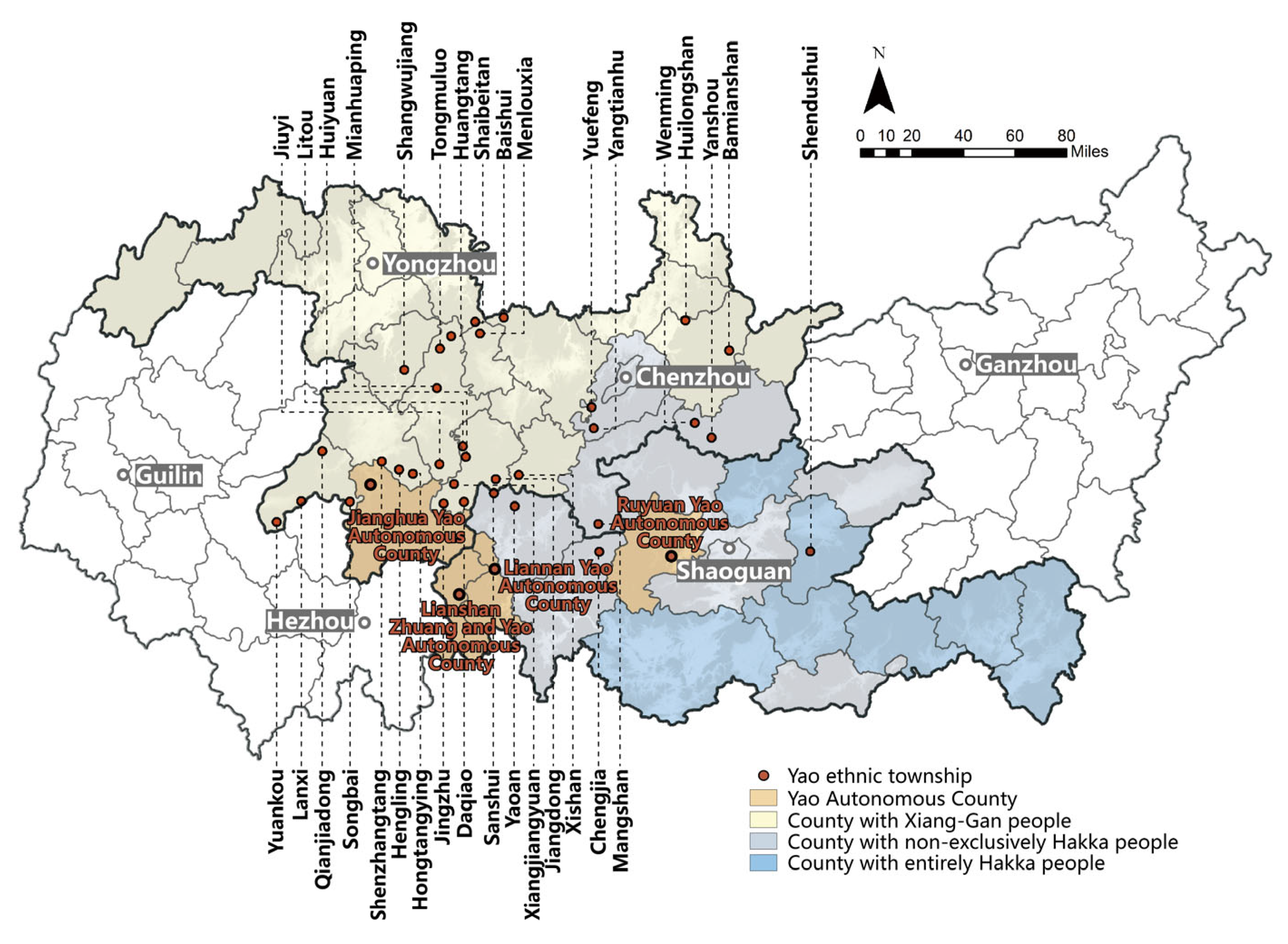
As the most extensive Yao-inhabited area in China, the Nanling Mountainous Region is home to a diverse array of Yao subgroups, including the Pingdi Yao, Bapai Yao, and Guoshan Yao. Specifically, the Pingdi Yao are primarily distributed across Jianghua and Jiangyong; the Bapai Yao are concentrated in the Liannan area; and the Guoshan Yao reside in the vicinity of Ruyuan. Generally speaking, the Pingdi Yao people inhabit relatively flat terrain, while the Guoshan Yao people are predominantly distributed from mid-mountain regions down to the mountain foothills. In contrast, the Bapai Yao people reside in remote deep mountain forests, far removed from Han-inhabited villages and towns, and are surrounded by precipitous mountain ridges spanning an area of over 100 square kilometers (Figure 5).
In addition to the indigenous Han and Yao ethnic groups, the Nanling region is also inhabited by ethnic minorities such as the Zhuang, She, Miao, Dong, Buyi, Mulao, and Maonan. The Hui, Yi, and Gelao ethnic groups have also migrated across the Nanling Corridor, moving between the north and south as well as the east and west. Typically, the Zhuang people are predominantly distributed in the border areas between the Han and Yao ethnic groups, while other ethnic minorities are scattered among the Han, Yao, and Zhuang communities. This forms a distinctive ethnic distribution pattern characterized by “widespread dispersion in large areas and concentrated settlement in small localities.”

3.2. Classification of the Directly Associated Landscapes of the Hunan–Guangdong Ancient Road in the Nanling Corridor

This section focuses on the directly associated landscapes, categorizing them into four dimensions: tangible components encompassing the physical structure of the ancient road, water–land hub nodes, and ancillary facilities along the route as well as intangible elements represented by the engineering techniques employed in the construction of the ancient road.

3.2.1. The Ancient Road Route on the Regional Scale

Chronologically, the Hunan–Guangdong Ancient Road route has undergone four distinct developmental phases:
Pre-Qin Period: The formation of mountain pass passages;
Qin and Han Dynasties: Priority given to the widening and upgrading of existing roads, with the construction of new routes as a supplementary initiative;
Sui and Tang Dynasties: The connection and formation of a north–south transportation trunk line;
Ming and Qing Dynasties: The full establishment of a hierarchical road system comprising primary/secondary routes and trunk/branch lines [21].
Spatially, constrained by the mountainous terrain and scarcity of flat land in the Hunan–Guangdong border region, ancient trails typically wind through dense forests and mountain ranges in a narrow, meandering pattern, with the narrowest sections measuring no more than 0.5 to 0.95 m—such as the Yangshan Segment of the Chengjia Ancient Trail. By contrast, official roads and post roads connecting prefectures and counties generally followed relatively flat and straight routes, with widths ranging from 2 to 3 m, exemplified by the Ninety-Li Road between Chenzhou and Yizhang. The remaining ancient paths mostly spanned 1 to 2 m in width, with some sections reaching nearly 3 m, including the Chengkou Ancient Road and the Xijing Ancient Road.
The pavement materials of the Hunan–Guangdong Ancient Road can be categorized into three types: dirt, cobblestones, and flagstones.
Dirt roads are typically situated on relatively flat mountain summits with sparse human activity. Constructed by compacting local soil, they are labor-efficient and do not impede passage.
Cobblestone roads are predominantly distributed in low-lying flat areas. On the one hand, their proximity to rivers and streams facilitates material acquisition; on the other hand, the round stones with numerous gaps are prone to moss growth, leading to slippery conditions.
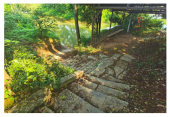
Flagstone roads, which include specific variants such as red sandstone, limestone, and granite (determined primarily by regional landforms), are often used as steps on slopes or as surfaces for main streets when ascending from lowlands to mountain tops. This practice enables on-site stone cutting and terrain-adaptive construction.
Based on the boundary conditions on both sides of the Hunan–Guangdong Ancient Road, its enclosure forms can be categorized into three types: open, single-sided restricted, and double-sided restricted.
Open ancient roads are mostly distributed in fields, at the foot of hills, or on mountain peaks, flanked by natural environments such as farmland, ponds, forests, and grasslands, offering an unobstructed view.
Single-sided restricted ancient roads are commonly found on winding paths along mountain slopes, with one side being an upward-rising earth–rock mass and the other a steep downward slope, creating a shaded and precarious atmosphere.
Double-sided restricted ancient roads include both natural and artificial restrictive elements. Natural restrictions are mostly reliant on mountain rocks, i.e., located in natural valley passages. Artificial restrictions are formed by the combination of streets and alleys in settlements of various sizes and road surfaces approximately 1–3 m wide, with views on both sides blocked (Table 5).
Regarding the layout and evolutionary trends of the ancient road network, the Hunan–Guangdong Ancient Roads can be analyzed and illustrated at three levels.
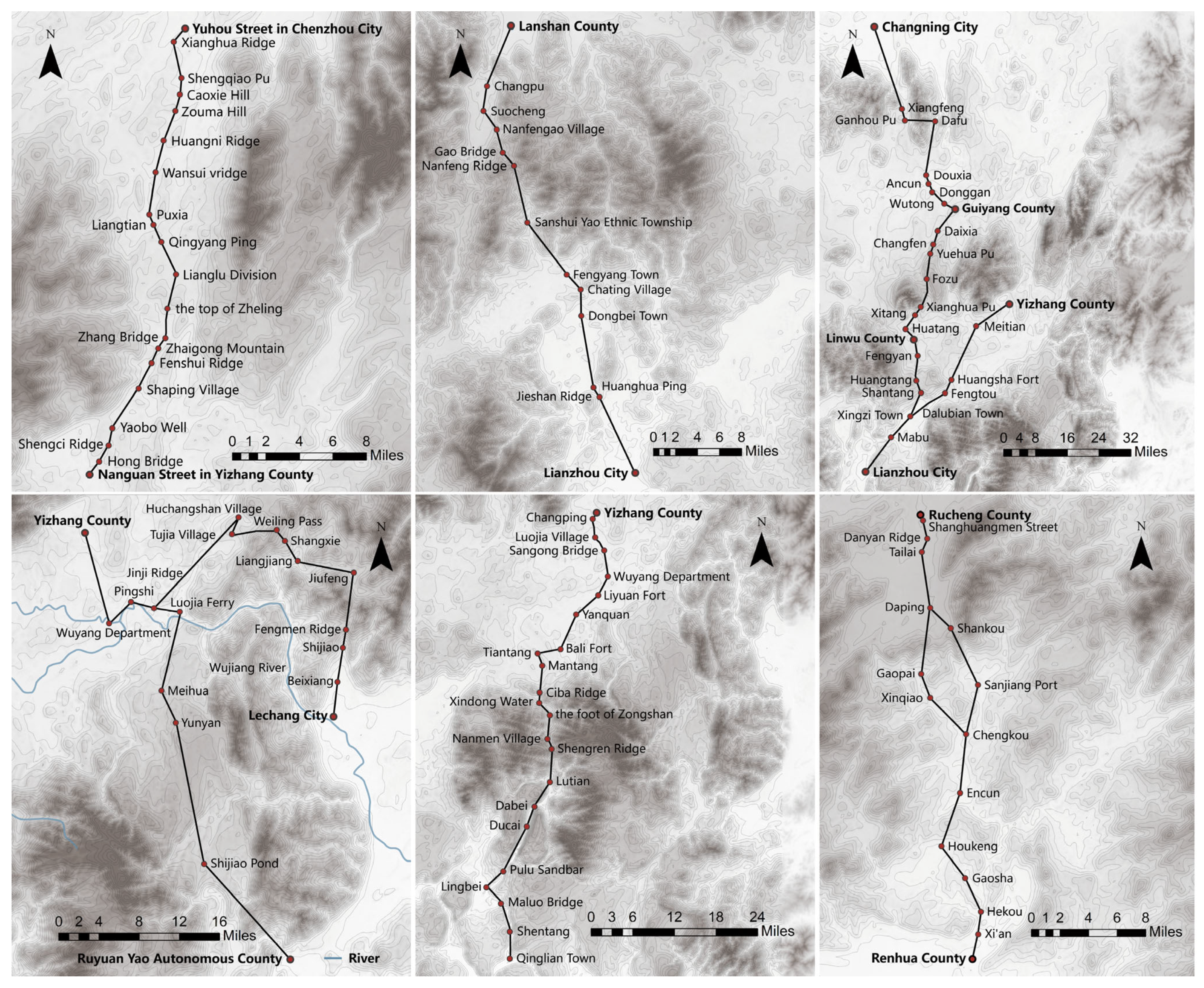
(1) Key ancient road routes are detailed as follows (Figure 6):
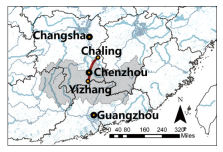
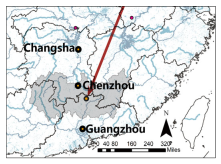
The Chenyi Ancient Road, also known as the “Mule and Horse Ancient Road”, originated in the 33rd year of the Qin Dynasty (214 BC). In that year, the Qin Dynasty deployed 500,000 troops for a large-scale military campaign aimed at national unification, during which the rudimentary form of the Chenyi Road was constructed. In the Jianwu era of the Eastern Han Dynasty, Wei Sa, the governor of Guiyang Prefecture, widened the road surface, added pavilions and inns, and set up post stations. During the Jiaqing period of the Qing Dynasty, it was expanded into a stone-paved road with a width of 9 chi. The main section of this ancient road is situated in Southern Hunan Province. It begins at Yuhou Street in Chenzhou City, passes through Liangtian and Zheling, and terminates at Nanguan Street in Yizhang County. Paved with stone slabs, the road spans a width of 2 to 3 m and extends for a total length of 90 li (approx. 45 km) [22].
The Chating Ancient Road lies at the westernmost terminus of the ancient Hunan–Guangdong road network. Originating in Lanshan County, it traverses Nanfeng’ao and Chateping Village before reaching Lianzhou City. To the west, it extends through Jianghua and Daoxian counties, linking up with the ancient Hunan–Guangxi Road, thereby providing access to the northeastern part of Guangxi. It is evident that the Tea Pavilion Road served not only as a critical artery for the exchange of goods and commodities between the northern and southern regions along the ancient Hunan–Guangdong border but also as a key thoroughfare connecting the Central Nanling Mountains with the southwestern regions [23].
The Xijing Ancient Road ranks among the most ancient, extensive, and well-preserved historical thoroughfares in the Hunan–Guangdong border region. It is composed of two primary segments: the Xingzi Ancient Road and the Yile Ancient Road. The Xingzi segment originates in Lianzhou and extends to Xingzi Town, from where it branches into two routes: one traverses Linwu County and Guiyang County to reach Changning, while the other passes through Daluobian, Fengtou Village, and Meitian before arriving in Yizhang County [24]. The Yile segment starts from Yizhang County, with its starting points including Wuyangsi and Laopingshi. It also splits into two main routes: one follows an overland path through Liangjiang and Jiufeng to Lechang; the other travels overland via Meihua and Yunyan to Ruyuan Yao Autonomous County or, alternatively, takes a water route down the Wujiang River to Tangkou in Lechang [25].
The Chengjia Ancient Road, with its origins tracing back no later than the end of the Qin Dynasty and through the Mid-Western Han Dynasty at the latest, initially functioned as a military thoroughfare before evolving into a commercial artery. Stretching from Yizhang County, it passes through Wuyangsi, Ciba Ling, Nanmenzhuang, and Dulei, ultimately reaching Qinglian town. Within the boundaries of Yangshan County, the ancient road encompasses over one hundred kilometers of narrow footpaths. Notably, in the Qinglian River canyon section along the route, significant cultural relics have been unearthed, including stone axes from the late Neolithic period, bronze spears dating to the Warring States Period, and Han Dynasty tombs. Additionally, cliff carvings on the riverbanks document the arduous construction history of this ancient thoroughfare [26].
The Chengkou Ancient Road is situated at the easternmost end of the Hunan–Guangdong Ancient Road Cluster. Originating in Rucheng County, Southern Hunan, it extends southward through Chengkou Town and En Village, ultimately reaching Renshan County in Northern Guangdong. Additionally, from Rucheng, it connects westward to Yongxing, Zixing, Yizhang, and other locales, while from Renshan, it extends eastward to Nanxiong, linking to the Meiguan Ancient Road, thereby forming a horizontal network across multiple regions. Certain segments of the Chengkou Ancient Road are paved with granite slabs or river pebbles arranged in a herringbone pattern, and numerous stone arch bridges are distributed along its course [27].
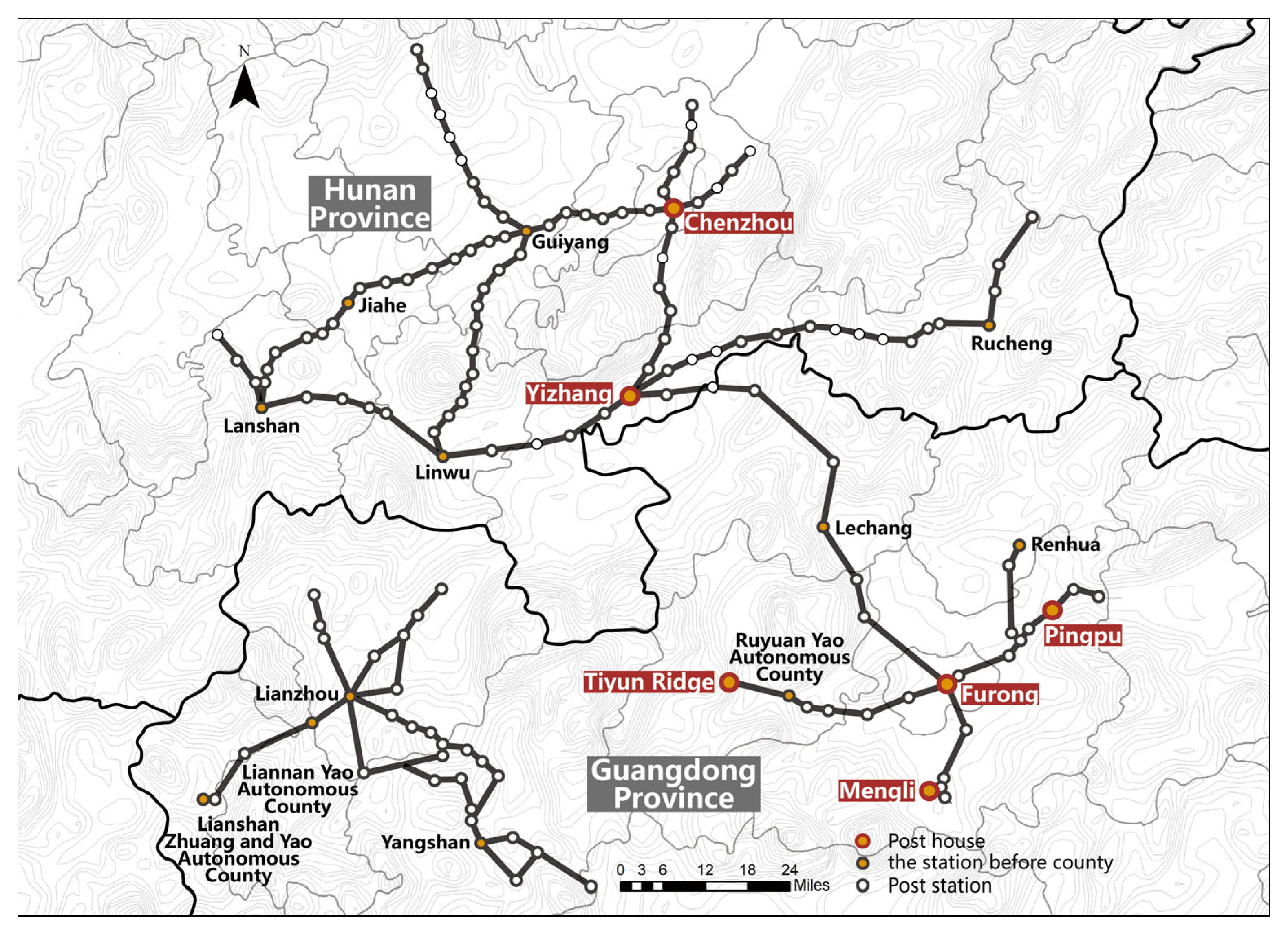
(2) The primary and secondary postal road networks (Figure 7) include the main postal routes connecting key stations such as Chenzhou Post Station and Yizhang Post Station to Furong Post Station in Shaoguan, as well as the secondary postal road networks that radiate from the main stations to county-level postal stations and interconnect these county-level facilities. Notably, due to the historical context where “adjacent provinces had limited official interactions” [28], there was no official postal road linking Lanshan County and Linwu County in Southern Hunan to Lianzhou in Northern Guangdong. Consequently, this region exhibited a gap and discontinuity in the postal road network.
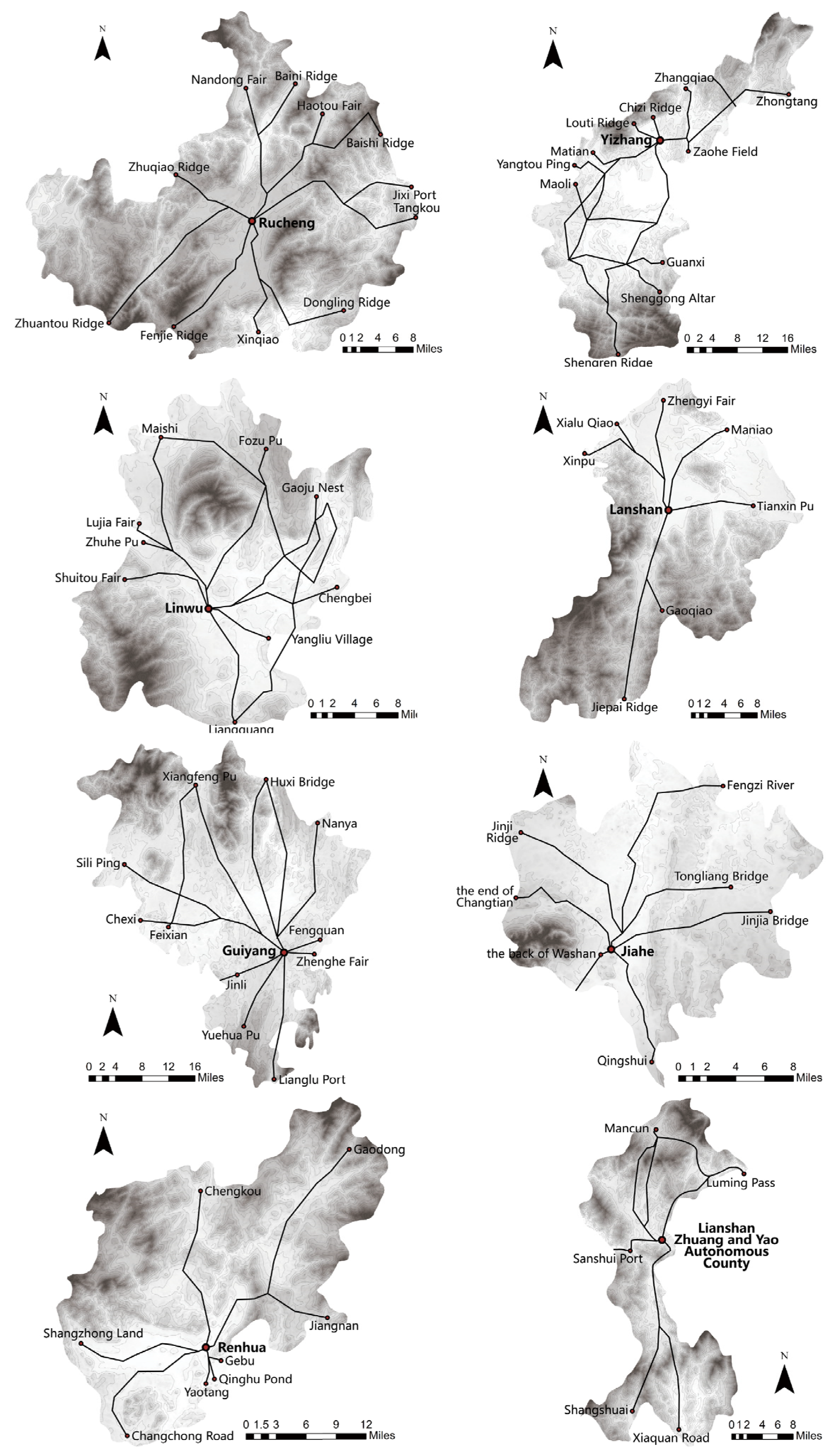
(3) The distribution of secondary rural roads in the study area (Figure 8) reveals that within Rucheng, Yizhang, Linwu, Lanshan, Guiyang, Jiahe, and Renhua counties and Lianshan Zhuang and Yao Autonomous County, the rural road networks are dense. These networks exhibit a radial pattern centered on county seats, extending in all directions and forming an interwoven, crisscrossing layout [22,29,30,31,32,33,34,35].
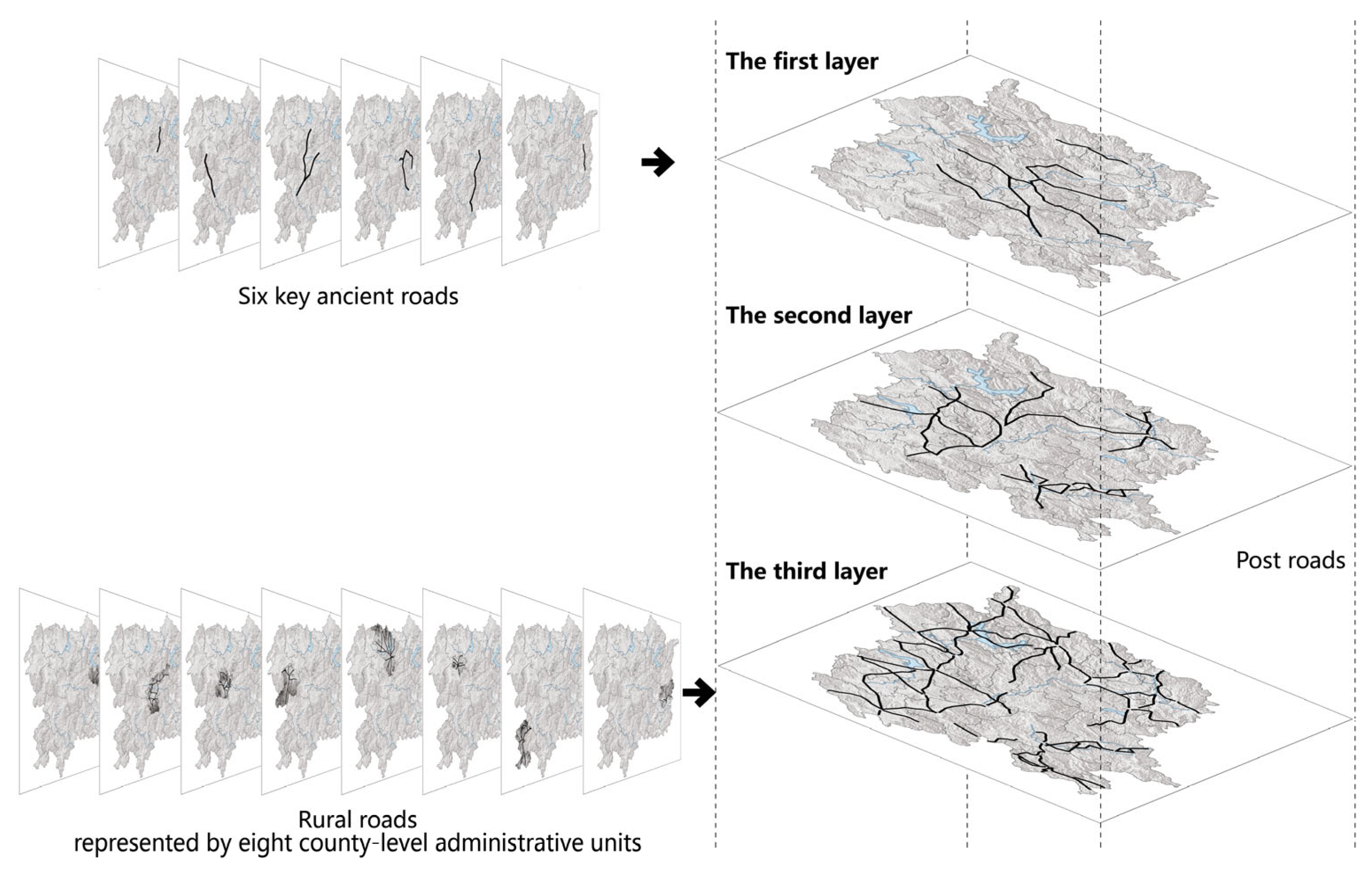
After completing the three-level stratified analysis of ancient road routes, the following operations were carried out in sequence within the GIS platform:
First, the six key ancient road routes were integrated into a single layer. Second, the rural roads, represented by eight county-level administrative units, were merged into another layer. Finally, a comprehensive superposition was performed on the three layers: key ancient roads, post roads, and rural roads (Figure 9).
It should be noted that, due to the fragmented nature of records in historical and geographical documents, the comprehensive superposition process may encounter the following scenarios:
Local roads are confined to the boundaries of a single county and fail to establish connectivity with adjacent counties in corresponding directions;
Slight misalignment exists between road routes connecting neighboring counties;
While most overlapping segments across the three layers mutually validate each other, some segments still exhibit deviations.
In response to the above scenarios, the following targeted processing steps and methods were applied:
For isolated intra-county segments (Scenario 1), an analytical approach was adopted to identify and eliminate such segments, thereby forming a connected road network;
For slightly misaligned inter-county routes (Scenario 2), a fine-tuning method was employed to adjust the two misaligned routes, ensuring the continuity of the overall route;
For segments with deviations (Scenario 3), a comparative method was used to evaluate the discrepant sections, and the correct route was determined based on the actual conditions.
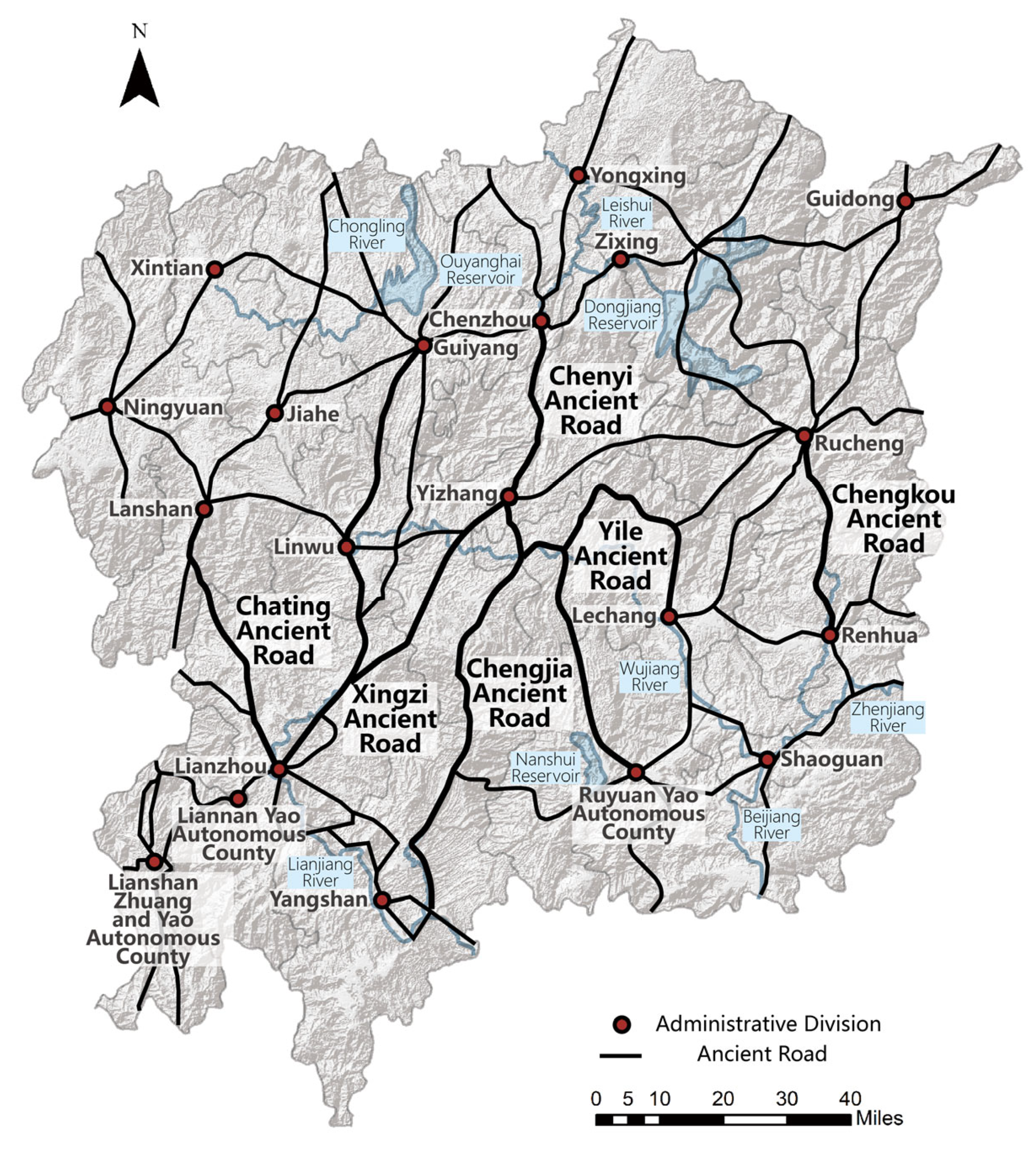
Through the implementation of these measures, an integrated map of ancient road routes in the Hunan–Guangdong border region of the Nanling Mountains was successfully generated (Figure 10).

3.2.2. Meso-Scale Hub Nodes of Ancient Roads

As shown in Table 6, the convergence of ancient roads produces three typical hub node landscapes: hub settlements, transfer terminals, and continuing bridges.
First, the interweaving of water and land routes from multiple directions tends to foster the formation of multi-tiered urban–rural settlement systems (encompassing “city–county–town–village”) in strategically significant and economically vibrant hub regions with convenient transportation access. For example, Shaoguan—known as “Shaozhou” in ancient times—emerged as a major large-scale distribution hub settlement and the largest inland customs and tax collection center in Lingnan during the Ming and Qing Dynasties, against the backdrop of the “single-port trade” system. Linwu County, established in the 5th year of the reign of Emperor Gaozu of the Han Dynasty, had its administrative seat in the ancient city of Dutou, which stands as one of the few well-preserved county-level hub settlement relics along the Xijing Ancient Road and in the Hunan–Guangdong border area. Pingshi Town, situated on the Yile Ancient Road, served as a transportation hub connecting Linwu and Lanshan to the west, Rucheng and Southern Jiangxi to the east, Central and Northern Hunan to the north, and Central Guangdong to the south, evolving into a salt transportation center in the late Ming and early Qing periods. En Village, linked to the Jinjiang waterway in the south and the Chengkou land route in the north, functioned as a hub for the stopover and transfer of people and goods. Additionally, during the period from the Hongwu Reign of the Ming Dynasty to the Kangxi Reign of the Qing Dynasty, it housed a patrol and inspection office, undertaking critical functions such as pass defense and market town management.
Second, a network of land routes connects the Xiangjiang River, Chongling River, and Leishui River in Southern Hunan with the Lianjiang River, Wujiang River, and Zhenjiang River in Northern Guangdong, giving rise to the numerous transfer docks at the intersections of water and land transportation. Notable examples of these transfer docks include the Yuhou Street Terminal on the Chenyi Ancient Road; the terminal group along the Chating Ancient Road (including Hejiadu, Shangbu, Huangtu, and Baijiadu terminals); the terminal group along the Xijing Ancient Road (including Dashuiban Salt Pavilion, Sijia Salt Pavilion, and Zhuzaqiao Salt Pavilion); and the terminal group along the Chengjia Ancient Road (including Rongshu terminal, Chendu terminal, Doufu Society terminal, and Sifang terminal).
Finally, as the Hunan–Guangdong Ancient Roads traversed the dense network of rivers, streams, and gullies in the Nanling region, bridges became indispensable structures linking both banks, forming a widespread historical bridge landscape. The representative cases include the 40-m-long and 5-m-wide Wansui Bridge on the Chenyi Ancient Road; the 23.5-m-long and 5-m-wide Daixing Bridge on the Chating Ancient Road; the 9.8-m-long and 4.1-m-wide Kunkeng Stone Arch Bridge on the Xijing Ancient Road; the 30.6-m-long and 4.13-m-wide Guangji Bridge on the Chengjia Ancient Road; and the 63-m-long and 5.6-m-wide Tianshou Bridge on the Chengkou Ancient Road.

3.2.3. Facilities Along Ancient Roads at Micro-Scale

As shown in Table 7, the micro-scale landscape facilities along the Hunan–Guangdong Ancient Road can be categorized into three types: post pavilions, inscriptions, and street trees.
First, as an official thoroughfare, the post road section of the Hunan–Guangdong Ancient Road was typically equipped with post pavilions as service facilities to accommodate traveler rest and horse replacement. Post pavilions fall into three architectural types: room-style enclosed type, pavilion-style open type, and arch type–buried-depth type. The room-style enclosed type is the most prevalent, characterized by a rectangular layout, vertical walls, and arched doorways on gable walls. The ancient road traverses the station along its depth axis, as exemplified by the Zhongfu Pavilion in Fengtou Village. The pavilion-style open type features a walled facade with three or four open sides, supported by brick, stone, or wooden columns—such as the Xiangshu Pavilion in Fengyang Village. The arch type–buried-depth type is usually situated on mountain slopes or passes, with walls constructed from rubble and filled soil to integrate with the surrounding mountainous terrain, as seen in the Shiliang Pavilion in Xiakaifengqiao Village.
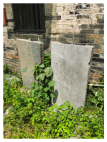
Second, a series of inscriptions and steles are distributed along the ancient road, serving as critical material markers. These material markers in the Hunan–Guangdong border region are classified into four categories: directional monuments, boundary monuments, narrative monuments, and title stone carvings. Directional monuments are typically placed at road junctions, standing less than 1 m tall and 10 cm thick, with carved directions, distances, and explanatory text to guide passersby—for instance, the directional monument at Siyuan Pavilion. Boundary monuments are erected at the borders of distinct geographical or administrative regions, marking specific positional and directional demarcations, such as the Chuyue boundary monument. Narrative monuments are often associated with bridges and pavilions, recording events like bridge/pavilion construction, road maintenance, checkpoint tax collection, and river dredging, as illustrated by the Renovating Tiyunling Narrative Monument. Title stone carvings are carved directly onto rocks along the road, using inscriptions and poems to denote place names or summarize prominent local landscape features, such as the Yeshipu Stone Carvings.
Finally, street trees have been documented for roadside greening since the Pre-Qin period, when they were planted in rows to demarcate official roads [36]. They serve functions including direction guidance, distance marking, shade provision, and soil and water conservation. Historically, the Nanling region primarily utilized pine and fir as street tree species. The term “pine” broadly refers to all Pinaceae plants. Given that Pinus massoniana exhibits high productivity in both Southern Hunan and Northern Guangdong within the Nanling Mountains—for example, being “nearly ubiquitous” in hilly and mountainous areas of Southern Hunan below 1200 m elevation and thriving in Northern Guangdong’s mountainous regions at 300–800 m, predominantly in natural forests [37,38]—the authors posits that “pine” specifically refers to Pinus massoniana. “Fir” denotes Cunninghamia lanceolata, which is mostly distributed in valleys, foothills, and lower slopes of the Nanling Mountains at 300–1000 m elevation, often forming mixed communities with Pinus massoniana.

3.2.4. Ancient Road Engineering Technology from an Intangible Perspective

Intangible traditional knowledge pertaining to land route excavation and maintenance, waterway dredging, and arboriculture also forms an integral component of the directly associated landscapes of ancient roads (Table 8).
The excavation and maintenance of the Hunan–Guangdong Ancient Road have persisted across historical periods, primarily leveraging technical measures such as widening and straightening existing pathways, complemented by the upgrading of supporting facilities including roadside pavilions and inns. During the Qin campaign against the Baiyue tribes, the Qin army constructed the Qiao Road along the pre-existing mountainous trails connecting the Chu and Yue regions, thereby establishing what became known as the “New Road.” During the Chu–Han Contention, Xiang Yu coerced Emperor Yi into relocating his capital to Chenzhou and seized the opportunity to upgrade the road leading to Chenzhou, mandating specifications that it be six chi wide—wide enough to accommodate two carriages passing side by side or five horses walking abreast. In the early Jianwu era of the Eastern Han Dynasty, Wei Sa cut through mountains to build over 500 li of roads, established post stations, and set up postal offices, which effectively enhanced north–south transportation in the Eastern Nanling Mountains. In the eighth year of the Jianchu era, Zheng Hong proposed opening the Qiao Road in Lingling and Guiyang, enabling large quantities of tribute goods to be transported from Lianzhou over Qitianling to Chenzhou before heading northward. During the Song, Yuan, and Qing Dynasties, the Hunan–Guangdong Ancient Road gradually evolved into the “regular route for Guangdong salt.” The road surface was further expanded and improved either by the government or merchants. For example, during the Qianlong era of the Qing Dynasty, the section of the postal road traversing Baimian Mountain between Zixing and Rucheng was reconstructed, with relay stations and post houses established along it [39]. Notably, within the Ruyuan Yao Autonomous County section of the Xijing Ancient Road, the time-honored practice of “stone-step road maintenance” has been transmitted intergenerationally. This tradition not only guarantees the unimpeded passage of the ancient road but also embodies accumulated wisdom in integrating traffic infrastructure management with local folk customs.
For waterways in the Hunan–Guangdong border region, dredging interventions mainly encompass rock removal, submerged wood clearance, and navigation mark installation. These initiatives were historically funded through multi-stakeholder mechanisms involving government appropriations, boatmen’s guilds, or private philanthropic donors (benevolent individuals) [39]. The Xiangjiang River, located in Southern Hunan, has largely retained its natural state throughout history, with only localized dangerous shoals subject to targeted rectification. For example, in the 11th year of the Qianlong reign of the Qing Dynasty (1746), Jue Luozhuoerbu, the magistrate of Qiyang County, personally funded the employment of laborers to clear several hazardous reefs in the Guanyin Shoal section of the Xiangjiang River. The Wujiang River in Northern Guangdong was infamously characterized by perilous rocks and turbulent rapids, frequently resulting in the sinking or damage of heavy cargo vessels. In response, Zhou Jing, the governor of Guiyang during the Eastern Han Dynasty, issued orders for officials and boatmen to conduct rock blasting and channel straightening works—an early documented instance of river dredging in historical records. Dredging efforts on the Lianjiang River were not only tied to the operational efficiency of its waterway but were also of critical importance, as its blockage would inflict severe harm on riparian farmers. In the 13th year of the Jiading reign of the Song Dynasty (1220), Li Hua, an official of Lianzhou, devised a strategy of “upper fire attack and lower dam construction,” which involved blasting rocks and dredging the riverbed, thereby ensuring the unimpeded flow of the Lianjiang River.
As one of the regions with the highest Cunninghamia lanceolata productivity in China, the core focus of arboriculture in the Nanling Mountains is mainly reflected in its cultivation techniques, which are structured into five sequential procedures: elite seed selection, forestland clearing, intercropping and rotational planting, felling and transportation, and pricing and trading. A distinctive feature of this system is its implementation of “understory planting amid forest cultivation”.
First, cones are typically harvested and stored between the Cold Dew and Start of Winter solar terms.
Second, afforestation is implemented on mountainous areas with favorable hydrothermal conditions, suitable soil, and existing vegetation, following processes of felling, controlled burning, and site preparation.
Third, two primary afforestation methods are employed, specifically seedling planting and cutting propagation, alongside the implementation of intercropping and crop rotation practices.
Fourth, Cunninghamia lanceolata is transported to designated transfer areas using slides, drag boxes, and wooden carts before being sold to external markets.
Fifth, transactions are executed according to the “Longquan Pricing Method”, which is based on the quality and dimensions of Cunninghamia lanceolata [40,41].

3.3. Classification and Feature Analysis of Indirectly Associated Landscapes Along the Hunan–Guangdong Ancient Road Within the Nanling Corridor

The landscape system of the ancient road encompasses not only the core landscape components directly associated with the route itself but also the indirectly linked landscapes that have emerged through the cultural diffusion along the route, shaped by multi-layered historical and cultural phenomena including military campaigns, population migration, trade activities, and religious dissemination. These phenomena are characterized by repeated occurrences, producing clustered landscape patterns.
As shown in Table 9, for each category of these phenomena, two representative landscape cases were selected. Through the analytical framework of “historical context–route trajectory–tangible landscape–intangible culture”, this study examines tangible landscape elements such as fortresses, villages, markets, and temples while also documenting associated intangible cultural components including cartographic records, linguistic traditions, ritual practices, and ideological systems. The landscape characteristics across different categories are synthesized from dimensions such as spatial distribution, spatial organization, agroforestry vegetation, and local customs.
As presented in Table 6, military landscapes are exemplified by the cases of Qin–Han conquests and Ming–Qing garrisoning. During the Qin and Han Dynasties, in the pursuit of national unification, the southern expeditionary forces traversed the Hunan–Guangdong Ancient Road to reach Lingnan for military operations. Preceding the campaigns, reconnaissance activities were conducted, resulting in the creation of multiple garrison maps. During the siege and defensive phases, pass and garrison city landscapes were constructed in the Hunan–Guangdong border region. In the Ming and Qing Dynasties, the Nanling area, as a mixed settlement of Yao and Han ethnic groups, faced rampant banditry and vagrancy. To maintain regional stability, the imperial court deployed troops from Chaling for garrisoning, forming defensive landscapes such as guard posts and fortresses, along with satellite settlements for the families of military officers. These landscapes are situated at strategic geo-hydrological nodes with commanding control over mountain passes and river valleys, designed for integrated defense systems. Their spatial layout features regular, enclosed structures. The vegetation is dominated by cultivated farmland and developed land. Socially, they are primarily composed of occupational groups (e.g., garrison troops).
Immigration landscapes are represented by the cases of Han migration and Yao relocation. Amidst periods of war, both Han and Yao populations predominantly migrated southward in collective units such as ethnic groups, clans, and families, traversing multiple provinces and settling in the Nanling Mountains via the Hunan–Guangdong Ancient Road. The Xianggan and Hakka branches of the Han ethnicity, guided by clan-based governance concepts, established landscape elements including ancestral halls and village settlements, alongside intangible cultural practices such as ancestral worship rituals. The Yao ethnicity, centered on the Panwang belief system, formed landscape components like Panwang temples and villages, as well as traditional customs including Yao folk songs and embroidery. Site selection adheres to feng shui principles, embodying anthropogenic intentionality through symbolic spatial arrangements. Their spatial organization follows a central-axis structure with outward-spreading peripheries. Vegetation consists of a balanced mix of forested areas and farmland, forming habitable, esthetically pleasant environments. The social fabric is centered on the integration of consanguineous and geographical ties.
Trade landscapes are illustrated by the cases of salt transportation and mining activities. Due to regional resource imbalances, residents in the Hunan–Guangdong border area, acting as individuals or groups, engaged in the transportation and trade of salt and minerals along the ancient road for economic gain. In key salt distribution hubs, dense clusters of street-side shops and guild halls were constructed along the route, with salt-carrying ballads also being passed down. Near mining areas, linear market landscapes typically emerged. The relatively prosperous economy in these regions also fostered the prevalence of local operas and performance stages. Located in proximity to the ancient road to facilitate circulation and exchange, their spatial layout adopts a fishbone-like structure with a combination of linear and curvilinear axial systems. Vegetation is characterized by mixed tree–grass cover, which exerts localized influences on adjacent agricultural land. Socially, they are dominated by occupational groups, with geographical ties serving as a secondary cohesive force.
Religious landscapes are typified by the cases of Southern Chan Buddhism and local Taoism. Buddhism, originating from Shaolin Temple on Mount Song, was transmitted through successive generations of Buddhist masters, eventually evolving into the Southern Chan tradition with Huineng as its founder and Nanhua Temple as its ancestral temple, accompanied by temple and pagoda landscapes such as Dajue Chan Temple, Jinshiyan Temple, and Biechuan Chan Temple. Taoism, originating in Chengdu and Julu, first spread to the Jiangnan region before reaching Lingnan. It features a distinctive “Cave Heavens and Blessed Lands” landscape system, with one Cave Heaven and three Blessed Lands located in the Hunan–Guangdong border area, and its ideological influence deeply permeated local communities. Situated in secluded mountain valleys to accommodate quiet meditation and spiritual practice, their spatial layout follows a central-axis symmetrical structure, creating a solemn and dignified ambiance. Vegetation reflects a balance between agricultural cultivation and Buddhist-affiliated plantings (e.g., ornamental tree species). The social composition is rooted in shared belief systems, with a tendency toward multi-religious coexistence.

4. Discussion

4.1. Spatio-Temporal Comparison of the Hunan–Guangdong Ancient Road with the Ancient Roads from Hunan to Guangxi and from Guangdong to Jiangxi

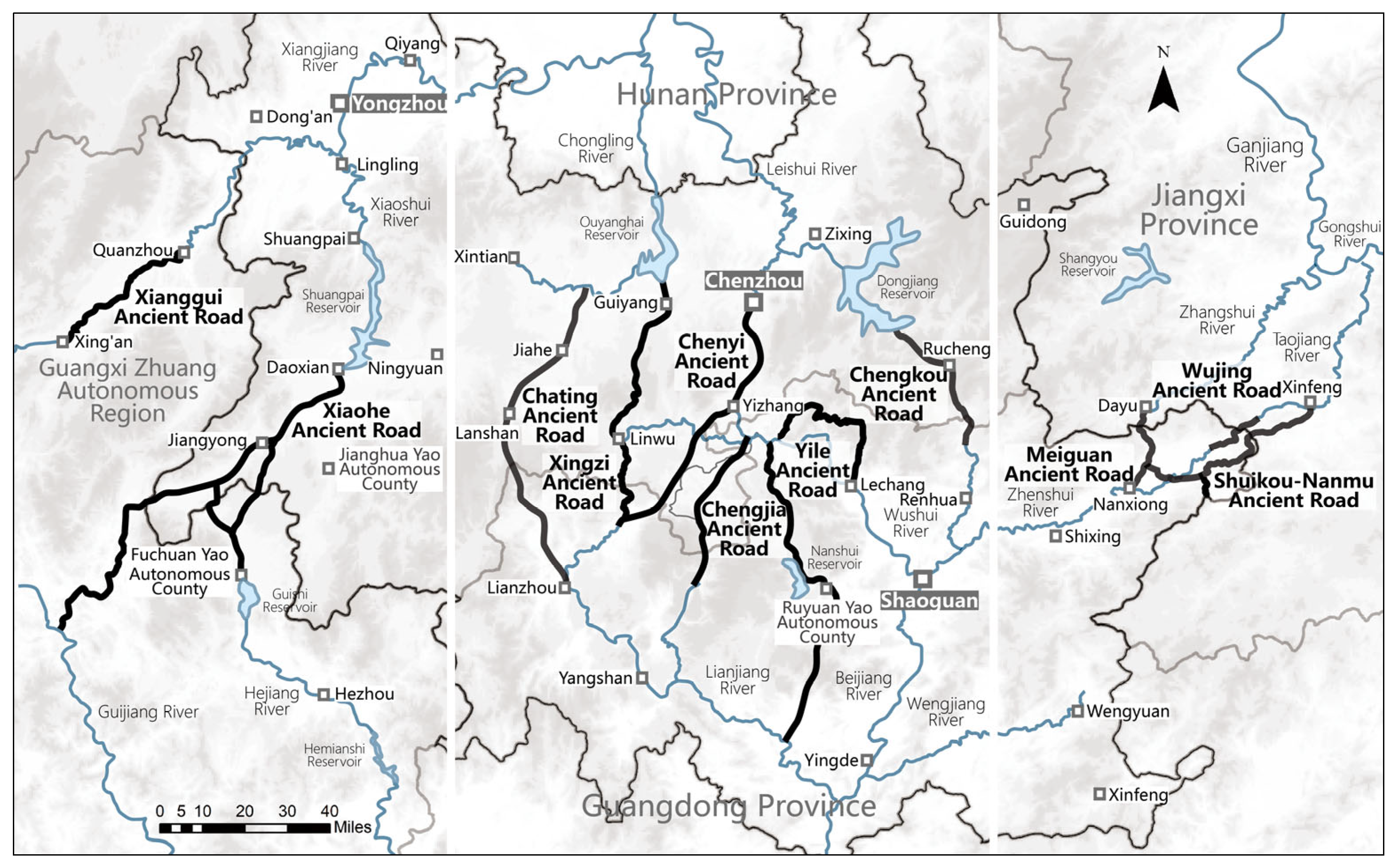
The Hunan–Guangdong Ancient Road is situated in the central section of the Hunan–Guangdong border zone within the Nanling Mountains, with clusters of ancient road networks distributed on its two flanks (Figure 11). To its west lies a system of ancient road routes linking Southern Hunan to Northeastern Guangxi, encompassing the ancient road from the upper reaches of the Xiang River to Quanzhou and Xing’an, as well as the Xiaohe Ancient Road connecting Dao County to Fuchuan Yao Autonomous County [42,43]. To its east, there exists another cluster of ancient roads that serve as transport links between Northern Guangdong and Southwestern Jiangxi, including the Meiguan Ancient Road (connecting Nanxiong and Dayu), the Wujing Ancient Road (linking Wujing and Xinfeng), and the Shuikou–Nanmu Ancient Road—a tridirectional passage connecting to adjacent provinces [44,45,46].
Throughout historical eras, the spatial distribution of political and economic centers in ancient China underwent successive shifts, which exerted a tangible influence on the evolution of transportation corridors linking Lingnan and Lingbei, as well as the vicissitudes of regions along these routes. According to the targeted research conducted by Chen Daiguang, it is evident that in a macro-historical context, there emerged a discernible west-to-east transition in the geographical orientation of such centers [47].
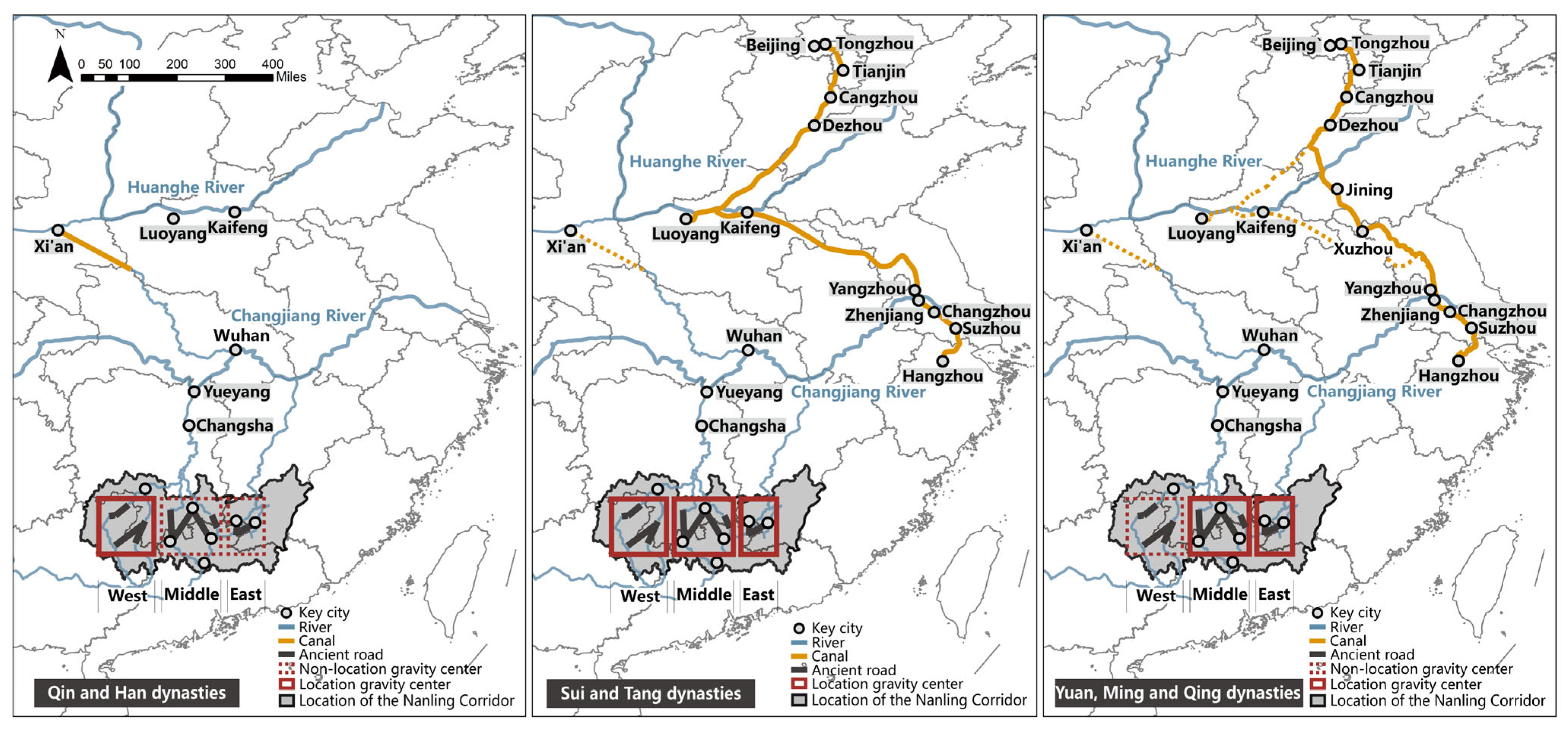
As shown in Figure 12, during the Qin and Han Dynasties, for example, the political and economic hubs were situated in the Guanzhong Plain and the Yi-Luo River Plain in the middle and lower reaches of the Yellow River. Consequently, the Hunan–Guangxi Ancient Road, which traversed the western section of the Nanling Mountains, emerged as the most expeditious north–south transportation artery of that period.
In the Sui and Tang Dynasties, following the eastward relocation and subsequent reversion of the national political center to the northwest, the economic center had already shifted to the Yangtze–Huaihe River basins. As a result, the three corridor clusters (western, middle, and eastern) were all operationalized.
By the Yuan, Ming, and Qing Dynasties, while the economic center remained anchored in the Yangtze–Huaihe River basins, the political center had been transferred to Beijing. With the completion of the Grand Canal and the progressive advancement of maritime transportation, the middle and eastern corridors evolved into the primary conduits connecting Lingnan with the inland heartland.
In summary, the ancient road landscapes along the Central Hunan–Guangdong Route, Western Hunan–Guangxi Route, and Eastern Guangdong–Jiangxi Route exhibit both commonalities and distinct characteristics, which can be elaborated as follows:
Temporal Evolution of Construction: The initial construction of these three ancient road systems predominantly dates back to the Qin and Han Dynasties, with subsequent continuous maintenance and renovation extending up to the Ming and Qing Dynasties.
Transportation Organization Logic: All three routes adopted an integrated water–land transportation framework, reflecting a consistent orientation toward minimizing overland travel distances while maximizing the utilization of water transport networks.
Functional Orientation and Immigration Dynamics: The Western Hunan–Guangxi Route originated as a military thoroughfare; the Central Hunan–Guangdong Route served dual core functions as a military and a tribute-transport road; and the expansion of the Eastern Guangdong–Jiangxi Route was primarily driven by the transformation of its role from a tribute trade corridor to a channel for overseas trade [47].
Concurrently, all three routes functioned as sustained immigration channels. Specifically, the western and central routes were centered on migration flows involving ethnic minority groups (e.g., Yao, Zhuang) and Han immigrants from Hunan and Jiangxi Provinces, whereas the eastern route was distinguished by the migration of Han populations belonging to the Hakka and Cantonese communities.

4.2. Formation Mechanism of Scenic Features Derived from the Hunan–Guangdong Ancient Roads

While the four functional types of ancient roads—military, migratory, trade, and religious—are associated with distinct indirect landscape characteristics, they share a unified development and evolution mechanism as integral components of the Nanling Corridor Cultural Route.
(1) Dynamic Accumulation: Demand-driven generation of specific behaviors and phenomena
As an environmental landscape for human habitation, it furnishes the necessary conditions to meet the multi-level practical needs of human beings. When the original environment fails to satisfy the requirements for survival, safety, knowledge acquisition, and self-actualization, individuals, groups, or clans are impelled to migrate to other environments either passively or actively. This, in turn, catalyzes the accumulation of specific behavioral patterns and cultural phenomena.
The Nanling Corridor, situated on the territorial periphery prior to the unification of the Qin and Han Dynasties, also emerged as a region characterized by ethnic and folk diversity, integration, and upheaval during the transition from the Ming to the Qing Dynasties. Driven by high-priority political imperatives of territorial expansion and stability maintenance, the ruling authorities issued directives framed as military assignments, compelling soldiers to perform specific military service obligations. This process produced a phased military strategic cultural phenomenon.
The Nanling Corridor lies within a tectonic belt abundant in mineral resources and serves as a geographical link between major salt-producing regions. Driven by diverse physiological and esthetic needs, salt miners promoted specialized mineral and salt transportation practices through resource redistribution, thereby producing a cultural phenomenon characterized by reciprocal trade.
The Nanling Corridor serves as both the cradle of Southern Chan Buddhism and a conduit for the dissemination of Taoism. Propelled by the pursuit of spiritual self-realization, the founders and adherents of these religious traditions have refined the articulation of their doctrines through a synthesis of abstract philosophical inquiry and concrete ritual practices, thereby fostering a pervasive integration of religious elements into the broader cultural fabric.
(2) Internal–External Interaction: Dissemination of exogenous culture and preservation of indigenous culture
Exogenous cultures spread to the Nanling region through strategies such as deconstruction, core-led diffusion, and fragmentary extraction. Upon encountering local cultural systems, these external influences undergo selective absorption or rejection by regional cultural circles, leading to a process of screening and adaptation of foreign cultural elements.
To illustrate this, let us consider the dissemination of Central Plains culture as an example. Against the backdrop of large-scale, multi-wave migration, the Han people who migrated southward brought with them not only the core concepts of clan and the ritual-law system but also a range of cultural and practical elements—including agricultural production techniques, the ethos of “diligent study for success,” and the decorative esthetic centered on auspiciousness and prosperity. Traveling along the ancient Hunan–Guangdong thoroughfare, they settled across the expansive Nanling Corridor region. This migration exerted a profound influence and played an effective catalytic role in facilitating social, economic, and cultural exchanges, as well as shaping the local residential landscape, among the Hunan–Jiangxi Han lineage, the Hakka community, and ethnic minorities such as the Yao and Zhuang in the Hunan–Guangdong border areas.
Considering the institutional culture of the Yao ethnic group as a case study, the ancient central dynasties implemented policies centered on “pacification, education, control, and conquest” to guide remote ethnic groups toward alignment with mainstream Confucian culture. In this process, the Pingdi Yao communities in the Qingxi, Gutiao, Fuling, and Goulan regions of Southwestern Hunan were successfully assimilated during the early Ming Dynasty, emerging as a pivotal component of the national military apparatus. By contrast, the Pai Yao populations in the central and western areas of Northern Guangdong underwent a relatively prolonged phase of resistance and exclusion, ultimately leading to a distinctive governance model characterized by the “embedding of the Yao chief system within the Yao elder system.”
(3) Cultural Innovation: Localized expression of natural and cultural elements
Endowed with a unique natural geographical setting and complex socio-cultural context, the Nanling region has fostered regional landscape and garden characteristics through localized innovative practices by migrant populations. These practices span three dimensions: ecological environment adaptation, human settlement and daily life localization, and livelihood and production optimization.
The ancestors of the Yao ethnic group in the Nanling region believed that humans and nature share a common maternal origin, viewing nature as a spiritual life form. They harbored profound awe and reverence for mountains, water, fire, earth, animals, and plants. For example, the Pai Yao people believed in the existence of “tree souls”; prior to entering the mountains for logging, they would first burn incense and offer sacrifices to the forest. Additionally, the Pai Yao people regarded fire as a sacred symbol, with every household maintaining a fire pit to keep the fire perpetually burning.
The creation of living and dwelling spaces has long been a matter of profound significance to humanity, manifesting not only in the construction of structures that “harmonize with the land” but also in the utilization of locally sourced materials. In the hilly regions of the Nanling Mountains, the Yao ethnic group primarily constructs long stilt houses, referred to as “gantiao lou”. In the foothill areas, the Hunan–Jiangxi ethnic communities typically build courtyard-style residences centered around a courtyard. On the plains and lowlands, the Hakka people predominantly erect walled and fortified dwellings. In terms of material selection, inhabitants of the Nanling region prioritize the use of local resources such as fir, pine, and stone for construction. For example, in the mixed Yao and Han areas of Jianghua, Jiangyong, and Daoxian in Southern Hunan—where fir trees are abundant—fir wood is commonly employed in the construction of doorframes, verandas, street-front shops, and temporary single-family homes.
As objectively existing natural landscapes, mountains and waters are not always inherently suitable for human production and labor activities. In the face of unfavorable land use conditions, people can fully leverage their subjective initiative to develop regional livelihood production landscape projects that encapsulate accumulated experience and wisdom. Notable examples of these include the “chuanyan hui” water conservancy landscape system in Southern Hunan and the “beitang” water management projects in Northern Guangdong.
(4) Esthetic Elevation: Humanistic attributes of self-cultivation and transcendence
Epitomized by cultural assemblages like the “Eight Scenic Spots”, this mechanism mobilizes the esthetic subject’s visual, tactile, auditory, and olfactory perceptions through the integration of contextual factors—such as time, climate, sound, flora and fauna, and labor scenes. This creates esthetic and humanistic connotations that transcend physical existence, rooted in sensory experiences yet elevated beyond tangible forms.
The inhabitants of the Hunan–Guangdong border region within the Nanling Mountains have been profoundly shaped by the cultural tradition of collective scenic nomenclature, as evidenced by the extensive documentation of “Eight Scenic Spots” in local records. For example, the Lechang County Chronicle compiled during the Tongzhi Reign of the Qing Dynasty cataloged eight scenic sites including “Hanlong Peak Enshrouded in Rain and Mist”—integrating objective natural elements such as precipitous peaks, swift rivers, exotic rock formations, and drifting clouds with historical allusions to emphasize subjective emotional resonance. Paralleling this practice are Lanshan County’s eight county-level scenic spots, such as “Yishan Mountain as a Distant Barrier,” and Baojing Village’s eight village-level scenic spots like “Bao Pagoda Drenched in Verdant Hues.” All these cases involve the selection, appreciation, and eulogy of landscapes through the lenses of mountains, rivers, urban features, pagodas, and temples, thereby articulating the auspicious vision of “a land blessed with enduring prosperity for generations to come.”

5. Conclusions

This study considers the Hunan–Guangdong Ancient Road as a case study to explore the classification, characteristics, and formation mechanisms of the cultural route landscapes of the Nanling Corridor by integrating traditional materials (e.g., historical classics and annals) with modern analytical techniques (e.g., satellite imagery and GIS software). The key conclusions of this study are summarized as follows:
(1) Drawing on the supplementary documents of the Madrid Conference, the Nanling Corridor is identified as a cultural route based on four core attributes: its cross-era temporal continuity, cross-regional spatial connectivity, cross-cultural interactive reciprocity, and multifunctional roles in military defense, population migration, commodity trade, and religious transmission. The Hunan–Guangdong Ancient Road is a representative component of the Nanling Corridor Cultural Route.
(2) The Hunan–Guangdong border region of the Nanling Corridor features a distinctive natural environmental foundation: geologically, it lies at the junction and gap of plate units; ecogeographically, it is a transitional zone between northern and southern climates; and in terms of hydrothermal resources, it spans altitude-differentiated segments. Its human–environmental context is complex, characterized by overlapping historical identities, fluctuating administrative affiliations, and diverse population compositions, thus forming a multi-cultural intersection zone beyond typical regional cultural boundaries.
(3) The Hunan–Guangdong Ancient Road has undergone temporal and spatial transformations over the course of history, and it now comprises three hierarchical categories: five major thoroughfares, official post roads, and folk village roads. Hub centers and nodes along these routes (e.g., settlements, wharves, bridges, pavilions, steles, and ancient trees) are not only material manifestations of human activities adapted to natural conditions but also functional components that enhance the convenience and comfort of transportation. Additionally, intangible elements, such as the experience of excavating and maintaining water–land channels and the key techniques of ecological reclamation for forests and timber resources, enrich the connotations of traditional Chinese culture.
(4) Landscapes indirectly associated with the Hunan–Guangdong Ancient Road can be categorized into four functional types: fortification landscapes shaped by military conquests, residential landscapes formed by population migration, market landscapes driven by trade and transportation, and temple-observatory landscapes fostered by religious dissemination. While each type has unique characteristics in terms of site distribution, spatial organization, agroforestry vegetation, and folk customs, they share four common formation mechanisms: the dynamic accumulation of historical layers, internal–external cultural exchange, cultural assimilation and innovation, and the esthetic refinement of human–environment interactions.

Author Contributions

Conceptualization, S.Z. and G.W.; methodology, S.Z.; software, S.Z.; investigation, S.Z.; resources, S.Z.; writing—original draft preparation, S.Z.; writing—review and editing, S.Z. and G.W.; visualization, S.Z.; supervision, G.W.; project administration, G.W.; funding acquisition, S.Z. All authors have read and agreed to the published version of the manuscript.

Funding

This research was funded by Hunan Provincial Philosophy and Social Sciences Foundation Project, No. 18YBQ049.

Data Availability Statement

The materials and datasets analyzed in this study were mostly sourced from publicly available data on the internet, as detailed in the article.

Acknowledgments

We extend our sincere gratitude to Expert Jiang Xiangyuan from the Department of Transportation of Hunan Province for his professional guidance on the history of the ancient road. We also express our appreciation to the leaders of the Cultural Center of Linwu County and the Cultural Relics Bureau of Dao County for their robust support. Additionally, we are thankful to Wang Taibao, the inheritor of the intangible cultural heritage of Linwu Nuo Opera, and the staff of each village committee for their detailed introductions.

Conflicts of Interest

The authors declare no conflicts of interest.

References

  1. ICOMOS. The ICOMOS Charter on Cultural Routes. In Proceedings of the 16th General Assembly of ICOMOS, Quebec City, QC, Canada, 4 October 2008. [Google Scholar]
  2. Liu, X.F. Cultural Route Analysis. J. Guilin Tour. Coll. 2006, 5, 622–625. Available online: https://kns.cnki.net/kcms/detail/detail.aspx?filename=GLGZ200605028 (accessed on 23 March 2026).
  3. Charles, A.F.; Robert, M.S. Greenways, 1st ed.; Island Press: Washington, DC, USA, 1993; p. 167. [Google Scholar]
  4. Sanja, B.; Nemanja, T. Developing the Cultural Route Evaluation Model (CREM) and its application on the Trail of Roman Emperors, Serbia. Tour. Manag. Perspect. 2016, 17, 26–35. [Google Scholar] [CrossRef]
  5. Eleni, O.; Ekaterini, T.D.; John, S. An innovative approach to the protection of cultural heritage: The case of cultural routes in Chios Island, Greece. J. Archaeol. Sci. Rep. 2017, 14, 742–757. [Google Scholar] [CrossRef]
  6. Bogacz-Wojtanowska, E.; Góral, A.; Bugdol, M. The Role of Trust in Sustainable Heritage Management Networks. Case Study of Selected Cultural Routes in Poland. Sustainability 2019, 11, 2844. [Google Scholar] [CrossRef]
  7. Alfred, K.; Peter, I.; Hilda, K. Cultural Tourism in Nitra, Slovakia: Overview of Current and Future Trends. Sustainability 2021, 13, 5181. [Google Scholar] [CrossRef]
  8. Cem, B.; Elif, Ö.A.; Özgür, Ü. Value-based optimization model for cultural route design: Ancient Water Supply Heritage of Istanbul (Türkiye). J. Cult. Herit. 2024, 70, 97–110. [Google Scholar] [CrossRef]
  9. CIIC. Report on the Expert Meeting on Routes as a Part of Our Cultural Heritage; CIIC: Madrid, Spain, 1994. [Google Scholar]
  10. Fei, X.T. An Attempt at Sociological Investigation of Ethnic Groups. J. Cent. Inst. Natl. 1982, 2, 3–10. [Google Scholar] [CrossRef]
  11. National Committee for Integrated Survey of Natural Resources, Chinese Academy of Sciences and State Planning Commission. Development and Utilization of Natural Resources in the Nanling Mountain Area, 1st ed.; Science Press: Beijing, China, 1992; p. 4. [Google Scholar]
  12. Zhu, B.X. Cultural Superposition and Cultural Restoration. J. Guangxi Univ. Natl. Philos. Soc. Sci. Ed. 2000, 6, 2–7. Available online: https://kns.cnki.net/kcms/detail/detail.aspx?filename=GXZS200006001 (accessed on 23 March 2026).
  13. Shu, L.S. Basic Characteristics of the Tectonic Evolution in South China. Geol. Bull. China 2012, 7, 1035–1053. [Google Scholar] [CrossRef]
  14. Si, M.Q. Records of the Grand Historian, 1st ed.; Zhonghua Book Company: Beijing, China, 2013; pp. 320–3939. [Google Scholar]
  15. Fan, Y. Book of the Later Han, 1st ed.; Zhonghua Book Company: Beijing, China, 1965; p. 2462. [Google Scholar]
  16. Li, D.Y. Commentary on the Water Classic, 1st ed.; Zhonghua Book Company: Beijing, China, 2020; p. 3014. [Google Scholar]
  17. Zhou, Q.F.; Yang, W.Q. Annotated Responses to Questions from the South, 1st ed.; Zhonghua Book Company: Beijing, China, 1999; p. 12. [Google Scholar]
  18. Qu, D.J. New Discourse on Guangdong, 1st ed.; Zhonghua Book Company: Beijing, China, 1985; pp. 67–69. [Google Scholar]
  19. Zheng, Q. Comprehensive Records, 1st ed.; Zhejiang Ancient Books Publishing House: Hangzhou, China, 1988; p. 549. [Google Scholar]
  20. Luo, X.L. Introduction to Hakka Studies (with a Supplementary Work: “Research on the Origin and Development of the Hakka People”, 1st ed.; Guangdong People’s Publishing House: Guangzhou, China, 2018; pp. 76–81. [Google Scholar]
  21. Chen, W.M. The Evolution and Development of Transportation Geography in Lingnan During Historical Periods, 1st ed.; Jinan University Press: Guangzhou, China, 2006; pp. 88–113. [Google Scholar]
  22. Yizhang County Annals Compilation Committee. Yizhang County Annals, 1st ed.; Huangshan Book Society: Hefei, China, 1995; p. 475. [Google Scholar]
  23. Zhu, Y.L. Ancient Roads in South China: Ancient Road from Chating to Xiangyue. Open Times 2009, 8, 1+161. [Google Scholar] [CrossRef]
  24. Chu, F.L. Ancient Roads in South China: Xingzi Ancient Road. Open Times 2009, 9, 2+161. [Google Scholar] [CrossRef]
  25. Wang, R. Ancient Roads in South China: Ancient Road from Yile to Xijing. Open Times 2009, 6, 1+161. [Google Scholar] [CrossRef]
  26. Yang, F. Ancient Roads in South China: Ancient Road from Yangshan to Chengjia. Open Times 2009, 7, 2+161. [Google Scholar] [CrossRef]
  27. Li, N. Ancient Roads in South China: Ancient Road from Chengkou to Xiangyue. Open Times 2009, 11, 2+161. [Google Scholar] [CrossRef]
  28. Deng, Y.Q.; Li, Z.T.; Lei, F.P. China Local Annals Series: Hunan Prefecture and County Annals Series-Annals of Lan Shan County in the Republic of China, 1st ed.; Jiangsu Ancient Books Publishing House: Nanjing, China, 2002; p. 59. [Google Scholar]
  29. Rucheng County Annals Compilation Committee. Rucheng County Annals, 1st ed.; Hunan People’s Publishing House: Changsha, China, 1997; p. 427. [Google Scholar]
  30. Linwu County Annals Compilation Committee. Linwu County Annals, 1st ed.; Central South University of Technology Press: Changsha, China, 1989; p. 173. [Google Scholar]
  31. Lanshan County Annals Compilation Committee. Lanshan County Annals, 1st ed.; China Social Sciences Press: Beijing, China, 1995; p. 377. [Google Scholar]
  32. Guiyang County Annals Compilation Committee. Guiyang County Annals, 1st ed.; China Literature and History Press: Beijing, China, 1994; p. 482. [Google Scholar]
  33. Jiahe County Annals Compilation Committee. Jiahe County Annals, 1st ed.; Huangshan Book Society: Hefei, China, 1994; p. 233. [Google Scholar]
  34. Renhua County Local Annals Compilation Committee. Renhua County Annals, 1st ed.; Fangzhi Publishing House: Beijing, China, 2014; p. 191. [Google Scholar]
  35. Lianshan Zhuang and Yao Autonomous County Annals Compilation Committee. Lianshan Zhuang and Yao Autonomous County Annals, 1st ed.; Life·Reading·New Knowledge Sanlian Bookstore: Beijing, China, 1997; pp. 405–406. [Google Scholar]
  36. Wu, G.Y.; Hu, G.W.; Li, X.L. The Book of Songs, 1st ed.; Shanghai Ancient Books Publishing House: Shanghai, China, 2017; p. 57. [Google Scholar]
  37. Li, W.P.; Wu, J.R.; Li, D. Regional Division of Masson Pine Production Zones in Hunan Province. Hunan For. Sci. Technol. 1995, 2, 1–8. Available online: https://kns.cnki.net/kcms/detail/detail.aspx?filename=HLKJ199502000 (accessed on 23 March 2026).
  38. Guangdong Provincial Institute of Botany. Flora of Guangdong, 1st ed.; Science Press: Beijing, China, 1976; p. 217. [Google Scholar]
  39. Jiang, X.Y. Opening up the Wilderness and Clearing the Forests: Ancient Transportation History of Hunan (Prehistoric to the Late Qing Dynasty), 1st ed.; People’s Communications Press: Beijing, China, 2020; pp. 174–465. [Google Scholar]
  40. Yu, X.T. Cultivation of Cunninghamia lanceolate, 1st ed.; Fujian Science and Technology Press: Fuzhou, China, 1997; pp. 241–513. [Google Scholar]
  41. Yang, F.H.; Jian, G.Y. Longquan Price Check Test. For. Econ. 1980, 2, 12–19. [Google Scholar] [CrossRef]
  42. Zhang, H.J.; Xie, R.S. Transportation and Commerce in Hunan-Guangxi during the Ming and Qing Dynasties. Econ. Soc. Dev. 2009, 8, 194–195. [Google Scholar] [CrossRef]
  43. Wei, H.M. An Examination of the Xiaohe Ancient Road and Its Branches in Hezhou Section. J. Hezhou Univ. 2011, 1, 34–38. [Google Scholar] [CrossRef]
  44. Wang, Y.L. Ancient Roads in South China-Part Two: Mei Guan Ancient Road. Open Times 2009, 2, 162+161. Available online: https://kns.cnki.net/kcms/detail/detail.aspx?filename=KFSD200902001 (accessed on 23 March 2026).
  45. Li, J. Ancient Roads in South China-Part Twelve: Wu Jing Ancient Road. Open Times 2009, 12, 1+161. Available online: https://kns.cnki.net/kcms/detail/detail.aspx?filename=KFSD200912018 (accessed on 23 March 2026).
  46. Meng, Z.F. Ancient Roads in South China-Part Ten: Shuikou-Nanmu Ancient Road. Open Times 2009, 10, 1+161. [Google Scholar] [CrossRef]
  47. Chen, D.G. On the Characteristics of Transportation Development in Lingnan Region during the Historical Period. J. Chin. Hist. Geogr. 1991, 3, 75–95. Available online: https://kns.cnki.net/kcms/detail/detail.aspx?filename=ZGLD199103006 (accessed on 23 March 2026).
Figure 1. The geographical location of the Nanling Corridor in China.
Land 15 00543 g001
Figure 2. The spatial composition diagram of the four regional units in the Nanling Mountains.
Land 15 00543 g002
Figure 3. The location map of the Hunan–Guangdong border area in the Nanling Mountains.
Land 15 00543 g003
Figure 4. The vegetation vertical zonation in the Mangshan Region.
Land 15 00543 g004
Figure 5. The population distribution map of the Hunan–Guangdong area in the Nanling Mountains.
Land 15 00543 g005
Figure 6. The schematic diagram of the key routes of the Hunan–Guangdong Ancient Road.
Land 15 00543 g006
Figure 7. The schematic diagram of the route alignment of the Hunan–Guangdong Ancient Post Road.
Land 15 00543 g007
Figure 8. The schematic diagram of rural road networks in the Hunan–Guangdong border area of the Nanling Mountains.
Land 15 00543 g008
Figure 9. The schematic diagram of the superimposition of the three layers.
Land 15 00543 g009
Figure 10. The general map of the ancient road routes in the Hunan–Guangdong border area of the Nanling Mountains.
Land 15 00543 g010
Figure 11. The distribution map of three ancient road route groups in the western, middle, and eastern segments.
Land 15 00543 g011
Figure 12. The evolution diagram of the location gravity center of the three ancient road routes.
Land 15 00543 g012
Table 1. The list of the evaluation criteria of the Nanling Corridor Cultural Route.
Evaluation Criteria Rationale for Judgment
Temporal
characteristic
It has undergone four major developmental phases, spanning from the Pre-Qin period, through the Qin and Han Dynasties, the Tang and Song Dynasties, and the Ming and Qing Dynasties, to the present—thus embodying its trans-temporal continuity from ancient times to the present.
Spatial
characteristic
Connecting geographical spaces across multiple scales: on an intercontinental level, linking the Eurasian continent with the Southern Ocean; on a national level, connecting the Central Plains inland with the Lingnan coastal regions; on a river basin level, integrating the Yangtze River system with the Pearl River system; and on a local level, bridging the salt-producing areas of the Huai River region with those of Guangdong and Guangxi.
Cross-cultural
characteristic
Promotes exchanges and mutual benefits between Central Plains culture, Lingnan culture, ethnic minority cultures, and Western culture.
Historical function and roleRepresents an organic integration of multiple historical phenomena and functional dimensions, encompassing the military garrisoning phenomenon under the political function, the immigration and migration phenomenon within the social function, the commercial transportation phenomenon in the economic function, and the religious dissemination phenomenon in the cultural function.
Table 2. Field investigation checklist (based on the period of 2021–2023).
Research DateGeographic LocationField Site
April 2021ChenzhouYouwan Village, Yangshan Village, Huangshabao Fort, and other locations, totaling 19 sites
March 2023QingyuanYouling Village, Madai Village, Fengyang Village, and other locations, totaling 14 sites
June 2023ShaoguanEncun Village, Shitang Village, Huxinba Village, and other locations, totaling 13 sites
From August to September 2023YongzhouLuting Village, Huxi Village, Baojing Village, and other locations, totaling 65 sites
Table 3. The vertical zonation of agricultural crops in the mountainous areas of Northern Guangdong.
Altitude (m)Main CropsSuitable Crops
<400Double-cropping rice and overwintering cropsCitrus, peanuts, mulberry, etc.
400–600Double-season and single-season rice intercroppingCamellia oleifera, Cunninghamia lanceolata, and pine
600–800Double-cropping or single-cropping riceCunninghamia lanceolate, pine, shiitake mushrooms, and black fungus
800–1100Single-cropping riceWater conservation forests
Table 4. The administrative affiliation list of the Hunan–Guangdong border region.
DynastyAdministrative Affiliation
Qin DynastyChangsha was designated as a prefecture to govern the southern part of Hunan and the Lianyang region in Northern Guangdong.
Western Han DynastyChenzhou established Guiyang Prefecture, governing the southern part of Hunan Province, and spanning over a large part of Shaoguan and Lianyang.
Wei, Jin, Northern, and Southern DynastiesOn the northern slopes of the Ling Mountains, the Guiyang and Pingyang Prefectures were established, whereas the Shixing and Yangshan Prefectures were instituted on the southern slopes.
Sui DynastyThe Guiyang Prefecture and the Yangshan Prefecture were abolished, while the Chenzhou Prefecture and the Lianzhou Prefecture were established.
Tang, Song, and Yuan DynastiesChenzhou Region, Guiyang Region, and Lianzhou Region were designated; concurrently, Shixing Prefecture was renamed to Shaozhou Region.
Ming DynastyChenzhou Zhili State administered five counties, while Shaozhou Prefecture administered six counties.
Qing DynastyGuiyang Zhili State administered Linwu, Lanshan, and Jiahe counties, whereas Lianzhou Zhili State administered Yangshan and Lianshan counties.
Table 5. The spatial composition schematic of the Hunan–Guangdong Ancient Road.
NameType
Pavement
material
DirtCobblestoneFlagstone
Land 15 00543 i001Land 15 00543 i002Land 15 00543 i003
Boundary stateOpenSingle-sided restrictedDouble-sided restricted
Land 15 00543 i004Land 15 00543 i005Land 15 00543 i006
Table 6. The catalog of typical meso-scale hub nodes along ancient road networks.
NameTypeExample
Hub settlement
Land 15 00543 i007
CityShaoguan
CountyLinwu
TownPingshi
VillageEncun
Transfer terminal
Land 15 00543 i008
Chenyi Ancient RoadYuhou Street Terminal
Chating Ancient RoadGuiyang Ferry Terminal Group
Xijing Ancient RoadXingzi Terminal Group
Chengjia Ancient RoadQinglian Terminal Group
Chengkou Ancient RoadEncun Terminal
Continuing bridge
Land 15 00543 i009
Chenyi Ancient RoadWansui Bridge
Chating Ancient RoadDaixing Bridge
Xijing Ancient RoadKunkeng Stone Arch Bridge
Chengjia Ancient RoadGuangji Bridge
Chengkou Ancient RoadTianshou Bridge
Table 7. The catalog of facilities along ancient roads at the microscopic scale.
NameTypeExample
Post pavilion
Land 15 00543 i010
Room-style enclosed typeFengtou Village, Zhongfu Pavilion
Pavilion-style open typeFengyang Village, Xiangshu Pavilion
Arch type–buried-depth typeXiakaifengqiao Village,
Shiliang Pavilion
Inscriptions
Land 15 00543 i011
Directional monumentSiyuan Pavilion directional monument
Boundary monumentChuyue boundary monument
Narrative monumentRenovating Tiyunling
Narrative Monument
Title stone carvingsYeshipu Stone Carvings
Street tree
Land 15 00543 i012
/Pinus massoniana
Cunninghamia lanceolata
Table 8. The catalog of ancient road engineering technologies from an intangible perspective.
NameMeasures and Steps
Land routeInspection, chiseling, cleaning, repairing, and pedestrian prohibition
Waterway Chisel off rocks, clean up sunken wood, repair towpaths, and set up navigation marks
ArboricultureBreeding of superior varieties, selection of clear forest land, intercropping, logging and transportation, and pricing and trading
Table 9. The catalog of classification and characteristic analysis of the indirectly associated landscapes.
Landscape HierarchyLandscape Sample
Historical
Background
RouteTangible LandscapeIntangible Culture
MilitaryQin and Han Dynasties’ expeditionsLand 15 00543 i013Strategic passAncient maps
Ming and Qing Dynasties’ garrisonLand 15 00543 i014Fortress cityMilitary place names; Chaling Military Dialect
ImmigrationHan people migrated southwardLand 15 00543 i015Ancestral hallAncestral temple construction techniques; Nuo Opera Ceremony
Residential villages
Yao migrationLand 15 00543 i016Panwang templeTraditional folk customs such as Yao songs and dances
Residential village
TradeSalt transportationLand 15 00543 i017Downtown streetsPicking Salt Ballad
Guild hall
Mining
transportation
Land 15 00543 i018Downtown streetsXiangkun Drama; San Tang Faith
Ancient Opera Stage
ReligiousSouthern Zen BuddhismLand 15 00543 i019MonasteryEnlightenment thinking; Legend of the Ancestor of Zen Buddhism
Pagoda
Local TaoismLand 15 00543 i020Fairy mountainXuandao Thought; Taoist festivals
Taoist abbey
Disclaimer/Publisher’s Note: The statements, opinions and data contained in all publications are solely those of the individual author(s) and contributor(s) and not of MDPI and/or the editor(s). MDPI and/or the editor(s) disclaim responsibility for any injury to people or property resulting from any ideas, methods, instructions or products referred to in the content.