1. Introduction
In recent decades, the role of urban green infrastructure has been extensively investigated, primarily in cities located within temperate and humid climatic zones. In contrast, cities situated in arid and semi-arid regions remain significantly less studied to date [
1,
2]. Under such conditions, chronic freshwater scarcity, soil salinization, high solar radiation, and intense wind regimes substantially constrain vegetation growth and survival, while complicating the long-term maintenance of green spaces. Consequently, urban greening in arid environments represents not only an ecological challenge but also a strategic issue of urban planning, directly linked to climate change adaptation and sustainable land-use management [
3,
4,
5].
In this study, the term urban green infrastructure refers to the spatially interconnected system of natural and semi-natural green elements within the urban environment, including parks, squares, street vegetation, protective plantings, and other vegetated areas that collectively contribute to ecological stability and environmental quality.
Arid coastal cities demonstrate particular vulnerability, where climatic stressors are compounded by high anthropogenic pressure. Under such conditions, urban green infrastructure typically develops unevenly, leading to spatial fragmentation of green spaces and pronounced intra-urban disparities. Central and coastal districts often receive priority funding and improved access to irrigation systems, whereas peripheral residential areas and industrial zones are characterized by limited greening or gradual vegetation degradation. Such spatial inequalities exacerbate manifestations of environmental injustice by restricting equitable access of different social groups to the ecosystem services provided by urban green infrastructure [
6,
7].
Traditional approaches to assessing urban green spaces—including field inventories, visual surveys, and cadastral records—remain important; however, they are often insufficient for capturing spatial heterogeneity and long-term dynamics at the scale of the entire city. In rapidly transforming urbanized areas, such methods tend to be labor-intensive, fragmented, and poorly suited for systematic and continuous monitoring [
8]. These limitations are particularly critical in arid cities, where vegetation conditions may change rapidly in response to water availability, land-use transformations, and management practices.
In this context, remote sensing technologies and satellite monitoring have become key tools for assessing the condition and spatial structure of urban green infrastructure. Multispectral satellite data acquired from platforms such as Landsat 8–9 and Sentinel-2 enable the calculation of vegetation indices, including the Normalized Difference Vegetation Index (NDVI) and the Soil-Adjusted Vegetation Index (SAVI), which are widely used to evaluate vegetation density, vitality, and spatial distribution [
9]. These indices are particularly informative under arid conditions, where sparse vegetation cover and strong soil background effects limit the applicability of traditional analytical approaches. The integration of satellite-derived indices with GIS provides a reproducible, spatially detailed, and temporally comparable framework for analyzing the dynamics of urban green infrastructure.
Despite the growing application of remote sensing in studies of urban green infrastructure, several methodological limitations persist, particularly in arid cities [
10]. First, most studies rely on a single vegetation index—most commonly NDVI—without systematically comparing its sensitivity to soil-adjusted indices under conditions of sparse vegetation cover and saline soils. Second, spatial fragmentation of urban green infrastructure is often addressed descriptively, without formalization through quantitative, spatially explicit indicators. Third, satellite-based assessments of vegetation condition are rarely integrated with analyses of intra-urban spatial inequality and accessibility to green spaces, thereby limiting their practical relevance for sustainable urban planning and environmental justice considerations.
This study seeks to address the identified research gaps by providing a comprehensive assessment of the condition and spatial structure of urban green infrastructure in Aktau (Kazakhstan), an arid coastal city located on the eastern shore of the Caspian Sea. Aktau is characterized by extreme environmental and climatic conditions, chronic freshwater scarcity, saline soils, and high anthropogenic pressure, making it a representative example of an arid urban system. The analysis is based on multispectral satellite data for the period 2015–2025, incorporating NDVI and SAVI index calculations, land-use classification, and spatial analysis within a GIS environment to evaluate vegetation dynamics across different functional zones of the city, including residential, industrial, and coastal areas.
Contemporary research in sustainable urban development emphasizes the pivotal role of urban green infrastructure in shaping environmentally resilient and socially inclusive urban environments. Green spaces provide a wide range of ecosystem services, including microclimate regulation, mitigation of the urban heat island effect, air quality improvement, biodiversity support, and enhancement of social well-being [
11]. Within modern urban planning frameworks, green infrastructure is no longer perceived as a collection of isolated green patches but rather as a spatially interconnected system integrated into land-use structure and urban planning processes [
12,
13].
Significant contributions to the study of urban green infrastructure have been made through geospatial analysis and remote sensing techniques, which enable quantitative assessment of vegetation condition and spatial structure across multiple spatial scales. Among these approaches, vegetation indices—particularly the Normalized Difference Vegetation Index (NDVI)—occupy a central position and are widely applied to evaluate vegetation density, productivity, and physiological condition [
14]. Numerous studies have demonstrated that NDVI effectively captures both seasonal and long-term dynamics of vegetation cover in urban environments, including analyses at the scale of individual neighborhoods and functional zones [
15,
16].
In conditions of sparse vegetation and pronounced soil background, characteristic of arid and semi-arid regions, soil-adjusted and enhanced vegetation indices—such as SAVI, EVI, and GNDVI—are widely applied alongside NDVI. These indices improve the accuracy of vegetation condition assessment by compensating for soil reflectance effects and low biomass levels [
17,
18,
19]. The combined use of multiple vegetation indices is particularly relevant in urban landscapes, where green spaces exhibit a mosaic and fragmented spatial structure.
A substantial body of research has also focused on analyzing the spatial distribution of green spaces and identifying intra-urban disparities in greening levels. Empirical evidence suggests that green infrastructure is often concentrated in central districts and high-income residential areas, whereas industrial zones and peripheral neighborhoods tend to experience vegetation deficits [
20,
21]. Such spatial differences are increasingly examined within the framework of environmental justice, which emphasizes equitable access of different social groups to ecosystem services provided by urban green infrastructure. In recent years, this perspective has been increasingly integrated with spatial analysis and remote sensing approaches, enabling the identification of environmentally vulnerable areas and priority zones for greening interventions.
A distinct research direction focuses on the study of urban green infrastructure in arid and semi-desert regions. These studies emphasize the need for adaptive landscape planning tailored to severe climatic constraints, water scarcity, and intensified anthropogenic pressure [
22]. However, compared to cities located in temperate and humid climates, comprehensive investigations of arid urban systems remain limited, and spatial–temporal assessments of green infrastructure are often fragmented.
In the context of urbanization and climate transformations, cities in Kazakhstan represent an important field of inquiry, as a substantial proportion of the country’s urbanized territories are situated within arid and semi-arid zones. In recent years, several studies have assessed the condition of urban green spaces in cities such as Aktobe, Kostanay, Astana, and Almaty [
23,
24,
25,
26,
27]. These investigations have identified both positive outcomes of greening programs and persistent challenges related to the fragmentation of green spaces, uneven spatial distribution, and limited resilience of plantings.
A number of publications highlight the strategic importance of green infrastructure in post-socialist cities, where urban transformation processes are accompanied by changes in the functions and spatial configuration of green areas [
28]. Other studies demonstrate the potential of satellite monitoring for evaluating large-scale greening initiatives, including the development of artificial forest belts and peri-urban green zones [
29], and emphasize the necessity of integrating regular monitoring and GIS technologies into urban green infrastructure management systems [
30].
Despite the growing scientific interest in urban greening in Kazakhstan, the literature still lacks comprehensive spatial–temporal studies of urban green infrastructure in arid cities based on standardized satellite-derived indicators and explicitly oriented toward sustainable urban planning objectives. In particular, issues related to the spatial structure of green infrastructure, its fragmentation, and intra-urban environmental inequality under severe climatic and water constraints remain insufficiently explored.
Although remote sensing techniques and vegetation indices are widely applied in urban green infrastructure research, several conceptual and methodological limitations persist. In many studies, vegetation assessment relies on a single index—most commonly NDVI—which substantially restricts interpretative capacity in environments characterized by sparse vegetation, saline soils, and a high proportion of bare surfaces typical of arid cities [
31,
32]. Furthermore, spatial inequality in access to green spaces is often evaluated using aggregated land-use indicators or simple accessibility metrics, without accounting for the actual condition of vegetation and its functional role within the urban structure. As a result, the potential of satellite data as a comprehensive tool for assessing spatial structure, ecological resilience, and environmental justice in urban green infrastructure remains only partially realized.
Recent studies increasingly employ high-resolution satellite imagery and advanced spatial analysis to investigate the dynamics of urban vegetation and green infrastructure in rapidly developing cities. The use of multispectral satellite data and GIS-based analytical tools enables researchers to assess vegetation density, spatial distribution, and temporal changes in urban ecosystems with a high degree of spatial detail and methodological reproducibility. Such approaches provide important opportunities for monitoring urban environmental conditions and identifying areas that require priority greening interventions [
33,
34,
35].
Existing research provides a solid theoretical and methodological foundation for analyzing urban green infrastructure; however, it also underscores the need for more integrative assessments that combine remote sensing data, spatial analysis, and planning context. The present study seeks to address this gap through the case of Aktau—an arid coastal city in Kazakhstan—thereby contributing to a deeper understanding of the formation and transformation of green infrastructure under extreme environmental and anthropogenic pressures.
The aim of this study is to develop and test an integrated remote sensing–based analytical framework for assessing the condition, spatial structure, and temporal dynamics of urban green infrastructure in Aktau under arid climate conditions. To achieve this objective, the study addresses the following tasks: (1) identifying spatial patterns and the degree of fragmentation of green infrastructure; (2) analyzing temporal changes in vegetation indices over a ten-year period; (3) assessing intra-urban disparities in greening levels across functional zones; and (4) demonstrating the potential of NDVI and SAVI monitoring as decision-support tools for sustainable urban planning in arid regions.
Despite the growing application of remote sensing techniques in studies of urban green infrastructure, most existing research relies primarily on a single vegetation index, typically NDVI, and rarely integrates satellite-derived indicators with detailed field-based inventory data. In addition, spatial analyses of urban vegetation in arid environments are often limited to descriptive mapping and do not adequately address the structural fragmentation of green infrastructure or intra-urban disparities in vegetation distribution.
The present study contributes to this research field by proposing an integrated analytical framework that combines satellite-derived vegetation indices (NDVI and SAVI) with inventory-based indicators of urban green infrastructure, including Green Planting Density (GPD), Structural Composition of Greenery (SCG), and Protective Green Infrastructure (PGI). This approach enables a multi-scale assessment of vegetation condition, spatial structure, and functional characteristics of urban green infrastructure.
In contrast to conventional remote sensing studies that focus primarily on spectral indicators, the proposed methodology integrates satellite monitoring with dendrological inventory data and spatial analysis at the microdistrict level. Such integration allows not only the evaluation of vegetation dynamics but also the identification of spatial fragmentation patterns and intra-urban inequalities in greening levels within an arid coastal urban environment.
The integration of satellite-derived indicators with spatial analysis enhances understanding of the processes shaping and transforming urban green infrastructure under severe environmental constraints. The findings have practical relevance and may inform the development of sustainable green infrastructure management strategies in other arid and semi-arid cities facing similar challenges related to water scarcity, land-use pressure, and environmental inequality.
Furthermore, the study advances the integration of satellite-derived vegetation indices with inventory-based indicators for assessing both the spatial structure and intra-urban ecological inequality in arid coastal cities.
2. Materials and Methods
2.1. Study Area
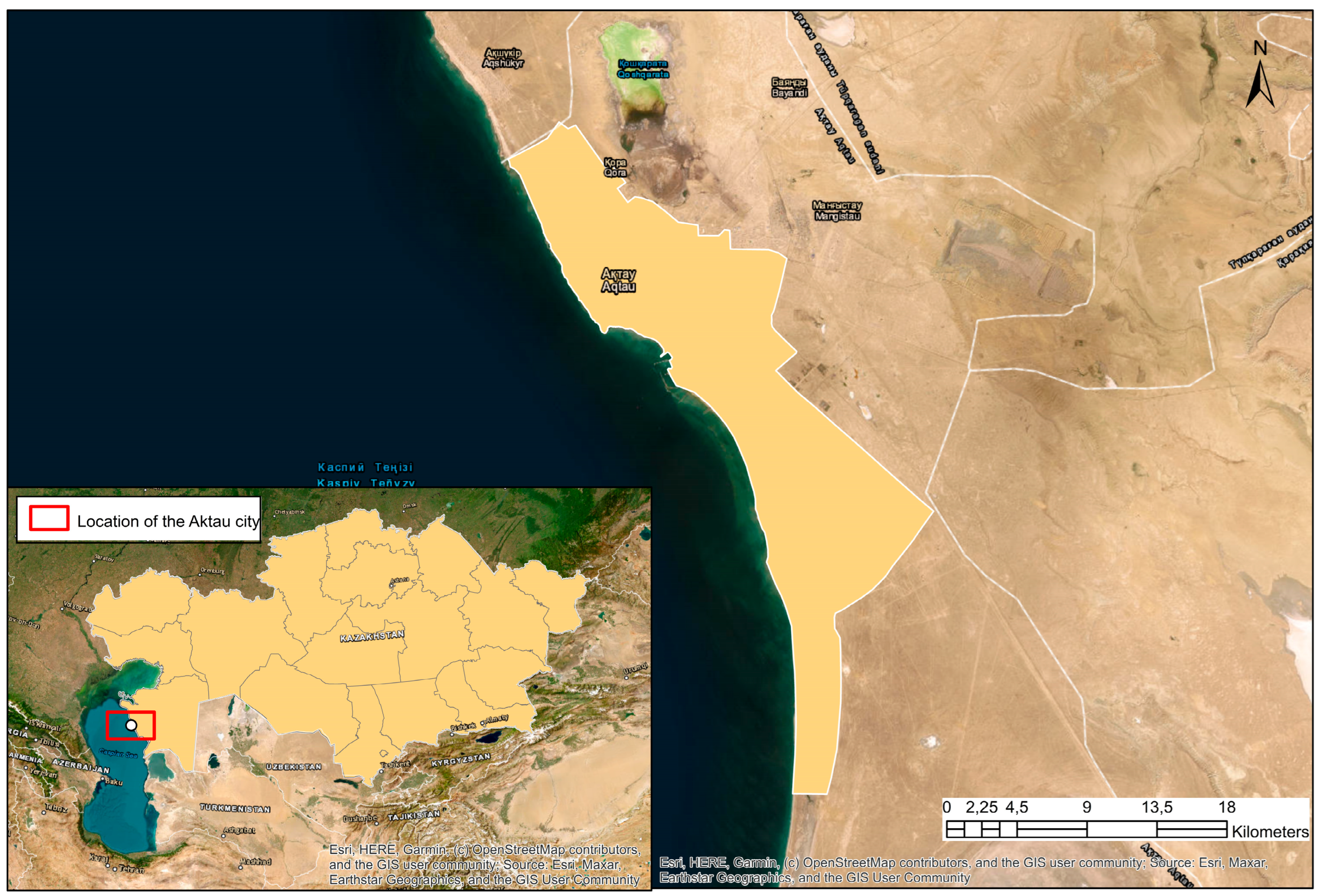
The study area is the city of Aktau, located on the eastern coast of the Caspian Sea in western Kazakhstan (43.65° N, 51.17° E) at an elevation of about 20–40 m above sea level. The city lies within an arid climatic zone characterized by extremely low annual precipitation, high solar radiation, frequent dry winds, and widespread soil salinization. The mean annual precipitation is approximately 120–150 mm, while the average annual air temperature is about 13–14 °C, with hot summers and relatively mild winters. According to the Köppen–Geiger climate classification, the climate of the region corresponds to the BWk type (cold desert climate). The natural vegetation surrounding the city is represented by desert and semi-desert plant communities dominated by xerophytic and halophytic species adapted to saline soils and arid environmental conditions. Combined with intensive urbanization and chronic freshwater scarcity, these natural conditions impose significant constraints on the formation and sustainable functioning of urban green infrastructure.
These natural–climatic and anthropogenic characteristics make Aktau a representative example of an arid coastal city suitable for analyzing the spatial structure and dynamics of urban vegetation (
Figure 1).
2.2. Data Sources and Preprocessing
The empirical basis of the study integrates multispectral Sentinel-2 MSI satellite imagery for the period 2015–2025, including the most recent observations acquired in June 2025. Sentinel-2 provides observations in 13 spectral bands with spatial resolutions of 10, 20, and 60 m, depending on the band.
For the calculation of vegetation indices, visible bands (B2, B3, B4) and the near-infrared band (B8) with 10 m spatial resolution were used, along with Red Edge bands (B5, B6, B7) and shortwave infrared (SWIR) bands (B11, B12) at 20 m resolution. To ensure spectral consistency and comparability, all images were resampled to a unified spatial resolution of 20 m using bilinear interpolation.
Level-2A Sentinel-2 products, providing bottom-of-atmosphere surface reflectance values processed with the Sen2Cor atmospheric correction algorithm, were used in this study. This approach minimized atmospheric effects and ensured the reliability of vegetation index calculations.
Satellite scenes were selected based on the following criteria: cloud cover below 10% within the scene; acquisition during the period of maximum vegetation activity (June–August); accurate geometric correction; and absence of significant atmospheric distortions. All raster datasets were projected to a unified coordinate system (WGS 84/UTM Zone 40N), spatially aligned, and clipped to the boundaries of the study area. Mean and range NDVI values for individual microdistricts were derived using the Zonal Statistics tool in ArcGIS 10.8 based on officially defined microdistrict boundaries.
Vector layers from the National Land Cadastre of the Republic of Kazakhstan, as well as functional zoning materials derived from the Master Plan of Aktau, were used as auxiliary spatial datasets. These data supported land-use structure refinement, the development of training samples for supervised classification, and the interpretation of remote sensing results.
Ground-based validation was carried out using the 2023 dendrological inventory of Aktau, supplemented by field surveys conducted in October 2025 within the framework of the research project funded by the Committee of Science of the Ministry of Science and Higher Education of the Republic of Kazakhstan (IRN AP27511521). Field observations included documentation of vegetation types, assessment of preservation status and signs of degradation, and comparison of actual vegetation conditions with corresponding NDVI and SAVI values.
For additional validation, materials from the 2023 dendrological inventory of Aktau’s urban green infrastructure were utilized, conducted as part of the development of the official urban dendrological plan [
36]. The inventory covered 80 green infrastructure units with a total area of 1777.56 ha. Quantitative and structural characteristics of plantings were recorded, including taxonomic composition, numbers of trees and shrubs, parameters of hedgerows, lawns, and flowerbeds, as well as qualitative assessments of plant health conditions.
The integration of remote sensing data with ground-based inventory information enhanced the reliability of interpreting spatial fragmentation and structural heterogeneity of urban green infrastructure under arid climatic conditions.
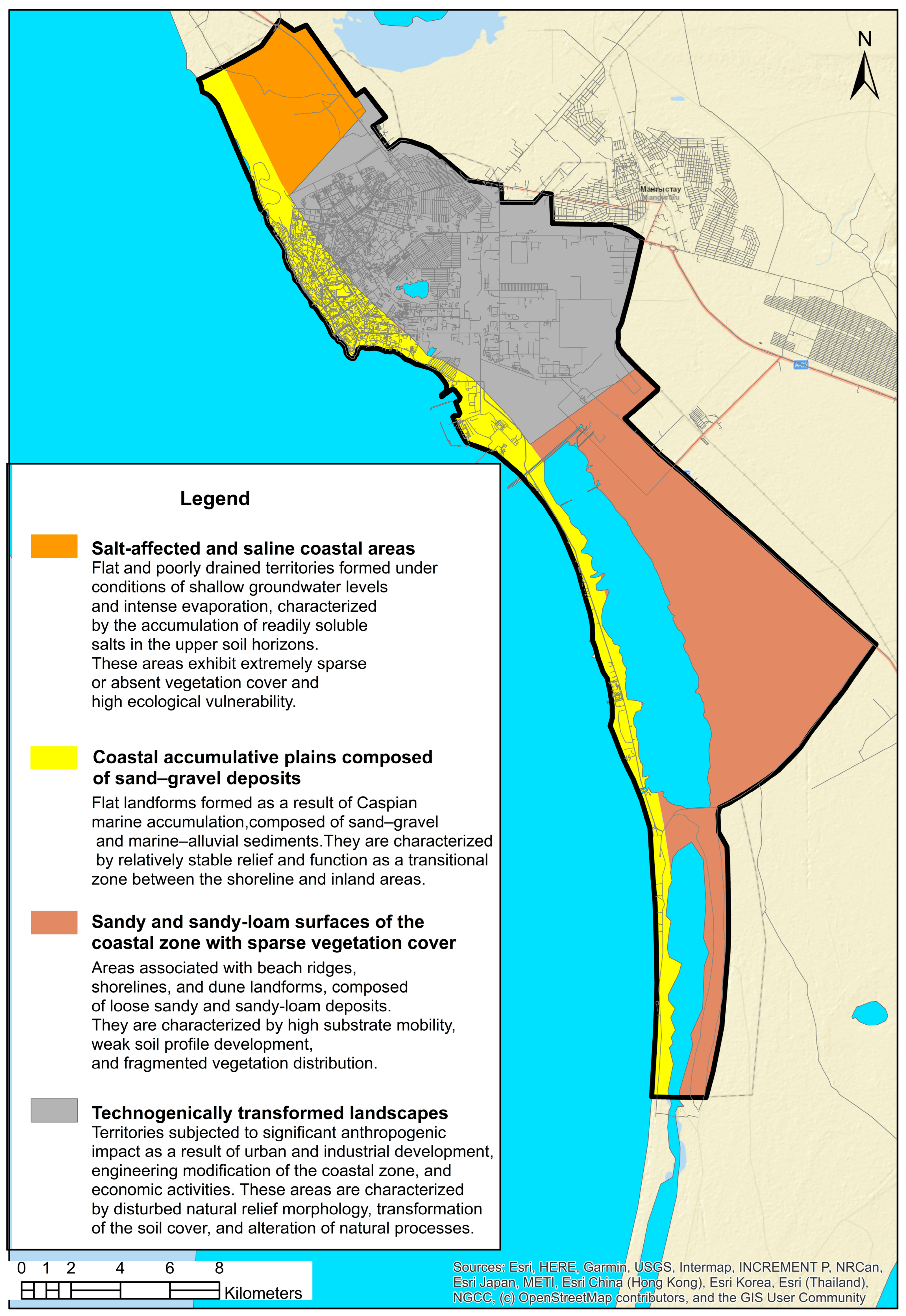
Landscape types were delineated through visual interpretation of satellite imagery, taking into account geomorphological features, surface lithology, and land-use patterns. The boundaries of landscape units were refined based on relief morphology and the degree of anthropogenic transformation of the coastal zone.
2.3. Calculation of Vegetation Indices
The assessment of vegetation condition and spatial distribution within the city of Aktau was performed using spectral vegetation indices derived from surface reflectance values in the red (B4) and near-infrared (B8) bands of Sentinel-2 imagery.
NDVI (Normalized Difference Vegetation Index) was used as the primary indicator—one of the most widely applied metrics for evaluating vegetation density and spectral activity in urban and arid landscapes [
37]:
Given the pronounced soil background characteristic of the coastal arid areas of Aktau, the Soil-Adjusted Vegetation Index (SAVI) was additionally calculated to reduce the influence of bare soil reflectance on vegetation assessment [
38]:
where L is the soil brightness correction factor. In this study, a value of L = 0.5 was applied, as recommended for areas with low vegetation density.
For each reference year (2015 and 2025), mean seasonal NDVI and SAVI values were calculated for the summer vegetation period (June–August), which is particularly important for arid cities characterized by pronounced seasonal variability in vegetation cover.
2.4. Spatial Analysis and Land-Use Classification
The spatial analysis of urban green infrastructure was conducted through the integration of remote sensing data and geospatial analysis techniques [
39]. Spatial data processing and analysis were performed in the ArcGIS 10.8 environment.
Vegetation indices (NDVI and SAVI) were calculated for the entire urban territory and disaggregated by functional zones identified according to the city’s Master Plan (residential, industrial, and recreational areas). To detect intra-urban spatial differences, descriptive statistical measures—including mean values, standard deviations, and distribution analysis of the indices within functional zones—were applied.
Land-use classification was performed using a supervised classification approach based on the Maximum Likelihood algorithm, which is widely applied in urban studies [
40]. The following classes were identified: green spaces, built-up areas, industrial zones, bare soil and sandy surfaces, and water bodies. The classification utilized Sentinel-2 spectral bands (B2, B3, B4, B8, B11, B12) in combination with the calculated vegetation indices NDVI and SAVI.
Training samples were developed using high-resolution satellite imagery, cadastral datasets, and functional zoning materials from the city’s Master Plan. Classification accuracy was assessed using independent validation samples and by comparing the results with cadastral and field survey data. The validation procedure demonstrated satisfactory agreement between the classified classes and the actual land-use structure, indicating that the results are representative of an arid coastal city characterized by a mosaic spatial configuration.
2.5. Indicators for Assessing Urban Green Infrastructure
For the quantitative and structural assessment of urban green infrastructure at the microdistrict level, a set of inventory-based indicators was applied, calculated using data from the 2023 dendrological plan of Aktau and officially defined microdistrict boundaries. Microdistrict areas were determined in ArcGIS 10.8 based on vector boundaries obtained from the city’s Master Plan materials.
Due to the absence of detailed spatial data on the exact area of individual green patches, the proportion of green space expressed as a percentage was not calculated. Instead, indicators reflecting greening intensity, structural differentiation, and the functional role of green plantings were employed.
Green Planting Density (GPD):
where N
d—denotes the number of trees (units);
Ns—denotes the number of shrubs (units);
A—represents the area of the microdistrict (ha).
The indicator is expressed in units per hectare (plants/ha) and characterizes the intensity of greening within the territory.
Structural Composition of Greenery, SCG:
where
—denotes the number of plantings of type i;
—represents the total number of green plantings.
The indicator is expressed as a percentage and reflects the internal structural differentiation of urban green infrastructure, allowing assessment of the relative proportions of tree, shrub, and ornamental forms.
Protective Green Infrastructure Indicator, PGI:
where
—denotes the total length of hedgerows (m);
A—represents the area of the microdistrict (ha).
The indicator is expressed in meters per hectare (m/ha) and characterizes the provision of the territory with linear protective green elements.
In the context of Aktau’s arid urban environment, hedgerows represent the main form of linear protective vegetation, functioning as wind barriers, dust protection elements, and buffer plantings along streets and urban infrastructure. Therefore, the total length of hedgerows was used as an indicator of protective green infrastructure.
The indicators were calculated for all microdistricts included in the inventory. The selection of GPD, SCG, and PGI was motivated by the need for a comprehensive assessment of urban green infrastructure, capturing its quantitative intensity, structural differentiation, and protective-functional role. This approach is methodologically appropriate for analyzing arid coastal cities, where fragmented and linear forms of greening predominate.
3. Results
3.1. Spatial Structure of Urban Green Infrastructure in Aktau
The spatial analysis of urban green infrastructure in Aktau revealed a high degree of spatial fragmentation and structural heterogeneity of vegetation cover, shaped by the combined influence of arid climatic conditions, water scarcity, and the discrete pattern of urban development. Green plantings within the urban territory form a mosaic system of spatially isolated elements characterized by weak morphological connectivity and the absence of a continuous green framework.
Functionally significant green spaces are primarily represented by individual parks, squares, linear coastal plantings, and point-based street vegetation along the road network. Their spatial configuration does not ensure the formation of stable ecological corridors and limits landscape-ecological connectivity between key components of the urban environment. As a result, Aktau’s green infrastructure functions predominantly as a set of autonomous fragments rather than as an integrated and spatially cohesive system.
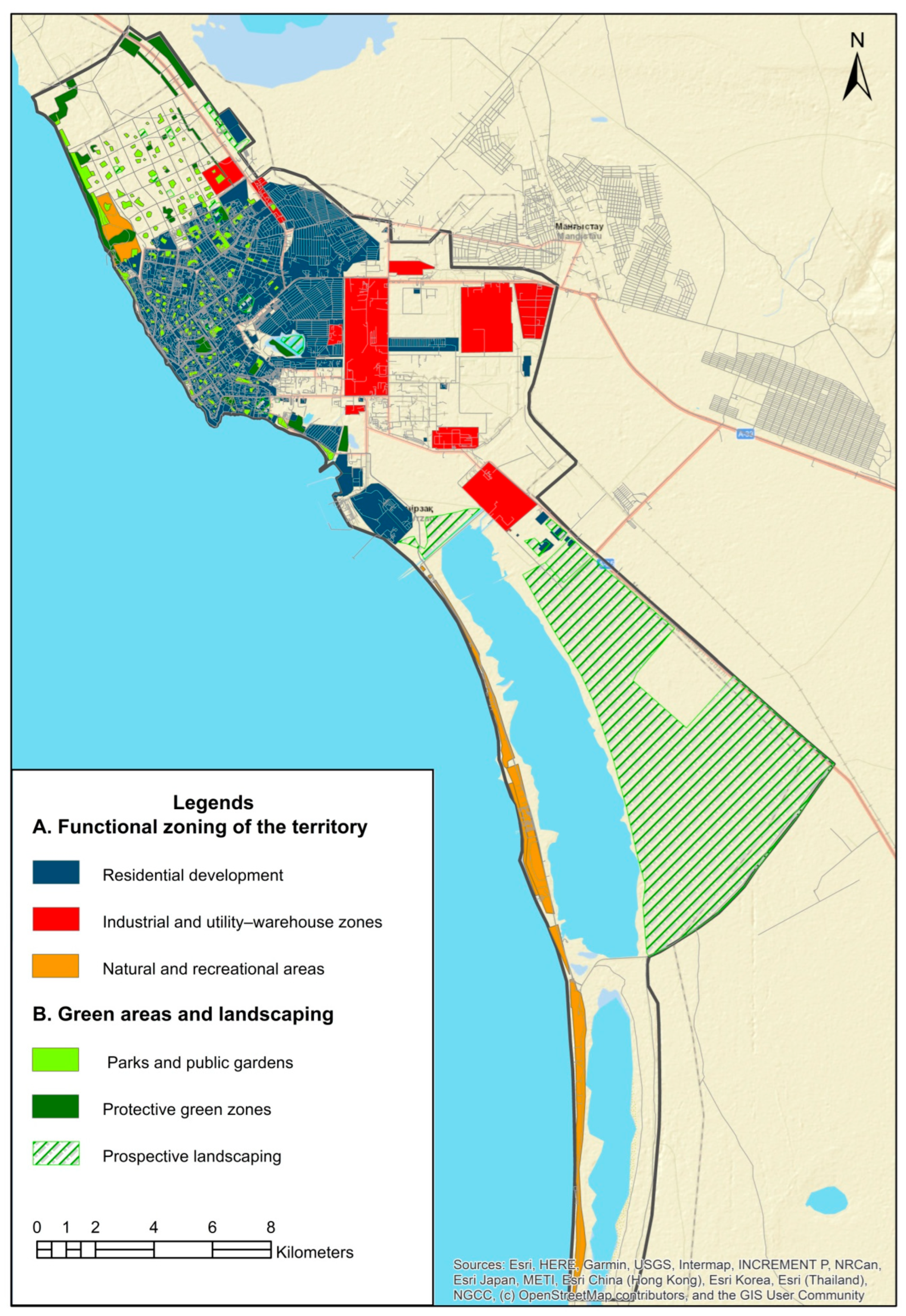
The largest and structurally well-developed elements of urban green infrastructure—Victory Park, T.G. Shevchenko Square, the Amusement Park, and the First President Park of the Republic of Kazakhstan—are spatially concentrated in the central and coastal areas of the city. These territories are characterized by relatively high vegetation density and more stable morphological features, which are associated with prioritized landscaping, regular irrigation, and the reconstruction of public spaces. This pattern is clearly reflected in the spatial configuration of Aktau’s green infrastructure (
Figure 2).
In contrast, peripheral residential districts and industrial zones exhibit low greening intensity, spatial disconnection of vegetated areas, and the predominance of bare or technologically transformed surfaces. In these areas, green elements are mainly represented by fragmented plantings that do not form stable spatial structures, resulting in a marked decline in vegetation density and reinforcing intra-urban disparities in greening levels (
Figure 3).
The spatial organization of Aktau’s green infrastructure is characterized by a pronounced center–periphery asymmetry, whereby functionally and ecologically more developed green areas are concentrated in the central and coastal districts, while a substantial portion of the urban territory remains outside a coherently structured green framework. This spatial configuration establishes the baseline conditions for subsequent analysis of the spatiotemporal dynamics of vegetation cover and intra-urban disparities in greening levels.
3.2. Taxonomic and Quantitative Characteristics of Urban Green Plantings in Aktau
According to the comprehensive inventory conducted within the urban territory of Aktau, 80 green infrastructure units were identified, including parks, squares, intra-block green spaces, and elements of linear street landscaping. The total number of recorded tree and shrub plantings amounted to 138,681 specimens, reflecting the overall scale and structural configuration of the green fund of this arid coastal city.
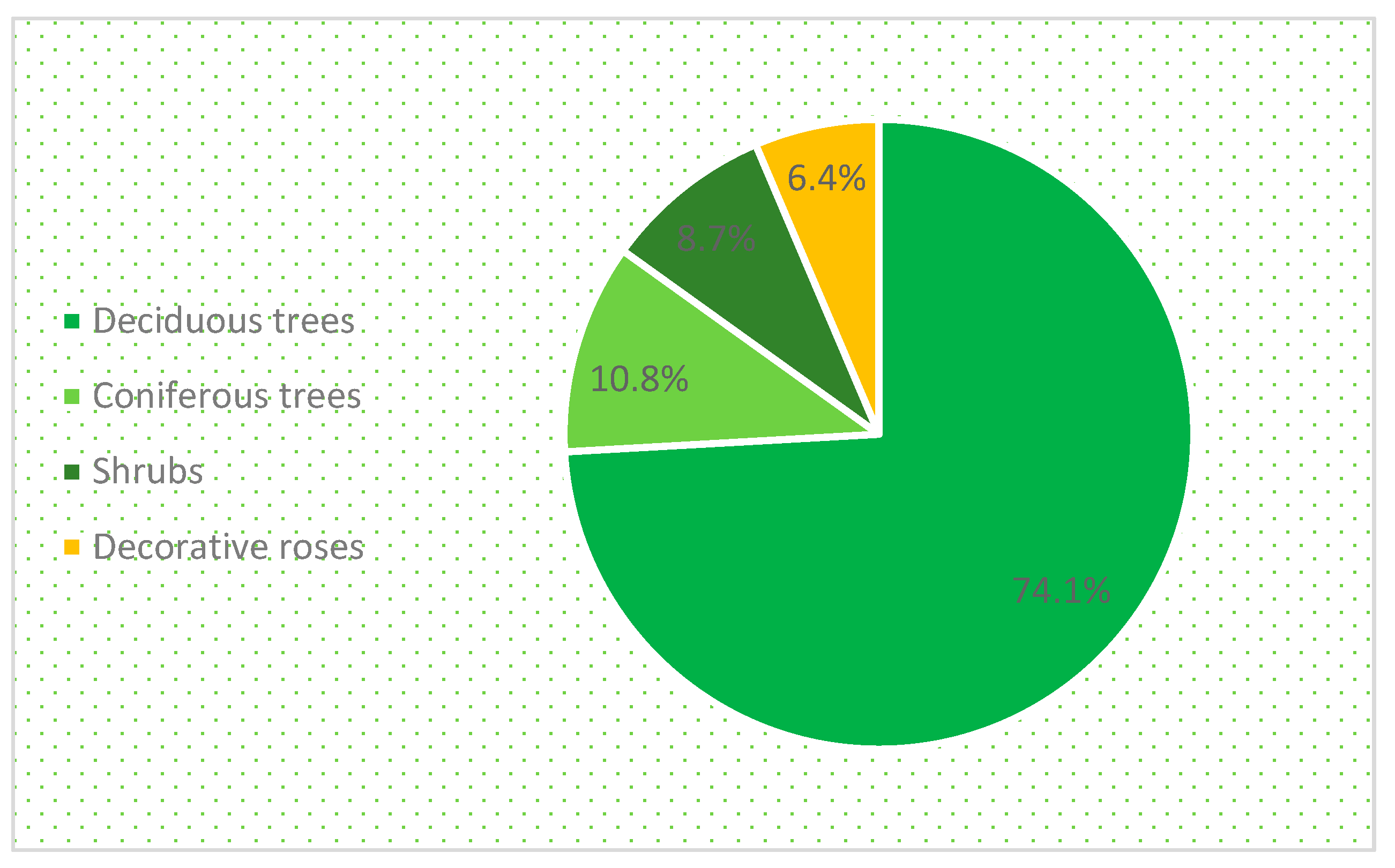
Quantitative analysis revealed a pronounced asymmetry in the taxonomic structure of Aktau’s green plantings, with deciduous tree species dominating and forming the structural backbone of the urban green infrastructure. Coniferous species, shrubs, and ornamental forms constitute a substantially smaller proportion, as clearly illustrated by the distribution of life forms within the urban vegetation structure (
Figure 4,
Table 1).
In addition to tree and shrub plantings, the green infrastructure structure includes 47,337.7 linear meters of hedgerows, 4376.6 m2 of flowerbeds, and 29,117.0 m2 of lawns, indicating the predominance of point-based and linear greening forms over continuous green masses. This pattern reflects the adaptation of landscaping strategies to conditions of water scarcity and high anthropogenic pressure.
Taxonomic analysis revealed a pronounced dominance of xerophytic and halophytic species adapted to arid climates, high solar radiation, and saline soils. The most widespread tree taxa are
Ulmus pumila, Populus alba, and
Elaeagnus angustifolia, which collectively constitute the structural backbone of the woody framework of urban green infrastructure (
Table 2). Their high representation reflects a greening strategy focused on species with enhanced ecological plasticity and resilience to extreme arid environmental conditions.
The quantitative and taxonomic structure of Aktau’s urban green plantings is characterized by limited species diversity combined with a high abundance of several dominant taxa, resulting in a relatively stable yet ecologically vulnerable green framework. These findings provide an empirical basis for the subsequent analysis of spatiotemporal vegetation dynamics and the assessment of its functional resilience using remote sensing data.
According to the 2023 field-based dendrological inventory, a considerable proportion of tree plantings within the urban territory is classified as being in satisfactory or unsatisfactory physiological condition. This observation is consistent with the predominance of moderate and low NDVI values detected across large parts of Aktau.
3.3. Spatiotemporal Dynamics of NDVI in the Urban Environment of Aktau (2015–2025)
A comparative analysis of multispectral Sentinel-2 imagery for the summer vegetation periods (June 2015 and June 2025) revealed significant spatiotemporal changes in the distribution of the Normalized Difference Vegetation Index (NDVI) and the Soil-Adjusted Vegetation Index (SAVI), which minimizes the influence of soil background brightness on the spectral response of vegetation, within the urban territory of Aktau. In this study, spatial analysis was limited to the built-up urban area, including the main residential and recreational zones where green infrastructure elements are concentrated. Accordingly, the identified patterns primarily refer to the functionally developed part of the city and do not extend to peripheral natural territories.
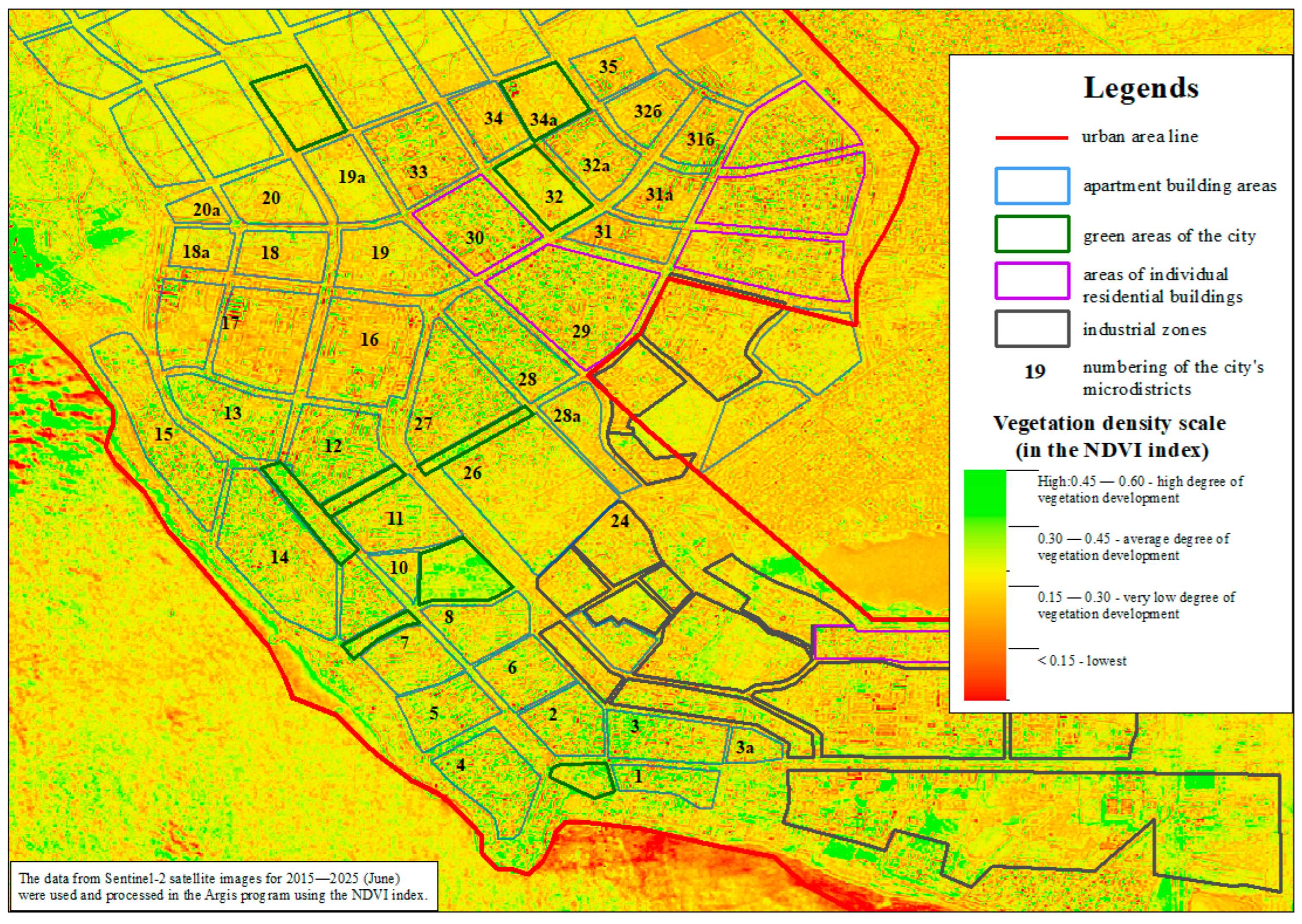
In 2015, NDVI values across the urban territory predominantly ranged from 0.20 to 0.35, reflecting low to moderate vegetation density typical of arid urban landscapes. Areas with relatively higher NDVI values were spatially localized and mainly associated with individual parks and squares in the central part of the city, whereas extensive residential districts and industrial zones exhibited consistently low index values. The spatial configuration of NDVI during this period demonstrates a discontinuous and fragmented pattern, without the formation of extensive zones of stable vegetation cover (
Figure 5).
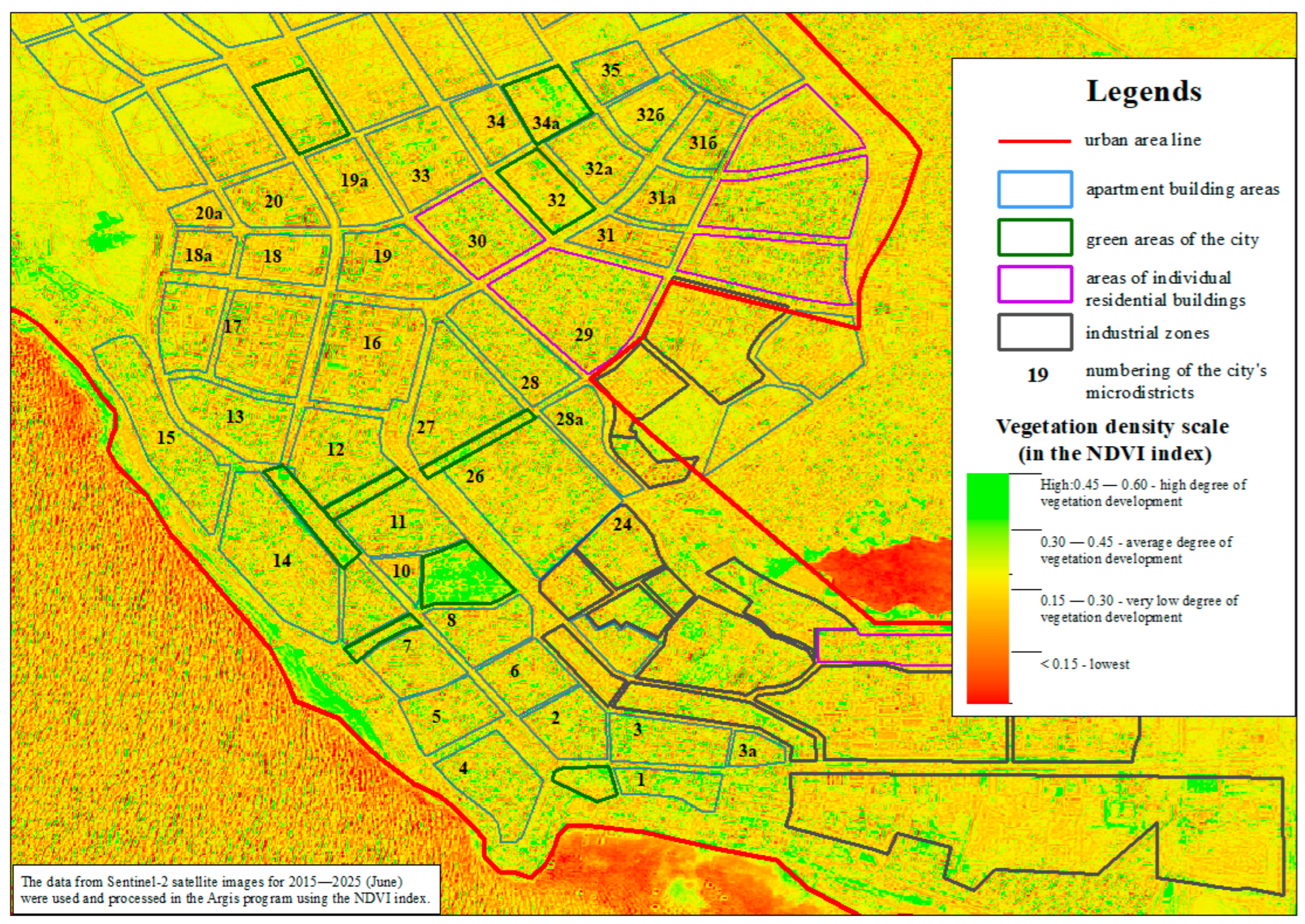
By 2025, the spatial structure of NDVI exhibits localized yet clearly pronounced changes. In the central and coastal districts of the city, index values increased to 0.45–0.55, indicating higher vegetation density and enhanced spectral activity. These areas form isolated clusters of elevated vegetation activity, spatially separated from the surrounding urban matrix. In contrast, industrial and peripheral zones maintain consistently low NDVI values (0.20–0.30), confirming the persistence of spatial heterogeneity in vegetation cover (
Figure 6).
The analysis of NDVI for the period 2015–2025 reveals pronounced spatial heterogeneity in vegetation dynamics across the urban territory of Aktau. Although certain areas—primarily central and coastal districts—demonstrate measurable increases in vegetation density, these positive changes remain spatially localized and do not indicate a coherent, city-wide transformation. The observed improvements are confined to specific zones and are not accompanied by a structural reconfiguration or enhanced connectivity of the overall urban green framework. Consequently, the spatial pattern of vegetation cover continues to be characterized by fragmentation and center–periphery asymmetry, suggesting that recent greening efforts have not yet resulted in the formation of an integrated and functionally cohesive green infrastructure network.
A comparative analysis of mean NDVI values across functional zones for the period 2015–2025 revealed pronounced spatial heterogeneity in vegetation dynamics (
Table 3).
The greatest increase in the index was recorded in the central and coastal zones (+0.12), indicating enhanced vegetation density and spectral activity in the most landscaped and intensively managed parts of the city. In residential areas, the increase was moderate (+0.05), whereas industrial zones exhibited only minimal change (+0.03), confirming the persistence of intra-urban asymmetry in greening levels.
3.4. Comparative Analysis of NDVI and SAVI Under Arid Urban Conditions
To enhance the reliability of the interpretation and to account for the influence of soil background characteristics of arid urban landscapes, a comparative analysis of NDVI and SAVI distributions was conducted. The use of SAVI enabled a more accurate delineation of the spatial structure of vegetation cover by minimizing distortions associated with the high proportion of bare and saline soils.
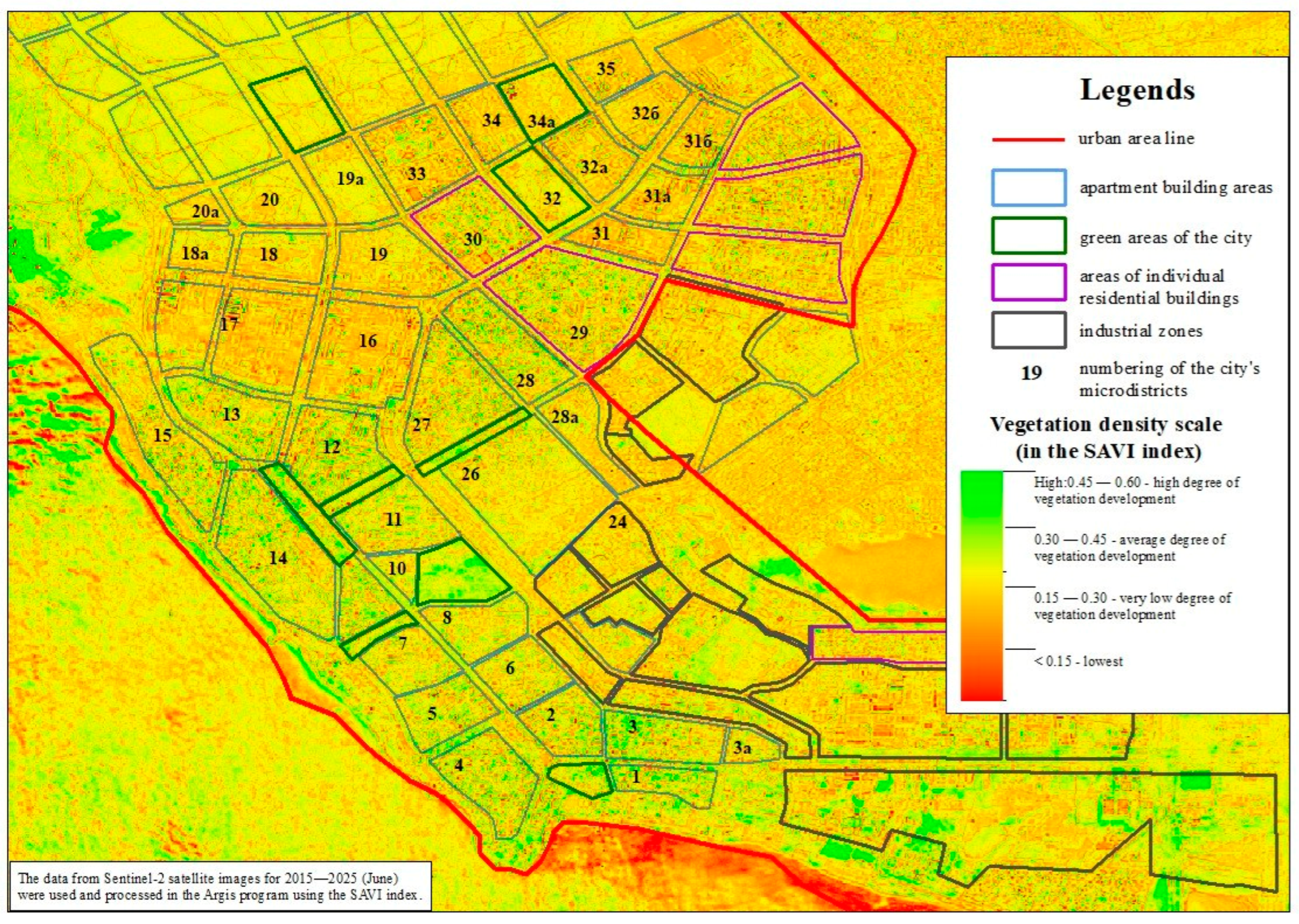
In 2015, SAVI values across most of Aktau did not exceed 0.30, confirming the predominance of sparsely developed vegetation and the substantial contribution of soil reflectance to the overall spectral response. Although the spatial distribution of SAVI generally correlates with NDVI patterns, it exhibits stronger differentiation between areas with minimal and moderate greening levels (
Figure 7).
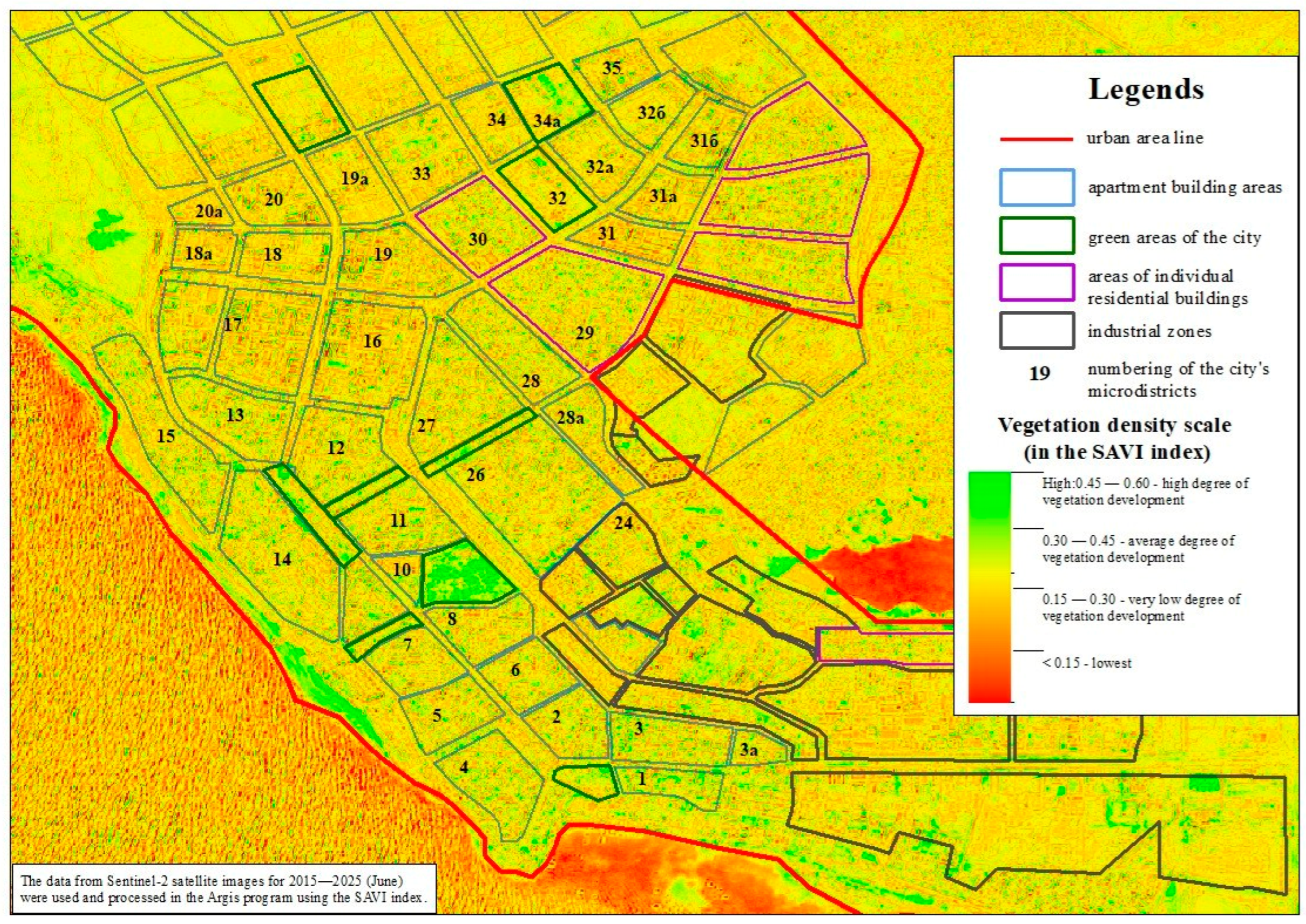
In 2025, the highest SAVI values were observed within the largest and most intensively maintained elements of urban green infrastructure, including the First President Park of the Republic of Kazakhstan, coastal boulevards, and Victory Boulevard. In these areas, SAVI values increased to 0.49–0.60, reflecting not only higher vegetation density but also improved structural stability and reduced influence of soil background. This pattern suggests the effectiveness of sustained landscaping practices and irrigation management in the central and coastal districts.
By contrast, industrial zones and areas dominated by individual residential development continued to exhibit relatively low SAVI values, ranging from 0.18 to 0.29. These figures indicate sparse vegetation cover, a significant contribution of exposed soil surfaces to the spectral signal, and limited evidence of positive vegetation dynamics. The persistence of such disparities highlights the spatial unevenness of greening processes and reinforces the center–periphery gradient in urban vegetation structure (
Figure 8).
The comparison of NDVI and SAVI demonstrates that both indices consistently capture the spatial patterns of vegetation development; however, SAVI provides a more robust interpretation in areas characterized by a pronounced soil background. This distinction is particularly important in arid urban environments, where a high proportion of bare surfaces may lead to overestimation or underestimation of vegetation condition when relying solely on NDVI.
The comparative analysis of SAVI further confirms the identified spatiotemporal trends in vegetation dynamics. The most substantial increase in SAVI was recorded in the central (+0.21) and coastal (+0.20) zones, reflecting enhanced vegetation density and improved structural stability of green plantings after accounting for soil background effects (
Table 4).
The SAVI values represent mean zonal statistics derived from Sentinel-2 imagery for each functional zone. Spatial variability within zones was evaluated during the GIS-based zonal analysis. The relatively large increase in SAVI values in the central and coastal zones reflects localized greening efforts, including irrigation-supported vegetation and the reconstruction of public green spaces, rather than a uniform transformation of vegetation across the entire urban territory. These findings highlight the spatially selective character of vegetation improvements and confirm the persistence of center–periphery disparities in urban green infrastructure. The relatively high ΔSAVI values observed in central and coastal zones should be interpreted as localized improvements associated with irrigation-supported vegetation and reconstruction of urban green spaces, rather than a uniform large-scale ecological transformation.
3.5. Spatial Patterns of Uneven Greening Within the Urban Territory
The spatial analysis of NDVI distribution across urban microdistricts revealed persistent patterns of uneven greening at the intra-urban level. The highest NDVI values are spatially concentrated in the central and coastal parts of Aktau, forming localized clusters characterized by increased vegetation density.
In contrast, microdistricts No. 26–29, as well as eastern and southeastern peripheral zones, are characterized by consistently low NDVI values and exhibit weak or negligible positive dynamics over the period 2015–2025. The spatial distribution of these low values extends over substantial areas of the urban territory, indicating that the observed disparity represents a structural rather than purely localized issue (
Table 5).
The newly developed microdistricts 26–29 were not included in the inventory-based indicators (GPD, SCG, and PGI), as they were developed after the preparation of the 2023 dendrological plan of Aktau. Consequently, inventory data for these areas were unavailable, and their greening level was assessed only using satellite-derived vegetation indices.
The comparison of NDVI spatial distribution with the functional structure of urban development indicates that areas characterized by reduced vegetation density are predominantly associated with industrial zones, individual residential development, and newly constructed microdistricts. In these areas, green plantings are formed in a fragmented manner and do not constitute stable spatial structures, thereby reinforcing the overall heterogeneity of urban greening across the city.
The classification of microdistricts based on the Green Planting Density (GPD) indicator revealed pronounced intra-urban differentiation. GPD values range from 50.48 to 1463.51 plants per hectare, reflecting substantial spatial variability in the structure of urban greening. Microdistricts 1B and 12A were classified as having very high density (GPD > 400 plants/ha), characterized by an exceptionally high concentration of plantings within relatively small territorial areas. High-density categories (200–400 plants/ha) were identified in microdistricts 4, 9, 11, 12, and 3B, representing relatively intensively landscaped segments of the urban environment (
Table 6).
Microdistricts with moderate GPD values (100–200 plants/ha) demonstrate an intermediate level of greening, whereas areas with GPD below 100 plants/ha are characterized by a pronounced deficit of green plantings. The resulting typology confirms the presence of a structural center–periphery asymmetry within the urban green infrastructure. The analysis of the Structural Composition of Greenery (SCG) revealed the dominance of deciduous tree species in most microdistricts, where their proportion ranges from 55% to 78%. An exception is microdistrict 3B, where shrub forms prevail (54.6%), reflecting the predominantly ornamental and protective character of greening in this area (
Table 7).
The proportion of coniferous species remains relatively low across all microdistricts (3–10%), confirming the orientation of greening practices toward xerophytic and mesoxerophytic deciduous species adapted to arid conditions. The structural heterogeneity of SCG further reinforces the spatial differentiation of urban green infrastructure and complements the results obtained from the analysis of GPD and PGI.
PGI values range from 0 to 2461 m/ha, demonstrating pronounced spatial variability in the distribution of linear protective green elements. The highest values were recorded in microdistricts 12A, 13, and 3B, reflecting the prioritization of buffer plantings and street-oriented green infrastructure in these areas (
Table 8).
The typology of microdistricts derived from inventory-based indicators demonstrates strong consistency with the spatial distribution of NDVI and confirms the systemic nature of intra-urban differentiation in green infrastructure. This differentiation is expressed through the concentration of tree and shrub plantings in central and coastal districts and their relative scarcity in peripheral areas. An additional structural component of the identified green infrastructure configuration is represented by linear protective plantings. The total length of hedgerows exceeds 47,000 linear meters, indicating the predominance of protective and buffering functions over the formation of continuous green massifs. These elements are primarily associated with the street network and industrial zones.
The obtained GPD and PGI values reveal pronounced intra-urban polarization of green infrastructure. Relatively high density and well-developed protective elements are concentrated in selected microdistricts, while extensive peripheral areas exhibit reduced levels of greening. Such spatial configuration creates preconditions for ecological inequality under arid climatic conditions.
The integration of satellite-derived NDVI values with inventory-based indicators (GPD and PGI) reveals a consistent spatial relationship between vegetation density and greening intensity across the urban territory.
Table 9 presents the comparison of NDVI values with GPD and PGI indicators at the microdistrict level in Aktau.
As shown in
Table 9, microdistricts characterized by higher GPD values generally correspond to areas with higher NDVI values, confirming the complementarity of remote sensing data and inventory-based indicators in assessing urban green infrastructure. A positive relationship between NDVI and GPD values is observed, indicating that microdistricts with higher planting density tend to exhibit higher vegetation index values.




 ,
,