Article

Biocultural Value of Semi-Natural and Human-Conditioned Habitats in Slovakia

1
Faculty of Natural Sciences & Informatics, Constantine Philosopher University Nitra, Tr A Hlinku 1, 94901 Nitra, Slovakia
2
Institute of Landscape Ecology, Slovak Academy of Sciences, Štefanikova 3, 81499 Bratislava, Slovakia
*
Author to whom correspondence should be addressed.
Land 2026, 15(3), 515; https://doi.org/10.3390/land15030515
Submission received: 9 February 2026 / Revised: 16 March 2026 / Accepted: 18 March 2026 / Published: 23 March 2026

Abstract

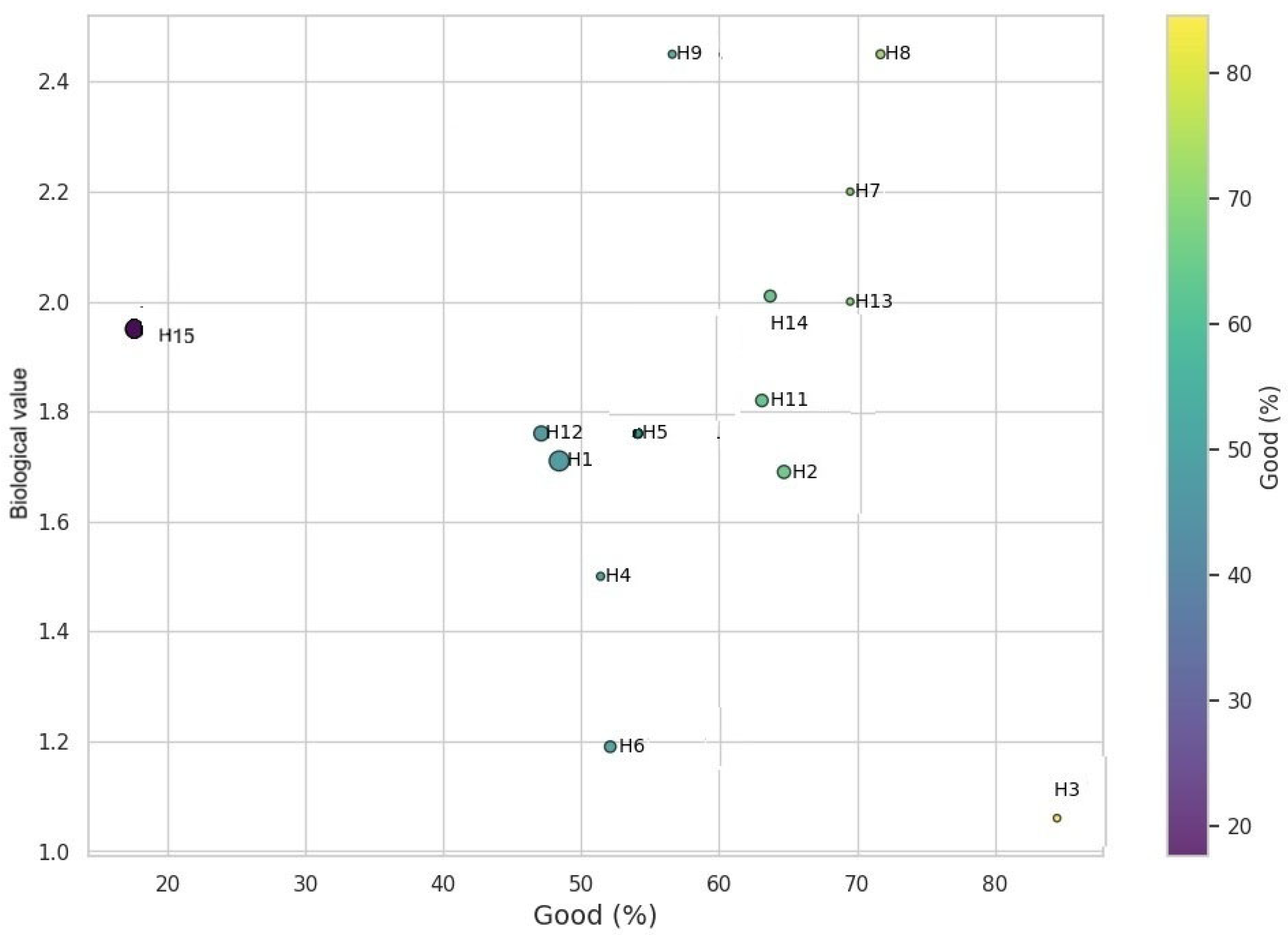
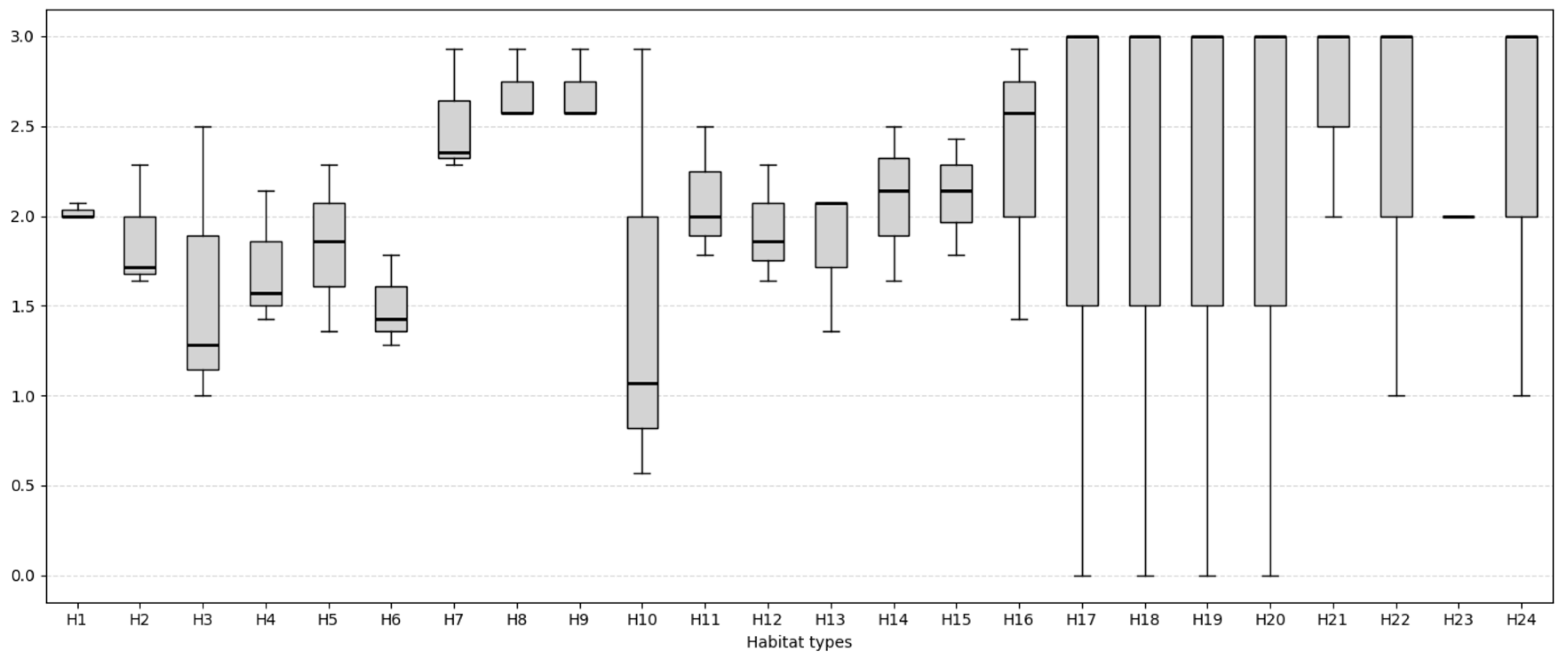
Biocultural landscapes emerge from long-term interactions between human societies and ecological systems, yet integrated assessments of biological and cultural values remain limited, particularly within conservation policy frameworks such as Natura 2000. This study evaluates the biocultural value of 24 semi-natural and human-conditioned habitat types characteristic of the Slovak landscape, with the aim of identifying patterns related to biological value, cultural significance, and dependence on human management. An expert-based questionnaire survey was used to score each habitat for biological and cultural value, and management dependence, and these indicators were combined into an overall biocultural value. Data were analysed using descriptive statistics, visualisation techniques, and hierarchical clustering to explore relationships among habitat types. The results reveal a clear gradient structured primarily by land-use intensity and management regime rather than by ecological classification alone. Semi-natural grasslands and wetlands maintained through long-term, low-intensity management—many of which correspond to Natura 2000 habitat types—exhibit the highest biocultural values. Traditionally managed agricultural habitats form transitional groups, while intensively managed systems show consistently lower biocultural values. The findings indicate that human influence is not inherently incompatible with high biological value; instead, management intensity and continuity are key determinants. These results highlight the importance of integrating biocultural perspectives into conservation planning and Natura 2000 management to support both biological value and cultural landscape values.
Keywords: biocultural landscapes; land-use intensity; habitat management; Natura 2000; cultural landscape biocultural landscapes; land-use intensity; habitat management; Natura 2000; cultural landscape