1. Introduction
Land is a fundamental factor of production in agriculture [
1,
2] and represents a scarce and heterogeneous resource with a fixed location and varying quality [
3]. The agricultural land market is subject to substantial policy interventions, particularly through regulations governing land ownership and tenure, agricultural subsidy schemes, and environmental protection measures [
4,
5]. Leasing land, as an alternative to purchase, has increasingly become a common practice to secure access to farmland [
6,
7] and ensure its efficient use, particularly in areas where land is limited or in peri-urban regions [
8]. With stable long-term lease agreements, agricultural production on leased land can be comparable to that on owned land, provided that the rights of both lessors and lessees are adequately protected [
9]. Land leasing facilitates the efficient utilization of potentially idle land [
10], supports optimal allocation, and contributes to increased productivity, rural economic transformation, and the welfare of rural households [
10,
11] while also facilitating entry for young and productive farmers [
12].
In Europe, rented agricultural land can account for more than 70% of the total land area at the national level [
13]. In the Slovak Republic, this share is even higher, reaching up to 90% of all agricultural land [
14,
15]. In the European context, land abandonment is likely to have been a key alternative to land renting [
16].
A lease is usually defined as a transfer of use of a physical asset for a time less than its expected useful life in return for economic consideration, governed by a lease agreement that clearly defines the responsibilities and obligations of the parties involved [
17]. The legally mandated elements of a lease are typically minimal, providing the parties with greater flexibility to structure other aspects of their relationship through tailored provisions that reflect their specific needs and circumstances [
17]. Landowners prefer lease contracts with as little regulation as possible, and lease regulation is considered as a ‘handbook’ for concluding lease contracts [
18].
For landowners, land leases serve as a great opportunity to obtain income without cultivating the land [
19]. Since land quality varies across geographic regions, land rent should be calculated taking these regional specificities into account. The calculation of land rent under specific production conditions, accounting for crop yields, is based on anticipated net operating income considering agricultural productivity, land market prices, and the discount rate [
20]. In most EU countries, rent controls on land are not imposed. Legally imposed maximum rents are more commonly encountered. In Belgium and France, maximum land rental prices are determined based on land quality, categorized into three soil classes: (a) Wide Use Soils, (b) Moderately Wide Use Soils, and (c) Limited or Somewhat Limited Soils [
21]. In other EU countries, such as Lithuania or Latvia, the maximum rental prices are set only for state land. Latvia and Croatia set minimum rental prices for state-owned land, while in Lithuania, minimum rents apply only to municipal land. In France, agricultural land rents are not entirely market-determined: under the Agricultural Tenancy Law, prefectures issue annual decrees establishing minimum and maximum rental limits for land within each department. These limits are based on average agricultural incomes and other regional indicators and are intended to prevent rental prices from being excessively low or high [
22]. In Austria, land rental contracts are subject to approval by the local public authority, which may reject the transaction if the rental price stipulated in the contract exceeds the regional average by more than 50% [
23]. The minimum rental price has also been applied in the Slovak Republic since 2003, when the Agricultural Land Lease Act was adopted. The rental price was set at a minimum of 1% of the value of agricultural land, determined according to the soil-ecological unit classification, which characterizes the quality of the soil [
24,
25]; however, this level has long been considered comparatively low relative to prevailing market conditions and has often been regarded as failing to reflect developments in the agricultural land rental market.
The impacts of price floor have been examined by several authors [
26,
27,
28,
29,
30], but none of them applied to agricultural land or lease. However, they mention the procedures of policymakers or researchers that preceded the setting of the price floor [
26,
30]. In the Slovak Republic, no document, including the explanatory report to the Land Lease Act, explains the method or the reason for its determination at the specific level established by the Land Lease Act.
Price floors are a common form of policy intervention to bolster prices [
31]. In general, a price floor set below the laissez-faire level has no effect, whereas a floor above it elevates the price to the floor. There are, of course, many exemptions depending on the kind of goods or services; however, if a minimum price is set so far below the laissez-faire level that it has no effect [
31]. This appears to have been the case in the Slovak Republic. At the end of 2025, for the first time since 2003, the legislature adopted an amendment to this provision, increasing the minimum rental rate from 1% to 3%. This raises the question of whether the new legal regulation more accurately captures market realities, particularly given that the legislature did not specify in the explanatory report either the methodology or the rationale underlying the chosen level of the minimum rent.
Despite numerous studies on land rents and prices, there is currently no comprehensive research in the Slovak Republic examining the alignment between statutory minimum rents and market rents while simultaneously considering soil quality, on which the minimum rent is based, and the implications for property rights protection under the European Convention on Human Rights (ECHR).
This research gap is relevant considering the ongoing issue of undocumented ownership rights in the Slovak Republic, the importance of the Land Lease Act for land use, and the anticipated legislative reforms. In this context, the article assesses the economic adequacy of the statutory minimum rent mechanism by analyzing its alignment with market-based rents and examining whether soil quality, on which the minimum rent is based, significantly influences market rent levels. The study pursues two complementary objectives. First, it compares statutory minimum rents with market-based rents to evaluate the extent to which the legally determined minimum rent corresponds to actual market rents. According to the case law of the European Court of Human Rights (ECtHR), when the statutory minimum rent is set significantly below the customary or market level, questions may arise as to whether it provides adequate protection for the lessor and effectively fulfills its regulatory objective. Second, the study investigates the influence of soil quality on market rents, examining whether soil fertility and physicochemical properties constitute key determinants of rental levels. Building on these objectives, the article focuses on analyzing the relationship between statutory and customary rents for agricultural land in Slovakia, with particular emphasis on regional differences and factors influencing rent levels. The empirical section utilizes aggregated district-level data and draws on historical records of customary rents, soil quality, and administrative calculations of minimum rents. The structure of the article follows logical progression: after a review of the legislative framework and relevant literature, the methodology is presented, followed by the results, discussion, and conclusions with recommendations for policy and legislation.
Numerous studies have examined the impact of various factors on land prices and rental rates [
32], with soil quality frequently identified as a key determinant. However, most existing research focuses on land prices rather than agricultural land rents [
33], which is particularly relevant in the Slovak context, where the statutory minimum rent is derived from land values that explicitly reflect soil quality. Understanding whether statutory minimum rents reflect actual market conditions is crucial not only for evaluating the economic effectiveness of the regulation but also for assessing whether the current legal framework adequately balances market functioning and the protection of property rights. To address these issues, the study formulates the following research questions:
To what extent is the statutory minimum rent for agricultural land in the Slovak Republic aligned with customary market rents across different regions?
What is the influence of soil quality on customary rents, and does setting the minimum rent solely based on soil quality adequately reflect actual market conditions?
What is the functional role of statutory minimum rent regulation within the Slovak farmland rental market?
2. Materials and Methods
2.1. Data Sources
The study is based on data on customary rents expressed as average rental rates, published annually for the period 2018–2024 for each cadastral territory of the Slovak Republic (3559 in total), obtained from the website of the Ministry of Agriculture and Rural Development of the Slovak Republic. There are 2890 municipalities (LAU 2 as Local Administrative Units hereinafter LAU) in the Slovak Republic, with an average of 1.2 cadastral territories per municipality. Information at the level of cadastral territories is therefore more granular and closer to individual market conditions than data aggregated at the municipal level. Customary rent represents the average rental rate in each cadastral territory. In each cadastral territory, agricultural land is typically farmed by approximately three to four farmers. Based on the rental data submitted by these tenants to the respective district authority, an average rental rate is calculated, which constitutes the customary rent for that territory. Accordingly, customary rent reflects the mean level of rent paid to landowners within the given cadastral territory. At the same time, it is necessary to consider the contractual framework of land lease relations. In most cases, lease agreements are concluded for a period of ten years with a fixed annual rent agreed for the entire duration of the lease. The data submitted to the district authorities do not distinguish between newly concluded contracts, where rental levels may be expected to reflect current market conditions, and ongoing contracts approaching the end of their term, where the agreed rent may have been set several years earlier and may therefore be lower than prevailing market rates. As a result, the average rental rate may be regarded as a pragmatic proxy indicator, providing landowners as well as prospective tenants with approximate information on price levels in the land lease market. In the Slovak context, the register of customary rents constitutes the only publicly available nationwide database offering systematic information on land market conditions, including land leases. Even with its limitations, it facilitates better orientation in the land market and may support more informed decision-making by landowners regarding leasing or selling their land. Therefore, in the absence of tenant-level microdata, this indicator is considered the closest available approximation under existing data constraints.
However, an additional issue arises in cases where data from a particular cadastral territory are unavailable. If the district authority does not receive data from tenants farming at least one third of the agricultural land in the respective territory, customary rent is determined through an administrative procedure pursuant to Decree No. 172/2018 Coll. [
34]. Under this procedure, customary rent is set at 2% of the land value as determined in accordance with Act No. 582/2004 Coll. [
35]. The rationale for both the percentage applied and the method of determining this so-called administrative customary rent is not explicitly justified in the legislation. Empirical evidence indicates that administratively determined rents may tend to exceed observed market-based rental levels [
24].
Cadastral territories in which the average rental rate was determined through this administrative procedure were therefore excluded from the analysis (
Table S1). In 2024, the most recent available year and the primary focus of this study, 665 cadastral territories across all Slovak NUTS III regions were excluded, representing 18.7% of the total. Given the potential upward bias associated with the administrative procedure, these territories were omitted from further analysis. Excluded areas are present in nearly every Slovak district (LAU 1), but no district was entirely excluded, as each retained the required number of cadastral units for further analysis. In each district, the remaining cadastral units exhibit soil quality and productive potential very similar to the excluded areas, so their exclusion had no significant impact on the results. Including the excluded areas in a robustness test would likely not alter the main results. Sensitivity analysis indicates that the fundamental relationship between customary rent and the statutory minimum remains stable even with ±10% to ±20% variations in rent, supporting the validity of the conclusions if these areas were included.
Considering the above, customary rents calculated based on data submitted directly by tenants may reasonably be regarded as the closest available proxy for market rent. Nevertheless, it can be reasonably assumed that they may remain somewhat below prevailing market rental levels, as lower rental values stemming from older lease agreements exert a downward effect on the calculated average.
In addition, data on land prices published in legal regulations were used, Decree No. 38/2005 Coll. [
36] of the Ministry of Agriculture of the Slovak Republic on the determination of land values and vegetation thereon for the purposes of land consolidation. Further data were obtained through calculations based on the legal framework governing land lease relations, including the statutory minimum rent level, which was originally set at 1% and is currently defined as 3% of the land value as determined pursuant to Decree No. 38/2005 Coll. [
36].
2.2. Methods
This study evaluates statutory minimum rent in relation to market rent, as well as the role of soil quality in determining the level of rent, while applying general scientific methods, in particular quantitative analysis, including legal analysis, comparison, and synthesis. Quantitative data analysis is based on descriptive statistics, statistical induction, and regression analysis, which are described in greater detail below. Legal analysis relies on linguistic interpretation, which constitutes a prerequisite for the application of other interpretative methods; on material-systematic interpretation, including internationally conforming interpretation within the context of human rights protection; and finally, on teleological interpretation, which examines the purpose of the legal norm [
37,
38]. The comparative method is employed to determine whether similar legal regulations concerning minimum rent are applied in other EU Member States. The synthesis of the results enables a reflection on the role and scope of the existing legal regulation on minimum rent within the Slovak legal order.
To evaluate the extent to which the newly introduced legal regulation corresponds to observed market conditions, the calculated minimum rent for each cadastral territory was compared with the average rental rate for 2024.
Data for the period 2018–2024 were processed using descriptive statistical methods and visualized graphically.
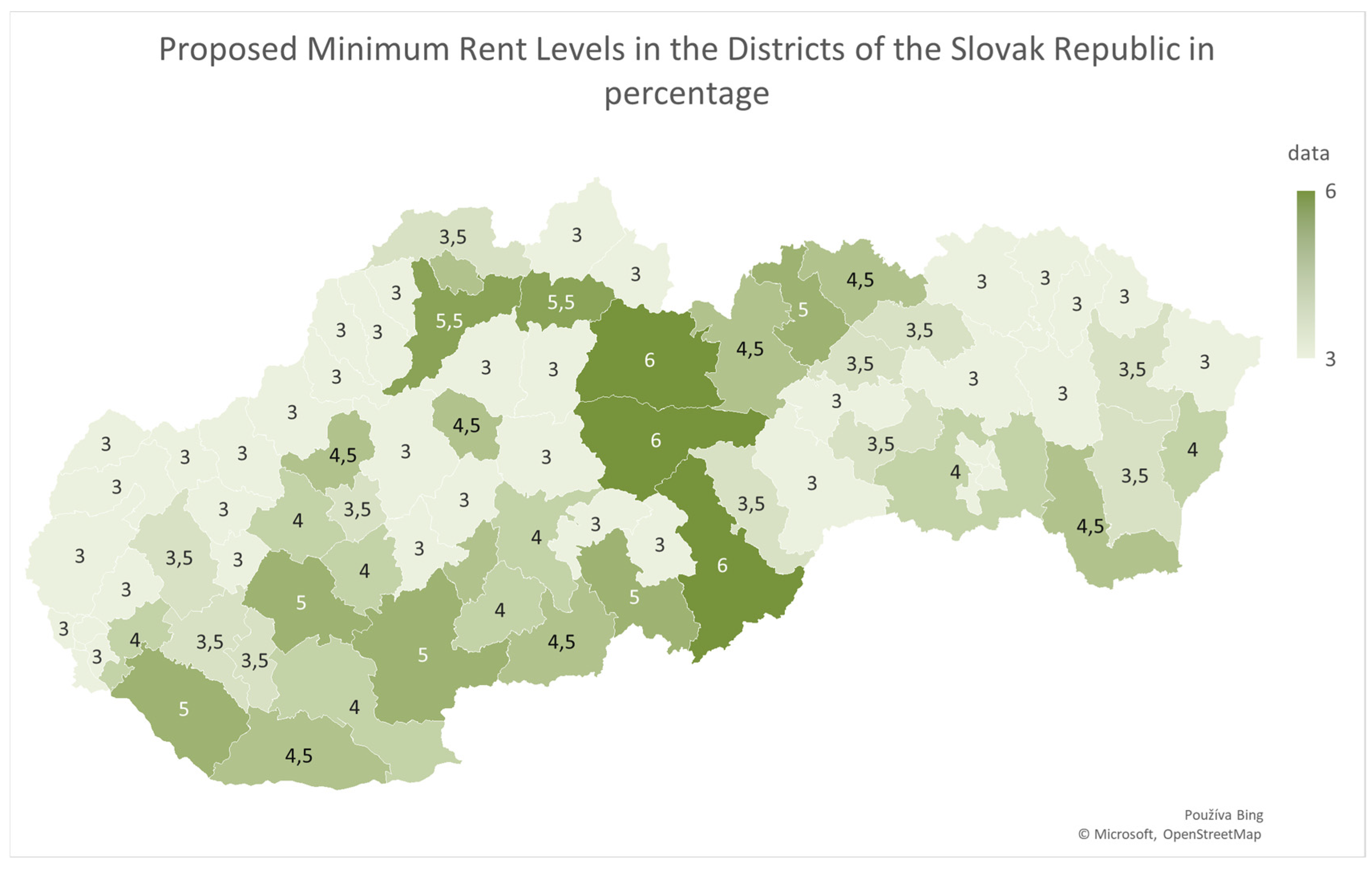
To account for regional differences, comparisons across cadastral territories were conducted within districts (LAU 1). As the number of cadastral territories within individual districts often did not reach the threshold of 30 observations, the non-parametric Wilcoxon signed-rank test was employed. This paired test is appropriate for comparing the average rental rate and the minimum rent within the same cadastral territory [
39]. Where statistically significant differences were observed, we identified the minimum rent level at which the difference relative to the average rental rate no longer reached statistical significance. The results were recorded and visualized in maps disaggregated by districts.
To verify the significance of the relationship between soil quality and market rents, we applied linear regression. The linear regression model is specified as:
where soil quality (expressed as 1% of the land price stipulated by Decree No. 38/2005 Coll. [
36]) served as the independent variable
; the average rental rates for 2024 representing market rents were used as the dependent variable
;
is the intercept; and
is the regression coefficient (expressing rental price elasticity with respect to land quality), and
represents independently and identically distributed residuals. After confirming the statistical significance of the model, we report and interpret the Pearson correlation coefficient between these variables.
Due to regional differences and insufficient observations within individual districts, regression analyses were performed at the regional level (NUTS III).
Furthermore, given significant variability within regions (e.g., differences in average rental rates between Dunajská Streda in the south of the Trnava region and Skalica in the north), districts were grouped into more homogeneous clusters using the Kruskal–Wallis test and subsequent contrast tests, e.g., [
39,
40]. Regression analyses were then conducted within these 28 homogeneous district clusters representing homogenous soil quality. The results are presented in maps.
By integrating both objectives, comparison of statutory versus market rents and analysis of soil quality determinants, the study offers an integrated analytical perspective of agricultural land rental dynamics and the implications of legal regulation in the Slovak Republic.
All official land prices in this study, originally denominated in Slovak crowns (SKK) according to Decree No. 38/2005 Coll. [
36], have been converted to euros (EUR) using the fixed conversion rate of 30.126 SKK per 1 euro. Unless otherwise noted, all prices in the text, tables, and analyses are expressed in EUR.
Data analysis was conducted using MS Excel (v365, Microsoft Corporation, Redmond, WA, USA), Statgraphics Plus (Windows 3.1, Statgraphics Technologies, The Plains, VA, USA), and R software (v4.3.1, R Foundation for Statistical Computing, Vienna, Austria;
https://www.r-project.org, accessed 10 January 2026).
2.3. Sensitivity Analysis
A sensitivity analysis was performed to assess the robustness of the comparison between customary rents and statutory minimum rent. Customary rents were adjusted by ±10% and ±20% for each year, and the proportion of cadastral units exceeding the statutory minimum was recorded to evaluate the stability of the observed differences.
A sensitivity analysis was performed to determine how changes in selected variables affect the results. To ensure analytical robustness, the methodological approach was structured into three sequential stages. First, extreme observations were identified, and their influence on measures of central tendency was evaluated to assess potential distortions in the dataset. Second, distributional patterns across cadastral territories were examined through box plot visualization, enabling the detection of variability and outliers. In the final stage, a scenario-based sensitivity analysis was performed to determine how systematic variations in customary rent levels would affect the number of cadastral territories falling below and above the statutory minimum threshold.
The first stage of the analysis examined the influence of extreme observations on measures of central tendency across the full dataset. The original sample consisted of 11,319 customary rent values recorded between 2018 and 2024 across 1617 cadastral territories in which administratively determined rent was not applied. After excluding 81 extreme observations, the final sample comprised 11,238 values. The results indicate that the median of customary rents changed only marginally after the removal of outliers. For example, in 2018, the median decreased from 39.43 EUR/ha to 38.94 EUR/ha. Comparable minor adjustments were observed in all subsequent years. This suggests that extreme values exerted only a limited upward influence on the median.
By contrast, the arithmetic mean exhibited a more pronounced decrease following the exclusion of outliers. In 2018, the mean declined from 49.49 EUR/ha to 48.14 EUR/ha, with similar patterns recorded in the remaining years. This indicates that the mean is more sensitive to extreme high or low values, whereas the median demonstrates greater robustness (
Table 1).
Overall, the relatively small changes in the median indicate that the dataset does not appear to be substantially distorted by extreme observations. However, the consistent reduction in the mean suggests that extreme customary rent values moderately inflated average rent levels in the original dataset.
From a regulatory perspective, the limited effect of outliers on the median suggests that median-based indicators may provide a relatively stable reference point. Given the limited impact of outliers on the median and the small number of observations in some districts, the Wilcoxon signed-rank test was applied to assess whether differences between customary rents and statutory minimum rents were statistically significant across the same sample of cadastral territories.
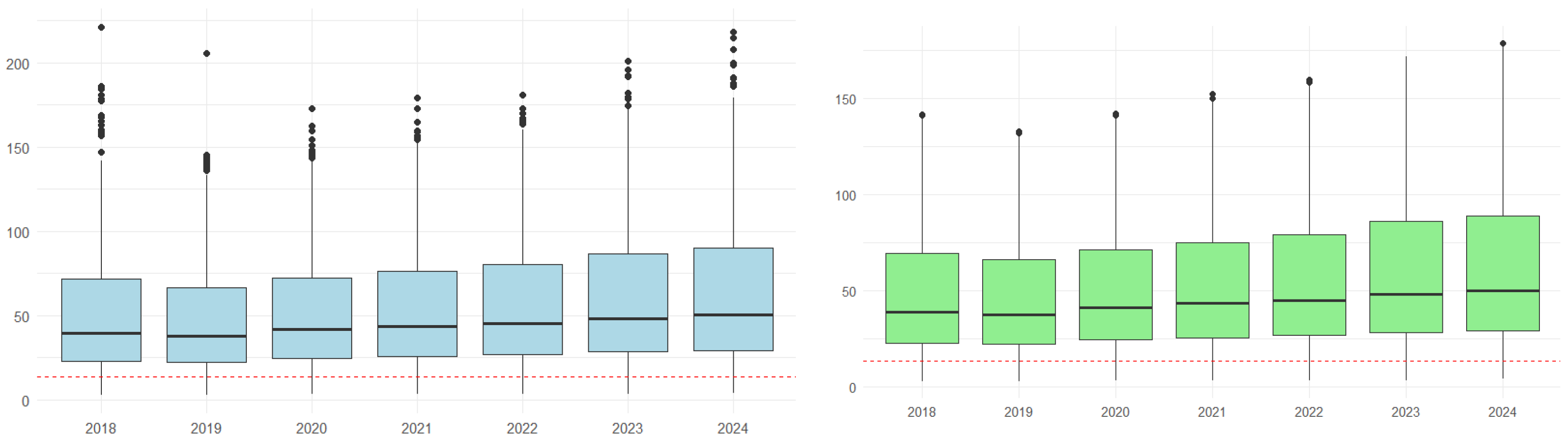
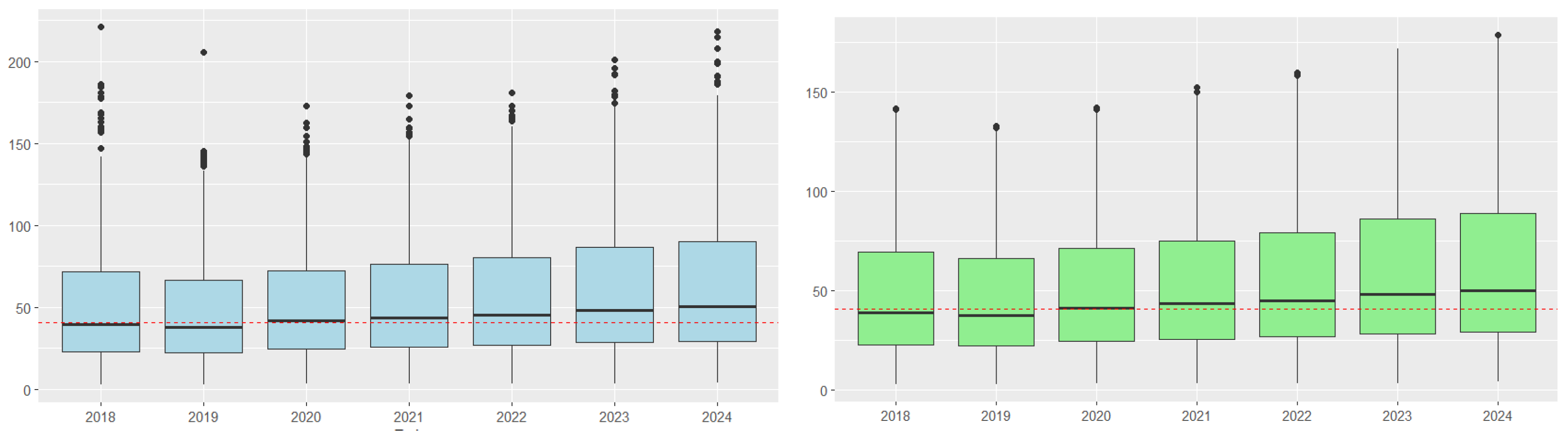
Box plots visually illustrate that the median customary rent is relatively stable, supporting the reliability of the Wilcoxon test results. The test further allows the identification of districts where the statutory minimum rent exceeds or falls below the market median. Box plots illustrate the distribution of customary rent values across cadastral territories under different assumptions for the statutory minimum rent. The first two plots compare all data versus data without outliers using the original 1% minimum rent (average 13.63 €/ha), while the latter two show the same comparison under the revised 3% minimum rent introduced in 2025 (average 40.88 €/ha). The increase from 1% to 3% of the land price reflects the legislative amendment adopted in 2025, which raised the statutory minimum rent for agricultural land (
Figure 1).
The box plots confirm that the median customary rent exceeds the statutory minimum in most districts, supporting the Wilcoxon test results and suggesting that, in most cases, the legislatively defined minimum does not appear to function as a binding constraint on observed rental levels.
Scenario simulations of ±10% and ±20% changes in customary rent values confirmed that, even under moderate or more pronounced adjustments, the median customary rent in most districts remains above the statutory minimum. The following scenarios illustrate the potential impact of such variations across cadastral territories (
Table 2).
Scenario simulations were conducted to evaluate the potential impact of moderate (±10%) and more pronounced (±20%) changes in customary rent on compliance with the statutory minimum. Under the original 1% minimum rent scenario, almost all cadastral territories (99.3%) exceeded the statutory minimum. Reductions in customary rent of 10% or 20% decreased this share only slightly (98.8% and 98.2%, respectively), while increases of 10% or 20% raised it marginally (99.5% and 99.8%). These results suggest that the 1% statutory minimum is set at a level substantially below prevailing customary rents relative to market rents, and changes in the minimum would have only marginal effects in most districts.
With the revised 3% minimum rent adopted in 2025, approximately 75.6% of cadastral territories had customary rent above the statutory minimum. Scenario variations of ±10% and ±20% shifted this share between 67.5% and 85.5%, indicating that, although a higher minimum brings a larger proportion of territories closer to the legal threshold, most cadastral units still maintain customary rents above the statutory floor.
Overall, these simulations indicate that the statutory minimum appears to exert only limited influence under observed customary rent conditions, while the 2025 amendment brings a larger proportion of territories close to the statutory threshold in some districts. The scenario analysis confirms the robustness of the findings: even with the statutory minimum increased to 3%, most cadastral territories exceed the legal threshold, while the original 1% minimum appears unlikely to operate as a binding constraint in most districts. Moderate changes in market OVN (±10%, ±20%) do not substantially alter the overall pattern observed.
4. Discussion
The customary rent for agricultural land in Slovakia is variable and influenced by soil quality, though not strictly proportionally. In many areas, additional economic, social, and natural factors significantly affect rent levels, raising the question of whether a uniform statutory minimum rent is appropriate, or whether regional adjustments at the district (LAU 1) or regional (NUTS III) level, as applied in France, could better reflect local conditions. In France, minimum and maximum rents are set at the department (NUTS III) level and reviewed regularly, with the methodology reassessed every six years [
22,
63].
Sensitivity analysis indicates that even moderate (±10%) or more pronounced (±20%) variations in customary rents do not significantly alter the pattern of rents relative to the statutory minimum. Approximately 48% of Slovak districts would require a higher minimum rent to match customary levels. In these districts, statutory minimum rents often remain below market values, and adequate remuneration for landowners is primarily determined by market mechanisms rather than statutory provisions. When market rents exceed the statutory minimum, landowners typically receive the prevailing market rate, rendering legal protections largely redundant, while tenants face higher payments that can influence their expenditure and investment decisions, as regulatory minimums exert minimal economic impact under such conditions.
Updating minimum rents only once every 20 years, without a clear methodology, may inadequately reflect evolving market conditions. Comparative practices in Belgium and France, with annual rent reviews, demonstrate the benefits of more frequent updates [
22]. In Slovakia, aligning updates with the minimum lease term (e.g., every five years) or linking minimum rents to a rolling average of customary rents could enhance regulatory responsiveness and data accuracy. Given the potential benefits of more regular updates and the need for regional differentiation, it may be advantageous to implement minimum rents through procedurally adjustable regulations rather than fixed statutory law. At the same time, market mechanisms appear largely capable of determining appropriate rent levels independently, often providing compensation above the statutory minimum. Similarly, in other EU Member States, minimum rental prices are generally applied in specific circumstances, such as leases of state-owned land (e.g., in Croatia and Latvia) or municipal land (e.g., in Lithuania) [
22]. In these cases, minimum rents serve to protect public interests, ensuring that the state or municipality receives appropriate consideration. Such regulations are most effective when regularly reviewed and aligned with prevailing market conditions. Without periodic revision, regulatory objectives may be less effectively achieved. Comparative data indicate that regulated rents in France are lower than in some neighboring countries. For instance, the average land rent in France is around €140/ha, compared to €800/ha in the Netherlands, €530/ha in Denmark, and approximately €300/ha in Ireland or Austria [
64]. Since both minimum and maximum rents are applied in France, it is challenging to assess the precise influence of price floors versus ceilings, although ceilings likely have a stronger effect [
65,
66]. The notably lower rents in France, as shown by international comparisons, are largely a result of its regulated land tenure system, where administrative ceilings and floors, along with tenant protections, shape the rental market. The French land tenure regime combines rent control with extensive tenant protection, while prefectural authorities annually set administrative rent ceilings and floors based on regional agricultural performance indicators. These measures are designed to support farm stability, preserve family farming structures, and limit speculative pressures in land markets, but they also compress rental values relative to more market-oriented systems. This effect is particularly significant given that approximately 60–80% of agricultural land in France is cultivated under tenancy, meaning that the regulated rental framework largely shapes the overall agricultural structure [
67]. The system was established after World War II to stabilize rural communities, prevent speculative land markets, facilitate land access for farmers without capital, and encourage long-term investment in land improvement [
68]. In practice, agricultural leases reduce the attractiveness of tenanted land for investors and lead landowners to accept relatively low rents. Moreover, land market governance is further reinforced by Sociétés d’aménagement foncier et d’établissement rural (SAFER), which monitor agricultural land transactions, exercise pre-emption rights, and allocate land to priority users such as young or family farmers, thereby further limiting speculative pressure on land prices and rents. While this system contributes to affordable land access, stable family farming structures, and long-term investment in soil and infrastructure, it also results in relatively low returns for landowners and may reduce incentives to lease land or encourage alternative land uses [
69,
70].
For Slovakia, this experience suggests that any consideration of regulated mini-mum rents should carefully balance the protective objectives of tenancy law with the risk of suppressing price signals important for efficient land allocation; instead of strict rent controls, policy instruments such as transparent regional rent reference indices or rental benchmarks could enhance market transparency while preserving flexibility, while an institutional model inspired by SAFER could help monitor farmland transactions, prioritize young farmers, and limit speculative purchases.
Soil quality primarily influences customary rents at moderate fertility levels, while other factors dominate at very low or very high fertility. Consequently, setting minimum rents solely based on soil quality risks misalignment with actual market values. Legal regulation should provide flexibility for parties to negotiate lease terms reflecting specific circumstances, ensuring fair compensation in line with ECHR principles, which, although primarily developed in the context of residential rent regulation, can analogously inform the assessment of statutory minimum rent for agricultural land. The ECtHR emphasizes that state intervention in contractual freedom must strike a fair balance between public interest and property rights, without imposing an excessive burden on owners. When statutory minimum rent is set significantly below the customary or market level, it fails to provide adequate protection for the lessor and does not achieve its regulatory objective [
71,
72]. Moreover, the legal regulation of leases should provide parties with greater flexibility to negotiate terms reflecting their specific circumstances. This view is also supported by Merrill: “The legally mandated elements of a lease are typically minimal, providing the parties with greater flexibility to structure other aspects of their relationship through tailored provisions that reflect their specific needs and circumstances” [
17]. We consider that the current form of legal regulation may no longer fully correspond to present market realities and can obscure relationships between market participants without offering substantial added value. From a law and economics perspective, legal rules should enhance market efficiency and provide clear benefits. Overly complex or obsolete regulations, often termed legal inflation, can obscure market relationships and reduce the practical utility of the law [
73,
74,
75]. As a result, provisions such as rigid minimum rent regulations may increase regulatory complexity without clearly demonstrable benefits [
76]. Rather than imposing rigid legal constraints on farmland rents, the legislator could focus on ensuring the availability of publicly accessible, up-to-date statistical data on the land rental market. This would enable market participants to make well-informed, evidence-based decisions and reduce potential information asymmetry. Farmland markets should be monitored closely using official statistics, and enhancing the reporting of land price data can further support participants in making market-reflective decisions [
21].
In summary, to better align regulation with market realities, two approaches can be considered. First, one possible policy option would be to reconsider the continued use of a statutory minimum rent and explore whether greater reliance on market-based determination of rents could achieve regulatory objectives more effectively. The abolition of a statutory minimum rent may be appropriate, particularly in situations where the agricultural land market functions efficiently—that is, where sufficient competition exists among tenants and landlords and reliable data on customary rents are available. In such cases, market mechanisms can independently determine appropriate rents, rendering administrative minimums unnecessary or potentially distorting market efficiency. Conversely, maintaining a minimum rent, as practiced in other EU countries, may be necessary for the lease of state or municipal property, where the protection of public interest is required.
The second option is revising the regulatory mechanism, which may be appropriate before considering its complete abolition in cases where the minimum rent still serves a protective or stabilizing function, but its current design is insufficiently aligned with market conditions. Specifically, this applies to situations where (a) certain areas have market rents close to or below the statutory minimum, thereby protecting landowners from excessively low rates; (b) maintaining a minimum rent can support transparency and stability in the rental market; (c) adjustments to the mechanism could account for regional differences in soil quality and customary rents, for example by linking the minimum rent to a five-year average of customary rents or to region-specific rates; (d) regulation continues to serve as a tool for safeguarding public interest, such as in the lease of state or municipal property. In these cases, retaining the minimum rent is more advantageous than its complete removal, and its effectiveness can be substantially enhanced through careful revision and more flexible adaptation to current market conditions.
In summary, if the methodology for setting minimum rent is revised and regularly reassessed as is the practice in France with annual adjustments based, for instance, on the productive potential of the land, which is influenced not only by soil characteristics but also by broader social and environmental factors (such as climate change, major infrastructure development, or the establishment of protected areas), the regulatory framework would better reflect actual market and contextual conditions. Alternatively, minimum rent could be linked to the customary rent observed in previous years, for example, the annual customary rent or a rolling five-year average. Empirical evidence shows that customary rents are relatively stable from year to year, and linking minimum rents to these values would encourage accurate reporting and calculation, ensuring data are reflective of actual market conditions rather than a bureaucratic exercise. Although the upcoming Land Use Register will further improve the quality of customary rent data starting from 2029, implementing a system that incentivizes accurate reporting in the interim can enhance data quality. This approach ensures that regulatory decisions are based on actual market values, supporting fair compensation for landowners. Under the current legal framework, empirical results suggest that the abolition of minimum rent could be justified, as in up to 81% of cases the difference between customary and minimum rents exceeds 10%. However, a legislative commitment to regularly adjust the minimum rent and its methodology could safeguard landowners’ rights in line with the ECtHR case law.
5. Conclusions
The research results suggest that the current legislation establishing minimum rent for agricultural land in the Slovak Republic may not fully account for regional differences in soil quality and customary rent levels. A uniform nationwide minimum rate, set as a fixed percentage of the administratively determined land value, appears to fulfil its protective function only to a limited extent in a few districts. In practice, the new minimum rent corresponds to the market rent in only approximately half of the districts, while in the remaining districts, the market rent exceeds the established minimum price. To make the minimum rent effective in these areas, an increase of approximately 0.5 to 3 percentage points would likely be required.
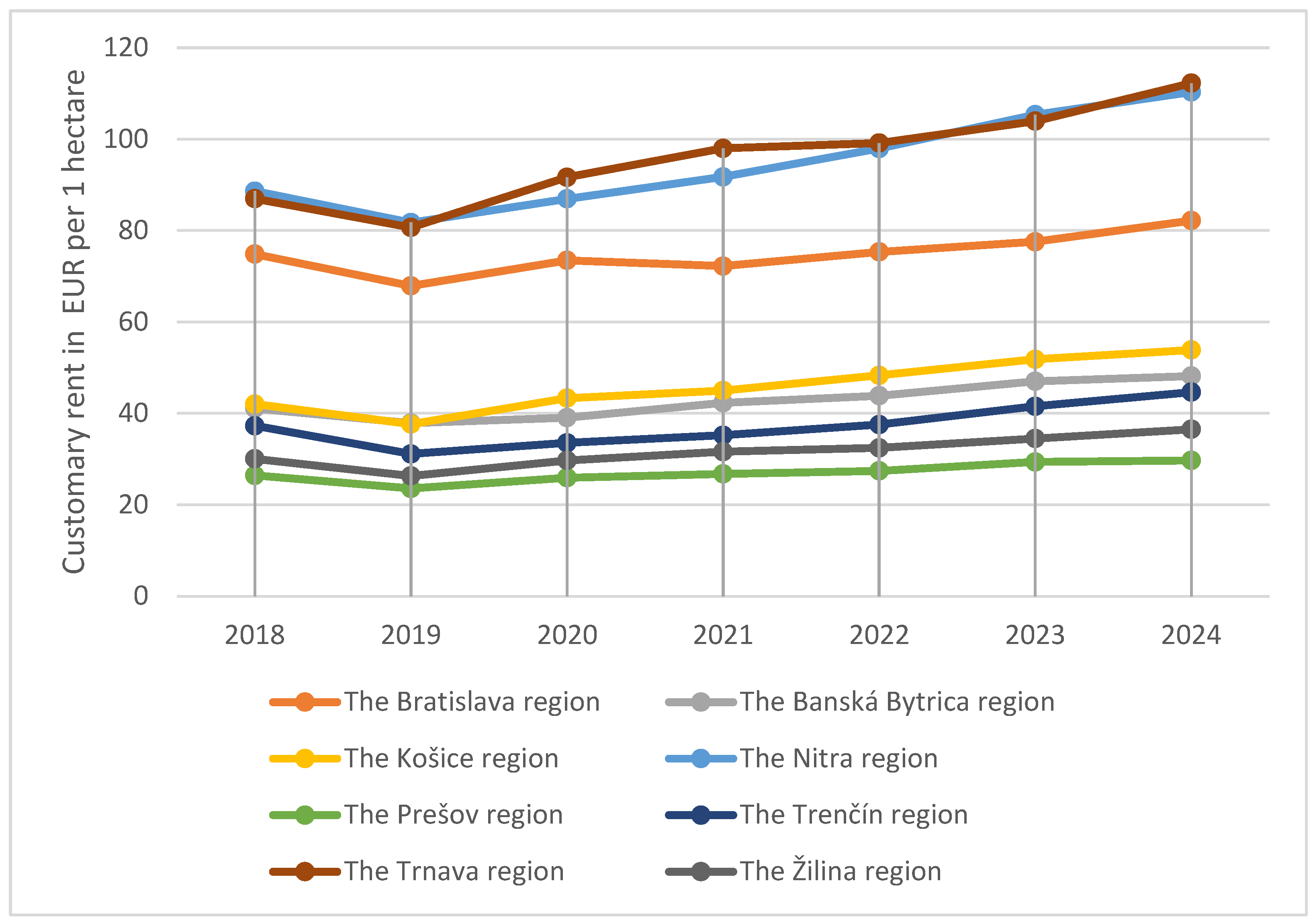
From a legislative perspective, this study provides policy recommendations: Minimum rent may benefit from regional differentiation rather than uniform nationwide application. If it is to be based on a percentage of the land price reflecting its quality, then this percentage would need to be calibrated so that the resulting rent approximates the customary rent in the given region. Alternatively, minimum rent could be directly tied to the customary rent at the cadastral area level, either for the previous year or as an average of the last five consecutive years (which corresponds to the minimum lease term) for which data are published. Figures show that the customary rent did not undergo significant changes during the observed period. At the same time, such an approach could create incentives for the involved parties to approach the calculation of customary rent more responsibly and provide data for its computation, particularly if this variable was perceived as meaningful and not just administrative. It is true that the register of user relationships is expected to eliminate many deficiencies in the calculation of customary rent and contribute to higher-quality underlying data, but only from 2029 onwards. Until then, the quality of data could potentially be enhanced by strengthening the practical relevance of customary rent calculations for both tenants and district offices.
This study also highlights practical limitations of the current system. The law does not stipulate penalties for failing to meet the minimum rent. Therefore, the lessor must assert their claims through the courts. This process is lengthy and complex, as the plaintiff must demonstrate a discrepancy between the rent stated in the lease agreement, or in its draft, and the minimum rent. This requires determining the relevant BSEU value of the leased plot, converting this land value into euros, and subsequently calculating 3% of this value as the legally established minimum rent. In addition, many lessors, due to the persistent issue of undocumented ownership relations and undefined land boundaries, may not know the precise location of the plot they lease and therefore may be unable to determine the minimum rent guaranteed to them by law, which reduces the practical enforceability of the statutory minimum. Consequently, many lessors accept the rent proposed by tenants without independently verifying the statutory minimum value. Furthermore, spatial autocorrelation appears to be present in the data, which should be acknowledged as a limitation of this study. The aggregation of districts was performed using the Kruskal–Wallis test and contrast tests, with districts showing no statistically significant differences in customary rent being merged. Therefore, it is likely that calculating spatial autocorrelation between neighboring districts would not have a substantial impact on the results. While initially considered, the calculation of spatial autocorrelation was deemed beyond the scope of this study due to the anticipated limited effect and the need for a more detailed analysis of natural factors influencing soil quality, thereby leaving room for further research.
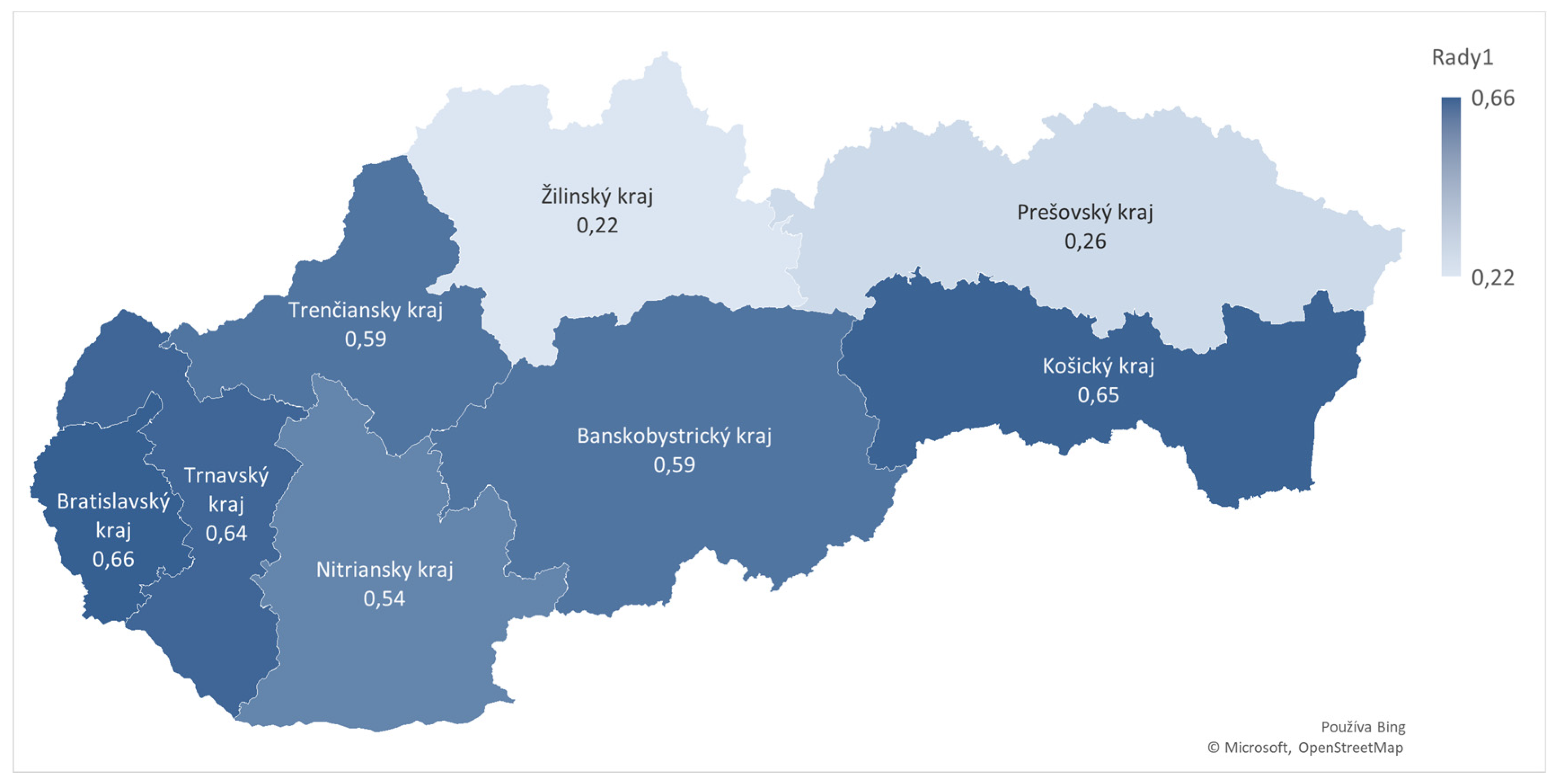
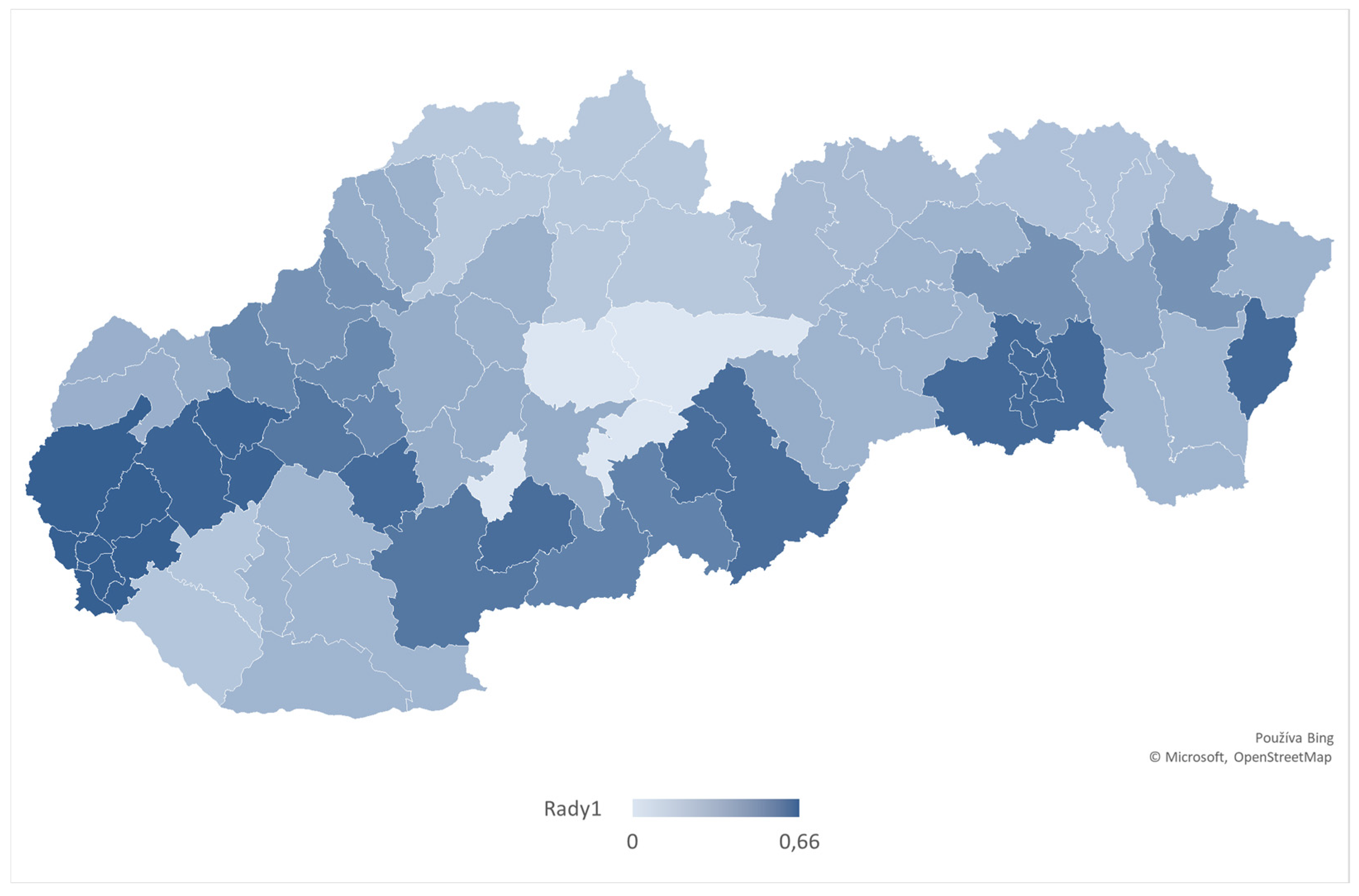
Regional differences further complicate the effectiveness of the regulation. This study demonstrated a positive correlation between customary rent and soil quality across all regions, although the strength of this relationship varied (Pearson’s coefficient ranging from 0.22 in the Žilina Region to 0.66 in the Bratislava Region). In areas with the most fertile and, conversely, the least fertile soils, the relationship between rent and soil quality is weaker than in areas with soils of medium quality. This suggests that in cases of extreme soil quality, other factors dominate the determination of customary rent. Therefore, deriving minimum rent solely from land value and applying it uniformly across the Slovak Republic may not fully correspond to prevailing market conditions and could raise questions in the light of the ECtHR case law.
Future regulation of minimum rent, if maintained, would benefit from transparent empirical analysis, regular review (rather than revision at very long intervals), and reflection of the principles of proportionality and protection of property rights, in accordance with the ECtHR case law. A more flexible, regionally differentiated, and evidence-based framework may better accommodate the interests of both lessors and tenants, reduce regulatory complexity, and support alignment with European human rights standards.