Urban Expansion Simulation for the Low-Carbon Goal: A Focus on Urban Form Optimization



Abstract
1. Introduction
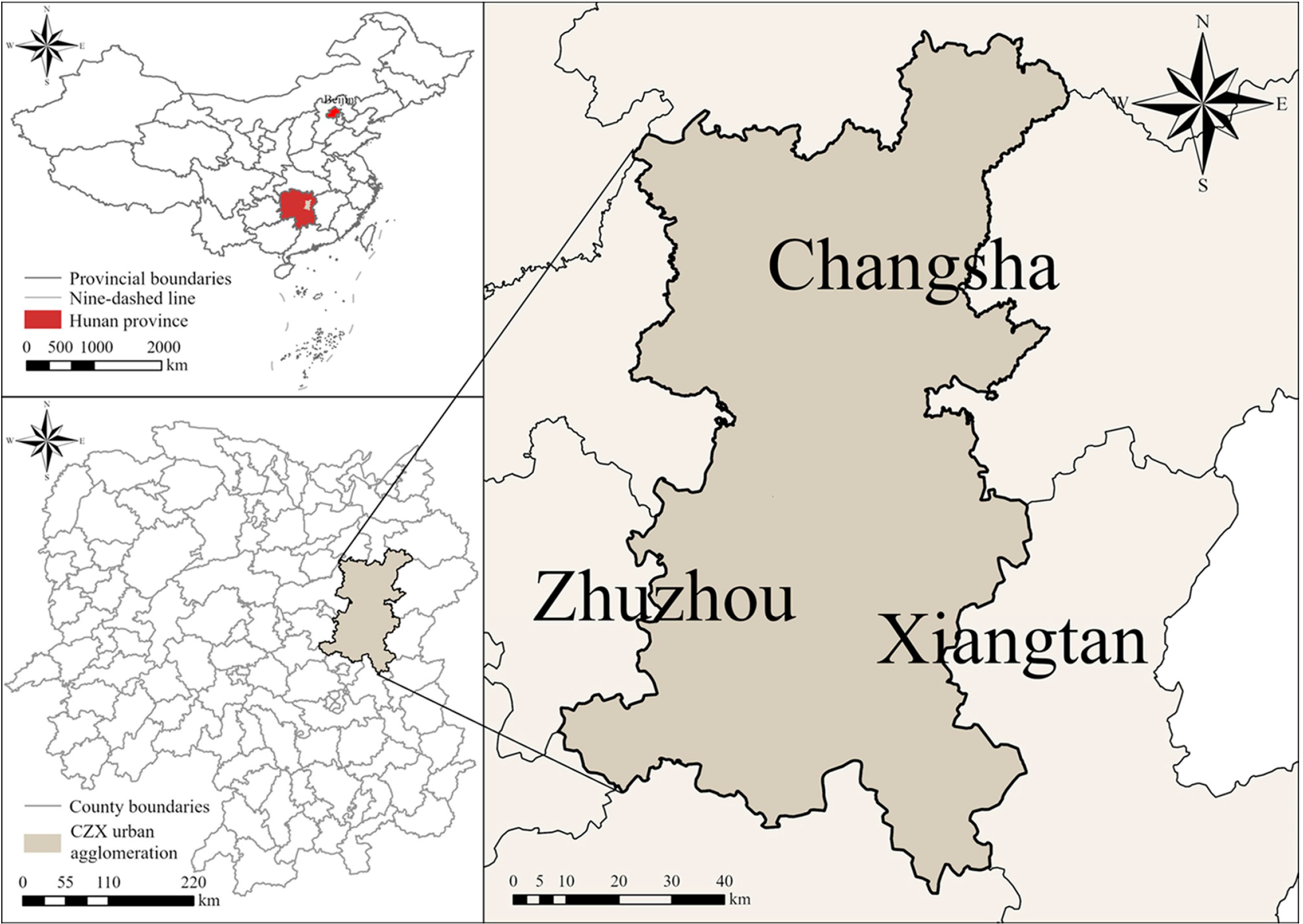
2. Study Area
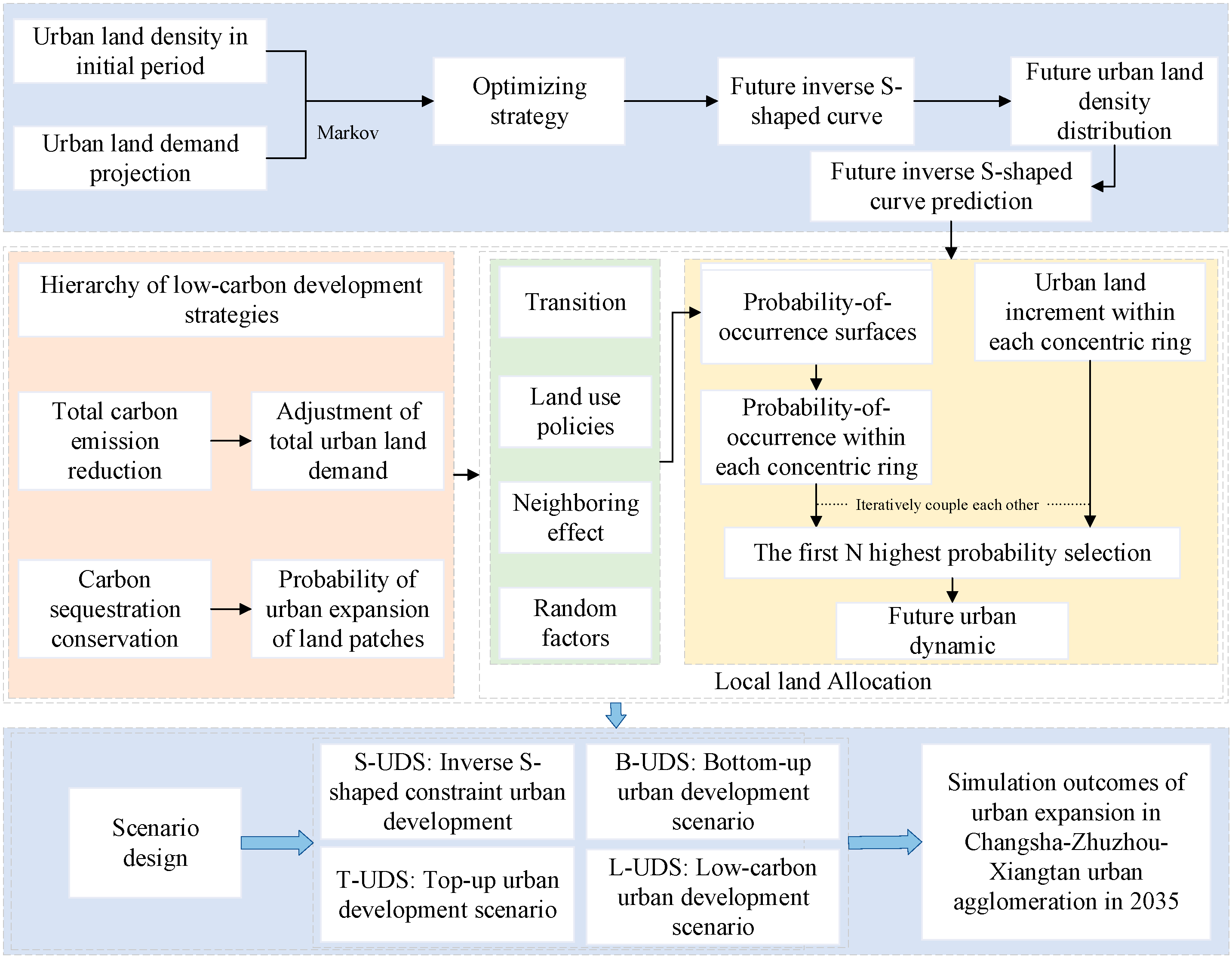
3. Methods
3.1. Inverse S-Shaped Function and Its Parameter
3.2. CA Model Based on Inverse S-Shaped Function
3.2.1. Predicting Inverse S-Shaped Function Parameters
3.2.2. Allocating Newly Added Urban Land
3.3. Constraining Urban Expansion to Meet the Low-Carbon Goal
3.3.1. Balance Urban Land Demand with the CE Reduction Goal
3.3.2. Annual Total NPP Simulation Based on Improved Casa Model
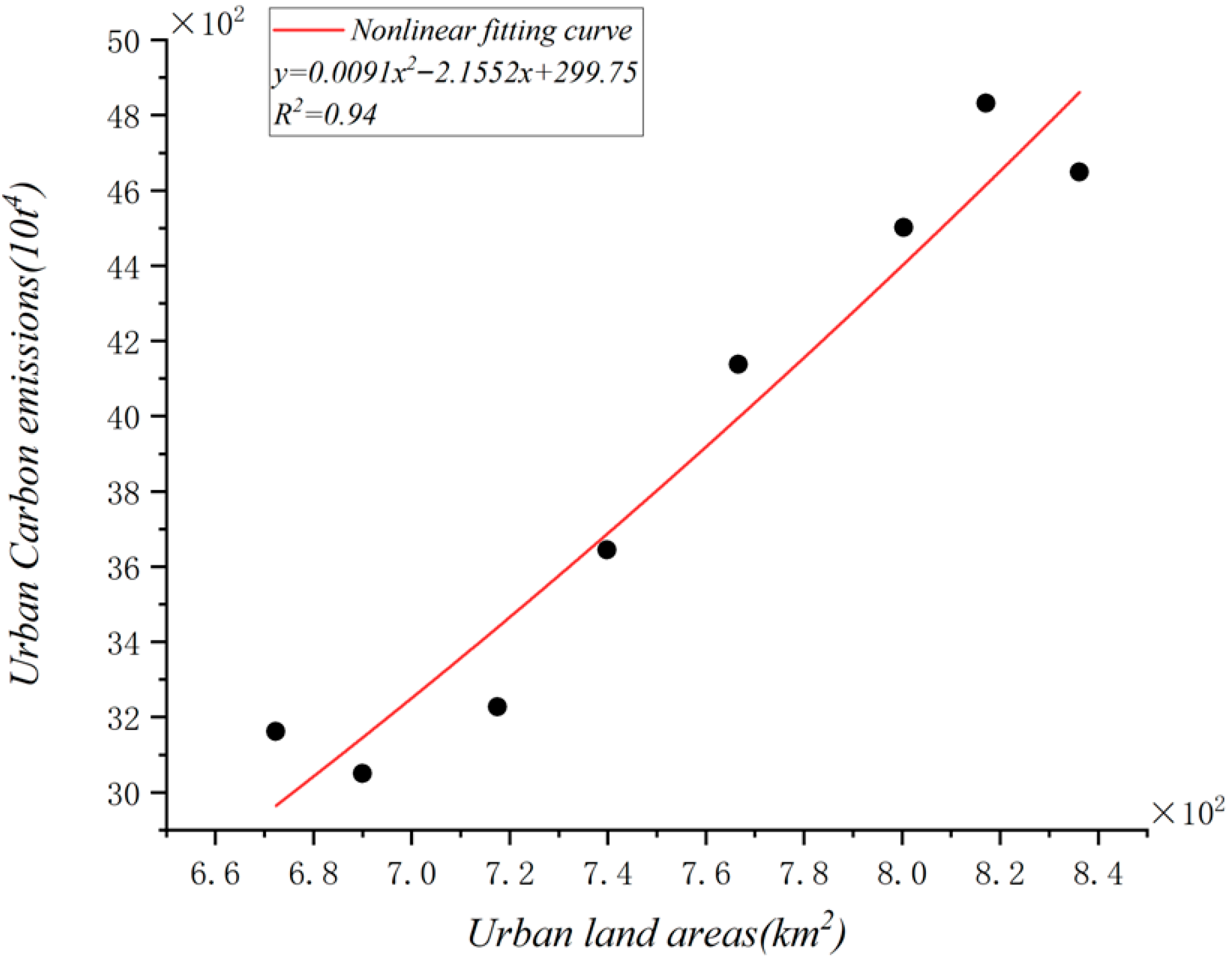
3.3.3. Adjusting Future Urban Land Demand from the CE Reduction Goal
3.3.4. Adjusting Future Urban Land Demand in Terms of the CE Reduction Goal
4. Results
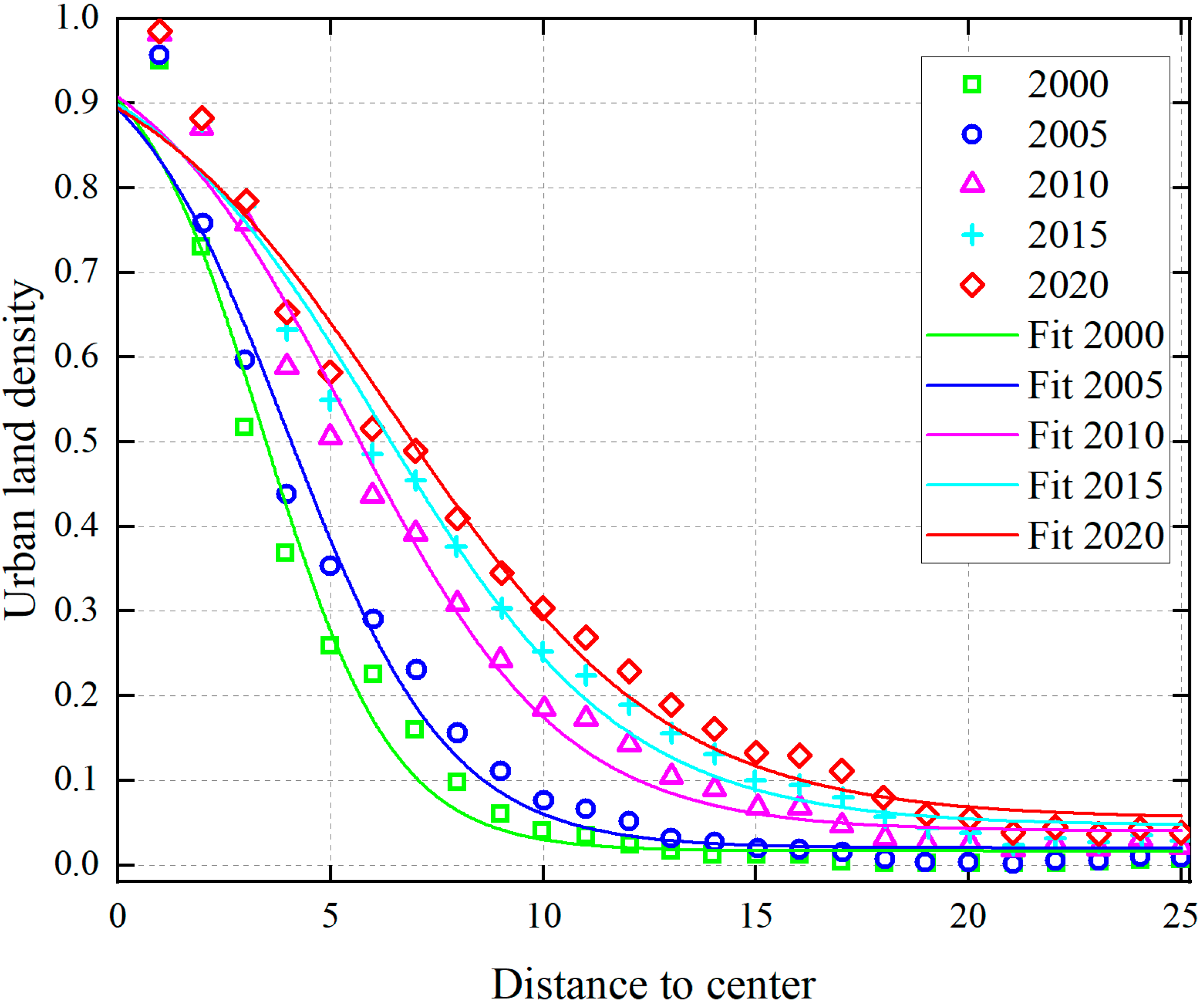
4.1. Urban Form in CZX Urban Agglomeration
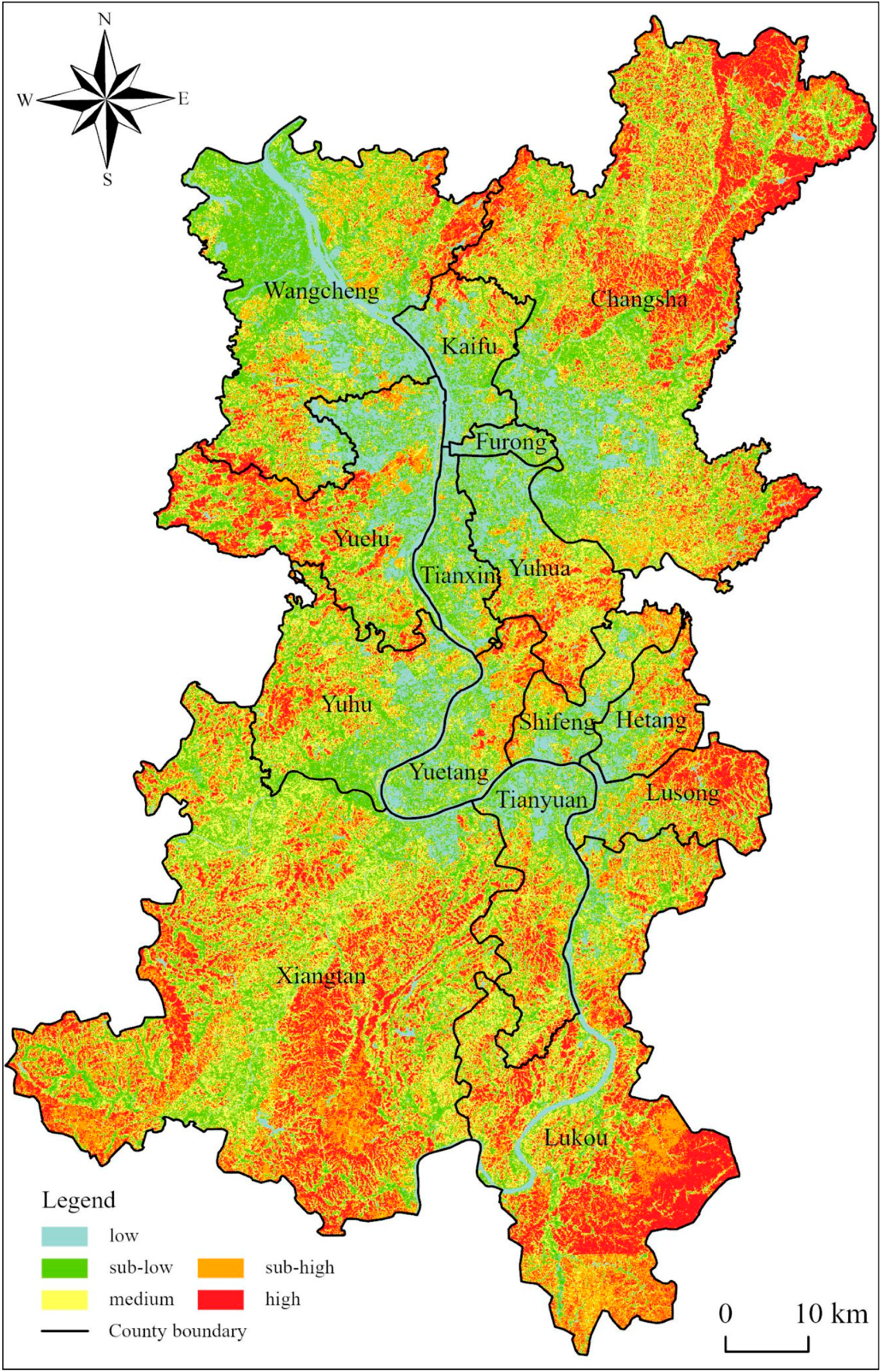
4.2. Spatial Pattern of NPP
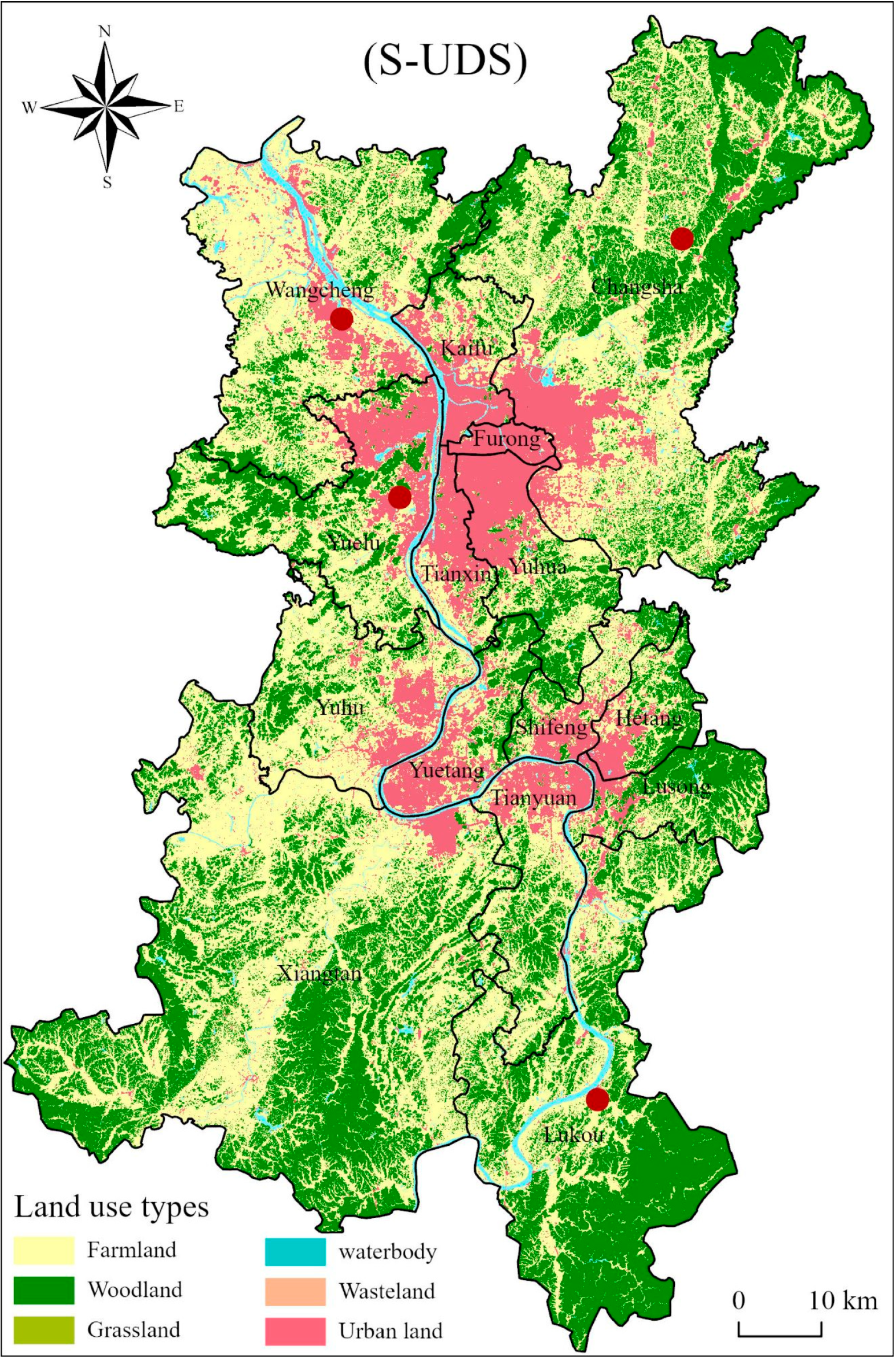
4.3. S-UDS Simulation
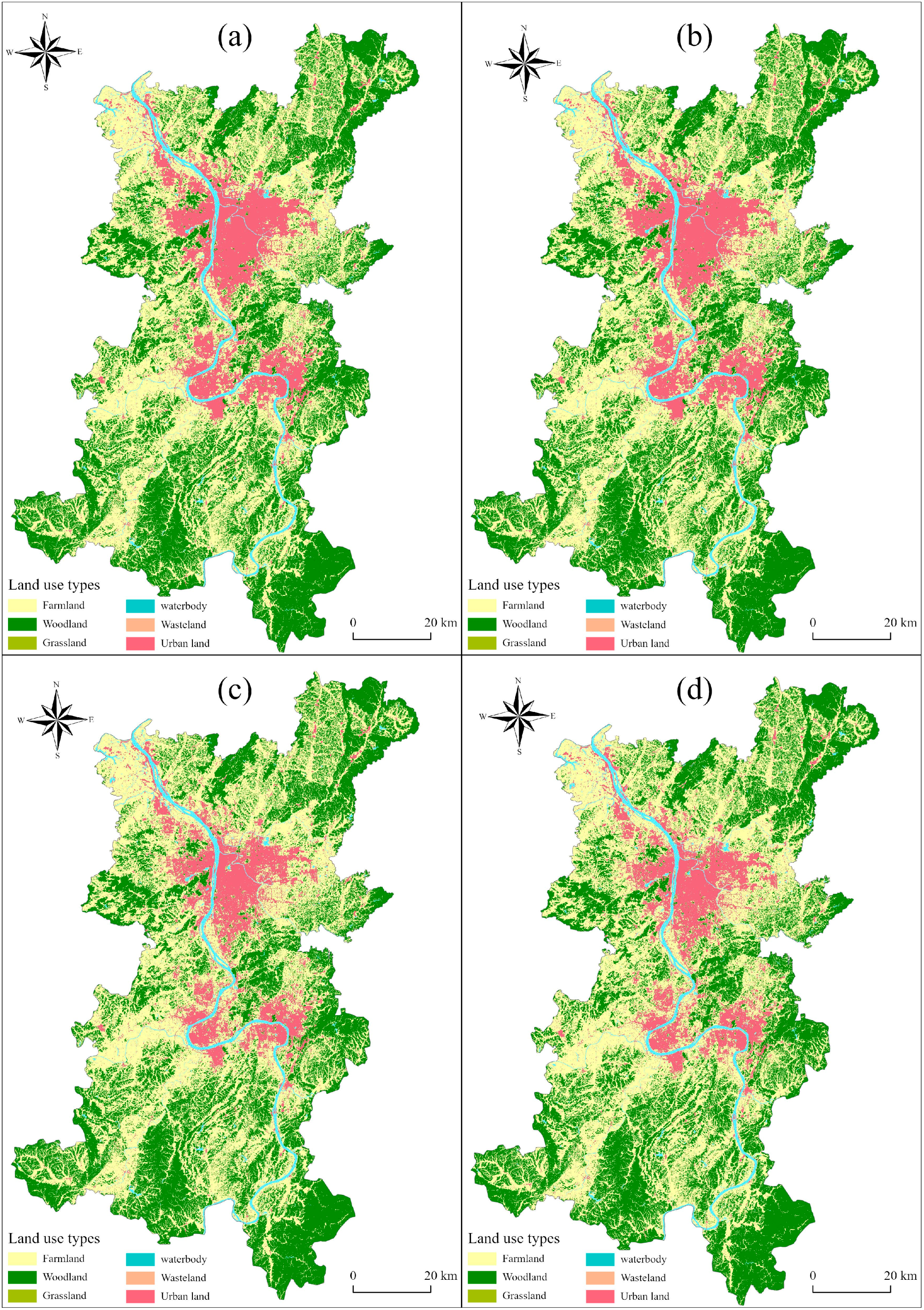
4.4. Comparison of Four Scenarios
5. Discussion
5.1. Rationality of Urban Expansion Modeling Focusing on Urban Form
5.2. Trade-Off Analysis Between Urban Expansion and Low-Carbon Goals
5.3. Limitations and Outlook
6. Conclusions
Author Contributions
Funding
Data Availability Statement
Acknowledgments
Conflicts of Interest
References
- Wang, Z.; Li, X.; Mao, Y.; Li, L.; Wang, X.; Lin, Q. Dynamic simulation of land use change and assessment of carbon storage based on climate change scenarios at the city level: A case study of Bortala, China. Ecol. Indic. 2022, 134, 108499. [Google Scholar] [CrossRef]
- Lin, C.; Li, X. Carbon peak prediction and emission reduction pathways exploration for provincial residential buildings: Evidence from Fujian Province. Sustain. Cities Soc. 2024, 102, 105239. [Google Scholar] [CrossRef]
- Li, J.; Guldmann, J.; Gong, J.; Su, H. Urban growth boundaries optimization under low-carbon development: Combining multi-objective programming and patch cellular automata models. J. Environ. Manag. 2023, 340, 117934. [Google Scholar] [CrossRef] [PubMed]
- Ke, N.; Lu, X.; Kuang, B.; Zhang, X. Regional disparities and evolution trend of city-level carbon emission intensity in China. Sustain. Cities Soc. 2023, 88, 104288. [Google Scholar] [CrossRef]
- Wang, W.; Yu, H.; Tong, X.; Jia, Q. Estimating terrestrial ecosystem carbon storage change in the YREB caused by land-use change under SSP-RCPs scenarios. J. Clean. Prod. 2024, 469, 143205. [Google Scholar] [CrossRef]
- Wu, X.; Zhong, S.; Chen, G.; Wu, C.; Han, J.; Qian, Z. Influence of land use intensity on urban carbon efficiency under a carbon neutrality target: Evidence from the Yangtze River Delta urban agglomeration, China. Environ. Impact Assess. Rev. 2025, 110, 107689. [Google Scholar] [CrossRef]
- Zhao, X.; Ma, X.; Chen, B.; Shang, Y.; Song, M. Challenges toward carbon neutrality in China: Strategies and countermeasures. Resour. Conserv. Recycl. 2022, 176, 105959. [Google Scholar] [CrossRef]
- Liu, X.; Xu, H.; Zhang, M. The effects of urban expansion on carbon emissions: Based on the spatial interaction and transmission mechanism. J. Clean. Prod. 2024, 434, 140019. [Google Scholar] [CrossRef]
- Wang, H.; Wu, L.; Yue, Y.; Jin, Y.; Zhang, B. Impacts of climate and land use change on terrestrial carbon storage: A multi-scenario case study in the Yellow River Basin (1992–2050). Sci. Total Environ. 2024, 930, 172557. [Google Scholar] [CrossRef] [PubMed]
- Zhang, X.; Zhong, J.; Zhang, X.; Zhang, D.; Miao, C.; Wang, D.; Guo, L. China Can Achieve Carbon Neutrality in Line with the Paris Agreement’s 2 °C Target: Navigating Global Emissions Scenarios, Warming Levels, and Extreme Event Projections. Engineering 2025, 44, 207–214. [Google Scholar] [CrossRef]
- Fang, C.; Wang, S.; Li, G. Changing urban forms and carbon dioxide emissions in China: A case study of 30 provincial capital cities. Appl. Energy 2015, 158, 519–531. [Google Scholar] [CrossRef]
- Ding, G.; Guo, J.; Pueppke, S.G.; Yi, J.; Ou, M.; Ou, W.; Tao, Y. The influence of urban form compactness on CO2 emissions and its threshold effect: Evidence from cities in China. J. Environ. Manag. 2022, 322, 116032. [Google Scholar] [CrossRef]
- Yin, K.; Yao, X. The impact of urban compactness on urban carbon emissions: A study of 281 Chinese cities. Urban Clim. 2024, 56, 102052. [Google Scholar] [CrossRef]
- Jo, H.; Kim, H. The influence of urban spatial structure on building carbon emissions at the neighborhood scale considering spatial effect. Build. Environ. 2025, 276, 112888. [Google Scholar] [CrossRef]
- Zhang, Y.; Liu, Y.; Wang, Y.; Liu, D.; Xia, C.; Wang, Z.; Wang, H.; Liu, Y. Urban expansion simulation towards low-carbon development: A case study of Wuhan, China. Sustain. Cities Soc. 2020, 63, 102455. [Google Scholar] [CrossRef]
- Gui, D.; He, H.; Liu, C.; Han, S. Spatio-temporal dynamic evolution of carbon emissions from land use change in Guangdong Province, China, 2000–2020. Ecol. Indic. 2023, 156, 111131. [Google Scholar] [CrossRef]
- Yao, Y.; Sun, Z.; Li, L.; Cheng, T.; Chen, D.; Zhou, G.; Liu, C.; Kou, S.; Chen, Z.; Guan, Q. CarbonVCA: A cadastral parcel-scale carbon emission forecasting framework for peak carbon emissions. Cities 2023, 138, 104354. [Google Scholar] [CrossRef]
- Zhao, X.; Rao, Z.; Lin, J.; Zhang, X. Scenario forecasting of carbon neutrality by combining the LEAP model and future land-use simulation: An empirical study of Shenzhen, China. Sustain. Cities Soc. 2025, 125, 106367. [Google Scholar] [CrossRef]
- Martellozzo, F.; Amato, F.; Murgante, B.; Clarke, K.C. Modelling the impact of urban growth on agriculture and natural land in Italy to 2030. Appl. Geogr. 2018, 91, 156–167. [Google Scholar] [CrossRef]
- Wang, W.; Jiao, L.; Zhang, W.; Jia, Q.; Su, F.; Xu, G.; Ma, S. Delineating urban growth boundaries under multi-objective and constraints. Sustain. Cities Soc. 2020, 61, 102279. [Google Scholar] [CrossRef]
- Zhang, X.; Zhang, D. Urban carbon emission scenario prediction and multi-objective land use optimization strategy under carbon emission constraints. J. Clean. Prod. 2023, 430, 139684. [Google Scholar] [CrossRef]
- Qin, J.; Ou, D.; Yang, Z.; Gao, X.; Zhong, Y.; Yang, W.; Wu, J.; Yang, Y.; Xia, J.; Liu, Y.; et al. Synergizing economic growth and carbon emission reduction in China: A path to coupling the MFLP and PLUS models for optimizing the territorial spatial functional pattern. Sci. Total Environ. 2024, 929, 171926. [Google Scholar] [CrossRef]
- Li, L.; Huang, X.; Yang, H. Optimizing land use patterns to improve the contribution of land use planning to carbon neutrality target. Land Use Policy 2023, 135, 106959. [Google Scholar] [CrossRef]
- Ye, L.; Zhao, S.; Yang, H.; Chuai, X.; Zhai, L. Urban land use simulation and carbon-related driving factors analysis based on RF-CA in Shanghai, China. Ecol. Indic. 2024, 166, 112555. [Google Scholar] [CrossRef]
- Yue, W.; Qin, C.; Su, M.; Teng, Y.; Xu, C. Simulation and prediction of land use change in Dongguan of China based on ANN cellular automata—Markov chain model. Environ. Sustain. Indic. 2024, 22, 100355. [Google Scholar] [CrossRef]
- Wang, G.; Han, Q.; de Vries, B. The multi-objective spatial optimization of urban land use based on low-carbon city planning. Ecol. Indic. 2021, 125, 107540. [Google Scholar] [CrossRef]
- Yi, C.; Xu, B.; Shi, X.; Li, R.; Chen, J. Exploring the spatial effects of rapid urbanization on land use efficiency in China under Low-Carbon constraints. Ecol. Indic. 2025, 174, 113442. [Google Scholar] [CrossRef]
- Zuo, S.; Dai, S.; Ju, J.; Meng, F.; Ren, Y.; Tian, Y.; Wang, K. The importance of the functional mixed entropy for the explanation of residential and transport CO2 emissions in the urban center of China. J. Clean. Prod. 2022, 380, 134947. [Google Scholar] [CrossRef]
- Wan, B.; Sun, Y.; Shen, N.; Sheng, Q.; Yang, T. The impact of urban spatial configuration on carbon emissions: Towards spatial planning for low-carbon development. Sustain. Futures 2025, 9, 100559. [Google Scholar] [CrossRef]
- Li, Z.; Wang, F.; Kang, T.; Wang, C.; Chen, X.; Miao, Z.; Zhang, L.; Ye, Y.; Zhang, H. Exploring differentiated impacts of socioeconomic factors and urban forms on city-level CO2 emissions in China: Spatial heterogeneity and varying importance levels. Sustain. Cities Soc. 2022, 84, 104028. [Google Scholar] [CrossRef]
- Mun, H.; Jung, J. Impact of Compact City on Carbon Emission Reduction Based on Urban Size: A Spatial Analysis Using Satellite Imagery. Sustain. Cities Soc. 2025, 126, 106326. [Google Scholar] [CrossRef]
- Liu, H.; Yan, F.; Tian, H. Towards low-carbon cities: Patch-based multi-objective optimization of land use allocation using an improved non-dominated sorting genetic algorithm-II. Ecol. Indic. 2022, 134, 108455. [Google Scholar] [CrossRef]
- Li, W.; Chen, Z.; Li, M.; Zhang, H.; Li, M.; Qiu, X.; Zhou, C. Carbon emission and economic development trade-offs for optimizing land-use allocation in the Yangtze River Delta, China. Ecol. Indic. 2023, 147, 109950. [Google Scholar] [CrossRef]
- Wu, H.; Yang, Y.; Li, W. Spatial optimization of land use and carbon storage prediction in urban agglomerations under climate change: Different scenarios and multiscale perspectives of CMIP6. Sustain. Cities Soc. 2024, 116, 105920. [Google Scholar] [CrossRef]
- Guo, Y.; Jiao, L.; Yang, X.; Li, J.; And Xu, G. Simulating urban growth by coupling macro-processes and micro-dynamics: A case study on Wuhan, China. GIScience Remote Sens. 2023, 60, 2264582. [Google Scholar] [CrossRef]
- Li, L.; Sun, S.; Zhong, L.; Han, J.; Qian, X. Novel spatiotemporal nonlinear regression approach for unveiling the impact of urban spatial morphology on carbon emissions. Sustain. Cities Soc. 2025, 125, 106381. [Google Scholar] [CrossRef]
- Wu, Y.; Li, C.; Shi, K.; Liu, S.; Chang, Z. Exploring the effect of urban sprawl on carbon dioxide emissions: An urban sprawl model analysis from remotely sensed nighttime light data. Environ. Impact Assess. Rev. 2022, 93, 106731. [Google Scholar] [CrossRef]
- Lyu, S.; Huang, Y.; Sun, T. Urban sprawl, public transportation efficiency and carbon emissions. J. Clean. Prod. 2025, 489, 144652. [Google Scholar] [CrossRef]
- Xing, X.; Xi, Q.; Shi, W. Impact of urban compactness on carbon emission in Chinese cities: From moderating effects of industrial diversity and job-housing imbalances. Land Use Policy 2024, 143, 107213. [Google Scholar] [CrossRef]
- Jin, Y.; Xu, Y. The divergent effects of polycentric urban form on urban carbon emissions: Spatial balance and spatial dispersion in Chinese cities. Urban Clim. 2024, 55, 101862. [Google Scholar] [CrossRef]
- Zhang, B.; Yin, J. Exploring the impact of spatial structure on carbon emissions in Chinese urban agglomerations: Insights into polycentric and compact development patterns. Urban Clim. 2025, 62, 102557. [Google Scholar] [CrossRef]
- He, H.; Zhao, Z.; Yan, H.; Zhang, G.; Jing, R.; Zhou, M.; Wu, X.; Lin, T.; Ye, H. Urban functional area building carbon emission reduction driven by three-dimensional compact urban forms’ optimization. Ecol. Indic. 2024, 167, 112614. [Google Scholar] [CrossRef]
- Zhang, X.; Meng, Q.; Xu, J.; Li, K. Urbanization impacts on anthropogenic carbon dioxide emissions and the roles of urban morphologies: Insights from urban socioeconomic clusters and local climate zones in Shanghai, China. Sustain. Cities Soc. 2025, 129, 106494. [Google Scholar] [CrossRef]
- Xu, G.; Jiao, L.; Liu, J.; Shi, Z.; Zeng, C.; Liu, Y. Understanding urban expansion combining macro patterns and micro dynamics in three Southeast Asian megacities. Sci. Total Environ. 2019, 660, 375–383. [Google Scholar] [CrossRef] [PubMed]
- Lan, T.; Shao, G.; Xu, Z.; Tang, L.; Dong, H. Considerable role of urban functional form in low-carbon city development. J. Clean. Prod. 2023, 392, 136256. [Google Scholar] [CrossRef]
- Jin, Y.; Xu, Y. Carbon reduction of urban form strategies: Regional heterogeneity in Yangtze River Delta, China. Land Use Policy 2024, 141, 107154. [Google Scholar] [CrossRef]
- Tian, P.; Cai, M.; Sun, Z.; Liu, S.; Wu, H.; Liu, L.; Peng, Z. Effects of 3D urban morphology on CO2 emissions using machine learning: Towards spatially tailored low-carbon strategies in Central Wuhan, China. Urban Clim. 2024, 57, 102122. [Google Scholar] [CrossRef]
- Wang, M.; Jia, Z.; Xiang, C. Multi-objective optimization design of high-rise high-density urban morphology and their multidimensional assessment of PV capacity. Sustain. Cities Soc. 2025, 130, 106601. [Google Scholar] [CrossRef]
- Wang, W.; Jiao, L.; Dong, T.; Xu, Z.; Xu, G. Simulating urban dynamics by coupling top-down and bottom-up strategies. Int. J. Geogr. Inf. Sci. 2019, 33, 2259–2283. [Google Scholar] [CrossRef]
- Jiao, L. Urban land density function: A new method to characterize urban expansion. Landsc. Urban Plan. 2015, 139, 26–39. [Google Scholar] [CrossRef]
- Fu, M.; Jiao, L.; Su, J. Urban land system change: Spatial heterogeneity and driving factors of land use intensity in Wuhan, China. Habitat Int. 2025, 159, 103380. [Google Scholar] [CrossRef]
- Wang, W.; Jiao, L.; Jia, Q.; Liu, J.; Mao, W.; Xu, Z.; Li, W. Land use optimization modelling with ecological priority perspective for large-scale spatial planning. Sustain. Cities Soc. 2021, 65, 102575. [Google Scholar] [CrossRef]
- Tan, X.; Yu, H.; Zhong, X.; Wang, W. Delineating urban growth boundaries by coupling urban interactions and ecological conservation. Cities 2024, 145, 104712. [Google Scholar] [CrossRef]
- Yang, X.; Liu, X. Accuracy analysis of inverting provincial-level carbon emissions from night-time light data in China: Comparison based on international carbon emission data. IOP Conf. Ser. Earth Environ. Sci. 2020, 601, 12046. [Google Scholar] [CrossRef]
- Yu, D.; Shi, P.; Shao, H.; Zhu, W.; Pan, Y. Modelling net primary productivity of terrestrial ecosystems in East Asia based on an improved CASA ecosystem model. Int. J. Remote Sens. 2009, 30, 4851–4866. [Google Scholar] [CrossRef]
- Yang, H.; Huang, J.; Liu, D. Linking climate change and socioeconomic development to urban land use simulation: Analysis of their concurrent effects on carbon storage. Appl. Geogr. 2020, 115, 102135. [Google Scholar] [CrossRef]



| Years | α | c | D | |
|---|---|---|---|---|
| 2000 | 2.254 | 0.020 | 6.89 | 0.981 |
| 2005 | 2.118 | 0.023 | 8.03 | 0.982 |
| 2010 | 2.221 | 0.043 | 11.01 | 0.983 |
| 2015 | 2.127 | 0.049 | 12.29 | 0.982 |
| 2020 | 2.066 | 0.058 | 13.12 | 0.981 |
| District/County | Areas in 2020 (km2) | Areas in 2035 (km2) | Newly Added Urban Areas (km2) | Growth Rate of Urban Land (%) |
|---|---|---|---|---|
| Furong | 33.91 | 40.22 | 6.32 | 18.63 |
| Tianxin | 58.47 | 72.29 | 13.82 | 23.64 |
| Yuelu | 92.54 | 116.57 | 24.02 | 25.96 |
| Kaifu | 58.06 | 77.71 | 19.65 | 33.85 |
| Yuhua | 87.44 | 103.56 | 16.12 | 18.43 |
| Wangcheng | 74.36 | 108.97 | 34.61 | 46.55 |
| Changsha | 116.14 | 168.62 | 52.48 | 45.19 |
| Hetang | 27.83 | 34.83 | 7.00 | 25.16 |
| Lusong | 18.77 | 23.68 | 4.91 | 26.19 |
| Shifeng | 38.90 | 44.48 | 5.58 | 14.35 |
| Tianyuan | 48.92 | 63.06 | 14.14 | 28.91 |
| Lukou | 17.83 | 18.28 | 0.45 | 2.54 |
| Yuhu | 60.75 | 72.50 | 11.75 | 19.34 |
| Yuetang | 60.09 | 78.28 | 18.18 | 30.26 |
| Xiangtan | 42.59 | 48.97 | 6.38 | 14.98 |
| Total | 836.60 | 1072.04 | 235.44 | 28.14 |
| District/ County | Areas in 2020 (km2) | S-UDS | B-UDS | T-UDS | L-UDS | ||||
|---|---|---|---|---|---|---|---|---|---|
| Area (km2) | Growth Rate (%) | Area (km2) | Growth Rate (%) | Area (km2) | Growth Rate (%) | Area (km2) | Growth Rate (%) | ||
| Furong | 33.91 | 40.22 | 18.63 | 39.99 | 17.95 | 35.50 | 4.71 | 35.39 | 4.36 |
| Tianxin | 58.47 | 72.29 | 23.64 | 71.75 | 22.72 | 60.85 | 4.07 | 60.68 | 3.78 |
| Yuelu | 92.54 | 116.57 | 25.96 | 117.83 | 27.32 | 97.20 | 5.03 | 97.33 | 5.17 |
| Kaifu | 58.06 | 77.71 | 33.85 | 77.16 | 32.90 | 60.92 | 4.92 | 60.82 | 4.75 |
| Yuhua | 87.44 | 103.56 | 18.43 | 102.98 | 17.77 | 91.42 | 4.55 | 91.42 | 4.55 |
| Wangcheng | 74.36 | 108.97 | 46.55 | 110.80 | 49.01 | 91.89 | 23.57 | 92.47 | 24.36 |
| Changsha | 116.14 | 168.62 | 45.19 | 167.91 | 44.58 | 139.95 | 20.51 | 139.47 | 20.09 |
| Hetang | 27.83 | 34.83 | 25.16 | 34.97 | 25.65 | 29.16 | 4.76 | 29.12 | 4.64 |
| Lusong | 18.77 | 23.68 | 26.19 | 23.21 | 23.70 | 19.45 | 3.66 | 19.44 | 3.58 |
| Shifeng | 38.90 | 44.48 | 14.35 | 44.78 | 15.12 | 40.19 | 3.31 | 40.29 | 3.57 |
| Tianyuan | 48.92 | 63.06 | 28.91 | 63.86 | 30.54 | 52.67 | 7.67 | 53.00 | 8.35 |
| Lukou | 17.83 | 18.28 | 2.54 | 18.32 | 2.77 | 17.85 | 0.15 | 17.84 | 0.09 |
| Yuhu | 60.75 | 72.50 | 19.34 | 72.74 | 19.73 | 63.18 | 3.99 | 63.16 | 3.96 |
| Yuetang | 60.09 | 78.28 | 30.26 | 76.92 | 27.99 | 61.72 | 2.71 | 61.50 | 2.34 |
| Xiangtan | 42.59 | 48.97 | 14.98 | 48.82 | 14.61 | 43.43 | 1.96 | 43.45 | 2.01 |
| Total | 836.60 | 1072.04 | 28.14 | 1072.04 | 28.14 | 905.37 | 8.22 | 905.37 | 8.22 |
| Scenarios | Preserved Total NPP (104 tC) | NPP Loss vs. 2020 (104 tC) | Loss Rate (%) |
|---|---|---|---|
| 2020 base | 438.46 | - | - |
| S-UDS | 431.04 | −7.42 | 1.69% |
| B-UDS | 431.63 | −6.83 | 1.56% |
| T-UDS | 436.26 | −2.20 | 0.50% |
| L-UDS | 436.51 | −1.95 | 0.45% |
Disclaimer/Publisher’s Note: The statements, opinions and data contained in all publications are solely those of the individual author(s) and contributor(s) and not of MDPI and/or the editor(s). MDPI and/or the editor(s) disclaim responsibility for any injury to people or property resulting from any ideas, methods, instructions or products referred to in the content. |
© 2026 by the authors. Licensee MDPI, Basel, Switzerland. This article is an open access article distributed under the terms and conditions of the Creative Commons Attribution (CC BY) license.
Share and Cite
Zhang, Y.; Wang, W.; Chen, T.; Wan, J.; Su, F. Urban Expansion Simulation for the Low-Carbon Goal: A Focus on Urban Form Optimization. Land 2026, 15, 454. https://doi.org/10.3390/land15030454
Zhang Y, Wang W, Chen T, Wan J, Su F. Urban Expansion Simulation for the Low-Carbon Goal: A Focus on Urban Form Optimization. Land. 2026; 15(3):454. https://doi.org/10.3390/land15030454
Chicago/Turabian StyleZhang, Yang, Weilin Wang, Taoyi Chen, Jiali Wan, and Fei Su. 2026. "Urban Expansion Simulation for the Low-Carbon Goal: A Focus on Urban Form Optimization" Land 15, no. 3: 454. https://doi.org/10.3390/land15030454
APA StyleZhang, Y., Wang, W., Chen, T., Wan, J., & Su, F. (2026). Urban Expansion Simulation for the Low-Carbon Goal: A Focus on Urban Form Optimization. Land, 15(3), 454. https://doi.org/10.3390/land15030454