Article

Fungi as Ecosystem Engineer Species of the Pannonian Grasslands: The Effect of Fungal Fairy Rings on Grassland Vegetation


1
Department of Botany, Hungarian University of Agriculture and Life Sciences, Páter Károly Str. 1, 2100 Gödöllő, Hungary
2
Department of Agronomy, Hungarian University of Agriculture and Life Sciences, Páter Károly Str. 1, 2100 Gödöllő, Hungary
3
Department of Animal Nutrition and Clinical Dietetics, University of Veterinary Medicine Budapest, Rottenbiller Str. 50, 1077 Budapest, Hungary
4
Department of Animal Hygiene, Herd Health and Mobile Clinic, University of Veterinary Medicine Budapest, István Str. 2, 1078 Budapest, Hungary
*
Authors to whom correspondence should be addressed.
Land 2026, 15(3), 453; https://doi.org/10.3390/land15030453
Submission received: 2 February 2026 / Revised: 2 March 2026 / Accepted: 8 March 2026 / Published: 12 March 2026

Abstract

Fungal fairy rings (FFRs) are circular patterns primarily formed by basidiomycete fungi. These structures significantly influence grassland ecosystems by mediating nutrient cycling, altering soil microbial communities, and driving shifts in plant community composition. The present study investigates FFR formed by Agaricus xanthodermus in a Pannonian sandy grassland, with a focus on vegetation structure, productivity, and diversity. Field surveys conducted along transects across FFR quantified plant species cover, height, and additional ecological parameters. The findings demonstrate that FFR alters species dominance, reduces diversity at the ring edge, and based on ecological indicator values of plant species it increases soil nitrogen, and modify the movement of water and nutrients within the soil. Collectively, these results suggest that FFRs function as ecosystem engineers, shaping ecological processes and affecting the agricultural potential of semi-natural grasslands.

1. Introduction

Among global ecosystems, temperate grasslands play a prominent role in preserving biodiversity [1,2,3]. In Europe most natural and semi-natural grasslands have been used for agricultural production for centuries [4]. As a result, especially since the early 20th century, the area of semi-natural grasslands has decreased significantly across Europe. This decline has been reinforced by land-use change [5,6,7], and also led to a decline in biodiversity [8]. The land-use change is particularly pronounced in sandy habitats, rendering sandy vegetation and sand grasslands among the most endangered habitats in Europe. This presents a significant challenge for nature conservation, as sandy soils support numerous specialised and endangered grassland species. These species are adapted to dry, nutrient-poor conditions [9] and benefit from disturbances such as sheep grazing [10] and soil disruption. Their decline has been extensively documented across Europe, often associated with eutrophication following the abandonment of traditional agricultural practices, which accelerates natural succession [11,12].
Grasslands deliver a range of ecosystem services [13,14], which are influenced by land use practices [15,16]. Fungal fairy rings (FFRs) produced by various species of fungi (e.g., Agaricus spp.) represent one such service [17]. Getzin et al. [18] refined the terminology of circular plant structures by distinguishing FFRs, which are formed by fungal taxa, from non-fungal Fairy Rings. The latter occur in desert grasslands in regions such as Namibia, South Africa, Angola, and parts of Western Australia, and their formation is primarily associated with low-precipitation environments [18].
Within basidiomycetes, the most extensively studied grassland fairy ring species include Marasmius oreades (Bolton) Fr., Agaricus campestris L., and A. arvensis Schaeff. In forest ecosystems, the ectomycorrhizal fungus Tricholoma matsutake (S.Ito & S.Imai) Singer is the most researched species and is primarily distributed in Asia, including Japan, the Korean Peninsula, China, and Russia, as well as in certain Northern European countries [19,20,21]. Advances in genomic research on native fungal communities have facilitated the identification of new species with strong indicator potential [22].
Multiple studies have examined the soil microbiome, including that of forest soils, and have detailed the impacts on fungal communities [23,24]. Fungal species maintain close associations with the soil microbiota they colonize and the plant communities present. Their influence on soil chemical parameters is well documented [25,26]. The balance among fungal symbionts, pathogens, and saprotrophs in the soil [27,28,29], as well as the degree to which plant matter decomposition affects the microbial community, is critical for understanding plant community patterns [30,31]. However, limited information exists regarding the impact and persistence of changes in soil-dwelling fungal and bacterial communities [32].
The effects of these fungi on vegetation are species- and habitat-dependent [33], resulting in considerable variability. The first systematic classification was conducted by Shantz and Piemeisel [34] in their foundational work, which remains widely used for classifying FFRs:
Type 1: has two vegetation zones: a narrow outer necrotic belt with infertile soil and sparse, yellowed or absent vegetation, and an inner belt with more vigorous, dark green vegetation.
Type 2: A single belt of dark green vegetation, no necrotic outer belt.
Type 3: No visible vegetation change, only seasonal fruiting bodies.
Salvatori et al. [35] divided type 1 rings into three further subtypes:
Type 1A: The outer vegetation belt is lower than the inner. A necrotic belt separates them. Type 1B: The outer stimulation zone is higher than the inner. Type 1C: No stimulation is present; identification relies on the necrotic zone.
However, this latter classification omits three-part witch’s circles, such as A. arvensis [36,37] and M. oreades [25,38]. These have a type 1 zone on the outer edge and a type 2 zone on the inner edge. Zotti et al. [39] summarised a comprehensive classification of FFRs.
Type 1 FFRs exert the most pronounced effects on vegetation. Similar to other disturbance factors such as drought, grazing, and fire, these fairy rings create conditions that favour taxa reliant on disruption by the advancing fungal front [32,34,36]. The hyphal progression in type 1 circles induces soil hydrophobicity [25], nutrient immobilization [40], pathogenic activity [26,41,42], production of phytotoxic compounds such as cyanides [43,44], and microbial imbalance [17], all of which negatively impact grassland plants. In most Agaricus species, the fungal front supports low species richness and diversity. Richness and diversity are higher at the outer and inner edges of the circle and lower in the center, though not as low as at the front [45]. A similar pattern is observed for fungi and bacteria [32]. In type 1 circles, plant growth increases in the belt as the front recedes, a pattern also observed in type 2 fairy rings. This effect may be attributed to plant-growth-promoting secondary metabolites, referred to as “fairy chemicals” [46,47,48], or to a beneficial microbial community that includes arbuscular mycorrhizal (AM) fungi.
The distinctive spatial patterns of FFRs influence landscape structure by redistributing ecological niches and affecting nutrient cycles [49,50]. Fairy rings may facilitate the colonization and spread of small, nitrogen-demanding species that are prone to invasion during mid-successional stages, such as Bothriochloa ischaemum (L.) Keng, Calamagrostis epigeios (L.) Roth, and Solidago spp. [51,52]. Higher nitrogen availability influences above-ground production in grasslands, which is significant not only for agriculture but also for various ecological processes and for maintaining the diversity of Pannonian grasslands, thereby supporting grassland persistence [53,54,55]. Fungal species that form fairy rings can enhance grassland yield [56,57,58], and their capacity to modify soil flora is also important [57,59,60]. Notably, these fungi increase the biological availability of nitrogen, other nutrients, and microelements [50,58], resulting in greater quantity and improved quality of pasture grass for grazing animals [61,62].
This study contributes to the development of a comprehensive database aimed at elucidating the multifaceted ecological roles of FRRs. Fairy rings in grasslands were examined from multiple perspectives and with various methods, including remote sensing techniques [63], which complement field studies and facilitate more detailed research. Remote sensing is particularly effective for detecting fairy rings [64,65]. These approaches are well-suited for investigating mosaic-like patterns in vegetation, aquatic systems [66], and terrestrial habitats such as FFRs. In agricultural contexts, remote sensing is widely used for crop estimation [67,68,69] and may have economic implications in the context of FFRs.
In depth, this case study investigates the influence of Agaricus xanthodermus Genev., a potential ecosystem engineer, on vegetation. The following hypotheses are proposed: (H1) A. xanthodermus significantly alters the abundance of sandy grassland species; (H2) the magnitude of this effect varies across concentric FFR bands; (H3) during fungal engineering, species with high nitrogen demand temporarily proliferate in the inner band due to nutrient release, resulting in a non-linear spatial pattern in plant community diversity; (H4) this pattern represents the spatial analogue of the Intermediate Disturbance Hypothesis (IDH).

2. Materials and Methods

2.1. Sample Area

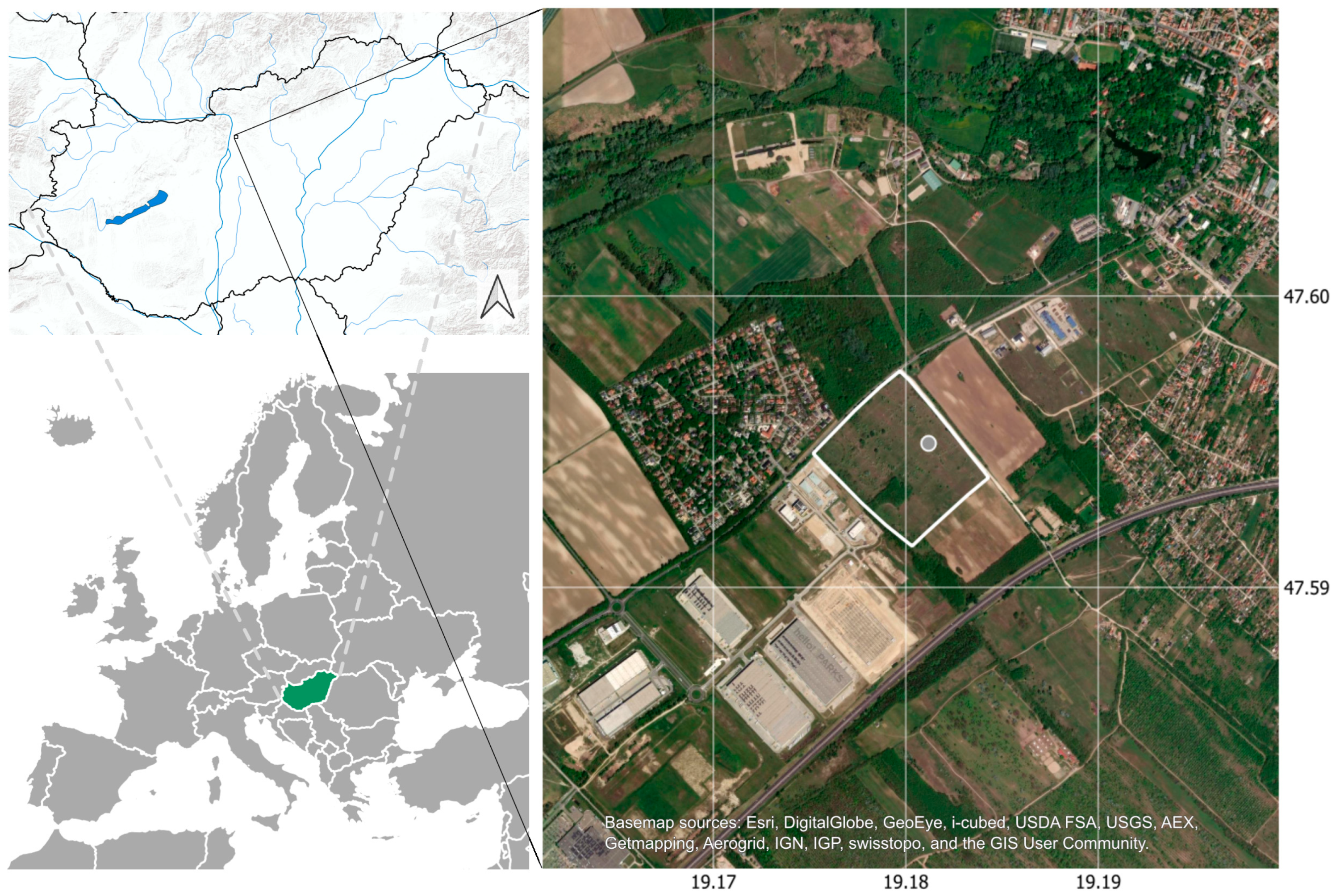
The sand steppe was selected in the Hungarian Great Plain, nearer on the Pest Alluvial Plain [70], on the outskirts of Fót (latitude: 47°35′41.75″; Latitude: 19°10′52.26″; altitude: 136 m) (Figure 1). The sampling area is a Potentillo arenariae-Festucetum pseudovinae Soó (1938) 1940 grassland community of a closed sand steppe habitat, which was previously used as pasture, but since 2000 has been the site of a waterworks, with four disused water wells. The degraded, closing sandy grassland is mowed in July each year and is grazed by sheep, helping maintain the grassland’s biodiversity.

2.2. Method of Botanical Recording

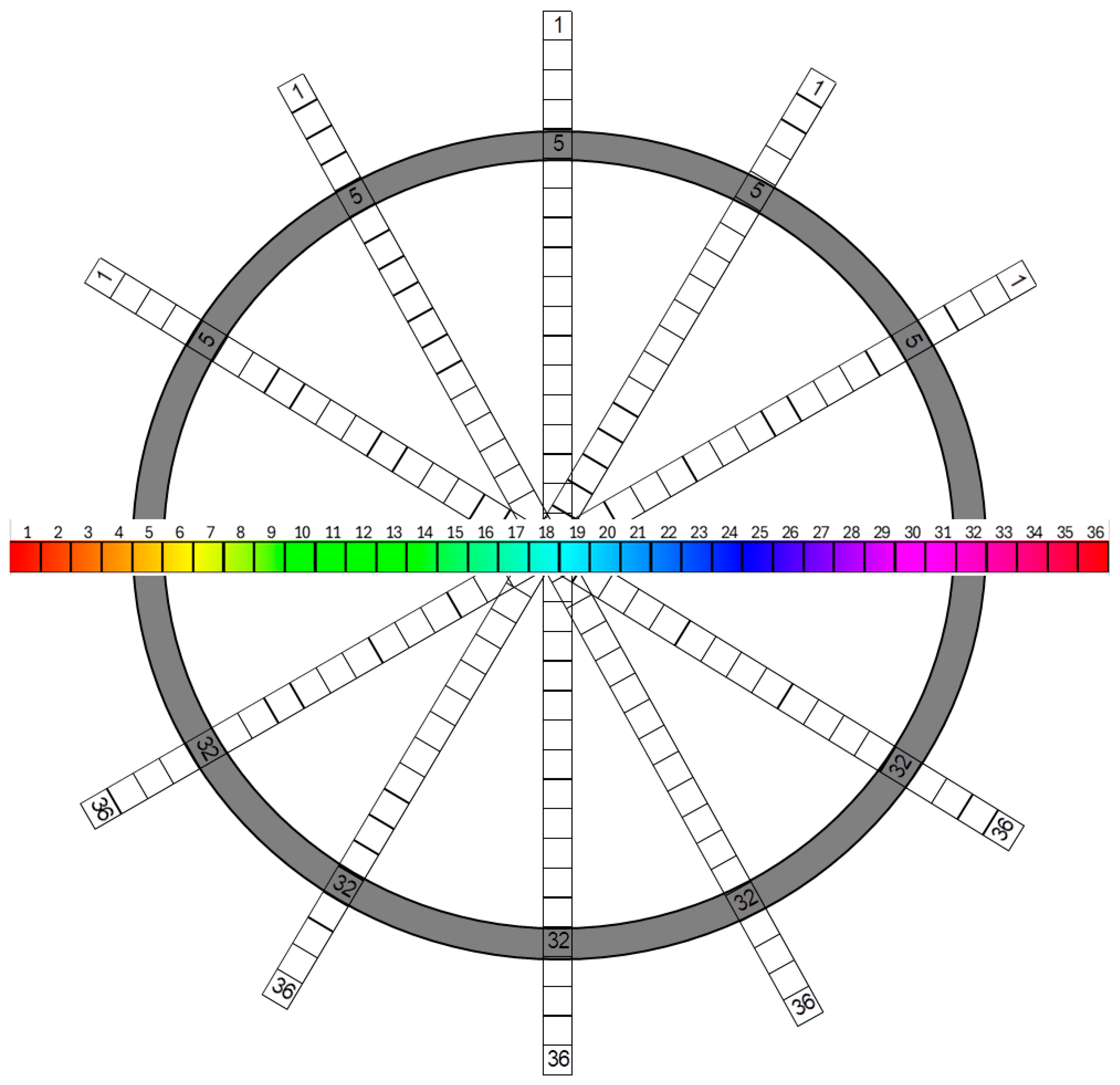
Based on the aerial photographs and Google Earth images examined on 5 June 2025, the fungal colony forming the fairy ring is 5–6 years old (first visible in a Google Earth image taken on 28 July 2020). FFR is 14 m in diameter, measured using a measuring tape. The fungi consists of Agaricus xanthodermus and was determined based on morphological features. The FRR could be classified [35] as Type 1A. The inference of this study is based on one ring in one grassland only and that the replication across rings, sites and multiple years is needed. We recorded 0.5 × 0.5 m squares that touched along the six diagonals of the FFR (Figure 2), estimating species coverage as a percentage. The transects were 2 m longer than the diameter of the circle in both directions, so we also sampled the control grassland outside the FFR. This resulted in 216 squares in total. The coenological survey was conducted on 26 May 2025, at the beginning of the flowering season of the dominant grass species.
From the species coverage (c) and plant height (m) data (10 measurements/species, uppermost leaf tip), we calculated their relative yield (t) from Szentes et al. [71].
c × m = t
The average grassland height (M) was calculated, the relative green mass of the grassland (T), which is the sum of the species relative green mass meaning yield, divided the total coverage.
M = T/∑c
The species names follow the nomenclature of https://europlusmed.org/ [72] (Supplementary Table S1).

2.3. Data Processing and Statistics

We evaluated the quadrats based on the relative nitrogen demand (NB) and relative water demand (WB) values from Borhidi’s relative ecological indicators [73] fitted to the Hungarian flora. Their naturalness status and trends were evaluated based on Borhidi’s social behaviour types (SBT) and their scores named naturalness values (VAL) [73], using a species-weighted average.
All analyses were performed in R (v4.5.2) [74] using the packages vegan [75] and ggplot2 [76]. The Shannon diversity index was used for diversity analyses. Within-subject diversity (α-diversity) was evaluated using observed species counts (richness). For this, species abundance profiles were examined using summed abundances per species and quadrats. To account for spatial dependence among contiguous quadrats, samples were aggregated into biologically meaningful zones within each diameter: Outside circular line (quadrats 1–4 and 33–36), Circular line as the fungal front (quadrats 5 and 32), and Inner ring (all remaining quadrats within each diameter). Species abundances were summed per Diameter × Zone × Species to generate the community matrix used for all inferential analyses.
Differences in community composition among zones were tested using PERMANOVA (adonis2) based on Bray–Curtis dissimilarities [77]. Permutations were constrained within diameters (strata = Diameter) to account for spatial autocorrelation along transects. Homogeneity of multivariate dispersion among zones was assessed using betadisper.
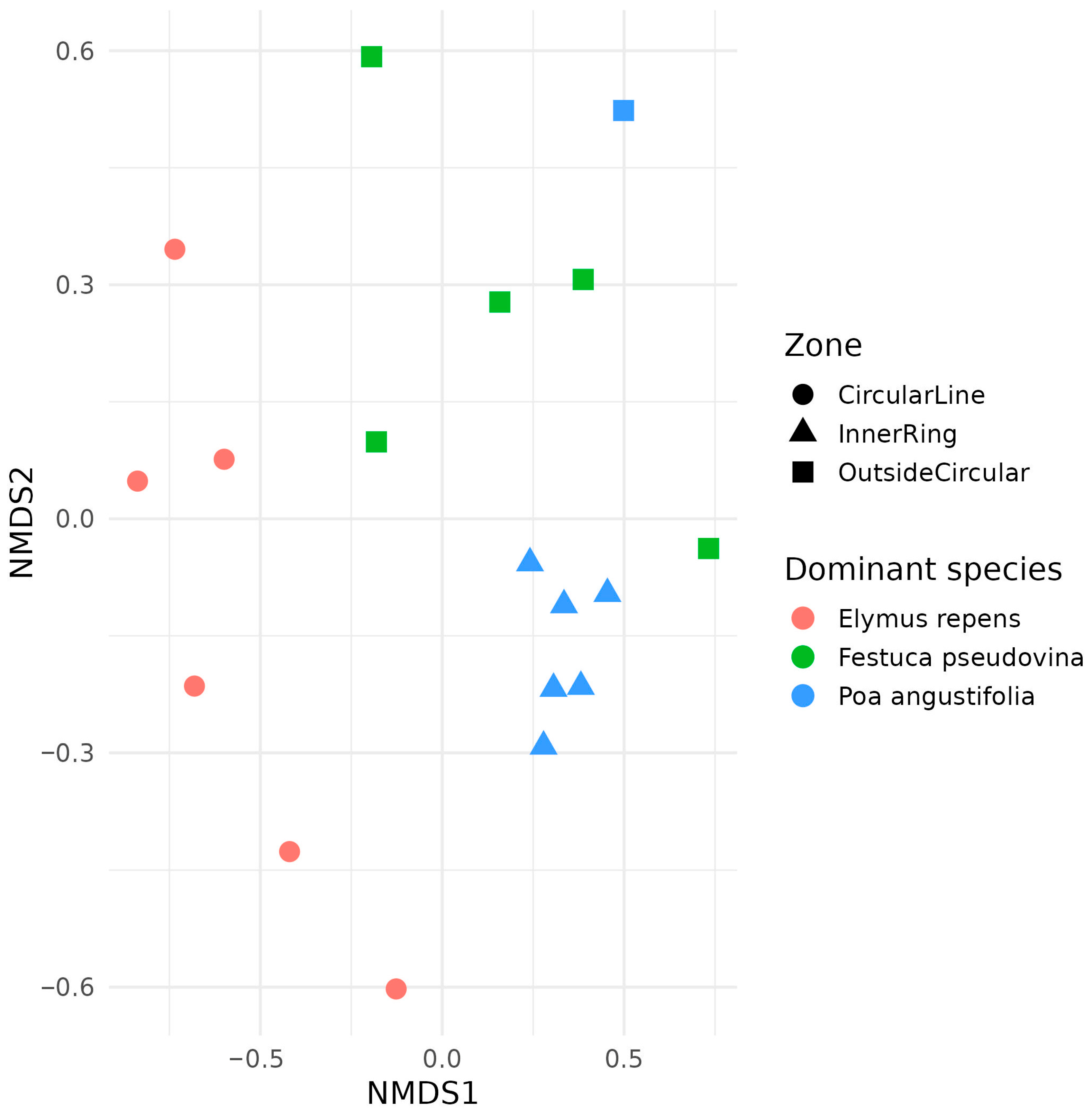
Community patterns were visualized using non-metric multidimensional scaling (NMDS; metaMDS, k = 2) based on the same Diameter × Zone matrix. Two NMDS ordinations were generated from this matrix: (1) points colored by dominant species per Diameter × Zone combination (Figure 3), and (2) points colored by zone with diameters distinguished by shape (Supplementary Figure S1). Stress values were reported to assess ordination goodness-of-fit.
Exploratory NMDS ordinations based on a pooled distance matrix (i.e., abundances summed across diameters for each distance position) were presented separately for descriptive purposes (Supplementary Figures S2 and S3). All figures were produced using ggplot2, with 95% confidence ellipses included where appropriate to illustrate group-level clustering.

3. Results

3.1. Species Composition and Dominant Species

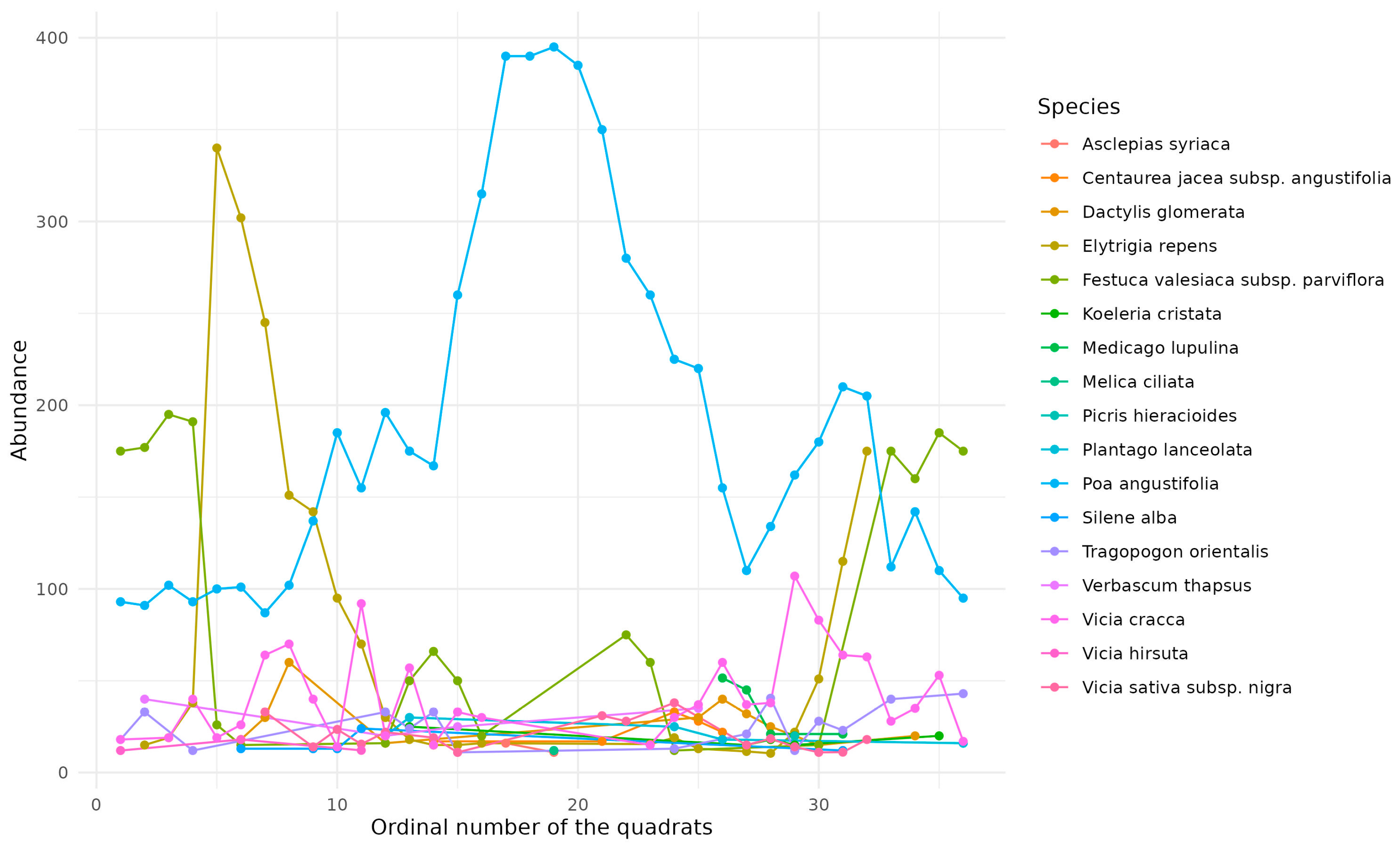
Community composition differed significantly among zones (PERMANOVA: F = 36.92, R2 = 0.83, p = 0.001), with no significant differences in multivariate dispersion (betadisper: F = 1.04, p = 0.38), confirming that PERMANOVA assumptions were met. NMDS ordinations revealed clear patterns: quadrats were separated by zones in multivariate space, with a stress value of 0.15 indicating good fit. The overall separation of zones and the spatial structure of diameters within zones are presented in Figure 3 and Figure 4 respectively. Confidence ellipses around zones illustrate distinct clustering, consistent with the PERMANOVA results. Festuca valesiaca subsp. parviflora (Hack.) Tracey was the dominant species outside the FFR (Figure 3, Supplementary Figure S2). On the fungal front (quadrat 5), Elytrigia repens (L.) Nevski became dominant. On the other side of the transect (quadrat 32), Poa angustifolia L. reached slightly higher coverage (34%) than E. repens (29%). Moving towards the centre of the circle, P. angustifolia gradually became dominant (Figure 4). This species was the only one present in all quadrats. Its average coverage exceeded 14.5% in each quadrat. Therefore, it can be considered the dominant species in the FFR.
Examining the more common species (Figure 4), Dactylis glomerata L. and Vicia sativa subsp. nigra (L.) Ehrh., Vicia cracca L. and Vicia hirsuta (L.) Gray had significant coverage. They thrived in the belt zone and in the outer part of this area.

3.2. Height of the Grassland

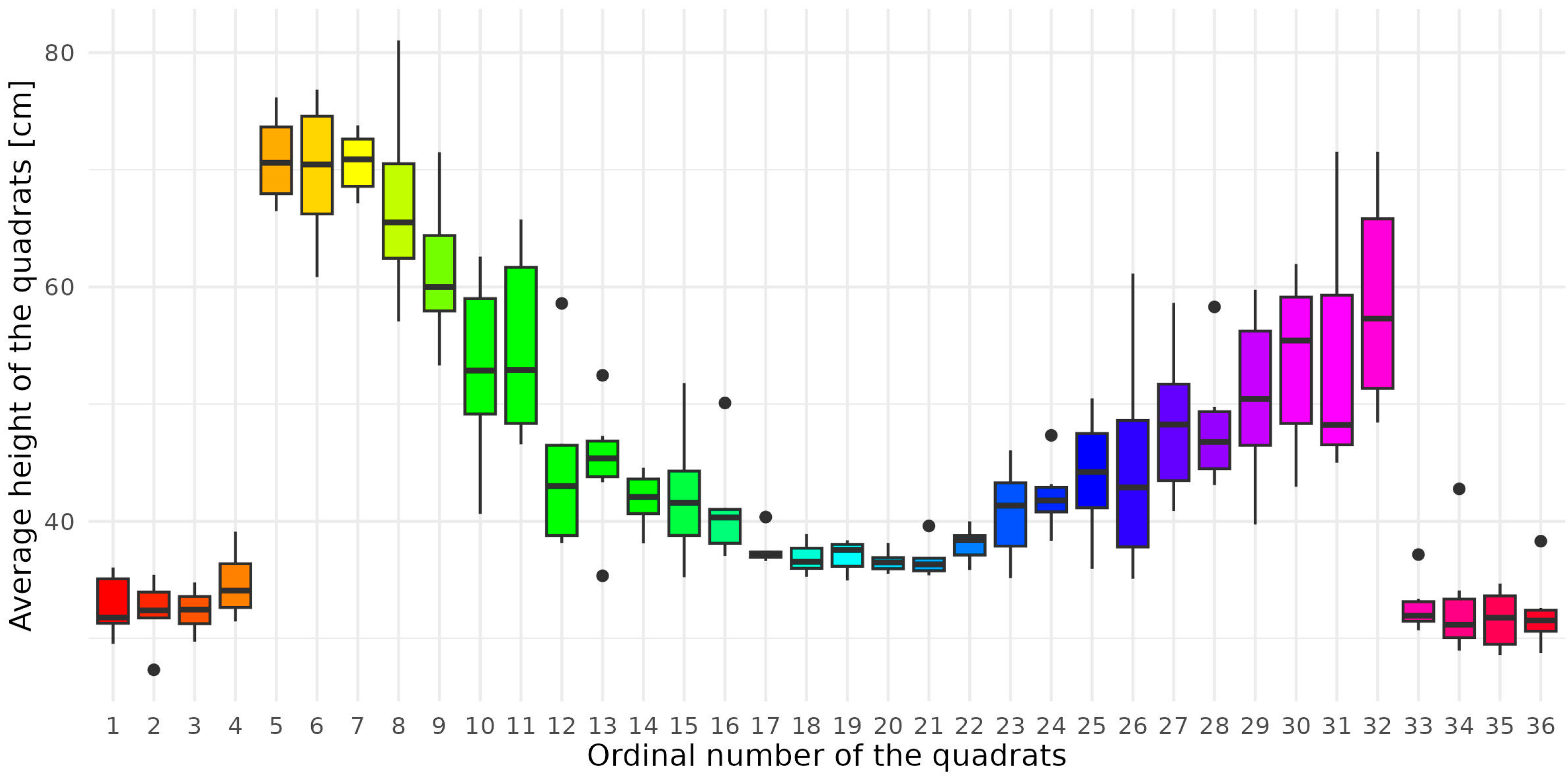
The species change resulting from the expansion of the fungal colony can also be clearly observed in changes in grass height (Figure 5). Outside the circle, F. valesiaca subsp. parviflora forms an average grass height of 32.7 cm. On the fungal front (quadrate 5), E. repens becomes dominant with an average height of 70.9 cm. In contrast, on the other side of the fungal front, in quadrate 32, P. angustifolia is also present with greater coverage alongside E. repens, which is why the grass is slightly lower here, with an average height of 58.8 cm. As we move towards the centre of the circle, becomes increasingly abundant, and with it, the average height gradually decreases. The lowest height is in the centre of the circle, where the P. angustifolia has formed a monodominant patch, but at 36.9 cm, it still exceeds the average height outside the circle.

3.3. Relative Ecological Values

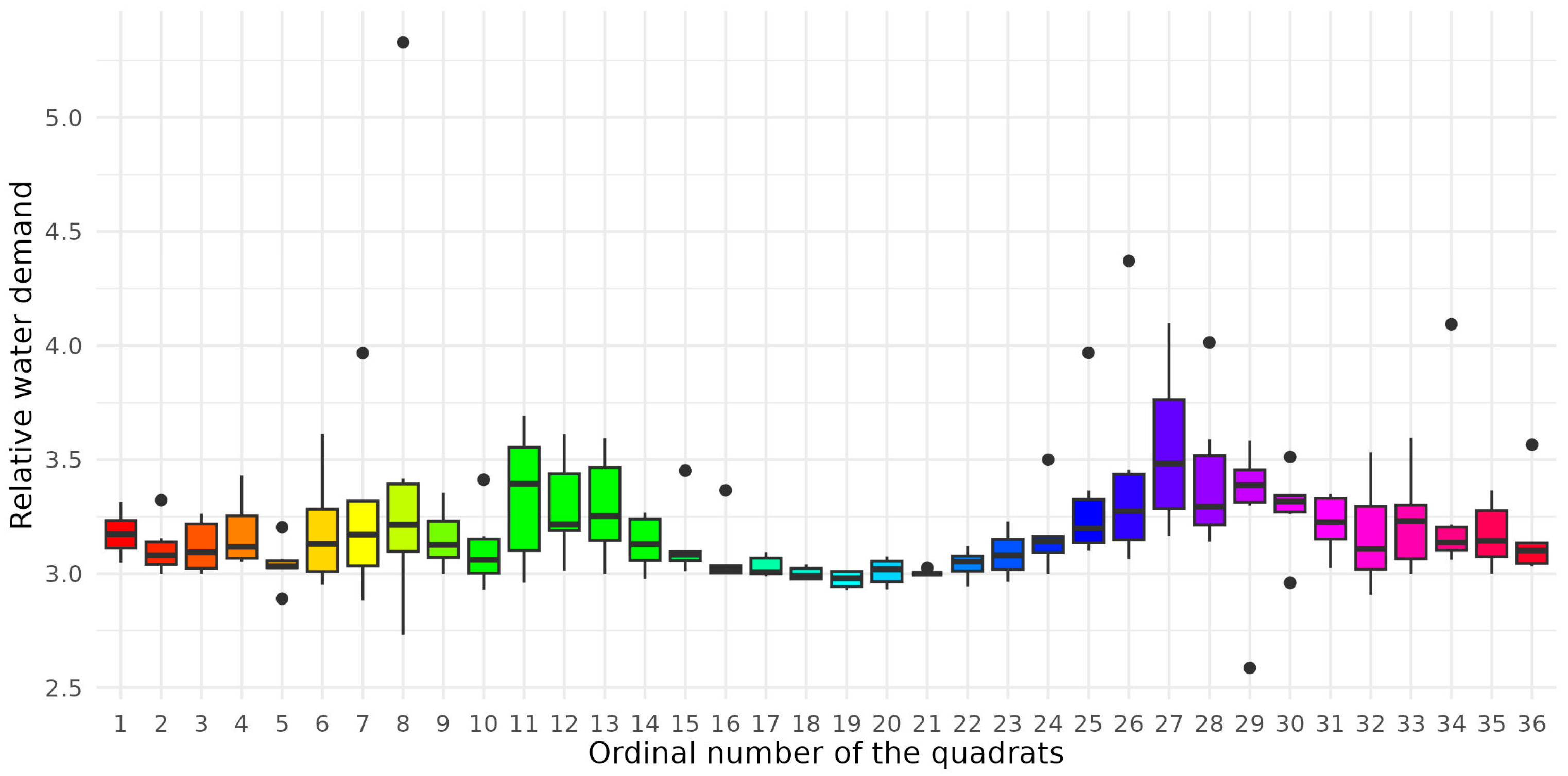
Based on the species’ relative water demand, there is less variation between the individual bands (Figure 6). An increase in values can also be observed in the belt ring of the FFR and on its inner side (mainly in quadrats 25 and 29). This is primarily due to the presence of Centaurea jacea subsp. angustifolia (DC.) Gremli, D. glomerata and Medicago lupulina L.
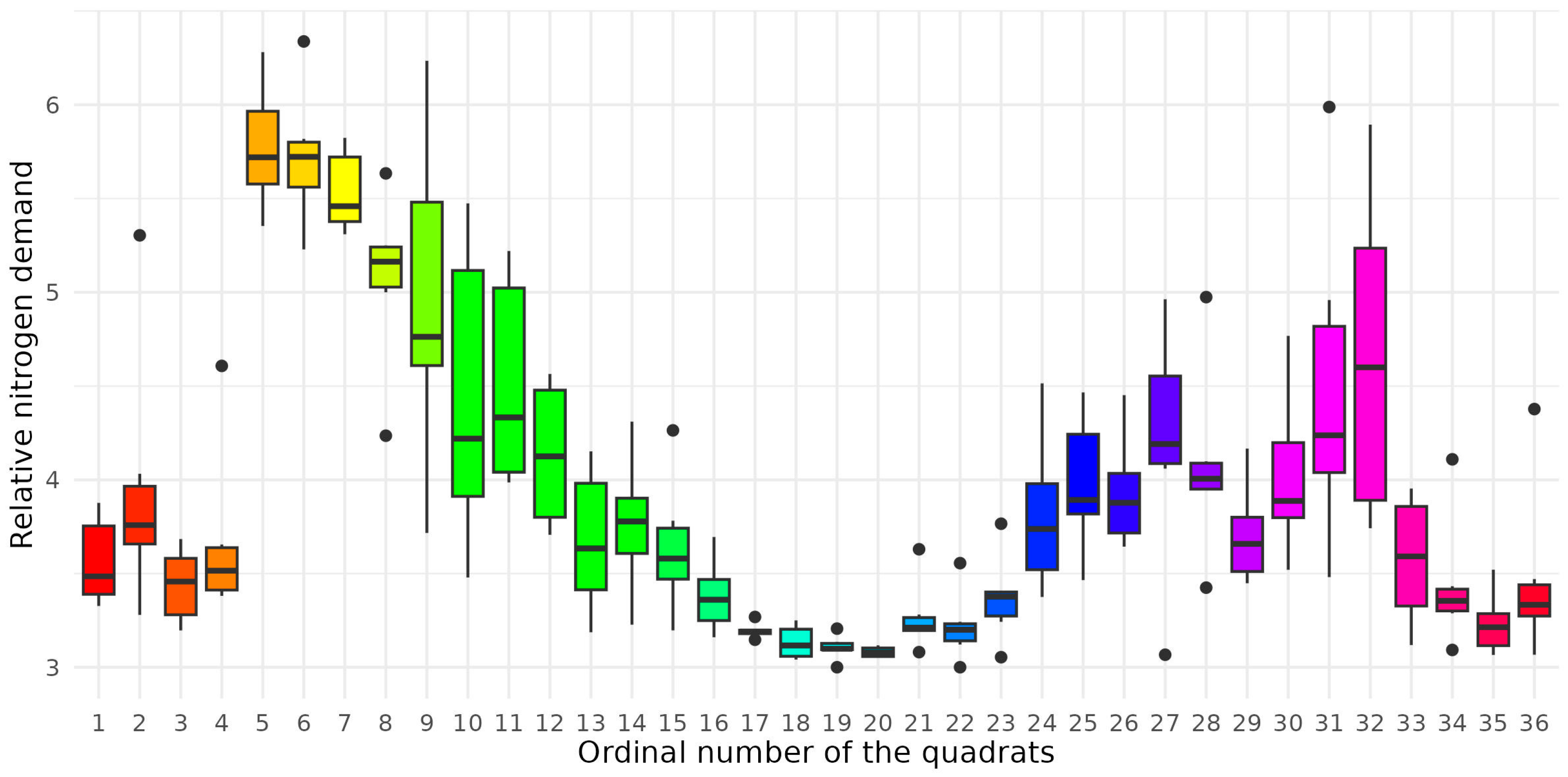
Based on the relative nitrogen demand of the species, a sudden spike in the values can be seen on the fungal front (squares 5 and 32), from 3.5 to 5.8, and from 3.6 to 4.7, respectively. As we move towards the centre of the circle, the value falls below the values outside the circle due to the dominance of P. angustifolia (Figure 7). The larger jump at the beginning of the transect is due to the homogeneous closed stand of E. repens, while on the other side of the transect, species valuable from a forage perspective, such as D. glomerata, Arrhenatherum elatius (L.) J. Presl & C. Presl, V. sativa subsp. and V. hirsuta raised the value.

3.4. Social Behaviour Types

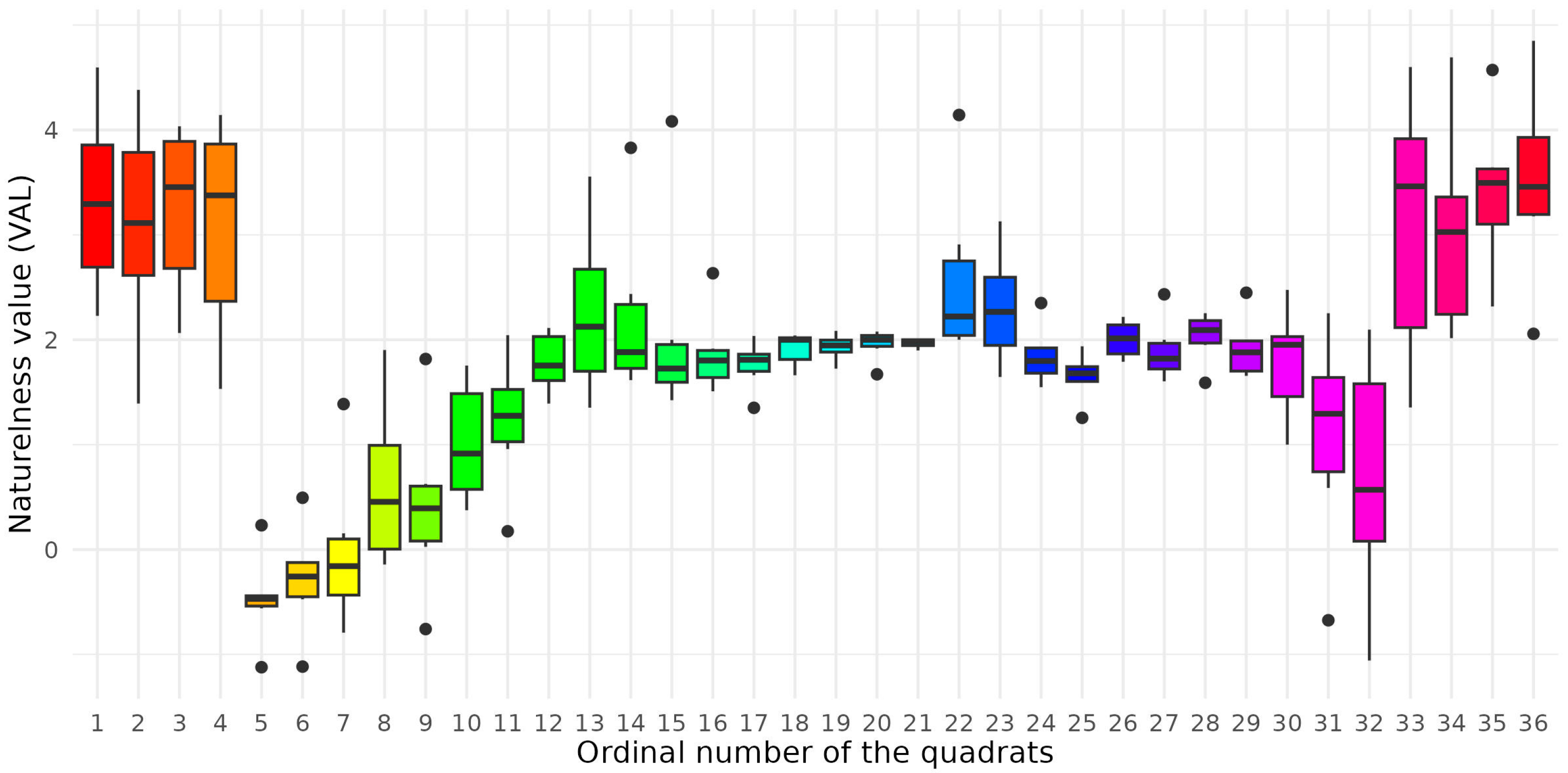
The boxplots depicting the naturalness value show a trend that is precisely the opposite of that for relative nitrogen demand (Figure 8). In the control area, the dominance of F. valesiaca subsp. parviflora as a natural competitor resulted in the most natural quadrats. Subsequently, a sudden and very strong degradation can be observed on the fungal front, which is due to the dominance of the ruderal competitor E. repens. The reason for this is that the fungus suddenly made a relatively large amount of nitrogen available to the plants. As the plants utilise this, the value increases continuously towards the centre of the circle, but at this point, it has not yet reached the values of the control area.

3.5. Diversity

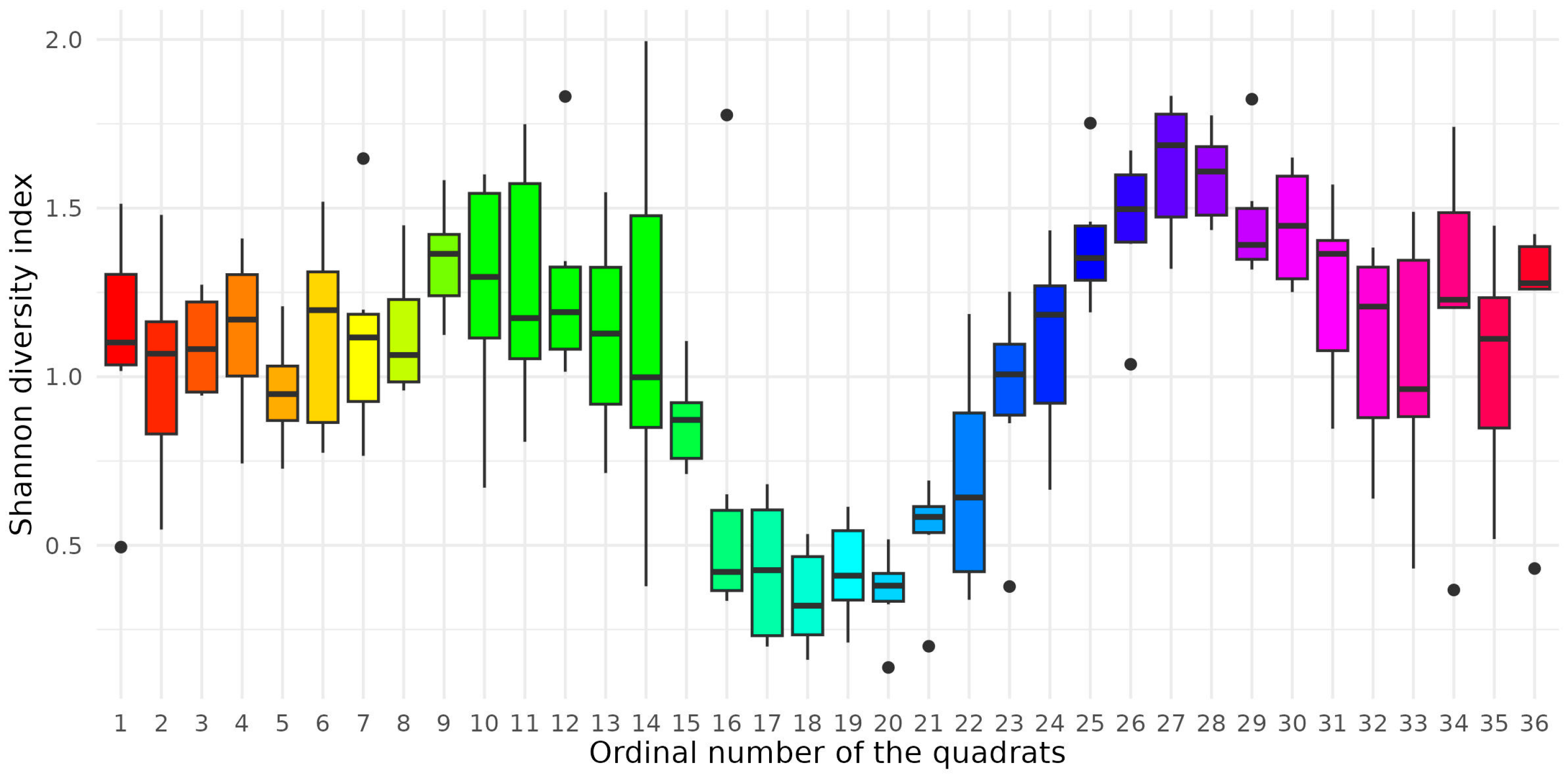
Figure 9 shows the change in Shannon’s diversity index in transects taken along the diagonals. The first and last four points show the control grassland quadrats. It can be seen that diversity decreases significantly on one side of the circle (quadrat 5) at the fungal front. Here, the dominant species is E. repens, whereas on the other side, only a slight decrease is observed (square 32). Here, the co-dominant species are P. angustifolia and, in places, D. glomerata. Then, moving towards the centre of the circle, diversity increases to 7 and 5.5 m, respectively (1.7 and 1.9), then drops sharply to a minimum of less than 0.4 in the centre, which is formed by a homogeneous patch of P. angustifolia.

4. Discussion

Despite their ecological importance and agricultural potential, little scientific research has been conducted on FFRs, even though several authors emphasise the indispensable role of interdisciplinary research in the complex exploration of the diverse ecological processes associated with them [15,17,39,63]. Despite their role as ecosystem engineers, fungi have only recently been included in nature conservation programmes, following the decline of fungal species in grassland habitats, which justified the launch of conservation measures [78].

4.1. Confirmation/Rejection of Hypotheses

H1. 
A. xanthodermus significantly alters the abundance of sandy grassland species. The results show an apparent change in the dominant species. F. valesiaca subsp. parviflora dominates the control area; meanwhile, E. repens takes over on the fungal front. Subsequently, inside the ring, P. angustifolia becomes dominant (Figure 4 and Figure 5). This replacement, in turn, affects the frequency of grassland species and changes dominance relationships.
H2. 
The results show clear belt zones (outer, front, interior) with different species composition, plant height, nitrogen demand (the amount of nitrogen required by plants to grow), and diversity (the variety of species present) (Figure 3, Figure 5, Figure 7 and Figure 9). The hypothesis is true.
H3. 
Due to its nutrient-releasing effect, species with higher nitrogen demand temporarily proliferate in the inner zone. This pattern is further illustrated by Figure 7, which clearly shows that the relative nitrogen demand of grassland species increases significantly at the fungal front (squares 5 and 32). At this location, the fast-growing E. repens, with a high nitrogen demand, becomes dominant, thereby supporting the hypothesis perfectly.
H4. 
Grassland plant diversity temporarily decreases and then increases in the inner strip. Figure 9 (Shannon diversity) shows this pattern: first, a sharp decrease at the fungal front; next, an increase as disturbance lessens (inside the ring, around squares 8–9); and finally, another decrease in the monodominant centre.

4.2. Agaricus xanthodermus as an Ecosystem Engineer

Our results clearly confirm that A. xanthodermus is an ecosystem engineer species, as it causes profound changes in the functioning, species composition and spatio-temporal diversity of grassland communities [79], and is also a special example of plant–soil interactions in grassland ecosystems [17,36,80]. The plant bands they form (dominance shifts, height and diversity gradients) are direct consequences of their ecosystem engineering, which results from their multidimensional activities. Their physical activity involves altering the soil structure (hydrophobicity, aggregation) and the flow of water and nutrients through the hyphal network [25,26]. Their chemical activity involves nitrogen mobilisation [40,57], the production of “fairy chemicals” [48,81,82], and changes in soil pH and redox status [80]. Their biological activity involves transforming the composition and diversity of the soil microbial community (bacteria and AM fungi) [59,83,84,85], thereby affecting the plant community. Thus, a direct outcome of their ecosystem engineering activity is increased landscape heterogeneity in the form of habitat mosaics. The different conditions prevailing in different bands (high N, low N, allelopathy, etc.) allow different plant communities to coexist, thereby increasing the overall landscape (γ) diversity. However, their characteristic spatial patterns not only reshape the landscape but also significantly impact niche redistribution and nutrient cycles [49,50]. This can reduce the likelihood of colonisation by small nitrogen-demanding species prone to invasion in the middle stage of succession, such as Bothriochloa ischaemum [86,87].
A. xanthodermus radically changes the frequency of sandy grassland species. Instead of F. valesiaca subsp. parviflora, E. repens became the dominant species in the belt. This process had a significant impact on many ecological parameters of the grassland. As the former species is short grass and the latter is tall grass, the change in dominance has significantly increased the average height of the grassland. The height of grassland species is a highly informative indicator of the vertical structure of grassland vegetation and a vital determinant of above-ground biomass [88,89]. It can also be a good indicator for monitoring changes in biodiversity [90]. The phytomass of grasslands plays an essential role in preserving diversity and maintaining the natural state of grasslands, not only from a management perspective but also for ecological and conservation reasons [91]. In Pannonian sandy grasslands located in dry, nutrient-poor habitats, the amount of above-ground phytomass has a positive effect on species in the event of slight disturbance [92]. In these habitats, therefore, increased production may contribute to species richness [93,94]. However, increased nutrient availability promotes succession and may lead to the decline of stress-tolerant specialised species due to the overgrowth of stronger competitors [95,96,97].

4.3. Implications for the Intermediate Disturbance Hypothesis (IDH) Theory

Species richness depends on numerous factors, such as geographical location [98,99], habitat extent [100,101], fragmentation (breaking up of habitats into smaller patches) [98,102,103], community type [104], habitat succession status (stage of ecological development) [100], and grassland production [93]. The highly competitive E. repens limited diversity in the belt, as its extensive tillering system (production of side shoots) enabled it to rapidly take up and utilise the nutrients that became suddenly available through the fungus. The tall, dense stand it formed, the light limitation it exerted on the soil surface, and the allelochemicals (chemicals released by plants that affect other organisms) it produced [105] prevented Shannon diversity (a measure of community diversity) from increasing. One of the main factors contributing to the increased growth of the inner vegetation may be the proliferation of AM (arbuscular mycorrhizal) fungi in the belt ring [32], which promotes the species richness of higher plants, soil microbiota (microorganisms), and mycobiota (fungal community) [17]. In other words, they can increase plant gamma diversity (overall diversity across habitats) in grassland ecosystems by creating new niches, even when the dominant species limits vegetation diversity within the strip. No such effect has been observed in type 3 circles to date.
Thus, diversity reached its maximum value in both directions around the 8th-9th quadrant, i.e., at half the radius of the ring (between 4 and 5 metres). The diversity pattern found—a sharp decline at the front, a maximum at half the radius of the ring, and then a repeated decline at the monodominant centre—an excellent spatial example of the diversity pattern that has developed is the IDH [106], for which the study must be repeated between rings and seasons.
The fungal front is a strong disruptive factor that reduces α-diversity, thereby allowing for a rearrangement of the competition hierarchy. As a result, only a few fast-reacting species, such as E. repens and P. angustifolia, can dominate. As the effect of disturbance decreases (towards the inside of the ring), diversity increases as competition becomes more equal and more niches become available. In the centre of the circle, the monodominance of P. angustifolia reduces diversity again. In addition, outside the circle, low production due to nutrient deficiency and the dominance of F. valesiaca subsp. parviflora; in the inner zone, the dominance of highly competitive species capable of high above-ground production, such as E. repens, limited diversity. This species quickly absorbed the nutrients made available by the fungus through its extensive tillering system. Thus, it quickly formed a tall, dense stand, which prevented increases in Shannon diversity due to the light limitation it imposed on the soil surface and the allelochemicals it produced [105].
The reason why diversity reaches its maximum at half the radius of the ring may be that at this distance, a significant portion of the nutrients made available by the fungus has already been utilised, which is supported by the relative nitrogen demand of the species (Figure 7). This result confirms the findings of Fraser et al. [93]. According to this, the highest diversity is expected in medium production, since in low production, site stress limits diversity, whereas in excessive production, dominant or codominant species limit diversity. Diversity showed a decreasing trend from half the ring radius towards the centre, due to the formation of a homogeneous P. angustifolia stand. The relative nitrogen demand of this species is similar to that of F. valesiaca subsp. parviflora.
By mobilising nutrients and modifying soil properties, they affect the entire grassland community, from soil bacteria [32,60,107,108] to grazing animals [61,62]. Their impact on biomass production is particularly noteworthy [56,57,58], in which the altered bacterial flora also plays a significant role [59,94], particularly through increased availability of biologically important nitrogen and other nutrients and microelements [5,58,109].

4.4. Implications for Farming and Nature Conservation

Fairy chemicals can enhance plant resistance to environmental stresses such as cold, heat, and salt, and increase crop yields; they may also have biological activities, such as anti-ageing and anti-tumour effects [47,81,110]. Their yield-enhancing effects [111] have already been demonstrated in the case of wheat [48,82,111], which is of outstanding economic importance.
The results of Friesová et al. [112] indicate relatively small changes in sand vegetation over a two-year study period. This is consistent with studies reporting the long-term stability of sand vegetation under appropriate disturbance regimes [113,114,115]. Thus, in these grasslands, FFRs play a crucial role in increasing landscape diversity by facilitating vegetation dynamics processes [32], especially in habitats under anthropogenic influence [17,59,84].

4.5. Limitations and Future Research

To understand their multifaceted ecological role as described above, the first step is to map FFRs and create databases, which require the use of remote sensing techniques [73]. This supports more detailed research and enables field studies. Evaluating data requires a holistic approach. The results obtained in this way are not only beneficial for ecology. Still, they can also be of great help in understanding the resistance of diverse grassland communities to climate change, in grassland restoration work, and in agricultural production.

5. Conclusions

This study demonstrates that FFR formed by Agaricus xanthodermus acts as an ecosystem engineer in Pannonian sandy grasslands. The phenomenon fundamentally alters the composition, structure, and functioning of plant communities. The rings create concentric zones with distinct shifts in dominant species and ecological indicators. The original grassland dominated by F. valesiaca subsp. parviflora, is replaced at the fungal front by fast-growing, high-nitrogen-demanding species (E. repens, D. glomerata), while towards the ring centre, P. angustifolia becomes monodominant. This species succession causes a significant increase in average sward height and aboveground biomass, primarily due to the release of plant-available nitrogen mobilised by the fungus.
The dynamics of diversity (Shannon index) follow a pattern consistent with the Intermediate Disturbance Hypothesis, showing how the fungal engineer creates a spatial disturbance gradient that drives succession and competitive release. At the landscape scale, the distinct plant communities in each ring belt significantly enhance beta-diversity, underscoring the role of FFRs as architects of ecological heterogeneity.
The FFRs act as natural, small-scale disturbance agents, enhancing landscape heterogeneity (beta-diversity) and fostering complex plant–soil–fungus interactions. Our findings emphasise that the bottom-up ecological effects of fungi must be integrated into grassland management and conservation strategies, particularly for maintaining the biodiversity of semi-natural grasslands and their resilience to climate change. Further research should combine remote sensing, molecular techniques, and long-term monitoring to understand this phenomenon fully.

Supplementary Materials

The following supporting information can be downloaded at: https://www.mdpi.com/article/10.3390/land15030453/s1.

Author Contributions

Conceptualisation, S.S., J.B. and K.P.; methodology, J.B., S.S., T.S.-S., V.P. and B.P.; software, A.G.T. and Z.K.; formal analysis, S.O. and Á.F.-N.; investigation, J.B., Á.F.-N.; Writing—original draft preparation, J.B., K.P., G.F., T.S.-S., E.S.-F. and S.S., writing—review and editing, N.H., L.M., S.O., E.S.-F., G.F. and S.S.; visualisation, A.G.T.; supervision, K.P. and S.S.; funding acquisition, Z.W. and K.P. All authors have read and agreed to the published version of the manuscript.

Funding

This study was supported by the strategic research fund of the University of Veterinary Medicine Budapest (Grant No. SRF-003) and was funded by OTKA K-147342.

Data Availability Statement

The data that support the findings of this study are available on request from the corresponding author.

Conflicts of Interest

The authors declare no conflicts of interest.

Abbreviations

The following abbreviations are used in this manuscript:
FFRFungal fairy ring
AMArbuscular mycorrhiza
IDHIntermediate Disturbance Hypothesis
NMDSNon-metric multidimensional scaling

References

  1. Dengler, J.; Janišová, M.; Török, P.; Wellstein, C. Biodiversity of Palaearctic Grasslands: A Synthesis. Agric. Ecosyst. Environ. 2014, 182, 1–14. [Google Scholar] [CrossRef]
  2. Valkó, O.; Zmihorski, M.; Biurrun, I.; Loos, J.; Labadessa, R.; Venn, S. Ecology and Conservation of Steppes and Semi-Natural Grasslands. Hacquetia 2016, 15, 5–14. [Google Scholar] [CrossRef]
  3. Feurdean, A.; Ruprecht, E.; Molnár, Z.; Hutchinson, S.M.; Hickler, T. Biodiversity-Rich European Grasslands: Ancient, Forgotten Ecosystems. Biol. Conserv. 2018, 228, 224–232. [Google Scholar] [CrossRef]
  4. Bardgett, R.D.; Bullock, J.M.; Lavorel, S.; Manning, P.; Schaffner, U.; Ostle, N.; Chomel, M.; Durigan, G.; Fry, E.L.; Johnson, D.; et al. Combatting Global Grassland Degradation. Nat. Rev. Earth Environ. 2021, 2, 720–735. [Google Scholar] [CrossRef]
  5. Elliott, T.; Thompson, A.; Klein, A.-M.; Albert, C.; Eisenhauer, N.; Jansen, F.; Schneider, A.; Sommer, M.; Straka, T.; Settele, J.; et al. Abandoning Grassland Management Negatively Influences Plant but Not Bird or Insect Biodiversity in Europe. Conserv. Sci. Pract. 2023, 5, e13008. [Google Scholar] [CrossRef]
  6. Pazúr, R.; Nováček, J.; Bürgi, M.; Kopecká, M.; Lieskovský, J.; Pazúrová, Z.; Feranec, J. Changes in Grassland Cover in Europe from 1990 to 2018: Trajectories and Spatial Patterns. Reg. Environ. Chang. 2024, 24, 51. [Google Scholar] [CrossRef]
  7. Schils, R.L.M.; Bufe, C.; Rhymer, C.M.; Francksen, R.M.; Klaus, V.H.; Abdalla, M.; Milazzo, F.; Lellei-Kovács, E.; Berge, H.T.; Bertora, C.; et al. Permanent Grasslands in Europe: Land Use Change and Intensification Decrease Their Multifunctionality. Agric. Ecosyst. Environ. 2022, 330, 107891. [Google Scholar] [CrossRef]
  8. Prangel, E.; Kasari-Toussaint, L.; Neuenkamp, L.; Noreika, N.; Karise, R.; Marja, R.; Ingerpuu, N.; Kupper, T.; Keerberg, L.; Oja, E.; et al. Afforestation and Abandonment of Semi-Natural Grasslands Lead to Biodiversity Loss and a Decline in Ecosystem Services and Functions. J. Appl. Ecol. 2023, 60, 825–836. [Google Scholar] [CrossRef]
  9. Jentsch, A.; Beyschlag, W. Vegetation Ecology of Dry Acidic Grasslands in the Lowland Area of Central Europe. Flora-Morphol. Distrib. Funct. Ecol. Plants 2003, 198, 3–25. [Google Scholar] [CrossRef]
  10. Berisha, N.; Geci, D. The Analysis of the Influence of Grazing Intensity on the Diversity and Abundance of Plants and Spiders (Arachnida: Araneae). Eur. J. Environ. Sci. 2023, 13, 31–38. [Google Scholar] [CrossRef]
  11. Harásek, M.; Klinkovská, K.; Chytrý, M. Vegetation Change in Acidic Dry Grasslands in Moravia (Czech Republic) over Three Decades: Slow Decrease in Habitat Quality after Grazing Cessation. Appl. Veg. Sci. 2023, 26, e12726. [Google Scholar] [CrossRef]
  12. Bahr, A.; Ellström, M.; Schnoor, T.K.; Påhlsson, L.; Olsson, P.A. Long-Term Changes in Vegetation and Soil Chemistry in a Calcareous and Sandy Semi-Natural Grassland. Flora-Morphol. Distrib. Funct. Ecol. Plants 2012, 207, 379–387. [Google Scholar] [CrossRef]
  13. Prangel, E.; Reitalu, T.; Neuenkamp, L.; Kasari-Toussaint, L.; Karise, R.; Tiitsaar, A.; Soon, V.; Kupper, T.; Meriste, M.; Ingerpuu, N.; et al. Restoration of Semi-Natural Grasslands Boosts Biodiversity and Re-Creates Hotspots for Ecosystem Services. Agric. Ecosyst. Environ. 2024, 374, 109139. [Google Scholar] [CrossRef]
  14. Bengtsson, J.; Bullock, J.M.; Egoh, B.; Everson, C.; Everson, T.; O’Connor, T.; O’Farrell, P.J.; Smith, H.G.; Lindborg, R. Grasslands—More Important for Ecosystem Services than You Might Think. Ecosphere 2019, 10, e02582. [Google Scholar] [CrossRef]
  15. Rodríguez-Ortega, T.; Oteros-Rozas, E.; Ripoll-Bosch, R.; Tichit, M.; Martín-López, B.; Bernués, A. Applying the Ecosystem Services Framework to Pasture-Based Livestock Farming Systems in Europe. Animal 2014, 8, 1361–1372. [Google Scholar] [CrossRef]
  16. Richter, F.J.; Suter, M.; Lüscher, A.; Buchmann, N.; El Benni, N.; Feola Conz, R.; Hartmann, M.; Jan, P.; Klaus, V.H. Effects of Management Practices on the Ecosystem-Service Multifunctionality of Temperate Grasslands. Nat. Commun. 2024, 15, 3829. [Google Scholar] [CrossRef] [PubMed]
  17. Bonanomi, G.; Mingo, A.; Incerti, G.; Mazzoleni, S.; Allegrezza, M. Fairy Rings Caused by a Killer Fungus Foster Plant Diversity in Species-Rich Grassland. J. Veg. Sci. 2012, 23, 236–248. [Google Scholar] [CrossRef]
  18. Getzin, S.; Yizhaq, H.; Tschinkel, W.R. Definition of “Fairy Circles” and How They Differ from Other Common Vegetation Gaps and Plant Rings. J. Veg. Sci. 2021, 32, e13092. [Google Scholar] [CrossRef]
  19. Heilmann-Clausen, J.; Christensen, M.; Frøslev, T.G.; Kjøller, R. Taxonomy of Tricholoma in Northern Europe Based on ITS Sequence Data and Morphological Characters. Persoonia 2017, 38, 38–57. [Google Scholar] [CrossRef] [PubMed]
  20. Brandrud, T.-E. Tricholoma matsutake in IUCN Red List of Threatened Species. 2020. Available online: https://www.iucnredlist.org/species/76267712/223017164 (accessed on 11 January 2026).
  21. Brandrud, T.E.; Bendiksen, E. Fungi of Sandy Pine Forests in Norway, and a Comparison of This Threatened Element Elsewhere in Europe(-Asia). Agarica 2014, 35, 67–87. [Google Scholar]
  22. Fintha, G.; Benedek, L.; Orbán, S. New macrofungial record in Hungary: Entonaema cinnabarinum (Cook & Massee) Lloyd. Acta Biol. Plant. Agriensis 2019, 7, 127–130. [Google Scholar] [CrossRef]
  23. Geml, J. Soil Fungal Communities Reflect Aspect-Driven Environmental Structuring and Vegetation Types in a Pannonian Forest Landscape. Fungal Ecol. 2019, 39, 63–79. [Google Scholar] [CrossRef]
  24. Geml, J.; Arnold, A.E.; Semenova-Nelsen, T.A.; Nouhra, E.R.; Drechsler-Santos, E.R.; Góes-Neto, A.; Morgado, L.N.; Ódor, P.; Hegyi, B.; Oriol, G.; et al. Community Dynamics of Soil-Borne Fungal Communities along Elevation Gradients in Neotropical and Palaeotropical Forests. Mol. Ecol. 2022, 31, 2044–2060. [Google Scholar] [CrossRef]
  25. Gramss, G.; Voigt, K.-D.; Bergmann, H. Factors Influencing Water Solubility and Plant Availability of Mineral Compounds in the Tripartite Fairy Rings of Marasmius oreades (BOLT.: FR.) FR. J. Basic Microbiol. 2005, 45, 41–54. [Google Scholar] [CrossRef]
  26. Fidanza, M.A. Characterization of Soil Properties Associated with Type-I Fairy Ring Symptoms in Turfgrass. Biologia 2007, 62, 533–536. [Google Scholar] [CrossRef]
  27. Semchenko, M.; Leff, J.W.; Lozano, Y.M.; Saar, S.; Davison, J.; Wilkinson, A.; Jackson, B.G.; Pritchard, W.J.; De Long, J.R.; Oakley, S.; et al. Fungal Diversity Regulates Plant-Soil Feedbacks in Temperate Grassland. Sci. Adv. 2018, 4, eaau4578. [Google Scholar] [CrossRef] [PubMed]
  28. Klironomos, J.N. Feedback with Soil Biota Contributes to Plant Rarity and Invasiveness in Communities. Nature 2002, 417, 67–70. [Google Scholar] [CrossRef] [PubMed]
  29. Teste, F.P.; Kardol, P.; Turner, B.L.; Wardle, D.A.; Zemunik, G.; Renton, M.; Laliberté, E. Plant-Soil Feedback and the Maintenance of Diversity in Mediterranean-Climate Shrublands. Science 2017, 355, 173–176. [Google Scholar] [CrossRef] [PubMed]
  30. Bonanomi, G.; De Filippis, F.; Cesarano, G.; La Storia, A.; Zotti, M.; Mazzoleni, S.; Incerti, G. Linking Bacterial and Eukaryotic Microbiota to Litter Chemistry: Combining next Generation Sequencing with 13C CPMAS NMR Spectroscopy. Soil Biol. Biochem. 2019, 129, 110–121. [Google Scholar] [CrossRef]
  31. Bartelt-Ryser, J.; Joshi, J.; Schmid, B.; Brandl, H.; Balser, T. Soil Feedbacks of Plant Diversity on Soil Microbial Communities and Subsequent Plant Growth. Perspect. Plant Ecol. Evol. Syst. 2005, 7, 27–49. [Google Scholar] [CrossRef]
  32. Zotti, M.; De Filippis, F.; Cesarano, G.; Ercolini, D.; Tesei, G.; Allegrezza, M.; Giannino, F.; Mazzoleni, S.; Bonanomi, G. One Ring to Rule Them All: An Ecosystem Engineer Fungus Fosters Plant and Microbial Diversity in a Mediterranean Grassland. New Phytol. 2020, 227, 884–898. [Google Scholar] [CrossRef]
  33. Leff, J.W.; Bardgett, R.D.; Wilkinson, A.; Jackson, B.G.; Pritchard, W.J.; De Long, J.R.; Oakley, S.; Mason, K.E.; Ostle, N.J.; Johnson, D.; et al. Predicting the Structure of Soil Communities from Plant Community Taxonomy, Phylogeny, and Traits. ISME J. 2018, 12, 1794–1805. [Google Scholar] [CrossRef] [PubMed]
  34. Shantz, H.L.; Piemeisel, R. Fungus Fairy Rings in Eastern Colorado and Their Effects on Vegetation. J. Agric. Res. 1917, 11, 192–245. [Google Scholar]
  35. Salvatori, N.; Moreno, M.; Zotti, M.; Iuorio, A.; Cartenì, F.; Bonanomi, G.; Mazzoleni, S.; Giannino, F. Process Based Modelling of Plants–Fungus Interactions Explains Fairy Ring Types and Dynamics. Sci. Rep. 2023, 13, 19918. [Google Scholar] [CrossRef]
  36. Edwards, P.J. The Growth of Fairy Rings of Agaricus arvensis and Their Effect Upon Grassland Vegetation and Soil. J. Ecol. 1984, 72, 505–513. [Google Scholar] [CrossRef]
  37. Edwards, P.J. Effects of the Fairy Ring Fungus Agaricus arvensis on Nutrient Availability in Grassland. New Phytol. 1988, 110, 377–381. [Google Scholar] [CrossRef]
  38. Molliard, M.M. De l’action Du Marasmius oreades Fr. Sur La Végétation. Bull. Société Bot. Fr. 1910, 57, 62–69. [Google Scholar] [CrossRef][Green Version]
  39. Zotti, M.; Bonanomi, G.; Mazzoleni, S. Fungal Fairy Rings: History, Ecology, Dynamics and Engineering Functions. IMA Fungus 2025, 16, e138320. [Google Scholar] [CrossRef] [PubMed]
  40. Fisher, R.F. Nitrogen and Phosphorus Mobilization by the Fairy Ring Fungus, Marasmius oreades (Bolt.) Fr. Soil Biol. Biochem. 1977, 9, 239–241. [Google Scholar] [CrossRef]
  41. Terashima, Y.; Fukiharu, T.; Fujiie, A. Morphology and Comparative Ecology of the Fairy Ring Fungi, Vascellum curtisii and Bovista dermoxantha, on Turf of Bentgrass, Bluegrass, and Zoysiagrass. Mycoscience 2004, 45, 251–260. [Google Scholar] [CrossRef]
  42. Fidanza, M.A.; Cisar, J.L.; Kostka, S.J.; Gregos, J.S.; Schlossberg, M.J.; Franklin, M. Preliminary Investigation of Soil Chemical and Physical Properties Associated with Type-I Fairy Ring Symptoms in Turfgrass. Hydrol. Process. 2007, 21, 2285–2290. [Google Scholar] [CrossRef]
  43. Caspar, J.; Spiteller, P. A Free Cyanohydrin as Arms and Armour of Marasmius oreades. ChemBioChem 2015, 16, 570–573. [Google Scholar] [CrossRef] [PubMed]
  44. Blenis, P.V.; Chow, P.S.; Duncan, I.; Knowles, N.R. Cyanide Levels near Fairy Rings Affect the Growth of Grasses and Fungi. Can. J. Bot. 2004, 82, 1324–1329. [Google Scholar] [CrossRef]
  45. Bonanomi, G.; Iacomino, G.; Di Costanzo, L.; Moreno, M.; Tesei, G.; Allegrezza, M.; Mazzoleni, S.; Idbella, M. Mechanisms and Impacts of Agaricus urinascens Fairy Rings on Plant Diversity and Microbial Communities in a Montane Mediterranean Grassland. FEMS Microbiol. Ecol. 2025, 101, fiaf034. [Google Scholar] [CrossRef]
  46. Choi, J.-H.; Kikuchi, A.; Pumkaeo, P.; Hirai, H.; Tokuyama, S.; Kawagishi, H. Bioconversion of AHX to AOH by Resting Cells of Burkholderia contaminans CH-1. Biosci. Biotechnol. Biochem. 2016, 80, 2045–2050. [Google Scholar] [CrossRef] [PubMed]
  47. Choi, J.-H.; Fushimi, K.; Abe, N.; Tanaka, H.; Maeda, S.; Morita, A.; Hara, M.; Motohashi, R.; Matsunaga, J.; Eguchi, Y.; et al. Disclosure of the “Fairy” of Fairy-Ring-Forming Fungus Lepista sordida. ChemBioChem 2010, 11, 1373–1377. [Google Scholar] [CrossRef]
  48. Takemura, H.; Choi, J.-H.; Matsuzaki, N.; Taniguchi, Y.; Wu, J.; Hirai, H.; Motohashi, R.; Asakawa, T.; Ikeuchi, K.; Inai, M.; et al. A Fairy Chemical, Imidazole-4-Carboxamide, Is Produced on a Novel Purine Metabolic Pathway in Rice. Sci. Rep. 2019, 9, 9899. [Google Scholar] [CrossRef]
  49. Bonanomi, G.; Incerti, G.; Allegrezza, M. Assessing the Impact of Land Abandonment, Nitrogen Enrichment and Fairy-Ring Fungi on Plant Diversity of Mediterranean Grasslands. Biodivers. Conserv. 2013, 22, 2285–2304. [Google Scholar] [CrossRef]
  50. Xu, X.; Ouyang, H.; Cao, G.; Richter, A.; Wanek, W.; Kuzyakov, Y. Dominant Plant Species Shift Their Nitrogen Uptake Patterns in Response to Nutrient Enrichment Caused by a Fungal Fairy in an Alpine Meadow. Plant Soil 2011, 341, 495–504. [Google Scholar] [CrossRef]
  51. Bartha, S.; Szentes, S.; Horváth, A.; Házi, J.; Zimmermann, Z.; Molnár, C.; Dancza, I.; Margóczi, K.; Pál, R.W.; Purger, D.; et al. Impact of Mid-Successional Dominant Species on the Diversity and Progress of Succession in Regenerating Temperate Grasslands. Appl. Veg. Sci. 2014, 17, 201–213. [Google Scholar] [CrossRef]
  52. Házi, J.; Bartha, S.; Szentes, S.; Wichmann, B.; Penksza, K. Seminatural Grassland Management by Mowing of Calamagrostis epigejos in Hungary. Plant Biosyst.-Int. J. Deal. All Asp. Plant Biol. 2011, 145, 699–707. [Google Scholar] [CrossRef]
  53. Török, P.; Valkó, O.; Deák, B.; Kelemen, A.; Tóthmérész, B. Traditional Cattle Grazing in a Mosaic Alkali Landscape: Effects on Grassland Biodiversity along a Moisture Gradient. PLoS ONE 2014, 9, e97095. [Google Scholar] [CrossRef]
  54. Házi, J.; Penksza, K.; Barczi, A.; Szentes, S.; Pápay, G. Effects of Long-Term Mowing on Biomass Composition in Pannonian Dry Grasslands. Agronomy 2022, 12, 1107. [Google Scholar] [CrossRef]
  55. Deák, B.; Valkó, O.; Kelemen, A.; Török, P.; Miglécz, T.; Ölvedi, T.; Lengyel, S.; Tóthmérész, B. Litter and Graminoid Biomass Accumulation Suppresses Weedy Forbs in Grassland Restoration. Plant Biosyst.-Int. J. Deal. All Asp. Plant Biol. 2011, 145, 730–737. [Google Scholar] [CrossRef]
  56. Liu, F.; Liu, P.; Zhang, Y.; Sun, L.; Zhang, P.; Cao, M.; Zhou, H.; Wang, W.; Xu, J. Comparative Metabolomics Reveals That Agaricus bisporus Fairy Ring Modulates the Growth of Alpine Meadow Plant on the Qinghai-Tibet Plateau. Ecol. Indic. 2021, 129, 107865. [Google Scholar] [CrossRef]
  57. Liu, M.; Wei, Y.; Lian, L.; Zhang, J.; Liu, N.; Wilson, G.W.T.; Rillig, M.C.; Jia, S.; Yang, G.; Zhang, Y. Discovering the Role of Fairy Ring Fungi in Accelerating Nitrogen Cycling to Promote Plant Productivity in Grasslands. Soil Biol. Biochem. 2024, 199, 109595. [Google Scholar] [CrossRef]
  58. Yang, C.; Li, J.; Liu, N.; Zhang, Y. Effects of Fairy Ring Fungi on Plants and Soil in the Alpine and Temperate Grasslands of China. Plant Soil 2019, 441, 499–510. [Google Scholar] [CrossRef]
  59. Wang, Q.; Wang, C.; Wei, Y.; Yao, W.; Lei, Y.; Sun, Y. Soil Microbes Drive the Flourishing Growth of Plants From Leucocalocybe mongolica Fairy Ring. Front. Microbiol. 2022, 13, 893370. [Google Scholar] [CrossRef] [PubMed]
  60. Li, J.; Guo, L.; Wilson, G.W.T.; Cobb, A.B.; Wang, K.; Liu, L.; Zhao, H.; Huang, D. Assessing Soil Microbes That Drive Fairy Ring Patterns in Temperate Semiarid Grasslands. BMC Ecol. Evol. 2022, 22, 130. [Google Scholar] [CrossRef]
  61. Albrecht, W.A.; Sheldon, V.L.; Blue, W.G. “Fairy Ring” Mushrooms Make Protein-Rich Grass. Bull. Torrey Bot. Club 1951, 78, 83–88. [Google Scholar] [CrossRef]
  62. Rogers, D.J.; McAllister, H.J. Preferential Grazing by Game on a Fungus “Fairy Ring”. J. Wildl. Manag. 1969, 33, 1034–1036. [Google Scholar] [CrossRef]
  63. Karst, N.; Dralle, D.; Thompson, S. Spiral and Rotor Patterns Produced by Fairy Ring Fungi. PLoS ONE 2016, 11, e0149254. [Google Scholar] [CrossRef]
  64. Berke, J. Application Possibilities of Orthophoto Data Based on Spectral Fractal Structure Containing Boundary Conditions. Remote Sens. 2025, 17, 1249. [Google Scholar] [CrossRef]
  65. Kozma-Bognár, K.; Berke, J.; Anda, A.; Kozma-Bognár, V. Vegetation Mapping Based on Visual Data. J. Cent. Eur. Agric. 2024, 25, 807–818. [Google Scholar] [CrossRef]
  66. Kozma-Bognár, K.; Anda, A.; Tóth, A.; Kozma-Bognár, V.; Berke, J.; Kozma-Bognár, K.; Anda, A.; Tóth, A.; Kozma-Bognár, V.; Berke, J. Analysis of Temporal Changes in the Floating Vegetation and Algae Surface of the Water Bodies of Kis-Balaton Based on Aerial Image Classification and Meteorological Data. Geomatics 2026, 6, 3. [Google Scholar] [CrossRef]
  67. Bűdi, K.; Bűdi, A.; Tarcsi, Á.; Milics, G.; Bűdi, K.; Bűdi, A.; Tarcsi, Á.; Milics, G. Variable Rate Seeding and Accuracy of Within-Field Hybrid Switching in Maize (Zea mays L.). Agronomy 2025, 15, 718. [Google Scholar] [CrossRef]
  68. Šupčík, A.; Milics, G.; Matečný, I.; Šupčík, A.; Milics, G.; Matečný, I. Predicting Grape Yield with Vine Canopy Morphology Analysis from 3D Point Clouds Generated by UAV Imagery. Drones 2024, 8, 216. [Google Scholar] [CrossRef]
  69. Milics, G.; Kovács, A.J.; Pörneczi, A.; Nyéki, A.; Varga, Z.; Nagy, V.; Lichner, L.; Németh, T.; Baranyai, G.; Neményi, M. Soil Moisture Distribution Mapping in Topsoil and Its Effect on Maize Yield. Biologia 2017, 72, 847–853. [Google Scholar] [CrossRef]
  70. Mezősi, G. Physical Geography of the Great Hungarian Plain. In The Physical Geography of Hungary; Mezősi, G., Ed.; Springer International Publishing: Cham, Switzerland, 2017; pp. 195–229. ISBN 978-3-319-45183-1. [Google Scholar]
  71. Szentes, S.; Turcsányi-Járdi, I.; Sipos, L.; Penksza, K.; Kende, Z.; Saláta-Falusi, E.; Szabó-Szöllösi, T.; Kevi, A.; Balogh, D.; Bajnok, M.; et al. Feed Values for Grassland Species and Method for Assessing the Quantitative and Qualitative Characteristics of Grasslands. Earth 2025, 6, 119. [Google Scholar] [CrossRef]
  72. Euro+Med-Plantbase. Available online: https://europlusmed.org/cdm_dataportal/search/results/taxon?ws=portal%2Ftaxon%2FfindDto&query=&form_build_id=form-CZ4u0Sl2CtUYyiN4rVu4wgEwnGFiEc4eEWNSAXcK3Ls&form_id=cdm_dataportal_search_taxon_form&search%5BdoTaxaByCommonNames%5D=&search%5BdoMisappliedNames%5D=1&search%5BdoSynonyms%5D=1&search%5BdoTaxa%5D=1&search%5BpageSize%5D=25&search%5BpageIndex%5D=0 (accessed on 25 February 2026).
  73. Borhidi, A. Social Behavior Types, the Naturalness and Relative Ecological Indicator Values of the Highre Plants in the Hungarian Flora. Acta Bot. Acad. Sci. Hung. 1995, 39, 97–181. [Google Scholar]
  74. The R Core Team. R: A Language and Environment for Statistical Computing, Version 4.5.2; R Foundation for Statistical Computing: Vienna, Austria, 2025; p. 3895.
  75. Dixon, P. VEGAN, a Package of R Functions for Community Ecology. J. Veg. Sci. 2003, 14, 927–930. [Google Scholar] [CrossRef]
  76. Wickham, H. Ggplot2. WIREs Comput. Stat. 2011, 3, 180–185. [Google Scholar] [CrossRef]
  77. Anderson, M.J. A New Method for Non-Parametric Multivariate Analysis of Variance. Austral Ecol. 2001, 26, 32–46. [Google Scholar] [CrossRef]
  78. Dahlberg, A.; Genney, D.R.; Heilmann-Clausen, J. Developing a Comprehensive Strategy for Fungal Conservation in Europe: Current Status and Future Needs. Fungal Ecol. 2010, 3, 50–64. [Google Scholar] [CrossRef]
  79. Jones, C.G.; Lawton, J.H.; Shachak, M. Positive and Negative Effects of Organisms as Physical Ecosystem Engineers. Ecology 1997, 78, 1946–1957. [Google Scholar] [CrossRef]
  80. Duan, M.; Lu, M.; Lu, J.; Yang, W.; Li, B.; Ma, L.; Wang, L.; Duan, M.; Lu, M.; Lu, J.; et al. Soil Chemical Properties, Metabolome, and Metabarcoding Give the New Insights into the Soil Transforming Process of Fairy Ring Fungi Leucocalocybe mongolica. J. Fungi 2022, 8, 680. [Google Scholar] [CrossRef]
  81. Liu, S.; Ye, C.; Guo, J.; Chen, D.; Liu, J.; Zhou, X.; Jia, B.; Zheng, Y.; Wu, J.; Kawagishi, H.; et al. From Fairy Rings to Fairy Chemicals: The Story from Nature Phenomenon to Commercial Application. Mod. Agric. 2024, 2, e24. [Google Scholar] [CrossRef]
  82. Asai, T.; Choi, J.-H.; Ikka, T.; Fushimi, K.; Abe, N.; Tanaka, H.; Yamakawa, Y.; Kobori, H.; Kiriiwa, Y.; Motohashi, R.; et al. Effect of 2-Azahypoxanthine (AHX) Produced by the Fairy-Ring-Forming Fungus on the Growth and the Grain Yield of Rice. Jpn. Agric. Res. Q. JARQ 2015, 49, 45–49. [Google Scholar] [CrossRef]
  83. Lumini, E.; Orgiazzi, A.; Borriello, R.; Bonfante, P.; Bianciotto, V. Disclosing Arbuscular Mycorrhizal Fungal Biodiversity in Soil through a Land-Use Gradient Using a Pyrosequencing Approach. Environ. Microbiol. 2010, 12, 2165–2179. [Google Scholar] [CrossRef]
  84. Du, J.; He, C.; Wang, F.; Ling, N.; Jiang, S. Habitat-Specific Changes of Plant and Soil Microbial Community Composition in Response to Fairy Ring Fungus Agaricus xanthodermus on the Qinghai-Tibet Plateau. Soil Ecol. Lett. 2024, 6, 230214. [Google Scholar] [CrossRef]
  85. Caesar-TonThat, T.C.; Espeland, E.; Caesar, A.J.; Sainju, U.M.; Lartey, R.T.; Gaskin, J.F. Effects of Agaricus lilaceps Fairy Rings on Soil Aggregation and Microbial Community Structure in Relation to Growth Stimulation of Western Wheatgrass (Pascopyrum Smithii) in Eastern Montana Rangeland. Microb. Ecol. 2013, 66, 120–131. [Google Scholar] [CrossRef]
  86. Szentes, S.; Sutyinszki, Z.; Szabó, G.; Zimmermann, Z.; Házi, J.; Wichmann, B.; Hufnágel, L.; Penksza, K.; Bartha, S. Grazed Pannonian Grassland Beta-Diversity Changes Due to C4 Yellow Bluestem. Cent. Eur. J. Biol. 2012, 7, 1055–1065. [Google Scholar] [CrossRef]
  87. Szentes, S.; Penksza, K.; Saláta-Falusi, E.; Sipos, L.; Kozma-Bognár, V.; Hoffmann, R.; Wagenhoffer, Z.; Szentes, S.; Penksza, K.; Saláta-Falusi, E.; et al. Effects of Bothriochloa ischaemum on the Diversity of Pannonian Sandy Grasslands. Land 2025, 14, 1107. [Google Scholar] [CrossRef]
  88. Wei, W.; Yao, X.; Zhang, Y.; Zhen, Q.; Qin, M.; Tang, Z.; Oosthuizen, M.K.; Zhang, W. Vegetation Restoration Measures: Increasing Plant Height Suppresses Population Densities of Plateau Pikas. Land Degrad. Dev. 2023, 34, 2201–2213. [Google Scholar] [CrossRef]
  89. Wang, Y.; Shen, X.; Jiang, M.; Tong, S.; Lu, X. Spatiotemporal Change of Aboveground Biomass and Its Response to Climate Change in Marshes of the Tibetan Plateau. Int. J. Appl. Earth Obs. Geoinf. 2021, 102, 102385. [Google Scholar] [CrossRef]
  90. Xu, C.; Zhao, D.; Zheng, Z.; Zhao, P.; Chen, J.; Li, X.; Zhao, X.; Zhao, Y.; Liu, W.; Wu, B.; et al. Correction of UAV LiDAR-Derived Grassland Canopy Height Based on Scan Angle. Front. Plant Sci. 2023, 14, 1108109. [Google Scholar] [CrossRef] [PubMed]
  91. Mittelbach, G.G.; Steiner, C.F.; Scheiner, S.M.; Gross, K.L.; Reynolds, H.L.; Waide, R.B.; Willig, M.R.; Dodson, S.I.; Gough, L. What Is the Observed Relationship Between Species Richness and Productivity? Ecology 2001, 82, 2381–2396. [Google Scholar] [CrossRef]
  92. Török, P.; Penksza, K.; Tóth, E.; Kelemen, A.; Sonkoly, J.; Tóthmérész, B. Vegetation Type and Grazing Intensity Jointly Shape Grazing Effects on Grassland Biodiversity. Ecol. Evol. 2018, 8, 10326–10335. [Google Scholar] [CrossRef]
  93. Fraser, L.H.; Pither, J.; Jentsch, A.; Sternberg, M.; Zobel, M.; Askarizadeh, D.; Bartha, S.; Beierkuhnlein, C.; Bennett, J.A.; Bittel, A.; et al. Worldwide Evidence of a Unimodal Relationship between Productivity and Plant Species Richness. Science 2015, 349, 302–305. [Google Scholar] [CrossRef]
  94. Zheng, L.; Barry, K.E.; Guerrero-Ramírez, N.R.; Craven, D.; Reich, P.B.; Verheyen, K.; Scherer-Lorenzen, M.; Eisenhauer, N.; Barsoum, N.; Bauhus, J.; et al. Effects of Plant Diversity on Productivity Strengthen over Time Due to Trait-Dependent Shifts in Species Overyielding. Nat. Commun. 2024, 15, 2078. [Google Scholar] [CrossRef] [PubMed]
  95. Storm, C.; Suss, K. Are Low-Productive Plant Communities Responsive to Nutrient Addition? Evidence from Sand Pioneer Grassland. J. Veg. Sci. 2008, 19, 343–354. [Google Scholar] [CrossRef]
  96. Mårtensson, L.-M.; Olsson, P.A. Soil Chemistry of Local Vegetation Gradients in Sandy Calcareous Grasslands. Plant Ecol. 2010, 206, 127–138. [Google Scholar] [CrossRef]
  97. Faust, C.; Storm, C.; Schwabe, A. Shifts in Plant Community Structure of a Threatened Sandy Grassland over a 9-Yr Period under Experimentally Induced Nutrient Regimes: Is There a Lag Phase? J. Veg. Sci. 2012, 23, 372–386. [Google Scholar] [CrossRef]
  98. Baur, B.; Rusterholz, H.-P.; Braschler, B.; Baur, B.; Rusterholz, H.-P.; Braschler, B. The Grassland Fragmentation Experiment in the Swiss Jura Mountains: A Synthesis. Diversity 2023, 15, 130. [Google Scholar] [CrossRef]
  99. Dolt, C.; Goverde, M.; Baur, B. Effects of Experimental Small-Scale Habitat Fragmentation on above- and below-Ground Plant Biomass in Calcareous Grasslands. Acta Oecologica 2005, 27, 49–56. [Google Scholar] [CrossRef]
  100. Csecserits, A.; Czúcz, B.; Halassy, M.; Kröel-Dulay, G.; Rédei, T.; Szabó, R.; Szitár, K.; TöröK, K. Regeneration of Sandy Old-Fields in the Forest Steppe Region of Hungary. Plant Biosyst.-Int. J. Deal. All Asp. Plant Biol. 2011, 145, 715–729. [Google Scholar] [CrossRef]
  101. Öster, M.; Cousins, S.A.O.; Eriksson, O. Size and Heterogeneity Rather than Landscape Context Determine Plant Species Richness in Semi-Natural Grasslands. J. Veg. Sci. 2007, 18, 859–868. [Google Scholar] [CrossRef]
  102. Yan, Y.; Jarvie, S.; Liu, Q.; Zhang, Q. Effects of Fragmentation on Grassland Plant Diversity Depend on the Habitat Specialization of Species. Biol. Conserv. 2022, 275, 109773. [Google Scholar] [CrossRef]
  103. Yan, Y.; Jarvie, S.; Zhang, Q. Habitat Fragmentation Weakens the Positive Relationship between Grassland Plant Richness and Above-Ground Biomass. eLife 2023, 12, RP91193. [Google Scholar] [CrossRef]
  104. Catorci, A.; Piermarteri, K.; Penksza, K.; Házi, J.; Tardella, F.M. Filtering Effect of Temporal Niche Fluctuation and Amplitude of Environmental Variations on the Trait-Related Flowering Patterns: Lesson from Sub-Mediterranean Grasslands. Sci. Rep. 2017, 7, 12034. [Google Scholar] [CrossRef]
  105. Ringselle, B.; Cauwer, B.D.; Salonen, J.; Soukup, J.; Ringselle, B.; Cauwer, B.D.; Salonen, J.; Soukup, J. A Review of Non-Chemical Management of Couch Grass (Elymus repens). Agronomy 2020, 10, 1178. [Google Scholar] [CrossRef]
  106. Connell, J.H. Diversity in Tropical Rain Forests and Coral Reefs. Science 1978, 199, 1302–1310. [Google Scholar] [CrossRef]
  107. Marí, T.; Castaño, C.; Rodríguez, A.; Ibáñez, M.; Lobo, A.; Sebastià, M.-T. Fairy Rings Harbor Distinct Soil Fungal Communities and High Fungal Diversity in a Montane Grassland. Fungal Ecol. 2020, 47, 100962. [Google Scholar] [CrossRef]
  108. Zotti, M.; Bonanomi, G.; Mancinelli, G.; Barquero, M.; De Filippis, F.; Giannino, F.; Mazzoleni, S.; González-Andrés, F. Riding the Wave: Response of Bacterial and Fungal Microbiota Associated with the Spread of the Fairy Ring Fungus Calocybe gambosa. Appl. Soil Ecol. 2021, 163, 103963. [Google Scholar] [CrossRef]
  109. Xu, W.; Deng, X.; Xu, B.; Palta, J.A.; Chen, Y. Soil Water Availability Changes in Amount and Timing Favor the Growth and Competitiveness of Grass Than a Co-Dominant Legume in Their Mixtures. Front. Plant Sci. 2021, 12, 723839. [Google Scholar] [CrossRef] [PubMed]
  110. Choi, J.-H.; Ohnishi, T.; Yamakawa, Y.; Takeda, S.; Sekiguchi, S.; Maruyama, W.; Yamashita, K.; Suzuki, T.; Morita, A.; Ikka, T.; et al. The Source of “Fairy Rings”: 2-Azahypoxanthine and Its Metabolite Found in a Novel Purine Metabolic Pathway in Plants. Angew. Chem. Int. Ed. 2014, 53, 1552–1555. [Google Scholar] [CrossRef] [PubMed]
  111. Kawagishi, H. Fairy Chemicals—A Candidate for a New Family of Plant Hormones and Possibility of Practical Use in Agriculture. Biosci. Biotechnol. Biochem. 2018, 82, 752–758. [Google Scholar] [CrossRef]
  112. Friesová, K.; Axmanová, I.; Borovyk, D.; Ćuk, M.; Kopčan, B.; Valachovič, M.; Clark, A.T.; Chytrý, M. Vegetation Remains, Specialist Species Fade: Changes in Pannonian Sand Grasslands. Preslia 2026, 97, 613–635. [Google Scholar] [CrossRef]
  113. Daniels, F.J.A.; Minarski, A.; Lepping, O. Dominance Pattern Changes of a Lichen-Rich Corynephorus Grassland in the Inland of the Netherlands. Ann. Di Bot. 2008, 8, 9–19. [Google Scholar]
  114. Csecserits, A.; Rédei, T. Secondary Succession on Sandy Old-Fields in Hungary. Appl. Veg. Sci. 2001, 4, 63–74. [Google Scholar] [CrossRef]
  115. Faust, C.; Süss, K.; Storm, C.; Schwabe, A. Threatened Inland Sand Vegetation in the Temperate Zone under Different Types of Abiotic and Biotic Disturbances during a Ten-Year Period. Flora-Morphol. Distrib. Funct. Ecol. Plants 2011, 206, 611–621. [Google Scholar] [CrossRef]
Figure 1. Location of the sand steppe sample area near Fót in Hungary.
Land 15 00453 g001
Figure 2. Arrangement of fungal front, transects and quadrat numbers across the FFR.
Land 15 00453 g002
Figure 3. Non-metric multidimensional scaling (NMDS) ordination of fungal community composition based on Bray–Curtis dissimilarities. Each point represents one Diameter × Zone combination. Points are colored according to the dominant species (highest total abundance within each Diameter × Zone) and shaped by biologically defined zone (Outside circular line, Circular line (Fungal Front), Inner ring).
Land 15 00453 g003
Figure 4. Species abundance profiles in different spatial positions. Lines represent changes in the total abundance of plant species with a minimum cumulative abundance of >10 across the study area, plotted against the ordinal number of quadrats.
Land 15 00453 g004
Figure 5. The average height of the grassland along transects. The colouring corresponds to Figure 2, dots are representing outliers.
Land 15 00453 g005
Figure 6. The relative water demand of species along transects. The colouring corresponds to Figure 2, dots are representing outliers.
Land 15 00453 g006
Figure 7. The relative nitrogen demand of species along transects. The colouring corresponds to Figure 2, dots are representing outliers.
Land 15 00453 g007
Figure 8. The naturalness value (VAL) of the grassland species along transects. The colouring corresponds to Figure 2, dots are representing outliers.
Land 15 00453 g008
Figure 9. The Shannon diversity of the quadrats along transects. The colouring corresponds to Figure 2, dots are representing outliers.
Land 15 00453 g009
Disclaimer/Publisher’s Note: The statements, opinions and data contained in all publications are solely those of the individual author(s) and contributor(s) and not of MDPI and/or the editor(s). MDPI and/or the editor(s) disclaim responsibility for any injury to people or property resulting from any ideas, methods, instructions or products referred to in the content.