Next Article in Journal
Research on Planning and Design of Rural Carbon-Negative Courtyards Based on Carbon Emission Accounting and Assessment
Previous Article in Journal
Land-Use Regulation and Regional Economic Performance: Evidence from County-Level Data in China
 
 
Due to scheduled maintenance work on our servers, there may be short service disruptions on this website between 11:00 and 12:00 CEST on March 28th.
Article

Simulation of Nitrogen Migration and Output Loads Under Field Scale in Small Watershed, China
1
School of Resources and Environmental Engineering, Anhui University, Hefei 230601, China
2
School of Geographic Information and Tourism, Chuzhou University, Chuzhou 239000, China
3
Anhui Province Key Laboratory of Physical Geographic Environment, Chuzhou 239000, China
*
Author to whom correspondence should be addressed.
Land 2026, 15(3), 442; https://doi.org/10.3390/land15030442
Submission received: 15 February 2026 / Revised: 3 March 2026 / Accepted: 4 March 2026 / Published: 10 March 2026

Abstract

Field-scale nitrogen migration mechanisms in small watersheds remain poorly quantified due to insufficient representation of microtopographic heterogeneity. This study investigates nitrogen transport dynamics in a 1.27 km2 agricultural watershed in China’s Jianghuai region using unmanned aerial vehicle (UAV) -derived 0.1 m digital elevation models (DEMs) and coupled hydrological–erosion modeling. The Soil Conservation Service Curve Number (SCS-CN) and Modified Universal Soil Loss Equation (MUSLE) models quantified nitrogen output loads, while the multi-flow direction algorithm simulated migration trajectories for total nitrogen (TN), ammonium, and nitrate. Results revealed strong spatial heterogeneity in nitrogen exports (watershed mean: 29.66 kg TN/km2·a), with bare land and greenhouses exhibiting the highest outputs (448.54 and 363.41 kg/km2·a) and forested areas showing minimal export (<6.1 kg/km2·a). Nitrogen migration was predominantly controlled by topographic gradients, with microtopographic features—field ridges, ditches, and buildings—physically redirecting flows and creating critical export nodes at field boundaries. DEM resolution critically affected simulation accuracy: erosion intensity displayed a non-monotonic response with an inflection point near 1 m resolution, corresponding to the median elevation difference (1.2 m) of field ridges. Structural equation modeling confirmed that high-resolution DEMs (0.1–2 m) maintained topographic control over nitrogen migration (~80% contribution), whereas 30 m DEMs reduced this influence to 30%, inducing spurious meteorological dominance. This study demonstrates that decimeter-scale DEMs are essential for accurately capturing microtopographic regulation of nitrogen transport, providing a methodological basis for precision management of agricultural non-point source pollution.

1. Introduction

Small watersheds are the fundamental unit for watershed water resource management and play an irreplaceable role in controlling soil erosion, managing pollution sources, and improving water environments [1,2]. Under the profound influence of agricultural intensification and land-use changes, small watersheds have become key areas for controlling agricultural non-point source pollution [1,2]. According to the results of the second national pollution source census, nitrogen emissions from agricultural sources account for 46.5% of the total emissions in China [3]. The migration and transformation processes of nitrogen have a decisive impact on the eutrophication of receiving water bodies [1,4]. Thus, there is an urgent need to conduct detailed studies at the field scale [5].
Although substantial progress has been made in watershed-scale nitrogen migration research, process-based models such as SWAT and the HSPF still have limitations in accurately representing field-scale nitrogen migration processes and quantifying associated output loads [6,7]. Field-scale nitrogen migration exhibits strong spatial heterogeneity and is highly influenced by microtopographic features, such as field ridges and ditches, as well as complex land-use patterns [8]. Therefore, modeling approaches that can adapt to fine-scale and complex terrain are needed. Owing to its low parameter requirements and computational simplicity, the Soil Conservation Service Curve Number (SCS-CN) model has become an effective tool for rainfall–runoff simulation, particularly in agricultural areas with complex land-use types [9,10]. By incorporating runoff factors, the Modified Universal Soil Loss Equation (MUSLE) improves upon the Universal Soil Loss Equation (USLE), enabling more accurate estimation of soil erosion and pollutant transport [11,12].
High-precision Digital Elevation Models (DEMs) are critical for simulating nitrogen migration at the field scale, as their resolution directly affects the accuracy of microtopography feature identification and hydrological process simulations [13]. The Multi-Flow Direction (MFD) algorithm, which overcomes the limitations of traditional single-flow direction algorithms, demonstrates significant advantages in complex topographies, especially when combined with high-precision DEMs, thereby improving the accuracy of hydrological process simulations [14,15,16].
Field-scale nitrogen migration is influenced by various factors, including soil type, crop configuration, microtopography, and management practices [17,18]. Research has shown that different agricultural planting patterns significantly alter nitrogen export pathways and efficiency [19], while vegetation coverage and precipitation characteristics further regulate nitrogen migration intensity in small watersheds [20]. However, existing research primarily focuses on larger scales, and there is still insufficient quantitative analysis of nitrogen migration mechanisms at the field scale [21,22]. Therefore, further exploration of these mechanisms is necessary [21,22].
The Jianghuai watershed region is an important agricultural production base in China, facing dual ecological pressures from the Yangtze and Huaihe River basins. Non-point source pollution is a significant issue in this region, which features complex topography and diverse land-use types, making it an ideal location to study nitrogen migration mechanisms at the field scale. This study focuses on a typical agricultural small watershed in the Jianghuai watershed. Unmanned aerial vehicle (UAV) photogrammetry was used to construct a centimeter-level spatial database, the SCS-CN and MUSLE models were coupled to quantify nitrogen output loads, and the MFD algorithm was applied to simulate nitrogen migration trajectories. By analyzing the synergistic effects of topography and land use on nitrogen migration, this study provides a basis for the fine-scale control of non-point source pollution in small watersheds.

2. Materials and Methods

2.1. Study Area Overview

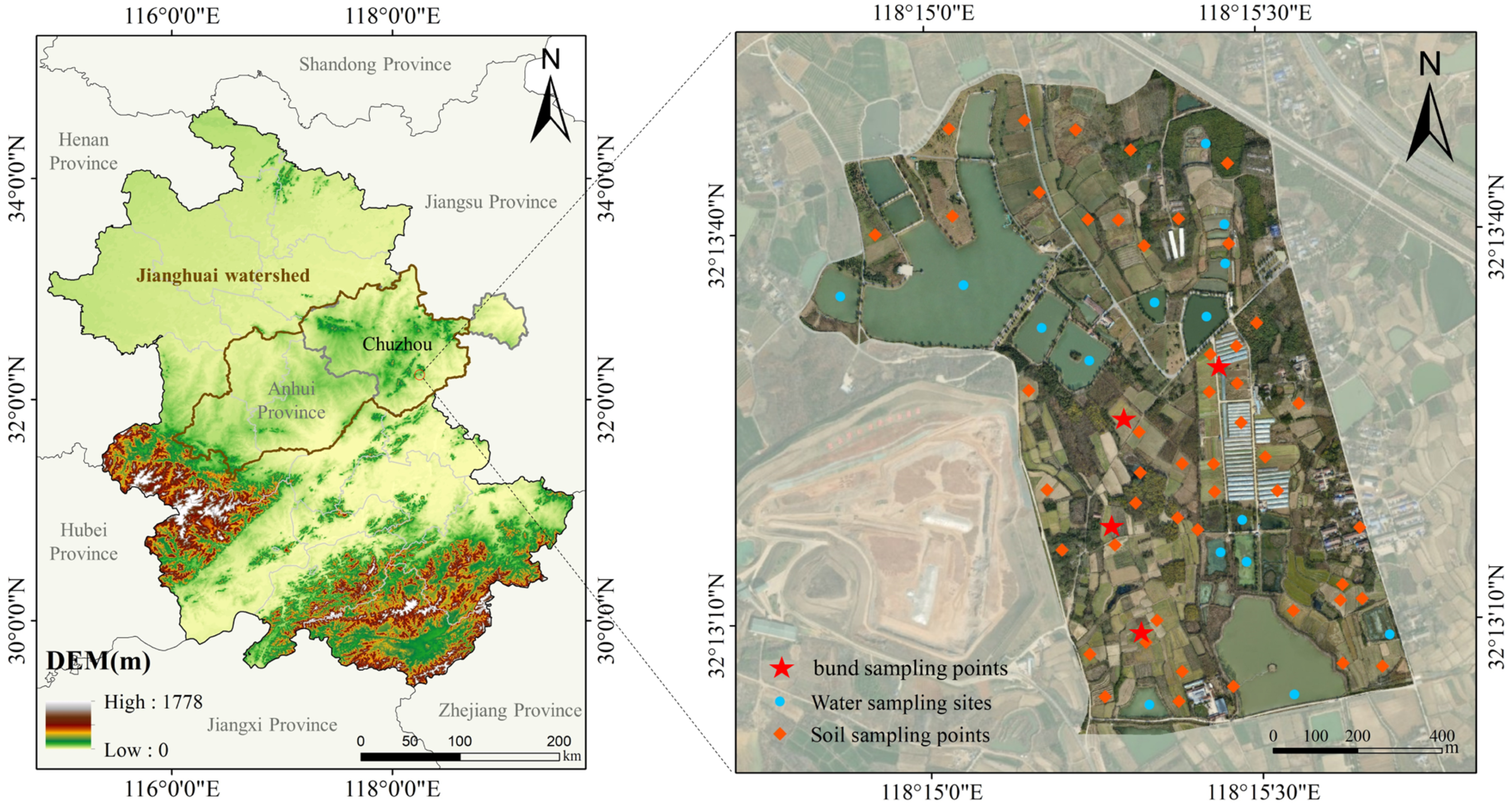
The Jianghuai Watershed region (31°25′–32°40′ N, 116°50′–118°10′ E) is located at the boundary between the Yangtze River and Huaihe River basins, holding significant geographical and ecological importance. The region features a notable topography, with typical microtopographic features (such as field embankments and ditches), making it an ideal area to evaluate the role of high-resolution DEMs in simulating nitrogen migration at the field scale. This study focuses on a typical small watershed in an agricultural irrigation area within the Jianghuai Watershed (Figure 1), with a watershed area of approximately 1.27 km2, characterized by diverse land-use types and complex nitrogen sources. The small watershed exhibits typical characteristics of agricultural non-point source pollution in the Jianghuai Watershed, including greenhouse planting, traditional farmland, and forest land, providing a good sample for studying nitrogen migration patterns under different land-use types. In recent years, due to agricultural intensification and other human activities, land-use types and agricultural structures in this region have undergone significant changes, leading to an intensification of non-point source pollution. Despite the implementation of various pollution control measures, the non-point source pollution situation remains severe and requires urgent management.

2.2. Technical Approach

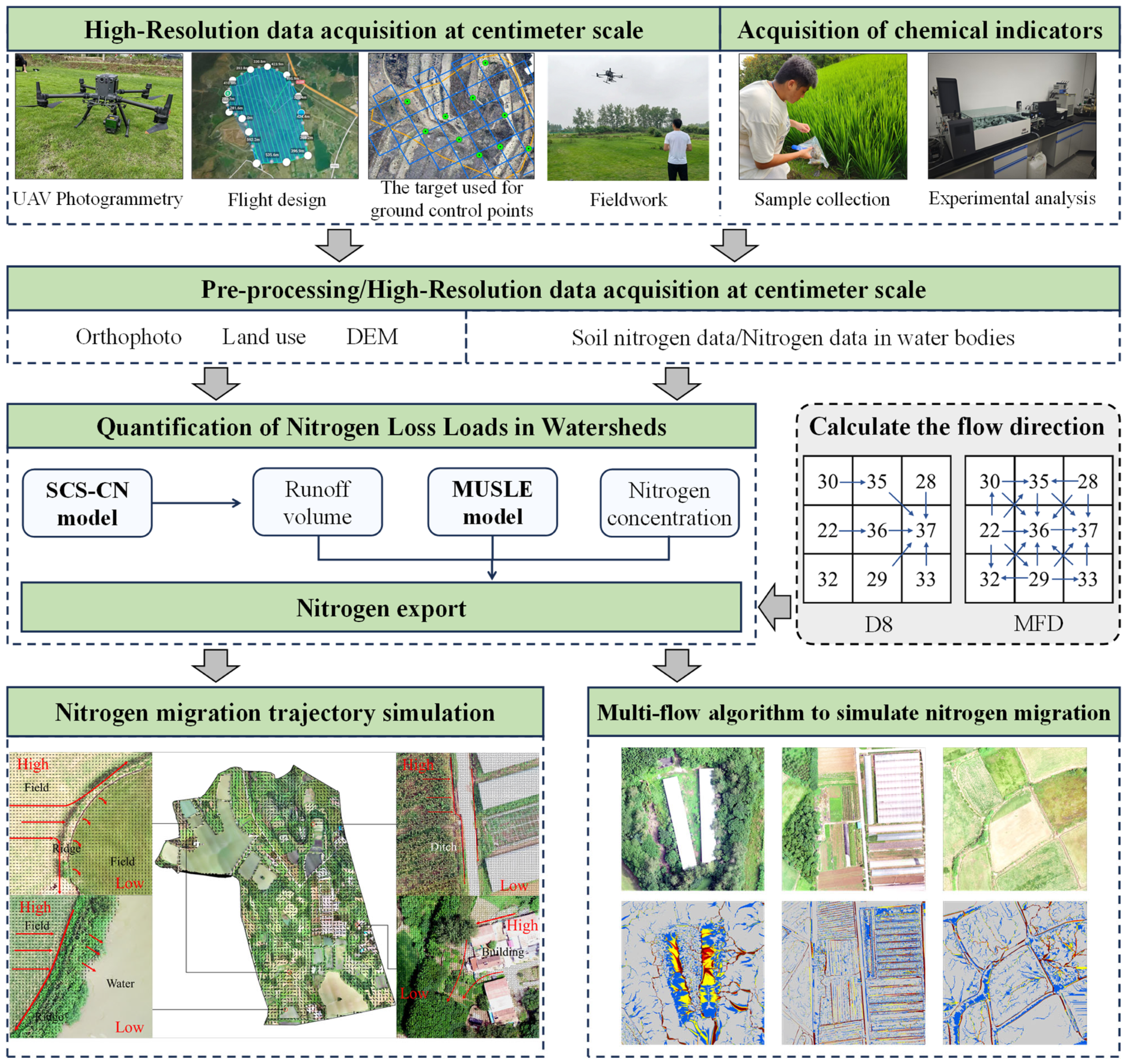
This study selected this region to reveal the spatial distribution patterns of nitrogen migration at the field scale through the use of high-precision DEMs and multi-model coupling methods, aiming to provide technical support for fine-scale pollution control in similar agricultural small watersheds. The technical approach is outlined in Figure 2.
The study is divided into four main components: First, UAV photogrammetry, field sampling, and experimental analysis are employed to obtain centimeter-level high-resolution data and chemical indicator data; the data is preprocessed to generate orthophotos, land-use data, DEMs, and nitrogen data for soil and water bodies; an SCS-CN model is coupled with the MUSLE model to quantify nitrogen output loads based on nitrogen concentration; nitrogen migration trajectories are simulated to reveal the paths of nitrogen migration in the watershed; and the multi-flow algorithm is used to simulate the migration process of different nitrogen forms (TN, NH4+-N, NO3-N). The primary data sources for this study are listed in Table S1.

2.3. Research Methods

2.3.1. Construction of a Centimeter-Level Database

  • Acquisition of High-Precision DEM:
In this study, data collection was conducted using the DJI Phantom RTK drone (SZ DJI Technology Co., Ltd., Shenzhen, China). The photogrammetry method employed is based on existing literature, including flight plan design, drone photogrammetry experiment design (with a flight height of 50 m, flight speed of 5 m/s, longitudinal overlap set at 80%, and lateral overlap at 70%), and control measurement procedures. The images collected were processed using DJI Terra v2.4.1 software to generate orthophotos and DEMs, with a spatial resolution of 0.1 m.
2.
Land Use Interpretation
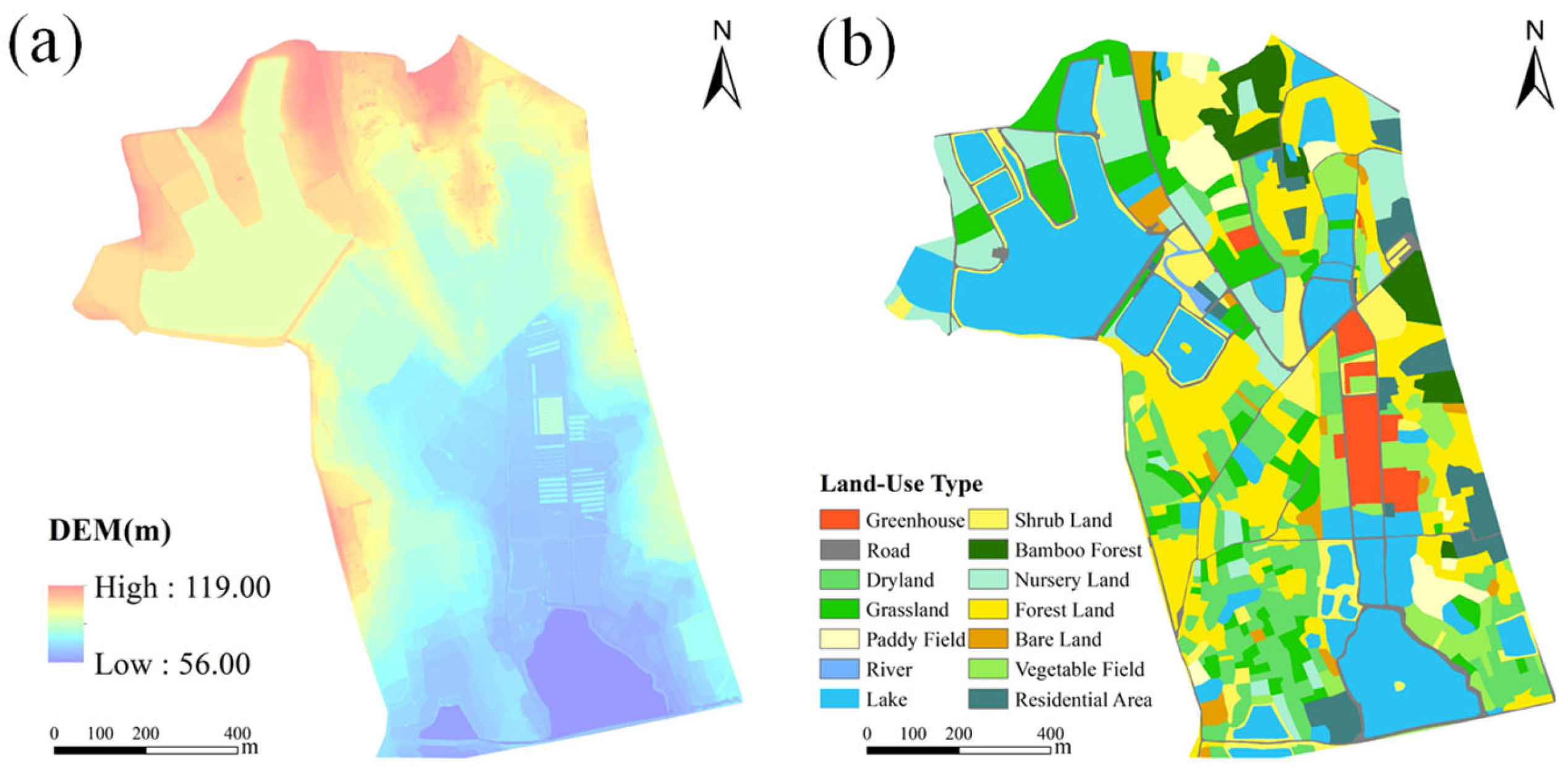
Based on the high-precision orthophotos of the study area, ArcGIS 10.8 software (Esri, Redlands, CA, USA) was used in conjunction with field surveys and visual interpretation to classify the land-use types in the study area. The land-use types were divided into 14 categories, resulting in a high-resolution land-use map (0.1 m × 0.1 m). The specific land-use types are shown in Figure 3b.
3.
Collection and Analysis of Watershed Nitrogen Concentration Data
In August 2022, systematic field sampling was conducted in the study area. A total of 15 water quality monitoring points and 49 soil sampling points were set up. Water and soil samples were delivered to the laboratory within 24 h after collection. In the laboratory, all samples were stored in professional refrigerated equipment at 4 °C until the nitrogen concentration measurements were completed. Total nitrogen concentrations were measured using the alkaline potassium persulfate digestion UV spectrophotometric method (HJ636-2012 [23]); nitrate nitrogen concentrations were measured using the UV spectrophotometric method (GB/T 5750.5-2023 [24]); and ammonium nitrogen concentrations were measured using the salicylic acid-hypochlorite spectrophotometric method (HJ 536-2009 [25]). The results were processed using ArcGIS 10.8 software to perform spatial interpolation of soil and water samples, constructing a spatial database for nitrogen concentrations in the watershed.

2.3.2. SCS-CN Model Runoff Calculation

The SCS-CN runoff model was used in this study to quantitatively calculate the runoff of the watershed. The model is based on the principle of water balance and introduces the curve number (CN) as a key parameter, which integrates the impact of various land-use types on the precipitation-runoff conversion process in the watershed [26].
The core formula is:
Q = P I a 2 P I a + S ; P > I a Q = 0 ; P I a
where
I a = λ S
S = 25 , 400 / C N 254
where Q is the runoff (mm); P is the precipitation (mm); and Ia is the initial loss (mm).
λ is the initial loss coefficient, typically taken as 0.2; S is the potential maximum retention (mm); and CN is the curve number (dimensionless, ranging from 0 to 100). In the calculation, CN values for different land-use types in the study area were determined with reference to published SCS-CN parameter studies from China and comparable regions. Daily precipitation data were used to simulate the daily runoff process in the watershed, and the total annual runoff was then calculated [27,28,29].

2.3.3. MUSLE Model Sediment Yield Calculation

The MUSLE (Modified Universal Soil Loss Equation) model is an improved soil erosion prediction model based on the traditional USLE model, developed by the U.S. Department of Agriculture. The model improves prediction accuracy for erosion from single rainfall events by introducing the runoff factor to replace the original rainfall erosivity factor, making it a vital tool for soil erosion research in small watersheds [30].
The basic equation for the MUSLE model is:
A = 11.8 × ( Q · q p ) 0.56 × K × L S × C × P
where A represents the soil intensity from a single rainfall event (t/km2); Q is the total runoff (mm); qp is the peak flow (m3/s); K is the soil erodibility factor; LS is the topographic factor (where L is the slope length factor and S is the slope factor); C is the vegetation cover and management factor (dimensionless, ranging from 0 to 1); and P is the conservation practice factor (dimensionless, ranging from 0 to 1).
1.
Runoff Volume Q and Peak Flow qp
In the formula,
q p = C × i × F
C = Q / P
where C is the runoff coefficient; i is the rainfall intensity; and F is the watershed area.
Peak flow values for different land-use types were calculated using daily precipitation data obtained from the European Center for Medium-Range Weather Forecasts and Formulas (5) and (6), and assigned values using ArcGIS software [31].
2.
Soil Erodibility Factor K
Soil erodibility reflects the sensitivity of soil to erosion. The K value is calculated using the equation from the EPIC (Erosion/Productivity Impact Calculator) model, as proposed by Williams [32]:
K = { 0.2 + 0.3 exp [ 0.0256 S A N ( 1 S I L 100 ) ] } × ( S I L C L A + S I L ) 0.3 × ( 1.0 0.25 C C + e x p ( 3.72 2.95 C ) ) × ( 1.0 0.7 S N S N + e x p ( 22.9 S N 5.51 ) )
where CLA, SIL, and SAN are the percentages of clay, silt, and sand in the soil; C is the organic carbon content in the soil; SN = 1 − SAN/100.
Soil texture information (clay, silt, and sand fractions) and soil organic carbon required for the EPIC-K calculation were obtained from the China Soil Database and complementary regional studies. These attributes were spatially assigned to the watershed based on soil mapping units and then resampled to match the land-use raster, allowing K-factor values to be mapped consistently with the land-use type map.
3.
Slope Length and Slope Factor LS
Slope and slope length are topographic factors that affect soil erosion. The longer and steeper the slope, the higher the soil erosion rate. The slope length factor L was calculated using the formula proposed by Desmet et al. [33]:
L = λ 22.1 n n , n = 0.2 ( θ 1 ) 0.3 ( 1 < θ 3 ) 0.4 ( 3 < θ 5 ) 0.5 ( θ > 5 )
λ = F l o w   a c c u m u l a t i o n × C e l l   r e s o l u t i o n
where λ is the flow accumulation and cell resolution; n is the slope length index.
The slope factor S is calculated as:
S = 10.8 s i n   θ + 0.03 θ < 5 16.8 s i n   θ 0.5 5 < θ 10 20.204 s i n   θ 1.2404 10 < θ 25 29.585 s i n   θ 5.6079 θ > 25
where θ is the slope (°).
Slope length and slope values were extracted from the 0.1 m DEM data in ArcGIS and used to calculate the topographic factor LS.
4.
Vegetation Cover and Management Factor C
The vegetation cover and management factor C is influenced by vegetation growth, type, and coverage. This study assigned values to different land-use types based on research from surrounding watersheds [34]. The assigned factor C values for each land-use type are summarized in Table 1.
5.
Conservation Practice Factor P
The p value, which indicates the level of soil conservation, was assigned based on the land-use situation in the study area and surrounding areas [35]. The assigned factor p values for each land-use type are summarized in Table 2.

2.3.4. Nitrogen Migration Direction and Amount Calculation Based on Multi-Flow Direction Algorithm

The Multi-Flow Direction (MFD) algorithm is used for flow distribution in hydrological models to address the limitations of traditional single-flow direction algorithms (such as D8), especially in areas with flat terrain or gentle slopes. The D8 algorithm limits the flow of material to the steepest slope, which may cause unrealistic distribution in flat or gently sloped regions. In contrast, the MFD algorithm allows material to flow to multiple neighboring pixels, providing a more accurate simulation of material distribution in complex topographies [36].
This method is particularly suitable for processing large-scale Digital Elevation Models (DEMs), as it better simulates water flow across the entire surface, especially in areas where flow disperses and converges. The slope sij from pixel i to pixel j is calculated as:
s i j = d e m ( i ) d e m ( j ) d i j
where sij is the slope between pixels i and j; dem(i) and dem(j) are the elevations of pixels i and j; and dij is the distance between pixels (usually the unit grid size).
Next, flow Ai is distributed to neighboring pixels based on the slope:
A i = j N i   A j . S i j k N i   s i k
In this study, MATLAB R2023a (MathWorks, Natick, MA, USA) functions were used to implement the MFD algorithm. The function processes large DEM datasets and distributes water flow according to the MFD model, calculating the accumulated flow accurately for each pixel.

3. Results and Analysis

3.1. Centimeter-Scale Database of the Small Watershed

Based on UAV photogrammetry, a high-resolution (0.1 m) geographic information database of the small watershed was constructed (Figure 3). The elevation of the study area ranges from 56 to 119 m above sea level (m a.s.l.), exhibiting a typical north–south gradient characterized by higher elevations in the north and lower elevations in the south. The topographic gradient is pronounced across the watershed. The northern high-elevation areas are dominated by natural vegetation types, including bamboo forest, nursery land, grassland, and forest land, with high vegetation coverage and relatively stable ecosystem conditions. In contrast, the southern low-elevation areas are mainly occupied by intensively managed agricultural lands, such as vegetable fields, dryland, and greenhouse facilities, where human disturbance is strong.
A total of 14 land-use types were identified within the watershed. Natural land-use types constitute a substantial proportion of the area, with water bodies (26.09%) and forest land (15.26%) forming the ecological foundation of the watershed. Agricultural land-use types exhibit a complex spatial configuration. Dryland (10.37%), vegetable fields (5.01%), and greenhouses (2.96%) are clustered predominantly in the central part of the watershed, forming distinct zones of intensive agricultural activity.
This land-use configuration suggests a structurally buffered background, as reservoirs and forest patches can enhance storage capacity and support ecological integrity at the watershed scale. However, the central clustering of intensive agriculture indicates localized hotspots where nitrogen export risks may be elevated, with potentially higher sensitivity during drought periods when dilution capacity is reduced.
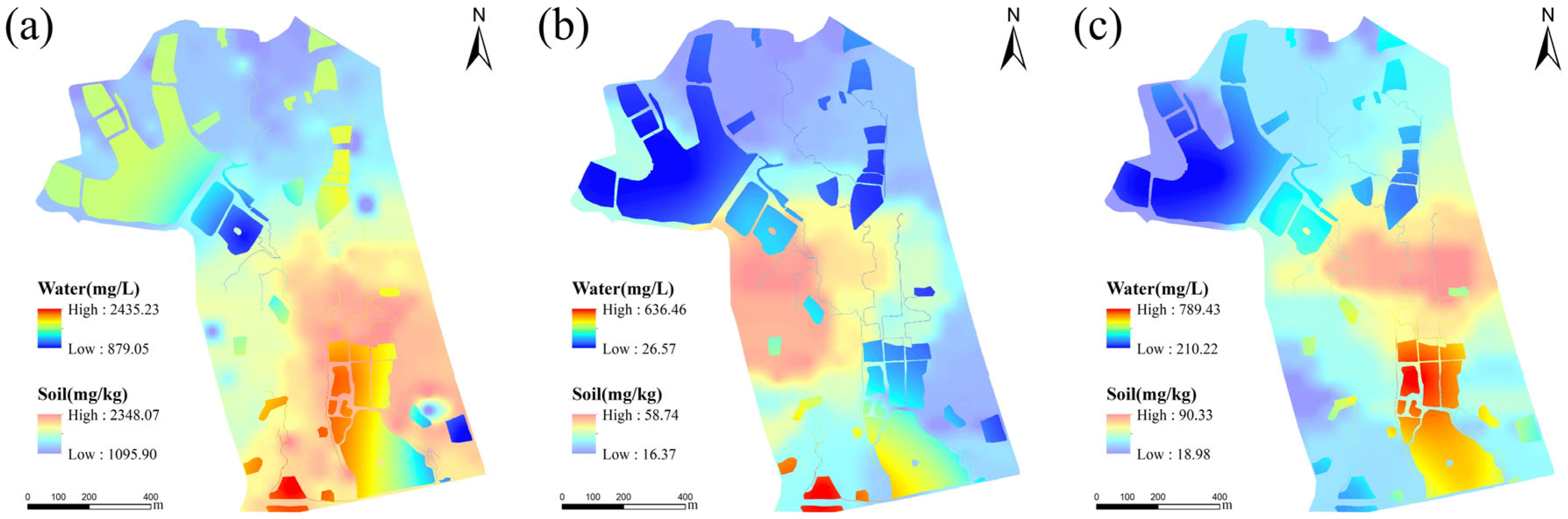
Marked spatial contrasts were observed in both soil and streamwater nitrogen, indicating strong land-use controls and cumulative downstream inputs (Figure 4). Soil nitrogen varied substantially among land-use types. Total nitrogen (TN) was highest in greenhouse-based facility agriculture (2299.36 mg/kg), followed by vegetable fields and drylands (2006.68 and 1956.79 mg/kg, respectively), and was lower in paddy fields and bamboo forests (1742.36 and 1643.03 mg/kg, respectively). Ammonium nitrogen (NH4+-N) peaked in drylands (39.86 mg/kg) and remained relatively high in greenhouse areas (37.98 mg/kg); vegetable fields, grasslands, and shrublands showed comparable concentrations (32.02–33.06 mg/kg), whereas paddy fields and bamboo forests had the lowest values (22.49 and 24.09 mg/kg, respectively). Nitrate nitrogen (NO3-N) was highest in greenhouse areas (73.65 mg/kg), relatively elevated in vegetable fields and grasslands (58.92 and 42.15 mg/kg, respectively), and lower in bamboo forests and paddy fields (48.97 and 40.88 mg/kg, respectively).
Streamwater nitrogen was dominated by downstream accumulation and responses to agricultural activities. Total nitrogen increased from 0.88–1.73 mg/L in the upper reaches to 1.38–2.44 mg/L downstream, frequently exceeding 2.0 mg/L near croplands and below greenhouse-dominated areas. NH4+-N showed a similar pattern, remaining at 0.03–0.20 mg/L upstream but rising to 0.30–0.64 mg/L downstream; the agriculturally intensive area in the lower-right part of the watershed reached 0.58 mg/L. NO3-N increased from 0.22 mg/L upstream to a maximum of 0.64 mg/L downstream and was consistently higher in reaches downstream of cropland and greenhouse planting zones than in other areas.

3.2. Runoff and Sediment Transport in the Watershed

3.2.1. Runoff Simulation Based on the SCS-CN Model

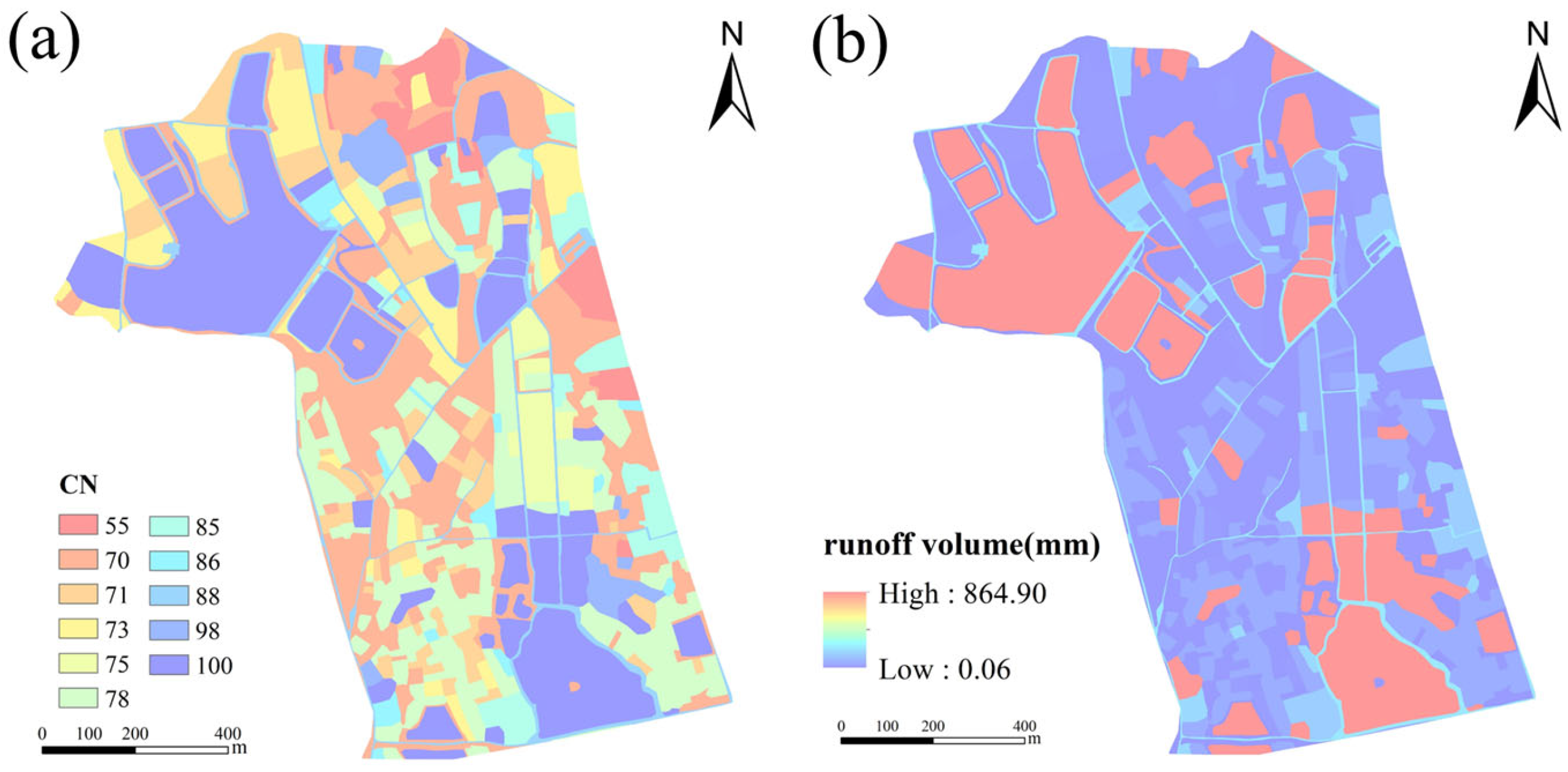
The runoff process of the small watershed was quantitatively simulated using the SCS-CN model, and the results are shown in Figure 5. The spatial distribution of Curve Number (CN) values exhibits pronounced heterogeneity across the study area. Annual runoff shows clear spatial differentiation, with substantial differences in runoff generation capacity among land-use types. Paddy fields exhibit the highest runoff production, with an annual runoff depth of 530.1 mm. Roads, bare land, and residential areas also show relatively high runoff coefficients, resulting in runoff volumes significantly greater than those of natural vegetation areas. In contrast, agricultural land-use types such as vegetable fields, greenhouses, and dryland show relatively small differences in runoff depth. Bamboo forest, which has the highest vegetation coverage in the watershed, produces the lowest annual runoff among all land-use types. This spatial pattern of runoff provides a critical hydrological basis for subsequent simulations of nitrogen export and redistribution.

3.2.2. Soil Erosion Estimation Based on the MUSLE Model

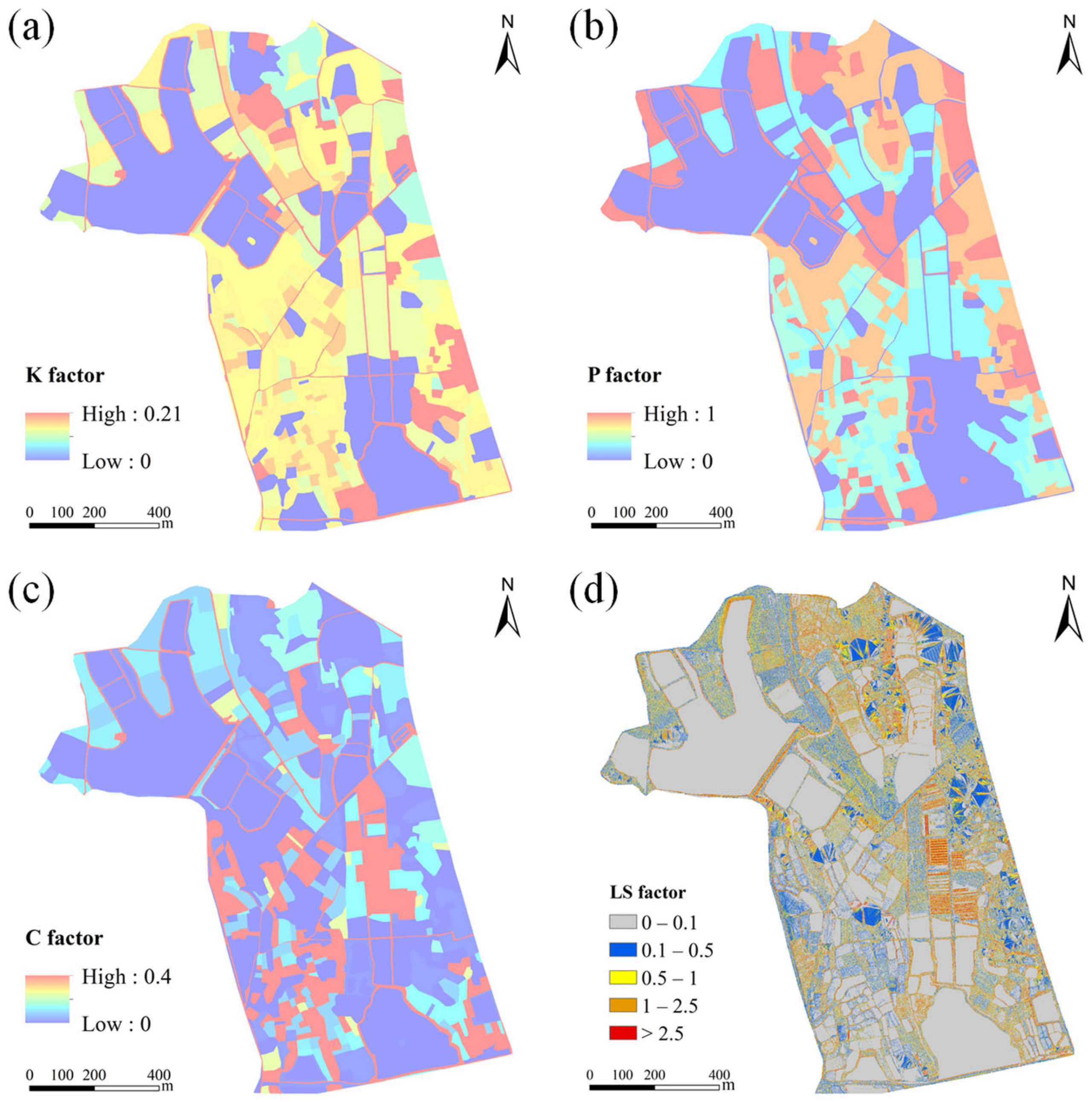
The spatial distributions of the MUSLE model factors are shown in Figure 6. High values of the soil erodibility factor (K) are mainly concentrated in cultivated land and bare land, whereas water bodies and forest land exhibit the lowest K values. Water bodies inherently have no erosion risk, while forest land shows low erodibility. The conservation practice factor (P) displays a spatial pattern positively correlated with the intensity of human activities, with higher p values observed in farmland and residential areas, indicating relatively poor soil conservation conditions; in contrast, bare land shows relatively lower p values. The vegetation cover and management factor (C) exhibits the most pronounced spatial variation, with values reaching 0.15–0.25 in bare land and greenhouse areas, while natural vegetation areas such as forest land and grassland show much lower values (0.01–0.06). The topographic factor (LS) is significantly higher in steep slope areas than in the relatively flat agricultural lands in the southwestern part of the watershed.
By integrating all MUSLE factors, the mean annual soil erosion intensity of the watershed is estimated to be 14.55 t/km2. According to the Soil Erosion Classification and Grading Standard (SL190-2007 [37]), the watershed as a whole falls within the category of slight erosion. However, the spatial distribution of erosion intensity is highly uneven. Greenhouse areas, residential land, and bare land form distinct erosion hotspots. Among them, greenhouse areas exhibit the highest average erosion intensity, reaching 21.6 t/km2, and represent the most severely eroded zones within the watershed.

3.3. Quantification of Nitrogen Output Loads in the Small Watershed

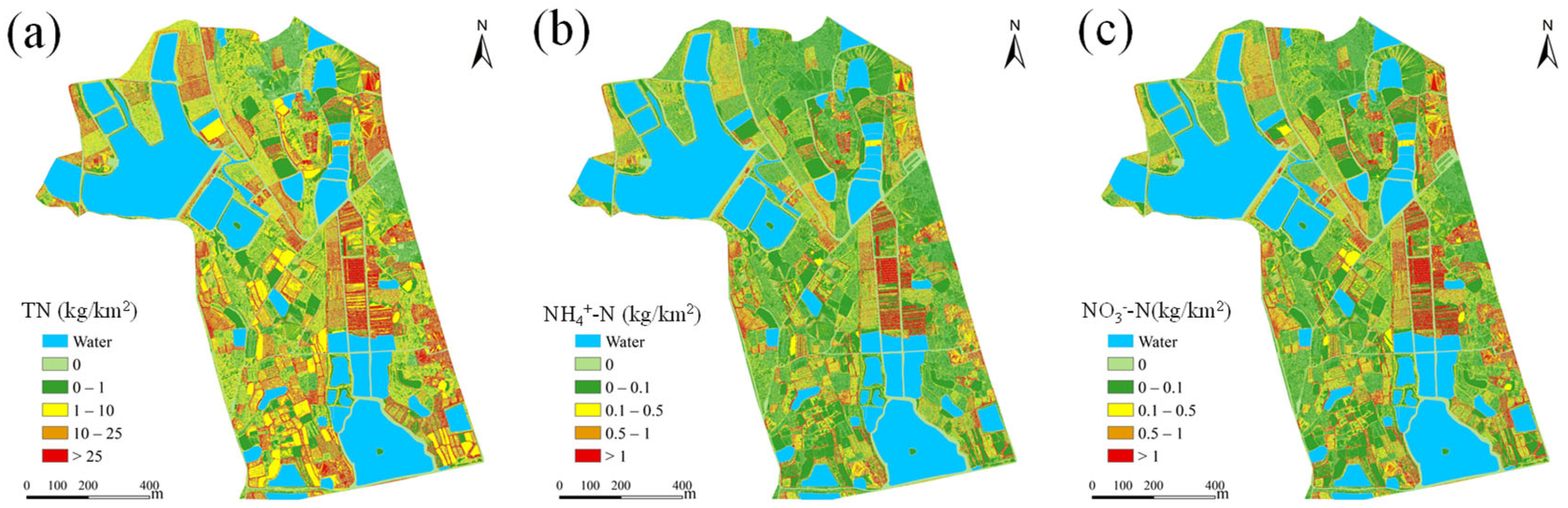
Based on the coupled simulation of the SCS-CN and MUSLE models, nitrogen output loads in different forms exhibit significant spatial heterogeneity across the small watershed (Figure 7). At the watershed scale, the mean annual output intensities are 29.66 kg/km2·a for total nitrogen (TN), 0.51 kg/km2·a for ammonium nitrogen (NH4+-N), and 0.83 kg/km2·a for nitrate nitrogen (NO3-N). The spatial patterns indicate that hotspots of nitrogen export largely coincide with areas of elevated nitrogen concentrations and severe soil erosion, and are mainly clustered in the central greenhouse cultivation zone, drylands, and residential areas where human activities are intensive. In contrast, nitrogen export loads were markedly lower in areas dominated by natural vegetation cover, such as forests and grasslands. Notably, as shown in Figure 7, nitrogen export intensities along field boundaries were generally higher than those within field interiors, making these boundary zones critical nodes for non-point source pollutant export.
The regulatory effect of land-use type on nitrogen output loads is statistically significant, as confirmed by analysis of variance (ANOVA) (F = 8.96, p < 0.05). Quantitative results are summarized in Table 3. Bare land exhibits the highest total nitrogen output intensity (448.54 kg/km2·a, where kg/km2·a denotes the annual mean output intensity), with ammonium nitrogen (10.51 kg/km2·a) contributing more than nitrate nitrogen (7.71 kg/km2·a). Greenhouse areas show a total nitrogen output of 363.41 kg/km2, where nitrate nitrogen (12.89 kg/km2·a) exceeds ammonium nitrogen (6.41 kg/km2·a). Residential areas exhibit a total nitrogen output intensity of 239.29 kg/km2. In contrast, natural ecosystems demonstrate strong nitrogen retention capacity. Total nitrogen output from forest land is only 6.09 kg/km2·a, with ammonium nitrogen at 0.13 kg/km2·a, while bamboo forest shows an extremely low total nitrogen output of 0.10 kg/km2·a, with negligible losses of both nitrate and ammonium nitrogen. Although paddy fields generate the highest runoff volume, their total nitrogen output intensity (6.68 kg/km2·a) is comparable to that of forest land.

3.4. Simulation of Nitrogen Migration Trajectories in the Small Watershed

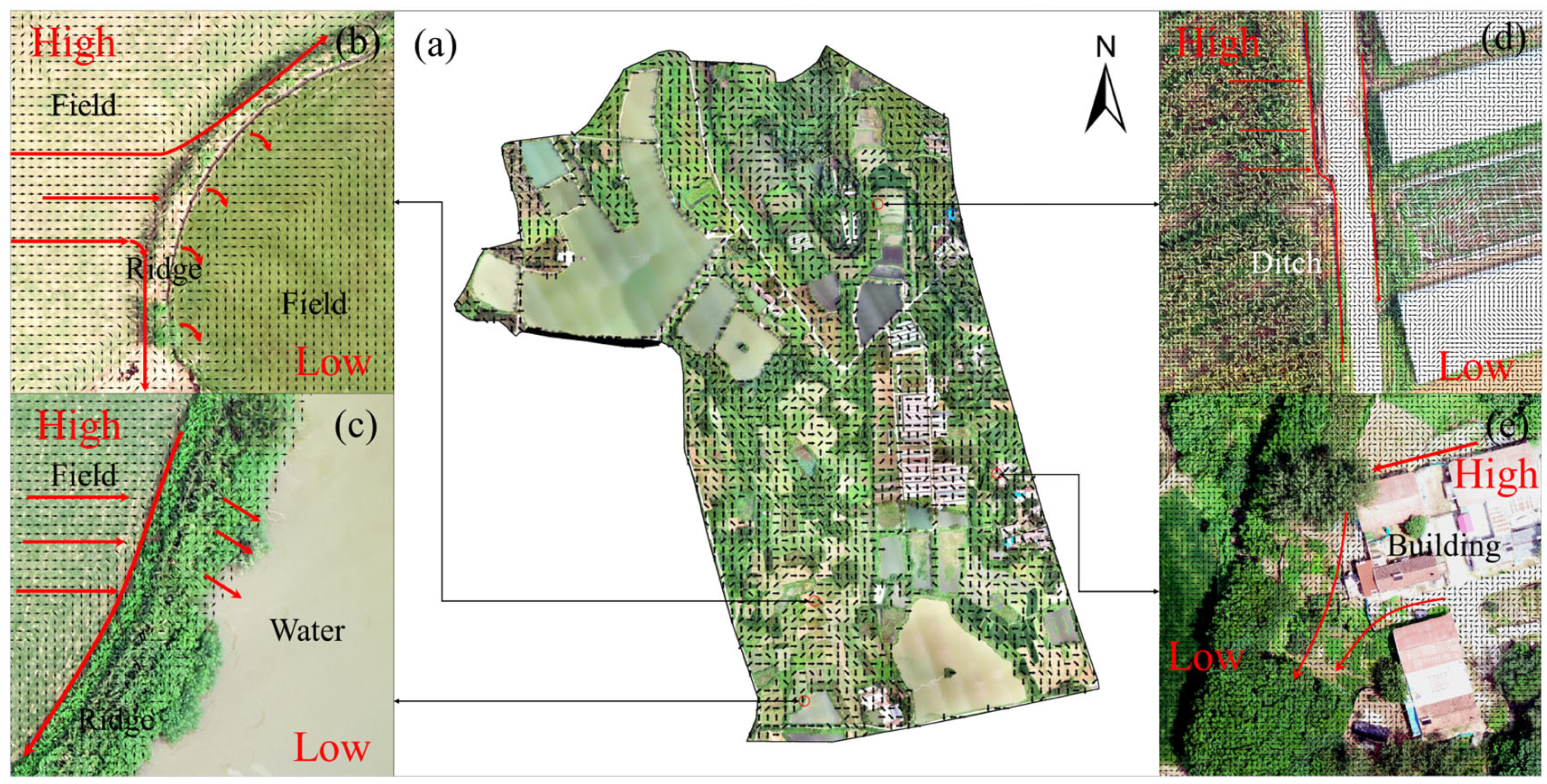
Based on high-resolution topographic data and the multi-flow direction (MFD) algorithm, nitrogen migration pathways in the small watershed were simulated and visualized (Figure 8). Analysis of representative scenarios reveals the regulatory effects of microtopographic elements on nitrogen migration pathways. In addition to indicating potential export pathways, these interrupted and diverted pathways also delineate areas where nitrogen delivery to surface waters may be delayed, indicating higher retention/attenuation potential before downstream export. In scenarios where field ridges act as barriers between adjacent plots (Figure 8b), nitrogen migration exhibits a dual-path pattern: the majority of nitrogen is transported along ridge margins toward lower elevations, while a smaller proportion penetrates the ridges and enters neighboring fields. When ditches are present within fields (Figure 8d), nitrogen preferentially converges into the ditch network and is subsequently transported rapidly downstream through artificial drainage systems. In fields adjacent to water bodies (Figure 8c), nitrogen migrates directionally from cropland toward surface waters; however, part of the nitrogen load is intercepted within vegetated buffer zones. In areas surrounding buildings (Figure 8e), nitrogen migration pathways are significantly deflected by structural barriers, forming directional transport corridors along building edges.
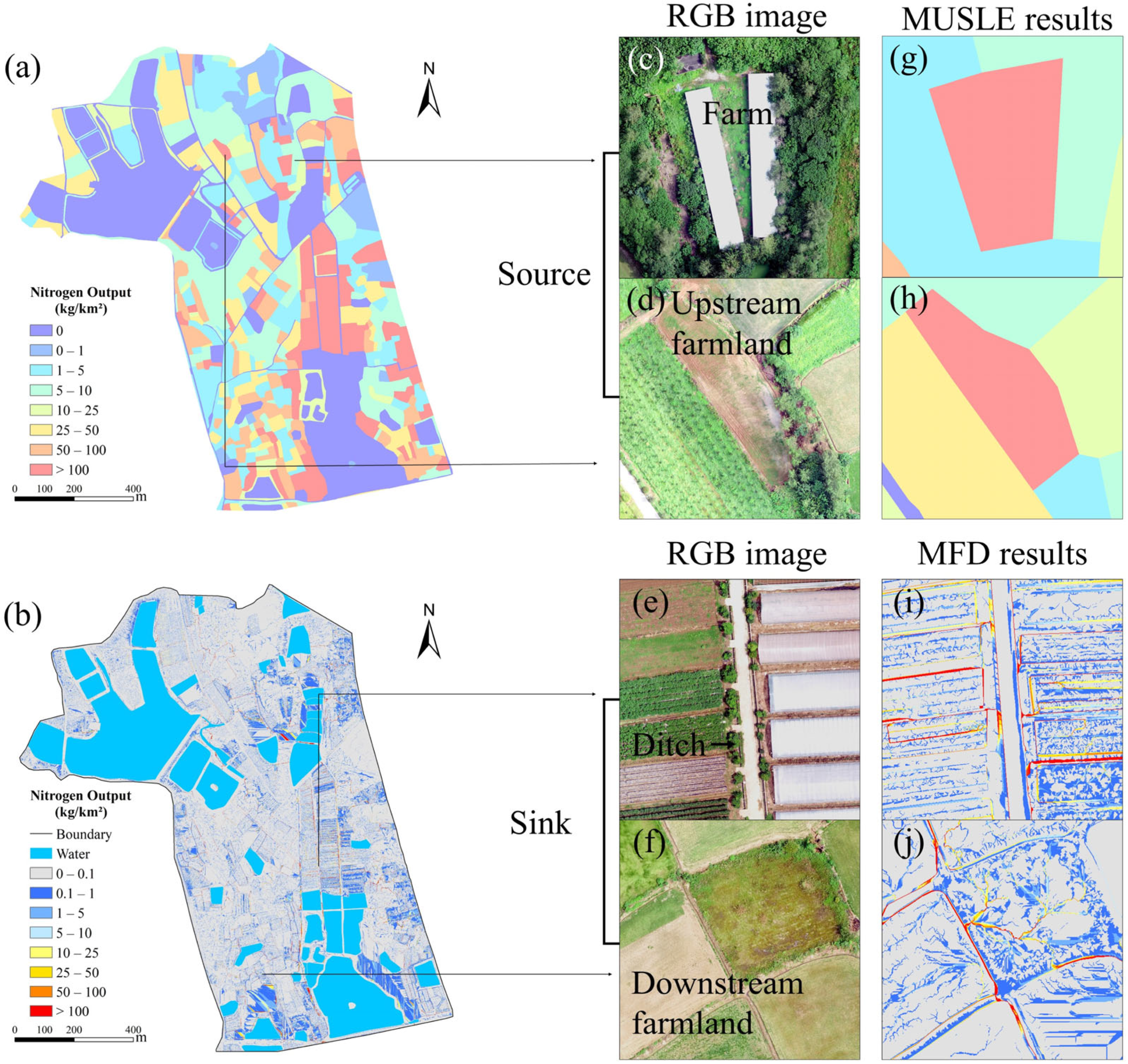
The watershed-scale simulation results based on the MFD algorithm (Figure 9b) demonstrate pronounced spatial heterogeneity in nitrogen migration. Overall, nitrogen transport is closely related to terrain relief and the elevation gradient, forming a directional migration tendency from higher to lower areas. In the northern steep-slope areas, nitrogen migration exhibits typical linear convergence pathways along the slope direction, whereas in the southern low-gradient areas, migration transitions to a diffuse, planar spreading mode, with more dispersed transport pathways and a relatively slower migration process. Spatial differentiation in nitrogen accumulation is strongly consistent with land-use patterns (Figure 9a). In general, areas with higher vegetation cover, such as forest land, show lower accumulation levels, while agricultural land and residential areas with more intensive human activities are more likely to form accumulation hotspots.
Morphological differentiation analysis indicates that the overall migration extent is spatially constrained, with migration mainly concentrated in source areas and their immediate surroundings, and no cross-watershed-scale continuous convergence network is formed.
The source–sink pattern of nitrogen migration is strongly coupled with land-use structure (Figure 9g–j). Residential areas in the central-northern and northeastern parts of the watershed form the core source zones, while the convergence area at the junction of agricultural drainage ditches and surface waters in the southern part acts as the primary sink. This sink area collects multiple migration pathways from the northern residential zones and the central agricultural area, and serves as a key node for nitrogen spatial redistribution. Notably, greenhouse areas in the central watershed show a distinct dual role: on the one hand, they act as sink zones, receiving and accumulating nitrogen transported from upstream residential areas; on the other hand, they function as secondary source zones, continuously delivering both locally derived and accumulated nitrogen to downstream ponds and reservoirs through the ditch network.

4. Discussions

4.1. Interpretation of Field-Scale Nitrogen Migration Characteristics

The field scale represents a critical linkage between microscale soil processes and macroscale watershed responses. At this scale, nitrogen migration mechanisms are jointly regulated by topographic features and land-use types. Based on a 0.1 m high-resolution DEM, multi-model coupled simulations, and field observations, this study systematically elucidates the interactive mechanisms between topography and land use that govern nitrogen migration at the field scale.
Land-use type is the primary anthropogenic driver determining the intensity of nitrogen export. Nitrogen outputs vary significantly among different land-use types. Specifically, greenhouse areas and vegetable fields exhibit markedly higher median nitrogen outputs than other land-use categories. This pattern can be attributed to intensive agricultural practices characterized by frequent and high-rate fertilizer applications and repeated soil tillage, which result in soil nitrogen surpluses that are readily mobilized by surface runoff [38]. In contrast, forest land and bamboo forest show the lowest nitrogen outputs, suggesting that natural vegetation systems tend to enhance nitrogen retention and assimilation through plant uptake, microbial immobilization, and soil organic matter stabilization. However, the magnitude and direction of this effect can be context-dependent and time-lagged, as ecosystem responses to disturbances (e.g., drought and compounded stressors) may be non-linear and may involve legacy nitrogen accumulation and conditional release [39,40]. Although paddy fields involve artificial drainage processes, their nitrogen output levels are intermediate, which may be associated with denitrification processes in paddy wetland systems and optimized water–fertilizer management practices [41].
Topographic factors exert a fundamental influence on nitrogen migration through the combined effects of natural terrain properties and anthropogenic landscape modifications, shaping migration directionality, hydrodynamic behavior, and spatial redistribution processes. Consequently, topography serves as a core driving force controlling pollutant transport within agricultural landscapes [18]. From the perspective of natural terrain, slope, slope length, and microtopography exhibit hierarchical control effects on nitrogen migration [42,43]. As slope increases, gravitational potential energy of surface runoff is converted into kinetic energy, significantly enhancing both the detachment and transport of soil particles and the mobilization efficiency of dissolved nitrogen [44]. This effect is particularly pronounced in dryland fields with low vegetation cover, where slope-driven runoff can substantially elevate nitrogen export risk. In addition, slope length may influence nitrogen export by promoting runoff accumulation and extending flow-convergence pathways, thereby increasing downslope transport potential. Importantly, at the field scale, microtopographic features can interrupt, divert, or concentrate overland flow, altering hydrological connectivity and mediating where nitrogen is rapidly exported versus where it may be attenuated.
From the perspective of anthropogenic microtopography, field ridges exert a decisive interception and regulation function. Previous studies have shown that ridges can substantially reduce lateral hydrological connectivity between adjacent plots, intercepting up to 91.1% of farmland runoff, with only approximately 10% of runoff generated at higher slope positions able to cross ridges [45]. Our microtopography-based simulations (Figure 8b) are consistent with this mechanism, further supporting the role of field ridges as artificial barriers that redirect runoff pathways and mitigate cross-field nitrogen transfer. Collectively, these results suggest that microtopography mediates an export–retention balance at the field scale by regulating hydrological connectivity and interception along migration pathways [46]. Because biogeochemical process rates (e.g., denitrification) are not explicitly parameterized in this study, “retention/attenuation” is discussed here as a qualitative potential inferred from pathway interruptions and connectivity rather than as a quantified retention efficiency.

4.2. Effects of DEM Resolution on Model Outputs

Nitrogen migration and transformation processes are tightly coupled with hydrological cycles and soil erosion dynamics. As the foundational topographic input for hydrological and soil erosion models, DEM resolution directly determines the accuracy of slope, slope length, and hydrological connectivity calculations. In agricultural small watersheds, microtopographic features such as field ridges and ditches constitute key structural elements controlling nitrogen source–sink transformation. The smoothing effect introduced by low-resolution DEMs can obscure these features, leading to misrepresentation of runoff pathways and sediment transport ratios and, consequently, substantial biases in nitrogen export estimates. Therefore, quantifying the influence of DEM resolution on model performance is a prerequisite for ensuring the reliability of nitrogen migration simulations and for elucidating the regulatory role of microtopography in non-point source pollution control.
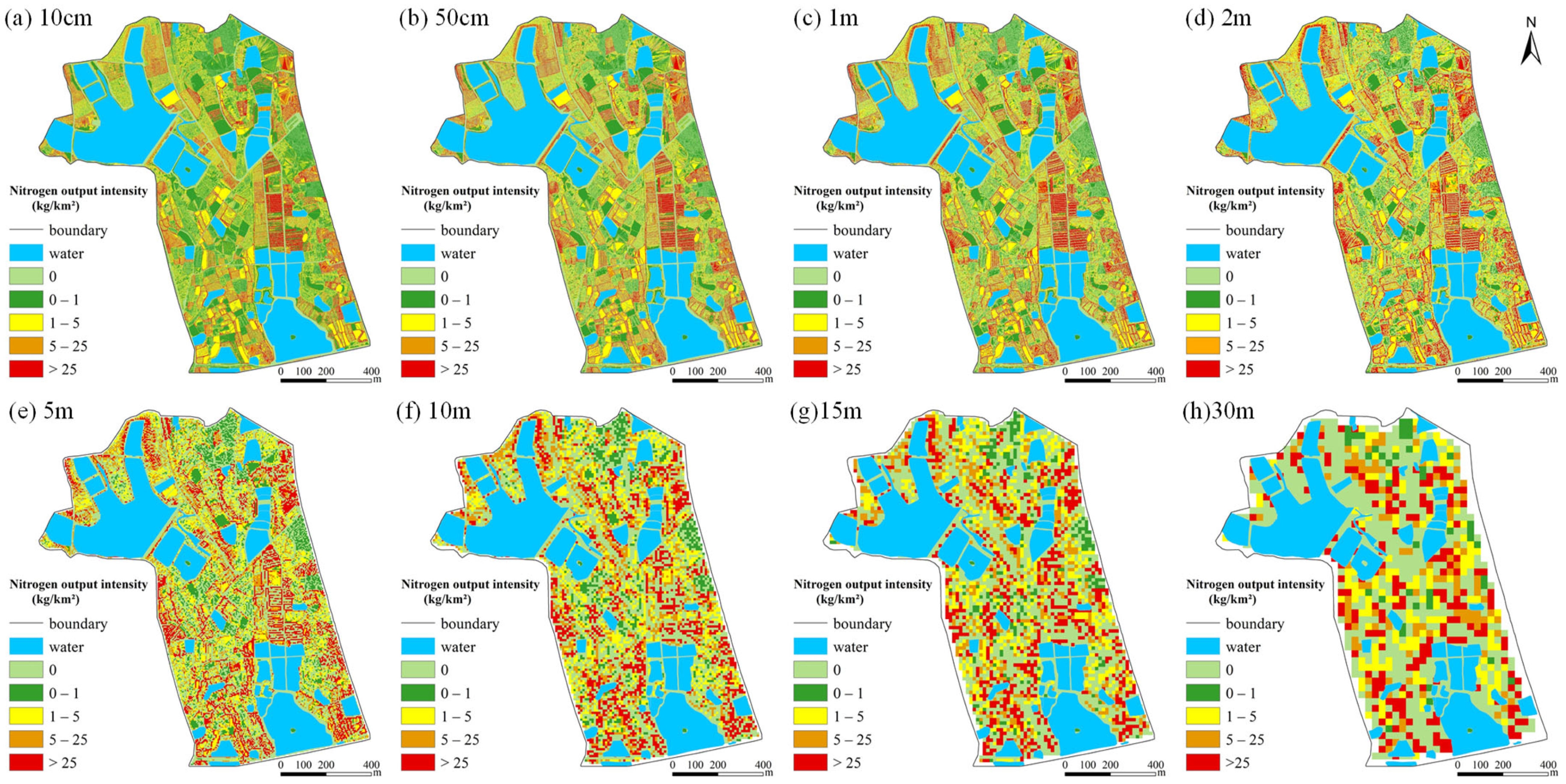
In this study, the original 0.1 m DEM was systematically resampled to seven resolution levels (0.5 m, 1 m, 2 m, 5 m, 10 m, 15 m, and 30 m) using ArcGIS 10.8, and soil erosion intensity under different resolutions was quantified using the MUSLE model (Figure 10). The results indicate that DEMs with resolutions of 0.1–0.3 m can accurately identify microtopographic features such as field ridges, furrows, and artificial drainage channels, with clear spatial structures. As resolution decreases below 5 m, these critical features become increasingly blurred, and at a resolution of 30 m, field boundaries and microtopographic details are almost completely lost. These findings corroborate the conclusion that low-resolution DEMs are inadequate for characterizing land-use-related microtopography [47].
Further analysis reveals a non-monotonic response of erosion intensity to DEM resolution (Figure S1a). The mean erosion intensity simulated at resolutions of 0.1–0.5 m (35.35 kg/km2·a) is significantly lower than that obtained at 1–2 m resolution (65.63 kg/km2·a). This phenomenon arises from the refined representation of microtopography in sub-meter DEMs, where local slopes are fragmented and micro-depressions and micro-elevations partially offset one another, resulting in an overall smoothing of slope gradients. As resolution continues to decrease, erosion intensity exhibits a pronounced inflection point at approximately 1 m resolution, followed by a declining and stabilizing trend [48].
To further elucidate this phenomenon, elevation differences in representative microtopographic features (e.g., field ridges and ditches) were measured in the study area. Field measurements indicate that elevation differences in typical microtopographic features are mainly distributed within the range of 0.5–2.0 m, with a median value of 1.2 m (Figure S1b). This characteristic explains the inflection point observed at 1 m resolution. At this resolution, terrain noise smaller than 1 m is effectively filtered out, while key topographic structures larger than 1 m are preserved, achieving an optimal balance between terrain detail representation and model stability [48]. Consequently, although sub-meter DEMs provide the most detailed terrain information, a resolution of approximately 1 m may offer greater practical advantages for field-scale studies in small watersheds.
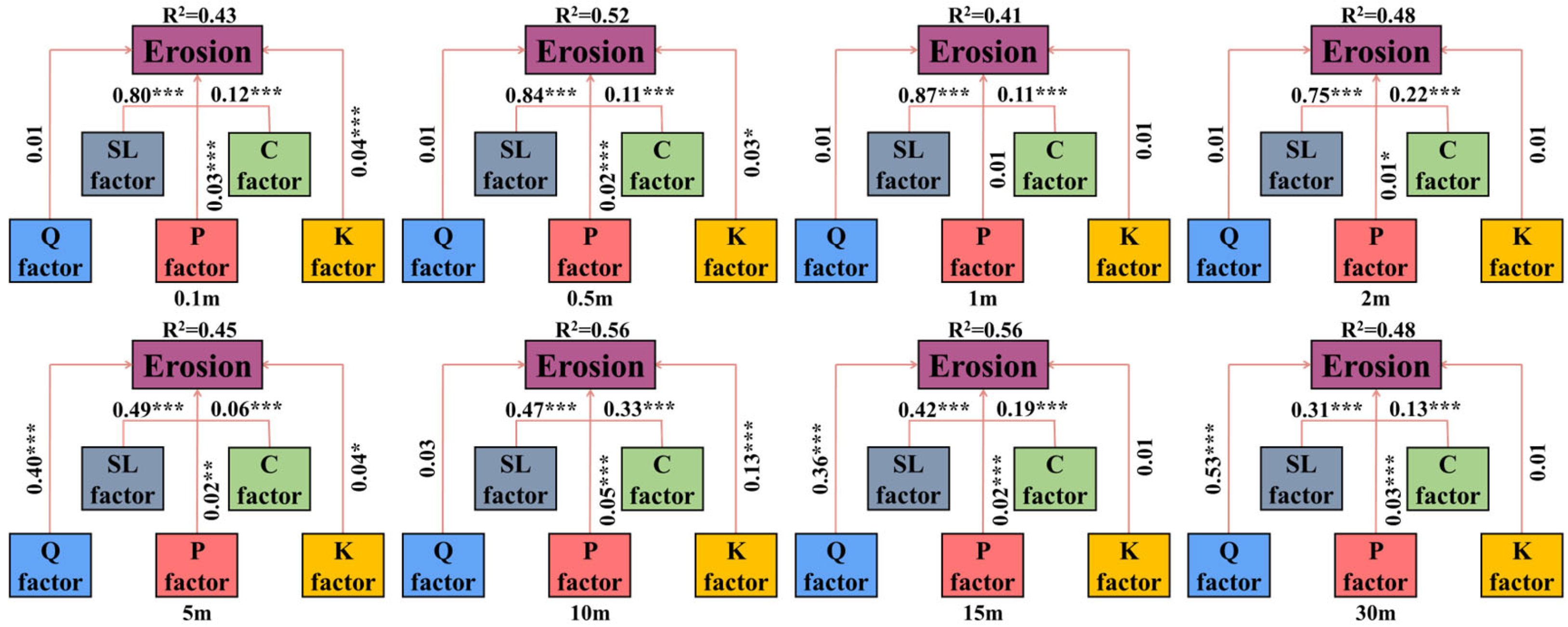
Quantification of factor contributions based on structural equation modeling (SEM) further reveals the scale-dependent dominance of topographic controls on field-scale nitrogen migration (Figure 11). Under high-resolution scenarios (0.1 m, 0.5 m, 1 m, and 2 m), the contribution of topographic factors remains stable at around 80%, significantly exceeding that of vegetation cover (10–25%). This finding reinforces the critical role of microtopography in constraining nitrogen spatial redistribution processes. Topography influences nitrogen migration capacity by regulating flow velocity and kinetic energy through slope variation, while simultaneously determining migration pathways and accumulation patterns by controlling runoff convergence routes [49]. Together, these mechanisms form a dual topographic control on nitrogen migration.
When DEM resolution decreases to 5 m, the contribution of topographic factors declines to 40–50%, and at 30 m resolution, it further drops to 30%, indicating a loss of topographic control over migration pathways. In such cases, meteorological factors emerge as the dominant controlling factor. This shift is fundamentally driven by spatial attenuation of terrain information: low-resolution DEMs smooth micro-slope variations (e.g., elimination of slopes smaller than 2°), distortion of flow accumulation and direction allocation, and oversimplify hydrological connectivity networks, thereby weakening topographic regulation of nitrogen migration. Importantly, the increased contribution of meteorological factors does not reflect an actual enhancement of their controlling effect, but rather a compensatory dependence of the model on remaining explanatory variables following terrain information loss, resulting in a “pseudo-dominance” phenomenon [16].
At the field scale, the results of this study demonstrate that DEMs with resolutions of 0.1 m, 0.5 m, 1 m, and 2 m effectively preserve the spatial variability in small-scale terrain features such as ridges, furrows, and micro-depressions, thereby enabling accurate representation of topographic controls on slope-scale nitrogen migration. These microtopographic features play a crucial role in runoff pathway bifurcation and temporary water storage formation. High-resolution DEMs are capable of capturing these details and providing key predictive indicators for nitrogen migration, including terrain roughness indices and flow-path density. In contrast, low-resolution DEMs (30 m) fail to accurately delineate geomorphic unit boundaries, resulting in insufficient spatial precision and systematic bias in nitrogen load estimation [13].

5. Conclusions

This study, leveraging UAV photogrammetry and the coupled SCS-CN and MUSLE models, conducted a quantitative simulation of nitrogen migration characteristics and output loads at the field scale in a small watershed. The results are as follows:
High spatial heterogeneity of nitrogen output in the small watershed: The simulation results show that the mean annual total nitrogen (TN) output intensity in the watershed is 29.66 kg/km2·a. The highest output is observed in barren land (448.54 kg/km2·a) and greenhouse areas (363.41 kg/km2·a). High nitrogen load zones are concentrated in areas with intensive human activities and strong soil erosion, and field boundary areas, influenced by microtopography, serve as critical nodes for non-point source pollution output.
Nitrogen migration trajectories are predominantly influenced by topographic gradients, with significant influence from the synergy between topography and land-use types at the microscale: At the macro scale, nitrogen migration in the northern steep-slope areas exhibits a linear convergence pattern, while the southern gentle-slope areas exhibit a diffuse, planar spreading mode. At the microscale, land-use types determine the potential intensity of pollution sources, while microtopographic features, such as field ridges, ditches, and buildings, physically block or direct nitrogen migration, thereby altering the spatial distribution of nitrogen within different land-use units.
The resolution of DEM significantly affects the accuracy of nitrogen migration modeling and the identification of key controlling factors: The simulation results indicate a critical scale effect near 1 m resolution. Erosion intensity shows a non-monotonic relationship with resolution, with a distinct inflection point at 1 m, corresponding to the median elevation difference (1.2 m) of typical microtopographic features (e.g., field ridges) in the study area. This suggests that, under the geomorphic conditions of this study, the effective resolution for identifying key topographic features lies around 1 m. Structural equation modeling further confirms that high-resolution (0.1–2 m) DEMs effectively capture microtopographic features, maintaining the contribution of topographic factors to nitrogen migration around 80%. However, when the resolution drops to 30 m, the contribution of topography significantly decreases to 30%, resulting in a marked shift in the identification of dominant controlling factors.

Supplementary Materials

The following supporting information can be downloaded at https://www.mdpi.com/article/10.3390/land15030442/s1. Figure S1: Line graph of average soil erosion intensity at different DEM resolutions (a); field ridge measurement results (b–e). Table S1: Data sources.

Author Contributions

Conceptualization, Y.S. and L.J.; methodology, Y.S.; software, Y.S.; validation, Y.S., M.L. and L.J.; formal analysis, Y.S.; investigation, Y.S. and M.L.; resources, L.J.; data curation, Y.S.; writing—original draft preparation, Y.S.; writing—review and editing, L.J. and M.L.; visualization, Y.S.; supervision, L.J.; project administration, L.J.; funding acquisition, L.J. All authors have read and agreed to the published version of the manuscript.

Funding

This research was jointly supported by the National Natural Science Foundation (No. 42407093, 42401506), the Major Project on Natural Science Foundation of Universities in Anhui Province (No. 2025AHGXZK20198), and the Excellent Scientific Research and Innovation Team of Universities in Anhui Province (No. 2023AH010071).

Data Availability Statement

The raw UAV imagery, high-resolution DEMs, land-use maps, and field sampling data contain sensitive location information of the agricultural watershed and are therefore not publicly archived. Processed datasets supporting the findings of this study, including nitrogen concentration measurements, model inputs, and simulation outputs, can be provided for academic research purposes upon reasonable request. The data presented in this study are available on request from the corresponding author.

Acknowledgments

During the preparation of this manuscript, the author(s) used ChatGPT (OpenAI, San Francisco, CA, USA; GPT-5) for the purposes of proofing. The authors have reviewed and edited the output and take full responsibility for the content of this publication.

Conflicts of Interest

The authors declare no conflicts of interest.

Abbreviations

The following abbreviations are used in this manuscript:
DEMDigital Elevation Model
SCS-CNSoil Conservation Service Curve Number
MUSLEModified Universal Soil Loss Equation
MFDMulti-Flow Direction
CNCurve Number
USLEUniversal Soil Loss Equation
SWATSoil and Water Assessment Tool
HSPFHydrological Simulation Program-Fortran
UAVUnmanned Aerial Vehicle
RTKReal-Time Kinematic
TNTotal Nitrogen
NH4+-NAmmonium Nitrogen
NO3-NNitrate Nitrogen
KSoil Erodibility Factor
LSlope Length Factor
SSlope Steepness Factor
LSTopographic Factor (combined slope length and steepness)
CCover and Management Factor
PSupport Practice Factor
QRunoff Depth
qpPeak Discharge
IaInitial Abstraction
EPICErosion/Productivity Impact Calculator
SEMStructural Equation Modeling
D8Deterministic Eight-Node Algorithm

References

  1. Hussain, F.; Ahmed, S.; Naqvi, S.M.Z.A.; Awais, M.; Zhang, Y.; Zhang, H.; Raghavan, V.; Zang, Y.; Zhao, G.; Hu, J. Agricultural Non-Point Source Pollution: Comprehensive Analysis of Sources and Assessment Methods. Agriculture 2025, 15, 531. [Google Scholar] [CrossRef]
  2. Tian, Z.; Li, J.; Zhang, Y.; Wang, H.; Liu, S. Research advancements on agricultural non-point source pollution in major lake and reservoir watersheds of China: Status, sources, monitoring, and prospects. Ecol. Indic. 2025, 178, 113981. [Google Scholar] [CrossRef]
  3. Ministry of Ecology and Environment of the People’s Republic of China; National Bureau of Statistics; Ministry of Agriculture and Rural Affairs of the People’s Republic of China. Bulletin of the Second National Census of Pollution Sources; Ministry of Ecology and Environment: Beijing, China, 2020. [Google Scholar]
  4. Wang, J.; Chen, N.; Yan, W.; Wang, B.; Yang, L. Hydrological connectivity affects nitrogen migration and retention in the land–river continuum. J. Environ. Manag. 2023, 326, 116816. [Google Scholar] [CrossRef] [PubMed]
  5. Lei, M.; Long, Y.; Li, T.; Ma, Y.; Zhang, G.; Peng, B.; Li, Z.; Liu, Y. Nitrogen dynamic transport processes shaped by watershed hydrological functional connectivity. J. Hydrol. 2024, 645, 132218. [Google Scholar] [CrossRef]
  6. Bhatta, B.; Shrestha, S.; Shrestha, P.K.; Talchabhadel, R. Evaluation and application of a SWAT model to assess the climate change impact on the hydrology of the Himalayan River Basin. Catena 2019, 181, 104082. [Google Scholar] [CrossRef]
  7. Hou, C.; Chu, M.L.; Guzman, J.A.; Acero Triana, J.S.; Moriasi, D.N.; Steiner, J.L. Field scale nitrogen load in surface runoff: Impacts of management practices and changing climate. J. Environ. Manag. 2019, 249, 109327. [Google Scholar] [CrossRef]
  8. Zhang, Q.; Wang, H.; Zhang, F.; Chen, G.; Yi, Y.; Pang, Y.; Zhao, G.; Yang, M.; Li, M. Exploring the role of surface micro-topography in governing dissolved nitrogen dynamics in agricultural runoff during rainfall. Water Res. 2025, 287, 124400. [Google Scholar] [CrossRef]
  9. Delesantro, J.M.; Duncan, J.M.; Riveros-Iregui, D.; Blaszczak, J.R.; Lowman, H.E.; Peipoch, M.; Seybold, E.C. High frequency monitoring and nitrate sourcing reveals baseflow and stormflow controls on total dissolved nitrogen and carbon export along a rural–urban gradient. Water Resour. Res. 2024, 60, e2023WR036750. [Google Scholar] [CrossRef]
  10. Amatya, D.M.; Walega, A.; Callahan, T.J.; Williams, T.M.; Trettin, C.C. Storm event analysis of four forested catchments on the Atlantic coastal plain using a modified SCS-CN rainfall-runoff model. J. Hydrol. 2022, 608, 127772. [Google Scholar] [CrossRef]
  11. Wałęga, A.; Sałata, T. Influence of land cover data sources on estimation of direct runoff according to SCS-CN and modified SME methods. Catena 2019, 172, 232–242. [Google Scholar] [CrossRef]
  12. Gwapedza, D.; Nyamela, N.; Hughes, D.A.; Slaughter, A.R.; Mantel, S.K. Prediction of sediment yield of the Inxu River catchment (South Africa) using the MUSLE. Int. Soil Water Conserv. Res. 2021, 9, 37–48. [Google Scholar] [CrossRef]
  13. Rocha, J.; Duarte, A.; Fabres, S.; Quintela, A.; Serpa, D. Influence of DEM Resolution on the Hydrological Responses of a Terraced Catchment: An Exploratory Modelling Approach. Remote Sens. 2023, 15, 169. [Google Scholar] [CrossRef]
  14. Castillo-Reyes, G.; Estrella, R.; Gabriels, K.; De Meyer, A. Selecting sites for afforestation to minimize sediment loss from a river basin: Computational complexity of single and multiple flow direction methods in raster databases. Comput. Geosci. 2023, 171, 105269. [Google Scholar] [CrossRef]
  15. Li, Z.; Lai, X.; Shi, P.; Yang, T. Proposal of a facet-to-facet multiple flow direction algorithm based on geometrical and mathematical analysis of physical dispersion over triangle facet. Geomorphology 2024, 466, 109440. [Google Scholar] [CrossRef]
  16. Prescott, A.B.; Pelletier, J.D.; Chataut, S.; Ananthanarayan, S. An evaluation of flow-routing algorithms for calculating contributing area on regular grids. Earth Surf. Dynam. 2025, 13, 239–256. [Google Scholar] [CrossRef]
  17. Min, J.; Shi, W. Nitrogen discharge pathways in vegetable production as non-point sources of pollution and measures to control it. Sci. Total Environ. 2018, 613–614, 123–130. [Google Scholar] [CrossRef]
  18. Lei, M.; Long, Y.; Li, T.; Sun, G.; Liu, H.; Ma, Y.; Zeng, Q.; Liu, Y. Hydrological connectivity on watershed nitrogen transport processes: A review. Appl. Water Sci. 2025, 15, 169. [Google Scholar] [CrossRef]
  19. Huang, X.; Yang, X.; Xie, Y.; Zhang, H.; Lu, N.; She, D.; Xia, Y. Pathway-specific nitrogen export across a rural–urban gradient: Integrating hydrograph separation and end-member mixing analysis. Nitrogen Cycling 2025, 1, e006. [Google Scholar] [CrossRef]
  20. Jiang, S.; Werner, A.D.; Gao, L.; Rode, M. Climate change expected to amplify land-use change impacts on nitrogen export from a subtropical catchment in China. J. Hydrol. 2026, 667, 134888. [Google Scholar] [CrossRef]
  21. Adu, J.T.; Kumarasamy, M.V. Assessing Non-Point Source Pollution Models: A Review. Pol. J. Environ. Stud. 2018, 27, 1913–1922. [Google Scholar] [CrossRef]
  22. Xue, J.; Wang, Q.; Zhang, M. A review of non-point source water pollution modeling for the urban-rural transitional areas of China: Research status and prospect. Sci. Total Environ. 2022, 826, 154146. [Google Scholar] [CrossRef] [PubMed]
  23. HJ 636-2012; Water Quality—Determination of Total Nitrogen—Alkaline Potassium Persulfate Digestion UV Spectrophotometric Method. Ministry of Environmental Protection: Beijing, China, 2012.
  24. GB/T 5750.5-2023; Standard Examination Methods for Drinking Water—Part 5: Inorganic Nonmetallic Indices. Standardization Administration of the People’s Republic of China: Beijing, China, 2023.
  25. HJ 536-2009; Water Quality—Determination of Ammonia Nitrogen—Salicylic Acid Spectrophotometry. Ministry of Environmental Protection: Beijing, China, 2009.
  26. Jiao, P.; Xu, D.; Wang, S.; Yu, Y.; Han, S. Improved SCS-CN method based on storage and depletion of antecedent daily precipitation. Water Resour. Manag. 2015, 29, 4753–4765. [Google Scholar] [CrossRef]
  27. Caletka, M.; Šulc Michalková, M.; Karásek, P.; Fučík, P. Improvement of SCS-CN Initial Abstraction Coefficient in the Czech Republic: A Study of Five Catchments. Water 2020, 12, 1964. [Google Scholar] [CrossRef]
  28. Wang, Q.; Zhao, X.; Li, F.; Zhao, W.; Awuku, I.; Ma, W.; Liu, Q.; Liu, B.; Cai, T.; Liu, Y.; et al. Optimized parameters for SCS-CN model in runoff prediction in ridge-furrow rainwater harvesting in semiarid regions of China. Agric. Water Manag. 2025, 310, 109363. [Google Scholar] [CrossRef]
  29. Khattab, M.I.; Fadl, M.E.; Megahed, H.A.; Saleem, A.M.; El-Saadawy, O.; Drosos, M.; Scopa, A.; Selim, M.K. Evaluation of the Soil Conservation Service Curve Number (SCS-CN) Method for Flash Flood Runoff Estimation in Arid Regions: A Case Study of Central Eastern Desert, Egypt. Hydrology 2025, 12, 54. [Google Scholar] [CrossRef]
  30. Lamane, H.; Mouhir, L.; Zouahri, A.; El-Hmaidi, A.; Al-Karkouri, J. Modeling soil erosion and sediment yield under climate change: A comparison of RUSLE and MUSLE integrated with SDR using variable soil data resolutions. Model. Earth Syst. Environ. 2025, 11, 343–361. [Google Scholar] [CrossRef]
  31. Reda, Y.; Moges, A.; Kendie, H. Application of the modified universal soil loss equation (MUSLE) for the prediction of sediment yield in Agewmariam experimental watershed, Tekeze River basin, Northern Ethiopia. Heliyon 2024, 10, e35052. [Google Scholar] [CrossRef]
  32. Williams, J.R.; Renard, K.G.; Dyke, P.T. EPIC: A new method for assessing erosion’s effect on soil productivity. J. Soil Water Conserv. 1983, 38, 381–383. [Google Scholar] [CrossRef]
  33. Desmet, P.J.J.; Govers, G. A GIS procedure for automatically calculating the USLE LS factor on topographically complex landscape units. J. Soil Water Conserv. 1996, 51, 427–433. [Google Scholar] [CrossRef]
  34. Yan, H.; Wang, L.; Wang, T.W.; Wang, Z.; Shi, Z.H. A synthesized approach for estimating the C-factor of RUSLE for a mixed-landscape watershed: A case study in the Gongshui watershed, southern China. Agric. Ecosyst. Environ. 2020, 301, 107009. [Google Scholar] [CrossRef]
  35. Tian, P.; Zhu, Z.; Yue, Q.; He, Y.; Zhang, Z.; Hao, F.; Guo, W.; Chen, L.; Liu, M. Soil erosion assessment by RUSLE with improved P factor and its validation: Case study on mountainous and hilly areas of Hubei Province, China. Int. Soil Water Conserv. Res. 2021, 9, 433–444. [Google Scholar] [CrossRef]
  36. Freeman, T.G. Calculating catchment area with divergent flow based on a regular grid. Comput. Geosci. 1991, 17, 413–422. [Google Scholar] [CrossRef]
  37. SL 190-2007; Standards for Classification and Gradation of Soil Erosion. Ministry of Water Resources of the People’s Republic of China: Beijing, China, 2008.
  38. Wang, Z.; Li, D.; Gruda, N.S.; Duan, Z.; Li, X. Fertilizer application rate and nutrient use efficiency in Chinese greenhouse vegetable production. Resour. Conserv. Recycl. 2024, 203, 107431. [Google Scholar] [CrossRef]
  39. Ascott, M.J.; Gooddy, D.C.; Fenton, O.; Vero, S.; Ward, R.S.; Basu, N.B.; Worrall, F.; Van Meter, K.; Surridge, B.W.J. The need to integrate legacy nitrogen storage dynamics and time lags into policy and practice. Sci. Total Environ. 2021, 781, 146698. [Google Scholar] [CrossRef] [PubMed]
  40. Winter, C.; Nguyen, T.V.; Musolff, A.; Lutz, S.R.; Rode, M.; Kumar, R.; Fleckenstein, J.H. Droughts can reduce the nitrogen retention capacity of catchments. Hydrol. Earth Syst. Sci. 2023, 27, 303–318. [Google Scholar] [CrossRef]
  41. Qin, Y.; Wang, S.; Wang, X.; Liu, R.; Liao, H.; Dörsch, P.; Zhu-Barker, X. Contribution of ammonium-induced nitrifier denitrification to N2O in paddy fields. Environ. Sci. Technol. 2023, 57, 2839–2849. [Google Scholar] [CrossRef]
  42. Xing, W.; Yang, P.; Ren, S.; Ao, C.; Li, X.; Gao, W. Slope length effects on processes of total nitrogen loss under simulated rainfall. Catena 2016, 139, 73–81. [Google Scholar] [CrossRef]
  43. Song, L.; Li, T.; He, B.; Huang, H. Runoff nitrogen losses under confluence and diverging drainage systems in the sloped plot scale: A comparative study. J. Environ. Manag. 2024, 351, 119855. [Google Scholar] [CrossRef]
  44. He, S.; Gong, Y.; Zheng, Z.; Luo, Z.; Tan, B.; Zhang, Y. Effects of Rainfall Intensities and Slope Gradients on Nitrogen Loss at the Seedling Stage of Maize (Zea mays L.) in the Purple Soil Regions of China. Int. J. Agric. Biol. Eng. 2022, 15, 142–148. [Google Scholar] [CrossRef]
  45. Yuan, Z.; Pang, Y.; Gao, J.; Liu, X.; Sheng, H.; Zhuang, Y. Improving quantification of rainfall runoff pollutant loads with consideration of path curb and field ridge. Resour. Environ. Sustain. 2021, 6, 100042. [Google Scholar] [CrossRef]
  46. Jencso, K.G.; McGlynn, B.L.; Gooseff, M.N.; Bencala, K.E.; Wondzell, S.M. Hydrologic connectivity between landscapes and streams: Transferring reach- and plot-scale understanding to the catchment scale. Water Resour. Res. 2009, 45, W04428. [Google Scholar] [CrossRef]
  47. Dai, W.; Yang, X.; Na, J.; Li, J.; Brus, D.; Xiong, L.; Tang, G.; Huang, X. Effects of DEM resolution on the accuracy of gully maps in loess hilly areas. Catena 2019, 177, 114–125. [Google Scholar] [CrossRef]
  48. Zhou, S.; Li, P.; Zhang, Y.; Zhang, N.; Cao, Y. Formation of new erosion-deposition patterns after farmland conversion: The major role of topography. Catena 2023, 231, 107349. [Google Scholar] [CrossRef]
  49. Thomas, I.A.; Jordan, P.; Shine, O.; Fenton, O.; Mellander, P.-E.; Dunlop, P.; Murphy, P.N.C. Defining optimal DEM resolutions and point densities for modelling hydrologically sensitive areas in agricultural catchments dominated by microtopography. Int. J. Appl. Earth Obs. Geoinf. 2017, 54, 38–52. [Google Scholar] [CrossRef]
Figure 1. Overview of the study area.
Land 15 00442 g001
Figure 2. Technical approach diagram.
Land 15 00442 g002
Figure 3. Digital elevation model (a) and land-use distribution (b) of the small watershed.
Land 15 00442 g003
Figure 4. Spatial distribution of different nitrogen forms in soil and water: TN (a), NH4+-N (b), and NO3-N (c).
Land 15 00442 g004
Figure 5. Spatial distribution of CN values (a) and annual runoff depth of the small watershed (b).
Land 15 00442 g005
Figure 6. Spatial distribution of MUSLE model factors: K factor (a), P factor (b), C factor (c), and LS factor (d).
Land 15 00442 g006
Figure 7. Spatial distribution of nitrogen output loads in different forms: TN (a), NH4+-N (b), and NO3-N (c).
Land 15 00442 g007
Figure 8. General nitrogen migration direction (a); nitrogen migration between fields separated by ridges (b); fields adjacent to water bodies (c); fields with internal ditches (d); and areas with building obstructions (e). Arrows in the figure indicate the direction of nitrogen migration.
Land 15 00442 g008
Figure 9. Soil erosion/sediment yield results in different land parcels: (a) MUSLE results; (b) MFD results; (cf) residential areas, upstream field plots, greenhouse areas, and downstream field plots; and corresponding MUSLE (g,h) and MFD results (i,j) for each area.
Land 15 00442 g009
Figure 10. Spatial distribution of soil erosion intensity at 0.1–30 m resolution DEM (ah).
Land 15 00442 g010
Figure 11. Contribution of different factors under varying DEM resolutions. Significance levels: * p < 0.05, ** p < 0.01, *** p < 0.001.
Land 15 00442 g011
Table 1. Vegetation cover and management factor C values for different land use types.
Land-Use TypeWater BodyForest LandShrub LandResidential AreaBamboo ForestGrasslandNursery LandVegetable FieldBare LandGreenhouseDrylandPaddy FieldRoad
C value0.000.010.020.020.020.060.080.090.150.250.250.250.40
Table 2. Conservation practice factor P for different land use types.
Land-Use TypeWater BodyPaddy FieldGrasslandVegetable FieldBare LandGreenhouseDrylandRoadForest LandBamboo ForestShrub LandNursery LandResidential Area
p value0.000.010.200.200.200.200.250.500.500.500.600.601.00
Table 3. Mean output intensity of different nitrogen forms under different land-use types.
Land-Use TypeTN (kg/km2·a)NO3-N (kg/km2·a)NH4+-N (kg/km2·a)
Bare land448.547.7110.51
Greenhouse363.4112.896.41
Residential area239.295.643.35
Dryland116.813.382.39
Vegetable field93.352.661.49
Nursery land40.741.020.73
Grassland9.530.260.17
Shrub land7.180.180.13
Paddy field6.680.160.09
Forest land6.090.170.13
Bamboo forest0.100.000.00
Disclaimer/Publisher’s Note: The statements, opinions and data contained in all publications are solely those of the individual author(s) and contributor(s) and not of MDPI and/or the editor(s). MDPI and/or the editor(s) disclaim responsibility for any injury to people or property resulting from any ideas, methods, instructions or products referred to in the content.