1. Introduction
Climate-sensitive urban environments, particularly those in hot-arid regions, continue to face the simultaneous pressures of extreme heat exposure, resource constraints, and accelerated urbanisation. Frequently, these dynamics occur within low-density expansion models and fragmented land-use patterns, configurations associated with reduced spatial efficiency and increased environmental pressure, particularly in climatically vulnerable territories [
1]. Collectively, these territorial conditions limit walkability, increase infrastructure demand, and intensify thermal discomfort in exposed public spaces.
Addressing such challenges requires multi-scalar urban strategies focused on improving functional compactness, strengthening connectivity, and enhancing microclimatic comfort, while remaining responsive to local socio-cultural conditions. In this context, digital tools, such as Geographic Information Systems (GISs) and parametric modelling platforms, have significantly expanded the diagnostic and prospective capabilities of territorial planning, enabling scenario evaluation, vulnerability identification, and evidence-informed decision-making in increasingly complex urban environments [
2].
The adaptation and implementation of the superblock typology have emerged as an effective strategy for reorganising both high- and low-density urban environments, promoting sustainability, and improving residents’ quality of life [
3,
4,
5,
6].
Conceptually, the superblock can be understood as a neighbourhood-scale urban organisation model that structures the relationship between mobility systems and public space through a hierarchical distribution of movement and access. Rather than representing a fixed morphological template, it operates as a strategic framework prioritising the internal urban fabric for pedestrian, social, and ecological functions, while motorised circulation is channelled to a surrounding perimeter network. Key design principles include traffic hierarchy reconfiguration, the reclamation of public space for collective use, functional proximity, mixed-use activation, enhanced environmental performance, and strengthened social cohesion at the local scale [
7,
8].
Empirical applications across various European contexts have linked superblock interventions to improved walkability, reduced vehicular emissions and noise levels, enhanced public health indicators, and increased urban biodiversity [
4,
5]. In climate-sensitive environments, these systemic principles are particularly relevant, as they contribute to mitigating heat exposure, promoting shaded pedestrian continuity, reducing car dependency, and supporting more resource-efficient neighbourhood configurations. Importantly, the superblock should not be interpreted as a singular design formula but as an adaptive urban strategy that can be implemented through retrofitting existing districts or guiding new developments, contingent upon climatic, cultural, and institutional conditions.
However, much previous research has traditionally focused on consolidated Western contexts, often overlooking their potential adaptation to arid and rapidly transforming environments such as Riyadh. In regions like Saudi Arabia, where accelerated urban growth has placed sustained pressure on land consumption, infrastructure, and mobility systems, compact and non-expansive urbanisation strategies at the neighbourhood scale are becoming increasingly relevant [
1,
9].
This gap is both geographical and methodological. While data-driven and performance-based approaches ensure analytical precision, qualitative reasoning and morphological interpretation remain essential for understanding urban spaces as lived and culturally mediated environments. In hot-arid cities, climatic exposure, social practices, and spatial traditions strongly condition everyday urban use, thereby limiting the explanatory capacity of purely metric-based evaluations. Accordingly, this study draws on Research by Design principles, conceiving design as a mode of enquiry that generates knowledge through spatial iteration, critical reflection, and projective hypothesis formulation [
10,
11,
12,
13,
14]. Within this framework, design is positioned as a preliminary and generative research phase preceding more detailed quantitative validation. Knowledge production is framed as the articulation of operative spatial design principles within a structured comparative evaluation framework emerging from iterative experimentation. The study’s transferability lies in its procedural logic and evaluative framework, rather than in the replication of a specific formal outcome.
Beyond theoretical considerations, this discussion aligns with Saudi Arabia’s broader national strategy, Vision 2030. The Quality of Life Program promotes improved public spaces, walkability, and healthier urban lifestyles, while the National Transport and Logistics Strategy seeks to reduce reliance on private vehicles through enhanced first- and last-mile connectivity. Furthermore, the Saudi Green Initiative emphasises urban heat mitigation, resource efficiency, and green infrastructure, objectives that can be operationalised through climate-responsive block configurations and shaded pedestrian networks. In this context, the superblock is framed not as an abstract urban model but as a spatial mechanism capable of translating institutional objectives into neighborhood-scale interventions.
The integration of superblock principles with GIS-based territorial analysis and parametric modelling offers a structured yet flexible approach to urban experimentation. GIS enables multilayered readings of land use, mobility, density, and environmental exposure, while parametric tools, such as Grasshopper, support iterative scenario testing and spatial adaptation [
15]. This study moves beyond pursuing optimisation through singular metrics, instead treating quantitative indicators and design-based reasoning as complementary inputs within an exploratory design-research framework.
Despite a substantial body of literature addressing superblocks, much of it remains concentrated in Western contexts, with limited attention to extreme climatic regions and distinct cultural configurations, such as those found in the Arabian Peninsula [
7,
8].
Extreme climate zones—particularly hot-arid regions—differ significantly from temperate urban environments in terms of thermal exposure, seasonal variability, water scarcity, and patterns of outdoor social life. While many European superblock implementations operate within moderate climatic conditions that facilitate year-round pedestrian activity, cities located in arid regions experience prolonged periods of extreme heat, high solar radiation, and limited shaded public space. These factors directly condition urban form, material choices, and mobility behaviour. Furthermore, cultural expectations regarding privacy, gendered space use, and social interaction patterns shape how public space is appropriated and experienced. Consequently, contextual adaptation of superblock principles is required rather than their direct replication.
In Saudi Arabia, vernacular spatial elements, such as inner courtyards, have historically played a key role in climatic adaptation and social organisation, offering valuable references for contemporary urban design [
16,
17,
18].
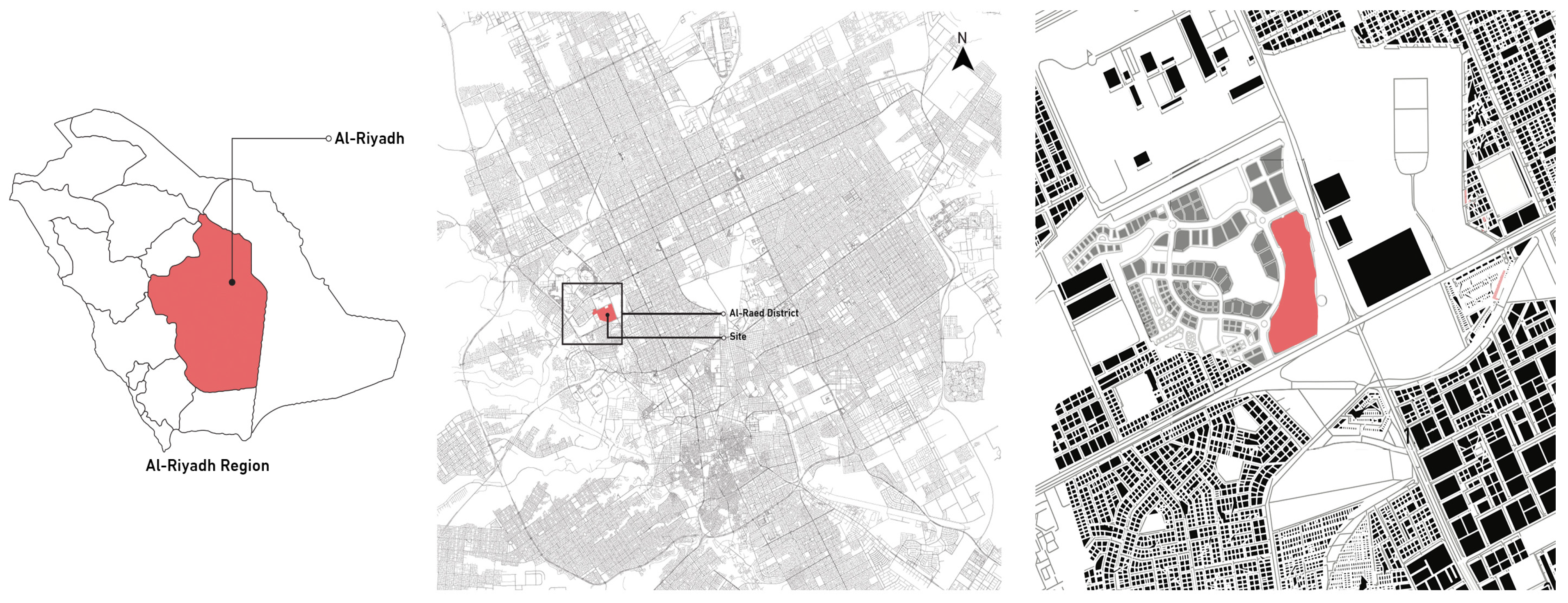
To situate this methodological approach within a concrete territorial context, the Al-Raed neighbourhood in Riyadh was selected as the pilot site for the experimental adaptation of the superblock model (
Figure 1). The selected intervention area corresponds to an approximately 103,561 m
2 southern block within the district, representing a neighborhood-scale urban fragment characterised by a compact yet heterogeneous fabric combining residential compounds, commercial frontages, and proximity to transit infrastructure.
The site is framed by major arterial corridors and located within a walkable distance of metro and bus stations, positioning it within an emerging transit-oriented environment. Morphologically, the area exhibits high solar exposure, fragmented pedestrian continuity, and under-activated public space—conditions commonly associated with car-oriented urban development in hot-arid cities. These spatial and environmental characteristics provide a relevant setting for testing how superblock principles may be contextually recalibrated to integrate compactness, shaded circulation networks, and mixed-use activation under extreme climatic conditions.
The selection therefore reflects a strategic concentration of mobility pressure, redevelopment potential, and climatic exposure within a clearly delimited neighbourhood-scale boundary, enabling the Research by Design framework to be applied to a controlled, yet policy-relevant, urban fragment aligned with Riyadh’s ongoing transformation agenda.
While recent studies have advanced superblock implementation and digital modelling strategies, the explicit operationalisation of circular Research by Design workflows remains underdeveloped. Few approaches integrate geospatial diagnosis, parametric translation, regulatory encoding, and comparative evaluation within a cohesive, non-linear feedback structure. Existing methods frequently prioritise performance optimisation or morphological adaptation, yet they seldom formalise how iterative design experimentation can build a structured evaluative framework serving as a preliminary stage for subsequent quantitative and empirical calibration. This study addresses this methodological gap by proposing a feedback-oriented digital workflow in which spatial hypotheses are iteratively generated, comparatively assessed, and refined under consistent boundary conditions.
This study aims to develop and evaluate an experimental adaptation of the superblock typology using digital workflows to explore how the neighborhood-scale urban form can support compactness, climatic responsiveness, and policy alignment. Within this scope, the study is guided by two exploratory design-research hypotheses:
Compared to the baseline block structure and alternative parametric scenarios, the loop-and-courtyard superblock configuration demonstrated greater pedestrian connectivity and walkability, adhering to regulatory compliance and human-scale requirements, as assessed using a multi-criteria evaluation framework.
Considering the baseline block structure and alternative parametric scenarios, the loop-and-courtyard superblock configuration enhances public space integration and land-use efficiency by reinforcing continuous pedestrian structures and programmatic coherence at the neighbourhood scale. This was evaluated using a multi-criteria evaluation framework.
This study constitutes a preliminary design-research phase, defining spatial scenarios and a structured comparative evaluation framework to provide a foundation for subsequent quantitative validation and empirical assessment.
2. Methodology
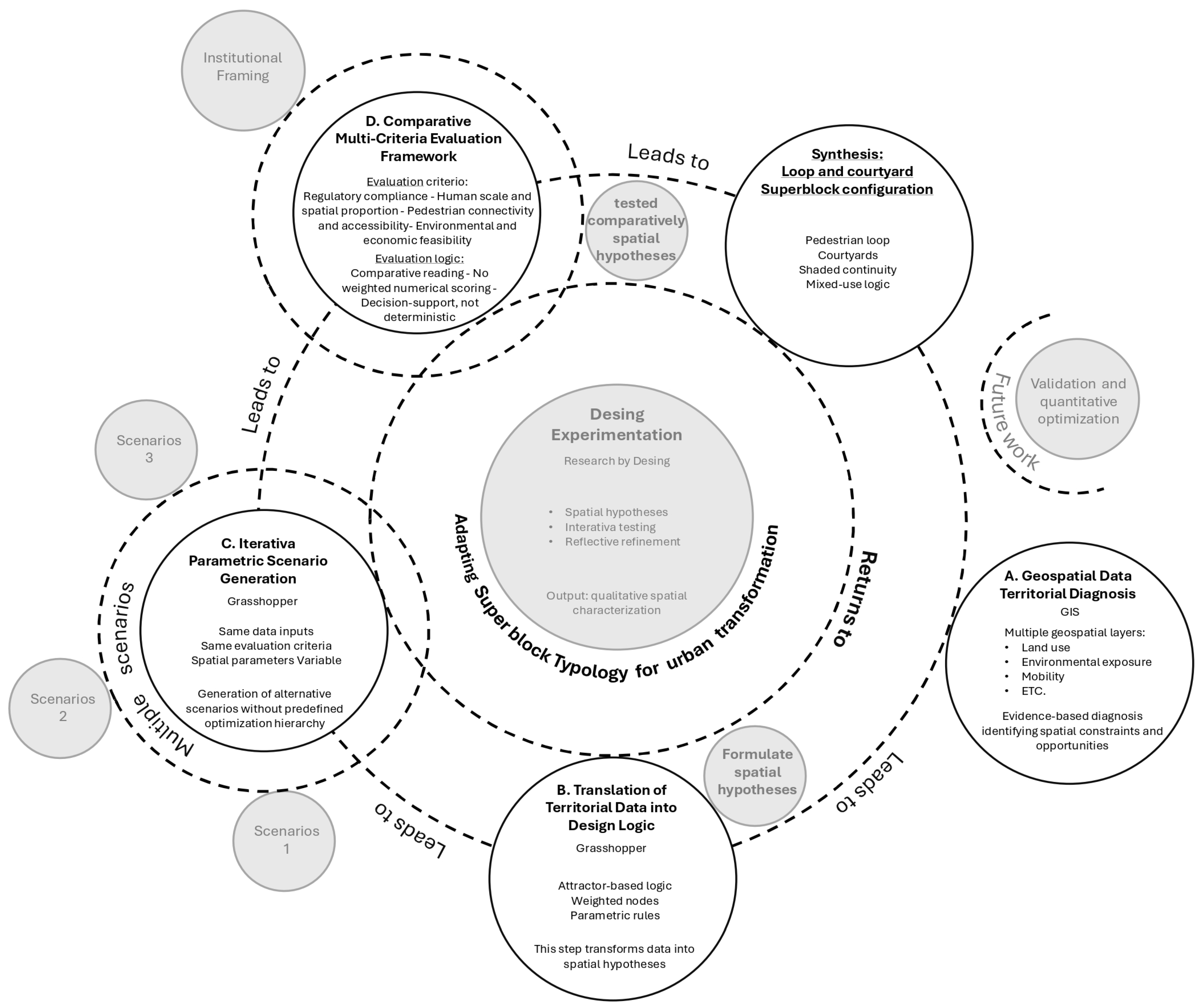
Given the inherent complexity of designing and adapting superblocks in contexts such as Riyadh, characterised by extreme climatic conditions (high temperatures, low rainfall), rapid urban expansion, and a historically car-oriented urban structure, this study adopts an interdisciplinary and exploratory methodological approach integrating advanced digital tools with contextual analysis (
Figure 2). The methodology is explicitly framed as a Research by Design workflow, wherein digital experimentation functions as a structured mode of enquiry rather than a prescriptive optimisation process.
Within this iterative framework (
Figure 2), the methodological process unfolds across four interrelated stages:
- (A)
Geospatial data collection and territorial diagnosis,
- (B)
Iterative parametric modelling and scenario generation,
- (C)
Comparative multi-criteria evaluation of design scenarios, and
- (D)
A definition of the methodological scope and limitations.
This integrative framework reflects a design-research logic, wherein experimentation serves as a means of enquiry rather than a product, linking empirical analysis and creative reasoning within a coherent and reflective workflow. This process responds to the environmental and morphological challenges of the Saudi urban context by proposing adaptive design strategies that maximise social, environmental, and economic outcomes, and remain replicable for other arid cities.
Within this framework, Research by Design is operationalised through controlled cycles of translation, variation, and comparison. Territorial data are translated into spatial parameters, which are systematically calibrated under fixed regulatory and contextual constraints. The resulting configurations are then comparatively assessed using shared criteria. The emphasis is on the structured calibration of variables under consistent boundary conditions, enabling the establishment of explicit relationships between territorial evidence, geometric configuration, and spatial performance.
2.1. Geospatial Data Collection and Analysis
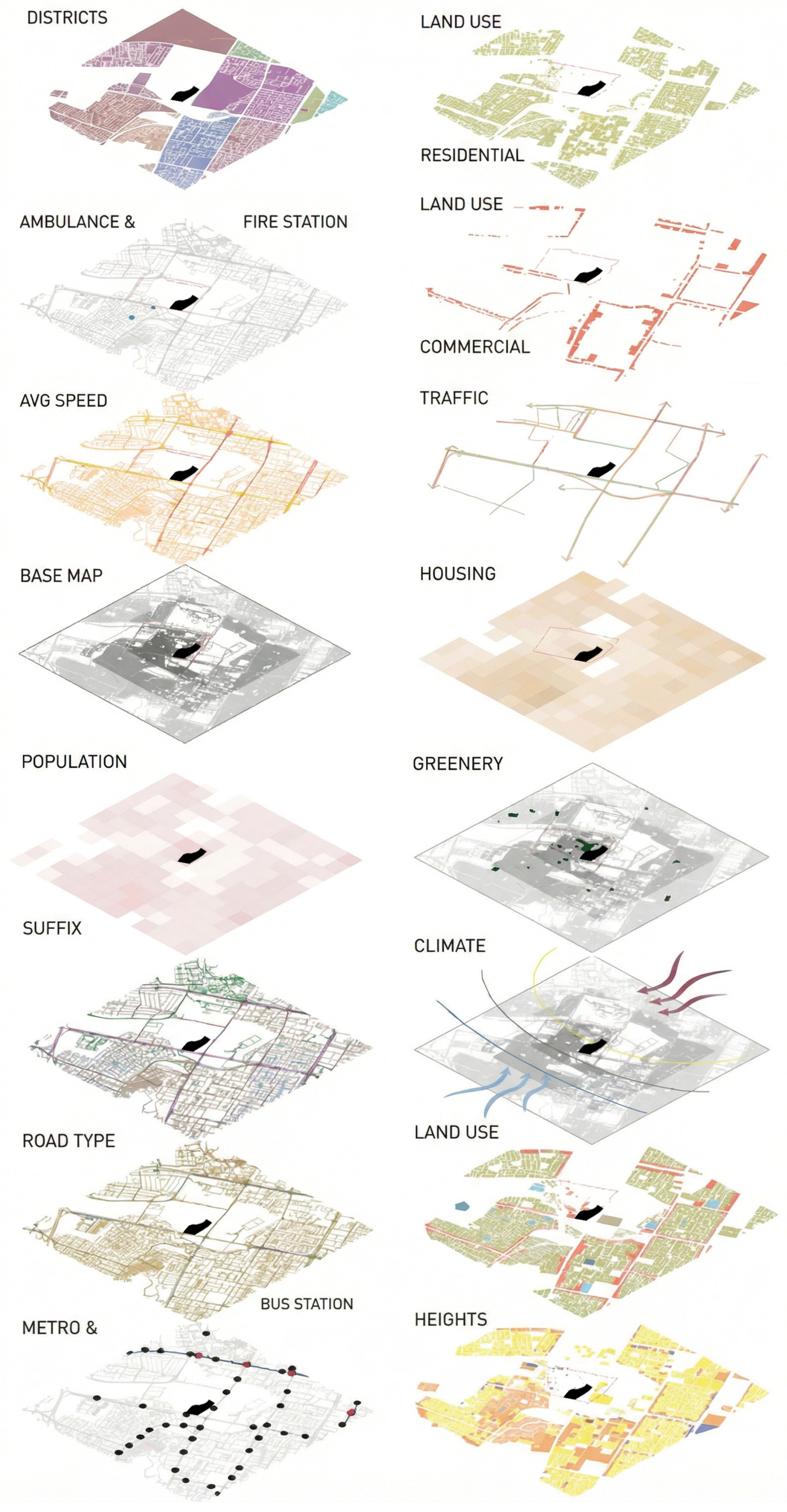
Sixteen urban layers were extracted from the Al-Raed neighbourhood using GIS data, encompassing land use, population density, road hierarchy, public transportation networks, and proximity to key landmarks. These datasets provide a comprehensive understanding of the spatial and functional structure of the area, revealing tensions between density, accessibility, mobility, and green infrastructure.
The geospatial database was assembled from municipal planning records, publicly available territorial datasets, and climate modelling inputs. Core urban layers—including cadastral boundaries, land-use classifications, transit infrastructure, and demographic distribution—were derived from officially published planning sources and cross-verified against satellite imagery and site documentation to ensure spatial consistency. Environmental parameters, such as solar exposure patterns and prevailing wind orientation, were integrated from climate-based modelling sources and adapted to the GIS environment to enable correlation with built morphology. All data sets were standardised through coordinate harmonisation and attribute normalisation to ensure interoperable multi-layer analysis.
Each thematic layer was treated not simply as descriptive cartography, but as an analytical variable within a relational territorial model. Through layered interpretation, the GIS framework identified spatial mismatches, latent potentials for compactness and walkability, and areas suitable for programmatic activation. In this sense, the geospatial model operated as an evidence-structuring platform informing subsequent parametric translation.
Furthermore, a functional and economic analysis was integrated to identify service gaps, potential activation nodes, and areas with higher value-added potential. These indicators served as programming inputs, supporting spatial plausibility and internal coherence rather than providing predictive forecasts.
Within the Research by Design workflow, GIS analysis provided a structured empirical foundation for generating spatial hypotheses. The territorial variables identified in this phase were subsequently operationalised as parametric inputs in the modelling stage (
Section 2.2), ensuring continuity between territorial evidence, geometric exploration, and comparative evaluation.
2.2. Iterative Parametric Modelling as Research by Design
In the second stage, a parametric model was developed using Grasshopper (integrated with Rhino) to translate territorial evidence derived from the GIS diagnosis into generative spatial logic. GIS-derived variables were transformed into rule-based parametric inputs: attractor proximity relationships structured circulation intensity, density gradients were calibrated through proximity relationships, and mobility hierarchies were encoded as geometric constraints within the modelling environment.
The parametric system enabled controlled manipulation of key spatial variables—courtyard density, loop geometry, mass stepping, permeability indices, and open-space distribution—while maintaining invariant boundary conditions. Regulatory constraints, including height envelopes, land-use compatibility, circulation hierarchies, and setback requirements, were encoded as fixed parameters across all iterations, ensuring structural comparability between scenarios from their formulation.
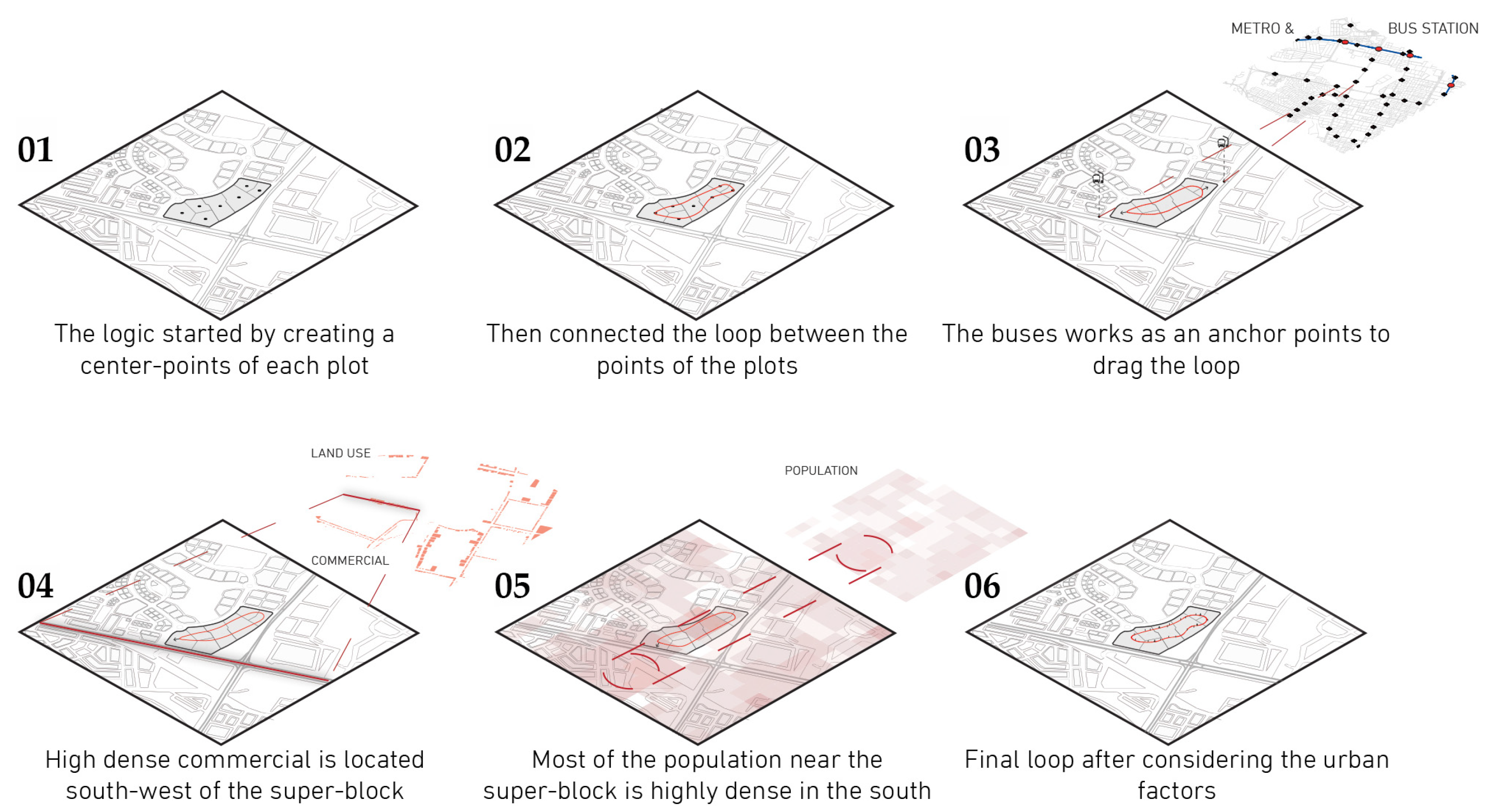
Within this framework, attractor calibration followed an explicit proximity-based geometric protocol structured in three sequential operations. First, the geometric centroid of each plot was computed to establish a neutral spatial reference structure (Step 1: Centroid Identification), ensuring that the initial loop configuration was derived from the inherent geometry of the site rather than from pre-weighted assumptions. Second, the preliminary loop connecting these centroids was discretised into equidistant points to enable precise distance computation. For each identified urban attractor (public transport nodes, commercial areas, green infrastructure, and institutional services), the system calculated the shortest Euclidean distance between the attractor and all discretised loop points. Only the nearest loop point was selected for displacement (Step 2: Nearest-Point Proximity Calibration), while the remaining geometry remained fixed during that specific operation, thereby ensuring controlled local deformation rather than global distortion. Displacement was executed through a vector-based transformation aligned with the shortest-distance vector and constrained by a fixed thermal-walkability threshold between 400 and 500 m, corresponding to an estimated 5–7 min walking distance under Riyadh’s climatic conditions. All attractors were treated with equal weighting; proximity governed displacement without hierarchical differentiation. Finally, the adjusted loop points were reconnected to maintain a continuous closed-loop configuration (Step 3: Loop Synthesis), ensuring geometric continuity. This distance-based rule functioned as an explicit normalisation criterion and established a replicable procedural logic applicable to future scenarios and comparable urban contexts.
The modelling phase involved multiple cycles of parametric variation and feedback calibration. The process progressed through iterative adjustments of spatial, environmental, and regulatory variables, ultimately consolidating three structurally differentiated scenario families for comparative evaluation. Each iteration functioned as a spatial hypothesis, allowing for the comparative examination of relationships between morphology, accessibility, density allocation, and climatic exposure. Parameter calibration was conducted through a structured proximity-based protocol combined with iterative relational adjustment, rather than through predictive or performance-maximizing weighting systems. Attractor intensities and influence parameters were regulated through fixed distance thresholds and equal-weight rules, preserving spatial coherence across scenarios, prioritising this objective over maximising a single performance metric.
Climatic considerations were incorporated into the modelling workflow through the exploratory integration of Ladybug Tools 1.8 as a basic verification mechanism. Preliminary solar radiation and sunlight exposure simulations were conducted using climate-based datasets to assess how mass articulation, courtyard depth, and orientation influenced exposure patterns. These simulations were not intended to provide detailed environmental optimisation or exhaustive quantitative validation. Rather, they served to confirm that the evolving spatial hypotheses remained directionally aligned with passive thermal mitigation principles relevant to Riyadh’s hot-arid context. Consequently, environmental feedback operated as an initial conceptual calibration layer within the iterative process, consistent with the exploratory and preliminary nature of this methodological phase.
Grasshopper’s associative structure facilitated relational dependencies between spatial components, enabling local modifications to propagate system-wide. This relational logic revealed emergent spatial patterns and clarified tensions between enclosure and permeability, density and walkability, and environmental mitigation and activation intensity. Consequently, scenario generation constituted a structured exploration of parametric space under constant boundary conditions.
Within the Research by Design framework, parametric modelling served as a structured instrument of enquiry. Knowledge emerged through systematic variation, metric-informed feedback, and comparative interpretation embedded within the modelling process. The outcome of this phase was not a single optimised solution, but a differentiated family of spatial scenarios prepared for evaluation under a shared comparative framework.
2.3. Comparative Multi-Criteria Evaluation Framework
The third methodological stage consolidated the outcomes of the iterative modelling process using a comparative multi-criteria evaluation framework. Consistent with the Research by Design approach, the assessment was structured not as a weighted optimisation system or single performance index, but as a comparative analysis of scenarios evaluated against a shared and explicitly defined set of criteria.
Four core criteria structured the evaluation:
- (a)
regulatory compliance,
- (b)
human scale and spatial proportion,
- (c)
pedestrian connectivity and accessibility,
- (d)
environmental and economic feasibility.
These criteria operated as non-hierarchical and structurally equivalent dimensions within the comparative framework. Regulatory constraints were encoded as invariant boundary conditions from the outset, and the remaining criteria were assessed in parallel, preventing the dominance of any single evaluative dimension.
Regulatory compliance was assessed by examining adherence to operational planning constraints specific to the selected plot, including height envelopes, land-use compatibility, circulation hierarchies, and setback conditions. Because these parameters were already encoded as fixed boundary conditions within the parametric model (
Section 2.2), all scenarios were structurally comparable and compliant by design, rather than verified subsequently.
Human scale and spatial proportion were examined in relation to the interplay between built mass, open space, and pedestrian interface continuity. Courtyard proportions, enclosure gradients, and transitions between public and semi-public domains were analysed to assess spatial legibility and experiential comfort.
Connectivity and accessibility were evaluated using loop continuity, access hierarchy clarity, permeability ratios, and inter-program distances between key attractor nodes. The assessment moved beyond isolated quantitative outputs to consider the structural coherence of the pedestrian network and its capacity to integrate neighbourhood-scale movement.
Environmental feasibility incorporated preliminary solar exposure findings described in
Section 2.2, assessing shading patterns, mass orientation, and open-space behaviour in relation to basic passive thermal mitigation strategies. Economic feasibility was approximated using built-to-open ratios, land-use efficiency indicators, and volumetric coherence relative to service gaps identified in the territorial analysis. These indicators served as spatial plausibility proxies rather than market forecasts.
To facilitate cross-scenario comparison, indicator outputs were systematically organised within a common evaluative framework, thereby revealing performance synergies and tensions across domains. The framework did not prioritise a single criterion but aimed to identify configurations demonstrating balanced performance across the defined criteria.
The final loop-and-courtyard configuration was selected because it demonstrated the most coherent integration of connectivity logic, preliminary climatic responsiveness, human-scale articulation, and regulatory consistency within the defined framework, rather than as a definitive configuration solution.
Methodologically, this phase formalised comparisons between spatial hypotheses. The evaluation process functioned as a structured decision-support mechanism, transforming parametric variation into evidence-informed spatial synthesis, consistent with the exploratory and preliminary nature of the study.
2.4. Methodological Scope and Limitations
Although the methodology combines GIS-based and parametric tools in a coherent workflow, several limitations define its scope and highlight the need for future research. The approach relies on the availability and reliability of local geospatial datasets and technical expertise, potentially constraining its replication in contexts with limited digital infrastructure.
Furthermore, the lack of participatory validation and post-occupancy data limits the ability to assess social appropriation and long-term behavioural outcomes of the design. Consequently, the results are presented as conceptual and exploratory prototypes rather than prescriptive planning solutions.
Future research should integrate stakeholder participation, dynamic environmental simulations, and empirical validation to enhance methodological robustness and extend the framework beyond the initial design-research phase. These developments would reinforce the alignment between digital experimentation, institutional implementation, and Saudi Arabia’s Vision 2030 sustainability agenda.
3. Results
3.1. GIS-Based Territorial Diagnosis of the Neighbourhood
A comprehensive geospatial analysis was performed using GIS tools to develop a context-responsive and data-informed superblock model. This process combined the analysis of individual urban variables with a layered, relational interpretation of their spatial interactions. Sixteen thematic layers were extracted and examined (
Figure 3), encompassing land use (residential, commercial, and institutional), population density, road hierarchy, public transportation infrastructure, building height, green areas, and climate-related factors, such as solar exposure orientation, prevailing wind direction, and temperature-related vulnerability patterns.
Each layer contributes to a specific analytical dimension in understanding the site’s urban structure. The land-use layers revealed mixed-use corridors along arterial roads, while the population density layer highlighted pressure zones demanding improved accessibility and public space provision. The transportation layers identified opportunities for transit-oriented development, and the climate and greenery layers offered insights into the introduction of passive cooling strategies, shaded pedestrian continuity, and microclimatic comfort solutions.
The analytical process was iterative and relational, facilitating the identification of spatial tensions and synergies within the dataset. For example, the convergence of high-density residential areas with traffic congestion zones suggests the need for traffic calming measures and pedestrian prioritisation. Conversely, the proximity of commercial nodes to transit stations reinforces the potential for compact, walkable mixed-use development. This multi-layered interpretation of the territory, supported by GIS-based analysis, formed a diagnostic foundation for subsequent design experimentation. It established an empirical baseline against which alternative design scenarios were comparatively evaluated, ensuring that superblock proposals were grounded in existing spatial, environmental, and infrastructural conditions while maintaining coherence between territorial constraints and strategic development objectives.
3.2. Identification of the Priority Intervention Area
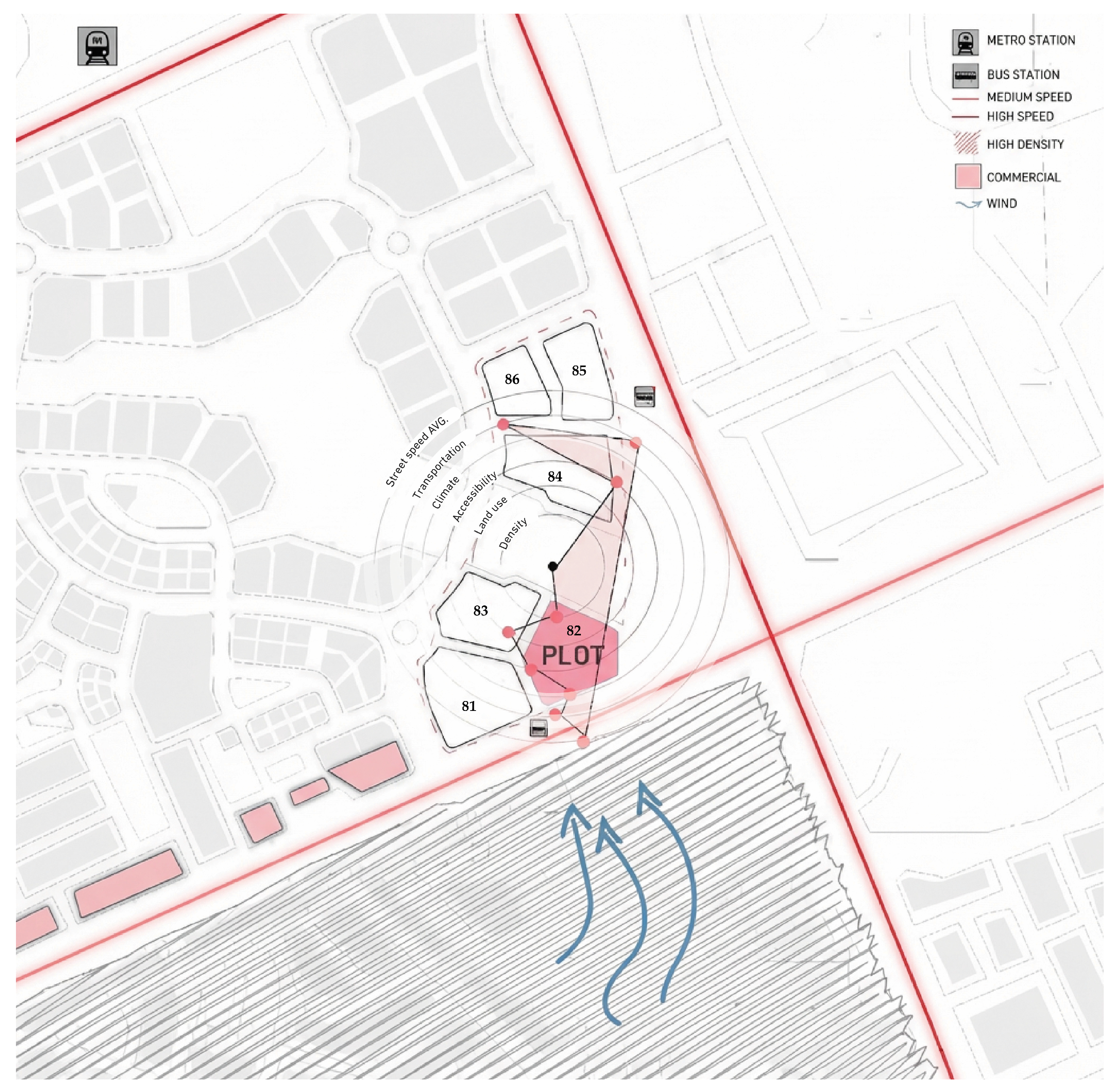
The synthesis of GIS analysis and functional assessment facilitated the identification of the area with the highest intervention potential (
Figure 4). This stage represents a transition from territorial diagnosis to design exploration, wherein each subsequent design iteration is conceived as a spatial hypothesis informed by quantified territorial data.
As shown in
Figure 4, GIS analysis identified the southern sector of the Al-Raed neighbourhood as the pilot site for superblock implementation, owing to its proximity to public transport infrastructure, strong connectivity to metropolitan corridors, adjacency to dense residential zones, and concentration of commercial activity.
This selection represents a design-research decision informed by comparative territorial evidence, positioning the site as a strategic intervention area with the potential to structure neighborhood-scale spatial reconfiguration. From an institutional perspective, the selected site demonstrates strong alignment with Saudi Arabia’s Vision 2030 framework. Its integration with transit infrastructure supports the National Transport and Logistics Strategy, and the potential incorporation of shaded pedestrian networks and green corridors contributes to the Saudi Green Initiative. Simultaneously, its compact and mixed-use character aligns with the objectives of the Quality of Life Program.
3.3. Selected Site Data Analysis Breakdown and Market Feasibility Inputs
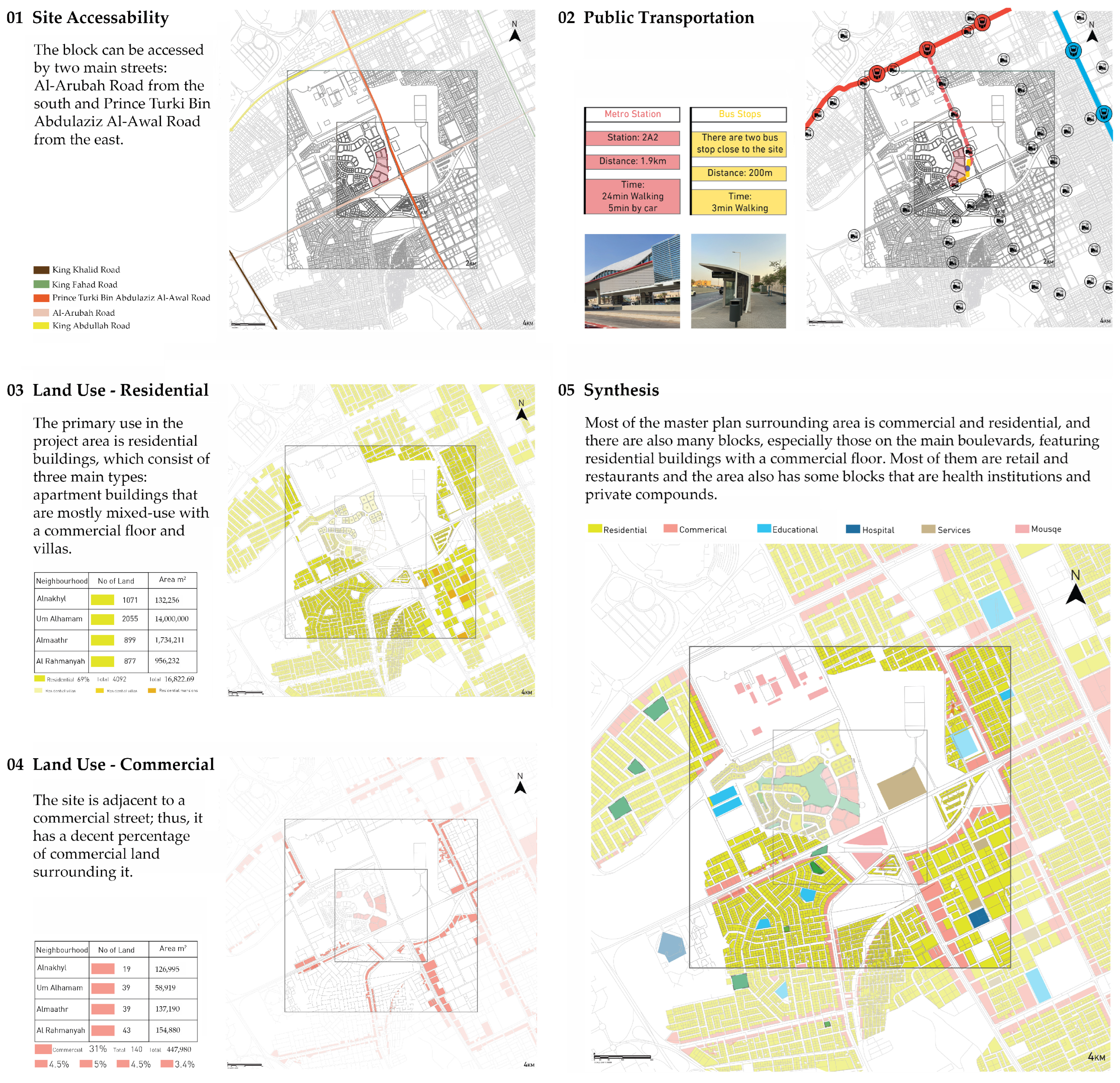
The selected site was examined using a layered approach, incorporating GIS data and focusing on four key dimensions: accessibility, public transportation options, and residential and commercial land use (
Figure 5). Each layer was interpreted individually and cross-referenced to identify spatial patterns that informed the design logic of the superblock.
First, accessibility, as illustrated in
Figure 5 (01), can be interpreted as the site being framed by major arterials such as Al-Urouba Road and Prince Turki Bin Abdulaziz Al-Awal Road. While these roads provide strong vehicular connectivity, they also create physical barriers to pedestrian continuity and contribute to traffic congestion. This underscores the need for internal circulation that prioritises walkability and traffic calming. Reorganising circulation around pedestrian loops reduces car dependency and aligns with the National Transport and Logistics Strategy, which seeks to improve safety and promote non-motorised mobility.
Second, public transportation (
Figure 5 (02)) is available, as the site is located within walking distance (3–5 min) of metro and bus stations, indicating a strong potential for transit-oriented development (TOD). This condition supports increased density and mixed-use programs near transport nodes, encouraging a shift from private vehicles to public transportation. Integrating TOD principles at this scale aligns with the Vision 2030 mobility objectives and first- and last-mile connectivity initiatives.
Third, concerning residential land use (
Figure 5 (03)), the surrounding area exhibits a heterogeneous fabric comprising villas, apartment buildings, and gated compounds. This diversity necessitates new housing typologies that balance privacy and scale with increased density and inclusivity. Consequently, the superblock framework supports the Quality of Life Program’s housing objectives by promoting equitable access to community amenities and services.
Fourth, commercial land use (
Figure 5 (04)) shaped the design of active frontages and public plazas along the southern and western edges, reflecting the site’s proximity to an active commercial corridor and maintaining continuity with existing urban activity nodes. These interventions reinforce pedestrian vitality and economic vibrancy, aligning with Vision 2030’s goals to enhance liveability through human-scale public spaces.
The synthesis of these layers (
Figure 5 (05)) defines the spatial logic of the proposed superblock design. Analysis confirmed that compact, mixed-use configurations, supported by shaded walkways, Transit-Oriented Development (TOD) integration, and activated public plazas, best address the neighbourhood’s socio-spatial challenges. Consequently, the proposal translates national priorities for sustainable mobility and liveability into a tangible urban prototype at the neighbourhood scale.
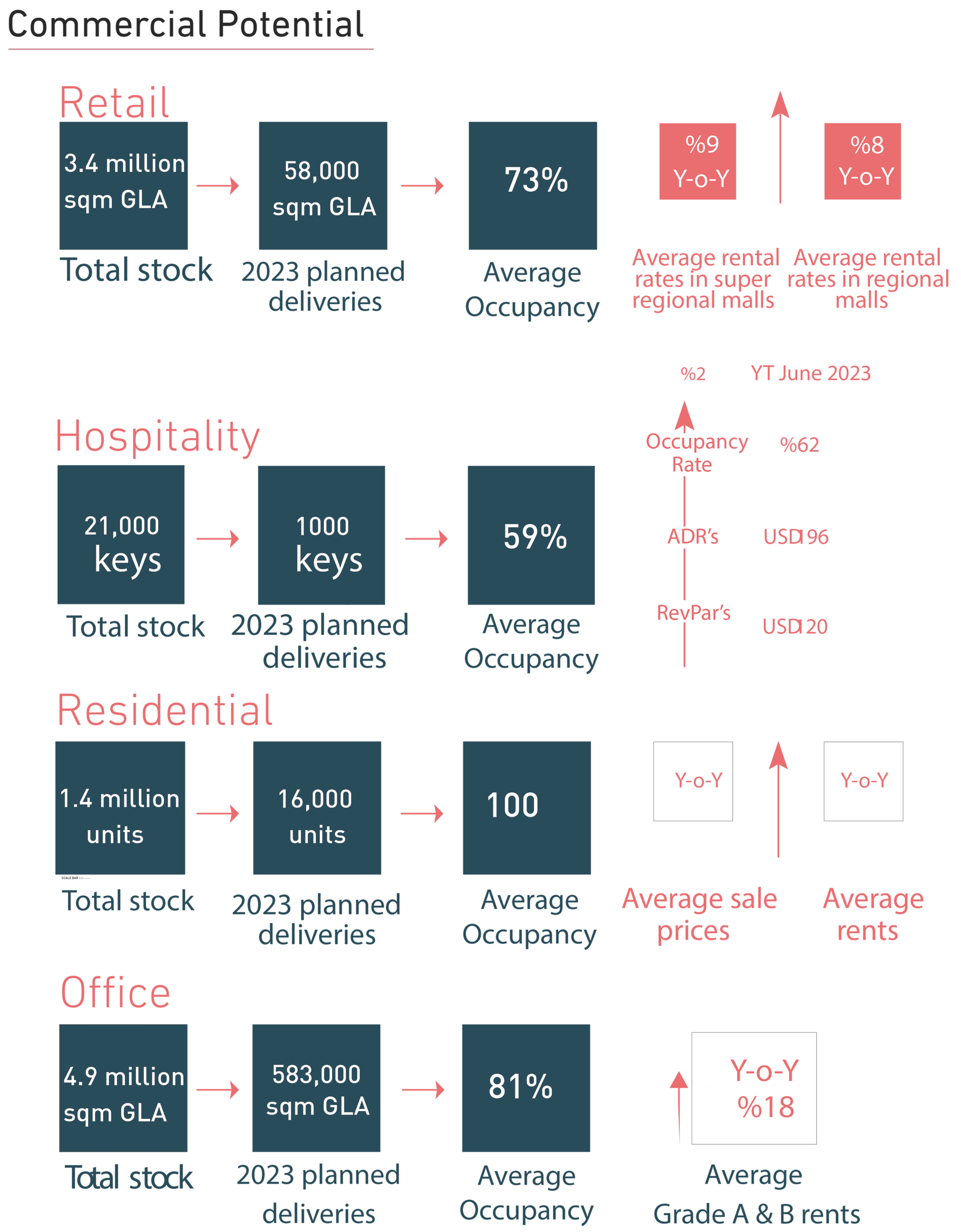
Complementing the spatial analysis, a market study evaluated the commercial, retail, hospitality, and residential potential of the area (
Figure 6). This assessment identified service gaps, investment opportunities, and high-value-added zones, informing the strategic placement of active frontages and mixed-use areas while minimising overlap in saturated sectors. By integrating this functional and economic dimension with geospatial layers, this study provides an additional operational foundation for defining the internal structure of superblocks. Market input was treated as a feasibility-oriented programming aid rather than an empirical demand forecast.
3.4. Dynamic Loop Development and Spatial Distribution
Building on the research by design logic described in
Section 2.2, a GIS-based diagnosis informed the parametric workflow developed in Grasshopper. Key urban functions, derived from land use, population density, and transport infrastructure layers, were translated into proximity-based attractor nodes to guide path formation, density distribution, and programmatic clustering. Integrating corridors with higher activation potential and areas of greater economic feasibility, a loop-and-courtyard strategy was developed.
Each parametric iteration functioned as a spatial hypothesis and was evaluated comparatively rather than optimised numerically. By controlling the manipulation of proximity relationships, fixed influence thresholds, permeability ratios, and density gradients, the modelling process enabled the systematic observation of how spatial relationships evolved under varying configurations. Attractor points, such as metro stations, commercial hubs, and institutional facilities, were integrated through the equal-weight, nearest-point protocol described in
Section 2.2, facilitating sensitivity analyses that revealed the effects of adjustments on connectivity, zoning coherence, and pedestrian flow.
The influence radii and displacement vectors were calibrated using the structured proximity-based protocol described in
Section 2.2, wherein attractor interaction followed nearest-point selection and vector-based displacement occurred under fixed thermal-walkability constraints. As illustrated in
Figure 7, these iterations were interpreted using spatial performance indicators, supporting the refinement of the loop as the primary organising structure and courtyards as microclimatic and social regulators.
The resulting zoning logic positioned active commercial and hospitality uses along transport-oriented and arterial edges, while residential and leisure programs were consolidated within quieter interior areas, reinforcing both functional coherence and environmental comfort.
Beyond technical performance, the dynamic loop advances institutional priorities by strengthening first- and last-mile connectivity, supporting passive cooling through shaded networks, and enhancing pedestrian-oriented public space. Progressive integration of spatial, environmental, and functional data enabled the modelling of an operative trajectory within the site, revealing emergent spatial relationships that informed design decisions. This demonstrates how digital experimentation can structure a policy-aligned superblock model tailored to Riyadh’s climatic and socio-spatial dynamics.
3.5. Iteration of Multiple Scenarios
Based on processed geospatial and parametric data, three initial spatial proposals were developed as iterative design scenarios. These scenarios, rather than representing alternative formal solutions, operated as comparative spatial hypotheses within the Research by Design framework. Each scenario explored the principles of compactness, accessibility, and sustainability through diverse spatial configurations, while simultaneously revealing contextual tensions related to municipal regulations, the urban scale, and programmatic distribution. Through this structured comparison, the iterative process allowed the identification of operative spatial design logics—such as loop continuity, courtyard-mediated microclimatic buffering, and perimeter activation—that extend beyond the specific case configuration.
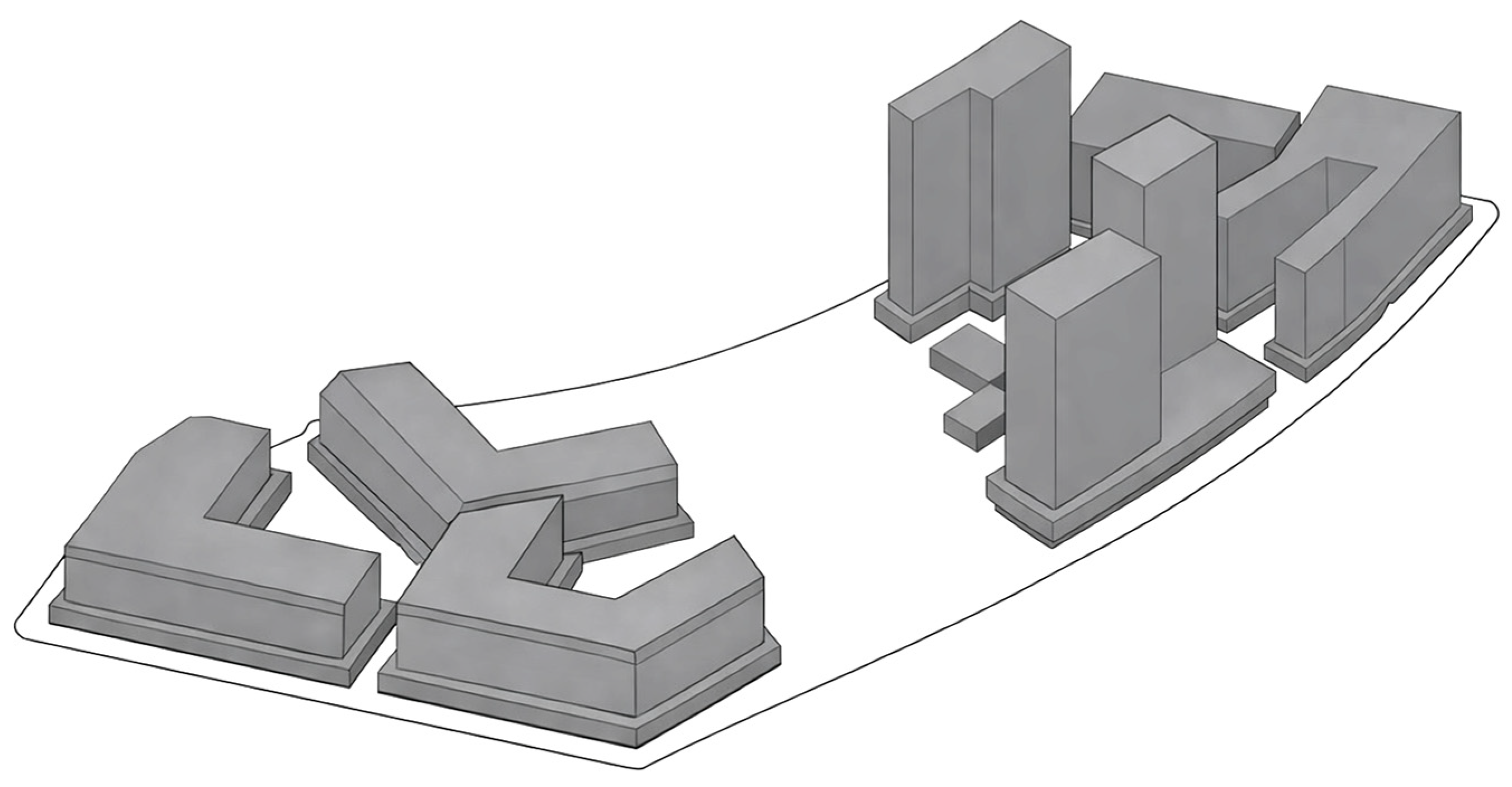
Scenario 1 (
Figure 8) developed a spatial configuration utilising “C”-shaped building forms oriented toward a central public space. This arrangement emphasises enclosure and centrality; however, it presents significant limitations, including building heights exceeding municipal regulations, insufficient consideration of the human scale, and inefficient internal circulation paths that fail to optimise pedestrian connectivity.
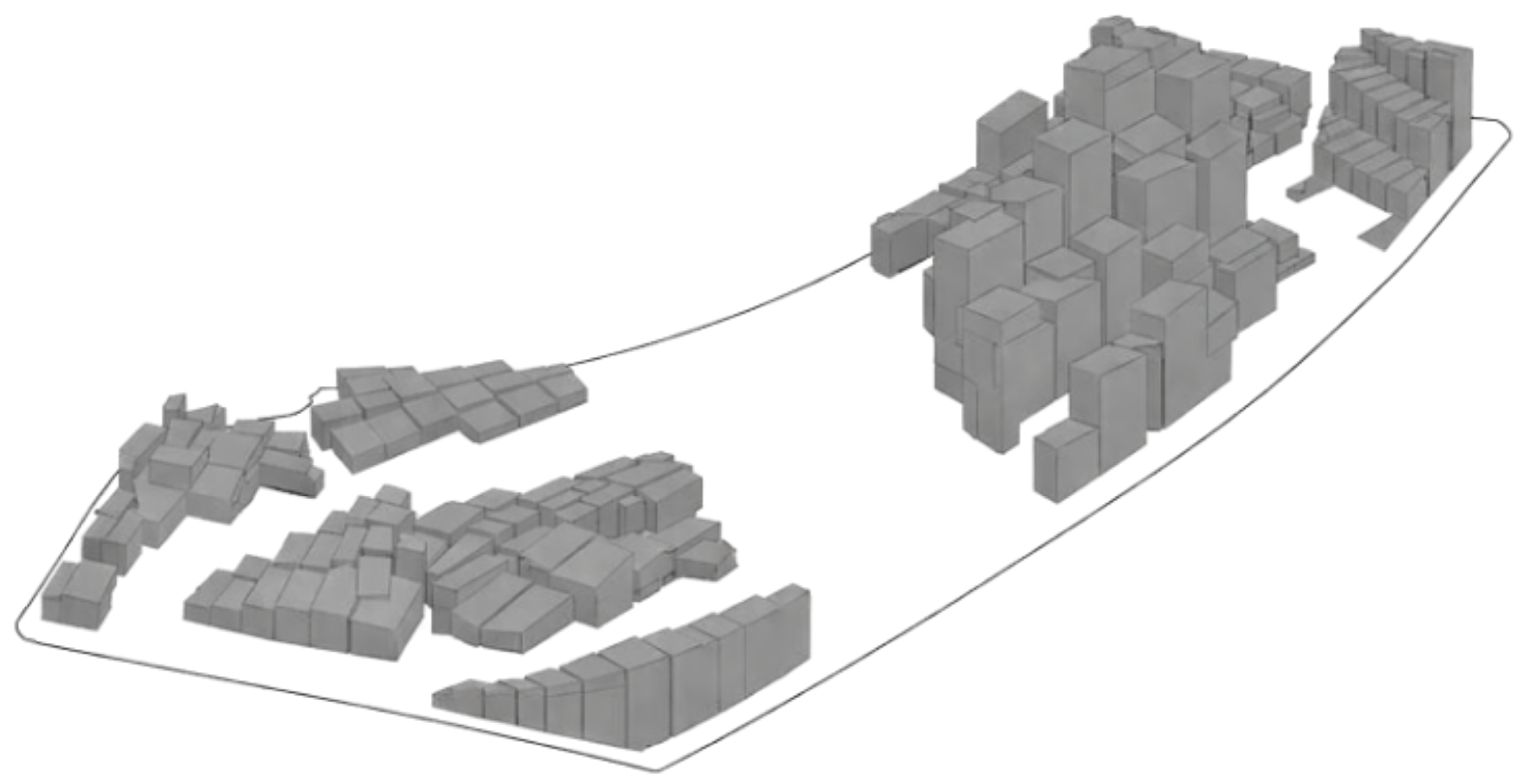
Scenario 2 (
Figure 9) utilised pixelated building masses arranged around central voids. While this approach increased formal variability, it resulted in fragmented spatial logic, reduced functional coherence for the intended superblock uses, and insufficient internal connectivity, thereby limiting interaction between different areas of the site.
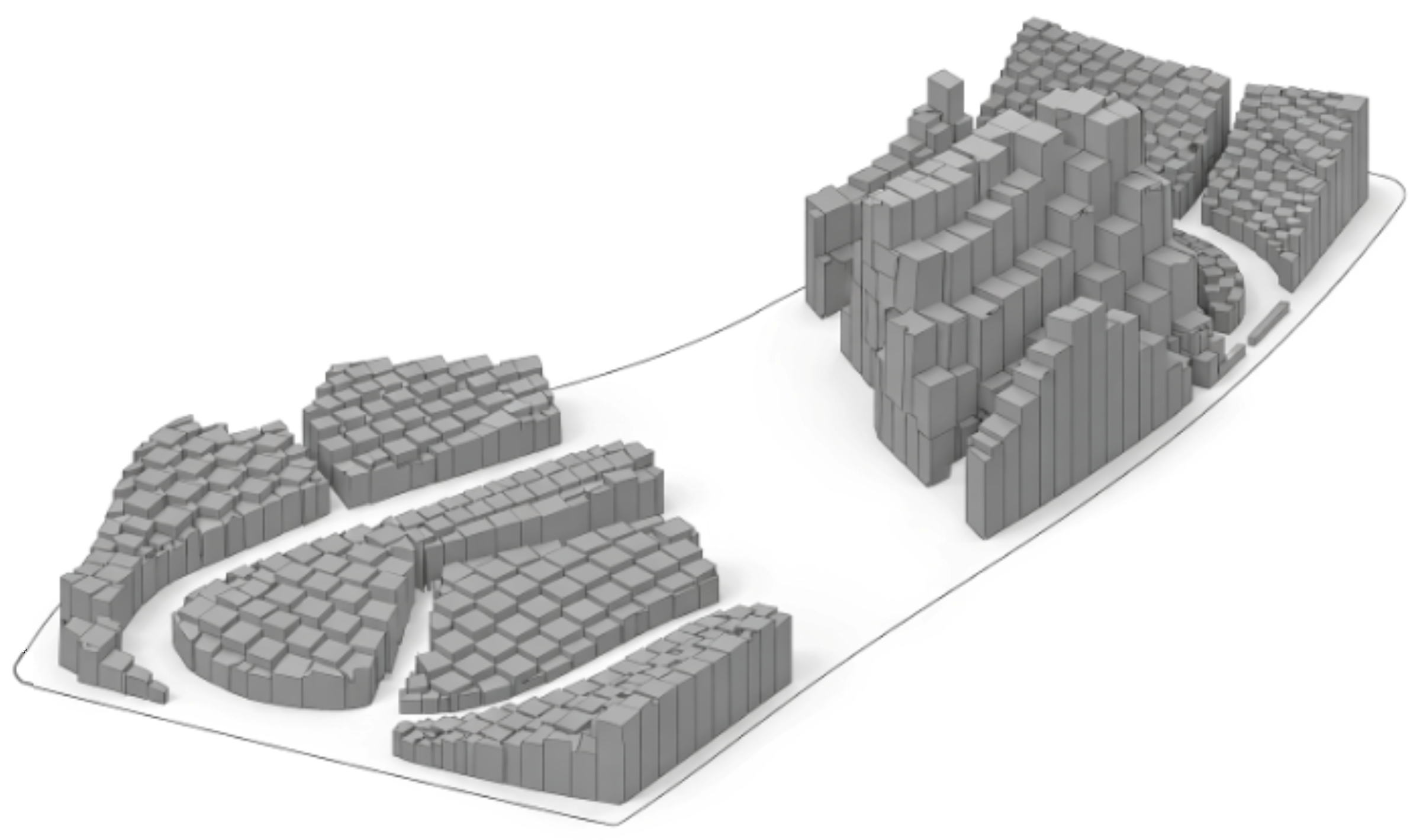
Scenario 3 (
Figure 10) featured linear plazas arranged in a looped trajectory. Although conceptually aligned with circulation continuity, this scenario offered insufficient public space for community interaction and produced architectural configurations that did not meet the project’s environmental and economic feasibility objectives.
The comparative evaluation of the three scenarios revealed a set of structuring lessons. First, Riyadh’s regulatory framework imposes strict constraints on building scale and massing, requiring careful contextual adaptation of international superblock precedents and reinforcing the centrality of regulatory compliance within the design process. Second, compactness and accessibility must be balanced with the provision of human-scale public spaces, calibrating proportions and spatial relationships that respond both to experiential comfort and to local social and cultural practices. Third, pedestrian connectivity demands coherent internal circulation systems, avoiding fragmented or excessively extended pathways that undermine the legibility and continuity of the urban fabric. Finally, environmental and economic feasibility cannot be treated as secondary criteria; instead, they must be integrated into the core spatial logic of the design. These conceptual convergences directly informed the synthesis of the final model.
Table 1 synthesises the comparative assessment of Scenarios 1–3 according to the four evaluation criteria defined in
Section 2.3.
3.6. Final Model
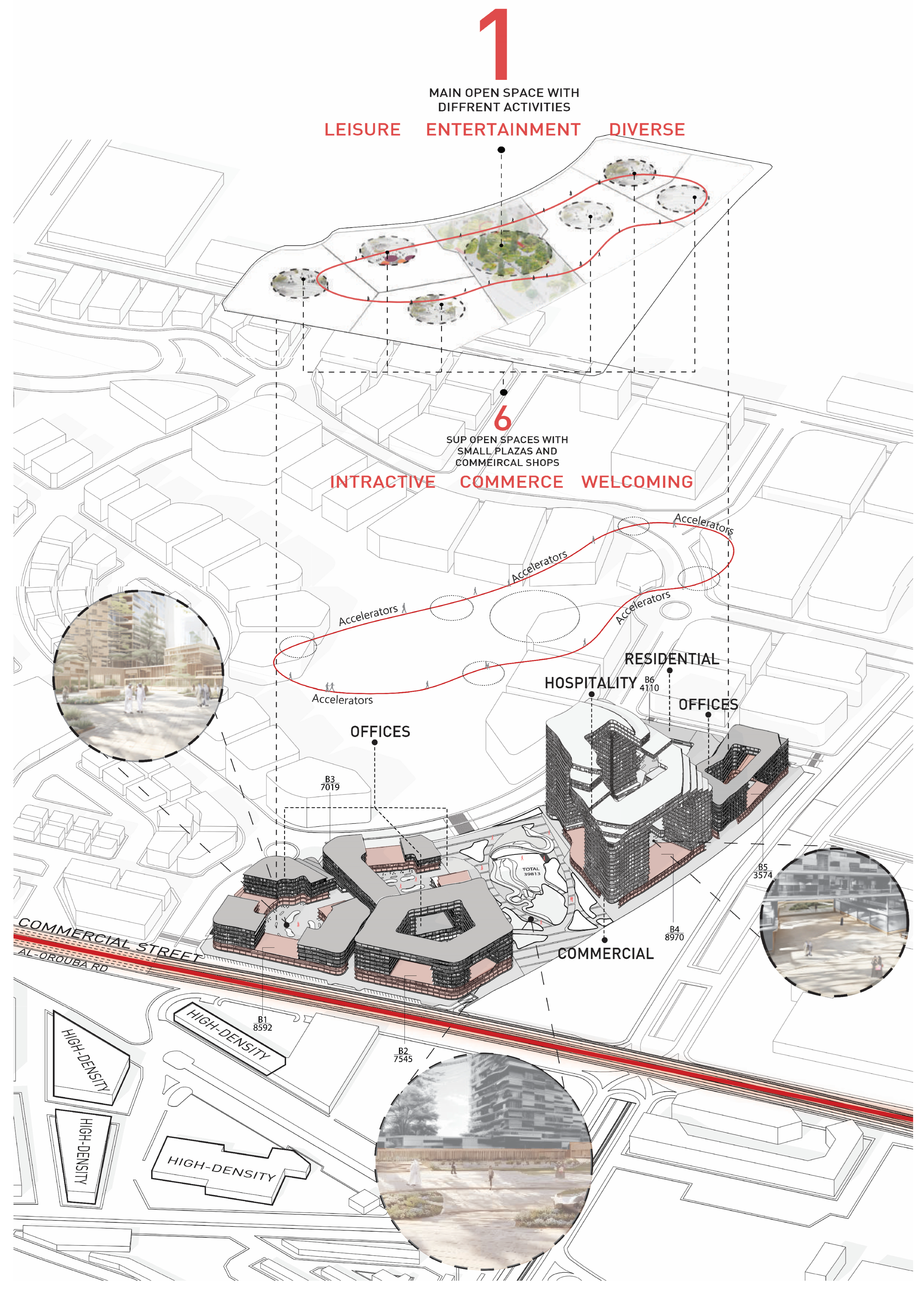
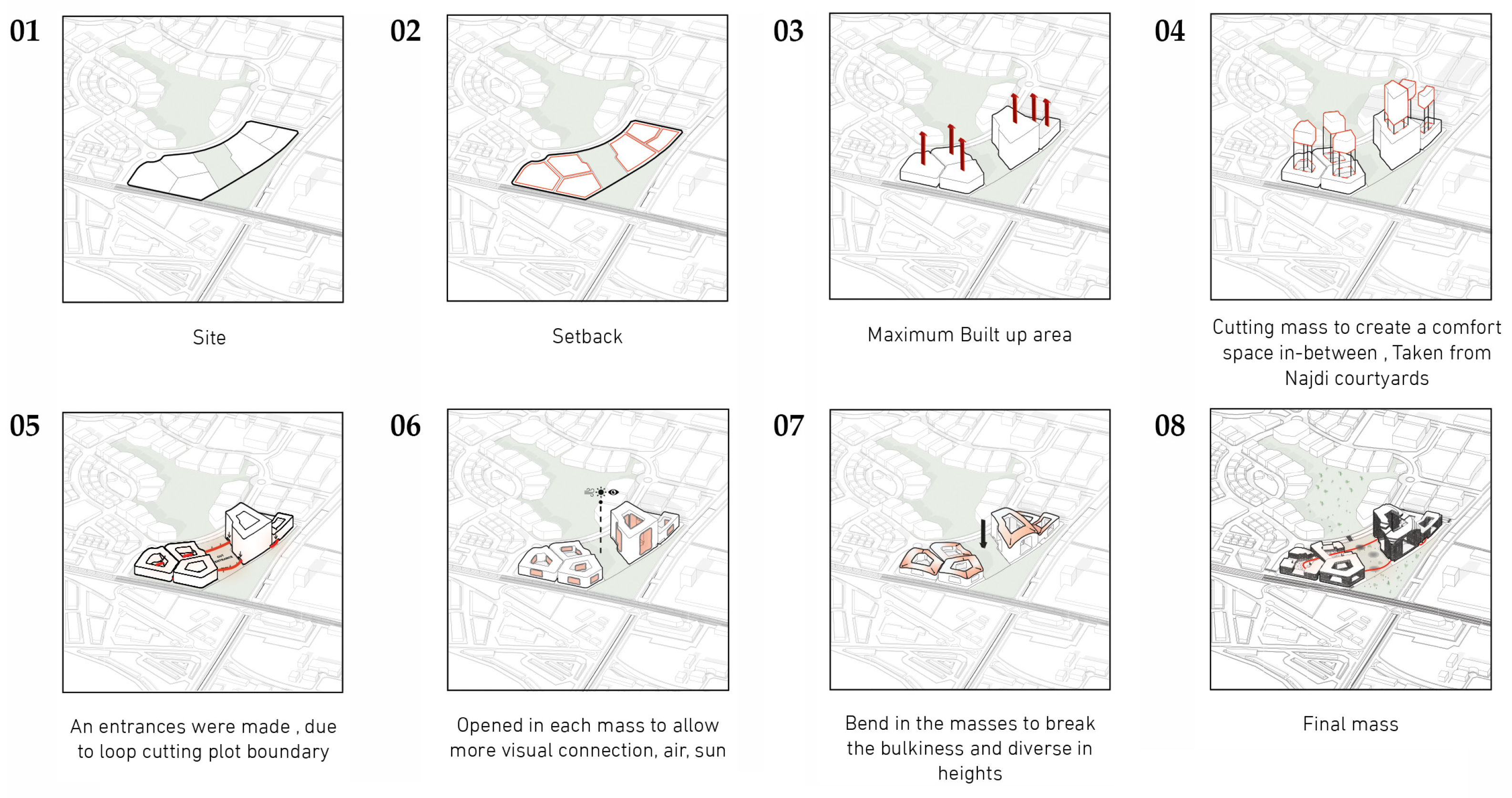
Building on the lessons derived from the iterative scenarios, the final proposal (
Figure 11) synthesises previous explorations through the articulation of continuous pedestrian loops, inner courtyards, and transitional public spaces designed to promote non-motorised mobility and microclimatic comfort.
The diagram explicates the structural logic of the final configuration, consolidating the comparative lessons derived from Scenarios 1 and 2 while integrating selected continuity principles observed in Scenario 3. In contrast to Scenario 1—where volumetric enclosure exceeded regulatory limits and circulation efficiency—and Scenario 2—where mass fragmentation weakened internal coherence—the final model integrates movement, enclosure, and programmatic zoning within a unified spatial framework. The pedestrian loop operates as the primary organizing spine, structuring permeability and internal connectivity, while inner courtyards function as environmental moderators and social condensers. This synthesis reflects the cumulative calibration of regulatory constraints, climatic considerations, and human-scale spatial relationships developed through the iterative evaluation process.
Courtyards function simultaneously as environmental regulators and social nodes, facilitating passive cooling and informal social interaction. In contrast, the zoning strategy concentrates mixed-use functions along transport-oriented and arterial corridors, while locating residential and leisure programs within quieter interior zones. This spatial arrangement reinforces functional coherence and addresses climate exposure and patterns of use.
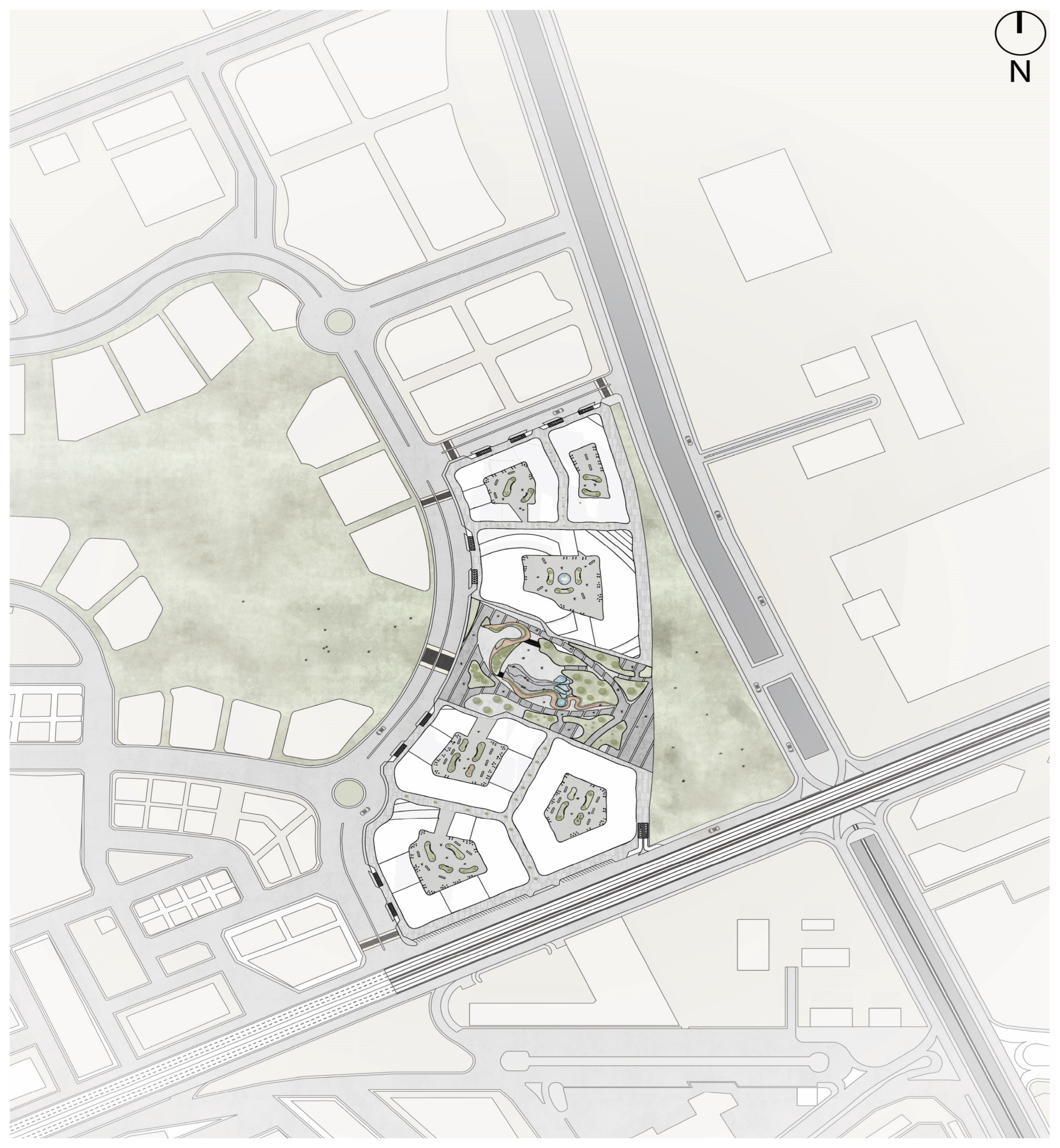
The spatial organisation of the final configuration is detailed in the floorplan (
Figure 12), illustrating the relationships between the built form, public spaces, and pedestrian circulation. The isometric representation (
Figure 13) communicates the volumetric and experiential qualities of the proposal.
3.6.1. Programmatic Distribution and Spatial Intensity
As shown in
Table 2, the final model is organised into six primary building clusters (B1–B6), encompassing a total built-up area of 395,328 m
2, distributed across office, commercial, residential, and hospitality uses. Office functions account for 151,264 m
2 (38.3%) of the total built-up area and are primarily concentrated in clusters B1, B2, B3, and B5, reinforcing the site’s role as a mixed-use employment hub. Commercial uses comprise 84,228 m
2 (21.3%) and are strategically positioned along ground levels and perimeter edges to activate pedestrian interfaces and enhance permeability. Hospitality constitutes 140,757 m
2 (35.6%) and is concentrated predominantly within cluster B4, establishing a programmatic anchor within the development. Residential use is limited to 19,078 m
2 (4.8%) within cluster B6, intentionally positioned to ensure privacy while maintaining proximity to services and circulation loops.
Although the total built-up area is substantial, the footprint remains comparatively limited (39,813 m2), reflecting a compact massing configuration with vertical intensity. The indicative relationship between built area and footprint suggests a high-density spatial structure consistent with metropolitan accessibility and transit-oriented conditions. This distribution reveals a functional hierarchy, characterised by office and hospitality intensity complemented by commercial activation at lower levels and a contained residential component.
From a methodological perspective, the programmatic distribution serves as an internal consistency reference within the design process. It clarifies how spatial allocation aligns with the territorial diagnosis and the parametric configuration developed in previous stages, without implying predictive market modelling.
3.6.2. Preliminary Environmental Performance Assessment
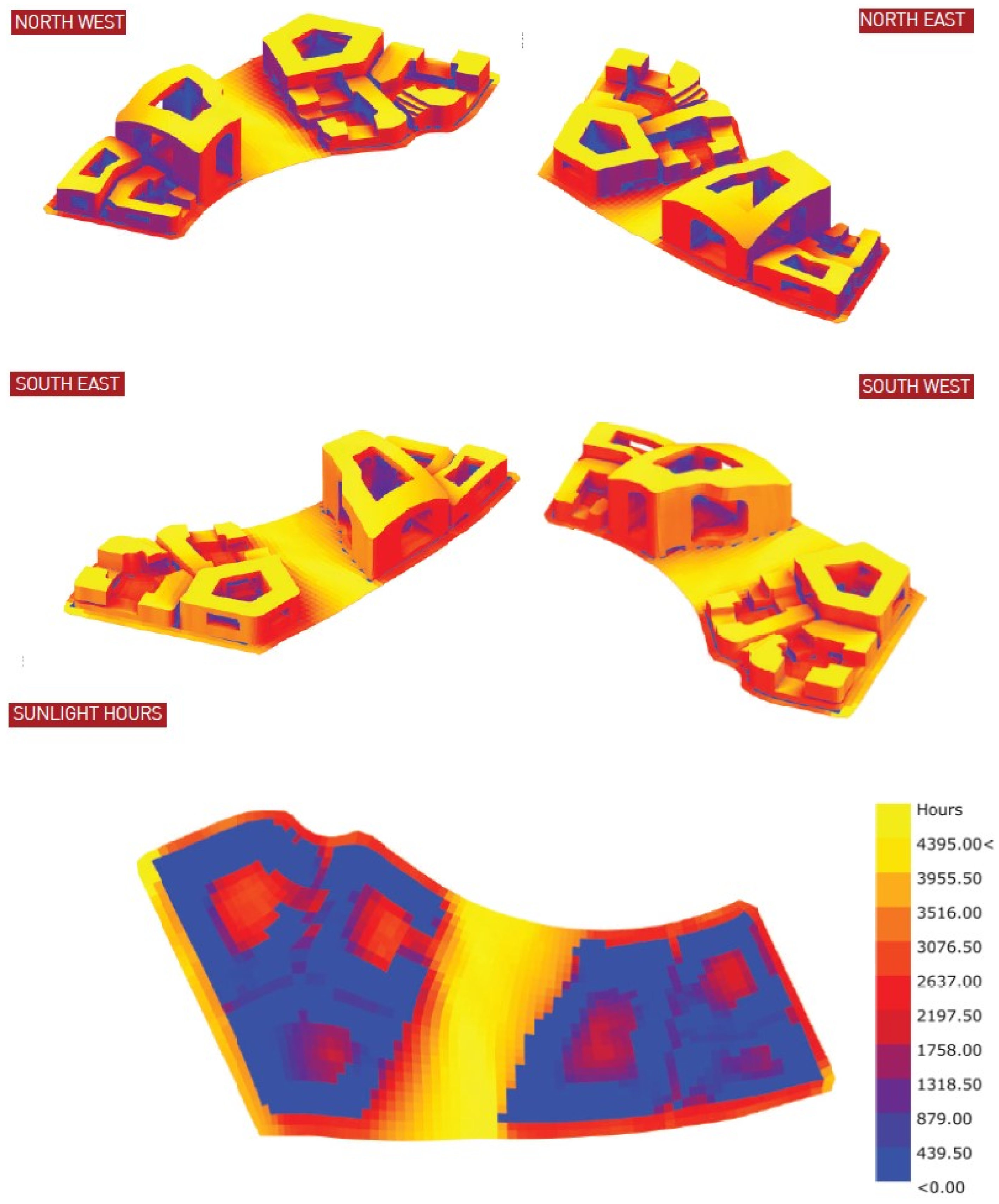
To complement the spatial synthesis, a preliminary annual sunlight exposure analysis was conducted using the Ladybug Tools “Sunlight Hours” component within Grasshopper, based on an annual simulation cycle (8,760 h) serving as an indicative exposure reference under clear-sky assumptions (
Figure 14). The evaluation considered four principal orientations—northwest, northeast, southeast, and southwest—to examine directional variability in solar access across building envelopes and ground surfaces.
Results indicate differentiated cumulative sunlight exposure patterns influenced by mass articulation and courtyard geometry. Horizontally exposed and south-facing surfaces exhibit the highest solar availability, exceeding 4000 h/year, while recessed courtyards and north-oriented façades demonstrate significantly lower exposure levels. Intermediate zones show moderated values due to self-shading and adjacency effects within compact cluster configurations.
These findings confirm the influence of orientation, volumetric stepping, and courtyard depth on solar distribution patterns. However, consistent with the exploratory scope of this study, the analysis is interpreted as an initial environmental verification rather than a comprehensive optimisation or dynamic thermal simulation. It confirms directional alignment between geometric configuration and passive climatic mitigation principles relevant to Riyadh’s hot-arid context. Therefore, the analysis operates as a methodological consistency check within the design process, rather than a performance-driven optimisation study.
The final model represents a design-research outcome rather than a validated planning solution, demonstrating how geospatial evidence and parametric experimentation can generate a policy-relevant urban prototype. Its relevance lies not in the formal configuration itself, but in the structured integration of connectivity logic, courtyard-mediated climatic regulation, and perimeter-based activation as operative spatial logics derived from iterative testing. The proposed superblock configuration integrates compactness, pedestrian connectivity, and climatic sensitivity, aligning with Saudi Arabia’s broader national priorities of sustainable transport, resource management, and urban liveability. Consequently, the loop-and-courtyard configuration should be understood as a contextually derived synthesis, open to further calibration rather than a prescriptive typological template.
4. Discussion
This study presents an approach for the contextual adaptation and critical redefinition of urban models, such as the superblock, in arid regions experiencing rapid urbanisation, exemplified by Riyadh. The proposal integrates principles of compactness, pedestrian connectivity, and public space activation with the environmental, regulatory, and cultural specificities of the region. Rather than replicating established frameworks, this study positions design as a context-sensitive reformulation of an urban paradigm under different climatic and institutional constraints, leveraging digital and climatic variables spatially translated within the urban paradigm of the Arabian Peninsula.
Section 3.6’s programmatic consolidation and preliminary environmental readings further illustrate how spatial configuration, functional intensity, and climatic exposure were examined as interrelated variables within this exploratory framework.
The study draws on Research by Design principles [
10,
11,
12,
13,
14], viewing design as a structured mode of enquiry developed through spatial iterations and reflection. Within this framework, producing knowledge through design involves the systematic translation of territorial data, regulatory constraints, and climatic parameters into spatial hypotheses, which can then be comparatively evaluated. As detailed in
Section 2.2 and
Section 2.3, parametric iterations were not employed to optimise a single configuration, but to explore how variations in permeability, density gradients, and open-space distribution affected connectivity, climatic exposure, and regulatory alignment. Consequently, knowledge emerges from the controlled manipulation of variables and the explicit comparison of structurally comparable scenarios, rather than solely from the final configuration. This comparative analysis encompasses geometric, programmatic, and preliminary environmental dimensions, framing design as an integrative evaluative process within a hot-arid context.
The final superblock configuration produces spatial transformations with direct implications for everyday urban life. Reorganising proximity, accessibility, and environmental comfort into a coherent loop-and-courtyard structure reconfigures spatial conditions for daily routines at the neighbourhood scale. Consolidating mixed-use functions within shaded pedestrian trajectories compresses commuting, shopping, leisure, and social interaction into shorter, thermally moderated paths. This reduction in spatial friction supports the potential for behavioural shifts toward active mobility and reinforces neighbourhood legibility.
The courtyard system functions as a microclimatic moderator within Riyadh’s hot-arid context, mitigating solar exposure and facilitating extended outdoor occupation. Consequently, pedestrian circulation is reframed as a primary spatial logic rather than a secondary element. Movement corridors serve as social interfaces and environmental buffers, promoting incidental encounters and reinforcing perceived safety. In this sense, mobility functions not merely as infrastructure but as a spatial catalyst for social continuity.
Public space activation is being redefined. The distributed network of courtyards and loop edges generates a layered public realm capable of accommodating varied intensities of use, ranging from informal gatherings to commercial spillover and retreat. Rather than remaining residual open space, these environments function as embedded social infrastructure supported by preliminary environmental calibration.
These spatial effects suggest that the superblock model functions as a mediator between climatic adaptation, social life, and everyday urban practices. However, the lack of participatory validation and post-occupancy behavioural data limits the empirical verification of these impacts. Future research should therefore incorporate stakeholder engagement, behavioural monitoring, and comparative application across additional Saudi contexts to consolidate this exploratory framework into a validated planning methodology.
Building on previous frameworks, such as those proposed by Nieuwenhuijsen et al. [
5], this study extends the debate from post-industrial Western contexts to rapidly urbanising and climate-constrained environments. Unlike replication-based strategies, the approach developed here employs a context-oriented and policy-aligned logic, prioritising geospatial diagnosis and morphological interpretation. It bridges data-driven planning [
2] with cultural and morphological sensitivities [
16,
17,
18], areas that remain underrepresented in mainstream literature. In this framework, digital tools operate as analytical mediators connecting territorial evidence with spatial decision-making.
The findings reveal both the potential and limitations of digital experimentation. While GIS and parametric tools expand analytical capacity and structure iterative exploration, their effectiveness hinges on the availability and reliability of local datasets and the requisite technical expertise. The absence of participatory validation and real-time behavioural data reveals a gap between digital representation and lived urban experience. Consequently, this study should be interpreted as a preliminary structuring phase within a broader research trajectory, necessitating subsequent empirical calibration.
Beyond methodological implications, the outcomes contribute to governance-oriented decision support within contexts of rapid urban transformation. Three interrelated governance dimensions can be identified:
- (i)
Regulatory compliance and institutional alignment are demonstrated through the iterative design process, showcasing how parametric modelling can integrate municipal regulations concerning building height, land use, and accessibility into early-stage spatial scenarios. By embedding compliance within the design logic, the superblock model serves as a regulatory testing ground, assisting authorities in aligning spatial experimentation with planning codes and advancing national strategies, including the Quality of Life Program and the National Transport and Logistics Strategy.
- (ii)
Decision support for planning authorities: Integrating GIS and Grasshopper offers a traceable workflow that strengthens decision-making at the municipal level. The ability to generate multiple scenarios, compare their trade-offs against shared comparative evaluation criteria—liveability, connectivity, climatic responsiveness, and feasibility and document the rationale for selection positions the superblock workflow as a structured decision support framework, rather than an optimisation engine. This distinction is essential for methodological coherence with the comparative evaluation approach defined in
Section 2.3.
- (iii)
Participatory and inclusive urban management: While not implemented in this study, the methodology could be developed into a participatory platform engaging residents, stakeholders, and community organisations. Incorporating participatory workshops or digital engagement interfaces would facilitate the co-creation of spatial strategies reflecting community aspirations and the area’s cultural expectations. This transition from technical modelling to participatory governance reinforces social legitimacy, improves project acceptance, and supports the long-term sustainability of urban interventions. Within this framework, the economic dimension of the study served as a critical input for decision-making, highlighting sectors with the greatest social and urban returns and identifying areas suitable for programmatic diversification. In this study, the economic layer was treated as feasibility-oriented programming support—useful for scenario plausibility but not a substitute for empirical demand forecasting or market validation.
From an institutional perspective, the iterative process demonstrates how parametric design can function as a governance instrument by embedding regulatory and sustainability considerations within spatial exploration. Aligning design experimentation with Vision 2030 strategic objectives, including the Saudi Green Initiative, positions the superblock as a contextually derived framework capable of mediating between national agendas and neighbourhood-scale implementation.
Finally, these findings contribute to the ongoing debate regarding the epistemological role of speculative and exploratory design in non-Western contexts. The adaptive superblock functions as both a spatial prototype and a methodological construct. Its transferability lies in the applicability of its operative design principles and procedural logic to other climate-sensitive contexts, where comparable variables may be recalibrated to produce distinct spatial outcomes. In this sense, the discussion advances an adaptive, post-prescriptive understanding of urbanism, wherein design operates as a negotiated process between spatial form, policy frameworks, and environmental constraints, remaining open to iterative refinement and empirical validation.
5. Conclusions
This study presents an experimental framework for adapting superblock typology to environments characterised by extreme climatic conditions, dispersed morphology, and car-oriented infrastructure. Beyond the design prototype, the research demonstrates how compact, pedestrian-oriented spatial configurations can be explored as context-sensitive responses to the challenges of rapid urbanisation and environmental stress in Saudi Arabia.
At the methodological level, the study articulates a structured Research by Design process through which spatial hypotheses were generated and comparatively assessed under consistent regulatory and environmental constraints. Its contribution resides in defining a transferable procedural logic rather than a fixed formal outcome, while acknowledging the need for subsequent empirical and participatory calibration.
The model is not conceived as a fixed typology but as a flexible and evolving structure aligned with evolving institutional sustainability agendas. It anticipates rather than prescribes, offering speculative scenarios that can evolve with changing institutional and environmental conditions.
From an operational perspective, the model achieves key sustainability criteria—climate adaptation, connectivity, and functional organisation—while anticipating subsequent empirical validation and institutional refinement. These constraints highlight the importance of community engagement and institutional coordination in future applications, enabling the framework to move beyond exploratory modelling toward measurable urban performance.
This study’s central contribution lies in articulating a procedural framework for applying superblock principles to adaptive governance approaches for urban sustainability. Combining digital modelling, morphological interpretation, and territorial analysis, the study outlines a transferable planning structure grounded in context-derived design principles. Consequently, the proposal provides an operational mechanism for translating national sustainability agendas into neighbourhood-scale spatial exploration, remaining open to contextual refinement.
Ultimately, this study does not offer a definitive urban form but outlines a situated design-research framework linking digital experimentation, territorial analysis, and policy alignment within a hot-arid context. In spatial terms, the proposed configuration consolidates climatic adaptation, pedestrian continuity, and mixed-use proximity within a coherent neighbourhood-scale morphology. The adaptive superblock should therefore be understood not as a universal typology, but as a context-derived spatial configuration, whose underlying design principles may inform further experimentation in comparable climate-sensitive environments.




 ,
,