Article

Aquatic Vegetation in a Historically Reclaimed Coastal Wetland: A Phytosociological Survey of the Ariscianne Channels (Apulia, Southern Italy)


by
Cristina Caporusso
1,
Silvia Assini
2 and
Valeria Tomaselli
3,*
1
Department of Soil, Plant and Food Sciences (DiSSPA), University of Bari “Aldo Moro”, 70126 Bari, Italy
2
Department of Earth and Environmental Sciences, Botanic Garden, University of Pavia, Via Sant’ Epifanio 14, 27100 Pavia, Italy
3
Department of Biosciences, Biotechnologies and Environment, University of Bari “Aldo Moro”, 70126 Bari, Italy
*
Author to whom correspondence should be addressed.
Land 2026, 15(3), 389; https://doi.org/10.3390/land15030389
Submission received: 15 January 2026 / Revised: 19 February 2026 / Accepted: 24 February 2026 / Published: 27 February 2026

Abstract

Wetlands are among the most threatened ecosystems worldwide, particularly in the Mediterranean Basin, where historical land reclamation and agricultural intensification have profoundly altered natural landscapes and biodiversity. The Ariscianne area (Apulia, southern Italy) represents a highly transformed coastal wetland in which remnants of aquatic vegetation persist mainly within artificial irrigation channels. This study provides the first phytosociological assessment of the aquatic vegetation currently occurring within these channels, with the aim of documenting plant community composition and identifying habitats of conservation interest. Vegetation surveys based on the phytosociological approach were conducted, and plant communities were classified through multivariate cluster analysis supported by expert validation. Five plant associations were identified, belonging to three vegetation classes: Lemnetea (Lemnetum minoris), Potamogetonetea (Zannichellietum palustris, Potamogetonetum trichoidis), and Phragmito-Magnocaricetea (Nasturtietum officinalis, Helosciadetum nodiflori). The distribution of these communities was consistent with subtle hydrological and environmental differentiation within the channel network, although measured differences in water depth were not statistically significant. The Annex I habitat 3150 (“Natural eutrophic lakes with Magnopotamion or Hydrocharition-type vegetation”) was recorded for the first time in this locality, and Potamogeton trichoides was rediscovered after several decades, highlighting the ecological relevance of these relict channel systems. The results demonstrate that artificial irrigation channels, despite their anthropogenic origin, can retain habitat types of conservation interest and function as secondary refugia for wetland vegetation within reclaimed Mediterranean landscapes. This study provides a baseline framework to support future ecological investigations, monitoring activities, and site-specific conservation strategies.

1. Introduction

Wetlands are globally significant ecosystems that play a crucial role in regulating ecological processes and supporting biodiversity [1]. Although they cover only about 6% of the Earth’s surface [2,3], they sustain a remarkably high level of biological diversity, including specialized plant and animal communities [2]. Yet, these ecosystems are among the most threatened worldwide, currently experiencing biodiversity declines that exceed those observed in many terrestrial systems [1].
The contraction and degradation of wetland habitats result from a complex interplay of environmental and anthropogenic factors, including climate change, agricultural and urban expansion, overexploitation of water resources, pollution, hydrological alteration, habitat fragmentation, and biological invasions [1,4]. These pressures exemplify how vegetation dynamics respond to cumulative land-use and climatic stressors, providing a living indicator of broader environmental change.
In the Mediterranean Basin, wetland loss has been largely driven by historical land reclamation and by a long-standing undervaluation of these environments. Although human societies have always relied on wetlands for essential resources, their transformation intensified when agriculture expanded and wetlands came to be perceived as unhealthy, unproductive, or even hazardous due to malaria and other diseases [2]. Consequently, widespread drainage and conversion to farmland became dominant processes shaping Mediterranean lowlands, making agricultural reclamation one of the most pervasive drivers of land-use change and biodiversity decline [5].
In southern Italy, particularly in the Apulia region, the coastal lowlands once supported extensive marshlands that were progressively drained from the early 19th century onward, both to reclaim arable land and to eradicate malaria [6,7]. The Ariscianne area, a neglected wetland in a human-dominated landscape, underwent similar transformations, with major reclamation works completed before the Second World War [8]. These historical land-use interventions continue to shape the structure and composition of the remaining wetland vegetation, influencing ecosystem functioning and conservation potential.
A persistent limitation to the effective conservation of Mediterranean wetlands is the lack of consistent floristic and vegetation data. In Apulia, despite numerous studies documenting wetland plant communities [9,10,11,12,13,14,15,16,17], available information remains fragmented, and many areas are still poorly investigated. This scarcity of standardized phytosociological data hampers ecological interpretation and limits the implementation of sound management and restoration.
In this context, the present study provides the first phytosociological characterization of the aquatic vegetation occurring in the artificial channels of the Ariscianne area. The main objectives are to identify and classify the aquatic and semi-aquatic plant communities currently present, to describe their ecological distribution along a local water-depth gradient, and to establish a baseline reference for future monitoring in a historically reclaimed and poorly documented coastal wetland system. By documenting the occurrence of plant communities of conservation interest, this work contributes to the identification of Habitats of Community Interest under the Habitats Directive (92/43/EEC) [18] and provides a scientific basis to support future management and conservation actions in line with European biodiversity strategies [19,20].

2. Materials and Methods

2.1. Study Area

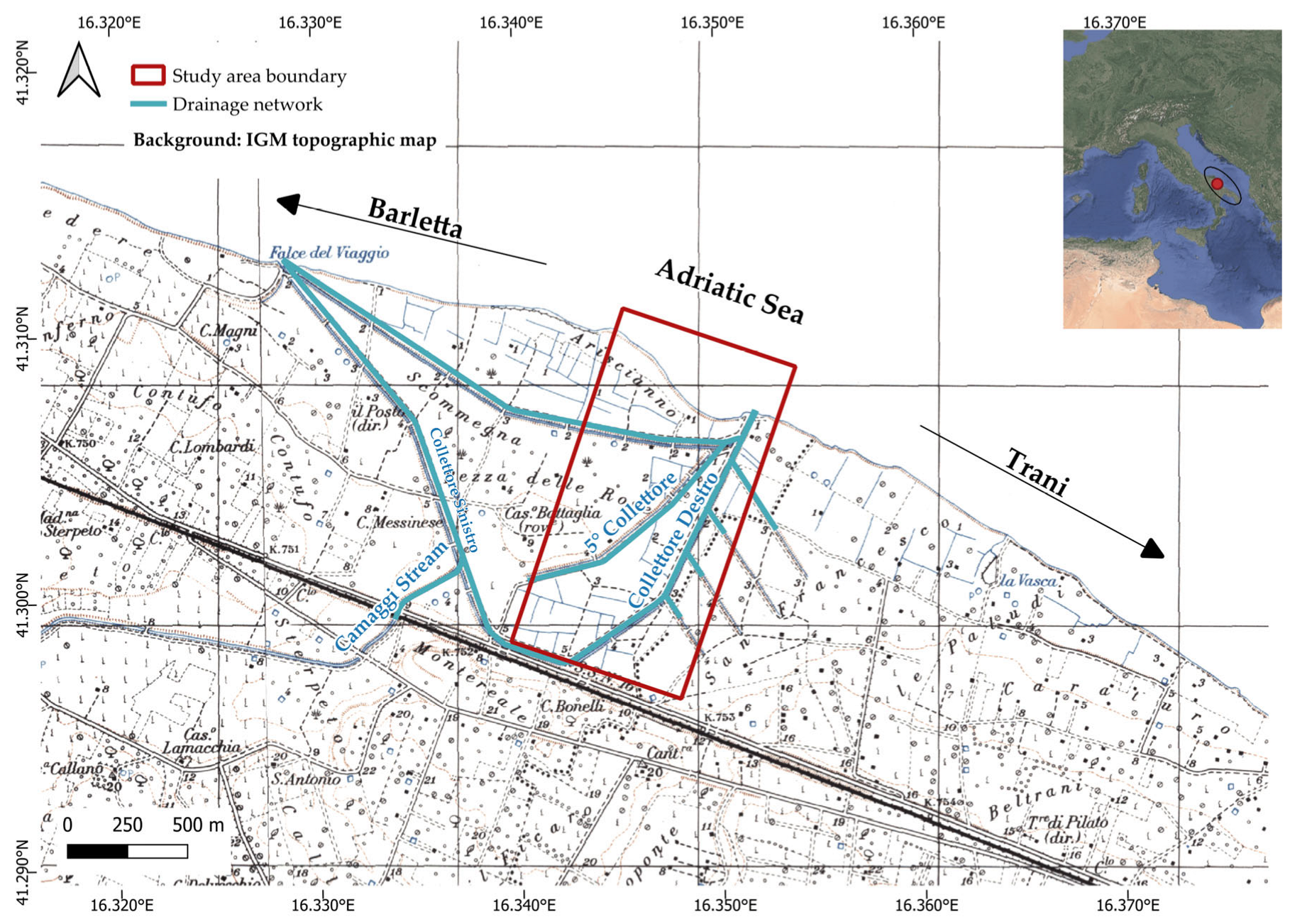
The study was carried out in the coastal wetland area of Ariscianne, located in southern Italy within the Apulia region, along the Adriatic coastal plain of the Province of Barletta–Andria–Trani (Figure 1). The study area is situated between the municipalities of Barletta (to the northwest) and Trani (to the southeast), at the foothills of the Murge plateau, and extends between the mouths of the Ariscianne and Camaggi streams [21]. As shown in Figure 1, the investigated area occupies a low-lying coastal sector historically characterised by lagoonal and wetland environments. The centroid of the study area is located at approximately 41.30° N, 16.35° E.
From a hydrogeological perspective, the Ariscianne–Boccadoro coastal sector is characterised by a complex groundwater system controlled by both lithostratigraphic and tectonic factors. The area hosts a deep carbonate aquifer, permeable through fracturing and karst processes, overlain by a shallow porous aquifer associated with calcarenitic deposits and marine terraces. Disjunctive tectonic structures affecting the Cretaceous carbonate bedrock have generated a horst-and-graben setting oriented towards the Adriatic coast, favoring groundwater confinement and the emergence of coastal springs. These hydrogeological conditions have historically sustained the development of widespread wetland environments along the coastal plain and continue to influence surface–groundwater interactions within the drainage network [22].

2.1.1. Historical Setting

Historically, the Ariscianne area formed part of a complex coastal wetland system hydraulically connected to the deep karst aquifer of the north-western Murge, which has supplied groundwater to the area since the Late Pleistocene. This aquifer is characterised by a spring line facing the Ariscianne and Boccadoro localities, with an estimated discharge of approximately 1200 L s−1 [23].
Historical and cartographic sources indicate the presence of a permanent river system, identified as Flumen Aveldium in the Tabula Peutingeriana and later documented in medieval sources such as the Santeramo and the Codice Diplomatico Barlettano [24]. Across different climatic phases, this river system is thought to have maintained a relatively stable discharge, favoring sediment transport and the development of lagoonal and wetland environments along the coastal plain. Numerous historical references attest to the persistence of wetlands in the area at least until the 17th century [8].
During the first half of the 20th century, extensive land reclamation works were carried out with the aim of draining these wetlands. These interventions, completed before the Second World War, progressively replaced the natural hydrological system with an artificial drainage network, including the Collettore Destro and Collettore Sinistro channels, designed to convey spring and surface waters directly towards the sea. These channels currently represent the main pathways for residual freshwater flow and constitute the primary aquatic habitats supporting hydrophytic vegetation in the study area [22]. Archaeological and geomorphological evidence further supports the former presence of a lagoon along the river course prior to these reclamation works [24].

2.1.2. Current Landscape and Ecological Status

At present, the Ariscianne landscape is highly transformed and predominantly characterized by agricultural land uses, mainly arable croplands and vineyards, interspersed with small uncultivated and often abandoned areas. These patches are frequently colonized by dense stands of Phragmites australis (Cav.) Trin. ex Steud., which may also occupy irrigation channels and temporary water-holding depressions.
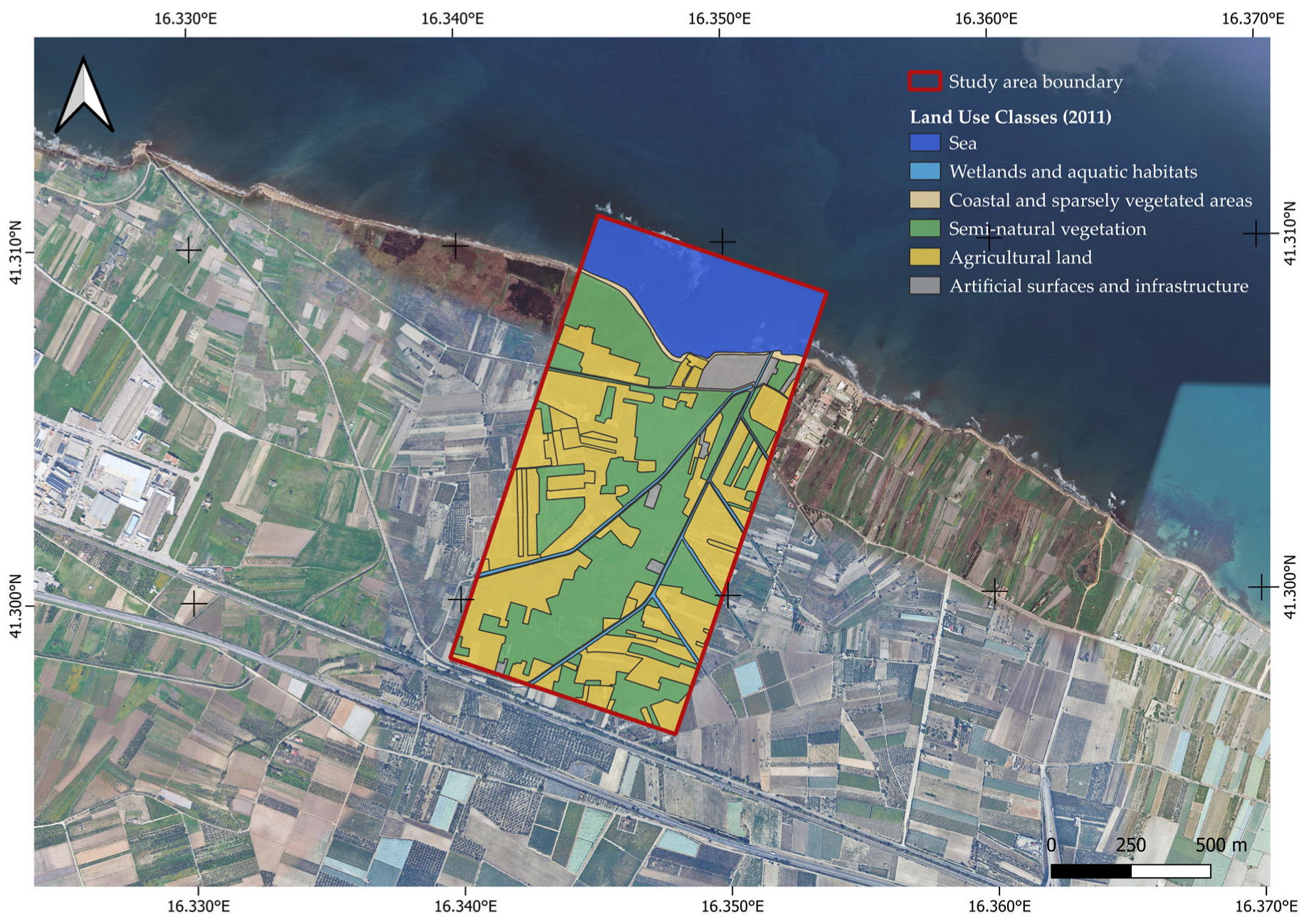
The current land-use configuration was derived from the official Regional Land Use Map (2011) provided by Regione Puglia through the Regional Territorial Information System (SIT Puglia) [25], representing the most recent officially available regional update (Figure 2).
For analytical purposes, the original detailed classes were aggregated into six broader thematic categories based on functional and ecological affinity: Agricultural land, Artificial surfaces and infrastructure, Semi-natural vegetation, Coastal and sparsely vegetated areas, Wetlands and aquatic habitats, and Sea. The detailed reclassification scheme is provided in Table A4 (Appendix A). The reclassification procedure was implemented in QGIS v. 3.40.12 [26].
The original wetland system has been almost entirely lost, and surface water is now largely confined to artificial irrigation channels and narrow natural drains conveying water directly to the sea. These channel networks represent the only aquatic habitats capable of sustaining persistent hydrophytic vegetation. Consequently, aquatic and palustrine plant communities are highly fragmented and restricted to limited ecological niches.

2.1.3. Comparison Between Historical and Current Conditions

Compared to its historical configuration, the Ariscianne wetland has undergone a drastic simplification of its hydrological network and a severe reduction in wetland surface area. The loss of natural buffer zones, together with land reclamation and canalization, has resulted in habitat fragmentation and a marked contraction of aquatic vegetation.
Additional pressures derive from intensive agricultural practices, the proximity of cultivated fields to the coastline, and the scarcity of semi-natural areas. These factors increase vulnerability to marine intrusion and coastal erosion, which affects approximately 14.1% of the Apulian coastline (about 95 km), ranking the region fourth in Italy for shoreline retreat [27]. Unsustainable practices, such as the frequent use of fire for crop residue removal, further contribute to vegetation loss, soil degradation, and erosion, while repeated disturbances favor opportunistic and invasive species [28].

2.1.4. Climatic Framework

The Ariscianne area has a mean annual temperature of 15.8 °C and a mean annual rainfall of 593 mm, according to the bioclimatic maps of Pesaresi et al. [29]. Based on the bioclimatic classification of Rivas-Martínez et al. [30], the site belongs to the Mediterranean pluviseasonal-oceanic macrobioclimate, with a lower Mesomediterranean thermotype and a lower dry ombrotype [31]. Precipitation is strongly seasonal, concentrated in autumn and winter, while a pronounced summer drought occurs from June to August. The negligible oceanic continentality [31] reflects the moderating influence of the sea, which limits extreme thermal oscillations. This hydroclimatic context, characterized by mild wet winters, and hot dry summers, plays an important role in shaping local ecological conditions and vegetation patterns [32].

2.2. Vegetation Survey and Phytosociological Classification

The vegetation survey was based on original data collected following the phytosociological method of the Zurich–Montpellier school [33]. Relevés were conducted between late May and late September 2024 along the Collettore Destro and the 5° Collettore (Figure 1), both selected for their constant hydrological regime and the permanent presence of water throughout the year, which favor the stable development of aquatic plant communities. Sampling was carried out during the period of maximum vegetative expression, when aquatic plant communities are fully developed and most reliably identifiable from a phytosociological perspective.
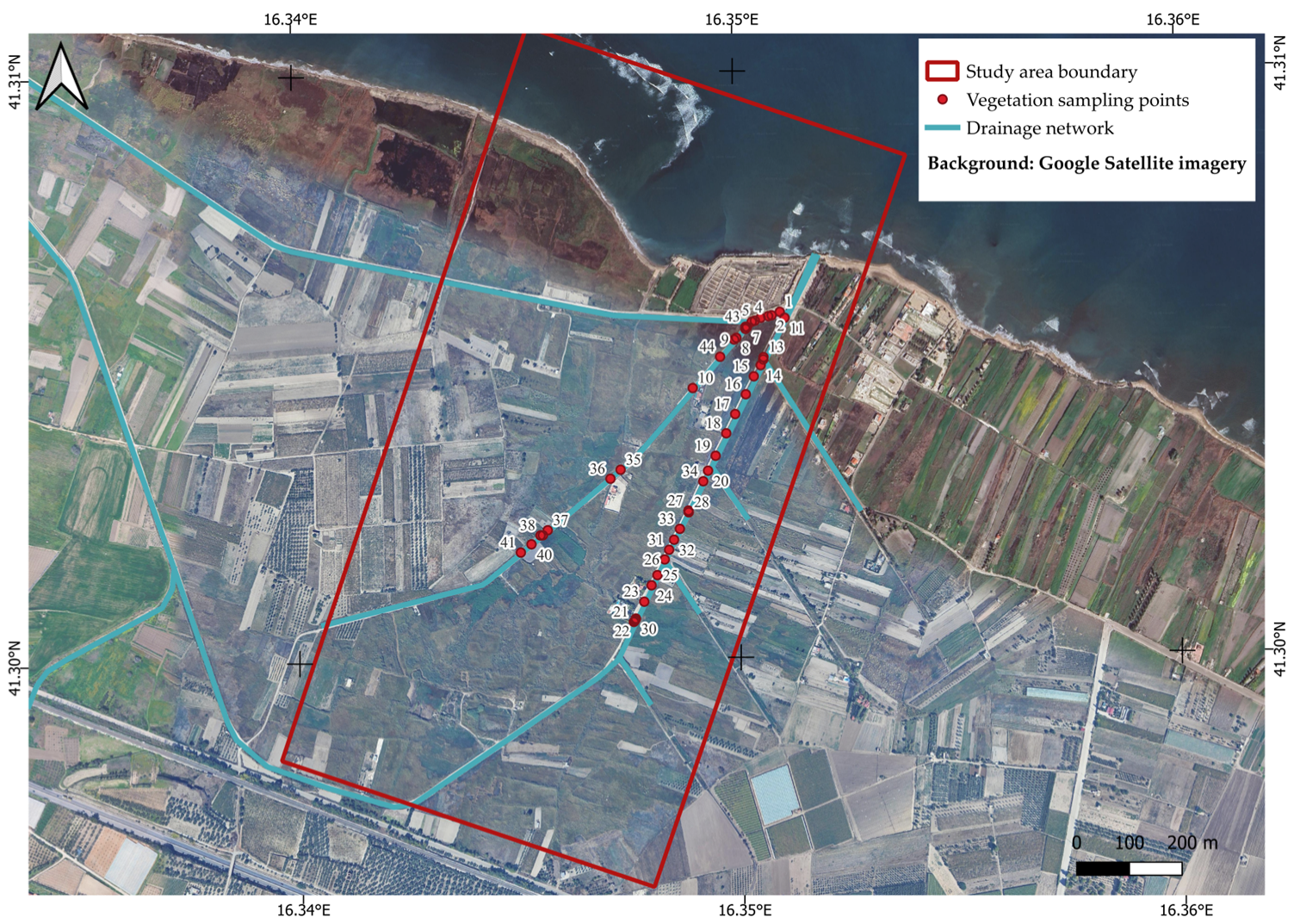
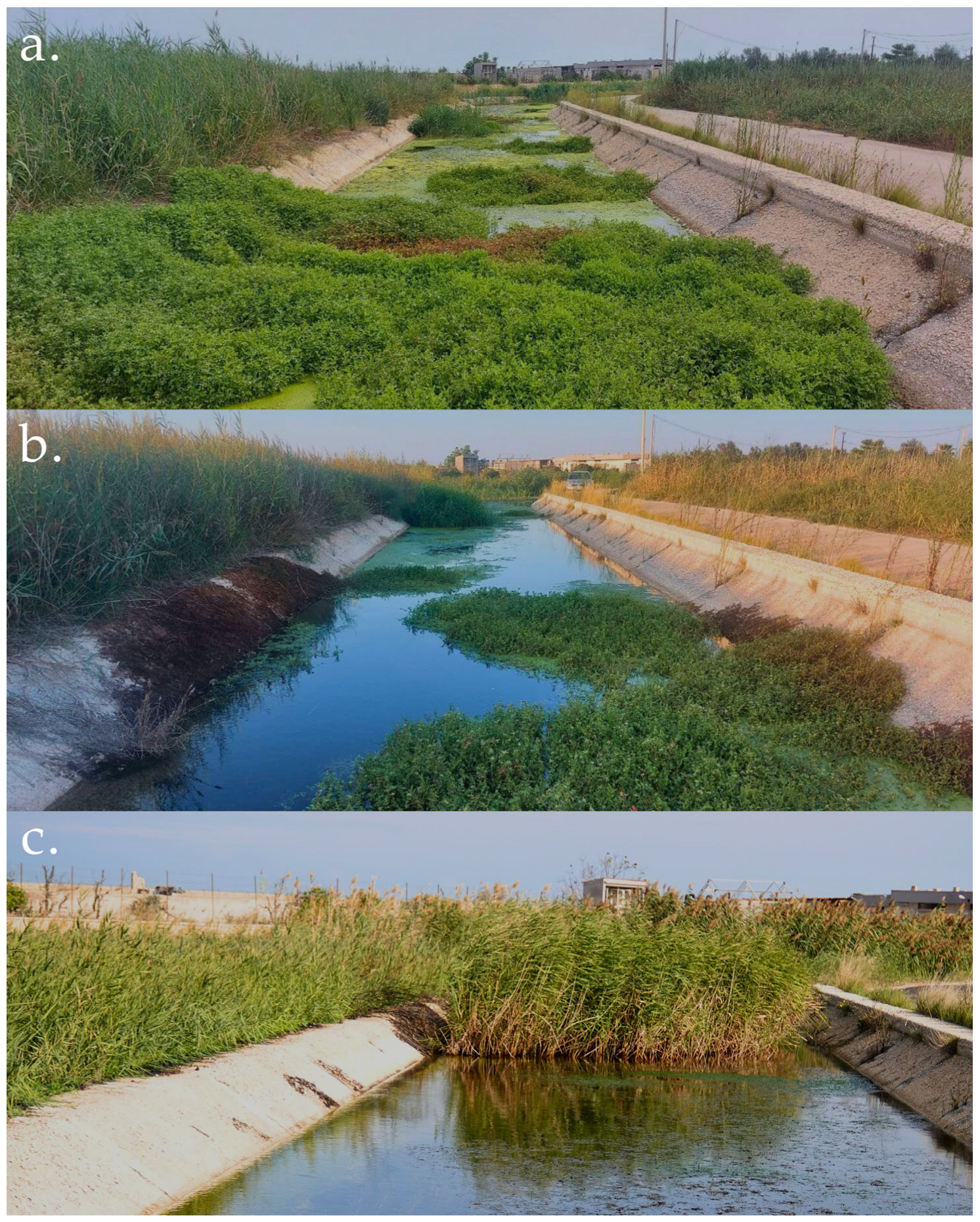
A 44. relevés were performed along linear transects in homogeneous vegetation stands, excluding open water surfaces devoid of plant cover and reed-dominated zones. The spatial distribution of the sampling points is shown in Figure 3. Representative views of the artificial drainage channels and associated vegetation are provided in Figure 4.
Sampling was conducted in physiognomically and topographically uniform sites to represent the overall variability of aquatic vegetation. The standard plot size was 4 m2 [34], with smaller or rectangular plots used in cases of community overlap.
Each relevé was sampled once during the survey period, and no repeated measurements were performed. For each relevé, geographic coordinates, plot size, total vegetation cover, and vascular plant species lists were recorded. Among direct ecological variables, water depth was the only environmental parameter measured in the field, and it was recorded at the time of sampling to provide a basic hydrological characterization of each plot.
Species cover was visually estimated according to the Braun–Blanquet scale.
Relevé classification was performed through hierarchical multivariate cluster analysis based on floristic composition. Cover data were transformed into ordinal abundance–dominance values [35], normalized, and used to calculate a dissimilarity matrix using the Bray–Curtis index [36]. Clustering was conducted with Ward’s agglomerative method, and the resulting groups were interpreted phytosociologically; outliers were excluded from further analyses. All procedures were implemented in R [37] using the vegan package [38]. The final clusters were classified according to the frequency and cover of characteristic species at the class, order, and alliance levels, following the European Vegetation Classification [39] and the classification keys of Rivas-Martínez et al. [40]. The taxonomic nomenclature adopted in this study follows Bartolucci et al. [41].
The subsequent arrangement in tables allowed the identification of the plant communities, that were then framed according to the phytosociological syntaxonomic system. The nomenclature of the higher rank syntaxa (Classes, Orders and Alliances) is in accordance with EVC of Mucina et al. [39].

2.3. Statistical Analysis

Statistical analyses were conducted to investigate differences in species traits and ecological variables among syntaxonomic classes.
Species adaptive strategies were analyzed by assessing the distribution of biological forms at the syntaxonomic class level. Differences among classes were tested using PAST (Paleontological Statistics Software), version 4.03 [42]. The choice between parametric and non-parametric statistical tests was based on an explicit evaluation of data distribution. Data normality was assessed using the Shapiro–Wilk [43] test prior to group comparisons.
When species cover data met the assumption of normality, differences among groups were analyzed using one-way Analysis of Variance (ANOVA), adopting a significance threshold of p < 0.05. In cases where ANOVA detected significant differences, Tukey’s Honest Significant Difference (HSD) test was applied as a post hoc procedure to identify pairwise differences between groups. When data did not meet normality assumptions, differences among groups were assessed using the non-parametric Kruskal–Wallis test. When significant results were obtained, pairwise comparisons were performed using Mann–Whitney U tests [44] with Bonferroni correction [45].
Indirect ecological analyses were conducted using Ellenberg indicator values for soil reaction (R), nutrient availability (N), salinity (S), and humidity (U) [46,47]. Statistical analyses were performed in PAST software, following the same analytical framework described above. Boxplots illustrating significant differences among syntaxonomic classes were produced using Microsoft Excel.
A direct ecological analysis was conducted to investigate the relationship between phytosociological classes and water depth. The normality of water depth values within vegetation classes was assessed using the Shapiro–Wilk test [48]. As normality assumptions were not met, differences in water depth among classes were evaluated using the non-parametric Kruskal–Wallis test [49]. Effect size was estimated using eta squared (η2[H]) to quantify the magnitude of the observed differences.
The distribution of water depth across vegetation classes was visualized using violin plots with embedded boxplots to illustrate variability and central tendency. All statistical analyses and graphical outputs related to water depth were performed using the R statistical environment (version 4.5.2) [37].

3. Results

3.1. Vegetation Analysis

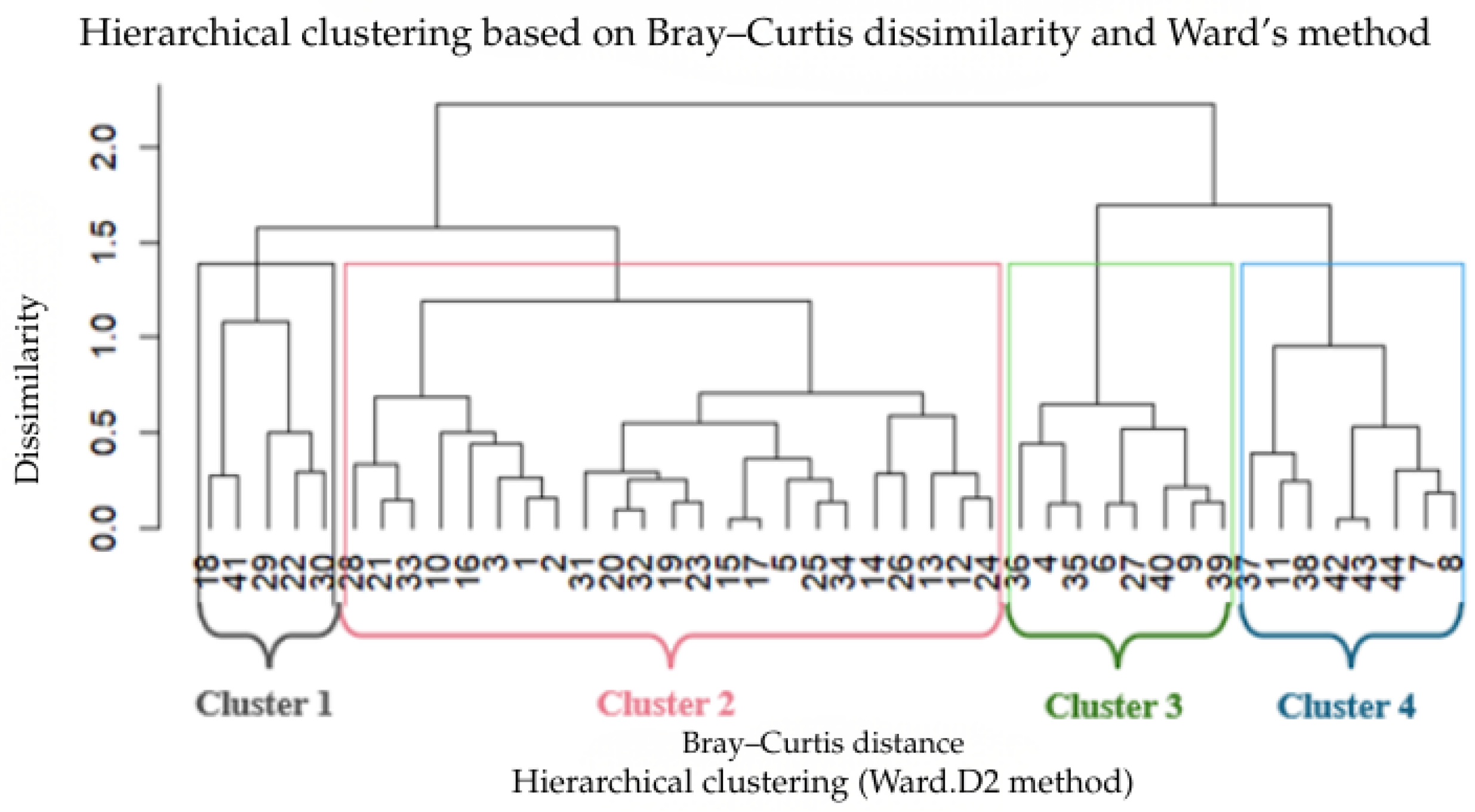
The dendrogram obtained from the cluster analysis of the 44 relevés revealed four distinct groups (Figure 5). The examination of floristic composition enabled the identification of the main species responsible for group differentiation and the subsequent syntaxonomic characterization of each cluster based on diagnostic taxa.
To ensure greater syntaxonomic consistency, expert-based adjustments were applied during the interpretation phase of the clustering results. The numerical classification assigned relevés to clusters based on overall species composition, reflecting the dominant floristic patterns of the majority of relevés within each group. However, in paucispecific plant communities, such as those occurring in the study area, the discrimination between different vegetation classes or orders may be imprecise, as companion species can exert a disproportionate influence on clustering outcomes, in some cases overriding the diagnostic value of dominant species.
For this reason, expert phytosociological revision was necessary to identify relevés showing similarities driven primarily by the presence of companion species rather than by diagnostic species. Importantly, these adjustments did not alter the clustering structure, and all clusters remained as defined by the numerical analysis. The revision affected only the syntaxonomic attribution of a limited number of relevés, mainly within Clusters 1 and 2 (Figure 5), to improve coherence between cluster membership and floristic composition.
Specifically, relevés 14 and 26 were assigned by the clustering algorithm to Cluster 2, corresponding to the class Potamogetonetea, due to the presence of Zannichellia palustris with a cover value of 2. However, both relevés are characterized by the dominance of Nasturtium officinale (cover value 4), which represents the diagnostic and dominant species of the association Nasturtietum officinalis. On this basis, these relevés were reassigned to Nasturtietum officinalis to ensure a correct syntaxonomic interpretation.
Conversely, relevés 18 and 41, initially assigned by the cluster analysis to Cluster 1, corresponding to the Nasturtietum officinalis community, were subsequently reclassified into Cluster 2 (class Potamogetonetea). This reassignment was justified by the dominance of Potamogeton trichoides, which showed cover values of 4 in both relevés, indicating a stronger affinity with the Potamogetonetea class rather than with the class Phragmito-Magnocaricetea. Moreover, these relevés are characterized by very low floristic diversity, a condition that may have influenced their aggregation by the clustering algorithm into groups that did not fully reflect their syntaxonomic identity.
Finally, relevés 19, 24, and 29 were excluded from the interpretation as outliers due to their low representativeness and transitional floristic composition. Each group was ultimately assigned to the lowest possible syntaxonomic rank, with all clusters being attributed at the association level (Figure 5).
Additionally, an algal community referable to the class Ulvae intestinalis–Ulvetea linzae Afanasyev & Abdullin 2024 [50] was detected; however, it was not further analyzed, as the study focused exclusively on vascular plant communities.
Overall, according to the results of the cluster analysis, the Ariscianne channels vegetation includes 3 classes and 5 plant communities reported in the syntaxonomic scheme.

3.2. Syntaxonomic Scheme

  • POTAMOGETONETEA Klika in Klika et Novák 1941
  •  POTAMOGETONETALIA Koch 1926
  •   Potamogetonion Libbert 1931
  •    Zannichellietum palustris (Baumann 1911) Lang 1967
  •    Potamogetonetum trichoidis Tüxen 1974
  •     (= Potametum trichoidis Freitag et al. ex Tüxen 1974)
  • LEMNETEA O. de Bolòs et Masclans 1955
  •  LEMNETALIA MINORIS O. de Bolòs et Masclans 1955
  •   Lemnion minoris O. de Bolòs et Masclans 1955
  •    Lemnetum minoris Oberd. ex Müller et Görs 1960
  • PHRAGMITO-MAGNOCARICETEA Klika in Klika et Novák 1941
  •  NASTURTIO-GLYCERIETALIA Pignatti 1953
  •   Glycerio-Sparganion Br.-Bl. et Sissingh in Boer 1942
  •    Nasturtietum officinalis (Seibert 1962) Oberd. et al. 1967
  •    Helosciadetum nodiflori Maire 1924
  • ULVAE INTESTINALIS–ULVETEA LINZAE Afanasyev & Abdullin 2024
  •  ULVAE INTESTINALIS–ULVETALIA LINZAE Afanasyev & Abdullin ord. 2024
  •   Ulvae intestinalis–Ulvion linzae Afanasyev & Abdullin 2024
  •    Ulvetum intestinalis Feldmann 1937

3.3. Description of the Vegetation

3.3.1. Pleustophytic Vegetation (Lemnetea)

The pleustophytic communities recorded in the study area can be referred to the Lemnion minoris (Lemnetalia minoris) alliance, which encompasses associations typical of lowland environments affected by human activities, whose floristic composition is largely influenced by the trophic status of the waters [51].
LEMNETUM MINORIS Oberd. ex Müller et Görs 1960 (Appendix A, Table A1, relevés 1-8) The community is predominantly composed of small-sized free-floating plants (pleustophytes) developing at the water–air interface. It is dominated by Lemna minor L., which frequently forms mono- or paucispecific stands characterized by dense and extensive coverage.
The Lemnetum minoris community shows spatial continuity and partial intermingling with communities of the class Potamogetonetea. This pattern is evidenced by the sporadic presence of vascular species such as Zannichellia palustris L. and Potamogeton trichoides Cham. et Schltdl., occurring with low cover values. The alga Enteromorpha intestinalis (Linnaeus) Nees was also recorded, generally with cover values below 5% in plots dominated by L. minor, although higher cover was observed where L. minor showed reduced dominance.
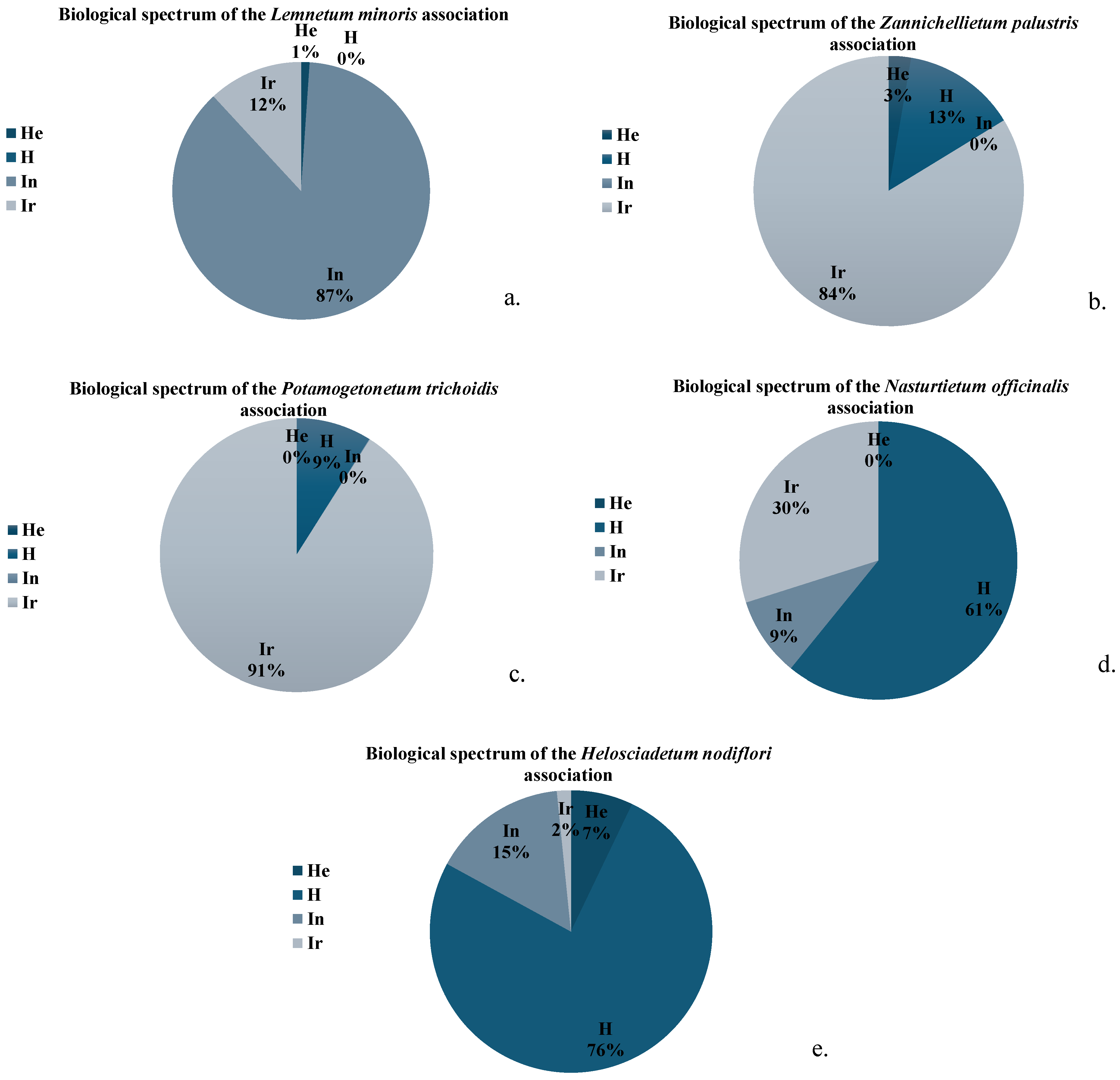
The biological-form spectrum (Figure 6a) highlights a clear dominance of free-floating hydrophytes, accounting for 87% of the total vegetation cover. Rooted hydrophytes represent approximately 12%, while helophytes are marginal and hemicryptophytes are absent.

3.3.2. Rhizophytic Vegetation (Potamogetonetea)

Vegetation types dominated by rhizophytic species characterize the class Potamogetonetea. This order is subdivided into several alliances, distinguished according to the trophic status and depth of the waters, as well as the morphological adaptations of the dominant hydrophytes [52]. In the study site, a single alliance was identified: Potamogetonion Libbert 1931, represented by two distinct associations, described as follows:
ZANNICHELLIETUM PALUSTRIS (Baumann 1911) Lang 1967 (Appendix A, Table A2, relevés 1-15).
The association Zannichellietum palustris consists of stands dominated by Zannichellia palustris L., either forming nearly monospecific assemblages or co-occurring with narrow-leaved species of Potamogeton s.l., such as Stuckenia pectinata and Potamogeton pusillus. In the surveyed plots, Z. palustris represents the dominant rooted hydrophyte, frequently associated with Potamogeton trichoides.
The biological-form composition (Figure 6b) shows a strong dominance of rooted hydrophytes, accounting for approximately 84% of the total vegetation cover. Hemicryptophytes occur with lower frequency (13%), while helophytes are only marginally represented. The presence of the alga Enteromorpha intestinalis was also recorded.
POTAMOGETONETUM TRICHOIDIS Tüxen 1974 (Appendix A, Table A2, relevés 16-21).
The characteristic species of this association is Potamogeton trichoides Cham. et Schltdl., which forms dense, continuous stands with high abundance and near-complete cover of the occupied area. In the study site, P. trichoides represents the dominant species.
Associated taxa include Zannichellia palustris L., Nasturtium officinale W.T. Aiton, and Helosciadium nodiflorum (L.) W.D.J. Koch, all occurring with lower abundance. Lemna minor L. is frequently present in the surveyed plots but with very low cover, consistently below 1%.
The biological-form spectrum (Figure 6c) indicates the dominance of rooted hydrophytes, which account for approximately 91% of the mean vegetation cover. The remaining portion consists of hemicryptophytes representing about 9%.

3.3.3. Elophytic Vegetation (Phragmito-Magnocaricetea)

Marginal areas of the channels, particularly along the banks where water depth is reduced, are characterized by communities assignable to the class Phragmito-Magnocaricetea. Within the study area, communities belonging to the order Nasturtio-Glyceretalia were also identified.
NASTURTIETUM OFFICINALIS (Seibert 1962) Oberd. et al. 1967 (Appendix A, Table A3, relevé 1-8).
The surveyed stands are attributable to the association Nasturtietum officinalis, dominated by Nasturtium officinale. These communities are species-poor and form monospecific or weakly diversified stands. Helosciadium nodiflorum occurs sporadically and with low cover values.
The biological-form spectrum (Figure 6d) shows a clear dominance of hemicryptophyte, accounting for approximately 61% of the total vegetation cover. Rooted hydrophytes, mainly represented by Zannichellia palustris, contribute around 30%, while floating hydrophytes, including Lemna minor, represent less than 10%.
HELOSCIADETUM NODIFLORI Maire 1924 (Appendix A, Table A3, relevé 9-11).
The association Helosciadetum nodiflori is dominated by Helosciadium nodiflorum, which occurs both as submerged and emergent forms, forming fully or partially submerged stands as well as populations along exposed banks.
The surveyed plots are characterized by very low species richness. Elements of the class Potamogetonetea, such as Zannichellia palustris, are occasionally present with low cover values. Cyanobacteria of the genus Stigonema were recorded exclusively in plot 5, with cover values ranging from 5% to 25%.
Hemicryptophytes strongly dominate the biological-form spectrum (76%), followed by floating hydrophytes (15%), while helophytes and rooted hydrophytes are marginal (Figure 6e).

3.4. Ecological Analysis

Differences in water depth among vegetation classes were evaluated using one-way Analysis of Variance (ANOVA). The analysis was performed on 41 relevés, as three plots were excluded following the cluster analysis. No statistically significant differences were detected (F(2,38) = 2.38, p = 0.106). Post hoc comparisons using Tukey’s HSD test confirmed the absence of significant pairwise differences among classes (all adjusted p-values > 0.05).
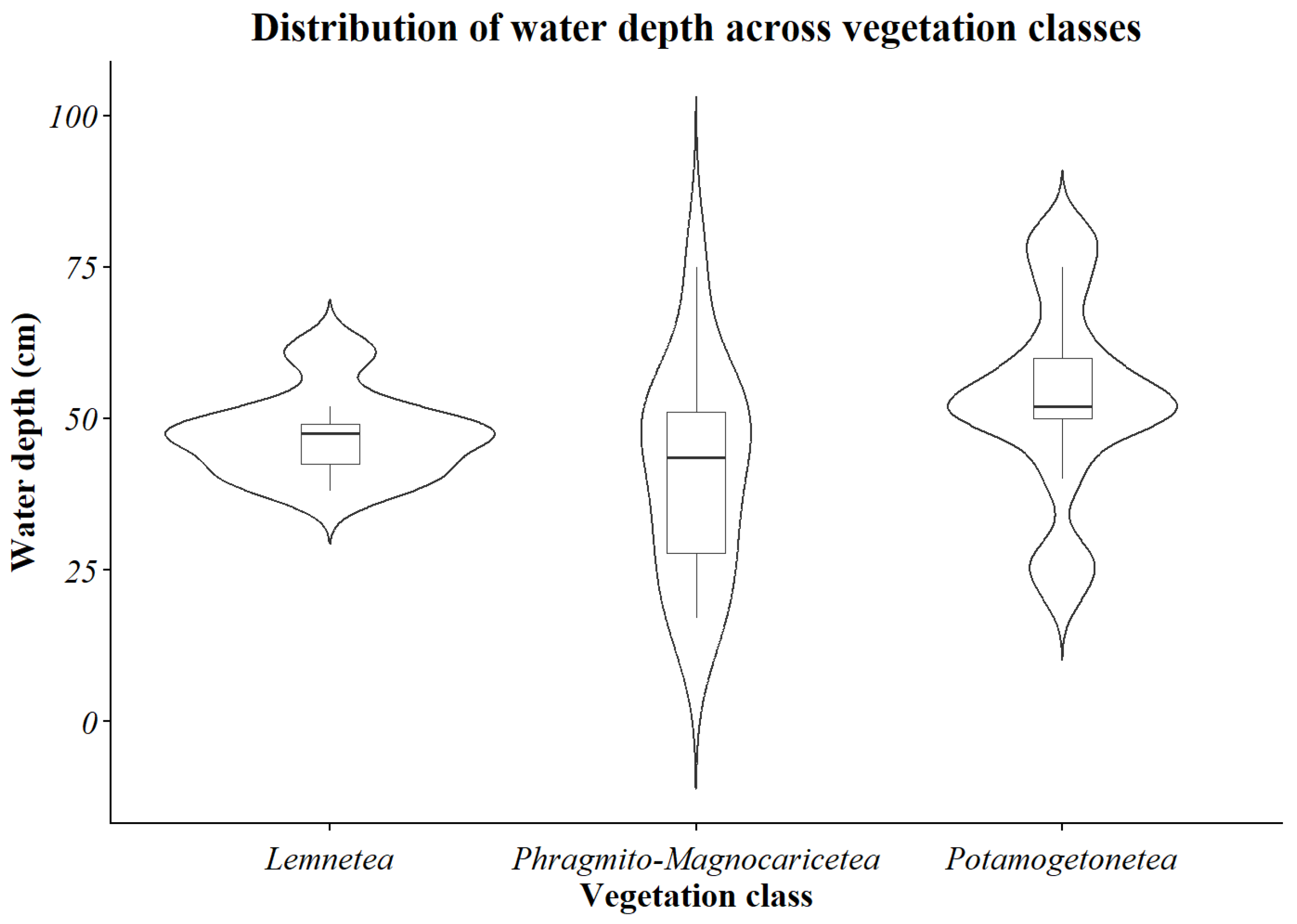
The distribution of water depth values across vegetation classes is illustrated in Figure 7, and the corresponding descriptive statistics are summarized in Table 1.
Potamogetonetea was generally associated with higher depth values, Lemnetea occurred within a narrower depth range, and Phragmito-Magnocaricetea spanned the widest bathymetric gradient.
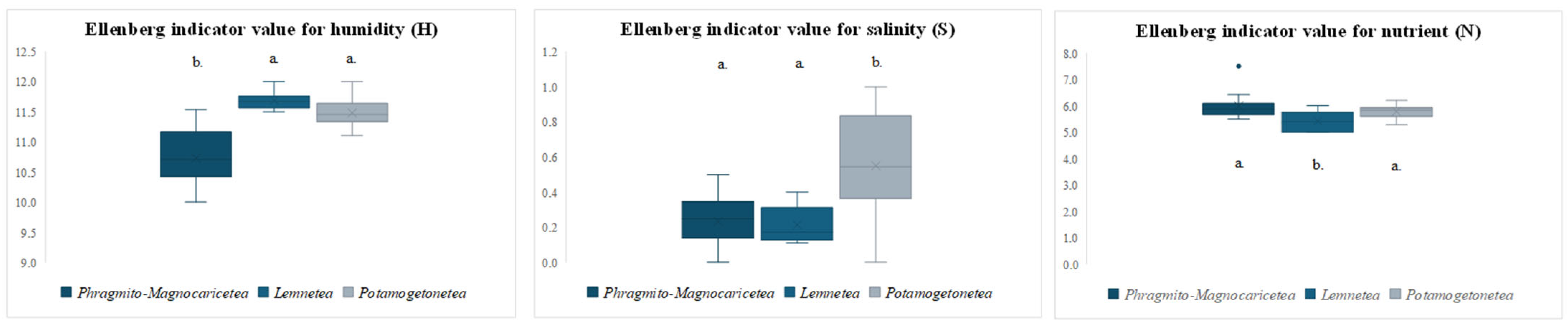
Ellenberg indicator values for humidity (H) were normally distributed and were therefore analyzed using one-way ANOVA, which revealed highly significant differences among phytosociological classes (F(2,38) = 32.17, p = 4.70 × 10⁻⁹). Tukey’s HSD post hoc test showed that Phragmito-Magnocaricetea communities were characterized by significantly lower humidity values than both Lemnetea (p = 6.08 × 10⁻⁸) and Potamogetonetea (p = 5.99 × 10⁻⁸), whereas no significant difference was detected between the latter two classes (Figure 8).
In contrast, Ellenberg indicator values for salinity (S) did not meet the assumption of normality and were therefore analyzed using the non-parametric Kruskal–Wallis test, which revealed significant differences among phytosociological classes (H = 15.05, p = 0.0005). Pairwise Mann–Whitney U tests with Bonferroni correction indicated significantly higher salinity values for Potamogetonetea compared to Phragmito-Magnocaricetea (p = 0.0015) and Lemnetea (p = 0.0024), while no significant difference was observed between the latter two classes (Figure 8).
Similarly, Ellenberg indicator values for nutrient availability (N) were not normally distributed and were analyzed using the Kruskal–Wallis test, which detected significant differences among classes (H = 7.47, p = 0.023). In this case, Lemnetea communities were associated with significantly lower nutrient values compared to both Phragmito-Magnocaricetea and Potamogetonetea (p = 0.013 and p = 0.026, respectively), whereas no significant difference was detected between the latter two classes (Figure 8). By contrast, no significant differences were detected among phytosociological classes for Ellenberg indicator values of soil reaction (R).

4. Discussion

4.1. Hydrological and Environmental Structuring of Aquatic Vegetation

The vegetation patterns observed in the study area reflect the combined influence of hydrological conditions, nutrient availability, and artificial channel morphology, which are typical of lowland modified water systems [52]. The coexistence of pleustophytic, rhizophytic, and elophytic communities highlights the environmental heterogeneity of the Ariscianne channel network, shaped by both structural constraints and long-term anthropogenic pressures. Based on the frequency of relevés, Potamogetonetea represents the most widespread vegetation class within the Ariscianne channel network, whereas Phragmito-Magnocaricetea and especially Lemnetea occur more locally, forming spatially restricted patches. Although differences in water depth among vegetation classes were not statistically significant, descriptive patterns suggest a hydrological zonation of aquatic vegetation. Lemnetea relevés are more concentrated in shallower sectors, while Potamogetonetea occupies a broader depth range and tends to occur in deeper and more hydrologically stable sections. Similar patterns of depth-linked vegetation differentiation have been documented in northern temperate standing waters [53] and in Mediterranean wetlands, where Lemnetea and Potamogetonetea exhibit distinct bathymetric preferences reflective of subtle hydrological gradients [54]. Even subtle differences in depth and hydrological stability therefore appear sufficient to contribute to vegetation differentiation within the channel network.
Within this framework, Lemnetea is represented by well-defined pleustophytic stands referable to Lemnetum minoris, often characterized by dense and largely monospecific cover [51,54,55]. Relevés frequently include algal communities referable to Ulvetum intestinalis (reported as Enteromorpha intestinalis (Linnaeus) Nees 1820) [50], which locally constitute a conspicuous component of the vegetation mosaic. The occurrence of Ulva (Enteromorpha) intestinalis is commonly associated with nutrient-enriched and weakly hydrodynamic conditions, as the species responds positively to increased nitrogen availability and reflects dissolved inorganic nitrogen sources in aquatic systems [56].
However, algal taxa were excluded from the calculation of Ellenberg indicator values and therefore did not contribute to community-weighted nutrient scores. In addition, Lemna minor, the diagnostic and dominant species of Lemnetea stands, is assigned a nutrient value of “X” in the Ellenberg system [46] and was consequently excluded from the calculation of community-weighted Ellenberg N values. Since weighted averages may, under certain circumstances, provide misleading representations of site conditions [57]. The exclusion of both algal taxa and the dominant pleustophyte likely reduced the representativeness of the calculated nutrient scores. This methodological limitation plausibly accounts for the significantly lower Ellenberg-derived nutrient values observed for Lemnetea compared to other vegetation classes. Such results contrast with the well-established ecological behavior of pleustophytic communities, which typically develop in mesotrophic to eutrophic waters under reduced hydrodynamic stress [51,58,59,60]. The presence of nitrophilous aquatic species such as Zannichellia palustris, recognized as indicative of eutrophic to hypertrophic environments [52,59], further supports the interpretation that Lemnetea stands are associated with nutrient-enriched conditions despite the lower Ellenberg-derived scores.
Although differences in water depth among vegetation classes were not statistically significant, Lemnetea relevés showed a more concentrated distribution in shallower waters compared to the broader depth ranges observed for the other classes. This pattern is consistent with the typical ecological preference of pleustophytic communities for shallow, weakly dynamic environments [59,60].
Rhizophytic communities of the Potamogetonetea, particularly Zannichellietum palustris, are likewise associated with eutrophic and nitrogen-enriched conditions. Zannichellia palustris is a strongly nitrophilous species [52] and its frequent dominance reflects the availability of dissolved nutrients in the water column and sediments.
Ellenberg salinity values further differentiate Potamogetonetea from the other vegetation classes. Although direct measurements of salinity were not available, the higher indicator values observed for this class may reflect subtle differences in hydrological conditions within the channel network. In artificial coastal systems, spatial variation in water renewal and connectivity can influence ionic composition, potentially contributing to the observed pattern.
Potamogetonetum trichoidis represents a structurally stable submerged vegetation type characterized by dense stands of Potamogeton trichoides, recently reported for the Apulian region [61]. The dominance of rooted submerged hydrophytes within this association suggests favorable conditions in terms of light availability and hydrodynamic stability [62], consistent with its occurrence in deeper and more stable channel sectors.
Elophytic communities of the Phragmito-Magnocaricetea are mainly confined to marginal channel areas characterized by reduced water depth and pronounced hydrological fluctuations [52]. The significantly lower Ellenberg humidity values associated with this class reflect the ecological behavior of helophytic vegetation, which typically develops in periodically exposed or weakly submerged zones and tolerates variable moisture conditions [63,64]. Within this class, Nasturtietum officinalis reflects mesotrophic to eutrophic conditions in shallow, flowing or weakly flowing waters [52,63], whereas Helosciadetum nodiflori is indicative of cooler, well-oxygenated environments with relatively lower nutrient levels [63,65].
The absence of significant differences in Ellenberg soil reaction values likely reflects the artificial nature of the channel system. The cemented bed and limited development of natural sediments may reduce edaphic differentiation compared to natural watercourses, thereby weakening the role of substrate pH as a driver of vegetation patterns.
Overall, even where individual environmental variables did not show statistically significant differences, the combined variation in hydrological stability, trophic conditions, salinity, and channel morphology defines ecologically distinct habitat sectors within the artificial network. These subtle gradients appear sufficient to sustain vegetation classes characterized by different ecological niches and functional strategies. The maintenance of such environmental heterogeneity may therefore represent a key factor in preventing biotic homogenization and preserving vegetation diversity in highly modified aquatic systems. Further investigations integrating hydrological dynamics and nutrient fluxes would help clarify how management interventions could enhance habitat differentiation and support long-term ecological resilience.

4.2. Nature Conservation Implications

The identification of Annex I habitat 3150 (Natural eutrophic lakes with Magnopotamion or Hydrocharition-type vegetation) [18] within the Ariscianne channel network was enabled by the systematic vegetation survey and phytosociological relevés conducted in this study. According to the syntaxonomic framework proposed by Biondi et al. [66], in the study area, this habitat is represented by the associations Lemnetum minoris Oberdorfer ex Müller & Görs 1960, Zannichellietum palustris (Baumann 1911) Lang 1967, and Potamogetonetum trichoidis Tüxen 1974 (= Potametum trichoidis Freitag et al. ex Tüxen 1974). Its detection constitutes the first documented occurrence of habitat 3150 within the corresponding EEA reference grid (10 km E485N204) [67], highlighting the conservation relevance of these artificial aquatic systems.
The record of Potamogeton trichoides, a species not reported in Apulia for several decades [61], further confirms the residual ecological relevance of the channel network.
Although these systems are heavily modified and strongly influenced by agricultural drainage and eutrophication processes, the floristic composition recorded in this study meets the syntaxonomic and ecological criteria defining Annex I habitat 3150 [18,66].
It should be emphasized that habitat 3150 is defined by the presence of characteristic Magnopotamion or Hydrocharition-type communities and is not restricted to pristine or undisturbed natural lakes. In this context, the Ariscianne channels do not represent intact natural wetlands, but rather function as secondary refugia, maintaining habitat-typical communities within a highly transformed coastal landscape. Historical evidence of a former coastal lagoon in the area [24] suggests that the present vegetation assemblages may represent fragmented remnants of a once more extensive wetland system, now persisting within an artificial hydrological framework.
However, the conservation role of the Ariscianne channels is increasingly threatened by ongoing urbanization, intensive agriculture, and inappropriate vegetation management practices. These pressures correspond to the principal threats identified for freshwater habitats, including Annex I habitat 3150, in the continental biogeographical region of Europe, particularly nutrient enrichment, hydro-morphological alteration, and land-use intensification [68]. The situation observed in the Ariscianne system therefore reflects broader patterns of degradation affecting eutrophic freshwater habitats across Europe.
Along the channel margins, uncontrolled burning and mechanical disturbance favor the expansion of Phragmites australis, a rhizomatous species widely recognized as a driver of structural simplification and floristic homogenization in wetland ecosystems [69,70,71].
In artificial channel systems, the progressive accumulation of sediments and organic matter associated with Phragmites dominance reduces habitat heterogeneity and limits suitable conditions for submerged and floating macrophytes.
The long term persistence of habitat 3150 within the Ariscianne system therefore depends on management strategies aimed at maintaining open-water and shallow-water sectors and preventing excessive dominance by helophytic vegetation.
Targeted control of Phragmites australis, regulation of mechanical interventions, and mitigation of eutrophication processes represent key priorities [72]. Such measures should be carefully planned, as poorly timed interventions may increase disturbance and negatively affect rooted hydrophytes.
More broadly, this study demonstrates that artificial channel networks can retain significant conservation value when hydrological and habitat heterogeneity are preserved. Integrating these systems into monitoring and management frameworks associated with the Habitats Directive [18] may contribute to preventing further biotic homogenization and to safeguarding residual aquatic biodiversity within reclaimed coastal landscapes.

5. Conclusions

This study provides the first phytosociological assessment of aquatic vegetation within the Ariscianne channel system, documenting the presence of structured hydrophytic and helophytic communities in a highly modified coastal landscape. The identification of five plant associations and the recognition of Annex I habitat 3150 within this artificial hydrological network highlight the ecological relevance of reclaimed channel systems as reservoirs of residual wetland biodiversity.
The present work also has inherent limitations. Due to the absence of previous ecological data for the area, the study was conceived primarily as a baseline vegetation survey, focusing on floristic composition and syntaxonomic classification. Consequently, the collection of direct environmental variables was limited, and some ecological drivers (e.g., detailed hydrological dynamics, nutrient fluxes, salinity gradients) could not be fully investigated, partly due to the lack of dedicated instrumentation.
Moreover, areas dominated exclusively by Phragmites australis were not systematically surveyed, as the primary objective was to document the widest possible range of aquatic communities. As a result, the quantitative impact of Phragmites expansion on hydrophytic vegetation remains to be clarified.
Despite these constraints, the establishment of a structured phytosociological framework now provides a robust baseline for future investigations. Further research should integrate detailed physicochemical measurements, hydrological monitoring, and spatial analyses to better quantify the ecological gradients underlying community differentiation.
Attention should be devoted to assessing the long-term effects of Phragmites australis encroachment on submerged and floating macrophytes, as well as to evaluating management strategies aimed at maintaining open-water sectors and habitat heterogeneity.
The results indicate that artificial channel networks, despite their anthropogenic origin, can support habitat types of conservation interest when hydrological and environmental heterogeneity persist.
Ensuring the protection and adaptive management of these residual systems should therefore be considered a strategic priority for biodiversity conservation in extensively modified Mediterranean coastal landscapes.

Author Contributions

Conceptualization, V.T., S.A. and C.C.; methodology, V.T., S.A. and C.C.; investigation, V.T. and C.C.; data curation, V.T., S.A. and C.C.; writing—original draft preparation, V.T., S.A. and C.C.; writing—review and editing, V.T., S.A. and C.C. All authors have read and agreed to the published version of the manuscript.

Funding

This research received no external funding.

Institutional Review Board Statement

Not applicable.

Data Availability Statement

Data are contained within the article and Appendix A.

Conflicts of Interest

The authors declare no conflicts of interest.

Appendix A

Table A1. Lemnetum minoris Oberd. ex Müller et Görs 1960 (relevés 1-5); Ulvetum intestinalis Feldmann 1937 (relevés 6-8).
Progressive no. of new matrix12345678
Reference no. Relief42434478371138
Date11/09/202411/09/202411/09/202426/06/202426/06/202422/08/202403/08/202422/08/2024
X coordinate (East)613029613029612982613031613015612656613107612645
Y coordinate (Nord)45735634573563457350945735634573542457317845735894573170
Surface (m2)44444444
Total cover (%)100100859595809090
Channel idchannel 2channel 2channel 2channel 2channel 2channel 2channel 1channel 2
Depth (cm)51.547384848416143
Char. ass., all. Lemnion minoris, ord. Lemnetalia minoris and cl. Lemnetea
Lemna minor L.55445+23
Char. ass., all. Ulvae intestinalis–Ulvion linzae, ord. Ulvae intestinalis–Ulvetalia linzae, and cl. Ulvae intestinalis-Ulvetea linzae
Enteromorpha intestinalis (Linnaeus) Neesr..11342
Other species
Helosciadium nodiflorum (L.) W.D.J. Koch..++1...
Nasturtium officinale W.T. Aiton......+.
Phragmites australis (Cav.) Trin. ex Steud.++.+..+1
Potamogeton trichoides Cham. et Schltdl....1.121
Zannichellia palustris L...2++1..
Number of species32364454
Table A2. Zannichellietum palustris (Baumann 1911) Lang 1967 (relevés 1-3, 13-16); Potamogetonetum trichoidis Tüxen 1974 (= Potametum trichoidis Freitag et al. ex Tüxen 1974) (relevés 4-12).
Progressive no. of new matrix12345678910111213141516
Reference no. Relief3328211517312523203253101612
Date22/08/202420/08/202420/08/202403/08/202403/08/202422/08/202420/08/202420/08/202403/08/202422/08/202426/06/202426/06/202426/06/202403/08/202426/06/202426/06/2024
X coordinate (East)612908612920612816613046613008612878612860612834612958612893613049613074612933613028613095613079
Y coordinate (Nord)4573182457321645730094573472457340245731454573097457304745732944573163457357745735874573448457344045735984573586
Surface (m2)4244444444534444
Total cover (%)8090509585100856090859590951009595
Channel idChannel 1Channel 1Channel 1Channel 1Channel 1Channel 1Channel 1Channel 1Channel 1Channel 1Channel 2Channel 2Channel 2Channel 1Channel 2Channel 2
Depth (cm)52502155645145407157525226575027
Char. ass., all. Potamogetonion and cl. Potamogetonetea
Zannichellia palustris L.4434344333244443
Potamogeton trichoides Cham. et Schltdl....221223442....
Other species
Enteromorpha intestinalis (Linnaeus) Nees..........12+.23
Helosciadium nodiflorum (L.) W.D.J. Koch12111.+...+....+
Lemna minor L++...++..++.....
Nasturtium officinale W.T. Aiton1.2..21123..+...
Phragmites australis (Cav.) Trin. ex Steud.+.+1+.+1+++1.2++
Stygonema sp.............1...
Number of species 44446445644234
Table A3. Helosciadetum nodiflori Maire 1924 (cfr. Helosciadetum nodiflori Br.-Bl. 1952) (relevé 1-8); Nasturtietum officinalis (Seibert 1962) Oberd. et al. 1967 (relevé 9-12).
Progressive no. of new matrix123456789101112
Reference no. Relief469273536394014263022
Date26/06/202426/06/202426/06/202420/08/202422/08/202422/08/202422/08/202422/08/202403/08/202420/08/202420/08/202420/08/2024
X coordinate (East)613060613045613011612920612794612774612645612626613059612877612818612815
Y coordinate (Nord)457358145735754573540457321645732934573278457317045731524573493457312545730124573011
Surface (m2)544244444424
Total cover (%)9595100909050959595909580
Channel idChannel 2Channel 2Channel 2Channel 1Channel 2Channel 2Channel 2Channel 2Channel 1Channel 1Channel 1Channel 1
Depth (cm)5549515017173738755127.527
Char. ass., all. Glycerio-Sparganion and ord. Nasturtio-Glycerietalia
Nasturtium officinale W.T. Aiton........4454
Helosciadium nodiflorum (L.) W.D.J. Koch455442431 ++
Char. cl. Phragmito-Magnocaricetea
Phragmites australis (Cav.) Trin. ex Steud.2...2+11++..
Other species
Enteromorpha intestinalis (Linnaeus) Nees.+..........
Lemna minor L..+2+..2413..
Potamogeton pusillus L..........1.2
Potamogeton trichoides Cham. et Schltdl.........+.+.
Ruppia maritima L.............
Stygonema sp......2......
Zannichellia palustris L.1+.1....22..
Number of species452323336533
Table A4. Reclassification scheme of original land-use categories derived from the Regional Land Use Map of Apulia (2011 edition, latest available version) into aggregated land-cover classes used for landscape analysis. Original Italian land-use classes were grouped into broader thematic categories to ensure analytical consistency and facilitate spatial interpretation.
Original Land Use Class (Italian)Aggregated Class (English)
seminativi semplici in aree non irrigueAgricultural land
vignetiAgricultural land
ulivetiAgricultural land
frutteti e frutti minoriAgricultural land
sistemi colturali e particellari complessiAgricultural land
aree a pascolo naturaleSemi-natural vegetation
cespuglieti e arbustetiSemi-natural vegetation
paludi salmastreWetlands and aquatic habitats
canali e idrovieWetlands and aquatic habitats
spiagge dune e sabbieCoastal and sparsely vegetated areas
tessuto residenziale sparsoArtificial surfaces and infrastructure
reti stradaliArtificial surfaces and infrastructure
reti ferroviarieArtificial surfaces and infrastructure
insediamento commercialeArtificial surfaces and infrastructure
suoli rimaneggiatiArtificial surfaces and infrastructure
mareSea

References

  1. Dudgeon, D.; Arthington, A.H.; Gessner, M.O.; Kawabata, Z.-I.; Knowler, D.J.; Lévêque, C.; Naiman, R.J.; Prieur-Richard, A.-H.; Soto, D.; Stiassny, M.L.J.; et al. Freshwater Biodiversity: Importance, Threats, Status and Conservation Challenges. Biol. Rev. Camb. Philos. Soc. 2006, 81, 163–182. [Google Scholar] [CrossRef]
  2. Balbo, A.L.; Martinez-Fernández, J.; Esteve-Selma, M.-A. Mediterranean Wetlands: Archaeology, Ecology, and Sustainability. WIREs Water 2017, 4, e1238. [Google Scholar] [CrossRef]
  3. Gleick, P.H. Basic Water Requirements for Human Activities: Meeting Basic Needs. Water Int. 1996, 21, 83–92. [Google Scholar] [CrossRef]
  4. Spampinato, G.; Sciandrello, S.; Del Galdo, G.; Puglisi, M.; Tomaselli, V.; Cannavo, S.; Musarella, C. Contribution to the Knowledge of Mediterranean Wetland Biodiversity: Plant Communities of the Aquila Lake (Calabria, Southern Italy). Plant Sociol. 2019, 56, 53–68. [Google Scholar] [CrossRef]
  5. Goudie, A.S.; Viles, H.A.; Parker, A.G. Monitoring of Rapid Salt Weathering in the Central Namib Desert Using Limestone Blocks. J. Arid Environ. 1997, 37, 581–598. [Google Scholar] [CrossRef]
  6. Tomaselli, V.; Veronico, G.; Adamo, M. Monitoring and Recording Changes in Natural Landscapes: A Case Study from Two Coastal Wetlands in SE Italy. Land 2021, 10, 50. [Google Scholar] [CrossRef]
  7. Tomaselli, V.; Mantino, F.; Albanese, G.; Tarantino, C.; Adamo, M. Monitoring Changes over a 10-Year Period, through Vegetation Maps, in a Coastal Site in Apulia Region (Southeastern Italy). In Ninth International Symposium “Monitoring of Mediterranean Coastal Areas: Problems and Measurement Techniques”; Bonora, L., Carboni, D., De Vincenzi, M., Matteucci, G., Eds.; Firenze University Press: Florence, Italy, 2022; pp. 766–774. [Google Scholar]
  8. Lopez, R. Geologia ed Evoluzione del Paesaggio dell’Area Di Ariscianne; Rapporto Sulle Attività Afferenti il Progetto in Rete “Nelle tue Mani…L’Ambiente”, “Vivi Mare”, “Dall’Ofanto…ad Ariscianne”; 3° Circolo Didattico: Barletta, Italy, 2004. [Google Scholar]
  9. Corbetta, F. Lineamenti Della Vegetazione Macrofitica Dei Laghi Di Lesina e Di Varano. G. Bot. Ital. 1970, 104, 165–191. [Google Scholar] [CrossRef]
  10. Biondi, E.; Casavecchia, S.; Beccarisi, L.; Marchiori, S.; Medagli, P.; Zuccarello, V. Le Serie di Vegetazione della Regione Puglia; Palombi: Roma, Italy, 2010. [Google Scholar]
  11. Biondi, E.; Casavecchia, S. The Halophilous Retro-Dune Grasslands of the Italian Adriatic Coastline. Braun-Blanquetia 2010, 46, 111–127. [Google Scholar]
  12. Sciandrello, S.; Tomaselli, V. Coastal Salt-Marshes Plant Communities of the Salicornietea fruticosae Class in Apulia (Italy). Biologia 2014, 69, 53–69. [Google Scholar] [CrossRef]
  13. Tomaselli, V.; Veronico, G.; Sciandrello, S.; Forte, L. Therophytic Halophilous Vegetation Classification in South-Eastern Italy. Phytocoenologia 2020, 50, 187–209. [Google Scholar] [CrossRef]
  14. Spampinato, G.; Tomaselli, V.; Forte, L.; Strumia, S.; Stinca, A.; Croce, A.; Fascetti, S.; Rosati, L.; Di Pietro, R.; Mantino, F.; et al. Relevant but Neglected Habitat Types by the Directive 92/43 EEC in Southern Italy. Rend. Fis. Acc. Lincei 2023, 34, 457–482. [Google Scholar] [CrossRef]
  15. Ivona, A.; Burri, E. La vegetazione delle saline di Margherita di Savoia. Micol. Veg. Mediterr. 2006, 21, 141–156. [Google Scholar]
  16. Margiotta, B.; Colaprico, G.; Urbano, M.; Veronico, G.; Tommasi, F.; Tomaselli, V. Halophile Wheatgrass Thinopyrum elongatum (Host) D.R. Dewey (Poaceae) in Three Apulian Coastal Wetlands: Vegetation Survey and Genetic Diversity. Plant Biosyst. 2022, 156, 1–15. [Google Scholar] [CrossRef]
  17. Tomaselli, V.; Sciandrello, S. Contribution to the Knowledge of the Coastal Vegetation of the SIC IT9110005 “Zone Umide Della Capitanata” (Apulia, Italy). Plant Biosyst. 2017, 151, 673–694. [Google Scholar] [CrossRef]
  18. Council of the European Union Council Directive 92/43/EEC of 21 May 1992 on the Conservation of Natural Habitats and of Wild Fauna and Flora. Available online: http://data.europa.eu/eli/dir/1992/43/oj (accessed on 10 January 2026).
  19. Loidi, J.; Ortega, M.; Orrantia, O. Vegetation Science and the Implementation of the Habitat Directive in Spain: Up-to-Now Experiences and Further Development to Provide Tools for Management. Fitosociologia 2007, 44, 9–16. [Google Scholar]
  20. Gigante, D.; Attorre, F.; Venanzoni, R.; Acosta, A.T.R.; Agrillo, E.; Aleffi, M.; Alessi, N.; Allegrezza, M.; Angelini, P.; Angiolini, C.; et al. A Methodological Protocol for Annex I Habitats Monitoring: The Contribution of Vegetation Science. Plant Sociol. 2016, 53, 77–87. [Google Scholar] [CrossRef]
  21. Caldara, M.A.; Caroli, I.; Lopez, R.; Muntoni, I.M.; Radina, F.; Sicolo, M.; Simone, O. I Primi Risultati Sulle Ricerche Nel Sito di Belvedere—Ariscianne (Barletta); Centro Grafico Francescano: Foggia, Italy, 2005. [Google Scholar]
  22. Lay-Ekuakille, A.; Okitadiowo, J.D.; Avoci Ugwiri, M.; Maggi, S.; Masciale, R.; Passarella, G. Video-Sensing Characterization for Hydrodynamic Features: Particle Tracking-Based Algorithm Supported by a Machine Learning Approach. Sensors 2021, 21, 4197. [Google Scholar] [CrossRef]
  23. De Giovanni, A. Tra Geologia e Archeologia: Barletta, Il “Mistero” di Ariscianne. In Ordine Regionale dei Geologi—Puglia; Ordine dei Geologi della Puglia: Bari, Italy, 2007. [Google Scholar]
  24. Volpe, G. La Daunia Nell’età della Romanizzazione: Paesaggio Agrario, Produzione, Scambi; Edipuglia Srl: Bari, Italy, 1990. [Google Scholar]
  25. Regione Puglia Land Use Map (2011). Available online: https://pugliacon.regione.puglia.it/web/sit-puglia-sit/uso-del-suolo (accessed on 11 February 2026).
  26. QGIS Development Team. QGIS Geographic Information System, version 3.40.12; Open Source Geospatial Foundation Project: Beaverton, ON, USA, 2024.
  27. Legambiente Report_Spiagge_2024. Available online: https://www.legambiente.it/wp-content/uploads/2021/11/Report_Spiagge_2024.pdf (accessed on 4 February 2026).
  28. Keeley, J.; Bond, W.; Bradstock, R.; Pausas, J.; Rundel, P. Fire in Mediterranean Ecosystems; Ecology, Evolution and Management. In Fire in Mediterranean Ecosystems: Ecology, Evolution and Management; Cambridge University Press: Cambridge, UK, 2011; pp. 1–515. [Google Scholar] [CrossRef]
  29. Pesaresi, S.; Biondi, E.; Casavecchia, S. Bioclimates of Italy. J. Maps 2017, 13, 955–960. [Google Scholar] [CrossRef]
  30. Rivas-Martínez, S.; Rivas-Sáenz, S.; Penas, A. Worldwide Bioclimatic Classification System. Available online: https://www.researchgate.net/publication/234015449_Worldwide_Bioclimatic_Classification_System (accessed on 4 February 2026).
  31. Pesaresi, S.; Galdenzi, D.; Biondi, E.; Casavecchia, S. Bioclimate of Italy: Application of the Worldwide Bioclimatic Classification System. J. Maps 2014, 10, 538–553. [Google Scholar] [CrossRef]
  32. Blasi, C.; Capotorti, G.; Frondoni, R. Defining and Mapping Typological Models at the Landscape Scale. Plant Biosyst. 2005, 139, 155–163. [Google Scholar] [CrossRef]
  33. Braun-Blanquet, J. Die grundlegenden Vegetationseinheiten, ihr Gefüge und ihre Erfassung. In Pflanzensoziologie: Grundzüge der Vegetationskunde; Braun-Blanquet, J., Ed.; Springer: Vienna, Austria, 1964; pp. 17–205. [Google Scholar]
  34. Chytrý, M.; Otýpková, Z. Plot Sizes Used for Phytosociological Sampling of European Vegetation. J. Veg. Sci. 2003, 14, 563–570. [Google Scholar] [CrossRef]
  35. van der Maarel, E. Transformation of Cover-Abundance Values in Phytosociology and Its Effects on Community Similarity. Vegetatio 1979, 39, 97–114. [Google Scholar] [CrossRef]
  36. Bray, J.R.; Curtis, J.T. An Ordination of the Upland Forest Communities of Southern Wisconsin. Ecol. Monogr. 1957, 27, 325–349. [Google Scholar] [CrossRef]
  37. R Core Team. R: A Language and Environment for Statistical Computing. R Foundation for Statistical Computing. 2025. Available online: https://www.r-project.org/ (accessed on 4 February 2026).
  38. Oksanen, J.; Simpson, G.L.; Blanchet, F.G.; Kindt, R.; Legendre, P.; Minchin, P.R.; O’Hara, R.B.; Solymos, P.; Stevens, M.H.H.; Szoecs, E.; et al. Vegan: Community Ecology Package; R Core Team: Vienna, Austria, 2025. [Google Scholar]
  39. Mucina, L.; Bültmann, H.; Dierßen, K.; Theurillat, J.-P.; Raus, T.; Čarni, A.; Šumberová, K.; Willner, W.; Dengler, J.; García, R.G.; et al. Vegetation of Europe: Hierarchical Floristic Classification System of Vascular Plant, Bryophyte, Lichen, and Algal Communities. Appl. Veg. Sci. 2016, 19, 3–264. [Google Scholar] [CrossRef]
  40. Rivas Martínez, S.; Díaz González, T.E.; Fernández González, F.; Izco Sevillano, J.; Loidi Arregui, J.J.; Fernandes Lousã, M.; Penas Merino, Á.; Rivas Martínez, S.; Díaz González, T.E.; Fernández González, F.; et al. Vascular Plant Communities of Spain and Portugal: Addenda to the Syntaxonomical Checklist of 2001. Part II. Itinera Geobot. 2002, 15, 433–922. [Google Scholar]
  41. Bartolucci, F.; Peruzzi, L.; Galasso, G.; Alessandrini, A.; Ardenghi, N.; Bacchetta, G.; Banfi, E.; Barberis, G.; Bernardo, L.; Bouvet, D.; et al. A Second Update to the Checklist of the Vascular Flora Native to Italy. Plant Biosyst. 2024, 158, 219–296. [Google Scholar] [CrossRef]
  42. Hammer, Ø.; Harper, D.A.T. Paleontological Data Analysis; John Wiley & Sons: Hoboken, NJ, USA, 2024. [Google Scholar]
  43. SHAPIRO, S.S.; WILK, M.B. An Analysis of Variance Test for Normality (Complete Samples). Biometrika 1965, 52, 591–611. [Google Scholar] [CrossRef]
  44. Rosner, B.; Grove, D. Use of the Mann–Whitney U-Test for Clustered Data. Stat. Med. 1999, 18, 1387–1400. [Google Scholar] [CrossRef]
  45. zWilcoxon, F. Individual Comparisons by Ranking Methods. Biom. Bull. 1945, 1, 80–83. [Google Scholar] [CrossRef]
  46. Ellenberg, H.; Weber, H.E.; Düll, R.; Wirth, V.; Werner, W.; Paulißen, D. Zeigerwerte von Pflanzen in Mitteleuropa; Goltze: Göttingen, Germany, 1992; Volume 18. [Google Scholar]
  47. Pignatti, S.; Menegoni, P.; Pietrosanti, S. Indicazione Attraverso Le Piante Vascolari. Valori Di Indicazione Secondo Ellenberg (Zeigerwerte) per Le Specie Della Flora d’Italia. Braun-Blanquetia 2005, 3, 91–97. [Google Scholar]
  48. Royston, J.P. An Extension of Shapiro and Wilk’s W Test for Normality to Large Samples. J. R. Stat. Soc. Ser. C (Appl. Stat.) 1982, 31, 115–124. [Google Scholar] [CrossRef]
  49. Kruskal, W.H.; Wallis, W.A. Use of Ranks in One-Criterion Variance Analysis. J. Am. Stat. Assoc. 1952, 47, 583–621. [Google Scholar] [CrossRef]
  50. Afanasyev, D.; Abdullin, S. Floristic Classification of Opportunistic Green Macroalgae Communities of the European Myxomesohaline Seas. Bot. Pacifica 2024, 13, 167–177. [Google Scholar] [CrossRef]
  51. Sburlino, G.; Tomasella, M.; Oriolo, G.; Poldini, L. La Vegetazione Acquatica e Palustre Dell’Italia Nord-Orientale. 1—La Classe Lemnetea Tüxen Ex O. Bolòs et Masclans 1955. Fitosociologia 2004, 41, 27–42. [Google Scholar]
  52. Ceschin, S.; Salerno, G. La Vegetazione del Basso corso del Fiume Tevere e dei Suoi Affluenti (Lazio, Italia). Fitosociologia 2008, 45, 39–74. [Google Scholar]
  53. Kłosowski, S.; Podgórska, M.; Jabłońska, E.; Pawlikowski, P. The Ecological Status and Bioindicative Value of Aquatic Plant Communities Occurring in Standing Waters of Northern Poland. Hydrobiologia 2026, 853, 81–105. [Google Scholar] [CrossRef]
  54. Caldarella, O.; Lastrucci, L.; Bolpagni, R.; Gianguzzi, L. Contribution to the Knowledge of Mediterranean Wetland Vegetation: Lemnetea and Potamogetonetea Classes in Western Sicily. Plant Sociol. 2021, 58, 107–131. [Google Scholar] [CrossRef]
  55. Šumberová, K.; Hájková, P.; Hájek, M.; Hroudová, Z.; Navrátilová, J.; Čtvrtlíková, M.; Sádlo, J.; Lososová, Z.; Hrivnák, R.; Rydlo, J.; et al. Vegetace České Republiky 3. Vodní a Mokřadní Vegetace; Academia: Prague, Czech Republic, 2011. [Google Scholar]
  56. Cohen, R. The Effects of Runoff on the Physiology of Enteromorpha Intestinalis: Implications for Use as a Bioindicator of Freshwater and Nutrient Influx to Estaurine and Coastal Areas; UC Marine Council: Santa Cruz, CA, USA, 2002. [Google Scholar]
  57. Diekmann, M. Species Indicator Values as an Important Tool in Applied Plant Ecology—A Review. Basic Appl. Ecol. 2003, 4, 493–506. [Google Scholar] [CrossRef]
  58. Sburlino, G.; Marchiori, S. La vegetazione idro-igrofila del medio corso del fiume Brenta (Veneto-Italia Settentrionale). In Proceedings of the V Jornadas de Fitosociología: Vegetación de Riberas de Agua Dulce (5a.23-26 de Septiembre,1985. Santa Cruz de Tenerife); Servicio de Publicaciones: Santa Cruz de Tenerife, Spain, 1985; Volume 2, pp. 297–304. [Google Scholar]
  59. Viciani, D.; Angiolini, C.; Bonari, G.; Bottacci, A.; Dell’Olmo, L.; Gonnelli, V.; Zoccola, A.; Lastrucci, L. Contribution to the Knowledge of Aquatic Vegetation of Montane and Submontane Areas of Northern Apennines (Italy). Plant Sociol. 2022, 59, 25–35. [Google Scholar] [CrossRef]
  60. Zervas, D.; Tsiripidis, I.; Bergmeier, E.; Tsiaoussi, V. A Phytosociological Survey of Aquatic Vegetation in the Main Freshwater Lakes of Greece. Veg. Classif. Surv. 2020, 1, 53–75. [Google Scholar] [CrossRef]
  61. Bartolucci, F.; Domina, G.; Bertolli, A.; Boni, R.; Galasso, G.; Caporusso, C.; Guacchio, E.D.; Laface, V.L.A.; Forte, L.; Lonati, M.; et al. Notulae to the Italian Native Vascular Flora: 19. Ital. Bot. 2025, 19, 143–154. [Google Scholar] [CrossRef]
  62. Kadid, Y.; Thébaud, G.; Pétel, G.; Abdelkrim, H. Les Communautés Végétales Aquatiques de La Classe Des Potametea Du Lac Tonga, El-Kala, Algérie. Acta Bot. Gall. 2007, 154, 597–618. [Google Scholar] [CrossRef]
  63. Landucci, F.; Republic, C.; Gigante, D.; Venanzoni, R.; Chytrý, M. Wetland Vegetation of the Class Phragmito-Magno-Caricetea in centralItaly. Phytocoenologia 2013, 43, 67–102. [Google Scholar] [CrossRef]
  64. Venanzoni, R.; Properzi, A.; Bricchi, E.; Landucci, F.; Gigante, D. The Magnocaricetalia Pignatti 1953 (Phragmito-Magnocaricetea Klika in Klika et Novák 1941) Plant Communities of Italy. In Climate Gradients and Biodiversity in Mountains of Italy; Pedrotti, F., Ed.; Springer International Publishing: Cham, Switzerland, 2018; pp. 135–173. [Google Scholar]
  65. Buchwald, R. Die Bedeutung der Vegetation für die Habitatbindung einiger Libellenarten der Quellmoore und Fließgewässer. Phytocoenologia 1989, 17, 307–448. [Google Scholar] [CrossRef]
  66. Biondi, E.; Blasi, C.; Burrascano, S.; Casavecchia, S.; Copiz, R.; Del Vico, E.; Galdenzi, D.; Gigante, D.; Lasen, C.; Spampinato, G.; et al. Manuale Italiano di Interpretazione degli Habitat della Direttiva 92/43/CEE; Istituto Superiore per la Protezione e la Ricerca Ambientale: Roma, Italy, 2009. [Google Scholar]
  67. Rivieccio, G.; Assini, S.; Bagella, S.; Blandino, C.; Cambria, S.; Caporusso, C.; Caria, M.C.; Costanzo, E.; Gianguzzi, L.; Gervasio, G.; et al. New National and Regional Annex I Habitat Records: From #139 to #147. Veg. Ecol. Divers. 2025, 62, e160563. [Google Scholar] [CrossRef]
  68. Grzybowski, M.; Glińska-Lewczuk, K. Principal Threats to the Conservation of Freshwater Habitats in the Continental Biogeographical Region of Central Europe. Biodivers. Conserv. 2019, 28, 4065–4097. [Google Scholar] [CrossRef]
  69. Pysek, P.; Skalova, H.; Cuda, J.; Guo, W.-; Dolezal, J.; Kauzal, O.; Lambertini, C.; Pyskova, K.; Brix, H.; Meyerson, L.A. Physiology of a Plant Invasion: Biomass Production, Growth and Tissue Chemistry of Invasive and Native Phragmites Australis Populations. Preslia 2019, 91, 51–75. [Google Scholar] [CrossRef]
  70. Foggi, B.; Lastrucci, L.; Viciani, D.; Brunialti, G.; Benesperi, R. Long-Term Monitoring of an Invasion Process: The Case of an Isolated Small Wetland on a Mediterranean Island. Biologia 2011, 66, 638–644. [Google Scholar] [CrossRef]
  71. Whyte, R.S.; Trexel-Kroll, D.; Klarer, D.M.; Shields, R.; Francko, D.A. The Invasion and Spread of Phragmites Australis during a Period of Low Water in a Lake Erie Coastal Wetland. J. Coast. Res. 2008, 55, 111–120. [Google Scholar] [CrossRef]
  72. Ercole, S.; Giacanelli, V.; Bacchetta, G.; Fenu, G.; Genovesi, P. Manuali per il Monitoraggio di Specie e Habitat di Interesse Comunitario (Direttiva 92/43/CEE) in Italia: Specie Vegetali; Istituto Superiore per la Protezione e la Ricerca Ambientale: Roma, Italy, 2016. [Google Scholar]
Figure 1. Geographic location of the Ariscianne study area along the Adriatic coast of Apulia (southern Italy), between the municipalities of Barletta (northwest) and Trani (southeast). The red polygon delineates the study area boundary, and the main drainage network (Camaggi Stream, 5° Collettor, Collettore Sinistro and Collettore Destro) is highlighted in blue. Geographic coordinates (WGS84) are reported along the map margins to provide spatial reference. The inset map shows the position of the study area within Italy. Background: IGM topographic map (Italian Military Geographic Institute).
Land 15 00389 g001
Figure 2. Land use classes (2011) within the Ariscianne study area. The red polygon delineates the study area boundary. Land use data were obtained from the official Regional Land Use Map of Apulia (Carta dell’Uso del Suolo della Regione Puglia, 2011), provided by the Apulia Region GIS Portal (SIT Puglia), which represents the latest available land-use dataset for the region. The original detailed classes were aggregated into broader ecological categories for analytical clarity. Basemap: Google Satellite.
Land 15 00389 g002
Figure 3. Spatial distribution of vegetation sampling points within the Ariscianne study area (Apulia, southern Italy). The red polygon indicates the study area boundary, red dots represent sampling points, and light blue lines depict the drainage network (Collettore Destro and 5° Collettore). Geographic coordinates (WGS84) are reported along the map margins. Base map: Google Satellite imagery.
Land 15 00389 g003
Figure 4. Representative views of the artificial drainage channels within the Ariscianne study area. (a) Channel section characterized by extensive coverage of floating and submerged aquatic idrophytes; (b) Channel reach with alternating open-water areas and vegetated patches; (c) Channel banks dominated by dense stands of Phragmites australis along concrete-lined margins.
Land 15 00389 g004
Figure 5. Hierarchical clustering of vegetation samples based on Bray–Curtis dissimilarity and Ward’s method. The dendrogram highlights four main clusters corresponding to distinct plant communities: Cluster 1, representing the Nasturtietum officinalis community; Cluster 2, corresponding to the Potamogetonetea class; Cluster 3, associated with the Helosciadetum nodiflori community; and Cluster 4, corresponding to the Lemnetum minoris community.
Land 15 00389 g005
Figure 6. Biological-form spectrum of the plant associations: (a) Lemnetum minoris, (b) Zannichellietum palustris, (c) Potamogetonetum trichoides, (d) Nasturtietum officinalis, and (e) Helosciadetum nodiflori. He = Helophytes, H = Hemicryptophytes, In = Free-floating hydrophytes and Ir = Rooted hydrophytes.
Land 15 00389 g006
Figure 7. Distribution of water depth (cm) across phytosociological vegetation classes. Violin plots represent the density distribution of values, with embedded boxplots indicating median and inter quartile range.
Land 15 00389 g007
Figure 8. Boxplots of Ellenberg indicator values across phytosociological classes for (left) humidity (H), (middle) salinity (S), and (right) nutrient availability (N). Boxes represent the interquartile range with median values, and whiskers indicate data dispersion. Different letters denote statistically significant differences among vegetation classes (p < 0.05).
Land 15 00389 g008
Table 1. Descriptive statistics of water depth (cm) for the vegetation classes identified in the study area. Reported values include number of relevés (n), minimum, first quartile (Q1), median, third quartile (Q3), maximum, and standard deviation (sd).
Vegetation ClassnMinQ1 (cm)Median (cm)Q3 (cm)Maxsd
Phargmito-Magnocaricetea12172743.5517517.19
Lemnetea83842.547.548.75617.08
Potamogetonetea21214552608016.07
Disclaimer/Publisher’s Note: The statements, opinions and data contained in all publications are solely those of the individual author(s) and contributor(s) and not of MDPI and/or the editor(s). MDPI and/or the editor(s) disclaim responsibility for any injury to people or property resulting from any ideas, methods, instructions or products referred to in the content.