Article

Spatiotemporal Evolutionary Mechanisms of Gardens on Hainan Island from the Tang to the Qing Dynasties

1
School of Tropical Agriculture and Forestry, Hainan University, Haikou 570228, China
2
State Key Laboratory of Subtropical Building and Urban Science, Department of Landscape Architecture, School of Architecture, South China University of Technology, Guangzhou 510641, China
3
Guangzhou Municipal Key Laboratory of Landscape Architecture, South China University of Technology, Guangzhou 510641, China
4
Zoomtech Engineering Co., Ltd., Guangzhou 510663, China
*
Author to whom correspondence should be addressed.
Land 2026, 15(3), 376; https://doi.org/10.3390/land15030376
Submission received: 22 January 2026 / Revised: 22 February 2026 / Accepted: 24 February 2026 / Published: 26 February 2026

Abstract

The spatial distribution patterns and temporal evolution of ancient designed gardens provide critical insights into the interactive dynamics among regional human–environment relationships, institutional structures, and cultural transmission. Taking 420 ancient garden sites on Hainan Island from the Tang to Qing dynasties (618–1911 AD) as the study objects, this research constructs a spatial database based on historical documents and local gazetteers. It further applies kernel density analysis, spatial overlay, and administrative hierarchy normalization to investigate their spatiotemporal distribution patterns and evolution mechanisms. The results reveal that: (1) natural geographical constraints serve as the fundamental boundaries defining the spatial differentiation; (2) transport corridors serve as the structural curve directing the spatial expansion; (3) the administrative hierarchy serves as institutions shaping the distribution of garden types and the spatial stratification; (4) social and cultural factors serve as the endogenous driving force for the continuous evolution of the spatial distribution. The evolution mechanism implies an analytical framework, i.e., “natural geographical constraints, the organization of transportation corridors, the influence of administrative hierarchies, and the dynamics of socio-cultural diffusion”, offering a transferable approach for studying historical cultural landscapes in island and peripheral regions.

1. Introduction

Historical gardens constitute an essential component of regional cultural landscapes. Their spatial distribution not only reflects the spatial projection of social institutions and cultural activities but also embodies important information regarding the evolution of human–environment relationships. In recent years, with the application of Historical Geographic Information Systems (HGIS) and spatial analytical approaches [1,2,3,4], scholarly research has gradually shifted from case-based studies toward comprehensive analyses of the spatial patterns and evolutionary mechanisms of historical landscapes.
The “evolutionary mechanism” referred to in this paper is not merely a simple sequence of spatial and temporal changes. Instead, it refers to the causal structure and hierarchical relationship formed by the interaction of multiple factors such as natural environmental constraints, transportation organization patterns, administrative institutional structures, and social cultural dissemination throughout the long historical process. The evolutionary mechanism has path dependence and phased characteristics, representing the process of institutional territorial consolidation and spatial reconfiguration.
As the second-largest island of China, Hainan Island has long exhibited a dual character of marginality and openness throughout its historical development. Research on the diffusion of frontier culture indicates that the historical development of Hainan Island was not a one-way administrative extension, but rather a dynamic process that continuously unfolded with regional integration and cultural fusion. During this process, the advancement of external administrative forces interacted continuously with the local social structure, gradually shaping a cultural landscape with frontier characteristics [5]. Although Hainan Island was included in the centralized administrative system as early as the Western Han Dynasty (202 BCE–8 AD), the early administrative establishment was frequently abolished and replaced, demonstrating the phased characteristic and instability of frontier governance. It was not until the Sui (581–618 AD) and Tang (618–907 AD) Dynasties that the island space gradually achieved more continuous and institutionalized integration and gradually embedded itself in a broader national governance framework and regional communication network [6]. In this study, this process is conceptualized as administrative evolution, referring to the progressive stabilization, stratification, and spatial embedding of governance institutions within frontier space.
From the perspectives of geopolitics and historical evolution, the process of Hainan Island being integrated into the imperial system was a structural reconfiguration against the background of continuous adjustments to the national strategic focus and maritime policies. During this long-term evolution, its social organizational form, cultural dissemination path, and landscape construction practice all exhibited development trajectories distinct from those in inland regions [7]. As an important type of cultural landscape, ancient gardens provided a crucial perspective for observing this frontier transformation process. Gardens not only embodied other cultural models introduced through administrative integration and official migrations but also reflected the local responses to the island’s geographical environment, ecological constraints, and institutional structural changes, thus becoming an important carrier for understanding the reorganization of frontier space and the generation mechanism of cultural landscapes.
Existing studies on the spatial patterns and temporal evolution of ancient Chinese gardens have mainly focused on regions with abundant classical garden resources and relatively complete preservation of documents and relics [2,3], such as the Jiangnan area, Beijing–Tianjin region, and the Guanzhong–Zhongyuan region. A relatively mature research paradigm has been developed in aspects like garden distribution characteristics, type structures, and regional evolutionary paths. In contrast, regional-scale research on the spatial patterns and evolutionary mechanisms of gardens in island or peripheral regions remains relatively inadequate. These regions are characterized by limited garden relics, scattered documentary records, and significantly distinct natural environmental conditions.
Existing studies about Hainan Island in Southern China have predominantly examined the historical evolution, cultural connotations, and artistic characteristics of gardens on Hainan Island from the perspectives of individual cases [8,9,10,11] or specific garden types [12,13,14,15,16]. In-depth interpretations have been conducted on certain temples and religious complexes [12,13], academies [8,9,14], and memorial gardens [10,11]. However, systematic analyses of the spatial distribution patterns and evolutionary processes of ancient gardens on Hainan Island at a regional scale remain relatively limited. There is a lack of comprehensive research frameworks grounded in spatial analytical methods. The understanding of garden distribution characteristics and their driving mechanisms across different historical periods has yet to be further developed.
Therefore, this paper adopts a historical geography perspective, integrating archival literature research with spatial analysis methods based on Geographic Information System (GIS), to systematically examine the temporal and spatial distribution of ancient gardens on Hainan Island during the Tang Dynasty to the Qing Dynasty (1644–1911 AD), as well as the formation mechanisms of these gardens. Based on the review and verification of historical documents and local chronicles, spatial geographic codes are assigned to identifiable garden sites, and a point database of historical gardens and historical cultural landscape sites is constructed [17]. On this basis, spatial statistical methods such as kernel density estimation (KDE) [18] and spatial autocorrelation analysis [19,20] are employed to identify the clustering characteristics and spatial organization patterns of garden distribution, and to explain their evolution mechanisms from dimensions such as natural environment, administrative system, transportation network, and social culture. Through GIS-driven comprehensive spatial analysis, this study aims to reveal the spatial structure and hierarchical formation logic of ancient gardens on Hainan Island during the Tang–Qing periods, providing a supplementary spatial explanatory framework for understanding the long-term evolution of historical cultural landscapes in China’s peripheral regions.

2. Study Area

2.1. Physical Geography and Administrative Division Background

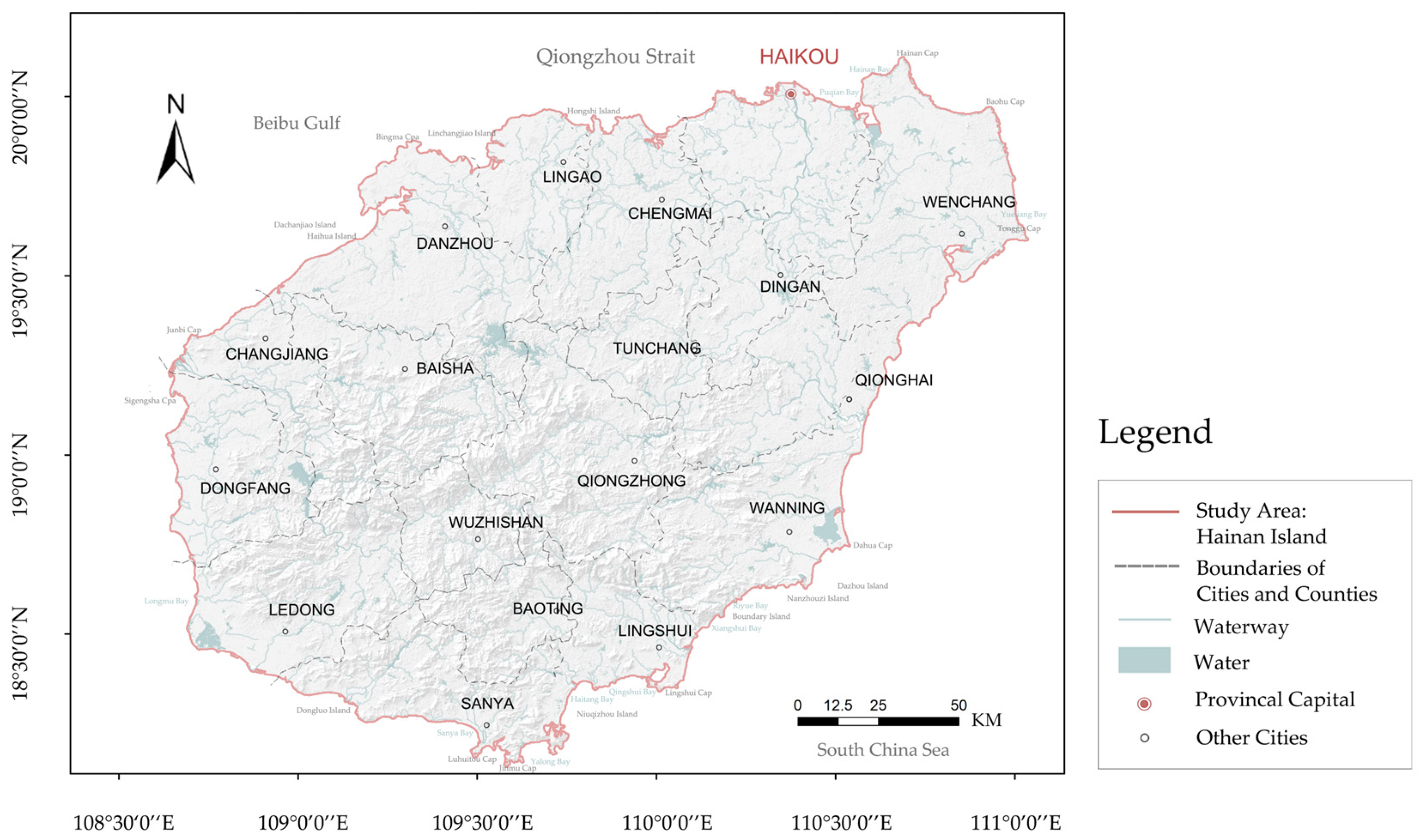
Hainan Island is located at the southernmost part of China, between 18°10′~20°10′ N latitude and 108°37′~111°03′ E longitude, with a total area of approximately 33,900 km2. The overall geomorphology of the island exhibits a spatial pattern characterized by a “central uplift and gradual descent towards the periphery.” Centered on the Wuzhi Mountain–Yinggeling Mountain range, the terrain transitions outward through hills, terraces, and plains. This topographic structure imposes long-term constraints on settlement distribution, transportation organization, and land-use patterns at the regional scale [21] and constitutes a crucial natural background for the site selection and spatial distribution of landscape architecture. This study focuses only on the main island region of Hainan Province (Figure 1).
From the perspective of the evolution of administrative establishments, Hainan Island has been gradually incorporated into a relatively stable system of prefecture and county governance since the Tang Dynasty. The formation and adjustment of its administrative structure have exerted profound influences on regional spatial organization.
During the Tang Dynasty, the establishment of five prefectures (Zhou) initially laid the administrative framework [22,23]. The Song Dynasty (920–1279 AD) maintained this prefecture-county system and adjusted some local jurisdictions, further institutionalizing administrative governance [24]. In the third year of the Hongwu (1370 AD) reign of the Ming Dynasty (1368–1644 AD), Qiongzhou Prefecture was established, governing subordinate counties and prefectures such as Yazhou and Danzhou. This marked the stabilization of Hainan Island’s administrative system, forming a governance pattern centered on the prefectural seat [25]. The Qing Dynasty largely inherited the Ming system. By the 31st year of the Guangxu reign (1905 AD), Yazhou was elevated to a directly administered subprefecture, resulting in a dual administrative structure in which Qiongzhou Prefecture and Yazhou Directly Administered Subprefecture operated side-by-side in the north and south, respectively [26].
The evolution of these administrative divisions not only reshaped the political spatial structure of Hainan Island but also provided an institutional foundation for the distribution of public facilities and cultural landscapes, thereby exerting a lasting and profound influence on the spatial pattern of gardens.

2.2. Development of Ancient Gardens on Hainan Island

Within the territorial framework of ancient China, Hainan Island long occupied a relatively marginal position. Its level of social development, population size, and economic foundation were significantly weaker than those of the Central Plains and the southeastern coastal regions, resulting in a comparatively delayed emergence and development of garden construction activities [7]. Although Hainan Island was formally incorporated into the governance system of the centralized imperial state beginning in the sixth year of the Yuanding reign (111 BCE) of the Western Han dynasty, for a prolonged period thereafter, its garden construction activities failed to develop into a systematic pattern. This was largely constrained by insular geographical conditions, limited transportation accessibility, and relatively underdeveloped socio-economic circumstances.
According to existing literature and local gazetteers, records of gardens on Hainan Island prior to the Sui and Tang dynasties are sparse, primarily focusing on natural landscapes, religious sites, or administrative buildings themselves. It remains difficult to clearly identify landscape spaces with stable attributes of designed gardens during this era. Relatively clear records related to gardens in surviving documents mainly appear from the Tang Dynasty onward and are closely associated with the construction of temples and monasteries, the activities of scholar-officials, and the formation of local administrative centers.
Therefore, this study regards the Tang Dynasty as the earliest identifiable stage in the development of designed gardens on Hainan Island, and examines five main periods: the Tang Dynasty, the Song Dynasty, the Yuan Dynasty (1206–1271 AD), the Ming Dynasty, and the Qing Dynasty. This time range ensures the identifiability of garden cases in terms of quantity and type and helps to reveal the process of the evolution from the emergence to the systematization of the ancient garden spatial structure in Hainan over a long-term scale.
This study focuses on the historical gardens recorded from the Tang Dynasty to the Qing Dynasty, covering a total of 420 cases extracted from local chronicles and historical records. These gardens include temple and monastery gardens, public gardens, private gardens, memorial gardens, academy gardens, and guildhall gardens, among others. Most of them are small to medium-sized landscape spaces, mainly distributed in urban centers, administrative centers, and transportation hubs. This dataset includes both disappeared historical gardens and those that still exist today.

3. Data Sources and Research Methods

3.1. Data Sources and Processing Approach

The focus of this study is on the documented ancient gardens of Hainan Island from the Tang to Qing dynasties. The research data (Table 1) are primarily drawn from local gazetteers, historical records, and relevant scholarly works. Key sources include the Collection of Hainan Island Local Gazetteers [27], Qiongtai Gazetteer of the Zhengde Era [28], Gazetteer of Qiongzhou Prefecture [29], Records of Notable Places [30], Ancient Academies of Hainan [31], and various city and county gazetteers. Additional references include Annals of Hainan Island [32], A Brief General History of Hainan [33], Ancient Post Roads of Qiongya [34], A Study on Historical Land Development in Hainan Island [35], and Zhuang Jian Ji [36].
During the review of historical documents, we focused on selecting garden cases (Table 1) that simultaneously met the following criteria: (1) possessing a clear or relatively clear name; (2) being attributable to a specific historical period (Tang to Qing); (3) having identifiable spatial information or a locatable approximate position through cross-reference of texts; and (4) having a relatively defined functional attribute. For gardens with variant names, changes over time, or scattered records, multiple sources were cross-referenced to verify information and improve reliability.
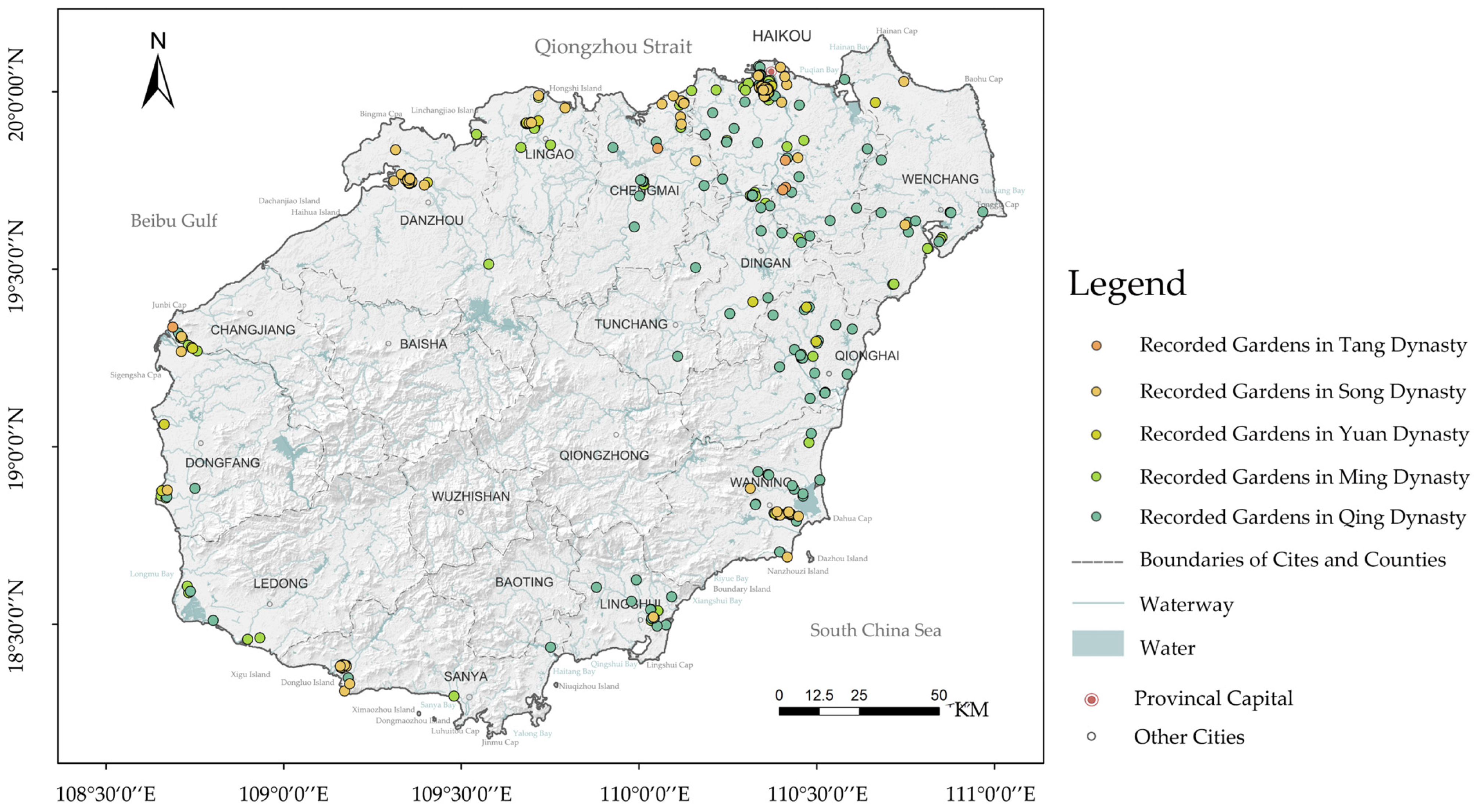
Based on this foundation, the selected garden samples underwent standardized organization. Key attribute information was systematically compiled, including name, historical period, administrative affiliation, garden type, and spatial location (Table 2). This process created a point-based spatial database for the gardens (Figure 2), providing the essential database for the subsequent spatial analysis.

3.2. Garden Types

To reveal the distribution characteristics and evolutionary patterns of Hainan’s ancient gardens, this study categorizes garden types by synthesizing existing research and considering the recording conventions of Hainan’s historical documents. Regarding the overlapping functions and blurred boundaries observed in some historical gardens, the classification is based on their most essential and stable primary function throughout their development. For example, while memorial gardens may also serve auxiliary functions such as ritual worship or moral instruction, their core purpose is to honor historical figures or memorialize significant local events. Therefore, they are clearly classified as memorial gardens.
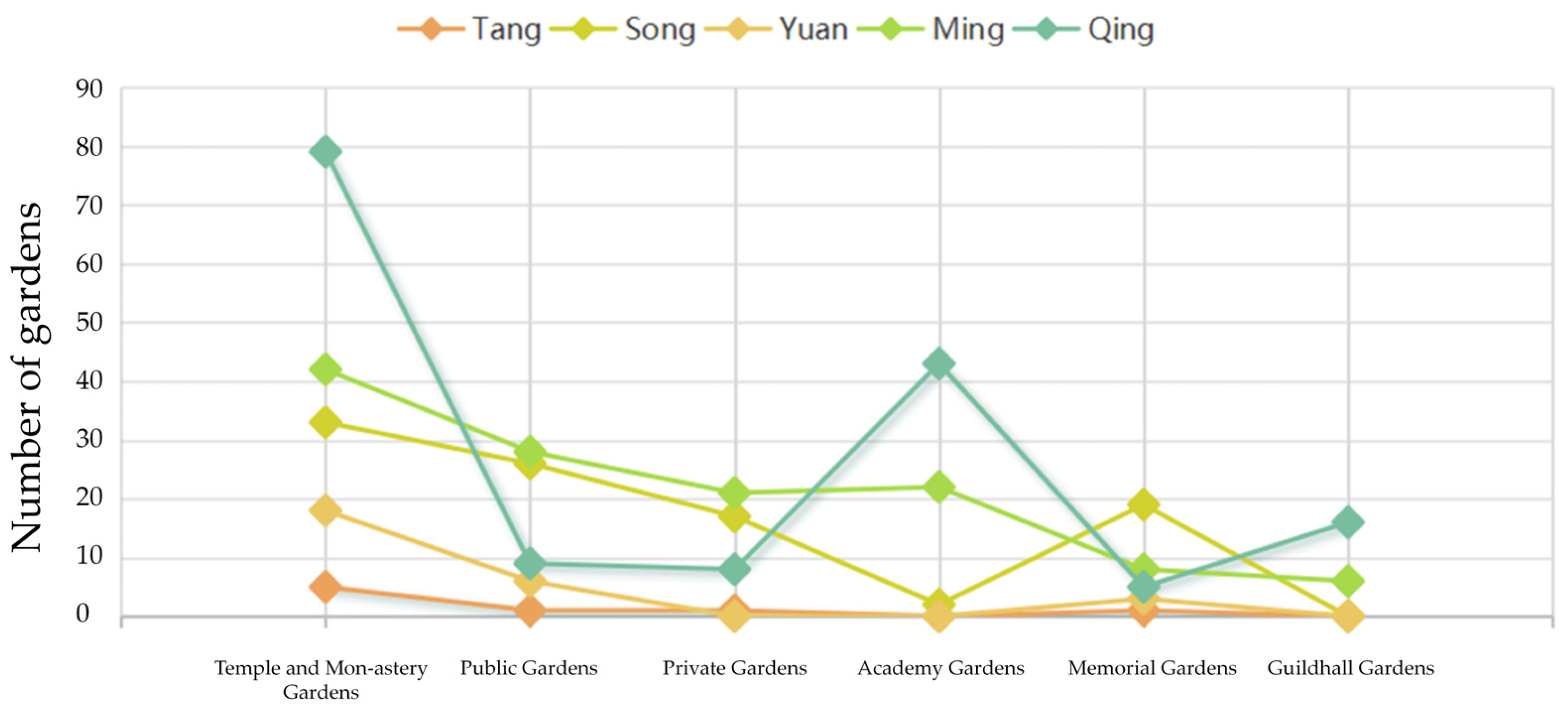
Specifically, this study categorizes Hainan’s ancient gardens into six types: temple and monastery gardens, public gardens, private gardens, academy gardens, memorial gardens, and guildhall gardens. Their definitions are listed in Table 3, and their numbers in different periods are shown in Figure 3.
It should be noted that, in historical practice, different garden types may have exhibited overlapping functions or changes over time. In this study, classification is based on the primary function of each garden. This approach ensures consistency and operational feasibility within the classification system for spatial analysis.

3.3. Spatial Analysis Framework and Methods

To explore the temporal and spatial pattern and evolution mechanism of historical gardens on Hainan Island, this paper has constructed a comprehensive analysis framework based on Geographic Information System (ArcGIS 10.8.1), integrating spatial geographic coding, Kernel Density Estimation (KDE), and spatial overlay analysis. The research procedure consists of the following steps:
(1)
Collect and screen historical garden records to build a database
Given that no scholars have yet established a systematic database of historical gardens in Hainan Island, this paper first constructs a garden spatial dataset based on the textual information recorded in local chronicles, including Qiongtai Gazetteer of the Zhengde Era [28], Gazetteer of Qiongzhou Prefecture [29], Records of Notable Places [30], etc., by extracting the spatial location description information of the gardens and combining it with historical map data and modern administrative boundary data for spatial verification and comparison.
For the information in the literature that clearly indicates specific locations or can be correlated with geographical coordinates, direct coordinate matching is used for positioning; for gardens that only provide relative spatial descriptions (such as adjacent administrative centers, religious buildings, natural landmarks, etc.) or administrative affiliation information, their approximate locations are determined through methods such as historical place name evolution, spatial relationship inference, and cross-validation of multiple sources of data. All garden locations are digitized and standardized in a unified GIS coordinate system to ensure the spatial consistency of data from different historical periods.
(2)
Kernel Density Estimation Analysis (KDE)
To identify the spatial clustering characteristics and intensity changes in garden distribution in different historical periods, this paper employs the Kernel Density Estimation (KDE) method for analysis. KDE is a non-parametric spatial statistical method that calculates the density of point features within a specified search radius, converting the discrete garden locations into a continuous density surface, thereby visualizing the spatial clustering and dispersion trends [38].
In this study, the location of the gardens was regarded as a point feature, and kernel density analysis was conducted for the five historical periods of Tang, Song, Yuan, Ming and Qing to generate density distribution maps for each period. Among them, based on the general estimation of the ancient transportation conditions and mobility capabilities in Hainan Island, 20 km is roughly equivalent to the distance that an ordinary traveler could cover on foot by land in one day during that period. Therefore, in this study, the kernel density analysis employed a fixed radius of 20 km for the search. This parameter can reflect the scope of social interaction and spatial connection measured in “daily scale”. While capturing the local spatial clustering characteristics, it also avoids over-smoothing of the spatial structure due to an overly large search range, thereby achieving a balance between the historical action logic and the spatial statistical stability.
By comparing the nuclear density surfaces of different periods in terms of concentration intensity, spatial scope, and central structural organization, the organizational characteristics of the spatial structure of ancient gardens in Hainan Island over time can be identified.
(3)
Explanation of spatial patterns and identification of evolution mechanisms
Previous studies on historical garden evolution have identified natural environment, socio-economic context, religious institutions, official mobility, and migration policies as key determinants shaping the spatiotemporal evolution of historic gardens [17,18,19,20].
Drawing on these analytical perspectives and considering the historical and geographical conditions of Hainan Island as a frontier island region, this study identifies four principal explanatory factors for investigating the evolutionary mechanisms of ancient gardens: natural environment, administrative hierarchy, transportation networks, and socio-cultural forces (including religion, official mobility, migration and education system).
Natural environment was derived from DEM data, including elevation and terrain constraints, to reflect environmental suitability and physical limitations. Administrative hierarchy referred to prefectural- and county-level centers, indicating institutional resource concentration and governance structure. Transportation networks comprised historical post roads, coastal routes, and port nodes, representing channels of mobility and exchange and enabling assessment of accessibility and connectivity. Socio-cultural factors included religious dissemination, official mobility, cultural dissemination path and educational establishments, reflecting key drivers of functional differentiation and spatial diffusion.
These spatial layers were overlaid with kernel density results to examine structural correspondences between garden distribution and environmental, institutional, infrastructural, and socio-cultural variables. This integrative procedure enabled a transition from descriptive spatial pattern identification to a structured explanatory framework, forming the methodological basis for subsequent analysis of evolutionary mechanisms.

4. Spatial Pattern Characteristics of Ancient Gardens in Hainan Island

4.1. Temporal Evolution of Garden Spatial Distribution

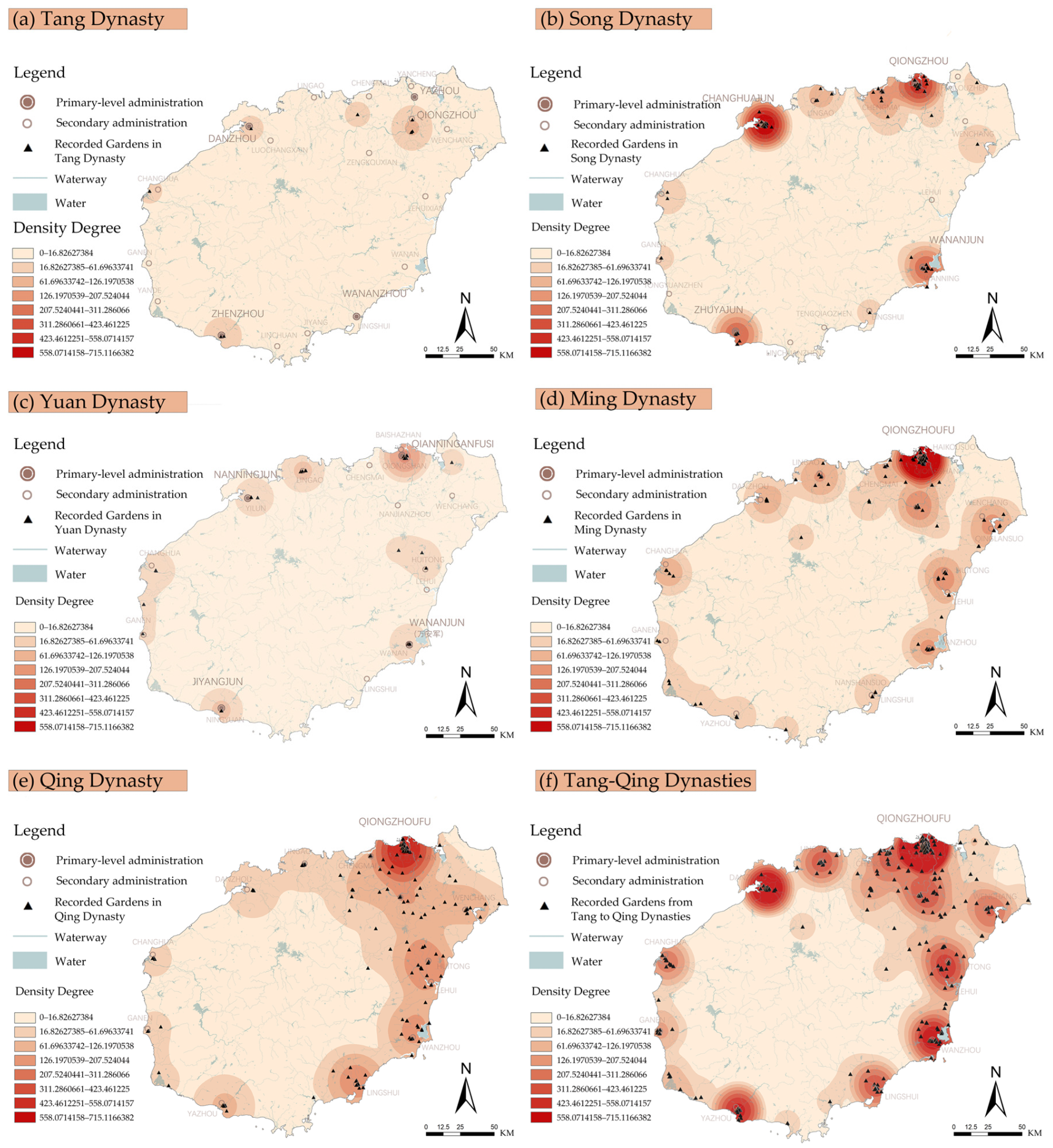
Based on the KDE results (search radius: 20 km) of 420 garden cases from the Tang to Qing dynasties, the spatial distribution of gardens on Hainan Island generally evolved from scattered initial points to multi-core clusters, and from local coastal areas toward the interior of the island. Distinct structural differences are observed across periods (Figure 4).

4.1.1. Tang-Song Period: A Low-Density, Corridor-Dependent Origin Stage

The number of gardens in the Tang dynasty was limited, and their spatial distribution was relatively scattered. They were mainly concentrated in Qiongzhou (present-day Haikou) and a few coastal nodes, without forming high-density cores. In the Song dynasty, the number of gardens increased. High-density areas began to emerge along the island-circling transportation routes and port nodes. This reflects an initial coupling between garden construction and administrative centers, post-road systems, and maritime transportation. During this stage, overall spatial continuity remained weak. The garden system was still in a formative phase: limited in scale, dispersed in distribution, and not yet fully structured. This pattern highlights the strong dependence of early garden construction activities on administrative establishment and transportation conditions.

4.1.2. Yuan Dynasty: Contraction and Structural Discontinuity

During the Yuan Dynasty, the overall distribution of gardens showed a tendency to contract. The number of high-density areas decreased significantly, and the spatial structure exhibited a degree of discontinuity. This shift is closely linked to adjustments in Hainan’s administrative status, shifts in governance priorities, and the relative weakening of population and cultural activities during this period. Garden spaces in this era demonstrated high sensitivity to changes in the institutional environment and political context, indicating that their development lacked stable institutional support and sustained capacity for expansion.

4.1.3. Ming-Qing Period: Multi-Core Agglomeration and Hierarchical Expansion

Starting from the Ming Dynasty (1368–1644 AD), the number of gardens increased noticeably, and their spatial agglomeration intensified significantly. Relatively stable high-density zones gradually formed in some areas. Garden distribution was no longer confined to single nodes but shifted from an earlier scattered pattern toward localized clustering.
By the Qing Dynasty, the spatial pattern of gardens had stabilized further, evolving into a multi-core structure centered on Qiongzhou, with secondary clusters along the eastern and southern coasts. The number of high-density zones continued to rise, their spatial extent expanded further, and connections between different agglomerations strengthened. Overall, this period demonstrated a trend of evolution from a dispersed pattern toward a more networked spatial organization.
From a temporal perspective, the number of ancient gardens on Hainan Island showed an overall upward trend. Gardens were relatively few and spatially scattered during the Tang Dynasty. Their numbers gradually increased through the Song and Yuan periods, entering a phase of relatively stable development during the Ming and Qing dynasties, with both the quantity and variety of gardens becoming significantly more substantial. The differing paces of change in garden numbers across these stages reflect the periodic characteristics of regional social development, institutional establishment, and cultural activity intensity.
In conclusion, the spatial evolution of Hainan’s ancient gardens was not merely a process of quantitative accumulation. Rather, it was a structural transformation shaped by the gradual refinement of administrative systems, the continuous permeation of cultural institutions, and the growing capacity for spatial organization. The spatial pattern of gardens evolved from a dispersed to a clustered distribution, and from single nodes to multiple interconnected hubs. The complexity of its spatial organization increased over time, reflecting a trend toward greater institutionalization and systematization in garden construction.

4.2. Typological Evolution of Garden Spatial Distribution

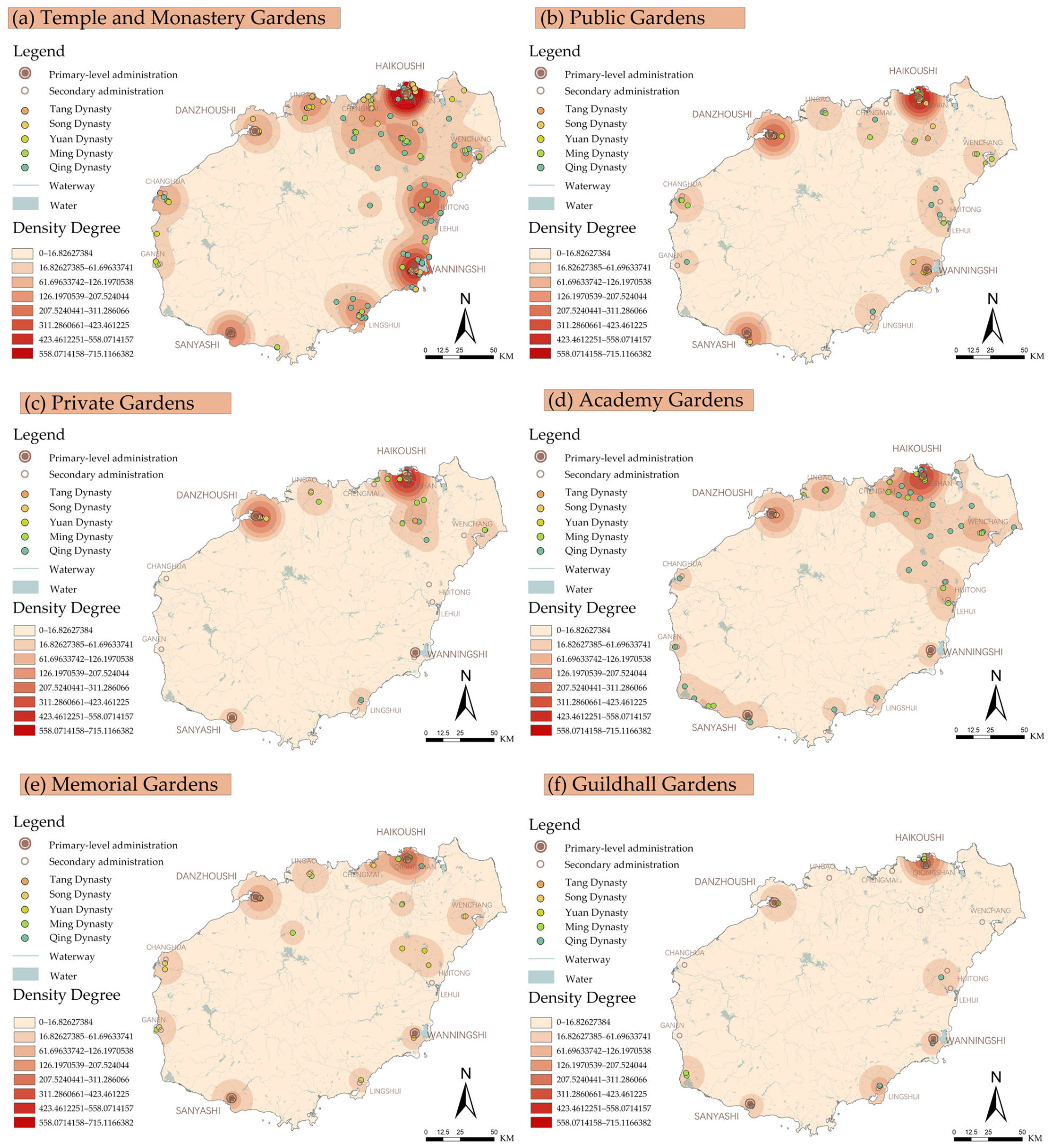
Building upon the overall temporal evolution patterns, a KDE was conducted based on garden typology to examine the spatial distribution of Hainan’s ancient gardens. This approach helps reveal differences in spatial organization, clustering intensity, and institutional dependency among gardens with different functions (Figure 5). The results indicate that various garden types exhibit clearly differentiated clustering patterns in space. Its distribution characteristics are closely related to natural geographical, administrative hierarchy, transportation networks, and socio-cultural factors.

4.2.1. Temple Gardens: Widest Distribution, Clustered Around Administrative and Transportation Nodes

Temple gardens were the most numerous and widely distributed among all garden types. Their high kernel density areas were primarily concentrated in northern Hainan, extending along the coastline and major transportation corridors toward the eastern and southern regions, forming a relatively continuous spatial belt. High-density zones appeared not only around primary administrative centers but also widely across secondary administrative nodes and some grassroots areas. This pattern reflects the multiple roles temple gardens played in ancient Hainan society, including religious dissemination, integration of local beliefs, and serving as public activity spaces. Their spatial layout was less dependent on the administrative hierarchy but highly sensitive to population centers and transport accessibility, exhibiting a wide coverage, weak hierarchy distribution characteristic.

4.2.2. Public Gardens: Highly Concentrated in Primary Administrative Centers

The kernel density distribution of public gardens shows a strong central clustering pattern. High-density areas are almost entirely concentrated in primary administrative centers such as Qiongzhou, with only scattered occurrences in other regions, indicating limited overall spatial expansion. This type of garden relied heavily on officially led urban development and public financial support. Their spatial distribution directly reflects the hierarchical structure of Hainan’s ancient administrative system. Public gardens did not diffuse along transportation corridors; instead, they served as spatial symbols of administrative power and urban public functions, firmly anchored to core political nodes.

4.2.3. Private Gardens: High Concentration and Distinct Point-Based Distribution

Private gardens were relatively few. High kernel-density zones were concentrated in Qiongzhou and a small number of coastal nodes with favorable economic and cultural conditions. Overall, they exhibited a highly clustered, point-like distribution pattern, with a significantly smaller spatial clustering range compared to temples and public gardens. This characteristic is closely related to the fact that private gardens were primarily built by exiled officials, literati, or local elites. Their spatial layout was constrained by social class, economic means, and political status, lacking the conditions for diffusion into peripheral or grassroots areas. This reflects their distinct social-hierarchical nature and elite-oriented spatial character.

4.2.4. Academy Gardens: A Hierarchical Structure Diffusing from Core to Secondary Nodes

The high-density areas of academy gardens are primarily concentrated in first-level administrative centers such as Qiongzhou, while also extending along the administrative hierarchy to secondary nodes, forming a relatively clear hierarchical distribution. This spatial pattern closely aligns with the dissemination path of Confucian educational institutions. Academy gardens often emerged in conjunction with administrative establishments and literati networks. Their distribution reflects both a logic of spatial diffusion driven by institutional frameworks and the gradual outward permeation of cultural resources from core areas to the periphery.

4.2.5. Memorial Gardens: Low-Density, Weakly Clustered Symbolic Distribution

Memorial gardens generally show a low level of kernel density, with no prominent high-density zones. They mostly appear as isolated points near administrative nodes or sites associated with historical events, without forming continuous or extensive clusters. Their spatial distribution emphasizes memorial and symbolic meaning rather than everyday use or spatial organization. Consequently, they were less dependent on population size and transport accessibility, displaying a pattern characterized as low frequency and spatial dispersion.

4.2.6. Guildhall Gardens: A Distinctly Coastal and Port-Oriented Distribution

Though limited in quantity, guildhall gardens demonstrate a highly defined spatial orientation. Their high-density zones are mainly concentrated at coastal ports and key transportation nodes for external exchange, presenting a typical point-to-point distribution pattern. As products of migration and commercial activities during the Ming and Qing periods, the spatial distribution of guildhall gardens was strongly dependent on cross-regional exchange networks. Their clustering pattern reflects the direct influence of commercial activities, ethnic community ties, and maritime transportation systems on the spatial organization of gardens.
From a typological perspective, the ancient gardens on Hainan Island show an evolutionary trend from simplicity to diversity. During the Tang and Five Dynasties periods, temple gardens predominated. In the Song and Yuan dynasties, temple gardens and landscape spaces with public functions remained dominant, while a small number of private gardens emerged. With the arrival of exiled officials, academy gardens began to develop. By the Ming and Qing periods, alongside the refinement of the education system, the growth of local literati communities, and the expansion of coastal trade, the number of academy gardens increased significantly, gradually becoming one of the major garden types. Meanwhile, memorial gardens and guildhall gardens also emerged and developed. Overall, temple gardens maintained a relatively high proportion across all periods, forming a foundational component of Hainan’s ancient garden system. Academy gardens reflect the phased characteristics of regional educational development and cultural accumulation. Although other types were fewer in number, they provided essential spatial and cultural complements to the overall system.
These typological differences did not exist in isolation. Rather, under the combined influence of natural geographical, administrative hierarchy, transportation networks, and socio-cultural factors, they shaped the overall evolution of Hainan’s ancient garden spatial pattern from single nodes toward a multi-layered, multi-functional network.

5. Analysis of Influencing Factors on the Spatial Distribution of Ancient Gardens in Hainan Island

5.1. Natural Geographical Factors

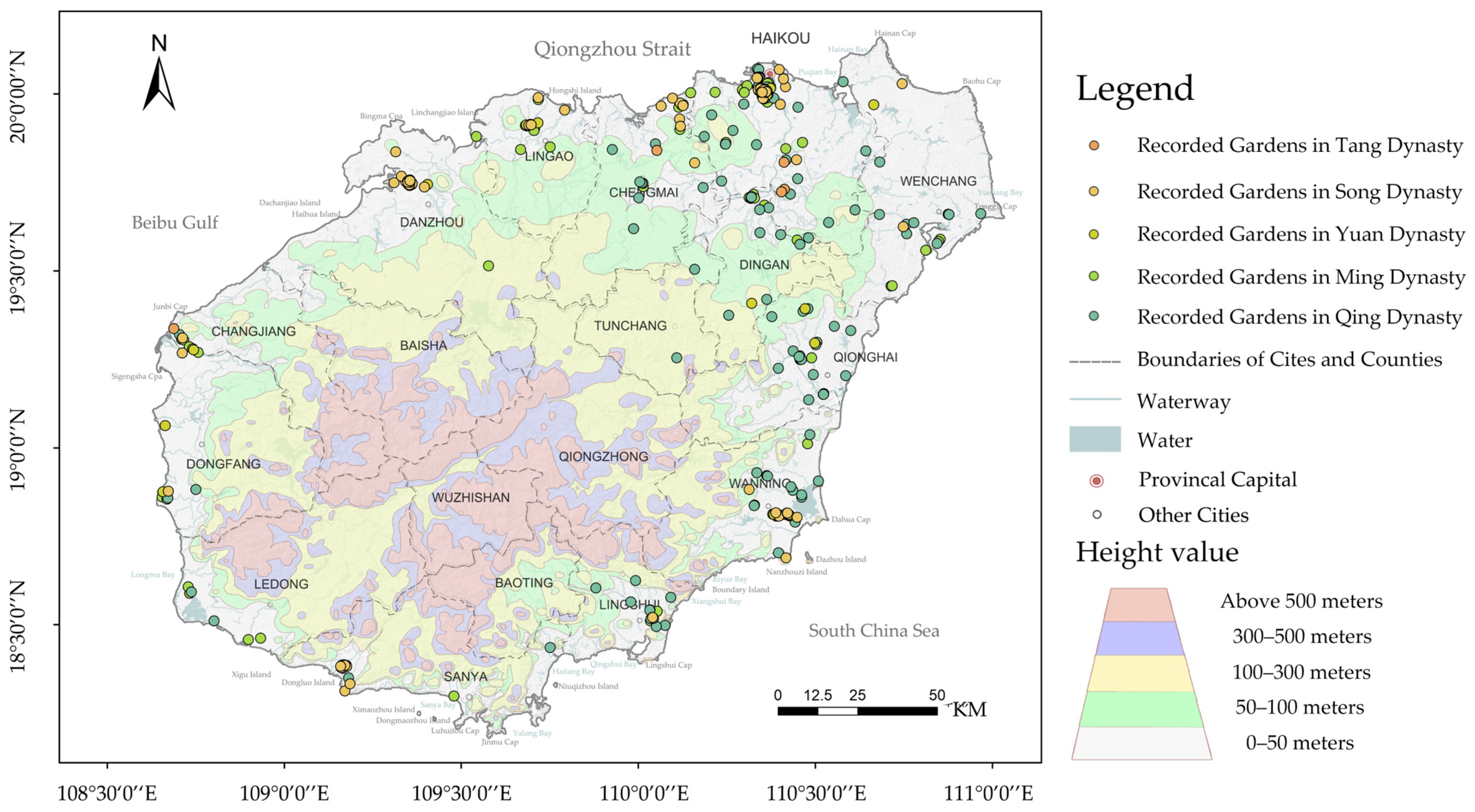
From the perspective of natural geographical conditions, the spatial distribution of Hainan’s ancient gardens shows a significant correspondence with the island’s distinct topography (Figure 6). High-density garden areas are primarily concentrated along the coastal plains surrounding the island and within the river valleys of major waterways. In contrast, the central mountainous region exhibits a noticeably sparse distribution of gardens. This pattern overall reflects a spatial structure characterized by “peripheral clustering and central sparsity”.
Topography, hydrological conditions, and spatial accessibility collectively served as key natural constraints on garden establishment. Areas with relatively gentle terrain, favorable water resources, and accessible transportation were more conducive to settlement formation and the clustering of social activities, thereby providing the necessary material foundation for the construction and sustained use of gardens. In contrast, the complex terrain and limited accessibility of the central mountainous region supported lower levels of human activity, making it difficult to sustain concentrated garden development.
It should be noted that the natural environment did not directly determine garden distribution. Rather, it imposed a foundational constraint on the spatial pattern of gardens by limiting the usable spatial extent and influencing the placement of administrative centers and the alignment of transportation routes. Under the combined influence of administrative systems and transportation networks, natural geographical conditions contributed to shaping regional differentiation in garden distribution, giving rise to distinct zonal characteristics.

5.2. Transportation Networks

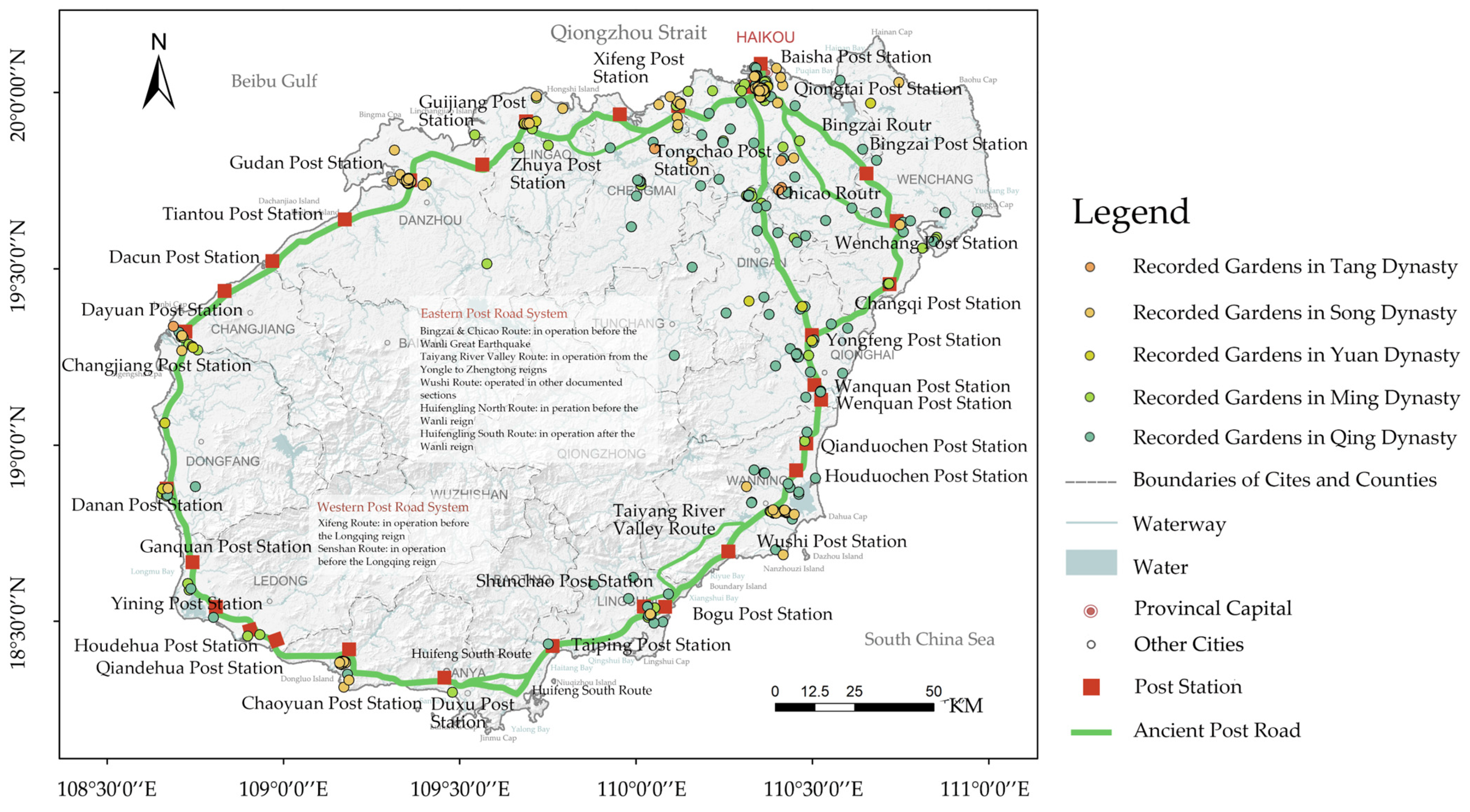
From a spatial structure perspective, the distribution of ancient gardens on Hainan Island exhibits a distinct corridor-oriented pattern. There is a high degree of spatial correlation between high-density garden areas and the coastal transportation system, the island-circumventing land-based post road network, and major port nodes (Figure 7).
At the locational level, the high-density distribution of gardens shows a strong alignment with the routes of the ancient post roads, demonstrating a clear “corridor orientation.” Garden sites were primarily distributed along the eastern and western main post-road axes, clustering around stations, prefectural and county seats, and port nodes. Starting from the core hub of Qiongtai Station, gardens extended southward along the eastern and western post roads, forming two primary garden-spatial belts that traversed the island. This reflects the critical role of transportation accessibility in garden siting.
At the spatial pattern level, the island-circumventing post roads, through their linear transport structure, linked otherwise isolated garden nodes into ribbon-like or chain-like spatial formations. In areas with superior transportation conditions, such as key nodes, garden density was significantly higher than in surrounding regions, with markedly shorter distances between nodes. This indicates a trend of evolution from point-based distribution toward a networked structure. In contrast, the interior regions of the island, distant from major post roads, exhibited sparse garden distribution and weak spatial connectivity. This highlights the structural controlling influence of transportation corridors on the spatial organization of gardens.
Furthermore, post roads served not only as physical transport routes but also as important carriers of cultural dissemination and layered historical memory. For example, sites like Tongchao Station on the western route gradually evolved into cultural landmarks due to the activities of literati figures such as Su Shi. Over time, the garden spaces around such nodes accumulated cultural symbolism, attracting later generations of scholars to engage with these sites along the post-road network and forming a cultural resonance that transcended time and space.

5.3. Administrative Hierarchy

Given the historical variations in the naming and hierarchical structure of Hainan’s administrative units from the Tang to Qing dynasties, this study standardized administrative systems across different periods based on the actual functional attributes and spatial governance levels of administrative units. They were uniformly classified into primary administrative centers (equivalent to prefectural level), secondary administrative centers (equivalent to sub-prefectural or county level), and basic-level administrative units. This approach ensures comparability in cross-period spatial analysis and allows administrative hierarchy to serve as a consistent variable in explaining the distribution patterns of gardens.
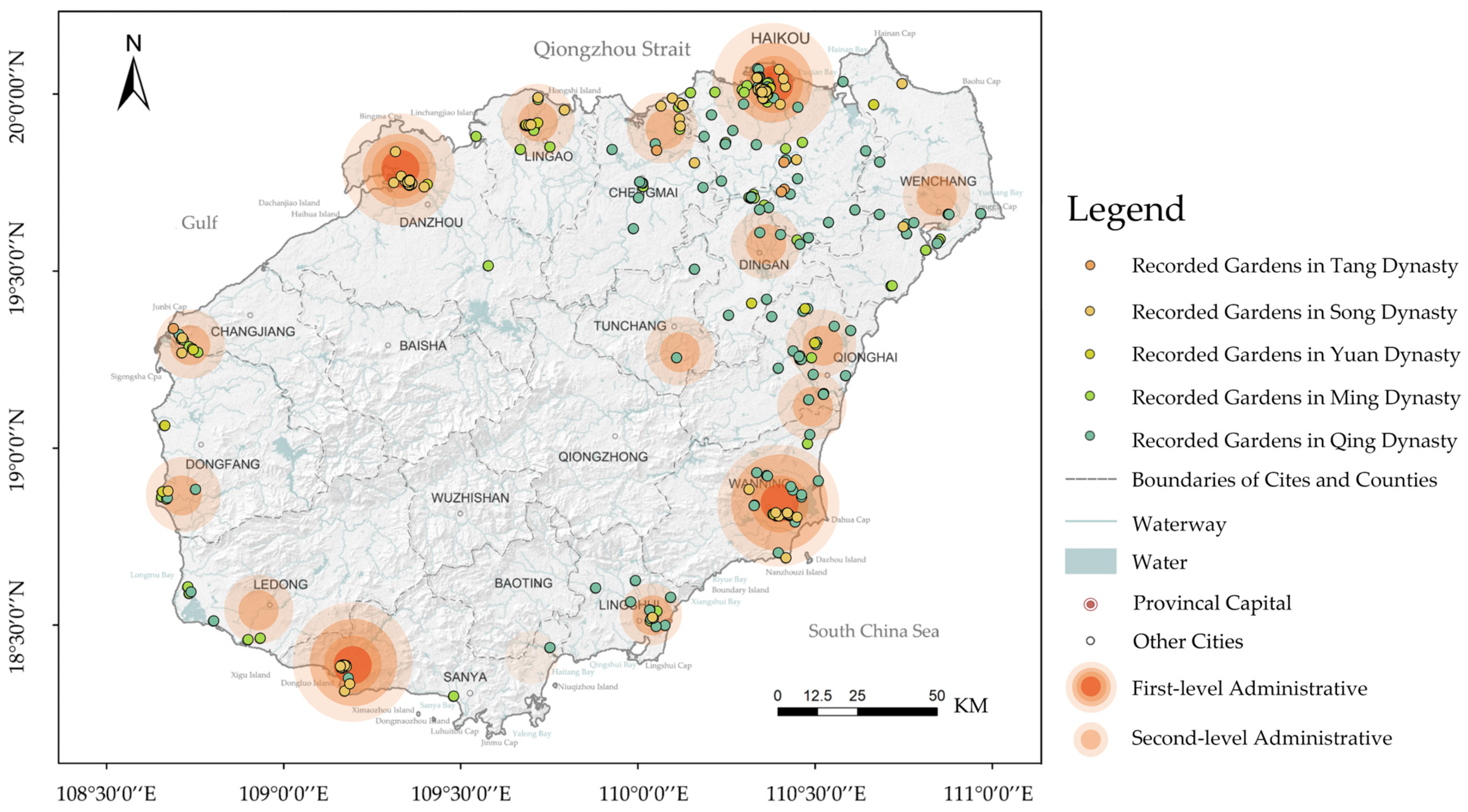
The analysis results (Figure 8) indicate that garden distribution has a clear spatial pattern of radiation from administrative centers of different hierarchical levels. As hubs of political power, cultural resources, and public affairs, primary administrative centers supported the highest number and most diverse types of gardens. Specifically, approximately 64.2% of all gardens were located within the influence zone of primary administrative centers, with Qiongzhou Prefecture alone accounting for 71.76% of this proportion. Secondary administrative centers formed several sub-nodal clusters of gardens through institutional expansion and local governance. Basic-level administrative units, in contrast, were primarily associated with religious or memorial gardens, which were relatively limited in types and scale.
This pattern demonstrates that administrative hierarchy not only influenced the quantity of gardens but also shaped their spatial structure through the allocation of institutional resources, population concentration, and the intensity of cultural activities. As a result, garden distribution exhibited a pronounced “core-periphery” differentiation.

5.4. Socio-Cultural Factors

Socio-cultural dynamics were a key intrinsic driver behind the continuous development of ancient gardens on Hainan Island. Gardens were not isolated landscape entities, but were embedded within the social structure, cultural networks, and institutional environments of specific historical periods. Hainan’s distinctive immigrant society, the tradition of exiled officials, and literati activity networks formed a complex socio-cultural system that influenced the spatial pattern of gardens in different ways across dynasties.

5.4.1. Tang Dynasty: Garden Incubation Triggered by Religious Dissemination and Early Official Activities

The Tang Dynasty marked the initial stage of garden formation on Hainan Island. During this period, Hainan was gradually incorporated into the prefecture-county administrative system, though its social structure remained unstable. Garden construction activities were primarily associated with religious dissemination and the activities of officials. Buddhism was introduced to Hainan during the Tang Dynasty, and Buddhist temples became the earliest spaces to exhibit garden-like features. Their layout, often set against natural landscapes with simple courtyards, served religious practice and symbolic functions. Meanwhile, early officials and exiled officials in Hainan facilitated the introduction of Central Plains cultural elements. Spaces for residence, teaching, and commemoration began to emerge, forming the earliest prototypes of gardens in Hainan. In summary, gardens in the Tang Dynasty were limited in quantity and sporadic in distribution, exhibiting distinct point-based and dependent features.

5.4.2. Song–Yuan Period: Garden Expansion Under the Combined Influence of Official Migration and Immigrant Society

During the Song and Yuan periods, Hainan’s social structure underwent a significant transformation. The migration of officials and the formation of an immigrant society jointly propelled the expansion of garden spaces. In the Song Dynasty, exiled officials were highly active in Hainan. Prominent literati from the Central Plains, such as Su Shi, not only disseminated Confucian thought but also contributed to the emergence of memorial gardens through teaching, residence, and public engagement. This led to the southward extension of gardens along the paths of official activities. Concurrently, the scale of immigration continued to grow, with Fujian becoming a major source of migrants to Hainan. During settlement, immigrants established ancestral halls, temples, and related landscape spaces, introducing their ancestral clan systems and spatial construction concepts to Hainan. This promoted the extension of garden functions from purely religious and commemorative purposes toward clan-oriented and local public spaces.
The Yuan Dynasty continued and reinforced this trend, with garden distribution gradually concentrating around administrative nodes and transportation corridors. Overall, during the Song–Yuan period, garden types in Hainan began to diversify, and the spatial pattern shifted from scattered, isolated points to a more multi-nodal distribution. Gardens also increasingly assumed a public role within local society.

5.4.3. Ming–Qing Period: Institutionalization of Gardens Driven by Mature Educational Systems and Literati Networks

The Ming and Qing dynasties represent the most socially and culturally mature phase in the development of ancient gardens on Hainan Island. With the strengthening of central governance over Hainan and the refinement of local educational institutions, educational facilities such as academies (Shuyuan) and Confucian schools (Xuegong) expanded rapidly. As essential environmental settings for educational activities, gardens saw a notable increase in both number and type. Academy gardens became widely distributed across the island, serving as key spaces connecting literati interaction, scholarly dissemination, and local public life.
Simultaneously, local literati and gentry groups grew in influence. Their networks provided a stable social foundation for garden construction. Religious networks continued to play a role during the Ming and Qing periods, with Daoist and Buddhist activities extending along transportation corridors and population centers, forming several regionally influential temple garden nodes. Religious gardens, academy gardens, and memorial gardens spatially overlapped, gradually transforming Hainan’s garden landscape from scattered, isolated points into a spatial system with a hierarchical structure and functional differentiation.
Collectively, religious dissemination, official migration, and immigrant society served as key socio-cultural catalysts that continuously shaped the typology, spatial siting, and functional attributes of Hainan’s ancient gardens across the Tang, Song–Yuan, and Ming–Qing stages. These factors interacted with administrative systems and transportation networks, collectively driving the evolution of the gardens in Hainan Island from an early fragmented pattern toward a networked and institutionalized spatial configuration.

6. Evolutionary Mechanism of the Spatial Patterns of Ancient Gardens in Hainan Island

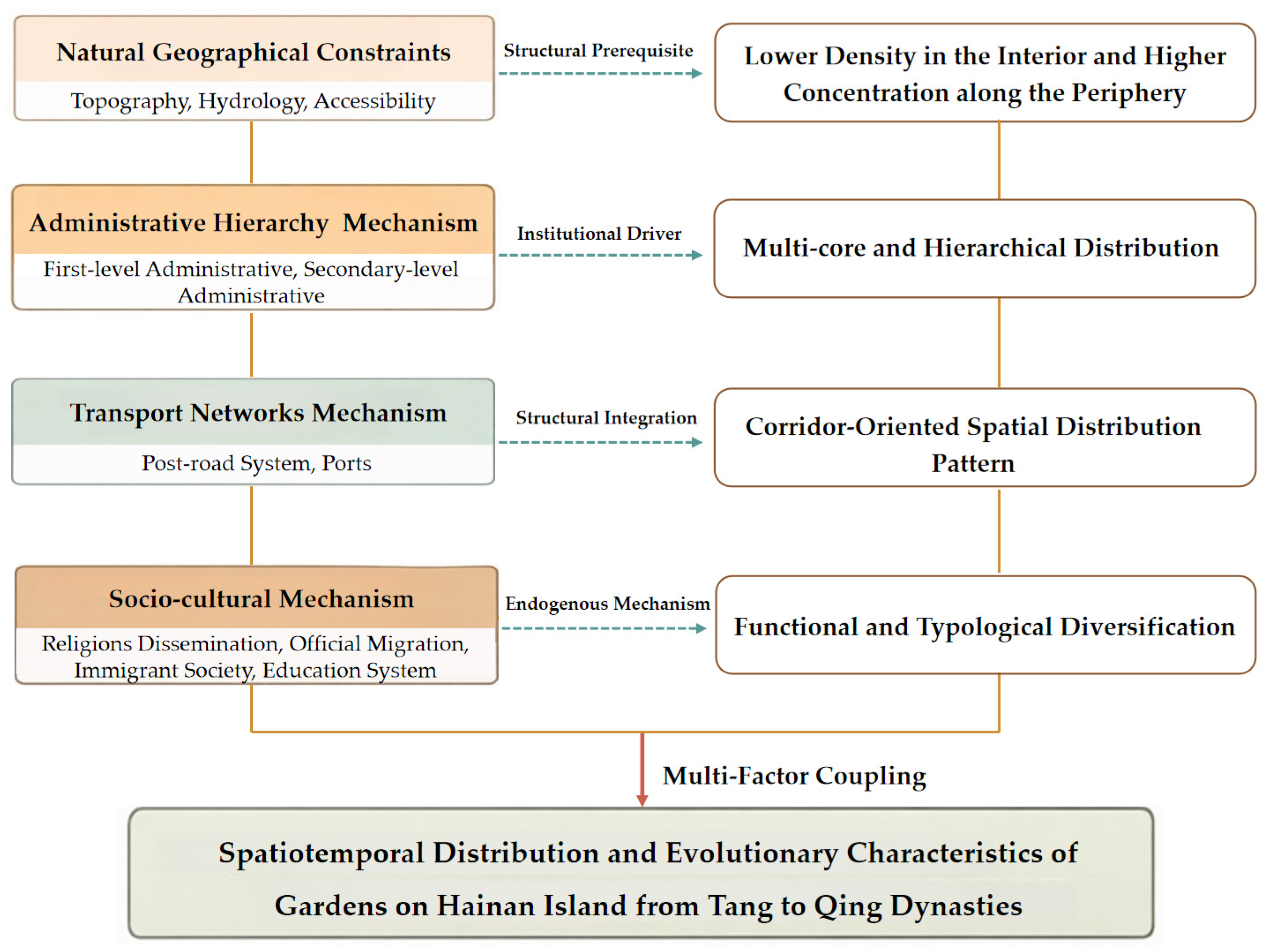
Based on the previous analysis of the spatial distribution characteristics and influencing factors of ancient gardens in Hainan, the formation of the garden spatial pattern on Hainan Island cannot be understood as the simple accumulation of various locations. Instead, it should be regarded as an orderly and hierarchical causal process. Its mechanism operates through a structured influence chain: natural factors set the initial spatial conditions, administrative integration establishes regional hierarchies, transportation networks achieve structural connectivity, and social and cultural forces promote functional diversification (Figure 9).

6.1. The Mechanism of Natural Geographical Constraints: Structural Prerequisite Conditions

The natural geographical conditions form the structural prerequisite for the evolution of the garden space on Hainan Island. The island’s morphology presents a spatial pattern of “coastal plain–inland mountainous area”, and through topographic undulation, water resource distribution and spatial accessibility, it imposes fundamental constraints on the distribution of early settlements and institutional layout. The coastal plain and river valley areas provide an environmental foundation for population and economic activities, while the central mountainous area restricts large-scale inland integration.
It is important to note that the natural environment does not directly determine the type or quantity of gardens but indirectly shapes the garden spatial distribution pattern by influencing the location selection of administrative centers and the layout of transportation routes. This structural constraint provides boundary conditions for subsequent institutional integration and spatial expansion.

6.2. The Administrative Hierarchy Mechanism: Institutions Shaping the Distribution of Garden Types and the Spatial Stratification of Gardens

The evolution of the administrative system played a crucial intermediary role in transforming the geographical structure into an organized hierarchical system of regions. As Hainan Island gradually shifted from a frontier-oriented governance model to a stable administrative system, political power, financial resources, and cultural capital increasingly concentrated in designated administrative centers. These centers served not only as governance hubs but also as central nodes for social and cultural activities, thereby providing an institutional foundation for garden construction.
Geographical suitability influenced the location of administrative centers, which in turn affected the spatial concentration of resources and population. The aggregation of administrative institutions gave rise to an increasing demand for representative, religious, educational, and recreational spaces. Gardens emerged as the spatial expression of these institutional and social demands, and thus clustered around higher-level administrative centers.
Therefore, the administrative hierarchy system formed a stratified spatial structure in the distribution of gardens. The primary administrative center had a high density of gardens and diverse functions, reflecting the concentration of its political and cultural resources. The secondary administrative center had a moderate density of gardens and relatively lower diversity in types. In contrast, the garden distribution in the surrounding areas was sparser, and the functional forms were also more monotonous, typically associated with single-purpose religious or commemorative sites.
This pattern indicates that the institutional hierarchy shaped both the density of garden concentration and the differentiation of garden types, and embedded landscape production into a structured regional governance system.

6.3. Transport Networks Mechanism: Spatial Connectivity and Expansion Mechanism

The transportation system functions as a structural integrator, connecting various administrative nodes at different spatial levels. In the early days, the coastal waterways established the main axis for spatial concentration, and the initial settlements and garden clusters appeared along this axis. With the expansion of the urban ring road network, inland transportation significantly improved, strengthening the connection between administrative centers and surrounding areas.
Transportation operates through two interrelated mechanisms. Firstly, the improvement of transportation convenience shortens travel time and logistics costs, thereby facilitating the mobilization of materials, labor, and institutional resources necessary for garden development. Secondly, transportation networks become channels for cultural dissemination, promoting the circulation of institutional practices, aesthetic norms, and landscape patterns in different regions. Through the interactions of officials, merchants, religious figures, and scholars, garden concepts are constantly replicated and evolved along these routes.
Therefore, the originally isolated garden nodes gradually integrated into clusters oriented by corridors. Over time, these linearly concentrated areas evolved into more interconnected spatial forms, strengthening the overall network structure of garden distribution. Thus, it indicates that transportation networks facilitate personnel mobility and actively form the spatial organization of gardens by strengthening the relationship between administrative hierarchies and cultural dissemination.

6.4. Socio-Cultural Mechanism: The Endogenous Driving Force for the Diversification of Functions and Types

The changes in socio-cultural factors have led to the differentiation within the spatial structure formed by geographical, administrative and transportation factors.
The spread of religion promoted the formation of early temple gardens. Official migrations and immigrant groups brought about the concepts of external gardens. In later periods, the maturity of the education system and the formation of the network of scholars enabled academy gardens to be institutionalized and made the garden forms more diverse.
These processes followed the spatial channel pattern formed by administrative centers and transportation routes. Therefore, cultural forces played an endogenous driving role, making the spatial differences more diverse and intensified, rather than independently determining spatial positions.
Socio-cultural factors ran through the entire process of the evolution of ancient gardens in Hainan Island. Religious dissemination triggered the emergence of gardens, official migrations and the immigrant society promoted the expansion of gardens, while the mature scholar network and education system during the Ming and Qing dynasties facilitated the development of gardens.

6.5. Multi-Factor Coupling Mechanism of Spatial Pattern Evolution

These factors are not independent explanatory variables but rather the effects of natural constraints, administrative integration, transportation integration, and socio-cultural diffusion at various levels that are interrelated in the dynamic spatial reorganization process.
From a fundamental perspective, environmental factors establish the structural boundary conditions that settlement sites and institutional development should follow. These limiting factors influence the initial location of administrative centers, thereby shaping the spatial concentration of early political authority and resource allocation. Subsequent administrative integration transforms geographically suitable locations into institutional nodes, concentrating governance capabilities, economic resources, and cultural activities.
With the expansion of transportation networks, especially the establishment of circular road systems, the connections between previously isolated administrative nodes have become increasingly close. The improvement of transportation conditions reduces spatial barriers, making the flow of materials, personnel, and cultural activities more efficient. Therefore, transportation plays a role in structural integration, strengthening the connections between nodes and facilitating the further expansion of garden construction in regions outside the main coastal centers.
On this basis, the dissemination of socio-cultural promotes functional diversification and spatial replication. Religious dissemination, official migrations, educational expansion, and networks of scholars promote the spread and localization of garden practices throughout the island. Over time, these processes accumulate, and the spatial layout transforms from scattered frontier clusters to a multi-node and corridor-oriented network structure.
This evolutionary trajectory reflects a process of path dependence. The early environment and institutional arrangements establish the spatial framework on which subsequent development relies, while cumulative socio-cultural interactions gradually transform loosely connected frontier landscapes into a more integrated regional and cultural system.

7. Conclusions

Based on 420 documented cases from the Tang Dynasty to the Qing Dynasty, this study combines historical text analysis with spatial methods based on GIS to examine the structural evolution of ancient gardens on Hainan Island. The research results show that it underwent a long-term transformation from a dispersed, node-dependent cluster to a multi-node and corridor-oriented spatial layout. This transformation is characterized by an increasing degree of structural integration.
Different types of gardens demonstrate different spatial logics. Temple and monastery gardens formed the earliest and most enduring foundation layer, while public gardens, private gardens, academic gardens and guildhall gardens reflected the process of administrative integration and social and cultural dynamics. These results indicate that ancient gardens are not merely an aesthetic entity, but also a spatial manifestation of governance structures, institutional hierarchies and cultural dissemination processes.
More importantly, this study proposes a hierarchical evolutionary mechanism to explain how spatial patterns are formed. The study does not consider environmental, administrative, transportation and cultural factors as parallel variables, but rather determines a hierarchical and ordered causal process. Environmental constraints establish the regional prerequisites; administrative integration institutionalizes hierarchical spatial organization; transportation networks enhance the structural connectivity; social and cultural dynamics activate typological diversity and spatial replication. These multi-level mechanisms clarify how the border areas in the ancient Chinese central-local governance system evolved from a dispersed spatial condition to an integrated cultural landscape system.
The theoretical contribution of this study lies in situating the case of Hainan Island within broader discussions on institutional spatial organization, human–environment interaction, and frontier development. The findings resonate with institutional perspectives in regional geography, which emphasize that governance structures are spatially embedded and actively shape territorial organization [39]. They also align with human–environment interaction frameworks, where environmental conditions function as structural constraints rather than deterministic forces [40].
By clarifying these relationships within a coherent explanatory model, the proposed framework is no longer confined to the specific case of Hainan Island. It provides a transferable analytical framework that is applicable to other island-like regions or marginal areas. In these areas, environmental constraints, institutional expansion, infrastructure integration, and cultural dissemination interact over long periods. In this sense, this research not only provides a basis for the historical interpretation of the evolution of garden spaces but also offers a universal model for explaining the long-term reorganization of cultural landscapes in frontier regions.
This study has the following limitations. A systematic and publicly accessible historical garden dataset for Hainan Island has not previously developed. Although the dataset established in this paper is based on extensive collation of historical documents, local gazetteers, inscriptions, and related literature, the fragmentation and the loss of historical documentation may lead to incomplete records of garden sites. In addition, for disappeared gardens, spatial coordinates were reconstructed through text interpretation and historical geographic conversion. This causes a degree of spatial deviation, while cross-verification with multiple documentary and administrative sources was undertaken to enhance the accuracy of their locations. In the limited scale of an island, this degree of spatial deviation is considered acceptable. Despite these constraints, the research establishes the first systematically organized historical garden dataset for Hainan Island, which is an important foundational work enabling quantitative analysis of long-term landscape evolution.

Author Contributions

Conceptualization, X.F., G.L. (Guangsi Lin) and S.L.; Data curation, X.F., Z.Z. and S.L.; Formal analysis, X.F. and Z.Z.; Funding acquisition, S.L.; Investigation, X.F.; Methodology, X.F., Z.Z. and S.L.; Project administration, S.L. and G.L. (Guangzhen Lin); Resources, S.L.; Software, X.F. and Z.Z.; Supervision, G.L. (Guangsi Lin) and S.L.; Visualization, X.F. and Z.Z.; Writing—original draft, X.F.; Writing—review & editing, G.L. (Guangsi Lin), S.L. and G.L. (Guangzhen Lin). All authors have read and agreed to the published version of the manuscript.

Funding

The research was funded by the Research Startup Fund of Hainan University (KYQD (ZR)-21117).

Data Availability Statement

The raw data supporting the conclusions of this article will be made available by the authors on request.

Conflicts of Interest

Author Guangzhen Lin was employed by the company Zoomtech Engineering Co., Ltd. The remaining authors declare that the research was conducted in the absence of any commercial or financial relationships that could be construed as a potential conflict of interest.

Abbreviations

The following abbreviations are used in this manuscript:
BCEBefore Common Era
ADAnno Domini

References

  1. Wu, Y.; Jiang, Y.; Wu, Y.; Miao, M. Heritage corridor construction of classical gardens of Suzhou using minimum cumulative resistance model. Herit. Sci. 2025, 13, 530. [Google Scholar] [CrossRef]
  2. Jiao, M.; Lu, L. Spatiotemporal distribution of toponymic cultural heritage in Jiangsu Province and its historical and geographical influencing factors. Herit. Sci. 2024, 12, 377. [Google Scholar] [CrossRef]
  3. Li, N.; Fang, X.S. A study on the distribution and scale evolution of Jiangnan’s thatched cottages from Tang to Ming Dynasties. J. Asian Arch. Build. Eng. 2025, 24, 4787–4804. [Google Scholar] [CrossRef]
  4. Li, Y. Analysis of the relationship between the temporal and spatial evolution of henan grotto temples and their geo-graphical and cultural environment based on GIS. Herit. Sci. 2023, 11, 216. [Google Scholar] [CrossRef]
  5. Zhu, H.; Situ, S.J. Areal Diffusion and Integration of the Frontier Pioneering Culture in Hainan Island. Acta Geogr. Sin. 2001, 56, 99–106. [Google Scholar] [CrossRef]
  6. Ou, Z.; Zhan, S.; Su, P.; Grydehøj, A. To Study Island China. Isl. Stud. J. 2024, 19, 286–306. [Google Scholar] [CrossRef]
  7. Niu, Y.T. Study on “Administrative Construction Records” in Ming and Qing Gazetteers of Hainan. Master’s Thesis, Hainan Normal University, Haikou, China, 2014. (In Chinese) [Google Scholar]
  8. Jia, Y.Y.; Tang, X.L. An Exploration of Garden Art and Quality Improvement of Dongpo Academy in Danzhou, Hainan. J. Hainan Univ. 2016, 34, 66–74. (In Chinese) [Google Scholar] [CrossRef]
  9. Wang, H.; Liang, H.Y.; Li, D. Landscape Design Techniques and Conservation of Cultural Heritage at Dongpo Academy in Danzhou, Hainan. Guangdong Landsc. Archit. 2022, 44, 32–37. (In Chinese) [Google Scholar]
  10. Liu, H. Study on the Landscape of the Five Officials Temple in Hainan. Master’s Thesis, Hainan University, Haikou, China, 2014. (In Chinese) [Google Scholar]
  11. Liu, H.; Meng, C.Y.; Pei, B.J.; Wu, Q.S. An Exploration of the Garden Art of the Five Officials Temple in Hainan. J. Hainan Univ. 2014, 32, 178–185. (In Chinese) [Google Scholar] [CrossRef]
  12. Song, C.J. Analysis of Artistic Conception in Buddhist Temple Garden Landscapes in Hainan. Master’s Thesis, Hainan University, Haikou, China, 2016. (In Chinese) [Google Scholar]
  13. Song, C.J.; Zhou, P.; Song, X.Q.; Wang, J.; Yang, C.H. Spatial Layout and Plant Landscape Characteristics of Buddhist Temple Gardens in Hainan. J. Trop. Biol. 2018, 9, 109–116. (In Chinese) [Google Scholar] [CrossRef]
  14. Han, X. Study on Academies in Hainan during the Ming and Qing Dynasties. Doctoral Dissertation, Jinan University, Guangzhou, China, 2005. (In Chinese) [Google Scholar]
  15. Zhang, D.; Chen, Z.C.; Hou, Z.H. Landscape Characteristics of Relegation Gardens in Hainan. Guangdong Landsc. Archit. 2016, 38, 17–21. (In Chinese) [Google Scholar]
  16. Xu, J.R.; Zhou, J.Q.; Lin, L.Z.; Hu, D.N.; Xu, X.S. Preliminary Study on the Development and Evolution of Public Gardens in Fucheng Town, Qiongshan District, Haikou. Guangdong Landsc. Archit. 2016, 38, 28–34. (In Chinese) [Google Scholar]
  17. Li, Y.C.; Zhu, S.N.; Li, Z.J.; Zhou, J.H. Research on the Historical Development Lineage of Ancient Gardens in the Ba-Yu Area. Chin. Landsc. Archit. 2022, 38, 134–138. (In Chinese) [Google Scholar] [CrossRef]
  18. Liu, S.M.; Zhao, H.H. Quantitative Interpretation of the Historical Forms of Urban Landscape Construction in Guilin. Huazhong Archit. 2020, 38, 90–95. (In Chinese) [Google Scholar] [CrossRef]
  19. Lu, T.Y.; Yin, X.H.; Ji, J.J.; Zheng, W.J. Construction Process and Mechanisms of Landscape Architecture in Guilin from the Tang to Qing Dynasties: An Analysis Based on Local Historical Documents. Chin. Landsc. Archit. 2022, 38, 139–144. (In Chinese) [Google Scholar] [CrossRef]
  20. Li, H.C.; Xie, M.Y.; Bai, Z.C.; Qi, J. Spatiotemporal Evolution and Driving Forces of Private Gardens in the Tang Dynasty Based on Historical GIS (HGIS). Chin. Landsc. Archit. 2025, 41, 146–152. (In Chinese) [Google Scholar] [CrossRef]
  21. Yang, D. Study on Spatial Morphology of Traditional Settlement and Architecture in Hainan Island. Ph.D. Thesis, South China University of Technology, Guangzhou, China, 2014. [Google Scholar]
  22. Zhao, Y.; Zhang, Z.Y.; Jia, W.; Zheng, S.Y.; Li, W.G.; Lü, Q.; Yin, Z.; Dou, Z.G.; Li, S.; Liu, X.; et al. Jiu Tang Shu (Old Book of Tang: Treatise on Geography); Zhonghua Book Company: Beijing, China, 1975. (In Chinese) [Google Scholar]
  23. Ouyang, X.; Song, Q.; Fan, Z.; Lü, X.Q.; Song, M.Q.; Liu, X.S.; Wang, C.; Mei, Y.C.; Zeng, G.L.; Han, W.; et al. Xin Tang Shu (New Book of Tang: Treatise on Geography); Zhonghua Book Company: Beijing, China, 1975. (In Chinese) [Google Scholar]
  24. Toqto’a; Arutu; Bieke, B.; Timur, T.; He, W.Y.; Zhang, Q.Y.; Ouyang, X.; Li, H.W.; Wang, Y.; Yang, Z.R.; et al. Song Shi (History of the Song Dynasty: Treatise on Geography); Zhonghua Book Company: Beijing, China, 1985. (In Chinese) [Google Scholar]
  25. Zhang, T.Y.; Wan, S.T.; Wang, H.X.; Xu, Y.W.; Ye, F.A.; Zhang, Y.S.; Tang, B.; Xu, Q.X.; Chen, T.J.; Wang, S.Z.; et al. Ming Shi (History of the Ming Dynasty: Treatise on Geography); Zhonghua Book Company: Beijing, China, 1974. (In Chinese) [Google Scholar]
  26. Zhao, E.X.; Ke, S.M.; Wang, S.N.; Wu, T.X.; Xia, S.T.; Jin, Z.F.; Shi, L.; Miao, Q.S.; Ma, Q.C.; Yao, Y.P.; et al. Qing Shi Gao (Draft History of the Qing Dynasty: Treatise on Geography); Zhonghua Book Company: Beijing, China, 1977. (In Chinese) [Google Scholar]
  27. Hong, S.X.; Zhou, W.M.; Tang, L.L.; Zheng, X.S.; Yuan, D.C.; Lin, G.Q.; Xie, H.; Lin, Z.X.; Liang, X.L.; Shen, N.; et al. Collection of Hainan Island Local Gazetteers; Hainan Publishing House: Haikou, China, 2004. (In Chinese) [Google Scholar]
  28. Tang, Z. Qiongtai Gazetteer of the Zhengde Era; Hainan Publishing House: Haikou, China, 2006. (In Chinese) [Google Scholar]
  29. Dai, X.; Ouyang, C. Qiongzhou Prefecture Gazetteer of the Wanli Era; Hainan Publishing House: Haikou, China, 2003. (In Chinese) [Google Scholar]
  30. Wang, X.Z. Records of Notable Place; Zhonghua Book Company: Beijing, China, 1992. (In Chinese) [Google Scholar]
  31. Hu, S.P.; Zhang, P.L. Ancient Academies in Hainan; Nanfang Publishing House: Haikou, China; Hainan Publishing House: Haikou, China, 2008. (In Chinese) [Google Scholar]
  32. Onda, A. History of Hainan Island; Hainan Publishing House: Haikou, China, 2017. (In Chinese) [Google Scholar]
  33. Zhou, W.M.; Tang, L.L.A. Concise General History of Hainan; People’s Publishing House: Beijing, China, 2019. (In Chinese) [Google Scholar]
  34. He, Y.D. Ancient Courier Roads of Qiongya: Retracing the Millennium “Southern Highway” through Texts and Maps; Hainan Publishing House: Haikou, China, 2022. (In Chinese) [Google Scholar]
  35. Situ, S.J. Study on Historical Land Development of Hainan Island; Hainan Renmin Publishing House: Haikou, China, 1987. (In Chinese) [Google Scholar]
  36. Li, G. Zhuang Jian Ji. In The Complete Library of the Four Treasuries (Wenyuange Edition Reprint); Shanghai Classic Publishing House: Haikou, China, 1987. (In Chinese) [Google Scholar]
  37. Fu, H.J.; Mao, Z.H.; Zhou, W.M.; Tang, L.L.; Lin, G.Q.; Xie, H.; Lin, Z.X.; Liang, X.L.; Shen, N.; Dong, R.L.; et al. Hainan Provincial Records: Administrative Establishments Records; Nanhai Publishing Company: Haikou, China, 2006. (In Chinese) [Google Scholar]
  38. Fu, J.; Mao, H. Study on the spatiotemporal distribution patterns and influencing factors of cultural heritage: A case study of Fujian Province. Herit. Sci. 2024, 12, 324. [Google Scholar] [CrossRef]
  39. Paasi, A. The institutionalization of regions: A theoretical framework for understanding the emergence of regions and the constitution of regional identity. Fenn. Int. J. Geogr. 1986, 164, 105–146. [Google Scholar] [CrossRef] [PubMed]
  40. Steward, J.H. Theory of Culture Change: The Methodology of Multilinear Evolution; University of Illinois Press: Champaign, IL, USA, 1955. [Google Scholar]
Figure 1. Study Area (Data source: Standard Map Service System of the Ministry of Natural Resources, (http://bzdt.ch.mnr.gov.cn/), accessed on 25 October 2025).
Land 15 00376 g001
Figure 2. Distribution of recorded garden Sites in the study area.
Land 15 00376 g002
Figure 3. Line chart of the number of garden types in each dynasty.
Land 15 00376 g003
Figure 4. Kernel density analysis chart of gardens in different dynasties. (a) Tang Dynasty; (b) Song Dynasty; (c) Yuan Dynasty; (d) Ming Dynasty; (e) Qing Dynasty; (f) Tang–Qing Dynasty.
Land 15 00376 g004
Figure 5. Kernel density analysis charts of different garden types at different periods. (a) Temple and Monastery Gardens; (b) Public Gardens; (c) Private Gardens; (d) Academy Gardens; (e) Memorial Gardens; (f) Guildhall Gardens.
Land 15 00376 g005
Figure 6. Garden distribution in relation to elevation zones.
Land 15 00376 g006
Figure 7. Distribution of Gardens and Transportation Corridors (Data source: Adapted from He Yiduan, Qiongya Ancient Post Roads: Retracing the Millennial “Southern Highway” through Texts and Maps, Hainan Publishing House, 2022).
Land 15 00376 g007
Figure 8. Distribution of gardens in relation to administrative hierarchy and influence zones.
Land 15 00376 g008
Figure 9. Comprehensive mechanism diagram.
Land 15 00376 g009
Table 1. Data Sources and Preprocessing for the Study Area.
DataData Sources and Preprocessing
Garden PointsCompiled from classical literature such as the Collection of Hainan Island Local Gazetteers series; coordinates converted and imported into ArcGIS 10.8.1 for spatial distribution analysis.
Boundaries of Hainan IslandSourced from the Standard Map Service System of the Ministry of Natural Resources (http://bzdt.ch.mnr.gov.cn/), accessed on 25 October 2025.
Terrain (Elevation)Based on DEM data from the Resource and Environment Science and Data Center, Chinese Academy of Sciences; zonal statistics applied.
Water SystemsBased on hydrological data from the Resource and Environment Science and Data Center, Chinese Academy of Sciences; spatial linkage performed.
Ancient Post RoadsAdapted from He Yiduan, Ancient Post Roads of Qiongya: Retracing the Millennia-oldSouthern Highwaythrough Texts and Maps, Hainan Publishing House, 2022 [34]
Administrative CentersAdapted from Hainan Provincial Gazetteer: Volume on Administrative Divisions, Nanhai Publishing Company, 2006 [37]
Table 2. Number of recorded gardens.
DynastyLocation Administrative LevelTemple and Monastery GardensPublic GardensPrivate GardensAcademy GardensMemorial GardensGuildhall GardensTotal
TangPLA 1511-1-8
SLA 2------0
SongPLA2426129 62
SLA9-16-10-35
YuanPLA106----16
SLA8---3-11
MingPLA231817116479
SLA20104112249
QingPLA39152251183
SLA398421-577
Total-1777048673622420
1 PLA: Primary-level administrative units refer to prefectural-level. 2 SLA: Second-level administrative units refer to county-level.
Table 3. Classification and conceptual definition of ancient garden types in Hainan.
Garden TypeDefinition
Temple and Monastery GardensGarden spaces integrated within religious architectural complexes, such as Buddhist temples and Daoist monasteries.
Public GardensGardens constructed by local government, community figures, or literati groups served functions such as public recreation, gatherings, and commemoration, and were mostly opened to the public.
Private GardensGarden-style spaces created by scholars, officials, gentry, or local elites within their private residences, retreats, or rural estates for aesthetic enjoyment, leisure, or social gatherings.
Academy GardensGarden spaces associated with educational institutions such as academies (Shuyuan) and Confucian schools (Xuegong).
Memorial GardensGardens associated with ancestral halls, shrines, and landscape spaces serving a commemorative function.
Guildhall GardensGarden spaces attached to guildhalls established on Hainan Island by merchant groups or immigrant communities from outside the island, serving multiple functions, including gatherings, worship, cultural exchange, and leisure.
Disclaimer/Publisher’s Note: The statements, opinions and data contained in all publications are solely those of the individual author(s) and contributor(s) and not of MDPI and/or the editor(s). MDPI and/or the editor(s) disclaim responsibility for any injury to people or property resulting from any ideas, methods, instructions or products referred to in the content.