Article

Development of Urban Digital Twins Using GIS and Game Engine Systems

Faculty of Geodesy, Technical University of Civil Engineering Bucharest, 020396 Bucharest, Romania
*
Author to whom correspondence should be addressed.
Land 2026, 15(2), 254; https://doi.org/10.3390/land15020254
Submission received: 21 December 2025 / Revised: 25 January 2026 / Accepted: 26 January 2026 / Published: 2 February 2026
(This article belongs to the Special Issue Urban Planning Drives 3D City Development in Time and Space)

Abstract

Urban Digital Twins (UDTs) represent a recent application of Digital Twins (DTs), with the objective of replicating cities and providing a framework for urban planning. The utilization of UDTs provides a structured approach for the modeling and analysis of urban environments, incorporating a range of geospatial data presented in both two-dimensional (2D) and three-dimensional (3D) formats. This article details the process of processing, modeling, and integrating urban geospatial data into a Digital Twin. Two integrations for end-user platforms were demonstrated using a Geographic Information System (GIS) and an Unreal Engine (UE5) game platform. GIS-based dashboard systems provide professionals with the tools necessary to monitor, analyze, and create scenarios, thereby promoting collaboration between authorities and citizens. Game engines have the potential to play a pivotal role in the development of future UDTs by facilitating the creation of immersive experiences that aid users in comprehending their environment and promoting citizen engagement.

1. Introduction

By the year 2050, the majority of countries will have a higher percentage of people living in urban areas [1]. Rapid urbanization is a global phenomenon that poses multiple challenges. It has an accelerated environmental impact, causing air pollution, land transformation, heat islands, and biodiversity losses [2]. The 17 Sustainable Development Goals (SDGs) defined by the United Nations 2030 Agenda aspire to ensure a sustainable future on a global scale. The 11th SDG, “Make cities and human settlements inclusive, safe, resilient, and sustainable” [3], follows targets (e.g., 11.3, 11.6) that aim to address and combat the negative effects of rapid urbanization.
Consequently, numerous cities have initiated the development of their 3D city digital models, employing them as versatile instruments across multiple domains. These domains include cadastre [4], urban planning [5], facility management [6], emergency response [7], land use [8], traffic planning [9], air quality monitoring, and visibility analysis [10].
In recent decades, several concepts have gained traction in the pursuit of sustainable urban development, as cities continue to expand to accommodate growing populations. One such concept is the Digital Twin (DT). The definition of a Digital Twin varies depending on the domain for which it is developed. Generally, it is defined as “a virtual representation of objects, processes, and systems that exist in real-time” [11]. This technology has been used for various applications, including illustrating historical heritage [12], observing and monitoring performance, simulating different scenarios, and making predictions.
Michael Grieves and John Vickers are the two pioneers who defined the Digital Twin concept [13]. Originally presented in 2002 by Grives for Product Lifecycle Management [14], the DT concept has since been implemented in numerous domains. DT applications have emerged in several industries, including aerospace [15], agriculture [16], healthcare [17], automotive [18], architecture, engineering, construction [19], manufacturing [20], energy [21], as well as oil and gas [22].
An Urban Digital Twin (UDT) has the potential to transform the way sustainable smart cities plan and manage their infrastructure [23]. Interest in this field has grown since 2018, when it was first mentioned in peer-reviewed literature [24]. UDTs can essentially serve as a framework for diverse datasets relevant to the urban context. A key challenge in creating a UDT is interoperability, as the data exchange between processes, systems, and components is necessary [25]. According to Boswick et al., UDTs have two main functions: visualization and analysis, intended for data consumers and data producers [26].
Designing a UDT is usually initiated with cadastre data; yet its level of detail (LoD) depends on the available data and its intended purpose. The LoD distinguishes between different-scale virtual 3D city models [26]. The data interoperability between key software Computer Aided Design (CAD), Building Information Modeling (BIM), and Geographic Information System (GIS) has enhanced the level of detail for UDTs. Additionally, an Urban Digital Twin incorporates data from emerging technologies, such as the Internet of Things (IoT), Artificial Intelligence (AI), and Extended Reality (XR), to create a connection between the real and virtual models.
Cities around the world have started developing their own Digital Twins. Notable examples include the DT of Zurich, Singapore, and Helsinki. Due to anticipated population growth, Zurich launched its Digital City program. The 3D city model includes a terrain model (LoD0) and an elevation model (LoD2). The 3D building model was developed using cadastral and LiDAR data for roof modeling. In addition to other 3D spatial data included in GIS, the Digital Twin has a 3D utility cadastre. Zurich uses its Digital Twin for urban planning, environmental, and energy applications [27]. Updated in real time through IoT technology, the Digital Twin of Helsinki is also relevant to urban planning. Its 3D mesh was created using a point cloud collected through photogrammetry and laser scanning. This DT is accessible on mobile platforms and supports augmented reality (AR) and virtual reality (VR). It is also an open-access platform [28].
Three-dimensional visualization in urban planning could enhance clarity among stakeholders, reduce conflicts, promote transparency, facilitate decision-making, and provide community assurance [29]. Citizen engagement and information can bridge the gap between authorities and the population regarding urban interventions. As technology progresses, a Digital Twin offers a shared framework for professionals and engages the community in a participatory process. With UDTs, citizens can visualize, interact with, and analyze proposed development scenarios in their community. Citizens’ involvement in urban policy and planning can raise awareness of their environment and instill a sense of responsibility and accountability [30]. They are the end users of UDT platforms.
Visualization plays an important role in disseminating information to the public. The technologies employed by end-user platforms vary depending on the objectives and target audiences of the UDTs and citizen participation [31]. GIS can provide a framework for professionals to perform different analyses of air quality, waste management, visibility, or shadows [32], while also engaging citizens in the co-creation process. Although GIS is an excellent tool for assessing data, it does not offer the detailed 3D view possible with game engines such as Unreal Engine (UE5). UE5’s integration of AR and VR provides a realistic view of a project, offering an alternative to the plans and informative billboards that are often misunderstood by the general public. UE5 has multiple applications beyond advanced visualization, including public transport simulation, public event information, and tree inventory [33].
This study aims to explore different approaches to integrating, modeling, and visualizing geospatial data to create an Urban Digital Twin. The paper’s main contribution lies in demonstrating a replicable workflow that bridges the gap between geospatial data processing and human-scale visualization. This contribution is relevant for small- and medium-scale implementations that require a high level of detail and visual realism. Existing UDT literature focuses on large-scale implementations that rely on advanced integrated platforms and commercial datasets, leaving limited guidance for contexts where resources, data, or interoperability infrastructure are constrained.
The study proposes two different end-user platforms using GIS and game engines. The first approach focuses on the analysis aspect of geospatial data collected, based on CAD, BIM, and GIS integration. The result is a dashboard system based on a Digital Twin. Furthermore, the visualization facet of an Urban Digital Twin was explored using game engine software. This perspective presents practical insights relevant for neighborhood-level planning and community engagement.

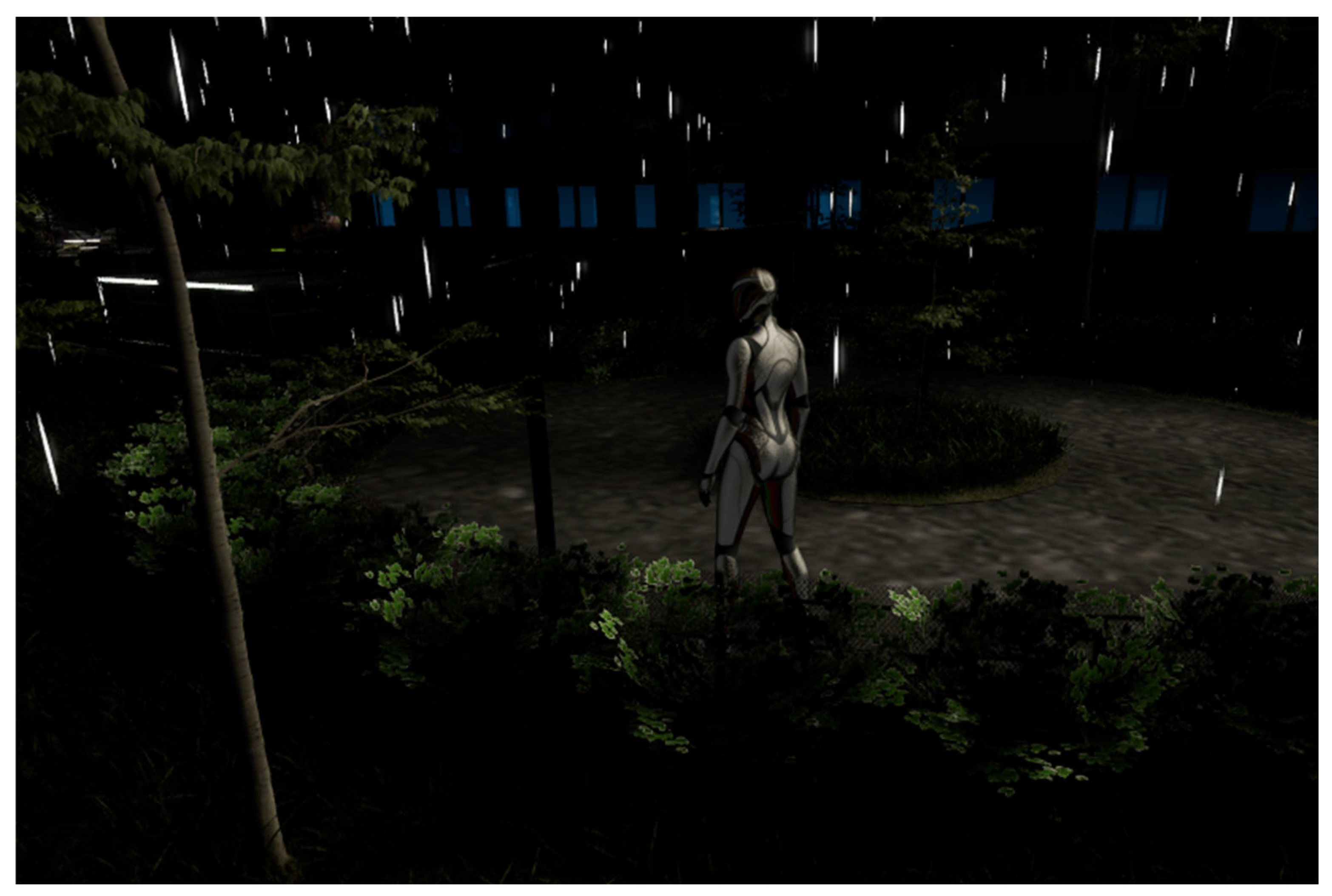
2. Materials and Methods

2.1. Study Area

The area is located in District 2 of Bucharest, in the Pantelimon neighborhood (Figure 1). Initially, the area’s built environment consisted of modest, single-story houses without running water or sewage systems. Starting in 1965, the development of collective socialist housing led to widespread demolitions of small-scale buildings. With the political and economic interests dictating urban planning during the 1970s, the Pantelimon neighborhood was designed to ensure equal living conditions, access to public transportation, and nearby employment opportunities.
This study focuses on the area between Pantelimon Road, Colentina Road, Delfinului Street, and Potârnichii Street. The 14,000-square-meter area hosts four 11-story apartment buildings built in 1976, and their surrounding green spaces. In terms of urban planning, the neighborhood has not changed much since the 1970s. However, the facades made of prefabricated concrete panels, the sidewalks, and green spaces have visibly deteriorated. Three of the four apartment buildings have been insulated; the fourth will soon be insulated as part of a thermal rehabilitation program led by the District 2 City Council.

2.2. Geospatial Data Acquisition

First, a geospatial data collection process was undertaken. Sources included Bucharest’s District 2 GIS database, topographic and landscape plans, and 3D laser scanning of the studied area. Several relevant shapefiles were extracted from the District 2 GIS database, including layers that identified cadastral data such as streets, sidewalks, and parking spaces. Building footprint data and tree location and species were extracted from the topographic and landscape plans. The 2D geospatial data was added to a GIS database, and the processed point cloud and 3D model were added to a 3D scene using ArcGIS Pro (v3.5.4).
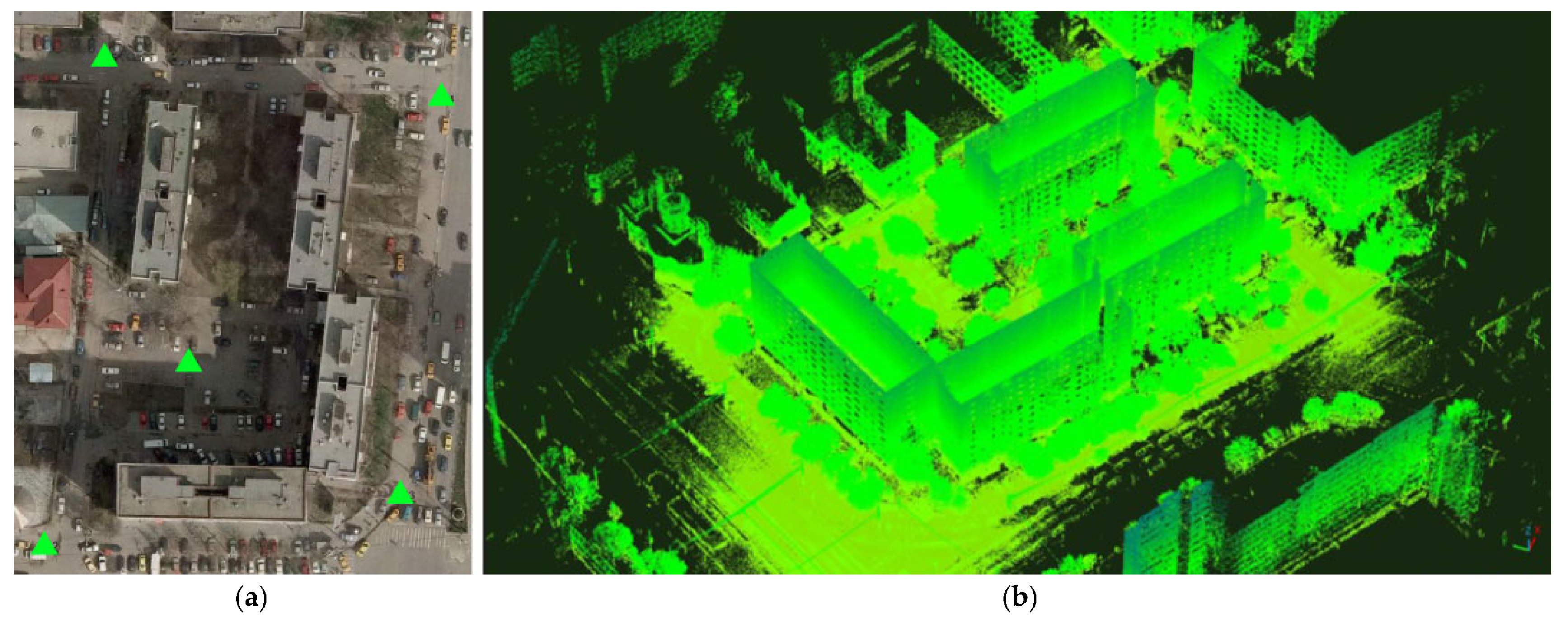
For on-site data acquisition, a 3D laser-scanning campaign was conducted in March 2024 using an FJD Trion S1 Pro (FJDynamics, Singapore, Singapore) mobile laser scanner and a Reach RS2 (Emlid, Budapest, Hungary) GNSS receiver. This scanning operation generated a point cloud of 267,260,391 points in a local coordinate system. Georeferencing was achieved using five ground control points (GCPs), which were surveyed (Figure 2a). The point cloud was imported and georeferenced to the Romanian Stereographic Projection 1970, using the FJD Trion Model, the laser scanner’s dedicated software product (Figure 2b).

2.3. Overall Workflow Designs

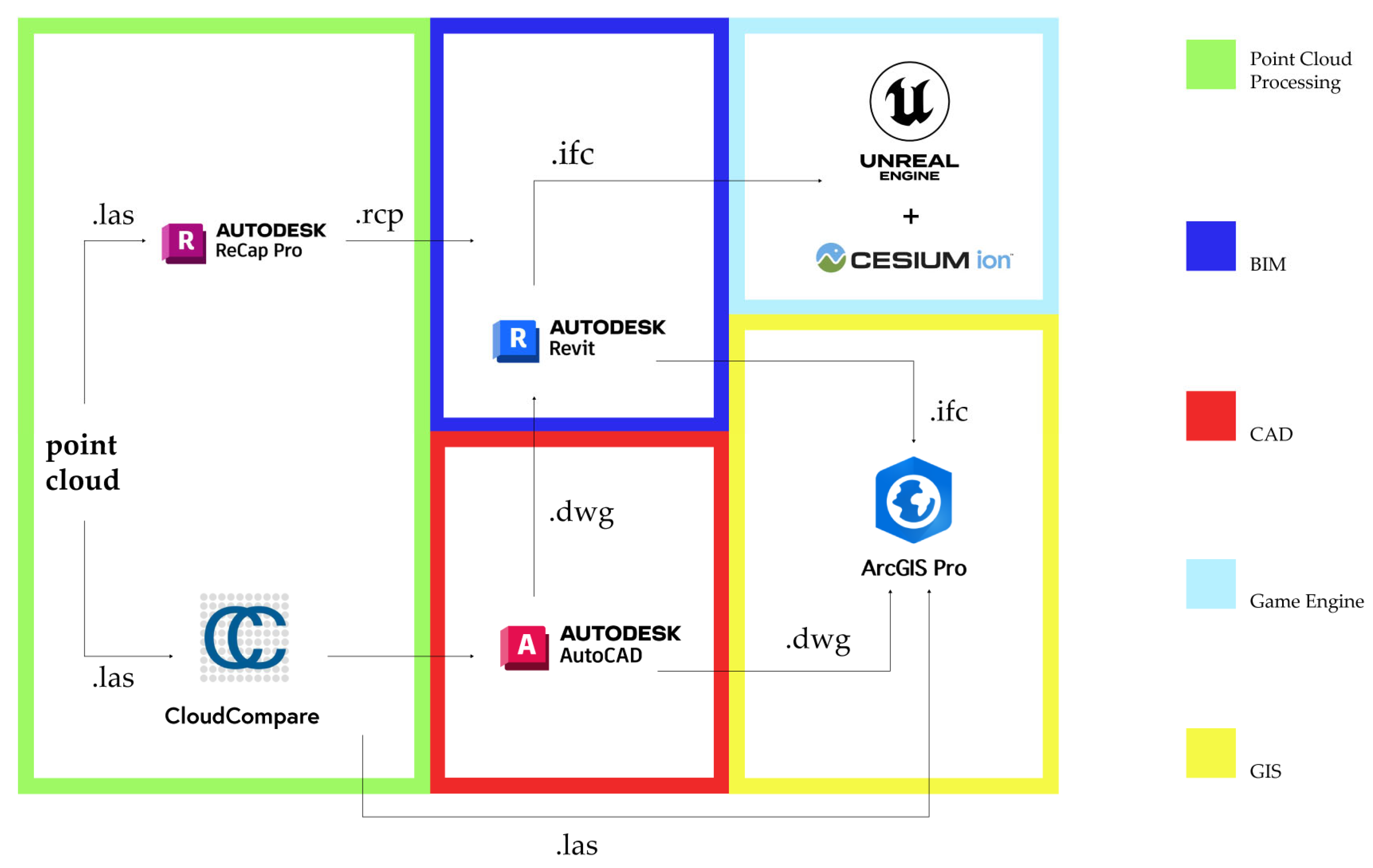
Post-acquisition, the authors followed the workflow presented in Figure 3 to develop the two end-user platforms. This workflow relies on the interoperability of essential software, such as CAD, GIS, BIM, and game engines, to develop an Urban Digital Twin.

2.3.1. Point Cloud Processing

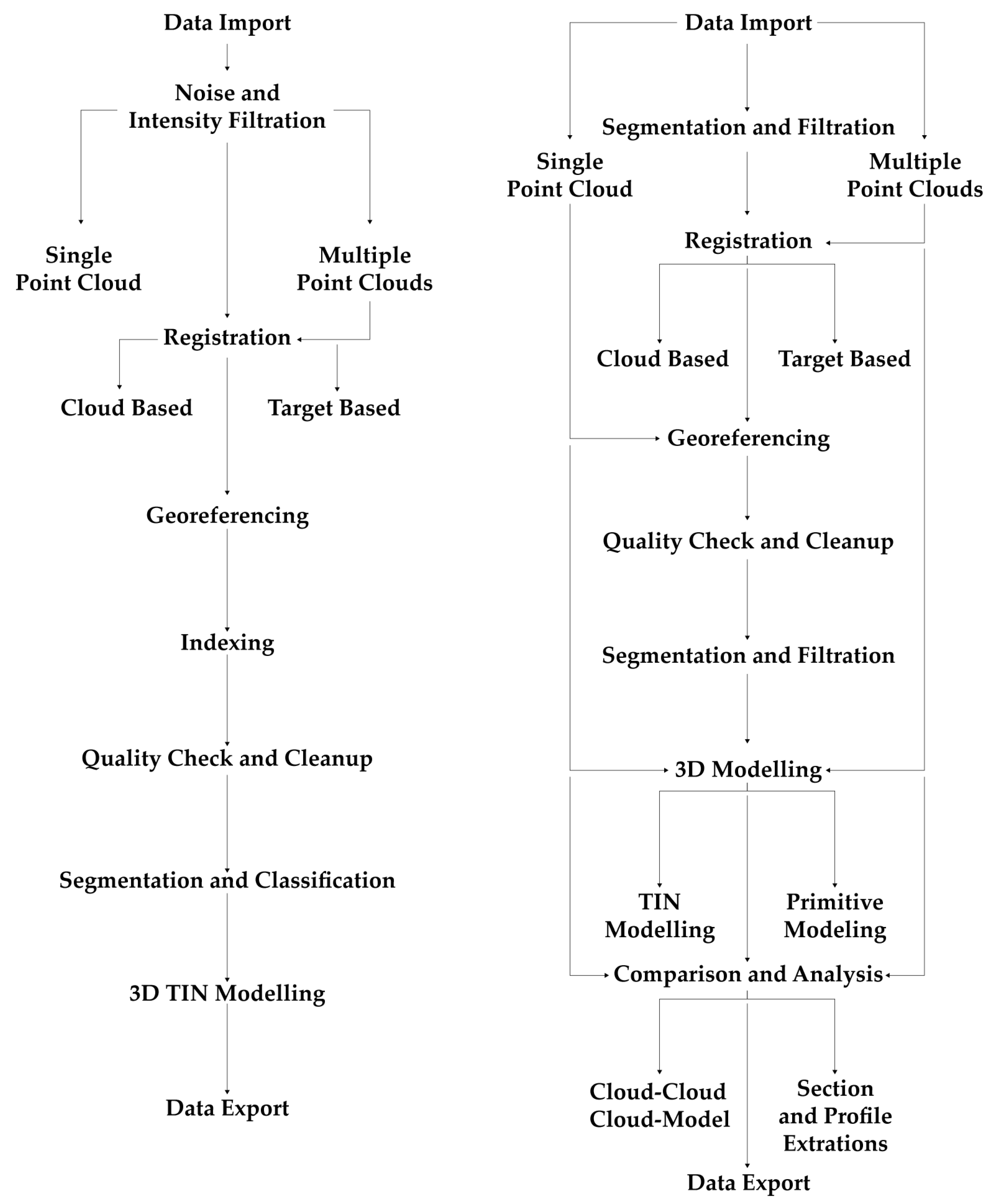
The point cloud was then subjected to a cleaning and processing workflow, implemented through the utilization of two software applications: CloudCompare (v2.13.2) and Autodesk ReCap Pro (v2025.1). CloudCompare is a free open-source software, predominantly used in architecture, engineering, urban planning, and industrial automation [34]. The software facilitates the analysis and processing of point clouds, as well as the manipulation of irregular surfaces. It employs a range of tools for georeferencing, registration, static and geometric calculations, cloud comparison, and support for various formats [35]. Autodesk Recap is a commercial software for point cloud processing that provides a limited number of applications for scan-to-BIM preparation, such as viewing, registration, and cleaning point clouds. Its output data is constrained to Autodesk formats. Figure 4 and Table 1 present a workflow comparison and a more detailed description of these software programs.
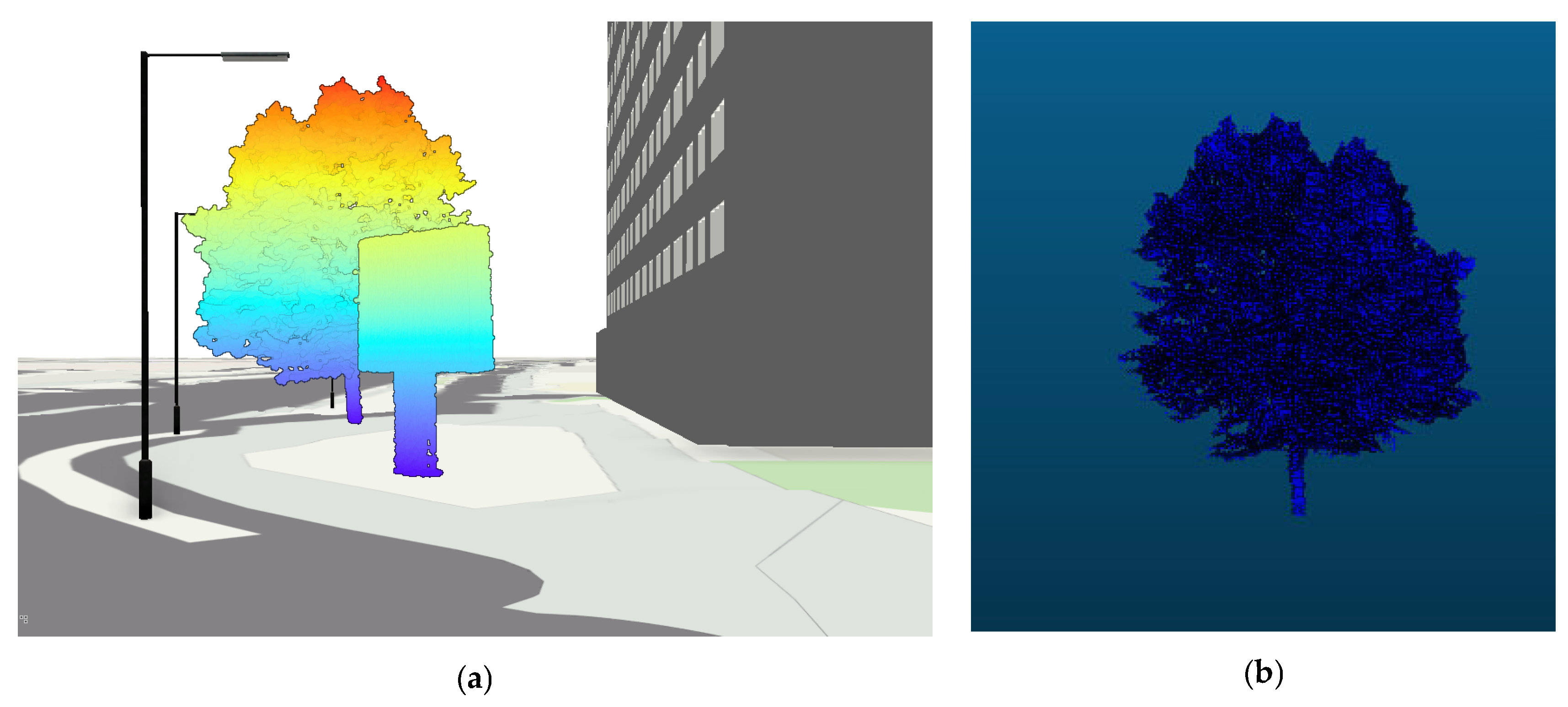
This software was used to obtain different results and enrich the GIS environment. Autodesk Recap was used to clean up and transform the format of the point cloud for 3D modeling. The second approach focused on isolating different objects from the point cloud using CloudCompare. For example, a billboard was detached from the point cloud and imported into GIS in LAS format (Figure 5a). This could be beneficial for creating an inventory of urban objects, providing information on their location, shape, and materials.
Vegetation data was extracted from the point cloud. Trees, which fall under the category of non-ground points, were isolated using the Treeiso (v2023) and CSF Filter plugins available in CloudCompare. Treeiso isolates trees from a point cloud using graphical clustering, with segmentation performed in three stages [36]. First, the points are grouped into small clusters in a local-to-global segmentation. Then, a larger segmentation forms larger clusters. Finally, a point cloud is obtained for each tree (Figure 5b).

2.3.2. Three-Dimensional Modeling

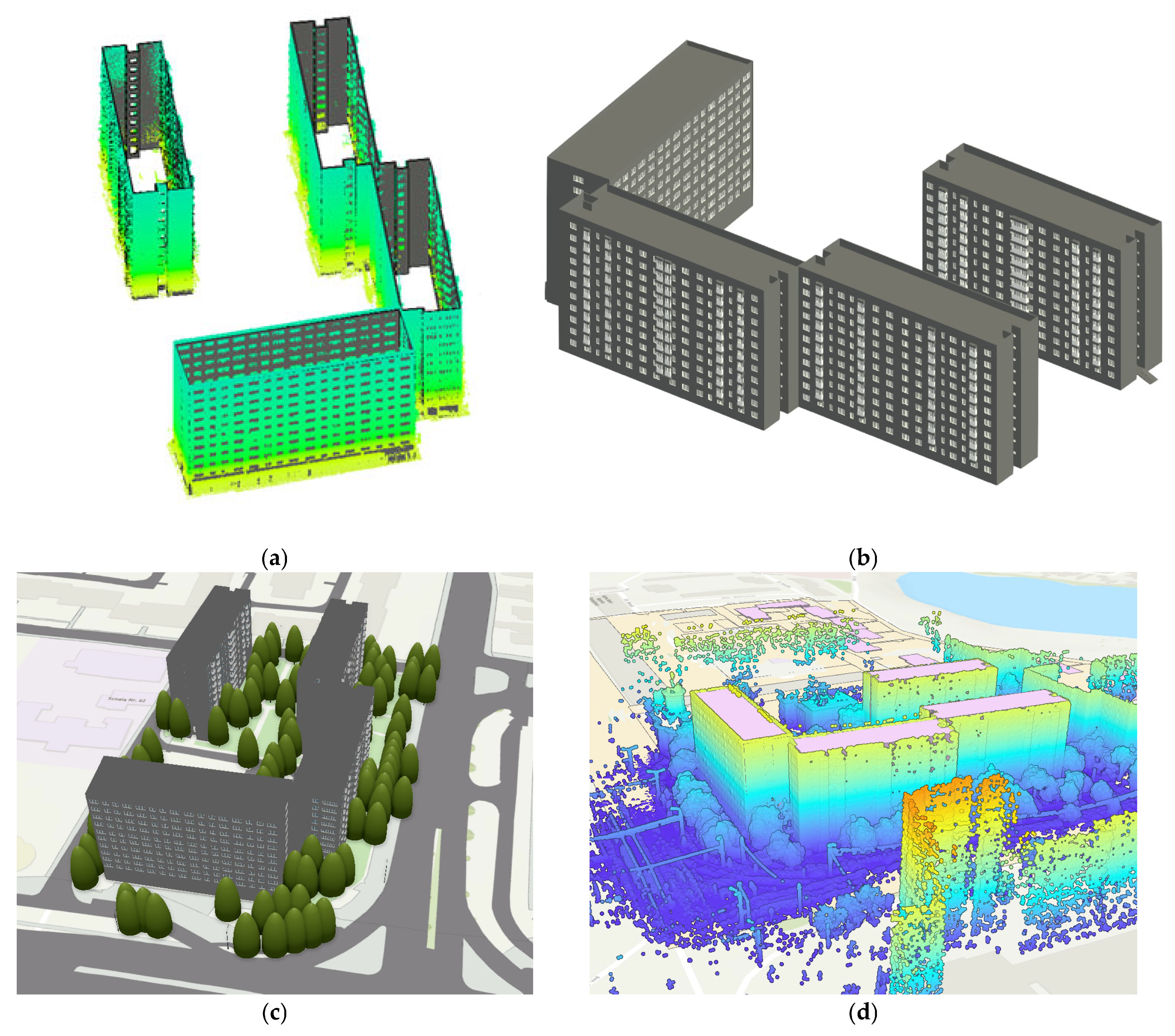
The cleanup process and conversion from LAS (Laser) to Revit Construction Package (RCP) were performed using Autodesk ReCap Pro. LAS is one of the most widely used formats for LiDAR point clouds, while RCP is specific to Autodesk software. A 3D model of existing apartment buildings was developed in Autodesk Revit using the point cloud as a guide (Figure 6a). The building envelopes were modeled with simple architectural elements provided by Revit (v2025.1) (Figure 6b).
According to OGC City Geography Markup Language (CityGML), the 3D model has the third level of detail (LoD3). CityGML is an open conceptual data model used for the exchange and storage of digital 3D city models [37]. Considering the BIM level of development (BIM-LOD), the model has LOD 300 with precise quantities, dimensions, and locations [38]. The Industry Foundation Classes (IFC) model, imported into ArcGIS Pro (Figure 6c), can serve as a Digital Twin component to help monitor the built environment within the study area. Depending on the specific task, LoD1 can be obtained by importing the point cloud in LAS format directly into ArcGIS Pro (Figure 6d). Building footprints serve as the base geometry for extrusion, and the georeferenced point cloud provides height information.

2.3.3. Data Integration and Processes in Unreal Engine

Unreal Engine (UE5), originally designed for game development, is a real-time 3D creation tool developed by Epic Games [39]. The software has diverse applications, including video games, film and video production, architecture, automotive design, and simulation. Today, Unreal Engine is used in multiple industries that focus on visualizing and simulating virtual environments. UE5 can import various geospatial data types, including point clouds, GIS datasets, and satellite imagery. Through integration with tools like the ArcGIS Maps SDK and Cesium for Unreal Engine, users can visualize 3D georeferenced city models and create realistic virtual representations of urban environments. These plugins turn UE5 into a useful platform for developing Urban Digital Twins. Table 2 presents the list of plugins utilized in Unreal Engine (v5.5) for this case study.
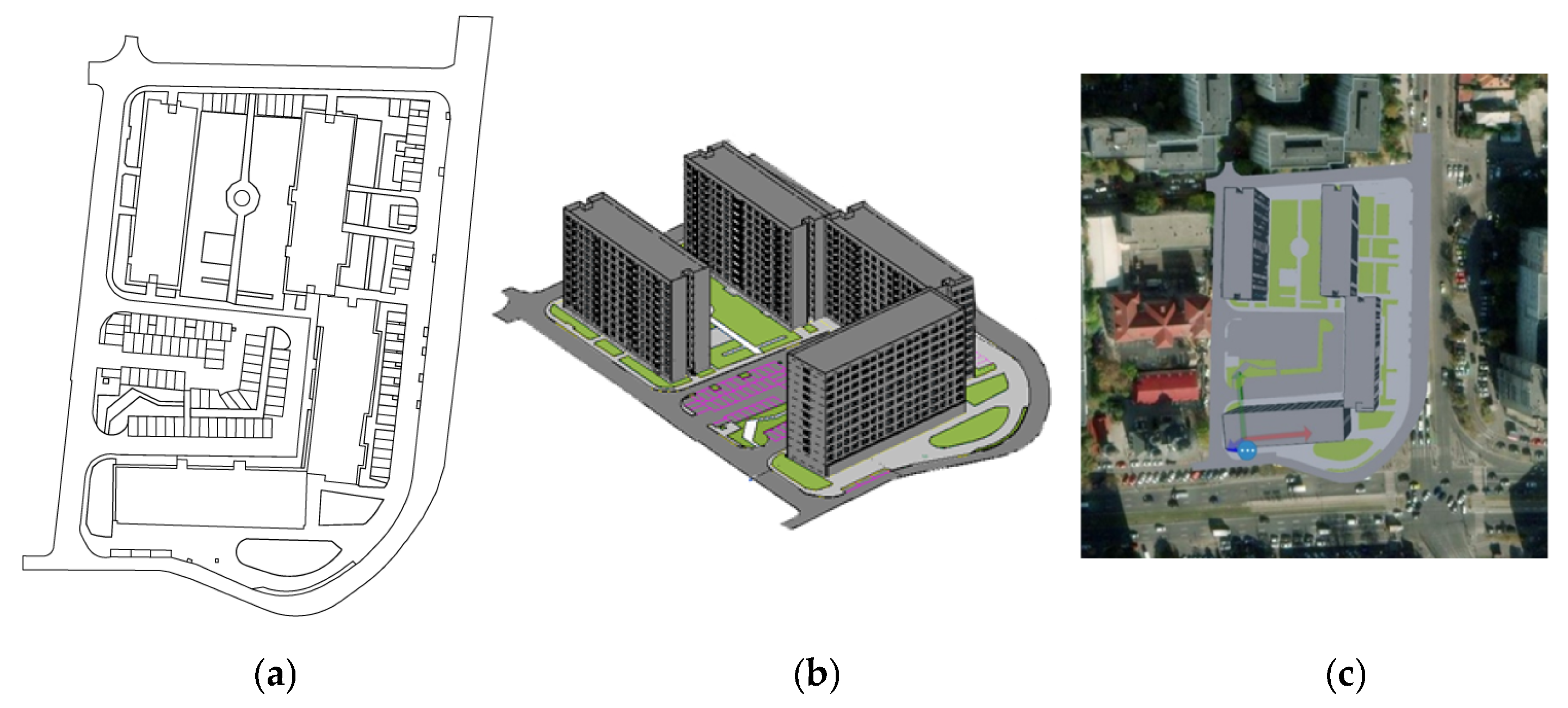
A few elements were added to complete the 3D model: streets, sidewalks, and green spaces. They were added to develop the urban environment and serve as a base for the animation in UE5. An AutoCAD (v2022) file (Figure 7a) was linked to the Revit project (Figure 7b) to guide the 3D modeling process.
Cesium ion SaaS is a 3D geospatial data platform. It can be used as a plugin for Revit and UE5. With the Cesium ion platform, 3D data can be uploaded to the cloud and optimized as 3D tiles [41]. Cesium ion enriches Unreal Engine 5 (UE5) with tools that provide global context, including Cesium World Terrain, Bing Maps imagery, and Cesium OpenStreetMap (OSM) Buildings [42]. CesiumSunSky provides the real-world position of the Sun to add realism to the created scene. The geospatial accuracy of natural light provides an appropriate context for urban planning. In addition to converting to 3D tiles (Figure 7c), a 3D model can be imported directly into UE5 as an IFC model.
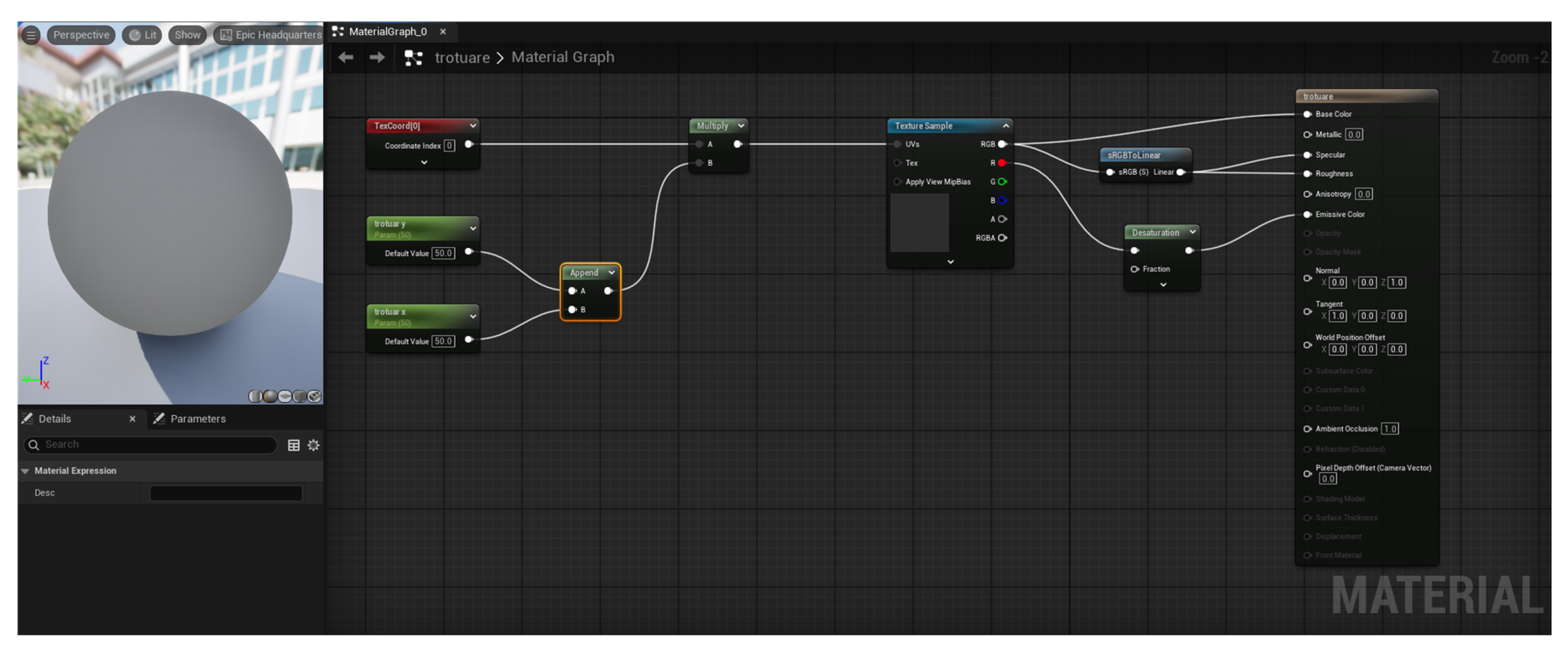
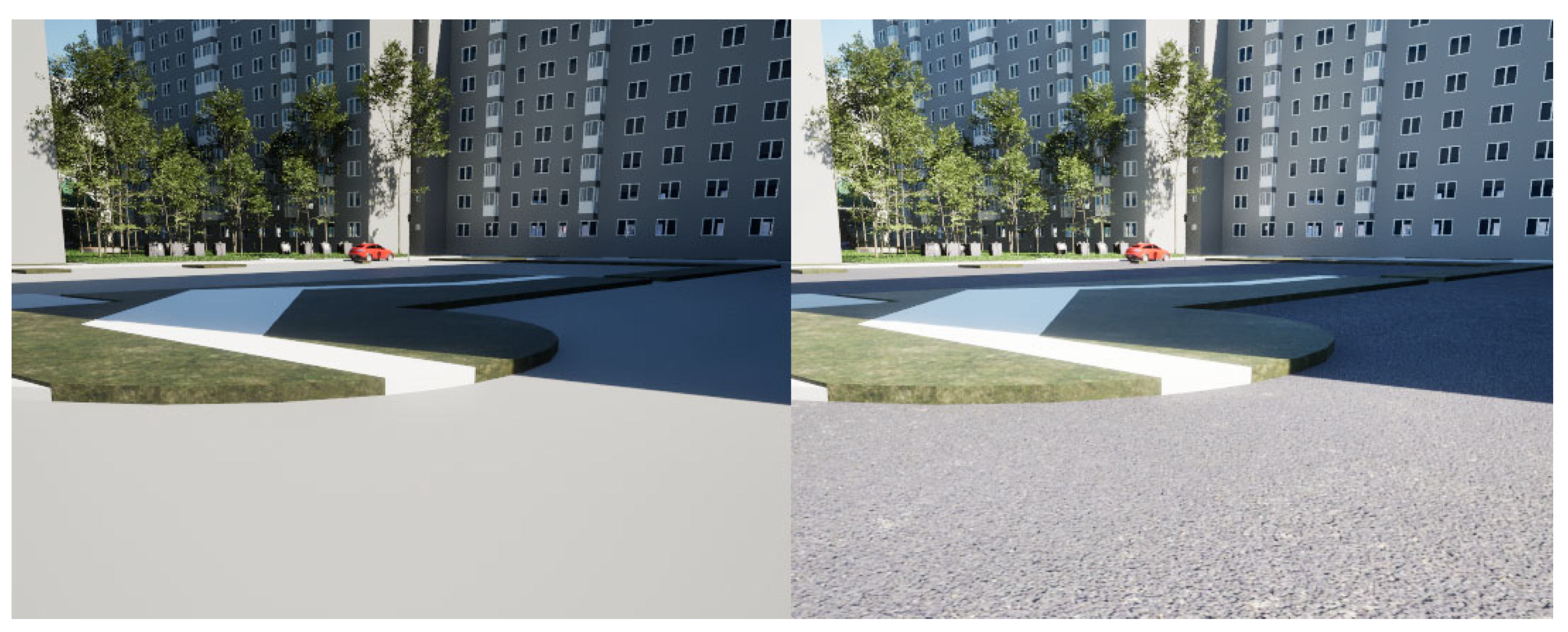
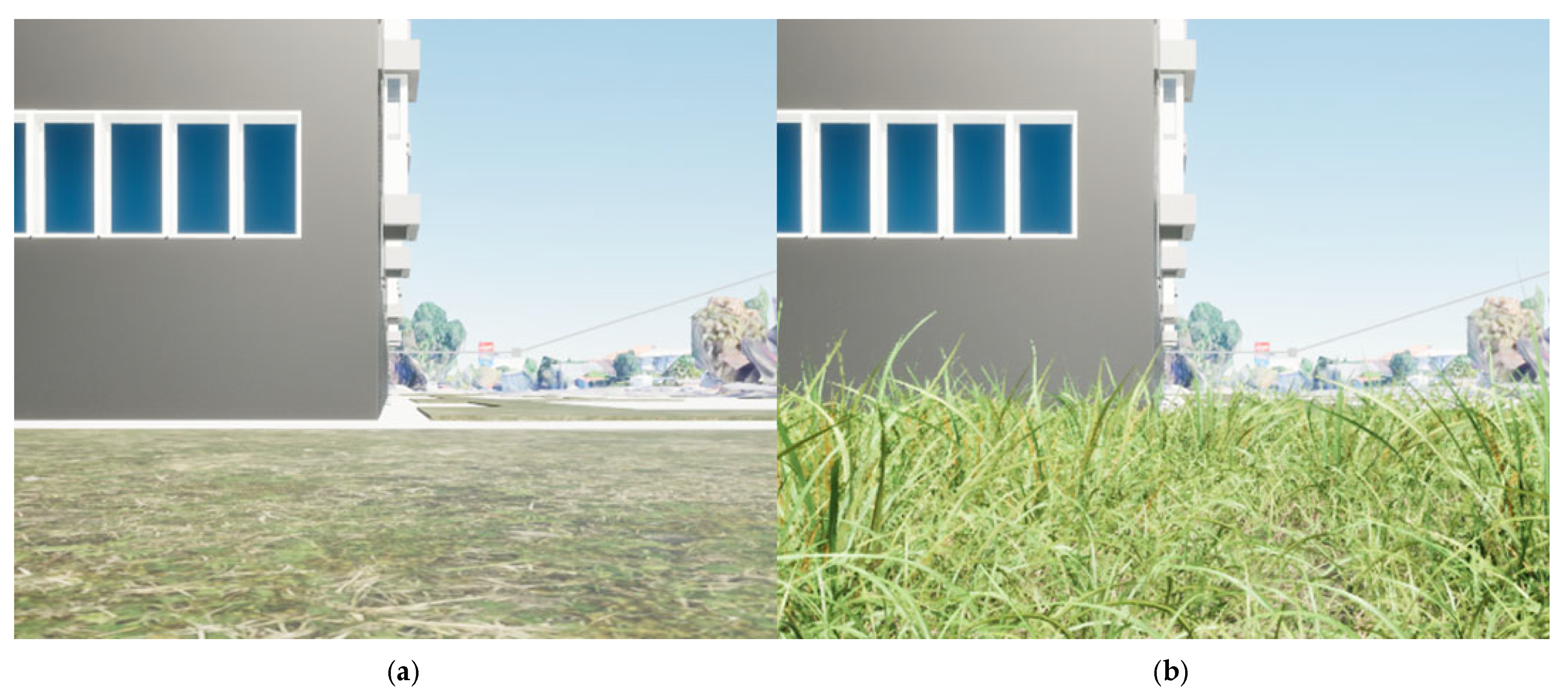
The materials used in this case study were selected from the open library on Quixel Bridge. The textures of the streets, sidewalks, green spaces, and facades needed to be edited to achieve the proper texture for each element. UE5 allows users to edit material textures by accessing the Material Editor Window (Figure 8). Users can modify the color, scale, rotation, roughness, and other texture editing options. For this study, the textures for the streets (Figure 9), sidewalks, and walls needed to be scaled. A texture for the green spaces was used as a base for the 3D plants.
After adding the texture for the green spaces (Figure 10a) using the FAB Marketplace, 3D assets for grass and trees were selected and added to the 3D scene. UE5 allows users to import and use multiple 3D assets simultaneously to populate green areas. Switching to Foliage Mode allows customization of the paint brush and density. Two types of grass were added to increase realism and diversity (Figure 10b).
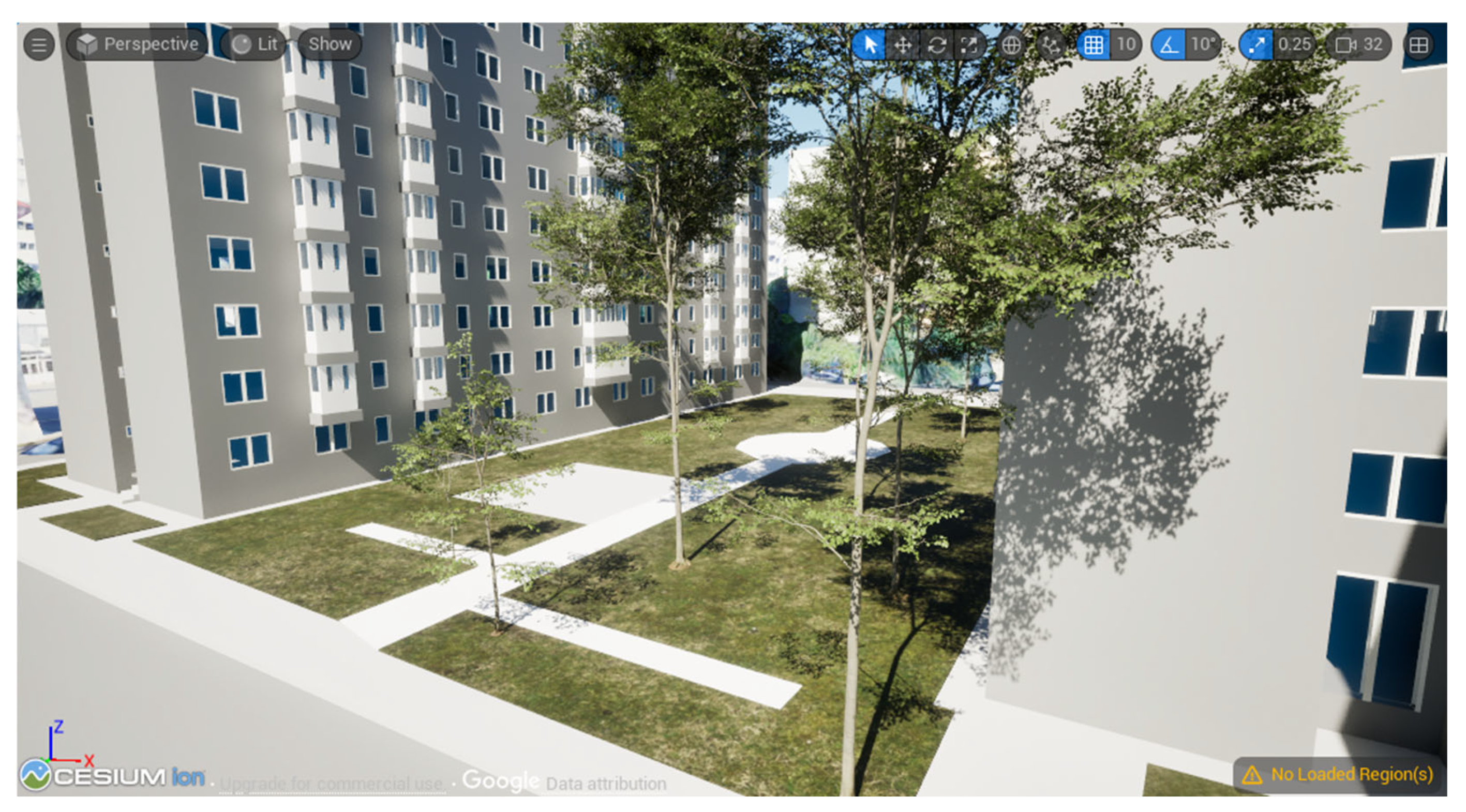
The process of adding trees is similar to the process of adding grass to the project. The selected trees are comparable to those on site, but they are not the same species, as the local ones were not found in the libraries or marketplace. Trees can be modified using foliage tools to correspond to their real-life dimensions. A key advantage of Unreal Engine is that the integrated grass and trees are dynamic. The vegetation can be customized; it moves and casts shadows (Figure 11).
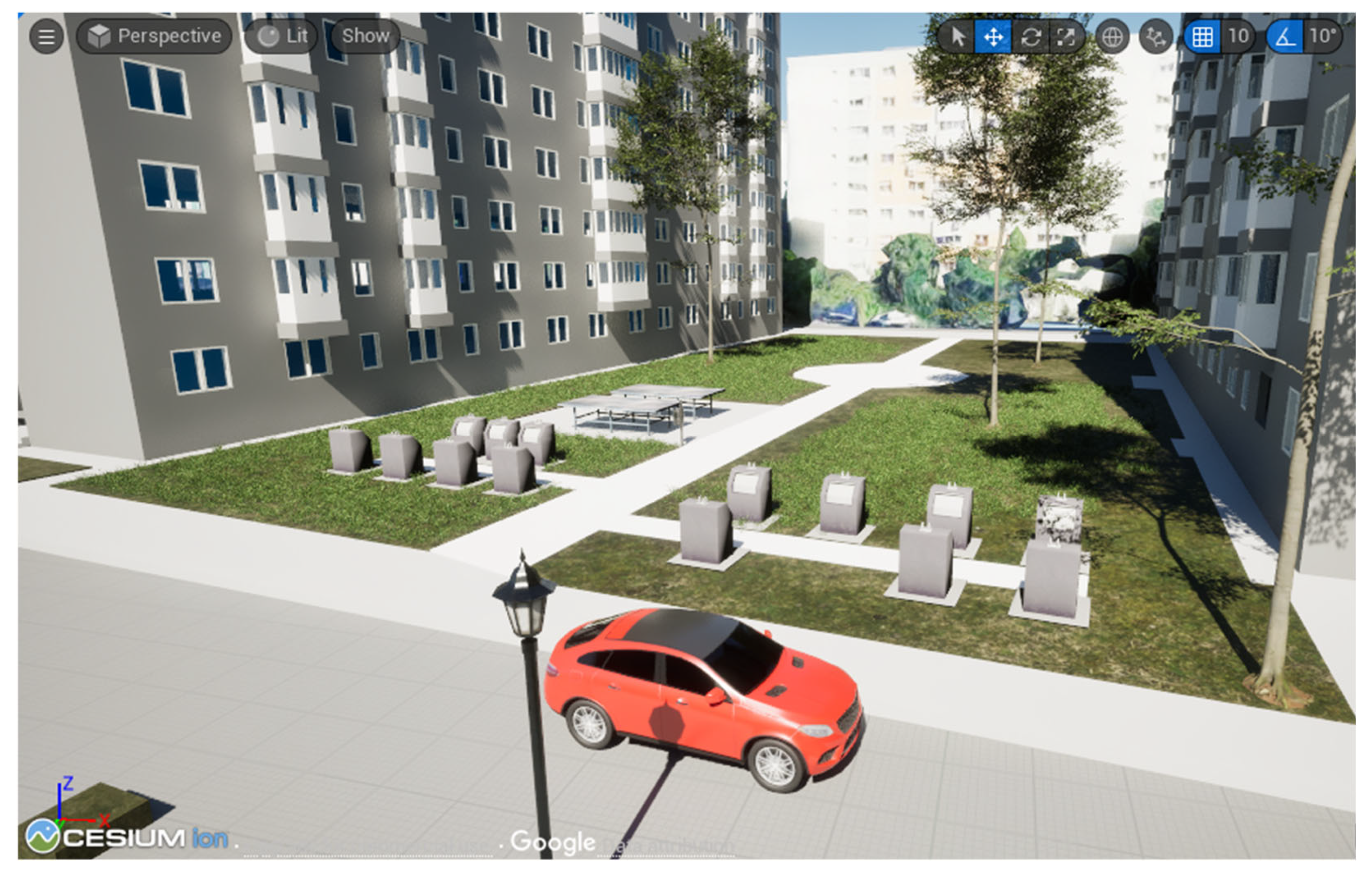
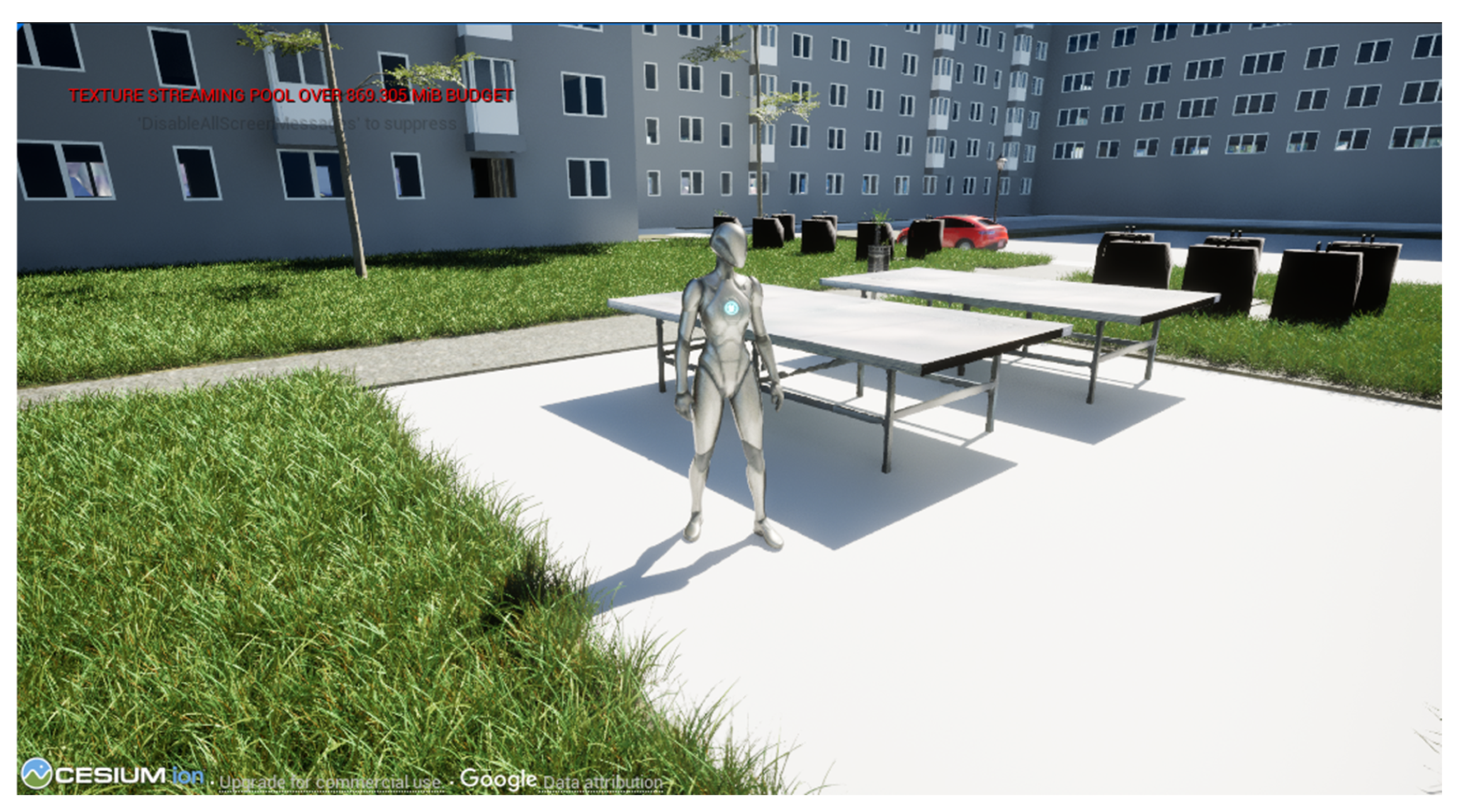
The scene (Figure 12) included urban objects such as light poles, recycling bins, trash cans, ping-pong tables, and cars. These objects were selected from the FAB marketplace, which offers both free and paid 3D models.

2.4. Hardware and Software Requirements

Given the high computational demands of Unreal Engine, the authors had to switch workstations to complete the case study. The hardware specifications and the software minimal and recommended requirements are presented in Table 3.

3. Results

Two different approaches to integrating geospatial data were pursued to design two Urban Digital Twin platforms for citizens. GIS and game engine software were explored for their distinct capabilities. In the context of UDT, GIS is primarily used by specialists from fields related to the urban environment. It is a powerful tool for analyzing multi-source urban data, creating scenarios, and calculating performance indicators. After obtaining the desired results, professionals can share this information with the public via web applications. Conversely, game engines can recreate cities with high fidelity. The advantage of game engines is their ability to provide precise visualization and create an immersive experience. They offer citizens a more authentic view of possible future projects through game exploration and VR technology. Game engines have the potential to lead the way in disseminating public information by offering a more engaging environment.
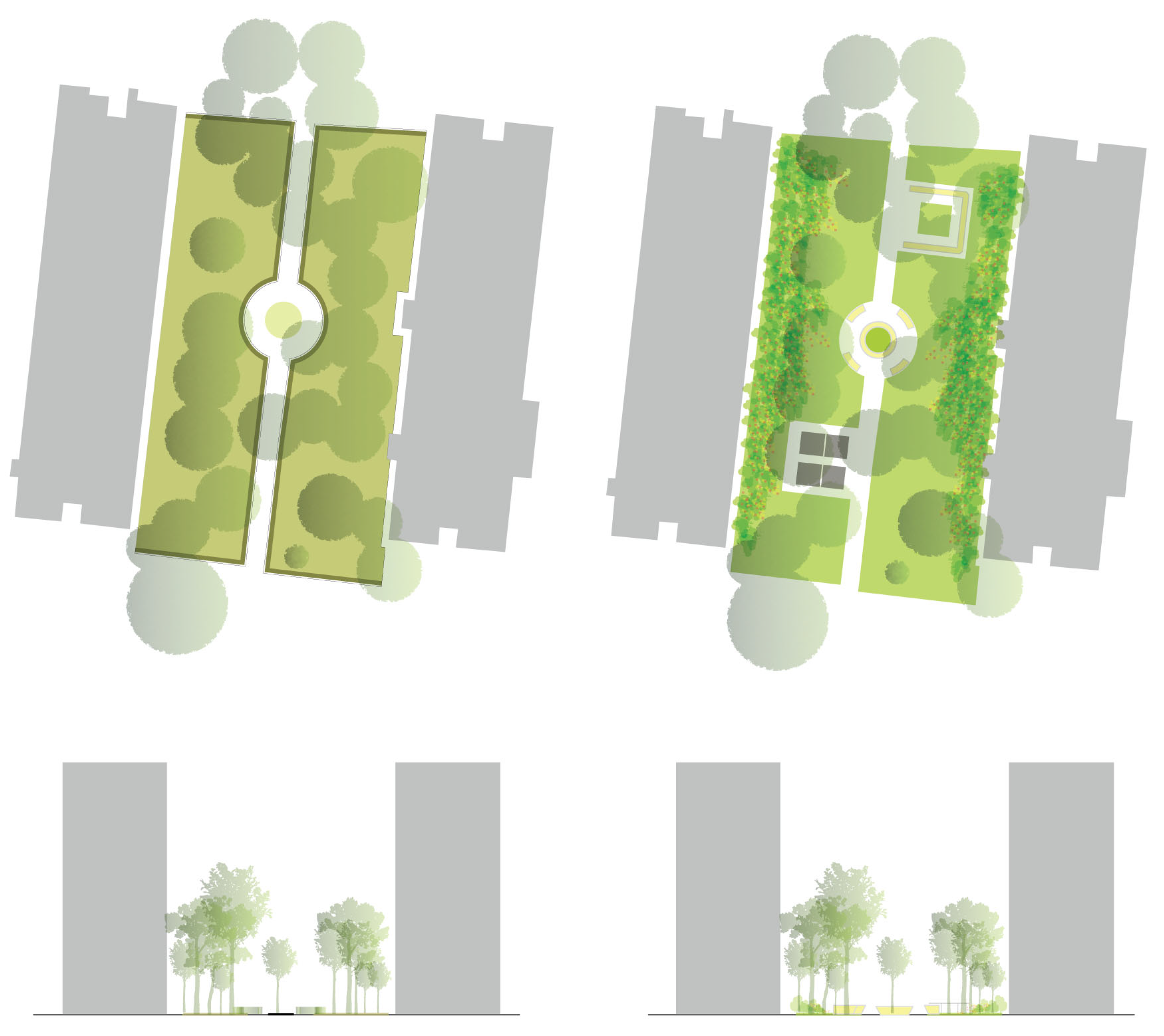
To highlight the potential of the two platforms, two scenarios for the courtyard between the apartment buildings were developed using GIS and game engine software. The first scenario depicts the site’s current state. The green spaces are overgrown and surrounded by metal fences and hedges, making them inaccessible to locals. Solely the alley is accessible, but it is still blocked in the center by two outdoor carpet hangers. The second scenario aims to transform the courtyard into a social, inclusive space for the community. Green spaces are accessible because the spatial delimitations were eliminated. To protect the privacy of the first-floor residents, the proposal calls for taller plants that decrease in height towards the center of the landscaping. Since the tree canopy covers an extensive part of the courtyard, landscape design is limited to the ground level. The second scenario introduces three outdoor areas that would benefit the community: a recreational space in the center of the courtyard, an activity area with ping-pong tables, and a community garden. Figure 13 presents the conceptual sketches for the two scenarios.
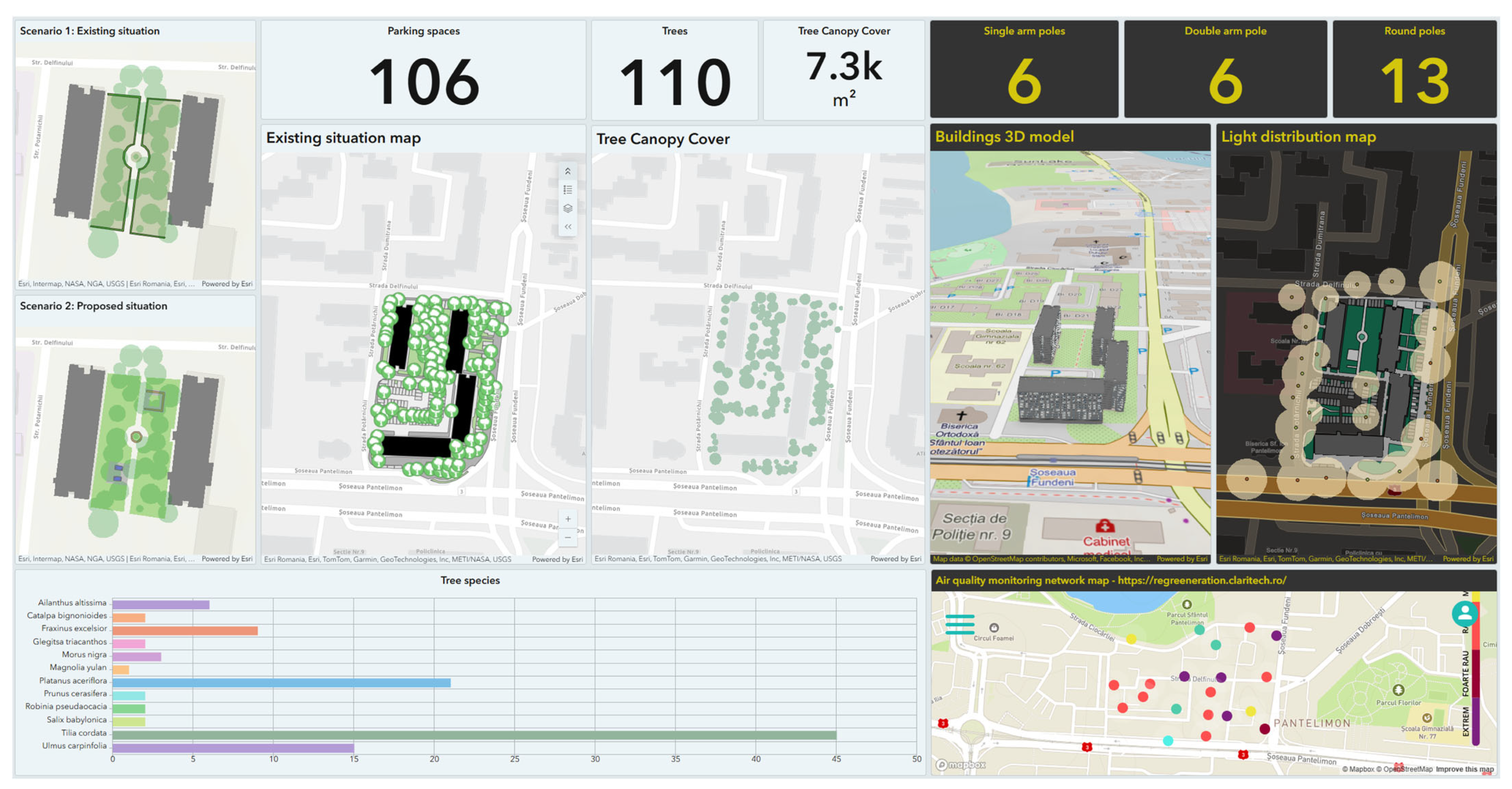
The first workflow focused on integrating CAD, BIM, and GIS data. This integration was achieved using ESRI software. The geospatial data was then grouped into feature datasets and classes within a database using ArcGIS Pro. Next, this data was published in ArcGIS Online as two 2D digital representations and a 3D scene. Lastly, an ArcGIS dashboard was created to display the data on an online platform (Figure 14). Table 4 presents the geospatial data collection included in the web application.
The first 2D digital representation in the dashboard illustrates the existing situation, including building footprints, parking spaces, green spaces, and trees. Above the map, two indicators display numerical data regarding the parking spaces and trees on site. The bottom of the dashboard displays a bar chart of the tree species’ inventory, also highlighting their diversity. There are 12 species in the study area, with Tilia cordata as the predominant species, accounting for 45 of 110 trees.
The second 2D digital representation shows the light distribution pattern at night, based on the location of the light poles and the buffer tool. This analysis shows the on-site light coverage. The main green area between the two apartment buildings lacks light poles, which is undesirable for a functional urban space. A shortage of light in urban spaces can have negative consequences. A dark urban green space can influence citizens’ perceptions of safety and enhance their fear of crime [43]. In addition to crime prevention, well-illuminated open public spaces improve social interaction and recreational activities [44]. Above this map, three indicators provide numerical data about the types of light poles: double-arm, single-arm, and round.
The dashboard also includes a web scene with the building’s 3D model. A map of the air quality monitoring network was added to provide the real-time data connection required to create a Digital Twin [45]. This map shows a network of 20 sensors implemented in the Horizon Europe ReGreeneration project. The sensors measure temperature, humidity, noise, and air pollution parameters, including PM1, PM2.5, PM4, PM10, NOX, and VOC. The sensor network included in the dashboard is the only relevant platform with open data available in the area. The lack of open-access data in this region is common, leaving professionals and researchers struggling to obtain reliable data for their work. UE5 can connect to the sensor network platform via API, or in JSON or CSV formats, while authors only have access to the HTTP version.
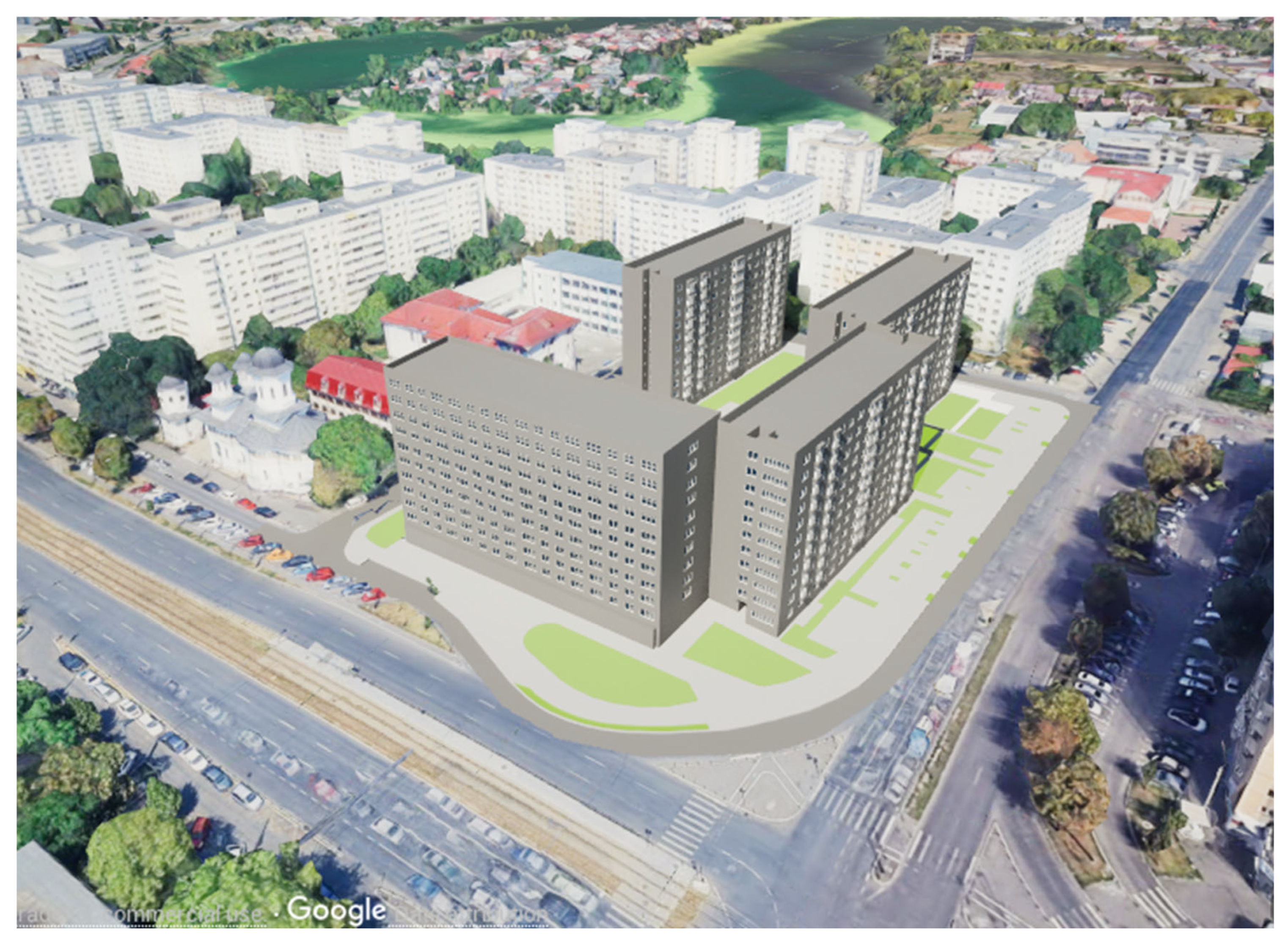
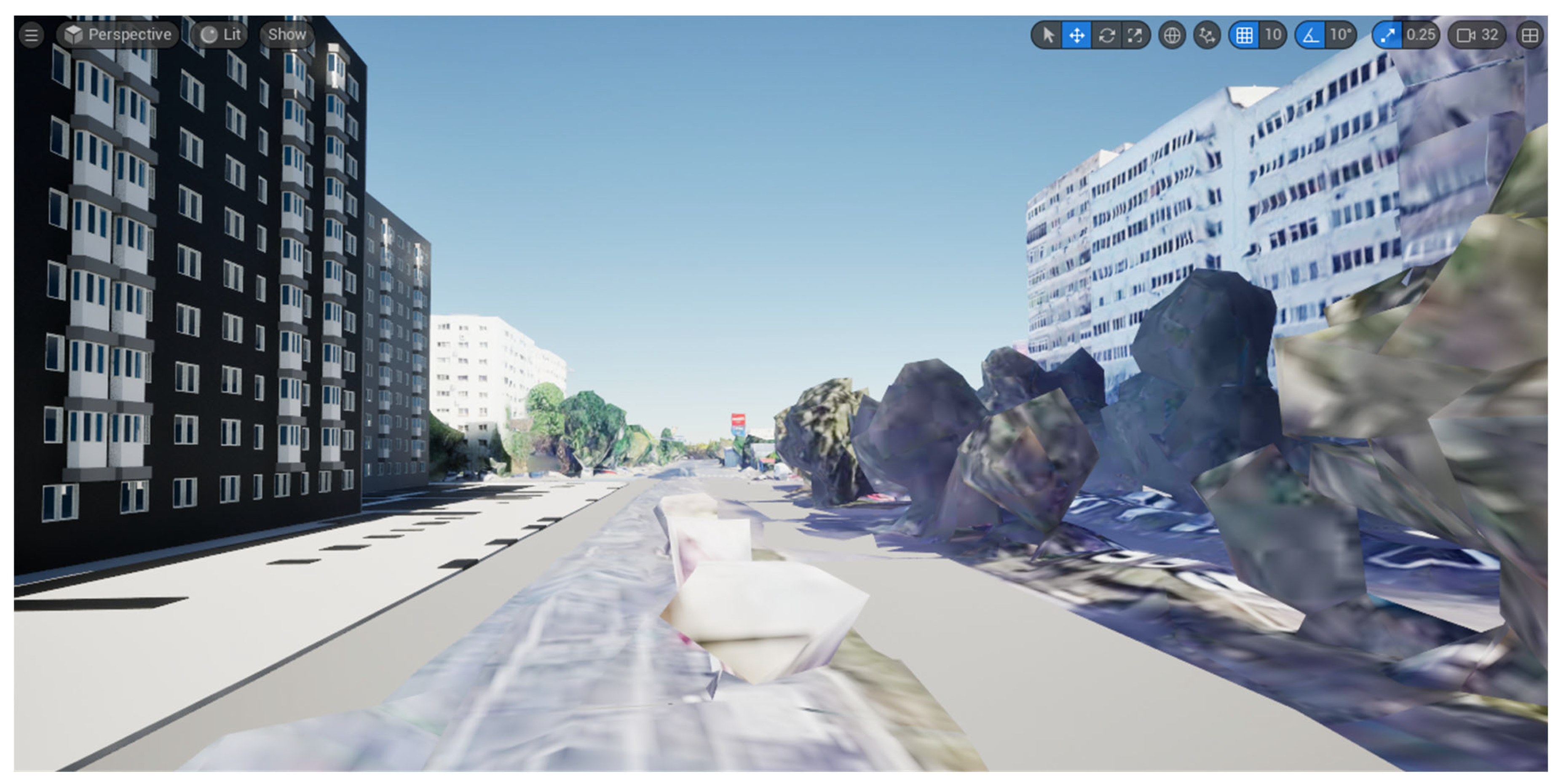
The second approach examined data integration in a gaming environment, specifically Unreal Engine. The 3D model was georeferenced using the Cesium plugin for Unreal. The World Geodetic System of 1984 (WGS84) is the coordinate system provided by the Cesium integration. The 3D model was merged with Cesium 3D Tiles using the Cesium Polygon function to crop the mesh (Figure 15). However, there is a notable difference between the IFC model and the 3D Tiles (Figure 16). Cesium can provide a 3D geospatial context to visualize and better understand the sensor data.
An important aspect of designing in Unreal Engine is the type of template selected. In this case study, the third-person template was used, which falls under the game category. This introduces a robotic mannequin to the 3D scene, allowing the character to be moved around in the traditional manner of a game using a keyboard and mouse.
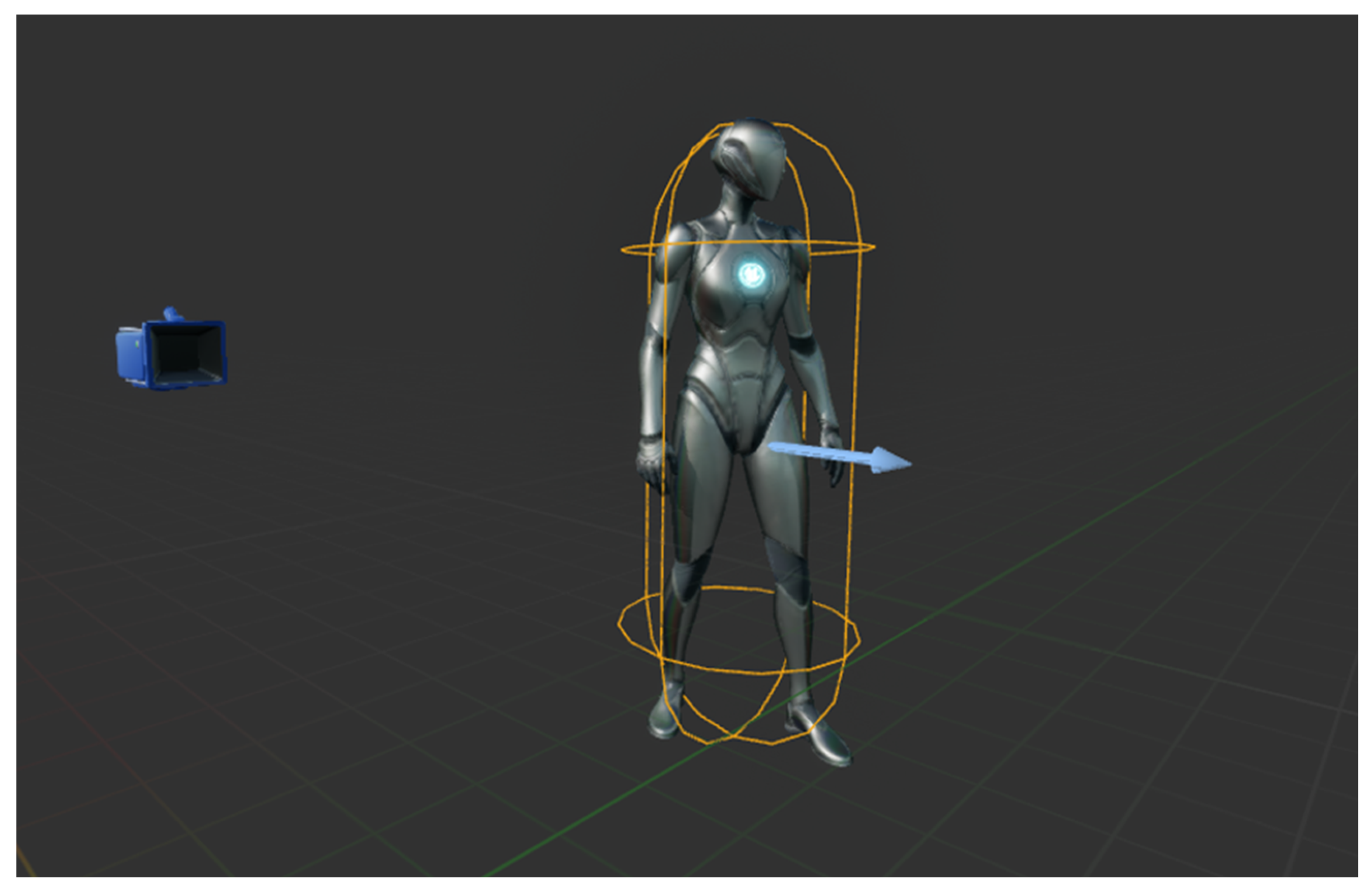
The mannequin introduced in the third character template should also have collision enabled. A collision capsule was added to the character (Figure 17) to prevent it from falling off the scene. Without collision detection, the mannequin walks through walls, stairs, and other objects imported from libraries. Once the collision is enabled, the character stands on the designed surface (Figure 18), and its movements become more natural, resembling human movement.
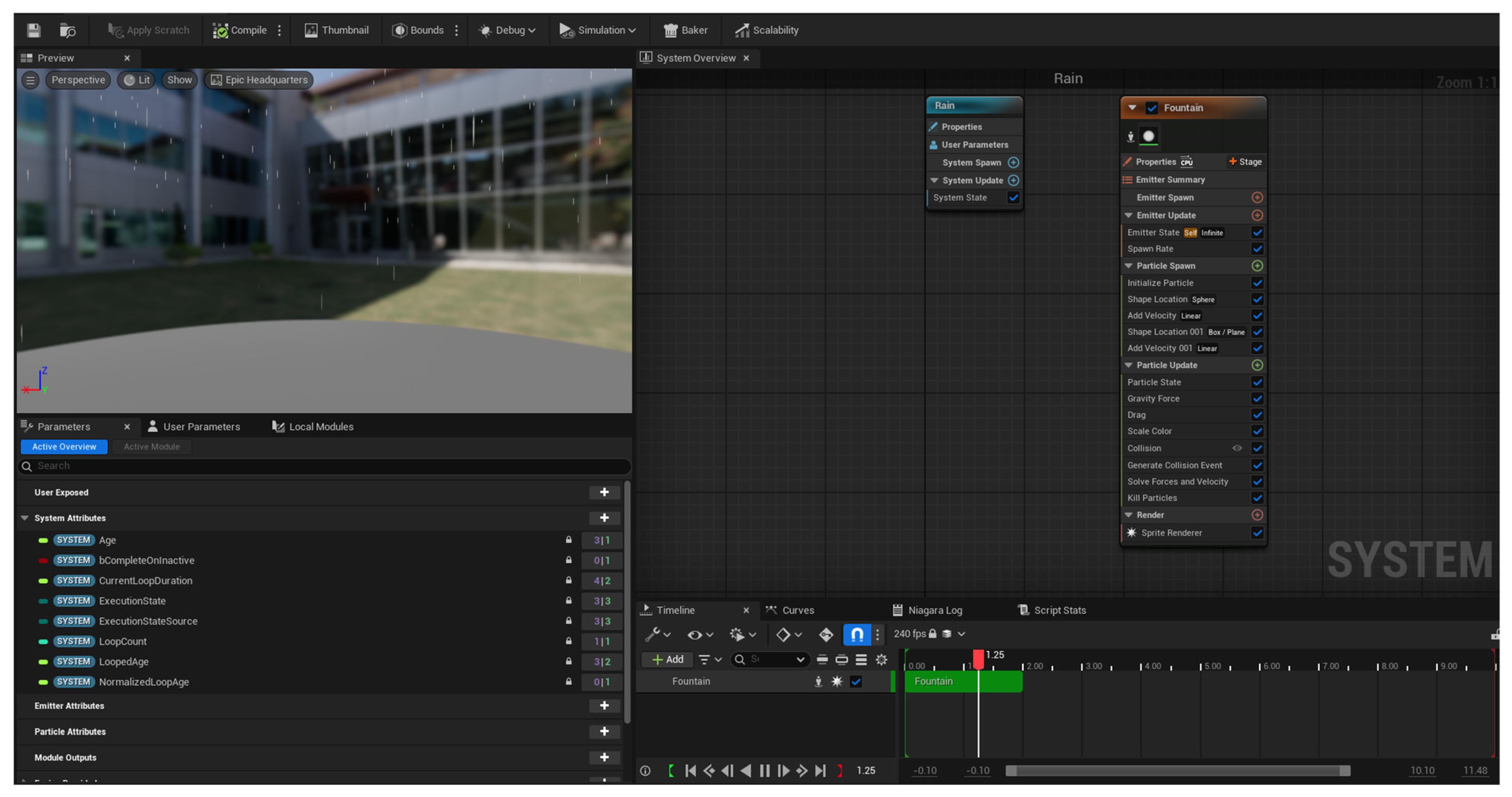
In addition to the environment provided by the Cesium Sky Sun, Unreal Engine allows adding precipitation to simulate various weather conditions. UE5 can simulate rain, snow, fog, and thunder. For this case study, rain was added using Niagara Effects and its Fountain functions. The direction, velocity, and wind angle of the rain were adjusted. The settings for the rain particles were adapted, including the sprite size, velocity alignment, non-uniform shape, and bouncing (Figure 19).
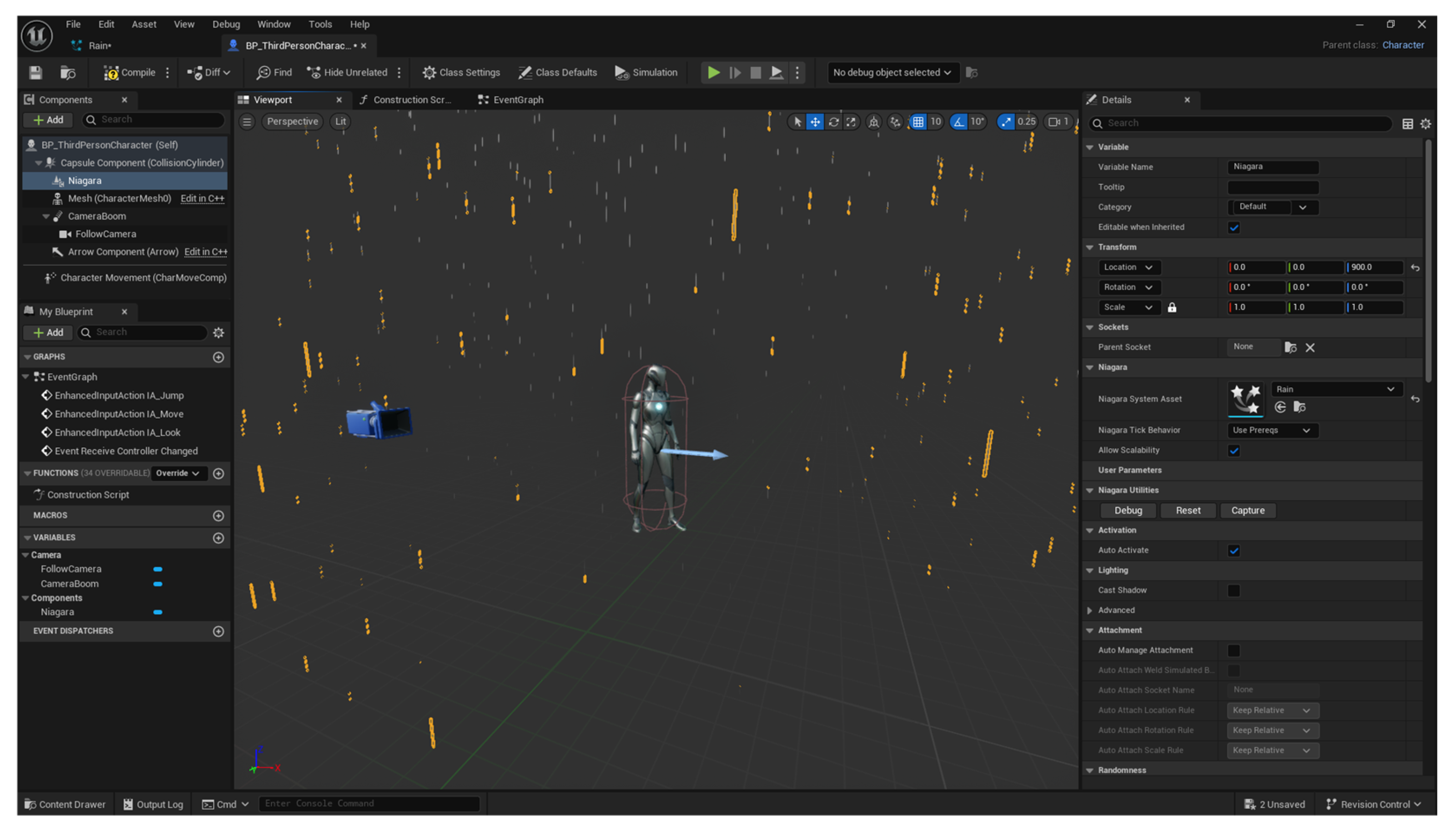
Since the case study focused on working with geospatial data and used Cesium ion integration for its global and accurate representation (Figure 20), the process of attaching rain to the character was necessary. To add the rain locally, a surface larger than the study area was assigned to the character. Therefore, wherever the MetaHuman appears in the scene, the designed weather event will be present, covering the study area and nearby neighborhoods.
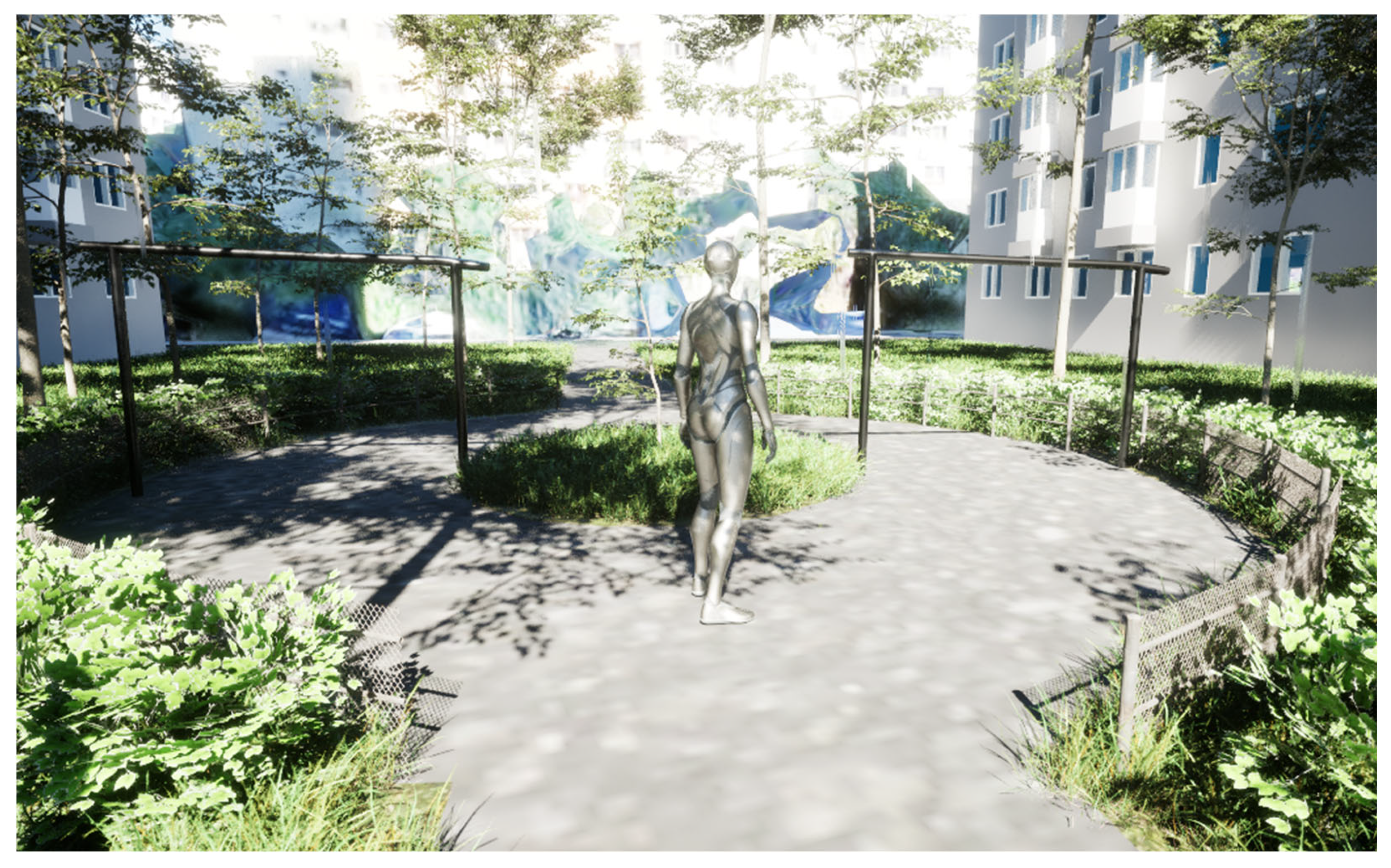
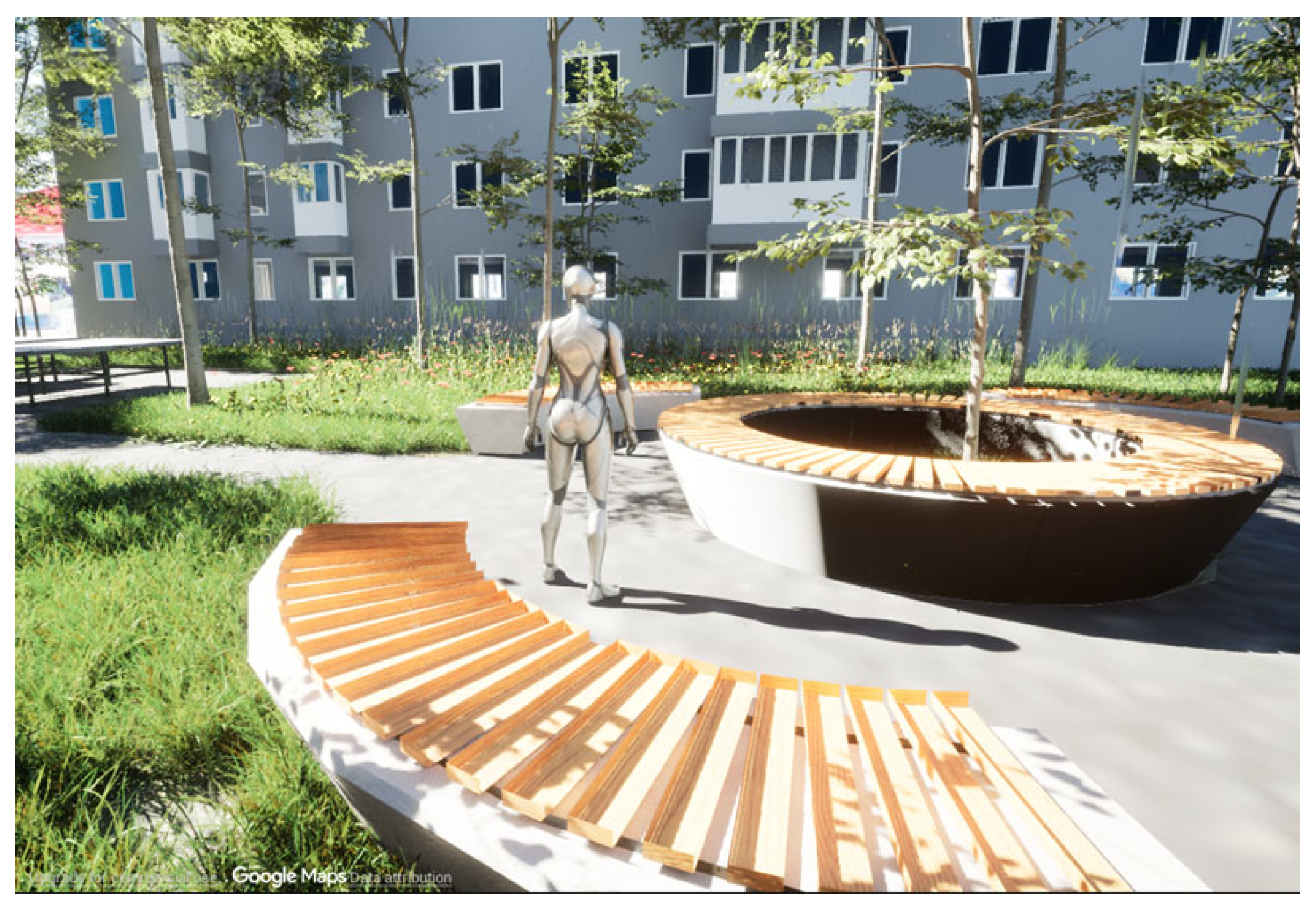
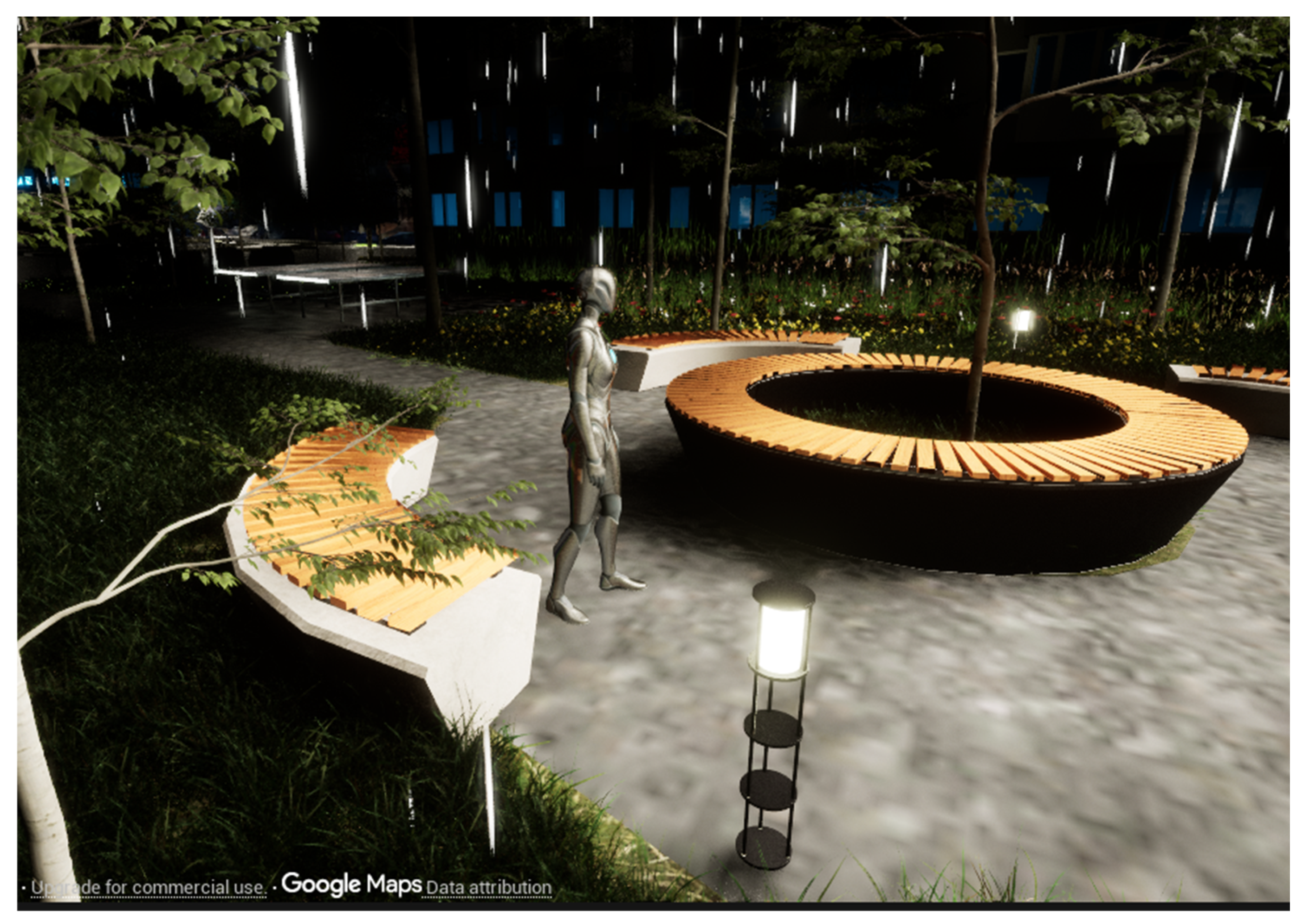
Based on the two scenarios illustrating the existing and proposed situations, a night scene was added to underscore the game engine’s visual potential to recreate real-life phenomena. Weather visual effects in Niagara VFX and Cesium ion tools were used to develop two scenarios using the local time zone. Figure 21 and Figure 22 illustrate the current state of the courtyard on a sunny spring day (time: 1:00 p.m., date: 5 March 2024) and a rainy winter night (time: 10 p.m., date: 24 December 2024). Figure 23 and Figure 24 depict the second scenario, including a lighting proposal for the courtyard with pathway lights. This simulation reinforces the dashboard’s conclusion that there is insufficient outdoor lighting in the area.
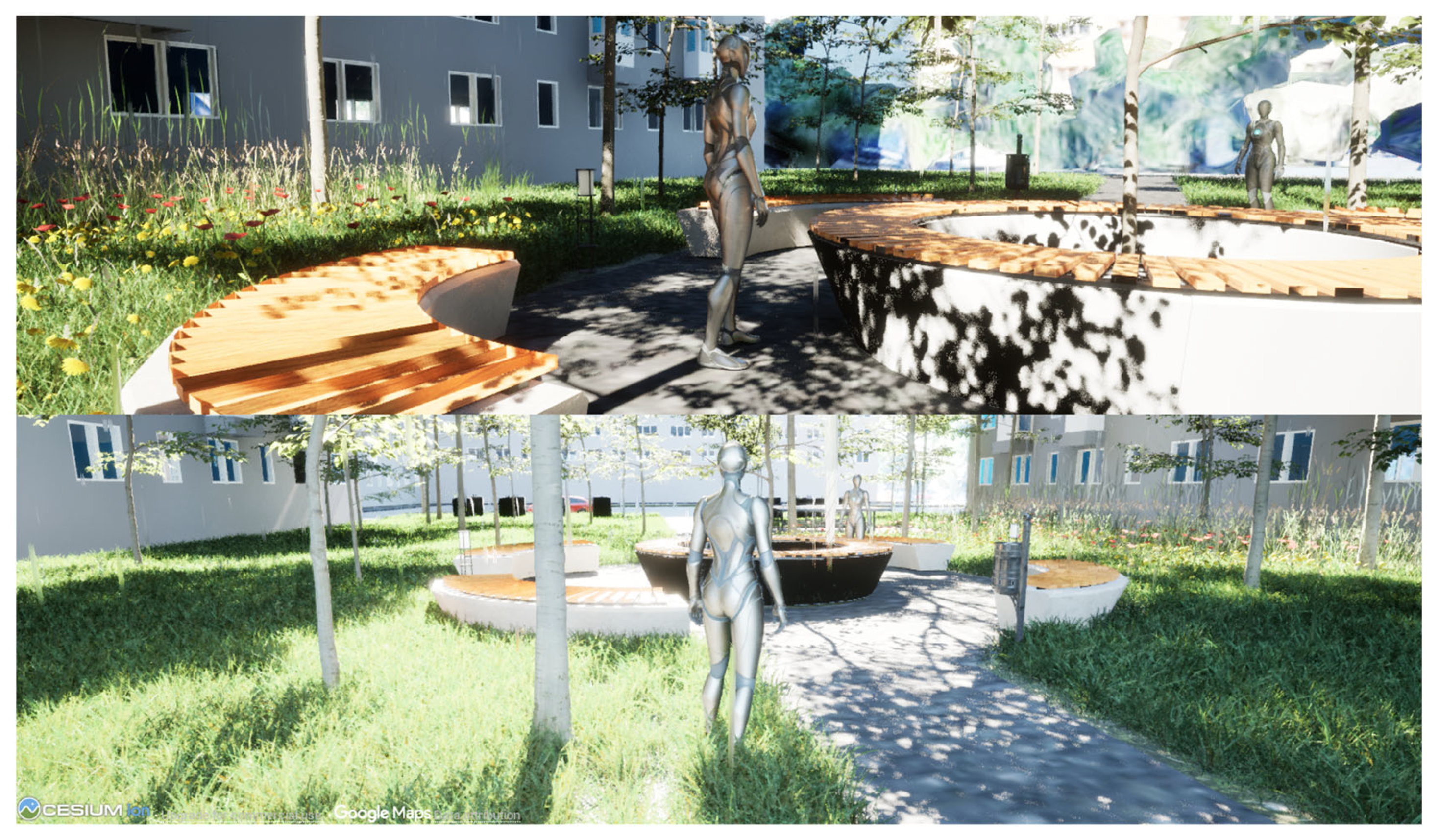
The 3rd-person template allows for a multiplayer introduction within the designed scene (Figure 25). A second MetaHuman has been added, who can be moved using a game controller. Unreal Engine does not limit the number of players that can be introduced in the template; the default is 16. A higher number of players would entail practical limitations regarding hardware, custom server infrastructure, network bandwidth, replication, and budget. However, the focus of this study is not on providing a social interaction platform, but rather on contributing to inform citizens about possible future developments in their neighborhood using modern technology.
The level of detail depends on the project’s needs, as Unreal Engine offers a variety of options for detailing 3D scenes. UE5 is a powerful tool for creating Digital Twins because its applications are interactive. The game engine enables users to simulate data in real time, test user behavior, and explore design alternatives within a virtual environment. UE5 is valuable not only for its visualization capabilities but also for supporting decision-making and stakeholder engagement.
Unreal Engine was chosen for its high-fidelity rendering and simulation capabilities. UE5 is recognized for its Blueprints system and enables designers to create highly interactive and immersive environments that support AI and VR integration, thereby enhancing visual realism. Thus, Unreal Engine has the potential to become a leading platform for developing Digital Twin visualizations [46].

4. Discussion

This study explores design methods for Urban Digital Twins, with a focus on visual and spatial integration. The result is two end-user platforms for citizen engagement. The study is designed to serve as a replicable, methodological example, providing a foundation for large-scale urban applications for municipalities, developers, and other relevant stakeholders.
Currently, data dissemination for citizens differs between GIS and game engine systems. GIS runs in an online environment, while game engines must be downloaded or presented in a VR environment. GIS platforms, such as ArcGIS, are typically used by professionals for data management, spatial analysis, and decision support. Game engines, on the other hand, offer enhanced visualization and interactivity, which improves citizen engagement and the communication of urban scenarios. Although there are GIS game engine integration tools (e.g., ArcGIS Maps SDK), they are generally optimized for large-scale city or natural environment applications. The study focuses on the human-scale experience, which requires a higher level of visual detail and immersion. In this context, the game engine provides a level of realism that is difficult to achieve with BIM or GIS software alone.
First, a Digital Twin dashboard system was developed, using GIS software. This approach follows the process of collecting, processing, integrating, and modeling geospatial data. GIS provides tools to evaluate, perform analysis, create scenarios, and visualize data. The integration of CAD, BIM, and GIS has improved how urban settings are managed and represented [47]. Together with 3D laser scanning and GPS, these technologies provide precise data and lay the groundwork for creating a UDT [48]. The proposed dashboard can serve as a baseline scenario. Other scenarios can be added to inform citizens about potential interventions in their neighborhood and to collect their opinions. Professionals assess these interventions using key performance indicators (KPIs) and conduct before-and-after scenarios [49]. However, not all of the data that they have access to would be shared in a dashboard designed for public engagement. Data included in a UDT might be sensitive and require thorough security protocols.
Although GIS and game engines both provide the visualization layer of a DT, they have different use cases. This case study uses ArcGIS Dashboards to provide online GIS visualization to anyone with internet access. UE5 visualization can be accessed via download or in a controlled environment, such as at events or exhibitions [50]. The viewer’s experience can be enhanced by incorporating XR immersive technologies into the game engine software and by using wearable devices [51]. Although the case study was developed in a third-person template, it can be migrated to a VR template.
Integrating Cesium ion adds another layer of detail by placing the 3D model in its actual context. The Cesium plug-in offers another dimension with CesiumSunSky. Users can select the time and date for their application; thus, it can perform solar analyses, shadow forecasting, and simulate day-and-night scenarios for urban sites. Additionally, Niagara can be used to add visual effects, such as precipitation.
The geospatial data presented in the dashboard uses a local coordinate reference system and the Stereographic Projection 1970, with a focus on data precision. GIS provides numerous coordinate systems that game engines do not support. Since the Unreal Engine with Cesium ion integrated uses WGS84, manual adjustments are required, which could lead to inconsistencies [52]. The 3D Tile format uses the online Cesium ion platform to georeference tilesets by adjusting their location with the 3D Tiles Location Editor. The IFC format is georeferenced directly in UE5 through the Cesium plug-in.
The human scale of urban environments is rarely incorporated in UDTs [24]. Both studied methods allow users to visualize geospatial data, yet only Unreal Engine is capable of offering a human-based scenario and has the potential to mirror reality in urban settings. If the citizen engagement is made through a GIS Dashboard or a game engine, both methods inform the community. A human-centered approach would encourage residents to become more informed about how their city is evolving. Having the option to access a UDT online, desktop, or VR would change citizens’ perceptions of their environment and encourage participatory design. Besides the co-design process, citizens’ involvement can enrich a DT by adding a social layer. Citizens have the ability to both produce and consume Digital Twin data [30]. Geospatial data can be collected through crowdsourcing methods, making citizens’ input extremely valuable. Crowdsourced data integrated into a UDT platform could be used to simulate human behavior and predict it. Citizens’ engagement can bring relevant insights into perspective, as they provide information on the social, economic, and environmental aspects of their community.
Developing an end-user Digital Twin platform is an extensive process. Those who aspire to develop a DT should possess a comprehensive understanding of various software types and adopt an interdisciplinary approach. This study begins with point cloud processing, CAD and BIM, and GIS analysis, progressing to game engine development. This time-consuming process requires the involvement of professionals from multiple sectors to create a complex Digital Twin. A multitude of factors can potentially impede the development of UDTs. The most significant challenge is the substantial computational demand, followed by stringent hardware and software requirements, the need for well-structured and processed data, limited data availability, the necessity for real-time analysis of large-scale datasets, and security concerns [53]. The study area’s limited size is due to the high-performance computing resources needed, including multi-core processors, memory, graphics processing units, and high-speed storage for large datasets. Furthermore, data interoperability might be challenging in the UDT context. The different communication standards or protocols of integrated systems within the DT framework need to be harmonized with these technologies to provide a reliable DT [54,55]. Other authors have suggested that using machine learning to automatically cluster data could improve interoperability issues [56] and have underlined the need for cross-domain data exchange among the used technologies [57]. Because UDTs must integrate, process, and synchronize massive amounts of heterogeneous, real-time data across city-scale systems, scalability remains a significant challenge.
Digital Twin ecosystems bring together a wide range of stakeholders. This means that people with different roles and interests are required to work together. The value of co-creation relies on these participants and develops over time as stakeholders discover new applications. The relevant stakeholders should be involved from the initial stage to support the development of a functional DT that addresses their needs. However, actors pursue different objectives and apply distinct decision-making criteria, meaning participation in DT ecosystems depends on the strategic choices of key stakeholders [55].
Another important aspect when developing a Digital Twin is data governance and sensitivity. The two proposed platforms rely on publicly available or non-sensitive datasets, since the focus was on the visualization aspect of the UDT. However, a complex Digital Twin should consider the creation of a sustainable data governance framework, aligned with its desired purpose, principles, processes, and practices. A DT also raises privacy and security concerns. Data should be properly managed to avoid its misuse and intellectual property theft. Strong security measures and encryption techniques are needed to maintain confidentiality.
Both approaches could benefit from integrating artificial intelligence. AI and GIS fusion has the potential to improve urban planning by performing mobility and accessibility analysis. This type of analysis can be used in the 15 min city concept [58]. Other researchers used AI and GIS integration for renewable energy planning [59], management of natural disasters [60], risk assessment, monitoring land-use change, and zoning scenarios [61]. Game engines can also profit from AI integration for water flow pathfinding [62] traffic simulations, player behavior, and also show a promising future for expansion into forthcoming urban applications.
Game engines have been recreating cities for a long time. For example, in their series, Assassin’s Creed creators have reconstructed historical cities, such as Florence during the Renaissance period, London in the Victorian era, or Paris during the French Revolution [63]. The recreation was meticulously made, involving researchers, historical consultants, and contemporary artists [64]. Nowadays, technology has advanced to the point where fiction can be replaced by hyper-realistic replicas of urban settings, and game engines can serve a variety of purposes.

5. Conclusions

The present paper proposes a workflow for creating virtual 3D environments that have the potential to serve as bases for Urban Digital Twins. This study explores two end-user platforms that adopt a citizen-centric approach. These platforms were investigated through the use of GIS and game engine software (ArcGIS Pro 3.5.3, ArcGIS Online, ArcGIS Dashboards, and Unreal Engine 5.5 and 5.6). The integration of geospatial data into GIS is ideal for determining KPIs, generating graphs, charts, maps, and 3D scenes. The use of GIS has become imperative in the process of conducting complex analyses in urban planning. Despite the availability of various online visualization formats, web applications are less engaging for public or educational purposes when compared to the immersive experience and level of detail provided by game engines. Unreal Engine has emerged as a notable platform for developing Urban Digital Twins, achieving this by integrating geospatial data with high-quality visual storytelling. The integration of geospatial data with visual realism enables users to navigate and investigate diverse scenarios in an intuitive and engaging manner. Unreal Engine has the potential to transform the way in which users interact with and comprehend digital environments.
In conclusion, a dashboard-based Digital Twin is an optimal solution for monitoring, simulation analysis, and decision-making processes. Conversely, a DT empowered by a game engine offers high-quality visuals, interactivity, and the capacity to create simulations for human-based experiences. It has the potential to be useful in the context of urban planning and stakeholder collaboration and could benefit from integrating cutting-edge technologies such as IoT, AI, and VR/AR. The capacity of UDTs to establish meaningful connections between professionals from diverse disciplines, authorities, and citizens is indisputable.

Author Contributions

Conceptualization, A.E. and A.C.B.; methodology, A.E. and A.C.B.; software, A.E.; validation, A.E., A.C.B., G.B. and A.-P.G.; formal analysis, A.E.; investigation, A.E.; resources, A.E. and A.C.B.; data curation, A.E.; writing—original draft preparation, A.E.; writing—review and editing, A.E., A.C.B., G.B. and A.-P.G.; visualization, A.E.; supervision, A.C.B. and G.B. All authors have read and agreed to the published version of the manuscript.

Funding

This research received no external funding.

Data Availability Statement

The data used in this article is available upon request by contacting the corresponding author.

Acknowledgments

This study was conducted using Esri software (ArcGIS Pro 3.5.4, ArcGIS Online, ArcGIS Dashboards) licenses provided by the Doctoral School of the Technical University of Civil Engineering Bucharest. This study was conducted using Autodesk software (AutoCAD 2022 student plan, Revit, and ReCap Pro 2025, demo versions). This study was conducted within the Geodetic Engineering Measurements and Spatial Data Infrastructures Research Centre, Faculty of Geodesy, Technical University of Civil Engineering Bucharest. This study included an air quality monitoring network map (https://regreeneration.claritech.ro/, accessed on 4 December 2025) designed for Horizon Europe project, ReGreeneration ID 101139636—“The next generation of green, resilient and socially inclusive smart cities”. The authors did not have any contributions in developing the sensor network or its visualization platform provided by Claritech.

Conflicts of Interest

The authors declare no conflicts of interest.

Abbreviations

The following abbreviations are used in this manuscript:
DTDigital Twin
UDTUrban Digital Twin
CADComputer Aided Design
GISGeographic Information System
BIMBuilding Information Modeling
IoTInternet of Things
AIArtificial Intelligence
ARAugmented Reality
VRVirtual Reality
XRExtended Reality
IFCIndustry Foundation Classes
OGCOpen Geospatial Consortium
CityGMLCity Geography Markup Language
LoDLevel of Detail
UE5Unreal Engine 5
LASLASer—file containing LiDAR point cloud data
RCPRevit Point Cloud

References

  1. Ritchie, H.; Samborska, V.; Roser, M. Urbanization. Available online: https://ourworldindata.org/urbanization (accessed on 25 July 2025).
  2. Luan, W.; Li, X. Rapid urbanization and its driving mechanism in the Pan-Third Pole region. Sci. Total Environ. 2021, 750, 141270. [Google Scholar] [CrossRef]
  3. United Nations. Transforming Our World: The 2030 Agenda for Sustainable Development. 2015. Available online: https://sdgs.un.org/2030agenda (accessed on 25 July 2025).
  4. Beltran-Velamazan, C.; Monzón-Chavarrías, M.; López-Mesa, B. A Method for the Automated Construction of 3D Models of Cities and Neighborhoods from Official Cadaster Data for Solar Analysis. Sustainability 2021, 13, 6028. [Google Scholar] [CrossRef]
  5. Hu, D.; Minner, J. UAVs and 3D City Modeling to Aid Urban Planning and Historic Preservation: A Systematic Review. Remote Sens. 2023, 15, 5507. [Google Scholar] [CrossRef]
  6. Carrasco, C.A.; Lombillo, I.; Sánchez-Espeso, J.M.; Balbás, F.J. A New Approach to 3D Facilities Management in Buildings Using GIS and BIM Integration: A Case Study Application. Appl. Sci. 2024, 14, 11097. [Google Scholar] [CrossRef]
  7. Boguslawski, P.; Zlatanova, S.; Gotlib, D.; Wyszomirski, M.; Gnat, M.; Grzempowski, P. 3D building interior modelling for navigation in emergency response applications. Int. J. Appl. Earth Obs. Geoinf. 2022, 114, 103066. [Google Scholar] [CrossRef]
  8. Xu, Z.; Ke, F.; Yu, J.; Zhang, H. Multi-Scale Analysis of Land Use Transition and Its Impact on Ecological Environment Quality: A Case Study of Zhejiang, China. Land 2025, 14, 1569. [Google Scholar] [CrossRef]
  9. Beil, C.; Kolbe, T.H. Applications for Semantic 3D Streetspace Models and Their Requirements—A Review and Look at the Road Ahead. ISPRS Int. J. Geo-Inf. 2024, 13, 363. [Google Scholar] [CrossRef]
  10. Biljecki, F.; Stoter, J.; LeDoux, H.; Zlatanova, S.; Çöltekin, A. Applications of 3D City Models: State of the Art Review. ISPRS Int. J. Geo-Inf. 2015, 4, 2842–2889. [Google Scholar] [CrossRef]
  11. Javaid, M.; Haleem, A.; Suman, R. Digital Twin applications toward Industry 4.0: A Review. Cogn. Robot. 2023, 3, 71–92. [Google Scholar] [CrossRef]
  12. Sugiyama, G.; Bourgeois, I.; Rodrigues, H. A holistic methodology for the assessment of Heritage Digital Twin applied to Portuguese case studies. Digit. Appl. Archaeol. Cult. Herit. 2025, 36, e00390. [Google Scholar] [CrossRef]
  13. Dani, A.A.H.; Supangkat, S.H.; Lubis, F.F.; Nugraha, I.G.B.B.; Kinanda, R.; Rizkia, I. Development of a Smart City Platform Based on Digital Twin Technology for Monitoring and Supporting Decision-Making. Sustainability 2023, 15, 14002. [Google Scholar] [CrossRef]
  14. Grieves, M.W. Digital Twins: Past, Present, and Future. In The Digital Twin; Crespi, N., Drobot, A.T., Minerva, R., Eds.; Springer International Publishing: Cham, Switzerland, 2023; pp. 97–121. [Google Scholar]
  15. Xiong, M.; Wang, H. Digital twin applications in aviation industry: A review. Int. J. Adv. Manuf. Technol. 2022, 121, 5677–5692. [Google Scholar] [CrossRef]
  16. Zhang, R.; Zhu, H.; Chang, Q.; Mao, Q. A Comprehensive Review of Digital Twins Technology in Agriculture. Agriculture 2025, 15, 903. [Google Scholar] [CrossRef]
  17. Tortora, M.; Pacchiano, F.; Ferraciolli, S.F.; Criscuolo, S.; Gagliardo, C.; Jaber, K.; Angelicchio, M.; Briganti, F.; Caranci, F.; Tortora, F.; et al. Medical Digital Twin: A Review on Technical Principles and Clinical Applications. J. Clin. Med. 2025, 14, 324. [Google Scholar] [CrossRef] [PubMed]
  18. Verma, S.; Sharma, A.; Tran, B.; Alahakoon, D. A systematic review of digital twins for electric vehicles. J. Traffic Transp. Eng. (Engl. Ed.) 2024, 11, 815–834. [Google Scholar] [CrossRef]
  19. Banfi, F.; Brumana, R.; Salvalai, G.; Previtali, M. Digital Twin and Cloud BIM-XR Platform Development: From Scan-to-BIM-to-DT Process to a 4D Multi-User Live App to Improve Building Comfort, Efficiency and Costs. Energies 2022, 15, 4497. [Google Scholar] [CrossRef]
  20. Attaran, M.; Celik, B.G. Digital Twin: Benefits, use cases, challenges, and opportunities. Decis. Anal. J. 2023, 6, 100165. [Google Scholar] [CrossRef]
  21. Haghshenas, A.; Hasan, A.; Osen, O.; Mikalsen, E.T. Predictive digital twin for offshore wind farms. Energy Inf. 2023, 6, 1. [Google Scholar] [CrossRef]
  22. Yun, J.; Kim, S.; Kim, J. Digital Twin Technology in the Gas Industry: A Comparative Simulation Study. Sustainability 2024, 16, 5864. [Google Scholar] [CrossRef]
  23. Mazzetto, S. A Review of Urban Digital Twins Integration, Challenges, and Future Directions in Smart City Development. Sustainability 2024, 16, 8337. [Google Scholar] [CrossRef]
  24. Azadi, S.; Kasraian, D.; Nourian, P.; van Wesemael, P. What Have Urban Digital Twins Contributed to Urban Planning and Decision Making? From a Systematic Literature Review Toward a Socio-Technical Research and Development Agenda. Smart Cities 2025, 8, 32. [Google Scholar] [CrossRef]
  25. Weil, C.; Bibri, S.E.; Longchamp, R.; Golay, F.; Alahi, A. Urban Digital Twin Challenges: A Systematic Review and Perspectives for Sustainable Smart Cities. Sustain. Cities Soc. 2023, 99, 104862. [Google Scholar] [CrossRef]
  26. Boswick, B.; Pankratz, Z.; Glowacki, M.; Lu, Y. Re-(De)fined Level of Detail for Urban Elements: Integrating Geometric and Attribute Data. Architecture 2024, 5, 1. [Google Scholar] [CrossRef]
  27. Schrotter, G.; Hürzeler, C. The Digital Twin of the City of Zurich for Urban Planning. PFG 2020, 88, 99–112. [Google Scholar] [CrossRef]
  28. Merlo, A.; Lavoratti, G. Documenting Urban Morphology: From 2D Representations to Metaverse. Land 2024, 13, 136. [Google Scholar] [CrossRef]
  29. Badea, A.C.; Badea, G. Geospatial Development Using GIS Smart Planning. BulletinUASVM Hortic. 2019, 76, 154–163. [Google Scholar] [CrossRef]
  30. Adade, D.; De Vries, W.T. A systematic review of digital twins’ potential for citizen participation and influence in land use agenda-setting. Discov. Sustain. 2025, 6, 354. [Google Scholar] [CrossRef]
  31. Abdeen, F.N.; Shirowzhan, S.; Sepasgozar, S.M.E. Citizen-centric digital twin development with machine learning and interfaces for maintaining urban infrastructure. Telemat. Inform. 2023, 84, 102032. [Google Scholar] [CrossRef]
  32. Ene, A.; Badea, A.C.; Badea, G.; Grădinaru, A.P. Urban Data Integrated Management and Scenario Development in the Context of Achieving SDG Indicators. RevCAD 2024, 36, 41–54. [Google Scholar]
  33. Rantanen, T.; Julin, A.; Virtanen, J.-P.; Hyyppä, H.; Vaaja, M.T. Open Geospatial Data Integration in Game Engine for Urban Digital Twin Applications. ISPRS Int. J. Geo-Inf. 2023, 12, 310. [Google Scholar] [CrossRef]
  34. Figueiredo, L.M.B.; Mesquita, S.P.B.S.; Treccani, D.; Adami, A. Comparative Assessment of Point Cloud Annotation Workflows for Applications in Architectural and Spatial Studies. Int. Arch. Photogramm. Remote Sens. Spat. Inf. Sci. 2025, 48, 997–1004. [Google Scholar] [CrossRef]
  35. Antova, G.; Peev, I. Comparison on Commercial and Free Software for Point Cloud Processing. Inżynieria Miner. 2024, Epub ahead of print. [Google Scholar] [CrossRef]
  36. Xi, Z.; Hopkinson, C. 3D Graph-Based Individual-Tree Isolation (Treeiso) from Terrestrial Laser Scanning Point Clouds. Remote Sens. 2022, 14, 6116. [Google Scholar] [CrossRef]
  37. OGC City Geography Markup Language (CityGML) 3.0 Conceptual Model Users Guide. Available online: https://www.opengis.net/doc/UG/CityGML-user-guide/3.0 (accessed on 28 July 2025).
  38. Kyaw, K.S.S.; Huang, L.; Liu, Y.; Bohne, R.A. Influences of BIM-LOD and Geographic-Scale Environmental Impact Factors on embodied emissions: The Norwegian context. Build. Environ. 2025, 269, 112345. [Google Scholar] [CrossRef]
  39. Unreal® Engine End User License Agreement. Available online: https://www.unrealengine.com/en-US/eula/unreal (accessed on 2 August 2025).
  40. Unreal Engine. Available online: https://www.unrealengine.com/en-US/datasmith (accessed on 2 August 2025).
  41. Barrile, V.; La Foresta, F.; Calcagno, S.; Genovese, E. Innovative System for BIM/GIS Integration in the Context of Urban Sustainability. Appl. Sci. 2024, 14, 8704. [Google Scholar] [CrossRef]
  42. CESIUM Ion. Available online: https://cesium.com/platform/cesium-ion/ (accessed on 4 August 2025).
  43. Uttley, J.; Canwell, R.; Smith, J.; Falconer, S.; Mao, Y.; Fotios, S.A. Does darkness increase the risk of certain types of crime? A registered report protocol. PLoS ONE 2024, 19, e0291971. [Google Scholar] [CrossRef]
  44. Rakonjac, I.; Zorić, A.; Rakonjac, I.; Milošević, J.; Marić, J.; Furundžić, D. Increasing the Livability of Open Public Spaces during Nighttime: The Importance of Lighting in Waterfront Areas. Sustainability 2022, 14, 6058. [Google Scholar] [CrossRef]
  45. Air Quality Monitoring Network Map. Available online: https://regreeneration.claritech.ro/ (accessed on 5 September 2025).
  46. Ehab, A.; Aladawi, A.; Burnett, G. Exploring AI-Integrated VR Systems: A Methodological Approach to Inclusive Digital Urban Design. Urban Sci. 2025, 9, 196. [Google Scholar] [CrossRef]
  47. PPeldon, D.; Banihashemi, S.; LeNguyen, K.; Derrible, S. Navigating urban complexity: The transformative role of digital twins in smart city development. Sustain. Cities Soc. 2024, 111, 105583. [Google Scholar] [CrossRef]
  48. Deng, T.; Zhang, K.; Shen, Z.-J. A systematic review of a digital twin city: A new pattern of urban governance toward smart cities. J. Manag. Sci. Eng. 2021, 6, 125–134. [Google Scholar] [CrossRef]
  49. Lohman, W.; Cornelissen, H.; Borst, J.; Klerkx, R.; Araghi, Y.; Walraven, E. Building digital twins of cities using the Inter Model Broker framework. Future Gener. Comput. Syst. 2023, 148, 501–513. [Google Scholar] [CrossRef]
  50. Janovský, M. Pre-Dam Vltava River Valley—A Case Study of 3D Visualization of Large-Scale GIS Datasets in Unreal Engine. ISPRS Int. J. Geo-Inf. 2024, 13, 344. [Google Scholar] [CrossRef]
  51. Gao, J.; Peng, C.; Yoshinaga, T.; Han, G.; Guleng, S.; Wu, C. Digital Twin-Enabled Internet of Vehicles Applications. Electronics 2024, 13, 1263. [Google Scholar] [CrossRef]
  52. Somanath, S.; Naserentin, V.; Eleftheriou, O.; Sjölie, D.; Wästberg, B.S.; Logg, A. Towards Urban Digital Twins: A Workflow for Procedural Visualization Using Geospatial Data. Remote Sens. 2024, 16, 1939. [Google Scholar] [CrossRef]
  53. Es-haghi, M.S.; Anitescu, C.; Rabczuk, T. Methods for enabling real-time analysis in digital twins: A literature review. Comput. Struct. 2024, 297, 107342. [Google Scholar] [CrossRef]
  54. Yessef, M.; Hakam, Y.; Tabaa, M.; Alammar, M.M.; Elbarbary, Z.M.S. Digital twin technology in smart cities: A step toward intelligent urban management. Energy Rep. 2025, 14, 5539. [Google Scholar] [CrossRef]
  55. Tripathi, N.; Hietala, H.; Xu, Y.; Liyanage, R. Stakeholders collaborations, challenges and emerging concepts in digital twin ecosystems. Inf. Softw. Technol. 2024, 169, 107424. [Google Scholar] [CrossRef]
  56. Rahman, H.; Hussain, M.I. A light-weight dynamic ontology for Internet of Things using machine learning technique. ICT Express 2021, 7, 355–360. [Google Scholar] [CrossRef]
  57. Wang, H.; Chen, X.; Jia, F.; Cheng, X. Digital twin-supported smart city: Status, challenges and future research directions. Expert Syst. Appl. 2023, 217, 119531. [Google Scholar] [CrossRef]
  58. Grădinaru, A.P.; Badea, A.C.; Ene, A.; Badea, G. The integration of geospatial analyses based on AI in GIS in the context of the “15-minute city” concept. E3S Web Conf. 2025, 608, 05008. [Google Scholar] [CrossRef]
  59. Ashraf, H.A.; Li, J.; Li, Z.; Sohail, A.; Ahmed, R.; Butt, M.H.; Ullah, H. Geographic Information System and Machine Learning Approach for Solar Photovoltaic Site Selection: A Case Study in Pakistan. Processes 2025, 13, 981. [Google Scholar] [CrossRef]
  60. Mkhitaryan, K.; Sanamyan, A.; Mnatsakanyan, M.; Kirakosyan, E.; Ratner, S. Integrating AI and Geospatial Technologies for Sustainable Smart City Development: A Case Study of Yerevan. Urban Sci. 2025, 9, 389. [Google Scholar] [CrossRef]
  61. Hochmair, H.; Juhász, L.; Li, H. Advancing AI-Driven Geospatial Analysis and Data Generation: Methods, Applications and Future Directions. ISPRS Int. J. Geo-Inf. 2025, 14, 56. [Google Scholar] [CrossRef]
  62. Yin, W.; Hu, Q.; Liu, W.; Liu, J.; He, P.; Zhu, D.; Kornejady, A. Harnessing Game Engines and Digital Twins: Advancing Flood Education, Data Visualization, and Interactive Monitoring for Enhanced Hydrological Understanding. Water 2024, 16, 2528. [Google Scholar] [CrossRef]
  63. Makai, P.K. Video Games as Objects and Vehicles of Nostalgia. Humanities 2018, 7, 123. [Google Scholar] [CrossRef]
  64. Esser, H. Re-Calibrating Steampunk London: Heterotopia and Spatial Imaginaries in Assassins Creed: Syndicate and The Order 1886. Humanities 2021, 10, 56. [Google Scholar] [CrossRef]
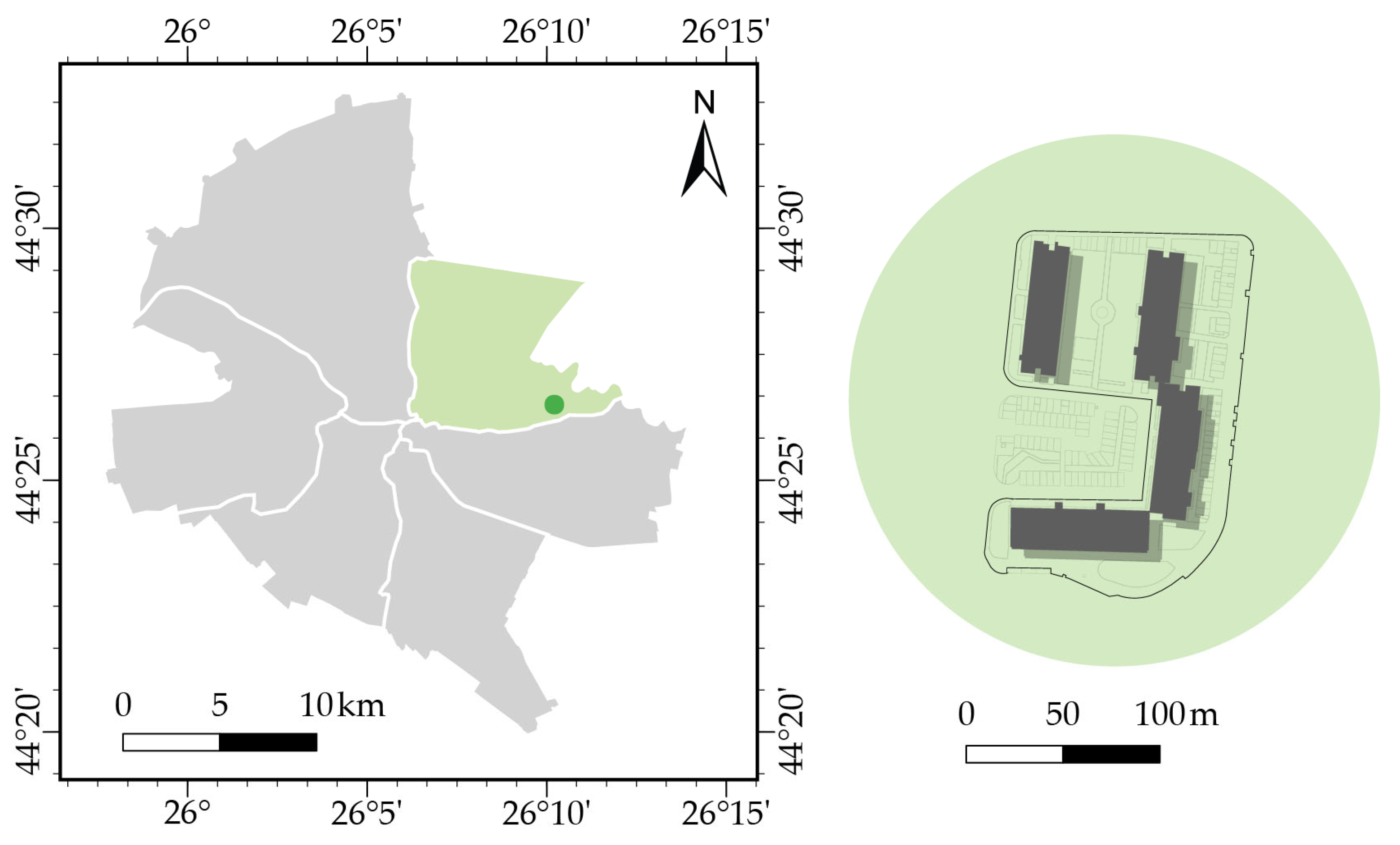
Figure 1. Overview of the study area, Bucharest, District 2, Pantelimon neighborhood.
Land 15 00254 g001
Figure 2. (a) Ground control points on site, symbolized by green triangular markers; (b) point cloud resulted after laser scanning.
Land 15 00254 g002
Figure 3. Workflow design used for Geographic Information System (GIS) and game engine user-end platforms.
Land 15 00254 g003
Figure 4. Comparative workflow between Autodesk ReCap and CloudCompare (adapted after [35]).
Land 15 00254 g004
Figure 5. (a) Tree and billboard isolated point clouds in GIS; (b) isolated tree point cloud.
Land 15 00254 g005
Figure 6. (a) 3D modeling using a cleaned point cloud; (b) Industry Foundation Classes (IFC) model imported into GIS; (c) BIM-LOD 300 imported from Revit in ArcGIS Pro; (d) LoD1 model in ArcGIS Pro.
Land 15 00254 g006
Figure 7. (a) CAD file; (b) 3D modeling in BIM; (c) 3D tiles conversion in Cesium ion.
Land 15 00254 g007
Figure 8. Material Editor in Unreal Engine.
Land 15 00254 g008
Figure 9. Before and after adding asphalt material to the streets.
Land 15 00254 g009
Figure 10. (a) Green spaces with grass texture; (b) green spaces with added foliage.
Land 15 00254 g010
Figure 11. Trees in UE5 environment.
Land 15 00254 g011
Figure 12. Three-dimensional urban objects.
Land 15 00254 g012
Figure 13. Scenario 1—existing (left) and Scenario 2—proposed (right).
Land 15 00254 g013
Figure 14. ArcGIS Dashboard (https://sd-utcb.maps.arcgis.com/apps/dashboards/fb8e81fe94054b939795f95017ef59ba, accessed on 4 December 2025).
Land 15 00254 g014
Figure 15. IFC model imported and georeferenced in Unreal Engine using Cesium ion.
Land 15 00254 g015
Figure 16. Detailed comparison between the IFC model (left) and 3D Tiles (right) in the study area.
Land 15 00254 g016
Figure 17. Character collision capsule (orange) and arrow component for direction (blue).
Land 15 00254 g017
Figure 18. Third character mannequin in UE5.
Land 15 00254 g018
Figure 19. Rain settings.
Land 15 00254 g019
Figure 20. Attaching rain to the character.
Land 15 00254 g020
Figure 21. Scenario 1—current state of the courtyard; sunny day scenario, time: 1:00 p.m., date: 5 March 2024.
Land 15 00254 g021
Figure 22. Scenario 1—current state of the courtyard; rainy night scenario, time: 10:00 p.m., date: 24 December 2024.
Land 15 00254 g022
Figure 23. Scenario 2—proposed development; sunny day scenario, time: 1:00 p.m., date: 5 March 2024.
Land 15 00254 g023
Figure 24. Scenario 2—proposed development; rainy night scenario, time: 10 p.m., date: 24 December 2024.
Land 15 00254 g024
Figure 25. Multiplayer scenario.
Land 15 00254 g025
Table 1. CloudCompare and Autodesk ReCap software description.
SoftwareCloudCompareAutodesk ReCap Pro
License/CostOpen-sourceCommercial
FreeSubscription-based
PlatformWindows, macOS, LinuxWindows, Cloud
Domain of UseArchitecture, Design, Urban Planning, Engineering, ConstructionArchitecture, Engineering, Construction
Processing Functions and AnalysisRegistration, segmentation, filtering, clustering, classification, cloud-to-cloud distance, cloud-to-mesh distance, model-to-model, cross-sections, statistical and geometrical tools Registration, clean-up, noise reduction, region selection, clipping, measurements tools
UI/AccessibilityStandalone
Technical, moderate learning curve
Standalone
Intuitive, accessible for beginners
Import FormatsBIN, LAS, E57, PTS, PTX, RCS, PCD, ASC, TXT, NEU, XYZ, XYB, PLY, OBJ, STL, VTK, FLS, FWS, DXF, FBX, JPEG, SHP, GeoTIFF, CSVCL3, CLR, E57, FLS, FWS, LSPROJ, LAS, PCG, PRJ, PTG, PTS, PTX, RCS, RDS, TXT, XYB, XYZ, ZFS, ZFPRJ
Export FormatsBIN, LAS, E57, PTS, PTX, RCS, PCD, ASC, TXT, NEU, XYZ, XYB, PLY, OBJ, STL, VTK, FLS, FWS, DXF, FBX, JPEG, SHP, GeoTIFF, CSVE57, PTS, PCG, RCP, RCS
Table 2. The Unreal Engine plugins used for data integration.
PluginRole
Datasmith (Datasmith C4D Importer, Datasmith CAD Importer, Datasmith Content, Datasmith Importer) (v1.0)Imports pre-design built assets from 3D modeling software (3ds Max, Revit, SketchUp, Rhino 3D, SolidWorks, CATIA, CAD, and IFC formats [40])
Cesium for Unreal (v2.16.0)Adds the 3D geospatial context of the real world
FAB (v0.0.4)Provides access to the Epic Games marketplace
Quixel Bridge (v2025.0.3)Gives access to the Megascans library (materials, environments, and MetaHumans)
Niagara (v1.0)Creates weather visual effects
Table 3. Hardware specifications and software minimal/recommended system requirements.
Hardware/SofwareAutoCADArcGISProCloudCompareAutodesk RevitUnreal Engine1st System Specifications2nd System Specifications
CPU4–8 logical cores/8+ logical cores2 cores/6–10+ coresQuad-core/8+ coresModern multi-core CPU/up to 16+ cores for large modelsQuad-core/8–32+ coresAMD Ryzen 7 5800H 3.20 GHzAMD Ryzen 9 7950X 16-Core Processor (4.50 GHz)
RAM 8 GB/32–64 GB8 GB/32–64+ GB8–16 GB/32–128 GB4–8 GB/16–64+ GB16 GB/32–128 GB16.0 GB32.0 GB
GPU2 GB/8+ GB VRAM (DX12)OpenGL support/4+ GB dedicated GPUOpenGL support/modern GPUDirectX 11 capable GPU with Shader Model 5/~4 GB VRAMDirectX 12/RTX-class GPU with 8+ GB VRAMNVIDIA GeForce RTX 3060 Laptop GPU (6 GB)NVIDIA GeForce RTX 4070 Ti SUPER (32 GB)
StorageHDD or SSD/NVMe SSDNVMe SSDNVMe SSD30 GB minimum/SSDSSD/NVMe SSD954 GB SSD
NVMe
Corsair MP700 PRO NVMe 932 GB
Motherboard Standard motherboardStandard board with high RAM capacityScalable standard platformModern standard platform (Windows 10/11 64-bit)PCIe 4.0/5.0 chipset, high-quality VRM, PSU 750–1200 WWindows 10—64-bitWindows 11Pro 64-bit
Table 4. Geospatial data used in the web application.
Geospatial DataFormatSource
Building footprints, light poles, pathways.dwgTopographic plans
Parking spaces, sidewalksshapefilesBucharest’s District 2 GIS database
Green spaces, trees, tree species.dwgLandscape plan
Three-dimensional model IFCauthors
Sensor data network-https://regreeneration.claritech.ro/ (accessed on 4 December 2025)
Disclaimer/Publisher’s Note: The statements, opinions and data contained in all publications are solely those of the individual author(s) and contributor(s) and not of MDPI and/or the editor(s). MDPI and/or the editor(s) disclaim responsibility for any injury to people or property resulting from any ideas, methods, instructions or products referred to in the content.