Decision-Level Fusion of PS-InSAR and Optical Data for Landslide Susceptibility Mapping Using Wavelet Transform and MAMBA

 ,
,  , , and
Abstract
1. Introduction
2. Materials and Methods
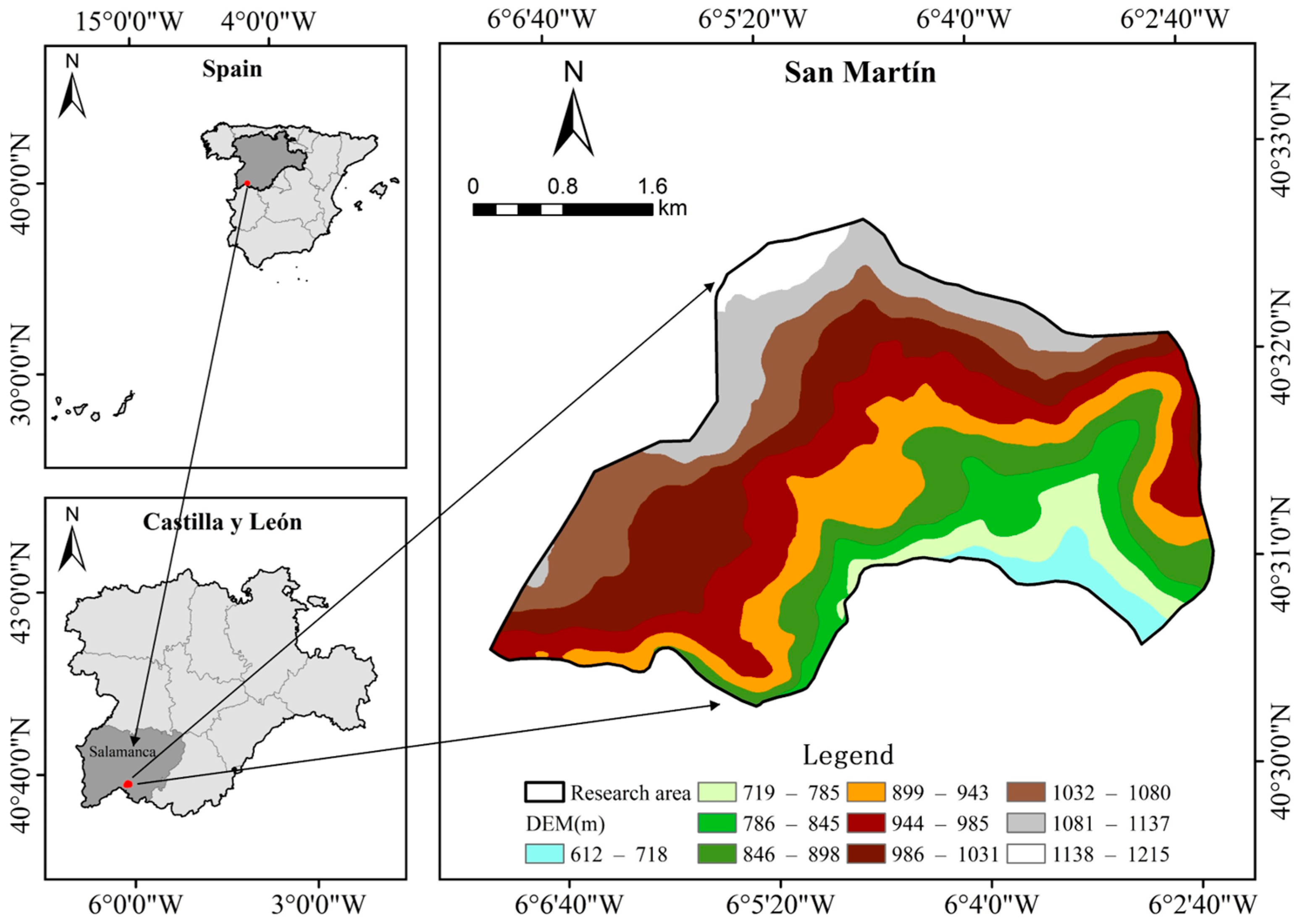
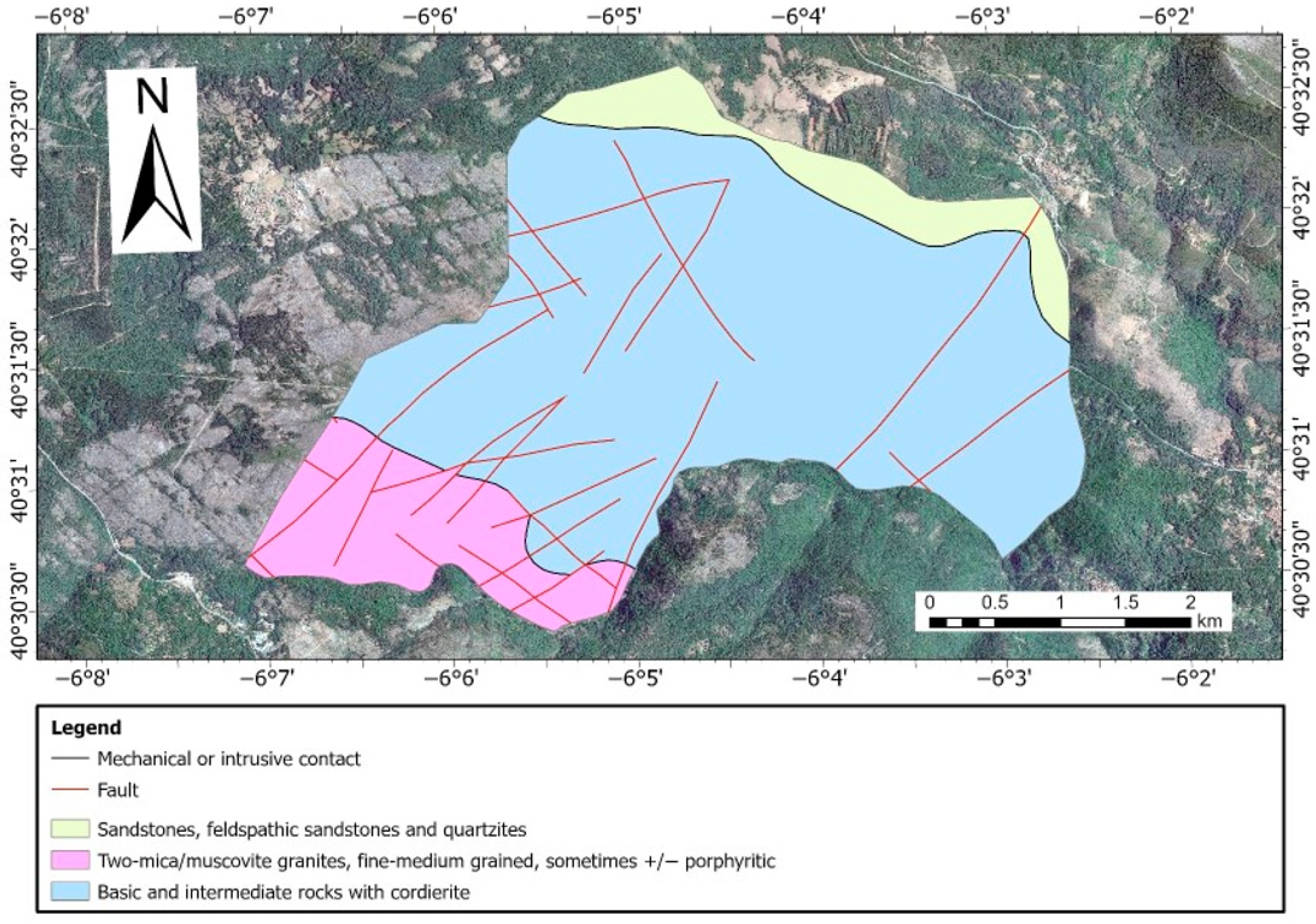
2.1. Study Area
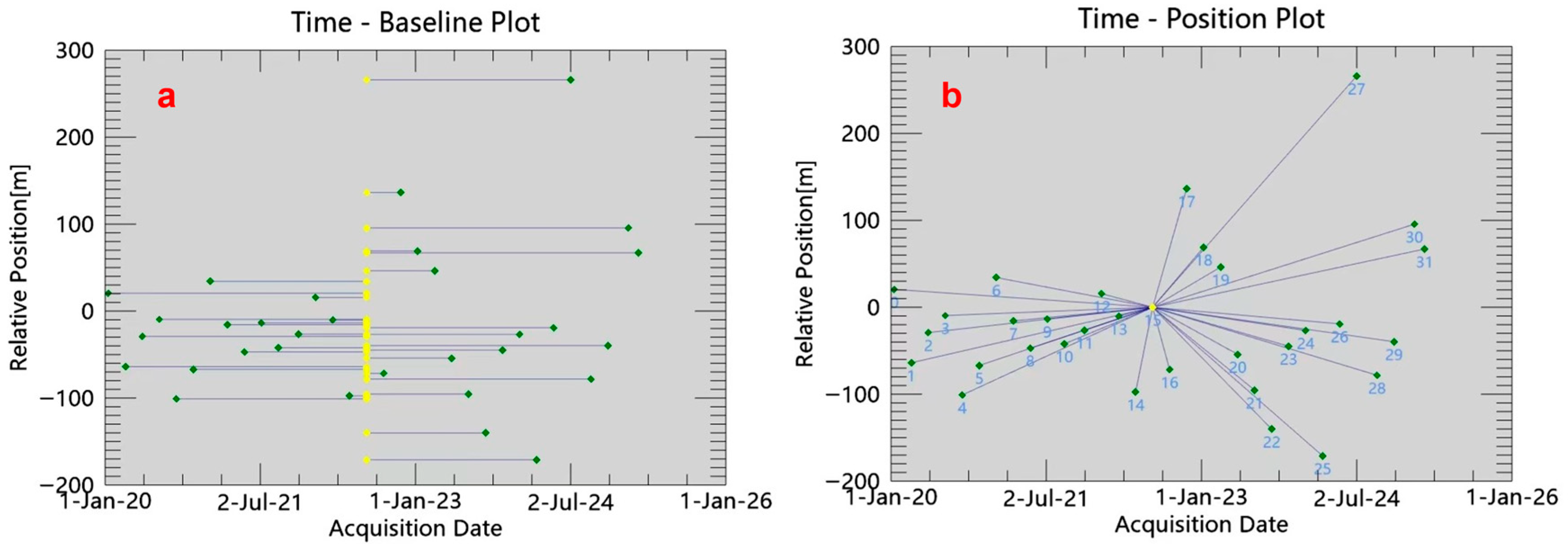
2.2. Data and Preprocessing
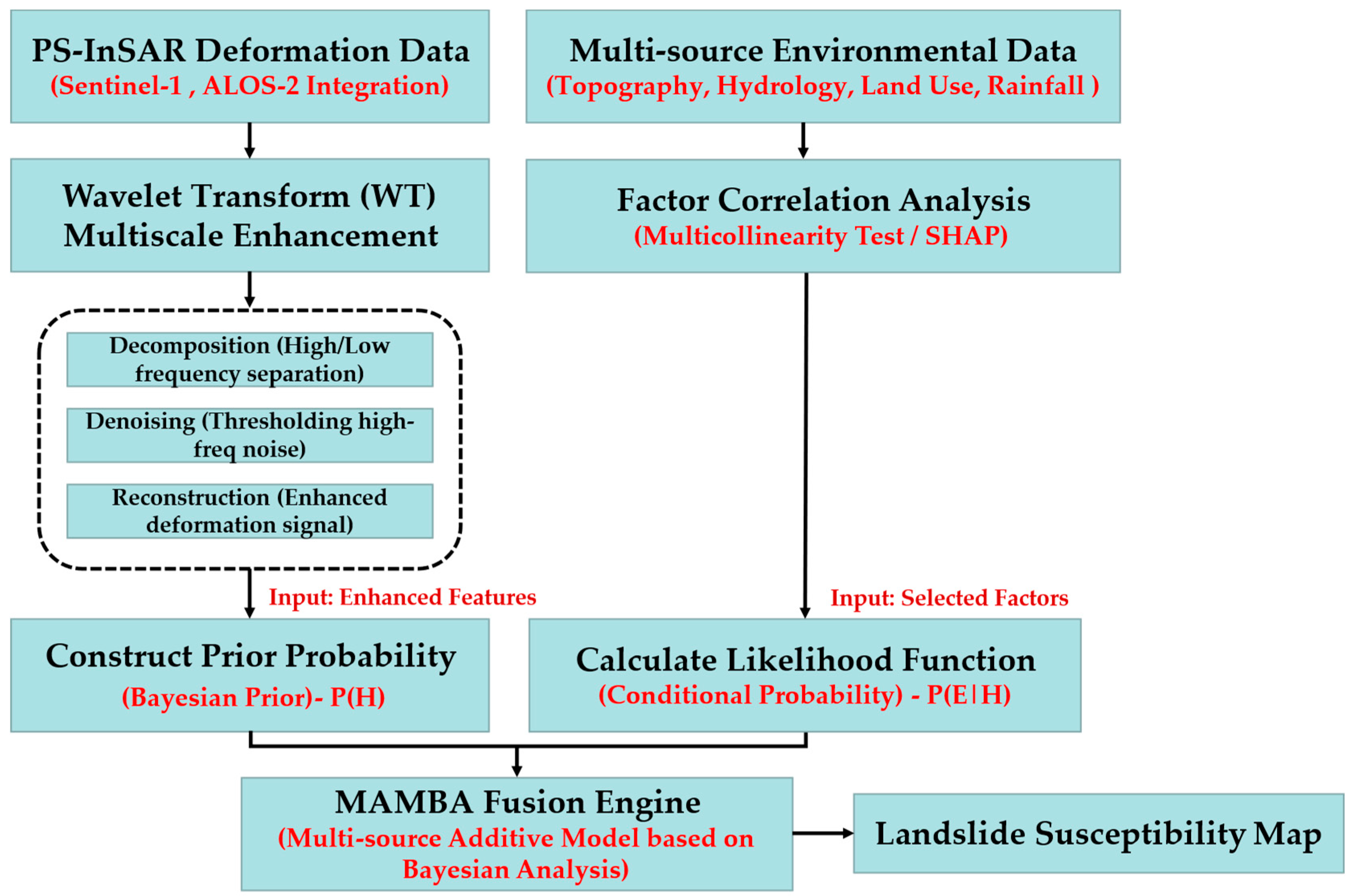
2.3. Methodology
2.4. Modeling of Permanent Scatterer Deformation Signals
2.5. Wavelet Transform and MAMBA Decision-Level Fusion Method
2.5.1. Multi-Scale Feature Construction Using Wavelet Transform
2.5.2. Sensitivity Analysis of Wavelet Parameters
2.5.3. Decision-Level Fusion Using MAMBA
2.5.4. Spatial Representation of Fusion Results
2.5.5. Adaptation of the WT–MAMBA Framework to Different Deformation Regimes
3. Results
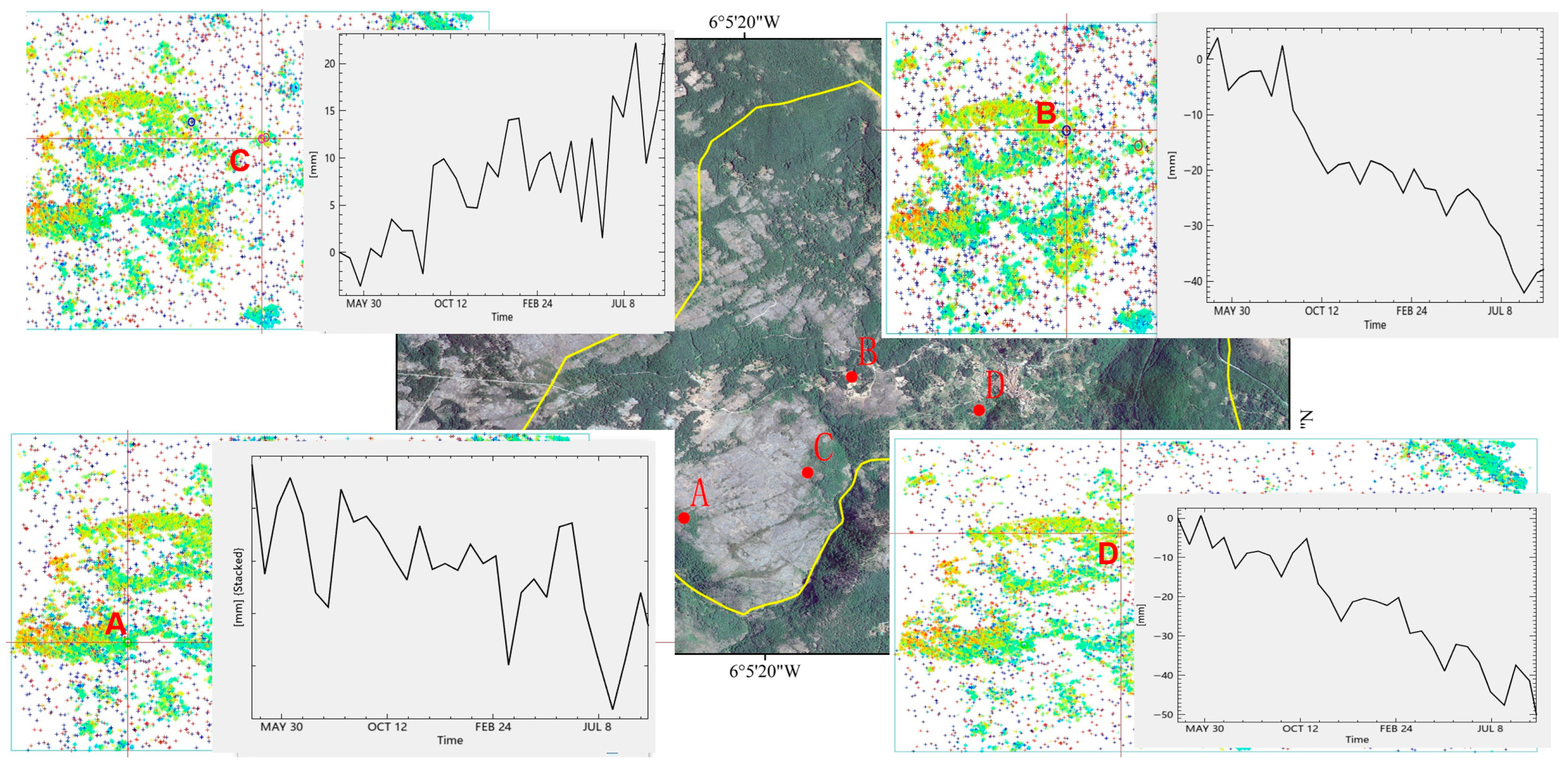
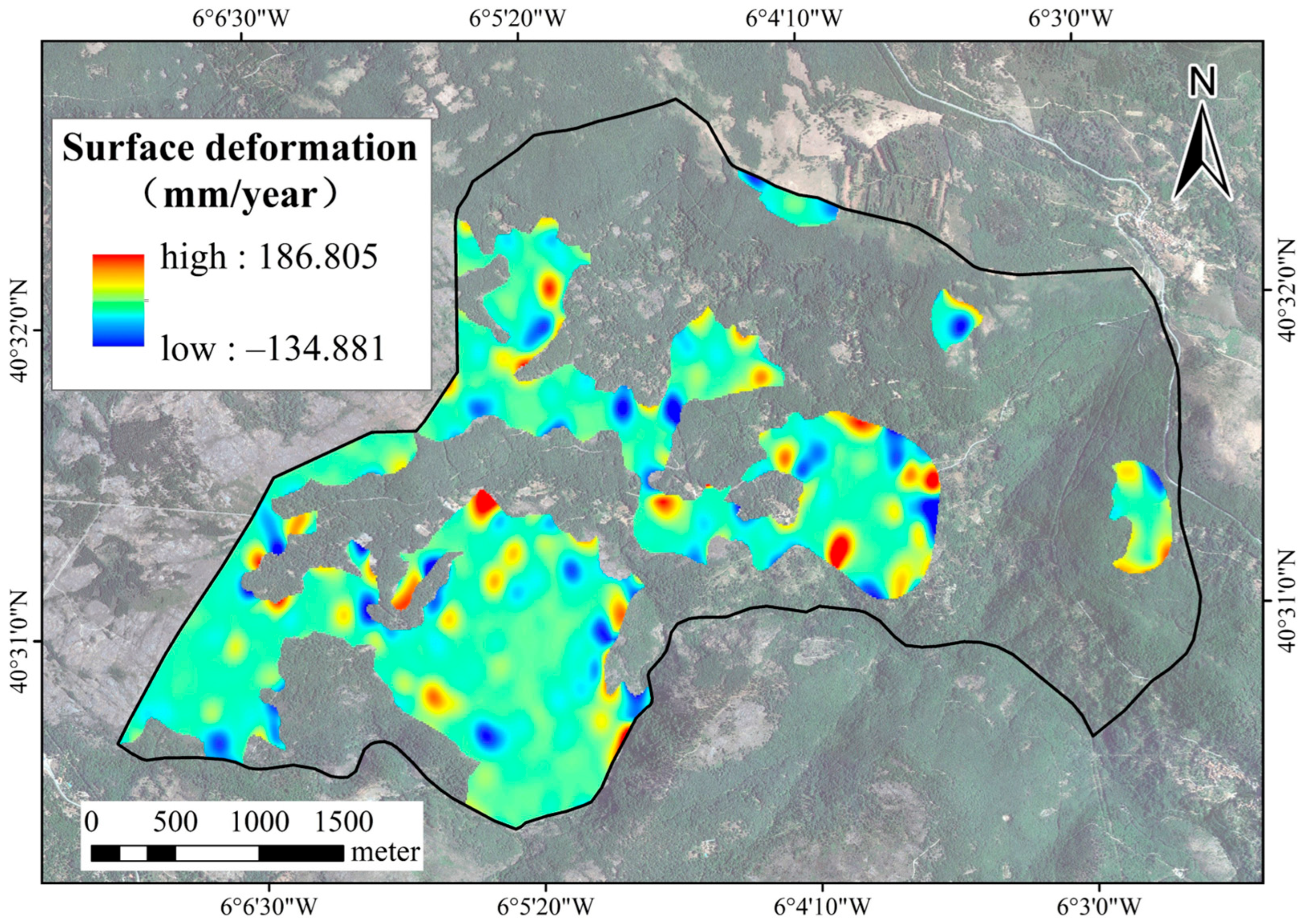
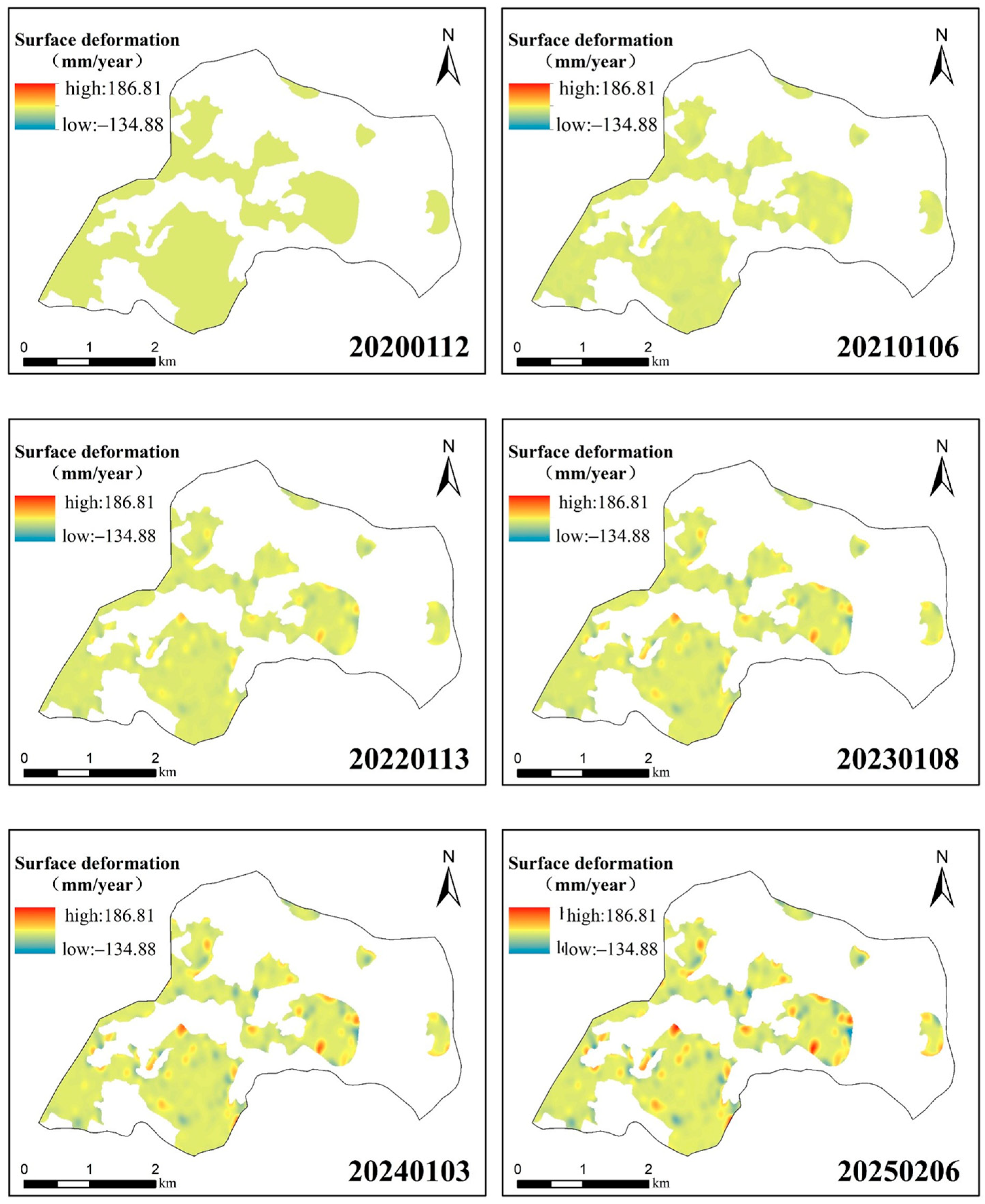
3.1. Multiscale Distribution of Surface Deformation Rates
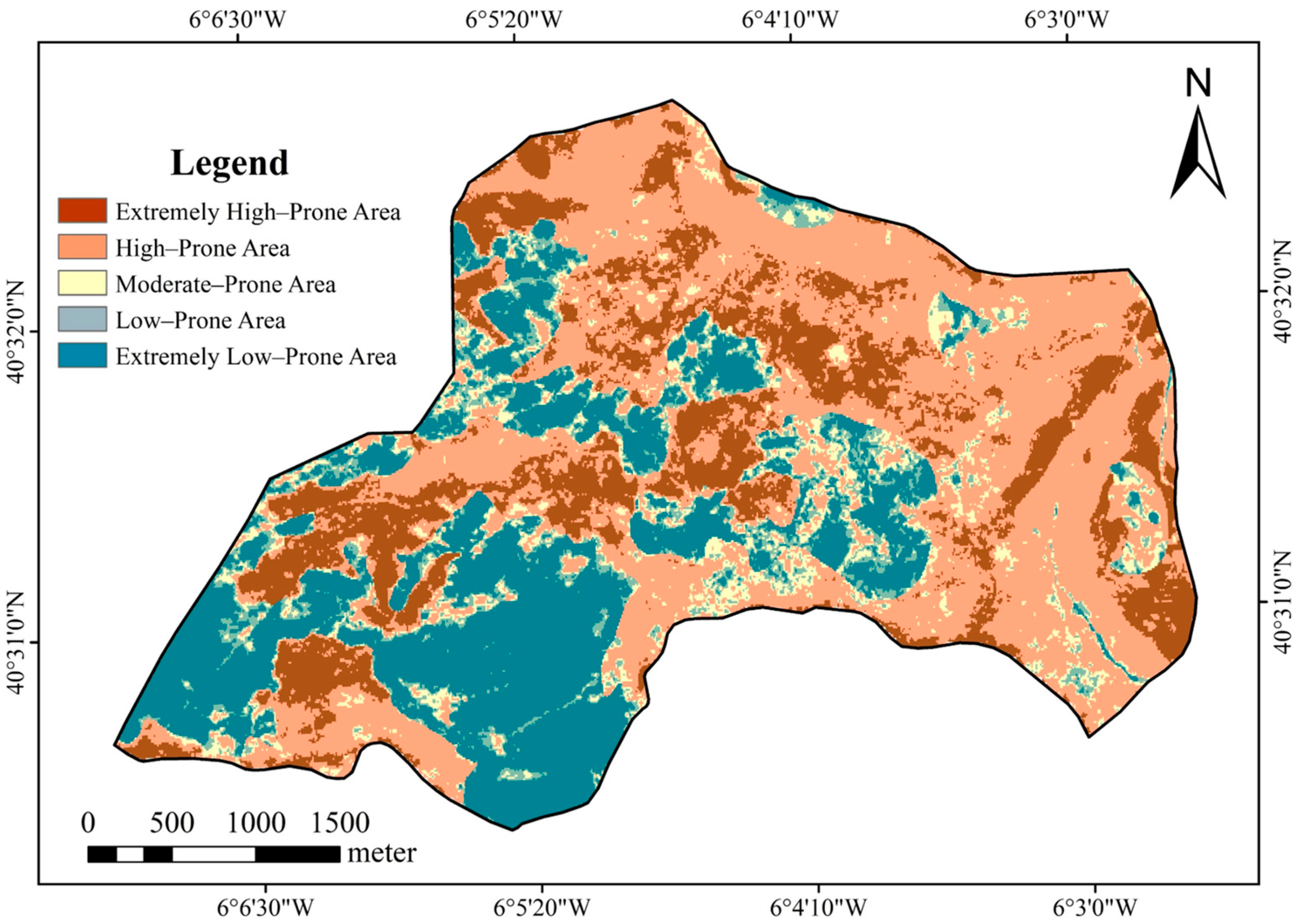
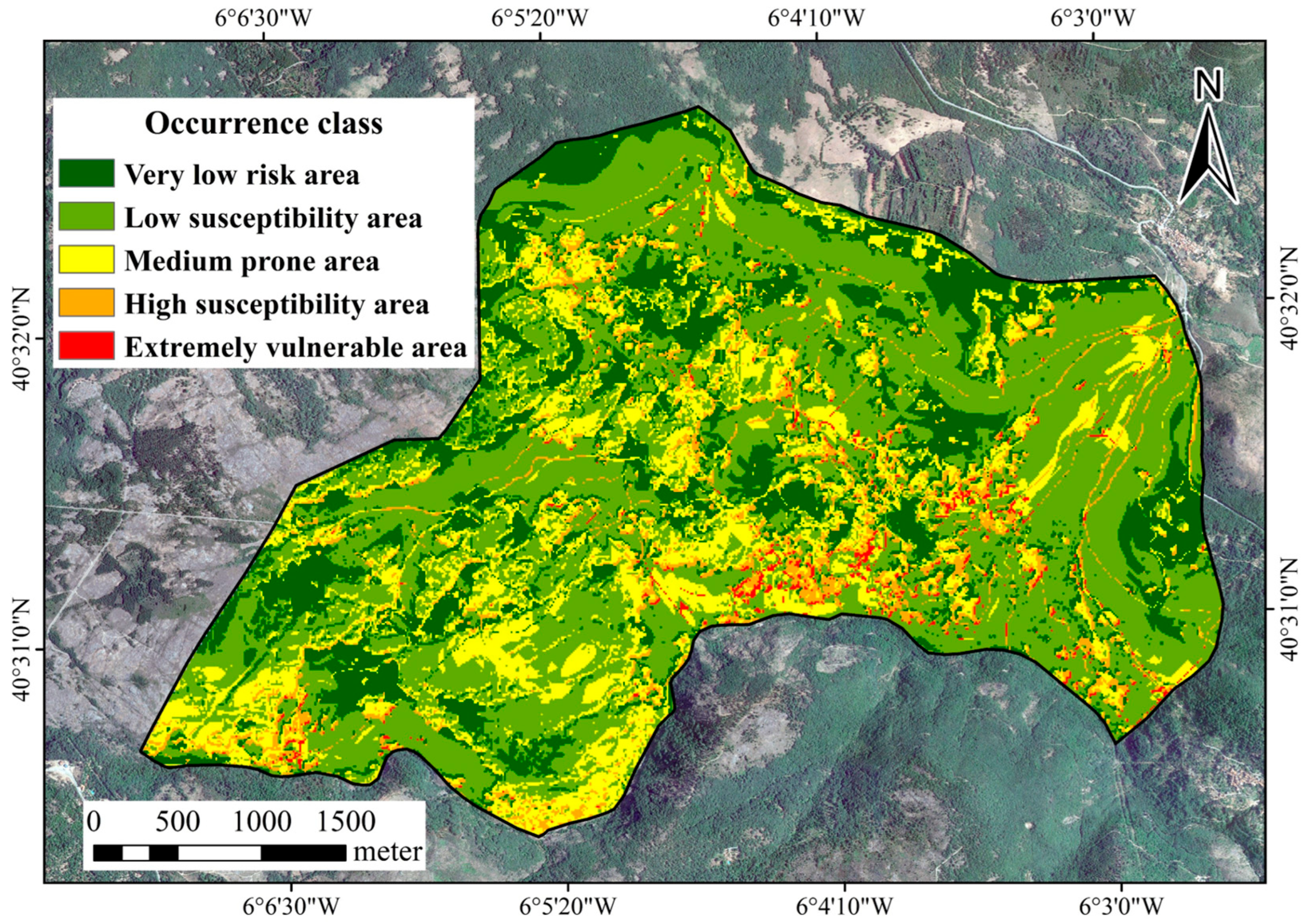
3.2. Landslide Susceptibility Assessment Based on the MAMBA Model
3.3. Coupling Between Landslide Susceptibility and Ecological Vulnerability
3.4. Model Validation and Performance Assessment
3.4.1. Comparative Performance Across Susceptibility Models
3.4.2. Confusion Matrix Analysis and Classification Statistics
3.4.3. Spatial Correspondence Between Susceptibility Classes and Landslide Distribution
3.4.4. Quantification of Performance Improvements Relative to Benchmark Methods
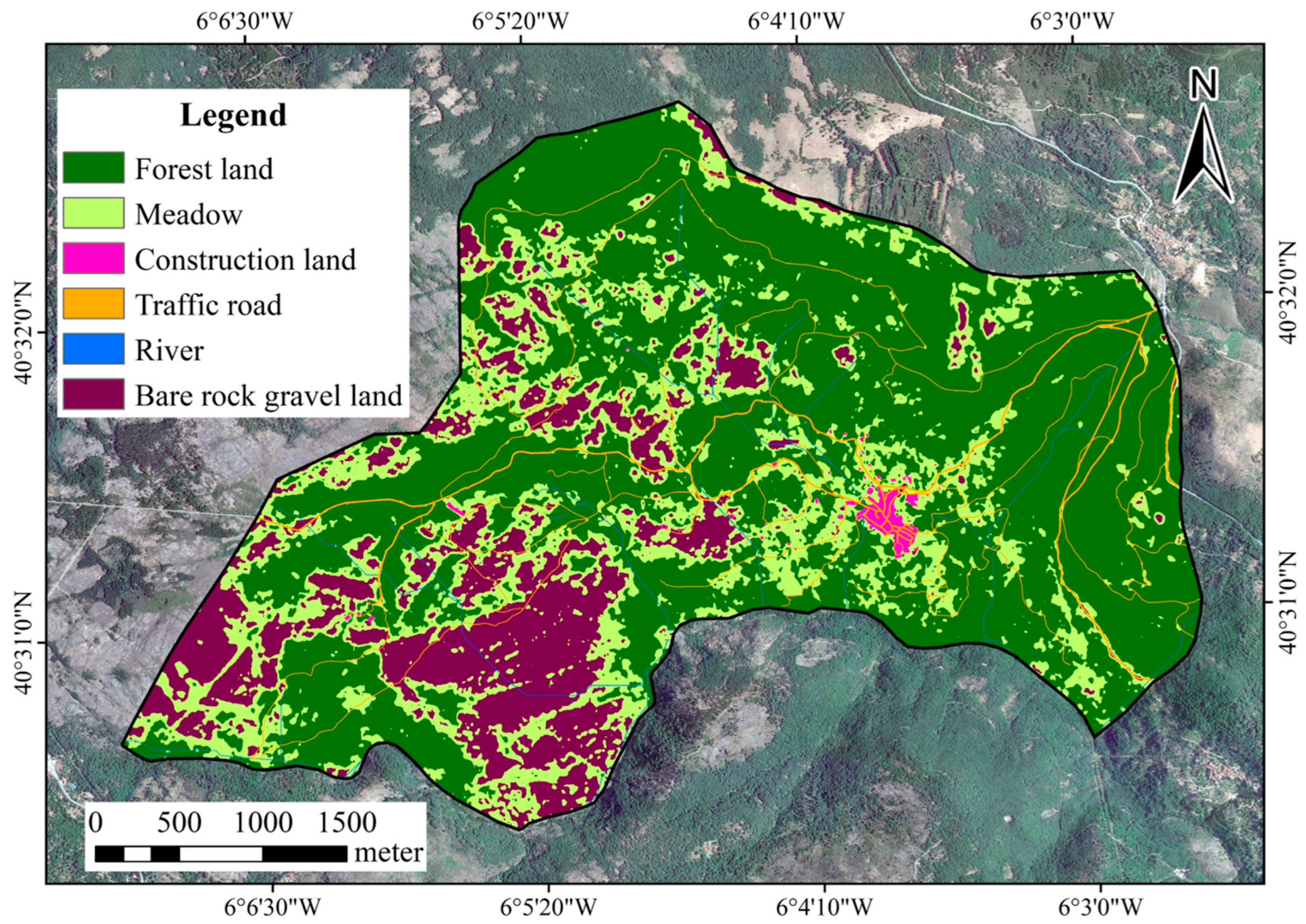
3.5. Influence of Land-Use Changes on Landslide Susceptibility
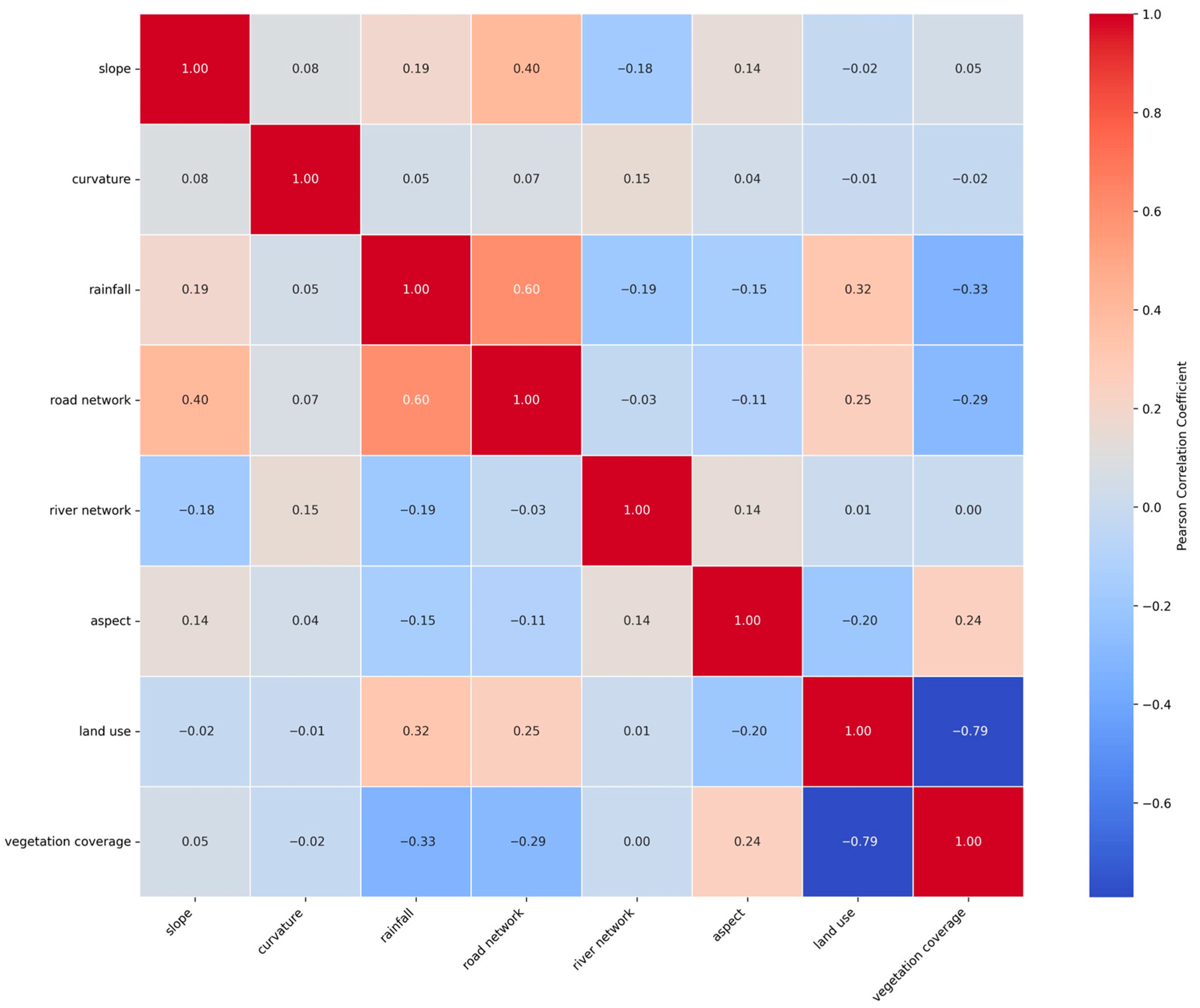
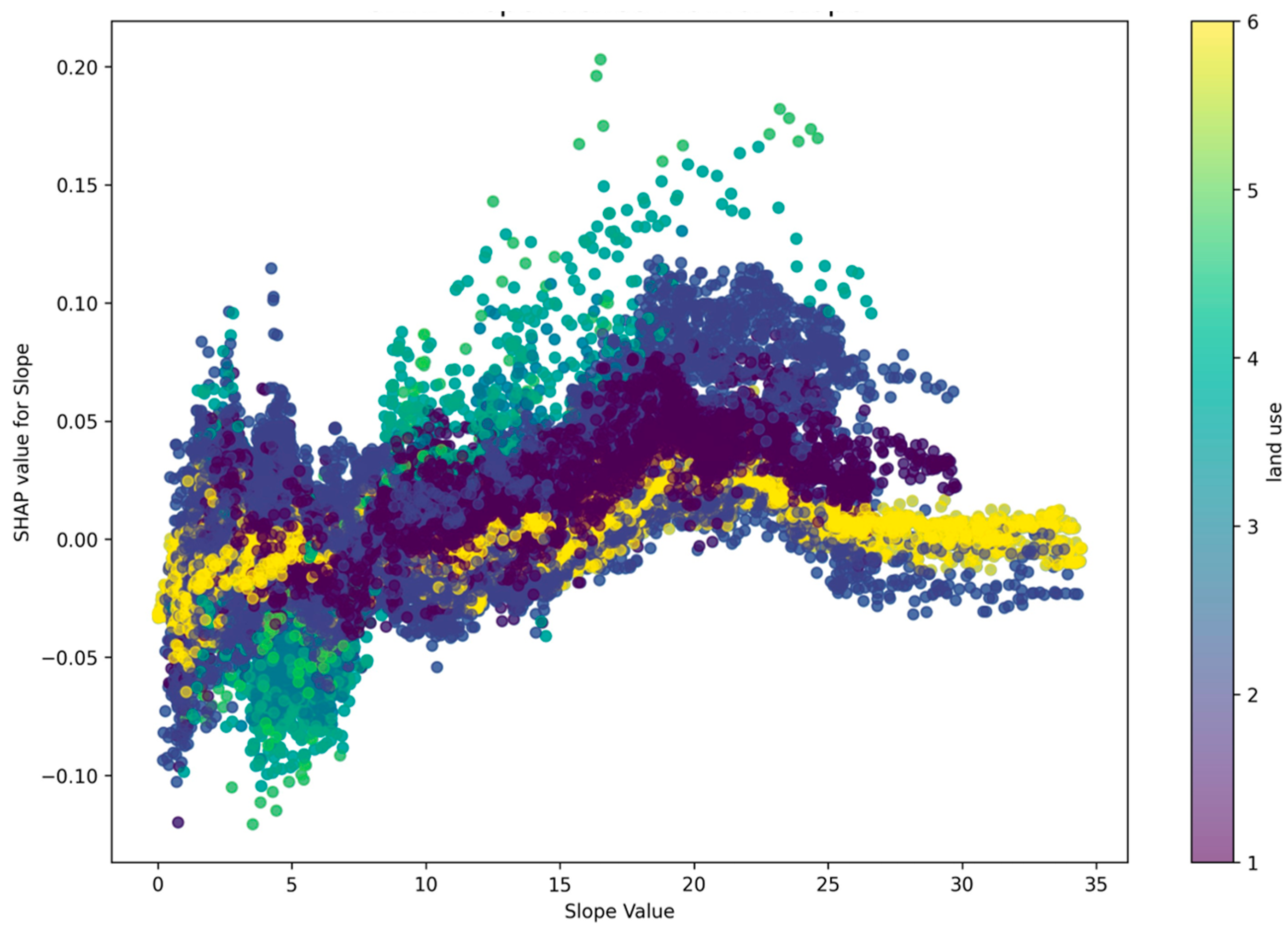
3.6. Interpretability Analysis of the MAMBA Model
4. Discussion
5. Conclusions
Author Contributions
Funding
Data Availability Statement
Acknowledgments
Conflicts of Interest
References
- Howard, M.E.; Hunter, A.J.; Roberts, R.C.; Brook, M.S. Landslide hazard and loss-of-life risk assessment for Muriwai, New Zealand following Cyclone Gabrielle in February 2023. N. Z. J. Geol. Geophys. 2025, 68, 1031–1048. [Google Scholar] [CrossRef]
- Liu, Q.; Guo, F.; Tian, H.; Li, L.; Ma, X.; Fu, M.; Zhang, J.; Zeng, G. Landslide hazards in the Wudongde Reservoir (China): Analysis of frequency-magnitude characteristics based on self-organized criticality theory. Environ. Earth Sci. 2025, 84, 504. [Google Scholar] [CrossRef]
- Akbar, A.Q.; Mitani, Y.; Nakanishi, R.; Honda, H.; Taniguchi, H.; Djamaluddin, I. Integrated Statistical Modeling for Regional Landslide Hazard Mapping in 0-Order Basins. Water 2025, 17, 2577. [Google Scholar] [CrossRef]
- Jiang, J.; Hu, Y.; Zheng, D.; Lyu, L. Disaster risk assessment of collapses and landslides in a hilly coastal city: The role of rainfall triggers and the disaster-inducing environment. Nat. Hazards 2025, 121, 21683–21704. [Google Scholar] [CrossRef]
- Nocentini, N.; Segoni, S.; Rosi, A.; Fanti, R. Double-threshold validation tool (DTVT): From landslide hazard maps to operational early warning systems. Int. J. Disaster Risk Reduct. 2025, 129, 105786. [Google Scholar] [CrossRef]
- Feng, Q.; Ding, M.; Cai, J.; He, Y.; Ming, Y.; Ren, H.; Li, F. Spatiotemporal landslide susceptibility assessment integrating typhoon tracks: A case study of typhoon Lekima. J. Mt. Sci. 2025, 22, 3017–3037. [Google Scholar] [CrossRef]
- Wang, J.; Zang, M.; Peng, J.; Xu, C.; Su, Z.; Liu, T.; Li, M. Identification of Dominant Controlling Factors and Susceptibility Assessment of Coseismic Landslides Triggered by the 2022 Luding Earthquake. Remote Sens. 2025, 17, 2797. [Google Scholar] [CrossRef]
- Kumar, G.; Badsiwal, I.; Kumar, H.; Srivastava, A.K.; Panchal, S. AHP-based landslide susceptibility assessment along National highway 7 (651.000 KM to 731.000 KM) in India. Proc. Indian Natl. Sci. Acad. 2025, 1–15. [Google Scholar] [CrossRef]
- Broquet, M.; Cabral, P.; Campos, F.S. Integrating Eco-DRR into landslide susceptibility assessment: The critical role of eco-environmental factors. J. Environ. Manag. 2025, 393, 127043. [Google Scholar] [CrossRef]
- Razavi-Termeh, S.V.; Sadeghi-Niaraki, A.; Ali, F.; Pradhan, B.; Choi, S.-M. Optimizing ensemble learning for satellite-based multi-hazard monitoring and susceptibility assessment of landslides, land subsidence, floods, and wildfires. Sci. Rep. 2025, 15, 30968. [Google Scholar] [CrossRef]
- He, H.; Wang, W.; Wang, Z.; Li, S.; Chen, J. Enhancing Seismic Landslide Susceptibility Analysis for Sustainable Disaster Risk Management through Machine Learning. Sustainability 2024, 16, 3828. [Google Scholar] [CrossRef]
- Li, M. Disaster risk management of cultural heritage: A global scale analysis of characteristics, multiple hazards, lessons learned from historical disasters, and issues in current DRR measures in world heritage sites. Int. J. Disaster Risk Reduct. 2024, 110, 104633. [Google Scholar] [CrossRef]
- Hu, W.; Liu, Z.; Zhou, C.; Zeng, L.; Zhong, Y.; Zhang, Y. Enhancing Geohazard management: Real-time dynamic ascending dimension modeling for landslide risk assessment. Bull. Eng. Geol. Environ. 2025, 84, 366. [Google Scholar] [CrossRef]
- Wang, S.; Wang, Q.; Li, L.; Ren, J.; Zhao, J. Geological Hazard Zoning Evaluation of Typical Sections of Mountain Roads. Appl. Mech. Mater. 2012, 1800, 1252–1256. [Google Scholar] [CrossRef]
- Tan, Q.; Huang, Y.; Hu, J.; Zhou, P.; Hu, J. Application of artificial neural network model based on GIS in geological hazard zoning. Neural Comput. Appl. 2020, 33, 591–602. [Google Scholar] [CrossRef]
- Guo, H.; Martínez-Graña, A.M. Landslide Hazard Prediction Based on Small Baseline Subset–Interferometric Synthetic-Aperture Radar Technology Combined with Land-Use Dynamic Change and Hydrological Conditions (Sichuan, China). Remote Sens. 2024, 16, 2715. [Google Scholar] [CrossRef]
- Zhang, S.; Tan, S.; Sun, Y.; Ding, D.; Yang, W. Risk Mapping of Geological Hazards in Plateau Mountainous Areas Based on Multisource Remote Sensing Data Extraction and Machine Learning (Fuyuan, China). Land 2024, 13, 1361. [Google Scholar] [CrossRef]
- Zhu, C.; Fang, C.; Tao, Z.; Zhang, Q.; Zhang, W.; Yan, J.; He, M.; Cheng, Z. Remote Sensing Techniques for Landslide Prediction, Monitoring, and Early Warning. Remote Sens. 2025, 17, 1893. [Google Scholar] [CrossRef]
- Qiuyi, Y. Construction and Application of Smart Emergency Care Model for Geological Disaster Recognition Based on Satellite Remote Sensing. J. Aussie-Sino Stud. 2025, 11. [Google Scholar]
- Liu, M.; Li, W.; Ye, Y.; Li, X.; Wei, W.; Xin, C. Identification and Assessment of Geological Hazards in Highly Vegetated Areas Based on Multi-Source Radar Remote Sensing Data: Supporting Sustainable Disaster Risk Management. Sustainability 2025, 17, 8070. [Google Scholar] [CrossRef]
- Hussain, M.A.; Chen, Z.; Wang, R.; Shoaib, M. PS-InSAR-Based Validated Landslide Susceptibility Mapping along Karakorum Highway, Pakistan. Remote Sens. 2021, 13, 4129. [Google Scholar] [CrossRef]
- Hussain, S.; Sun, H.; Ali, M.; Ali, M. PS-InSAR based validated landslide susceptibility modelling: A case study of Ghizer valley, Northern Pakistan. Geocarto Int. 2022, 37, 3941–3962. [Google Scholar] [CrossRef]
- Hussain, S.; Sun, H.; Ali, M.; Sajjad, M.M.; Ali, M.; Afzal, Z.; Ali, S. Optimized landslide susceptibility mapping and modelling using PS-InSAR technique: A case study of Chitral valley, Northern Pakistan. Geocarto Int. 2022, 37, 5227–5248. [Google Scholar] [CrossRef]
- Miao, F.; Ruan, Q.; Wu, Y.; Qian, Z.; Kong, Z.; Qin, Z. Landslide Dynamic Susceptibility Mapping Base on Machine Learning and the PS-InSAR Coupling Model. Remote Sens. 2023, 15, 5427. [Google Scholar] [CrossRef]
- Ahmad, M.S.; Lisa, M.; Khan, S. Assessment and mapping of landslides in steep mountainous terrain using PS-InSAR: A case study of Karimabad Valley in Chitral. Kuwait J. Sci. 2024, 51, 100137. [Google Scholar] [CrossRef]
- Ghaderpour, E.; Antonielli, B.; Bozzano, F.; Mugnozza, G.S.; Mazzanti, P. Detecting Trend Turning Points in PS-InSAR Time Series: Slow-Moving Landslides in Province of Frosinone, Italy. Eng. Proc. 2024, 68, 12. [Google Scholar]
- Pangeni, K.; Dhakal, K.; Diwakar, K.C.; Dahal, B.K. Landslide monitoring using PS-InSAR: A cost-effective approach for the Himalayas. Discov. Appl. Sci. 2025, 7, 702. [Google Scholar] [CrossRef]
- Obda, O.; Bounab, A.; Obda, I.; Raini, I.; Sahrane, R.; Kharim, Y.E.; Lahrach, A. Remote Sensing and Mineralogical Characterization of Expansive Soil Slopes in Northern Morocco: A Case Study Using PS-InSAR. Geotech. Geol. Eng. 2025, 43, 371. [Google Scholar] [CrossRef]
- Tu, K.; Ye, S.; Zou, J.; Hua, C.; Guo, J. InSAR Displacement with High-Resolution Optical Remote Sensing for the Early Detection and Deformation Analysis of Active Landslides in the Upper Yellow River. Water 2023, 15, 769. [Google Scholar] [CrossRef]
- Zhong, J.; Li, Q.; Zhang, J.; Luo, P.; Zhu, W. Risk Assessment of Geological Landslide Hazards Using D-InSAR and Remote Sensing. Remote Sens. 2024, 16, 345. [Google Scholar] [CrossRef]
- Zhu, X.; Zhang, Z.; He, Y.; Wang, W.; Yang, S.; Hou, Y. LandslideNet: A landslide semantic segmentation network based on single-temporal optical remote sensing images. Adv. Space Res. 2024, 74, 4616–4638. [Google Scholar] [CrossRef]
- Guo, S.; Li, B.; Wu, X.; Niu, R.; Wu, W. Landslide Detection Based on Differential Fusion of Multi-Level Features From Optical Remote Sensing Images and Topographical Data. Trans. GIS 2025, 29, e70046. [Google Scholar] [CrossRef]
- Li, X.; Zhang, F.; Xu, Z.; Gong, X. Separation of Body and Surface Wave Background Noise and Passive Seismic Interferometry Based on Synchrosqueezed Continuous Wavelet Transform. Appl. Sci. 2025, 15, 3917. [Google Scholar] [CrossRef]
- Edigbue, P.; Shuhail, A.A.; Muhammad, A.; Hanafy, S. Seismic Event Detection and First Arrival Picking Using Continuous Wavelet Transform and Machine Learning Techniques. Arab. J. Sci. Eng. 2025, 1–14. [Google Scholar] [CrossRef]
- Li, J.; Tan, Z.; Zeng, N.; Xu, L.; Yang, Y.; Siddique, A.; Dang, J.; Zhang, J.; Wang, X. Wavelet-Based Analysis of Subsidence Patterns and High-Risk Zone Delineation in Underground Metal Mining Areas Using SBAS-InSAR. Land 2025, 14, 992. [Google Scholar] [CrossRef]
- Gao, M.; Pei, T.; Jiang, L.; Yan, X.; Fang, Z.; Liu, L.; Fang, Y. Wavelet-Based Clustering Method for Geographical Flows Within a Linear Feature. Trans. GIS 2025, 29, e70079. [Google Scholar] [CrossRef]
- Jia, D.; Li, W.; Huang, D.; Chen, S. Daily runoff prediction based on lightweight Mamba with partial normalization. Hydrol. Res. 2024, 55, 1182–1196. [Google Scholar] [CrossRef]
- Jing, H.; Zhang, H.; Zhang, M.; Rong, Q. GL-MambaNet: Mamba-based global and local feature fusion for image dehazing. Multimed. Syst. 2025, 31, 429. [Google Scholar] [CrossRef]
- Zou, Z.; Kui, X.; Lu, W.; Li, Y.; Hu, Z.; Duan, J.; Zou, B. Robust tumor segmentation in incomplete multi-modal imaging via a synergy of diffusion and Mamba models. Biomed. Signal Process. Control 2025, 112, 108685. [Google Scholar] [CrossRef]
- Zhu, Q.; Chen, W.; Zeng, Q.; Li, Y.; Liu, S. Step-type landslide displacement prediction method based on VMD-Mamba algorithm. Nat. Hazards 2025, 121, 9339–9362. [Google Scholar] [CrossRef]
- Liu, X.; Liu, B.; Wu, W.; Wang, Q.; Liu, Y. Spatial distribution prediction of pore pressure based on Mamba model. Front. Earth Sci. 2025, 13, 1530557. [Google Scholar] [CrossRef]
- Ge, C.; Li, P.; Zhang, M.; Yang, M. Identification of surface subsidence risk in deep foundation pits using a Mamba fusion model. Eng. Appl. Artif. Intell. 2025, 161, 112077. [Google Scholar] [CrossRef]
- Chen, H.; Wang, J.; Liu, B. Dual-domain mamba for seismic random noise suppression. J. Appl. Geophys. 2025, 243, 105951. [Google Scholar] [CrossRef]
- Li, Y.; Chen, W.; Wang, L. Spatial Non-Stationarity-Based Landslide Susceptibility Assessment Using PCAMGWR Model. Bull. Eng. Geol. Environ. 2022, 14, 881. [Google Scholar] [CrossRef]
- Inan, M.S.I.; Rahman, R.M. Explainable AI Integrated Feature Selection for Landslide Susceptibility Mapping Using TreeSHAP. Earth Sci. Inform. 2022, 15, 2585–2602. [Google Scholar] [CrossRef]
- Ding, Z.; Wang, C. Coseismic landslides caused by the 2022 Luding earthquake in China: Insights from remote sensing interpretations and machine learning models. Front. Earth Sci. 2025, 13, 1564744. [Google Scholar] [CrossRef]
- Ye, K.; Wang, Z.; Wang, T.; Luo, Y.; Chen, Y.; Zhang, J.; Cai, J. Deformation Monitoring and Analysis of Baige Landslide (China) Based on the Fusion Monitoring of Multi-Orbit Time-Series InSAR Technology. Sensors 2024, 24, 6760. [Google Scholar] [CrossRef]
- Hussain, S.; Pan, B.; Hussain, W.; Sajjad, M.M.; Ali, M.; Afzal, Z.; Abdullah-Al-Wadud, M.; Tariq, A. Integrated PSInSAR and SBAS-InSAR analysis for landslide detection and monitoring. Phys. Chem. Earth Parts A/B/C 2025, 139, 103956. [Google Scholar] [CrossRef]
- Zhang, J.; Zuo, X.; Li, Y.; Shi, M.; Shi, C.; Huang, C.; Tang, X. Detection and assessment of potential landslides in the Xiaojiang River Basin using SBAS-InSAR. Sci. Rep. 2025, 15, 16082. [Google Scholar] [CrossRef]
- Cui, L.; Huang, Y.; Niu, Y.; Cui, H.; Tao, Y.; Qian, L.; Zhao, J. MS-Unet: A Multi-Scale Feature Fusion U-Net for 3D Seismic Fault Detection. Processes 2025, 13, 1976. [Google Scholar] [CrossRef]
- Li, Y.; Peng, S.; Cui, X.; He, D.; Li, D.; Lu, Y. Seismic Fault Detection Using Dual-Attention Multi-Scale Fusion Networks With Deep Supervision. Geophys. Prospect. 2025, 73, e70048. [Google Scholar] [CrossRef]
- Nie, W.; Zhang, H.; Gu, J.; Huang, W.; Li, B.; Liu, J.; Nie, X. Lithology prediction via multiscale feature-fusion convolutional neural networks. Earth Sci. Inform. 2025, 18, 548. [Google Scholar] [CrossRef]
- Pan, B.; Shi, X. Fusing Ascending and Descending Time-Series SAR Images with Dual-Polarized Pixel Attention UNet for Landslide Recognition. Remote Sens. 2023, 15, 5619. [Google Scholar] [CrossRef]
- Liu, D.; Zeng, B.; Xu, H.; Ai, D.; Yuan, J. Three-dimensional deformation monitoring of landslides based on combination of two-track InSAR observations and pixel-level surface-parallel flow model. Int. J. Remote Sens. 2024, 45, 8380–8404. [Google Scholar] [CrossRef]
- Chen, T.; Han, S.; Yang, Y.; Song, Z.; Zeng, Z. Application of robust factor analysis and robust regression analysis to identify the geochemical anomalies linked with mineralization in the Yinkeng Orefield, South China. Geosci. J. 2025, 29, 1–16. [Google Scholar] [CrossRef]
- Requena-García-Cruz, M.V.; de-Miguel-Rodriguez, J.; Romero-Sánchez, E.; Morales-Esteban, A. Study of ground motion signal reduction for the optimisation of computation time in dynamic nonlinear analysis. Structures 2025, 72, 108291. [Google Scholar] [CrossRef]
- Mahajan, A.; Raj, M. Linear and Nonlinear Analysis of a Fluid in an Internally Heated Porous Rectangular Enclosure with Variable Gravity Field. Int. J. Appl. Comput. Math. 2025, 11, 184. [Google Scholar] [CrossRef]







| Parameter | Value/Description |
|---|---|
| Data Acquisition | |
| Satellite Mission | Sentinel-1A |
| Band | C-band |
| Data Type | SLC (Single Look Complex) |
| Orbit Type | Ascending |
| Spatial Resolution | 15 m |
| Temporal Coverage | January 2020–February 2025 |
| Revisit Period | 12 days |
| PS-InSAR Processing | |
| Number of PS Points Extracted | 24,102 |
| Deformation Rate Threshold | 0.75 mm/year |
| Height Error Constraint | ±0.1 m |
| Amplitude Dispersion Index Threshold | DA < 0.25 |
| Radar Wavelength (λ) | 5.6 cm |
| Parameter | Value/Description |
|---|---|
| Data Acquisition | |
| Satellite Mission | ALOS-2 |
| Band | L-band/1.2 GHz |
| Data Type | SLC (Single Look Complex) |
| Orbit Type | Sun-synchronous orbit |
| Spatial Resolution | 10–30 m |
| Temporal Coverage | January 2020–February 2025 |
| Revisit Period | 14 days |
| PS-InSAR Processing | |
| Deformation Rate Threshold | 0.75 mm/year |
| Height Error Constraint | ±0.1 m |
| Amplitude Dispersion Index Threshold | DA < 0.25 |
| Radar Wavelength (λ) | 23.6 cm |
| Data Type | Source | Spatial Resolution | Temporal Resolution | Key Parameters |
|---|---|---|---|---|
| Precipitation | ECMWF ERA5 | 0.1° (~11.1 km) | Daily (2020–2025) | Cumulative rainfall, extremes |
| Population Density | GHSL | 10 m | Annual (2020–2025) | Inhabitants per km2 |
| Land Use Intensity | CORINE Land Cover | 10 m | Annual (2020–2025) | Urban/agricultural expansion |
| Conditioning Factor | Entropy Information Level | Normalized Weight Range (wⱼ) | Assigned Weight Category | Rationale |
|---|---|---|---|---|
| Land use/Land cover | Very high | 0.25–0.30 | Dominant | High spatial heterogeneity and strong information contribution |
| Precipitation (Rainfall) | High | 0.18–0.22 | High | Pronounced variability and sensitivity to landslide occurrence |
| Slope | Moderate | 0.12–0.15 | Moderate | Clear terrain control with moderate entropy reduction |
| Aspect | Moderate | 0.10–0.14 | Moderate | Directional variability with dispersed information contribution |
| Fractional Vegetation Cover (FVC) | Moderate–Low | 0.08–0.10 | Moderate–Low | Indirect regulation effect with limited entropy contrast |
| Distance to roads | Low | 0.06–0.08 | Low | Localized anthropogenic influence |
| Distance to rivers | Low | 0.05–0.06 | Low | Weak hydrological control at regional scale |
| Curvature | Very low | 0.02–0.03 | Very Low | Minimal information gain |
| Elevation | Very low | 0.01–0.02 | Very Low | Nearly uniform contribution |
| Geomorphic Category | Area Coverage | Pixel Count | Pearson r | Spearman ρ | 95% CI for r | p-Value | R2 | Correlation Strength |
|---|---|---|---|---|---|---|---|---|
| Steep slopes (>25°) | 27.1% | 42,150 | 0.78 | 0.80 | [0.77, 0.79] | <0.001 | 0.61 | Strong positive |
| Moderate slopes (15–25°) | 43.9% | 68,200 | 0.69 | 0.71 | [0.68, 0.70] | <0.001 | 0.48 | Moderate-to-strong positive |
| Gentle slopes (<15°) | 29.0% | 45,050 | 0.54 | 0.56 | [0.52, 0.56] | <0.01 | 0.29 | Moderate positive |
| Overall (all terrain) | 100% | 155,400 | 0.72 | 0.74 | [0.71, 0.73] | <0.01 | 0.52 | Strong positive |
| Model | AUC-ROC | Overall Accuracy (%) | True Positive Rate (TPR/Recall) | False Positive Rate (FPR) | Precision | F1-Score | Training Time (min) |
|---|---|---|---|---|---|---|---|
| WT-MAMBA | 0.912 | 87.3 | 0.845 | 0.078 | 0.669 | 0.746 | 42 |
| Random Forest (RF) | 0.854 | 81.6 | 0.792 | 0.134 | 0.812 | 0.802 | 38 |
| Frequency Ratio (FR) | 0.798 | 76.4 | 0.731 | 0.189 | 0.749 | 0.740 | 15 |
| Logistic Regression (LR) | 0.823 | 78.9 | 0.758 | 0.156 | 0.784 | 0.771 | 12 |
| Support Vector Machine (SVM) | 0.837 | 80.1 | 0.774 | 0.142 | 0.798 | 0.786 | 56 |
| Information Value (IV) | 0.781 | 74.2 | 0.709 | 0.208 | 0.723 | 0.716 | 8 |
| Metric | Value | Calculation Formula | Interpretation |
|---|---|---|---|
| True Positives (TP) | 316 | Actual landslides correctly predicted as high/very high susceptibility | Correctly identified unstable slopes |
| True Negatives (TN) | 1842 | Stable areas correctly predicted as low/very low susceptibility | Correctly identified stable terrain |
| False Positives (FP) | 156 | Stable areas incorrectly predicted as high susceptibility (Type I error) | Conservative overestimation of risk |
| False Negatives (FN) | 58 | Actual landslides missed (predicted as low susceptibility, Type II error) | Underestimation of risk |
| Total Validation Samples | 2372 | TP + TN + FP + FN | Complete independent test dataset |
| Sensitivity (Recall/TPR) | 0.845 | TP/(TP + FN) = 316/374 | Ability to detect actual landslides |
| Specificity (TNR) | 0.922 | TN/(TN + FP) = 1842/1998 | Ability to correctly identify stable areas |
| Precision (PPV) | 0.669 | TP/(TP + FP) = 316/472 | Reliability of high-risk predictions |
| Negative Predictive Value (NPV) | 0.969 | TN/(TN + FN) = 1842/1900 | Reliability of low-risk predictions |
| False Discovery Rate (FDR) | 0.331 | FP/(TP + FP) = 156/472 | Proportion of false alarms among positive predictions |
| False Omission Rate (FOR) | 0.031 | FN/(TN + FN) = 58/1900 | Proportion of missed cases among negative predictions |
| False Positive Rate (FPR) | 0.078 | FP/(TN + FP) = 156/1998 | Stable areas incorrectly flagged as high-risk |
| False Negative Rate (FNR) | 0.155 | FN/(TP + FN) = 58/374 | Actual landslides missed by the model |
| Susceptibility Class | Area Coverage | Landslide Count | Landslide Density | Frequency Ratio | Prediction Rate | ||
|---|---|---|---|---|---|---|---|
| km2 | % | Number | % | Events/km2 | (FR) | (%) | |
| Very High | 1.29 | 8.3 | 187 | 50.0 | 144.96 | 6.02 | 50.0 |
| High | 2.44 | 15.7 | 129 | 34.5 | 52.87 | 2.20 | 84.5 (cumulative) |
| Moderate | 4.41 | 28.4 | 42 | 11.2 | 9.52 | 0.39 | 95.7 (cumulative) |
| Low | 4.99 | 32.1 | 14 | 3.7 | 2.81 | 0.12 | 99.4 (cumulative) |
| Very Low | 2.41 | 15.5 | 2 | 0.5 | 0.83 | 0.03 | 99.9 (cumulative) |
| Total | 15.54 | 100.0 | 374 | 100.0 | 24.07 (mean) | — | — |
| Comparison Pair | AUC-ROC Improvement | Accuracy Gain (%) | TPR Increase | FPR Reduction | Statistical Significance | Key Interpretation |
|---|---|---|---|---|---|---|
| WT-MAMBA vs. Random Forest | +0.058 (+6.8%) | +5.7 | +0.053 | −0.056 | DeLong: z = 3.24, p = 0.001 McNemar: χ2 = 18.4, p < 0.001 | Wavelet enhancement + Bayesian fusion outperform ensemble learning |
| WT-MAMBA vs. Frequency Ratio | +0.114 (+14.3%) | +10.9 | +0.114 | −0.111 | DeLong: z = 4.82, p < 0.001 McNemar: χ2 = 47.3, p < 0.001 | Decision-level fusion significantly superior to bivariate statistics |
| WT-MAMBA vs. Logistic Regression | +0.089 (+10.8%) | +8.4 | +0.087 | −0.078 | DeLong: z = 3.96, p < 0.001 McNemar: χ2 = 32.1, p < 0.001 | Nonlinear Bayesian framework captures complex interactions |
| WT-MAMBA vs. Support Vector Machine | +0.075 (+9.0%) | +7.2 | +0.071 | −0.064 | DeLong: z = 3.51, p < 0.001 McNemar: χ2 = 26.7, p < 0.001 | MAMBA’s probabilistic output more interpretable than SVM decision boundary |
| WT-MAMBA vs. Information Value | +0.131 (+16.8%) | +13.1 | +0.136 | −0.13 | DeLong: z = 5.18, p < 0.001 McNemar: χ2 = 58.9, p < 0.001 | Multi-scale wavelet features far exceed single-scale information metrics |
| Factor | SHAP Importance Category | Relative SHAP Importance | Rank | Interpretation |
|---|---|---|---|---|
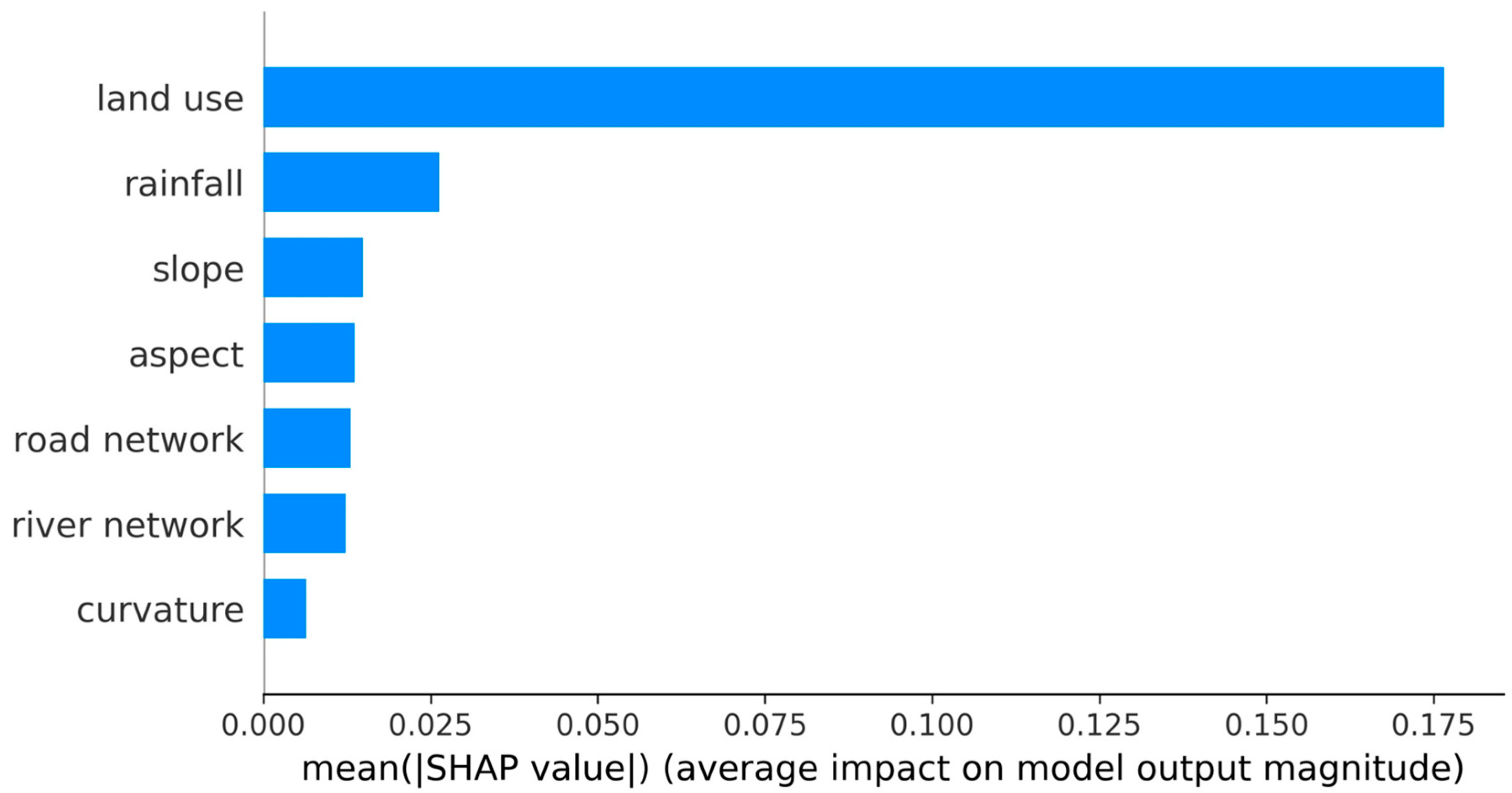
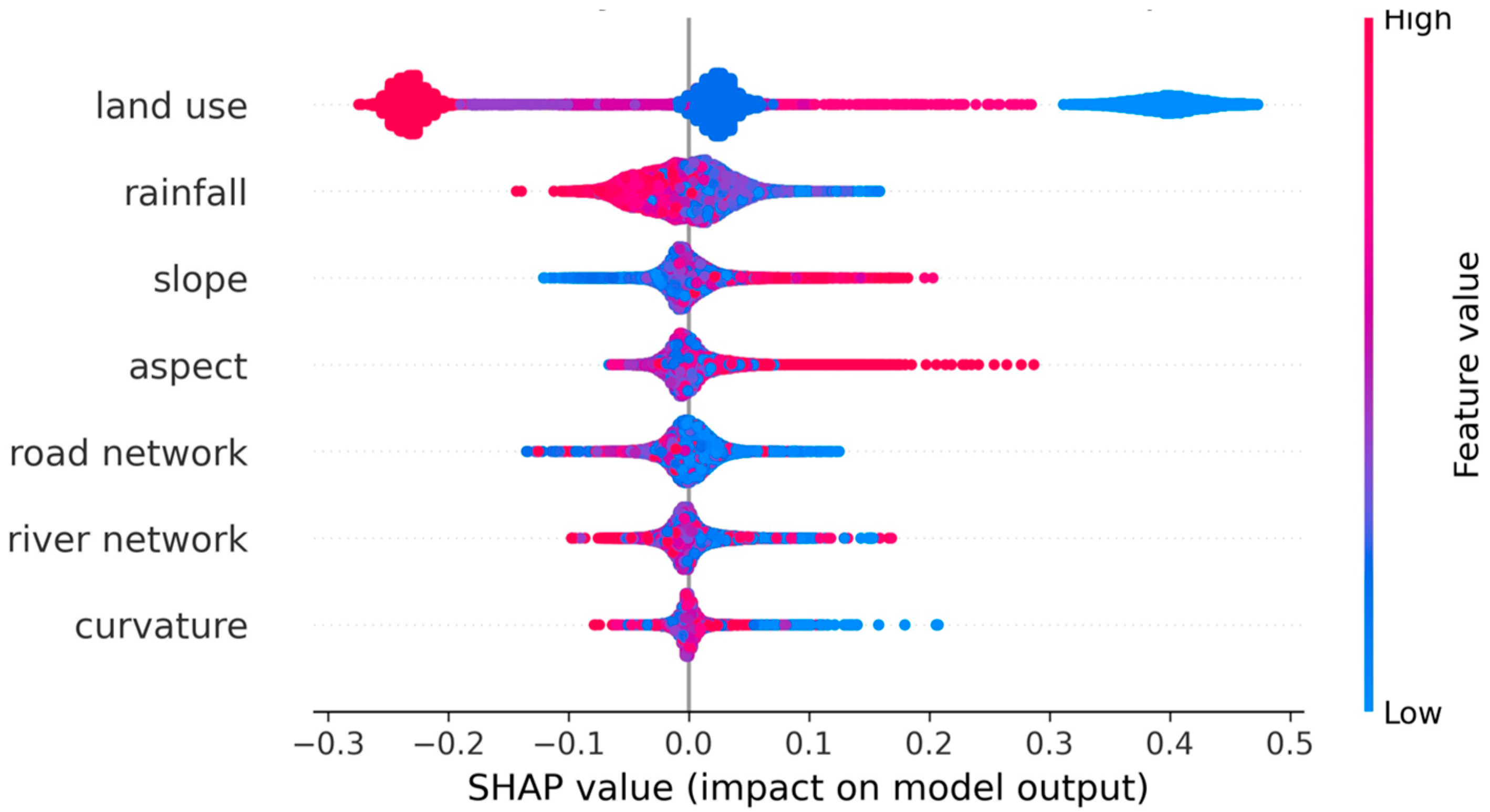
| Land use/Land cover | Dominant | Very high | 1 | Largest contribution magnitude and widest SHAP value range |
| Precipitation (Rainfall) | High | High | 2 | Strong and consistent contribution to model prediction |
| Slope | Moderate | Moderate | 3 | Clear feature–response dependency |
| Aspect | Moderate | Moderate | 4 | Direction-dependent and non-monotonic contribution |
| Fractional Vegetation Cover (FVC) | Moderate–Low | Moderate–Low | 5 | Indirect regulation effect |
| Distance to roads | Low | Low | 6 | Localized anthropogenic influence |
| Distance to rivers | Low | Low | 7 | Weak hydrological contribution |
| Curvature | Very Low | Very low | 8 | Minimal marginal contribution |
| Elevation | Very Low | Very low | 9 | Negligible contribution |
Disclaimer/Publisher’s Note: The statements, opinions and data contained in all publications are solely those of the individual author(s) and contributor(s) and not of MDPI and/or the editor(s). MDPI and/or the editor(s) disclaim responsibility for any injury to people or property resulting from any ideas, methods, instructions or products referred to in the content. |
© 2026 by the authors. Licensee MDPI, Basel, Switzerland. This article is an open access article distributed under the terms and conditions of the Creative Commons Attribution (CC BY) license.
Share and Cite
Guo, H.; Martínez-Graña, A.M.; Merchán, L.; Fernández, A.; Casado, M.G. Decision-Level Fusion of PS-InSAR and Optical Data for Landslide Susceptibility Mapping Using Wavelet Transform and MAMBA. Land 2026, 15, 211. https://doi.org/10.3390/land15020211
Guo H, Martínez-Graña AM, Merchán L, Fernández A, Casado MG. Decision-Level Fusion of PS-InSAR and Optical Data for Landslide Susceptibility Mapping Using Wavelet Transform and MAMBA. Land. 2026; 15(2):211. https://doi.org/10.3390/land15020211
Chicago/Turabian StyleGuo, Hongyi, Antonio M. Martínez-Graña, Leticia Merchán, Agustina Fernández, and Manuel Gómez Casado. 2026. "Decision-Level Fusion of PS-InSAR and Optical Data for Landslide Susceptibility Mapping Using Wavelet Transform and MAMBA" Land 15, no. 2: 211. https://doi.org/10.3390/land15020211
APA StyleGuo, H., Martínez-Graña, A. M., Merchán, L., Fernández, A., & Casado, M. G. (2026). Decision-Level Fusion of PS-InSAR and Optical Data for Landslide Susceptibility Mapping Using Wavelet Transform and MAMBA. Land, 15(2), 211. https://doi.org/10.3390/land15020211