Article

Ecological Assessment Based on the InVEST Model and Ecological Sensitivity Analysis: A Case Study of Huinan County, Tonghua City, Jilin Province, China


School of Landscape Architecture, Beijing Forestry University, Beijing 100083, China
*
Authors to whom correspondence should be addressed.
Land 2026, 15(1), 87; https://doi.org/10.3390/land15010087 (registering DOI)
Submission received: 14 November 2025 / Revised: 11 December 2025 / Accepted: 14 December 2025 / Published: 1 January 2026

Abstract

With the expansion of urban scale, forests and water areas have suffered a reduction. This reduction has resulted in insufficient carbon sequestration capacity. Strengthening environmental protection, especially enhancing the function of carbon sinks, is of great significance to the ecologically friendly development of the region. This study aims to clarify the distribution of regional ecological vulnerability and carbon storage capacity, and proposes a scientifically optimized ecological functional zoning plan. Specifically, we conducted a comprehensive assessment of land use and zoning in Huinan County by integrating ecological sensitivity with the InVEST model. First, based on the DPSIRM model, we evaluated the weights of ecological sensitivity influencing factors by combining the Analytic Hierarchy Process (AHP) and Entropy Weight Method (EWM). Using ArcGIS, we overlaid these factors with their respective weights to obtain the distribution of overall ecological sensitivity. Referencing relevant literature, we classified Huinan County’s ecological sensitivity into five categories. These categories include insensitive areas, low-sensitivity areas, medium-sensitivity areas, high-sensitivity areas, and extremely sensitive areas. Second, the carbon sequestration capacity of this region was visualized using the InVEST model to analyze Huinan County’s carbon storage potential. Finally, using the ArcGIS spatial overlay, we combined sensitivity levels with carbon storage zones. Based on varying degrees of ecological sensitivity and carbon storage distribution, we established five ecological conservation zones. These five ecological protection zones were: ecological buffer zone, restoration zone, stabilization zone, potential zone, and fragility zone. We implemented differentiated measures tailored to distinct regions, thereby advancing ecological restoration and sustainable development. This study provides a policy basis for ecological restoration in Huinan County and offers a replicable framework for ecological conservation in urbanized areas. Consequently, it holds practical significance for enhancing landscape multifunctionality and resilience.

1. Introduction

The protection and restoration of the ecological environment has become a widespread concern of the international community because of global climate change and the intensification of human activities [1,2]. As the world’s largest developing country, China is currently at a critical stage where rapid urbanization and ecological civilization construction are advancing in parallel. Cities are expanding, and the reduction in forest land, grassland, and water areas is leading to a decline in carbon sink capacity [3,4]. This phenomenon poses a great challenge to the sustainable development of both human society and the environment [5]. Huinan County in Jilin Province is a typical agricultural county in Northeast China. The topography of Huinan County is characterized by mountainous and hilly terrain in the southeast and plains in the northwest, with a temperate continental monsoon climate. Vegetation degradation in the southeastern mountains has exacerbated soil erosion, while long-term tillage in the northwestern agricultural areas has depleted soil carbon stocks. Urban expansion overlapping with ecologically sensitive zones has triggered ecological risks. Therefore, the scientific and rational planning of ecological reserves and the enhancement of the ecological service function of the region have become topics to be solved [6].
There are now many research methods for understanding environmental degradation and insufficient carbon sequestration capacity. Previous studies have either conducted ecological sensitivity assessments or carbon storage simulations independently. Some analyses employed the DPSIR model to evaluate ecological sensitivity [7,8], while others utilized the InVEST model for carbon storage assessment [9,10]. However, studies combining these two approaches for ecological zoning at the county level remain scarce, particularly lacking specialized analyses for agriculture-dominated counties. Traditional single-sensitivity [11,12,13,14] assessments struggle to quantify key ecological functions such as carbon sinks [15]. Single carbon stock modeling overlooks ecological fragility and disturbance resilience [16,17]. Existing research often relies on single-weighting methods, which are prone to subjective bias [18]. It lacks predictions of long-term dynamic evolution in ecosystems and quantitative cost–benefit analyses of conservation measures, making it difficult to support precise policy formulation [19]. In recent years, ecological assessment research at the county level has gradually shifted toward multidimensional integration [20]. However, most studies have yet to achieve a deep coupling between sensitivity identification and carbon sink quantification, and a differentiated assessment framework for agricultural counties has not yet been established.
To address the aforementioned research gaps, this study innovatively combines ecological sensitivity analysis [21] with the InVEST model [22] to establish a multidimensional evaluation system in Huinan County [23]. Core research objectives include: (1) Revealing the spatial distribution and coupling characteristics of ecological sensitivity and carbon storage in Huinan County; (2) Establishing a multi-model integrated ecological functional zoning method for counties based on the DPSIRM framework; (3) Proposing scientifically sound ecological protection zoning schemes and differentiated restoration strategies. This study posits the following hypotheses: (1) Ecological sensitivity in Huinan County is jointly driven by natural and anthropogenic factors; (2) Ecological sensitivity and carbon stocks exhibit significant spatial coupling; (3) Compared to single-method approaches, integrated assessment frameworks enhance the rationality of ecological zoning, while targeted conservation measures can reduce ecological vulnerability and simultaneously increase carbon sequestration capacity.
This study aims to achieve scientifically sound ecological conservation zoning and ecological service optimization through multi-model integration. The study can provide a reference for land use planning, ecological restoration projects and environmental policy making in Huinan County. This research advances multi-model integration methods for county-level ecological assessments while providing critical support for targeted ecological conservation measures locally. The findings offer replicable and scalable technical approaches and practical insights for ecological conservation and planning in similar urbanized regions.

2. Material

2.1. Study Area

Huinan County is located in the southeast of Jilin Province [24]. The county is situated in the middle part of the Longgang Mountain Range of the Changbai Mountain system, and the terrain is high in the south and low in the north. The total area of the county is 2275 km2 (Figure 1). Huinan County belongs to the mid-temperate humid climate zone, with an average annual temperature of about 5.5 °C. The county has rich natural resources and is a national ecological civilization construction demonstration area [25].
Under the overall planning framework of Huinan County, this study focused on further refining and optimizing the zoning planning strategy of the region. This study aims to clarify the functional positioning and development direction of each region to realize the synergy between ecological protection and economic development. Thus, this study provides more forward-looking and operational planning guidance for the sustainable development of Huinan County.
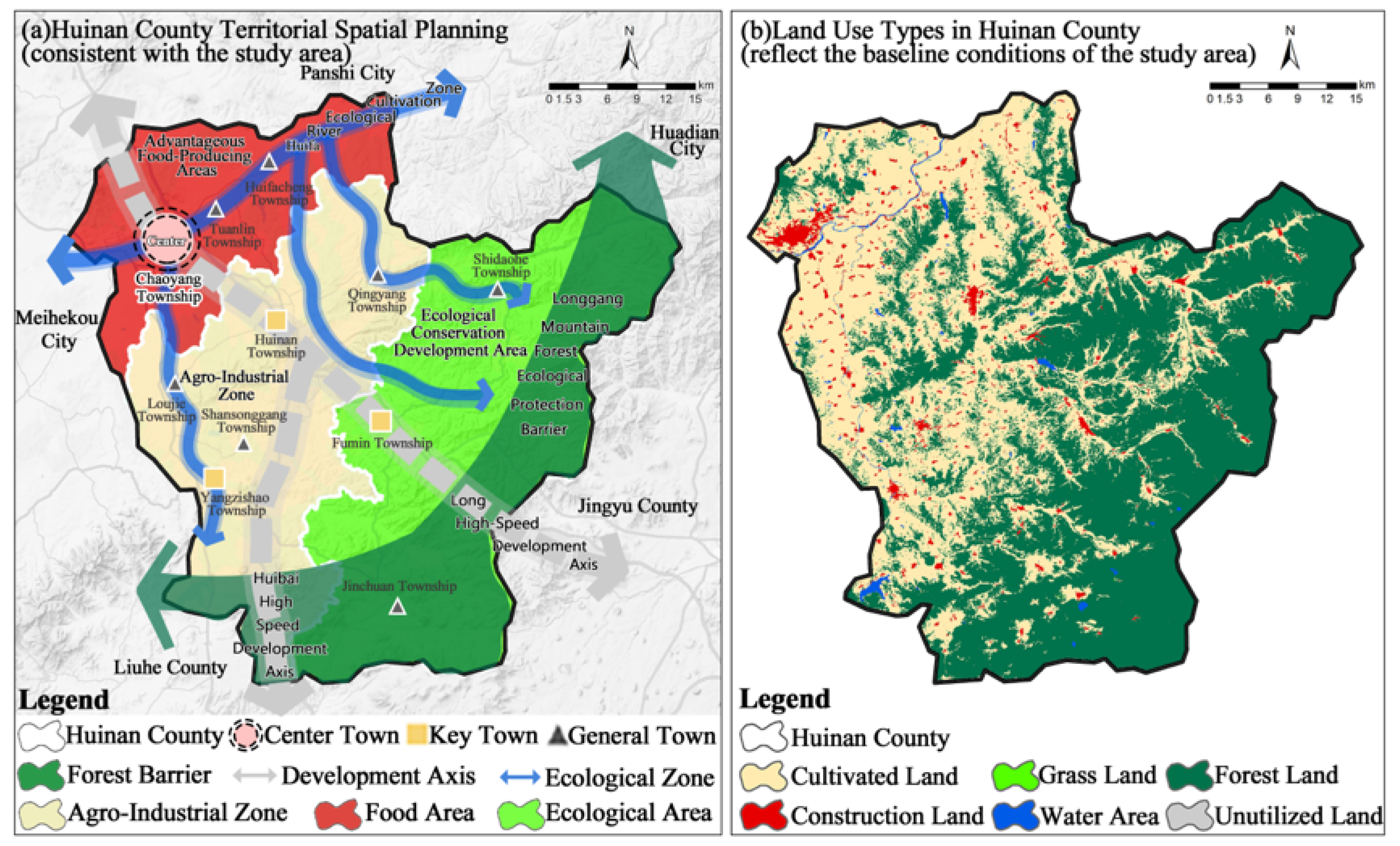
The land planning of Huinan County mainly puts forward the design concept of “one screen, one belt, multiple corridors, one center, two axes and three districts”. The county is the “Hometown of Green Rice in China”, with rice cultivation as the main agricultural activity. Combined with its land use analysis, the northwestern part of the county is an advantageous location for grain agriculture and the animal husbandry industry. In addition, Huinan County is focused on building an ecological sightseeing and leisure tourism resort area with the Longwan Group as the core, a historical relics and cultural tourism area, and a folklore and countryside tourism area. Meanwhile, the southeastern part of the county is an ecological protection and development area. In 2021, Huinan County was named a National Ecological Civilization Construction Demonstration Area by the Ministry of Ecology and Environment. With its unique natural ecological advantages, rich tourism resources and characteristic agricultural industries, Huinan County has high research value and development potential. We present the land use plan for Huinan County in Figure 2a, demonstrating that our research aligns with the region’s master plan. Part b in Figure 2 illustrates the current land use types. Through Figure 2, we present the research status of Huinan County, laying the foundation for subsequent planning evaluations.

2.2. Data Sources

The basic data for this study were mainly derived from basic geography, land cover, socioeconomic factors, and climatic and environmental factors (Table 1). For the sake of scientific and complete analysis, the final data were then processed accordingly in ArcGIS 10.8 (Table 2). The land use data originated from a dataset released by Professor Huang Xin’s team at the School of Remote Sensing and Information Engineering, Wuhan University. Coordinate system unification, resampling, and outlier removal for all influencing factors were completed within ArcGIS. The integrated analysis of ecological sensitivity was then obtained through the reclassification and raster calculator in ArcGIS, and the carbon storage content was visualized through the InVEST 3.9.0 model. We input land use type maps and localized carbon density parameters to compute and output spatial raster maps of county-level carbon stocks. Finally, the results of both analyses were superimposed and reclassified in ArcGIS to obtain a detailed planning and analytical figure for ecological protection in Huinan County. We performed a pixel-by-pixel overlay in ArcGIS using the spatial overlay analysis tool, combining the ecological sensitivity classification map with the carbon stock raster map. We conducted a secondary reclassification based on the “ecological sensitivity level + carbon stock range” combination rule (see Section 3 for details), delineating five categories of ecological conservation areas. The study culminated in the development of a detailed ecological conservation plan and spatial analysis map for Huinan County.

3. Method

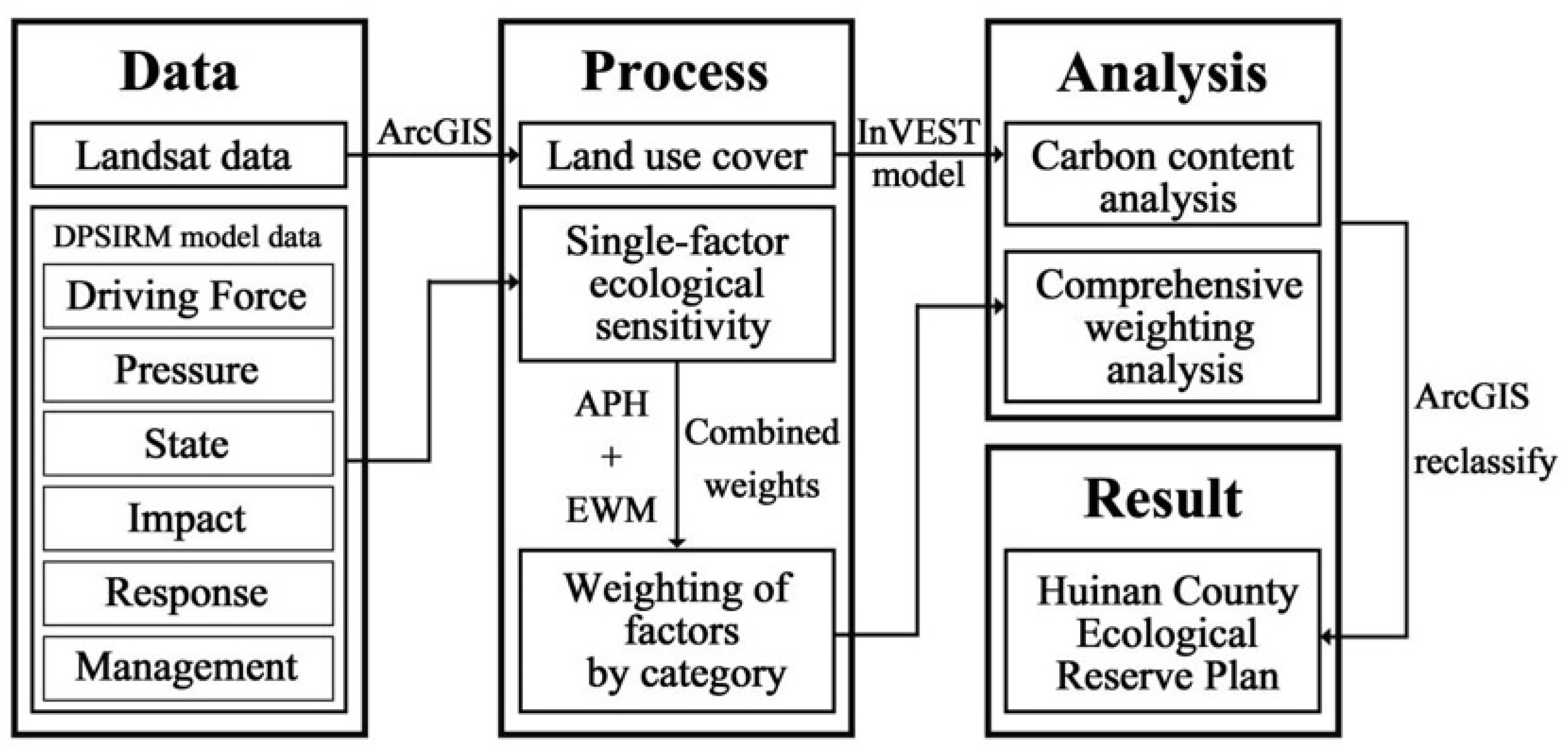
The research framework is shown in Figure 3. We employed the DPSIRM model to identify factors influencing Huinan County’s sensitivity, then used AHP and EWG to comprehensively analyze the weights of these factors. Subsequently, ArcGIS was applied to reclassify ecological sensitivity into five categories according to industry standards, meeting the requirements for precise management. The InVEST model was utilized to analyze carbon storage levels, which were further categorized into three tiers based on data characteristics and simplified coupling logic. We unified the spatial parameters for ecological sensitivity and carbon storage content. To avoid confusion, sensitivity values occupy the tens place while carbon storage levels occupy the ones place. We generated unique composite values through the calculation: “Sensitivity Level × 10 + Carbon Storage Level”. Finally, we screened corresponding values to identify five target categories, merged the raster images, and exported them for visualization. This reclassification ultimately achieves coupled spatial planning, integrating ecological sensitivity and carbon storage.

3.1. DPSIRM Framework Model

3.1.1. Constructing an Evaluation Indicator System

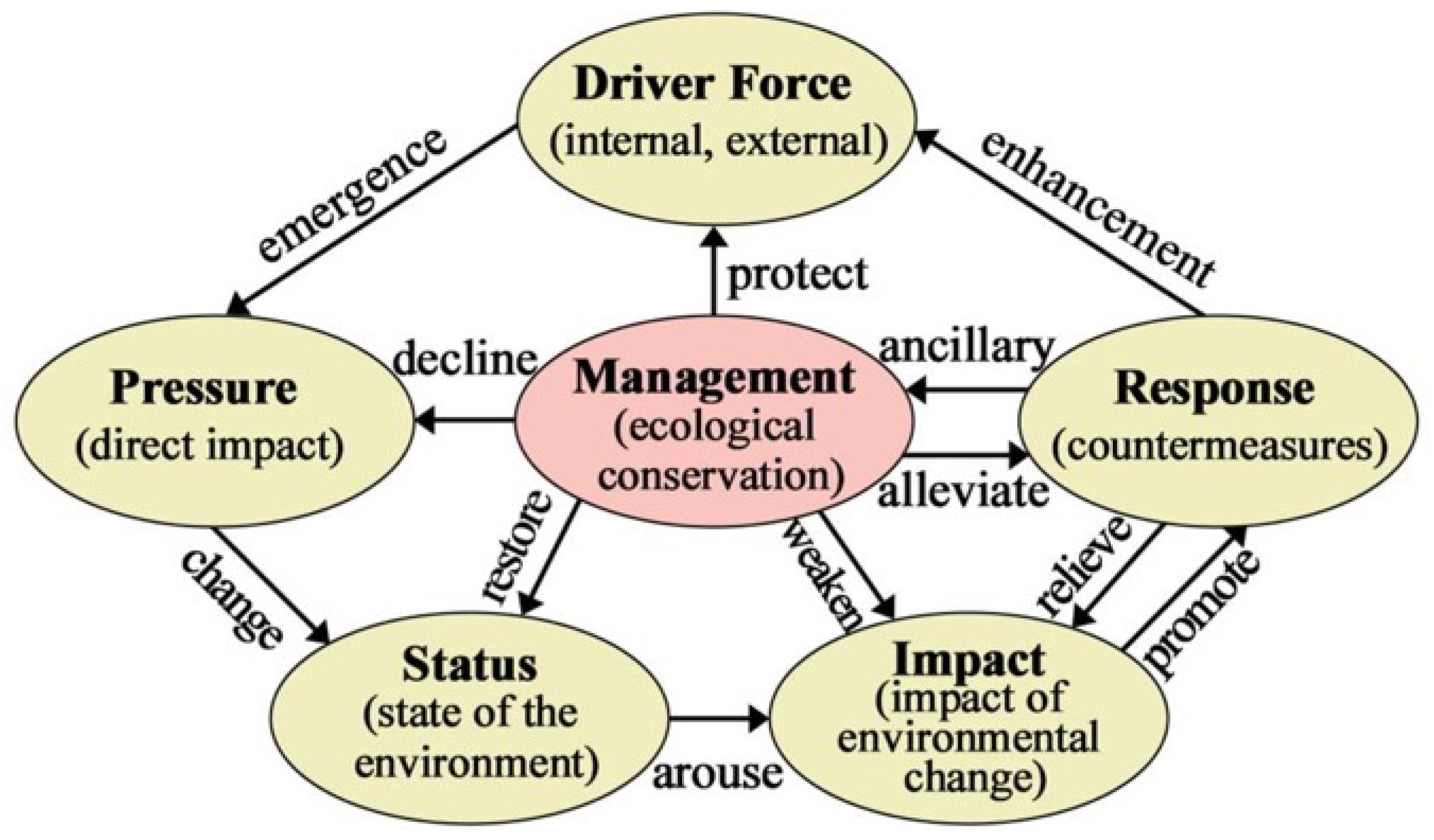
This study constructed an ecological sensitivity evaluation index system based on the DPSIRM framework. We refer to related studies [27,28,29,30] and combine the actual situation of Huinan County to comprehensively reflect the sensitivity characteristics of the ecosystem from multiple dimensions (Table 2). Driving force refers to external factors that trigger ecosystem changes; Pressure refers to the direct impact on the ecosystem; State refers to the current status and functional characteristics of the ecosystem; Impact refers to the response of ecosystems to human activities and natural changes; Response refers to human response to ecosystem change; Management refers to the protection and sustainable use of ecosystems through policies, regulations and management measures. These six indicators interact to influence each other (Figure 4).

3.1.2. Determination of Grading Criteria and Evaluation Methods

The ecological sensitivity of Huinan County is classified into five levels: insensitive, sensitive areas, moderately sensitive areas, highly sensitive areas, and extremely sensitive. This categorization has been made through comprehensive analyses and references to the ‘Environmental Protection Standards of the People’s Republic of China’, ‘Guidelines for the Delineation of the Ecological Red Line of Conservation’, and ‘Land Spatial Planning of Huinan County’ [31,32,33]. Most of the evaluation methods of ecological sensitivity use a single weighting method such as principal component analysis, hierarchical analysis, entropy weighting, and so on [34,35,36]. However, these methods are prone to bias in accuracy. Therefore, this study applied the combined weight calculation method of hierarchical analysis (AHP) and entropy weight method (EWM).
First, the judgment matrix of the hierarchical analysis method was constructed through expert consultation and literature research. Hierarchical analysis was applied to calculate the weights of the criterion layer and the indicator layer, respectively. This process employed a 1–9 scale to score the relative importance of each indicator, ultimately integrating all opinions to form the judgment matrix. The process was realized through Yaahp 10.0 software. After passing the consistency test, the weights of the criterion and indicator layers were multiplied to comprehensively calculate the AHP weights of each indicator [37,38].
Then, the entropy weight method was used to synthesize the EWM weights of each indicator [39,40]. The EWM weight calculation requires three steps to achieve objective data transformation. The first step involves standardizing raw data. Since different ecological sensitivity indicators possess varying dimensions and meanings, dimensional effects and directional differences must first be eliminated. For positive indicators where higher values indicate greater sensitivity, we compared each indicator’s raw data against its minimum and maximum values. Subsequently, all data were compressed into the 0–1 range, ensuring larger values represented a more significant contribution to sensitivity. For negative indicators where higher values indicate lower sensitivity, we applied inverse processing. We compressed the data into the 0–1 range, but larger values represented weaker suppression of sensitivity by the indicator. We ensured that after processing, the directional relationship between the magnitude of all indicators and ecological sensitivity remained consistent. The second step involves calculating the information entropy and coefficient of variation for each indicator. Information entropy measures the dispersion and discriminative power of indicator data. If all data points for an indicator show minimal variation, it cannot effectively distinguish sensitivity differences between regions, resulting in information entropy close to 1. Conversely, if data variations are large, the indicator demonstrates strong discrimination capability, with information entropy approaching 0. To more intuitively reflect an indicator’s contribution, information entropy is converted into a discrimination coefficient by subtracting 1 from the entropy value. Thus, the discrimination coefficient is obtained. A higher coefficient indicates that the indicator provides more effective information for ecological sensitivity assessment and exerts a more critical influence on evaluation outcomes. The third step is determining the objective EWM weights. Sum the discrimination coefficients of all indicators to obtain the total discrimination coefficient. Then, divide each indicator’s discrimination coefficient by this total sum. The resulting ratio is the EWM weight for that indicator. This process fundamentally assigns weights based on the actual data characteristics of the indicators. Indicators with high data discrimination and significant information contribution receive higher weights. Indicators with low data differentiation and minimal information contribution receive correspondingly lower weights. Ultimately, we must ensure that the sum of all indicators’ EWM weights equals 1. Simultaneously, weight allocation is entirely based on the objective characteristics of the data itself, avoiding interference from subjective experience.
Finally, we used the multiplication synthesis method in Equation (1); the integrated weights were calculated, and the percentage of all indicators is shown in Table 3. The choice of multiplicative synthesis over additive synthesis stems from the fact that multiplication amplifies the disparity between subjective and objective weights. If an indicator exhibits high subjective and objective weights, it indicates that it aligns with expert judgment while also demonstrating discriminative power through data. Consequently, the coupled weight will be further accentuated. If an indicator has a high subjective weight but a low objective weight (or vice versa), the coupled weight will be reduced, preventing the amplification of bias from a single dimension. After coupling is completed, the final weights undergo a rationality check. We calculated the coefficient of variation (CV = standard deviation/mean) for indicator weights within each criterion layer. Results showed all criterion layer CV values < 0.3, indicating balanced weight distribution among indicators within the same layer and no extreme outliers. This validates the reliability of the coupled weights.
w j * = w j v j w j v j
wj* is the final weight of the indicator for layer j, wj is the hierarchical analysis method weight of the level for layer j, and vj is the weight of the entropy weighting method for layer j.
After determining the weights of each ecological sensitivity factor, ArcGIS was used to generate an ecological sensitivity map. First, the coordinate systems and projections of all factors were unified. Then, the “Reclassify” tool was employed to classify each factor into 1–5 levels (ranging from insensitive to extremely sensitive). Specifically, we imported the raster data via the “Reclassify” tool in ArcGIS and selected the “Natural Breakpoint Method” as the classification scheme. The system automatically identifies optimal breakpoints within the dataset based on the natural distribution characteristics of index values through statistical algorithms. Aligning with research objectives and regional ecological management needs, we divided the composite index into five sensitivity levels. The software simultaneously outputs the corresponding index threshold ranges and the proportion of the total study area covered by each level. This calculation method objectively reflects the spatial differentiation patterns of the sensitivity index, ensuring the scientific and rational allocation of sensitive areas. Next, using the Spatial Analysis toolbox’s Raster Calculator, input the summation formula “Reclassified Factor Raster × Corresponding Weight” to compute the composite sensitivity index raster. Finally, reapply the Reclassify tool using the natural breakpoints method to divide the area into five sensitivity zones, thereby generating the spatial distribution map of ecological sensitivity.

3.2. InVEST Model

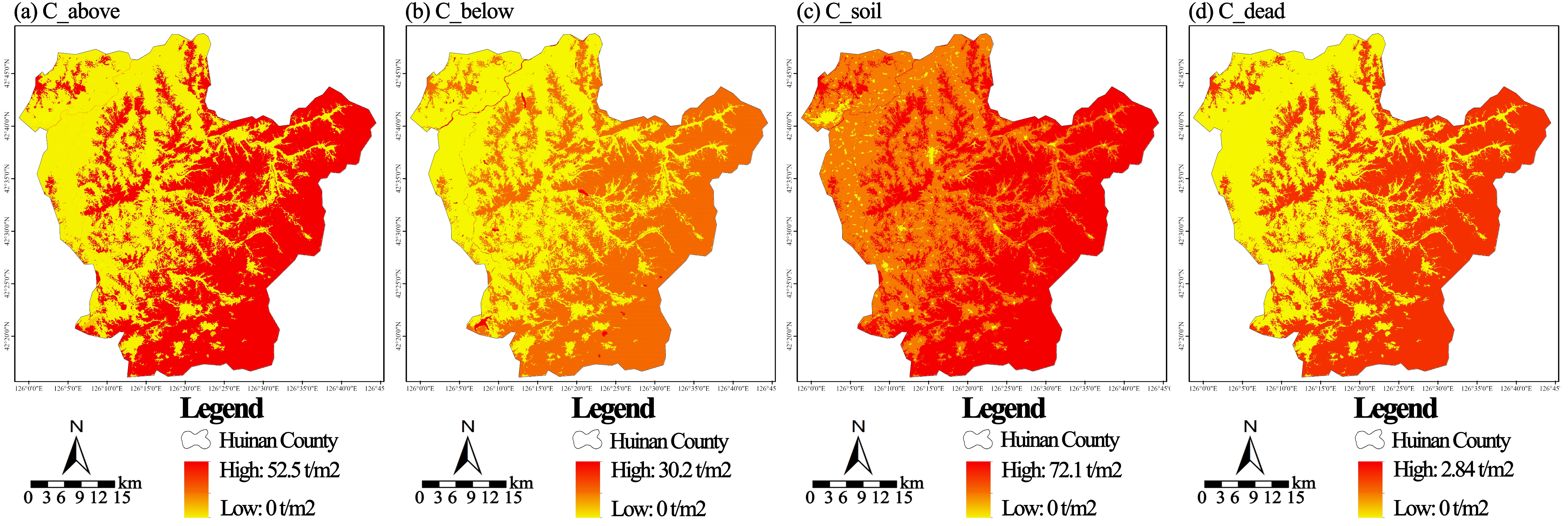
The InVEST model is a tool for valuing ecosystem services [9,41,42]. The model can quantitatively analyze the supply, demand, and trade-off relationships of ecosystem services. Firstly, the carbon density was comprehensively calculated through references to relevant literature [43,44,45] and utilizing data on climatic factors such as temperature and precipitation, as well as forest cover data from Huinan County (Table 4). The carbon density values for each land use type in Table 4 were calibrated using Huinan County meteorological data (temperature and precipitation) to ensure the localized applicability of the carbon density parameters. Secondly, the carbon density data of land use type data (Figure 2) processed with ArcGIS software were imported into the InVEST model. Finally, we ran the carbon stock module within the InVEST model to visualize the distribution of carbon stocks in Huinan County. We needed to input parameters such as land cover type, vegetation biomass, and soil organic carbon content. Simultaneously, we used the model’s built-in formula to calculate: Carbon Stock = Above-Ground Biomass Carbon + Below-Ground Biomass Carbon + Soil Organic Carbon + Litter Carbon. The core distinctions between above-ground vegetation carbon storage, below-ground carbon storage, soil carbon storage, and dead organic carbon lie in their carbon storage vehicles, forms, and turnover rates. Above-ground carbon is highly susceptible to vegetation type and logging disturbances, exhibiting rapid turnover. Below-ground carbon directly relates to root growth and soil interactions, demonstrating moderate stability. Soil carbon represents the largest carbon reservoir in terrestrial ecosystems, with the slowest turnover rate. Dead organic carbon serves as the critical link between vegetation and soil carbon pools, exhibiting turnover rates intermediate between vegetation and soil. The InVEST model selects these four carbon pools because they comprehensively cover the core components of terrestrial ecosystem carbon cycling. Their carbon storage encompasses both carbon fixation by living vegetation and long-term sequestration and transitional forms within soil. Furthermore, the classification of these four carbon pools aligns closely with the model’s carbon density parameterization logic based on land use types, meeting the core requirements for quantifying carbon stocks and optimizing spatial allocation in ecological planning.

3.3. Coupling Analysis of Ecological Sensitivity and the InVEST Model

This study deeply integrated ecological sensitivity with carbon storage through the following four steps. First, the weighted ecological sensitivity results were categorized into five levels according to industry standards (1 = insensitive, 2 = low sensitivity, 3 = medium sensitivity, 4 = high sensitivity, 5 = extremely high sensitivity). Simultaneously, the carbon storage values calculated by the InVEST model were simplified into three tiers based on data distribution characteristics and coupling logic (1 = low carbon storage, 2 = medium carbon storage, 3 = high carbon storage). The study completed the hierarchical standardization of both evaluation results. Second, spatial parameters were unified between the sensitivity level raster and the carbon storage tier raster. We ensured complete consistency in coordinate systems and raster resolutions to eliminate spatial matching errors. Third, a “tens-ones” binary coding rule was designed. Ecological sensitivity grades occupy the tens place, while carbon storage tiers occupy the ones place. We generated unique composite values using the formula “Sensitivity Level × 10 + Carbon Storage Tier”. For example, 11 represents “Low Sensitivity + Low Carbon Storage”, 53 represents “Very High Sensitivity + High Carbon Storage”, and 32 represents “Medium Sensitivity + Medium Carbon Storage”. Fourth, we screened five core target zones based on composite values. ArcGIS raster overlay analysis merged the two raster datasets. Secondary reclassification defined spatial boundaries and attribute characteristics for each coupled zone. This research ultimately produced a coupled spatial planning outcome integrating ecological sensitivity and carbon storage.

4. Result

4.1. Ecological Sensitivity Classification

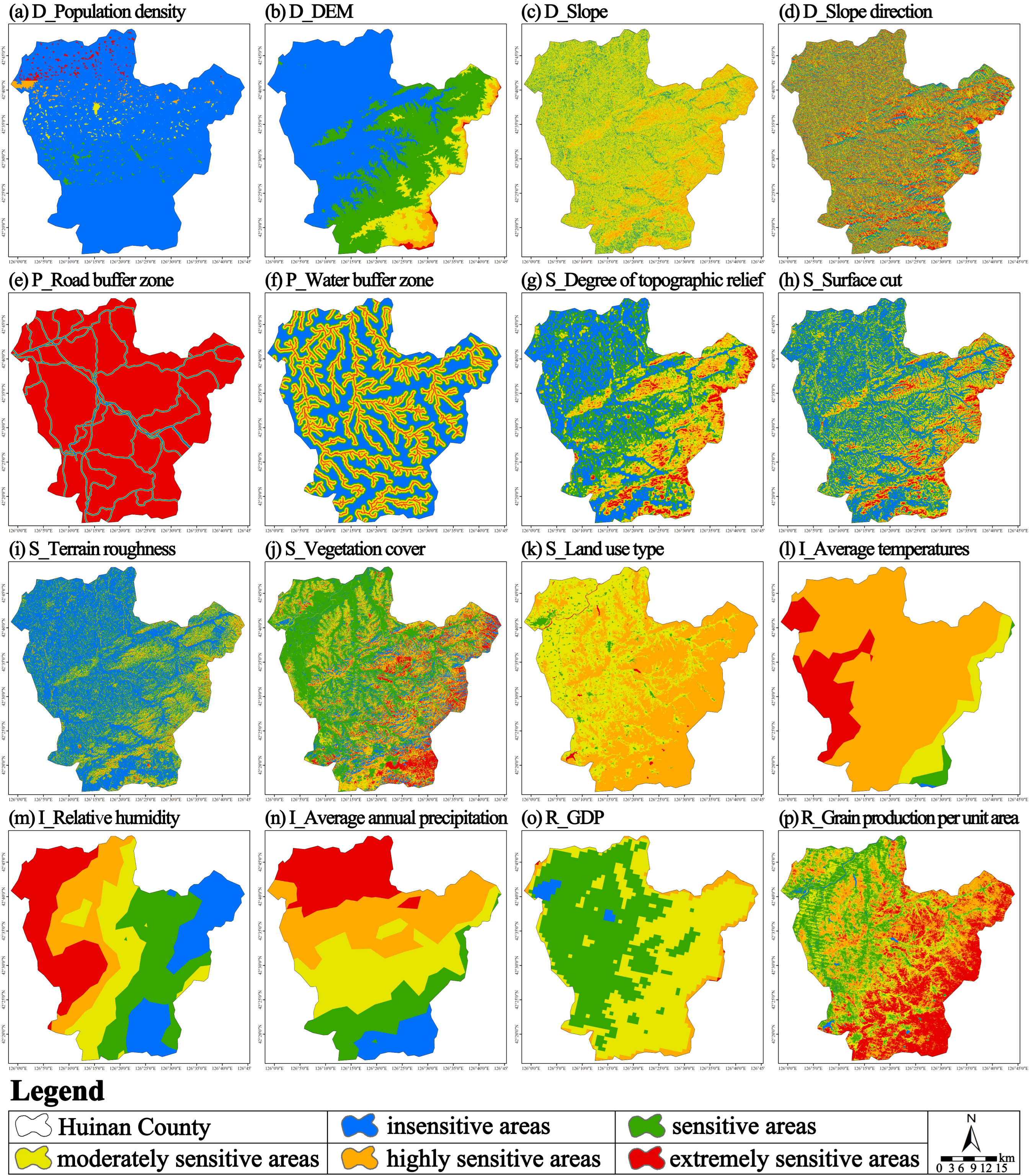
Based on the above research methods, the sensitivity changes of sixteen factors in Huinan County were analyzed separately. We unified the resolution of these sixteen factors to 30 m and the color of the ecological sensitivity zoning. Referring to related literature, the areas of this county were divided into five zones: insensitive areas, sensitive areas, moderately sensitive areas, highly sensitive areas, and extremely sensitive areas. The sensitivity proportions of these sixteen influencing factors are shown in Table 5.
Single-factor ecological sensitivity analysis revealed distinct core characteristics across different sensitivity levels (Figure 5). First, extremely sensitive areas are scattered across high-altitude zones of the Longgang Mountains and surrounding primary water sources. Terrain roughness and water source buffer zone impacts in these regions significantly exceed other areas. As the headwaters of the county’s major rivers, these high-elevation areas directly determine regional water ecological security. Their extreme sensitivity establishes them as critical baseline zones for safeguarding county-wide ecological security. Second, highly sensitive areas are concentrated within the Longwan Group National Forest Park and its surrounding mountains. Single-factor data indicate that these areas exhibit the county’s highest levels of terrain undulation, vegetation coverage, and terrain roughness. The high-altitude mountainous terrain results in poor structural stability of the ecosystem, while dense natural vegetation makes this area the core ecological function carrier zone within the county. This high sensitivity makes it a key area requiring priority ecological function protection. Third, moderately sensitive areas are primarily distributed in the transitional zone between towns and villages in the central part of the county. Based on single-factor indicators, this area has moderate levels of road buffer zones, cultivated land proportion, and population density. Human disturbances from transportation activities and minor soil disturbances from agricultural cultivation keep the ecosystem stable yet vulnerable to external impacts. Fourth, low-sensitivity areas are concentrated in the northwest grain-producing region. Single-factor analysis indicates this area features predominantly flat terrain, farmland-dominated vegetation cover, and relatively high population density. Flat terrain enhances the ecosystem’s resilience to disturbances, while long-term agricultural activities have resulted in relatively limited ecological functions. Fifth, insensitive areas primarily consist of built-up zones in the county government location and surrounding unused land. Single-factor indicators reveal these areas have the highest proportion of construction land and population density within the county, coupled with the lowest vegetation coverage and terrain complexity. Intense human activity has largely degraded natural ecological functions here. However, their location at the spatial core of the county—isolating the urban area from peripheral sensitive zones—enables these insensitive areas to serve as transitional buffers between urban development and ecological conservation. Thus, the current differentiation in single-factor ecological sensitivity provides direct evidence for functional zoning across ecological areas, based on dimensions such as topography, vegetation, and human activity. This variation clearly reflects the inherent attributes and spatial roles of ecosystems across different regions.
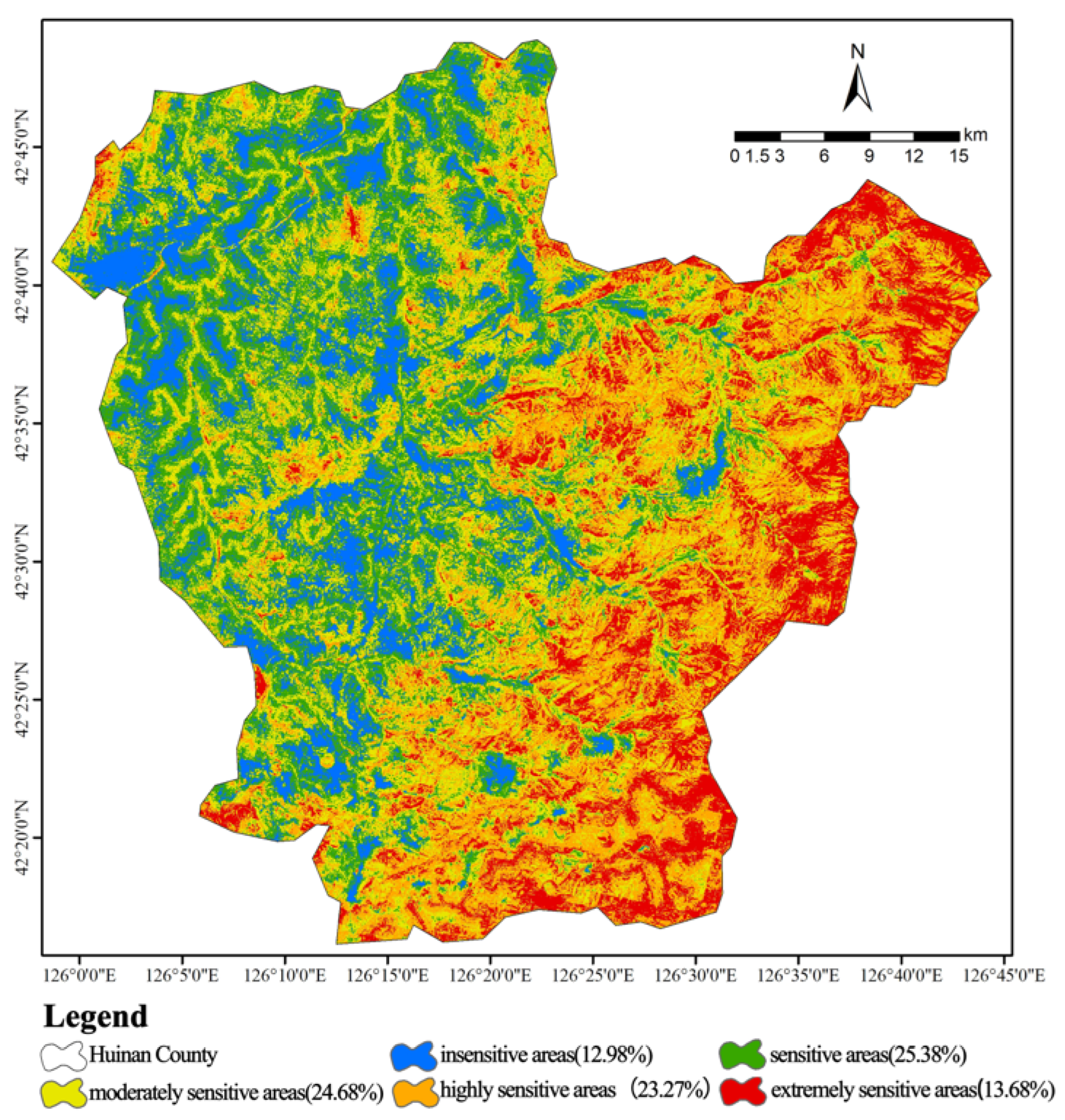
Next, this study examined 16 ecological sensitivity impact factors within the DPSIRM framework. Using ArcGIS weighting tools, all indicators were overlaid, and natural breakpoint methods were applied to reclassify the indicators (Figure 6). Among them, the insensitive areas are mainly distributed in the central area of the county and some zones where agricultural development is more concentrated, accounting for 12.98% of the total area of the county. These areas are characterized by frequent human activities and highly disturbed ecosystems, but have some potential for ecological recovery through rational planning and management. Sensitive areas are mostly located around the county and some rural areas with convenient transportation, accounting for 25.38%. The ecosystems in this area are affected by certain human activities, but the ecological structure is relatively stable and has a strong adaptive capacity to environmental changes. The moderately sensitive areas are widely distributed in the transition zones between the county town and the nature reserve, accounting for 24.68%. The ecosystems are more sensitive to human activities and natural changes, and the ecological vulnerability is gradually emerging, requiring appropriate protection measures. Highly sensitive areas are mainly concentrated around Longwan Group National Forest Park and some mountainous areas, accounting for 23.27%. The ecosystems in these areas are extremely sensitive to environmental changes, and their ecological functions are relatively fragile, requiring enhanced protection and ecological restoration. Extremely sensitive areas are distributed in the high mountain areas of the Longgang Mountains and around some water sources, accounting for 13.68%. Overall sensitivity exhibits a spatial pattern characterized by higher values in the southeast and lower values in the northwest. The ecosystems are extremely fragile and respond strongly to human activities and natural changes, making them a key area for ecological protection.

4.2. Carbon Stock Content Distribution

Based on the carbon content densities in Table 4, we obtained the above, below, soil, and dead carbon contents through the InVEST model, respectively (Figure 7). Above-ground carbon is stored in the above-ground parts of vegetation, primarily in the form of organic matter such as cellulose. Above-ground carbon storage has a relatively fast turnover rate, is sensitive to human disturbances and natural disturbances, and directly reflects regional vegetation growth conditions. Below-ground carbon is concentrated in plant roots and rhizomes, also existing as organic matter. However, protected by soil, it has a longer turnover cycle. Through root exudates and litter decomposition, it connects vegetation and soil carbon pools, aiding soil carbon sequestration. Soil carbon is sequestered within soil organic matter, primarily distributed in the topsoil and subsoil layers. Soil carbon storage represents the largest and most stable carbon reservoir in terrestrial ecosystems, characterized by extremely slow turnover. Its reserves are closely linked to soil texture and land use type, profoundly influencing soil fertility and ecological stability. Dead organic carbon, meanwhile, is stored in non-living organic matter such as litter, dead wood, and decaying roots. Dead organic carbon represents a transitional form between fresh organic matter and humus, exhibiting turnover rates intermediate between vegetation carbon and soil carbon. It serves as a crucial link connecting the vegetation carbon pool and the soil carbon pool, with its decomposition process directly influencing organic matter input into the soil carbon pool and atmospheric carbon release.
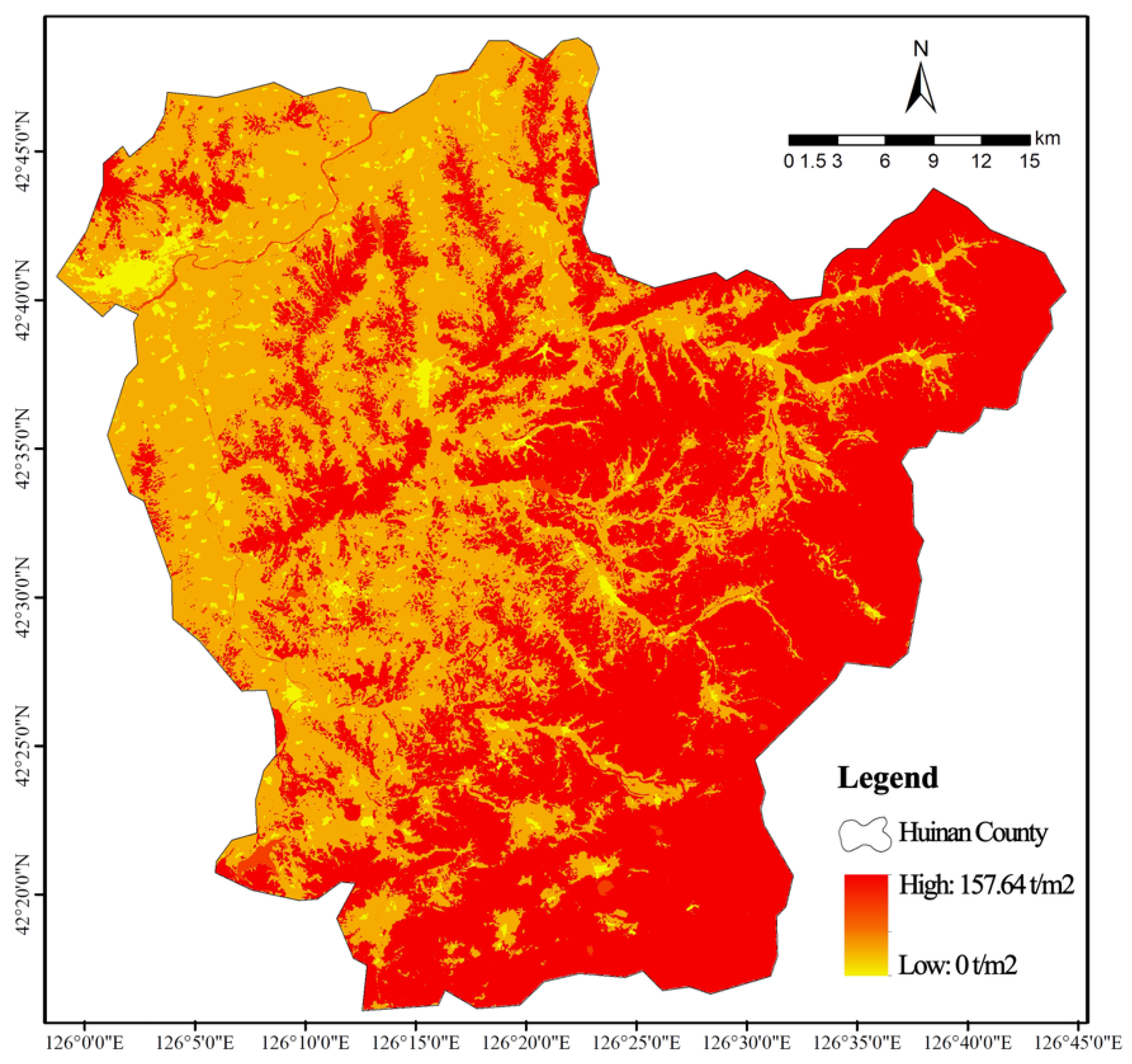
Finally, we obtained a visual figure of the overall carbon content distribution in Huinan County (Figure 8). Based on the results of the analysis of the InVEST model, the distribution of carbon storage in Huinan County showed obvious spatial differences. The areas with the highest carbon storage capacity are mainly concentrated in the southeast. The forest ecosystems and river basins in these areas provide important carbon sink functions for Huinan County. At the same time, they also play an important role in carbon fixation and storage. The regions with relatively low carbon storage capacity are mainly distributed in the food, agriculture and animal husbandry industry areas in the northwestern part of the country. On the one hand, the need for regular tillage in agricultural production accelerates the decomposition of soil organic matter and increases the risk of carbon pool loss. On the other hand, crops have shorter growth cycles, resulting in significantly lower total biomass accumulation compared to perennial forest vegetation. Additionally, agricultural ecosystems are dominated by herbaceous vegetation with shallow root systems. Consequently, the carbon storage capacity of this region is substantially weaker than that of deep-rooted forest vegetation. Although agricultural ecosystems have a limited capacity for carbon fixation, their carbon storage capacity can still be increased through rational agricultural management measures, such as conservation tillage and vegetation cover. The areas with the lowest carbon storage capacity are mainly located in counties and some undeveloped wastelands. The ecosystem service function of these areas is weak, and their carbon storage capacity is almost negligible.
The spatial distribution of carbon storage in Huinan County exhibited diverse patterns when combined with ecological sensitivity. Relying solely on carbon storage levels could not accurately guide conservation measures; comprehensive assessments have to integrate ecological sensitivity characteristics. Ecosystems in areas with high carbon stocks and high ecological sensitivity exhibit fragile structures, with carbon sink functions highly dependent on natural vegetation. Recovery from ecosystem damage is challenging. Ecosystems in areas with high carbon stocks and low ecological sensitivity exhibit strong disturbance resilience and maintain stable carbon storage. Ecosystems in areas with medium carbon stocks or moderate ecological sensitivity maintain relatively stable conditions and serve transitional functions. Ecosystems in areas with low carbon stocks and high ecological sensitivity possess weaker carbon sink capacity but represent critical regional ecological security nodes. Ecosystems in areas with low carbon stocks and low ecological sensitivity exhibit weaker natural ecological functions, with their carbon sink potential yet to be fully realized.

4.3. Ecological Protection Zone Delineation

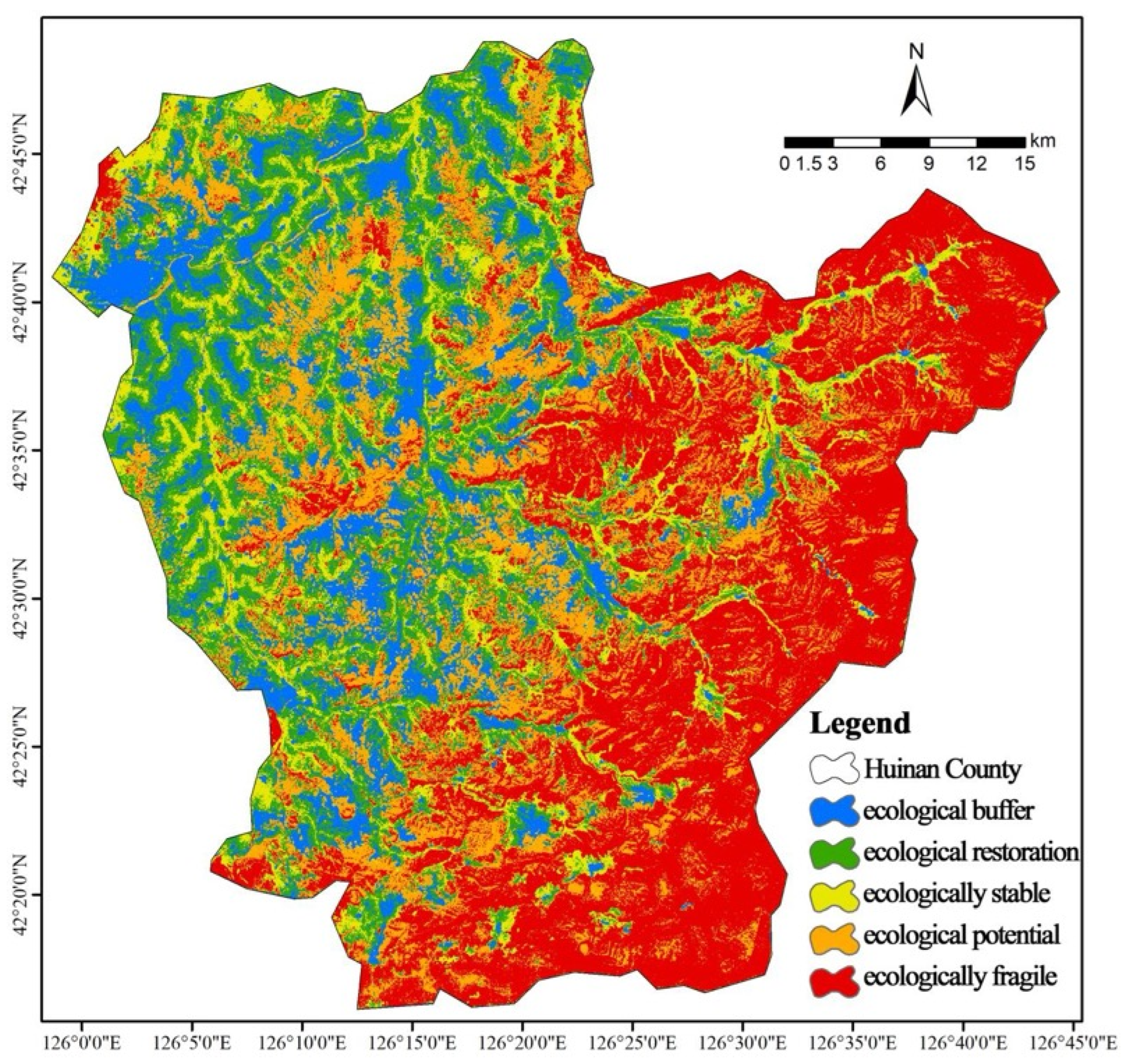
The study comprehensively superimposed the results of the comprehensive ecological sensitivity analysis and the analysis results of the InVEST model. Then, combining the current situation of Huinan County and ArcGIS reclassification, we proposed a division scheme of five ecological areas. These five ecological zones were divided into ecological buffer zone, ecological restoration zone, ecological stabilization zone, ecological potential zone, and ecological fragility zone (Figure 9).
Ecological buffer zones were distributed along major transportation corridors and both sides of water bodies, exhibiting low ecological sensitivity and carbon sequestration capacity. Ecological restoration zones featured high ecological sensitivity and weak carbon sequestration, with existing ecological degradation. Ecological stability zones maintained intact ecosystem structures, with both sensitivity and carbon stocks in stable conditions. Ecological potential zones were located in the low mountains and hills of the Longgang Range and agricultural transition zones, characterized by low ecological sensitivity and high carbon sequestration. Ecologically vulnerable zones were concentrated around forests and small wetlands, exhibiting high ecological sensitivity and carbon sequestration capacity, yet possessing fragile ecosystems.

5. Discussion

A single ecological sensitivity analysis or carbon stock content analysis cannot accurately classify various types of protected areas. Previous academic research on ecological assessment has predominantly focused on single dimensions or relied solely on the DPSIRM model for ecological sensitivity analysis [46,47]. While capable of identifying ecologically fragile areas, such approaches fail to link these findings to critical ecological functions like carbon storage. This one-dimensional perspective leads to zoning plans emphasizing conservation stability while neglecting functional value maintenance [48]. Furthermore, prior studies relied solely on the InVEST model to simulate the spatial distribution of carbon storage. While this approach clearly identifies high-value carbon sink areas, it fails to integrate ecological sensitivity assessments to evaluate regional disturbance resilience. This limitation risks overprotecting high-carbon zones—such as low-sensitivity plantation forests—while neglecting conservation in low-carbon areas, like highly sensitive water source areas with bare land. County-level ecological zoning studies also lack dual support for both stability and functional value. Therefore, conservation measures should be developed based on the five ecological regions identified in the plan.
Ecological buffer zones are mainly located around major transportation arteries and along the sides of water areas in Huinan County, which serves as a buffer against the impact of human activities on natural ecosystems. The ecological sensitivity and carbon sequestration in this area are relatively low. To a certain extent, these areas can alleviate the pressure of human activities on the ecosystem. However, due to urban expansion and transportation construction, the ecological function of some buffer zones has been degraded, and the vegetation cover has been reduced. In addition, the ecological function of this area has not been fully utilized and needs to be further optimized and upgraded. This type of area can be used as a buffer zone for the surrounding ecologically sensitive areas or high carbon sequestration areas. Although its carbon sequestration capacity is low, it can reduce the disturbance of human activities to the neighboring ecosystem through reasonable planning and management. We have formulated a corresponding plan for the ecological buffer zone. Referring to some ecological buffer zone related literature and policies [49,50,51], we can formulate the Regulations on the Protection of Ecological Buffer Zone in Huinan County. This regulation clarifies the scope, protection objectives and management measures of the ecological buffer zone. We can establish a special fund for ecological buffer zone protection, for vegetation restoration, and ecological corridor construction. At the same time, we can also carry out ecological monitoring to ensure that the ecological function of this area is effectively utilized. Finally, we need to limit unreasonable development activities to efficiently maximize the function of this area. We have established specific protective measures. A 50–100 m vegetation buffer zone will be created along both sides of major transportation corridors, planted with native trees such as larch and white birch. A 30 m no-build zone will be designated around water bodies, prohibiting industrial wastewater discharge and construction waste dumping. A quarterly ecological monitoring mechanism will be implemented, utilizing drone remote sensing to track vegetation coverage and water quality changes.
Ecological restoration zones have high ecological sensitivity but relatively low carbon sequestration. This region may face serious ecological degradation problems and needs to be prioritized for ecological restoration. For Huinan County, the main focus is on the area where ecological functions are degraded due to over-cultivation by humans. This area has low vegetation cover, loss of biodiversity and declining ecosystem services. However, these areas have higher food production. For ecological restoration zones, we can appropriately increase their vegetation cover by planting trees to improve soil taxing capacity and carbon sequestration capacity. We can also implement ecological restoration projects and treat polluted areas. However, it is important not to over-return farmland to forest, and it is also necessary to ensure food production in this area. We can set the size of the area to be cultivated by farmers. At the same time, the local government needs to regularly assess the effect of ecological restoration and adjust the restoration measures in time. We have established specific protective measures. We can implement pilot programs for converting farmland back to forests and grasslands, planting soil-stabilizing vegetation in areas with slopes exceeding 15 degrees. Concurrently, we will construct ecological corridors in farmland, establishing 10-m-wide herbaceous buffer strips every 500 m. The government will allocate ecological compensation funds and provide corresponding subsidies to farmers who adopt conservation tillage practices.
Ecologically stable areas are mainly located in areas with a relatively complete ecosystem structure, including areas with stable ecological sensitivity or stable carbon sequestration. The ecosystems in these areas are relatively stable, with no obvious changes in carbon sequestration capacity. However, the stability of their ecosystems still faces certain threats due to the indirect impacts of human activities. We still need to protect them to maintain their ecological functions. The sensitivity or carbon storage content of an ecological stability area tends toward a steady state. We need to maintain the existing ecological balance in such areas and prevent ecosystem degradation. Government departments need to strengthen monitoring and early warning of changes in ecosystems and enhance regional ecological law enforcement. We have established specific protective measures. Relevant departments have implemented a dynamic monitoring system for ecological red lines and conduct annual ecological function assessments. Strict controls are imposed on the expansion of construction land within the area, and new construction projects must undergo ecological impact assessments. We encourage the development of ecological agriculture, promote the use of organic fertilizers to replace chemical fertilizers, and reduce nonpoint source pollution.
Ecosystem functions in ecological potential areas are not yet fully realized. This type of area has relatively low ecological sensitivity and high carbon sequestration. These areas are mainly located in the low hills of the Longgang Mountain Range and some agricultural transition areas, and they have greater ecological potential. The ecosystems in these areas are relatively healthy. We further optimize management measures for ecological potential areas to enhance their ecological benefits and unlock their carbon sequestration potential. The government can develop eco-friendly industries, such as ecological agriculture and tourism. Thus, we can realize the synergy between ecological protection and economic development in Huinan County. We have established specific protective measures. We are developing a “forest wellness + eco-agriculture” tourism route, limiting daily visitor capacity to ≤500 people. In low-mountain and hilly areas, we are promoting the cultivation of economic forests to enhance carbon storage and economic benefits. We are establishing a carbon sink trading pilot program, incorporating newly added carbon storage into the regional carbon trading market.
Ecologically fragile areas are mainly located in areas with more fragile ecosystem structures and functions. These areas have high ecological sensitivity and carbon sequestration, and are mostly surrounded by forests and some small wetlands. Although the amount of sequestered carbon is increasing, the ecosystems are still fragile and vulnerable to external disturbances. We need to strengthen ecological and environmental protection in ecologically fragile areas. We need to strengthen the ecological monitoring and protection of such areas to avoid degradation of the ecosystem due to external disturbances. The government needs to strengthen the protection and management of ecologically fragile areas by establishing ecological protection zones and strictly limiting human activities. Through these means, the stability and integrity of ecosystems can be ensured. We have established specific protective measures. Core protection zones and buffer zones have been designated, with access restricted to scientific research personnel only. Forest fire monitoring stations equipped with infrared surveillance devices have been set up. An ecological resettlement program is being implemented to gradually relocate residents within a 5-kilometer radius of the core zone to centralized urban resettlement areas.
This study provides precise support for ecological conservation and sustainable development in Huinan County. First, the spatial coupling characteristics of ecological sensitivity and carbon storage levels have defined a regional ecological governance pattern of “southeast protection, northwest enhancement, and central buffer”. Second, the functional positioning of five types of ecological conservation areas resolves the contradictions inherent in traditional zoning approaches—either “overemphasizing protection at the expense of utilization” or “overemphasizing development at the expense of ecology”. The study achieves synergistic ecological and economic benefits. Furthermore, the quantified sensitivity levels, carbon stock levels, and coupling relationships across regions provide a quantitative basis for developing differentiated management measures, avoiding a “one-size-fits-all” approach to conservation. However, the study also has limitations. First, the data span is relatively short, primarily relying on current status data without incorporating long-term time series data. Second, the method for determining indicator weights has room for optimization. Although our AHP and EWM balance subjective and objective weights, we did not employ machine learning methods such as random forests for cross-validation, which may affect result stability. Third, the absence of quantitative cost–benefit analysis for conservation measures limits the framework’s ability to provide actionable guidance to local governments regarding cost control and benefit trade-offs. These limitations point to future research directions aimed at enhancing the scientific rigor and practical applicability of the ecological zoning framework.

6. Conclusions

This study focused on Huinan County, a typical agricultural county in Jilin Province. Addressing its ecological degradation and insufficient carbon sink capacity, we innovatively coupled ecological sensitivity analysis with the InVEST model analysis to provide scientific support for regional ecological conservation planning and sustainable development. Key findings include: (1) Huinan County exhibits a spatial pattern of ecological sensitivity characterized by “higher values in the southeast and lower values in the northwest”. Using the natural breakpoint method, the area is divided into five categories: extremely sensitive (13.68%), highly sensitive (23.27%), moderately sensitive (24.68%), low sensitivity (25.38%), and insensitive (12.98%). These zones are concentrated in the high-altitude areas of Longgang Mountain, the periphery of Longwan Group National Forest Park, urban–rural transition zones, the northwest grain-producing region, and urban built-up areas. (2) Significant spatial heterogeneity in carbon stocks was observed. High-value carbon storage areas are concentrated in southeastern forests and watersheds, medium-value areas are located in the transition zone between plantation forests and farmland, while low-value areas are distributed in the northwest agricultural zone and urban built-up areas. (3) Based on a coupled analysis of ecological sensitivity and carbon storage, combined with regional land use patterns and conservation needs, we delineated five protection zones: ecological buffer zones, ecological restoration zones, ecological stability zones, ecological potential zones, and ecologically vulnerable zones. Each zone has a clear designation, collectively forming the spatial framework for ecological conservation and sustainable development at the county level. However, this study has limitations, including a relatively short data time span, room for improvement in the method for determining indicator weights, and the absence of quantitative cost–benefit analysis for conservation measures. Future improvements could include integrating the PLUS model to enhance dynamic simulation, introducing random forest models to optimize evaluation methods, and establishing input–output frameworks for quantitative cost–benefit studies. Based on this research, we have clarified the spatial characteristics and coupling relationship between ecological sensitivity and carbon storage in Huinan County. The coupling analysis framework developed in this study provides a replicable and scalable methodological reference for ecological assessment and sustainable development in similar agricultural counties.

Author Contributions

Conceptualization, J.T. and X.S.; methodology, J.T.; software, J.T.; validation, J.T. and X.S.; formal analysis, J.T.; investigation, J.T. and X.S.; resources, K.Z. and H.Z.; data curation, J.T.; writing—original draft preparation, J.T. and X.S.; writing—review and editing, K.Z. and H.Z.; visualization, J.T.; supervision, K.Z. and H.Z.; project administration, K.Z. and H.Z.; funding acquisition, K.Z. and H.Z. All authors have read and agreed to the published version of the manuscript.

Funding

This research received no external funding.

Data Availability Statement

The data that support the findings of this study are available from the corresponding author upon reasonable request.

Conflicts of Interest

The authors declare no conflict of interest.

References

  1. Harris, J.A.; Hobbs, R.J.; Higgs, E.; Aronson, J. Ecological restoration and global climate change. Restor. Ecol. 2006, 14, 170–176. [Google Scholar] [CrossRef]
  2. Seabrook, L.; McAlpine, C.A.; Bowen, M.E. Restore, repair or reinvent: Options for sustainable landscapes in a changing climate. Landsc. Urban Plan. 2011, 100, 407–410. [Google Scholar] [CrossRef]
  3. Lu, F.; Hu, H.F.; Sun, W.J.; Zhu, J.J.; Liu, G.B.; Zhou, W.M.; Zhang, Q.F.; Shi, P.L.; Liu, X.P.; Wu, X.; et al. Effects of national ecological restoration projects on carbon sequestration in China from 2001 to 2010. Proc. Natl. Acad. Sci. USA 2018, 115, 4039–4044. [Google Scholar] [CrossRef] [PubMed]
  4. Wei, M.Q.; Du, C.; Wang, X.G. Analysis and Forecast of Land Use and Carbon Sink Changes in Jilin Province, China. Sustainability 2023, 15, 14040. [Google Scholar] [CrossRef]
  5. Rosalina, P.D.; Dupre, K.; Wang, Y. Rural tourism: A systematic literature review on definitions and challenges. J. Hosp. Tour. Manag. 2021, 47, 134–149. [Google Scholar] [CrossRef]
  6. Fu, Y.J.; Shi, X.Y.; He, J.; Yuan, Y.; Qu, L.L. Identification and optimization strategy of county ecological security pattern: A case study in the Loess Plateau, China. Ecol. Indic. 2020, 112, 106030. [Google Scholar] [CrossRef]
  7. Dai, X.; Li, Z.; Lin, S.; Xu, W. Assessment and zoning of eco-environmental sensitivity for a typical developing province in China. Stoch. Environ. Res. Risk Assess. 2012, 26, 1107. [Google Scholar] [CrossRef]
  8. Kap Yücel, S.D. Multifactor sensitivity assessment for spatial planning in Izmir, Turkey. Urbani. Izziv. 2023, 34, 73–86. [Google Scholar] [CrossRef]
  9. Nel, L.; Boeni, A.F.; Prohászka, V.J.; Szilágyi, A.; Kovács, E.T.; Pásztor, L.; Centeri, C. InVEST Soil Carbon Stock Modelling of Agricultural Landscapes as an Ecosystem Service Indicator. Sustainability 2022, 14, 9808. [Google Scholar] [CrossRef]
  10. Xu, K.; Li, R.; Liu, M.; Cao, Y.; Yang, J.; Wei, Y. Analysis of Carbon Storage Changes in the Chengdu–Chongqing Region Based on the PLUS-InVEST-MGWR Model. Land 2025, 14, 1651. [Google Scholar] [CrossRef]
  11. Chen, J.; Wang, S.S.; Zou, Y.T. Construction of an ecological security pattern based on ecosystem sensitivity and the importance of ecological services: A case study of the Guanzhong Plain urban agglomeration, China. Ecol. Indic. 2022, 136, 108688. [Google Scholar] [CrossRef]
  12. Hu, X.J.; Ma, C.M.; Huang, P.; Guo, X. Ecological vulnerability assessment based on AHP-PSR method and analysis of its single parameter sensitivity and spatial autocorrelation for ecological protection? A case of Weifang City, China. Ecol. Indic. 2021, 125, 107464. [Google Scholar] [CrossRef]
  13. Jia, Q.Q.; Jiao, L.M.; Lian, X.H.; Wang, W.L. Linking supply-demand balance of ecosystem services to identify ecological security patterns in urban agglomerations. Sustain. Cities Soc. 2023, 92, 104497. [Google Scholar] [CrossRef]
  14. Zhang, Y.L.; Zhao, Z.Y.; Yang, Y.Y.; Fu, B.J.; Ma, R.M.; Lü, Y.H.; Wu, X. Identifying ecological security patterns based on the supply, demand and sensitivity of ecosystem service: A case study in the Yellow River Basin, China. J. Environ. Manag. 2022, 315, 115158. [Google Scholar] [CrossRef] [PubMed]
  15. Zhang, X.Y.; Liu, K.; Wang, S.D.; Wu, T.X.; Li, X.K.; Wang, J.N.; Wang, D.C.; Zhu, H.T.; Tan, C.; Ji, Y.H. Spatiotemporal evolution of ecological vulnerability in the Yellow River Basin under ecological restoration initiatives. Ecol. Indic. 2022, 135, 108586. [Google Scholar] [CrossRef]
  16. He, C.Y.; Zhang, D.; Huang, Q.X.; Zhao, Y.Y. Assessing the potential impacts of urban expansion on regional carbon storage by linking the LUSD-urban and InVEST models. Environ. Model. Softw. 2016, 75, 44–58. [Google Scholar] [CrossRef]
  17. Wang, R.Y.; Mo, X.Y.; Ji, H.; Zhu, Z.; Wang, Y.S.; Bao, Z.L.; Li, T.H. Comparison of the CASA and InVEST models’ effects for estimating spatiotemporal differences in carbon storage of green spaces in megacities. Sci. Rep. 2024, 14, 5456. [Google Scholar] [CrossRef]
  18. Gao, M.W.; Hu, Y.C.; Bai, Y.P. Construction of ecological security pattern in national land space from the perspective of the community of life in mountain, water, forest, field, lake and grass: A case study in Guangxi Hechi, China. Ecol. Indic. 2022, 139, 108867. [Google Scholar] [CrossRef]
  19. Ruan, W.Q.; Li, Y.Q.; Zhang, S.N.; Liu, C.H. Evaluation and drive mechanism of tourism ecological security based on the DPSIR-DEA model. Tour. Manag. 2019, 75, 609–625. [Google Scholar] [CrossRef]
  20. Patricio, J.; Elliott, M.; Mazik, K.; Papadopoulou, K.N.; Smith, C.J. DPSIR-Two Decades of Trying to Develop a Unifying Framework for Marine Environmental Management? Front. Mar. Sci. 2016, 3, 177. [Google Scholar] [CrossRef]
  21. Liu, C.L.; Li, W.L.; Xu, J.; Zhou, H.K.; Li, C.H.; Wang, W.Y. Global trends and characteristics of ecological security research in the early 21st century: A literature review and bibliometric analysis. Ecol. Indic. 2022, 137, 108734. [Google Scholar] [CrossRef]
  22. Zhang, Y.; Liao, X.Y.; Sun, D.Q. A Coupled InVEST-PLUS Model for the Spatiotemporal Evolution of Ecosystem Carbon Storage and Multi-Scenario Prediction Analysis. Land 2024, 13, 509. [Google Scholar] [CrossRef]
  23. Manning, P.; van der Plas, F.; Soliveres, S.; Allan, E.; Maestre, F.T.; Mace, G.; Whittingham, M.J.; Fischer, M. Redefining ecosystem multifunctionality. Nat. Ecol. Evol. 2018, 2, 427–436. [Google Scholar] [CrossRef] [PubMed]
  24. Li, J.H. Research on the Sustainable Development in Forestry in Huinan Country, Jilin Province. 2000. Available online: https://www.doc88.com/p-7387013310987.html (accessed on 14 May 2025).
  25. Guo, Y.H.; Tong, L.J.; Mei, L. Spatiotemporal characteristics and influencing factors of agricultural eco-efficiency in Jilin agricultural production zone from a low carbon perspective. Environ. Sci. Pollut. Res. 2022, 29, 29854–29869. [Google Scholar] [CrossRef]
  26. Li, Y.; Yao, S.; Jiang, H.; Wang, H.; Ran, Q.; Gao, X.; Ding, X.; Ge, D. Spatial-Temporal Evolution and Prediction of Carbon Storage: An Integrated Framework Based on the MOP–PLUS–InVEST Model and an Applied Case Study in Hangzhou, East China. Land 2022, 11, 2213. [Google Scholar] [CrossRef]
  27. Sun, D.L.; Wu, J.P.; Zhang, F.T.; Su, W.C.; Hui, H. Evaluating Water Resource Security in Karst Areas Using DPSIRM Modeling, Gray Correlation, and Matter-Element Analysis. Sustainability 2018, 10, 3934. [Google Scholar] [CrossRef]
  28. Cheng, W.M.; Zhu, J.; Zeng, X.C.; You, Y.; Li, X.T.; Wu, J. Water Resources Carrying Capacity Based on the DPSIRM Framework: Empirical Evidence from Shiyan City, China. Water 2023, 15, 3060. [Google Scholar] [CrossRef]
  29. Yang, L.; Hao, Y.R.; Wang, B.; Li, X.Y.; Gao, W.F. Evaluation of the water resources carrying capacity in Shaanxi Province based on DPSIRM-TOPSIS analysis. Ecol. Indic. 2025, 173, 113369. [Google Scholar] [CrossRef]
  30. Sun, C.; Wang, X.P.; Zhang, Y.F. Ecological health assessment of an arid basin using the DPSIRM model and TOPSIS-A case study of the Shiyang River basin. Ecol. Indic. 2024, 161, 111973. [Google Scholar] [CrossRef]
  31. National Environmental Protection Standard of the People’s Republic of China. HJ 589-2010 Technical Specifications for Emergency Monitoring of Sudden Environmental Incidents. Environ. Prot. Oil Gas Fields 2011, 21, 53–59. [Google Scholar]
  32. Meng, Y. Research on Optimizing the Management of Ecological Protection Redlines in China’s New Era. Jilin University, 2024. Available online: https://d.wanfangdata.com.cn/thesis/D03507682 (accessed on 4 April 2025).
  33. Zheng, H.; Zhao, J.; Li, Y.; Gou, H.; Wang, G. Ecological Sensitivity Assessment of the Northern Foothills of the Qinling Mountains Based on the DPSIRM and PLUS Models. J. Agric. Eng. 2024, 40, 244–252. [Google Scholar]
  34. Wan, B.T.; Bao, X.Y.; Zhao, J.C. Evaluation Method and Application of Ecological Sensitivity of Intercity Railway Network Planning. Sustainability 2022, 14, 804. [Google Scholar] [CrossRef]
  35. Kang, J.F.; Dong, W.Q.; Liu, T.; Fang, L. Exploring ecosystem sensitivity patterns in China: A quantitative analysis using the Importance-Vulnerability-Sensitivity framework and neighborhood effects method. Ecol. Indic. 2024, 167, 112623. [Google Scholar] [CrossRef]
  36. Wu, D.; Chen, D.K.; Tang, L.N.; Shao, G.F. A comprehensive assessment of ecological sensitivity for a coal-fired power plant in Xilingol, Inner Mongolia. Int. J. Sustain. Dev. World Ecol. 2017, 24, 420–426. [Google Scholar] [CrossRef]
  37. Ding, L.H. Research on estimation of slope stability based on improved grey correlation analysis and analytic hierarchy process. Rock Soil Mech. 2011, 32, 3437–3441. [Google Scholar]
  38. Li, S.; Qiu, W.; Zhao, Q.-L.; Liu, Z.-M. Applying analytical hierarchy process to assess eco-environment quality of Heilongjiang province. Huanjing Kexue 2006, 27, 1031–1034. [Google Scholar] [PubMed]
  39. Li, S.; Wei, H.; Ni, X.-L.; Gu, Y.-W.; Li, C.-X. Evaluation of urban human settlement quality in Ningxia based on AHP and the entropy method. J. Appl. Ecol. 2014, 25, 2700–2708. [Google Scholar]
  40. Yao, Z.; Hui, G.; Xin-Jie, W.; Yue-Xin, C.; Gui-Mei, Z.; Zi-Ye, Y.; Hui-Nan, W.; Pei-Hua, W.; Meng-Yu, C.; Ying-Zi, W. Application research of entropy weight-based grey systematic theory in quality evaluation of Angelicae Sinensis Radix slices. China J. Chin. Mater. Medica 2020, 45, 5200–5208. [Google Scholar] [CrossRef]
  41. Kim, J.Y.; Min, D.; Yoo, G.; Park, Y.L.; Sung, K.; Kim, B.W. Evaluation of Grassland Carbon Storage in Gangwon Province Using the InVEST Model and Application of Land Cover Maps. J. Korean Soc. Grassl. Sci. 2024, 44, 301–311. [Google Scholar]
  42. Guo, Z.; Sharma, H.; Jadav, M.; Hettiarachchi, U.; Guha, C.; Zhang, W.; Priyadarshini, P.; Meinzen-Dick, R.S. Measuring above-ground carbon stock using spatial analysis and the InVEST model: Application in the Thoria Watershed, India. Environ. Res. Commun. 2024, 6, 115036. [Google Scholar] [CrossRef]
  43. Wan, D.; Liu, J.; Zhao, D. Assessment of Carbon Storage under Different SSP-RCP Scenarios in Terrestrial Ecosystems of Jilin Province, China. Int. J. Environ. Res. Public Health 2023, 20, 3691. [Google Scholar] [CrossRef] [PubMed]
  44. Wang, Y.F.; Li, M.Y.; Jin, G.Z. Exploring the optimization of spatial patterns for carbon sequestration services based on multi-scenario land use/cover changes in the changchun-Jilin-Tumen region, China. J. Clean. Prod. 2024, 438, 140788. [Google Scholar] [CrossRef]
  45. Li, Y.X.; Liu, Z.S.; Li, S.J.; Li, X. Multi-Scenario Simulation Analysis of Land Use and Carbon Storage Changes in Changchun City Based on FLUS and InVEST Model. Land 2022, 11, 647. [Google Scholar] [CrossRef]
  46. Zhou, J.; Wang, X.; Lu, D.; Dan, S.F.; Kang, Z.; Xu, Y.; Weng, P.; Wei, Z. Ecological security assessment of Qinzhou coastal zone based on Driving forces-Pressure-State-Impact-Response (DPSIR) model. Front. Mar. Sci. 2022, 9, 1009897. [Google Scholar] [CrossRef]
  47. Zhang, X.; Zhang, C.; Chen, X.; Su, P. Evaluation of the vulnerability of Huanghe estuary coastal wetlands to marine oil spill stress. Front. Mar. Sci. 2024, 11, 1481868. [Google Scholar] [CrossRef]
  48. Chang, Z.; Wang, J.; Xiong, X.; Jiang, J.; Wu, J.; Chen, S.; Li, J.; Zhang, S.; Ji, G.; Qian, B. Integrating PLUS and InVEST model to project carbon dynamics in China’s yellow river basin under multi-scenarios (1980–2100). Front. Earth Sci. 2025, 13, 1684333. [Google Scholar] [CrossRef]
  49. Kim, M.; Yeob, K.D. A Study on the Establishment of the Standard for Buffering Region in Railway Development Areas. Ecol. Resilient Infrastruct. 2018, 5, 45–53. [Google Scholar] [CrossRef]
  50. Burger, J.; Gochfeld, M.; Brown, K.G.; Ng, K.; Cortes, M.; Kosson, D. The importance of recognizing Buffer Zones to lands being developed, restored, or remediated: On planning for protection of ecological resources. J. Toxicol. Environ. Health Part A Curr. Issues 2024, 87, 133–149. [Google Scholar] [CrossRef]
  51. Mander, Ü.; Kuusemets, V.; Hayakawa, Y. Purification processes, ecological functions, planning and design of riparian buffer zones in agricultural watersheds. Ecol. Eng. 2005, 24, 421–432. [Google Scholar] [CrossRef]
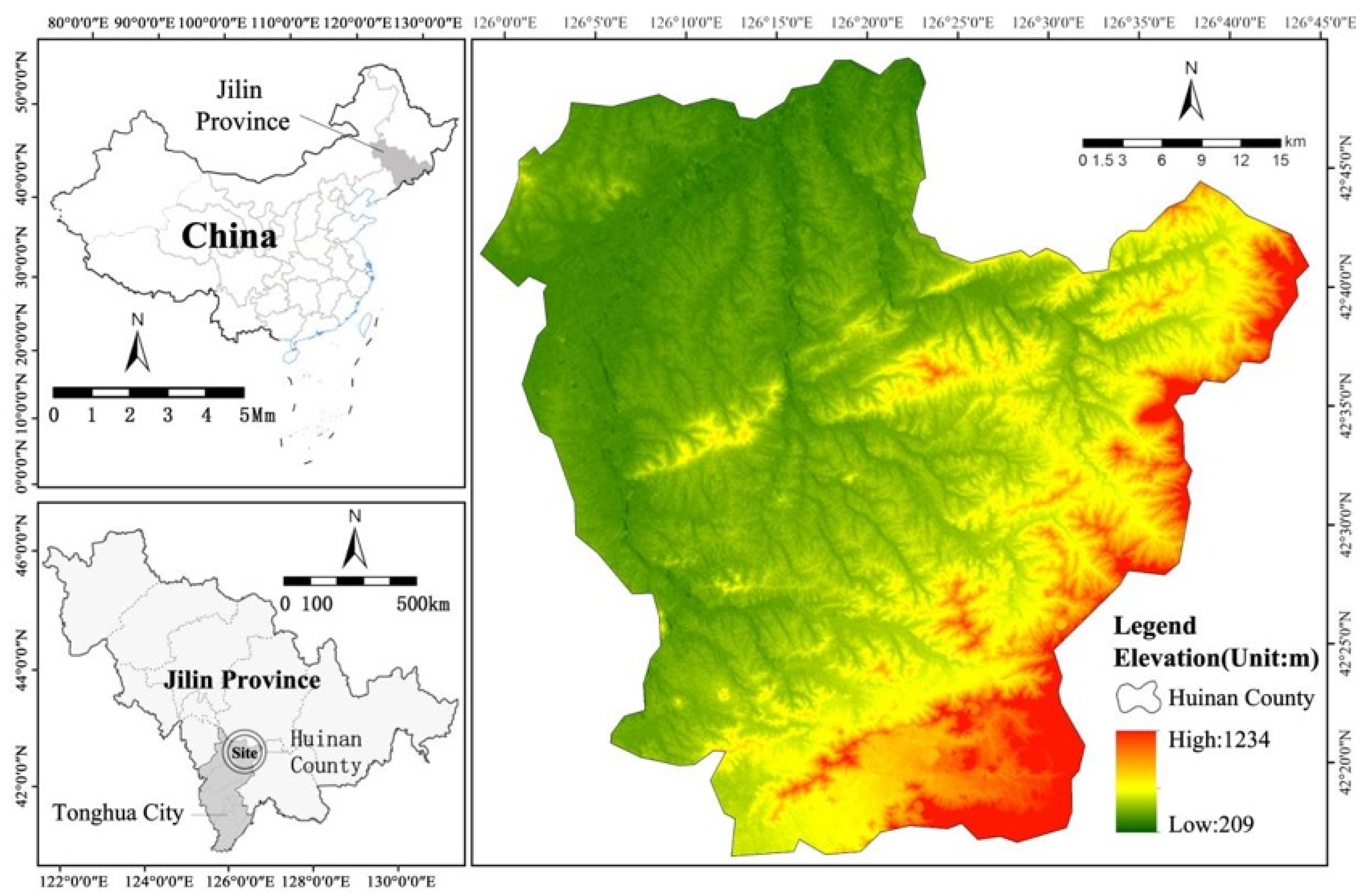
Figure 1. Location of Huinan County.
Land 15 00087 g001
Figure 2. Current status of Huinan County. (a) Huinan County territorial spatial planning. (b) Land use types in Huinan County.
Land 15 00087 g002
Figure 3. Research framework.
Land 15 00087 g003
Figure 4. DPSIRM analytical model.
Land 15 00087 g004
Figure 5. Single-factor ecological sensitivity analysis.
Land 15 00087 g005
Figure 6. Integrated ecological sensitivity analysis.
Land 15 00087 g006
Figure 7. Classification and analysis of carbon storage content.
Land 15 00087 g007
Figure 8. Total carbon stock content analysis.
Land 15 00087 g008
Figure 9. Ecological protection planning sub-area, Huinan County.
Land 15 00087 g009
Table 1. Data information and sources [22,26].
Data CategoriesData NameResolutionData UsageData Source
Basic GeographyAdministrative boundary Define the spatial scope of the study area as the basis for all data preprocessing.http://www.resdc.cn/data (accessed on 2 April 2025)
Land coverLand Use Type30 mExtract vegetation cover information and classify land use types.https://www.gscloud.cn/ (accessed on 2 April 2025)
Socioeconomic factorsPopulation density1 kmQuantifying human activity intensity as an anthropogenic driver for ecological sensitivity assessmenthttp://gis5g.com/home (accessed on 4 April 2025)
GDP density1 kmhttp://gis5g.com/home (accessed on 4 April 2025)
Climate and environmental factorsNDVI30 mAnalyze vegetation coverage and growth conditions.http://gis5g.com/home (accessed on 2 April 2025)
Roads data Generate road buffer rasters to characterize the impact of traffic disturbance on ecological sensitivity.https://www.webmap.cn (accessed on 8 April 2025)
Water data Generate a water body buffer zone raster to quantify the impact of hydrological conditions on ecological sensitivity.https://www.webmap.cn (accessed on 8 April 2025)
DEM30 mExtract terrain factors such as slope gradient and aspect to support the quantification of terrain-related indicators.https://www.gscloud.cn (accessed on 5 April 2025)
Average temperatures1 kmGenerate climate grid maps to support the analysis of climate factors in ecological sensitivity assessments.http://gis5g.com/home (accessed on 10 April 2025)
Relative humidity1 kmhttp://gis5g.com/home (accessed on 15 April 2025)
Average annual precipitation1 kmhttp://gis5g.com/home (accessed on 15 April 2025)
Grain production
per unit area
1 kmReflect the intensity of agricultural production’s disturbance to soil carbon pools and vegetation cover.https://www.nesdc.org.cn/ (accessed on 16 April 2025)
Table 2. Factors affecting ecological sensitivity.
Normative LayerIndicator LayerExplanation
Driving ForcePopulation densityNumber of people living per unit area of land
DEMTopographic surface elevation information
SlopeDegree of inclination of a region
Slope directionSlope orientation of topographic surfaces
PressureRoad buffer zoneAreas demarcated on both sides of the road
Water Buffer ZoneAreas delineated on both sides of the river
StateDegree of topographic reliefDramatic changes in terrain elevation
Surface cutFragmentation and complexity of the terrain
Terrain roughnessComplexity of terrain elevation changes
Vegetation coverDegree of vegetation cover
Land use typeFunctions of land over time and space
ImpactAverage temperaturesGeneral level of temperatures
Relative humidityAtmospheric water vapor content
Average annual precipitationStatus of water resources
ResponseGDPTotal economic activity
Grain production
per unit area
Agricultural productivity and technology levels
Management Eco-environmental protection policy
Table 4. Carbon density of different land use types (t/m2).
LULC_CodeLULC_NameC_AboveC_BelowC_SoilC_Dead
1Cultivated Land0.80410
2Forest52.516.872.12.25
3Grassland1.41.726.82.84
4Water Areas10.530.266.20
5Construction Land0000
6Unutilized Land00210
Table 3. Construction of ecological sensitivity evaluation indicator system.
Normative LayerIndicator LayerAHP WeightEWM WeightFinal Weight
Driving ForcePopulation density0.0400.0400.0318
DEM0.1340.0220.0585
Slope0.0560.0840.0934
Slope direction0.0160.0400.0127
PressureRoad buffer zone0.0310.0610.0375
Water buffer zone0.1060.0580.1221
StateDegree of topographic relief0.0750.0140.0208
Surface cut0.0370.0160.0118
Terrain roughness0.0240.0180.0086
Vegetation cover0.0980.0460.0895
Land use type0.2160.0480.2058
ImpactAverage temperatures0.0780.0420.0650
Relative humidity0.0330.0240.0157
Average annual precipitation0.0120.0880.0210
ResponseGDP0.0380.2490.1879
Grain production per unit area0.0060.1500.0179
ManagementEcological protection policy
Table 5. Percentage of sensitive area.
Normative layerIndicator LayerArea Proportion
Insensitive AreasSensitive AreasModerately Sensitive AreasHighly Sensitive AreasExtremely Sensitive Areas
Driving ForcePopulation density95.08%1.25%1.22%1.27%1.18%
DEM52.30%33.81%10.34%2.97%0.58%
Slope5.71%12.79%64.11%17.14%0.25%
Slope direction15.70%23.05%18.76%25.77%16.71%
PressureRoad buffer zone5.61%2.66%2.57%2.49%86.67%
Water
buffer zone
15.35%18.27%21.73%20.35%24.29%
StateDegree of topographic relief34.25%31.84%17.40%11.94%4.58%
Surface cut33.05%31.80%19.81%10.47%4.87%
Terrain roughness53.17%28.74%12.33%5.00%0.76%
Vegetation cover12.45%42.89%18.51%15.38%10.77%
Land use type0.01%2.65%43.91%52.75%0.68%
ImpactAverage temperatures0.12%1.82%8.03%75.10%14.93%
Relative humidity17.25%24.15%19.17%17.31%22.12%
Average annual precipitation7.42%14.77%27.30%30.22%20.29%
ResponseGDP0.12%5.09%45.83%47.45%1.51%
Grain production per unit area1.15%22.38%23.62%26.54%26.31%
Integrated ecological sensitivity analysis12.98%25.38%24.68%23.27%13.68%
Disclaimer/Publisher’s Note: The statements, opinions and data contained in all publications are solely those of the individual author(s) and contributor(s) and not of MDPI and/or the editor(s). MDPI and/or the editor(s) disclaim responsibility for any injury to people or property resulting from any ideas, methods, instructions or products referred to in the content.