The Non-Linear Impact of Green Space Recreational Service Performance on Residents’ Emotional States in High-Density Cities


Abstract
1. Introduction
- (1)
- Which GRSP dimensions exert the most critical impacts on emotional health?
- (2)
- How to quantify residents’ emotional states using social media data?
- (3)
- Do these impacts exhibit non-linear relationships and threshold effects?
2. Review
2.1. The Benefits of Urban Green Spaces for Emotional Health
2.2. Existing Limitations of GRSP Evaluation
2.3. Emotion Analysis Method Based on Social Media Data
2.4. Application Status of Explainable Machine Learning Frameworks
3. Materials and Methods
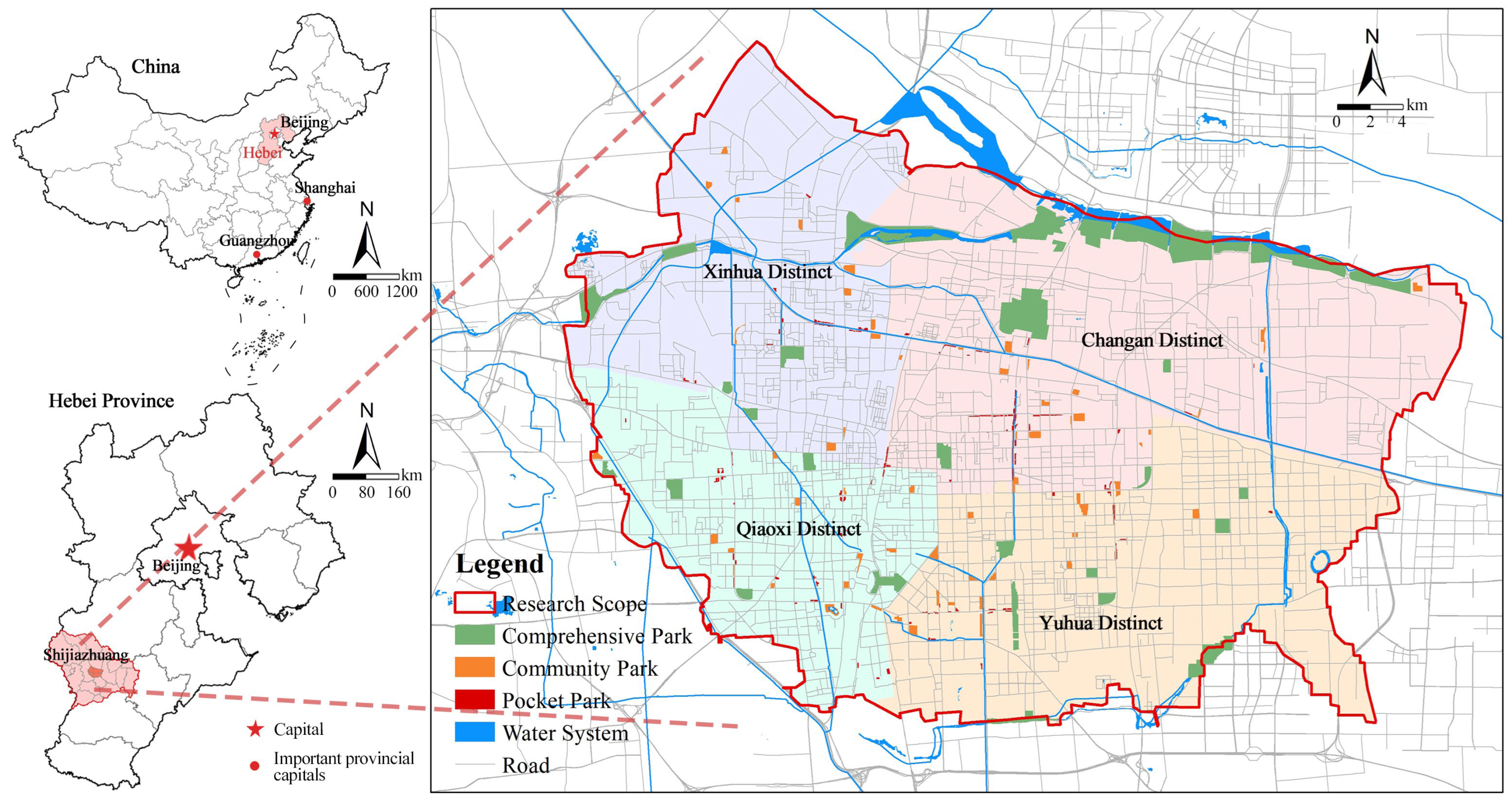
3.1. Study Area
3.2. Data Sources
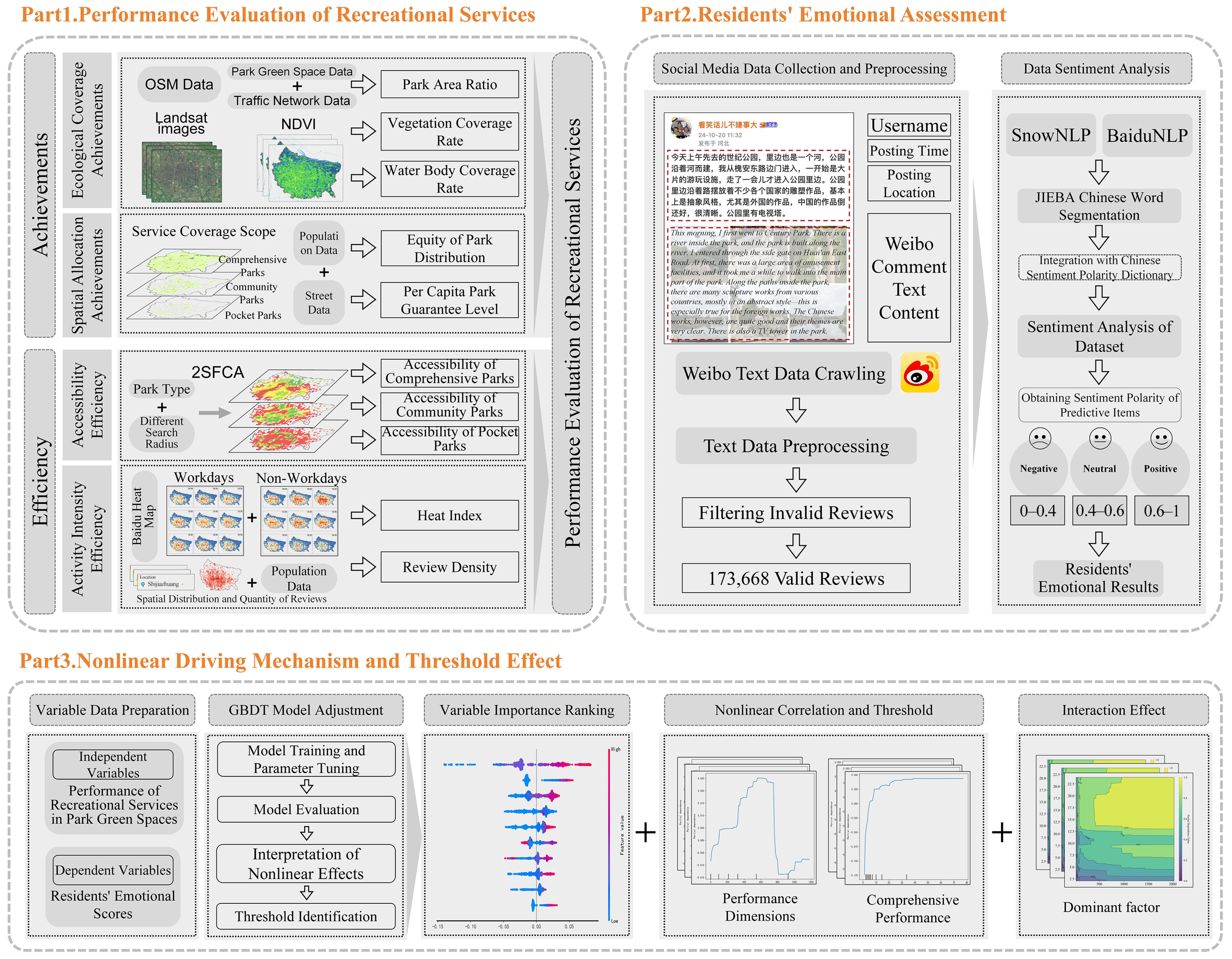
3.3. Evaluation of GRSP in High-Density Urban Areas
3.4. Assessment of Residents’ Emotional States Based on Weibo Comment Data
3.5. Exploring the Non-Linear Driving Mechanism of GRSP on Residents’ Emotional States
3.5.1. Data Matching and Model Input
3.5.2. GBDT Model
3.5.3. Model Interpretation Methods
4. Results
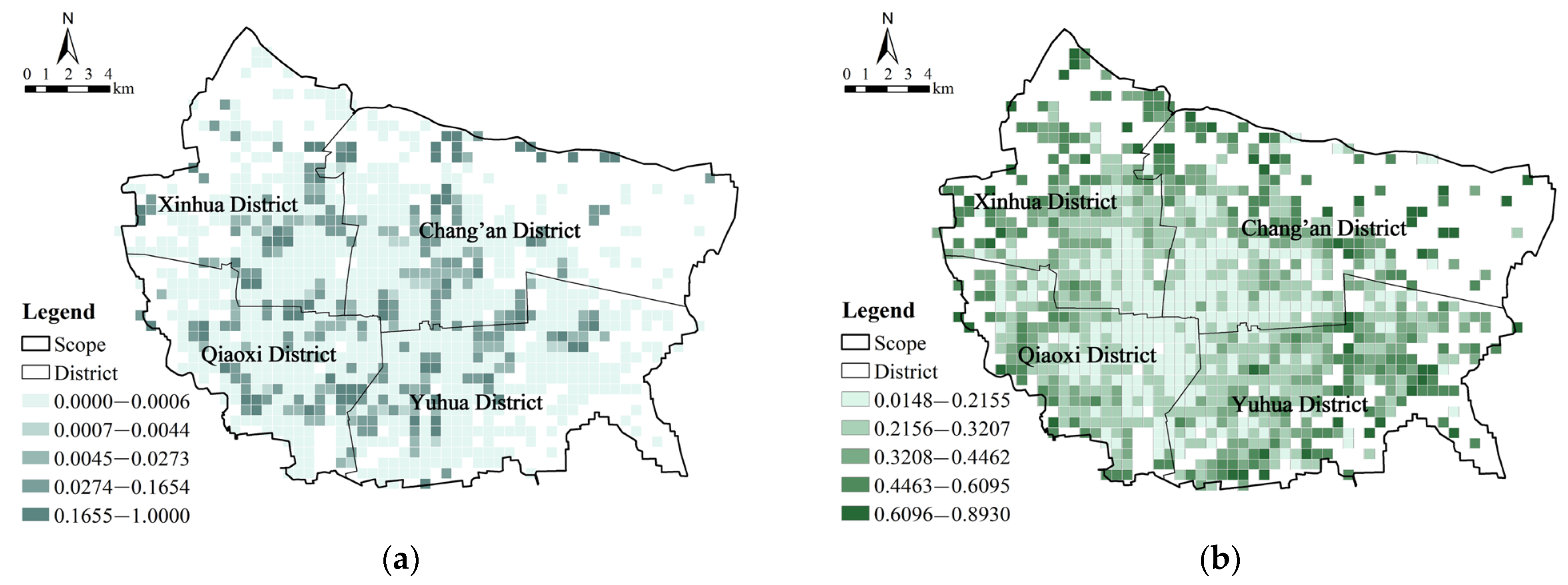
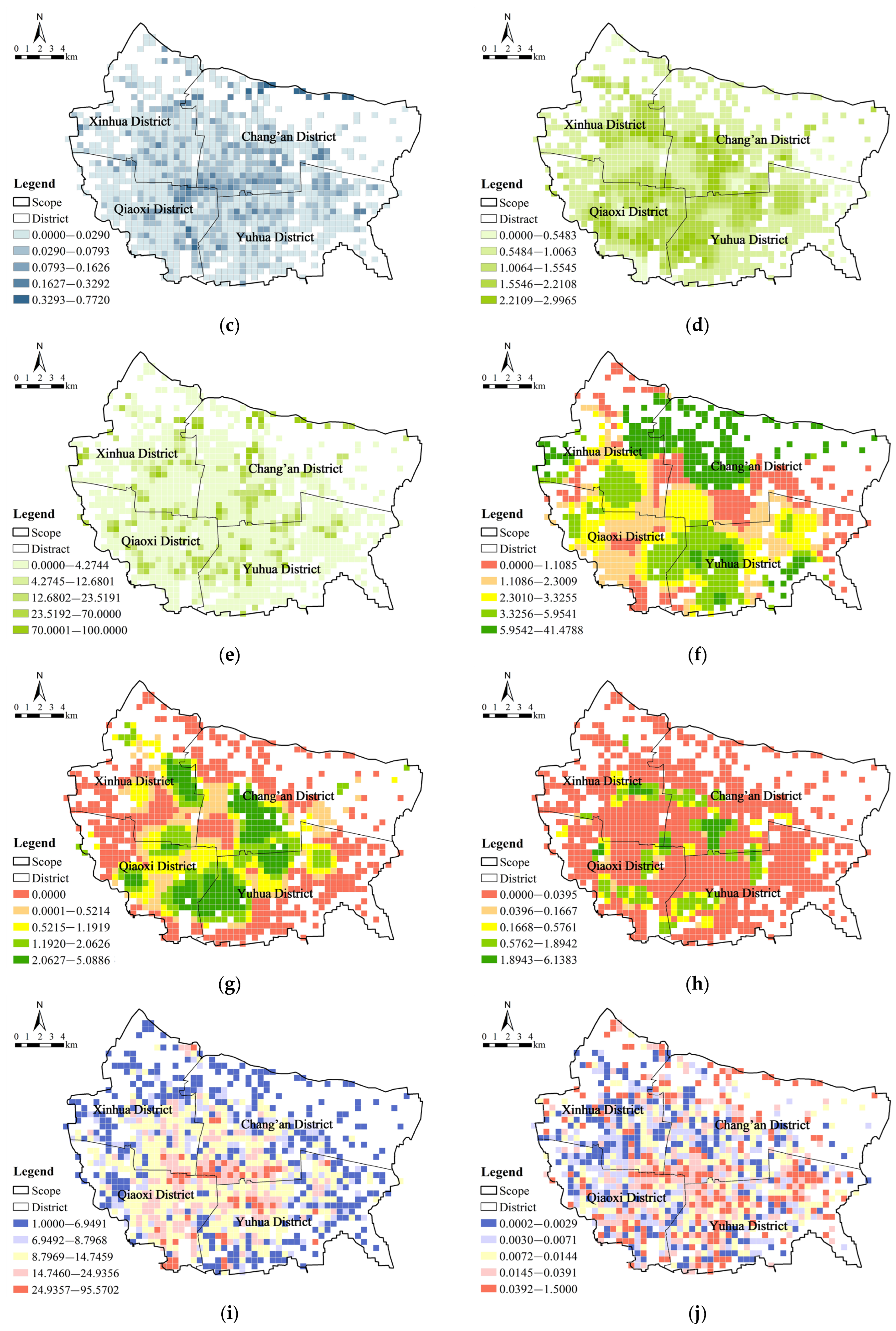
4.1. Spatial Heterogeneity Characteristics of GRSP
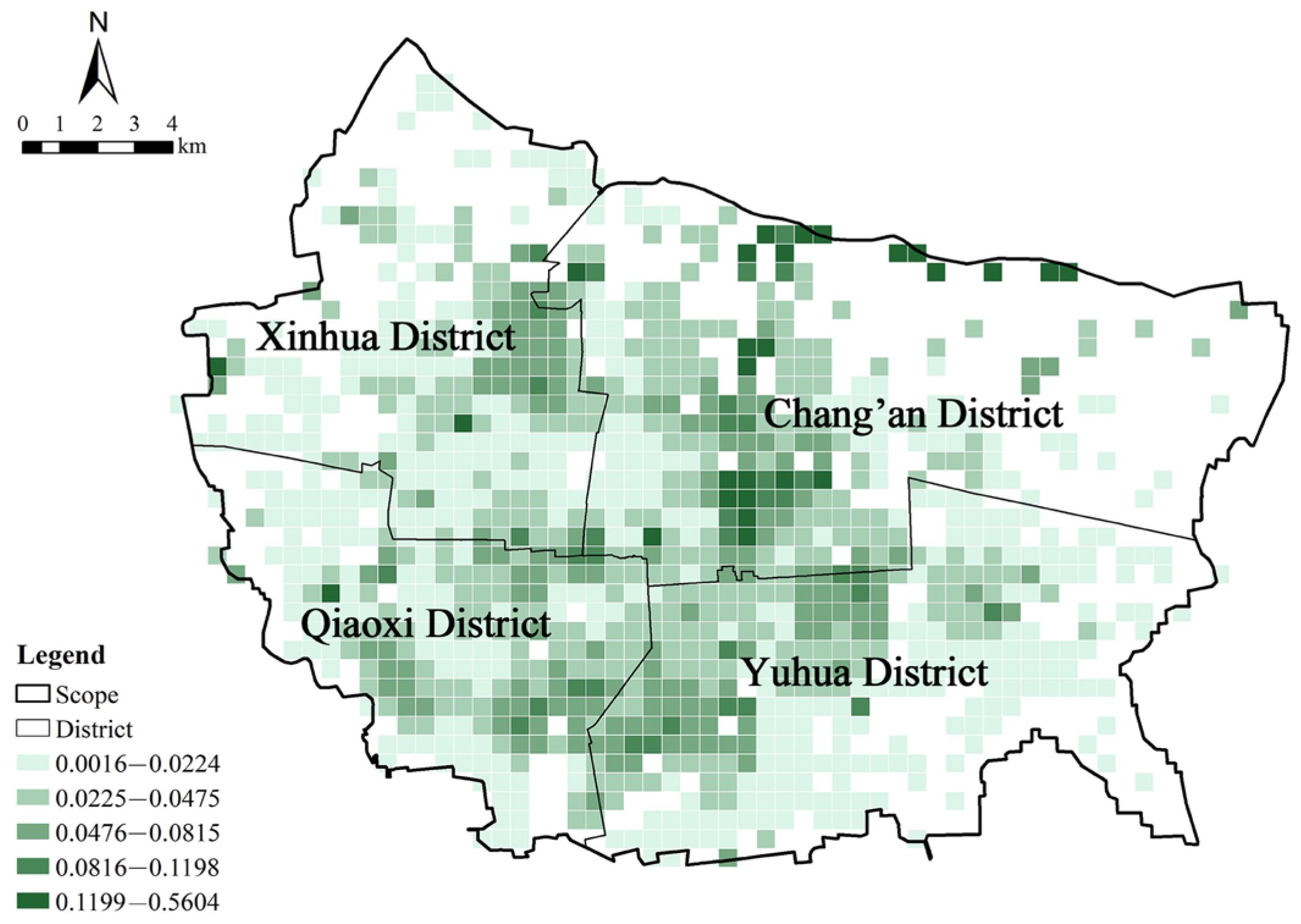
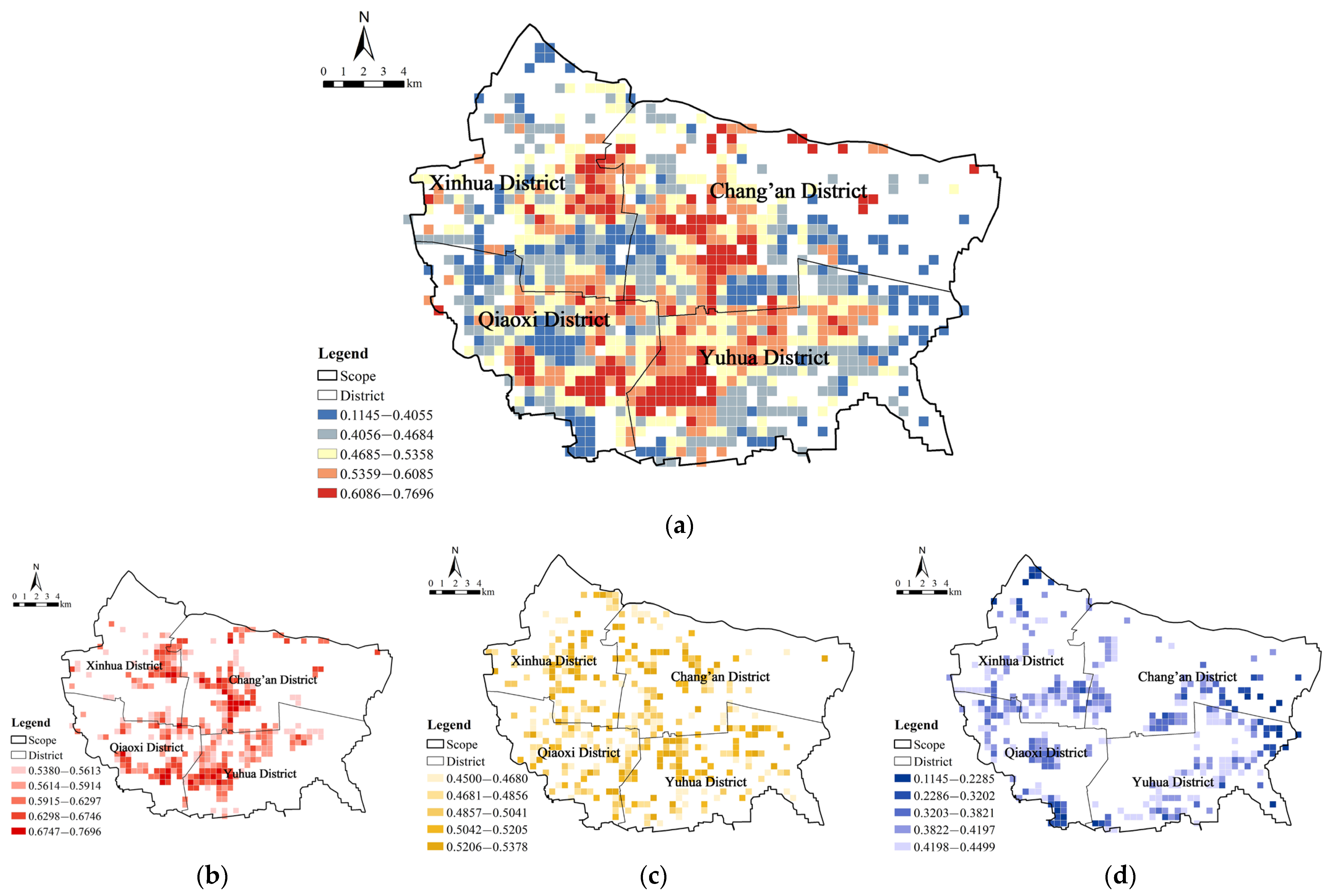
4.2. Construction and Spatial Distribution Characteristics of the Residents’ Emotional State Map
4.3. Non-Linear Relationships and Threshold Effects of Variables
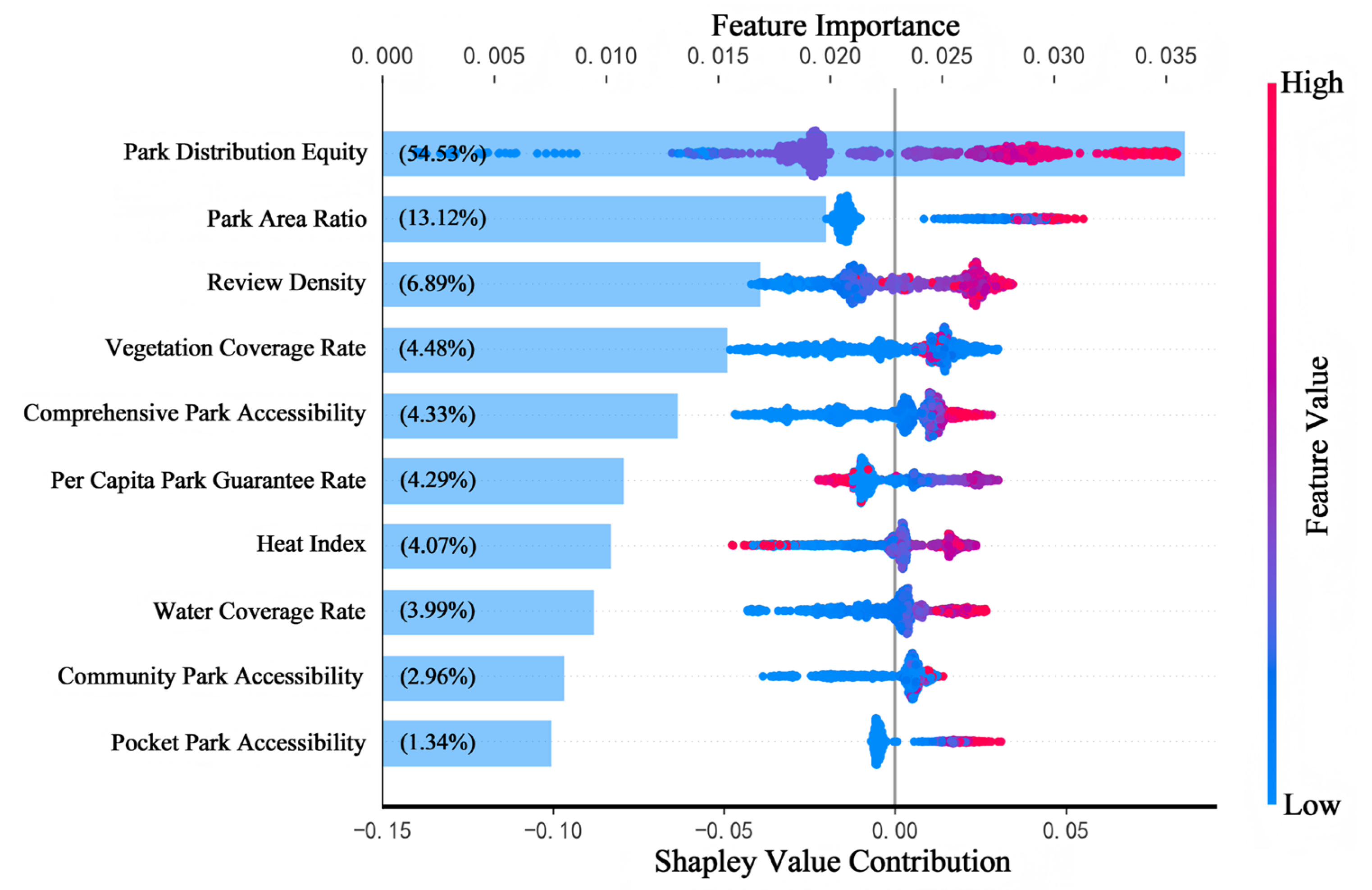
4.3.1. Relative Importance of Model Features
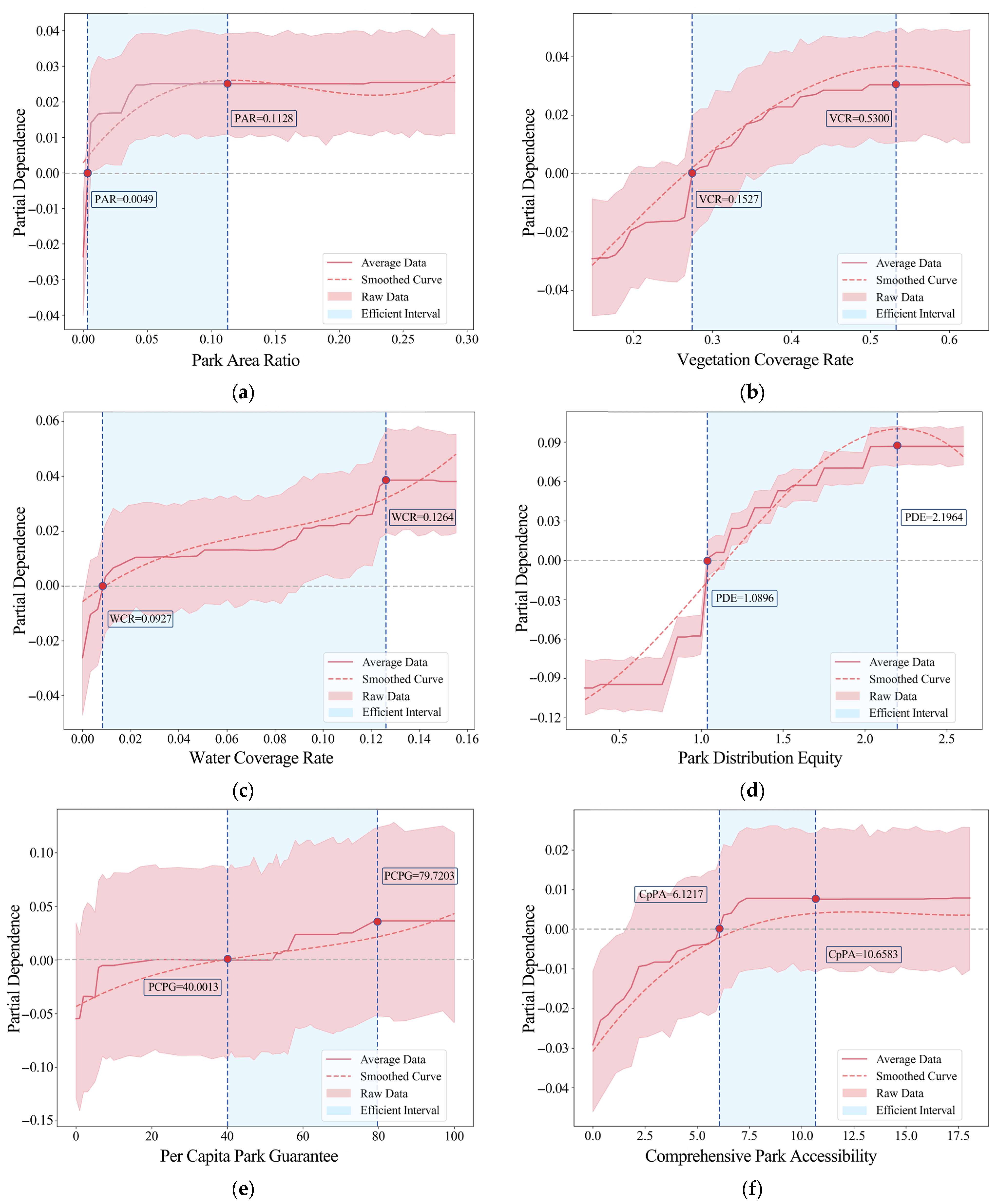
4.3.2. The Impact of GRSP Factors on Residents’ Emotional States
4.3.3. The Impact of Comprehensive GRSP on Residents’ Emotional States
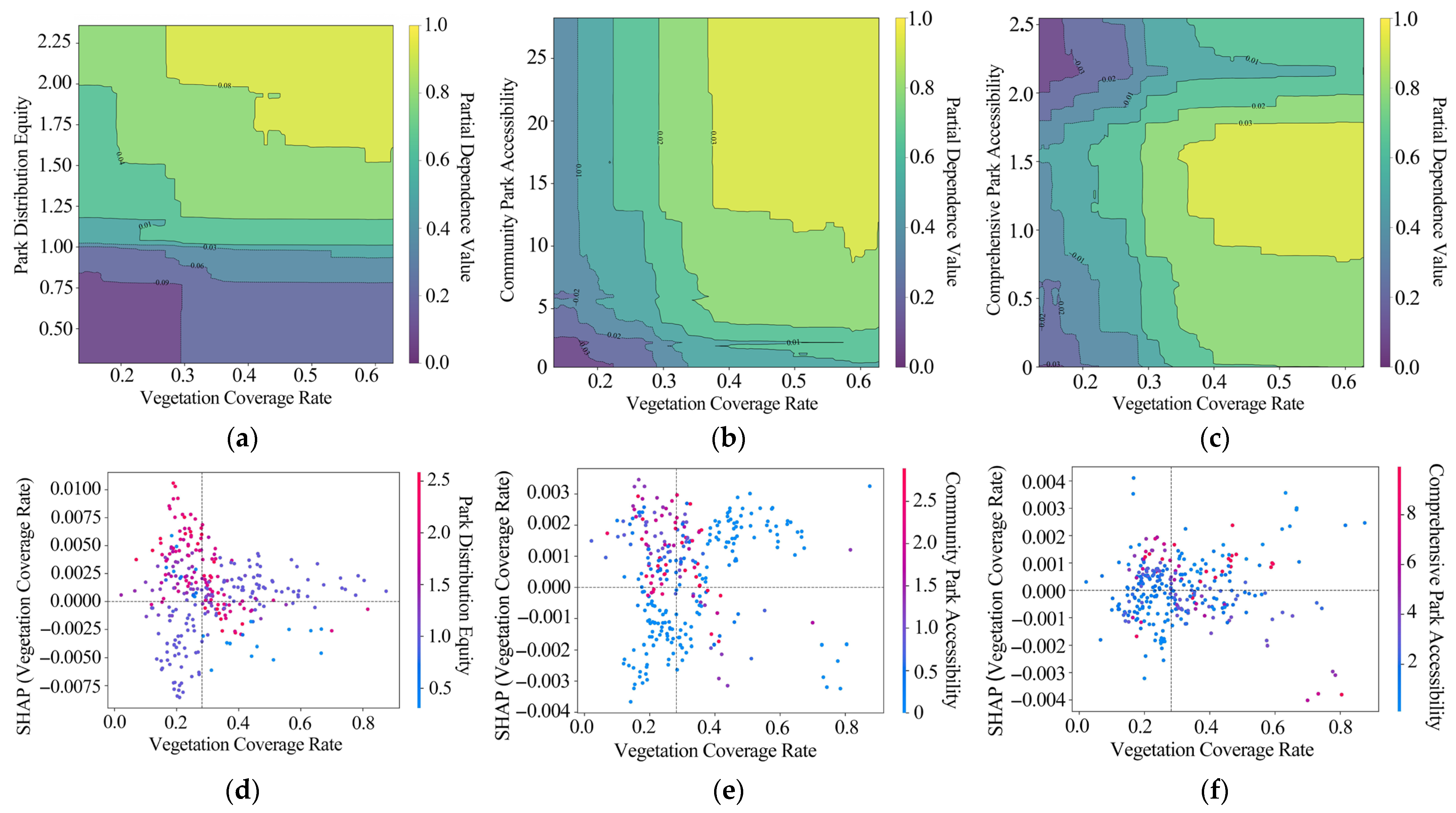
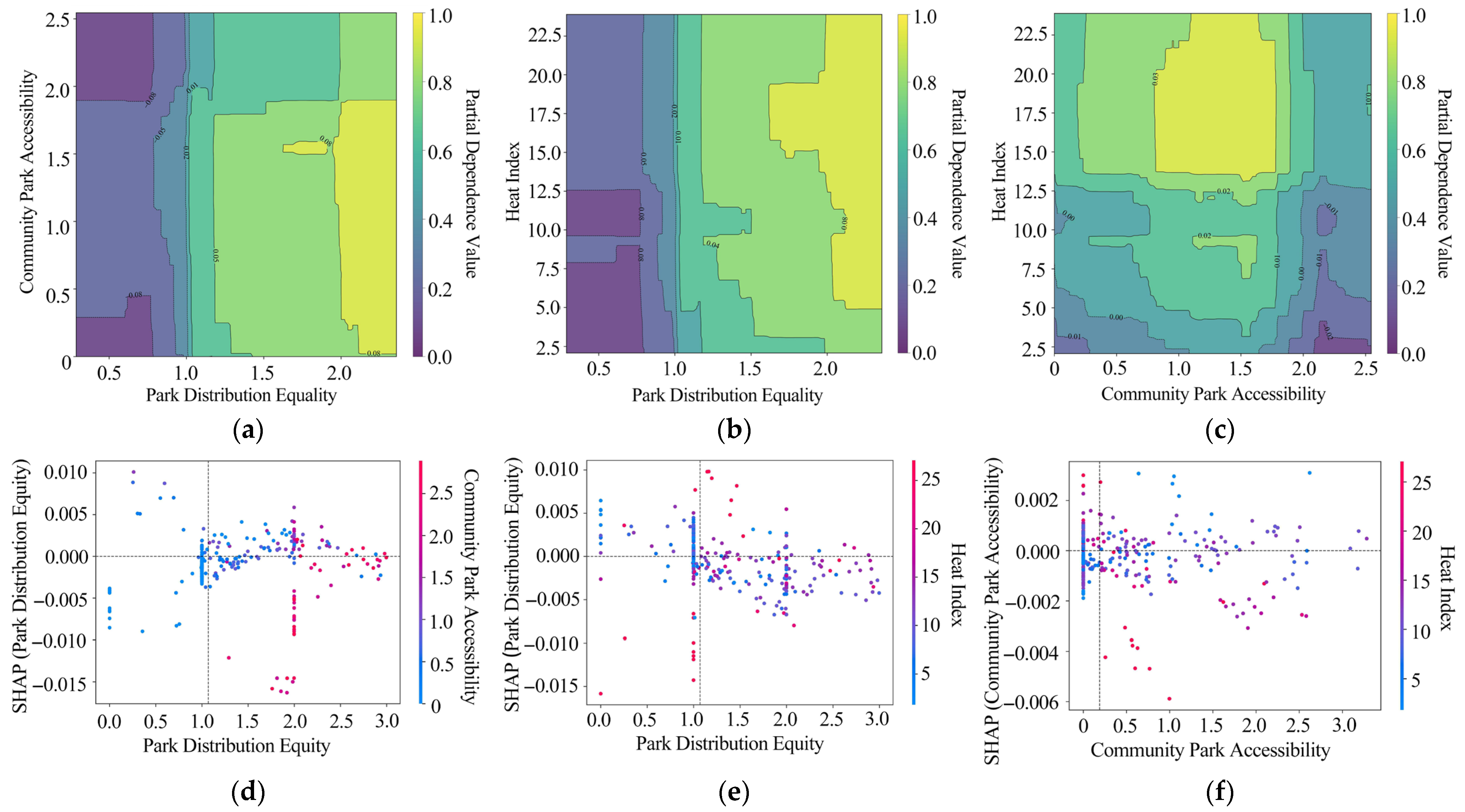
4.3.4. The Interaction of Dominant Factors on the Effect of Emotional Improvement
5. Discussion
5.1. Multidimensional Mechanisms of the Non-Linear Impact of GRSP on Emotions
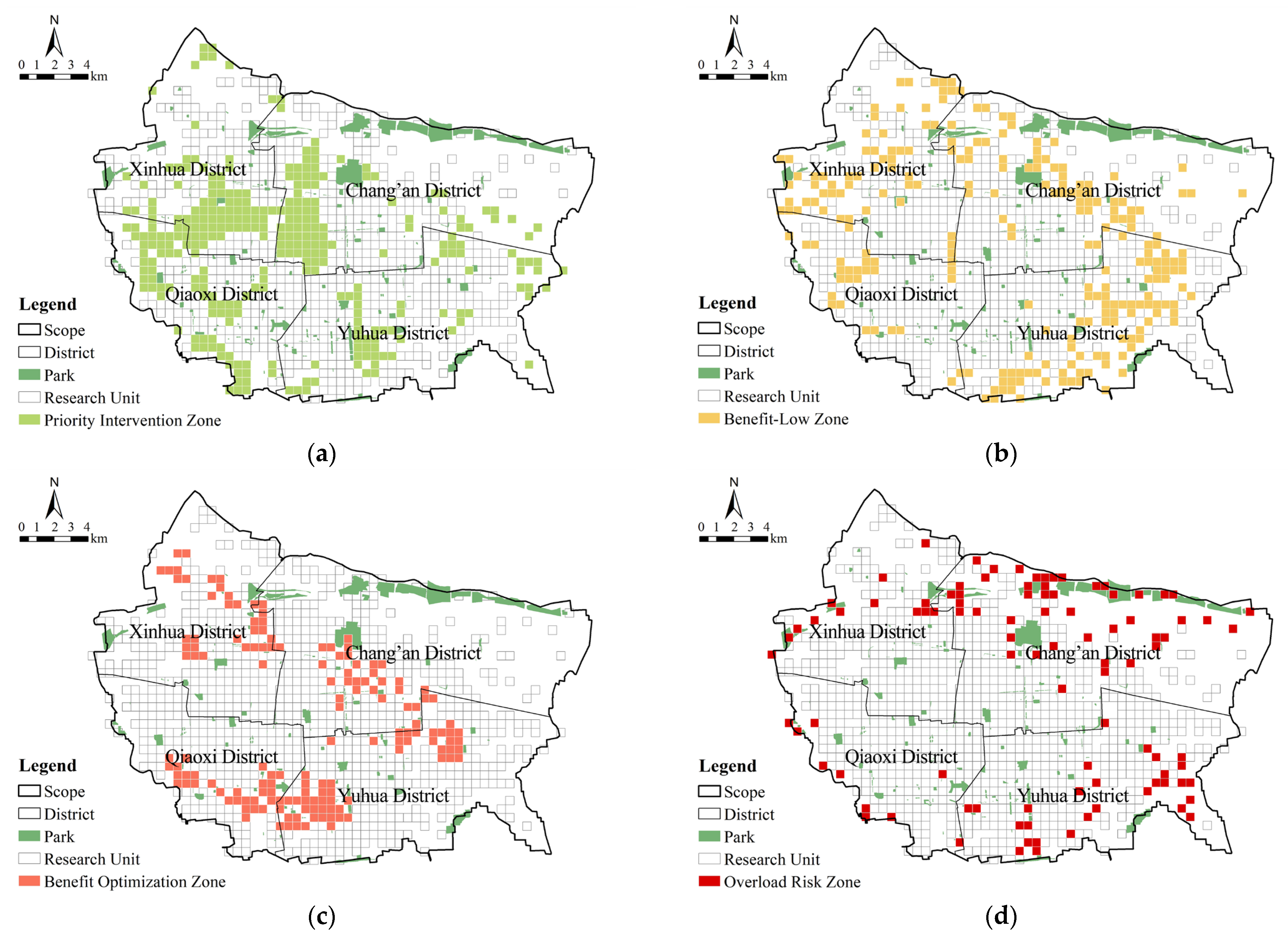
5.2. Spatial Optimization Pathways Based on the Threshold Effects of Driving Factors
5.3. Global Applicability of the GRSP Framework
5.4. Limitations and Future Explorations
6. Conclusions
Author Contributions
Funding
Institutional Review Board Statement
Informed Consent Statement
Data Availability Statement
Conflicts of Interest
Abbreviations
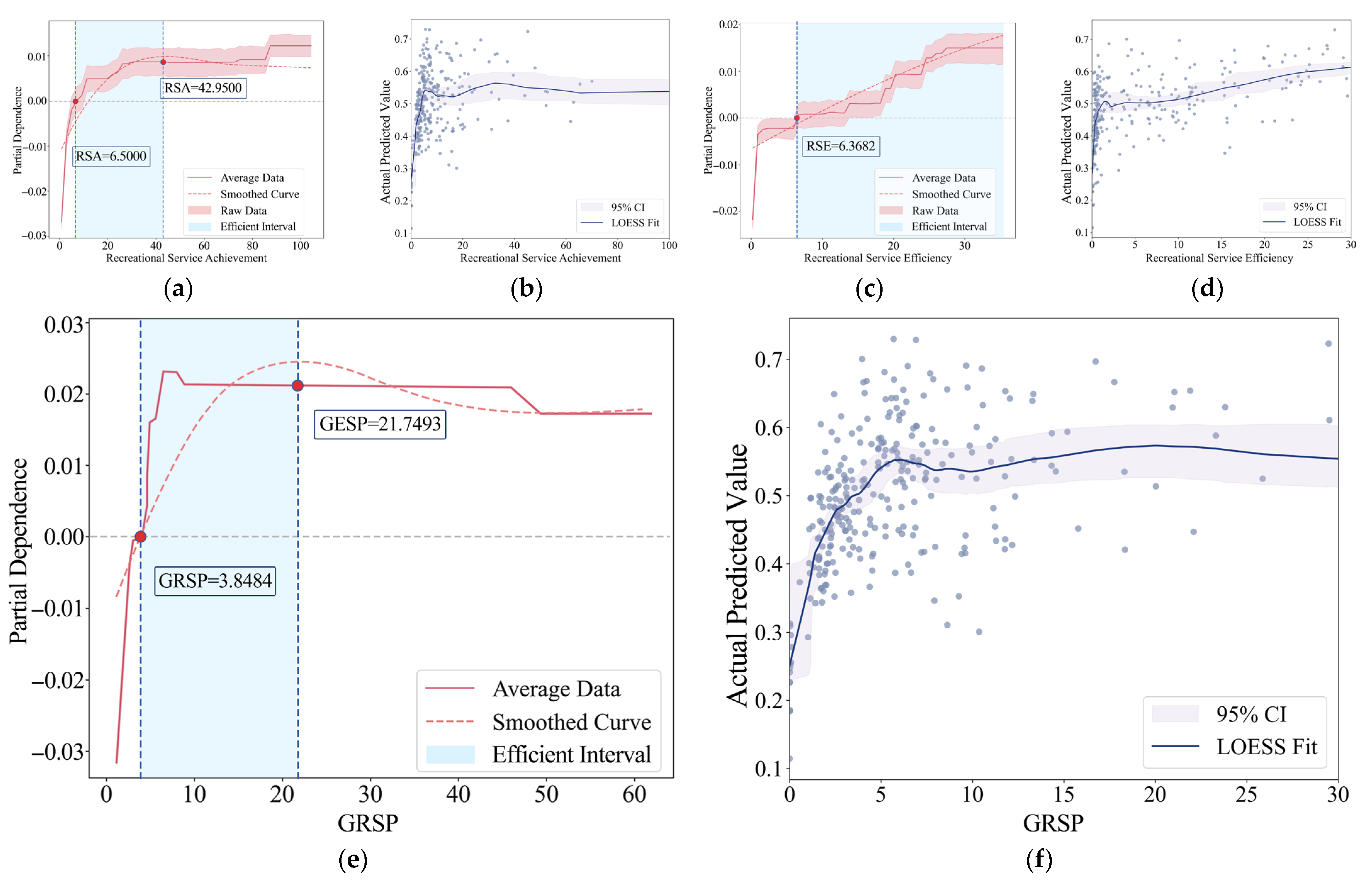
| GRSP | Green space recreational service performance |
| GBDT | Gradient boosting decision tree |
| PDP | Partial dependence plots |
| SHAP | SHapley Additive exPlanations |
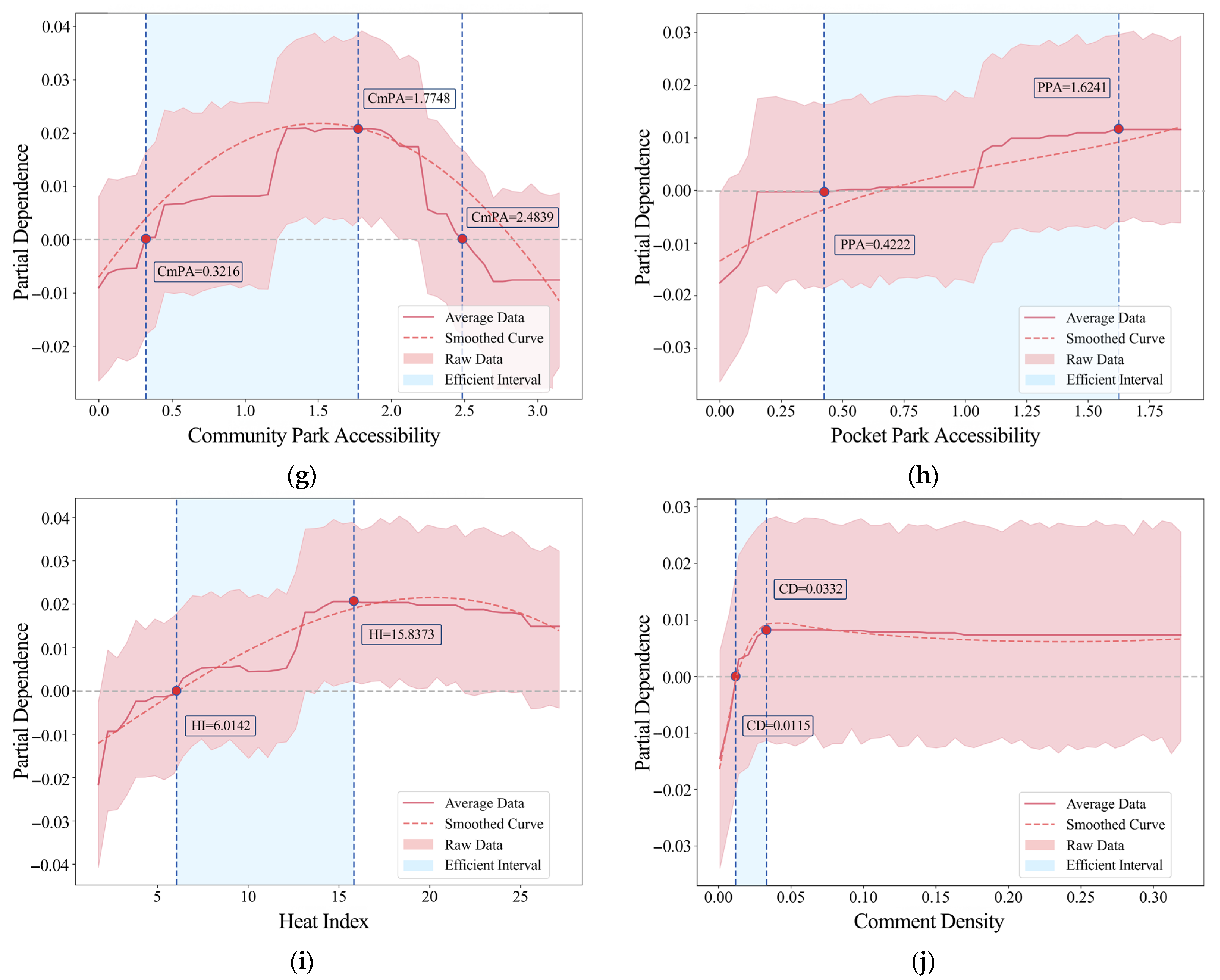
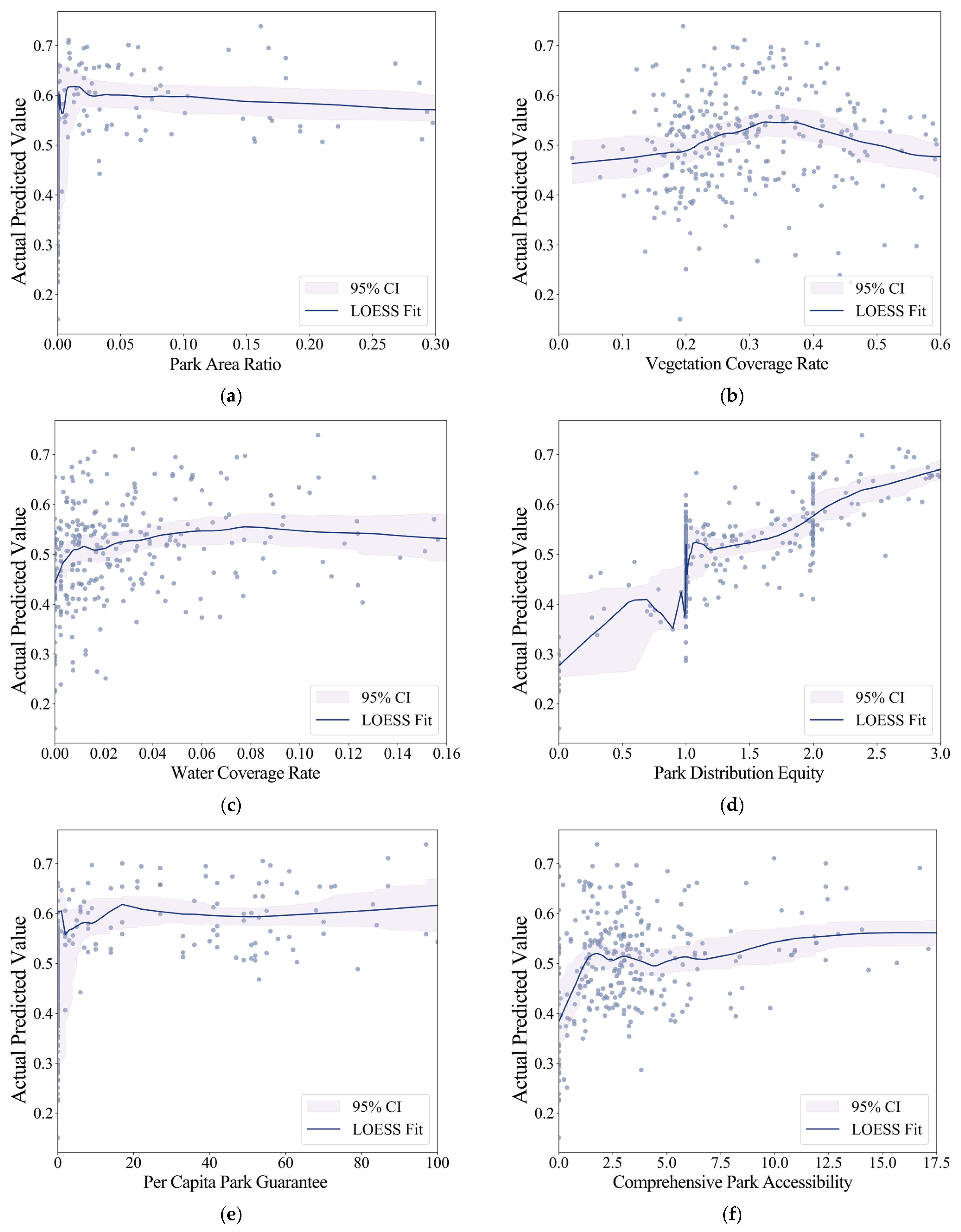
| PAR | Park Area Ratio |
| VCR | Vegetation Coverage Rate |
| WCR | Water Coverage Rate |
| PDE | Park Distribution Equity |
| PCPG | Per Capita Park Guarantee |
| CpPA | Comprehensive Park Accessibility |
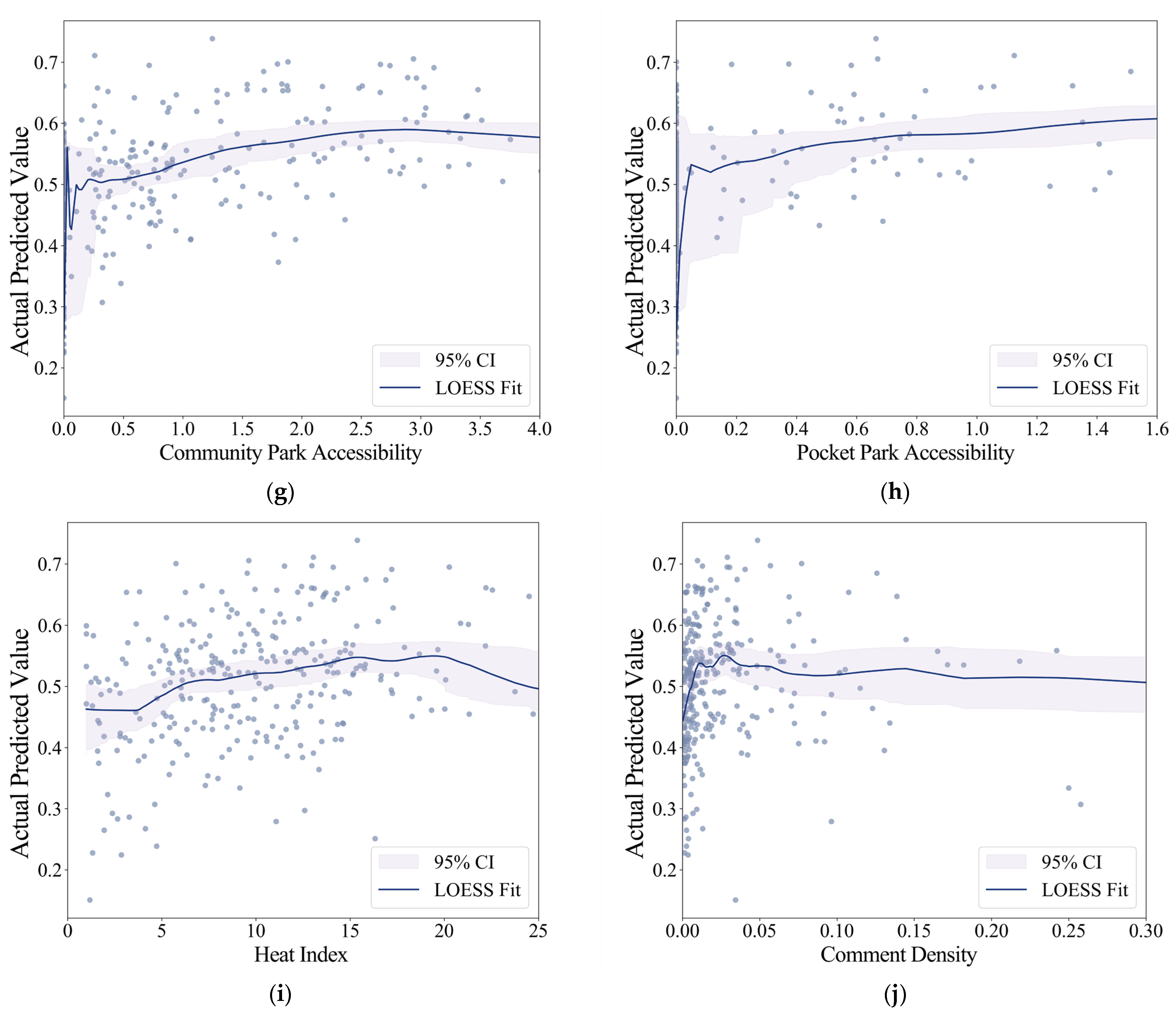
| CmPA | Community Park Accessibility |
| PPA | Pocket Park Accessibility |
| HI | Heat Index |
| CD | Comment Density |
| CLP | Natural Language Processing |
References
- Abraham, A.; Sommerhalder, K.; Abel, T. Landscape and well-being: A scoping study on the health-promoting impact of outdoor environments. Int. J. Public Health 2010, 55, 59–69. [Google Scholar] [CrossRef] [PubMed]
- Zhou, Y.; Varquez, A.C.G.; Kanda, M. High-resolution global urban growth projection based on multiple applications of the SLEUTH urban growth model. Sci. Data 2019, 6, 34. [Google Scholar] [CrossRef]
- World Health Organization. Summary of Global Mental Health Data 2025; World Health Organization: Geneva, Switzerland, 2025. Available online: https://www.who.int/health-topics/mental-health (accessed on 24 December 2025).
- Institute of Psychology, Chinese Academy of Sciences. China National Mental Health Development Report (2021–2022); Social Sciences Academic Press: Beijing, China, 2023. (In Chinese) [Google Scholar]
- Liu, S.; Zhan, M.Z.; Wen, Q.P. Preliminary study on planning and design of urban green open space for sub-healthy groups. Landsc. Archit. 2010, 17, 90–93. (In Chinese) [Google Scholar] [CrossRef]
- Chen, J.; You, W.B.; He, D.J.; Hu, X.S. Supply-demand relationship and spatial heterogeneity of park green spaces in the central urban area of Fuzhou. J. Zhejiang AF Univ. 2023, 40, 1300–1310. (In Chinese) [Google Scholar]
- Yan, W.X.; Fan, C.J.; Shen, S.G.; Qiu, B. A study on the multi-dimensional recreational emotion evaluation framework based on social media data: A case study of urban parks in the central urban area of Nanjing. Mod. Urban Res. 2024, 5, 85–91. Available online: http://mur.cn/journals/2024/5/MUR-2024-5-eb5b896139f309a184f11a0a28729c2c.html (accessed on 24 December 2025). (In Chinese).
- Zhang, P.; Huang, N.; Yang, F.; Yan, W.; Zhang, B.; Liu, X.; Peng, K.; Guo, J. Determinants of depressive symptoms at individual, school and province levels: A national survey of 398,520 Chinese children and adolescents. Public Health 2024, 229, 33–41. [Google Scholar] [CrossRef]
- McMahan, E.A.; Estes, D. The effect of contact with natural environments on positive and negative affect: A meta-analysis. J. Posit. Psychol. 2015, 10, 507–519. [Google Scholar] [CrossRef]
- Zhang, J.; Liu, L.; Wang, J.; Dong, D.; Jiang, T.; Chen, J.; Ren, Y. Exploring the Relationship between the Sentiments of Young People and Urban Green Space by Using a Check-In Microblog. Forests 2024, 15, 796. [Google Scholar] [CrossRef]
- Zhang, S.; Zhou, W.Q. Recreational visits to urban parks and factors affecting park visits: Evidence from geotagged social media data. Landsc. Urban Plan. 2018, 180, 27–35. [Google Scholar] [CrossRef]
- Xu, Z.; Marini, S.; Mauro, M.; Maietta Latessa, P.; Grigoletto, A.; Toselli, S. Associations Between Urban Green Space Quality and Mental Wellbeing: Systematic Review. Land 2025, 14, 381. [Google Scholar] [CrossRef]
- Kim, E.-K.; Yoon, S.; Jung, S.U.; Kweon, S.J. Optimizing urban park locations with addressing environmental justice in park access and utilization by using dynamic demographic features derived from mobile phone data. Urban For. Urban Green. 2024, 99, 128444. [Google Scholar] [CrossRef]
- Zheng, L.W.; Kwan, P.M.; Liu, Y. Greenspace morphology and mental well-being: A mobility-based study on urban stress and emotion. Ecol. Indic. 2025, 178, 114090. [Google Scholar] [CrossRef]
- Liu, H.X.; Pang, Y.J.; Jiao, M.; Sun, X.; Ren, H.; Luo, L.; Han, T.T.; Li, Y.; Zheng, S.W.; Sui, C.H. Greenspace exposure and its dual role as mediator and moderator in the relationship between urban density and mental health. Landsc. Urban Plan. 2025, 264, 105497. [Google Scholar] [CrossRef]
- Tanaka, K.; Sato, H. Visual green exposure and cardiovascular stress response: A field experiment in urban parks. Int. J. Environ. Res. Public Health 2024, 21, 456. [Google Scholar] [CrossRef]
- Xie, X.; Zhou, H.; Gou, Z. Dynamic real-time individual green space exposure indices and the relationship with static green space exposure indices: A study in Shenzhen. Ecol. Indic. 2023, 154, 110557. [Google Scholar] [CrossRef]
- Chen, Z.; Ye, C.; Yang, H.; Ye, P.; Xie, Y.; Ding, Z. Exploring the impact of seasonal forest landscapes on tourist emotions using Machine learning. Ecol. Indic. 2024, 163, 112115. [Google Scholar] [CrossRef]
- Tsurumi, T.; Imauji, A.; Managi, S. Greenery and subjective well-being: Assessing the monetary value of greenery by type. Ecol. Econ. 2018, 148, 152–169. [Google Scholar] [CrossRef]
- Moore, G.; Fardghassemi, S.; Joffe, H. Wellbeing in the city: Young adults’ sense of loneliness and social connection in deprived urban neighbourhoods. Wellbeing Space Soc. 2023, 5, 100172. [Google Scholar] [CrossRef]
- Yang, G.Y.; Yu, Z.W.; Zhang, J.G.; Liu, H.X.; Jin, G.; Ju, Y.; Hong, B.; Zhao, Z.H.; Zhang, L.Q.; Yao, X.H.; et al. Research Progress on the Health Benefits of Green Space Exposure from the Perspective of Exposome Ecology. Acta Ecol. Sin. 2024, 44, 5914–5924. [Google Scholar]
- Wang, R.; Helbich, M.; Yao, Y.; Zhang, J.; Liu, P.; Yuan, Y.; Liu, Y. Urban greenery and mental wellbeing in adults: Cross-sectional mediation analyses on multiple pathways across different greenery measures. Environ. Res. 2019, 176, 108535. [Google Scholar] [CrossRef] [PubMed]
- Cox, D.T.C.; Shanahan, D.F.; Hudson, H.L.; Fuller, R.A.; Gaston, K.J. The impact of urbanisation on nature dose and the implications for human health. Landsc. Urban Plan. 2018, 179, 72–80. [Google Scholar] [CrossRef]
- White, M.P.; Alcock, I.; Grellier, J.; Wheeler, B.W.; Hartig, T.; Warber, S.L.; Bone, A.; Depledge, M.H.; Fleming, L.E. Spending at least 120 minutes a week in nature is associated with good health and wellbeing. Sci. Rep. 2019, 9, 7730. [Google Scholar] [CrossRef]
- Kondo, M.C.; Triguero-Mas, M.; Donaire-Gonzalez, D.; Seto, E.; Valentín, A.; Hurst, G.; Carrasco-Turigas, G.; Masterson, D.; Ambròs, A.; Ellis, N.; et al. Momentary mood response to natural outdoor environments in four European cities. Environ. Int. 2020, 134, 105237. [Google Scholar] [CrossRef]
- Li, H.; Li, F.; Browning, M.H.E.M.; Larson, L.R.; Jennings, V.; Rigolon, A.; Ogletree, S.; Parkinson, C.; Wang, R. Green spaces and social bonds: Investigating associations of parks and greenness with online social connectedness (via Facebook) across the United States. Urban For. Urban Green. 2025, 112, 128985. [Google Scholar] [CrossRef]
- Markevych, I.; Schoierer, J.; Hartig, T.; Chudnovsky, A.; Hystad, P.; Dzhambov, A.M.; de Vries, S.; Triguero-Mas, M.; Brauer, M.; Nieuwenhuijsen, M.J.; et al. Exploring pathways linking greenspace to health: Theoretical and methodological guidance. Environ. Res. 2017, 158, 301–317. [Google Scholar] [CrossRef] [PubMed]
- Kwon, Y.; Park, K.; Kang, I.; Shin, C.; Lee, G.; Lee, S. Examining the Relationship Between Urban Park Quality and Residents’ Health in South Korean Cities Using Public Data. Land 2025, 14, 1191. [Google Scholar] [CrossRef]
- Xin, Y.Z.; Lu, W.; Sun, P.J. Research and prospect of green space from the perspective of public mental health. Landsc. Archit. 2022, 29, 79–85. (In Chinese) [Google Scholar] [CrossRef]
- Li, J.Y.; Huang, Z.L.; Zhu, Z.P.; Ding, G.C. Coexistence Perspectives: Exploring the impact of landscape features on aesthetic and recreational values in urban parks. Ecol. Indic. 2024, 162, 112043. [Google Scholar] [CrossRef]
- Wang, P.; Yu, F.; He, Y.J.; Li, L.; Gao, Z.Q.; Yang, W.J. Study on the influence of visual aesthetic quality of national park landscape on public physiological response. Nat. Prot. Areas 2024, 4, 13–24. (In Chinese) [Google Scholar]
- Fu, H.P.; Guan, J.X.; Zhong, Q.K.; Fu, L.B.; Jian, Y.Q.; Li, J.D. Landscape Elements, ecosystem services and users’ Happiness: An indicator framework for park management based on cognitive appraisal theory. Ecol. Indic. 2024, 165, 112209. [Google Scholar] [CrossRef]
- Bi, X.; Gan, X.; Jiang, Z.; Li, Z.; Li, J. How do landscape patterns in urban parks affect multiple cultural ecosystem services perceived by residents? Sci. Total Environ. 2024, 946, 174255. [Google Scholar] [CrossRef]
- Wilson, B.; Neale, C.; Roe, J. Urban green space access, social cohesion, and mental health outcomes before and during COVID-19. Cities 2024, 152, 105173. [Google Scholar] [CrossRef]
- Gu, K.; Liu, J.; Wang, D.; Dai, Y.; Li, X. Analyzing the Supply and Demand Dynamics of Urban Green Spaces Across Diverse Transportation Modes: A Case Study of Hefei City’s Built-Up Area. Land 2024, 13, 1937. [Google Scholar] [CrossRef]
- Zhao, S.; Wen, X.; Ge, Y.; Qiao, X.; Wang, Y.; Zhang, J.; Luan, W. Assessment and Layout Optimization of Urban Parks Based on Accessibility and Green Space Justice: A Case Study of Zhengzhou City, China. Land 2025, 14, 2055. [Google Scholar] [CrossRef]
- Wang, H.; Qu, Y.; Chen, Y. How natural and artificial park features influence older adults’ visiting behaviors and mental health: Evidence from a psychological survey in China. City Environ. Interact. 2025, 100238. [Google Scholar] [CrossRef]
- Zhai, Y.J.; Li, D.Y.; Wang, D. The promoting effect of community parks on physical activity participation and mood improvement of elderly users: A case study of 15 community parks in Shanghai. Chin. Landsc. Archit. 2021, 37, 74–79. (In Chinese) [Google Scholar] [CrossRef]
- Zhang, J.G.; Yin, Y.Y.; Xia, T.Y.; Zhao, R.H.; Cheng, Y.Y. Prioritizing 30% community tree volume ratio: Effects of community, street, and park greenspace exposure metrics on predicting older adults’ mental health. Build. Environ. 2025, 270, 112499. [Google Scholar] [CrossRef]
- Li, Z.X.; Hu, L.H.; Lin, A.L.; Chen, J.R.; Xu, Y.X. The greener, the richer, the happier?—Spatial distribution and coupling analysis of urban green space and residents’ emotion based on social media data. Ecol. Indic. 2025, 177, 113754. [Google Scholar] [CrossRef]
- Lu, J.; Luo, X.; Yang, N.; Shen, Y. Multiple Pathways: The Influence Mechanism of Greenspace Exposure on Mental Health—A Case Study of Hangzhou, China. Land 2021, 10, 339. [Google Scholar] [CrossRef]
- Wang, P.W.; Han, L.R.; Hao, R.S.; Mei, R. Understanding the relationship between small urban parks and mental health: A case study in Shanghai, China. Urban For. Urban Green. 2022, 78, 127784. [Google Scholar] [CrossRef]
- Thorsson, S.; Bäcklin, O.; Friberg, J.; Frisell Eriksson, S.; Haghighatafshar, S.; Konarska, J.; Kotze, S.; Lindberg, F.; Malmberg, C.-A.; Rayner, D.; et al. A framework for integrated assessment of blue-green infrastructure: A decision support tool for evaluating climate adaptation and social benefits in relation to construction and maintenance costs. Cities 2025, 166, 106239. [Google Scholar] [CrossRef]
- Cui, N.; Malleson, N.; Houlden, V.; Comber, A. Using VGI and Social Media Data to Understand Urban Green Space: A Narrative Literature Review. ISPRS Int. J. Geo-Inf. 2021, 10, 425. [Google Scholar] [CrossRef]
- Grassi, M.; Cambria, E.; Hussain, A.; Piazza, F. Sentic Web: A New Paradigm for Managing Social Media Affective Information. Cogn. Comput. 2011, 3, 480–489. [Google Scholar] [CrossRef]
- Gu, H.B.; Pu, C.G. A study on the relationship between public risk perception and mental health in public health emergencies based on media channels. Psychol. Mon. 2023, 18, 12–16+163. (In Chinese) [Google Scholar] [CrossRef]
- Parkinson, B. Emotions in direct and remote social interaction: Getting through the spaces between us. Comput. Hum. Behav. 2008, 24, 1510–1529. [Google Scholar] [CrossRef]
- Wang, R.Y.; Browning, M.H.E.M.; Qin, X.F.; He, J.L.; Wu, W.J.; Yao, Y.Y.; Liu, Y.L. Visible green space predicts emotion: Evidence from social media and street view data. Appl. Geogr. 2022, 148, 102803. [Google Scholar] [CrossRef]
- Zeng, X.; Zhong, Y.; Yang, L.; Wei, J.; Tang, X. Analysis of Forest Landscape Preferences and Emotional Features of Chinese Forest Recreationists Based on Deep Learning of Geotagged Photos. Forests 2022, 13, 892. [Google Scholar] [CrossRef]
- Wei, H.; Hauer, R.J.; Chen, X.; He, X. Facial Expressions of Visitors in Forests along the Urbanization Gradient: What Can We Learn from Selfies on Social Networking Services? Forests 2019, 10, 1049. [Google Scholar] [CrossRef]
- Zhang, D.; Wei, J.B. Data analysis of mainstream media epidemic information and discourse guidance strategy driven by emotion. Libr. Inf. Serv. 2021, 65, 101–108. (In Chinese) [Google Scholar] [CrossRef]
- Huang, J.; Obracht-Prondzynska, H.; Kamrowska-Zaluska, D.; Sun, Y.; Li, L. The image of the City on social media: A comparative study using “Big Data” and “Small Data” methods in the Tri-City Region in Poland. Landsc. Urban Plan. 2021, 206, 103977. [Google Scholar] [CrossRef]
- Liang, H.; Yan, Q.; Yan, Y.; Zhang, L.; Zhang, Q. Spatiotemporal Study of Park Sentiments at Metropolitan Scale Using Multiple Social Media Data. Land 2022, 11, 1497. [Google Scholar] [CrossRef]
- Sun, F.; Wang, E. Unveiling the Spatial Heterogeneity of Urban Vitality Using Machine Learning Methods: A Case Study of Tianjin, China. Land 2025, 14, 1316. [Google Scholar] [CrossRef]
- Han, H.R.; Xu, L.Y.; Yang, C.F. The impact of multi-scale built environment on the mental health of the elderly: An empirical study in Hefei based on the extreme gradient boosting model. Geogr. Res. 2024, 43, 1502–1521. Available online: https://www.dlyj.ac.cn/EN/10.11821/dlyj020240022 (accessed on 22 December 2025). (In Chinese).
- Sun, B.; Yin, C.; Yao, X. Densification and health in China: A U-shaped association between population density and obesity. Trans. Plan. Urban Res. 2022, 1, 135–151. [Google Scholar] [CrossRef]
- CJJ/T85-2017; Classification Standard for Urban Green Spaces. Ministry of Housing and Urban-Rural Development of the People’s Republic of China: Beijing, China, 2017.
- Xu, J.X.; Ma, J.M.; Tao, S.T. Examining the nonlinear relationship between neighborhood environment and residents’ health. Cities 2024, 152, 105213. [Google Scholar] [CrossRef]
- Jin, Y.; He, R.; Hong, J.; Luo, D.; Xiong, G. Assessing the Accessibility and Equity of Urban Green Spaces from Supply and Demand Perspectives: A Case Study of a Mountainous City in China. Land 2023, 12, 1793. [Google Scholar] [CrossRef]
- Wang, Z.; Zhu, Z.; Xu, M.; Qureshi, S. Fine-grained assessment of greenspace satisfaction at regional scale using content analysis of social media and machine learning. Sci. Total Environ. 2021, 776, 145908. [Google Scholar] [CrossRef]
- Huai, S.; Van de Voorde, T. Which environmental features contribute to positive and negative perceptions of urban parks? A cross-cultural comparison using online reviews and natural language processing methods. Landsc. Urban Plan. 2022, 218, 104307. [Google Scholar] [CrossRef]
- Huai, S.; Liu, S.; Zheng, T.; Van de Voorde, T. Are social media data and survey data consistent in measuring park visitation, park satisfaction, and their influencing factors? A case study in Shanghai. Urban For. Urban Green. 2023, 81, 127869. [Google Scholar] [CrossRef]
- GB 50180-2018; Standard for Planning and Design of Urban Residential Areas. Ministry of Housing and Urban-Rural Development of the People’s Republic of China: Beijing, China, 2018.
- Liu, Y.; Li, Y.; Yang, W.; Hu, J. Exploring nonlinear effects of built environment on jogging behavior using random forest. Appl. Geogr. 2023, 156, 102990. [Google Scholar] [CrossRef]
- Lundberg, S.M.; Erion, G.; Chen, H.; DeGrave, A.; Prutkin, J.M.; Nair, B.; Katz, R.; Himmelfarb, J.; Bansal, N.; Lee, S.-I. From local explanations to global understanding with explainable AI for trees. Nat. Mach. Intell. 2020, 2, 56–67. [Google Scholar] [CrossRef] [PubMed]
- Greenwell, B.M. pdp: An R package for constructing partial dependence plots. R J. 2017, 9, 421. [Google Scholar] [CrossRef]
- Mao, Y.; Xia, T.; Hu, F.; Hu, J.; He, Y.; Yan, J.; Wang, L.; Xu, H.; Zhang, J.; Chen, D. Greener is not always better: Exploring the non-linear relationships between three-dimensional green and gray spaces exposure and various physical activities. Build. Environ. 2025, 272, 112654. [Google Scholar] [CrossRef]
- Takahashi, S.; Sakairi, Y.; Grove, P.M. Individual differences in affect in response to physical activity. Front. Psychiology 2025, 16, 1575189. [Google Scholar] [CrossRef]
- Galera, C.; Navarro, M.C.; Galesne, C.; Retuerto, N.; Bentivegna, F.; Flouri, E. Neighborhood green space and psychological distress: A longitudinal study of socioeconomic disparities in mental health outcomes. Environ. Int. 2025, 204, 109799. [Google Scholar] [CrossRef]
- Jin, Y.F.; Wang, C.C.; Xu, S. Social benefits of public green spaces under urban renewal. J. Chin. Urban For. 2023, 21, 1–7. (In Chinese) [Google Scholar]
- Ma, J.; Wang, J.L.; He, S.L.; Zhang, J.P.; Liu, L.F.; Zhong, X.Z. Is there a relationship between urbanization and vegetation cover conflict or coordination? A survey of 74 federal subjects in Russia. Cities 2025, 163, 106030. [Google Scholar] [CrossRef]
- Ampatzidis, P.; Kershaw, T. A review of the impact of blue space on the urban microclimate. Sci. Total Environ. 2020, 730, 139068. [Google Scholar] [CrossRef]
- California State Parks. Parks for All Californians: 2021–2025 Strategic Plan. [Statewide Comprehensive Outdoor Recreation Program (SCORP)]. California Department of Parks and Recreation. 2021. Available online: https://www.parksforcalifornia.org/scorp/ (accessed on 24 December 2025).
- Reber, L. The cramped and crowded room: The search for a sense of belonging and emotional well-being among temporary low-wage migrant workers. Emot. Space Soc. 2021, 40, 100808. [Google Scholar] [CrossRef]
- Gao, M.; Li, C.; Li, Y.; Wen, S.; Zhang, Y.; Liu, L.; Zhang, J.; Chen, M.; Yang, J. Integration of ecological restoration and landscape aesthetics: Mechanisms of microplastic retention by optimization of aquatic plants landscape design in urban constructed wetlands—A case study of the living water park in Chengdu. Sci. Total Environ. 2024, 957, 177331. [Google Scholar] [CrossRef] [PubMed]
- Zou, J.; Yan, W.T. Exploration of practical paths for park city under the background of stock: Park-oriented transformation and networked construction. Planners 2020, 36, 25–31. Available online: https://kns.cnki.net/kcms2/article/abstract?v=OfZxIIxxsvAcZKFfCQS3QSoeuIIszjqBl_Lq-A35guXPhWyzYrgW8bX1yDm3ttgaoSLlW__CpeRnqLU8JUCFDmbcLKWe-3RZ14JAGNG3wI__dmQStV_CkKMjnpmEOas6tnSgf5lz_Ugio1quU4djI7PmsMRfFIwdItCxW_0ar_-g7B6uhT421hv1QsSRoLRE2VF3bMT_D9U&uniplatform=NZKPT&captchaId=adbbd891-96f2-4617-a7db-b282d14fcfa0 (accessed on 22 December 2025). (In Chinese).
- Chen, L.; Peng, P.; Zhu, E.; Wu, H.; Feng, D. Fairness of urban park layout from the perspective of multidimensional supply and demand relationship. Urban For. Urban Green. 2025, 113, 129016. [Google Scholar] [CrossRef]
- Thirumarpan, K.; Robinson, E.J.Z. Park pricing in theory and practice and implications for ecosystem and human health. Eco-Environ. Health 2025, 4, 100151. [Google Scholar] [CrossRef]
- Nyborg, K. Project evaluation with democratic decision-making: What does cost-benefit analysis really measure? Ecol. Econ. 2014, 106, 124–131. [Google Scholar] [CrossRef]
- Geng, H.; Zhang, Y.; Chi, J.; He, K.; Feng, S.; Wang, B. What affect the satisfaction, preferences, and visitation of pocket parks? Evidence from Shanghai. J. Outdoor Recreat. Tour. 2024, 46, 100764. [Google Scholar] [CrossRef]
- Halecki, W.; Stachura, T.; Fudała, W.; Stec, A.; Kuboń, S. Assessment and planning of green spaces in urban parks: A review. Sustain. Cities Soc. 2023, 88, 104280. [Google Scholar] [CrossRef]
- Li, J.; Ji, X.F.; Chen, F. Does information overload attract or repel self-driving tourists? J. Hosp. Tour. Manag. 2025, 63, 343–365. [Google Scholar] [CrossRef]
- Mekhloufi, N.; Baziz, A. Exploring the effects of visit motivation and user experience on perceptions of cultural ecosystem services in botanical garden: A case study of Algiers, Algeria. J. Outdoor Recreat. Tour. 2025, 50, 100879. [Google Scholar] [CrossRef]
- Han, K.-T. A reliable and valid self-rating measure of the restorative quality of natural environments. Landsc. Urban Plan. 2003, 64, 209–232. [Google Scholar] [CrossRef]
- Li, Y.D.; Zhu, M.Y.; Shen, H.Y.; Yang, Y.H.; Lange, E.; Lu, X.L. Could there be negative sentiments toward urban parks? An analysis of internal and external factors. Urban For. Urban Green. 2025, 112, 128920. [Google Scholar] [CrossRef]



| Evaluation Dimension | Category | Factor (Abbreviation) | Unit | Description |
|---|---|---|---|---|
| Recreational Service Achievement (RSA) | Ecological Coverage Achievement | Park Area Ratio (PAR) | % | The proportion of green space area to the total area, measuring the macro-level of green space resources. |
| Vegetation Coverage Rate (VCR) | % | The proportion of vegetation-covered area to the total area, reflecting the ecological quality and naturalness of the region. | ||
| Water Coverage Rate (WCR) | % | The proportion of water-covered area to the total area, reflecting the urban blue-green space structure. | ||
| Spatial Configuration Achievement | Park Distribution Equity (PDE) | - | The sum of the proportions of service coverage areas of various park types to the total area, embodying the equity of residents in different locations in accessing park services. | |
| Per Capita Park Guarantee (PCPG) | % | The ratio of service coverage area of various park types to the served population, representing the level of per capita green space resource access. | ||
| Recreational Service Efficiency (RSE) | Accessibility Efficiency | Comprehensive Park Accessibility (CpPA) | m2/person | The per capita available effective service area of comprehensive parks for residents, calculated using the 2SFCA method with a service search radius of 2000 m. |
| Community Park Accessibility (CmPA) | m2/person | The per capita available effective service area of community parks for residents, calculated using the 2SFCA method with a service search radius of 1000 m. | ||
| Pocket Park Accessibility (PPA) | m2/person | The per capita available effective service area of pocket parks for residents, calculated using the 2SFCA method with a service search radius of 300 m. | ||
| Activity Intensity Efficiency | Heat Index (HI) | - | The average heat value collected by Baidu Heat Map every two hours, identifying the usage vitality and functional hotspots of urban space. | |
| Comment Density (CD) | comments/person | The ratio of the number of Weibo comments to the per unit population, representing the level of public attention and discussion on the spatial quality and activity experience of the region. |
Disclaimer/Publisher’s Note: The statements, opinions and data contained in all publications are solely those of the individual author(s) and contributor(s) and not of MDPI and/or the editor(s). MDPI and/or the editor(s) disclaim responsibility for any injury to people or property resulting from any ideas, methods, instructions or products referred to in the content. |
© 2025 by the authors. Licensee MDPI, Basel, Switzerland. This article is an open access article distributed under the terms and conditions of the Creative Commons Attribution (CC BY) license.
Share and Cite
Li, X.; Zhang, Y. The Non-Linear Impact of Green Space Recreational Service Performance on Residents’ Emotional States in High-Density Cities. Land 2026, 15, 56. https://doi.org/10.3390/land15010056
Li X, Zhang Y. The Non-Linear Impact of Green Space Recreational Service Performance on Residents’ Emotional States in High-Density Cities. Land. 2026; 15(1):56. https://doi.org/10.3390/land15010056
Chicago/Turabian StyleLi, Xuan, and Yucan Zhang. 2026. "The Non-Linear Impact of Green Space Recreational Service Performance on Residents’ Emotional States in High-Density Cities" Land 15, no. 1: 56. https://doi.org/10.3390/land15010056
APA StyleLi, X., & Zhang, Y. (2026). The Non-Linear Impact of Green Space Recreational Service Performance on Residents’ Emotional States in High-Density Cities. Land, 15(1), 56. https://doi.org/10.3390/land15010056