Article

A Better Human Settlement Environment, Not Always a Happier Life: The Unexpected Spatial Relationships in Hunan, China


1
School of Architecture and Art, Central South University, Changsha 410075, China
2
School of Architecture and Urban Planning, Nanjing University, Nanjing 210037, China
3
College of Architecture and Urban Planning, Hunan City University, Yiyang 413000, China
*
Author to whom correspondence should be addressed.
Land 2026, 15(1), 21; https://doi.org/10.3390/land15010021
Submission received: 19 November 2025 / Revised: 11 December 2025 / Accepted: 17 December 2025 / Published: 22 December 2025

Abstract

Clarifying the spatial adaptations between the human settlement environment quality (HSEQ) and residents’ happiness perception (RHP) in county towns and addressing shortcomings in the human settlements in a differentiated manner are important paths to promoting high-quality development of new-type urbanization in China’s counties. This study takes 101 county-level urban areas (CLUAs) in Hunan as examples, constructing evaluation systems for HSEQ and RHP from explicit and perception perspectives, respectively. Based on the entropy-weighted TOPSIS model, we evaluate the HSEQ and RHP of each CLUA and analyze their spatial adaptation characteristics and causes. The results show the following: (1) The mean HSEQ value of all CLUAs is 0.290. Except for the urban areas of prefecture-level cities, CLUAs in economically developed areas such as the Dongting Lake Plain and the Changsha–Zhuzhou–Xiangtan metropolitan area have higher HSEQ values. Western Hunan is at a medium level, while central Hunan is relatively low. (2) The mean RHP value of all CLUAs is 0.420. The RHP values in ethnic minority areas of western Hunan and urban areas of prefecture-level cities are higher, and eastern Hunan is at a medium level, while central Hunan remains relatively low. (3) Seventy-two CLUAs are classified as having basic, moderate, or high adaptation, mainly distributed in the core area of the Changsha–Zhuzhou–Xiangtan metropolitan area and northwestern Hunan. Other areas are relatively low, indicating that a better HSEQ does not necessarily mean a higher RHP. These findings will help develop differentiated HSEQ improvement plans to enhance residents’ sense of gain and well-being.

1. Introduction

Since the launch of the reform and opening-up policy, China has undergone over four decades of rapid urbanization, accompanied by remarkable socioeconomic progress. However, this process has also given rise to a series of human settlement issues: Firstly, the phenomenon of “semi-urbanization” is prominent. The disconnect between the household registration system and public services makes it difficult for many rural migrants to obtain equal public services even after moving to cities. This reflects an imbalance in the social equity dimension of the human settlements [1,2,3]. Secondly, in some cities, the pace of “land urbanization” has far exceeded that of “population urbanization”. Excessive development zones, farmland encroachment, and mixed functional uses within cities coexist, resulting in inefficient urban spatial use and increasing pressure on ecological carrying capacity, thereby undermining urban comfort and safety [4]. Thirdly, some small and medium-sized cities have relied on land finance and administratively driven urbanization, lacking sufficient industrial support and population agglomeration capacity. This has led to urban “hollowing out” and inefficient allocation of public resources [5]. These contradictions not only hinder the high-quality development of China’s urbanization but also pose serious threats to urban livability and comfort [6,7,8].
In 2024, China’s urbanization rate reached 67%, marking the beginning of the second half of high-quality development in urbanization. Driven by the national strategy of people-centered new-type urbanization, the human settlement challenges resulting from earlier extensive development now required urgent solutions in this new stage. In 2023, the Ministry of Housing and Urban–Rural Development of China proposed the construction of “Four Goods” cities, namely “good houses, good communities, good neighborhoods, and good urban areas”. As the core spatial carrier of residents’ daily life and production activities, human settlements are not only essential to people’s sense of fulfillment and well-being but also serve as a key indicator of social progress and ecological harmony in cities. In the ongoing efforts to modernize the “People’s City” vision and achieve high-quality urbanization in China, the continuous improvement of human settlements has become a crucial path for addressing public needs, resolving development contradictions, and promoting sustainable development [9,10].
County towns are critical nodes of urban–rural integration in China. Using county towns as spatial carriers to promote new-type urbanization reduces rural populations’ cost barriers to integrating into urban areas. Enhancing both human settlement attractiveness and resident well-being of county towns, thereby attracting mobile populations to settle there, represents a significant pathway toward high-quality new-type urbanization at the county level [11,12]. This study takes 101 CLUAs in Hunan as the research object, constructs comprehensive index systems for HSEQ and RHP, and analyzes its spatial pattern and adaptation relationships. The paper is structured as follows: Section 2 presents the literature review; Section 3 introduces the study area, data, and methodology; Section 4 reports the results; and Section 5 provides the discussions and conclusions.

2. Literature Review

2.1. Origin and Development of Human Settlements

In the 1950s, Doxiadis (1970) pioneered the discipline of “Ekistics”, advocating for an integrated research framework that encompasses nature, humans, society, structures, and networks [13]. Subsequently, the World Health Organization (WHO) put forward four fundamental principles for residential environments, safety, health, comfort, and convenience, which came to serve as essential benchmarks for housing evaluation and later became the prototype for assessing livable cities [14]. In China, Wu (2001) proposed the “Science of Human Settlements”, defining its “five principles, five systems, and five levels”, thereby establishing a theoretical basis for human settlement research in the Chinese context [15].
With the acceleration of global urbanization in the 21st century, industrial growth, unplanned urban expansion, and increasing population density have led to increasingly severe urban environmental pollution. Against this backdrop, the sustainable development of human settlements has become a key focus for both academia and governments worldwide [16]. In 2015, the United Nations put forward 17 Sustainable Development Goals (SDGs), among which SDG 11 aims to “make cities and human settlements inclusive, safe, resilient, and sustainable”. It calls on societies to enhance resource efficiency, reduce pollution, and improve governance to advance the quality of urban living environments [17]. This shows that humanity has progressed from an initial conceptual understanding of human settlements to establishing a global framework of sustainable development goals aimed at guiding the future of urban environments.

2.2. Evaluation Systems and Methods of Human Settlements

Early HSEQ evaluations focused primarily on the natural environment, encompassing fundamental elements such as topography, climate, hydrology, and land use. However, these studies were predominantly carried out at national, urban agglomeration, provincial, or municipal scales, with insufficient attention devoted to the internal spaces of cities and towns [18,19,20,21,22]. Recently, HSEQ assessments have progressively shifted toward both urban and rural areas. At the city or county scale, studies are conducted both between and within cities. Inter-urban research commonly examines the dynamic processes and mechanisms of HSEQ through dimensions such as natural ecological foundations, socioeconomic conditions, and built environments [8,23,24]. In China, the “Production–Living–Ecology” spatial functional framework has been widely adopted in constructing HSEQ indicator systems at the above scales [23,25]. Intra-urban HSEQ assessments, meanwhile, focus on finer scales such as streets, communities, and grid units, incorporating metrics like transportation accessibility, 2D/3D built environments, community facilities, neighborhood conditions, and disaster prevention infrastructures [26,27,28]. And, for the rural areas beyond cities, agricultural production environments, infrastructures, public facilities, energy consumption structures, living conditions, and environmental sanitation were selected for evaluation [29,30,31,32,33].
With the development of information technology, the acquisition of HSEQ data has undergone significant changes: traditional methods based on questionnaires and yearbooks are expanding towards multi-source integrated big data such as satellite remote sensing, social media, and mobile signaling, thus bringing new opportunities to HSEQ evaluation [16,21,34]. For example, various datasets such as urban topography, PM2.5, buildings, green spaces, and POIs can now be integrated and analyzed within geographic information platforms like GIS. This integrated approach overcomes the limitations of traditional data in terms of timeliness, spatial coverage, and resolution, leading to more accurate and comprehensive results. The diversification of data has also spurred methodological advances. A variety of analytical techniques are now applied in the field, including weighting methods such as the Analytic Hierarchy Process (AHP) and the Entropy Weight Method [26]; comprehensive evaluation models like TOPSIS [35,36]; and spatial relationship determining models including the Coupling Coordination Model [23,37,38,39], Geographically Weighted Regression [40,41], and machine learning algorithms [42,43]. These methodological innovations provide efficient and flexible tools for exploring the fundamental characteristics and key issues of human settlements, enabling deeper and more nuanced analyses.

2.3. Linking Human Settlements with Residential Satisfaction

With the growing emphasis on people-centered urbanization development, spatial sciences such as urban planning and human geography have increasingly focused on the relationship between urban human settlements (including both two-dimensional and three-dimensional environments) and residents’ satisfaction [40,44]. Unlike the evaluation of the HSEQ physical dimensions, residential satisfaction reflects individuals’ affective and cognitive responses to their living conditions and is more commonly used to compare different areas within a city [45]. It is typically evaluated based on residents’ subjective perceptions of housing conditions, neighborhood facilities, community services, and social environments. Moreover, it is influenced by a variety of factors, including the socio-demographic characteristics of respondents such as age, income, and occupation [45,46,47], as well as the quality of the neighborhood environment, including its quietness; cleanliness; safety; and the availability of transportation, schools, and commercial services [48,49]. Due to the difficulty of obtaining detailed survey data at the micro scale, studies on residential satisfaction remain largely limited to small-sample social surveys in selected cities. While several studies suggest that residential satisfaction, as a form of proactive resident feedback, is closely related to objective human settlement conditions, the degree and nature of this alignment remain inadequately understood [45,50].
Since the concept of human settlements was introduced, a substantial body of research has emerged on HSEQ evaluations, with evaluations based primarily on objective data gaining particular prominence. This phenomenon stems from a conventional perception: better human settlements invariably lead to higher happiness levels, which is why objective indicators often serve as key references in regional settlement planning and policymaking. However, whether unexpected spatial relationships exist between objective HSEQ and subjective RHP at the different scales deserves greater attention in urban spatial sciences. Investigating such relationships is crucial for advancing the study of human settlement’s theory and methodology.
Therefore, this study takes 101 CLUAs in Hunan as an example and constructs HSEQ and RHP evaluation systems from explicit and perception perspectives, respectively (Figure 1). HSEQ covers four dimensions: natural landscape and climate (NLC), municipal utility (MU), public service and residents’ life (PSRL), and socioeconomic development (SD). RHP includes six dimensions: income and social security (ISS), urban environment and housing condition (UEHC), transportation convenience (TC), public service (PS), history and culture (HC), and safety resilience (SR). The entropy-weighted TOPSIS model is used to evaluate the HSEQ and RHP of each CLUA and then analyzes their spatial adaption relationships and causes. This study aims to answer the following: What is the spatial distribution of HSEQ and RHP of CLUAs in Hunan? Are their spatial distributions consistent? How can HSEQ be optimized to improve county towns’ RHP?

3. Study Area, Data, and Method

3.1. Study Area

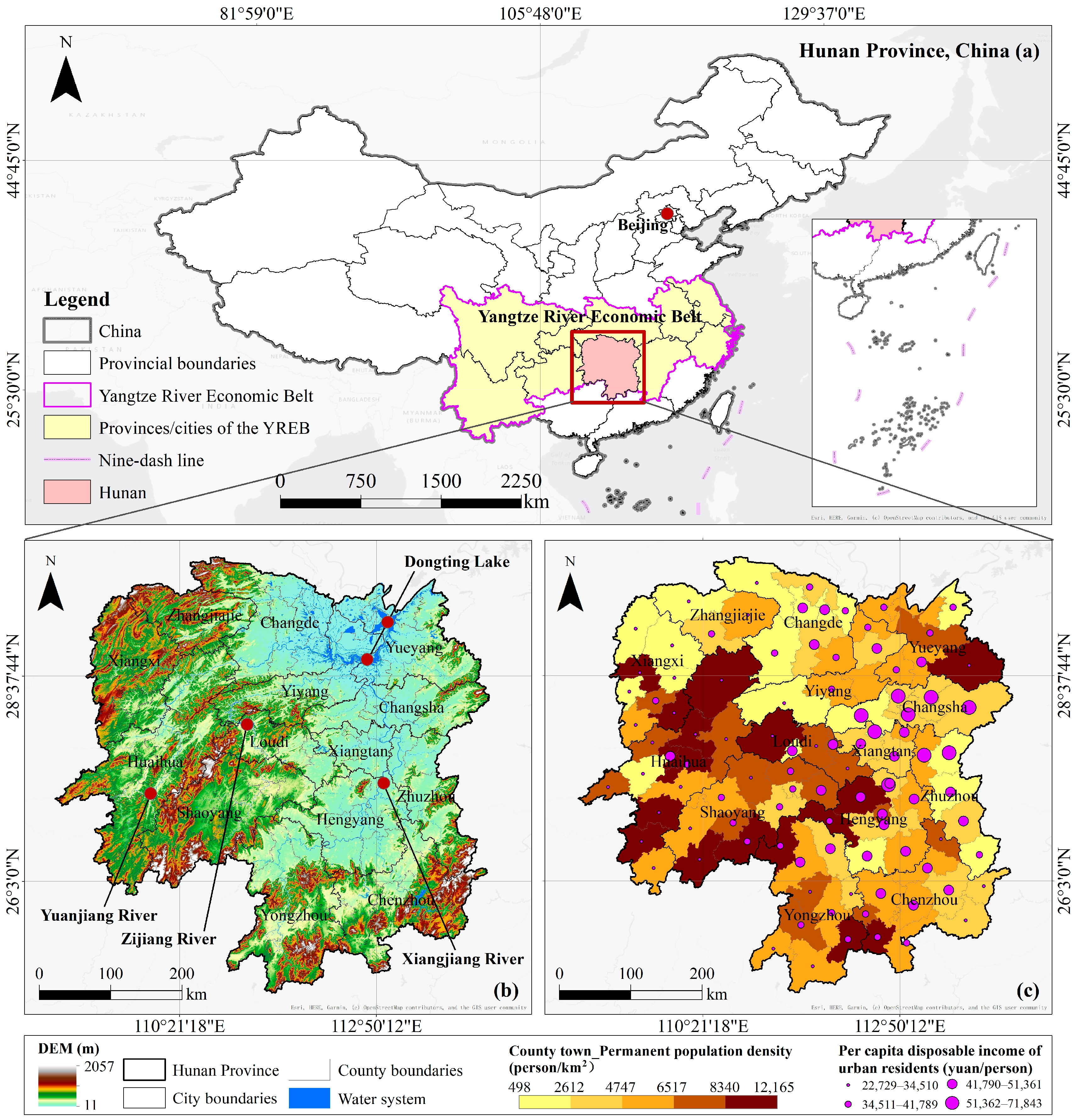
Hunan is located in central China, south of the middle reaches of the Yangtze River, covering a total area of approximately 211,800 km2. It administers 13 prefecture-level cities and 1 autonomous prefecture of ethnic minorities and is a province characterized by the integration development of multiple ethnic groups (Figure 2). In 2024, this province had a total resident population of 65.39 million, an urbanization rate of 62.07%, and a GDP of CNY 5.3 trillion, ranking 10th among provincial-level administrative regions in China (https://www.hunan.gov.cn/jxxx/jxxx.html (accessed on 1 November 2025)). Hunan features three predominant landforms: plains, hills, and mountains. It encompasses socioeconomically developed metropolitan regions with a high level of urban–rural integration, agriculturally modernized plain areas, as well as less developed impoverished mountainous areas. These highlight the province’s geographical diversity and multifunctionality. This study takes 101 CLUAs in Hunan as study units, including 15 urban areas of prefecture-level cities (with Wangcheng District of Changsha and Nanyue District of Hengyang separately listed according to the Hunan Urban Construction Statistical Yearbook), along with 86 urban areas of county-level cities and counties.

3.2. Indicator System Construction and Data Sources

3.2.1. Evaluation Indicator Systems of HSEQ

This study evaluates the HSEQ of CLUAs in Hunan using 29 indicators across four subsystems: NLC, MU, PSRL, and SD (Table 1). Although these dimensions are articulated differently, they are widely adopted and applied in HSEQ evaluations at multiple spatial scales [7,40,51,52]. Generally, NLC influences residents’ environmental comfort. For example, urban green spaces not only provide areas for recreation and exercise but also regulate ambient temperature, air humidity, and wind speed, effectively improving local thermal comfort and ventilation conditions in urban settings. MU’ completeness and operational efficiency directly affect the convenience and daily living costs of residents, including transportation, water, and gas supply. PSRL constitute the fundamental elements of a high quality of life, encompassing access to healthcare, education, leisure, and entertainment. In addition, a high-level SD not only indicates a better socioeconomic vitality and more open, diverse market and employment opportunities but also provides financial support for infrastructures and public services. Therefore, in this study, we have selected these four dimensions for the HSEQ assessment. Despite potential limitations, these four dimensions were selected because they generally represent the principal aspects of HSEQ in CLUAs of Hunan.
The data sources are as follows: Topographic relief was calculated using a Digital Elevation Model (DEM) obtained from the 2019–2025 global DEM dataset jointly released by the International Hydrographic Organization and the Intergovernmental Oceanographic Commission (https://www.gebco.net/data-products/gridded-bathymetry-data (accessed on 1 October 2025)). Air PM2.5 concentrations and temperatures were sourced from the high-resolution, high-quality near-surface PM2.5 dataset for China (2000–2023) [53] and the national monthly average temperature raster dataset (1901–2024) [54], respectively, released by the National Tibetan Plateau Science Data Center of China. Among the multi-year publicly available datasets, cross-sectional data from 2023 were selected for further processing in this study. In addition, other data were all derived from the Hunan Provincial Urban Construction Statistical Yearbook (2023), as well as statistical yearbooks and bulletins on national economic and social development at the provincial, municipal, and county levels. After collation and calculation, all data were spatially linked to the corresponding county-level administrative units in the ArcGIS Pro 3.1.6 platform.

3.2.2. Evaluation Indicator Systems of RHP

This study evaluates RHP of CLUAs in Hunan from six perception dimensions: ISS, UEHC, TC, PS, HC, and SR [40,55,56,57] (Table 2). These dimensions, respectively, represent the following: (1) Income serves as the “economic foundation” for meeting residents’ basic needs such as foods, clothing, and transportation, determining their quality of life and consumption capacity, and social security systems covering pensions, employment, and healthcare reduce uncertainty about future risks and provide a “safety buffer” for well-beings. (2) UEHC constitute the core determines of residence and life of residents, where high-quality housing conditions enhance both physical comforts and psychological satisfactions. (3) Transportation acts as the link connecting daily activities such as work, shopping, leisure, and medical care, serving as a key setting for measuring life efficiency and ease of access. (4) Equitable and high-quality PS enhance residents’ well-being and provide support for development from the “basic survival orientation” to the “higher-level demand orientation”. (5) A city’s historical continuity, local characteristics, and cultural atmosphere can enhance residents’ sense of identity and belonging, thereby reflecting a deeper level of happiness. (6) SR provides basic human needs, and the effectiveness of community emergency response, disaster prevention, and public security directly influence residents’ physical safety and psychological peace of mind.
The RHP dataset of this study is derived from an online questionnaire and contains 50 single-choice questions and 17 multiple-choice questions. Single-choice questions offered five options (A–E), corresponding to a gradually increasing score range. To better capture response variations, a nonlinear scoring system was applied: A = 0 points, B = 1 point, C = 3 points, D = 7 points, and E = 10 points. Each multiple-choice question also included five parallel options (A–E), with each selected option worth 2 points and a maximum of 10 points per question. The score for each indicator was calculated as the average across all valid responses collected from the respective CLUAs. A total of 8362 questionnaires were collected from 101 CLUAs in Hunan. After data cleaning, 7573 valid responses were retained, with 40 to 120 valid questionnaires per CLUA. And, the socio-demographic characteristics of the respondents are summarized in Table 3. Overall, respondents aged 44 and younger constituted the majority, accounting for 71.3% of the sample, while the middle-aged and older group (45+) represented 28.7%. This skew may be attributed to lower familiarity with smartphone use among older adults. Although a certain age imbalance is present, further examination at the prefecture-level city level shows that, apart from a few cities exhibiting notably higher or lower proportions in few age groups, the distribution of same-age cohorts in others generally fluctuates within a relatively narrow range. Therefore, the RHP survey data is reasonably representative for comparing RHP across different regions within Hunan.

3.3. Evaluation Methods

3.3.1. Entropy-Weighted TOPSIS Model

The TOPSIS (Technique for Order Preference by Similarity to Ideal Solution) model is a widely used decision-making method in systems engineering. Its core principle involves evaluating alternatives by measuring their distances from both the ideal best and worst solutions and then calculating a relative closeness score to rank the options. The entropy-weighted TOPSIS model integrates the entropy weight method with the classic TOPSIS approach. It first determines objective indicator weights using the entropy method and then applies the TOPSIS model to calculate relative closeness and establish rankings. This enhanced version not only reflects the relative importance of indicators more objectively but also better captures dynamic changes in indicator weights over time [58,59]. Based on its demonstrated objectivity, operationality, and comparability, this model has proven to be a well-established and effective approach across various disciplines, including socioeconomics and spatial planning [36,59,60]. Given its widespread adoption in China for multidimensional complex indicators, such as in human settlement and urban diagnostic evaluations, this study employs the model for the comprehensive analysis of HSEQ and RHP. The computational procedure includes the following steps:
  • Step 1: Constructing the normalized evaluation matrix
To evaluate m objects against n indicators, an initial decision matrix X is constructed. The matrix is then normalized using Equations (1) and (2) for positive and negative indicators, respectively, resulting in the normalized matrix Z.
The formula for positive indicators is as follows:
z i j = x i j m i n 1 i n x i j m a x 1 i n x i j m i n 1 i n x i j
The formula for negative indicators is as follows:
z i j = m a x 1 i n x i j x i j m a x 1 i n x i j m i n 1 i n x i j
X = x 11 x 12 x 1 n x 21 x 22 x 2 n x m 1 x m 2 x m n Z = z 11 z 12 z 1 n z 21 z 22 z 2 n z m 1 z m 2 z m n
In Equations (1)–(3), i = 1, 2, …, m; j = 1, 2, …, n.
  • Step 2: Determining the entropy weights:
w j = 1 e j j = 1 n 1 e j
In Equation (4), e j = k i = 1 m p i j × l n   p i j , p i j = z i j i = 1 m z i j , k = 1 l n   m . w j denotes the weight of the j-th indicator, satisfying 0 w j 1 and j = 1 n w j = 1 ; e j represents the information entropy, which essentially reflects the expected value of the information content of the indicator; 1 e j is the information utility value; p i j denotes the characteristic proportion of the indicator, which is assumed that when p i j = 0 , p i j × l n   p i j = 0 is treated as 0; k is the Boltzmann constant.
  • Step 3: Constructing the weighted normalized matrix.
The weighted normalized decision matrix V is obtained by applying the entropy-based weights to the normalized matrix Z.
V = v 11 v 12 v 1 n v 21 v 22 v 2 n v m 1 v m 2 v m n = z 11 w 1 z 12 w 1 z 1 n w 1 z 21 w 2 z 22 w 2 z 2 n w 2 z m 1 w m z m 2 w m z m n w m
  • Step 4: Determining the positive and negative ideal solutions.
V j + = m a x v 1 j , v 1 j , L , v n j ,   V j = m i n v 1 j , v 2 j , L , v n j
  • Step 5: Calculating the distance of each alternative from the ideal solution.
D i + = j = 1 n V j + v i j 2 ,   D i = j = 1 n v i j V j 2
  • Step 6: Calculating the comprehensive evaluation index.
C i = D i D i + + D i
In Equation (8), C i represents the comprehensive evaluation index, also referred to as the relative closeness, which ranges between 0 and 1. The closer the C i value is to 1, the better the evaluation result.

3.3.2. Hotspot Analysis

Hotspot analysis is used to identify statistically significant clusters of high and low values. This tool conceptualizes spatial relationships between features in two ways: distance matrices and adjacency matrices. In this study, the inverse distance weighting method was adopted, and Euclidean distance was chosen as the distance metric. It aligns with the first law of geography, which posits that spatial association strength decreases with increasing distance. In ArcGIS, hotspot analysis is used to evaluate whether input features form hotspots or cold spots within defined spatial cells or grids, based on specified analysis fields, event regions, and aggregation methods. Output includes fields such as Z-value, p-value, and confidence level. Higher positive Z-values and lower p-values indicate significant high-value spatial clusters (hotspots), while lower negative Z-values and lower p-values indicate significant low-value spatial clusters (cold spots). Z-values close to 0 indicate the absence of significant spatial clusters [61]. The Z-score is calculated as follows:
G i * = j = 1 n w i , j x j X ¯ j = 1 n w i , j S n j = 1 n w i , j 2 j = 1 n w i , j 2
In Equation (9), x j is the attribute value of element j; w i , j is the spatial weight between elements i and j; n is the total number of elements; and X ¯ = j = 1 n x j n , S = j = 1 n x j 2 n ( X ¯ ) 2 .

3.3.3. Comprehensive Adaptation Model

Comprehensive adaptation model aims to reveal the intrinsic mechanisms and characteristic manifestations of mutual adaptation and matching between different systems [62]. This model offers distinct advantages in assessing whether there are significant coordination and consistency in the spatial distribution between two independent systems and is therefore widely accepted and applied. In this study, it was employed to examine the spatial adaptation relationships between HSEQ and RHP. It is constructed primarily from two aspects: adaptability and matching degree. Adaptability emphasizes the process through which systems achieve coordinated development under the mechanisms of self-regulation and self-enhancement, quantified using the coupling coordination model. Matching degree focuses on describing the state of correspondence and coordination between systems, characterized by the sequence matching degree model. Based on these dimensions, this study combines the adaptability and matching degree through weighted summation to derive the comprehensive adaptation index. The calculation steps are as follows:
  • Step 1: Calculating the adaptability index. The formula is as follows:
C = 2 × Y 1 Y 2 Y 1 + Y 2 2 1 2
In Equation (10), C represents the coupling degree, satisfying 0 ≤ C ≤ 1; Y1 and Y2 denote the HSEQ and RHP values of a specific CLUA, respectively; and the closer the C value is to 1, the stronger the interdependence and the closer the connection between the two systems.
To assess the benignity of the coupling relationship and overcome the limitation of the coupling degree in reflecting the respective development levels of the subsystems, the coupling coordination degree is introduced. The formula is expressed as follows:
F = α Y 1 + β Y 2 ,   D = C × F
In Equation (11), D represents the coupling coordination degree, satisfying 0 ≤ D ≤ 1, where the closer the value of D is to 1, the higher the coupling coordination degree; F represents the comprehensive evaluation exponential function; and α and β are the weights of the two systems, set as α = β = 0.5 [62].
  • Step 2: Calculating the matching degree index. The formula is as follows:
M = 1 O 1 O 2 U 1
In Equation (12), M represents the matching degree index, satisfying 0 ≤ M ≤ 1, where the closer the M value is to 1, the higher the matching degree between the two systems; the variables O1 and O2 correspond to the sequentially ordered values (from smallest to largest) of the HSEQ and RHP value sequences, respectively; and U denotes the total number of CLUAs.
A = a D + b M
In Equation (13), A represents the comprehensive adaptation degree; D denotes the coupling coordination degree index; M indicates the matching degree index; and a and b represent the weights assigned to the D and M, respectively. Given that M only reflects symmetrical or consistent relationships between systems and does not fully capture the complexity of adaptation states, this study sets a = 0.6 and b = 0.4 [37]. With reference to the Gini coefficient classification, the comprehensive adaptation index is divided into five levels: [0, 0.5) indicates extremely adaptation; [0.5, 0.6) represents less adaptation; [0.6, 0.7) denotes basic adaptation; [0.7, 0.8) signifies moderate adaptation; and [0.8, 1] reflects high adaptation.

3.3.4. Relative Development Model

Although the comprehensive adaptation model can clearly determine the spatial adaptation relationships between HSEQ and RHP, it has obvious limitations in intuitively reflecting the relative relationships between the two, such as advanced, lagging, or balanced, which is not conducive to guiding regional human settlement planning and policymaking. Therefore, the relative development model is used to assess the relative lag between HSEQ and RHP [57]. The formula is as follows:
R = H S E Q R H P
In Equation (14), R represents the relative development degree. Both the HSEQ and RHP lie in the [0, 1] range. When R = 1, it indicates fully balanced development between HSEQ and RHP. When R < 0.5, it signifies that HSEQ significantly lags behind RHP. When 0.6 < R ≤ 0.9, it suggests that HSEQ is relatively lower than RHP. When 0.9 < R ≤ 1.1, it reflects basically balanced development between HSEQ and RHP. When 1.1 < R ≤ 1.4, it indicates that RHP is relatively lower than HSEQ. When R > 1.4, it demonstrates that RHP significantly lags behind HSEQ.

4. Results

4.1. Human Settlement Environment Quality (HSEQ)

4.1.1. Distribution of HSEQ Subsystems

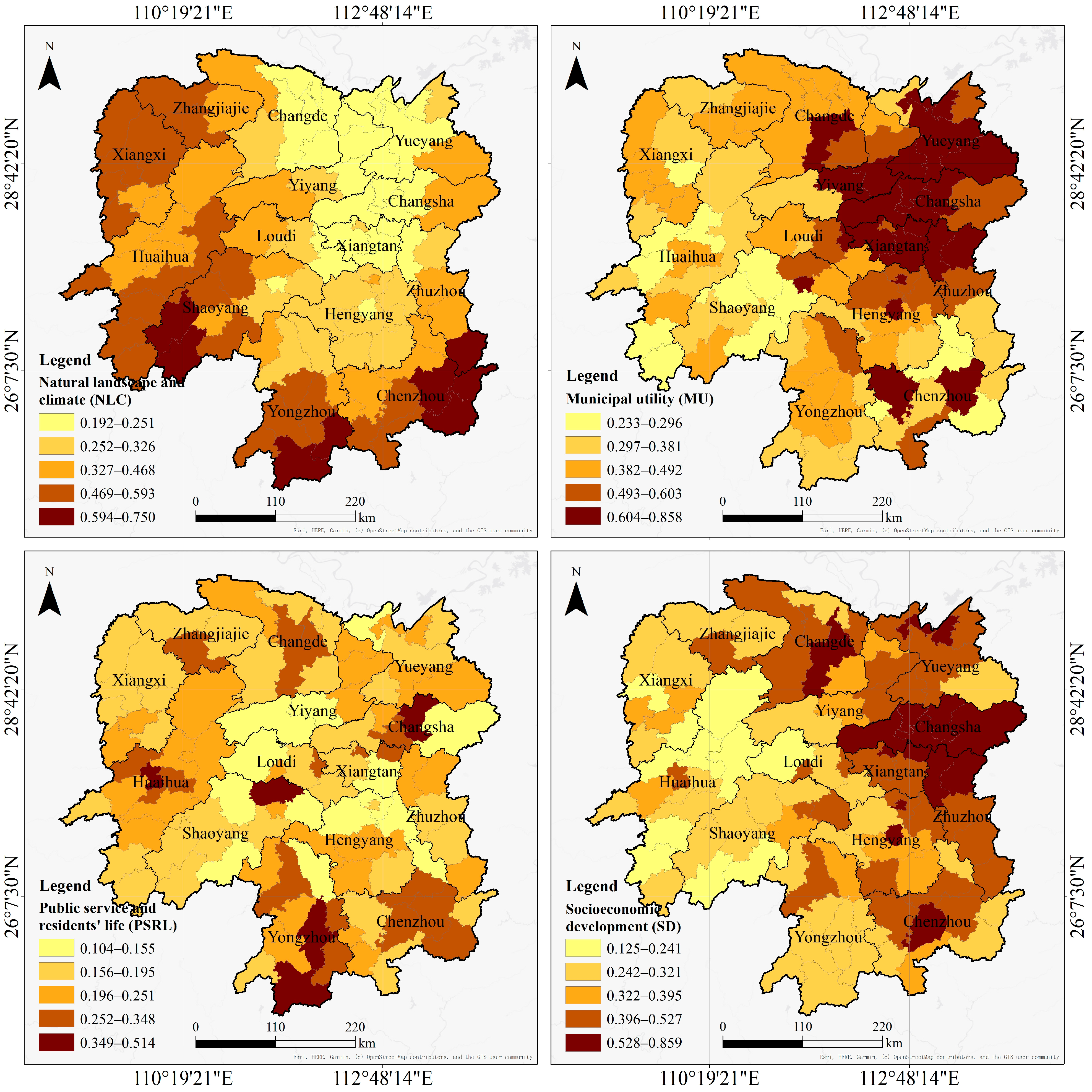
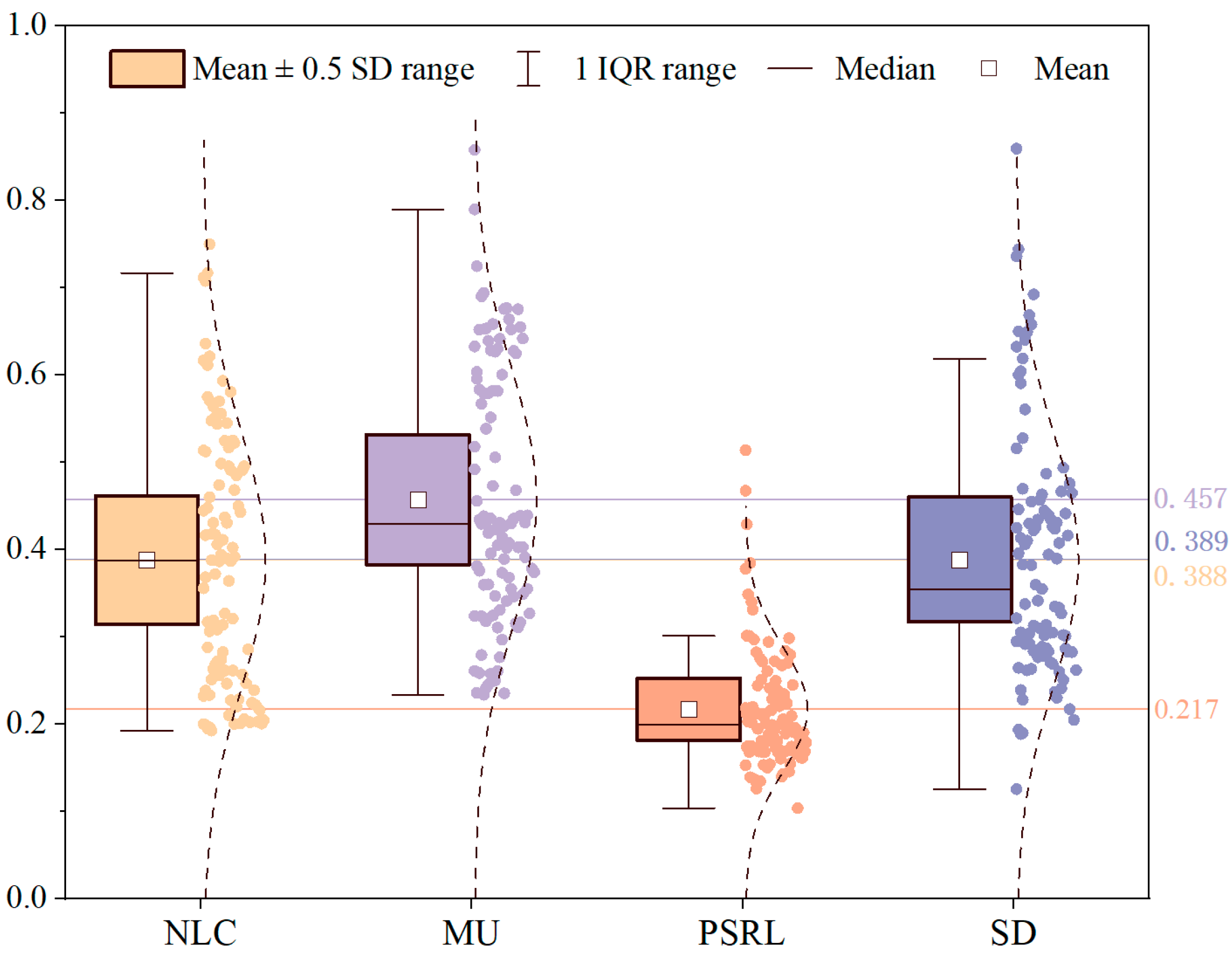
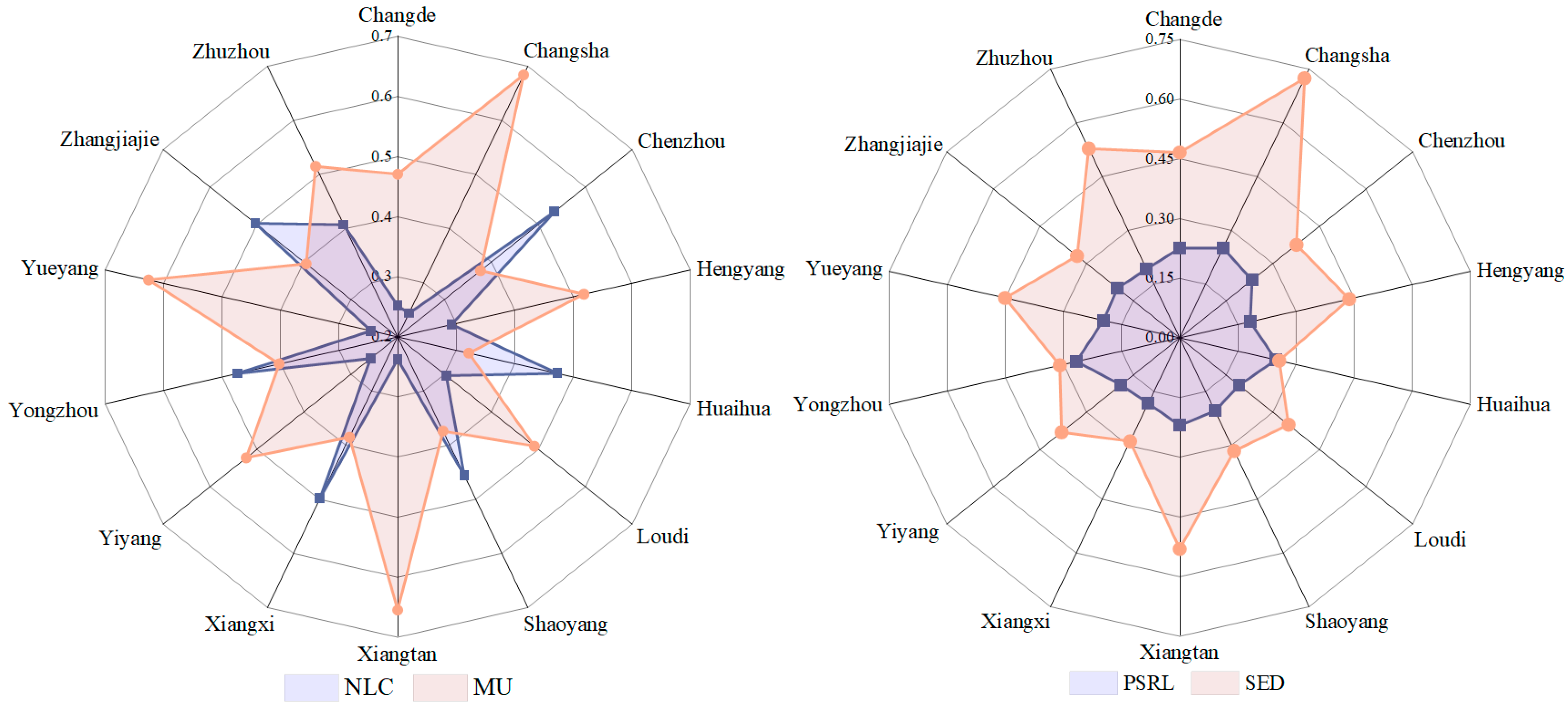
The average NLC value across 101 CLUAs was 0.388, with the lowest value in Changsha urban area (0.149) and the highest value in Guidong County of Chenzhou (0.750), representing a difference of 0.501 (Figure 3 and Figure 4, Table 4). Spatially, NLC values exhibited a gradient increase from the Dongting Lake Plain in northeast Hunan to the western and southern mountainous areas (Figure 3 and Figure 5). The Dongting Lake Plain, characterized by high urbanization levels and intensive construction land expansion, showed significant disturbance to natural ecosystems, resulting in elevated PM2.5 concentrations and frequent extreme high-temperature events in summer. In contrast, the mountainous areas of western and southern Hunan, with their well-preserved natural environment and high vegetation coverage, provided residents with a more comfortable living environment.
The average MU value across 101 CLUAs was 0.457. CLUAs in the Dongting Lake Plain and the Changsha–Zhuzhou–Xiangtan metropolitan area in eastern Hunan demonstrated more developed infrastructure compared to mountainous areas in western Hunan such as Huaihua and Shaoyang. Firstly, eastern CLUAs exhibited significantly higher road network density. For example, Lianyuan City of Loudi recorded a density of 16.928 km/km2, more than double the provincial average of 7.505 km/km2. Secondly, the eastern CLUAs offer greater convenience and cost-effectiveness in terms of water and gas supply. On the one hand, proximity to high-quality water sources including Dongting Lake, the Xiang River, and the Li River ensured stable water supply. On the other hand, direct access to the “West-to-East Gas Transmission” and “Sichuan-to-East Gas Pipeline” networks substantially reduced transit costs. In addition, concentrated industrial and residential populations in eastern Hunan enabled efficient distribution of fixed costs for pipeline maintenance and equipment depreciation.
The average PSRL value across 101 CLUAs was 0.217. While the urban areas of prefecture-level cities generally scored higher, central Hunan including Anhua, Xinhua, and Longhui formed a distinct “low-value depression”. Compared with other subsystems, PSRL values show smaller differences (variance: 0.071) and a weaker spatial clustering effect. Since the 2016 implementation of Implementation Opinions on Deepening New Urbanization of Hunan, the province has prioritized the development of small and medium-sized towns, emphasizing equal access to education and healthcare as key attractions for rural migrants. Recent initiatives, including special development funds for less developed regions and policies such as “urban–rural integration” and “county-level medical consortia,” have progressively addressed public service gaps in these areas.
The average SD value across 101 CLUAs was 0.389, displaying a general “east-high, west-low” pattern. Eastern CLUAs historically benefited from locational advantages, industrial clusters, and policy support, while western CLUAs faced development constraints due to mountainous terrain, inadequate transportation, and ecological conservation requirements. However, this regional disparity has shown signs of mitigation. Recent provincial government initiatives, including special development funds for western Hunan, have supported ecological tourism and specialty agriculture, gradually fostering a new pattern of “complementary development with narrowing gaps” between eastern and western regions.

4.1.2. Distribution of Composite HSEQ

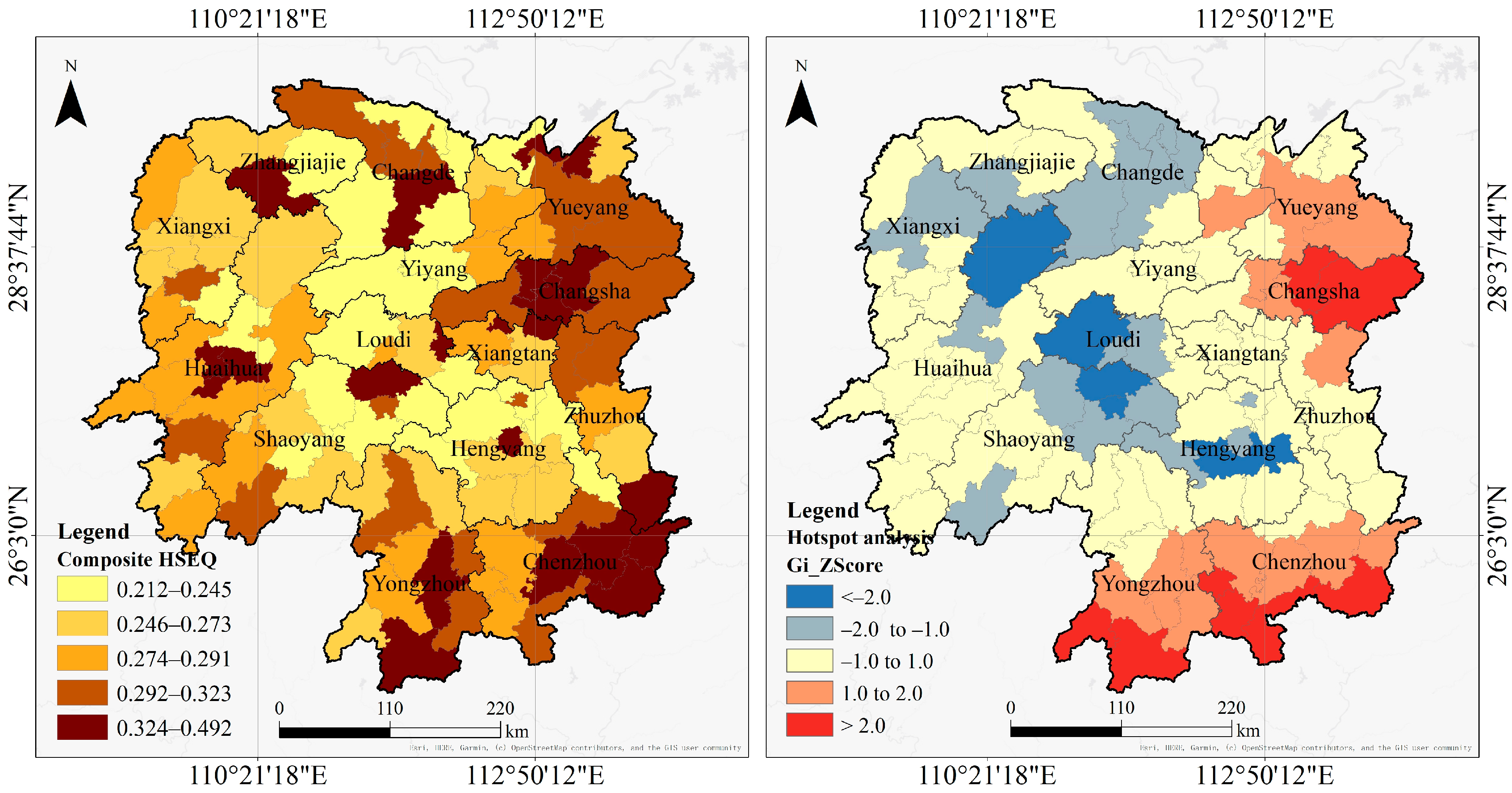
Using the entropy weight method, weights were assigned to 29 indicators across four HSEQ subsystems. The results are as follows: NLC = 0.1624, MU = 0.1355, PSRL = 0.5285, and SD = 0.1421, with PSRL having the highest weight (Table 1). The TOPSIS model was further applied to measure the composite HSEQ levels of 101 CLUAs in Hunan. The average HSEQ value across all CLUAs was 0.290, with Xinshao County of Shaoyang and Ningyuan County of Yongzhou recording the highest values of 0.492 and 0.459, respectively (Figure 6).
Regionally, CLUAs in the Dongting Lake Plain and the Changsha–Zhuzhou–Xiangtan metropolitan area demonstrate the highest levels of HSEQ, as well as being the most densely populated and economically vibrant areas. While intensive development has stressed the natural environment, these areas benefit from well-established municipal infrastructure, comprehensive public services, and vigorous industrial growth. Secondly, CLUAs of Yongzhou and Chenzhou in southern Hunan also demonstrate relatively high HSEQ, attributable to their balanced performance across all four subsystems: their location in the Nanling Mountains provides a favorable living environment and a pleasant climate, while their public services are comparable to those in the core metropolitan area, supplemented by robust infrastructure and socioeconomic level. Thirdly, western Hunan maintains a moderate HSEQ level, where superior natural ecology and steadily improving public services help offset the region’s relatively slower socioeconomic progress. By contrast, local areas of central Hunan, including western Yiyang, northern Hengyang and Shaoyang, and Loudi, record relatively low-level HSEQ, largely due to less developed public service provision. Using the natural breaks method in GIS, HSEQ values were categorized into five tiers, with 59 CLUAs classified at medium or higher levels and 42 falling into the relatively low or lower tiers (Table 5).

4.2. Residents’ Happiness Perception (RHP)

4.2.1. Distribution of RHP Subsystems

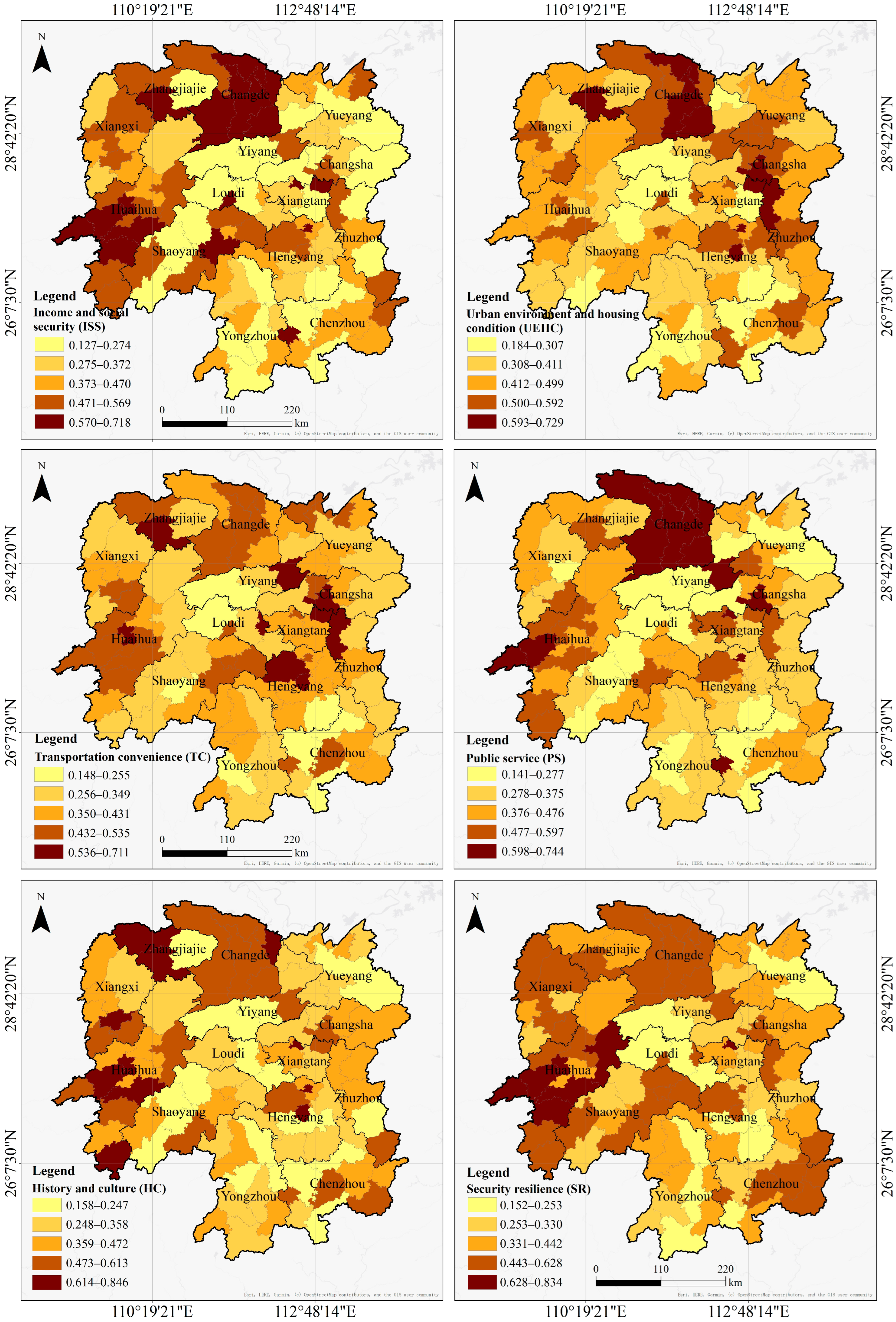
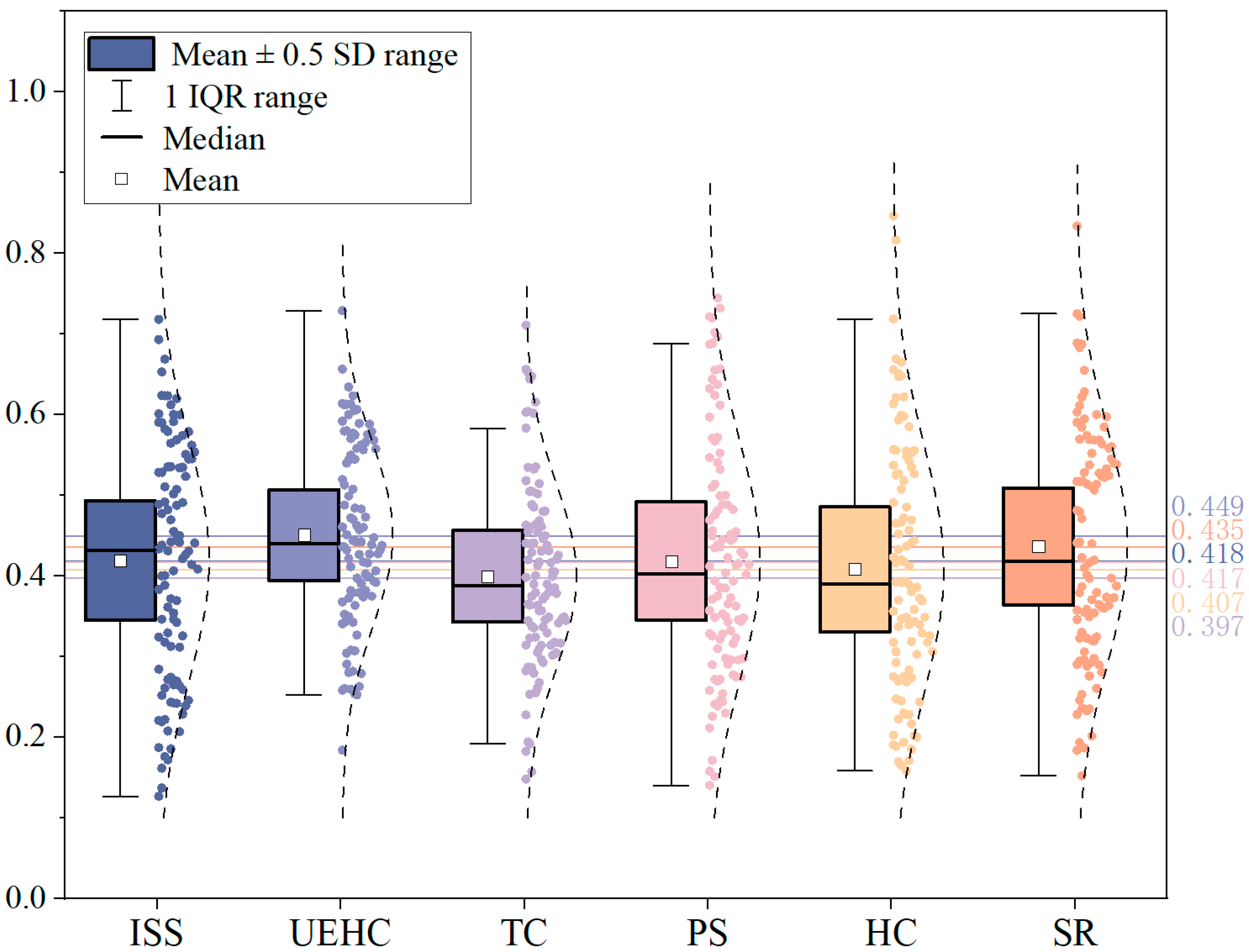
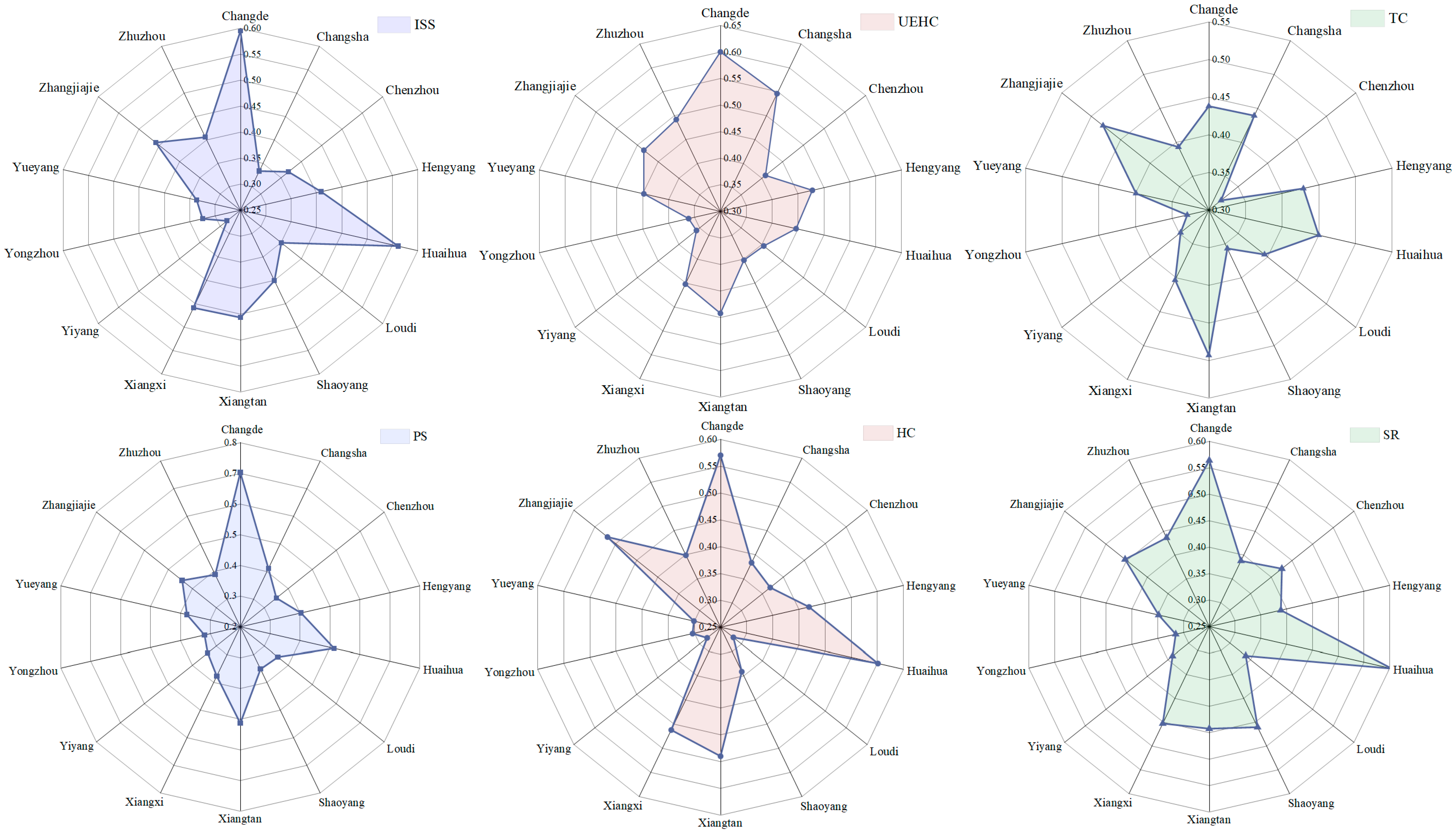
For ISS, the average score reached 0.418 (Figure 7 and Figure 8, Table 6), with northern (Changde) and western (Zhangjiajie, Xiangxi Tujia and Miao Autonomous Prefecture, and Huaihua) Hunan demonstrating higher ISS values (Figure 7 and Figure 9). Hongjiang City in Huaihua achieved the highest ISS score of 0.718, while eastern Hunan maintained medium levels and central Hunan recorded relatively lower performance. For UEHC, the average score stood at 0.449. The urban areas of prefecture-level cities, the Changsha–Zhuzhou–Xiangtan metropolitan area, and Changde showed superior UEHC values, with Changsha urban area leading at 0.729. For TC, the average score reached 0.397, with the core areas of the Changsha–Zhuzhou–Xiangtan metropolitan area and the urban areas of prefecture-level cities outperforming other areas, while the differences in other areas were not significant. For PS, the average score reached 0.417. Changde’s CLUAs demonstrated consistently high performance, followed by local areas of Huaihua and the Changsha–Zhuzhou–Xiangtan metropolitan area. For HC, the average score reached 0.407, with western Hunan’s ethnic integration zones showing particularly rich cultural heritage and folk traditions, where strong family social networks further enhanced cultural identity and belonging among minority residents. For SR, the average score reached 0.435. Western and northern Hunan maintained their strong performance, with Hongjiang City of Huaihua achieving an 0.834.

4.2.2. Distribution of Composite RHP

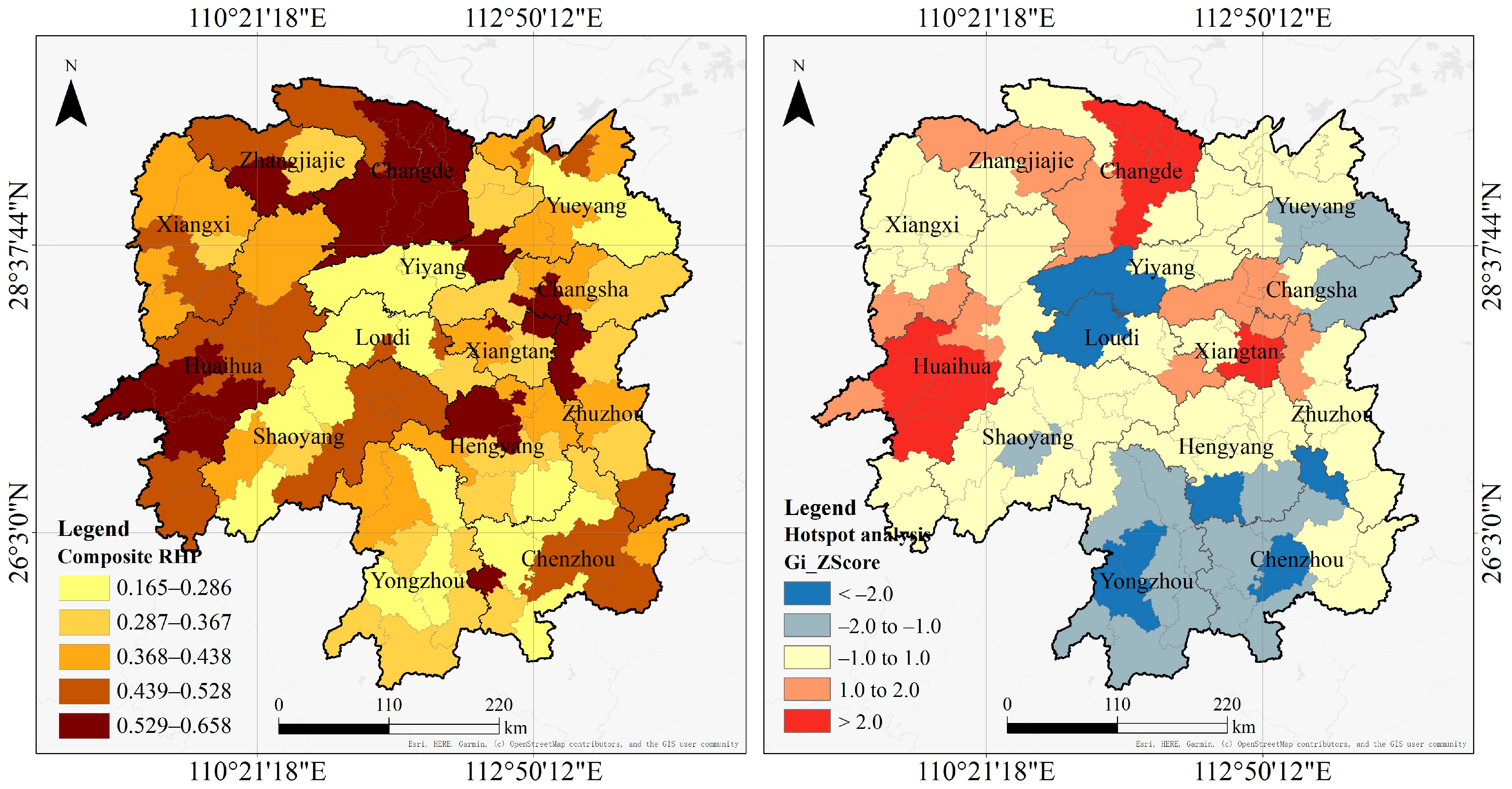
As with HSEQ, weights were assigned to 57 indicators across six RHP subsystems: ISS = 0.1580, UEHC = 0.1576, TC = 0.2250, PS = 0.2090, HC = 0.1058, and SR = 0.1446, with TC and PS carrying the highest weights. Further application of the TOPSIS model to calculate the composite RHP level revealed an average value of 0.419 across all CLUAs, with Huaihua urban area and Hongjiang City recording the highest RHP scores of 0.658 and 0.629, respectively (Figure 10).
Regionally, CLUAs with higher composite RHP levels are concentrated in four types of areas: Firstly, Changde of northern Hunan’s (average = 0.574) appeal stems from its “small but beautiful” urban character. Unlike the fast pace and high pressure of large cities, Changde’s rich history, low cost of living, beautiful urban landscape, and convenient public services create a tangible sense of quality in small-city life. Secondly, multi-ethnic integration zones in western Hunan (average = 0.478) have ethnic cultures like the Dong people’s Grand Song and Miao people’s Geteng that are sustained through familial and village networks, strengthening social cohesion, while national development funds have improved infrastructure, public services, and culturally distinctive industries such as tourism and biomedicine, boosting RHP. Thirdly, the urban areas of prefecture-level cities (average = 0.540) generally offer better infrastructure, public services, transportation, diverse employment opportunities, and higher incomes. Finally, we have individual counties like Lengshuijiang City of Loudi (0.488) and Jiahe County of Chenzhou (0.588). Lengshuijiang, a traditional industrial base, has transformed outdated factory areas into livable communities with enhanced infrastructure and public services, supported by sustained government efforts in livelihood security and employment. Jiahe, a pilot county for urban–rural integration, nearly doubled its built-up area in recent years, added multiple parks to improve recreational spaces, and was recognized as a “Top 10 Rural Revitalization Case” in Hunan in 2024 for its achievements in promoting urban–rural integration and enhancing public welfare. Using GIS natural breaks classification, RHP was divided into five tiers, with 64 CLUAs at or above the medium level and 37 in the relatively low or lower categories (Table 7).

4.3. Adaptation Relationships Between HSEQ and RHP

4.3.1. Comprehensive Adaptation Relationships

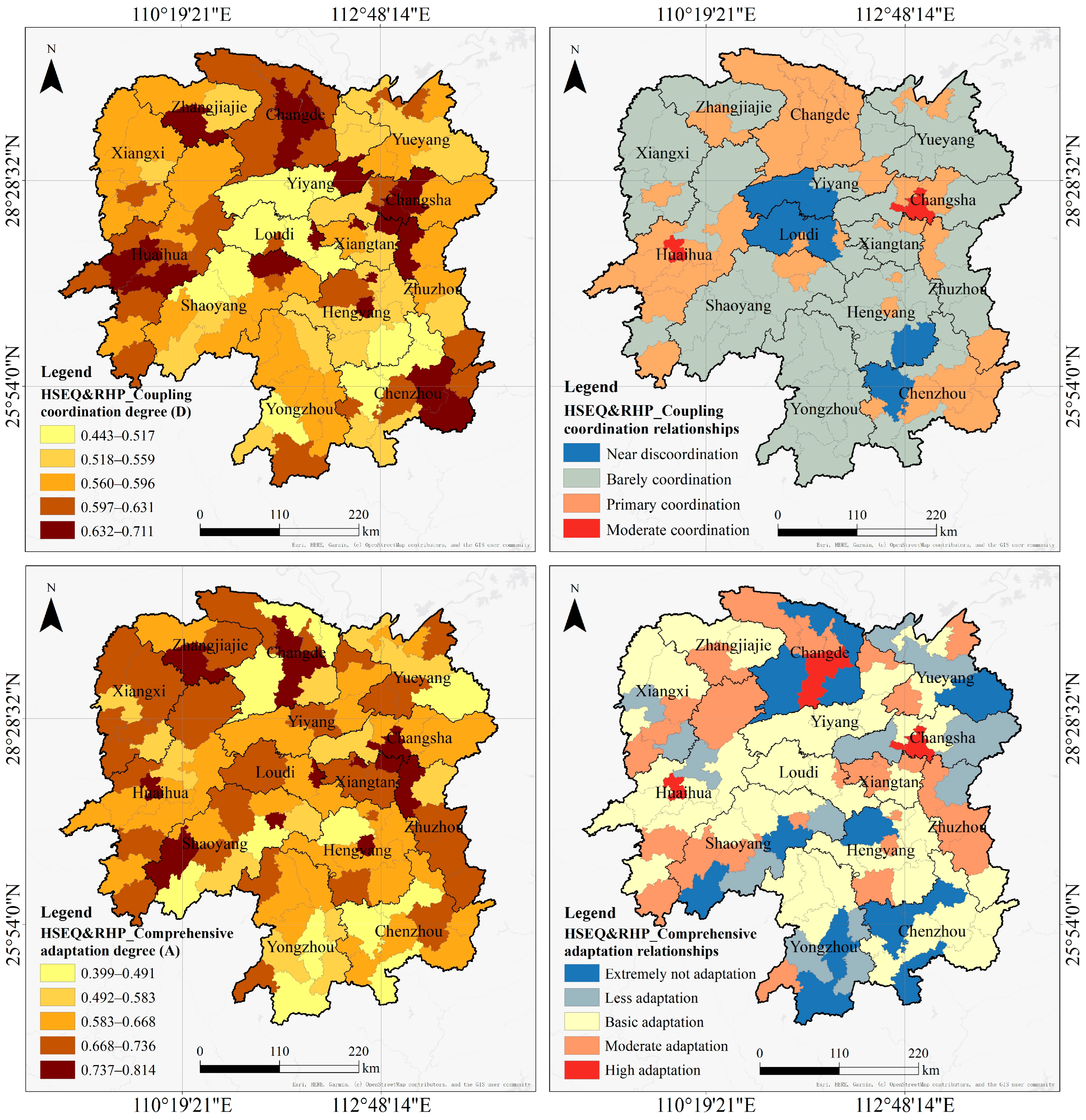
For coupling coordination degree, four distinct tiers were identified: 5 CLUAs were classified as having near coordination, including Lianyuan City and Xinhua County of Loudi, Guiyang County of Chenzhou, Anhua County of Yiyang, Leiyang City of Hengyang, and Yueyang urban area; 37 CLUAs reached primary coordination, mainly distributed in Changde, Huaihua, Chenzhou, and the core area of the Changsha–Zhuzhou–Xiangtan metropolitan area; only 2 CLUAs (Changsha and Huaihua urban area) achieved moderate coordination; and the remaining 57 CLUAs were categorized as being barely coordinated (Figure 11). In summary, the coupling coordination level between HSEQ and RHP across the 101 CLUAs remains generally low, dominated by barely coordinated and primary coordination.
For comprehensive adaptation degree, five distinct tiers were identified (Figure 11 and Table 8): 29 CLUAs fell into the extremely low or low adaptation tiers, primarily located in southern Hunan and the Dongting Lake Plain in northern Hunan; 42 CLUAs showed basic adaptation, while 30 CLUAs reached moderate or high adaptation, mainly concentrated in the core area of the Changsha–Zhuzhou–Xiangtan metropolitan area, with scattered distribution in western and northern Hunan. Among these, the urban areas of Huaihua, Changsha, and Changde recorded the highest adaptation levels. In summary, only a limited number of CLUAs achieved moderate or high adaptation between HSEQ and RHP. This indicates that higher HSEQ does not necessarily translate into higher RHP, revealing a noticeable mismatch between the explicit dimensions measured in HSEQ evaluation and the perceptual dimensions reflected in RHP.

4.3.2. Relative Development Relationships

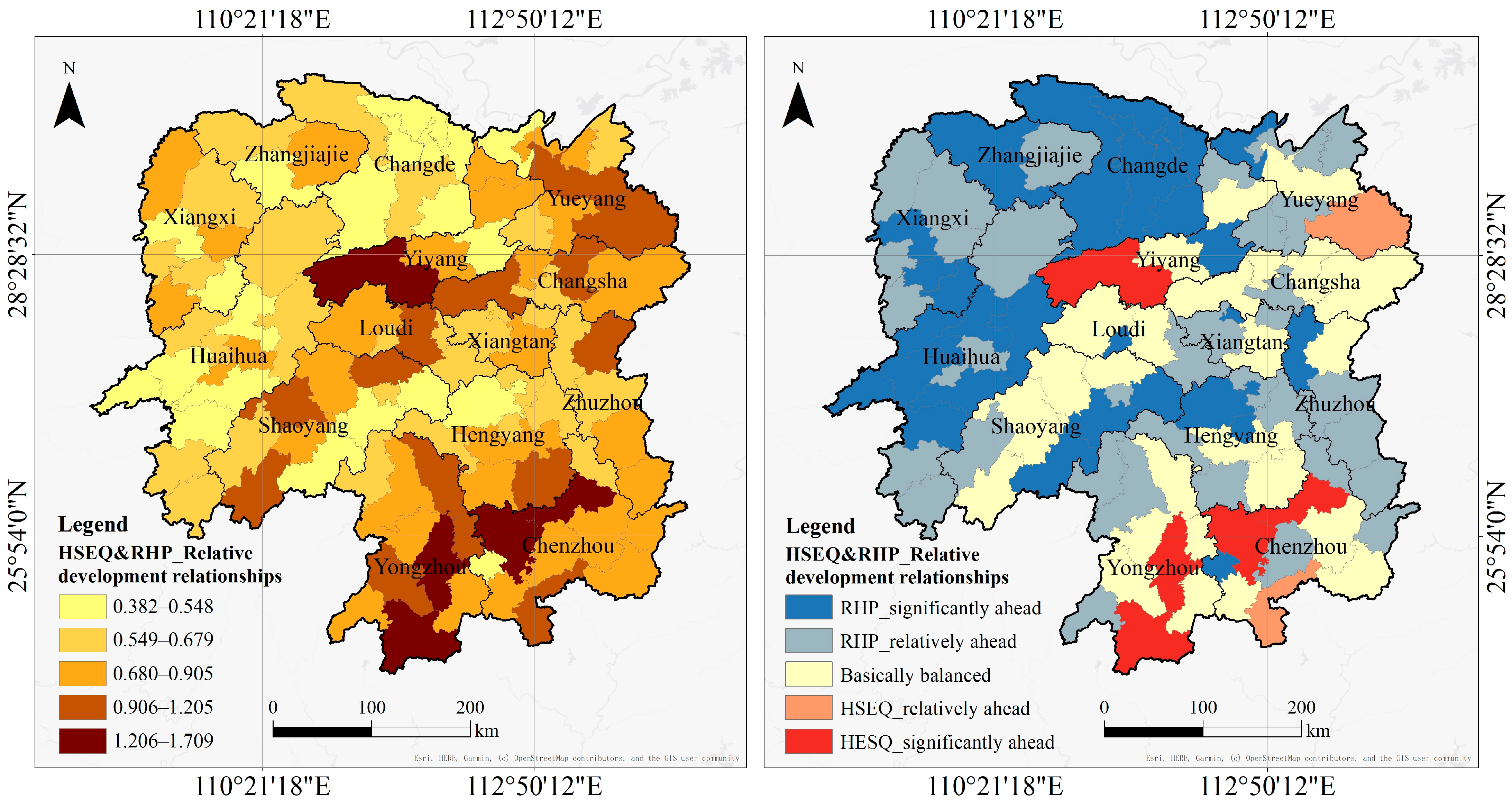
For relative development relationships, four distinct tiers were identified (Figure 12 and Table 9): Seventy-nine CLUAs, accounting for the majority in Hunan, showed RHP significantly or relatively ahead HSEQ. These CLUAs exhibit relatively low HSEQ but elevated RHP, primarily distributed in western and local areas of central Hunan. Twelve CLUAs demonstrated basically balanced development between RHP and HSEQ, mainly located in the Dongting Lake Plain, local areas of central Hunan, as well as Yongzhou and Chenzhou. In contrast, 10 CLUAs displayed HSEQ significantly or relatively ahead of RHP, sporadically distributed across four cities: Yueyang, Yiyang, Yongzhou, and Chenzhou. Despite their higher HSEQ levels, these CLUAs recorded relatively lower RHP values.

4.3.3. Correlation Between HSEQ Indicators and Composite RHP

Kendall’s coefficient was used to identify the main HSEQ correlation factors of the CLUA’s RHP, and a total of 13 factors were identified. In the PS subsystem, six factors had a significant correlation with RHP: per capita park green space area (p = 0.14 *), per capita public parking spaces (p = 0.17 **), quota of health technicians per 10,000 people (p = 0.27 ***), quota of hospital beds per 10,000 people (p = 0.17 **), quota of primary school students per 1000 students (p = 0.17 **), and quota of full-time secondary school teachers per 1000 students (p = 0.13 *). Notably, while TC received the highest weight (0.2250) among the six RHP subsystems, the combined weight of road density and its illumination rate in the HSEQ factors was only 0.0628, and their correlation is not statistically significant. This reflects how the overall stationarity of the explicit data of CLUAs’ transportation development masks fluctuations in residents’ actual experiences. At the perception level, residents seem to be more concerned with the micro-level, real-world traffic conditions than with the data. For example, per capita public parking spaces, as a perceptible transportation factor within the HSEQ framework, shows a significant positive correlation with RHP. In the SD subsystem, four factors had a significant correlation with RHP: per capita GDP (p = 0.16 **), per capita urban-town disposable income (p = 0.14 *), per capita total retail sales of consumer goods (p = 0.16 **), and the proportion of secondary and tertiary industries (p = 0.21 ***). However, the impacts of NLC, MU, and PSRL on RHP are relatively weak. Among these, the average summer temperature (p = −0.15 **), the green coverage rate (p = 0.14 *), and the road density (p = 0.12 *) of the built-up area have a certain impact on the RHP. In summary, within the county’s availability of public services and the socioeconomic development level remain the main factors determining the RHP level.
Note: ***, **, and * indicate significance at the 0.01, 0.05, and 0.1 confidence levels, respectively.

5. Discussions

5.1. Spatial Inadaptations and Their Causes Between HSEQ and RHP

County towns serve as critical nodes for urban–rural integration in China, accommodating substantial urban and rural populations within county territories. Human settlements, such as their living conditions, the ecological environment, and the infrastructure of county towns, directly affect the quality of life of residents [11]. Clarifying the spatial adaptations between HSEQ and RHP and addressing human settlement shortcoming in a targeted manner are essential for avoiding uneven distribution of public resources and promoting coordinated economic–social–ecological benefits and high-quality development.
This study developed evaluation systems for HSEQ and RHP from explicit and perception perspectives, respectively, addressing the limitations of previous research that often treated the two in isolation and overlooked their spatial adaptation relationships. Consistent with existing findings, economically developed areas generally exhibit higher HSEQ [25,62]. Although the natural environment in the Dongting Lake Plain and the Changsha–Zhuzhou–Xiangtan metropolitan area is less pristine than in western and southern mountainous areas, these areas achieve higher HSEQ through superior socioeconomic development, infrastructure, and public services. High RHP values are mainly found in ethnic minority regions of western Hunan, where intergenerational transmission of local culture strengthens social cohesion and identity, forming the social foundation for high RHP. Additionally, sustained policy support and resource investment from the state have significantly improved public services and industrial development, providing material and institutional support for high RHP. A notable exception exists in local areas of central Hunan, where CLUAs face the dual challenge of low HSEQ and RHP. Cities such as Loudi and Yiyang exhibit mediocre socioeconomic development and lagging public services, resulting in lower performance in both dimensions compared to other areas. For comprehensive adaptation relationships, 30 CLUAs achieved moderate or high adaptation, primarily located in the core area of the Changsha–Zhuzhou–Xiangtan metropolitan area and northwestern Hunan. For relative development relationships, 79 CLUAs have significantly or relatively higher RHP than HSEQ, mainly distributed in the multi-ethnic integration areas of western and central Hunan. In contrast, only 10 CLUAs demonstrate HSEQ significantly or relatively surpassing RHP, sporadically distributed across 4 cities: Yueyang, Yiyang, Yongzhou, and Chenzhou. This indicates that higher HSEQ does not automatically translate into higher RHP.
The observed inadaptations between HSEQ and RHP may stem from the following causes: On the one hand, the overall stability of HSEQ masks the localized variability of RHP, revealing a spatial scale decoupling between macro data-driven HSEQ and residents’ micro-level lived experience. In reality, residents are more attuned to micro-scale elements such as access to basic services, the quality of neighborhood infrastructure, the environmental livability, and social inclusivity. These factors are often dispersed and unevenly distributed across urban spaces, making them difficult to capture fully through composite HSEQ indicators. Consequently, even in areas with relatively high aggregate HSEQ, RHP may remain subdued if the living environment fails to address specific contextual needs. Therefore, while HSEQ evaluations offer valuable and widely accepted references for regional human settlement planning and policymaking, they should not be over-relied upon. There is a pressing need to shift from a holistic, macro perspective toward a more nuanced, resident-centered approach, while also acknowledging and addressing spatial non-stationarity. By integrating micro data, such as community surveys, daily activities, and localized feedbacks, into HSEQ evaluations, policymakers can better align objective environmental improvements with residents’ subjective needs, thereby promoting synergistic progress between the two. On the other hand, national policy attention and local socio-cultural contexts also profoundly shape RHP. China’s ethnic minority areas have long been located in mountainous regions, where economic development, infrastructure, and public services have lagged behind. However, with the implementation of national poverty alleviation initiatives and targeted financial and policy support for ethnic minority areas, significant improvements in urban living conditions have been achieved. And, coupling with the stable kinship networks and strong socio-cultural cohesion within minority communities, residents’ sense of well-being has risen significantly, even surpassing levels observed in some economically developed regions.

5.2. Implications for Urbanization and Human Settlement Environment Development

Amid accelerating global urbanization, cities worldwide are confronting a series of human settlement challenges, including traffic congestion, deteriorating habitat quality, and uneven distribution of public facilities [35,57]. In response to these issues, China has launched a people-centered new-type urbanization strategy. In this new phase, effectively resolving existing human settlement conflicts, systematically improving the quality of living environments, and tangibly enhancing residents’ sense of fulfillment and well-being have become central goals and essential requirements for advancing high-quality urbanization [2].
In this study, although objective HSEQ indicators can provide valuable insights for regional human settlement planning and policymaking, equal attention should be paid to the subjective feedback from residents. For regions where RHP exceeds HSEQ, such as western Hunan, policy efforts should focus on addressing the key contradictions in human settlements, such as vigorously supporting industries to transform the backward economy. For regions where HSEQ clearly surpasses RHP, represented by the Changsha–Zhuzhou–Xiangtan metropolitan area, the lower RHP may not stem from insufficient overall supply of public resources, but rather from issues of intra-urban distributional equity. For regions where HSEQ and RHP are relatively balanced, it is essential to examine the nature and direction of this balance. For example, central Hunan is trapped in a dual low of both HSEQ and RHP, warranting special attention and targeted intervention.
Based on the above analysis and considering the actual development conditions of Hunan, specific recommendations are proposed to improve RHP by optimizing HSEQ by region. In higher-urbanization regions such as the Dongting Lake Plain and the Changsha–Zhuzhou–Xiangtan metropolitan area, the following measures are recommended: (1) enhancing the connectivity of urban ventilation corridors to mitigate the climate challenges of hot, humid summers and poor winter air quality; (2) fostering the development of ecological and livable “slow-living” spaces by increasing urban parks, particularly prioritizing pocket parks and linear waterfront parks in old-town renewal projects; (3) and optimizing the allocation of public resources such as transportation, education, and healthcare to promote spatial and social equity. In western Hunan (including Xiangxi Autonomous Prefecture, Huaihua City, Zhangjiajie City, and southwestern Shaoyang City), CLUAs enjoy good ecological environments, cultures, and social networks, but their socioeconomic development is relatively backward. Future efforts should focus on (1) integrating special funds at all levels to support industrial development, such as local specialty agriculture, ecological cultural tourism, and exploring mechanisms to increase the value of ecological products to drive economic development, and (2) strengthening infrastructure like roads, water, and gas supply to reduce living costs and increase efficiency. In southern Hunan (including Hengyang, Chenzhou, and Yongzhou), the economy has grown generally rapidly over the past two decades, and built-up urban areas have mostly doubled in size, but RHP is not high. Therefore, in the urban planning process, a more comprehensive and detailed urban diagnostic assessment is required. By leveraging multi-source data to capture the residents’ real-life experiences, targeted improvements can be made to public facilities and other human settlement gaps, thereby fostering the development of more inclusive and equitable cities. In addition, special attention should be given to CLUAs in central Hunan (particularly southern Yiyang, northern Shaoyang, and Loudi). Although geographically central to Hunan, these areas face the dual challenge of low HSEQ and RHP. It is necessary to increase investment in the region’s infrastructure (e.g., transportation) and public services (e.g., education and healthcare), which are of genuine concern to residents in these areas.

5.3. Limitations and Future Prospects

Some limitations need to be acknowledged. Firstly, the HSEQ evaluation indicators primarily rely on yearbook statistics and satellite remote sensing data, which may not fully capture all relevant dimensions. Future research could enhance the analysis by incorporating multi-source big data such as POI (point of interest) and social media data [28,42]. Secondly, RHP data were collected through online surveys, with only 7573 valid responses obtained from the 101 CLUAs in Hunan. While the sample is somewhat representative, a large proportion of the respondents are aged 44 and younger (71.3%). Since different age groups and even occupational backgrounds may hold distinct perceptions of housing, services, and safety, the current age imbalance could introduce potential bias. Future studies should expand the sample size to include a more diverse range of social groups and systematically incorporate socio-demographic variables such as social support and mental health to analyze their potential influences on RHP, thereby yielding more robust and generalizable findings. Thirdly, while the entropy weight method used in this study ensures objectivity in assigning weights to HSEQ and RHP indicators, it tends to amplify the weight of indicators with larger numerical variations within groups. Future methodologies could consider hybrid approaches that combine subjective and objective weighting methods (such as AHP or Delphi method combined with entropy weighting) to optimize weight determination. These methodological refinements would significantly improve the accuracy and comprehensiveness of HSEQ and RHP assessments and provide more nuanced insights for regional planning and policymaking [63]. Finally, this study proposes an optimization approach to urban human settlement planning and policymaking based on the spatial adaptation relationships between HSEQ and RHP, mitigating potential biases arising from previous isolated analyses. However, further analysis is needed on the following: how to extend the HSEQ and RHP dual-perspective assessment framework to other regions; how to construct new urban human settlement theories using explicit and perceived quality assessment; and how to deepen the understanding of subjective well-being in spatial science through multi-source data and multidisciplinary methods.

6. Conclusions

This study developed evaluation systems for HSEQ and RHP from explicit and perception perspectives, respectively. The main conclusions are as follows: (1) The mean HSEQ value of all CLUAs is 0.290. Except for the urban areas of prefecture-level cities, CLUAs in economically developed areas such as the Dongting Lake Plain and the Changsha–Zhuzhou–Xiangtan metropolitan area have higher HSEQ values. Western Hunan is at a medium level, while central Hunan is relatively low. (2) The mean RHP value of all CLUAs is 0.420. The RHP values in ethnic minority areas of western Hunan and urban areas of prefecture-level cities are higher, and eastern Hunan is at a medium level, while central Hunan remains relatively low. (3) For comprehensive adaptation relationships, 30 CLUAs achieved moderate or high adaptation, primarily located in the core area of the Changsha–Zhuzhou–Xiangtan metropolitan area and northwestern Hunan. For relative development relationships, 79 CLUAs have significantly or relatively higher RHP than HSEQ, mainly distributed in the multi-ethnic integration areas of western and central Hunan. In contrast, only 10 CLUAs demonstrate HSEQ significantly or relatively surpassing RHP, sporadically distributed across 4 cities: Yueyang, Yiyang, Yongzhou, and Chenzhou.
This study challenges the conventional assumption that a better human settlement environment necessarily translates into higher levels of happiness. Against the backdrop of China’s pursuit of high-quality new urbanization and nationwide promotion of the “Four Goods” city initiative, the observed inadaptations between objective HSEQ and subjective RHP offers a unique perspective for developing different human settlement evaluation strategies. In urban planning and policymaking, while macro-level HSEQ indicators remain important, they must be complemented by attention to residents’ actual perceptions because the overall stability reflected by the HSEQ indicators may mask local fluctuations in RHP, which are often related to the effectiveness and fairness of resource allocation. For example, in Hunan, the highest levels of RHP were found not in the socioeconomically advanced, well-serviced Changsha–Zhuzhou–Xiangtan metropolitan area, but in western Hunan, a less developed ethnic minority region with a high-level social integration. One plausible explanation is that although larger cities possess greater aggregate resources, they also face greater challenges in ensuring spatially equitable and reasonable distribution, which may leave certain social groups with limited access to services and opportunities, thereby dampening local psychological happiness. Therefore, in such contexts, it is essential to incorporate multi-source and multi-scale data to conduct finer-grained assessments of urban health, enabling more responsive and equitable planning and governance decisions.

Author Contributions

Conceptualization, D.T. and Z.L. (Zhengyuan Liang); Methodology, D.T. and Z.L. (Zhengyuan Liang); Software, Z.L. (Zhengyuan Liang) and Z.L. (Zeming Lou); Validation, L.S.; Formal analysis, D.T., L.S., Z.L. (Zhengyuan Liang) and Z.L. (Zeming Lou); Investigation, D.T., L.S. and Z.L. (Zeming Lou); Resources, D.T., L.S. and Z.L. (Zeming Lou); Data curation, D.T., L.S., Z.L. (Zhengyuan Liang) and Z.L. (Zeming Lou); Writing—original draft, D.T. and Z.L. (Zhengyuan Liang); Visualization, Z.L. (Zhengyuan Liang); Supervision, L.S.; Project administration, L.S. All authors have read and agreed to the published version of the manuscript.

Funding

This research was funded by the “National Natural Science Foundation of China (Grant No.72373037)” and the “National Social Science Foundation of China (Grant No. 25BJL041)”.

Data Availability Statement

The raw/processed data required to reproduce these findings cannot be shared at this time as the data also forms part of an ongoing study.

Conflicts of Interest

The authors declare no conflicts of interest.

References

  1. Liu, J.; Zheng, B.; Tang, H. The Science of Rural Human Settlements: A Comprehensive Overview. Front. Environ. Sci. 2023, 11, 1274281. [Google Scholar] [CrossRef]
  2. Yang, C. Resource spatial allocation and the basic theoretical framework of China’s New-type urbanization. Econ. Perspect. 2014, 9, 98–105. [Google Scholar]
  3. Zhu, Y. Research on the land system arrangement and peri urbanization: Division, argument and extension. China Popul. Resour. Environ. 2018, 28, 29–36. [Google Scholar]
  4. Li, X.; Gong, P. An “Exclusion-Inclusion” Framework for Extracting Human Settlements in Rapidly Developing Regions of China from Landsat Images. Remote Sens. Environ. 2016, 186, 286–296. [Google Scholar] [CrossRef]
  5. Shen, H. The path selection for the development of contemporary small and medium-sized cities. Reg. Gov. 2019, 44, 57–59. [Google Scholar]
  6. Feng, Z.; Yang, Y.; Zhang, D.; Tang, Y. Natural Environment Suitability for Human Settlements in China Based on GIS. J. Geogr. Sci. 2009, 19, 437–446. [Google Scholar] [CrossRef]
  7. Ma, R.; Wang, T.; Zhang, W.; Yu, J.; Wang, D.; Chen, L.; Jiang, Y.; Feng, G. Overview and Progress of Chinese Geographical Human Settlement Research. J. Geogr. Sci. 2016, 26, 1159–1175. [Google Scholar] [CrossRef]
  8. Tang, L.; Ruth, M.; He, Q.; Mirzaee, S. Comprehensive Evaluation of Trends in Human Settlements Quality Changes and Spatial Differentiation Characteristics of 35 Chinese Major Cities. Habitat Int. 2017, 70, 81–90. [Google Scholar] [CrossRef]
  9. Liu, H.; Sun, D.; Shao, M. The spatial gap and bi-dimensional decomposition of high-quality development of population urbanization in China. Financ. Trade Res. 2024, 35, 17–28. [Google Scholar] [CrossRef]
  10. Wang, K.; Lin, C.; Wu, C. Trends and planning choices after China’s urbanization rate reaching above 60%. City Plan. Rev. 2020, 44, 9–17. [Google Scholar]
  11. Dong, X. Optimization of human settlement environment and urbanization construction with county towns as the important carrier. People’s Forum 2025, 15, 64–69. [Google Scholar]
  12. Wang, G.; Bai, Z.; Ji, S. Study on the interactive effect between urban human settlement environment and population migration. Geogr. Sci. 2024, 44, 940–952. [Google Scholar] [CrossRef]
  13. Doxiadis, C.A. Ekistics, the Science of Human Settlements. Science 1970, 170, 393–404. [Google Scholar] [CrossRef] [PubMed]
  14. Zhang, W. Research Report on Livable Cities in China; Science Press: Beijing, China, 2016. [Google Scholar]
  15. Wu, L. Introduction to Sciences of Human Settlements; China Architecture and Building Press: Beijing, China, 2001. [Google Scholar]
  16. Sarkar, A.; Bardhan, R. Socio-Physical Liveability through Socio-Spatiality in Low-Income Resettlement Archetypes- A Case of Slum Rehabilitation Housing in Mumbai, India. Cities 2020, 105, 102840. [Google Scholar] [CrossRef]
  17. Lee, B.X.; Kjaerulf, F.; Turner, S.; Cohen, L.; Donnelly, P.D.; Muggah, R.; Davis, R.; Realini, A.; Kieselbach, B.; MacGregor, L.S.; et al. Transforming Our World: Implementing the 2030 Agenda Through Sustainable Development Goal Indicators. J. Public Health Policy 2016, 37, 13–31. [Google Scholar] [CrossRef]
  18. Li, X.; Li, S.; Tian, S.; Guan, Y.; Liu, H. Air Quality and the Spatial-Temporal Differentiation of Mechanisms Underlying Chinese Urban Human Settlements. Land 2021, 10, 1207. [Google Scholar] [CrossRef]
  19. Xue, Q.; Yang, X.; Wu, F. A Two-Stage System Analysis of Real and Pseudo Urban Human Settlements in China. J. Clean. Prod. 2021, 293, 126272. [Google Scholar] [CrossRef]
  20. Yang, J.; Wang, Y.; Xiu, C.; Xiao, X.; Xia, J.; Jin, C. Optimizing Local Climate Zones to Mitigate Urban Heat Island Effect in Human Settlements. J. Clean. Prod. 2020, 275, 123767. [Google Scholar] [CrossRef]
  21. Zhou, Y.; Yi, P.; Li, W.; Gong, C. Assessment of City Sustainability from the Perspective of Multi-Source Data-Driven. Sustain. Cities Soc. 2021, 70, 102918. [Google Scholar] [CrossRef]
  22. Zhu, J.; Tian, S.; Tan, K.; Du, P. Human Settlement Analysis Based on Multi-Temporal Remote Sensing Data: A Case Study of Xuzhou City, China. Chin. Geogr. Sci. 2016, 26, 389–400. [Google Scholar] [CrossRef]
  23. Qin, Y.; Wang, L.; Yu, M.; Meng, X.; Fan, Y.; Huang, Z.; Luo, E.; Pijanowski, B. The Spatio-Temporal Evolution and Transformation Mode of Human Settlement Quality from the Perspective of “production-Living-Ecological” Spaces—A Case Study of Jilin Province. Habitat Int. 2024, 145, 103021. [Google Scholar] [CrossRef]
  24. Zheng, D.; Zhang, Y.; Zang, Z.; Sun, C. Empirical Research on Carrying Capacity of Human Settlement System in Dalian City, Liaoning Province, China. Chin. Geogr. Sci. 2015, 25, 237–249. [Google Scholar] [CrossRef]
  25. Lu, Z.; Zhang, M.; Hu, C.; Ma, L.; Chen, E.; Zhang, C.; Xia, G. Spatiotemporal Changes and Influencing Factors of the Coupled Production-Living-Ecological Functions in the Yellow River Basin, China. Land 2024, 13, 1909. [Google Scholar] [CrossRef]
  26. Huo, W.; Zhou, L.; Wang, Z.; Wang, B.; Gao, F.; Wang, X.; Chen, Z. The Human Settlement of Urban Villages in a Mountainous City of China: In-Depth Survey, Comprehensive Evaluation and Policy Implications. Habitat Int. 2025, 166, 103601. [Google Scholar] [CrossRef]
  27. Li, Z.; Liang, Z.; Feng, L.; Fan, Z. Beyond Accessibility: A Multidimensional Evaluation of Urban Park Equity in Yangzhou, China. ISPRS Int. J. Geo-Inf. 2022, 11, 429. [Google Scholar] [CrossRef]
  28. Zhu, L.; Guo, Y.; Zhang, C.; Meng, J.; Ju, L.; Zhang, Y.; Tang, W. Assessing Community-Level Livability Using Combined Remote Sensing and Internet-Based Big Geospatial Data. Remote Sens. 2020, 12, 4026. [Google Scholar] [CrossRef]
  29. Chen, L.; Zhong, Q.; Li, Z. Analysis of Spatial Characteristics and Influence Mechanism of Human Settlement Suitability in Traditional Villages Based on Multi-Scale Geographically Weighted Regression Model: A Case Study of Hunan Province. Ecol. Indic. 2023, 154, 110828. [Google Scholar] [CrossRef]
  30. Ren, X.; Li, Y.; Luo, G.; Huang, J.; Zhang, Y.; Xu, Q.; Yang, L. The Rural Human-Land Relationship Transition in Southwest Karst Mountainous Areas Based on Rural Population, Agricultural Production Land, and Rural Settlement Coupling. Habitat Int. 2025, 163, 103493. [Google Scholar] [CrossRef]
  31. Sun, X.; Chu, D.; Li, Q.; Shi, Y.; Lu, L.; Bi, A. Dynamic Successive Assessment of Rural Human Settlements Environment in China. Ecol. Indic. 2023, 157, 111177. [Google Scholar] [CrossRef]
  32. Tang, J.; Qiao, W.; Gao, H.; Li, C.; Song, X. Revealing the Correlation between the Morphology of Rural Settlement Clusters and Their Accessibility to Facilities: A Human-Centered Perspective. Habitat Int. 2025, 164, 103519. [Google Scholar] [CrossRef]
  33. Zhang, H.; Liu, J.; Guo, Q. Evaluation of Rural Human Settlements in China Based on the Combined Model of DPSIR and PLS-SEM. Environ. Impact Assess. Rev. 2024, 108, 107617. [Google Scholar] [CrossRef]
  34. Tjia, D.; Coetzee, S. Geospatial Information Needs for Informal Settlement Upgrading—A Review. Habitat Int. 2022, 122, 102531. [Google Scholar] [CrossRef]
  35. Lin, S.; Hou, L. SDGs-Oriented Evaluation of the Sustainability of Rural Human Settlement Environment in Zhejiang, China. Heliyon 2023, 9, e13492. [Google Scholar] [CrossRef]
  36. Wei, H.; Gao, Y.; Han, Q.; Li, L.; Dong, X.; Liu, M.; Meng, Q. Quality Evaluation and Obstacle Identification of Human Settlements in the Qinghai-Tibet Plateau Based on Multi-Source Data. Land 2022, 11, 1479. [Google Scholar] [CrossRef]
  37. He, X.; Shi, C.; Zhou, G. Spatio-temporal evolution and adaptation relationship between urban scale and urban livability in the Yangtze River Economic Belt. Geogr. Res. 2024, 43, 1769–1789. [Google Scholar] [CrossRef]
  38. Xiang, W.; Yang, X.; Yan, X.; Wu, F.; Li, Y.; Zhang, Q.; Zhang, J.; Liu, Q. A New Coupling Evaluation Method for Human Settlement-Environment-Energy Systems: Enhancing Residents’ Happiness. Habitat Int. 2025, 164, 103502. [Google Scholar] [CrossRef]
  39. Xiong, Y. Uncertainty Evaluation of the Coordinated Development of Urban Human Settlement Environment and Economy in Changsha City. J. Geogr. Sci. 2011, 21, 1123–1137. [Google Scholar] [CrossRef]
  40. Li, X.; Liu, H. The Influence of Subjective and Objective Characteristics of Urban Human Settlements on Residents’ Life Satisfaction in China. Land 2021, 10, 1400. [Google Scholar] [CrossRef]
  41. Tao, G.; Li, X.; Tian, S.; Li, H.; Song, Y. Influence of Human Settlements Factors on the Spatial Distribution Patterns of Traditional Villages in Liaoning Province. Humanit. Soc. Sci. Commun. 2024, 11, 1757. [Google Scholar] [CrossRef]
  42. Lu, Y.; Xu, S.; Liu, S.; Wu, J. An Approach to Urban Landscape Character Assessment: Linking Urban Big Data and Machine Learning. Sustain. Cities Soc. 2022, 83, 103983. [Google Scholar] [CrossRef]
  43. Xu, M. Enhancing GIS Models for Sustainable Development in Human Settlements Using Intelligent IoT Infrastructure and Human-Machine Interaction. Results Eng. 2025, 27, 106713. [Google Scholar] [CrossRef]
  44. Lu, Q.; Ding, Z.; Li, M.; Gu, J. Beyond the Horizon: Unveiling the Impact of 3D Urban Landscapes on Residents’ Perceptions through Machine Learning. Ecol. Indic. 2025, 177, 113736. [Google Scholar] [CrossRef]
  45. Cong, Y.; Xia, B. Study on the differences in satisfaction level on human settlements by different social stratums in Guangzhou. Urban Plan. 2013, 37, 40–44. [Google Scholar]
  46. Charoenkit, S.; Kumar, S. Environmental Sustainability Assessment Tools for Low Carbon and Climate Resilient Low Income Housing Settlements. Renew. Sustain. Energy Rev. 2014, 38, 509–525. [Google Scholar] [CrossRef]
  47. Ibem, E.O.; Amole, D. Residential Satisfaction in Public Core Housing in Abeokuta, Ogun State, Nigeria. Soc. Indic. Res. 2013, 113, 563–581. [Google Scholar] [CrossRef]
  48. Haugen, K.; Holm, E.; Strömgren, M.; Vilhelmson, B.; Westin, K. Proximity, Accessibility and Choice: A Matter of Taste or Condition? Pap. Reg. Sci. 2012, 91, 65–85. [Google Scholar] [CrossRef]
  49. Huang, Z.; Du, X. Assessment and Determinants of Residential Satisfaction with Public Housing in Hangzhou, China. Habitat Int. 2015, 47, 218–230. [Google Scholar] [CrossRef]
  50. Luo, H.; Li, Y.; Zheng, P.; Deng, Y.; Gu, R. The spatial characteristics and formation mechanism of urban human settlement environment renovation satisfaction. Econ. Geogr. 2025, 45, 92–101. [Google Scholar] [CrossRef]
  51. Zhan, D.; Wang, Z.; Zhang, W.; Dang, Y.; Zhou, J. Impact of multi-scale perceptions of urban human settlements on residents’ subjective well-being: Based on the “four good” construction concept and city health examination data. Urban Plan. 2025, 49, 4–15+110. [Google Scholar]
  52. Wang, Y.; Jin, C.; Lu, M.; Lu, Y. Assessing the Suitability of Regional Human Settlements Environment from a Different Preferences Perspective: A Case Study of Zhejiang Province, China. Habitat Int. 2017, 70, 1–12. [Google Scholar] [CrossRef]
  53. Wei, J.; Li, Z. ChinaHighPM2.5: High-Resolution and High-Quality Ground-Level PM2.5 Dataset for China (2000–2023); National Tibetan Plateau Data Center: Beijing, China, 2024. [Google Scholar]
  54. Peng, S. 1-km Monthly Mean Temperature Dataset for China (1901–2024); National Tibetan Plateau Data Center: Beijing, China, 2025. [Google Scholar]
  55. Wang, P.; Qin, X.; Li, Y. Satisfaction Evaluation of Rural Human Settlements in Northwest China: Method and Application. Land 2021, 10, 813. [Google Scholar] [CrossRef]
  56. Wang, D.; Wang, F. Contributions of the Usage and Affective Experience of the Residential Environment to Residential Satisfaction. Hous. Stud. 2016, 31, 42–60. [Google Scholar] [CrossRef]
  57. He, X.; Zhou, Y.; Yuan, X.; Zhu, M. The Coordination Relationship between Urban Development and Urban Life Satisfaction in Chinese Cities—An Empirical Analysis Based on Multi-Source Data. Cities 2024, 150, 105016. [Google Scholar] [CrossRef]
  58. Fanni, Z.; Khakpour, B.A.; Heydari, A. Evaluating the Regional Development of Border Cities by TOPSIS Model (Case Study: Sistan and Baluchistan Province, Iran). Sustain. Cities Soc. 2014, 10, 80–86. [Google Scholar] [CrossRef]
  59. Guo, Y.; Chen, P.; Zhu, Y.; Zhang, H. Study on Comprehensive Evaluation of Human Settlements Quality in Qinghai Province, China. Ecol. Indic. 2023, 154, 110520. [Google Scholar] [CrossRef]
  60. Zhou, K.; Zhang, J.; Liu, H.; Fan, J. An Integrated Framework for Assessing the Multiscale Environmental Risks of Domestic Waste Management Systems in Mountainous Regions. Environ. Impact Assess. Rev. 2024, 108, 107597. [Google Scholar] [CrossRef]
  61. Ord, J.K.; Getis, A. Local Spatial Autocorrelation Statistics: Distributional Issues and an Application. Geogr. Anal. 1995, 27, 286–306. [Google Scholar] [CrossRef]
  62. Li, X.; Guo, Y.; Tian, S.; Bai, Z.; Liu, H. The spatio-temporal pattern evolution and driving force of the coupling coordination degree of urban human settlements system in Liaoning Province. Geogr. Sci. 2019, 39, 1208–1218. [Google Scholar] [CrossRef]
  63. Li, Z.; Fan, Z.; Shen, S. Urban Green Space Suitability Evaluation Based on the AHP-CV Combined Weight Method: A Case Study of Fuping County, China. Sustainability 2018, 10, 2656. [Google Scholar] [CrossRef]
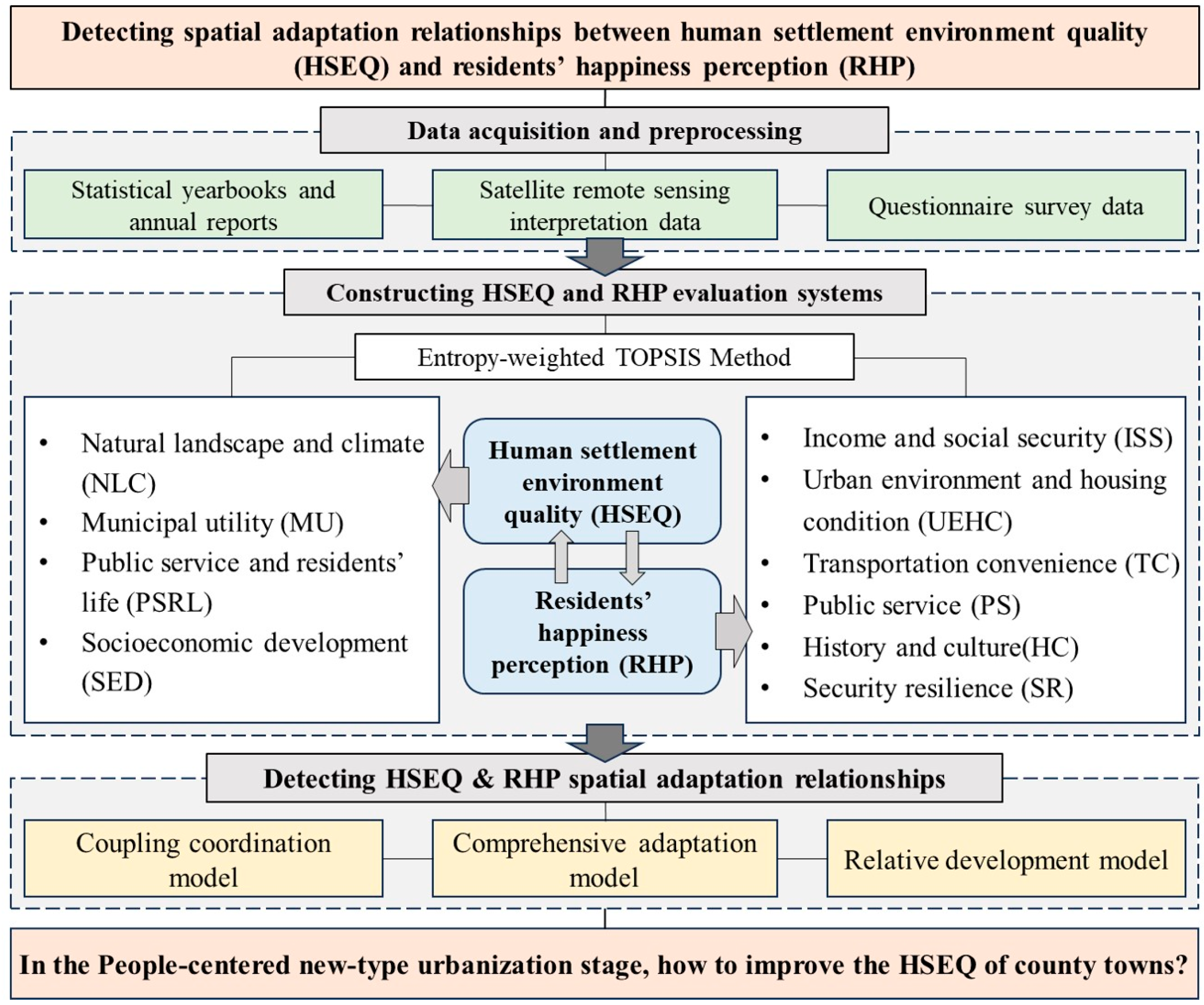
Figure 1. Study framework of this paper.
Land 15 00021 g001
Figure 2. (a) Location of Hunan, China; (b) distribution of digital elevation of Hunan, China; (c) the distribution of socioeconomic development of Hunan’s CLUAs.
Land 15 00021 g002
Figure 3. Distribution of HSEQ subsystems.
Land 15 00021 g003
Figure 4. Box plot of HSEQ subsystems.
Land 15 00021 g004
Figure 5. Radar charts of HSEQ subsystems at the prefecture-level city level.
Land 15 00021 g005
Figure 6. Distribution of composite HSEQ.
Land 15 00021 g006
Figure 7. Distribution of RHP subsystems.
Land 15 00021 g007
Figure 8. Box plot of RHP subsystems.
Land 15 00021 g008
Figure 9. Radar charts of RHP subsystems at the prefecture-level cities.
Land 15 00021 g009
Figure 10. Distribution of composite RHP.
Land 15 00021 g010
Figure 11. Distribution of coupling coordination and comprehensive adaptation relationships between HSEQ and RHP.
Land 15 00021 g011
Figure 12. Relative development relationships between HSEQ and RHP.
Land 15 00021 g012
Table 1. Evaluation subsystems and indicators of HSEQ.
Primary IndicatorsSecondary IndicatorsAbbreviationWeightNatureUnit
Natural landscape and climate (NLC) (0.1624)Topographic reliefX10.0139neuterm
Air PM2.5 concentrationX20.0396-μg/m3
Average summer temperatureX30.0715-°C
Average winter temperatureX40.0249+°C
Green coverage rate of built-up areasX50.0125+%
Municipal utility (MU) (0.1355)Road network density of built-up areasX60.0405+km/km2
Road lighting rate of built-up areasX70.0123+%
Residential water priceX80.0185-CNY/m3
Residential natural gas priceX90.0507-CNY/m3
Wastewater treatment rateX100.0086+%
Household waste disposal rateX110.0049+%
Public service and residents’ life (PSRL) (0.5285)Per capita residential land areaX120.0302+km2/10,000 person
Per capita urban park green space areaX130.0217+m2
Per capita greenway lengthX140.1186+km/10,000 person
Per capita commercial and service facility land areaX150.0499+km2/10,000 person
Parking spaces per 10,000 peopleX160.1181+person/10,000 person
Medical institution quota per 10,000 peopleX170.0183+person/10,000 person
Health technician quota per 10,000 peopleX180.0332+person/10,000 person
Hospital bed quota per 10,000 peopleX190.0257+person/10,000 person
Secondary school quota per 1000 studentsX200.0381+person/1000 person
Primary school quota per 1000 studentsX210.0471+person/1000 person
Secondary school teacher quota per 1000 studentsX220.0331+person/1000 person
Primary school teacher quota per 1000 studentsX230.0247+person/1000 person
Socioeconomic development (SD) (0.1421)Population density of built-up areasX240.0242-person/km2
Per capita GDPX250.0325+CNY 10,000
Per capita urban-town disposable incomeX260.0343+CNY 10,000
Per capita total retail sales of consumer goodsX270.0399+CNY 10,000
Urban housing pricesX280.0056-CNY
Proportion of secondary and tertiary industriesX290.0056+%
Table 2. Evaluation subsystems and indicators of RHP.
Primary IndicatorsSecondary Indicators
Income and social security (ISS) (0.1580)X1 Total household income (0.0216); X2 Household expenditure structure (0.0281); X3 Tourism consumption expenditure (0.0179); X4 Employment (0.0156); X5 Social security contributions * (0.0247); X6 Regular company health checkups (0.0142); X7 Rights of migrant workers * (0.0228); X8 Construction of an age-friendly city * (0.0131)
Urban environment and housing condition (UEHC) (0.1576)X9 Integration of urban and natural landscapes (0.0167); X10 Housing area (0.0118); X11 Housing type (0.0191); X12 Household energy type (0.0154); X13 Household appliance type * (0.0069); X14 Residential sound insulation (0.0054); X15 Community elevator configuration (0.0208); X16 Community parking configuration (0.0153); X17 Residential winter sunlight (0.0114); X18 Smart home system * (0.0240); X19 Property services (0.0109)
Transportation convenience (TC) (0.2250)X20 Residential road quality (0.0212); X21 Convenient transportation facilities * (0.0187); X22 Intercity transportation (0.0175); X23 Daily travel (0.0153); X24 One-way commute to work/school (0.0099); X25 To the city center (0.0336); X26 Picking up and dropping off children at school (0.0133); X27 School dismissal traffic congestion (0.0158); X28 Parking near schools (0.0187); X29 Public transportation (0.0157); X30 Taxi transportation (0.0154); X31 Green and low-carbon travel (0.0152); X32 Intelligent transportation system * (0.0147)
Public service (PS) (0.2090)X33 Convenient living circle * (0.0187); X34 Maintenance of community public facilities (0.0197); X35 Community public health service center (0.0142); X36 Fresh food supermarket (0.0180); X37 Park (0.0212); X38 Express delivery station (0.0156); X39 Public toilet (0.0146); X40 Rest facilities (0.0228); X41 Activity area for the elderly and children * (0.0211); X42 Medical treatment (0.0173); X43 Attending high-quality schools (0.0092); X44 Elderly care options * (0.0165)
History and culture (HC) (0.1058)X45 Historical and cultural heritage (0.0177); X46 Intangible cultural heritage inheritance and folk custom protection * (0.0127); X47 Traditional food and local specialties * (0.0183); X48 Historic districts and buildings (0.0102); X49 Ethnic cultural value * (0.0225); X50 Tourism highlights * (0.0244)
Safety resilience (SR) (0.1446)X51 Safety risks experienced (0.0186); X52 Emergency shelters (0.0203); X53 Campus traffic safety design (0.0189); X54 Community fire lanes (0.0161); X55 Community safety governance activities * (0.0232); X56 Food and environmental safety * (0.0223); X57 Ecological governance and maintenance * (0.0253)
Note: * indicates that this is a multiple-choice question.
Table 3. Socio-demographic characteristics of the respondents.
Socio-Demographic CharacteristicsPercentageSocio-Demographic CharacteristicsPercentage
GenderMale50.8Household registration typeUrban-town49.6
Female49.2Village50.4
Age24 and under22.8ProfessionGovernment/Public Institution Worker5.4
25–3428.3Student14.2
35–4420.2Soldier0.3
45–5412.5Researcher0.7
55–6410.3Teacher3.0
65 and above5.9Individual industrial and commercial household10.8
Educational levelJunior high school and below25.2Farmer17.9
High School/Secondary School22.8Workman19.6
College16.4Retiree3.1
Undergraduate30.3Freelancer7.6
Master and above5.3Others18.4
Table 4. Descriptive statistics of evaluation subsystems of HSEQ.
HSEQ SubsystemsMaximumMinimumMeanMedianStandard Deviation
NLC0.7500.1920.3880.3880.147
MU0.8580.2330.4570.4290.148
PSRL0.5140.1040.2170.2000.071
SD0.8590.1250.3890.3550.143
Table 5. Rank classifications of composite HSEQ.
HSEQ LevelTotal NumberNames of CLUAs
Low level (0.212–0.245)22Anren County, Huarong County, Shuangfeng County, Shaoyang County, Xinhua County, Lixian County, Longhui County, Shaodong City, Anhua County, Hengyang County, Hengdong County, Anxiang County, Chenxi County, Hanshou County, Luxi County, Taojiang County, Hengshan County, Cili County, Taoyuan County, Wugang City, Qidong County, Leiyang City
Relatively low level (0.246–0.273)20Baojing County, Xinning County, Chaling County, Dongkou County, Lianyuan City, Guzhang County, Xiangtan County, Dong’an County, Changning City, Nanxian County, Yongshun County, Hengnan County, Qiyang City, Jiangyong County, Sangzhi County, Yuanling County, Jingzhou Miao and Dong Autonomous County, Linxiang City, Huayuan County, Fenghuang County
Medium level (0.274–0.291)20Youxian County, Xupu County, Jiahe County, Linwu County, Yuanjiang City, Xiangxiang City, Daoxian County, Xiangyin County, Xinhuang Dong Autonomous County, Suining County, Tongdao Dong Autonomous County, Hongjiang City, Lengshuijiang City, Mayang Miao Autonomous County, Zhijiang Dong Autonomous County, Guiyang County, Longshan County, Yiyang urban area *, Shuangpai County, Miluo City
Relatively high level (0.292–0.323)19Jishou City, Yueyang County, Huitong County, Shaoyang urban area *, Shimen County, Liuyang City, Ningxiang City, Yizhang County, Yongxing County, Pingjiang County, Yongzhou urban area *, Nanyue urban area *, Zhuzhou urban area *, Chengbu Miao Autonomous County, Xintian County, Linli County, Jinshi City, Lanshan County, Liling City
High level (0.324–0.492)20Hengyang urban area *, Zhangjiajie urban area *, Wangcheng District *, Guidong County, Loudi urban area *, Yueyang urban area *, Yanling County, Xiangtan urban area *, Chenzhou urban area *, Shaoshan City, Changde urban area *, Zhongfang County, Rucheng County, Huaihua urban area *, Zixing City, Changsha urban area *, Changsha County, Jianghua Yao Autonomous County, Ningyuan County, Xinshao County
Note: * indicates a prefecture-level city district.
Table 6. Descriptive statistics of evaluation subsystems of RHP.
RHP SubsystemsMaximumMinimumMeanMedianStandard Deviation
ISS0.7180.1270.4180.4310.147
UEHC0.7290.1840.4490.4380.112
TC0.7110.1480.3970.3930.111
PS0.7440.1410.4170.3950.148
HC0.8460.1580.4070.3810.152
SR0.8340.1520.4350.4090.147
Table 7. Rank classifications of composite RHP.
RHP LevelTotal NumberNames of CLUAs
Low level (0.165–0.286)16Anhua County, Guiyang County, Yongxing County, Lianyuan City, Leiyang City, Xinhua County, Daoxian County, Yizhang County, Pingjiang County, Taojiang County, Ningyuan County, Chengbu Miao Autonomous County, Dongkou County, Longhui County, Yueyang County, Qiyang City
Relatively low level (0.287–0.367)20Jianghua Yao Autonomous County, Wugang City, Yuanjiang City, Hengnan County, Ningxiang City, Shuangfeng County, Xiangtan County, Xintian County, Chaling County, Cili County, Nanxian County, Anren County, Liling City, Linwu County, Guzhang County, Liuyang City, Shuangpai County, Lanshan County, Changning City, Jiangyong County
Medium level (0.368–0.438)20Fenghuang County, Qidong County, Yongzhou urban area *, Hengdong County, Hengshan County, Yuanling County, Wangcheng District *, Longshan County, Yongshun County, Dongan County, Linxiang City, Miluo City, Youxian County, Huarong County, Suining County, Changsha County, Xiangyin County, Xiangxiang City, Huayuan County, Guidong County
Relatively high level (0.439–0.528)23Xinshao County, Zhongfang County, Yueyang urban area *, Chenzhou urban area *, Jingzhou Miao and Dong Autonomous County, Chenxi County, Rucheng County, Shaodong City, Yanling County, Xinning County, Tongdao Dong Autonomous County, Zixing City, Shaoyang urban area *, Sangzhi County, Xupu County, Baojing County, Mayang Miao Autonomous County, Lengshuijiang City, Shaoyang County, Jishou City, Luxi County, Shimen County, Loudi urban area *
High level (0.529–0.658)22Huitong County, Hanshou County, Xinhuang Dong Autonomous County, Zhuzhou urban area *, Hengyang County, Hengyang urban area *, Jiahe County, Xiangtan urban area *, Taoyuan County, Yiyang urban area *, Anxiang County, Linli County, Changde urban area *, Lixian County, Nanyue District *, Jinshi City, Zhijiang Dong Autonomous County, Zhangjiajie urban area *, Shaoshan City, Changsha urban area *, Hongjiang City, Huaihua urban area *
Note: * indicates the urban areas of prefecture-level cities.
Table 8. Comprehensive adaptation ranks between HSEQ and RHP.
HSEQ and RHP Adaptation LevelTotal NumberNames of CLUAs
Extremely low adaptation (<0.5)13Ningyuan County, Lixian County, Yongxing County, Jianghua Yao Autonomous County, Anxiang County, Shaoyang County, Hengyang County, Chengbu Miao Autonomous County, Yizhang County, Pingjiang County, Guiyang County, Taoyuan County, Hanshou County
Low adaptation (0.5–0.6)16Luxi County, Shaodong City, Yueyang County, Huarong County, Xintian County, Ningxiang City, Liling City, Daoxian County, Chenxi County, Baojing County, Lanshan County, Xinning County, Liuyang City, Wangcheng District *, Changsha County, Lianyuan City
Basic adaptation (0.6–0.7)42Anren County, Hongjiang City, Jiahe County, Hengdong County, Yuanjiang City, Yongzhou urban area *, Sangzhi County, Leiyang City, Shuangpai County, Shuangfeng County, Hengshan County, Anhua County, Xinshao County, Qiyang City, Zhijiang Dong Autonomous County, Zhongfang County, Xupu County, Xinhuang Dong Autonomous County, Guidong County, Dongkou County, Chenzhou urban area *, Yueyang urban area *, Hengnan County, Rucheng County, Linwu County, Qidong County, Jingzhou Miao and Dong Autonomous County, Yiyang urban area *, Longhui County, Taojiang County, Dong’an County, Zixing City, Xinhua County, Yanling County, Longshan County, Lengshuijiang City, Yongshun County, Cili County, Huayuan County, Miluo City, Xiangtan County, Mayang Miao Autonomous County
Moderate adaptation (0.7–0.8)27Nanxian County, Tongdao Dong Autonomous County, Wugang City, Changning City, Nanyue District *, Guzhang County, Linxiang City, Huitong County, Fenghuang County, Chaling County, Jishou City, Yuanling County, Youxian County, Jiangyong County, Jinshi City, Shimen County, Xiangyin County, Xiangxiang City, Linli County, Suining County, Zhangjiajie urban area *, Shaoyang urban area *, Zhuzhou urban area *, Loudi urban area *, Hengyang urban area *, Shaoshan City, Xiangtan urban area *
High adaptation (0.8–1)3Changde urban area *, Huaihua urban area *, Changsha urban area *
Note: * indicates the urban areas of prefecture-level cities.
Table 9. Relative development divisions between HSEQ and RHP.
Relative Development Relationships Between HSEQ and RHPTotal NumberNames of CLUAs
RHP significantly ahead (<0.6)33Lixian County, Anxiang County, Hengyang County, Taoyuan County, Hanshou County, Shaoyang County, Hongjiang City, Luxi County, Zhijiang Dong Autonomous County, Jiahe County, Yiyang urban area *, Shaodong City, Xinhuang Dong Autonomous County, Nanyue District *, Huarong County, Baojing County, Jinshi City, Chenxi County, Xinning County, Linli County, Zhangjiajie urban area *, Huitong County, Zhuzhou urban area *, Sangzhi County, Shaoshan City, Xupu County, Shimen County, Hengyang urban area *, Lengshuijiang City, Mayang Miao Autonomous County, Huaihua urban area *, Jishou City, Changde urban area*
RHP relatively ahead (0.6–0.9)46Jingzhou Miao and Dong Autonomous County, Hengdong County, Tongdao Dong Autonomous County, Xiangtan urban area *, Hengshan County, Anren County, Shaoyang urban area *, Qidong County, Huayuan County, Loudi urban area *, Xiangxiang City, Dong’an County, Changsha urban area *, Xiangyin County, Yongshun County, Linxiang City, Youxian County, Shuangfeng County, Yuanling County, Suining County, Changning City, Miluo City, Longshan County, Jiangyong County, Fenghuang County, Yanling County, Guzhang County, Cili County, Yueyang urban area *, Guidong County, Chenzhou urban area *, Chaling County, Yongzhou urban area *, Zhongfang County, Nanxian County, Linwu County, Xiangtan County, Longhui County, Shuangpai County, Wugang City, Wangcheng District *, Zixing City, Rucheng County, Liuyang City, Hengnan County, Lanshan County
Basically balanced (0.9–1.1)12Xinhua County, Taojiang County, Yuanjiang City, Dongkou County, Qiyang City, Liling City, Xintian County, Changsha County, Ningxiang City, Leiyang City, Yueyang County, Lianyuan City
HSEQ relatively ahead (1.1–1.4)5Xinshao County, Dao County, Chengbu Miao Autonomous County, Yizhang County, Pingjiang County
HSEQ significantly ahead (>1.4)5Anhua County, Yongxing County, Guiyang County, Jianghua Yao Autonomous County, Ningyuan County
Note: * indicates the urban areas of prefecture-level cities.
Disclaimer/Publisher’s Note: The statements, opinions and data contained in all publications are solely those of the individual author(s) and contributor(s) and not of MDPI and/or the editor(s). MDPI and/or the editor(s) disclaim responsibility for any injury to people or property resulting from any ideas, methods, instructions or products referred to in the content.