Spatiotemporal Evolution and Influencing Factors of Multifunctional Territorial Spatial Utilization Efficiency: Evidence from the Yangtze River Delta, China
Abstract
1. Introduction
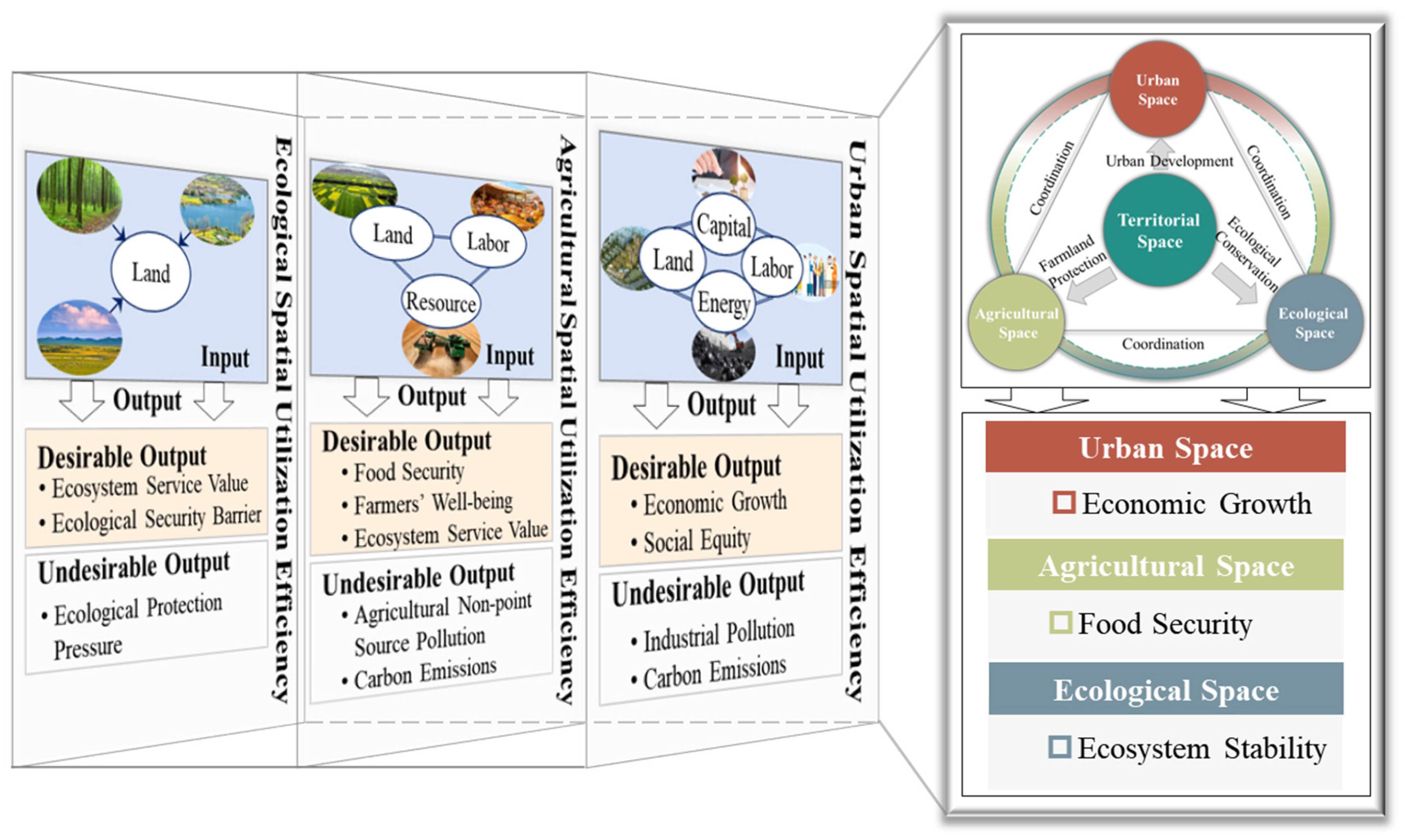
2. Conceptual Analysis of TSE
3. Materials and Methods
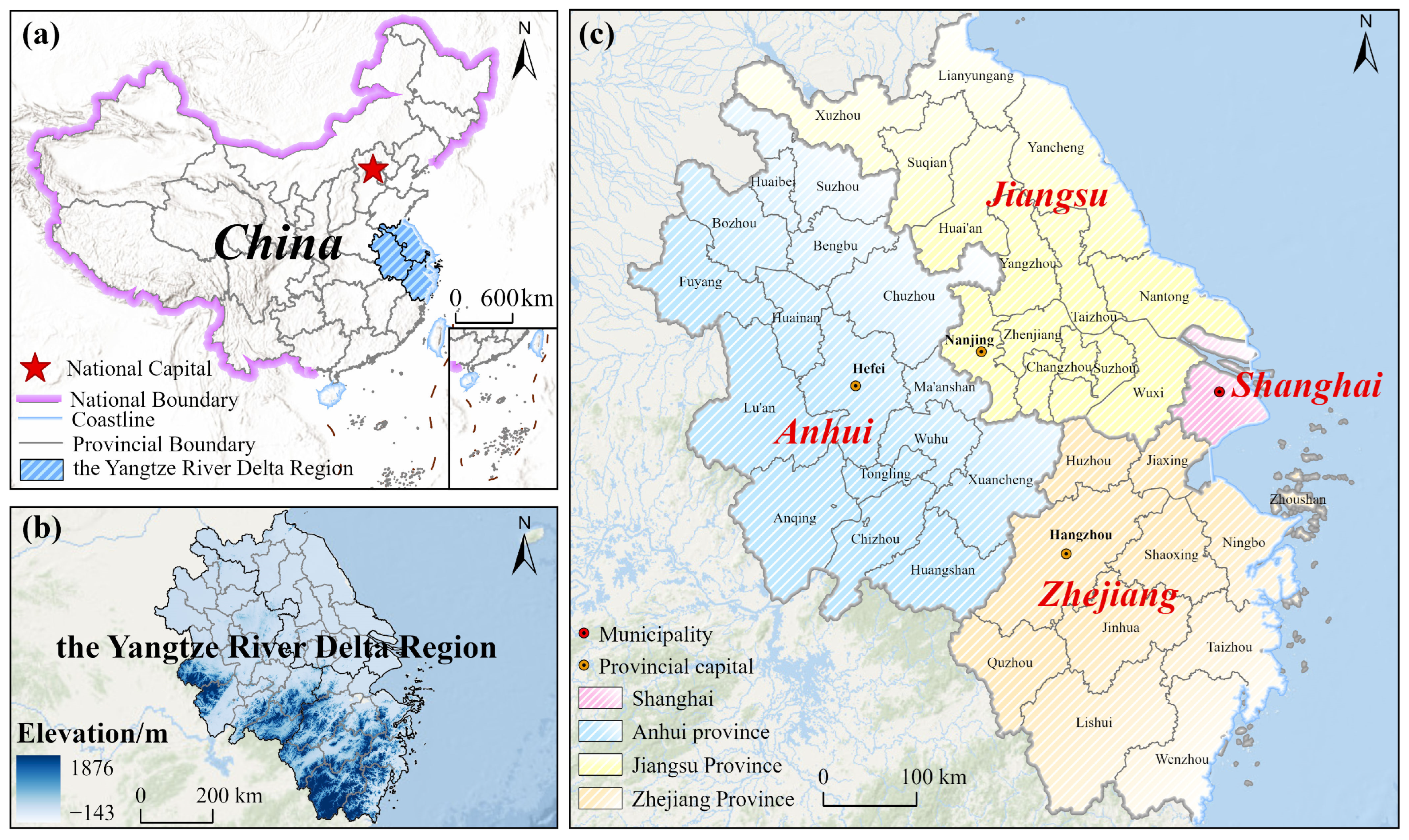
3.1. Study Area and Data Sources
3.1.1. Study Area
3.1.2. Data Sources
3.2. Selection of Indicators and Data Sources for TSE
3.2.1. Construction of the Evaluation Index System for TSE
3.2.2. Super-SBM Model
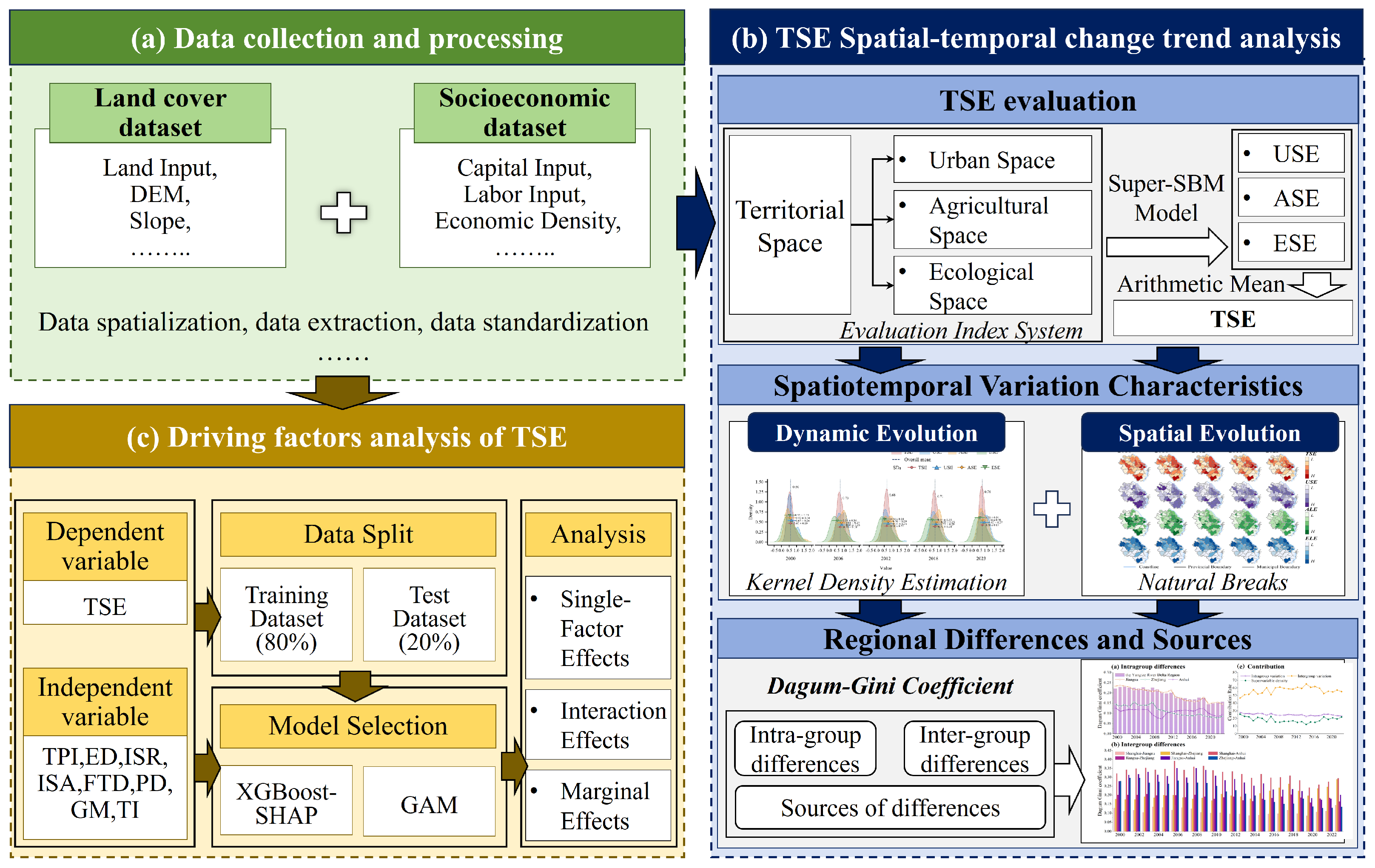
3.3. Research Methodology
3.3.1. Kernel Density Estimation
3.3.2. Dagum Gini Coefficient
3.3.3. XGBoost-SHAP Model
- (1)
- XGBoost Model
- (2)
- SHAP Model
- (3)
- Selection of Influencing Factors
4. Results
4.1. Spatiotemporal Variation Characteristics
4.1.1. Temporal Evolution Characteristics
4.1.2. Spatial Evolution Characteristics
4.2. Regional Differences and Sources
4.2.1. Intra-Group Differences
4.2.2. Inter-Group Differences
4.2.3. Sources of Differences
4.3. Analysis of the Influencing Factors of TSE
4.3.1. XGBoost Model Setting and Verification
4.3.2. Influencing Factors Analysis of TSE
- (1)
- Single-Factor Effects
- (2)
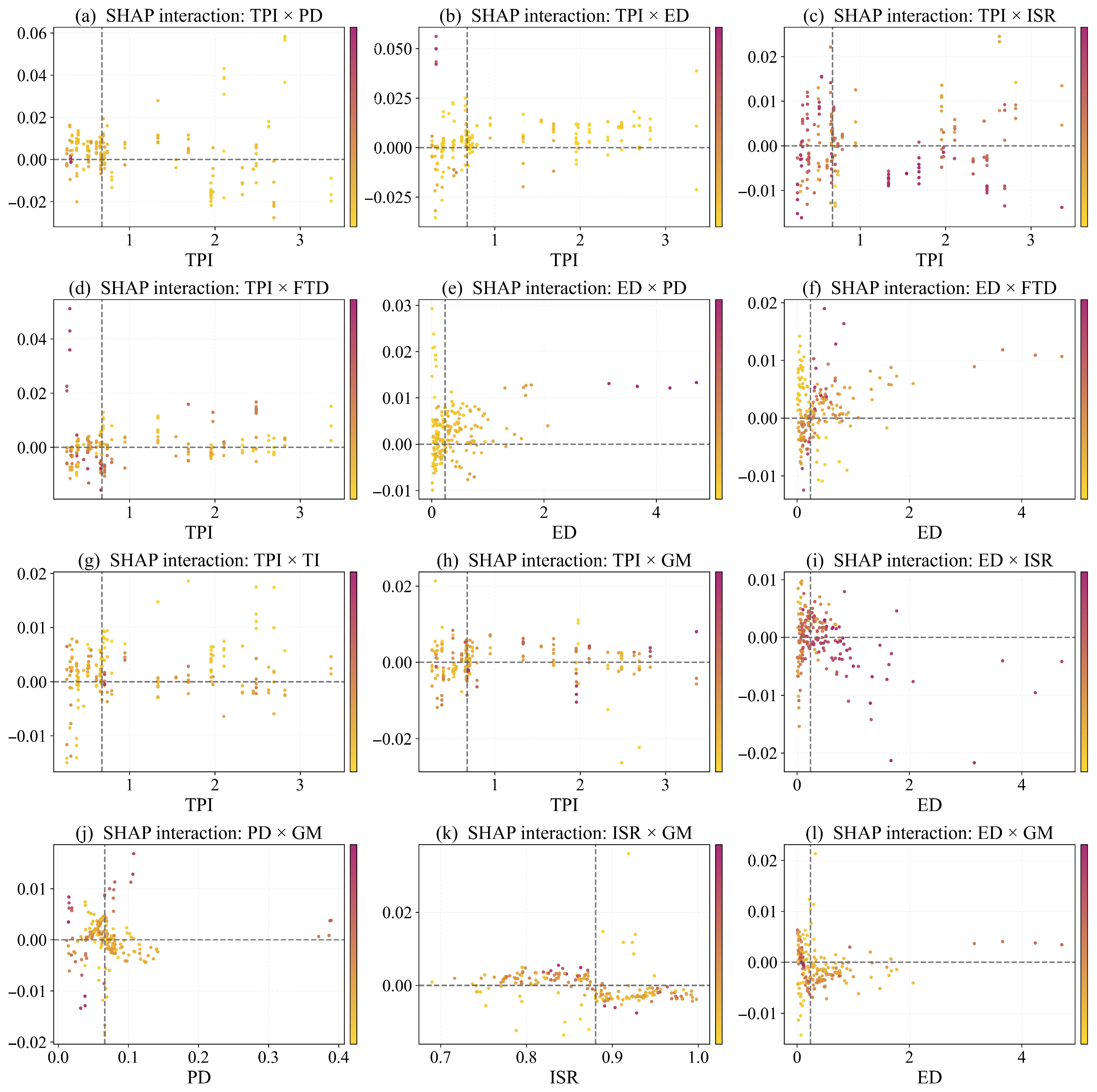
- Interaction Effects of Paired Factors
4.3.3. Marginal Effects of Dominant Factors on TSE
5. Discussion
5.1. Interpretation of Results
5.1.1. Spatiotemporal Evolution of TSE
5.1.2. Regional Differences and Sources of TSE
5.1.3. Influencing Factors of TSE
5.2. Policy Recommendation
5.3. Contribution, Limitations, and Prospects
6. Conclusions
- (1)
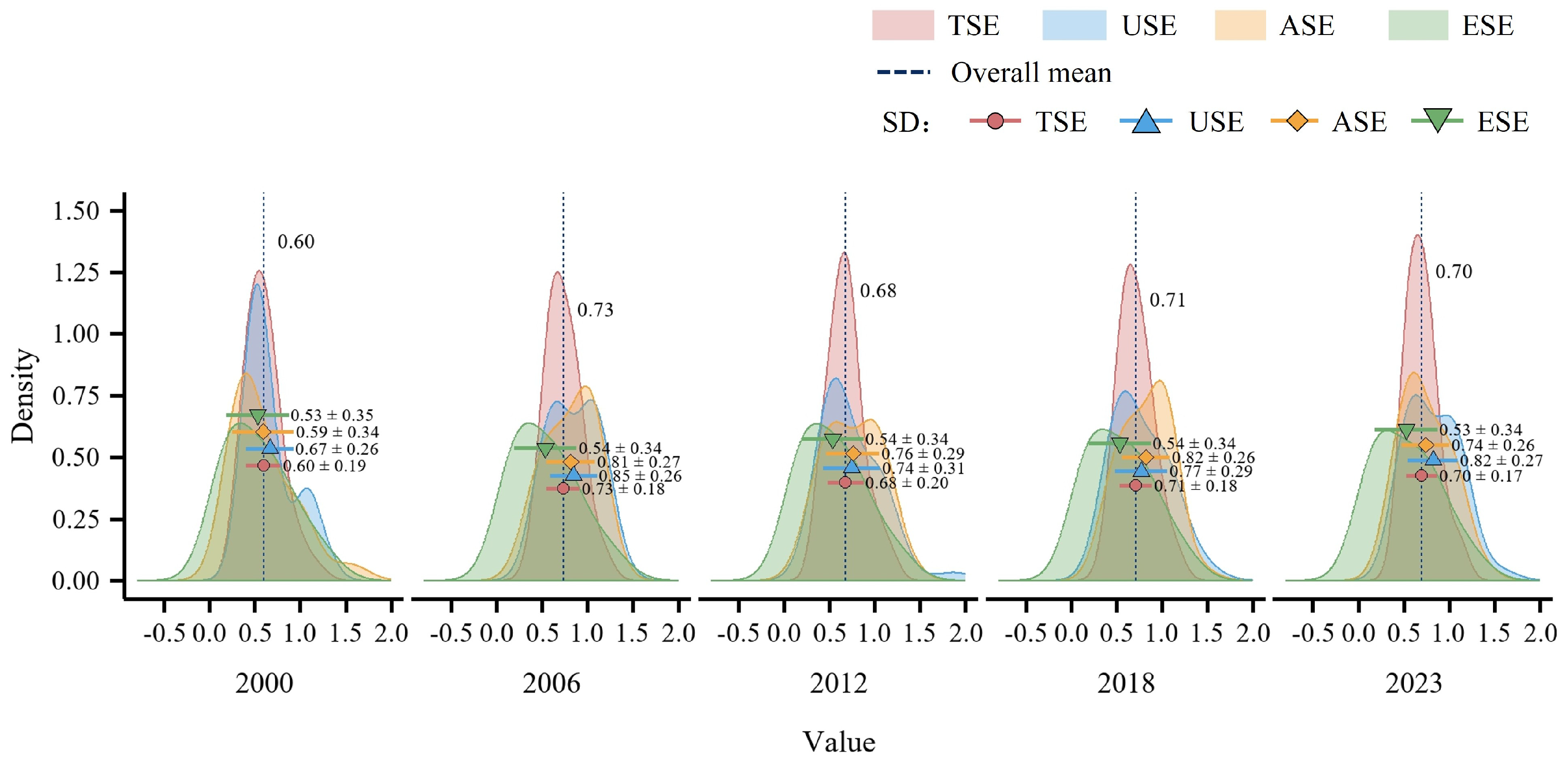
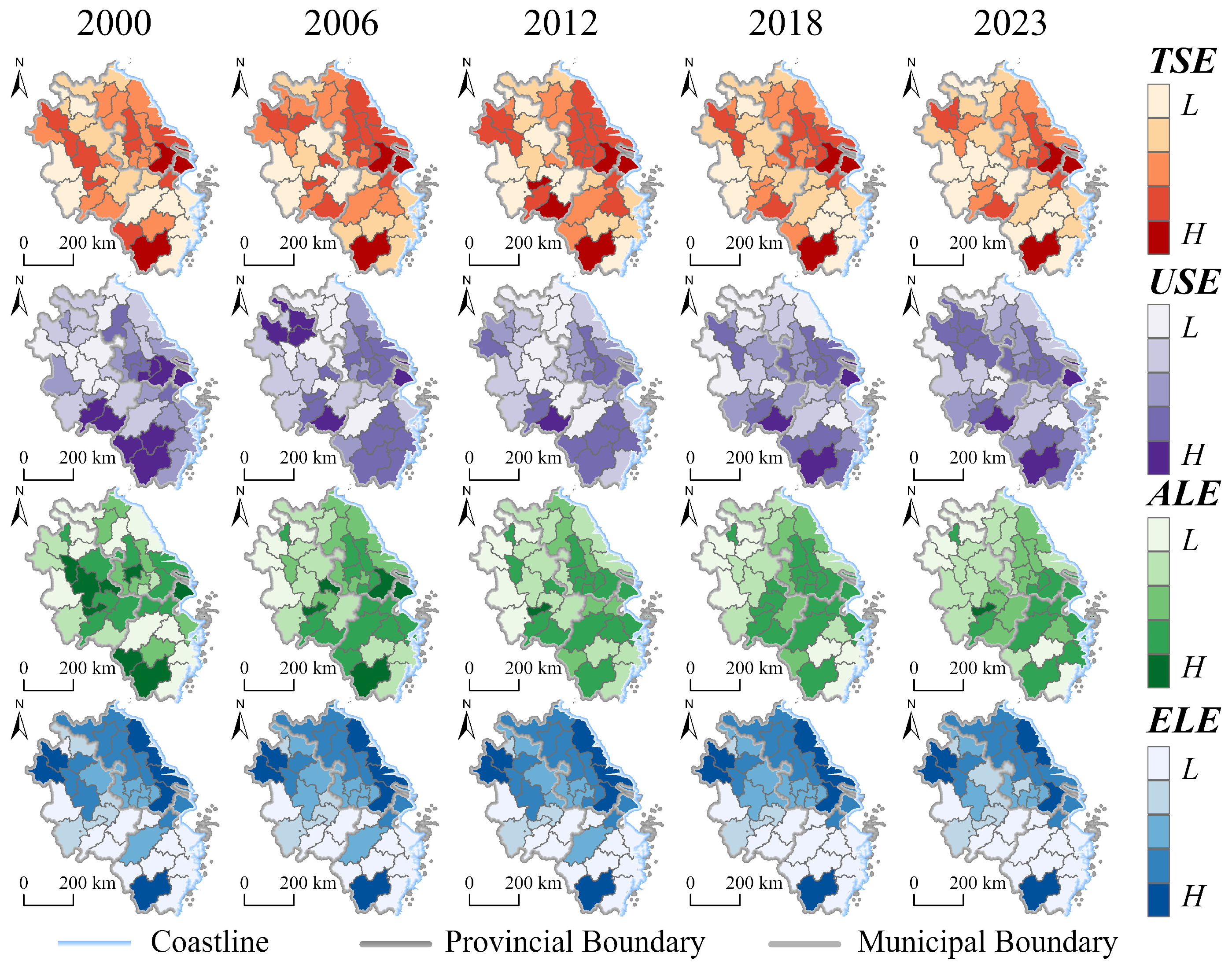
- TSE in the YRD shows a fluctuating yet overall upward trend, accompanied by a pronounced east–west spatial gradient in which eastern cities consistently outperform their western counterparts. At the sub-dimensional level, USE, ASE, and ESE all show modest temporal improvement. Their spatial configurations reveal distinct directional characteristics: USE is concentrated in the southeastern portion of the region, ASE is strongest within the central urban belt, and ESE predominates in the northern areas. Corresponding low-value clusters occur in the northwest, peripheral counties, and southern cities, respectively.
- (2)
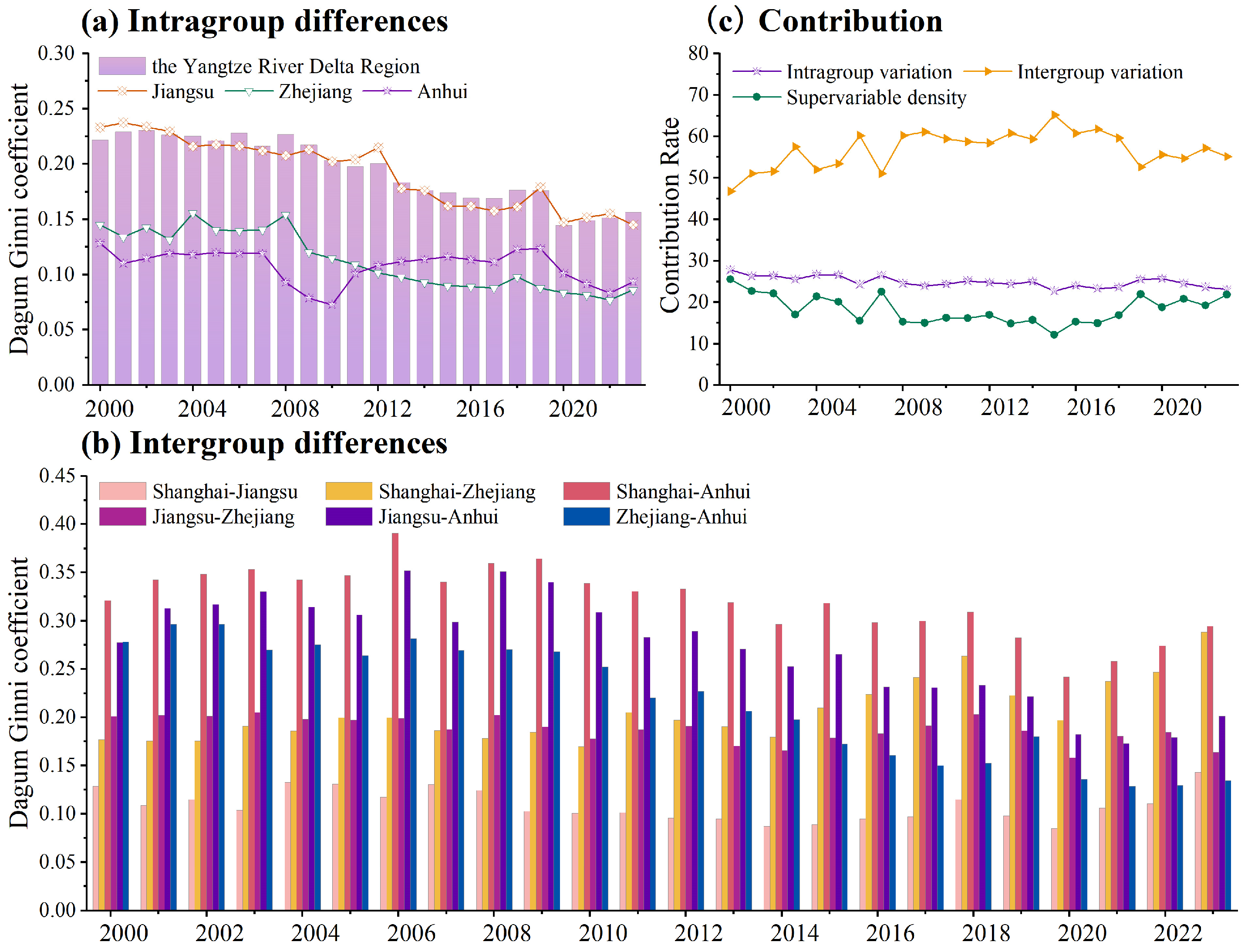
- Spatial disparities in TSE demonstrate a fluctuating but generally declining pattern. At the provincial scale, Jiangsu exhibits the greatest internal differentiation, whereas the Shanghai–Anhui group displays the widest interprovincial gap. Furthermore, interprovincial disparities remain the dominant source of overall spatial variation in TSE across the region.
- (3)
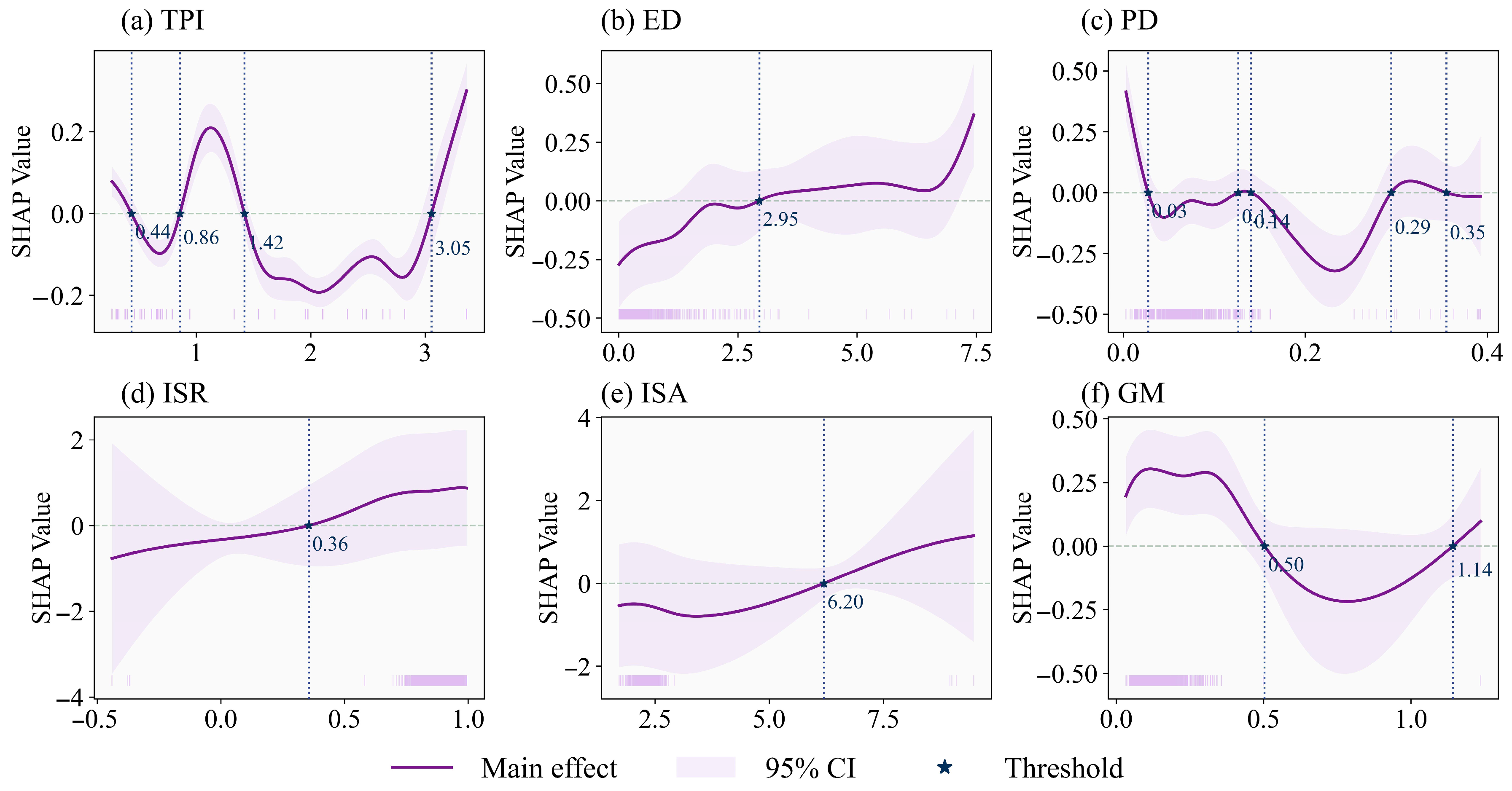
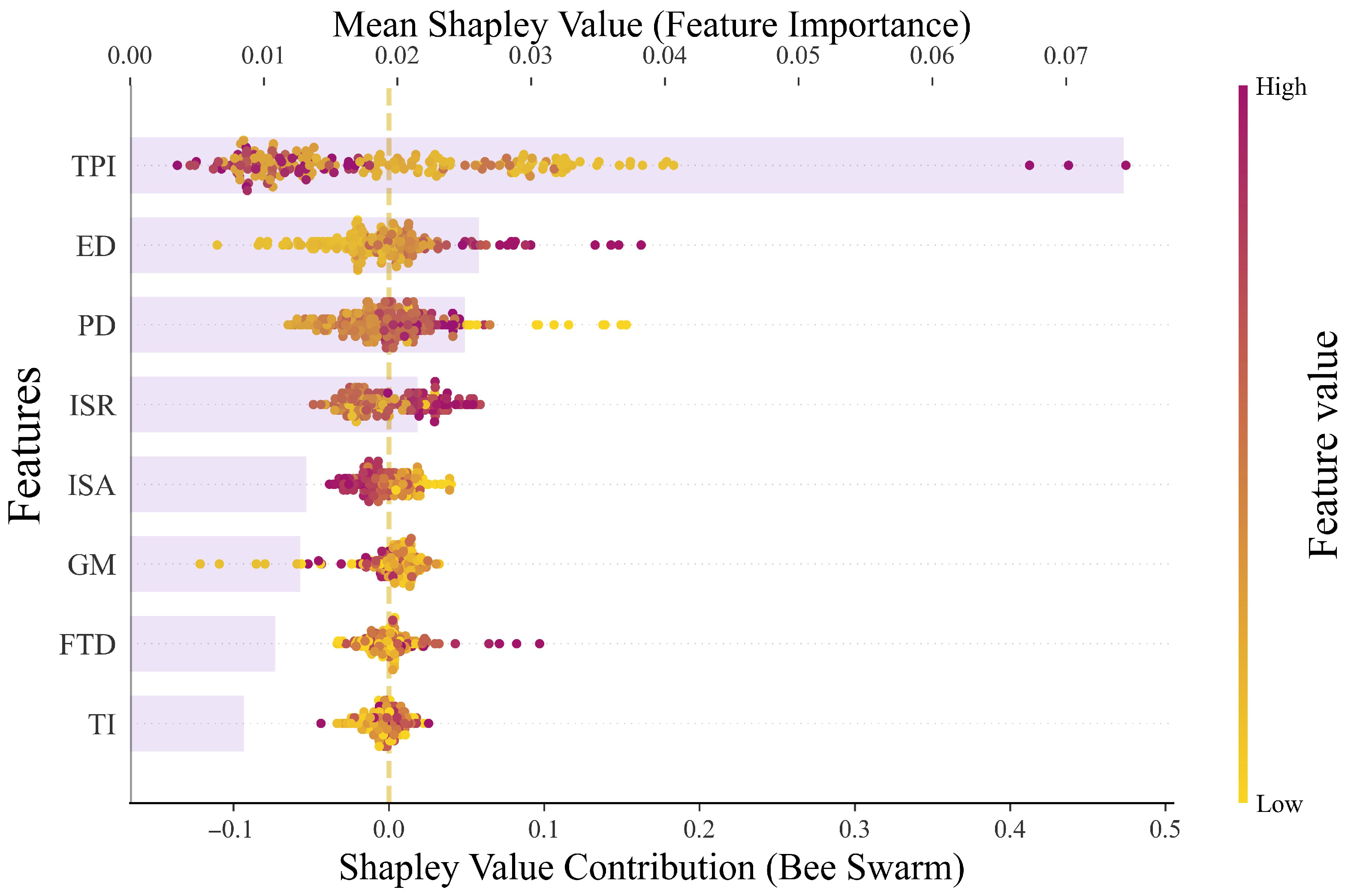
- TSE in the YRD is still predominantly driven by single-factor contributions, each exhibiting clear nonlinear threshold effects. TPI, ED, PD, and ISR emerge as the principal drivers of efficiency enhancement. These factors also display strong synergistic interactions, jointly facilitating the coordinated improvement of TSE throughout the region.
Author Contributions
Funding
Data Availability Statement
Conflicts of Interest
References
- Qiu, Y.; Han, W.; Zeng, D. Impact of biased technological progress on the total factor productivity of China’s manufacturing industry: The driver of sustainable economic growth. J. Clean. Prod. 2023, 409, 137269. [Google Scholar] [CrossRef]
- Bosák, V.; Slach, O.; Ženková, K.; Ženka, J.; Paszová, L. Developing social-ecological justice through a context-sensitive reuse of urban vacant spaces. Environ. Sci. Policy 2024, 159, 103802. [Google Scholar] [CrossRef]
- Arsiso, B.K. Urban land cover transformations and thermal dynamics through integrated LULC, UHI, and ecological vulnerability assessment using remote sensing indices in the city of Addis Ababa, Ethiopia. Sust. Cities Soc. 2025, 135, 107017. [Google Scholar] [CrossRef]
- Jin, T.; Zhang, P.; Liu, S.; Zhou, N.; Guo, H.; Zhu, A. A novel integrated modelling framework to uncover spatial and temporal evolutionary patterns and influence mechanisms of land use conflicts. J. Environ. Manag. 2025, 391, 126574. [Google Scholar] [CrossRef]
- Cui, L.; Wang, J.; Sun, L.; Lv, C. Construction and optimization of green space ecological networks in urban fringe areas: A case study with the urban fringe area of tongzhou district in Beijing. J. Clean. Prod. 2020, 276, 124266. [Google Scholar] [CrossRef]
- Jaeger, J.A.G.; Bertiller, R.; Schwick, C.; Kienast, F. Suitability criteria for measures of urban sprawl. Ecol. Indic. 2010, 10, 397–406. [Google Scholar] [CrossRef]
- Vejchodská, E.; Shahab, S.; Hartmann, T. Revisiting the purpose of land policy: Efficiency and equity. J. Plan. Lit. 2022, 37, 575–588. [Google Scholar] [CrossRef]
- Ferchaud, F.; Marsac, S.; Mary, B. Conversion of arable land to perennial bioenergy crops increases soil organic carbon stocks on the long term. Agric. Ecosyst. Environ. 2025, 388, 109637. [Google Scholar] [CrossRef]
- Gebru, M.A.; Abebe, T.; Zewale, H.L.; Enyew, F.F.; Asnakew, M.B.; Nega, W. Drivers and socio-economic implications of vacant urban land: A case study of debre markos city, ethiopia. Cities 2026, 170, 106623. [Google Scholar] [CrossRef]
- Ronyastra, I.M.; Saw, L.H.; Low, F.S. Monte carlo simulation-based financial risk identification for industrial estate as post-mining land usage in Indonesia. Resour. Policy 2024, 89, 104639. [Google Scholar] [CrossRef]
- Zhang, Z.; Li, J. Spatial suitability and multi-scenarios for land use: Simulation and policy insights from the production-living-ecological perspective. Land Use Policy 2022, 119, 106219. [Google Scholar] [CrossRef]
- Xu, T.; Liu, F.; Wan, Z.; Zhang, C.; Zhao, Y. Spatiotemporal evolution characteristics and driving mechanisms of waterlogging in urban agglomeration from multi-scale perspective: A case study of the Guangdong-Hong Kong-macao greater bay area, China. J. Environ. Manag. 2024, 368, 122109. [Google Scholar] [CrossRef]
- Parul Tomar, A.K. A note on “a new method for intuitionistic fuzzy multi-objective linear fractional optimization problem and its application in agricultural land allocation problem”. Inf. Sci. 2024, 671, 120658. [Google Scholar] [CrossRef]
- Rodrigues, C.; Veloso, M.; Alves, A.; Bento, C.L. Socioeconomic and functional zoning characterization in a city: A clustering approach. Cities 2025, 163, 106023. [Google Scholar] [CrossRef]
- Gemeda, B.S.; Cirella, G.T.; Abebe, B.G.; Gemeda, F.T. Exploring land acquisition and restructuring policy in Addis Ababa. Cities 2024, 153, 105266. [Google Scholar] [CrossRef]
- Yadava, A.K.; Chakraborty, S.; Gupta, S. Benchmarking the performance of Indian electricity distribution companies: The applications of multi-stage robust DEA and SFA models. Energy Econ. 2025, 145, 108396. [Google Scholar] [CrossRef]
- Kalyan, S.; Bansal, P.; Kumar, S. A novel hybrid AHP-entropy weighted dynamic network DEA framework for comprehensive efficiency assessment. Expert Syst. Appl. 2026, 296, 129137. [Google Scholar] [CrossRef]
- Sufia; Singh, A.; Mishra, S. Operational efficiency and service quality of in electricity distribution utilities: A three-stage DEA and malmquist index analysis. Util. Policy 2025, 96, 102001. [Google Scholar] [CrossRef]
- Abate, S.; Centi, G.; Perathoner, S. Energy-related catalysis. Natl. Sci. Rev. 2015, 2, 143–145. [Google Scholar] [CrossRef]
- Tang, D.; Boamah, V.; Amara, D.B. Revisiting the environmental kuznets curve in west Africa: A spatial econometric analysis of growth, globalization, and emissions. J. Environ. Manag. 2025, 395, 127723. [Google Scholar] [CrossRef]
- Ghiwa Assaf, R.H.A. Modeling the impact of land use/land cover (LULC) factors on diurnal and nocturnal urban heat island (UHI) intensities using spatial regression models. Urban Clim. 2024, 55, 101971. [Google Scholar] [CrossRef]
- Liu, X.; Li, X.; Zhang, Y.; Wang, Y.; Chen, J.; Geng, Y. Spatiotemporal evolution and relationship between construction land expansion and territorial space conflicts at the county level in JiangSu province. Ecol. Indic. 2023, 154, 110662. [Google Scholar] [CrossRef]
- Hu, Q.; Shen, W.; Zhang, Z. How does urbanisation affect the evolution of territorial space composite function? Appl. Geogr. 2023, 155, 102976. [Google Scholar] [CrossRef]
- Qi, L.; Najam, H.; Oskenbayev, Y.; Alisher, S.; Hairis, K. Impact of rapid urban construction land expansion on spatial inequalities of ecosystem health in China: Evidence from national, economic regional, and urban agglomeration perspectives. Ecol. Indic. 2025, 172, 113196. [Google Scholar] [CrossRef]
- AbdelRahman, M.A.E. Reimagining soil stewardship in the anthropocene: Nature-positive pathways, pedological perspectives, and land use innovations for soil health and security. Soil Secur. 2025, 21, 100206. [Google Scholar] [CrossRef]
- Yang, L.; Ma, Z.; Xu, Y. How does the digital economy affect ecological well-being performance? Evidence from three major urban agglomerations in China. Ecol. Indic. 2023, 157, 111261. [Google Scholar] [CrossRef]
- Liu, Z.; Wei, Y.; Liao, R.; Yamaka, W.; Liu, J. Synergistic effects of dual low-carbon pilot policies on urban green land use efficiency: Mechanisms and spatial spillovers through difference-in-differences and spatial econometric analysis. Land 2025, 14, 882. [Google Scholar] [CrossRef]
- Punzo, G.; Castellano, R.; Bruno, E. Using geographically weighted regressions to explore spatial heterogeneity of land use influencing factors in campania (southern Italy). Land Use Policy 2022, 112, 105853. [Google Scholar] [CrossRef]
- Molla, A.; Ren, Y.; Mekonnen, Y.G.; Zuo, S.; Zhu, P. Spatial-temporal trends and driving mechanisms of land degradation sensitivity in the southern region of China. Ecol. Indic. 2025, 175, 113532. [Google Scholar] [CrossRef]
- Ouyang, X.; Xu, J.; Li, J.; Wei, X.; Li, Y. Land space optimization of urban-agriculture-ecological functions in the Changsha-Zhuzhou-Xiangtan urban agglomeration, China. Land Use Policy 2022, 117, 106112. [Google Scholar] [CrossRef]
- Tamburini, G.; Bommarco, R.; Wanger, T.C.; Kremen, C.; van der Heijden, M.G.A.; Liebman, M.; Hallin, S. Agricultural diversification promotes multiple ecosystem services without compromising yield. Sci. Adv. 2020, 6, eaba1715. [Google Scholar] [CrossRef]
- Wang, J.; Lai, X.; Zhang, Z.; Zhou, S.; Lv, L.; Fan, Y. Optimization of territorial ecological space under the constraint of ecosystem service externalities. Ecol. Indic. 2024, 168, 112752. [Google Scholar] [CrossRef]
- Yang, Q.; Wang, L.; Qin, X.; Fan, Y.; Wang, Y.; Ding, L. Urban land use efficiency and contributing factors in the yangtze river delta under increasing environmental restrictions in China. Chin. Geogr. Sci. 2022, 32, 883–895. [Google Scholar] [CrossRef]
- Fu, J.; Ding, R.; Zhu, Y.Q.; Du, L.Y.; Shen, S.W.; Peng, L.N.; Zou, J.; Hong, Y.X.; Liang, J.; Wang, K.X.; et al. Analysis of the spatial-temporal evolution of green and low carbon utilization efficiency of agricultural land in China and its influencing factors under the goal of carbon neutralization. Environ. Res. 2023, 237, 116881. [Google Scholar] [CrossRef]
- Ma, Z.; Duan, X.; Wang, L.; Wang, Y.; Kang, J.; Yun, R. A scenario simulation study on the impact of urban expansion on terrestrial carbon storage in the Yangtze river delta, China. Land 2023, 12, 297. [Google Scholar] [CrossRef]
- Zhai, D.; Zhang, X.; Zhuo, J.; Mao, Y. Driving the evolution of land use patterns: The impact of urban agglomeration construction land in the Yangtze river delta, China. Land 2024, 13, 1514. [Google Scholar] [CrossRef]
- Tone, K. A slacks-based measure of super-efficiency in data envelopment analysis. Eur. J. Oper. Res. 2002, 143, 32–41. [Google Scholar] [CrossRef]
- Tone, K. A slacks-based measure of eciency in data envelopment analysis. Eur. J. Oper. Res. 2001, 130, 498–509. [Google Scholar] [CrossRef]
- Dagum, C. A new approach to the decomposition of the gini income inequality ratio. Empir. Econ. 1997, 22, 515–531. [Google Scholar] [CrossRef]
- Chen, T.; Guestrin, C. XGBoost: A scalable tree boosting system. In Proceedings of the ACM SIGKDD Conference on Knowledge Discovery and Data Mining 2016, San Francisco, CA, USA, 13–17 August 2016. [Google Scholar]
- Lu, Q.; Liu, S.; Gu, J. Integrating LLMs and data-driven analytics to uncover nonlinear impacts of urban spatial patterns on noise complaints in complex terrain. Build. Environ. 2025, 285, 113546. [Google Scholar] [CrossRef]
- Zhou, J. Spatial–temporal evolution and spatial spillover of the green efficiency of urban construction land in the Yangtze river economic belt, China. Sci. Rep. 2023, 13, 14387. [Google Scholar] [CrossRef] [PubMed]
- Zhang, Z.; Du, J.; Shen, Z.; Asraoui, H.E.; Song, M. Effects of modern agricultural demonstration zones on cropland utilization efficiency: An empirical study based on county pilot. J. Environ. Manag. 2024, 349, 119530. [Google Scholar] [CrossRef]
- Zheng, L.; Zheng, Y.; Fu, Z. The impact of urban renewal on spatial–temporal changes in the human settlement environment in the Yangtze river delta, China. Land 2024, 13, 841. [Google Scholar] [CrossRef]
- Zhao, Y.; Jiang, X.; Lu, X.; Wang, H. Spatial convergence and its determinants of green urban land use efficiency: Empirical evidence from 284 cities in China. Environ. Dev. Sustain. 2024. [Google Scholar] [CrossRef]





| NO. | Target Layer | Criterion Layer | Indicator Layer | Indicator Description and Calculation Method |
|---|---|---|---|---|
| 1 | Urban Space | Land Input | Area of construction land | |
| 2 | Capital Input | Total fixed asset investment | ||
| 3 | Labor Input | Employment in secondary and tertiary industries | ||
| 4 | Resource Input | Energy consumption per CNY 10,000 GDP | Converts natural gas, liquefied petroleum gas, and electricity into standard coal equivalents | |
| 5 | Desired Output | Added value of secondary and tertiary industries | Reflects economic performance of urban space | |
| 6 | Average wage of employees | Indicates income level and social welfare improvement | ||
| 7 | Undesired Output | Industrial pollution index | Synthesized from industrial wastewater, soot (dust), and SO2 emissions using the entropy method | |
| 8 | Carbon emissions from construction land | Construction land area × carbon emission coefficient of construction land | ||
| 9 | Agricultural Space | Land Input | Area of agricultural land | |
| 10 | Labor Input | Employment in the primary industry | ||
| 11 | Resource Input | Total power of agricultural machinery | ||
| 12 | Desired Output | Gross agricultural output value | ||
| 13 | Per capita yield of major grain crops | Total grain output/resident population | ||
| 14 | Ecosystem service value of cultivated land | Equivalent factor × cultivated land area | ||
| 15 | Undesired Output | Carbon emissions from cultivated land | Cultivated land area × carbon emission coefficient of cultivated land | |
| 16 | Ecological Space | Land Input | Area of ecological land | |
| 17 | Desired Output | Ecosystem service value of ecological land | Equivalent factor × area of ecological land | |
| 18 | Undesired Output | Landscape fragmentation index |
| No. | Factor Type | Influencing Factors | Indicator Description |
|---|---|---|---|
| 1 | Natural Factors | Topographic Position Index (TPI) | and denote the elevation of any spatial pixel and the mean elevation of the study area, respectively; and represent the slope of any spatial pixel and the mean slope of the study area, respectively. |
| 2 | Economic Factors | Economic Density (ED) | and denote the gross domestic product and the administrative area of region in period , respectively. |
| 3 | Industrial Structure Rationalization (ISR) | and denote the gross domestic product and employment of the i industry, respectively, while n represents the number of industries. | |
| 4 | Industrial Structure Advancement (ISA) | where and represent the output values of the tertiary and secondary industries, respectively. | |
| 5 | Foreign Trade Dependence (FTD) | where represents foreign direct investment and denotes gross domestic product. | |
| 6 | Social Factors | Population Density (PD) | where represents the total population and denotes the administrative area. |
| 7 | Government Management Capacity (GM) | where represents general fiscal expenditure and denotes gross domestic product. | |
| 8 | Technological Innovation Capacity (TI) | where represents science and technology expenditure and represents general fiscal expenditure. |
Disclaimer/Publisher’s Note: The statements, opinions and data contained in all publications are solely those of the individual author(s) and contributor(s) and not of MDPI and/or the editor(s). MDPI and/or the editor(s) disclaim responsibility for any injury to people or property resulting from any ideas, methods, instructions or products referred to in the content. |
© 2025 by the authors. Licensee MDPI, Basel, Switzerland. This article is an open access article distributed under the terms and conditions of the Creative Commons Attribution (CC BY) license.
Share and Cite
Zhang, K.; Li, X.; Chen, J.; Geng, Y. Spatiotemporal Evolution and Influencing Factors of Multifunctional Territorial Spatial Utilization Efficiency: Evidence from the Yangtze River Delta, China. Land 2026, 15, 2. https://doi.org/10.3390/land15010002
Zhang K, Li X, Chen J, Geng Y. Spatiotemporal Evolution and Influencing Factors of Multifunctional Territorial Spatial Utilization Efficiency: Evidence from the Yangtze River Delta, China. Land. 2026; 15(1):2. https://doi.org/10.3390/land15010002
Chicago/Turabian StyleZhang, Ke, Xiaoshun Li, Jiangquan Chen, and Yiwei Geng. 2026. "Spatiotemporal Evolution and Influencing Factors of Multifunctional Territorial Spatial Utilization Efficiency: Evidence from the Yangtze River Delta, China" Land 15, no. 1: 2. https://doi.org/10.3390/land15010002
APA StyleZhang, K., Li, X., Chen, J., & Geng, Y. (2026). Spatiotemporal Evolution and Influencing Factors of Multifunctional Territorial Spatial Utilization Efficiency: Evidence from the Yangtze River Delta, China. Land, 15(1), 2. https://doi.org/10.3390/land15010002