1. Introduction
Population aging is widely acknowledged as one of the major global social challenges of the 21st century, with China facing a severe aging problem. Currently, China is classified as a moderately aging society, with the elderly population aged 60 and above exceeding 310 million by the end of 2024 [
1]. It is projected that by around 2035, the population aged 60 and above will surpass 400 million, ushering in a stage of severe population aging [
2]. Amid the accelerating global trend of population aging, the value of green spaces in supporting the physical and mental health, social interaction, and active aging process of the elderly population has become increasingly prominent [
3]. Research indicates that the elderly population has a significantly higher demand level and frequency of use for parks and green spaces compared with other age groups [
4]. Therefore, green space layout should prioritize the specific needs of the elderly population.
As an essential component of green spaces, urban parks not only provide ecological functions such as environmental purification, climate regulation, and biodiversity conservation but also offer social services, including recreation, science education, and outdoor exercise, thereby positively influencing residents’ health and well-being [
5]. The equity of urban park layout is a widely accepted principle at both the social and political levels [
6], asserting that everyone has an equal right to access sufficient resources, services, and health [
7]. With improvements in living standards, residents’ demand for parks and green spaces continues to increase. They are not only concerned about the quantity and quality of parks and green spaces, but also care about whether they can access green space services conveniently and fairly in their daily lives [
8]. Therefore, enhancing the equity of parks and green spaces is of great significance for urban sustainable development and public health. In an aging society, ensuring equitable access to urban parks for the elderly population in densely populated urban environments has become a common issue in urban renewal and social equity governance.
The concept of accessibility has evolved from simply measuring the ease of reaching a destination via a transportation system to evaluating the supply–demand matching and equitable distribution of public service resources among different social groups. It is widely used in measuring the equity of green space layout [
9]. Research shows that accessibility significantly influences residents’ physical and social health, and is closely linked to how these health benefits are achieved [
10]. Greater accessibility encourages residents to use green spaces more frequently and extend their duration of stay [
11]. Research methods for accessibility include the minimum nearest neighbor distance method, container method, gravity model method, and two-step floating catchment area method, among others [
12]. These approaches largely rely on GIS for spatial information data integration, geographic analysis, and visualization. Among them, the two-step floating catchment area method comprehensively accounts for factors such as the scale of supply and demand, search radius, and distance relationships, providing a more intuitive reflection of supply–demand relationships and identification of supply blind spots. It has been widely applied in the field of spatial equity research [
13]. Building on this, the Gaussian-based two-step floating catchment area method (Ga2SFCA) introduces a Gaussian function to simulate the distance decay effect of residents’ travel within a specified search threshold. This method not only accounts for the interaction between supply and demand points but also analyzes their distance decay relationships, demonstrating strong effectiveness in evaluating the supply–demand relationships in green space equity research [
14].
Based on accessibility theory, green space equity considers the needs of users and aims to assess whether the distribution of green spaces among residents is fair. This concept reflects socioeconomic characteristics, highlighting disparities in access to public service facilities across regions and social groups [
15]. Accessibility is considered a key indicator for assessing the spatial equity of green spaces and, in recent years, indicators such as Lorenz curves and Gini coefficients have also been incorporated to complement the green space equity evaluation system [
16].
As people age, their mobility and cognition decline. Imbalances in green space accessibility may significantly affect the equitable use of green spaces by the elderly. From the perspective of the elderly, thoroughly considering the distribution characteristics of their population and studying the age-friendly accessibility of green space resources can promote their physical and mental health and is of great significance for building an elderly-friendly city. Moore et al. [
17] pointed out that the elderly have fewer opportunities to use parks in neighborhoods dominated by a relatively young population age structure. Therefore, the government should improve park allocation based on social environmental factors. Zhao et al. [
18] found that the accessibility of urban parks at local, regional, and global scales, as well as under walking and public transportation modes, is closely related to the mental health of the elderly. Enhancing urban park accessibility, especially walking accessibility at the regional scale, has a significant positive impact on the mental health of the elderly. Guo et al. [
19] found that housing prices and the distance to the nearest commercial area and green space are key factors influencing park accessibility for the elderly population. Wang et al. [
20] used spatial analysis and environmental audits to show that, in high-density urban environments, the quality of open spaces has a greater impact on the elderly’s visits than accessibility. Xiong et al. [
21] pointed out that for communities with higher proportions of elderly and low-income populations, the accessibility of recreational services within green infrastructure is an important yet often overlooked indicator in environmental justice research. Previous studies have made significant progress in evaluating the accessibility and equity of green spaces for the elderly population and have explored different improved Gaussian two-step floating catchment area methods, providing a basis for optimizing green space layout in an aging society. However, existing research still lacks an integrated analysis that incorporates factors within a unified framework, such as the distribution of the elderly population, spatial accessibility, park quality, surrounding environmental characteristics, and social equity. In particular, studies that examine the supply–demand relationship and its influencing factors between the elderly population and green spaces from the neighborhood and community levels remain limited. As a result, our understanding of park service equity in aging societies remains largely at the macro-level, making it difficult to identify service blind spots and differentiated needs in local areas and complicating the guidance of practical interventions. Therefore, it is necessary to construct a multidimensional, fine-grained, comprehensive analysis framework that can not only identify spatial differences in park accessibility and accessibility equity for the elderly population but also clarify the underlying supply–demand imbalance mechanisms, thereby providing a solid basis for planning and constructing elderly-friendly green spaces in high-density urban environments.
To bridge this gap, this study aims to comprehensively analyze the supply–demand relationship and allocation differences between green space resources and the elderly population, revealing the spatial variations in park accessibility and equity for the elderly and their influencing factors. Our goals are to answer three research questions: (1) How can the supply level of urban parks and the demand of the elderly population for parks be appropriately measured, and does the improved 2SFCA method offer advantages over the classic model? (2) How can the spatial differentiation patterns of park accessibility and equity for the elderly population be effectively represented and analyzed? (3) Which factors are associated with the spatial differentiation of park accessibility for the elderly population, and what correlation patterns exist between this spatial differentiation and its influencing variables?
2. Methodology
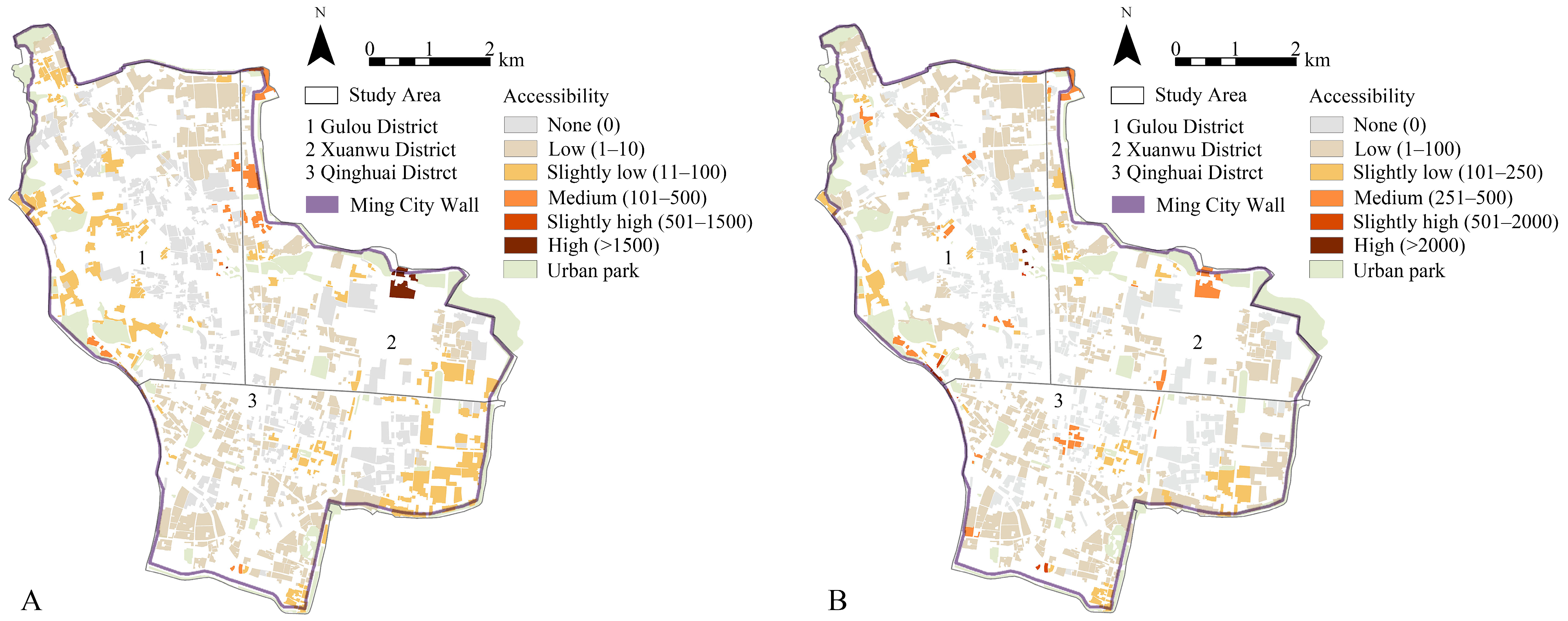
This study uses fine-grained residential neighborhoods and communities as evaluation units and evaluates the equity of urban park layout based on the walking accessibility for the elderly population. First, Python (v3.11.7) tools are used to develop an improved 2SFCA model and establish a green space accessibility calculation model, enabling a comparison of the green space service levels available to the elderly before and after model improvement. Then, a green space equity evaluation model is developed using supply–demand relationship analysis, Lorenz curves, and Gini coefficients to compare the equity differences among user groups before and after model improvement. Furthermore, park accessibility and equity for the elderly population are categorized into different types, and their spatial differentiation characteristics are analyzed. Additionally, mean and extreme value statistical methods are applied to examine the impacts of various supply–demand variables and environmental and socioeconomic factors on the spatial differentiation of park accessibility.
2.1. Improved 2SFCA Model
Calculating the classic 2SFCA involves the following two steps. Step 1: Starting with a supply point,
, a search domain with a service radius of
is defined. The population size of all demand points,
, within this domain is calculated, weighted using a Gaussian equation, and summed. Then, supply point
’s area is divided by the summed population size to obtain the supply–demand ratio,
. The calculation formula is as follows:
where
represents the supply–demand ratio;
is the distance threshold used to define the search domain in the accessibility calculation, which varies by park type (m);
is the population size within the search domain;
is the total supply quantity of point
, i.e., the area of the green space, in square meters (m
2); and
is the Gaussian equation as a decay function. The calculation formula is as follows:
Step 2: Taking the centroid of the neighborhood as the demand point,
, a search domain with a distance of
is defined. The supply–demand ratio of all supply points,
, within this domain is calculated, weighted using the Gaussian equation, and summed to obtain the accessibility,
, of neighborhood
. The calculation formula is as follows:
where
represents the green space accessibility of neighborhood
, which is the per capita green space area (m
2) within a certain spatial unit;
is the supply–demand ratio of supply point
within the demand point’s search domain; and
is the distance between the demand point
and the supply point
.
In this study, two distance thresholds are used for different purposes in the 2SFCA framework. In Step 1, the park-specific catchment radius,
, follows the service radius by park type to reflect differences in the potential service scope and competition level among parks of different hierarchies. In Step 2, accessibility for elderly residents is evaluated under a physiological walking constraint, represented by a fixed elderly walking threshold,
(defined in
Section 2.1.1). When
is larger than
, the larger radius is only used in Step 1 to estimate the park’s supply–demand ratio, whereas the final accessibility experienced by elderly neighborhoods is still restricted to parks within the distance of
in Step 2.
In this study, Python code was written for the improved 2SFCA method to calculate green space accessibility, following which the results were imported into ArcGIS Pro (v3.0.2) for visualization.
2.1.1. Construction of Search Domains
The topological structure of urban park accessibility is related to city residents’ exercise habits, the urban block layout, and the locations of park entrances [
22]. Due to the high incidence of limited mobility among the elderly, they usually travel shorter distances, visit fewer destinations, and are less likely to travel by car or bike [
23]. Walking is the primary means by which the elderly access green spaces. Therefore, this study focuses on walking accessibility to green spaces for the elderly and sets their maximum walking distance threshold according to their physical power limit at 1000 m [
24,
25].
Given the significant variation in the sizes and shapes of urban parks, using the park’s centroid as the origin to construct a service domain is unsuitable for spatial analysis of relatively long, fragmented, and large-scale spaces. Moreover, physical barriers such as buildings, rivers, and other physical entities cause the actual distance traveled by residents to differ from the straight-line distance between the supply and demand locations. In other words, the actual service range of urban parks is much smaller than their buffer range. Both of these factors can influence how distance is defined in the calculation process and cause significant errors. Therefore, this study reduces the research precision to the residential neighborhood level based on the research area scale. During the preliminary survey, park entrance locations are marked, and search domains based on the urban road network are constructed from each park entrance. For green spaces with multiple entrances, the search domains formed by multiple entrances are first merged, and then, the number of demand points within the domain is counted to prevent repeated counting.
2.1.2. Optimization of the Comprehensive Supply Index, Sj, of Urban Parks
In the classic 2SFCA model, the supply level, Sj, of urban parks is calculated using park area, ignoring several key indicators that directly affect the park supply level, such as park quality and internal and external spatial organization. It also fails to account for variations in supply levels across parks of different spatial grades.
Studies suggest that the effective use of urban green spaces depends not only on their size but also on their quality, accessibility, and spatial organization [
26]. With the increasing availability of fine-scale geographic and facility data, it has become feasible to construct a more comprehensive representation of park supply. Accordingly, in this study, the supply level of urban parks (Sj) for the elderly is conceptualized as a multidimensional construct that reflects not only the scale of park resources but also their functional quality and spatial organization. Unlike the classic 2SFCA model, which measures park supply solely by area, this study considers elderly-oriented park supply as the combined outcome of park scale and hierarchy, internal environmental quality, and external spatial accessibility.
First, park scale and spatial hierarchy play fundamental roles in determining supply capacity. In addition to scale, the spatial grade of urban parks also has a significant impact on their supply level. According to the “Standard for the Planning of Urban Green Space” GB/T 51346-2019 [
27] and the service functions of green spaces, parks are classified and assigned values as city-wide parks, regional parks, community parks, or street gardens, with these categories serving as spatial grade indicators for calculation. The buffer radius for city-wide parks, regional parks, community parks, and street gardens is set at 1200 m, 800 m, 500 m, and 300 m, respectively. Second, the internal spatial quality is a key determinant of park attractiveness and usability. Parks with higher vegetation coverage and better-equipped recreational, service, and management facilities are more likely to support frequent and prolonged use by elderly residents [
28]. Accordingly, average vegetation coverage and public facility density are adopted as indicators of internal park quality. Finally, external spatial organization and accessibility influence the ease with which elderly populations can reach and utilize parks. The density of the road network around the park and the density of bus stops determine its accessibility by walking and public transportation [
29]. The density of medical and healthcare facilities within the grade buffer zone is another key factor affecting the activity range and willingness of the elderly [
30].
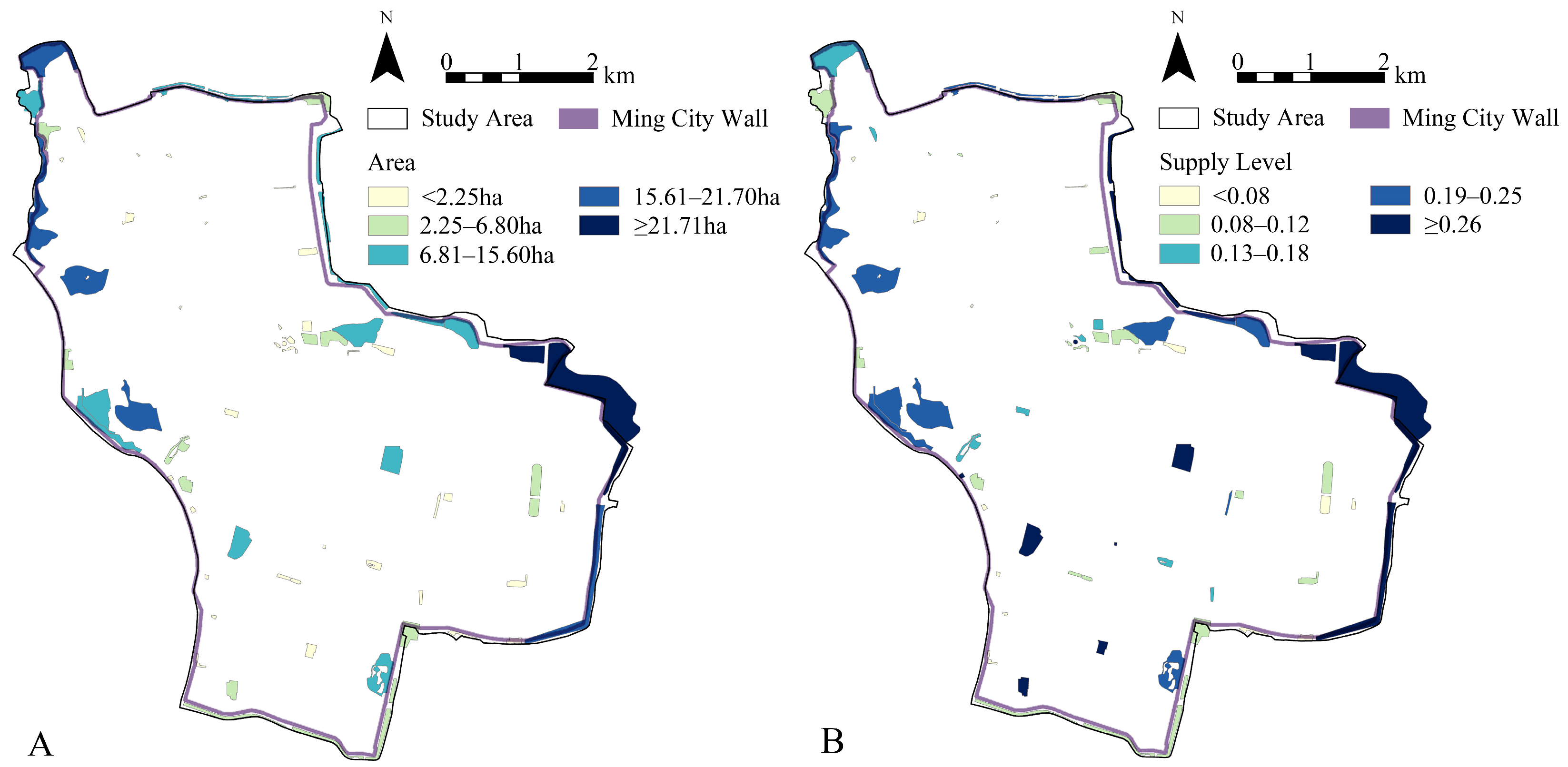
Based on these considerations, seven supply characteristics under three dimensions are selected to quantitatively evaluate Sj, including park spatial grade, area, vegetation coverage, public facility density, road network density within the grade buffer zone, bus stop density within 300 m, and medical and healthcare facility density within the grade buffer zone (
Table 1). After standardizing the results of each indicator, the weights are calculated using the entropy weight TOPSIS method. The weights thus derived reflect the relative amount of information and spatial variability of each indicator within the study area. Indicators with higher spatial differentiation contribute more to distinguishing supply patterns and, therefore, receive higher weights.
Notably, the weights derived from the entropy weighting method should not be interpreted in isolation. For example, in
Table 1, the weight assigned to public facility density (0.3419)—which, according to the Gaode Maps (
https://ditu.amap.com/, accessed on 9 January 2026) classification, includes facilities such as newsstands, public telephones, public toilets, and emergency shelters that are particularly important for the elderly—is higher than that of park area (0.2721). At first glance, this may appear counterintuitive; however, it does not imply that a small park with a high facility density can provide a higher overall supply level than a large park with moderate facility density. This is because the comprehensive supply index (Sj) is not driven by any single indicator; it is instead calculated as a weighted aggregation of multiple factors. Park area and spatial grade jointly determine the potential influence of a park’s basic attributes. In practice, even when a small park has a high facility density, its service capacity remains constrained by its smaller size and lower hierarchical level, both of which are explicitly incorporated into the index. By contrast, a large park with moderate facility density maintains a higher supply level due to its greater spatial extent, higher functional hierarchy, and broader service buffer.
From a planning perspective, the higher weight assigned to public facility density highlights the importance of internal spatial organization in enhancing the effective provision of urban parks for the elderly, particularly in high-density urban environments where land expansion is constrained. Rather than diminishing the role of park size, it emphasizes that when increases in park area are not feasible, improving facility provision and spatial quality can substantially enhance parks’ service capacity for the elderly.
2.1.3. Optimization of the Comprehensive Demand Index, Pk, of the Elderly Population
In the classic 2SFCA model, park accessibility for the elderly population is calculated by incorporating the number of elderly people within the search domain into . However, regions with a large elderly population do not necessarily have a high aging proportion. The total number of elderly people may mask the relative proportion within the region’s age structure and thus cannot fully capture the elderly demand index. In this study, elderly demand for urban parks is conceptualized as a multidimensional demographic characteristic that reflects not only the absolute size of the elderly population, but also its structural proportion and spatial concentration.
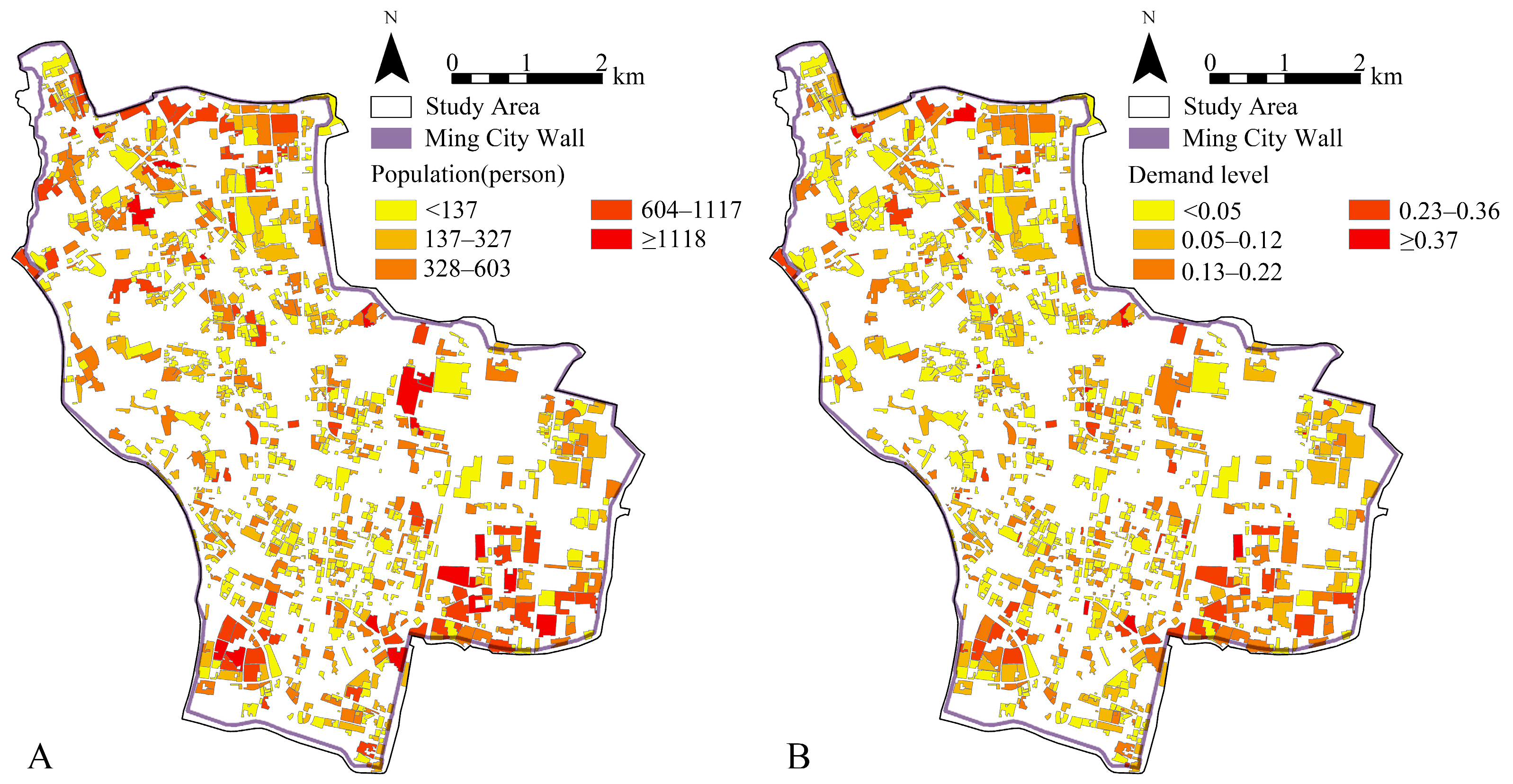
A comprehensive aging index is introduced to characterize the demand characteristics of the elderly park accessibility [
31,
32]. In this index, the count reflects the absolute size of the elderly population in a region, the proportion indicates its relative share of the elderly population, and the density reflects the concentration degree of the elderly population per unit area. These three indicators reflect the aging degree of a region in terms of absolute quantity, relative proportion, and population density, respectively. Therefore, combining these indicators is necessary to more accurately present the spatial distribution characteristics of aging (
Table 2).
After standardizing the results of these three factors, their weights are calculated using the entropy weight TOPSIS method, which emphasizes the spatial variability and information contribution of demand indicators. In this study, the weight assigned to the proportion of the elderly population in Nanjing is extremely low (0.0056). This does not imply that this variable is unimportant in an absolute sense; rather, it indicates that the proportion of elderly residents is relatively evenly distributed across residential areas and communities in the Old City of Nanjing. Consequently, this factor contributes little to the differentiation of the comprehensive aging index. By contrast, at the community scale in Nanjing, the spatial heterogeneity of the absolute number and spatial concentration of elderly residents is far greater than that of age–structure proportions. This pattern is consistent with empirical observations in Nanjing, where elderly daily activities and park use are more strongly influenced by the local concentration of elderly residents and short-distance walking accessibility. Therefore, a comprehensive aging index primarily composed of elderly population count and density can reflect the actual spatial distribution and demand patterns of the elderly.
2.2. Equity Assessment Based on Lorenz Curves and Urban Park-Adapted Gini Coefficients
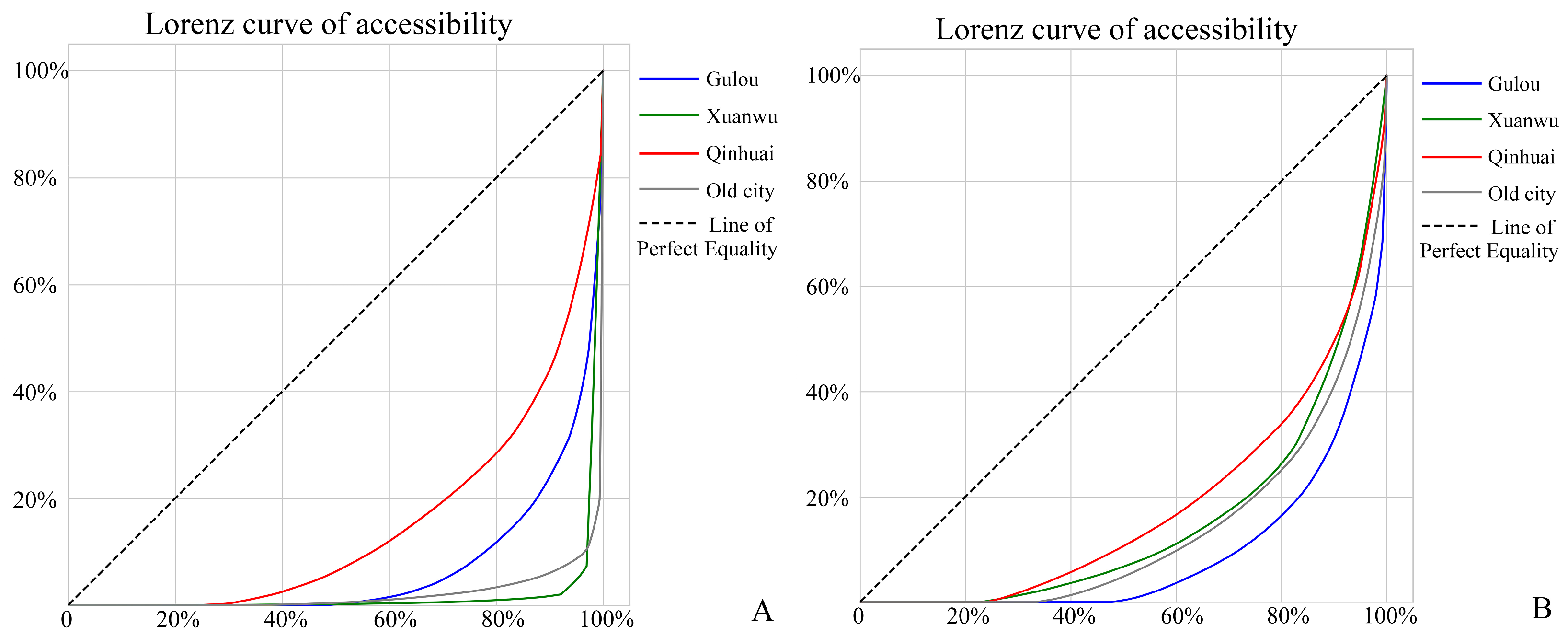
The distribution of green space accessibility is quantitatively assessed using Lorenz curves and Gini coefficients. The Lorenz curve represents the cumulative distribution of park accessibility among the elderly population and is used to analyze the matching degree between the distribution of the elderly population and the layout of green spaces. The horizontal axis represents the cumulative percentage of the elderly population sorted from lowest to highest, while the vertical axis represents the cumulative percentage of green space resources corresponding to each population interval. The 45-degree line in the Lorenz curve graph represents the absolute equity line. The greater the distance between the Lorenz curve and the absolute equity line, the worse the matching between the current population distribution and the green space layout, indicating more pronounced distributional inequity.
In the past, the Gini coefficient has been used as an economic indicator to measure income inequality among residents. In recent years, however, a growing body of research has demonstrated that the Gini coefficient is also an effective metric for assessing the equity of urban park distribution, and it can be applied as an indicator to evaluate the spatial equity of urban park provision [
33]. The park-adapted Gini coefficient is a numerical value derived from the Lorenz curve, used to measure the distributional equity level of park accessibility [
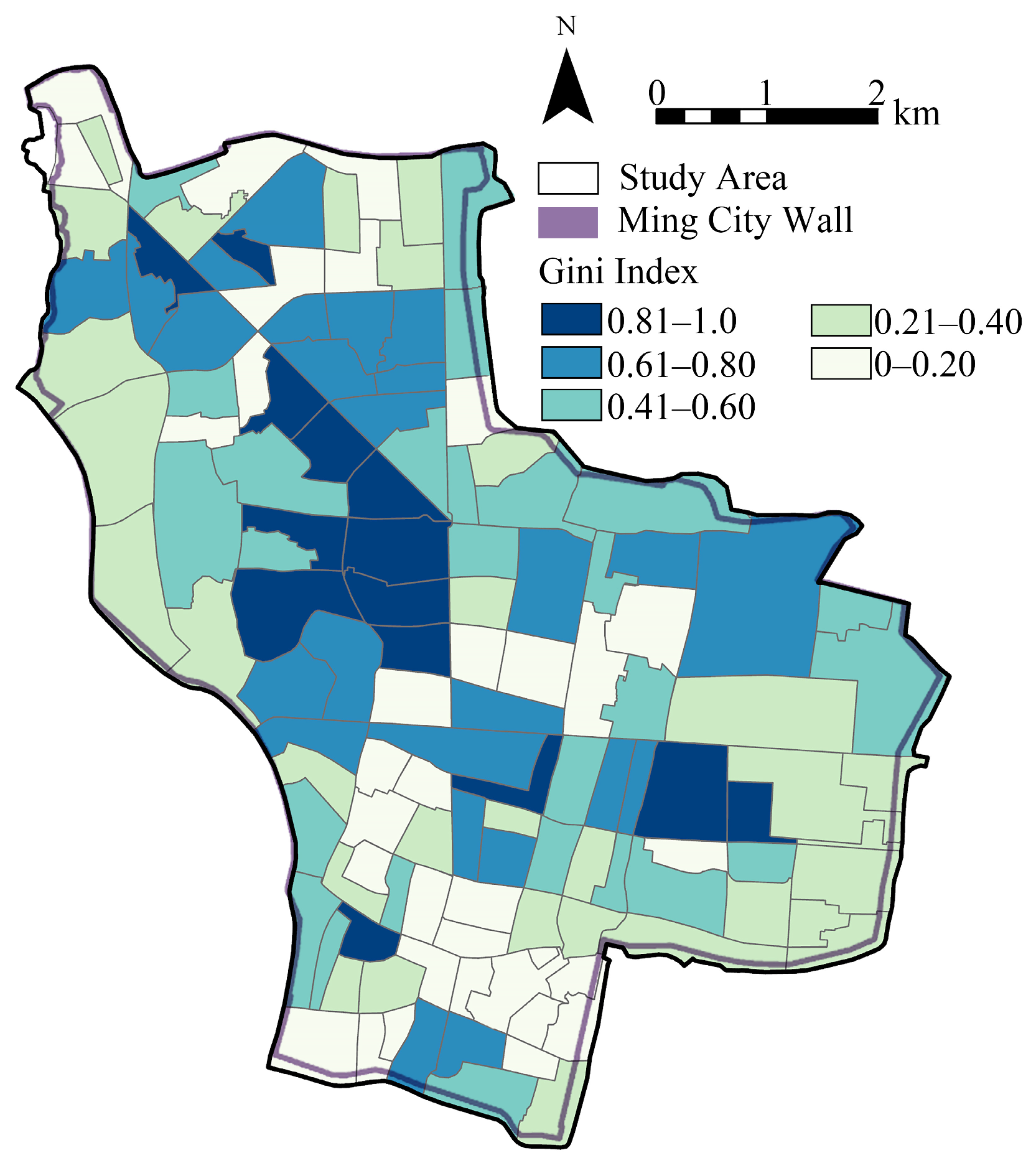
34]. The park-adapted Gini coefficient ranges from 0 to 1. A higher value indicates a larger disparity in accessibility outcomes, and lower values indicate a more even distribution. The calculation formula is as follows:
where
represents the park-adapted Gini coefficient, an indicator for evaluating the equity level of green space allocation in the research area;
represents the group number of areas sorted by per capita green space levels in ascending order,
;
represents the number of neighborhoods;
represents the cumulative population proportion of the population; and
represents the cumulative proportion of green space accessibility, expressed as the cumulative accessibility proportion.
2.3. Spatial Differentiation of Park Accessibility and Its Influencing Factors
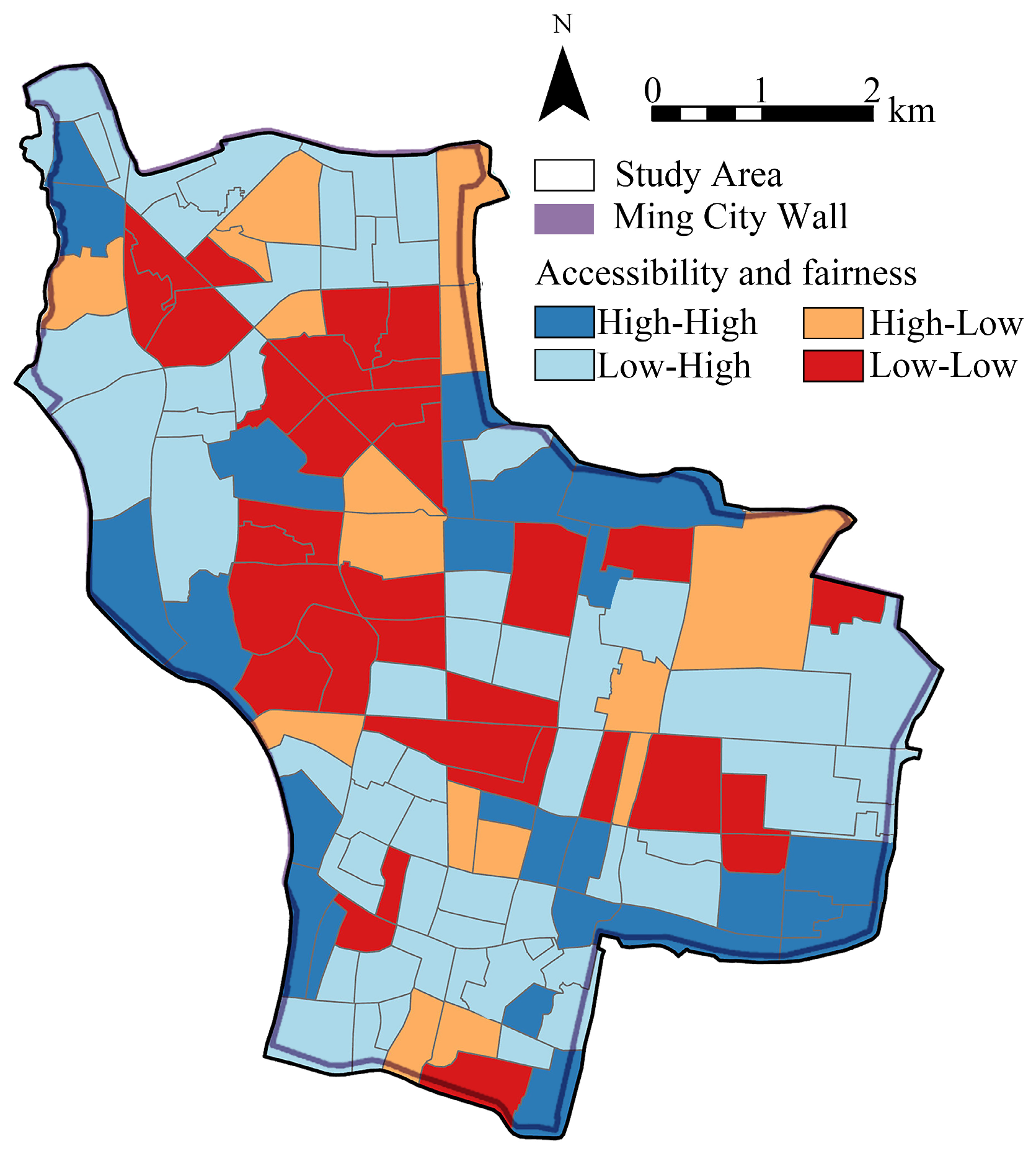
To better analyze the spatial differentiation between park accessibility and equity for the elderly population in the study area, park accessibility was further classified using the average value across all communities as the dividing point. Areas with accessibility above the average were classified as high-accessibility, while those below were considered low-accessibility. Using a park-adapted Gini coefficient of 0.5 as the dividing point to characterize significant disparities in resource allocation, areas with an equity value less than 0.5 were classified as relatively high equity, while those above 0.5 were categorized as relatively low equity. Consequently, park accessibility and equity for the elderly population were categorized into four types: high-accessibility and high-equity, high-accessibility and low-equity, low-accessibility and high-equity, and low-accessibility and low-equity.
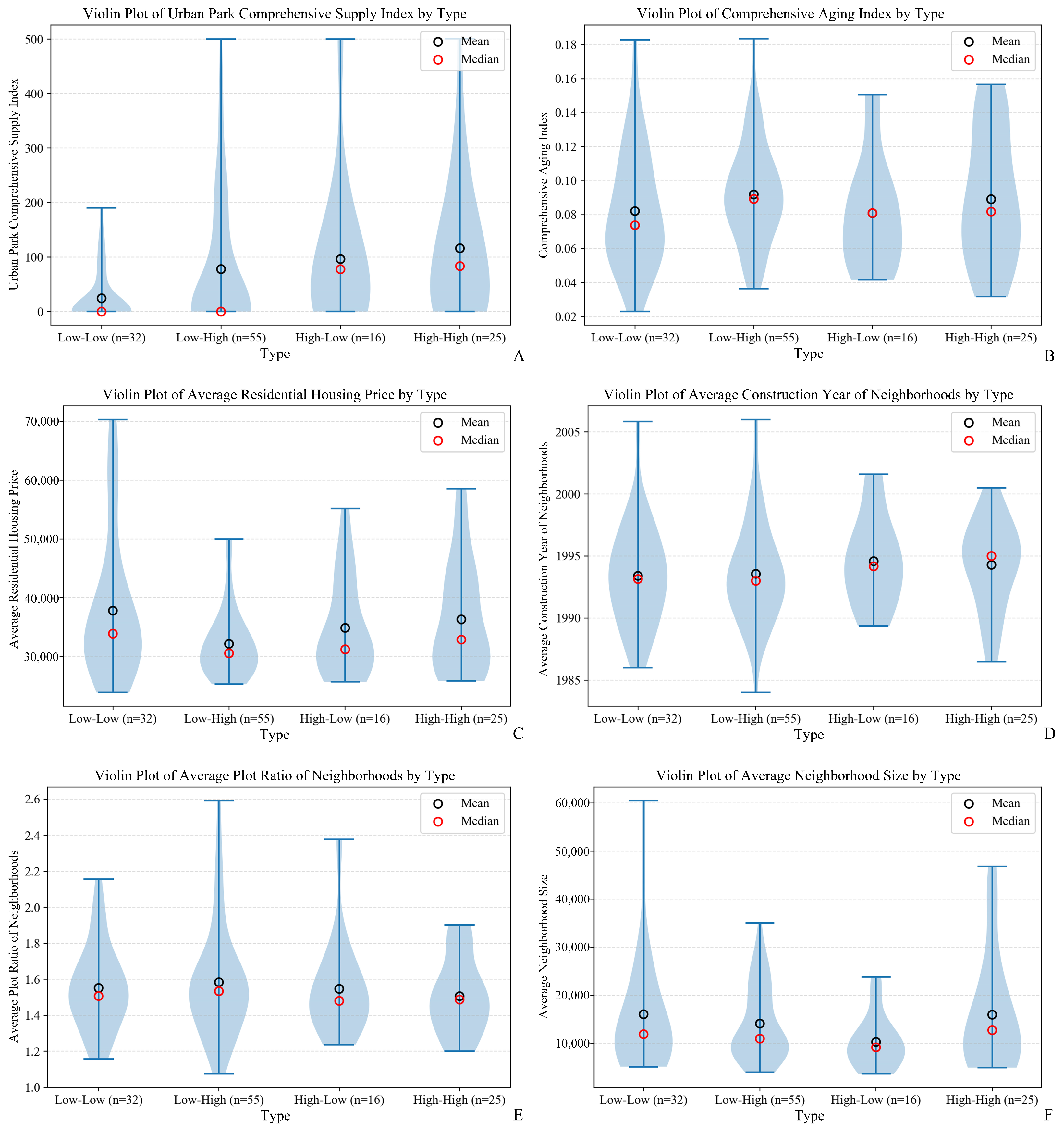
Using mean and extreme value statistical methods, variables from four dimensions were selected to analyze the spatial distribution of different accessibility and equity levels, exploring how the spatial differentiation of urban park accessibility is associated with park supply, elderly population variables, environmental factors, and socioeconomic factors. First, the comprehensive supply index of parks, as a representation of park supply levels, was taken into consideration. Second, a comprehensive demand index comprising the number, proportion, and density of elderly residents was used to examine its relationship with the spatial differentiation of park accessibility. Third, due to the unavailability of income data, the average housing price in communities was used to represent the socioeconomic status of the elderly population, since wealthier individuals typically reside in areas with higher housing prices [
19]. Finally, the physical characteristics of communities, including the construction year, size, and plot ratio of residential areas within communities, also collectively influence the equity of park accessibility by walking.
3. Study Area and Data Sources
3.1. Study Area
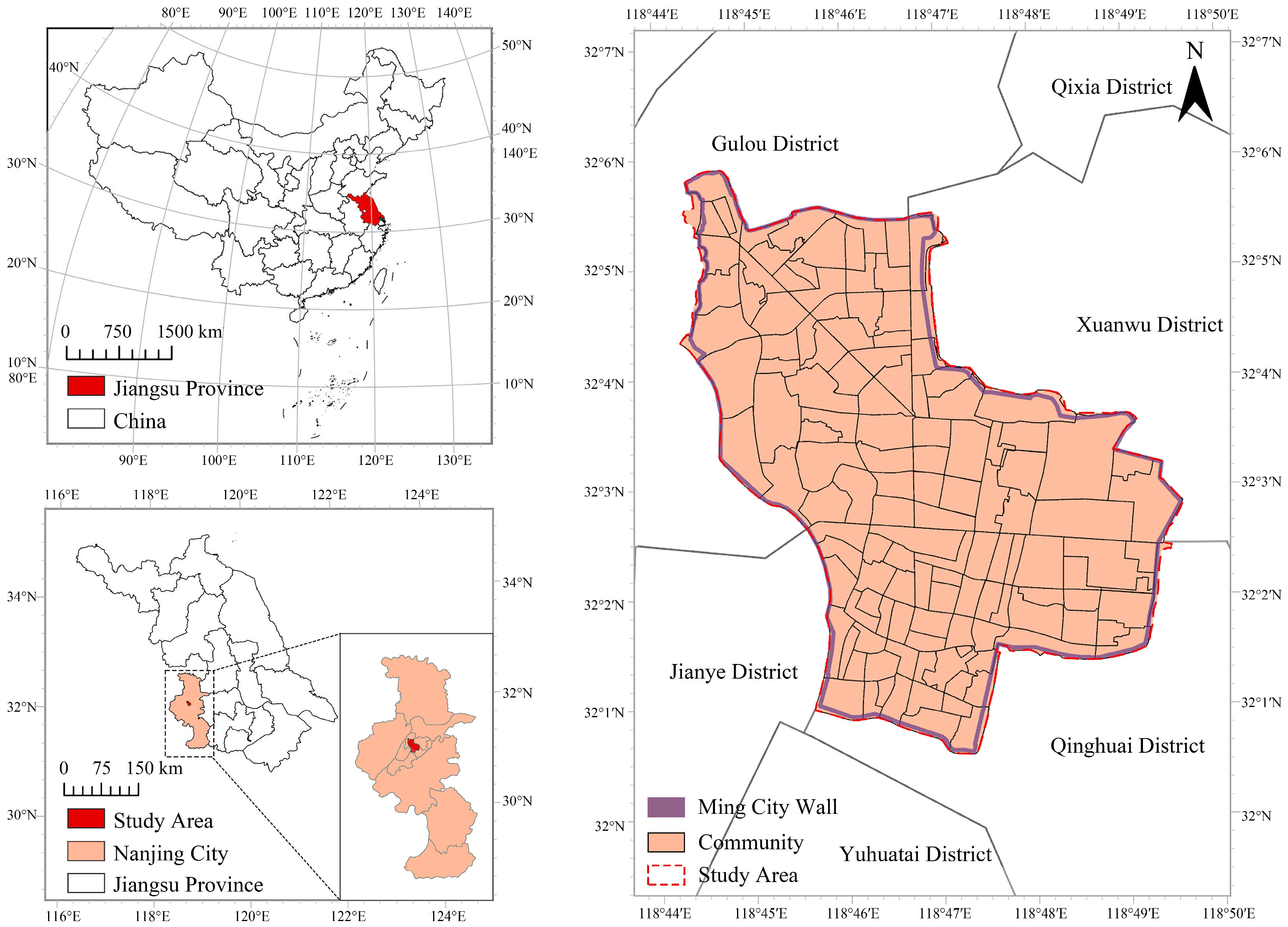
Nanjing is a major central city in the Yangtze River Delta of China, ranking among the top in terms of urban green space ratio and green coverage rate in China. It has been awarded titles such as “National Garden City” and “Habitat Scroll of Honour Special Citation.” This study selected the Old City of Nanjing, which is bounded by the Ming City Wall, as the research object. The Old City, as Nanjing’s core area, has a history spanning over 2500 years and is endowed with rich cultural heritage and public resources, making it a key area for advancing urban renewal. The Old City covers a total area of approximately 43.41 km
2, encompassing parts of Xuanwu District, Gulou District, and Qinhuai District (
Figure 1). The Old City comprises 16 sub-districts and 136 communities, with a permanent population of approximately 1.0222 million at the end of 2020. This population included approximately 264,400 elderly individuals aged 60 and above, accounting for about 25.87% of the total population, significantly higher than the national average of 18.70%. The dense distribution of the elderly population places high demands on the total number and rational layout of parks in the Old City. The equity of park supply for the elderly population in the densely developed Old City of Nanjing serves as a representative case for examining the equity of park layout in high-density cities, both in China and even worldwide.
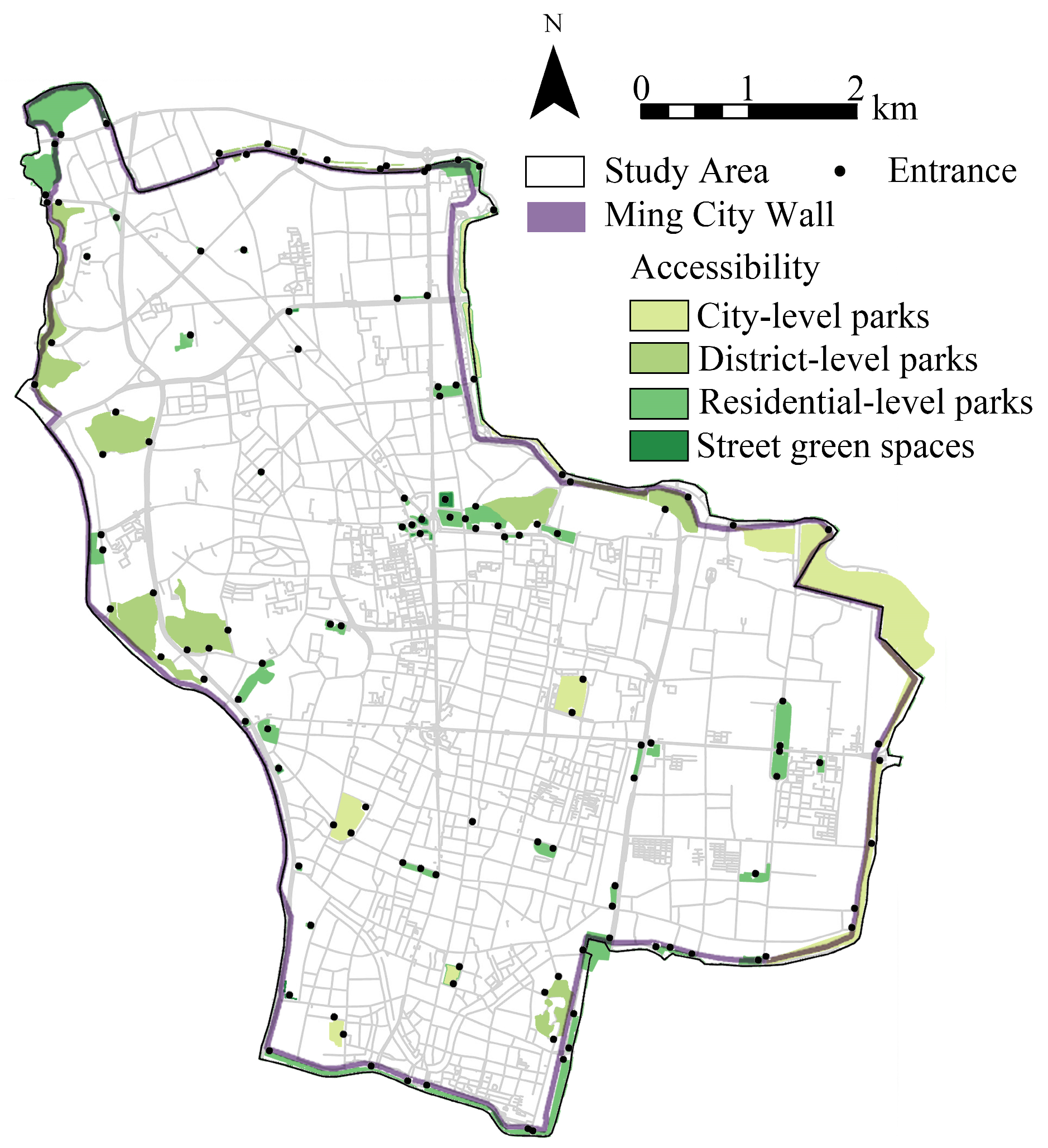
The Old City of Nanjing contains 65 green spaces, which are categorized into four spatial types, city-level parks, district-level parks, residential-level parks, and street green spaces, with their respective service radii determined (
Table 3). According to statistics, the total green space area is 381.75 hectares, accounting for 8.79% of the Old City of Nanjing. The locations of green space entrances were marked using Baidu Street View maps and on-site surveys. For green spaces lacking clearly defined entrances or of smaller scale, their centroids were used instead. Since the majority of the Zhongshan Scenic Area and parks in Xuanwu District are located outside the Old City of Nanjing, only entrances located within the Old City were considered in the calculations (
Figure 2).
3.2. Data Sources and Preprocessing
This study was based on the data of the Seventh National Population Census in 2020, as well as information on residential area sizes and current urban land use in the Old City of Nanjing. The main types of data were divided into two categories: vector datasets and point of interest (POI) datasets (
Table 4). China’s population census is conducted every ten years, and the seventh census provides the most recent data. The pattern, functional structure, and population distribution of the Old City of Nanjing are well established, with its overall land use pattern and residential layout being relatively stable around 2020. While minor local adjustments may have occurred, the general spatial structure has remained consistent.
The vector datasets comprised green spaces, urban water systems, and urban road networks, with data sources including 5-m precision multispectral satellite images captured by the Changguang Satellite “Jilin-1” Wide Amplitude 01A satellite on 8 September 2020; the “Nanjing Urban Master Plan (2018–2035)” document; and on-site surveys conducted from 5 May to 20 May 2022.
The POI datasets comprised population data from the Seventh Population Census provided by the Nanjing Municipal Bureau of Statistics. Data on residential areas in the Old City of Nanjing, such as residential area names, affiliated sub-districts, number of households, construction years, and housing prices, was collected using web scraping techniques. POI data for residential areas in the Old City of Nanjing, public facilities within parks, medical and healthcare facilities outside parks, and bus stop distributions were obtained through the Gaode Maps Open API.
Elderly population data were available at the community level from the Seventh National Population Census. To enable neighborhood-level analysis, a spatial disaggregation procedure was applied prior to model implementation. Specifically, the total elderly population of each community was proportionally allocated to individual residential areas according to the relative number of households within the same community. Household information for residential areas was obtained through web scraping and spatial matching. For each community, the share of households in each residential area was calculated and used as a weighting factor to distribute the elderly population. This preprocessing step assumes that, within a given community, the elderly population is approximately proportional to the distribution of households across residential areas.
The population data represent a snapshot from the 2020 census, while some spatial datasets reflect conditions around or slightly after 2020. This temporal mismatch constitutes a potential limitation, but it is unlikely to substantially affect the comparative analysis at the community scale.
5. Discussion
5.1. Strengths
This study proposes an improved 2SFCA model that comprehensively considers factors such as the elderly population’s specific travel distances, population distribution, and the service range and capacity of various levels of green spaces. At both the neighborhood and community scales, it accurately calculates the actual green space accessibility available to the elderly population within their daily travel range. Furthermore, the study develops a set of methods that combine the Lorenz curve and urban park-adapted Gini coefficient to evaluate the spatial differentiation of park accessibility and its influencing factors, providing a valuable supplement to environmental justice research amid the global trend of population aging.
Although previous studies have also proposed methods to improve the classic 2SFCA model from both the supply and demand perspectives [
35,
36], the strengths of this study are as follows: (1) It measures the park supply level not only in terms of park quality and size but also by thoroughly considering the influence of park spatial grade and its external spatial organization on park accessibility. (2) By introducing the comprehensive aging index, it simply and conveniently achieves a reasonable assessment of the elderly population’s demand. This study also presents a detailed comparison of the changes in urban park supply levels, elderly population demand indices, park accessibility for the elderly, and equity in park allocation resulting from improvements in supply and demand indices.
This study finds that the 2SFCA model is highly sensitive when applied at a fine-grained scale. In this context, the finding that the improved model yields Lorenz curves closer to the equity line does not necessarily indicate that classic 2SFCA approaches systematically overestimate social inequality. Rather, it reflects the correction of biases inherent in using park area alone as the primary measure of supply. This correction is closely related to the structure of the comprehensive supply index. The entropy weight TOPSIS results indicate that public facility density contributes more to distinguishing supply levels across parks than park area, reflecting its greater spatial variability in the study area rather than its normative importance.
As a result, the improved model increases the effective supply contribution of smaller parks that provide better facilities, higher environmental quality, and more convenient access for elderly residents while reducing the dominance of park size as the sole determinant of supply. This rebalancing of supply attributes smooths extreme accessibility values generated under area-based assumptions and leads to a less variable distribution of accessibility outcomes, thereby producing Lorenz curves that are closer to the equity line. Consequently, the limitations of the classic model are not merely overestimations or underestimations of the supply–demand relationship, accessibility, and equity but rather significant deviations from the improved model at both local and overall levels. Research at a fine-grained scale places higher requirements on the accuracy of model construction, and fine-grained modeling is a prerequisite for accurately diagnosing urban challenges.
5.2. Factors Influencing the Spatial Differentiation of Park Accessibility
The urban structural form is shaped by its historical origins, geographical characteristics, and development patterns. It is not only constrained by the natural environment but also reflects the city’s social, cultural, and historical development characteristics, manifesting as the superimposition and mixture of its original form and subsequent development. In the case of the Old City of Nanjing, which is surrounded by mountains and water, green spaces are mostly built around mountains and along lakes and rivers. The natural terrain plays a foundational role in shaping park distribution. Some parks have been reconstructed from ancient palaces, temples, and city walls, while others have been built in recent years through urban renewal and ecological restoration policies by “finding space for greenery” or utilizing corner lots during area renovations. The urban fabric of the Old City of Nanjing is characterized by the superimposition of irregularly distributed large public building areas; numerous row-house residential areas; spacious compounds of government organizations; and small-scale, densely built traditional blocks. Much of the southern part of the city retains a traditional street and lane pattern, featuring dense residential buildings and many indigenous residents. The city is dotted with numerous multi-story row-house residential buildings built around 1990–2000, interspersed with a few low-rise and high-rise residential buildings built after 2000. The majority of these residential areas are organized as enclosed neighborhoods. Therefore, the spatial differentiation of park accessibility for the elderly population in the Old City of Nanjing is influenced by multiple factors, including the city’s natural geographical conditions, historical patterns, policy interventions, social structure, and market forces. This interaction is extremely complex, so analyzing the equity of urban park services solely through linear models or single-dimensional explanations may be ineffective. This is because a single variable may have opposite effects in different spatial contexts, making it difficult to identify overall correlations or regression relationships.
To address this complexity, this study classifies park accessibility for the elderly population into four types: high accessibility–high equity, high accessibility–low equity, low accessibility–high equity, and low accessibility–low equity. By analyzing the differences in various influencing factors within each type, the study explores how these factors affect the walking accessibility and equity of green spaces for the elderly population. The findings indicate that, first, the park supply level, the average construction year of residential neighborhoods, and the plot ratio are the core factors determining the differentiation of park accessibility. Communities with adequate park supply, newer residential buildings, and lower plot ratios have higher park accessibility for the elderly population. Communities with insufficient park supply, old residential buildings, and high-density development tend to have lower park accessibility. Second, the distribution of the elderly population is positively correlated with the equity of park layout within communities. The elderly population tends to reside more along the edges of the Old City of Nanjing and in the southern part of the city, where park allocation tends to be more equitable. Third, there is no straightforward linear relationship between housing prices and neighborhood size and park accessibility/equity. Communities with high average housing prices and large neighborhood sizes may be located either in the best areas with high park accessibility–high equity along the edge of the city or in the worst areas with low park accessibility–low equity in the central part of the city. Conversely, communities with low average housing prices and small neighborhood sizes may be located in either low accessibility–high equity or high accessibility–low equity areas. These patterns highlight the importance of classified comparisons. Using only a global model for analysis may yield weak or insignificant correlations between housing prices or neighborhood size and park accessibility/equity. However, through classification, we can clearly see the differentiated effects of parks in various contexts, providing precise guidance for formulating targeted urban policies.
5.3. Limitations and Future Research
This study has some limitations that could be addressed in future research. First, it analyzes only the walking accessibility for elderly residents to green spaces. Future research can comprehensively consider the actual usage frequency and preferences of elderly people across various transportation modes, such as cycling, public transportation, and private cars, as well as mixed modes of transportation. Second, this study uses the quantity, proportion, and density indicators of the elderly population as the comprehensive aging index to measure the demand of the elderly population, which primarily supports an assessment of horizontal equity (equal treatment). However, this population-based indicator system inevitably simplifies considerations related to vertical equity (differential treatment based on need), as it does not fully capture intra-group heterogeneity and individualized demand among older adults. Future research could gather detailed demographic information on elderly residents, such as age, gender, and household income, as well as their demand indicators for green spaces, such as travel time, travel frequency, and duration of use, through questionnaire surveys. It can also integrate real-time data, such as social big data, satellite images, and dynamic monitoring, to scientifically estimate the actual demand for parks among different types of elderly residents based on an analysis of their travel behaviors. Furthermore, this study broadly defines people aged 60 and above as the elderly population and treats all elderly people as a homogenized group for research purposes. In fact, the elderly population can be categorized by age into youngest-old (60–74 years old), middle-old (75–84 years old), and oldest-old (85 years and above) [
37]. As age increases, significant differences emerge in physiological functions, life needs, and behavioral characteristics. Future research should account for the differences among different age groups of the elderly population to provide precise strategic recommendations for urban decision-makers to optimize green spaces in an aging society.
6. Conclusions
This study focused on the elderly population in the Old City of Nanjing in China, and developed a green space accessibility calculation model using an improved supply–demand 2SFCA model. By integrating the Lorenz curve and urban park-adapted Gini coefficient, it examined the supply–demand relationship and allocation differences in green spaces and the elderly population at the neighborhood and community levels. This study identified equity issues in green space layout, and classified and discussed the spatial differentiation of park accessibility and equity for the elderly population and its influencing factors. The main findings are summarized as follows:
- (1)
A comparison of the 2SFCA model results before and after improving supply–demand indices reveals that the classic model has significant local and overall deviations in evaluating park supply–demand relationships, accessibility, and equity at a fine-grained scale, rather than merely producing simple estimation errors. This highlights the critical importance of high-precision modeling in research on park accessibility and equity.
- (2)
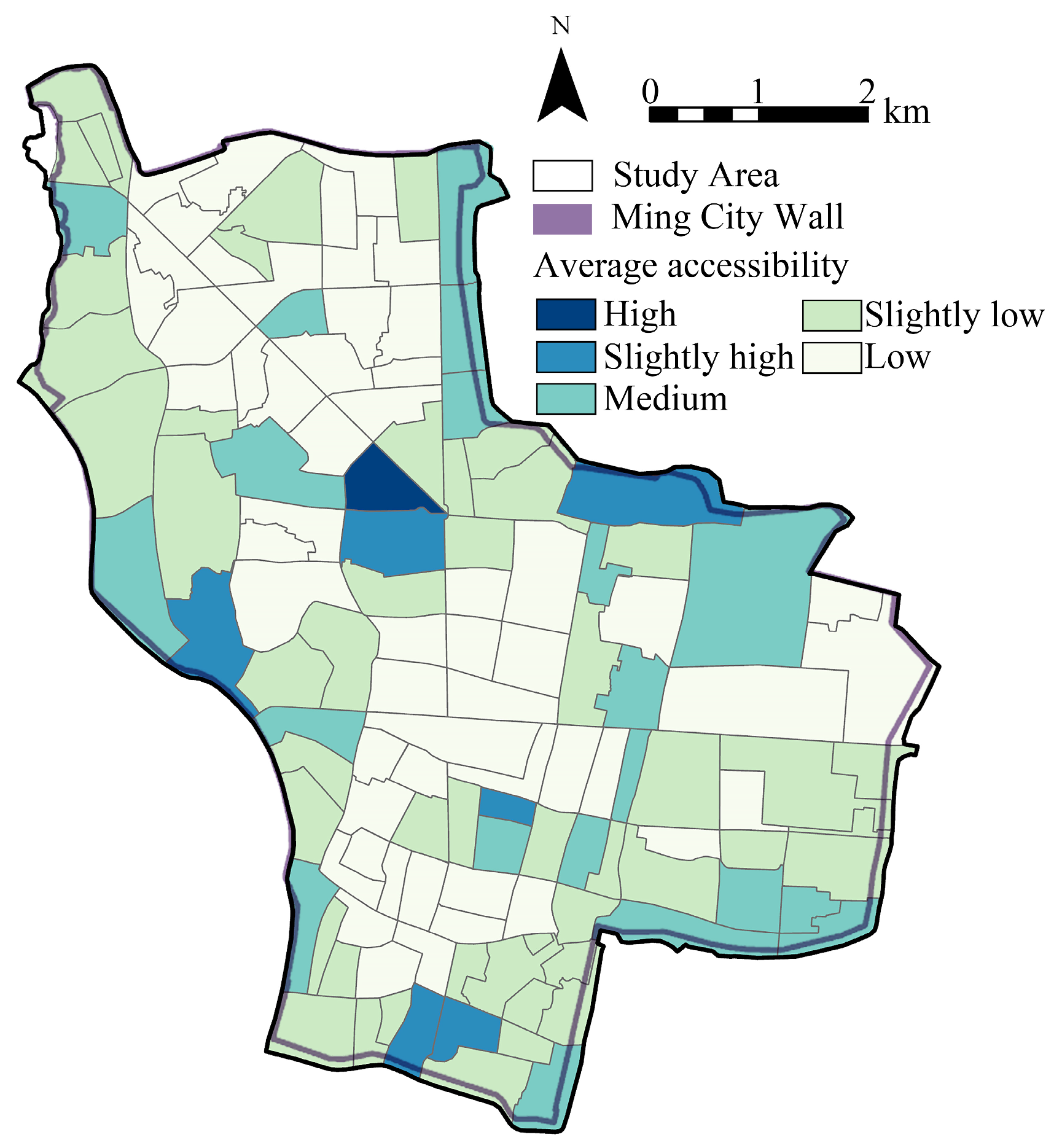
Green spaces in the Old City of Nanjing form a spatial distribution pattern characterized by “double-ring high accessibility–clustered low accessibility,” with clearly identifiable “service voids.” The accessibility and equity of park resources for the elderly population show a central–peripheral gradient differentiation, with an overall low level of equity. Only about one-third of the communities can provide good walking accessibility to parks for the elderly population.
- (3)
The park supply level, the average construction year of neighborhoods, and the plot ratio are the key factors influencing the park accessibility for elderly residents. The comprehensive aging index of communities is positively correlated with the equity of park layout within communities. Housing prices and neighborhood size do not show a simple linear relationship with the park accessibility/equity for elderly residents, demonstrating the necessity of classified discussions for different accessibility and equity levels to analyze complex urban spatial phenomena.
In conclusion, this study developed a set of methods that combine the improved 2SFCA model and the urban park-adapted Gini coefficient to evaluate the spatial differentiation of park accessibility for elderly residents and its influencing factors. The results demonstrate the necessity of classified and multi-scenario modeling in spatial equity research, providing a valuable supplement to environmental justice research amid the global trend of population aging. Within the context of urban renewal in China, this study provides a quantitative assessment tool for updated initiatives such as 15-min community life circle planning, old urban area renewal, and pocket park construction. It offers a fine-grained decision-making basis for park planning and renewal in Nanjing and other cities, providing decision-making references for improving urban livability, governance in aging societies, and the formulation of spatial equity policies in the future.