Article

Lavender as a Catalyst for Rural Development: Identifying Commercially Suitable Cultivation Sites Through Multi-Criteria Decision Analysis


1
Department of Space Sciences and Technologies, Faculty of Science, Akdeniz University, 07070 Antalya, Türkiye
2
Department of Precision Agriculture and Agricultural Robots, Faculty of Arts and Sciences, Burdur Mehmet Akif Ersoy University, 15200 Burdur, Türkiye
3
Department of Park and Garden Plants, Vocational School of Serik G-S. Sural, Akdeniz University, 07500 Antalya, Türkiye
4
Department of Landscape Architecture, Faculty of Architecture, Akdeniz University, 07070 Antalya, Türkiye
*
Author to whom correspondence should be addressed.
Land 2026, 15(1), 130; https://doi.org/10.3390/land15010130
Submission received: 8 December 2025 / Revised: 29 December 2025 / Accepted: 7 January 2026 / Published: 9 January 2026
(This article belongs to the Section Land Planning and Landscape Architecture)

Abstract

Lavender is a perennial Mediterranean plant that has been cultivated throughout history for medicinal, aromatic, and cosmetic purposes. Due to its high economic and commercial value, it has become an important agricultural product worldwide. The low production cost, adaptability to environmental conditions, and demand for its versatile use in the global market make it a significant potential source of income for developing Mediterranean countries. This study aims to identify commercially suitable cultivation sites for Lavandula angustifolia Mill. using remote sensing (RS) and geographic information systems (GIS) technologies to support rural development. Within this scope, suitable cultivation habitat parameters for the species in open fields and natural conditions were determined; these parameters were weighted according to their importance using multi-criteria decision analysis (MCDA), and thematic maps were created for each parameter. The created maps were combined using weighted overlay analysis, and a final map was generated according to the suitability class. The results indicate that within the study area, 75,679.45 ha is mostly suitable, 388,832.71 ha is moderately suitable, 24,068.43 ha is marginally suitable, and 229,327.20 ha is not suitable. As a result, it has been observed that Lavandula angustifolia Mill., which is currently cultivated on approximately 4045 ha of land and contributes 429 tons of product to the regional economy, covers only a relatively small portion of the suitable cultivation sites identified in the study and is not utilized to its full potential. It is understood that the expansion of lavender cultivation in determined suitable sites has significant potential to substantially develop the region and its rural population in terms of both yield and production volume, and to involve women and youth entrepreneurs in agricultural employment.

1. Introduction

Nowadays, sustainable agricultural development, ensuring food security, adapting to climate change, and diversifying rural economies to increase their resilience have become priority agenda items for natural resource management policies [1,2,3]. However, issues of climate change, such as irregular rainfall patterns [4], increasing heat waves [5], urbanization pressure [6], increased disaster risks [7], economic vulnerabilities [8], the gradual depletion of water resources and increased drought [9,10], soil degradation [11], shrinking agricultural areas [12], and declining profitability of traditional agricultural products [13], are directly and indirectly threatening agricultural production systems to a significant extent. These adverse conditions are leading producers towards alternative agricultural production models that are more environmentally sustainable, require fewer inputs, and have the potential to generate high added value [14,15]. In this regard, medicinal and aromatic plants have become a key component of rural development strategies, particularly in climate-vulnerable regions, because of their capacity to adapt to arid and semi-arid ecosystems, their ability to generate high economic benefits at low production costs, the wide variety of species and products they offer, and their global demand [16,17]. As emphasized in the Food and Agriculture Organization of the United Nations (FAO) reports, the widespread cultivation of medicinal and aromatic plant species with high potential for comprehensive value chain development will offer multidimensional contributions to both the conservation of ecosystem services and the reduction of poverty by creating income diversity in rural communities [15,18].
Lavender (Lavandula angustifolia Mill.) is a perennial aromatic plant belonging to the Lamiaceae family and is cultivated as an important agricultural product due to its essential oil, medicinal properties, and value as an ornamental plant [19,20]. Lavender is a semi-shrub that can grow to a height of 30–80 cm and has gray-green, narrow, opposite linear or linear–lanceolate leaves [21,22]. The plant bears its purple-blue flowers on flowering stems that show extensive branching, and the flowers are rich in glandular plumes containing high levels of essential oil [23]. Lavender has a deep root system with a well-developed taproot and lateral roots, increasing its tolerance to arid conditions [24]. These morphological characteristics make lavender a suitable species for both aromatic oil production and arid land agriculture. However, lavender is considered a medicinal and aromatic plant of strategic importance for rural development, not only as an agricultural product but also due to the ecological, economic, and socio-cultural contributions it makes to the region where it is cultivated [25,26]. The plant’s drought resistance, low maintenance requirements, adaptability to different climatic conditions and soil characteristics, and long lifespan make it a prominent alternative for sustainable agricultural production [25,27]. Lavender, which is part of the natural flora of the Mediterranean basin, including Türkiye, has spread across a wide geographical area in Europe, Asia, and America due to its high-value-added potential [25,28]. Lavandula angustifolia Mill. is a species that naturally occurs in the Mediterranean climate zone and has adapted to the hot, dry summers and mild, rainy winters of this region. Lavender is widely cultivated in European countries such as France, Italy, Spain, and Greece, primarily for traditional aromatic uses as well as for cosmetic and essential oil production. The Mediterranean climate is critically important in meeting the biological and ecological requirements of lavender; long, hot, dry summers and mild, rainy winters support the plant’s healthy development and high essential oil quality [19,22]. Particularly in the Western Mediterranean and Aegean regions of Türkiye, lavender is widespread both in its natural habitat and in cultivated fields; the provinces of Burdur, Isparta, and Antalya are among the prominent cultivation centers [16]. In these regions, lavender is integrated into the natural flora while also being cultivated as an economically valuable aromatic plant within local agricultural systems. The commercial value of lavender stems from its diverse range of high-value-added products, including essential oils extracted from its flowers and used in many industries such as cosmetics, pharmaceuticals, food, and cleaning products, as well as dried flowers, lavender honey, soap, candles, natural textile products, and decorative materials [29,30,31]. This product diversity, together with lavender-based rural tourism applications and local entrepreneurial activities, creates new economic opportunities in rural areas, thereby accelerating regional development and economic transition processes. Moreover, the transformation of lavender fields into tourist attractions supports agrotourism, providing seasonal employment in the rural service sector and contributing to the growth of the local economy through the multiplier effect of tourism [32,33]. In particular, lavender cultivation plays an important role in terms of women’s participation in production processes, the development of local branding, and the strengthening of regional promotion [32,33,34]. For this reason, lavender is classified as one of the key products contributing to women’s economic empowerment, cooperatives, youth employment, agro-tourism, and local branding processes in the rural development programs carried out by the United Nations Development Programme (UNDP) in Türkiye [35].
Numerous academic studies have been conducted on lavender in various fields. When reviewing studies on lavender in the international literature, a considerable portion of the research focuses on the plant’s chemical properties [36], essential oil components [37], pharmacological effects [38,39], aromatherapy applications [40], antioxidant and antimicrobial properties [41], biological activities under different ecological conditions, and agronomic performance [42,43]. Studies in Türkiye also have similar trends to the international literature, focusing on the essential oil quality of lavender [26,44], its adaptation capacity in different regions [45], yield–quality relationships [46,47], and the effects of production on rural tourism and development [48,49]. Although there have been multidimensional studies on lavender in various fields, the information on the conditions under which the plant performs optimally (environmental thresholds, edaphic characteristics, topographic ranges, meteorological suitability) does not exhibit spatial integrity. Therefore, it is clear that there is a lack of comprehensive ecological suitability models in the literature that holistically address the environmental factors of lavender cultivation (i.e., meteorological and soil characteristics, topography, land cover, and land use) and spatially integrate environmental and ecological variables.
Conventional methods for determining suitable sites for lavender cultivation at the regional scale have various limitations in terms of applicability to broad areas, cost, time, and repeatability [50]. Therefore, the integration of Geographic Information Systems (GIS), Remote Sensing (RS), and Multi-Criteria Decision Analysis (MCDA) methods in agricultural production planning, land suitability analysis, and spatial decision-making processes has become a widely accepted model in the literature in recent years [51,52,53]. This model approach is based on the analysis of heterogeneous environmental variables such as climate, soil, topography, land cover, and land use within a multi-dimensional and systematic methodological framework, guided by both data obtained from the literature and the opinions of relevant field experts [54]. In this way, the accuracy of spatial decision-making processes related to agricultural production activities carried out in complex ecosystems is increased, and the evaluation process becomes more standardized, transparent, and repeatable [55,56].
Burdur, located in the inland part of the Mediterranean Region and in the Lakes District, is a city where agriculture and livestock farming constitute the main economic activities and where the rural population density is high. Due to the rapid expansion of lavender cultivation sites in its surroundings, it has great potential for sustainable lavender farming activities. When assessed from an economic perspective, lavender cultivation represents an attractive option for rural regions such as Burdur, as it is characterized by low water consumption, relatively low maintenance requirements, long plant lifespan, and high-value-added potential. Moreover, the participation of youth and women in the agricultural production process indirectly contributes to local employment and gender equality. Lavender agricultural practices that integrate tourism and agriculture enhance the region’s brand value and diversify rural income resources. In this context, the development of lavender production as an agricultural activity in Burdur, which has a wide area of rural regions, can be considered as a comprehensive rural development model that combines environmental sustainability and economic development objectives.
The study aims to achieve the following two main objectives: (1) To comprehensively identify the potential habitat factors for Lavandula angustifolia Mill. in the Mediterranean climate zone, and to determine the suitable cultivation sites using GIS–RS–MCDA integration based on the suitability classes established according to these factors; (2) To contribute to the evaluation of lavender cultivation as a catalytic agricultural product in rural transformation and the development of inclusive value chains. Considering both the biophysical suitability of lavender for the region and its potential contribution to rural development within the scope of this study will provide a unique and comprehensive assessment for both the literature and decision-makers and practitioners.
The main innovation of this study lies in its evaluation of the cultivation environment for Lavandula angustifolia through a comprehensive and systematic set of parameters covering ecological, edaphic, topographic, and climatic dimensions, unlike the fragmented approaches commonly found in the literature. Previous studies have generally focused on a limited number of environmental variables; the relative importance levels of the parameters have often been generalized, without taking into account local ecological differences and production practices. In this study, however, the suitability classes and criterion weights for each parameter were defined in a region-specific and sensitive manner by jointly evaluating the ecological characteristics of the study area, the environmental conditions of existing lavender cultivation sites, local producer experiences, and expert opinions. While the RS–GIS–MCDA-based site selection approach, which is widely used in the literature, is adopted methodologically, the reclassification of criterion weights according to regional ecological requirements and their adaptation to local conditions constitute a fundamental element of originality that distinguishes this study from previous studies. Moreover, the evaluation of potential lavender cultivation sites in a predominantly rural area and the consideration of the findings in the context of supporting rural development and developing inclusive value chains broadens the application scale of the study, placing it among the limited number of holistic approaches in the literature.

2. Materials and Methods

2.1. Study Area

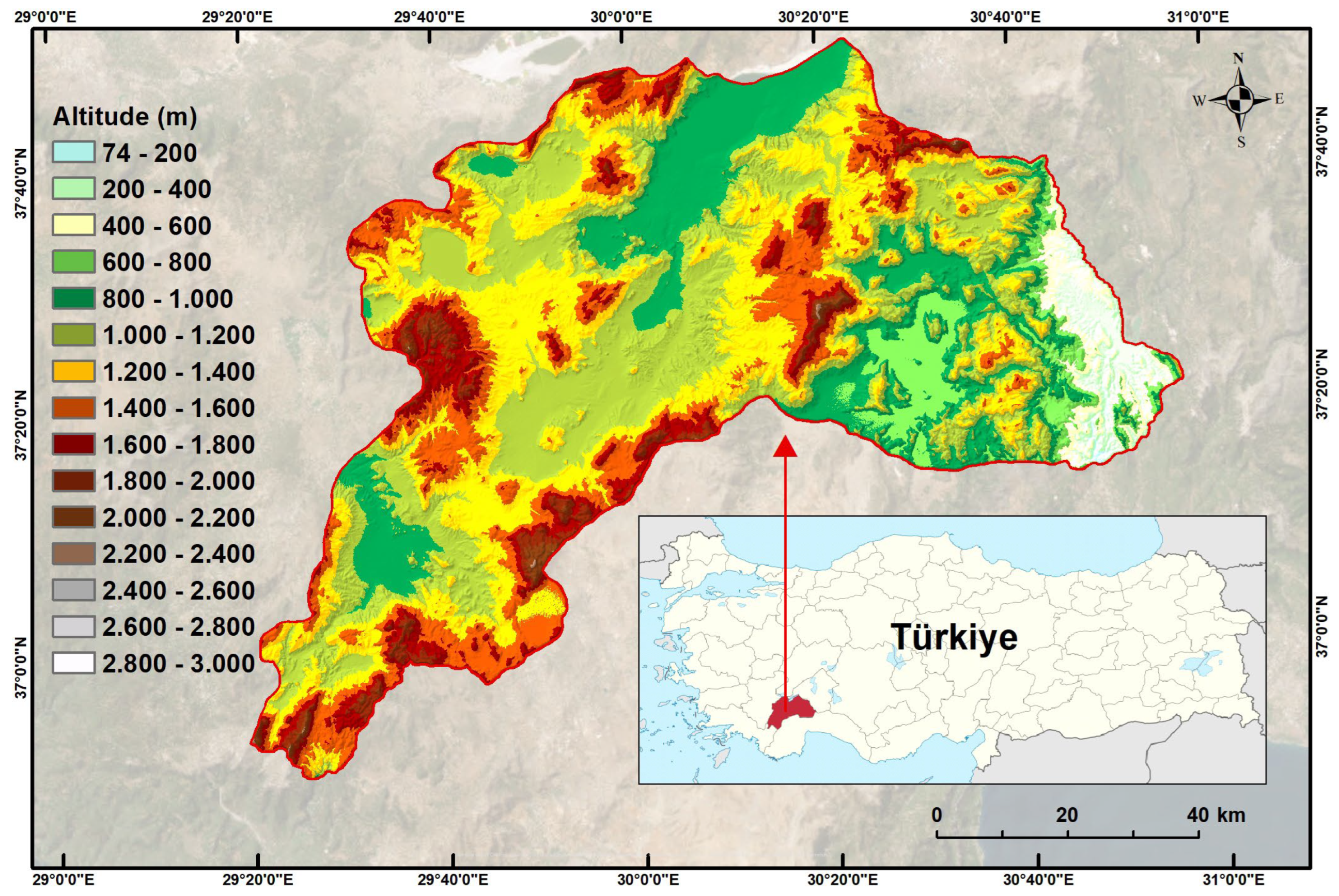
Burdur, one of Türkiye’s medium-sized provinces in terms of population, has an area of 6840 km2. Located in the western part of the Mediterranean region, Burdur is situated between 29°24′ and 30°53′ east longitude and 36°53′ and 37°40′ north latitude (Figure 1). Burdur is surrounded by the cities of Antalya to the south, Denizli to the west, Muğla to the southwest, and Isparta and Afyonkarahisar to the east and north. Furthermore, while the southern part of Burdur is framed by the extensions of the Taurus Mountains, a significant portion of the province consists of the Lake Burdur closed basin and the surrounding plateaus and hills [57].
In general, Burdur has cold and rainy winters and hot and dry summers. It has a transitional climate between the Central Anatolia, Mediterranean, and Aegean regions. A large portion of the annual rainfall occurs in the winter months in the form of rain and snow [58]. According to long-term statistical records (1932–2024), the lowest average temperature in Burdur is observed in January (2.6 °C), while the highest average temperatures are recorded in July and August (24.6 °C). The annual average temperature for the province is 13.3 °C. Burdur receives an average of 88.2 rainy days per year, with an annual average precipitation of 428.1 mm [59].
Examining the soil structure of the basin where the study area is located reveals that the most common soil type is brown soils, which are medium-depth with moderate to good drainage properties. These brown soils constitute 22.65% of the basin. Brown soils are predominantly found within the Lake Burdur drainage area and occur on geological formations such as sandstone, claystone, mudstone, and conglomerate rocks, exhibiting a composition rich in organic matter. This soil structure is observed intensively in the southwestern, eastern, and north-northwestern parts of Lake Burdur. Another common soil group in the basin is the reddish-brown forest soils, which are homogeneously distributed over a large area in the southwest of Lake Burdur. Additionally, calcareous brown forest soils, which are a product of physical and chemical weathering processes, constitute one of the prominent soil classes in the basin [60].
In Burdur, agricultural activities are carried out across a total area of 161,680 hectares, of which 140,985 hectares consist of cereals and other field crops (including cultivated and fallow lands), 5731 hectares are used for vegetable production, and 14,950 hectares are allocated to fruit, beverage, and spice crops. In addition, ornamental plants are cultivated on an area of 0.014 hectares [61]. Lavender cultivation was carried out on 4045 decares of land in the province in 2024; a total of 429 tons of product was obtained from the harvested 4010 decares of land. This amount corresponds to 8.1% of the total lavender cultivation sites in Türkiye and 4.73% of the total production volume. Although lavender cultivation has not yet reached the desired level, it offers considerable opportunities for rural development in the region. Particularly with the growth of the sector, a new source of income has emerged for women and youth living in rural areas; through the establishment of women’s cooperatives, rural women have been able to add value to both their own economies and the regional economy [30,48].

2.2. Data Sets

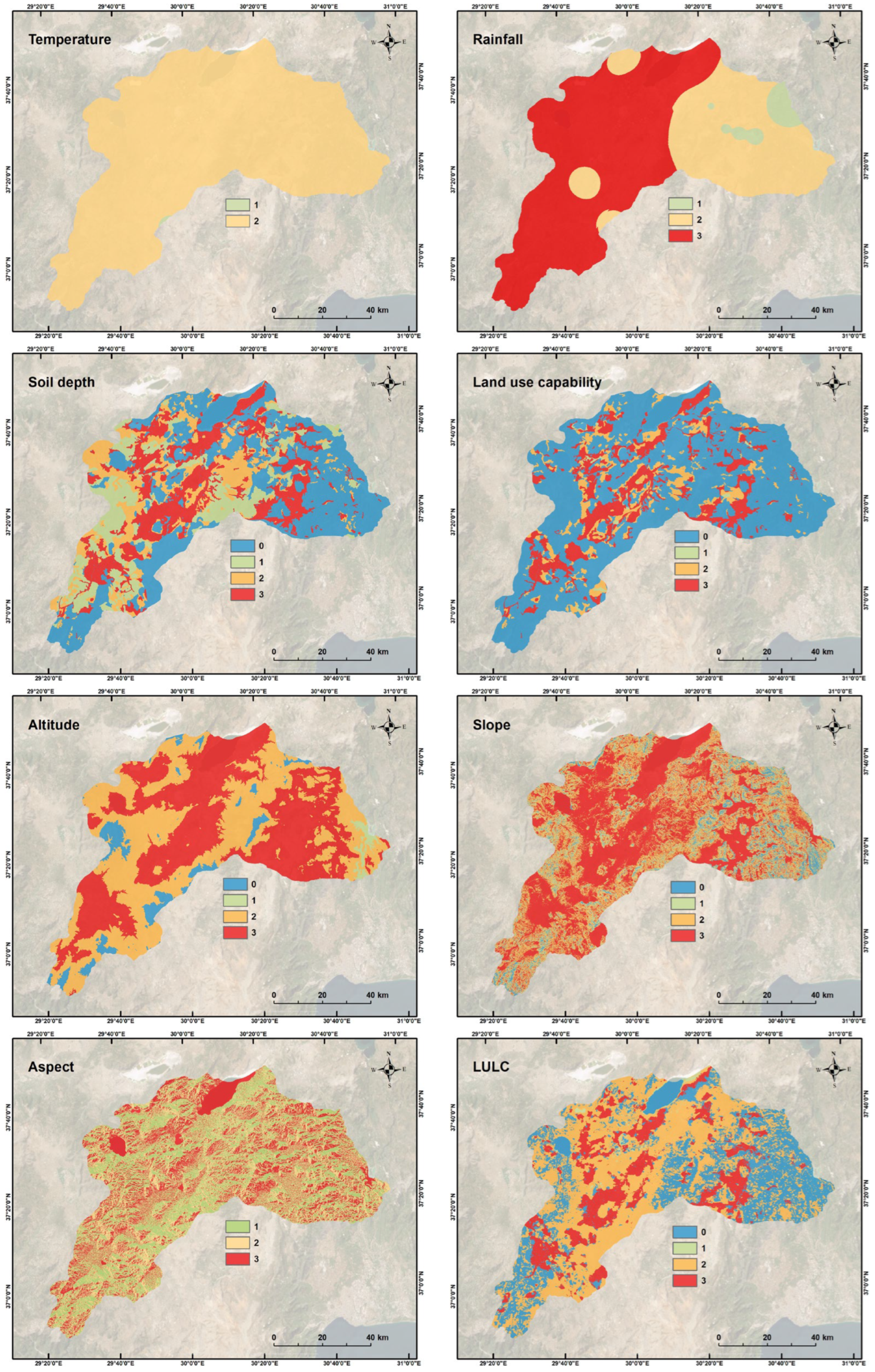
In this study, the necessary parameters for determining the most suitable sites for the commercial cultivation of Lavandula angustifolia Mill. in open fields and under natural conditions in Burdur were defined, and nine thematic maps related to these parameters were used. These maps are, respectively, (1) annual average air temperature, (2) annual average precipitation, (3) soil depth, (4) land use capability classes (LUC), (5) altitude, (6) slope, (7) aspect, (8) land use/land cover (LULC), and (9) protected areas. The parameters required for the open-field cultivation of this agricultural product, which has high economic and commercial value, the habitat constraints, and the literature sources used to determine these parameters are given in Table 1. In selecting these input parameters, data from the national research institute revealing the ecological and environmental conditions under which the lavender plant grows, and its optimal growth requirements, national and international literature sources, and interviews conducted with farmers growing lavender in Burdur were taken into consideration. These parameters were selected to ensure that the plant can be commercially cultivated in open fields of the study area, without any additional human intervention (such as irrigation, fertilization, shading, or intensive soil cultivation), and with low input costs.
Annual average air temperature data and annual average precipitation data were obtained from reanalysis data provided by the European Centre for Medium-Range Weather Forecasts (ECMWF). ECMWF’s ERA5 and ERA5-Land datasets provide a reliable basis for the long-term assessment of atmospheric variables thanks to their high spatial and temporal resolution, global coverage, and consistent data assimilation approaches [73,74,75]. For this reason, ECMWF reanalysis data sets have been preferred in determining the long-term averages of air temperature and total precipitation variables. These data were obtained from the climate data website [75] and integrated into a point data set created in the GIS platform for use in the spatial analyses of the study. Using this point data set, the Inverse Distance Weighting (IDW) interpolation method was applied to model the spatial distribution of temperature and precipitation variables. IDW interpolation was applied to make the ERA5 data, which is in table format and has a resolution of approximately 31 km, compatible with other geographic data sets in the study on the GIS platform. This method enabled the data to be modeled spatially consistently and integrated with other raster or vector data sets, thus creating a suitable and reliable basis for analysis. Soil depth and land use capability data were obtained in digital format from the General Directorate of Agricultural Reform, Ministry of Agriculture and Forestry. The Digital Elevation Model (DEM) data required to generate altitude, slope, and aspect data were obtained free of charge from the USGS website [76] at a spatial resolution of 30 m. The LULC data were obtained from the Impact Observatory’s LULC model. This model uses deep learning to predict a LULC class for each pixel using Sentinel-2 images and is generated by combining approximately 2 million Sentinel-2 image extractions made worldwide over a year [77]. LULC data was obtained free of charge from the ArcGIS Pro 3.6 Living Atlas of the World website [78]. Finally, the protected areas data were obtained from the General Directorate of Nature Conservation and National Parks, Ministry of Agriculture and Forestry. These areas are defined and classified in Türkiye as national parks, nature parks, natural monuments, nature conservation areas, natural sites, wetlands, special environmental protection areas, and similar land, water, or marine areas with protected status.

2.3. Methods

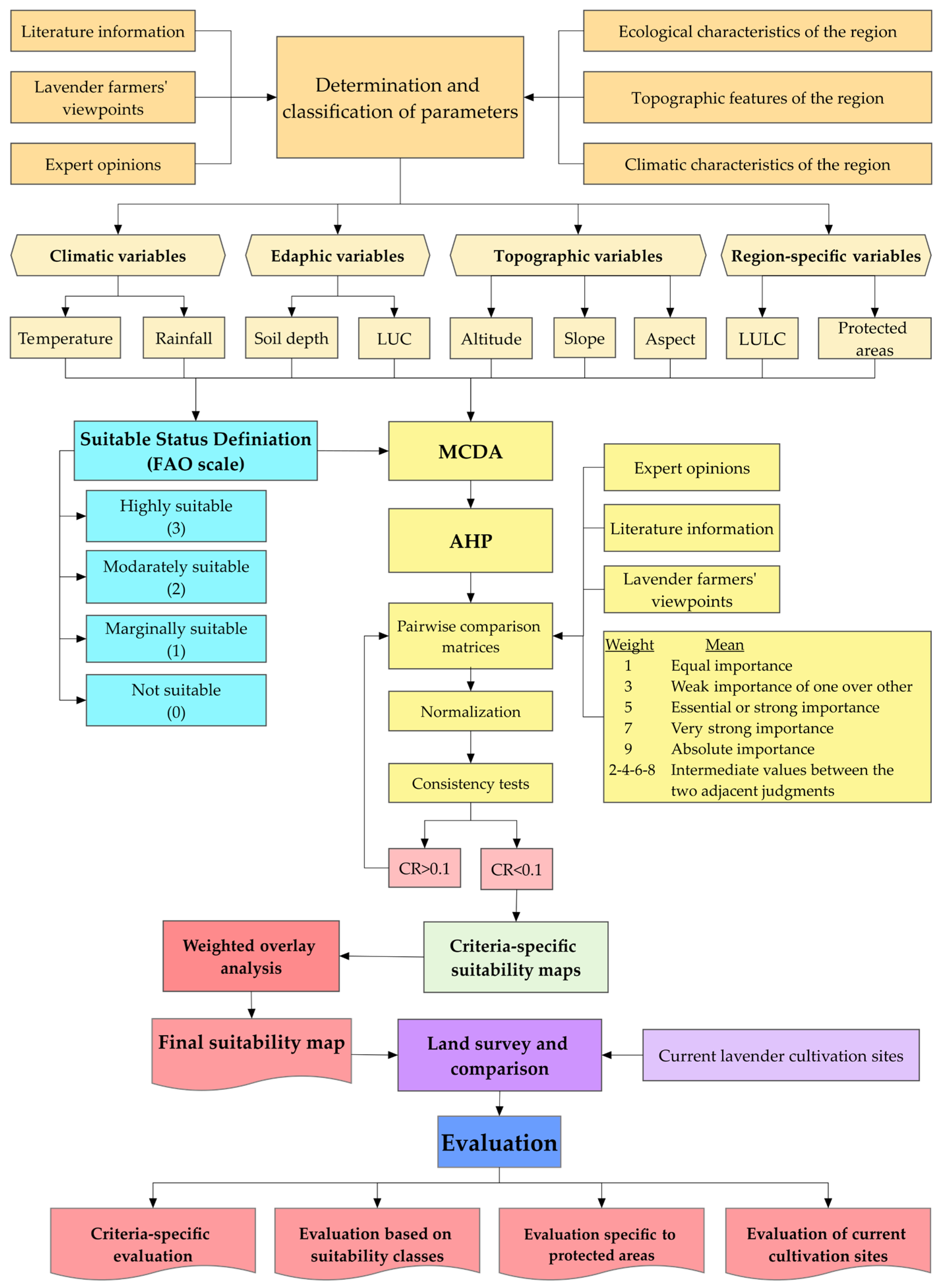
This study method consists of four main stages: (1) classifying the growth environment criteria for lavender cultivation in open fields and defining land suitability classes; (2) determining the weights of the criteria using Multi-Criteria Decision Analysis; (3) applying overlay analyses based on the weight ratios of each criterion and identifying suitable sites; (4) identifying existing lavender production areas through site surveys and comparing them with the suitable cultivation sites determined within the scope of the study (Figure 2).

2.3.1. Classification and Scoring of the Lavender Cultivation Parameters

At this stage, the environmental parameters required for lavender cultivation were classified based on value ranges, taking into account the relevant literature, the ecological, climatic, and topographic characteristics of the study area, as well as interviews conducted with local farmers engaged in lavender cultivation. These parameters were selected to ensure that the plant can be cultivated under natural open-field conditions without additional infrastructure requirements (irrigation, shading, fertilization, soil tilling, etc.) and without experiencing ecological stress. The thresholds for suitability classification in the study were determined based on lavender studies in the literature (references provided in Table 1), data obtained from the environmental and ecological conditions of existing lavender cultivation sites, interviews with Lavandula angustifolia producers, and systematic discussions with representatives of relevant institutions and organizations such as Provincial Directorates of Agriculture and agricultural research institutes. The thresholds defined for each parameter are not only general values based on the literature, but are also determined to reflect the specific conditions of the region where the study was conducted. This approach ensures that the classification scheme is science-based, locally relevant, and applicable. Moreover, the plant’s cultivation conditions have been clearly classified using categories such as “suitable” and “not suitable,” thereby enhancing the reliability and consistency of the classification. Land suitability classes were defined under four categories according to the FAO [79] classification: highly suitable, moderately suitable, marginally suitable, and not suitable. In addition to literature data and farmers’ opinions, the climatic, topographic, and environmental characteristics of the existing 375 lavender cultivation sites, verified through land survey, were also considered in determining the range values for each class (Table 2).
In determining the suitability classes for these parameters, the FAO bulletin “A Framework For Land Evaluation” was taken into consideration [79]. Within this scope, to facilitate interpretation and enable qualitative classification, four statuses have been defined: three statuses within the “Suitable” category, as recommended by the FAO, and one status within the “Unsuitable” category. Highly Suitable (S3): Defined as land with no significant limitations on the sustainable cultivation of the crop and which does not significantly reduce productivity. Moderately Suitable (S2): Defined as land with moderate overall limitations on the sustainable cultivation of the crop, where these limitations may reduce productivity but are generally advantageous. Marginally Suitable (S1): Defined as land with serious overall limitations for the sustainable cultivation of the crop, where these limitations significantly reduce productivity, but which can be used in necessary cases by increasing the required inputs. Not Suitable (S0): Defined as land with severe limitations that cannot be overcome at an acceptable cost for the sustainable cultivation of the crop [79]. This approach ensures that land suitability is expressed qualitatively and increases the comparability of the results obtained with both national and international literature.
Temperature: Temperature is a parameter that affects all processes in the cultivation of lavender, a natural species of the Mediterranean region, from the plant’s phenological development to the yield and quality of its essential oil [80]. Lavender is a species that requires at least 6–8 h of daily sunlight, thrives in warm and moderately arid climates, and produces high yields and quality products in growing environments with mild winters and sunny summers [30]. Average temperatures between 20–30 °C, especially in early spring and summer, are considered optimal for both the vegetative growth of the plant and the yield of its essential oil components. However, low temperatures and excessively high summer temperatures cause significant decreases in plant growth and yield [30,62].
Rainfall: Rainfall is one of the important climatic components that maintains water balance in plants and affects their flowering performance, essential oil components, and crop yield [26]. Lavender, which can adapt to arid and semi-arid ecosystems, can be grown as an agricultural product in regions where annual rainfall ranges from 300 to 1400 mm [63]. It is predicted that the plant will experience water stress under conditions below this range, while fungal disease risk will increase due to high humidity under conditions above this range [64]. The study examined the annual rainfall averages between 1929 and 2019 in regions where lavender is cultivated [30] and confirmed, based on literature data, that an annual rainfall of 400–700 mm is optimal for lavender plants.
Soil depth: Soil depth, which affects plant growth, is the vertical distance from the soil surface to the bedrock that blocks the downward growth of plant roots. In this context, effective soil depth in Türkiye is classified into 5 classes [65]: Class A—Very Deep Soil (>90 cm), Class B—Deep Soil (50–90 cm), Class C—Medium Deep Soil (20–50 cm), Class D—Shallow Soil (10–20 cm), and Class E—Very Shallow Soil (<10 cm). In terms of soil depth, Classes A and B are highly suitable for lavender cultivation, Class C is moderately suitable, Class D is marginally suitable, and Class E is not suitable.
Land use capability: In Türkiye, lands are classified from Class I to Class VIII according to their usability, in accordance with the Technical Instructions for Soil and Land Classification Standards and Related Legislation published by the General Directorate of Agricultural Production and Development of the Ministry of Agriculture and Rural Affairs [67]. Class I lands represent areas where agriculture can be cultivated most easily and economically, while Class VIII lands are completely unsuitable for agricultural production. Class I and II lands consist of flat or nearly flat, gently sloping, deep-profiled, fertile, and easily cultivable soils. Class III and IV lands are moderately suitable, consisting of moderately sloping areas where field crops can be cultivated; however, they have certain limitations, such as susceptibility to erosion, the existence of bedrock, sandiness, or graveliness. Class V lands are areas with flat or nearly flat slopes designated for perennial plants such as grasslands and forests. However, they are lands unsuitable for cultivation due to one or more factors such as stoniness, wetness, or similar conditions. Class VI, VII, and VIII lands are areas that are unsuitable for cultivation, highly sloped, severely prone to erosion, and requiring moderate to substantial conservation measures even when used as grassland or forest [67]. Within this framework, Class I and II lands were categorized as Highly Suitable, Class III and IV lands as Moderately Suitable, Class V lands as Marginally Suitable, and Class VI, VII, and VIII lands as Not Suitable.
Altitude: Altitude is one of the parameters affecting the morphological development and chemical composition of the plant in lavender cultivation. Factors such as temperature, relative humidity, and duration of the sunlight, which vary depending on altitude, affect the yield and quality of the essential oil of the lavender plant. In this context, the most suitable altitude for lavender cultivation is regions above 700 m [63,68]. However, due to the negative impact of low temperatures in extremely high sites on plant development, essential oil yield, and quality, the altitude range between 700 m and 1200 m has been determined to be the most suitable for lavender cultivation. Considering that 310 of the 375 existing lavender cultivation sites in the province are within this range, this range has been classified as highly suitable.
Slope: Slope is one of the main topographic factors determining the natural drainage capacity of the growing environment. Suitable slope values reduce the risk of excessive water accumulation and associated root rot by increasing surface runoff, while also significantly lowering the likelihood of fungal diseases caused by high humidity conditions [69]. A slope of 27% (15°) or less is considered suitable for lavender cultivation [25,68]. This slope range has been reported to be optimal for both ensuring surface water runoff and enabling sustainable agricultural activities on the site [25].
Aspect: Aspect is an important parameter in determining suitable areas for agricultural production, as it directly affects factors such as sunlight duration, soil moisture, surface temperature, and the microclimate of the land. Lavender is a species with high light requirements and needs 6–8 h of sunlight per day [30]. Adequate sunlight exposure increases the plant’s resistance, essential oil yield, and quality [69]. Therefore, the south and southeast slopes of agricultural areas in the northern hemisphere are considered the most suitable exposures for lavender cultivation [70].
LULC: Land cover classes are defined as follows; crops are classified as “Highly Suitable,” rangeland and clouds (only cloudy areas totaling 0.15 ha in two regions were identified by land survey) are classified as “Moderately Suitable,” bare ground and flooded vegetation are classified as “Marginally Suitable,” and water, trees, built-up areas, and snow/ice classes are classified as “Not Suitable.” However, at this stage, a conditional merging approach based on the ‘Con’ function in ArcGIS raster calculator was applied so that land uses falling into the not suitable class could also be transferred to the result map as not suitable. This method ensured spatial suitability analysis class priority by directly transferring the ‘0 = Not Suitable’ cells in the LULC layer to the result raster. This is because the water, trees, built-up, and snow/ice land uses in LULC are lands that cannot be used for growing any agricultural product under any circumstances.
Protected areas: There are various protection statuses in Türkiye that influence land use decisions and are defined by different legal regulations. These protection statuses include nationally and internationally protected areas such as national parks, nature parks, natural sites, special environmental protection areas, and wetlands. In these areas, which are managed under the National Parks Law and the Law on the Conservation of Cultural and Natural Property, no commercial activities are permitted except for agricultural activities that can be carried out in the public interest and with the necessary permits [72]. Moreover, military zones with access and usage restrictions for national security reasons, strategic infrastructure areas such as airports, and public forests aimed at protecting forest ecosystems have been classified as protected areas in this study and excluded from the suitability analysis for lavender cultivation [54].

2.3.2. Application of the Multi-Criteria Decision Analysis (MCDA) Technique

Analytic Hierarchy Process (AHP), a multi-criteria decision-making strategy, was used at this stage. AHP is a decision-making technique that is one of the MCDA methods and belongs to the Value Measurement Models group [81]. Within this scope, pairwise comparisons were made for the relevant parameters, consistency analysis was performed, and criterion weights were obtained. AHP was preferred in determining the suitability of land for lavender cultivation because it is necessary to evaluate different environmental, topographical, and climatic factors together [82]. This approach aims to analyze many different parameters and often interactive criteria at the same time [83].
In this way, uncertainties arising from subjective approaches based solely on observation or focusing on a single variable are minimized when creating suitability classes [84]. By showing practitioners which areas have high yield and sustainability potential in an objective and comparable manner, it enables optimal production planning from both an economic and ecological perspective [85].
Saaty’s [86] scale was used in the application of AHP. According to this scale, pairwise comparisons of each parameter were calculated, and each comparison was recorded as a score in a matrix. Comparison scores range from 1 to 9; 1 indicates that the two parameters being compared are of equal importance, while 9 indicates that one parameter has an extremely strong effect compared to the other. Table 3 shows the AHP matrix in which the weights of each parameter were calculated.
In this study, a multi-source approach was adopted for defining parameters and determining weights within the AHP; the opinions of lavender producers (farmers), the assessments of experts in the field, environmental and ecological data obtained from existing lavender production areas, and information from the literature were considered together. Face-to-face interviews were conducted with 22 lavender producers accessible in the study area, and opinions were also obtained from a total of 10 experts. The expert group consists of a researcher specializing in medicinal and aromatic plants working at the Fruit Research Institute of the Republic of Türkiye Ministry of Agriculture and Forestry, the Coordinator of the Lisinia Project, and six academics from Akdeniz University (four landscape architects, one field crops instructor, and one biology instructor) and two agricultural engineers from Burdur Mehmet Akif Ersoy University. In interviews with farmers and subject-matter experts, participants were first asked to identify the environmental and ecological factors considered necessary for lavender production. Subsequently, the relative importance of these factors was ranked using Saaty’s pairwise comparison scale [86]. The resulting evaluations were analyzed in conjunction with field observations and relevant information from the literature, and the study parameters and their corresponding AHP weights were derived through a holistic, consistent, and scientifically based approach.
In the AHP matrix, the parameters took values between 1 and 7. According to literature information, the opinions of lavender growers in the region, and experts from public institutions working on the subject, these parameters were ranked in order of importance as temperature, rainfall, altitude, soil depth, LUC, LULC, slope, and aspect. After this stage, the sum of the values in each column was taken, and each cell was normalized by dividing it by its column total. Therefore, the weight of the criterion was calculated by taking the average of each row. Table 4 shows the matrix where the Consistency Index (CI) and Consistency Ratio (CR) were calculated using the normalized weights obtained. The matrix is consistent when CR < 0.1 [87]. According to the consistency analysis performed in the study, the CI value was determined to be 0.05, and therefore, the assigned weights were found to be consistent.

2.3.3. Performing Weighted Overlay Analyses Based on AHP Results

At this stage, separate thematic maps representing the key factors influencing lavender cultivation were created based on the criterion weights determined using the MCDA method (Figure 3). These maps were overlaid and combined in a GIS environment, taking into account the relative importance of each criterion. Subsequently, the final suitability map was generated by evaluating the comprehensive effect of all criteria for each land unit, and the areas were classified according to their suitability levels. In this way, spatially suitable sites for lavender cultivation were identified by considering the interactions among different environmental factors.

2.3.4. Comparison of Existing Lavender Cultivation Sites with Suitable Sites Identified in the Study

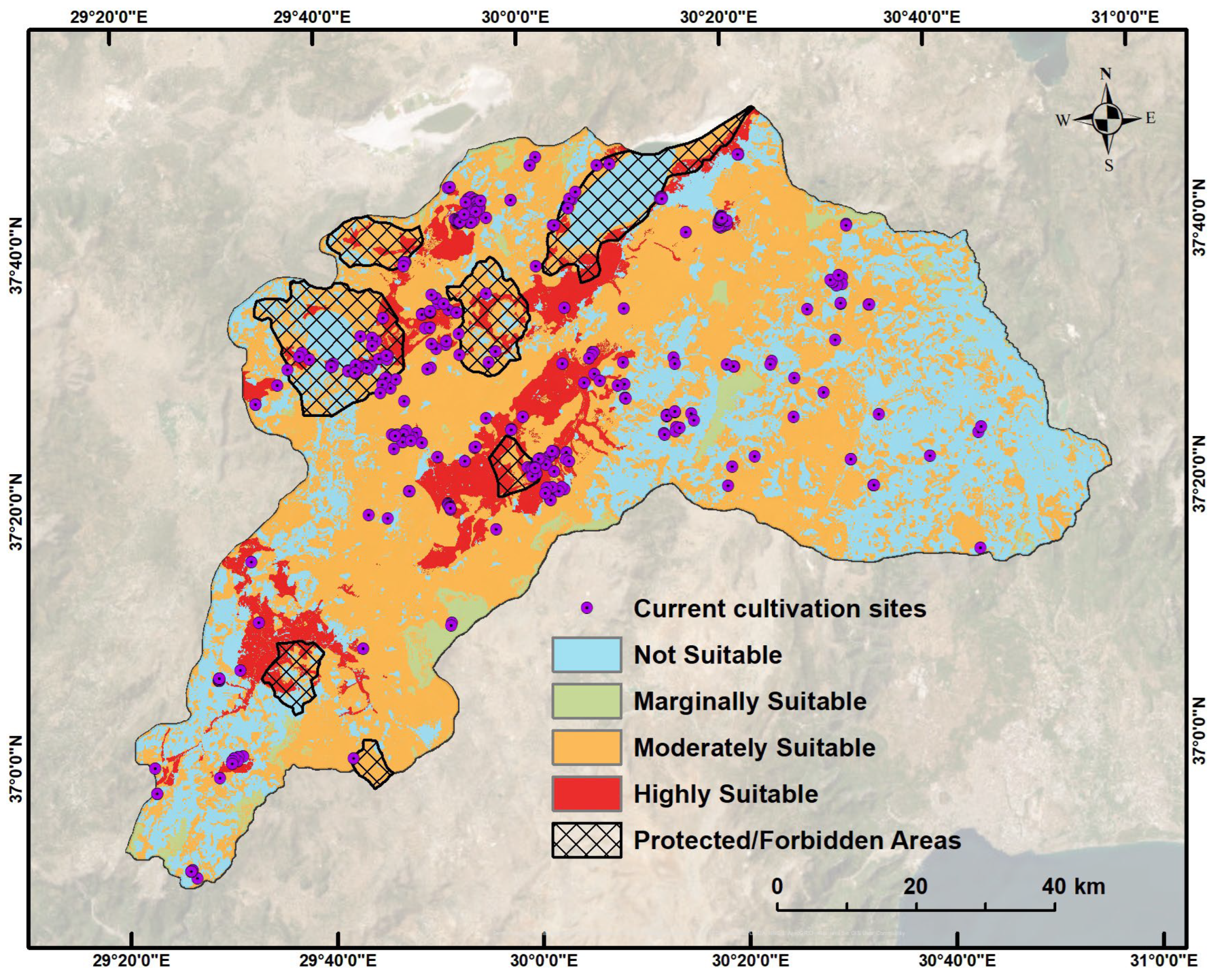
The information on existing lavender cultivation sites in the region was obtained from the Burdur Directorate of Provincial Agriculture and Forestry’s Farmer Registration System and verified through land survey. These data are in Excel format and contain parcel details for the cultivated sites. Using this information, the geometry of each parcel was downloaded in shapefile format via the General Directorate of Land Registry and Cadastre’s parcel inquiry application [88]. The downloaded data were transferred to the GIS environment, projection details were defined, and the data were exported according to the projection of the study area. The data was then converted to point data format, and each lavender cultivation site was identified using the zonal statistics tool. The majority of these sites were verified through land surveys and overlaid with the suitability class map created in the study. The suitability classes corresponding to the lavender cultivation points were identified in ArcGIS using the “extract values to point” tool. Thus, the proportion of existing lavender cultivation sites within each suitability class was determined, and evaluations and recommendations were developed within the scope of the study results. Moreover, the spatial accuracy of the generated model and its validity in the decision-support process were quantitatively revealed.

3. Results

Determination of the most suitable commercial cultivation sites for Lavandula angustifolia Mill., a plant with medicinal and aromatic properties as well as high commercial value, in a rural region involved the use of eight main input parameters (temperature, precipitation, soil depth, LUC, altitude, slope, aspect, and LULC) and a limiting parameter (protected areas) were used. Range values and suitability classes for the main parameters were determined based on literature information, the ecological requirements and cultivation environment limitations of lavender, the ecological and environmental characteristics of the region, and interviews with lavender cultivators. Conditional merging was used to create suitability classes for LULC within the main parameters, similar to a mask layer approach representing physical constraints. Accordingly, water, trees, built-up areas, and snow/ice land covers in the LULC class are classified as “0 = unsuitable” because they cannot be used for any agricultural cultivation. The obtained cells were directly transferred to the final raster to ensure class priority in the spatial suitability analysis. Altitude was also identified as an important factor, carrying a weight of 17.22%. These were followed, in descending order of importance, by soil depth (10.34%), LULC and LUC (6.72%), slope (4.00%), and aspect (2.86%). Based on the derived weights, a weighted overlay analysis was subsequently conducted, resulting in the generation of the final suitability map. Subsequently, the parameter weights were determined using the AHP method, and the CR value was calculated as 0.05, confirming the consistency of the matrix. In this context, it was found that temperature and precipitation, which are climatic parameters, were the most important parameters for lavender cultivation, with weights of 34.92% and 17.22%, respectively. It was also seen that the altitude parameter had a significant weight of 17.22%. These weights followed in order of importance with 10.34% for soil depth, 6.72% for LULC and LUC, 4.00% for slope, and 2.86% for aspect. Afterwards, a weighted overlay analysis was performed based on the derived weights, and a final suitability map was created.
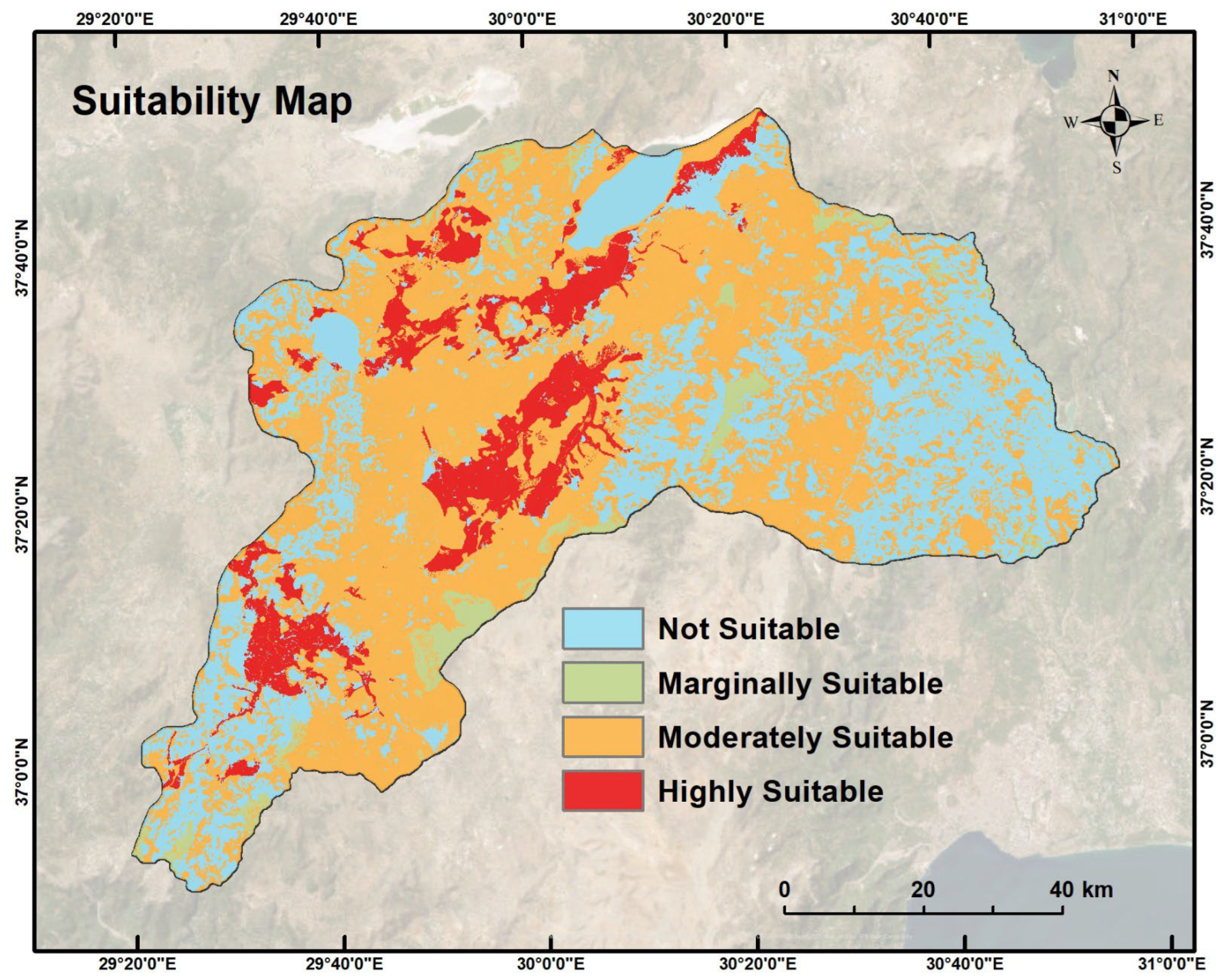
According to the results obtained, of Burdur’s total area of 717,907.79 ha, 229,327.20 ha is not suitable, 24,068.43 ha is marginally suitable, 388,832.71 ha is moderately suitable, and 75,679.45 ha is highly suitable (Figure 4). In this context, suitability classes constitute 54% of the study area as moderately suitable, 32% as not suitable, 11% as highly suitable, and 3% as marginally suitable areas. Areas classified as “not suitable” are largely located in the western part of the study area and consist of high-altitude regions covered with forest vegetation. Additionally, water bodies (Salda and Burdur Lakes) within the study area that have various protection statuses are also classified as “not suitable” on the final map. The central section of the study area, which is in a north–south direction, is compatible with a significant portion of the identified parameters and has been determined to be generally suitable for lavender cultivation. In this regard, the total area of highly suitable and moderately suitable categories has been determined to be approximately 465,000 ha. In contrast, the total area of marginally suitable and unsuitable areas, where lavender cultivation cannot be carried out or can only be partially carried out with significant infrastructure investments and interventions, is approximately 253,000 ha.
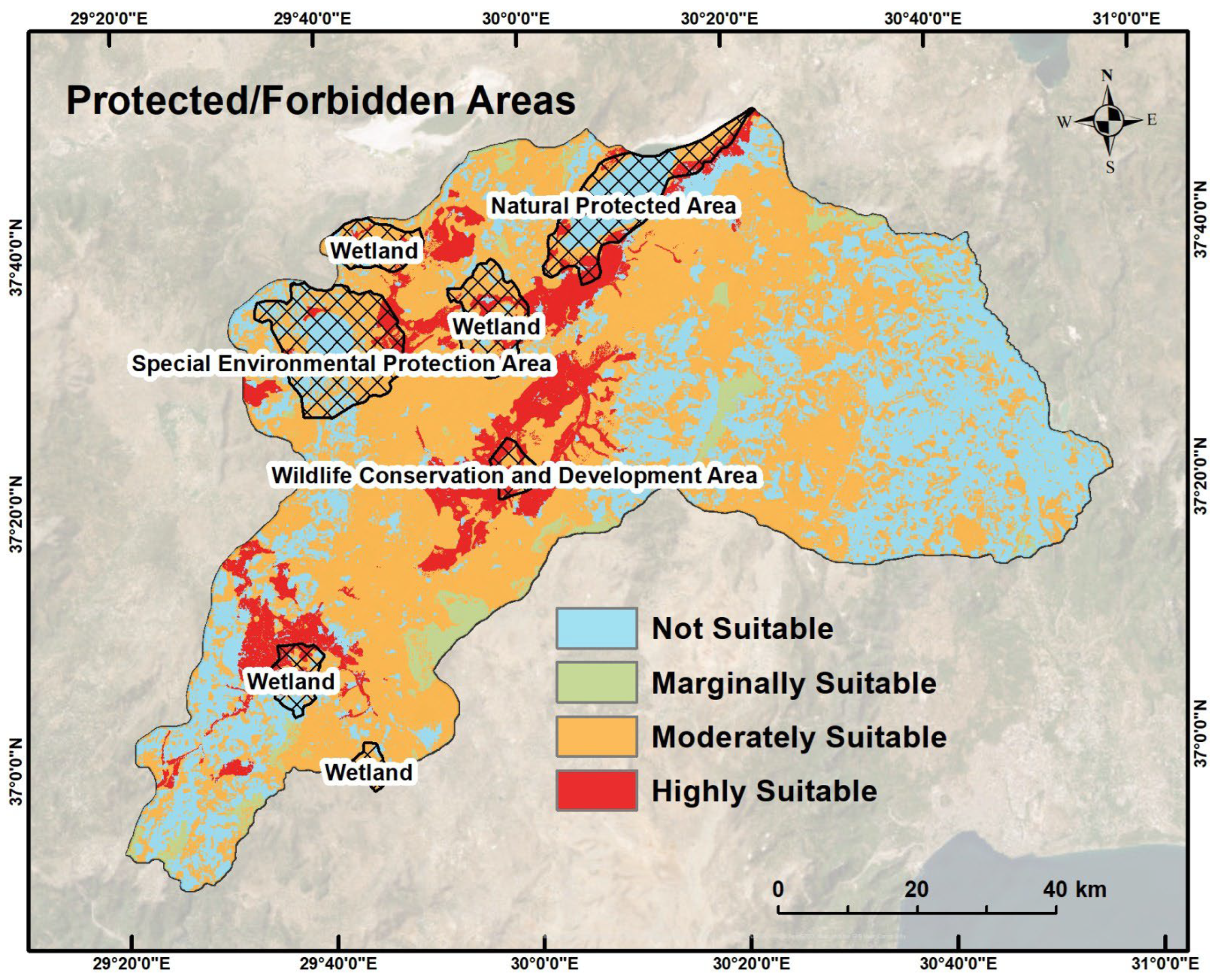
There are four different protection statuses in the study area: natural protected area, special environmental protection area, wildlife conservation and development area, and wetland. The total size of the areas protected under these statuses is 82,130.74 ha, constituting approximately 11% of the study area. Of these areas, 28,138.72 ha are Special Environmental Protection Areas, 28,073.82 ha are Wetlands, 22,024.04 ha are Natural Protected Areas, and 3894.16 ha are Wildlife Conservation and Development Areas (Figure 5).
These protected areas, which have the status of natural protected areas and special environmental protection areas, include Lake Salda, Lake Burdur, and their surroundings. According to the results of the study, although the lakes are naturally defined as not suitable, both suitable and unsuitable areas have been determined within the protection boundaries and in the immediate surroundings of the lakes. Similarly, in areas with other protection statuses, there are regions that are suitable and unsuitable for lavender cultivation. Whether agricultural activities can be carried out in protected areas in Türkiye depends on the protection status of the area, the management plan within the scope of that status, and the nature and intensity of the planned agricultural activity. Sustainable/controlled agricultural cultivation can be allowed in suitable cultivation sites identified in this study and located within conservation boundaries, provided that appropriate planning, permitting, and management processes are carried out, with conservation being the priority, and in accordance with Legislation on the Procedures and Principles Regarding the Identification, Registration, and Approval of Protected Areas. Therefore, these areas have not been directly classified as unsuitable, considering that the necessary permits and approvals may be obtainable, they have been interpreted in line with the suitability classes obtained from the analysis. Additionally, areas where existing lavender cultivation takes place throughout the Burdur have been identified, verified through land surveys, and compared with the suitability classes on the final map (Figure 6). Of the 375 sites where lavender cultivation takes place, 62 are located within protected areas, and a large portion of these sites (37 cultivation sites) are within the boundaries of the Lake Salda protected area, which has special environmental protection area status. According to the suitability classes obtained from the study, 4.27% of the existing lavender cultivation sites within the protected area boundaries are classified as unsuitable, 0.27% as marginally suitable, 68.53% as moderately suitable, and 26.93% as highly suitable.
These results indicate that Burdur, which has agriculture and livestock farming as its primary economic activities and is largely characterized by its rural features, has very high potential for cultivating Lavandula angustifolia Mill. However, according to official data from the Turkish Statistical Institute [89], the site under lavender cultivation in Burdur is only 4045 decares. According to the findings of the study, only 0.053% of the 75,679.45 ha of potential lavender cultivation sites defined as most suitable are being used. This situation reveals that despite the increasing demand for lavender cultivation, the existing potential in the region is largely underutilized. Therefore, the findings of this study can serve as an important guide for decision-makers, central and local governments, farmers, and producers regarding where Lavandula angustifolia Mill. can be cultivated and in which sites high yields can be achieved, as it has high commercial value and can play a catalytic role in regional development.
The study reveals the spatial distribution of suitable sites for lavender cultivation in Burdur. The approach proposed in this study can also be applied to site selection studies for other agricultural products using the relevant parameters. The success of the results obtained depends on the quality, reliability, timeliness, and user expertise of the input data. Moreover, the determination and weighting of parameters may vary depending on the environmental, ecological, and climatic factors of the study area. When applying RS and GIS analyses, dynamic data relationships should be considered, and input data sets should be presented with precision. Since changes in input data sets can directly affect analysis results, the characteristics of the relevant area should be considered when identifying potential lavender cultivation sites in different areas, and analyses should be performed for the specific area by developing the parameters used in this study.
This study shows that sites suitable for potential lavender cultivation can be determined with high accuracy based on current data using RS and GIS technologies and MCDA techniques. Additionally, the results of the study comprehensively identify the parameters necessary for lavender cultivation, which could catalyze rural development. This will encourage central and local governments and decision-makers to promote lavender production and achieve high yields from this production. Thanks to this, it is considered that effects such as increasing agricultural employment, encouraging women’s entrepreneurship, and developing the regional economy can be achieved. The next step following this study is to further narrow down suitable lavender cultivation sites and thereby increase yield per unit site by incorporating additional data sets that could affect production, such as soil texture, prevailing wind direction, soil organic matter content, sunshine duration, land surface temperature, potential frost conditions, moisture conditions, etc., as input parameters into the study. However, the lack of data on these parameters causes some spatial uncertainty in such studies and constitutes a significant limitation for the studies. Therefore, conducting detailed field analyses of the identified suitable sites is important for more precisely identifying and prioritizing potential production sites.

4. Discussion

The versatile uses of the lavender plant, including in cosmetics, aromatherapy, personal care, medicine and pharmacy, decorative features, etc., have made this plant an economically important “value-added product” [25]. This diversity in the use of the species provides additional income sources for farmers living in rural areas, increases female employment, and enables the diversification of economic activities [90]. Therefore, the production of value-added products such as lavender contributes to both the strengthening of the local economy and the achievement of agricultural sustainability by supporting rural development [91]. In this context, the study focused on the growing environmental factors of the lavender plant and the determination of production sites. Numerous studies have been conducted in the literature on the various economic, commercial, and phenological characteristics of the lavender plant [92,93,94,95]. However, it has been observed that studies on the growing environment factors of lavender are limited [90]. Regarding the plant’s growing environment factors, parameters such as air temperature, soil depth, slope, aspect, and altitude have mostly been used [90,96,97].
In this study, climatic parameters such as temperature and precipitation, which have the highest weight, are also seen to have high weight values in other studies related to determining suitable sites for crop production [98,99]. This is because climate parameters directly affect the flowering, essential oil production, and overall development processes of the plant in lavender cultivation [25].
Soil depth has also been identified as an important criterion for this plant [97] to ensure that the root system can search for and find sufficient water and nutrient sources at suitable depths and grow productively. The LUC parameter has been included in analyses as a critical parameter for determining suitable sites for lavender cultivation because it comprehensively evaluates factors that directly affect plant growth, water availability, and long-term productivity, such as soil profiles, texture, permeability, stoniness, and alkalinity [100]. Altitude, a topographic factor, has been determined to play an important role in the essential oil composition and morphological characteristics of lavender, as well as in its aromatic quality [101], and has been included in the parameters. In terms of the aspect parameter, it is emphasized that south-facing slopes are particularly advantageous for lavender cultivation and oil quality [102]. The plant’s high adaptability has caused the importance of this parameter to be low. The slope parameter directly affects environmental conditions such as sunlight exposure, water drainage, air circulation, and microclimate; this plays a role in both plant growth and essential oil yield and quality. The slope parameter directly affects environmental conditions such as sunlight exposure, water drainage, air circulation, and microclimate; this plays a role in both plant growth and essential oil yield and quality. In particular, it has been noted that lavender yields higher yields on low-to-medium slope hillsides due to better sunlight exposure and drainage [90,102]. The LULC parameter, which provides information about current land use, is an essential and highly weighted parameter that indicates where lavender cultivation is not suitable (built-up areas, trees, snow/ice, water surface). In suitability analyses, the LULC parameter is reported to be one of the fundamental components of the “land suitability” assessment process, along with natural parameters such as climate, soil, and water [103].
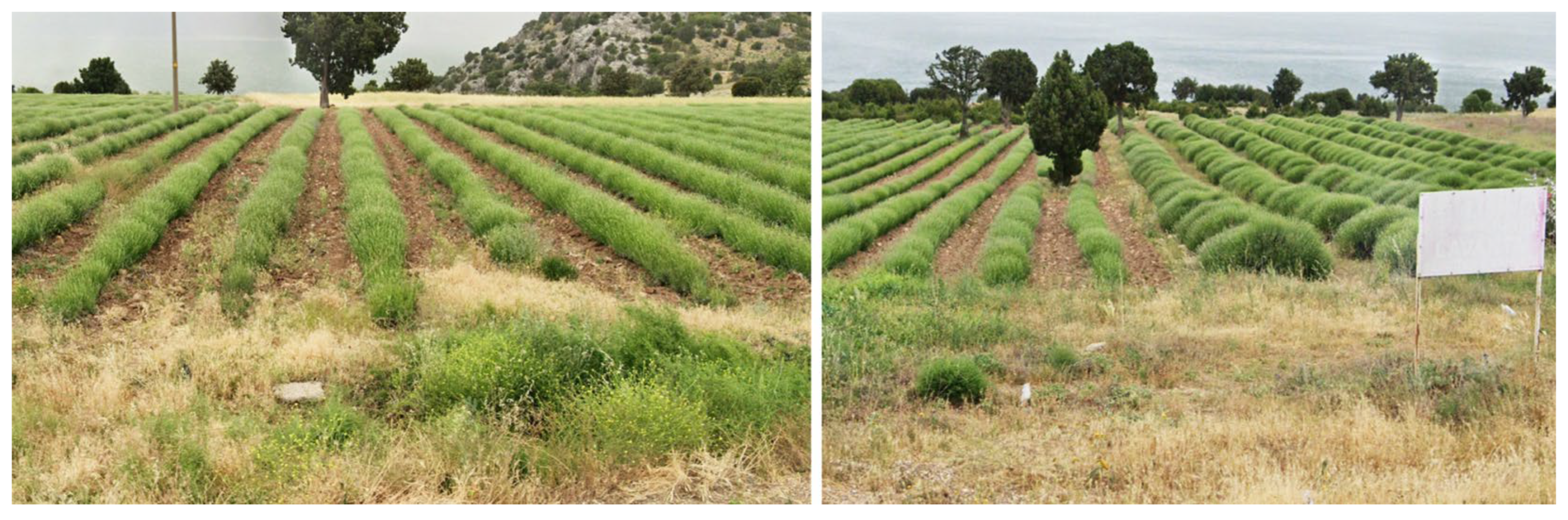
After determining the parameters, suitable and unsuitable sites for lavender cultivation were identified. According to the results obtained, 388,832.71 ha were defined as moderately suitable and 75,679.45 ha as most suitable. However, official data shows that in 2024, the lavender cultivated site in Burdur was 4045 da and the yield was 107 kg/da. In this context, the annual production amount was 429 tons [89]. Lavender is cultivated in 4 provinces in Türkiye (Isparta, Burdur, Afyonkarahisar, and Antalya), and the lowest yield per decare is in Burdur. The country’s largest cultivation province is Isparta, with 8251 da of cultivation site, 315 kg/da yield, and a total cultivation of 2567 tons. Afyonkarahisar has a cultivation site of 3757 da, a yield of 163 kg/da, and a production amount of 612 tons. Antalya has a cultivation site of 1473 da, a yield of 444 kg/da, and a production amount of 654 tons [89]. These data show that despite lavender being grown over large sites in Burdur, yields and total production volumes are quite low. The main reason for this, as can be seen from the maps obtained in the study, is that a large portion of the sites currently used for lavender cultivation do not overlap with regions defined as most suitable, and the sites most suitable for cultivation have not been evaluated within the scope of lavender cultivation. Indeed, only 26.93% of the current cultivation sites are classified as highly suitable. In fact, lavender cultivation activities are even observed in the marginally suitable and not suitable categories. Moreover, within the study area, there are numerous lavender cultivation sites around Lake Burdur and Lake Salda, and within wetlands protected as wetlands (Figure 7).
There are 6 lavender production sites in the vicinity of Lake Burdur, 37 in the vicinity of Lake Salda, and 14 within areas protected as wetlands. Groundwater levels and soil moisture are generally high around these lakes and in wetlands [104]. Increased soil moisture leads to a decrease in oxygen in the root zone and, consequently, accelerates the development of water-borne fungal pathogens [69]. In this context, the literature emphasizes that lavender is not suitable for cultivation in wetlands, marshes, and/or areas with high groundwater levels [19]. Therefore, the sites surrounding protected wetlands in the study area should be prioritized for lavender cultivation, provided that soil analyses are conducted and suitable conditions are established. Indeed, one reason for the low yield in existing lavender cultivation sites in Burdur is the excessive concentration of cultivation sites around these lakes.
The results of the study show that Burdur has considerable potential for lavender cultivation, a high-value-added crop, but that this potential is not being sufficiently evaluated. However, high-value-added agricultural products such as lavender have significant potential to be widely cultivated in the most suitable cultivation sites, especially in predominantly rural areas. This could enhance small producers’ access to markets, increase their income, and thereby support rural development. Moreover, it is reported that women and young people play a more active role in value-added product production chains, which in turn increases local entrepreneurial capacity and regional economic dynamism [105]. It is also emphasized that the marketing of value-added products increases household income, strengthens women’s economic autonomy, and creates new entrepreneurial opportunities for the young population [106].
Policy assessments by international organizations clearly demonstrate that high-value-added products such as lavender play a strategic role in enhancing rural development and regional well-being. UNDP’s assessments within the framework of the Sustainable Development Goals [107] emphasize that the widespread adoption of high-value-added agricultural products in rural areas is one of the most effective tools for supporting inclusive economic growth. Similarly, FAO’s State of Food and Agriculture reports [108] indicate that high-value-added production chains create new employment and income opportunities, particularly for women and young entrepreneurs. IFAD’s Rural Development Report [109] states that value-added agricultural production is a fundamental component of structural transformation in rural development and supports retaining the young population in the agricultural sector. UNEP’s assessments of sustainable production and supply chains [110] also reveal that value-added products strengthen both economic resilience and environmental sustainability in regional economies. In this context, Lavandula angustifolia Mill, which has high added value and low cultivation costs, is one of the most important agricultural products for the study area and region. This study has comprehensively identified the most suitable cultivation sites in the region for productive lavender farming. The widespread adoption of lavender cultivation in the suitable sites identified through this study could significantly contribute to rural development. Consequently, the economic diversity and social welfare of the region will be noticeably enhanced.
Lavender cultivation has the potential to offer multi-dimensional contributions to rural development, particularly within the scope of alternative and high value-added agricultural production models. Thanks to its low water requirements, adaptability to arid and semi-arid areas, and wide range of uses (essential oil production, cosmetics, and agro-tourism), lavender enables the diversification of producer incomes and the strengthening of rural economies. Moreover, it is important in terms of offering a suitable production pattern for small-scale family businesses, increasing employment opportunities, and contributing to the preservation of local added value in rural areas. In this context, the expansion of lavender cultivation aligns with policies aimed at supporting economic sustainability in rural areas and reducing migration pressure. The suitable areas identified in the study can be considered a guiding tool for such development strategies. However, it is particularly emphasized that the spatial suitability results obtained in this study represent only biophysical suitability; suitability alone does not imply legal validity or long-term environmental sustainability. Moreover, potential agricultural areas that overlap with protected areas highlight planning-based conflicts between agricultural expansion and nature conservation objectives, necessitating that decision-making processes in these areas be addressed within the framework of comprehensive land use planning, relevant legislation, and sustainability principles. In this context, the study not only focuses on identifying areas suitable for lavender cultivation but also offers a planning-based decision support approach aimed at balancing rural development objectives with environmental protection priorities.
Building on these findings, the integration of precision agriculture approaches could further enhance the productivity and sustainability of lavender cultivation. Precision agriculture is a management strategy that takes into account spatial and temporal variability in agricultural production, supported by advanced sensor technologies, remote sensing systems, and data analytics applications [111,112]. According to the definition of the International Precision Agriculture Community, precision agriculture aims to increase productivity, profitability, and sustainability by collecting, processing, and analyzing detailed data on plant and soil conditions; integrating this information with other environmental and management data, and adapting it to variability-based decision-making processes to increase productivity, profitability, and sustainability [113]. In this context, this study, which aims to identify suitable sites for lavender cultivation, provides a scientific evaluation framework by combining the data-driven structure of precision agriculture with multi-criteria decision-making methods. The AHP used in the study provides an objective basis for decision-making processes by enabling the systematic and consistent determination of the relative Importance of spatial and environmental components. Thus, the integrated use of precision agriculture principles and AHP enables the identification of optimal cultivation sites for lavender; this approach contributes to both increasing agricultural productivity and strengthening sustainable land management [114].
The findings of this study, conducted at the provincial scale in Burdur, extend beyond their contribution to local agricultural planning and rural development and should also be considered within the broader context of international agricultural and rural development policies. The widespread cultivation of alternative, high value-added, and drought-resistant crops such as lavender is closely aligned with global objectives related to sustainable land use, diversification of agricultural production, and the strengthening of rural economic structures. In this regard, the proposed approach is consistent with policy frameworks promoted by international organizations, particularly the FAO, aimed at climate change adaptation, environmental sustainability, and the enhancement of economic resilience in vulnerable rural areas. Within this framework, the results obtained from the GIS—RS—MCDA—based methodological approach applied in this study provide a reference for other regions with similar ecological and socioeconomic characteristics, thereby contributing to the international literature on sustainable alternative agricultural production models.
This study aims to identify areas with potential for commercial lavender cultivation by establishing spatial suitability primarily based on natural and physical environmental conditions. The study is designed with the following objectives for the study area, which is characterized by its rural features: to diversify the region’s economy through a value-added agricultural product, to create an alternative source of income for low-income households, and to support rural development by involving women and youth entrepreneurs in the cultivation process. In this context, the focus of the study is to determine the areas where lavender can be grown most suitably under natural conditions (climate, soil, topography, etc.) based on spatial suitability analyses. Therefore, economic and commercial activities such as commercial suitability, market accessibility, product prices, transportation infrastructure, logistics capabilities, and marketing networks, which have a multidimensional conceptual structure, are excluded from the scope of this study. Accordingly, parameters such as production economics, cost and profitability analyses, market and income potential, labor force structure, education, and institutional capacity constitute the main limitations of the study. These variables require detailed economic data, market dynamics, and socio-economic assessments beyond spatial suitability analyses. Therefore, in order to maintain the methodological integrity and data consistency of the study, the study has been limited to a preliminary assessment based on ecological and physical suitability. However, it is believed that the findings obtained provide an important basis for advanced feasibility analyses for lavender cultivation. In future studies, the inclusion of market access, price fluctuations, transportation and logistics infrastructure, production and processing costs, and value-added product chains in the analysis process will contribute to a more comprehensive assessment of the commercial sustainability of lavender cultivation and its impact on rural economic development. In this respect, the study provides an ecologically based reference for multi-criteria decision support models related to commercial lavender cultivation and suggests that the economic and commercial dimensions should be addressed in further research.

5. Conclusions

The widespread cultivation of high-value-added agricultural products that can support rural development is of great importance in terms of increasing economic and social welfare. Unfortunately, Burdur, situated in the Mediterranean climate zone and characterized by its rural structure, has not been able to realize its full potential for value-added agricultural production. In this study, carried out specifically for Burdur, the most critical parameters have been determined according to their order of importance and impact ratio for the cultivation of Lavandula angustifolia Mill., a species with high economic and commercial value, under natural conditions without the need for additional infrastructure. These parameters are annual average air temperature (34.92%), annual average precipitation (17.22%), altitude (17.22%), soil depth (10.34%), land use/land cover (6.72%), land use capability (6.72%), slope (4.00%), and aspect (2.86%). Moreover, it is suggested that categories within LULC classes that are unsuitable for any agricultural activity (built-up, trees, water, snow/ice) should be directly assigned as “not suitable” on the final map. It is also stated that areas protected under various protection statuses should be evaluated independently of parameters. The suitability map created by considering the weight values of each cultivation environment parameter reveals that the region has a very high potential for lavender cultivation. Accordingly, it has been concluded that approximately 11% of the region’s land could be an optimal cultivation site, but this potential is not being sufficiently utilized at present.
When studies in the literature are reviewed holistically, this study is one of the rare studies that comprehensively classifies the optimal cultivation environment parameters for Lavandula angustifolia Mill. by using RS, GIS, and MCDA methods together, and determines the most suitable lavender cultivation sites accordingly. The proposed approach and used parameters provide a systematic method for determining the most suitable sites for commercial cultivation of lavender and classifying these sites according to their suitability categories. This method generates a spatial suitability map showing the regions most suitable for the cultivation of the relevant agricultural product. The parameters and methods used are also applicable to other regions located in the Mediterranean climate zone. In future studies, evaluating suitable sites through more comprehensive field measurements that include region-specific microclimatic, edaphic, and topographic variables will contribute to a more precise determination of spatial suitability for lavender cultivation. Such detailed analyses will enable the scientific dissemination of lavender cultivation in Mediterranean countries where climatic, ecological, and geomorphological characteristics are suitable for lavender cultivation.

Author Contributions

Conceptualization, S.S. and M.Ç.; methodology, S.S.; software, S.S., M.Ç. and N.K.; validation, M.Ç., R.O., N.K.S., C.S. and E.K.; formal analysis, R.O. and M.Ç.; investigation, R.O., M.Ç., E.K. and C.S.; resources, M.Ç., R.O., N.K., E.K., N.K.S. and C.S.; data curation, S.S. and M.Ç.; writing—original draft preparation, S.S., M.Ç., R.O. and C.S.; writing—review and editing, S.S., M.Ç., R.O., N.K., E.K., N.K.S. and C.S.; visualization, S.S., M.Ç. and N.K.; supervision, S.S.; project administration, S.S., M.Ç. and R.O. All authors have read and agreed to the published version of the manuscript.

Funding

This research received no external funding.

Data Availability Statement

The raw data supporting the conclusions of this article will be made available by the authors on request.

Acknowledgments

The authors would like to thank the Burdur Directorate of Provincial Agriculture and Forestry for their support in data provision, and the Department of Remote Sensing, Faculty of Science, Akdeniz University, for providing software and hardware support. During the preparation of this manuscript, the author(s) used ArcGIS Pro 3.6 software for the purposes of conducting spatial analyses, and used Gemini 3 Flash and ChatGPT 5.1 for the purposes of identify reports from organizations on rural development, namely the United Nations Development Programme (UNDP), the International Fund for Agricultural Development (IFAD), the Food and Agriculture Organization (FAO), and the United Nations Environment Programme (UNEP), and to research the uses of the Lavender plant (in medicine, pharmacy, personal care, etc.), and in the correction of grammatical spelling errors in sentences created by the authors. The authors have reviewed and edited the output and take full responsibility for the content of this publication.

Conflicts of Interest

The authors declare no conflicts of interest.

References

  1. Mthembu, B.E.; Cele, T.; Mkhize, X. Climate change impacts on agricultural infrastructure and resources: Insights from communal land farming systems. Land 2025, 14, 1150. [Google Scholar] [CrossRef]
  2. Adesina, J.A.; Liu, Y.; Tang, X.; Ren, Y. Assessing the impact of geospatial susceptibility on the rural agricultural landscapes of village settlements in Southwestern Nigeria. Land 2024, 13, 1719. [Google Scholar] [CrossRef]
  3. Lopes Balsas, C.J. Enthralling prefigurative urban and regional planning forward. Land 2023, 12, 1973. [Google Scholar] [CrossRef]
  4. Donat, M.G.; Lowry, A.L.; Alexander, L.V.; O’Gorman, P.A.; Maher, N. More extreme precipitation in the world’s dry and wet regions. Nat. Clim. Change 2016, 6, 508–513. [Google Scholar] [CrossRef]
  5. Perkins-Kirkpatrick, S.E.; Lewis, S.C. Increasing trends in regional heatwaves. Nat. Commun. 2020, 11, 3357. [Google Scholar] [CrossRef]
  6. Bren d’Amour, C.; Reitsma, F.; Baiocchi, G.; Barthel, S.; Güneralp, B.; Erb, K.-H.; Haberl, H.; Creutzig, F.; Seto, K.C. Future urban land expansion and implications for global croplands. Proc. Natl. Acad. Sci. USA 2017, 114, 8939–8944. [Google Scholar] [CrossRef]
  7. Bouwer, L.M. Have disaster losses increased due to anthropogenic climate change? Bull. Am. Meteorol. Soc. 2011, 92, 39–46. [Google Scholar] [CrossRef]
  8. Sneessens, I.; Sauvée, L.; Randrianasolo-Rakotobe, H.; Ingrand, S. A framework to assess the economic vulnerability of farming systems: Application to mixed crop-livestock systems. Agric. Syst. 2019, 176, 102658. [Google Scholar] [CrossRef]
  9. Famiglietti, J.S. The global groundwater crisis. Nat. Clim. Change 2014, 4, 945–948. [Google Scholar] [CrossRef]
  10. Liu, J.; Li, M.; Li, R.; Shalamzari, M.J.; Ren, Y.; Silakhori, E. Comprehensive assessment of drought susceptibility using predictive modeling, climate change projections, and land use dynamics for sustainable management. Land 2025, 14, 337. [Google Scholar] [CrossRef]
  11. Adão, F.; Pádua, L.; Sousa, J.J. Evaluating soil degradation in agricultural soil with ground-penetrating radar: A systematic review of applications and challenges. Agriculture 2025, 15, 852. [Google Scholar] [CrossRef]
  12. Źróbek-Różańska, A.; Zielińska-Szczepkowska, J. National land use policy against the Misuse of the agricultural land—Causes and effects. Evidence from Poland. Sustainability 2019, 11, 6403. [Google Scholar] [CrossRef]
  13. Bezat-Jarzębowska, A.; Rembisz, W.; Jarzębowski, S. Maintaining agricultural production profitability—A simulation approach to wheat market dynamics. Agriculture 2024, 14, 1910. [Google Scholar] [CrossRef]
  14. DeBoe, G. Economic and Environmental Sustainability Performance of Environmental Policies in Agriculture; OECD Publishing: Paris, France, 2020; pp. 1–57. [Google Scholar]
  15. FAO. The State of Food and Agriculture: Overcoming Water Challenges in Agriculture. 2020. Available online: https://openknowledge.fao.org/server/api/core/bitstreams/6e2d2772-5976-4671-9e2a-0b2ad87cb646/content (accessed on 12 June 2025).
  16. Pakdemirli, B. Economic importance of medicinal and aromatic plants in Turkey: The examples of Thyme and Lavender. Bahçe 2020, 49, 51–58. [Google Scholar]
  17. Gammoudi, T.; Besser, H.; Chaieb, A.; Abdelli, F.; Mahjoubi, A.; Nardi, F. Aromatic and medicinal plant (AMP) valorization via a farmer-centric approach for the sustainable development of climate-challenged areas affected by rural Exodus (Southeastern Tunisia). Sustainability 2025, 17, 8494. [Google Scholar] [CrossRef]
  18. FAO. The Role of High-Value Crops in Rural Poverty Reduction in the Near East and North Africa. 2008. Available online: https://www.fao.org/fileadmin/user_upload/rome2007/docs/The_role_of_high_value_crops_in_rural_poverty_reduction_in%20_NENA.pdf (accessed on 19 September 2025).
  19. Yetik, A.K.; Şen, B. Optimizing Lavender (Lavandula angustifolia Mill.) Yield and water productivity with deficit irrigation in semi-arid climates. Agronomy 2025, 15, 1009. [Google Scholar] [CrossRef]
  20. El-Hefny, M.; Hussien, M.K. Enhancing the growth and essential oil components of Lavandula latifolia using Malva parviflora extract and humic acid as biostimulants in a field experiment. Sci. Rep. 2025, 15, 774. [Google Scholar] [CrossRef] [PubMed]
  21. Upson, T.; Andrews, S. The Genus Lavandula; Kew Publishing: Surrey, UK, 2004; 456p. [Google Scholar]
  22. Lis-Balchin, M. Lavender: The Genus Lavandula. 2002. Available online: https://uodiyala.edu.iq/uploads/PDF%20ELIBRARY%20UODIYALA/EL34/Lavender%20%20The%20genus%20Lavandula.pdf (accessed on 22 October 2025).
  23. Cavanagh, H.M.A.; Wilkinson, J.M. Lavender essential oil: A review. Aust. Infect. Control 2005, 10, 35–37. [Google Scholar] [CrossRef]
  24. Zheljazkov, V.D.; Cantrell, C.L.; Astatkie, T.; Jeliazkova, E.A. Distillation time effect on Lavender essential oil yield and composition. HortScience 2012, 47, 777–784. [Google Scholar] [CrossRef]
  25. Crișan, I.; Ona, A.; Vârban, D.; Muntean, L.; Vârban, R.; Stoie, A.; Mihăiescu, T.; Morea, A. Current Trends for Lavender (Lavandula angustifolia Mill.) Crops and Products with Emphasis on Essential Oil Quality. Plants 2023, 12, 357. [Google Scholar] [CrossRef]
  26. Kara, N.; Baydar, H. Determination of Lavender and Lavandin Cultivars (Lavandula sp.) containing high quality essential oil in Isparta, Turkey. Turk. J. Field Crop. 2013, 18, 58–65. [Google Scholar]
  27. Saunier, A.; Ormeño, E.; Moja, S.; Fernandez, C.; Robert, E.; Dupouyet, S.; Despinasse, Y.; Baudino, S.; Nicolè, F.; Bousquet-Mélou, A. Lavender sensitivity to water stress: Comparison between eleven varieties across two phenological stages. Ind. Crop. Prod. 2022, 177, 114531. [Google Scholar] [CrossRef]
  28. Giray, F.H. An analysis of world lavender oil markets and lessons for Turkey. J. Essent. Oil Bear. Plants 2018, 21, 1612–1623. [Google Scholar] [CrossRef]
  29. Wells, R.; Truong, F.; Adal, A.M.; Sarker, L.S.; Mahmoud, S.S. Lavandula Essential Oils: A Current Review of Applications in Medicinal, Food, and Cosmetic Industries of Lavender. Nat. Prod. Commun. 2018, 13, 10. [Google Scholar] [CrossRef]
  30. BAKA. Lavanta Tarımı ve Endüstrisi Fizibilite Raporu. 2020. Available online: https://www.baka.gov.tr/assets/upload/dosyalar/lavanta-tarimi-ve-endustrisi.pdf?utm (accessed on 18 November 2025).
  31. Bogdan, M.A.; Bungau, S.; Tit, D.M.; Zaha, D.C.; Nechifor, A.C.; Behl, T.; Chambre, D.; Lupitu, A.I.; Copolovici, L.; Copolovici, D.M. Chemical profile, antioxidant capacity, and antimicrobial activity of essential oils extracted from three different varieties (Moldoveanca 4, Vis Magic 10, and Alba 7) of Lavandula angustifolia. Molecules 2021, 26, 4381. [Google Scholar] [CrossRef] [PubMed]
  32. Aylan, F.K.; Sarı Gök, H.; Şalvarcı, S. Kırsal Yoksulluğun Giderilmesinde Kadın Girişimciliğin Rolü: Lavanta Kokulu Köy Örneği. J. Tour. Gastron. Stud. 2019, 7, 1271–1289. [Google Scholar] [CrossRef]
  33. Başaran, N. Bringing lavander to economy in rural development and rural tourism scope. Int. J. Agric. Nat. Sci. 2019, 10, 47–49. [Google Scholar]
  34. Aktürk, O.; Demir, Ş.Ş. The role of cooperatives in the development of rural tourism: The example of Kuyucak. J. Tour. Theory Res. 2021, 7, 58–69. [Google Scholar] [CrossRef]
  35. UNDP. United Nations Development Programme. 2018. Available online: https://www.undp.org/turkiye/news/where-are-you-going-vacation-summer (accessed on 24 October 2025).
  36. Boelens, M.H. Chemical and sensory evaluation of Lavandula oils. Perfum. Flavorist 1995, 20, 23–51. [Google Scholar]
  37. Prusinowska, R.; Śmigielski, K. Composition, biological properties and therapeutic effects of lavender (Lavandula angustifolia L.). A review. Herba Pol. 2014, 60, 56–66. [Google Scholar] [CrossRef]
  38. Woelk, H.; Schläfke, S. A multi-center, double-blind, randomised study of the Lavender oil preparation Silexan in comparison to Lorazepam for generalized anxiety disorder. Phytomedicine 2010, 17, 94–99. [Google Scholar] [CrossRef]
  39. Koulivand, P.H.; Khaleghi Ghadiri, M.; Gorji, A. Lavender and the nervous system. Evid.-Based Complement. Altern. Med. 2013, 2013, 681304. [Google Scholar]
  40. Hirokawa, K.; Nishimoto, T.; Taniguchi, T. Effects of lavender aroma on sleep quality in healthy japanese students. Percept. Mot. Ski. 2012, 114, 111–122. [Google Scholar] [CrossRef]
  41. Stamova, S.; Ermenlieva, N.; Tsankova, G.; Georgieva, E. Antimicrobial Activity of Lavender essential Oil from Lavandula angustifolia Mill.: In Vitro and In Silico Evaluation. Antibiotics 2025, 14, 656. [Google Scholar] [CrossRef]
  42. Chrysargyris, A.; Laoutari, S.; Litskas, V.D.; Stavrinides, M.C.; Tzortzakis, N. Effects of water stress on lavender and sage biomass production, essential oil composition and biocidal properties against Tetranychus urticae (Koch). Sci. Hortic. 2016, 213, 96–103. [Google Scholar] [CrossRef]
  43. Pistelli, L.; Najar, B.; Giovanelli, S.; Lorenzini, L.; Tavarini, S.; Angelini, L. Agronomic and phytochemical evaluation of lavandin and lavender cultivars cultivated in the Tyrrhenian area of Tuscany (Italy). Ind. Crop. Prod. 2017, 109, 37–44. [Google Scholar] [CrossRef]
  44. Kara, N.; Baydar, H. Kurutma Yöntemleri, Depolama Koşulları ve Sürelerinin Lavanta (Lavandula spp.)’nın Uçucu Yağ Oranı ve Bileşenlerine Etkisi. Yuz. Yıl Univ. J. Agric. Sci. 2014, 24, 185–192. [Google Scholar] [CrossRef]
  45. Karakaş, İ. Determination of Field and Rooting Performance in Different Environments of Lavender Cultivars. Master’s Thesis, Çanakkale Onsekiz Mart University, Çanakkale, Türkiye, 2021. [Google Scholar]
  46. Aslan, S.; Sarıhan, E.O. Humik asit ve azotlu gübre uygulamalarının lavanta (Lavandula angustifolia Mill.) bitkisinin bazı verim ve kalite özelliklerine etkisi. Mustafa Kemal Üniversitesi Tarım Bilim. Derg. 2021, 26, 29–40. [Google Scholar] [CrossRef]
  47. Dal, A.; Dündar, Ö.; Demircioğlu, H. Lavanta (Lavandula × intermedia var. super A.)’da farklı hasat zamanları ve muhafazanın hasat sonrası kalite üzerine etkileri. Mustafa Kemal Üniv. Tarım Bilim. Derg. 2025, 30, 154–166. [Google Scholar] [CrossRef]
  48. Tarhan, Y.; Açıksöz, S.; Çelik, D. Lavanta Tarımı Ve Sürdürülebilir Kalkınma: Isparta/Keçiborlu-Kuyucak Köyü Örneği. Bartın Univ. Int. J. Nat. Appl. Sci. 2019, 2, 216–227. [Google Scholar]
  49. Alkaya, Ü.Ö.; Yaşar, E. Lavanta kokulu köyün yaratıcı turizm potansiyelinin araştırılması. J. Appl. Tour. Res. 2024, 5, 21–27. [Google Scholar]
  50. Mendas, A.; Delali, A. Integration of MultiCriteria Decision Analysis in GIS to develop land suitability for agriculture: Application to durum wheat cultivation in the region of Mleta in Algeria. Comput. Electron. Agric. 2012, 83, 117–126. [Google Scholar] [CrossRef]
  51. Mercan, Y.; Sezgin, F. The Use of Multi-Criteria Decision Analysis (MCDA) and Geographic Information System (GIS) in Selection of Greenhouse Site Location: The Case of Aydin Region in Türkiye. Adnan Menderes Üniv. Ziraat Fakültesi Derg. 2023, 20, 149–158. [Google Scholar] [CrossRef]
  52. Olgun, R.; Cheng, C.; Coseo, P. Nature-Based Solutions Scenario Planning for Climate Change Adaptation in Arid and Semi-Arid Regions. Land 2024, 13, 1464. [Google Scholar] [CrossRef]
  53. Sathiyamurthi, S.; Youssef, Y.M.; Gobi, R.; Ravi, A.; Alarifi, N.; Sivasakthi, M.; Praveen Kumar, S.; Dąbrowska, D.; Saqr, A.M. Optimal Land Selection for Agricultural Purposes Using Hybrid Geographic Information System–Fuzzy Analytic Hierarchy Process–Geostatistical Approach in Attur Taluk, India: Synergies and Trade-Offs Among Sustainable Development Goals. Sustainability 2025, 17, 809. [Google Scholar] [CrossRef]
  54. Selim, S.; San, B.T.; Koc-San, D.; Selim, C. A two-level approach to geospatial identification of optimal pitaya cultivation sites using multi-criteria decision analysis. J. Sci. Food Agric. 2025, 105, 5851–5862. [Google Scholar] [CrossRef]
  55. Malczewski, J. GIS-based multicriteria decision analysis: A survey of the literature. Int. J. Geogr. Inf. Sci. 2006, 20, 703–726. [Google Scholar] [CrossRef]
  56. Chen, Y.; Yu, J.; Khan, S. Spatial sensitivity analysis of multi-criteria weights in GIS-based land suitability evaluation. Environ. Model. Softw. 2010, 25, 1582–1591. [Google Scholar] [CrossRef]
  57. Burdur Valiliği. Burdur İl Afet Risk Azaltma Planı. 2021. Available online: http://www.burdur.gov.tr/burdur-il-afet-risk-azaltma-plani (accessed on 18 November 2025).
  58. Burdur İl Tarım ve Orman Müdürlüğü. İklim Durumu ve Nüfus Yapısı. Available online: https://burdur.tarimorman.gov.tr/Sayfalar/Detay.aspx?SayfaId=13 (accessed on 18 November 2025).
  59. MGM. Resmi İklim İstatistikleri. Available online: https://www.mgm.gov.tr/veridegerlendirme/il-ve-ilceler-istatistik.aspx?k=A&m=BURDUR (accessed on 22 November 2025).
  60. Tarım ve Orman Bakanlığı. Burdur Havzası Nehir Havza Yönetim Planı Hazırlanması Projesi Nehir Havza Yönetim Planı Nihai Raporu. Available online: https://www.tarimorman.gov.tr (accessed on 19 November 2025).
  61. TÜİK. Bitkisel Üretim İstatistikleri. 2024. Available online: https://data.tuik.gov.tr/Kategori/GetKategori?p=tarim-111&dil=1 (accessed on 5 November 2025).
  62. Wikifarmer. Lavender Growing Conditions. 2025. Available online: https://wikifarmer.com/library/en/article/lavender-growing-conditions (accessed on 23 September 2025).
  63. JKEDI. Start up Manual on Lavender Cultivation and Processing; Jammu & Kashmir Entrepreneurship Development Institute: Srinagar, India, 2020. Available online: https://jkedi.org/modelDPRS/Lavender-Manual.PDF (accessed on 27 September 2025).
  64. Jigău, R.; Baıcu (Zoıcan), Ș.; Vornicu, L.; Obiștoiu, D.; Pașcalău, R. Growing Lavender in Different Climates: Best Practices and Challenges for Sustainable Agriculture. Res. J. Agric. Sci. 2024, 56, 124–132. [Google Scholar]
  65. Republic of Türkiye Ministry of Agriculture and Forestry; General Directorate of Agricultural Research and Policies. Available online: https://www.tarimorman.gov.tr/TAGEM/Duyuru/111/Ulkesel-Toprak-Bilgi-Sistemi (accessed on 28 September 2025).
  66. Kotsiris, G.; Nektarios, P.A.; Paraskevopoulou, A.T. Lavandula angustifolia growth and physiology is affected by substrate Type and depth when grown under Mediterranean semi-intensive green roof conditions. HortScience 2012, 47, 311–317. [Google Scholar] [CrossRef]
  67. Ministry of Agriculture and Rural Affairs. General Directorate of Agricultural Production and Development, Soil and Land Classification Standards Technical Instruction and Related Legislation. 2008. Available online: https://www.tarimorman.gov.tr/Belgeler/Mevzuat/Talimatlar/ToprakAraziSiniflamasiStandartlariTeknikTalimativeIlgiliMevzuat.pdf (accessed on 25 September 2025).
  68. Saf Lavanta. Lavanta Tarımı. Available online: http://saflavanta.com/lavanta-tarimi.html (accessed on 7 November 2025).
  69. Chen, X.; Wang, Y.; Wang, Y.; Zhang, Y.; Shen, Y.; He, X.; Xiao, C. A natural moisture gradient affects soil fungal communities on the South Shore of Hulun Lake, Inner Mongolia, China. J. Fungi 2023, 9, 549. [Google Scholar] [CrossRef]
  70. Kara, N. Lavanta (Lavandula sp.) Tarımı ve Endüstrisi. Ders Notları. Available online: https://antalya.tarimorman.gov.tr/Belgeler/Lavanta%20Tar%C4%B1m%C4%B1%20ve%20End%C3%Bcstrisi%20Ders%20Notlar%C4%B1.pdf (accessed on 27 September 2025).
  71. Ahmed, G.B.; Shariff, A.R.M.; Balasundram, S.K.; bin Abdullah, A.F. Agriculture land suitability analysis evaluation based multi criteria and GIS approach. IOP Conf. Ser. Earth Environ. Sci. 2016, 37, 012044. [Google Scholar] [CrossRef]
  72. Republic of Türkiye Ministry of Agriculture and Forestry. General Directorate of Nature Conservation and National Parks, National Parks Law No. 2873 and Related Legislation; Republic of Türkiye Ministry of Agriculture and Forestry: Ankara, Türkiye, 2025.
  73. Hersbach, H.; Bell, B.; Berrisford, P.; Hirahara, S.; Horányi, A.; Muñoz-Sabater, J.; Nicolas, J.; Peubey, C.; Radu, R.; Schepers, D.; et al. The ERA5 global reanalysis. Q. J. R. Meteorol. Soc. 2020, 146, 1999–2049. [Google Scholar] [CrossRef]
  74. Muñoz-Sabater, J.; Dutra, E.; Agustí-Panareda, A.; Albergel, C.; Arduini, G.; Balsamo, G.; Boussetta, S.; Choulga, M.; Harrigan, S.; Hersbach, H.; et al. ERA5-Land: A state-of-the-art global reanalysis dataset for land applications. Earth Syst. Syst. Data 2021, 13, 4349–4383. [Google Scholar] [CrossRef]
  75. Climate Data. Climate Data for Cities Worldwide. Available online: https://en.climate-data.org/ (accessed on 27 September 2025).
  76. USGS. Available online: https://earthexplorer.usgs.gov/ (accessed on 17 September 2025).
  77. Karra, K.; Kontgis, C.; Statman-Weil, Z.; Mazzariello, J.C.; Mathis, M.; Brumby, S.P. Global land use/land cover with Sentinel-2 and deep learning. In Proceedings of the IGARSS 2021–2021 IEEE International Geoscience and Remote Sensing Symposium, Brussels, Belgium, 11–16 July 2021; IEEE: New York, NY, USA, 2021. [Google Scholar]
  78. ArcGIS Living Atlas of the World. Available online: https://livingatlas.arcgis.com/en/browse/ (accessed on 15 September 2025).
  79. FAO. A Framework for Land Evaluation; Food and Agriculture Organization of the United Nations: Rome, Italy, 1976. Available online: https://fenix.isa.ulisboa.pt/downloadFile/844497944598314/A%20framework%20for%20land%20evaluation_FAO.pdf (accessed on 10 August 2025).
  80. Hassiotis, C.; Ntana, F.; Lazari, D.; Poulios, S.; Vlachonasios, K. Environmental and developmental factors affect essential oil production and quality of Lavandula angustifolia during flowering period. Ind. Crop. Prod. 2014, 62, 359–366. [Google Scholar] [CrossRef]
  81. Løken, E. Use of multicriteria decision analysis methods for energy planning problems. Renew. Sustain. Energy Rev. 2007, 11, 1584–1595. [Google Scholar] [CrossRef]
  82. Ahadi, P.; Fakhrabadi, F.; Pourshaghaghy, A.; Kowsary, F. Optimal site selection for a solar power plant in Iran via the Analytic Hierarchy Process (AHP). Renew. Energy 2023, 215, 118944. [Google Scholar] [CrossRef]
  83. Tavana, M.; Soltanifar, M.; Santos-Arteaga, F.J. Analytical hierarchy process: Revolution and evolution. Ann. Oper. Res. 2023, 326, 879–907. [Google Scholar] [CrossRef]
  84. Saha, A.; Villuri, V.G.K.; Bhardwaj, A. Development and assessment of GIS-based landslide susceptibility mapping models using ANN, Fuzzy-AHP, and MCDA in Darjeeling Himalayas, West Bengal, India. Land 2022, 11, 1711. [Google Scholar] [CrossRef]
  85. Ilić, Z.; Marinković, G.; Bulatović, V.; Matić, A.; Petrović, V.M. Comprehensive MCDM Approach in the Process of Land Consolidation Project Choice. Land 2025, 14, 1798. [Google Scholar] [CrossRef]
  86. Saaty, T.L. How to make a decision: The analytic hierarchy process. Eur. J. Oper. Res. 1990, 48, 9–26. [Google Scholar] [CrossRef]
  87. Selim, S.; Koc-San, D.; Selim, C.; San, B.T. Site selection for avocado cultivation using GIS and multi-criteria decision analyses: Case study of Antalya, Turkey. Comput. Electron. Agric. 2018, 154, 450–459. [Google Scholar] [CrossRef]
  88. General Directorate of Land Registry and Cadastre. Available online: https://www.tkgm.gov.tr/en (accessed on 16 September 2025).
  89. TÜİK. Bitkisel Üretim İstatistikleri 2024. Available online: https://biruni.tuik.gov.tr/medas/ (accessed on 9 November 2025).
  90. Gök, M.; Taşoğlu, E.; Gök, Ş. Determining the lands suitable to levander cultivation as an alternative agricultural product in Tokat by analytical hierarchy process. Int. J. Geogr. Geogr. Educ. 2022, 46, 61–78. [Google Scholar]
  91. Ali, S.I.M.; Abdelsamad, S.A.S.; Abdel-Mola, M. The role of added value for medicinal and aromatic plants to improve the standard living of rural people in some villages of Beni-Suef governorate. Sci. J. Agric. Sci. 2024, 6, 252–270. [Google Scholar] [CrossRef]
  92. Seidler-Łożykowska, K.; Mordalski, R.; Kucharski, W.; Kędzia, B.; Bocianowski, J. Yielding and quality of lavender flowers (Lavandula angustifolia Mill.) from organic cultivation. Acta Sci. Pol. Hortorum Cultus 2014, 13, 173–183. [Google Scholar]
  93. Giannoulis, K.D.; Evangelopoulos, V.; Gougoulias, N.; Wogiatzi, E. Lavender organic cultivation yield and essential oil can be improved by using bio-stimulants. Acta Agric. Scand. Sect. B–Soil Plant Sci. 2020, 70, 648–656. [Google Scholar] [CrossRef]
  94. Zbancă, A.; Balan, I.; Urîtu, V. Investment management in the cultivation of lavender for the production of the essential oil. Sci. Pap. Ser. Manag. Econ. Eng. Agric. Rural Dev. 2023, 23, 887–894. [Google Scholar]
  95. Khan, S.U.; Hamza, B.; Mir, R.H.; Fatima, K.; Malik, F. Lavender plant: Farming and health benefits. Curr. Mol. Med. 2024, 24, 702–711. [Google Scholar] [CrossRef] [PubMed]
  96. Jigău, A.R.; Imbrea, F.; Pașcalău, R. The importance and cultivation of lavender. Res. J. Agric. Sci. 2022, 54, 50–55. [Google Scholar]
  97. Dobreva, A.; Petkova, N.; Todorova, M.; Gerdzhikova, M.; Zherkova, Z.; Grozeva, N. Organic vs. conventional farming of lavender: Effect on yield, phytochemicals and essential oil composition. Agronomy 2023, 14, 32. [Google Scholar] [CrossRef]
  98. Tercan, E.; Dengiz, O.; Özkan, B.; Dereli, M.A.; Öztekin, Y.B. Geographic information system–assisted site quality assessment for hazelnut cultivation using multi-criteria decision analysis in the Black Sea region, Turkey. Environ. Sci. Pollut. Res. 2022, 29, 35908–35933. [Google Scholar] [CrossRef] [PubMed]
  99. Sarkar, D.; Saha, S.; Mondal, P. Modelling agricultural land suitability for vegetable crops farming using RS and GIS in conjunction with bivariate techniques in the Uttar Dinajpur district of Eastern India. Green. Technol. Sustain. 2023, 1, 100022. [Google Scholar] [CrossRef]
  100. Ippolito, T.A.; Herrick, J.E.; Dossa, E.L.; Garba, M.; Ouattara, M.; Singh, U.; Stewart, Z.P.; Prasad, P.V.V.; Oumarou, I.A.; Neff, J.C. A Comparison of Approaches to Regional Land-Use Capability Analysis for Agricultural Land-Planning. Land 2021, 10, 458. [Google Scholar] [CrossRef]
  101. Demasi, S.; Caser, M.; Lonati, M.; Cioni, P.L.; Pistelli, L.; Najar, B.; Scariot, V. Latitude and Altitude Influence Secondary Metabolite Production in Peripheral Alpine Populations of the Mediterranean Species Lavandula angustifolia Mill. Front. Plant Sci. 2018, 9, 983. [Google Scholar]
  102. Hassiotis, C.N.; Vlachonasios, K.E. How Biological and Environmental Factors Affect the Quality of Lavender essential Oils. Physiologia 2025, 5, 11. [Google Scholar] [CrossRef]
  103. Mugiyo, H.; Chimonyo, V.G.; Sibanda, M.; Kunz, R.; Masemola, C.R.; Modi, A.T.; Mabhaudhi, T. Evaluation of land suitability methods with reference to neglected and underutilised crop species: A scoping review. Land 2021, 10, 125. [Google Scholar] [CrossRef]
  104. Xu, X.; Zhang, Q.; Tan, Z.; Li, Y.; Wang, X. Effects of water-table depth and soil moisture on plant biomass, diversity, and distribution at a seasonally flooded wetland of Poyang Lake, China. Chin. Geogr. Sci. 2015, 25, 739–756. [Google Scholar] [CrossRef]
  105. Markelova, H.; Meinzen-Dick, R.; Hellin, J.; Dohrn, S. Collective action for smallholder market access. Food Policy 2009, 34, 1–7. [Google Scholar] [CrossRef]
  106. Ashraf, N.; Giné, X.; Karlan, D. Finding missing markets (and a disturbing epilogue): Evidence from an export crop adoption and marketing intervention in Kenya. Am. J. Agric. Econ. 2009, 91, 973–990. [Google Scholar] [CrossRef]
  107. UNDP (United Nations Development Programme). Transforming Our World: The 2030 Agenda for Sustainable Development. Available online: https://sdgs.un.org/2030agenda (accessed on 16 September 2025).
  108. FAO (Food and Agriculture Organization). The State of Food and Agriculture (SOFA): Making Agrifood Systems More Resilient. Available online: https://www.fao.org/publications/sofa/en/ (accessed on 18 October 2025).
  109. IFAD (International Fund for Agricultural Development). Rural Development Report: Fostering Inclusive Rural Transformation. Available online: https://www.ifad.org/en/rural-development-report (accessed on 17 September 2025).
  110. UNEP (UN Environment Programme). Sustainability and Value Chains: A Review of Global Practices 2020. Available online: https://www.unep.org (accessed on 12 September 2025).
  111. Mansoor, S.; Iqbal, S.; Popescu, S.M.; Kim, S.L.; Chung, Y.S.; Baek, J.H. Integration of smart sensors and IOT in precision agriculture: Trends, challenges and future prospectives. Front. Plant Sci. 2025, 16, 1587869. [Google Scholar] [CrossRef] [PubMed]
  112. Mgendi, G. Unlocking the potential of precision agri-culture for sustainable farming. Discov. Agric. 2024, 2, 87. [Google Scholar] [CrossRef]
  113. Rejeb, A.; Rejeb, K.; Abdollahi, A.; Hassoun, A. Precision agriculture: A bibliometric analysis and research agenda. Smart Agric. Technol. 2024, 9, 100684. [Google Scholar] [CrossRef]
  114. Saha, S.; Kucher, O.D.; Utkina, A.O.; Rebouh, N.Y. Precision agriculture for improving crop yield predictions: A literature review. Front. Agron. 2025, 7, 1566201. [Google Scholar] [CrossRef]
Figure 1. Administrative boundaries map of Burdur Province.
Land 15 00130 g001
Figure 2. Flowchart of the study methodology.
Land 15 00130 g002
Figure 3. Maps of suitability classes for lavender cultivation parameters (in the figure above, highly suitable sites are shown in red and coded as ‘3’, moderately suitable sites are shown in orange and coded as ‘2’, and marginally suitable sites are shown in green and coded as ‘1’. Unsuitable sites are shown in blue and coded as ‘0’).
Land 15 00130 g003
Figure 4. Map of the suitable sites for Lavandula angustifolia Mill. cultivation obtained from AHP-supported GIS analysis.
Land 15 00130 g004
Figure 5. Relationship between protected areas and suitability classes in the study area.
Land 15 00130 g005
Figure 6. Relationship between the current lavender cultivation sites and suitability classes.
Land 15 00130 g006
Figure 7. Lavender cultivation sites in the vicinity of lakes.
Land 15 00130 g007
Table 1. Suitability criteria for lavender cultivation.
NoParametersOptimum Conditions for Lavender CultivationReferences
1Temperature20–30 °C[25,30,62]
2Rainfall400–700 mm yr−1[30,63,64]
3Soil depth50 cm<[30,65,66]
4LUCI and II class soil[67]
5Altitude700–1200 m[63,68]
6Slope27% or lower slopes[25,68]
7AspectAspects that are exposed to direct sunlight for long periods of time[30,68,69,70]
8LULCPermeable surfaces suitable for agricultural use[71]
9Protected
areas
National legislation restricts agricultural activities in these areas.[54,72]
Table 2. Parameters and suitability classes used in the study.
ParametersValue RangeStatusScore
Temperature<0 °CNot suitable0
0–10 °CMarginally suitable1
10–20 °CModerately suitable2
20–30 °CHighly suitable3
30–40 °CModerately suitable2
>40 °CNot suitable0
Rainfall<250 mm yr−1Not suitable0
250–400 mm yr−1Moderately suitable2
400–700 mm yr−1Highly suitable3
700–900 mm yr−1Moderately suitable2
900 mm yr−1<Marginally suitable1
Soil depth0–10 cmNot suitable0
10–20 cmMarginally suitable1
20–50 cmModerately suitable2
50 cm<Highly suitable3
LUCI and II classesHighly suitable3
III and IV classesModerately suitable2
V classMarginally suitable1
VI, VII, and VIII classesNot suitable0
Altitude<300 mMarginally suitable1
300–700 mModerately suitable2
700–1200 mHighly suitable3
1200–1700 mModerately suitable2
1700 m<Not suitable0
Slope (%)0–9Highly suitable3
9–18Moderately suitable2
18–27Marginally suitable1
27<Not suitable0
AspectSouth (S),
Southeast (SE)
Highly suitable3
East (E), Southwest (SW), and West (W)Moderately suitable2
North (N, NE, NW)Marginally suitable1
LULCWaterNot suitable0
TreesNot suitable0
Flooded VegetationMarginally suitable1
CropsHighly suitable3
Built upNot suitable0
Bare groundMarginally suitable1
Snow/IceNot suitable0
CloudsModerately suitable2
RangelandModerately suitable2
Protected areasThe suitability status was not included in the assessment and has been evaluated separately within the scope of the protection status.Filtered
Table 3. AHP matrix for each parameter.
ParametersTemperatureRainfallSoil DepthLUCAltitudeSlopeAspectLULC
Temperature13553775
Rainfall1/31331553
Soil depth1/51/3131/3333
LUC1/51/31/311/3331
Altitude1/31331553
Slope1/71/51/31/31/5131/3
Aspect1/71/51/31/31/51/311/3
LULC1/51/31/311/3331
Table 4. Normalized AHP matrix and consistencies.
ParametersTotalWeighted%
Temperature2.790.3534.92CI = (lambda max − n)/n − 1
(n = number of parameters)
CI = 0.07
Rainfall1.380.1717.22
Soil depth0.830.1010.34
LUC0.540.076.72
Altitude1.380.1717.22
Slope0.320.044.00CR = (CI/constant value “1.41”)
CR = 0.05
Aspect0.230.032.86
LULC0.540.076.72
8.001.00100.00
Disclaimer/Publisher’s Note: The statements, opinions and data contained in all publications are solely those of the individual author(s) and contributor(s) and not of MDPI and/or the editor(s). MDPI and/or the editor(s) disclaim responsibility for any injury to people or property resulting from any ideas, methods, instructions or products referred to in the content.