1. Introduction
Rural recreational resources around cities serve as a crucial carrier for urban residents to relieve stress, engage with nature, pursue physical fitness, and enrich their spiritual lives [
1]. They also constitute the natural foundation for cities to achieve healthy and sustainable development [
2]. Driven by national strategies such as Rural Revitalization and Beautiful Countryside Construction in China in recent years, the rural human settlement environment has been increasingly improved [
3]. The value of rural recreational resources has become more prominent [
4], and people’s demand for access to natural environments and rural recreational opportunities has been growing steadily [
5]. The spirit of the Fourth Plenary Session of the 20th Central Committee of the Communist Party of China further states that “it is necessary to carry out scientific classification and adopt differentiated development strategies based on the resource endowments, location conditions, development foundations, and cultural characteristics of different villages; to deeply explore and integrate ecological and cultural resources, create tourism products with core attractiveness, and convert ecological advantages into development advantages that enrich the people and strengthen the townships”. Therefore, with significant composite values in economic, social, and ecological aspects, developing rural recreational resources has emerged as an important component of the high-quality development of metropolitan areas [
6].
As the material basis for recreational activities, recreational resources refer to the sum of various natural and humanistic elements that can provide people with rich recreational experiences and meet their needs for leisure, entertainment, relaxation, etc. [
7]. According to the classification of regional attributes, they can be divided into urban recreational resources and rural recreational resources [
8]. Urban recreational resources refer to the composite existing within urban areas that can provide people with multiple recreational functions such as leisure, entertainment, and cultural experience during their leisure time [
9]. Rural recreational resources are defined as the sum of various natural and humanistic elements located in rural areas, which can provide people with leisure and recreational experiences and meet the needs of returning to nature, relaxing, and experiencing rural life [
10]. Endowed with unique resource advantages, rural recreational resources are distinct from urban ones, featuring strong rural characteristics and an idyllic atmosphere. In terms of resource attributes, recreational resources can be categorized into natural and humanistic types. Natural recreational resources are dominated by natural environmental elements and possess inherent natural characteristics, such as mountains, rivers, and forests, which offer people opportunities to get close to nature and enjoy natural scenery [
11]. Humanistic recreational resources are those created or preserved through human activities, carrying certain historical, cultural, and artistic connotations, such as historical relics and cultural sites. Referring to the above-mentioned concepts and standards, this study classifies rural recreational resources into two major categories: natural rural recreational resources and humanistic rural recreational resources. The humanistic category is further subdivided into historical and cultural recreational resources and village recreational resources. Village recreational resources refer to various resources within village boundaries that can attract tourists to engage in leisure and recreational activities, meet people’s diverse recreational needs, and integrate both natural landscapes and humanistic features [
12]. At the landscape level, the idyllic scenery, traditional architecture, and natural landscapes they present together constitute the rural landscapes available for recreation [
13]. At the cultural level, they carry unique folk customs and time-honored historical stories, serving as an important carrier for the inheritance and development of regional culture [
14]. Exploring and evaluating the development potential of rural recreational resources is of great significance for promoting the implementation of China’s Rural Revitalization Strategy.
Previous studies on the evaluation of recreational resource potential mostly focused on scenic spots or national parks [
15], and lacked attention to ordinary natural and rural recreational resources. The research perspectives mostly covered aspects such as resource value [
16], visitor preferences [
17], landscape perception [
18], site selection [
19] and route planning [
20]. With the emergence of big data, some studies have also emerged that analyze the spatial pattern and supply-demand matching degree of recreational resources from the perspective of spatial configuration [
21]. With the continuous expansion of the urban scale, the demand for natural rural landscapes by urban residents has rapidly increased [
22]. Traditional villages and beautiful countryside have become popular recreational destinations in China in the new era [
23], giving rise to many studies focusing on the exploration of traditional village culture and tourism value. The evaluation index system is mostly constructed based on different research purposes [
24]. Analytic hierarchy process (AHP), entropy weight method, etc., are frequently adopted index weighting methods [
25,
26,
27]. However, there are still gaps and deficiencies in the special planning and scientific research targeting rural recreational resources. The green space recreational network planning is only included as a chapter in the urban-rural green space system planning, which focuses on the construction of network structure and its composite functions [
28], while neglecting the value and development potential of other types of rural recreational resources. Although some scholars have proposed the integrated planning of multiple types of recreational resources [
29], there is still a lack of scientific evaluation on their development potential. In terms of recreational potential evaluation, most studies focus on the utilization and development potential of a single type of recreational resource [
30], and lack consideration for the areas around metropolitan areas that are in urgent need of potential exploration [
31].
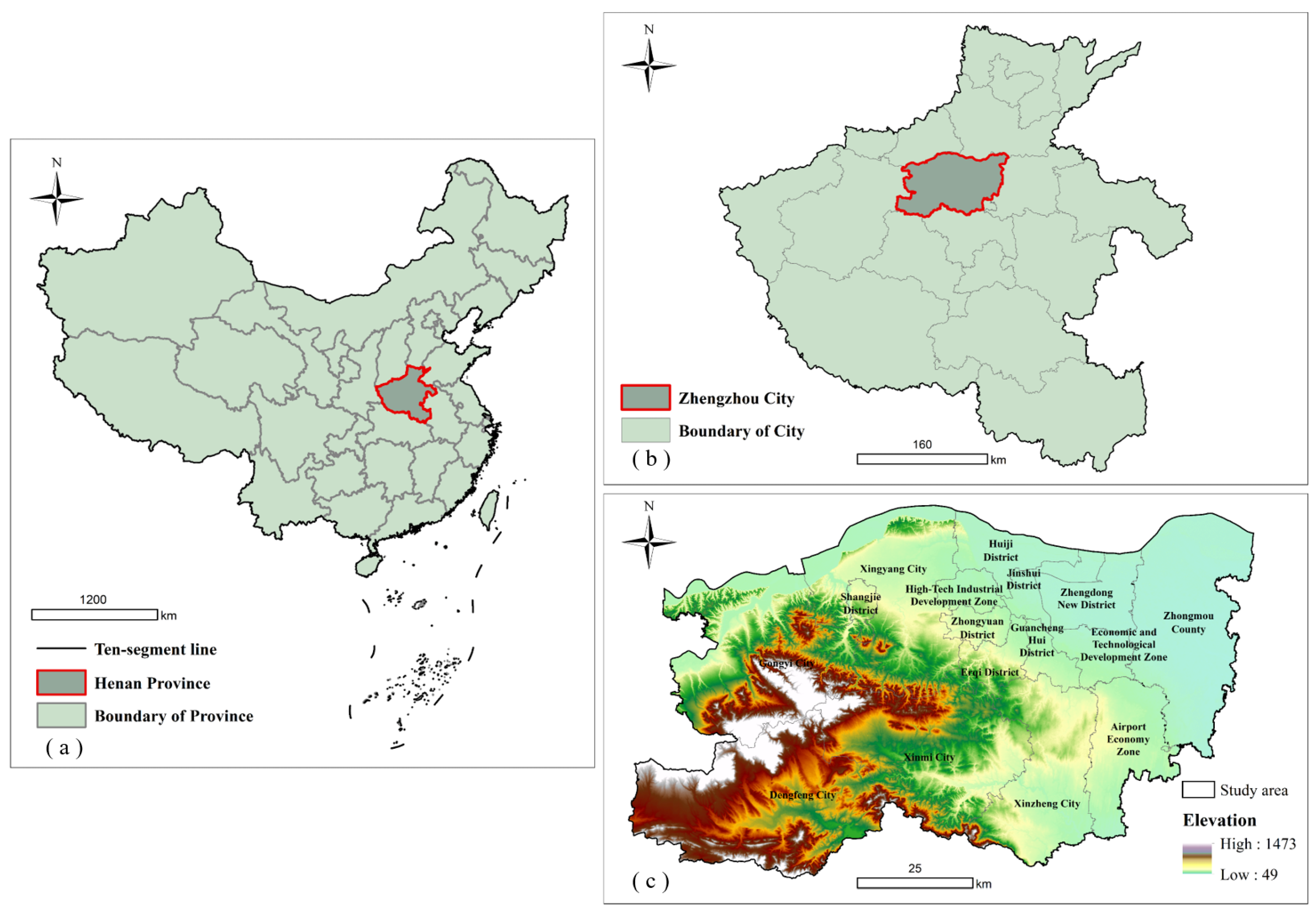
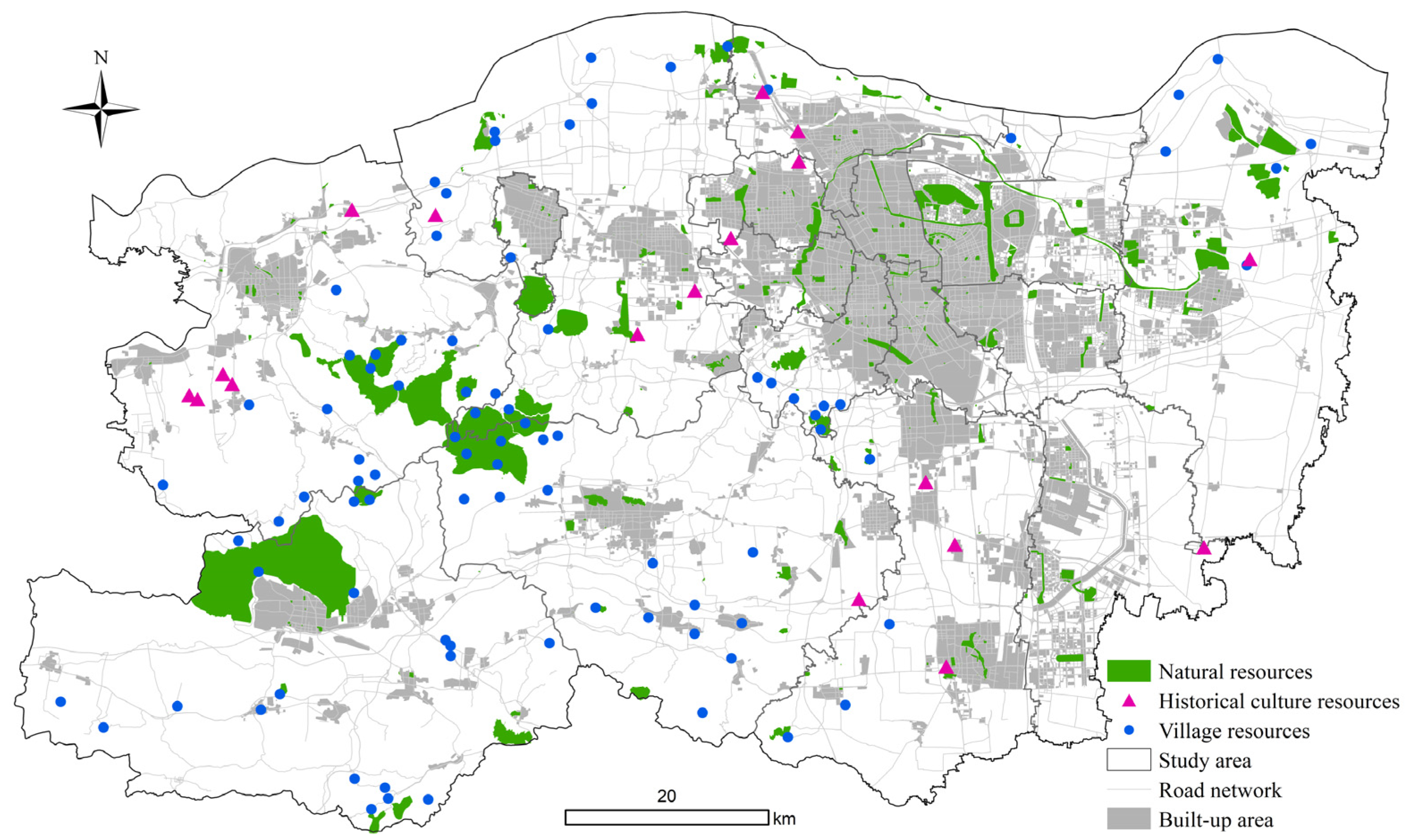
Zhengzhou is one of the megacities in central China with a population exceeding 10 million. The urban residents have a high demand for natural rural resources. Moreover, this region has China’s ancient Yellow River culture, Shang city culture, Songshan temple culture and agricultural culture. It is rich in resources and scattered in distribution, making it a typical area for researching and exploring the potential of rural recreational resources. This study intends to evaluate the development potential of various rural recreational resources around this metropolise from the perspectives of network integrity [
32] and connectivity [
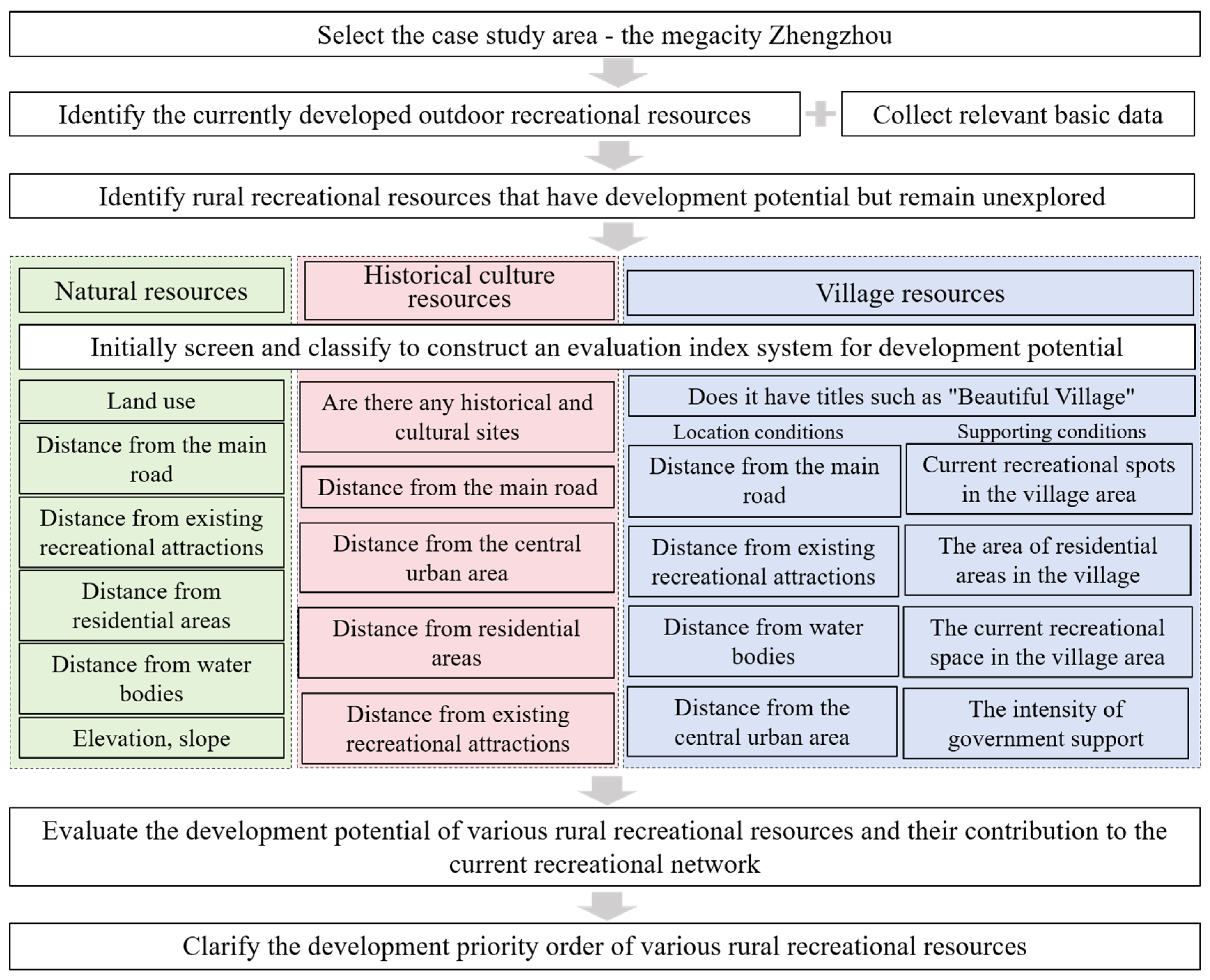
33]. The main purpose is to propose a research framework for evaluating the potential of rural recreational resources, providing a basis for the orderly development and construction of such resources. The significant is to offer a diverse and accessible outdoor recreational network for urban residents. We believe that this research will not only provide guidance for the planning of the recreational system in Zhengzhou, but also offer a reference for the exploration and development of rural recreational resources around other megacities.
4. Discussion
This study proposes a research framework for evaluating the development potential of rural recreational resources, and Zhengzhou, a megacity, selected as the research area for verification. The results confirm that in the peripheral areas of metropolises, rural recreational resources are abundant and possess significant development potential. The factors influencing the development potential of rural recreational resources are even more complex and diverse. Among these, natural factors such as elevation and slope exert a more pronounced impact on natural-type recreational resources. Such resources are concentrated in low-mountain and hilly zones, which boast high green space coverage and favorable ecological landscapes. Humanistic (heritage and village) recreational resources are more susceptible to constraints imposed by “accessibility” and “transportation convenience”. Factors including their distance from the main urban area, proximity to major roads, and distance from existing recreational resources influence people’s travel frequency and willingness to participate in recreation [
12,
46]. These factors also determine whether an interconnected recreational network can be formed among sites, which is closely linked to the continuity of people’s recreational behaviors. Furthermore, multiple factors such as economic conditions, recreational preferences, and people’s perception of service quality at recreational sites also play significant roles [
47,
48,
49]. The investigation of the development potential of rural recreational resources can further promote urban-rural integration in metropolitan fringe areas. These new rural recreation resources can bridge the gap between cities and the countryside and contribute to rural revitalization. This work is conducive to promoting the in-depth development and appropriate allocation of different types of recreational resources, adding more recreational routes, and establishing a complete recreational network. In the future, systematic planning and sustainable development of rural recreational resources can be carried out from the following four aspects.
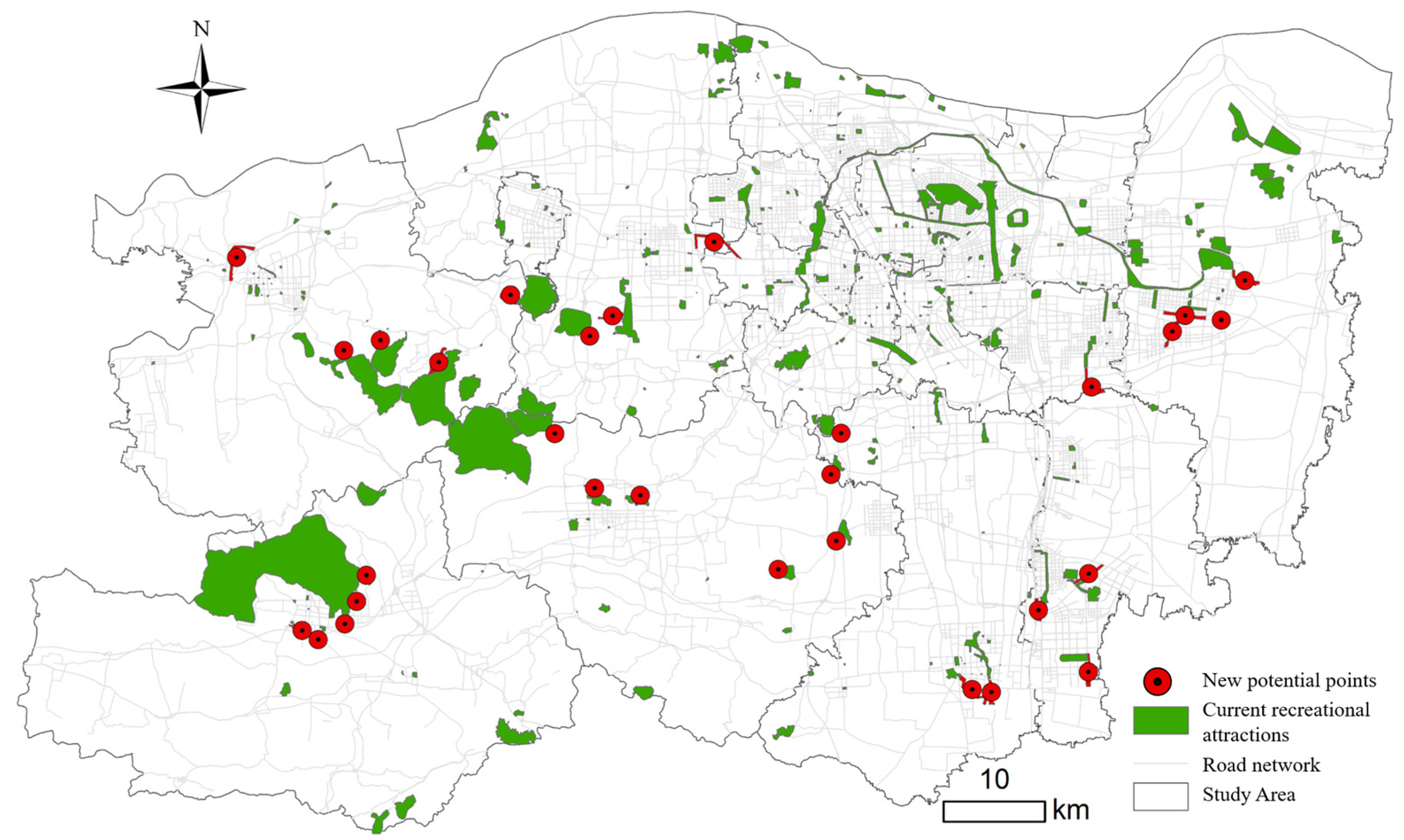
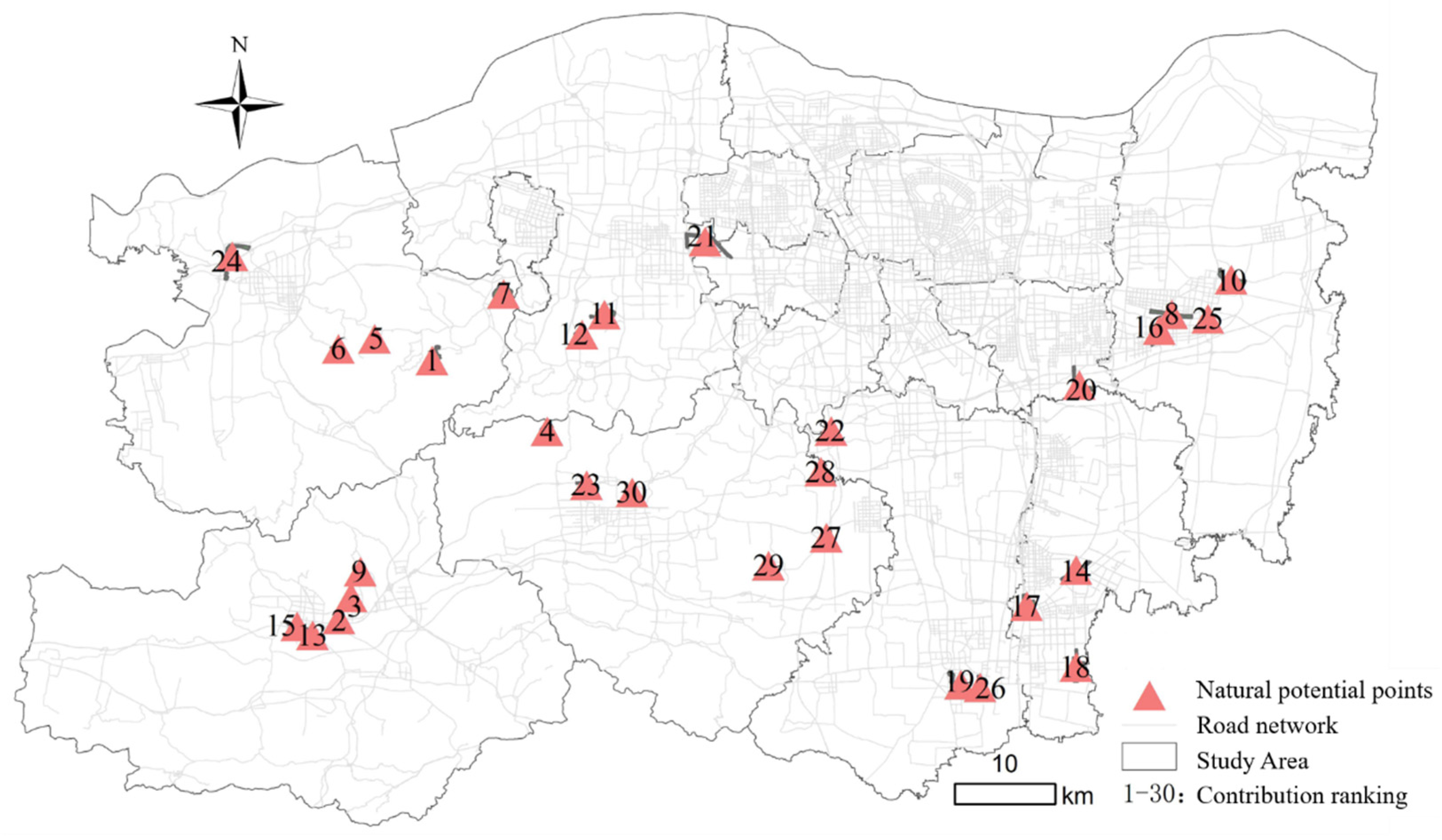
First, all types of rural recreational resources should be identified and classified for development based on their different types and characteristics. It is necessary to clarify the advantages and characteristics of various recreation resources, evaluate their structural hierarchy and importance in the overall urban-rural recreational network. And then formulate a scientific and reasonable layout structure and development sequence by integrating the level of social-economic development and population distribution characteristics. For example, regarding natural-type recreation resources, emphasis should be placed on ecological protection and restoration to create ecological recreational spaces and construct ecological recreational corridors [
39,
50,
51]. For humanistic resources, an in-depth exploration of their cultural connotations is required to develop cultural experience projects. With villages as carriers, traditional folk cultural activities should be inherited and innovated. Distinctive recreational stopovers should be built relying on these villages, to make them become the important nodes of the overall recreational network. By combining the overall planning of the urban-rural recreational network with classified and orderly development, a composite function of “culture + recreation + ecology” can be formed. This will provide tourists with diverse recreational experiences, promote the coordinated economic, social and ecological development of rural areas, and drive rural revitalization.
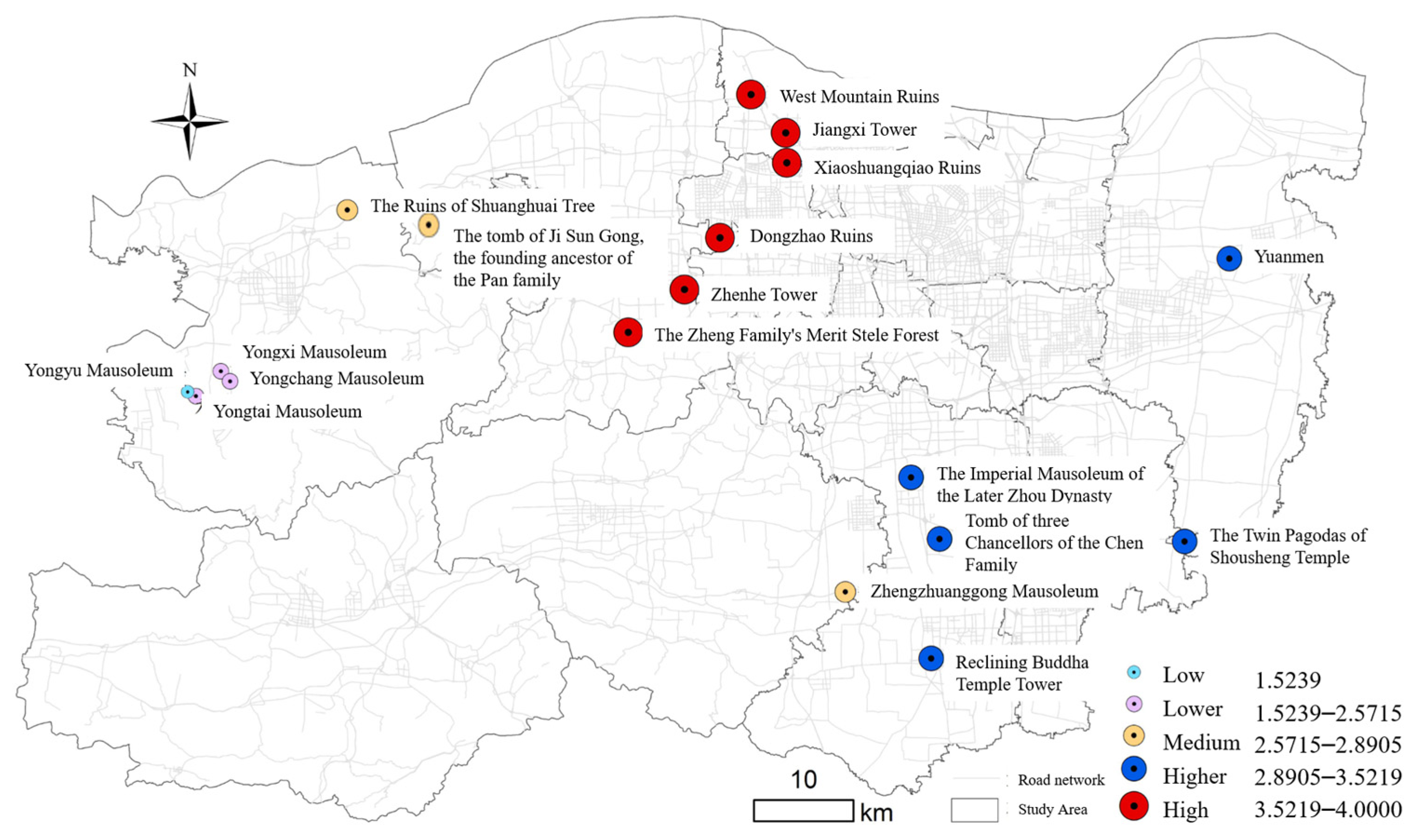
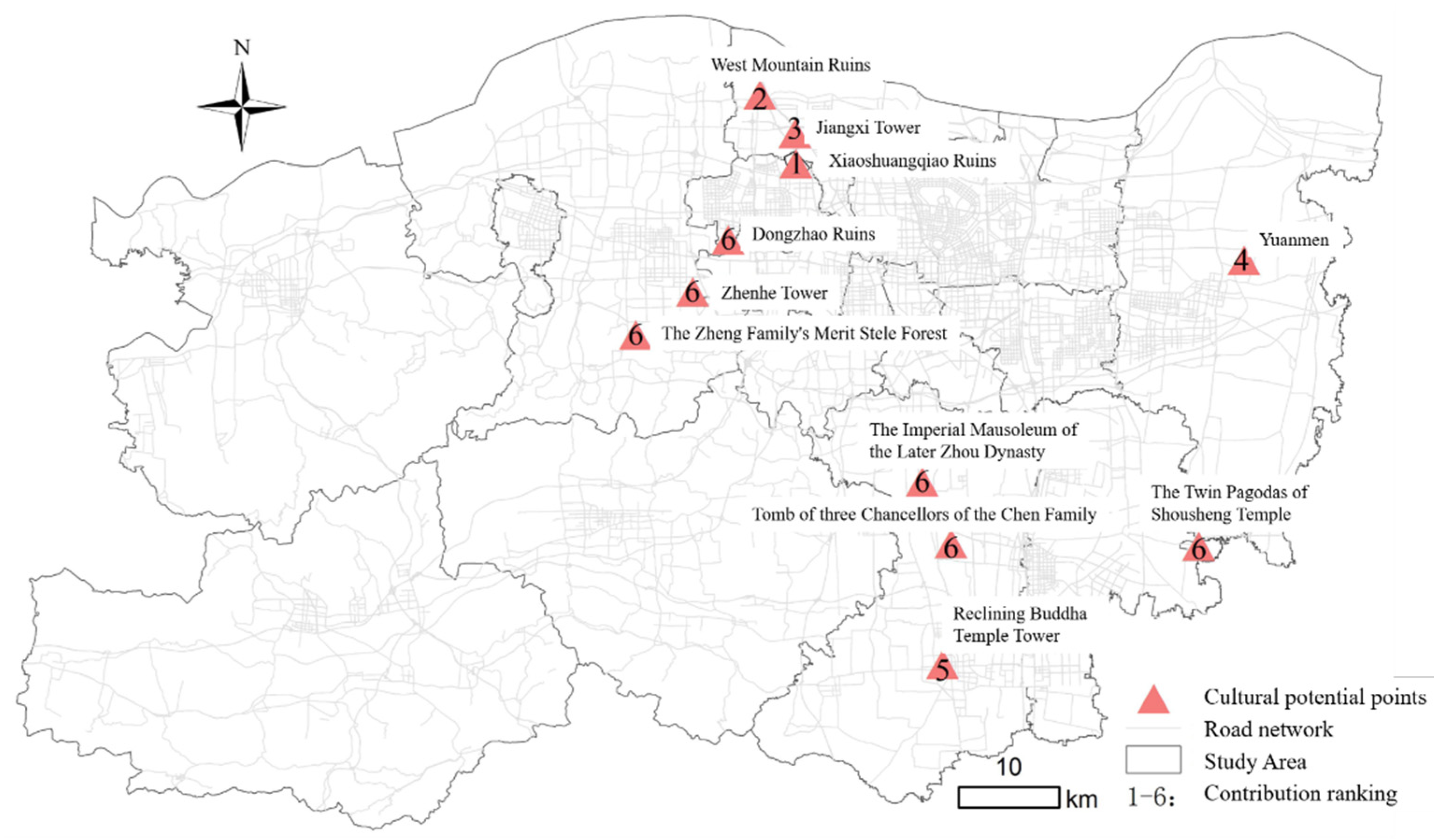
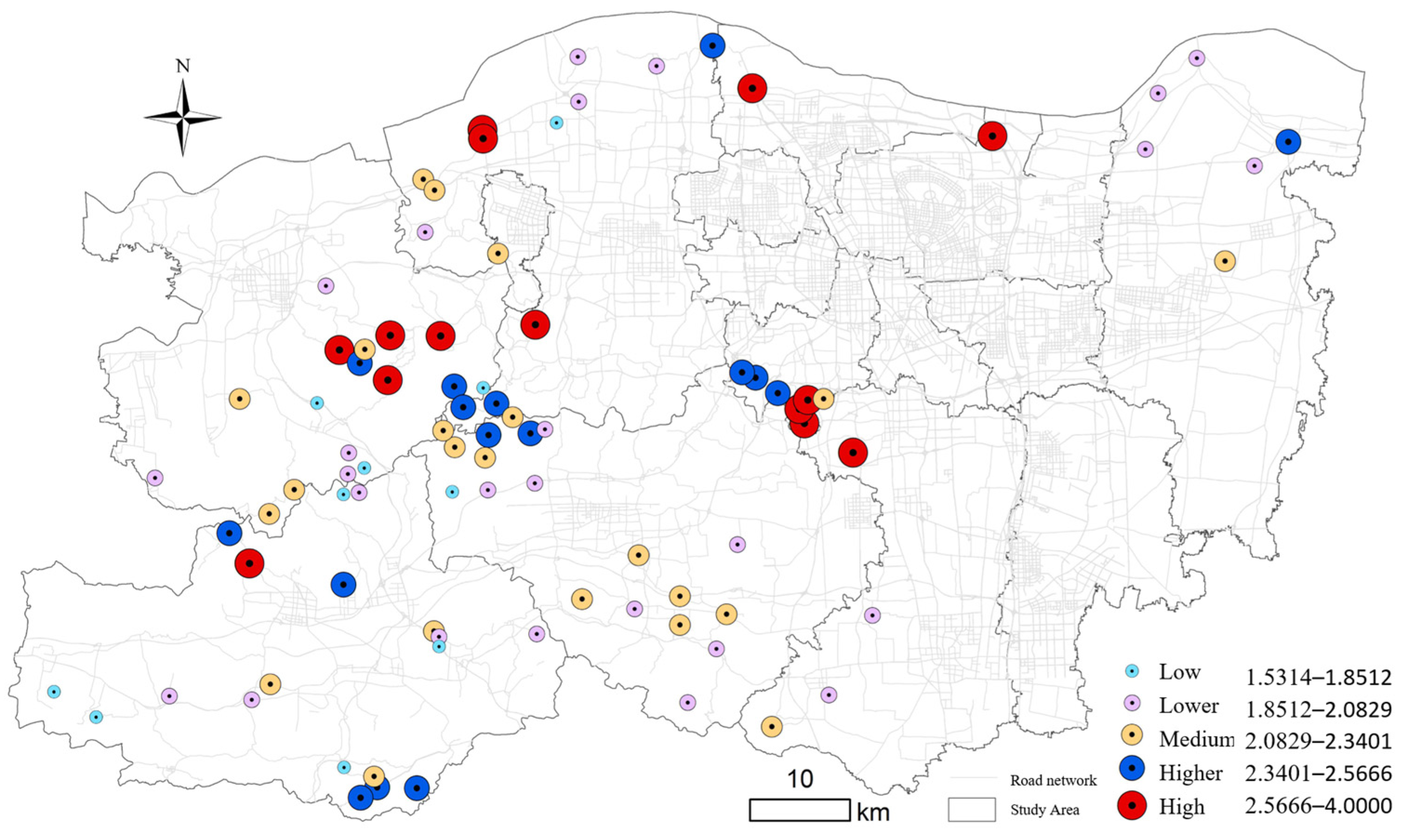
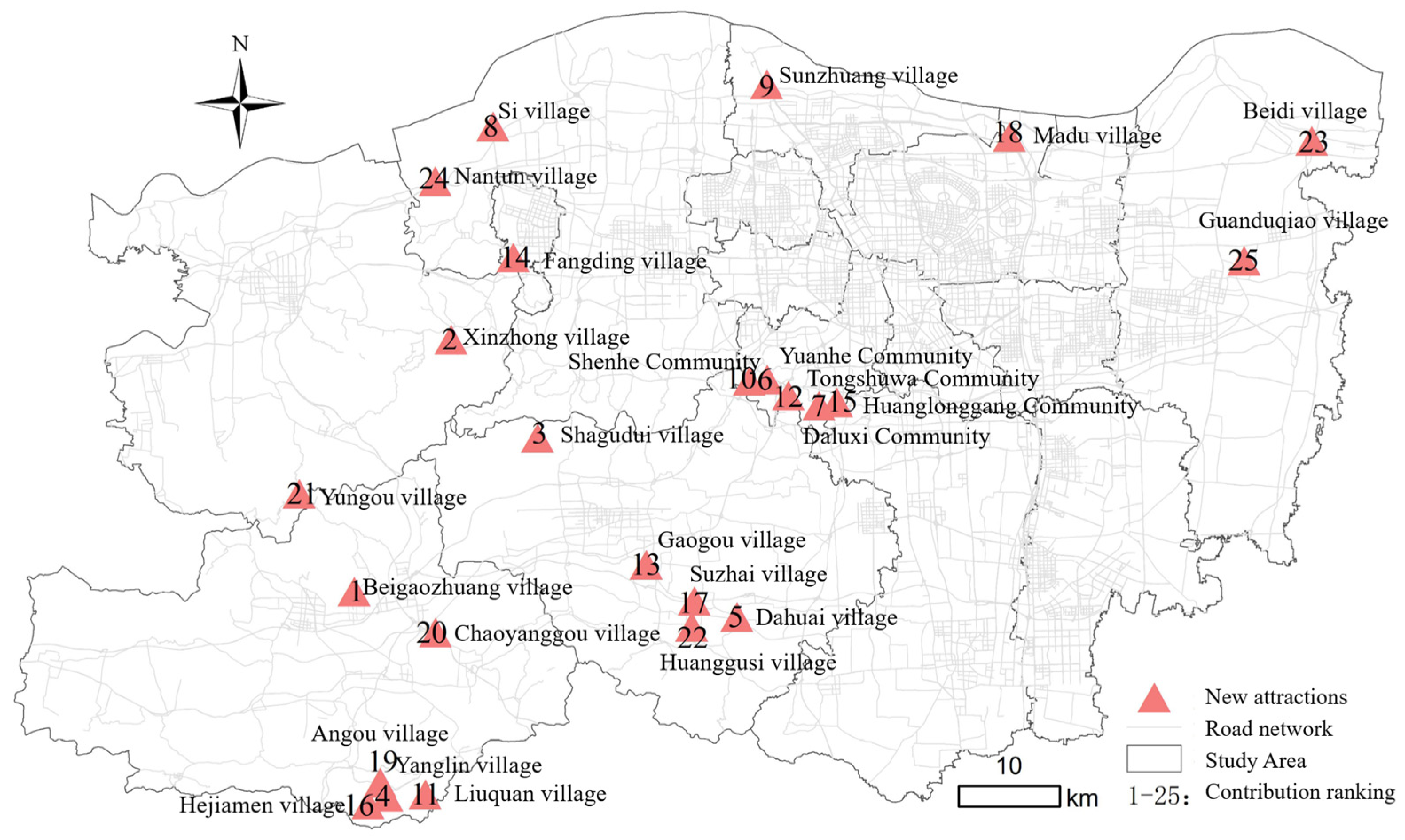
Second, based on the analysis results of the structural connectivity of the overall recreational network and combined with the demands of social and economic development, the development and construction of rural recreational resources should be carried out in a classified and phased manner in an orderly way. Priority should be given to the development of potential rural recreational sites with high contribution degrees and node degrees to enhance the regional agglomeration effect. For high-potential sites with convenient transportation, high accessibility, and relatively complete infrastructure, priority construction plans should be formulated and demonstration projects should be implemented. For resources with medium potential, efforts should first be made to improve their own quality and their connectivity with the overall network, and medium- and long-term development plans should be formulated. For rural recreational resources with low potential, it is necessary to continue exploring their recreational value, create distinctive recreational scenarios, strive for policy and financial support, and formulate long-term development plans.
Third, a themed brand cluster should be established, and rural recreational resources of different types and characteristics should be developed in a hierarchical and differentiated manner, with their scales expanded in an orderly way. For instance, with the “Songshan Mountain-Yellow River” ecological corridor as the main line, well-known branded recreational resources such as Zhulin Longevity Mountain in Gongyi and Huanchui Valley in Xingyang should be integrated to build the “Central Plains Landscape for Health Preservation” brand. Combining historical and cultural relic-based recreational resources with characteristic dwellings such as traditional villages, a humanistic recreational brand themed “Yellow River Culture, Root of the Central Plains” should be constructed, and themed recreational routes such as archeological study tours and surname origin exploration tours should be developed. With Songshan Mountain in Dengfeng as the core, efforts should be made to apply for the national cultural park, build the brand of “Songshan Mountain: The Most Serene Under Heaven”, and drive the development of surrounding regional or local-level recreational resources and other characteristic themes through its radiating effect.
Finally, network construction, integration, aggregation and synergy should be focused. Rural recreation resources outside the city should be connected to urban park recreation spots inside the city. Through the construction of an urban-rural green slow-traffic system or the operation of public transportation tourism routes, scattered rural recreational resources can be linked together. By means of classified development, phased advancement, brand leadership, and network coordination, scattered resources should be organically integrated and aggregated into overall advantages. Finally, an urban-rural recreational network featuring “ecology as the foundation, culture as the soul, network as the framework, and brands as the wings” will be formed. Ultimately, this will achieve the coordinated and win-win goals of ecological protection, cultural inheritance, rural revitalization, and urban-rural integration.
5. Conclusions
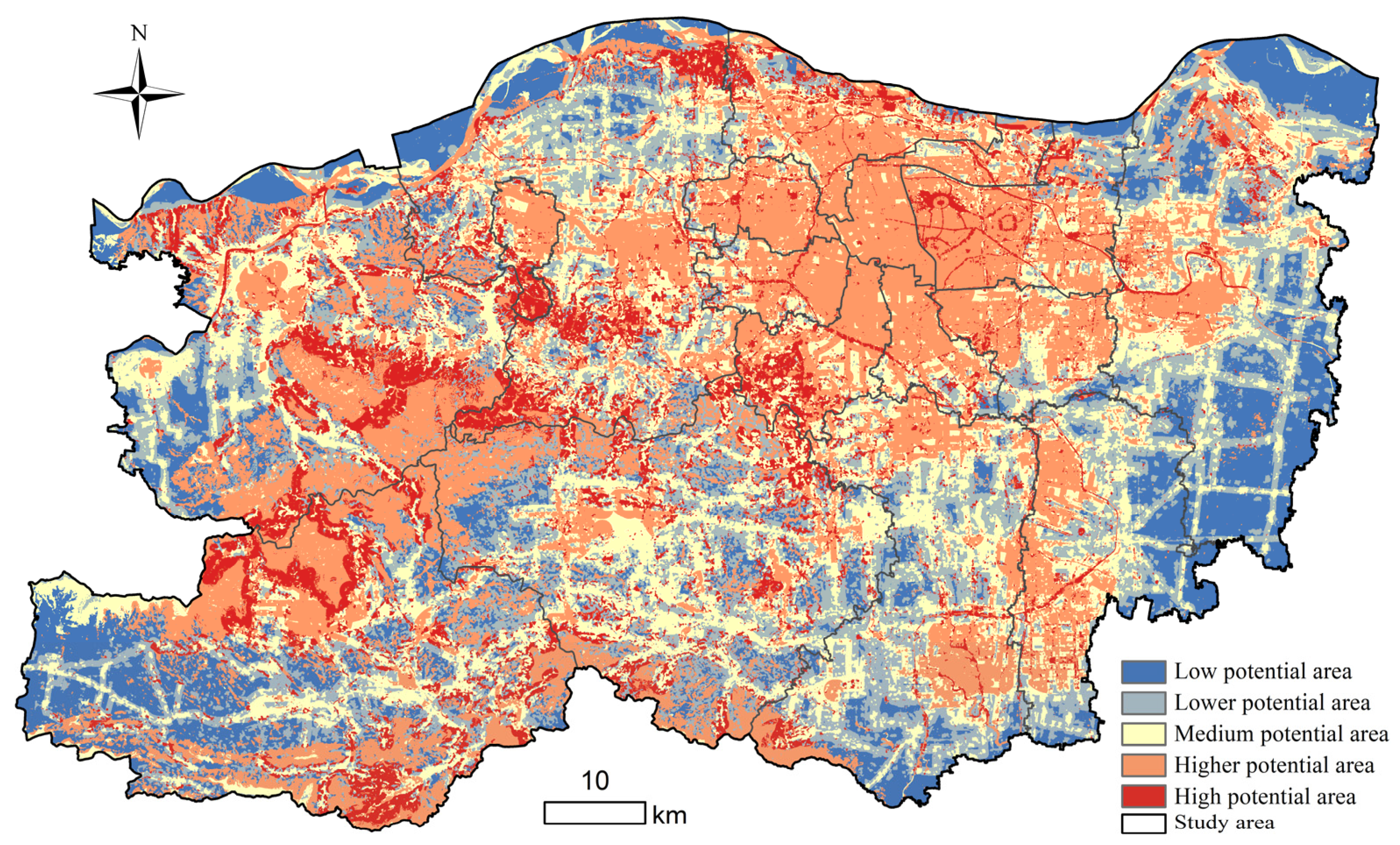
This study proposes an evaluation system and research framework for the development potential of rural recreational resources. Based on methods such as GIS spatial analysis, Graphab network connectivity analysis, and combined weighting, it takes Zhengzhou, a megacity, as a case study to conduct classified analysis and evaluation on the current situation and development potential of rural recreational resources around the urban area. The results show that rural recreational resources still have great development potential. Among them, high-potential natural sites are concentrated in the western hilly areas such as Fuxi Mountain in Gongyi, Songshan Mountain and Qipan Mountain in Dengfeng, and Shenxiandong Cave in Xinmi. These areas feature convenient transportation and high green space coverage, with the triple advantages of “ecology-transportation-landscape”. High-potential historical and cultural sites are relatively close to the urban area and should be integrated with urban leisure corridors. High-potential village-type sites can be prioritized as composite stopovers integrating “homestay-study-tour-folk custom” in the recreational network, while driving rural revitalization. According to the spatial distribution characteristics of potential rural recreational sites, a spatial development pattern of “one district, three belts, and multiple spots” can be formed in the future, including the “Western Mountain Ecological Health Preservation District”, “Yellow River Cultural Study Tour Belt”, “Ying River Pastoral Leisure Belt”, and “Southwest Homestay Cluster Belt”. This pattern has guiding and referential significance for territorial spatial planning and rural revitalization planning. The rural areas with a high forest coverage rate, convenient transportation access, prominent cultural value, and complete living facilities are important recreational venues serving the nearby megacities. In the future, their connectivity with the urban internal recreational and residential spaces should be enhanced. This is of great significance for any large city. In addition, limited by the available data, this study has certain limitations in dynamic evaluation, tourist preferences, and recreational themes. In the future, data on resource utilization and tourist preferences can be further collected to conduct in-depth research on the integration and connection between different types of recreational resources and themed routes.