Article

Linking Environmental Regulation and Digital Transformation in Urban China: Evidence from Prefecture-Level Cities


1
Guangzhou Urban Planning and Design Co., Ltd., Guangzhou 510030, China
2
School of Geography and Planning, Sun Yat-sen University, Guangzhou 510000, China
*
Author to whom correspondence should be addressed.
Land 2025, 14(8), 1643; https://doi.org/10.3390/land14081643
Submission received: 8 July 2025 / Revised: 6 August 2025 / Accepted: 11 August 2025 / Published: 14 August 2025
(This article belongs to the Section Land Socio-Economic and Political Issues)

Abstract

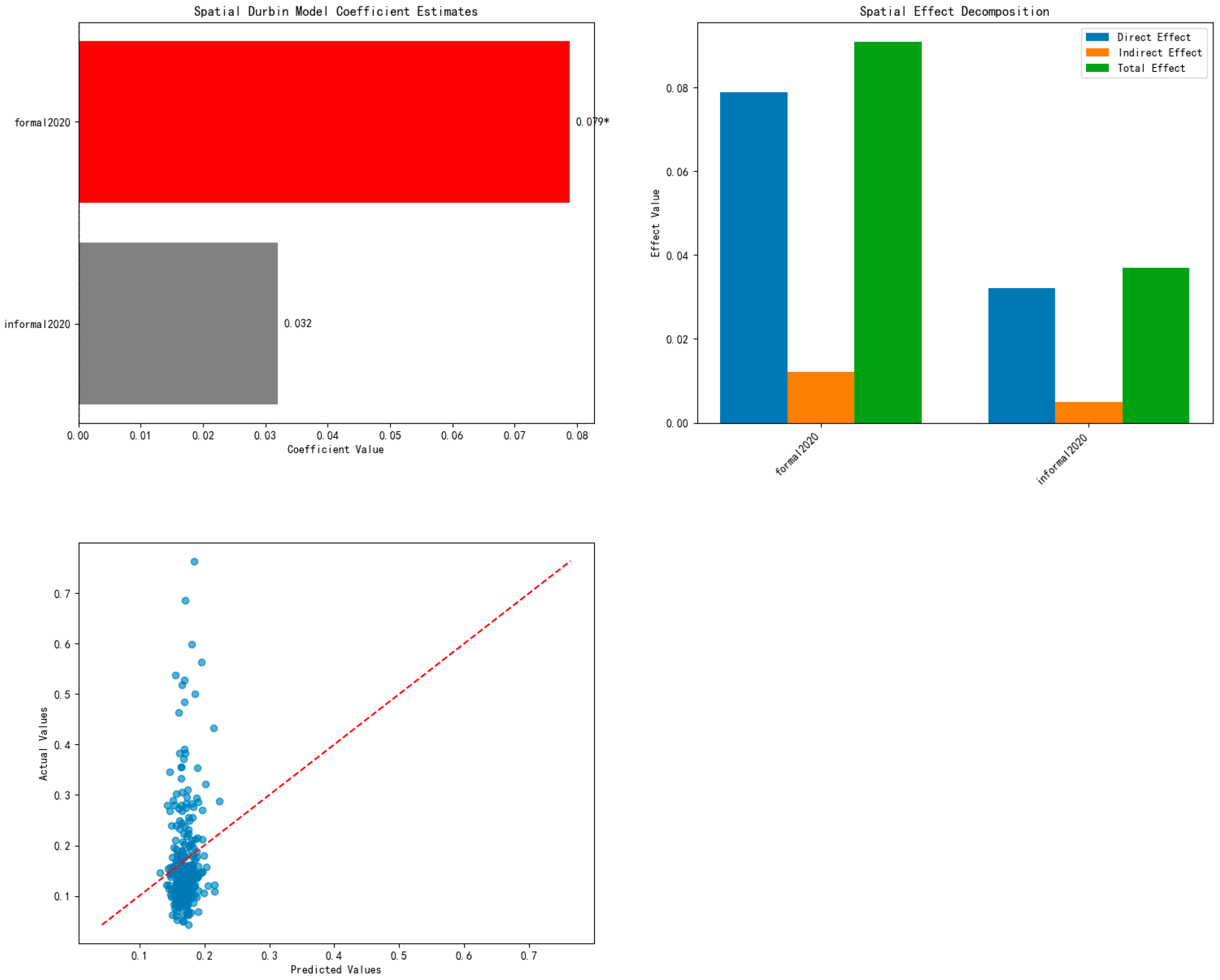
The digital economy is a vital driver of industrial transformation and green development in China. This study aims to investigate how formal and informal environmental regulations affected the growth of the digital economy across Chinese prefecture-level cities between 2010 and 2020. Utilizing panel data from official statistical yearbooks and local bulletins, the research employs entropy weighting and ratio analysis to measure regulatory intensity and effectiveness. Spatial econometric models are applied to assess the direct and spillover effects of environmental regulation on digital economy development. Results indicate a nationwide strengthening of both formal and informal regulations, with formal mechanisms exerting a more pronounced influence on digital growth. Regional disparities are evident, with cities under stricter environmental oversight showing faster digital advancement. Spatial spillover effects exist but diminish with distance, likely due to institutional fragmentation. These findings underscore the need for integrated multi-level regulatory approaches, promoting synergy between formal and informal regulations and embedding environmental goals within land-use planning and digital infrastructure investment. The study offers new insights into the interplay between environmental governance and urban digital transformation, providing lessons relevant to China and other developing countries pursuing sustainable transitions.
Keywords: digital economy; environmental regulation; land-use policy; prefecture-level cities; urban China digital economy; environmental regulation; land-use policy; prefecture-level cities; urban China