1. Introduction
Cultivated land resources form the bedrock of human survival and development, sustaining our livelihoods and prosperity while safeguarding societal progress and ecological equilibrium. As economies advance and awareness deepens, the traditional reliance on crop yields alone to drive economic growth has diminished. Cultivated land now evolves beyond mere food production towards multifaceted contributions encompassing economic value, ecological conservation, employment security, cultural heritage preservation, and recreational landscapes. This multifunctional approach has become the rational direction for cultivated land utilisation [
1]. In the context of multifunctional research on cultivated land, supply primarily denotes the capacity of cultivated land ecosystems to provide various products and services through the combined effects of their natural attributes and human land use activities. Demand, conversely, refers to the consumption, appropriation, and expectations of these products and services by human socio-economic systems, driven by survival, development, and well-being. However, with the rapid advancement of urbanisation and industrialisation, coupled with the continuous evolution of the natural systems of cultivated land and the ever-increasing demands of humanity, the multifunctional capacity of cultivated land faces the risk of supply falling short of demand [
2]. On the one hand, the development of urbanisation and industrialisation comes at the cost of encroaching upon cultivated land, posing threats to its structure and functions. The resulting issues—including a sharp decline in cultivated land area, deterioration in land quality, and ecological damage—have diminished the multifunctional supply capacity of cultivated land [
3]. Concurrently, rising incomes and the growing demand for improved living standards have objectively increased the diversity of functional requirements placed upon cultivated land [
4]. The risk that the multifunctional supply of cultivated land may fail to meet human needs is escalating dramatically, posing a threat to both the sustainable development of cultivated land and the healthy advancement of human socio-economic systems [
5]. To this end, clarifying the multifunctional supply–demand relationship of cultivated land and assessing the comprehensive multifunctional supply–demand risks associated with it are of vital importance for strengthening cultivated land protection and promoting the sustainable utilisation of agriculture and rural areas.
Currently, numerous scholars have examined the multifunctional characteristics of cultivated land across various scales—including provincial, municipal, county, township, and grid levels—revealing variations in these multifunctional attributes across different research scales [
6]. Such discrepancies arise from differences in natural conditions and ecological processes at distinct spatial scales. Concurrently, stakeholders at different spatial scales exhibit distinct perceptions and demands regarding the multifunctional nature of cultivated land [
7]. Decision-making must therefore holistically consider the preferences of diverse stakeholders to determine the focal points and priorities for managing cultivated land functional risks, thereby maximising the overall benefits derived from its multifunctional attributes [
8]. However, existing research on multifunctional risk assessment of cultivated land predominantly focuses on a single administrative scale, rendering it ineffective in supporting the formulation of cultivated land management policies at all levels of government [
9]. Against this backdrop, it is imperative to conduct a scientific assessment of the supply–demand risks associated with the multifunctional role of cultivated land at various scales, integrating socio-economic factors, landscape patterns, and natural elements [
10]. This assessment should propose risk management strategies to assist decision-makers at different levels in optimising the internal supply–demand dynamics of multifunctional cultivated land within regions. The ultimate aim is to achieve the effective spatial allocation of cultivated land resources and support the sustainable management practices of regional agriculture [
11]. The Yellow River Basin serves as a vital ecological barrier and economic development zone for China, characterised by a fragile natural ecological foundation and facing severe challenges in resource security [
12]. Henan Province is situated in the middle and lower reaches of the Yellow River Basin. With its advantageous geographical location and abundant cultivated land resources, it serves as a major grain-producing region in China and the core area for the development of the Central Plains Economic Zone. With the rapid social and economic development in Henan Province, the land use pattern has undergone significant changes, characterised by a substantial reduction in cultivated land area and an increase in land designated for construction purposes. At the same time, people’s increasingly diverse demands for cultivated land have led to a growing tension between population and land resources [
13].
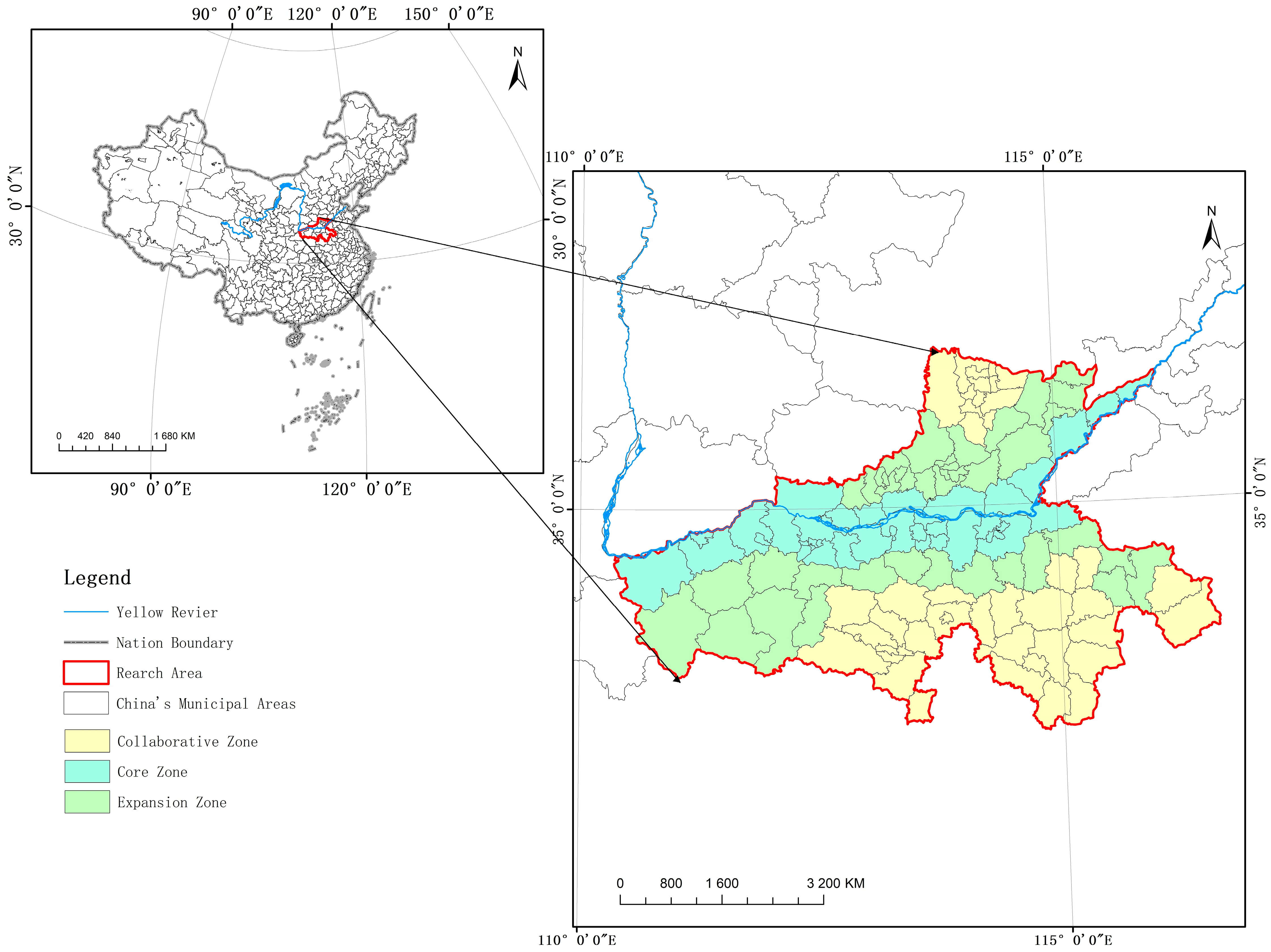
In 2024, the People’s Government of Henan Province publicly issued the Henan Yellow River Basin Territorial Spatial Plan (2021–2035), delineating four functional zones based on county-level administrative divisions: the core zone, expansion zone, collaborative zone, and radiation zone. This reflects a clear gradient strategy transitioning from direct management to radiation-driven development. The core zone serves as the primary arena for ecological conservation and high-quality development, implementing the most stringent ecological protection measures while acting as the core engine for high-quality growth. The expansion zone primarily guides the four provincial-level cities receiving Yellow River water, maintaining close ecological and economic ties with the core zone as an extension and support for its functions. The collaborative zone focuses on deep cross-regional cooperation, exploring the establishment of integrated regional working mechanisms. The radiation zone receives the overall impetus and influence of the plan, promoting coordinated development across a broader spatial scope. In conjunction with this plan and taking into account the impact of the Yellow River Basin’s water supply coverage on cultivated land utilisation in Henan Province, this study selected 119 districts and counties across 14 provincial-level cities, encompassing core, expansion, and collaborative zones, as its research area. Employing three research scales—functional zoning, prefecture-level cities, and districts/counties—it constructed a multifunctional supply and demand assessment index for arable land across four dimensions: production, ecology, society, and landscape [
14]. It thoroughly examines and clearly presents the differentiated characteristics of these indicators across temporal and spatial dimensions, analysing their multi-scale variation patterns. Building upon this foundation, a comprehensive assessment of the scarcity risk in the multifunctional supply and demand of cultivated land within the Yellow River Basin of Henan Province is conducted [
15].
2. Materials and Methods
2.1. Study Area Overview
Henan Province is situated in the central-eastern part of China, within the middle and lower reaches of the Yellow River. The Yellow River flows through the northern and central regions of Henan, serving as one of the province’s most significant water systems and geographical boundaries. Its natural geographical features within the territory of Henan Province exhibit marked transitional and complex characteristics. The Yellow River traverses approximately 711 km within Henan Province, flowing through eight cities: Sanmenxia, Luoyang, Jiyuan, Jiaozuo, Zhengzhou, Xinxiang, Kaifeng, and Puyang. The river basin encompasses parts of northern, central, and western Henan Province. The section of the Yellow River within Henan Province lies at the pivotal transition zone between China’s second topographical step and the third step (the North China Plain). The cultivated land in the Yellow River Basin of Henan Province centres on the alluvial soil areas of the eastern and northern plains, supplemented by the hilly regions of the west, forming a pattern characterised by main staple crops in the plains and distinctive crops in the hills. Situated in the transitional zone between temperate monsoon and subtropical monsoon climates, it exhibits pronounced continental monsoon characteristics. The annual average temperature ranges between 12 and 15 degrees Celsius, with cold winters and hot summers. Precipitation decreases from southeast to northwest, declining from approximately 700 millimetres to around 600 millimetres. Rainfall distribution is uneven throughout the year, concentrated primarily in summer (June to September) with frequent torrential downpours [
16,
17]. Considering the impact of the Yellow River Basin’s water supply coverage on cultivated land utilisation in Henan Province, the study area has been delineated into a core zone, an expansion zone, and a collaborative zone. This encompasses 84 districts and counties across nine prefecture-level cities along the Yellow River (Sanmenxia, Luoyang, Jiaozuo, Zhengzhou, Xinxiang, Kaifeng, Puyang, Anyang, and Hebi) and the Jiyuan Industrial–Urban Integration Demonstration Zone (Jiyuan), along with 35 districts and counties across four provincial-level cities receiving Yellow River water diversion (Xuchang, Zhoukou, Shangqiu, and Pingdingshan). The specific study areas are illustrated in
Figure 1.
2.2. Data Sources and Processing
This study utilised multi-source data, with acquisition sources and reference types encompassing foundational geographic data, remote sensing satellite monitoring data, socio-economic statistical data, meteorological environmental data, and spatiotemporal observational data, among other categories. Data spanning the period from 2013 to 2023 was obtained. At the spatial scale, spatial type data were uniformly cropped into core zones, expansion zones, and collaborative zones. The coordinate system was standardised to the WGS84 projected coordinate system. For raster data sources, accuracy was uniformly resampled to 1 km to ensure consistency of the base map. Specific data sources and detailed descriptions are provided in
Table 1.
2.3. Evaluation Index System for Multifunctional Supply and Demand of Cultivated Land
2.3.1. Evaluation Index System for Supply and Demand of Cultivated Land Production Function
The production of agricultural produce constitutes the most fundamental function of cultivated land [
18]. The productive function of cultivated land manifests specifically in humanity’s capacity to control the growth and development of crops through labour, thereby yielding both staple and cash crops [
19]. The productive capacity of cultivated land refers to its ability to yield a diverse range of crops, including grain, vegetables, oilseeds, melons, and fruit [
20]. Therefore, this paper selects the yields of major food crops and cash crops in the Yellow River Basin of Henan Province as supply evaluation indicators for production capacity. Amongst cash crops, vegetables and oilseeds exhibit significant economies of scale in cultivation, with their planted areas far exceeding those of other categories. Therefore, by selecting these two crops for in-depth analysis, we can thoroughly examine the production levels of cash crops on agricultural land.
In the above formula, W denotes the total supply of cultivated land’s productive function; denotes the weighting of the jth indicator combination; denotes the sown area for the jth indicator; denotes the yield per unit area for the jth indicator. Among these, grain crops serve to safeguard basic food requirements, the weight is 0.7, and cash crops are centred on market exchange and value realisation, the weight is 0.3.
The production function demand for cultivated land refers to humanity’s actual consumption demand for agricultural products yielded from such land, which can be directly manifested as the consumption volume of crops [
21]. Therefore, this study employs the actual total consumption of representative staple and cash crops to characterise the production function requirements of cultivated land. The total agricultural consumption is calculated by multiplying per capita agricultural consumption by the population size, thereby reflecting regional disparities in consumption levels [
22]. The calculation formula is as follows:
In the above formula, D(i) denotes the total demand for agricultural products in region i (t); denotes the urban population density for region i; denotes the rural population density of region i; denotes the per capita demand for agricultural products among urban residents in Henan Province; denotes the per capita demand for agricultural products among rural residents in Henan Province.
2.3.2. Evaluation Index System for Ecological Function Supply and Demand of Cultivated Land
Cultivated land not only serves as a vital foundation for agricultural production but also plays a pivotal role in carbon storage and carbon cycling. Through its inherent capacity to absorb carbon, cultivated land directly or indirectly influences the global carbon balance. This study examines the ecological functions of cultivated land, with particular emphasis on its carbon sequestration capacity, characterising the supply level of cultivated land’s carbon sequestration function through its carbon sequestration capacity. Specifically, this pertains to the carbon uptake throughout the entire life cycle of crops, from sowing and growth through to maturity and harvest [
23]. The calculation formula is as follows:
In this equation, Ac denotes the natural carbon sequestration capacity of cultivated land (t); A
denotes the carbon uptake (t) for crop i;
denotes the carbon content of crop i;
denotes the water coefficient for crop i;
denotes the economic coefficient for crop i;
denotes the root-to-shoot ratio for crop i; m denotes the number of primary crop types in the study area, where m = 4: wheat, maize, oilseeds, and vegetables [
24]. The calculation parameters for carbon sequestration in various crops are derived from the research findings of Gu et. al. [
25], Xie et. al. [
26,
27], and Li et. al. [
28].
This study characterises the carbon sequestration requirements of cultivated land by employing its actual carbon emissions when assessing such functional demands. The primary source of carbon emissions from cultivated land stems from production activities undertaken during agricultural cultivation. The carbon emissions calculation method employs the IPCC carbon emission factor approach: Greenhouse gas emissions = Activity data × Carbon emission coefficient. The carbon emission coefficients for agricultural land utilisation are referenced from Deng Mingjun’s research findings [
2], detailed in
Table 2. Among the various crops, the N
2O emission coefficients for rice, winter wheat, soybeans, maize, and other upland crops are 0.24, 2.05, 0.77, 2.532, and 0.95, respectively [
29]. Finally, N
2O is converted to standard carbon using the following conversion factor: 1 tonne N
2O = 81.2727 tonnes C.
2.3.3. Indicator System for the Supply and Demand of the Social Functions of Cultivated Land
The social function of cultivated land refers to its capacity to fulfil human societal needs, manifested through providing employment opportunities for the workforce, creating economic security, and maintaining social stability [
30]. For farmers, cultivated land serves as a vital production factor upon which their livelihoods depend, providing essential support for their daily existence and employment opportunities. This study assesses and spatially maps the functions of employment security and social stability maintenance, respectively, as detailed in
Table 3. Finally, after applying range standardisation to both functions, equal weights were assigned to reflect the levels of ecological function supply and demand [
31].
2.3.4. Indicator System for Evaluating the Supply and Demand of Cultivated Land Landscape Functions
The landscape pattern of cultivated land provides a direct visual representation of regional land use conditions [
32,
33]. Landscape indices, as highly condensed information on landscape patterns, provide a convenient tool for quantitatively describing and analysing the spatial configuration and structural composition of landscapes [
34]. Therefore, this study employs the landscape pattern index methodology to investigate the changing characteristics of cultivated land landscape functions. In landscape ecology, a rich array of indices exists for analysing landscape patterns. Given that the Aggregation Index (AI), Patch Density (PD), and Landscape Shape Index (LSI) respectively capture the key characteristics of cultivated land landscape evolution from three core dimensions—aggregacy, fragmentation, and shape complexity—which are both independent and interrelated, these three pivotal landscape pattern indices were selected to reflect the landscape-level evolutionary features of cultivated land within the Yellow River Basin of Henan Province. The weighting determination employs the entropy weighting method, as it objectively allocates weights based on the inherent variability of each indicator’s data, thereby avoiding subjective bias.
At the demand level, cultivated landscapes exert a marked appeal to urban residents possessing both a strong willingness to pay and an appreciation for their unique natural visual beauty and cultural value [
35]. At the same time, urban residents typically possess greater purchasing power and a stronger desire for a higher quality of life, making them more likely to pay for the opportunity to appreciate cultivated land landscapes and experience agricultural culture. Therefore, the larger the population size and the higher the income level of neighbouring cities, the greater the number of potential consumers, and consequently the higher the demand for agricultural landscapes. Thus, population size and GDP are selected to represent the demand volume and demand level for agricultural landscape functions. The determination of weights also employs the entropy weighting method to avoid subjective bias. The specific indicator system for the supply and demand of cultivated land landscape functions is shown in
Table 4.
When conducting evaluations of the functional characteristics of cultivated landscapes, the indicator systems involved are complex and multi-layered, each possessing distinct units and attributes. This renders direct comparisons inherently challenging. Moreover, each indicator may be assigned either positive or negative attributes, further complicating the analysis. By subjecting data to appropriate transformation and standardisation processes, potential discrepancies between different indicators can be eliminated, thereby enabling relevant evaluation metrics to be compared and analysed within a unified framework. Therefore, this study also employs the range-standardisation method to render numerous indicators of cultivated land landscape functionality dimensionless. Employ the entropy method [
36] to determine the weighting factors for each evaluation index. Ultimately, the composite index methodology [
37] was employed to comprehensively measure the supply–demand indices for the functional aspects of cultivated land landscapes within the Yellow River Basin of Henan Province.
2.4. Assessment of the Multifunctional Supply Level of Cultivated Land
This study, based on a quantitative analysis of the multifunctional supply and demand for cultivated land, assigns corresponding weighting values using the entropy method and is grounded in Maslow’s hierarchy of needs theory [
38]. This approach accounts for the relative importance of each function of cultivated land within the study area of the Yellow River Basin in Henan Province. Ultimately, the composite index method was employed to evaluate the multifunctional supply level of cultivated land.
In the above formula, S denotes the assessment of the multifunctional supply level of cultivated land; denotes the weighting of the jth indicator combination; denotes the standardised, dimensionless value of the jth indicator. In terms of the multifunctional supply level of cultivated land, the production function serves as a crucial safeguard for food security, with a weighting of 0.4. The ecological function reflects the capacity of arable ecosystems to maintain or alter the environment, carrying a weighting of 0.3. The social function ensures livelihood security, upholds social stability, and promotes sustainable social development, assigned a weighting of 0.2. The landscape function directly influences the visual aesthetic impact of rural scenery, with a weighting of 0.1.
2.5. Assessment of Multifunctional Demand Levels for Cultivated Land
Similar to the assessment method for the multifunctional supply level of cultivated land, the entropy value method is employed, with corresponding weighting values assigned based on Maslow’s hierarchy of needs theory. Ultimately, the composite index method was employed to assess the level of multifunctional demand for cultivated land.
In this formula, D denotes the assessment of the multifunctional supply level of cultivated land; denotes the weighting of the jth indicator combination; denotes the standardised, dimensionless value of the jth indicator. In terms of the multifunctional requirements for cultivated land, the production function represents a rigid necessity for food security, with a weighting of 0.5. The ecological function serves as a barrier requirement for ecological security, carrying a weighting of 0.2. The social function constitutes a fundamental requirement for social security, assigned a weighting of 0.2. Lastly, the landscape function addresses the need for integrated urban and rural landscapes, with a weighting of 0.1.
2.6. Risk Assessment of Shortages in Multifunctional Supply and Demand for Cultivated Land
The risk of multifunctional supply–demand shortages in cultivated land refers to imbalances arising when multifunctional supply fails to meet demand. This risk is characterised by assessing the degree of alignment between supply and demand. Therefore, the multifunctional supply–demand ratio for cultivated land (CSDR) is introduced to analyse the level of risk associated with shortages in the multifunctional supply and demand of cultivated land [
39]. The calculation formula is as follows:
In this formula, denotes the supply–demand ratio within geographical unit i; and , respectively, represent the supply and demand of geographical unit i; and denote the maximum values of supply and demand, respectively. A positive value indicates a surplus in supply and demand, meaning supply can meet demand without any risk of shortage. A zero value indicates a balanced supply and demand, with no risk of shortage. A negative value indicates a shortage in supply and demand, meaning supply cannot meet the corresponding demand, presenting a risk of shortage. The smaller the value, the higher the risk of shortage.
The spatial overlay of multifunctional supply and demand for cultivated land does not accurately explain the pattern of supply–demand matching and requires adjustment [
40]. On this basis, this study employs a geographically weighted regression (GWR) model to correct the CSDR [
41,
42]. This study employs the GWR-adjusted multifunctional supply–demand ratio for cultivated land (CSDR’) as the final outcome for assessing the risk of multifunctional supply–demand shortages in cultivated land. The calculation formula is as follows:
In the above formula, denotes the adjusted supply–demand ratio, denoting the level of multifunctional supply–demand deficiency risk for cultivated land. is the predictor variable in geographical unit i; denotes the regression residual for geographical unit i; and represent the slope and intercept of the data point , respectively, estimated from the spatial weighting matrix.
3. Results
3.1. Spatial and Temporal Evolution Characteristics of the Functional Supply of Cultivated Land
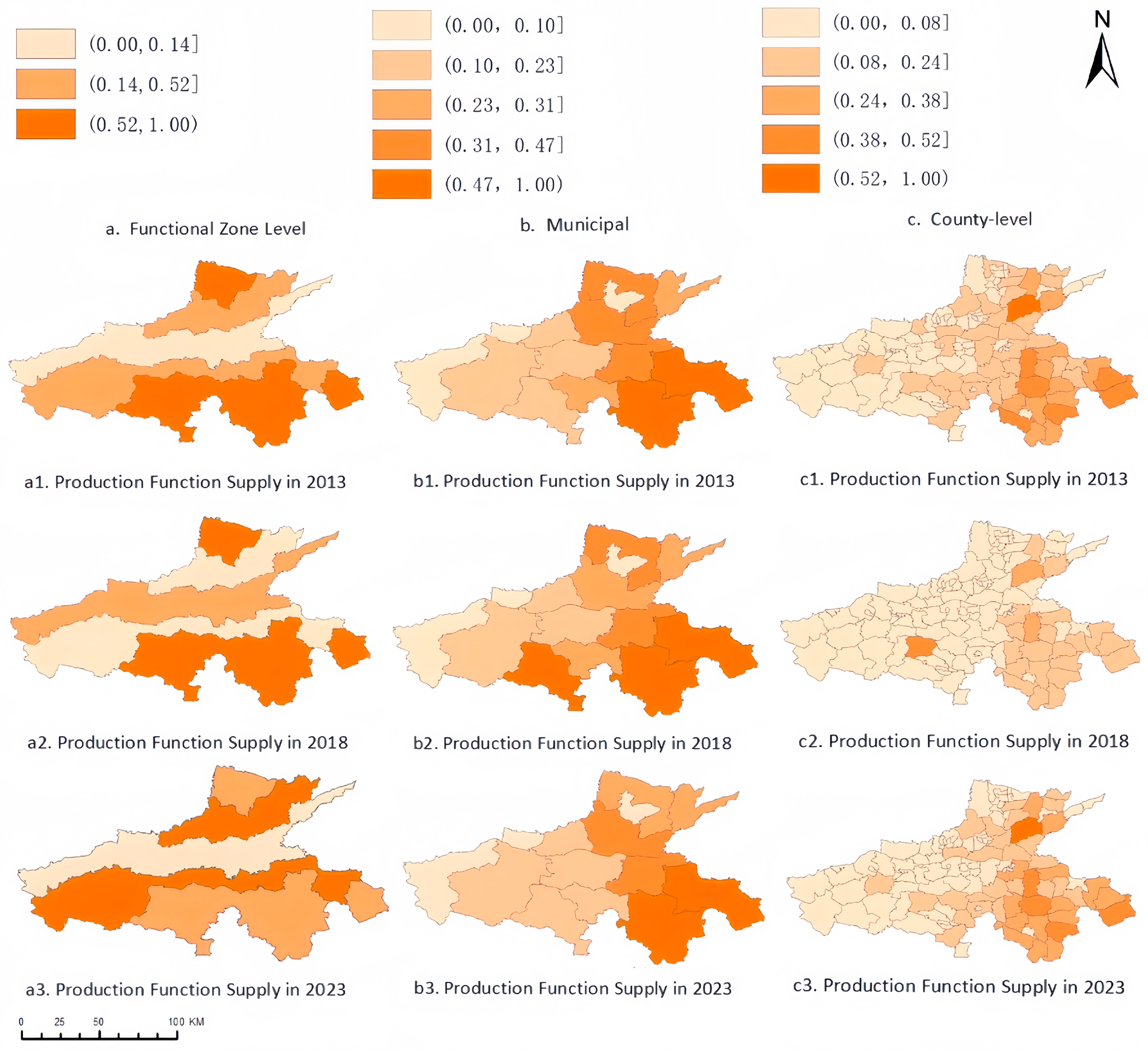
Based on the established methodology for assessing the multifunctional supply of cultivated land, this study measures the supply levels of production, ecological, social, and landscape functions at functional zoning, municipal, and county levels for the period 2013–2023. Utilising the ArcGIS 10.8 platform, we spatially represented the supply levels of production, ecological, social, and landscape functions within the Yellow River Basin of Henan Province from 2013 to 2023 at functional zoning, municipal, and county levels.
Figure 2 specifically illustrates the spatiotemporal evolution characteristics of the production function supply of cultivated land in the Yellow River Basin of Henan Province from 2013 to 2023.
At the functional zoning scale, high-value areas for cultivated land production capacity supply are distributed within the collaborative zone of the Yellow River Basin in Henan Province, while low-value supply zones are found in the expansion and core zones. Over time, high-level areas for cultivated land production capacity supply have progressively concentrated within the collaborative zone. At the municipal level, a pattern of higher in the east, lower in the west emerges. Municipalities with high cultivated land production function supply include Zhoukou and Shangqiu, while those with low supply include Hebi, Jiyuan, and Sanmenxia. At the county level, the spatial pattern of cultivated land production function supply remains largely stable, with higher production function supply indices in eastern regions and lower indices in western and northwestern areas.
At the functional zoning scale, the spatial distribution pattern of cultivated land ecological function provision exhibits a more pronounced core-centric, concentrically increasing configuration over time. Areas with enhanced ecological function provision are concentrated in the expansion zone. At the municipal level, Zhengzhou City exhibits the lowest values, with provision gradually increasing in a concentric pattern outward from the city centre. At the county level, a pattern of higher provision in the south and lower provision in the centre is evident. Specifically, ecological function provision levels across most areas show a declining trend.
At the functional zoning scale, the provision of social functions by cultivated land is high in coordination and expansion zones, while it is low in core zones. At the municipal level, a spatial distribution pattern emerges where provision is low in the west and high in the east. Only Hebi and Jiaozuo cities show a gradual increase in the supply of social functions of cultivated land, while other regions experience a decline in supply levels. At the county level, a spatial differentiation pattern emerges, characterised by higher levels in the south and lower levels in the north. Counties such as Fugou, Xihua, and Mengzhou exhibit an upward trend in the supply of social functions, whereas the remaining counties and districts show a decreasing trend.
At the functional zoning scale, the supply of cultivated land landscape functions is low in the central region and high in the southern region. The supply level in the expansion zone has declined, while it has steadily increased in the core and coordination zones. At the municipal scale, a spatial distribution pattern of gradual decrease from east to west is evident. Overall, a stable upward trend is evident, with Xinxiang and Anyang cities experiencing the most significant growth in supply levels. At the county level, spatial differentiation follows a pattern of ‘higher in the southeast, lower in the centre. Most regions show an upward trend, with Lingbao City, Lushan County, Yexian County, and Yuzhou City among those exhibiting substantial increases in landscape functional supply levels.
3.2. Spatial and Temporal Evolution Characteristics of Functional Requirements for Cultivated Land
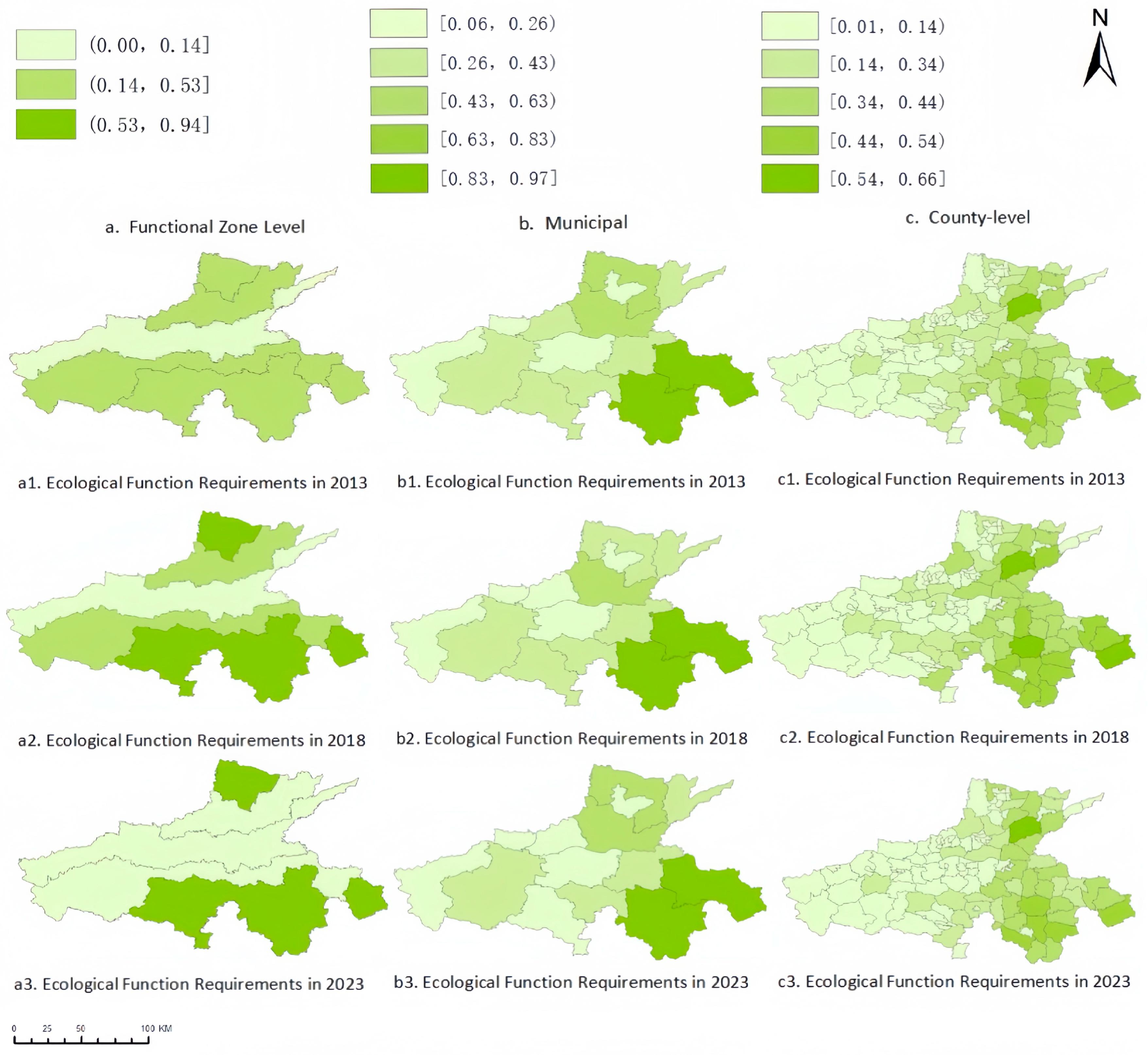
Based on the established methodology for assessing the multifunctional requirements of cultivated land, this study measures the demand levels for the productive, ecological, social, and landscape functions of cultivated land at the functional zoning, municipal, and county levels from 2013 to 2023. Utilising the ArcGIS 10.8 platform, the spatial representation of functional demand levels for production, ecology, society, and landscape across the Yellow River Basin in Henan Province from 2013 to 2023 was achieved at functional zoning, municipal, and district levels.
Figure 3 specifically illustrates the spatiotemporal evolution characteristics of ecological function demands for cultivated land in the Yellow River Basin of Henan Province from 2013 to 2023.
At the functional zoning level, the production function demand for cultivated land is high in the collaborative and core zones, indicating a relatively high level of production function requirement. Overall, it exhibits an upward trend, with increased demand concentrated in Zhengzhou, Luoyang, and most districts and counties of Xinxiang. At the municipal level, a pattern of high demand in the east and low demand in the west is discernible. High-demand zones are primarily concentrated in densely populated cities such as Xinxiang, Kaifeng, Zhoukou, and Shangqiu; Low-demand zones predominantly occur in areas with lower population density. At the county level, a pattern emerges where demand is higher in the east and north, and lower in the southwest. High-demand zones are concentrated in central urban areas such as Kaifeng and Zhengzhou, while low-demand zones include the northwestern mountainous and hilly regions. Most areas within the study region exhibit an increasing trend.
At the functional zoning scale, the spatial distribution pattern of ecological demand for cultivated land resembles that at the county level, though exhibiting greater spatial dispersion. This pattern features a central zone of low demand with gradually increasing demand towards the periphery. Compared to municipal and county scales, the number of areas experiencing increased demand has risen, with these regions concentrated in contiguous clusters across the western and northern zones. At the municipal level, ecological functional demand for cultivated land exhibits an inverse spatial distribution pattern relative to its supply capacity, manifesting as high in the southeast, low in the northwest. Zhoukou and Shangqiu rank as municipalities with high ecological functional demand, while Zhengzhou, Sanmenxia, Jiyuan, and Jiaozuo are characterised by low demand. Ecological function demand for cultivated land increased across most regions, with only Jiaozuo and Pingdingshan showing a declining trend. At the county level, a spatial distribution pattern emerged, characterised by higher demand in the central and eastern regions and lower demand in the west. Overall, an upward trend prevailed, with decreases observed only in Xinzheng City, Zhongmu County, Qinyang City, and other counties/districts, while all other counties/districts recorded increases.
At the functional zoning scale, the social demand for cultivated land generally exhibits a spatial distribution pattern similar to that at the municipal level. The core and expansion zones demonstrate high levels of social demand for cultivated land, while the coordination zone exhibits low levels. At the municipal level, a spatial distribution pattern of low in the north, high in the south is observed. Overall, an upward trend is evident. Only Pingdingshan and Xuchang exhibit gradually declining levels of social functional demand for cultivated land, while other regions show increases. At the county level, spatial differentiation follows a pattern of higher in the east and lower in the centre and west. Most areas demonstrate an upward trend. Jiaxian, Xin’an County, and Jiyuan City show declining levels of social functional demand, while the remaining counties and districts exhibit rising levels.
At the functional zoning scale, the demand for cultivated land landscape functions is high in core and expansion zones and lower in coordination zones, and exhibits an overall increasing trend, forming a semi-circular spatial distribution pattern. At the municipal scale, it displays a distribution pattern characterised by higher demand in the north and south, and lower demand in the east and west, reflecting a centralised agglomeration state. Across 14 cities in Henan’s Yellow River Basin, cultivated land landscape functional demands are declining. Jiaozuo City exhibits the smallest decrease, followed by Zhengzhou City, while Puyang City and Xuchang City show the most significant reductions. At the county level, a spatial distribution pattern of higher in the north, lower in the south emerges, with an overall increasing trend. The vast majority of regions experienced increased demand, spatially characterised by greater growth around Zhengzhou City and smaller increases to the south.
3.3. Comprehensive Assessment of Multifunctional Supply and Demand for Cultivated Land
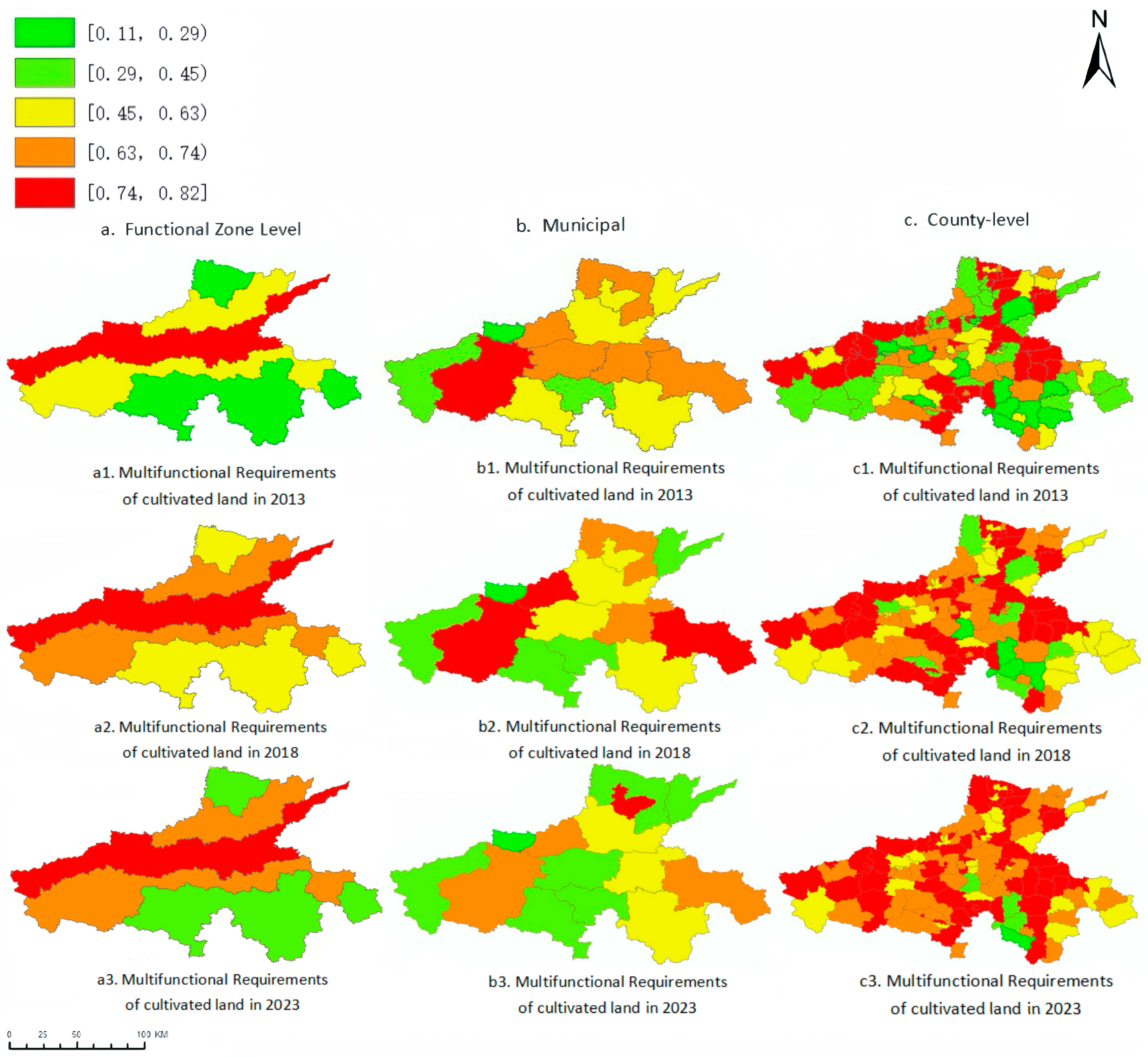
There exists a pronounced spatial negative correlation between the multifunctional supply and demand of cultivated land (
Figure 4 and
Figure 5). At the functional zoning scale, high-value areas for multifunctional supply are distributed within the collaborative and core zones, with a range of [0.35, 0.65], while the expansion zone is situated in a low-supply area, with a range of [0.16, 0.25]. High-value zones for multifunctional cultivated land requirements are distributed across the core and expansion areas, with values ranging between [0.63, 0.82]. Synergistic zones are situated within low-value requirement areas, with values falling within the range of [0.29, 0.45). At the municipal level, high-value areas for multifunctional supply are distributed in the southeast, such as Shangqiu City and Zhoukou City, while low-value supply areas are located in the northwest, including Sanmenxia City and Hebi City. High-value areas for multifunctional demand are concentrated in the central region, such as Luoyang City and Jiaozuo City, whereas low-value demand areas are situated in the west, including Jiyuan City, Pingdingshan City, and Xuchang City. At the county level, high-value areas for multifunctional cultivated land supply are situated in the eastern regions, including Ruzhou City, Taikang County, and Dancheng County, while low-value supply areas are in the southwest, such as Lushi County and Luanchuan County. High-value areas for multifunctional cultivated land demand exhibit a ring-shaped distribution, gradually expanding outward from the central region, with low-value demand areas found in Xinzheng City and Shangshui County.
The integrated multifunctional supply and demand of cultivated land is directly influenced by population density, environmental conditions, social factors, and landscape culture. The findings further demonstrate that the comprehensive ecosystem service supply and demand derived from the hierarchy theory does not simply aggregate the supply and demand of different types of multifunctional cultivated land. Instead, it accounts for the hierarchical nature of human demand for various cultivated land functions. Adopting a human-demand perspective renders the results of integrated multifunctional supply and demand more scientifically sound and effective.
3.4. Risk Assessment of Shortages in Multifunctional Supply and Demand for Cultivated Land
This study employs the corrected multifunctional supply–demand ratio for cultivated land (CSDR’) derived from a geographically weighted regression (GWR) model as the final outcome for assessing the risk of multifunctional supply–demand shortages in cultivated land [
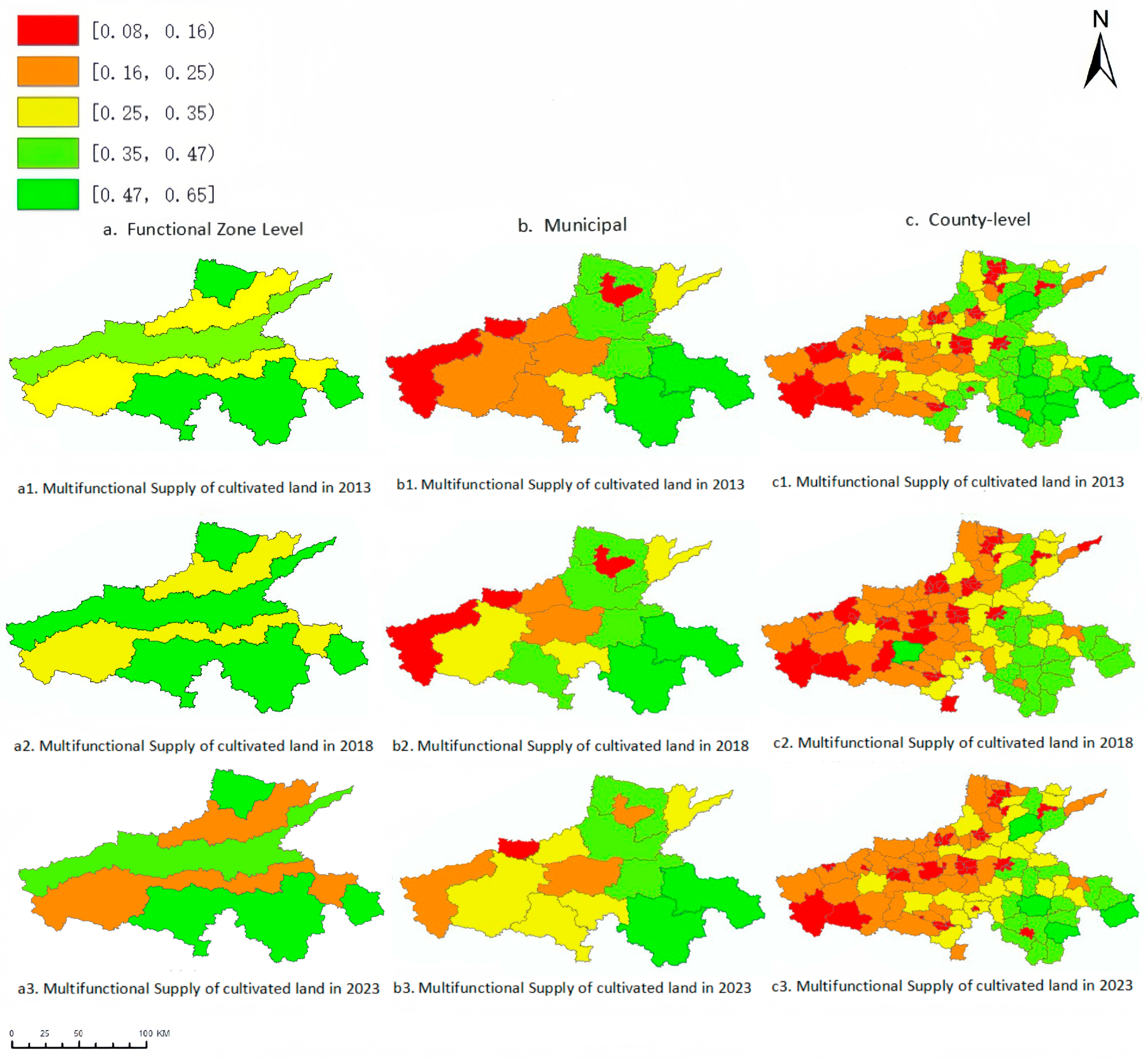
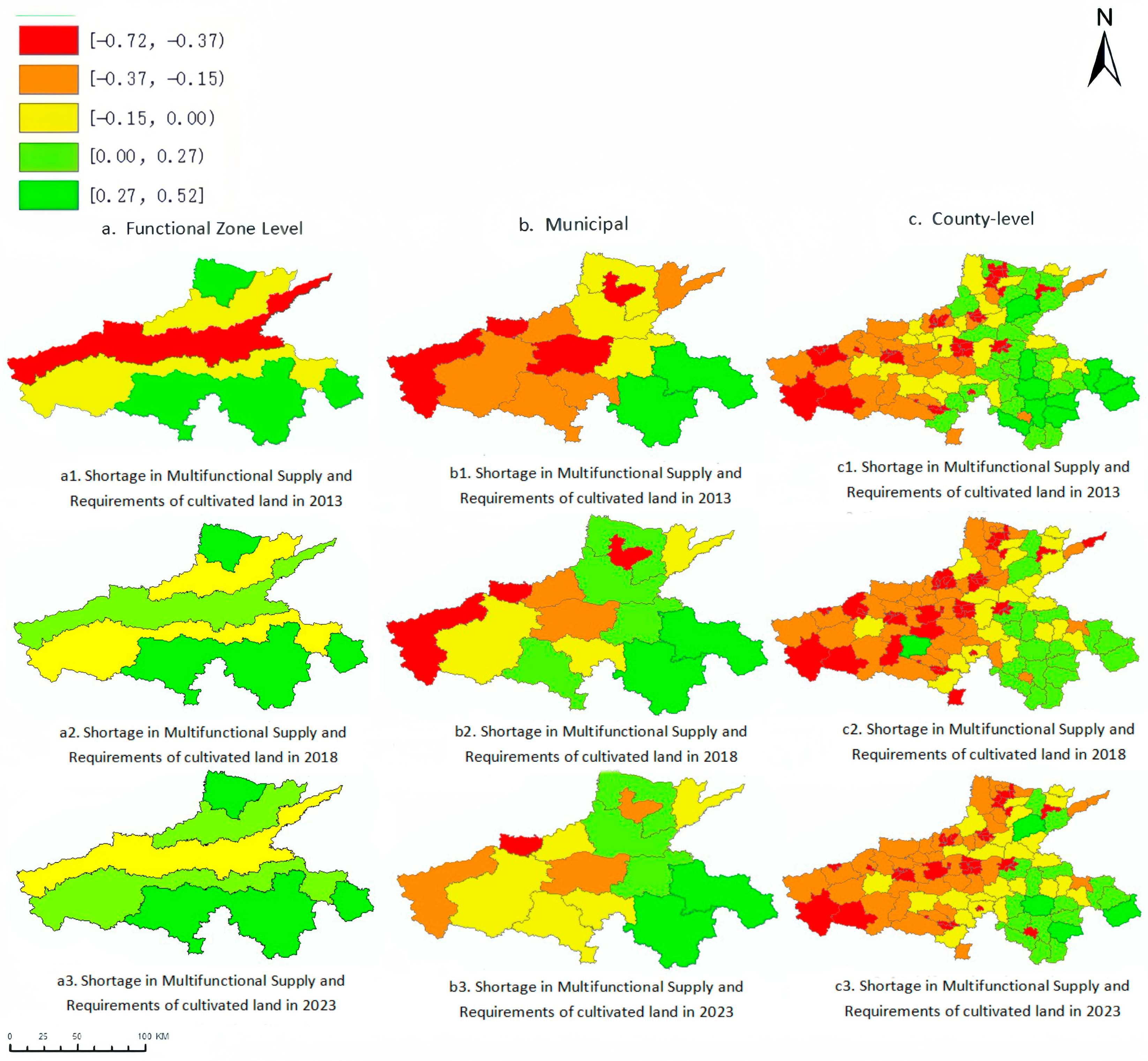
42]. It conducts a comprehensive evaluation of such risks across three spatial scales—functional zoning, municipal, and county levels—within the Yellow River Basin of Henan Province from 2013 to 2023. This assessment examined the risk of multifunctional supply–demand shortages at three spatial scales: functional zoning level, municipal level, and county/district level. The results for the risk of multifunctional supply–demand shortages in cultivated land at these three scales were obtained. These results were utilised as attribute data and imported into the attribute tables of ArcGIS administrative boundary layers at the functional zoning, municipal, and county/district levels for the Yellow River Basin in Henan Province. This enabled the generation of spatial distribution maps illustrating the multifunctional supply–demand deficit risk for cultivated land across these three scales from 2013 to 2023. The spatiotemporal distribution characteristics of multifunctional supply–demand deficiency risks for cultivated land in the Yellow River Basin of Henan Province at different scales are analysed, as shown in
Figure 6.
At the functional zoning scale, the distribution of multifunctional supply–demand deficit risks for cultivated land remained largely stable from 2013 to 2023, exhibiting an overall spatial pattern characterised by deficits in core and expansion zones, with surpluses in coordination zones. Supply–demand deficit risks within functional zones are primarily influenced by inherent water scarcity and uneven distribution, disparities in economic development levels and investment, competition, and trade-offs between functions, as well as policy orientation and implementation effectiveness. Against the backdrop of strengthened cultivated land protection policies in recent years, the comprehensive risk levels of multifunctional supply–demand deficits have gradually decreased in core and expansion zones, while coordination zones have steadily improved despite maintaining surplus conditions. The risk values for multifunctional supply–demand deficits in cultivated land ranged from −0.08 to 0.02 in core zones, 0.03 to 0.11 in expansion zones, and 0.08 to 0.16 in coordination zones. At the municipal level, the average status of multifunctional supply–demand deficit risks for cultivated land from 2013 to 2023 reveals a pattern of ‘surplus in the east, deficit in the west’. The majority of cities have seen improvements in their scarcity risk levels, with supply and demand steadily increasing. The cities experiencing high scarcity risk have decreased from Sanmenxia, Jiyuan, Hebi, and Zhengzhou to only Jiyuan. This persistent state of supply–demand scarcity risk stems from the city’s poor natural endowment of cultivated land resources, fragmentation issues, low levels of multifunctional supply, and the resulting inability to adequately meet human demands. At the county level, the spatial distribution of multifunctional cultivated land supply–demand deficit risk zones from 2013 to 2023 exhibits patterns similar to those observed at the municipal level. These risk zones are more concentrated in counties west of Zhengzhou City. Only a small number of counties, including Linzhou City, Liangyuan District, Chuanhui District, and Weihui City, experienced an increase in the level of supply–demand deficit risk. Due to optimised land use, improved policy frameworks, and stringent oversight, the overall number of counties classified as having high levels of supply–demand deficit risk has decreased.
4. Discussion
The multi-scale risk assessment framework constructed herein contrasts with and complements the prevailing single administrative unit evaluation paradigm. At the functional zoning scale, this study assessed the multifunctionality of cultivated land within the Yellow River Basin of Henan Province through a four-dimensional functional system encompassing production, ecology, society, and landscape. Based on county-level units, it revealed spatiotemporal differentiation characteristics, providing crucial evidence for macro-level management at the functional zoning scale. At the municipal scale, the integration of multi-source data enables a detailed characterisation of the spatial heterogeneity in the matching of cultivated land functional supply and demand, revealing more complex spatial details at this level. The research framework and core findings presented herein hold significant reference value for agricultural regions sharing similarities with the Yellow River Basin in Henan Province in terms of natural geographical conditions, stages of economic development,6 and land use characteristics. In rapidly urbanising regions such as the Chengdu–Chongqing Metropolitan Area, the Yangtze River Delta, and the Guangdong–Hong Kong–Macao Greater Bay Area, this study’s multi-scale assessment methodology aids in balancing urban expansion with arable land conservation. It facilitates the identification and protection of high-value multifunctional agricultural spaces within metropolitan zones. In hilly and mountainous areas experiencing fragmented cultivated land, the analysis of supply and demand for various agricultural functions can guide the exploration of locally appropriate, efficient agricultural practices and ecological conservation pathways, thereby avoiding the simplistic replication of plainland models.
However, the study still has room for improvement. The multifunctional supply and demand risks of cultivated land arise from the combined effects of multiple natural and human factors. This study adopts an internal approach to the multifunctional system of cultivated land, selecting the supply–demand scarcity risks associated with multifunctional cultivated land to map and analyse the supply–demand risks of multifunctional cultivated land within the Yellow River Basin of Henan Province. The selected indicators reflect the final state resulting from the influence of external factors, both natural and human-induced. The study has not delved into the driving mechanisms by which external natural and human factors within the cultivated land system influence the risks associated with the supply and demand of its multifunctional capabilities. Future research may further explore the driving mechanisms of these external factors on such risks. Future research will further explore the driving mechanisms of external factors influencing the risks associated with the multifunctional supply and demand of cultivated land, particularly in terms of potential trade-offs or synergies arising from natural and anthropogenic drivers across different land use functions.
This study employs quantitative modelling and spatial analysis to elucidate the spatiotemporal evolution and risk patterns of multifunctional supply–demand relationships for cultivated land within the Yellow River Basin of Henan Province. While quantitative methods effectively delineate spatial patterns and identify trends, it must be acknowledged that land use and functional transformations in the study area are profoundly influenced by a complex array of institutional, regulatory, and policy factors—elements that current research methodologies fail to adequately capture. Consequently, future research should build upon quantitative analysis by deeply integrating qualitative methodologies such as policy text analysis and field interviews. This approach would systematically examine the land management policy framework from the central to local levels and its implementation outcomes. Such an integrated approach would more comprehensively reveal the intrinsic drivers of multifunctional evolution in farmland, thereby enabling the formulation of more targeted and actionable strategies for sustainable cultivated land management.