Article

Multi-Dimensional Benefit Evaluation of Urban Spaces Driven by Consumer Preferences

by
Xin Zhang
1,
Yi Yu
1,* and
Lei Cao
2,*
1
School of Architecture & Art Design, Hebei University of Technology, Tianjin 300132, China
2
School of Architecture, Tianjin University, Tianjin 300072, China
*
Authors to whom correspondence should be addressed.
Land 2025, 14(12), 2322; https://doi.org/10.3390/land14122322
Submission received: 4 October 2025 / Revised: 28 October 2025 / Accepted: 30 October 2025 / Published: 26 November 2025

Abstract

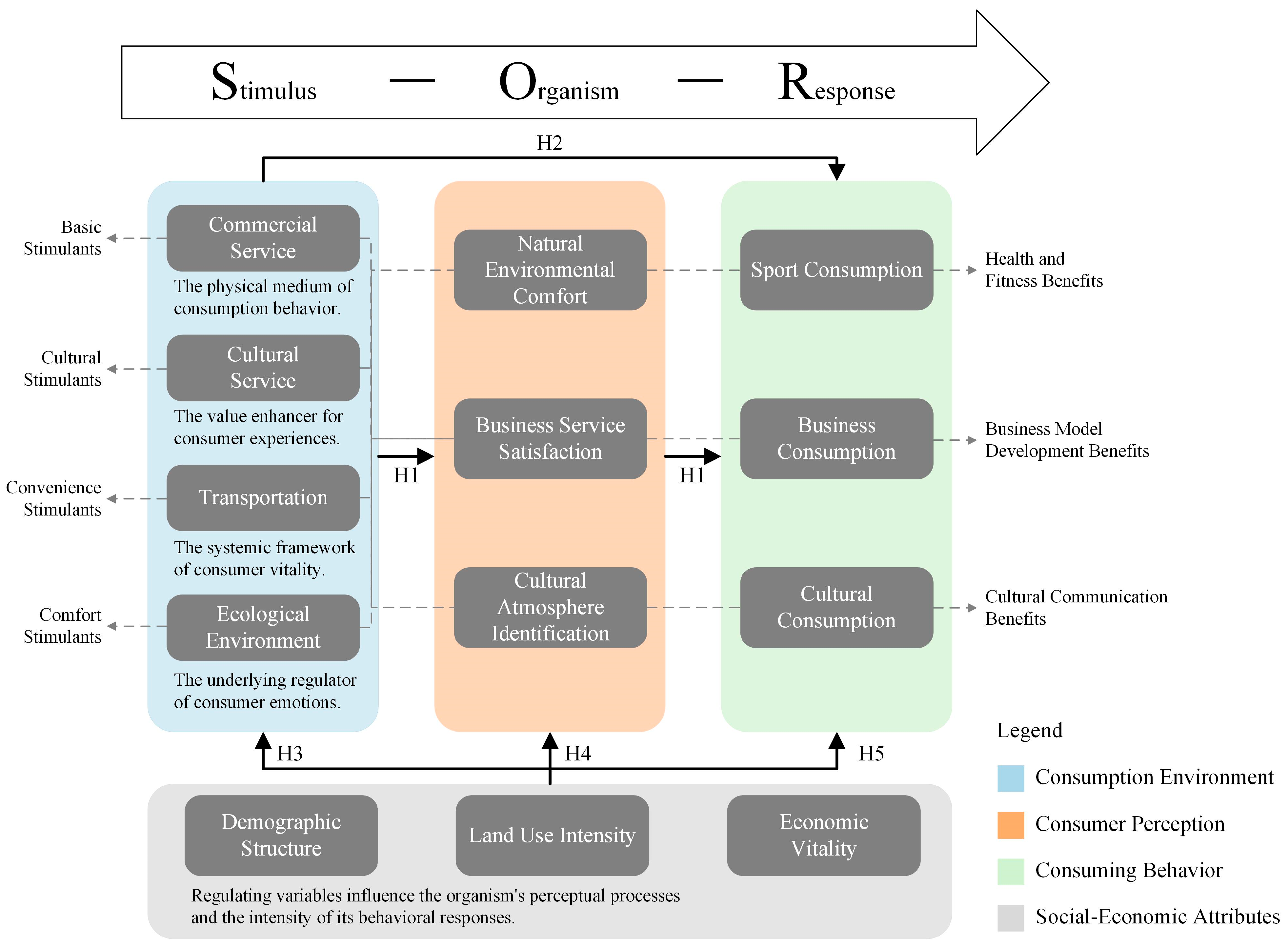
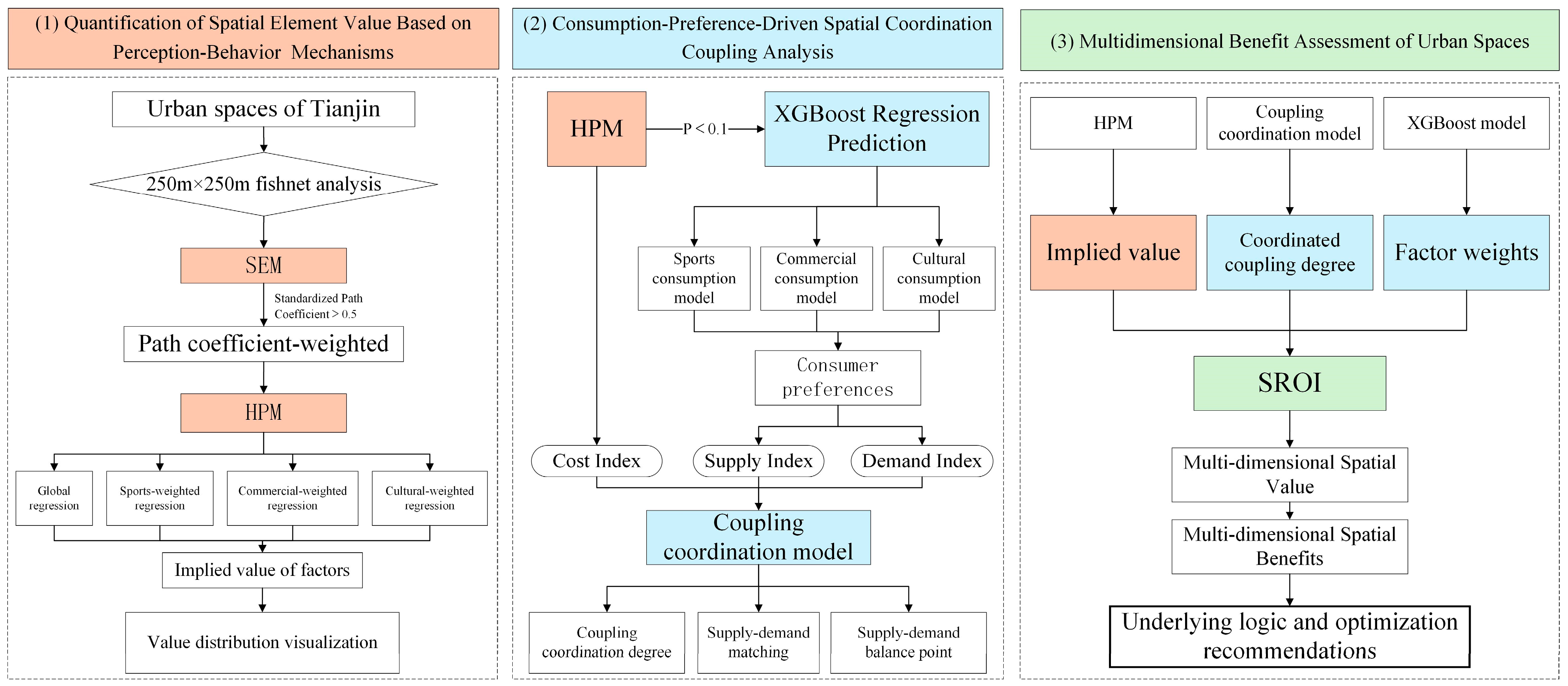
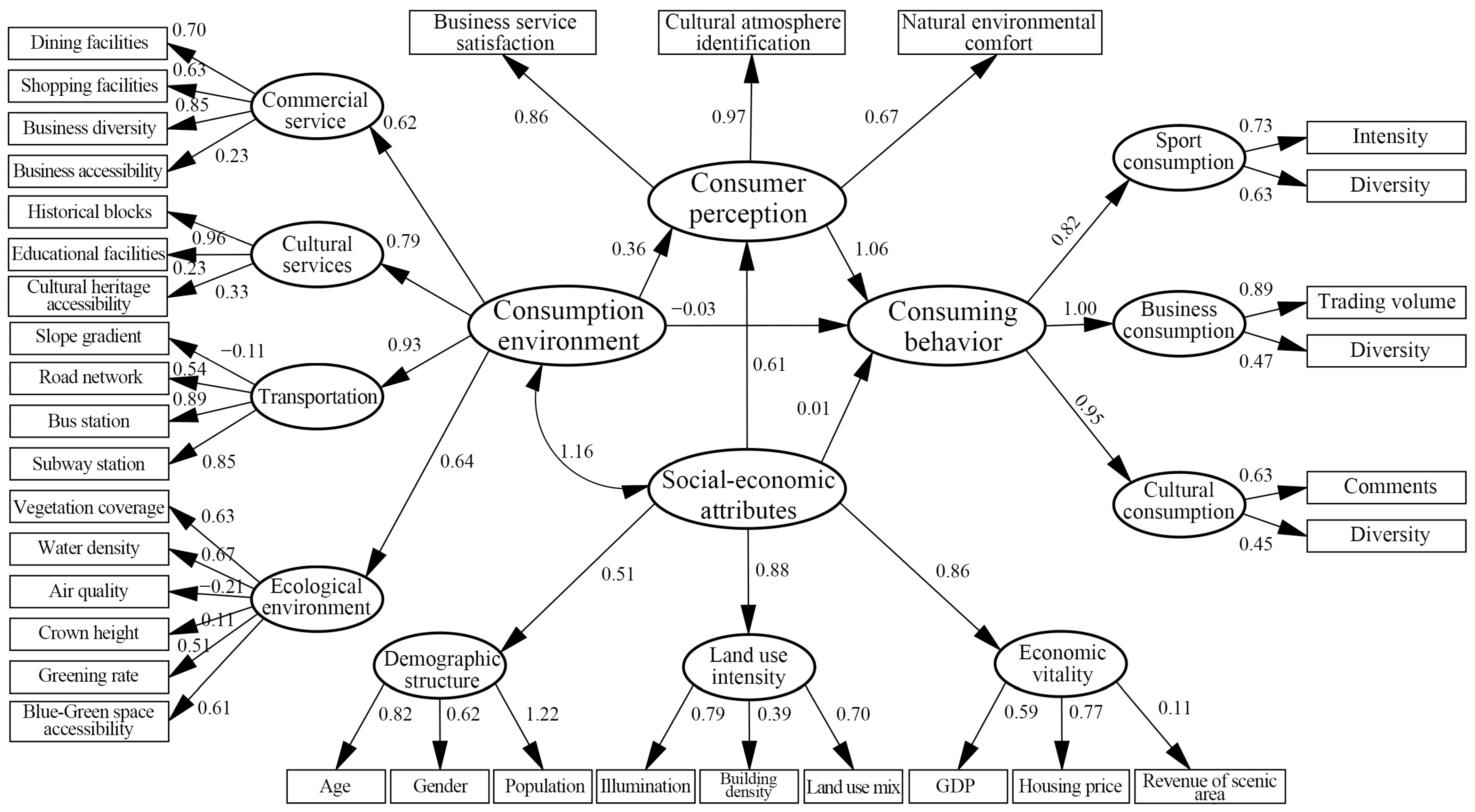
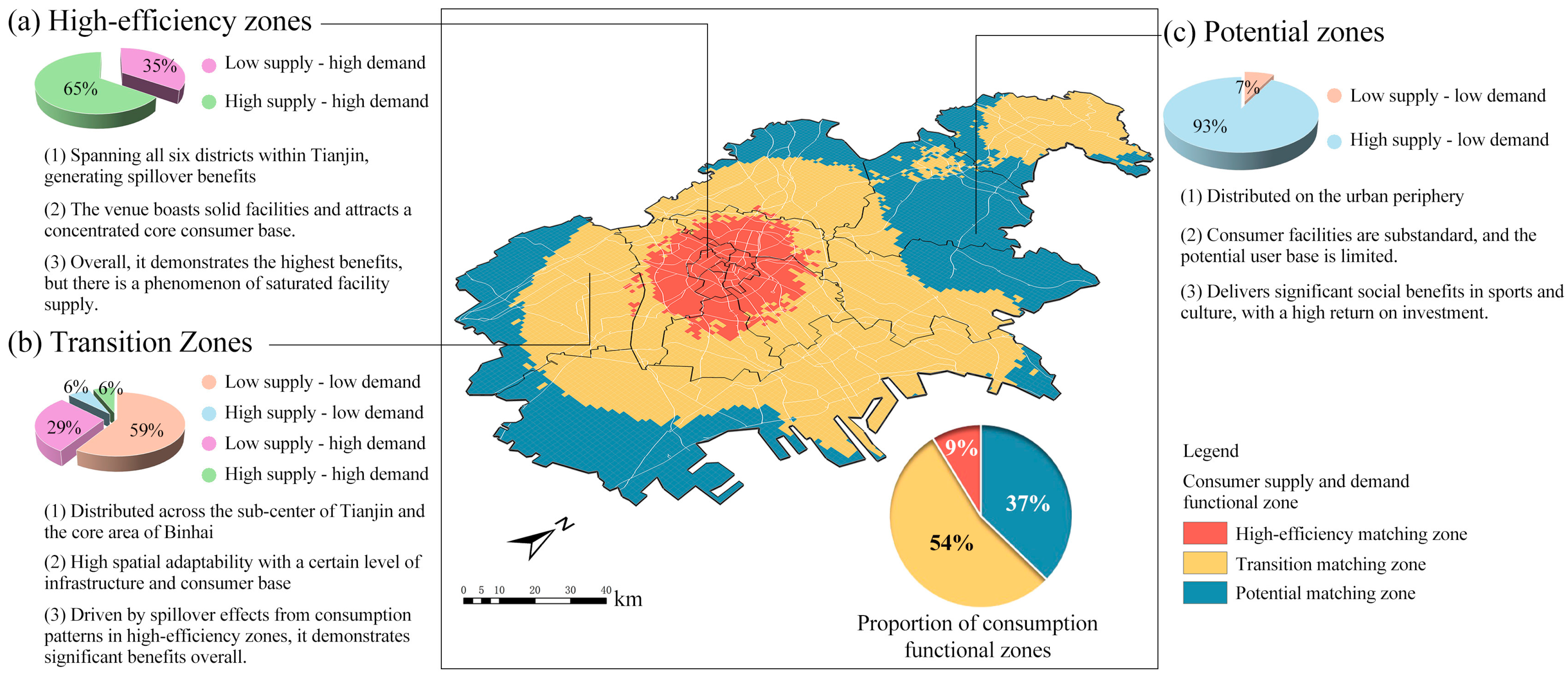
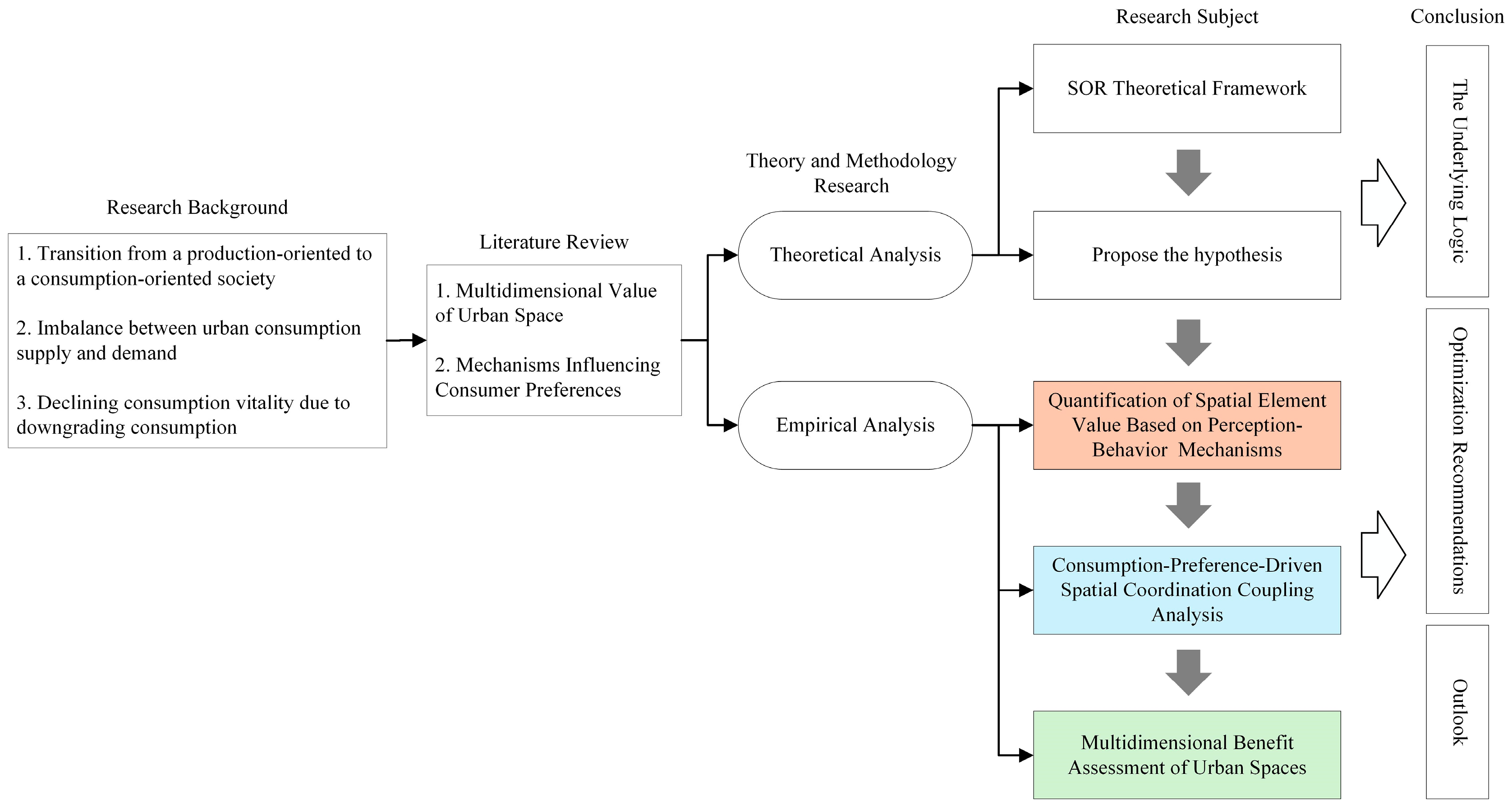
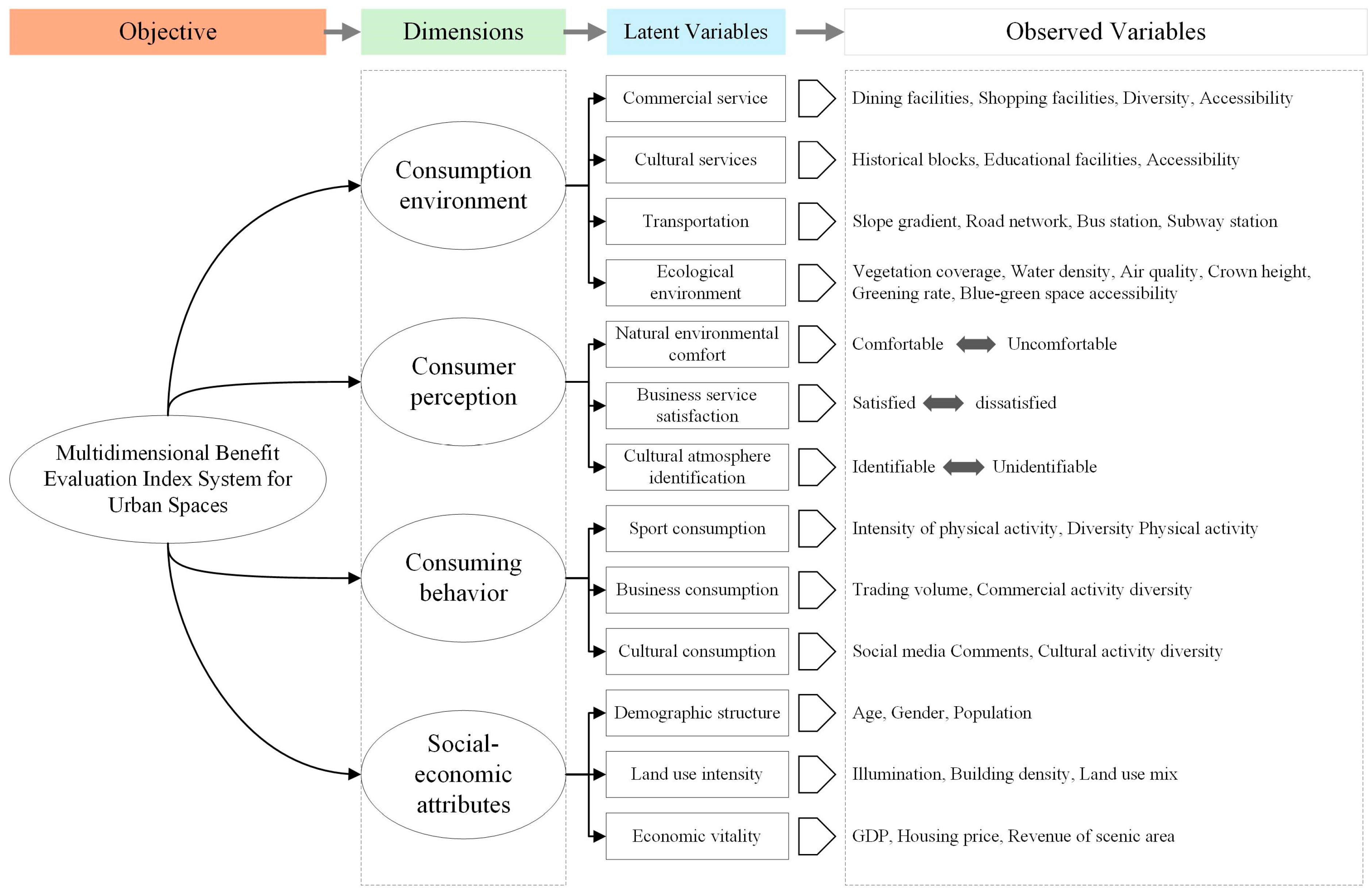
Against the backdrop of efforts to improve the quality of urban spatial stock, assessments of spatial benefits driven by consumption preferences integrate subjective decision-making and objective environmental factors to provide quantitative evidence for urban planning and public investment. This study constructed a “environment-perception–behavior” analytical framework grounded in SOR (stimulus–organism–response) theory. We combined structural equation modeling with the hedonic pricing method to identify causal pathways and quantify the marginal value of spatial elements. XGBoost was employed to uncover consumption-preference thresholds, Coupling Coordination Degree (CCD) was used to identify spatial supply–demand relationships, and Social Return on Investment (SROI) was applied to evaluate multidimensional urban spatial benefits. The results showed that transportation accessibility, commercial diversity, green-space quality, and cultural ambiance significantly shaped distinct consumption preferences. Central urban areas approached supply saturation in commercial and daily consumption and exhibited diminishing marginal returns, whereas peripheral zones demonstrated greater potential for sports and cultural consumption. Based on these findings, we reveal the underlying logic of spatial benefit distribution and classify the study area into High-efficiency matching zones, transition matching zones, and potential zones. We further propose targeted optimization recommendations that can inform policy on urban spatial functional positioning and social investment and provide evaluation criteria for prioritizing interventions.
Keywords: consumption preferences; spatial multidimensional benefit assessment; spatial value quantification; urban space consumption preferences; spatial multidimensional benefit assessment; spatial value quantification; urban space