Article

Impact of National Rural Land Administration Information System on Land Government Revenue: Evidence from Oromia Region of Ethiopia


by
Guta Lachore Chake
1,*,
Eyasu Elias
2,3 and
Tsegaye Mulugeta Habtewold
1
1
Department of Technology and Innovation Management, Adama Science and Technology University, Adama P.O. Box 1888, Ethiopia
2
Center for Environmental Science, College of Natural and Computational Sciences, Addis Ababa University, Addis Ababa P.O. Box 1176, Ethiopia
3
Ministry of Agriculture of FDRE, Addis Ababa P.O. Box 1176, Ethiopia
*
Author to whom correspondence should be addressed.
Land 2025, 14(11), 2258; https://doi.org/10.3390/land14112258
Submission received: 3 July 2025 / Revised: 18 August 2025 / Accepted: 20 August 2025 / Published: 14 November 2025

Abstract

The Oromia region has recently embarked on a big digitalization program for rural land governance in the country called the National Rural Land Administration information system (NRLAIS), aiming for effective management of land ownership and control over natural resources in the region. The primary objective of this study is to assess the impact of the National Rural Land Administration Information System (NRLAIS) on rural land-related government revenue in the Oromia region of Ethiopia. Mixed research approaches were employed. The analysis compared revenue trends in weredas (districts) where the NRLAIS was implemented against those without the system, using both descriptive statistics and linear regressions analysis. Findings indicate that the NRLAIS had a significant positive effect on land government revenue. While both groups experienced revenue growth over time, the NRLAIS group exhibited a substantially greater increase in mean revenue following the implementation of the NRLAIS. The analysis confirmed that NRLAIS implementation was a strong predictor of higher revenue, even when accounting for baseline differences. Notably, the NRLAIS group had experienced lower revenue prior to implementation, but this trend was reversed post-NRLAIS, suggesting that NRLAIS played a key role in improving land government revenue. The non-NRLAIS group showed only modest gains with no significant changes related to the NRLAIS period. These findings underscore the NRLAIS’s effectiveness in enhancing land revenue collection and addressing previous administrative inefficiencies. Overall, the NRLAIS contributed to more consistent and improved revenue outcomes in the regions where it was adopted.

1. Introduction

Land is an essential resource for life, acting simultaneously as wealth, a commodity, a scarce asset, and a community resource [1]. According to the Food and Agriculture Organization (FAO) [2], land management refers to the decision-making process concerning the distribution, utilization, and protection of land and its resources. While the integration of technology in land management is well-established in many developed countries where digital systems are routinely used, developing countries have only recently begun transitioning from traditional, paper-based methods [3].
The use of technology in land management is not something new; many developed nations have implemented digitized land management systems for quite some time now [4]. Conversely, in some developing countries, this can be seen as relatively novel, as land management practices in these regions have largely relied on manual and paper-based methods [5]. The incorporation of intelligent technologies into land management services and processes emphasizes the principle of smart land management [6].
The Federal Democratic Republic of Ethiopia’s land legislation gives significant powers to its regional states [7,8]. Each of the twelve regional states is responsible for the implementation of the land administration services within its region on the basis of the national laws and regional regulations [8]. This situation has resulted in different regions implementing land administration systems in slightly different ways, and some regions have become more advanced than others in terms of numbers of parcels registered and the level of service being provided [8,9].
Land certifications in Ethiopia have phases: the First Level Land Certification Program (FLLC) and the Second Level Land Certification Program (SLLC) [10,11]. The FLLC saw over 5.5 million certificates delivered to landholders between 1998 and 2007 [12], as cited in [13]. Scholars have characterized this initial program as rapid, cost-effective, and participatory, successfully achieving its objectives to some extent within the available resources and capacity through a fit-for-purpose approach. While the FLLC has demonstrated positive impacts on tenure security and dispute settlement [13], it lacked critical spatial information. Notably, the FLLC does not incorporate geographical coordinates, altitude, and cadastral maps or sketches attached to the certificate for any of the plots [14].
Determining the precise size of each parcel of land is challenging without spatial data and cadastral maps. This difficulty hampers the effective and efficient collection of rural land taxes by the government. In response to this issue and other related factors, the Ethiopian government has developed a Second Level Land Certification (SLLC) [14]. The Rural Land Administration and Use Directorate (RLAUD) of the Ministry of Agriculture (MOA) [15], which is responsible for managing and administering the rural land, commissioned the development of a Rural Land Administration Information System (NRLAIS) [16,17]. The NRLAIS is a key strategic development within the land administration sector in Ethiopia and provides the required functionalities to manage the land administration datasets and administration services of the rural land [16,17]. It is also the key element of the national ICT strategy for the standardization and harmonization of the rural land administration [17].
The National Rural Land Administration Information System (NRLAIS) was designed to enhance transparency, streamline registration, minimize disputes, and improve revenue generation from rural land-related taxes and fees [16,18]. Oromia, Ethiopia’s largest regional state, serves as a focal point for examining the effectiveness of this system, given its extensive agricultural landscape and significant land-use intensity [15].
Despite its potential, the real impact of the NRLAIS on rural land government revenue remains a subject of debate [15]. While digitalization is expected to improve tax collection efficiency, reduce corruption, and facilitate easier land transactions, challenges related to system adoption, data accuracy, accessibility, and administrative capacity persist [15]. This study seeks to assess the extent to which the NRLAIS has contributed to rural land revenue growth in Ethiopia and to identify key factors influencing its success or limitations.

1.1. Problem Statement

The First Level Land Certificate (FLLC), which lacks geo-referencing, has faced significant limitations [19,20]. These include the absence of geospatial data for registered parcels, the lack of unique parcel identifiers, and reliance on a paper-based land register that offers no efficient mechanism for updating or maintaining records after land transactions [19,20,21]. Although the FLLC employed a systematic registration process, a considerable portion of land remained unregistered due to landholders’ concerns over possible expropriation, higher land taxes, and other perceived social or economic risks [19,20].
Despite the potential of digital land administration systems to improve efficiency, empirical evidence on the effectiveness of the National Rural Land Administration Information System (NRLAIS) in enhancing government revenue remains limited [15,22,23]. Digitalization systems like the NRLAIS can streamline land-related administrative processes, reduce bureaucratic corruption, and improve land tax assessment and collection mechanisms [15,23]. However, despite these theoretical benefits, the extent to which NRLAIS implementation translates into measurable government revenue has not been systematically investigated. This lack of empirical validation raises critical questions about the system’s effectiveness, implementation, and its broader implications for sustainable public finance and land governance.
A few notable exceptions in the literature that discuss the NRLAIS in their studies include the works of some authors [16,17] who tried to examine issues related to the NRLAIS and its implementation in Ethiopia. However, none of these studies have evaluated the impact of the NRLAIS on land government revenue in the country. For instance, the former study tries to explore the factors that influence the acceptance and actual use of the NRLAIS in the country, while the second study analyzes and introduces the development status of the NRLAIS implementation in Ethiopia, and examines the requirements of the NRLAIS conceptual data model in relation to the Land Administration Domain Model (LADM) standards and its contents in the country [17]. The last study assesses the contribution of the existing rural land legislation to the establishment of the land rights, restrictions, and responsibilities (RRR) in the Amhara region, Ethiopia, and suggests solutions for the identified gaps in the area under study [16].
However, despite these theoretical benefits, the extent to which NRLAIS implementation translates into measurable government revenue has not been systematically investigated. This lack of empirical validation raises critical questions about the system’s effectiveness, implementation, and broader implications for sustainable public finance and land governance.
This study seeks to examine the impact of the NRLAIS on land revenue in Oromia by addressing key questions such as:
  • Has the implementation of the NRLAIS led to measurable improvements in land government revenue in Oromia?
  • What lessons can be drawn from Oromia’s experience to inform the broader adoption of the NRLAIS across Ethiopia?

1.2. Objectives of the Study

The primary objective of this study is to assess the impact of the NRLAIS on land government revenue in Oromia. Specifically, the study aims are as follows:
  • To assess the extent to which the implementation of the NRLAIS technology has influenced the collection of rural land government revenue in the Oromia region, Ethiopia.
  • Evaluate revenue trends before and after NRLAIS implementation to determine whether digitalization has increased government revenue.

2. Literature Review

This chapter presents a comprehensive review of the existing literature relevant to the impact of the National Rural Land Administration Information System on rural land government revenue. It contains a theoretical overview, exploring key concepts and frameworks that underpin the objective of the study.

2.1. Theory of Rural Land Taxation

The theory of rural land taxation is founded on the recognition of land as a legitimate economic resource, the intrinsic connection between land ownership and tax obligations, and the need for local governments to align revenue generation with expenditure requirements, often through progressive taxation mechanisms [24,25]. Local land taxes are essential instruments enabling governments to finance critical public goods and services effectively [25].
Classical economists, including Ricardo [26], emphasized the fixed supply and immobility of land as fundamental reasons for its suitability as a stable tax base. Unlike other taxable assets, landowners cannot avoid taxation by relocating their property [25]. Additionally, increases in land value, frequently driven by external factors such as population growth, urbanization, and public infrastructure development, typically occur independently of the landowner’s efforts [27]. These value increments, known as the unearned increment, are widely considered appropriate and equitable targets for taxation.
Taxation principles emphasize both efficiency and equity [28]. The ability-to-pay principle suggests that taxpayers should contribute to government revenue proportionally to their financial capacity, thereby promoting fairness in tax burden distribution [24]. From a microeconomic perspective, economic rent refers to any payment exceeding the minimum necessary to keep a factor in production [29]. Given its fixed and scarce nature, land generates such surplus earnings, making it an ideal candidate for taxation [25]. Importantly, taxing land does not distort economic behavior, since it does not affect the minimum payments required to maintain land in productive use [30].
Land value taxation discourages land hoarding and speculative behavior while encouraging productive use of land, which fosters economic development and reduces inequality, as demonstrated in urban and agricultural economic research [28]. Beyond revenue generation, land taxation has the potential to promote efficient land use and advance social equity [31]. Despite ongoing implementation challenges, this theoretical framework supports land taxation as a strategic tool for public finance and sustainable development [31]. In this context, land registration systems such as Ethiopia’s Second Level Land Certification initiative implemented through the National Rural Land Administration Information System (NRLAIS) can enhance the transparency and effectiveness of rural land taxation [19].

2.2. Empirical Review

The concept of digital land governance posits that embedding digital technologies within land administration systems can substantially improve transparency, effectiveness, and accountability in land resource management [32]. Such digitalization streamlines land service processes, reduces operational barriers, and elevates the quality of services provided to stakeholders [33].
Land records were created to simplify taxation by maintaining comprehensive registries that detail land size, usage, and location, thereby enabling governments to assess land value and efficiently contact registered landowners for tax purposes [34]. According to UNECE’s [35] land administration guidelines, effective land records are fundamental to tax collection, as they help identify landowners and provide critical insights into land market performance.
Land revenue generation involves assessing property values, collecting property taxes, and analyzing land and property markets [36]. This process underscores the economic significance of land and property, balancing the costs and benefits of improving land administration systems while evaluating the potential to offset operating expenses through effective land information systems [37]. Land information systems are pivotal for efficient land administration and revenue generation, offering benefits such as ownership security, facilitation of taxation, credit provision, and monitoring of land market activities [38]. The NRLAIS technology in Ethiopia has considerable potential to increase rural land government revenue by enhancing the efficiency, accuracy, and transparency of land revenue collection [16].

2.3. Conceptual Framework

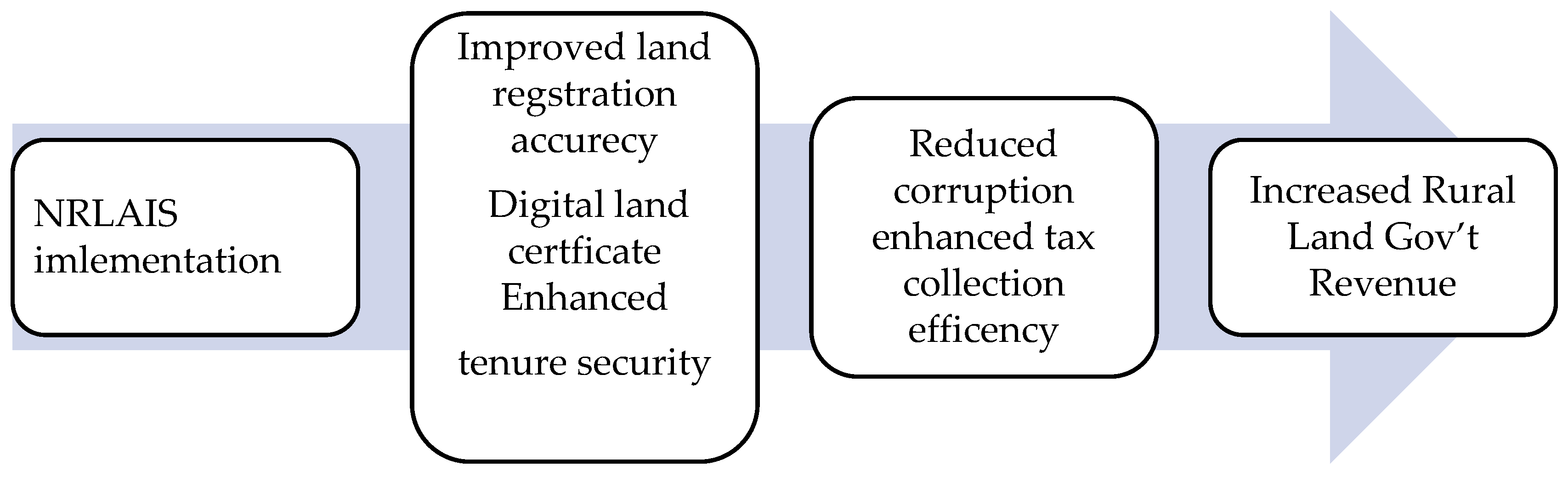
The NRLAIS has improved land registration accuracy, enhanced tax collection efficiency, and reduced corruption, ultimately leading to increased government revenue from rural land (Figure 1).

3. Research Methodology

This chapter outlines the research methodology employed in this study. It contains the study area, research design, data collection methods, and data analysis techniques that guided the investigation of the impact of the National Rural Land Administration Information System on rural land government revenue.

3.1. Study Area

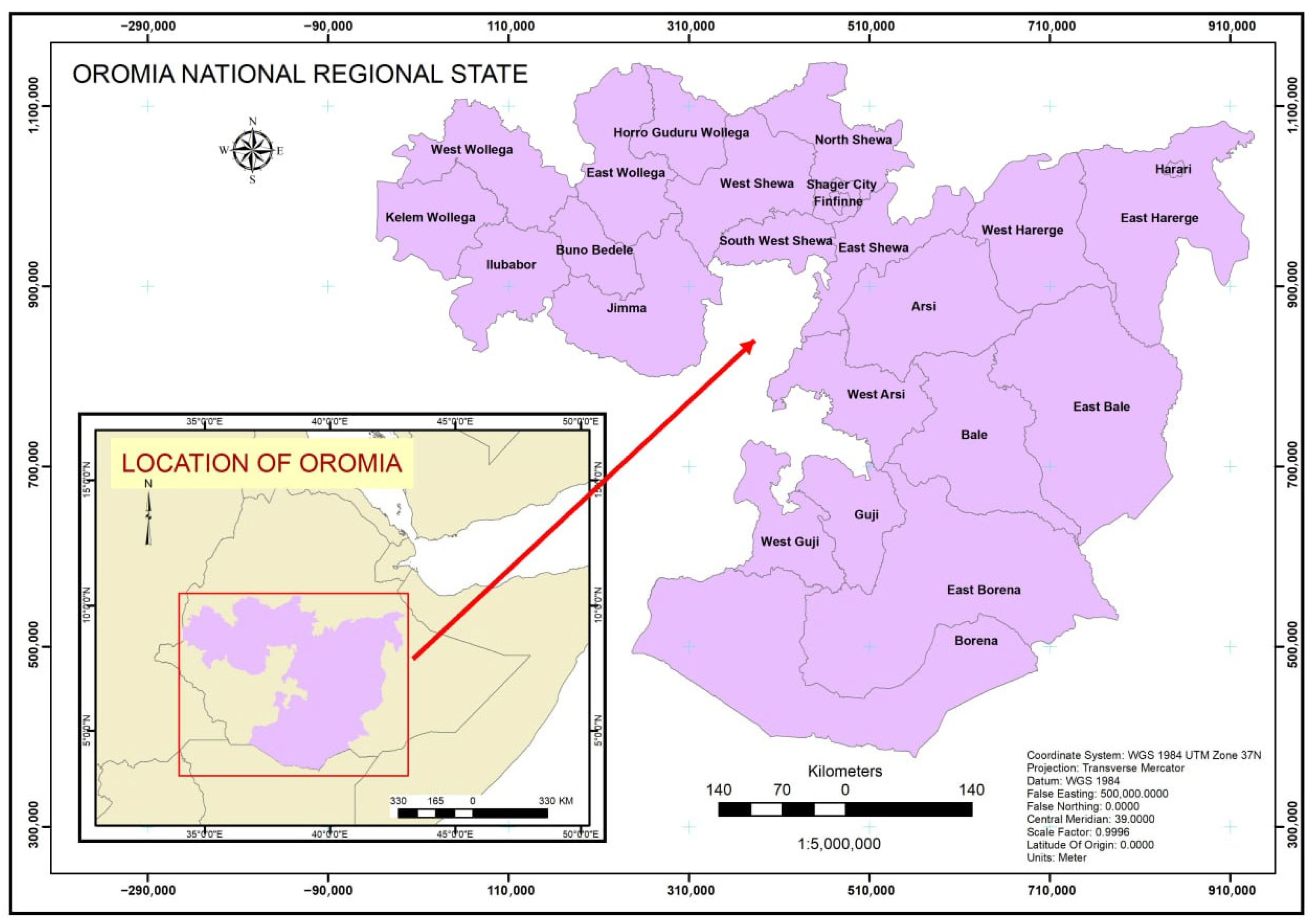
The study area (spatial scope) of this study is limited to Oromia Regional State, Ethiopia (Figure 2). Ethiopia is a country located in Eastern Africa that is bordered by Djibouti, Eritrea, Kenya, Somalia, South Sudan, and Sudan [39,40]. The geography of Ethiopia consists of high plateaus, with the central mountain range divided by the Great Rift Valley [41]. Ethiopia, with a population of 130 million, is the second most populous country in Africa and the twelfth most populous one in the world, with a growth rate of 2.6% in 2024 [42].
Oromia Regional State is one of twelve regional states and it is the largest region in the country in terms of spatial boundary (353,690 square kilometers wide, which is about 32% of the total area of the country) and also in population size, which is about 40% of the total population of the country [43].

3.2. Philosophical Assumptions of the Research

Scientific research is based on certain core philosophical principles concerning what comprises sound research and which research design is suitable for the development of novel knowledge in a systematic query [44,45]. The assumptions consist of an orientation toward the nature of reality, how the researcher knows what she or he knows, and the methods used in the process of knowing methodology [44,46]. The post-positivism worldview, which is based on a quantitative research approach, was adopted in this study [46].

3.3. Research Approach

There are three research approaches: quantitative research approach, qualitative research approach, and mixed methods research approach [47]. A qualitative approach is an approach to investigate a problem that needs a detailed analysis and comprehension of social phenomena [48]. In contrast, a quantitative approach is a structured way of collecting data [49]. A mixed approach is a procedure for collecting and analyzing both quantitative and qualitative data to provide more complete understanding of the research problem [49]. The researcher has employed a mixed approach.

3.4. Sampling and Sample Size

For this research, the researcher has used stratified sampling techniques to select the representative sample [50]. In sampling, two groups were considered: NRLAIS and non-NRLAIS groups. Each unit of the groups was sampled using random sampling methods. In this study, to determine sample size, different factors have been taken into consideration. These include research cost, time, and human resources [51,52]. We selected a total of 114 sample areas or districts from the overall pool of 294 districts, which includes 172 districts implementing the NRLAIS, 45 non-NRLAIS districts, and 77 pastoralist districts. To refine our sample, we excluded the 77 pastoralist districts and 48 districts that had not completed the implementation of the NRLAIS. Consequently, our focus was on 124 NRLAIS districts that had completed implementation and 45 non-NRLAIS districts. We then randomly selected 29 non-NRLAIS districts and 85 NRLAIS districts to include in the study.
The sample size was determined by using the scientific formula derived by [52]. The formula used for sample size determination is as follows,
n = z α / 2 2 p 1 p ε 2 = 1.96 2 × 0.5 × 0.5 0.092 2 = 0.9604 0.0084 = 114
where n —sample size,   z is Z score corresponding to desired confidence level, p —estimated proportion of the population and ε —margin of error ( ε = 0.092) [53]. Using proportional allocation of the total weredas of the groups to the total weredas, 85 NRLAIS and 29 non-NRLAIS weredas/districts are sampled and considered in the study.

3.5. Types and Source of Data

To support the study’s objective, two types of secondary data were collected: district-level rural land revenue data were collected from a sample of 114 (85 NRLAIS and 29 non-NRLAIS) weredas/districts revenue authority, and the Oromia Revenue Authority provided regional aggregate rural land revenue data before and after NRLAIS implementation.

3.6. Methods of Data Analysis

The data analysis comprised analyzing responses in any type of communication [54]. After the completion of data collection, the data were encoded, entered, cleaned, and analyzed by using Statistical Package for Social Science (SPSS) version 27 software. The main techniques used to analyze the data were descriptive and inferential statistics [55]. Multiple linear regression analysis [56] was employed to investigate the effect of the NRLAIS on government land revenue. The reason that a linear regression model was used was due to the continuous nature of the dependent variable.

3.6.1. Descriptive and Inferential Statistics

Descriptive statistics were one of the techniques which was used to summarize data [54]. Descriptive statistics such as frequency, percentages and pie charts were used to summarize the sampled data [54]. The inferential statistics used were the chi-square test and the linear regression model.

3.6.2. Multiple Linear Regression Model Specification

The choice of statistical model depends on the nature of the dependent variable, i.e., nominal, ordinal, interval, and ratio scale [57]. The land revenue was the dependent variable of this study, which has a continuous value. Therefore, multiple linear regression models were used to express and estimate the relationships between explanatory variables and the dependent variable [57]. To identify the impact of digital land governance technology (NRLAIS) on government land revenues, the study used multiple regression analysis, defined as the following,
Y = β 0 + β 1 X 1 + β 2 X 2 + β 3 X 3 + ε
where Y —dependent variable (land revenue) and X 1 : binary variable; 1 if wereda i implemented NRLAIS and 0 otherwise; X 2 : observation is from before the NRLAIS implementation; and X 3 : interaction term between NRLAIS group and duration of implementation; and 1 if wereda i has NRLAIS and the observation is after the NRLAIS implementation. β 0 is the intercept and β 1 , β 2 , β 3 are the coefficients for variables and ε is the error term.
Due to the unobservable problem, this study also used the differences-in-differences (DID) method that can act as a control for systematic differences between the treated and control groups.
T r e a t m e n t i t = 1 ,   i f   t h e   g r o u p   i s   i n   N R L A I S   c a t e g o r y 0 ,   o t h e r w i s e n o n N R L A I S
The basic assumption of DID is that there is a common trend. Still, in some cases, even when the common trend is not violated, including additional covariates, it can increase the precision of the estimated impact, given that the model is correctly specified [58]. In such a case, DID assumes the following form:
DID model with a two-ways fixed effect:
y i t = α i + ε t + θ T i t + μ i t
where y i t is the outcome variable (government land revenue) in our case for NRLAI group i at time t, α i are individual fixed effects, ε t are the year fixed effects, and μ i t is the random error term. Again, T stands for the dummy variable that indicates the NRLAIS condition; T = 1 for NRLAIS and T = 0 otherwise (non-NRLAIS).
One possible way of relaxing the common trend assumption is by adding further covariates to the DID regression model. This nature (feature) is a significant advantage of DID compared to other program evaluation methods. Even when the common trend holds, including additional covariates (either time-invariant or individual specific), it helps increase the precision of the estimated impacts. In such cases we have the following DID form:
y i t = α i + ε t + θ T i t + β X i t + μ i t
where   X i t is a vector of other covariates while keeping the others as defined above.

4. Result

4.1. Descriptive Analysis Results

This section presents and discusses the results of the impact of the National Rural Land Administration Information System technology (NRLAIS) on government land revenue in the Oromia region, Ethiopia. The study has employed both qualitative and quantitative statistics based on sets of objectives. Thus, this section covers analysis of characteristics of the data related to the impact of the NRLAIS on government land revenue.
Rural Land Revenue Trend Before and after NRLAIS implementation
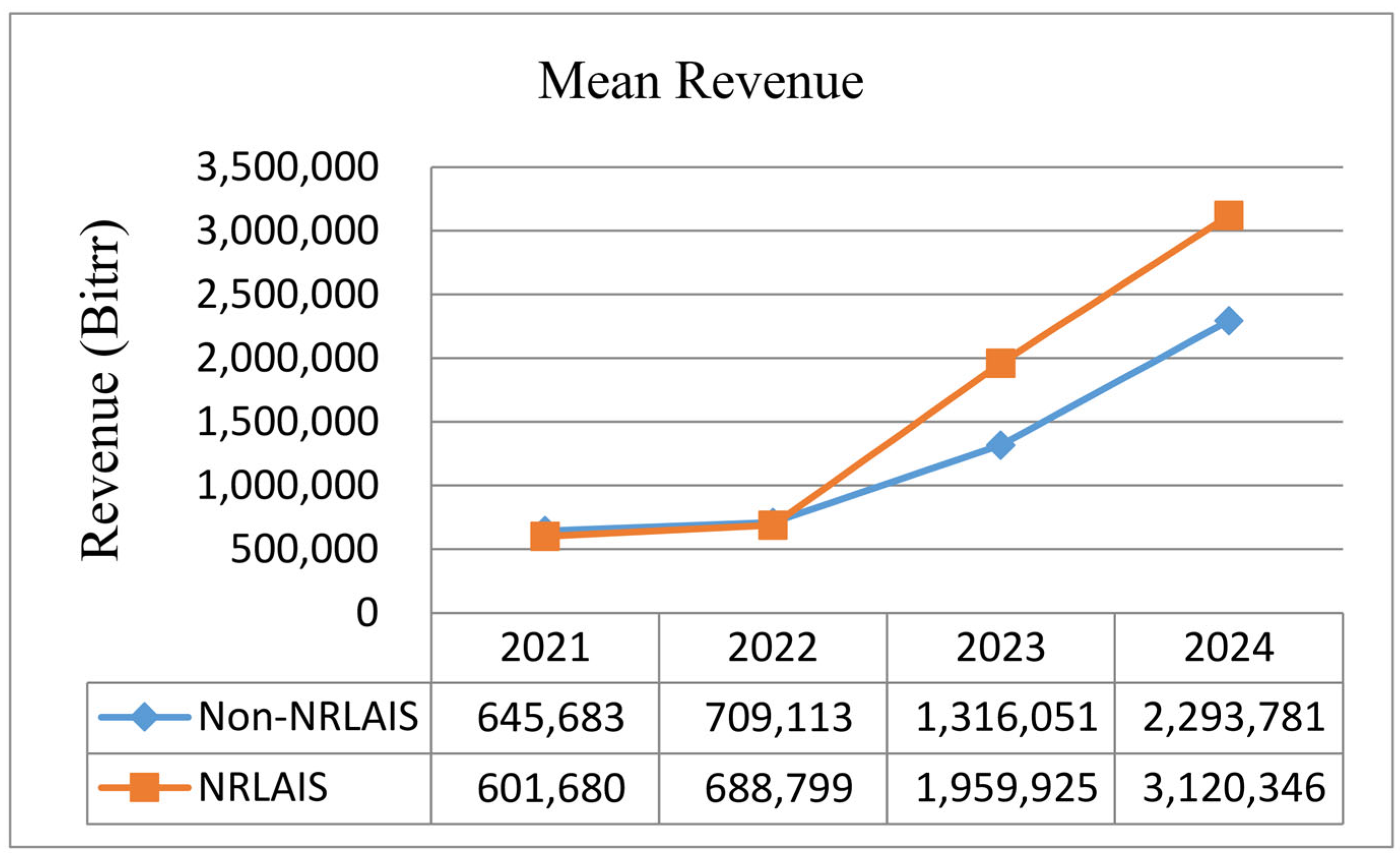
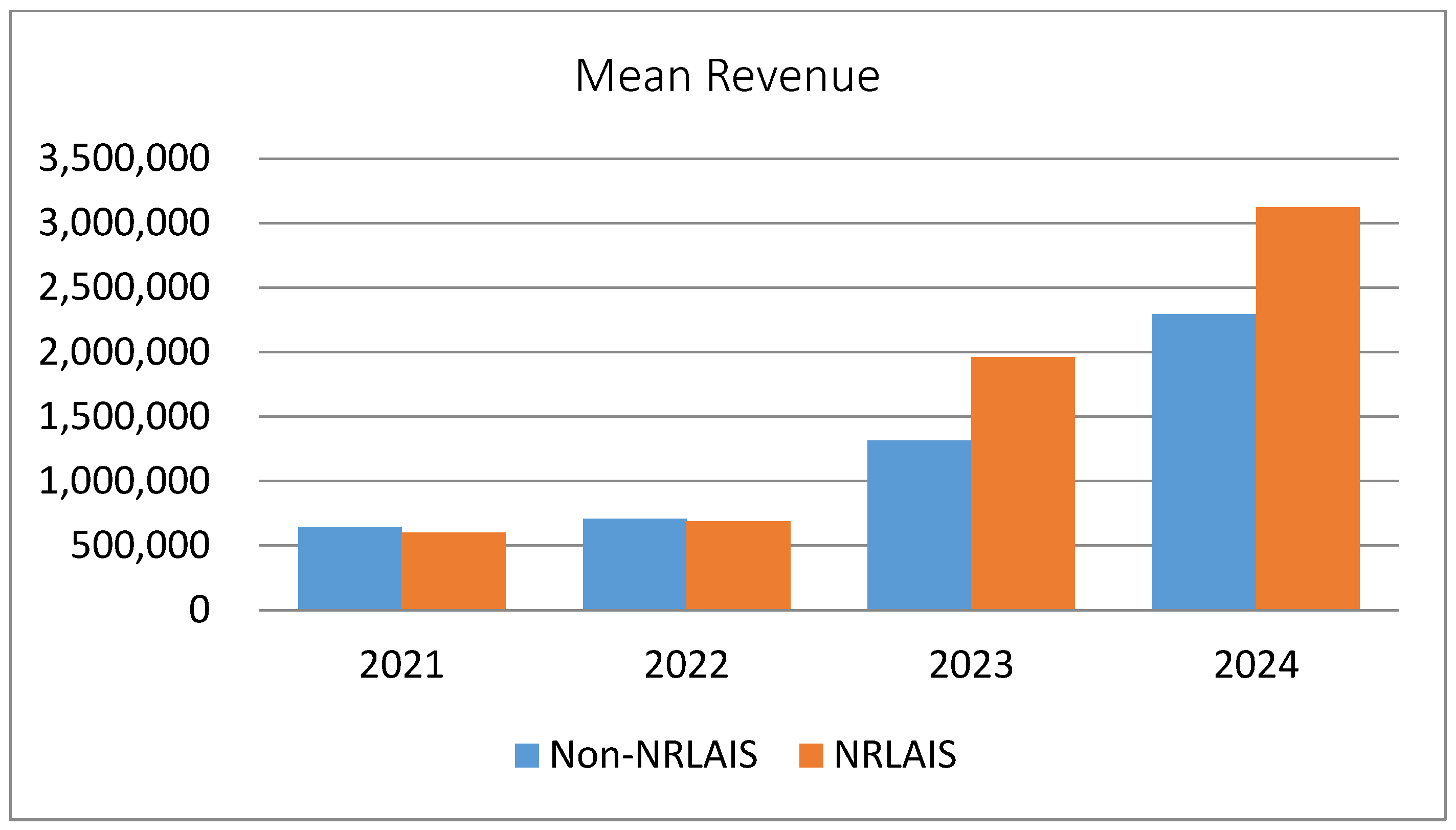
Figure 3 and Figure 4 clearly demonstrate a diverging trend in mean revenue between the NRLAIS and non-NRLAIS groups after 2022. While both groups show moderate revenue increases between 2021 and 2022, the implementation of the NRLAIS appears to be associated with a more pronounced increase in revenue collection, starting in 2023. This difference becomes particularly striking in 2024, where the mean revenue for the NRLAIS group significantly exceeds that of the non-NRLAIS group, suggesting a positive impact of the NRLAIS on rural land revenue generation.
The data appears to compare an outcome variable (land revenue) across two groups: non-NRLAIS and NRLAIS groups, and across two time periods: before NRLAIS implementation and after NRLAIS implementation. For each combination of period and groups, we have provided the mean, median, and standard deviation (SD), which offer insights into the central tendency and variability of the outcome in each case.
Before the NRLAIS Implementation (Year of 2022 and before)
In the non-NRLAIS group, the mean value is approximately 677,398, and the median is 413,569. In the NRLAIS group, the mean is significantly higher at 1,804,916 with a median of 1,025,000 (Table 1).
After the NRLAIS Implementation (Year after 2022)
The non-NRLAIS group’s mean increases to about 1,804,921 with a median of 594,667. The NRLAIS group sees an increase in mean to approximately 2,540,135.5, with the median rising to 1,473,275 (Table 1).
Both groups show increases in mean outcomes from before to after NRLAIS implementation, but the NRLAIS group sees a much larger absolute increase (from ~1.80 million to ~2.54 million). This trend is also consistent with the regression, which had a small but significant positive coefficient, suggesting an upward trend across the entire dataset following the NRLAIS implementation (Table 1).

4.2. Result of Regression Analysis

The regression analysis of the relationship between an outcome variable (land revenue) and predictors: group (non-NRLAIS and NRLAIS), a time-related variable (before and after implementation of the NRLAIS), and interactions with before the NRLAIS implementation.
The intercept, estimated at approximately 12.82, represents the baseline value of the outcome when all predictors are at their reference levels. This intercept is statistically significant, indicating that the baseline value is meaningfully different from zero (Table 2).
The coefficient for the NRLAIS group is approximately 10.26 and is also statistically significant. This suggests that, compared to the non-NRLAIS group, the NRLAIS group have a significantly higher outcome value at baseline, when the other variables are held constant. In other words, group membership plays a significant role in influencing the land revenue, even before NRLAIS implemented any other factors like time taken into account (Table 2).
Regarding the interaction terms, the interaction between non-NRLAIS and before NRLAIS implementation is not statistically significant, suggesting that the variable before NRLAIS implementation does not have a meaningful effect in the non-NRLAIS group. However, the interaction between the NRLAIS group and before NRLAIS implementation is both statistically significant and negative, with an estimate of about −6.89. This indicates that in the NRLAIS group, the outcome decreases before NRLAIS implementation increases (or they have a negative pre-condition effect), contrasting with the lack of effect observed in non-NRLAIS group (Table 2).
Overall, this analysis reveals that both group membership and time-related factors (after NRLAIS, and before NRLAIS for NRLAIS group) are important predictors of the revenue. The NRLAIS group consistently shows stronger and more significant changes over time compared to the non-NRLAIS group (Table 2).
The multiple R-squared value is 0.434, meaning that approximately 43.4% of the variance in the land revenue is explained by the predictors included in the model (i.e., group, after NRLAIS, before NRLAIS, and their interactions). This suggests a best model fit; there is still substantial variability in the outcome that is not accounted for by these variables (Table 3). Finally, this model explains a meaningful portion (around 43%) of the variability in the outcome and is statistically highly significant overall. While there is still unexplained variability (as shown by the residual standard error), the combination of a significant F-statistic and reasonably high R-squared suggests that the model provides a useful explanation of the outcome (Table 3).
The regression analysis based on the ANOVA table was found to be significant, with (F = 14.277, p = 0.001). This indicates that the group of independent variables has a statistically significant relationship with government land revenue and reliably predicts its impact (Table 4). The overall significance confirms that, when used together, the independent variables are strong predictors of the impact of the NRLAIS on government land revenue.
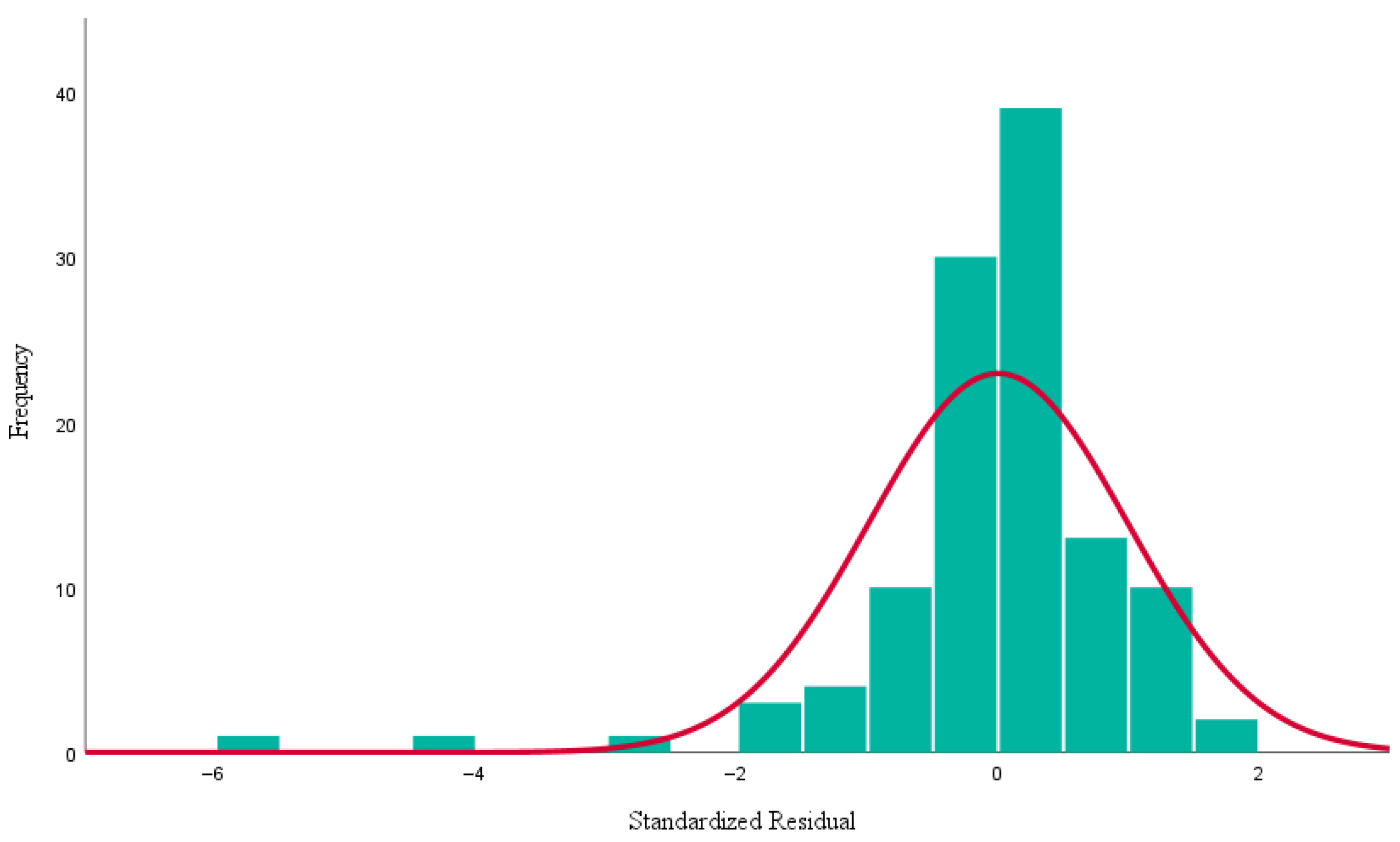
In regression analysis the normality assumption of the residual or data must be checked. The result revealed that normality assumption is held, as indicated in Figure 5.

The DID Estimation Results

Next, we estimated the impact using DID with the fixed effects approach, where results are reported in Table 5. The findings show that the introduction (implementation) of the NRLAIS has increased land revenue. This result tells us that the introduction of the NRLAIS led to a 33.7% increase in land revenue for the NRLAIS group. Concerning the year effect, the year 2024 has the highest influencing period. Similarly, the location effect also revealed that the impact was more powerful in southern parts of Oromia, though results in other areas are also positive.

4.3. Key Informants

In this qualitative study, we engaged with 25 key informants, including six officials from the Oromia region’s Land Bureau and nineteen representatives from district revenue authorities. The main goal of these discussions was to understand how the National Rural Land Administration Information System (NRLAIS) technology is affecting rural land revenue collection.
Throughout the interviews, a common theme emerged regarding the shortcomings of the First Level Land Certificate (FLLC). One major issue is that the FLLC lacks geospatial referencing, which means it does not include geographical data for registered land parcels. This absence leads to several challenges: there is no unique identification for each parcel, and the current paper-based land registration system lacks the ability to update records when land transactions occur.
Moreover, the FLLC does not accurately define the size of parcels owned by smallholder farmers. Many of these farmers are hesitant to reveal their land sizes, fearing potential repercussions. Despite having a structured approach to land registration, a significant amount of land remains unregistered because landowners are concerned about issues like land appropriation or rising taxes. Overall, these discussions highlighted the need for improved systems and processes to enhance land registration and revenue collection in rural areas.
They cited examples, such as a farmer with three hectares of land reporting only one or two hectares to save on taxes for at least one hectare, before the NRLAIS was implemented. The Second Level Land Certificate/NRLAIS gathers data from every parcel of land and certify the landowner, ensuring that no one can cancel the exact size and amount of land they possess. It was discussed that almost all weredas/districts related to land revenue have seen an increase due to the transparency created by NRLAIS technology. These interviews and key informant discussions support the research finding that the NRLAIS has a significant impact on rural land revenue collection. Interviewees witnessed that the NRLAIS technology has improved tax collection efficiency, reduced corruption, and facilitated easier land transactions. Key informants emphasized the need for policymakers to strengthen the digital infrastructure supporting the National Rural Land Administration Information System (NRLAIS). This involves ensuring reliable internet access in rural areas, providing training for staff on digital tools, and maintaining the system to prevent technical issues. Additionally, establishing protocols for the regular updating of land records is crucial to accurately reflect current ownership and parcel sizes, thereby addressing issues related to unregistered land and enhancing data accuracy.
Furthermore, fostering collaboration between various governmental bodies, such as the Land Bureau and Revenue Authorities, is essential to streamline processes related to land registration and tax collection. This collaborative approach can improve efficiency and reduce bureaucratic hurdles. By adopting these recommendations, policymakers can maximize the benefits of the NRLAIS technology, ultimately leading to enhanced land revenue collection and improved overall efficiency in land administration within rural areas.

5. Discussion

The governance of land administration in Ethiopia is intricate and necessitates the use and integration of an innovative and robust set of land registration information technologies that align with the social, economic, and environmental objectives of securing tenure and providing services [18]. Handling land transactions is streamlined and more dependable. This improved efficiency results in faster registration and certification, which can lead to more prompt revenue collection (such as tax revenue) and lower administrative expenses.
The findings from both the qualitative and quantitative analyses provided meaningful insights into the role of the National Rural Land Administration Information System (NRLAIS) in influencing government land revenue in the Oromia region. The observed results support the hypothesis that the NRLAIS implementation positively impacts land-related revenue collection, particularly in areas where the system has been fully adopted in concordance with the study [18].
Furthermore, there was a significant difference between the two groups. The after NRLAIS implementation has an estimated effect of 3.53 which is highly statistically significant, with a p-value near zero. Despite the magnitude, this implies that increases in after NRLAIS implementation are consistently associated with increases in the land revenue. This could represent reliable post-NRLAIS or time-related improvement.
The analysis revealed clear differences in land revenue trends between the non-NRLAIS and NRLAIS groups. Before the NRLAIS implementation, the NRLAIS group already exhibited higher average revenue levels than the non-NRLAIS group. However, it also showed greater variability and signs of revenue underperformance (as suggested by the higher standard deviation and the pre-NRLAIS regression coefficient) [15]. After the NRLAIS was implemented, both groups experienced revenue increases, but the NRLAIS group saw a much more substantial improvement [17]. This suggests that the NRLAIS not only supported the continuation of an upward trend, but potentially reversed prior declines [59].
The analysis confirmed that the NRLAIS group had significantly higher baseline revenue than the non-NRLAIS group. The small but statistically significant coefficient for the after NRLAIS points to a steady increase in revenue following the NRLAIS implementation, regardless of group as in the study by [15]. However, the presence of significant interaction terms adds further nuance.
The negative and significant interaction between the NRLAIS group and before NRLAIS indicates that the NRLAIS group experienced a decline in revenue leading up to the intervention. This pre-NRLAIS decline may reflect inefficiencies or lack of proper land administration practices prior to the NRLAIS [18]. The post-NRLAIS revenue increase, especially within the NRLAIS group, reflects the effectiveness of the NRLAIS in addressing these inefficiencies [17].
Taken together, these results suggest that the two groups differ not only in their baseline outcome values but also in how they respond to the time-related variables after and before NRLAIS implementation. While both groups appear to benefit similarly over time in the after periods, the NRLAIS group shows significant negative effect in before-NRLAIS periods. This could imply that the NRLAIS group experienced a decline leading up to a certain point before the NRLAIS, which then reversed or improved afterward, as reflected by the positive and significant NRLAIS effect. Conversely, non-NRLAIS does not appear to experience any significant pre-NRLAIS decline. This result is in line with some previous studies [15].
This suggests that the NRLAIS may have filled a critical administrative gap, especially in areas that were previously struggling with land revenue collection [15]. The system likely improved land registration accuracy, transparency, and enforcement of land fees and taxes; thereby they are strengthening government revenue collection [15,17].

Limitations of the Study and Areas for Further Research

While the analysis demonstrates the positive effects of the NRLAIS, it is important to acknowledge some limitations. The study does not account for other potential confounding factors such as broader economic trends, political influences, or changes in local governance that might have affected revenue. Additionally, future research should consider more analysis of implementation processes, regional differences, and long-term effects to understand how to maximize the impact of digital land administration systems. As the current study is based only on short-round panel data, we recommend that further research in the region using relatively longer panel data to cover the dynamics and long-term effects of the NRLAIS on the economy.

6. Conclusions

We examined effects of the National Rural Land Administration Information System (NRLAIS) on government land revenue using both qualitative and quantitative analyses of data. The data revealed distinct trends between the NRLAIS and non-NRLAIS groups across pre-NRLAIS and post-NRLAIS periods. Analysis showed that while both groups experienced increases in revenue after the NRLAIS implementation, the NRLAIS group exhibited a substantially larger rise in mean revenue, suggesting a stronger positive response to the NRLAIS implementation. Variability, as measured by standard deviation, was also higher in the NRLAIS group, indicating diverse impacts within the NRLAIS group. The analysis also showed that the NRLAIS group was a significant predictor of higher revenue outcomes, even at baseline. The small but highly significant coefficient for the after-NRLAIS variable indicated a consistent positive time-related effect following the NRLAIS implementation. Most notably, the negative and significant interaction between the NRLAIS group and the before-NRLAIS highlighted a pre-NRLAIS decline in revenue for the NRLAIS group, followed by a marked post-NRLAIS improvement, supporting the interpretation that the NRLAIS played a role in reversing prior underperformance. In contrast, the non-NRLAIS group exhibited no significant revenue changes related to the pre-NRLAIS period and only modest gains post-NRLAIS. This divergence underscores the differential impact of the NRLAIS and suggests its effectiveness in enhancing revenue collection capacity in areas where it was implemented. Overall, the results indicate that the NRLAIS implementation has had a meaningful and positive effect on government land revenue in the NRLAIS areas of Oromia, particularly by addressing previous declines and enabling sustained improvements thereafter.
It is recommended that policymakers sustain and scale up the NRLAIS to other regions, while also identifying and addressing any challenges or barriers encountered during its implementation. This includes tackling issues such as technological limitations, resistance to change, and a lack of awareness among stakeholders.

Author Contributions

Conceptualization, G.L.C.; methodology, G.L.C. and T.M.H.; software, G.L.C.; formal analysis, G.L.C. and T.M.H.; data curation, G.L.C. and T.M.H.; writing—original draft preparation, G.L.C., E.E. and T.M.H.; writing—review and editing, G.L.C. and T.M.H. All authors have read and agreed to the published version of the manuscript.

Funding

This research received no external funding.

Institutional Review Board Statement

Not applicable.

Informed Consent Statement

Not applicable.

Data Availability Statement

Data is available upon request.

Code Availability:

Code is available upon request.

Conflicts of Interest

The authors declare no conflicts of interest.

References

  1. Rockson, G.; Bennett, R.; Groenendijk, L. Land administration for food security: A research synthesis. Land Use Policy 2013, 32, 337–342. [Google Scholar] [CrossRef]
  2. Mann, J.; Cummings, J.H.; Englyst, H.N.; Key, T.; Liu, S.; Riccardi, G.; Summerbell, C.; Uauy, R.; van Dam, R.M.; Venn, B.; et al. FAO/WHO scientific update on carbohydrates in human nutrition: Conclusions. Eur. J. Clin. Nutr. 2007, 61, S132–S137. [Google Scholar] [CrossRef] [PubMed]
  3. Mishra, I.; Sahoo, A.; Anand, M.V. Digitalization of land records using blockchain technology. In Proceedings of the 2021 International Conference on Advance Computing and Innovative Technologies in Engineering (ICACITE), Greater Noida, India, 4–5 March 2021; pp. 769–772. [Google Scholar]
  4. Benbunan-Fich, R.; Castellanos, A. Digitization of land records: From paper to blockchain. In Proceedings of the Thirty Ninth International Conference on Information Systems, San Francisco, CA, USA, 13–16 December 2018. [Google Scholar]
  5. Nahrin, K.; Rahman, M.S.-U. Land Information System (LIS) for land administration and management in Bangladesh. J. Bangladesh Inst. Plan. 2009, 2, 116–125. [Google Scholar] [CrossRef]
  6. Derby, F.W.; Francis, W. Improving and facilitating land title registration processes in Tanzania. In Proceedings of the FIG XXII International Congress, Washington, DC, USA, 19–26 April 2002; pp. 19–26. [Google Scholar]
  7. Fiseha, A. Federalism, development and the changing political dynamics in Ethiopia. Int. J. Const. Law 2019, 17, 151–176. [Google Scholar] [CrossRef]
  8. Wabelo, T.S. Legal and institutional frameworks regulating rural land governance in Ethiopia: Towards a comparative analysis on the best practices of other African countries. Beijing Law Rev. 2020, 11, 64. [Google Scholar] [CrossRef]
  9. Burns, T.; Grant, C.; Nettle, K.; Brits, A.-M.; Dalrymple, K. Land administration reform: Indicators of success and future challenges. Agric. Rural. Dev. Discuss. Pap. 2007, 37, 1–227. [Google Scholar]
  10. Gerezihar, K.; Tilahun, M. Impacts of parcel-based second level landholding certificates on soil conservation investment in tigrai, northern Ethiopia. J. Land Rural. Stud. 2014, 2, 249–260. [Google Scholar] [CrossRef]
  11. Ghebru, H.; Girmachew, F. Direct and Spillover Effects of Land Rights Formalization in Africa: A Case Study of the Second-Level Land Certification (SLLC) in Ethiopia; International Food Policy Research Institute: Washington, DC, USA, 2020; Volume 31, pp. 114–129. [Google Scholar]
  12. Chekole, S.D.; de Vries, W.T.; Shibeshi, G.B. An evaluation framework for urban cadastral system policy in Ethiopia. Land 2020, 9, 60. [Google Scholar] [CrossRef]
  13. Gedefaw, A.A. Analysis of the contribution of land registration to sustainable land management in East Gojjam Zone, Ethiopia. Land 2023, 12, 1157. [Google Scholar] [CrossRef]
  14. Gebrihet, H.G. An Assessment of Urban Land Administration in Ethiopia: Evidence from Mekelle City. Ph.D. Thesis, Stellenbosch University, Stellenbosch, South Africa, 2022. [Google Scholar]
  15. Gebre, Y.R.; Teno, T.; Hailu, Z.; Tadesse, M.; Schoenweger, O. Building Harmonized Private and State Land Holding Data and Information Systems in Ethiopia. Afr. J. Land Policy Geospat. Sci. 2020, 3, 123–140. [Google Scholar]
  16. Zein, T.; Abza, T.G.; Tenno, T.; Reda, Y.; Abera, T. The innovative national rural land administration information system of Ethiopia. In Proceedings of the 2019 World Bank Conference on Land and Poverty, Washington, DC, USA, 25–29 March 2019; pp. 25–29. [Google Scholar]
  17. Getie, A.M.; Birhanu, T.A. An assessment of the Ethiopian national rural land administration information system conceptual model using LADM as a reference. Surv. Rev. 2024, 56, 228–248. [Google Scholar] [CrossRef]
  18. Abab, S.A.; Wakjira, F.S.; Negash, T.T. Determinants of the land registration information system operational success: Empirical evidence from Ethiopia. Land 2021, 10, 1394. [Google Scholar] [CrossRef]
  19. Getie, A.M.; Birhanu, T.A.; Dadi, T.T. Rural cadastral implementation and its effect on women’s landholding use rights in Amhara region, Ethiopia. Land Use Policy 2023, 127, 106556. [Google Scholar] [CrossRef]
  20. Berhanu, B. The Immediate Effect of Second Level Rural Land Registration and Certification for Dispute Settlement: Government Revenue and Accurate Rural Land Related Data Collection: The Case of Hadiya Zone Lemo Woreda, Snnpr/Ethiopia. Ph.D. Thesis, Bahir Dar University, Bahir Dar, Ethiopia, 2017. [Google Scholar]
  21. Rugema, D.M. Evaluating Spatial Data Acquisition and Management Techniques for Multipurpose Cadastre in Ethiopia and Rwanda (Preliminary Results). Afr. J. Land Policy Geospat. Sci. 2020, 3, 195–212. [Google Scholar]
  22. Abegaz, G.; Allebachew, M.; Edwards, O.; Leckie, J. Implementing the Land Investment for Transformation (LIFT) Programme in Ethiopia. In Proceedings of the Annual World Bank Conference on Land and Poverty, Washington, DC, USA, 14–18 March 2016. [Google Scholar]
  23. Getie, A.M.; Birhanu, T.A.; Dadi, T.T. Developing a framework for assessing the efficacy of rural cadastral system in the Amhara region, Ethiopia. Surv. Rev. 2023, 55, 147–168. [Google Scholar] [CrossRef]
  24. Currie, J.M. The Economic Theory of Agricultural Land Tenure; Cambridge University Press: Cambridge, UK, 1981. [Google Scholar]
  25. Bird, R.M. Taxing Agricultural Land in Developing Countries; Harvard University Press: Cambridge, MA, USA, 1974; Volume 4. [Google Scholar]
  26. O’Brien, D.P. Classical Economics, A Companion to History of Economic Thought; Blackwell Publishing Ltd.: Oxford, UK, 2003; pp. 112–129. [Google Scholar]
  27. Barbier, E.B. The economic determinants of land degradation in developing countries. Philos. Trans. R. Soc. London. Ser. B Biol. Sci. 1997, 352, 891–899. [Google Scholar] [CrossRef]
  28. Rosenberg, R.H. The changing culture of American land use regulation: Paying for growth with impact fees. SMUL Rev. 2006, 59, 177. [Google Scholar]
  29. Lough, O.; Mallet, R.; Harvey, P. Taxation and Livelihoods: A Review of the Evidence from Fragile and Conflict-Affected Rural Areas; ICTD: Brighton, UK, 2013. [Google Scholar]
  30. Altshuler, A.A.; Gomez-Ibanez, J.A. Regulation for Revenue: The Political Economy of Land Use Exactions; Brookings Institution Press: Washington, DC, USA, 2000. [Google Scholar]
  31. Okoro, M.K. A Critical Review of Land Taxation Theories in Nigeria. Editor. Advis. 2021, 43, 2. [Google Scholar]
  32. Fortin, E. Reforming land rights: The World Bank and the globalization of agriculture. Soc. Leg. Stud. 2005, 14, 147–177. [Google Scholar] [CrossRef]
  33. Soomro, R.B.; Memon, S.G.; Dahri, N.A.; Al-Rahmi, W.M.; Aldriwish, K.; Salameh, A.A.; Al-Adwan, A.S.; Saleem, A. The adoption of digital technologies by small and medium-sized enterprises for sustainability and value creation in Pakistan: The application of a two-staged hybrid SEM-ANN approach. Sustainability 2024, 16, 7351. [Google Scholar] [CrossRef]
  34. Larsson, T. Land and Loyalty: Security and the Development of Property Rights in Thailand; Cornell University Press: Ithaca, NY, USA, 2012. [Google Scholar]
  35. Williamson, I.; Enemark, S.; Wallace, J.; Rajabifard, A. Land Administration for Sustainable Development; ESRI Press Academic: Redlands, CA, USA, 2010; Volume 487. [Google Scholar]
  36. Tomori, E.S.V.L. Land and Housing Market Assessments as a Tool for Land Management and Property Tax Development; Macos Urban Management Consultancy: Abuja, Nigeria, 2018. [Google Scholar]
  37. Setyo, A. Evaluation of Property Taxes and Their Impact on the Real Estate Market. Gold. Ratio Tax. Stud. 2024, 4, 57–67. [Google Scholar] [CrossRef]
  38. Adil, M.; Syafaruddin, S. Property Taxes and Their Implications on the Real Estate Market: A Literature Review. Adv. Tax. Res. 2024, 2, 65–77. [Google Scholar] [CrossRef]
  39. Teka, T.; Azeze, A. Cross-Border Livestock Trade, and Food Security in the Ethiopia-Djibouti, and Ethiopia-Somalia Borderlands; Organization for Social Science Research in Eastern and Southern Africa: Addis Ababa, Ethiopia, 2002. [Google Scholar]
  40. Khadiagala, G.M. Boundaries in eastern Africa. J. East. Afr. Stud. 2010, 4, 266–278. [Google Scholar] [CrossRef]
  41. Tekle-Haimanot, R.; Melaku, Z.; Kloos, H.; Reimann, C.; Fantaye, W.; Zerihun, L.; Bjorvatn, K. The geographic distribution of fluoride in surface and groundwater in Ethiopia with an emphasis on the Rift Valley. Sci. Total Environ. 2006, 367, 182–190. [Google Scholar] [CrossRef]
  42. Getiso, A.; Mijena, D. Trend Analysis of Poultry production, population growth and distribution in Ethiopia. J. Nutr. Food Process. 2024, 7. [Google Scholar] [CrossRef] [PubMed]
  43. Nigatu, D.B. Assessment of national urban planning standards in structure plan preparation: A study of major urban centers in Oromia National Regional State, Ethiopia. Urban. Plan. Transp. Res. 2025, 13, 2451423. [Google Scholar] [CrossRef]
  44. Palter, R. Philosophic principles and scientific theory. Philos. Sci. 1956, 23, 111–135. [Google Scholar] [CrossRef]
  45. Rolfe, G. Philosophical basis for research. In Quantitative Health Research: Issues and Methods; McGraw-Hill Education: New York, NY, USA, 2013; pp. 11–28. [Google Scholar]
  46. Resnik, D. Philosophical foundations of scientific ethics. In Proceedings of the Ethical Issues in Physics, Ypsilanti, MI, USA, 17–18 July 1993; pp. 17–18. [Google Scholar]
  47. Gaus, N. Selecting research approaches and research designs: A reflective essay. Qual. Res. J. 2017, 17, 99–112. [Google Scholar] [CrossRef]
  48. Amaratunga, D.; Baldry, D.; Sarshar, M.; Newton, R. Quantitative and qualitative research in the built environment: Application of ‘mixed’ research approach. Work Study 2002, 51, 17–31. [Google Scholar] [CrossRef]
  49. Leech, N.L.; Dellinger, A.B.; Brannagan, K.B.; Tanaka, H. Evaluating mixed research studies: A mixed methods approach. J. Mix. Methods Res. 2010, 4, 17–31. [Google Scholar] [CrossRef]
  50. Bolarinwa, O.A. Sample size estimation for health and social science researchers: The principles and considerations for different study designs. Niger. Postgrad. Med. J. 2020, 27, 67–75. [Google Scholar] [CrossRef]
  51. Campbell, S.; Greenwood, M.; Prior, S.; Shearer, T.; Walkem, K.; Young, S.; Bywaters, D.; Walker, K. Purposive sampling: Complex or simple? Research case examples. J. Res. Nurs. 2020, 25, 652–661. [Google Scholar] [CrossRef]
  52. Adcock, C.J. Sample size determination: A review. J. R. Stat. Soc. Ser. D (Stat.) 1997, 46, 261–283. [Google Scholar] [CrossRef]
  53. Fotis, N.; Bix, L. Sample Size Selection Using a Margin of Error Approach. Med. Device Diagnostic Ind. Mag. 2006. [Google Scholar]
  54. Onwuegbuzie, A.J.; Dickinson, W.B. Mixed methods analysis and information visualization: Graphical display for effective communication of research results. Qual. Rep. 2008, 13, 204–225. [Google Scholar] [CrossRef]
  55. Al-Benna, S.; Al-Ajam, Y.; Way, B.; Steinstraesser, L. Descriptive and inferential statistical methods used in burns research. Burns 2010, 36, 343–346. [Google Scholar] [CrossRef] [PubMed]
  56. Uyanık, G.K.; Güler, N. A study on multiple linear regression analysis. Procedia-Soc. Behav. Sci. 2013, 106, 234–240. [Google Scholar] [CrossRef]
  57. Marill, K.A. Advanced statistics: Linear regression, part II: Multiple linear regression. Acad. Emerg. Med. 2004, 11, 94–102. [Google Scholar] [CrossRef]
  58. Card, D. Using regional variation in wages to measure the effects of the federal minimum wage. Ilr Rev. 1992, 46, 22–37. [Google Scholar] [CrossRef]
  59. Allebachew, M.; Leckie, J.; Smith, A. Large-Scale Rural Land Certification and Administration in Ethiopia—The Challenges of a Decentralised Approach; Foreign, Commonwealth and Development Office: London, UK, 2017; Volume 27, pp. 111–135.
Figure 1. Conceptual framework of the study.
Land 14 02258 g001
Figure 2. Map of Oromia Regional State of Ethiopia.
Land 14 02258 g002
Figure 3. Mean line plot of NRLAIS implementation for NRLAIS and non-NRLAIS group.
Land 14 02258 g003
Figure 4. Bar chart of NRLAIS implementation for NRLAIS and non-NRLAIS group.
Land 14 02258 g004
Figure 5. Histogram of standardized residuals of multiple linear regression models.
Land 14 02258 g005
Table 1. Descriptive characteristics of the NRLAIS implementation.
Period Group
Non-NRLAISNRLAIS
MeanMedianMeanMedian
Before NRLAIS677,398413,568.71,804,9161,025,000.0
After NRLAIS1,804,921594,667.22,540,135.51,473,275.0
Table 2. Results of multiple linear regression analysis.
CoefficientsEstimateStd. Errort-ValueSign.
Intercept12.8201.8177.0550.001
Group: non-NRLAIS (Reference)
                    : NRLAIS10.2604.2782.3980.018
After NRLAIS3.5270.4178.4500.001
Non-NRLAIS: Before NRLAS−1.9703.930−0.5020.616
NRLAIS: Before NRLAIS−6.8911.422−4.8450.001
Table 3. Coefficients of determinations of regression analysis.
ModelRR SquareAdjusted R SquareStd. Error
10.6580.4340.413215.39
Table 4. Analysis of variance (ANOVA) for impact of NRLAIS on land revenue.
Source Sum of SquaresMean SquareFSig.
Regression9330.5904665.29514.2770.001
Residual36,270.207326.759
Total45,600.797
Table 5. DID Result: Outcome variable is land revenue.
VariablesOutcome Variable = Ln Revenue
NRLAIS (1 = for NRLAIS group)0.337 ** (0.159)
Year dummy (ref. 2021)
2022 Dummy0.0264 (0.181)
2023 Dummy−0.102 (0.185)
2024 Dummy0.4768 * (0.279)
Region Dummy (Ref. Western Oromia)
Central Oromia0.119 (0.179)
Southern Oromia0.747 *** (0.0596)
Northern Oromia0.0493 (0.325)
Constant2.713 *** (0.839)
Observations114
Number of groups29
F-value207.52 ***
Prob > F0.0000
R2 (overall)0.6684
Note: *** p < 0.01, ** p < 0.05, * p < 0.1, Standard errors in parentheses. Source: Own Computation, 2025.
Disclaimer/Publisher’s Note: The statements, opinions and data contained in all publications are solely those of the individual author(s) and contributor(s) and not of MDPI and/or the editor(s). MDPI and/or the editor(s) disclaim responsibility for any injury to people or property resulting from any ideas, methods, instructions or products referred to in the content.