Seasonal Variations in the Mechanisms Linking the Built Environment and Metro Station Area Vitality in Cold Regions: A Case Study of Harbin

Abstract
1. Introduction
2. Study Area and Data Sources
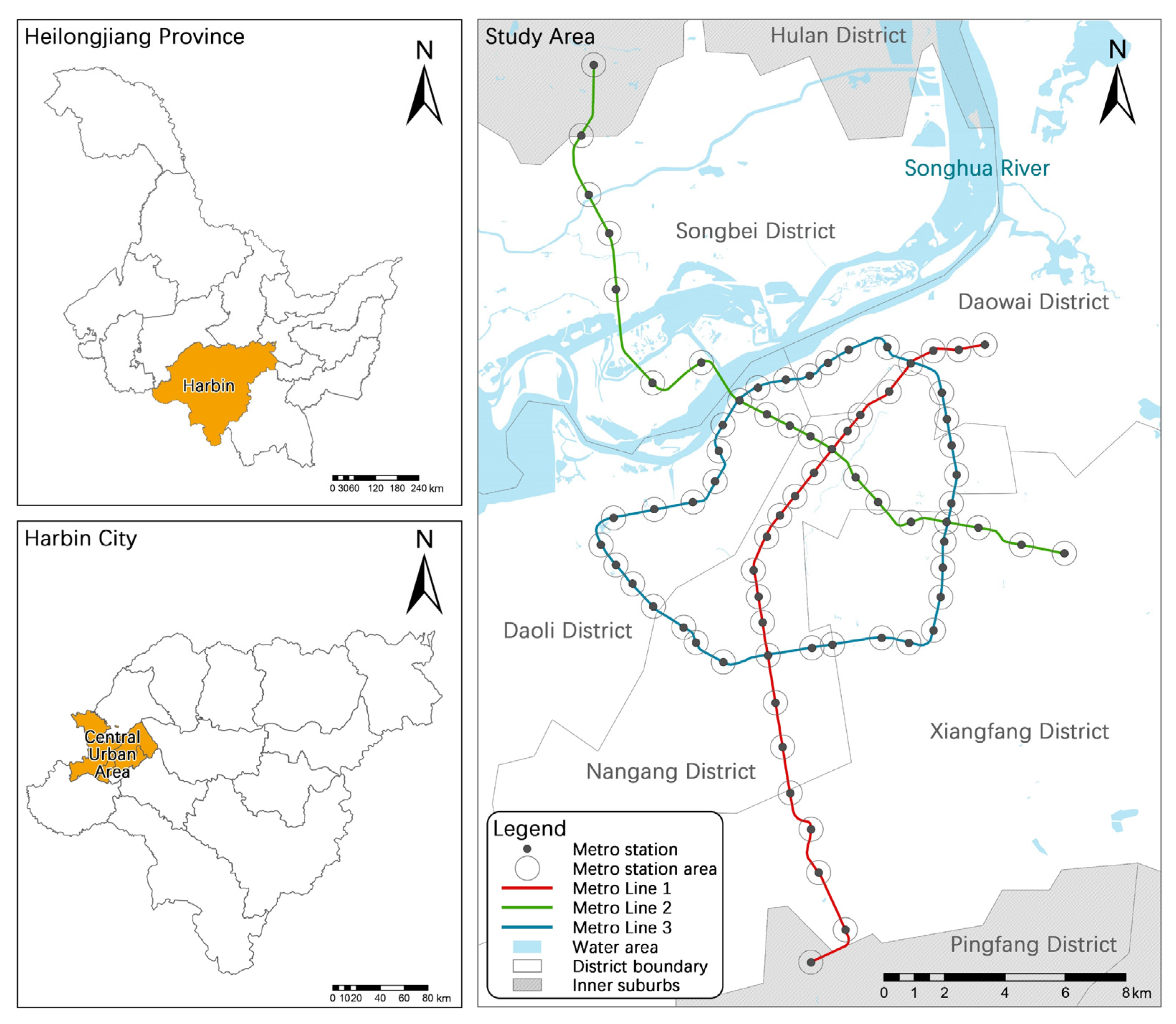
2.1. Study Area
2.2. Data Sources and Pre-Prosessing
3. Methods
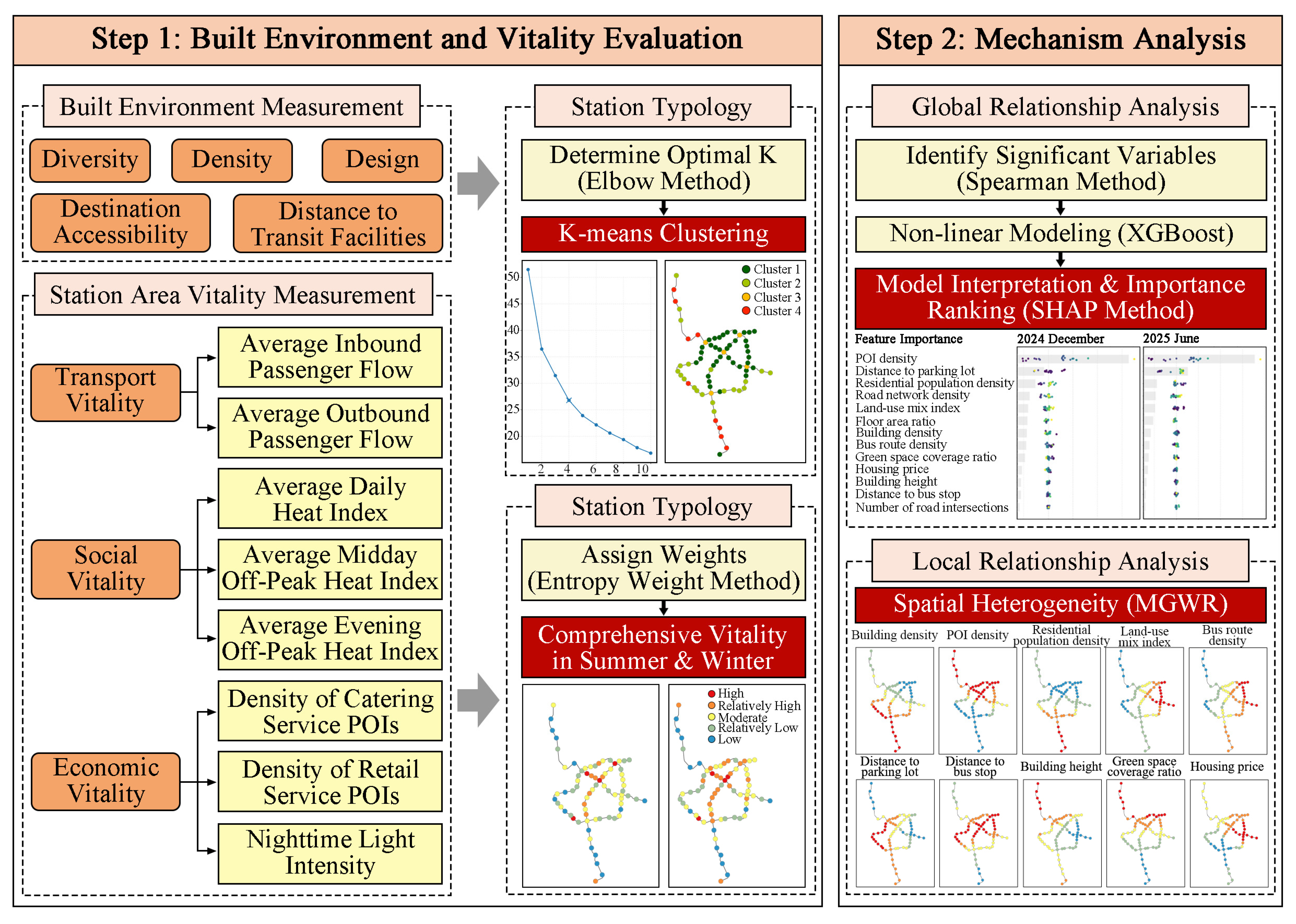
3.1. Built Environment and Vitality Evaluation
3.1.1. Measurement of Built Environment Variables
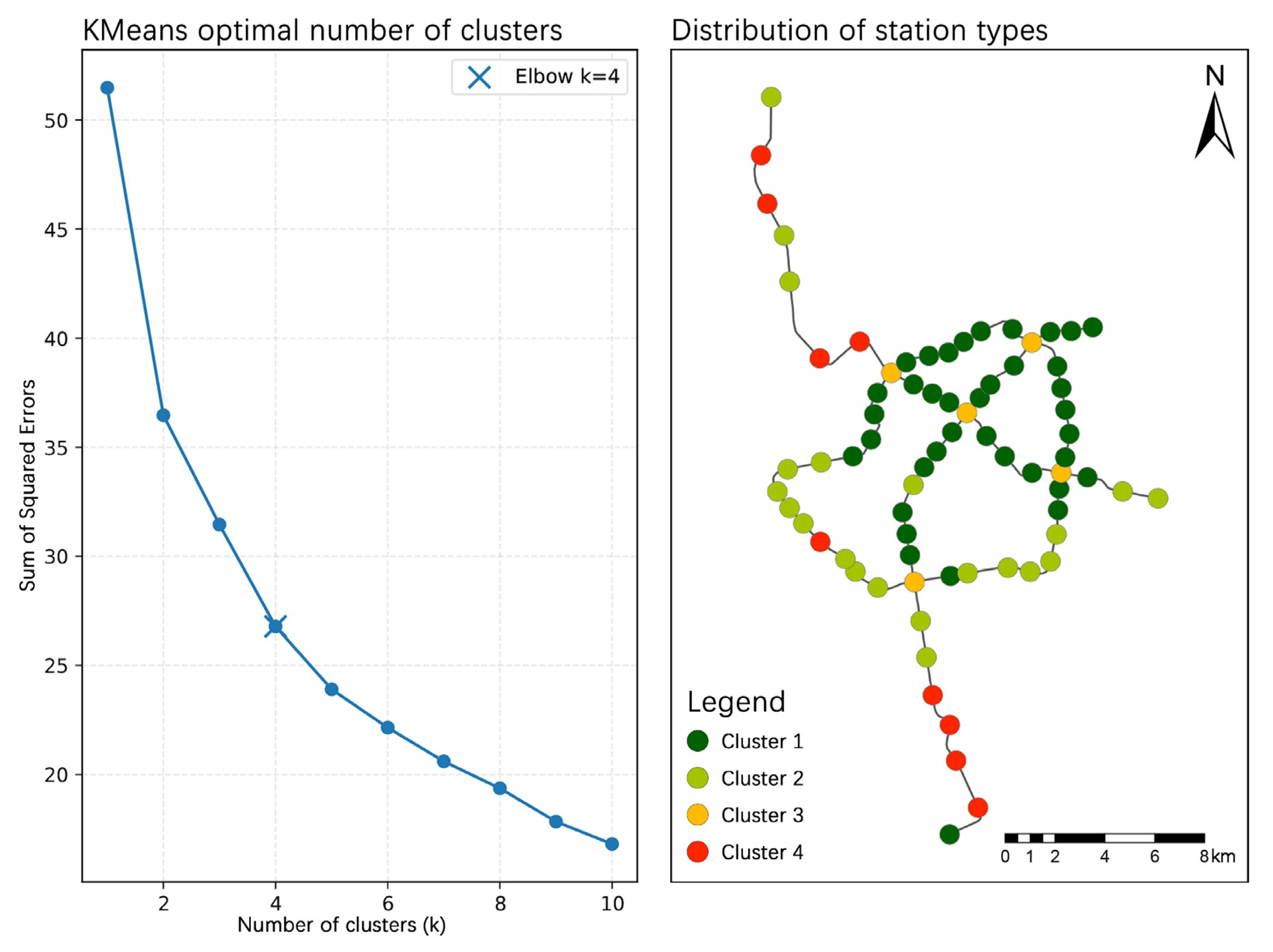
3.1.2. Classification of Station Types
3.1.3. Measurement of Metro Station Area Vitality
3.2. Impact of the Built Environment on Metro Station Area Vitality
3.2.1. Global Relationship Between the Built Environment and Metro Station Area Vitality
3.2.2. Local Relationship Between the Built Environment and Metro Station Area Vitality
4. Results
4.1. Spatial Patterns of Metro Station Area Built Environment and Vitality
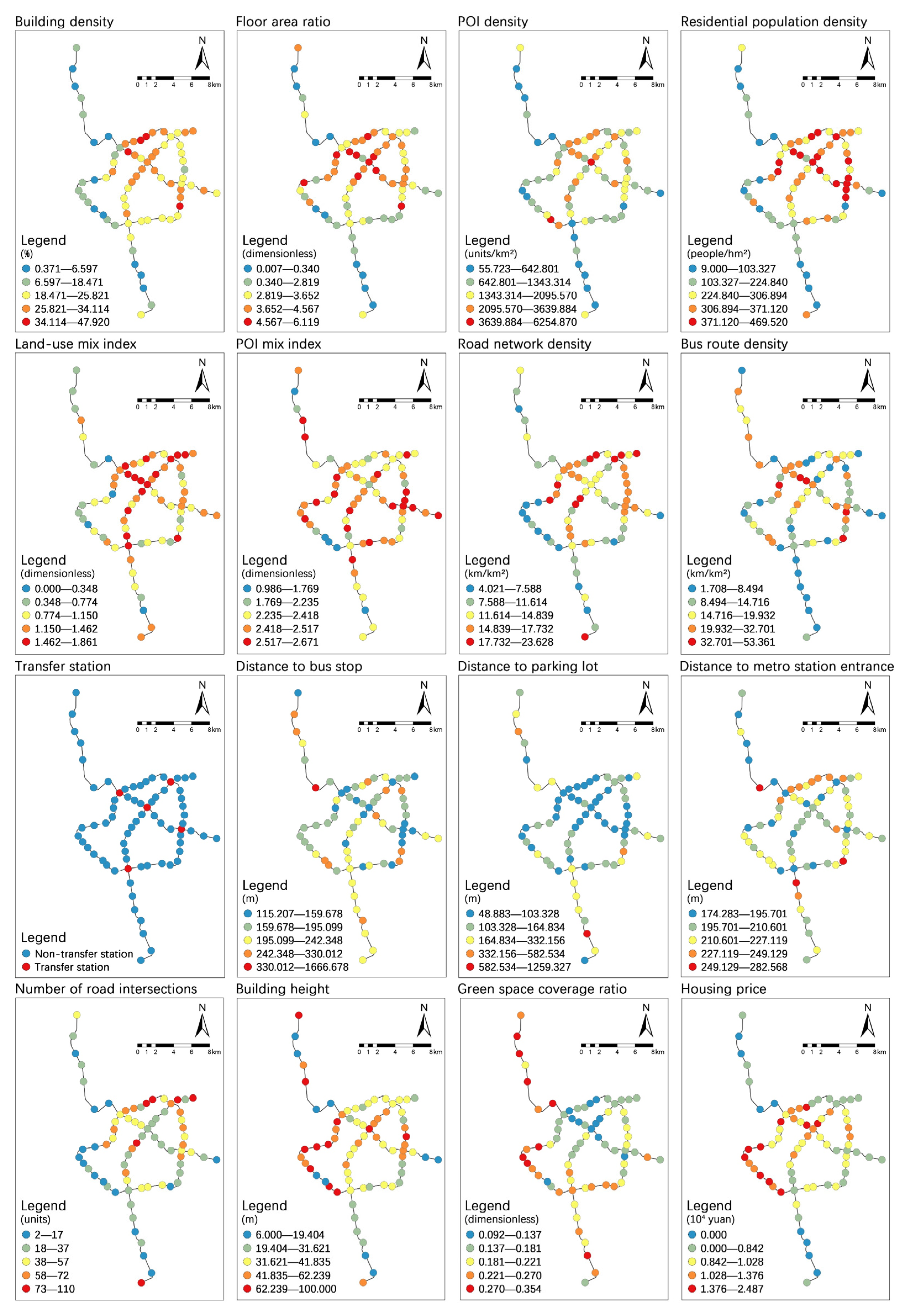
4.1.1. Distribution of Built Environment Features
4.1.2. Characteristics of Station Types
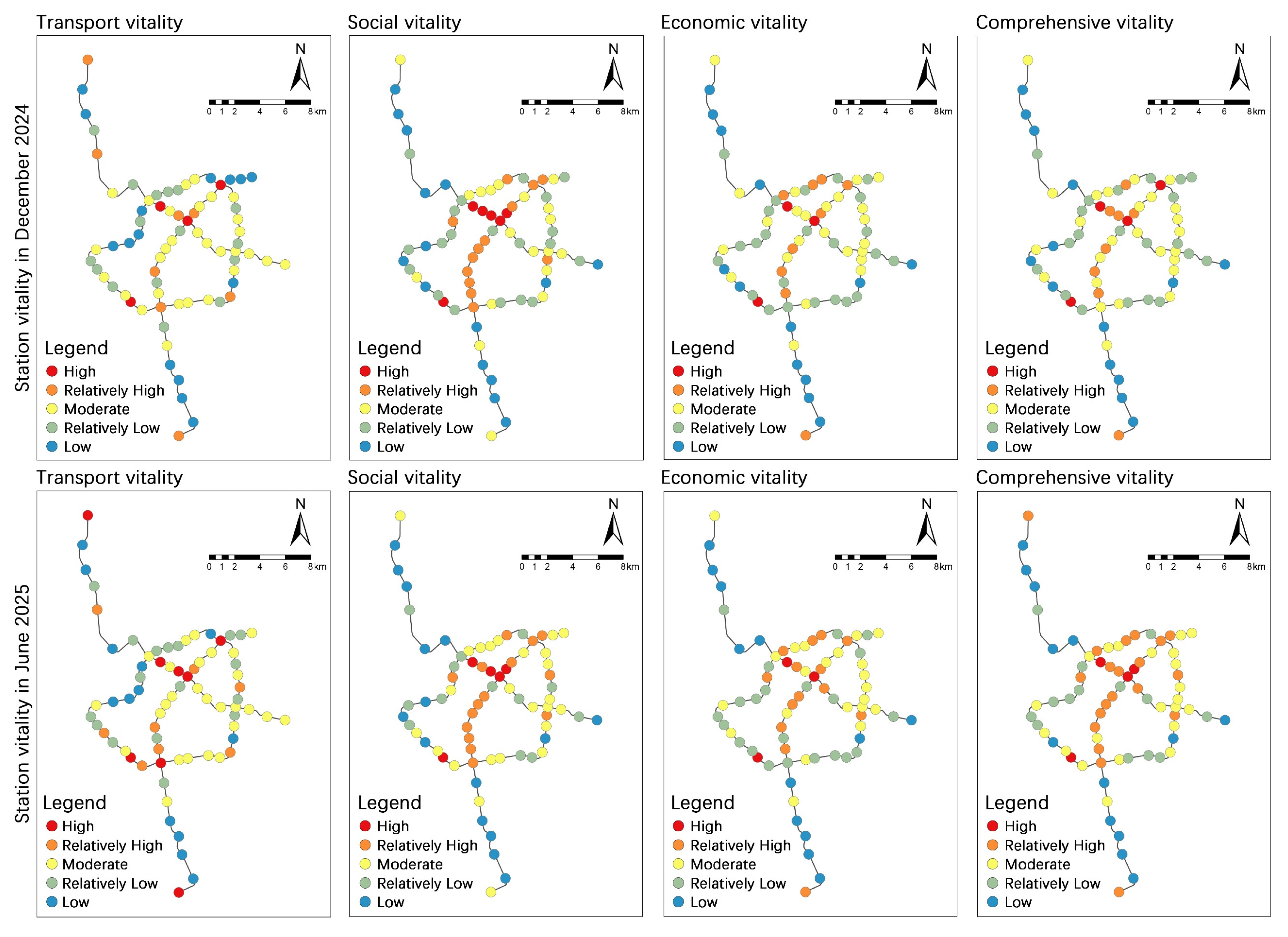
4.1.3. Spatial Vitality and Seasonal Differences
4.2. Effects of the Built Environment on Metro Station Area Vitality
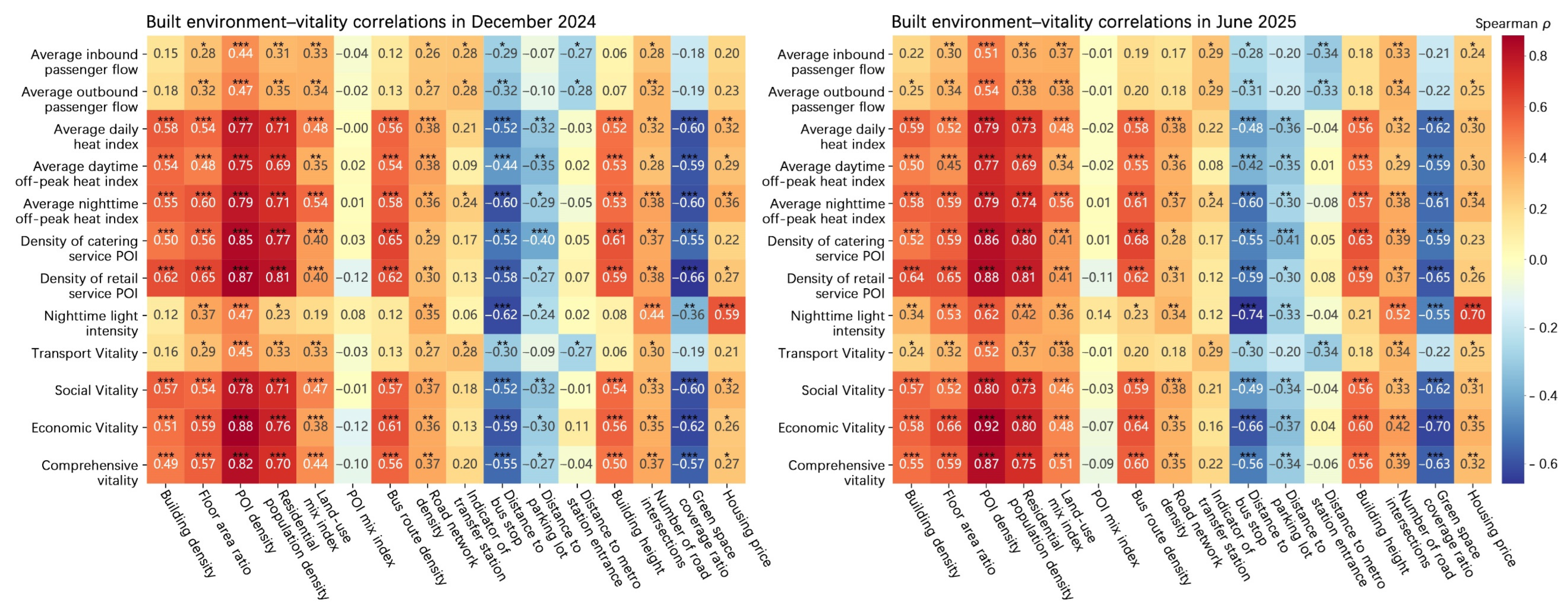
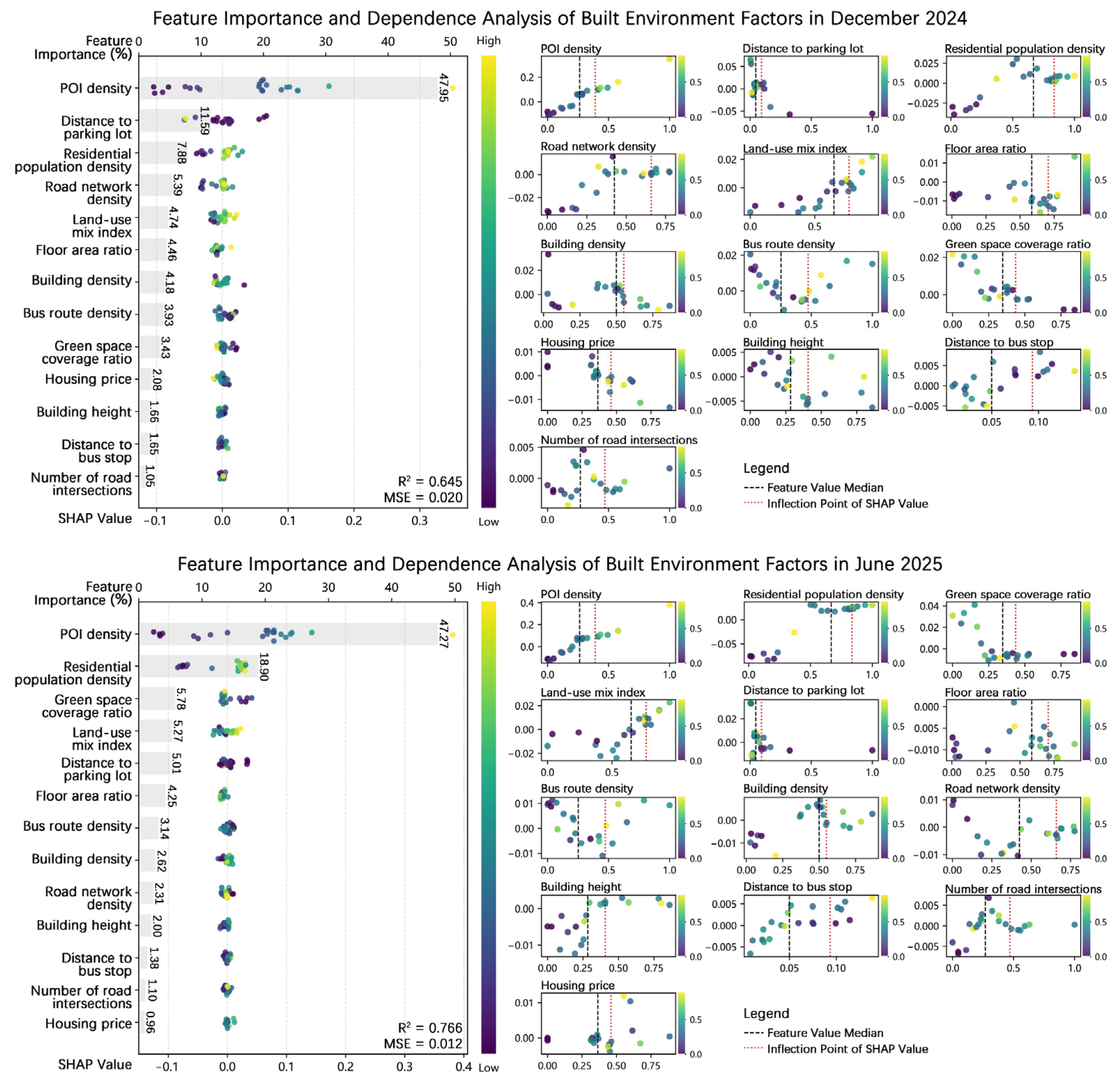
4.2.1. Global Effects of the Built Environment
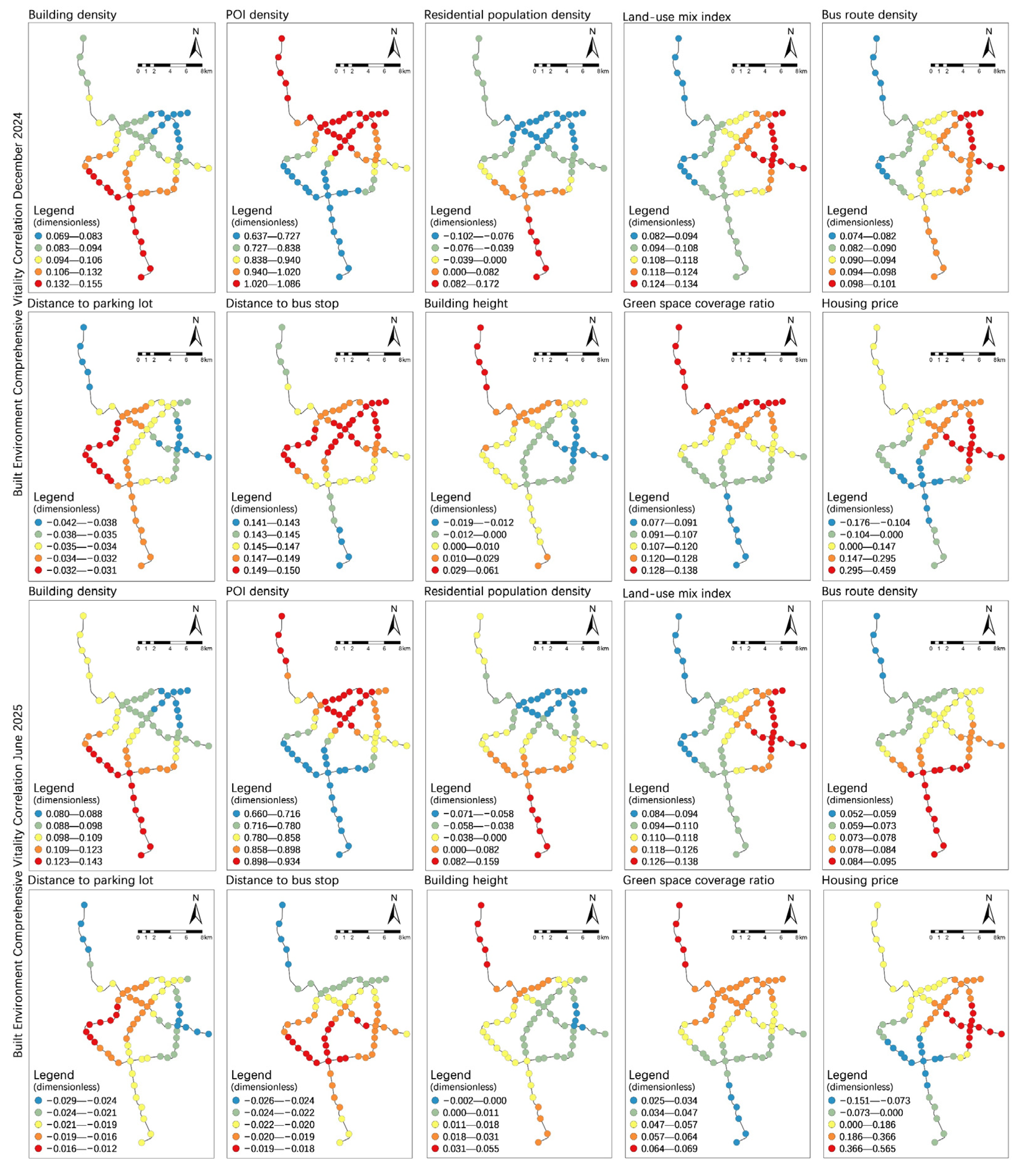
4.2.2. Local Effects of the Built Environment
5. Discussion
5.1. Seasonal Differences in the Built Environment and Vitality of Metro Station Areas
5.2. Driving Mechanisms and Spatial Heterogeneity of the Built Environment on Metro Station Area Vitality
5.3. Spatial Optimization Strategies for Enhancing Year-Round Vitality in Cold-Region Metro Station Areas
5.4. Limitations and Future Research
6. Conclusions
Author Contributions
Funding
Data Availability Statement
Acknowledgments
Conflicts of Interest
References
- Wang, J.; Tan, W.; Huang, J. Extending TOD through the interrelationship between transport and land use: A case study of Beijing. Land Use Policy 2024, 144, 107257. [Google Scholar] [CrossRef]
- Yang, L.; Liang, Y.; He, B.; Yang, H.; Lin, D. COVID-19 moderates the association between to-metro and by-metro accessibility and house prices. Transp. Res. Part D Transp. Environ. 2023, 114, 103571. [Google Scholar] [CrossRef]
- Liu, K.; Qiu, P.; Gao, S.; Lu, F.; Jiang, J.; Yin, L. Investigating Urban Metro Stations as Cognitive Places in Cities Using Points of Interest. Cities 2020, 97, 102561. [Google Scholar] [CrossRef]
- Yang, L.; Chen, Y.; Xu, N.; Zhao, R.; Chau, K.W.; Hong, S. Place-varying impacts of urban rail transit on property prices in Shenzhen, China: Insights for value capture. Sustain. Cities Soc. 2020, 58, 102140. [Google Scholar] [CrossRef]
- Xiao, L.; Lo, S.; Liu, J.; Zhou, J.; Li, Q. Nonlinear and Synergistic Effects of TOD on Urban Vibrancy: Applying Local Explanations for Gradient Boosting Decision Tree. Sustain. Cities Soc. 2021, 72, 103063. [Google Scholar] [CrossRef]
- Pan, H.; Huang, Y. TOD Typology and Station Area Vibrancy: An Interpretable Machine Learning Approach. Transp. Res. Part A Policy Pract. 2024, 186, 104150. [Google Scholar] [CrossRef]
- Yang, L.; Yu, B.; Liang, Y.; Lu, Y.; Li, W. Time-varying and non-linear associations between metro ridership and the built environment. Tunn. Undergr. Space Technol. 2023, 132, 104931. [Google Scholar] [CrossRef]
- Yang, L.; Chau, K.W.; Szeto, W.Y.; Cui, X.; Wang, X. Accessibility to transit, by transit, and property prices: Spatially varying relationships. Transp. Res. Part D Transp. Environ. 2020, 82, 102387. [Google Scholar] [CrossRef]
- Böcker, L.; Dijst, M.; Prillwitz, J. Impact of Everyday Weather on Individual Daily Travel Behaviours in Perspective: A Literature Review. Transp. Rev. 2013, 33, 71–91. [Google Scholar] [CrossRef]
- Helbich, M.; Böcker, L.; Dijst, M. Geographic Heterogeneity in Cycling under Various Weather Conditions: Evidence from Greater Rotterdam. J. Transp. Geogr. 2014, 38, 38–47. [Google Scholar] [CrossRef]
- Jin, H.; Liu, S.; Kang, J. Thermal Comfort Range and Influence Factor of Urban Pedestrian Streets in Severe Cold Regions. Energy Build. 2019, 198, 197–206. [Google Scholar] [CrossRef]
- Ngo, N.S.; Bashar, S. The Impacts of Extreme Weather Events on U.S. Public Transit Ridership. Transp. Res. Part D Transp. Environ. 2024, 137, 104504. [Google Scholar]
- Singhal, A.; Kamga, C.; Yazici, A. Impact of Weather on Urban Transit Ridership. Transp. Res. Part A Policy Pract. 2014, 69, 379–391. [Google Scholar] [CrossRef]
- Zacharias, J. Underground Pedestrian Trips—Trip Generation, Spatial Distribution and Activities in the Montréal Underground. Tunn. Undergr. Space Technol. 2015, 46, 46–51. [Google Scholar] [CrossRef]
- Rao, F.; Pafka, E. Shopping Morphologies of Urban Transit Station Areas: A Comparative Study of Central City Station Catchments in Toronto, San Francisco, and Melbourne. J. Transp. Geogr. 2021, 96, 103156. [Google Scholar] [CrossRef]
- Lin, C.; Wu, L.; Xia, H.; Zhen, M.; Shen, C.; Zhu, J.; Li, X. Characteristics of the Thermal Environment, Air Quality, and Passenger Comfort in the Underground Transfer Space of Metro Stations in Beijing. J. Build. Eng. 2022, 59, 105093. [Google Scholar] [CrossRef]
- Papa, E.; Bertolini, L. Accessibility and Transit-Oriented Development in European Metropolitan Areas. J. Transp. Geogr. 2015, 47, 70–83. [Google Scholar] [CrossRef]
- Su, S.; Zhang, H.; Wang, M.; Weng, M.; Kang, M. Transit-Oriented Development (TOD) Typologies around Metro Station Areas in Urban China: A Comparative Analysis of Five Typical Megacities for Planning Implications. J. Transp. Geogr. 2021, 90, 102939. [Google Scholar] [CrossRef]
- Higgins, C.D.; Kanaroglou, P.S. A Latent Class Method for Classifying and Evaluating the Performance of Station-Area Transit-Oriented Development in the Toronto Region. J. Transp. Geogr. 2016, 52, 61–72. [Google Scholar] [CrossRef]
- Vale, D.S. Transit-Oriented Development, Integration of Land Use and Transport, and Pedestrian Accessibility: Combining Node-Place Model with Pedestrian Shed Ratio to Evaluate and Classify Station Areas in Lisbon. J. Transp. Geogr. 2015, 45, 70–80. [Google Scholar] [CrossRef]
- Fan, J.; Shi, Z.; Liu, J.; Wang, J. Space Efficiency of Transit-Oriented Station Areas: A Case Study from a Complex Adaptive System Perspective. ISPRS Int. J. Geo-Inf. 2025, 14, 20. [Google Scholar] [CrossRef]
- Cai, Y.; Du, Y. A node-place-perceptual quality performance model for cold-region metro station areas. Transp. Res. Part D Transp. Environ. 2025, 149, 105014. [Google Scholar] [CrossRef]
- Chen, L.; Lu, Y.; Ye, Y.; Xiao, Y.; Yang, L. Examining the association between the built environment and pedestrian volume using street view images. Cities 2022, 127, 103734. [Google Scholar] [CrossRef]
- Ewing, R.; Cervero, R. Travel and the built environment: A meta-analysis. J. Am. Plan. Assoc. 2010, 76, 265–294. [Google Scholar] [CrossRef]
- Xie, Y.; Zhang, J.; Li, Y.; Zhu, Z.; Deng, J.; Li, Z. Integrating Multi-Source Urban Data with Interpretable Machine Learning for Uncovering the Multidimensional Drivers of Urban Vitality. Land 2024, 13, 2028. [Google Scholar] [CrossRef]
- Mouratidis, K.; Poortinga, W. Built environment, urban vitality and social cohesion: Do vibrant neighborhoods foster strong communities? Landsc. Urban Plan. 2020, 204, 103951. [Google Scholar] [CrossRef]
- Tu, W.; Zhu, T.; Zhong, C.; Zhang, X.; Xu, Y.; Li, Q. Exploring metro vibrancy and its relationship with built environment: A cross-city comparison using multi-source urban data. Geo-Spat. Inf. Sci. 2022, 25, 182–196. [Google Scholar] [CrossRef]
- Kim, Y.-L. Urban Vitality Measurement Through Big Data and Internet of Things Technologies. ISPRS Int. J. Geo-Inf. 2025, 14, 14. [Google Scholar] [CrossRef]
- Zheng, G.; Ding, L.; Zheng, J. A Multi-Dimensional Evaluation of Street Vitality in a Historic Neighborhood Using Multi-Source Geo-Data: A Case Study of Shuitingmen, Quzhou. ISPRS Int. J. Geo-Inf. 2025, 14, 240. [Google Scholar] [CrossRef]
- Jin, X.; Long, Y.; Sun, W.; Lu, Y.; Yang, X.; Tang, J. Evaluating Cities’ Vitality and Identifying Ghost Cities in China with Emerging Geographical Data. Cities 2017, 63, 98–109. [Google Scholar] [CrossRef]
- Zhang, Z.; Zhao, L.; Zhang, M. Exploring Non-Linear Urban Vibrancy Dynamics in Emerging New Towns: A Case Study of the Wuhan Metropolitan Area. Sustain. Cities Soc. 2024, 112, 105580. [Google Scholar] [CrossRef]
- Yue, W.; Chen, Y.; Zhang, H.; Liu, Y.; He, Y. Measurements of POI-Based Mixed Use and Their Relationships with Neighbourhood Vibrancy. Int. J. Geogr. Inf. Sci. 2017, 31, 658–675. [Google Scholar] [CrossRef]
- Gao, F.; Deng, X.; Liao, S.; Liu, Y.; Li, H.; Li, G.; Chen, W. Portraying Business District Vibrancy with Mobile Phone Data and Optimal Parameters-Based Geographical Detector Model. Sustain. Cities Soc. 2023, 96, 104635. [Google Scholar] [CrossRef]
- Fu, F.; Jia, X.; Zhao, Q.; Tian, F.; Wei, D.; Zhao, Y.; Zhang, Y.; Zhang, J.; Hu, X.; Yang, L. Predicting land use change around railway stations: An enhanced CA-Markov model. Sustain. Cities Soc. 2024, 101, 105138. [Google Scholar] [CrossRef]
- Rodríguez, D.A.; Kang, C.-D. A Typology of the Built Environment around Rail Stops in the Global Transit-Oriented City of Seoul, Korea. Cities 2020, 100, 102663. [Google Scholar] [CrossRef]
- Lyu, G.; Bertolini, L.; Pfeffer, K. Developing a TOD Typology for Beijing Metro Station Areas. J. Transp. Geogr. 2016, 55, 40–50. [Google Scholar] [CrossRef]
- Zhang, Y.; Marshall, S.; Manley, E. Network Criticality and the Node–Place–Design Model: Classifying Metro Station Areas in Greater London. J. Transp. Geogr. 2019, 79, 102485. [Google Scholar] [CrossRef]
- Liao, C.; Scheuer, B. Evaluating the Performance of Transit-Oriented Development in Beijing Metro Station Areas: Integrating Morphology and Demand into the Node–Place Model. J. Transp. Geogr. 2022, 100, 103333. [Google Scholar] [CrossRef]
- Shin, Y.; Kim, D.; Kim, E.-J. Activity-Based TOD Typology for Seoul Transit Station Areas Using Smart-Card Data. J. Transp. Geogr. 2022, 105, 103459. [Google Scholar] [CrossRef]
- Tu, W.; Zhu, T.; Xia, J.; Zhou, Y.; Lai, Y.; Jiang, J.; Li, Q. Portraying the Spatial Dynamics of Urban Vibrancy Using Multisource Urban Big Data. Comput. Environ. Urban Syst. 2020, 80, 101428. [Google Scholar] [CrossRef]
- Zeng, C.; Song, Y.; He, Q.; Shen, F. Spatially Explicit Assessment on Urban Vitality: Case Studies in Chicago and Wuhan. Sustain. Cities Soc. 2018, 40, 296–306. [Google Scholar] [CrossRef]
- Yang, J.; Cao, J.; Zhou, Y. Elaborating Non-Linear Associations and Synergies of Subway Access and Land Uses with Urban Vitality in Shenzhen. Transp. Res. Part A Policy Pract. 2021, 144, 74–88. [Google Scholar] [CrossRef]
- Xie, M.; Wu, X.; Ji, S.; Gao, Y.; Wang, Y. Spatial Effects of Factors Influencing On-Street Parking Duration in Newly Built-Up Areas: A Case Study in Xi’an, China. Cities 2024, 152, 105250. [Google Scholar] [CrossRef]
- Jin, A.; Zhang, G.; Ma, P.; Wang, X. Ecosystem Services Trade-Offs in the Chaohu Lake Basin Based on Land-Use Scenario Simulations. Land 2024, 13, 2210. [Google Scholar] [CrossRef]
- Chen, C.; Feng, T.; Ding, C.; Yu, B.; Yao, B. Examining the Spatial-Temporal Relationship between Urban Built Environment and Taxi Ridership: Results of a Semi-Parametric GWPR Model. J. Transp. Geogr. 2021, 96, 103172. [Google Scholar] [CrossRef]
- Gao, F.; Liu, Y.; Liao, S. Lively Guangzhou: Deciphering the divergent intra-urban vibrancy across historic districts and CBD using interpretable machine learning. Cities 2025, 159, 106345. [Google Scholar] [CrossRef]
- Ming, Y.; Liu, Y.; Li, Y.; Yue, W. Core–periphery disparity in community vitality in Chongqing, China: Nonlinear explanation based on mobile phone data and multi-scale factors. Appl. Geogr. 2024, 164, 103222. [Google Scholar] [CrossRef]
- Li, M.; Kwan, M.-P.; Hu, W.; Li, R.; Wang, J. Examining the Effects of Station-Level Factors on Metro Ridership Using Multiscale Geographically Weighted Regression. J. Transp. Geogr. 2023, 113, 103720. [Google Scholar] [CrossRef]
- He, S.; Zhang, Z.; Yu, S.; Xia, C.; Tung, C.-L. Investigating the Effects of Urban Morphology on Vitality of Community Life Circles Using Machine Learning and Geospatial Approaches. Appl. Geogr. 2024, 167, 103287. [Google Scholar] [CrossRef]
- Yang, B.; Yang, C.; Ni, L.; Wang, Y.; Yao, Y. Investigation on thermal environment of subway stations in severe cold region of China: A case study in Harbin. Build. Environ. 2022, 212, 108761. [Google Scholar] [CrossRef]
- Ji, X.; Du, Y.; Li, Q. Prioritizing Subway Station Entrance Attributes to Optimize Passenger Satisfaction in Cold Climate Zones: Integrating Gradient Boosting Decision Trees with Asymmetric Impact-Performance Analysis. Buildings 2024, 14, 101. [Google Scholar] [CrossRef]
- Wang, C.; Li, C.; Xie, L.; Wang, H.; Li, H.; Liu, Y. Thermal environment and thermal comfort in metro systems: A case study in severe cold region of China. Build. Environ. 2023, 227, 109758. [Google Scholar] [CrossRef]
- Yang, B.; Sun, Y.; Yao, Y.; Ni, L. Field measurement and analysis of subway tunnel thermal environment in severe cold region. Build. Environ. 2023, 243, 110629. [Google Scholar] [CrossRef]
- Tennøy, A.; Knapskog, M.; Wolday, F. Walking Distances to Public Transport in Smaller and Larger Norwegian Cities. Transp. Res. Part D Transp. Environ. 2022, 103, 103169. [Google Scholar] [CrossRef]
- Li, P.; Zhao, P.; Schwanen, T. Effect of Land Use on Shopping Trips in Station Areas: Examining Sensitivity to Scale. Transp. Res. Part A Policy Pract. 2020, 132, 969–985. [Google Scholar] [CrossRef]
- Li, Z.; Chen, B.; Huang, Y.; Wang, H.; Wang, Y.; Yuan, Y.; Li, X.; Chen, J.M.; Xu, B.; Gong, P. Enhanced mapping of essential urban land use categories in China (EULUC-China 2.0): Integrating multimodal deep learning with multisource geospatial data. Sci. Bull. 2025, 70, 3029–3041. [Google Scholar] [CrossRef]
- Wang, S.; He, J.; Ma, R.; Cheng, Z.; Ding, H. A Comprehensive Vector Dataset of us Networks Across China for the Year 2024. Sci. Data 2025, 12, 524. [Google Scholar] [CrossRef]
- Chen, Y.; Xu, C.; Ge, Y.; Zhang, X.; Zhou, Y. A 100 m gridded population dataset of China’s seventh census using ensemble learning and big geospatial data. Earth Syst. Sci. Data 2024, 16, 3705–3718. [Google Scholar] [CrossRef]
- Long, Y.; Hu, S.; Lu, Z.; Cheng, L.; Zhen, C.; Shao, J.; Zheng, Y.; Zhou, X.; Li, J.; Lin, Y.; et al. A Study on the Influence Mechanisms of Neighborhood Vitality and the Characteristics of Spatial and Temporal Differentiation in the Urban Fringe Areas of Wuhan City. Land 2024, 13, 1771. [Google Scholar] [CrossRef]
- Li, Q.; Cui, C.; Liu, F.; Wu, Q.; Run, Y.; Han, Z. Multidimensional Urban Vitality on Streets: Spatial Patterns and Influence Factor Identification Using Multisource Urban Data. ISPRS Int. J. Geo-Inf. 2022, 11, 2. [Google Scholar] [CrossRef]
- Bittencourt, J.C.N.; Costa, D.G.; Portugal, P.; Vasques, F. A Data-Driven Clustering Approach for Assessing Spatiotemporal Vulnerability to Urban Emergencies. Sustain. Cities Soc. 2024, 108, 105477. [Google Scholar] [CrossRef]
- Xu, Y.; Mao, W.; Hu, S. Unveiling the pulse of urban metro stations: A TOD-driven approach to measuring vibrancy using geographically weighted random forest. Int. J. Digit. Earth 2025, 18, 2524054. [Google Scholar] [CrossRef]
- Ye, Y.; Li, D.; Liu, X. How block density and typology affect urban vitality: An exploratory analysis in Shenzhen, China. Urban Geogr. 2018, 39, 631–652. [Google Scholar] [CrossRef]
- Wu, C.; Zhao, M.; Ye, Y. Measuring urban nighttime vitality and its relationship with urban spatial structure: A data-driven approach. Environ. Plan. B-Urban Anal. City Sci. 2023, 50, 130–145. [Google Scholar] [CrossRef]
- Jin, A.; Ge, Y.; Zhang, S. Spatial Characteristics of Multidimensional Urban Vitality and Its Impact Mechanisms by the Built Environment. Land 2024, 13, 991. [Google Scholar] [CrossRef]
- Ge, Y.; Gan, Q.; Ma, Y.; Guo, Y.; Chen, S.; Wang, Y. Spatial Vitality Detection and Evaluation in Zhengzhou’s Main Urban Area. Buildings 2024, 14, 3648. [Google Scholar] [CrossRef]
- Yue, H.; Zhu, X. Exploring the Relationship between Urban Vitality and Street Centrality Based on Social Network Review Data in Wuhan, China. Sustainability 2019, 11, 4356. [Google Scholar] [CrossRef]
- Jin, A.; Li, H.; Wang, X.; Wang, Z. Spatiotemporal assessment of ecological quality and driving mechanisms in the Beijing metropolitan area. Sci. Rep. 2025, 15, 13136. [Google Scholar] [CrossRef] [PubMed]
- Hu, X.; Li, L.; Dong, K. What matters for regional economic resilience amid COVID-19? Evidence from cities in Northeast China. Cities 2022, 120, 103440. [Google Scholar] [CrossRef] [PubMed]
- Duan, W.; Jin, A.; Liu, X.; Li, H. Seasonal variations and spatial mechanisms of 2D and 3D green indices in the central urban area. Ecol. Indic. 2025, 178, 113828. [Google Scholar] [CrossRef]
- Pan, H.; Shen, Q.; Zhang, M. Influence of urban form on travel behaviour in four neighbourhoods of Shanghai. Urban Stud. 2009, 46, 275–294. [Google Scholar] [CrossRef]
- Zhao, P. Sustainable urban expansion and transportation in a growing megacity: Consequences of urban sprawl for mobility on the urban fringe of Beijing. Habitat Int. 2010, 34, 236–243. [Google Scholar] [CrossRef]
- Kamruzzaman, M.; Baker, D.; Washington, S.; Turrell, G. Advance transit oriented development typology: Case study in Brisbane, Australia. J. Transp. Geogr. 2014, 34, 54–70. [Google Scholar] [CrossRef]
- Loo, B.P.Y.; Chen, C.; Chan, E.T.H. Rail-based transit-oriented development: Lessons from New York City and Hong Kong. Landsc. Urban Plan. 2010, 97, 202–212. [Google Scholar] [CrossRef]
- Long, Y.; Huang, C. Does block size matter? The impact of urban design on economic vitality for Chinese cities. Environ. Plan. B Urban Anal. City Sci. 2019, 46, 406–422. [Google Scholar] [CrossRef]
- Clark, A.F.; Scott, D.M.; Yiannakoulias, N. Examining the relationship between weather conditions and transit ridership in Toronto, Canada. Transp. Res. Part A Policy Pract. 2014, 66, 384–396. [Google Scholar]
- Watanabe, N.; Setoguchi, T. A Study of the Relationship between Human Behavior and Urban Design during the Winter in a High-Snowfall Urban Area. Sustainability 2024, 16, 3983. [Google Scholar] [CrossRef]
- Yao, Y.; Li, J.; Zhang, Y.; Jiang, S.; Wang, R.; Zhang, X. Mapping spatial heterogeneity of urban vitality at the street level using multi-source big data: A case study of Beijing. Remote Sens. 2021, 13, 4344. [Google Scholar]
- Zhou, W.; Zhang, J.; Li, X.; Guo, F.; Zhu, P. Influence of Environmental Factors on Pedestrian Summer Vitality in Urban Pedestrian Streets in Cold Regions Guided by Thermal Comfort: A Case Study of Sanlitun—Beijing, China. Sustainability 2024, 16, 10419. [Google Scholar] [CrossRef]
- Liang, S.; Leng, H. Residents’ Seasonal Behavior Patterns and Spatial Preferences in Public Open Spaces of Severely Cold Regions: Evidence from Harbin, China. Habitat Int. 2025, 156, 103279. [Google Scholar] [CrossRef]
- Cheng, L.; De Vos, J.; Zhao, P.; Yang, M.; Witlox, F. Examining Non-Linear Built Environment Effects on Elderly’s Walking: A Random Forest Approach. Transp. Res. Part D Transp. Environ. 2020, 88, 102552. [Google Scholar] [CrossRef]
- James, P.; Hart, J.E.; Hipp, J.A.; Mitchell, J.A.; Kerr, J.; Hurvitz, P.M.; Glanz, K.; Laden, F. GPS-Based Exposure to Greenness and Walkability and Accelerometry-Based Physical Activity. Cancer Epidemiol. Biomark. Prev. 2017, 26, 525–532. [Google Scholar] [CrossRef] [PubMed]
- Woo, J.H. Classification of TOD Typologies Based on Pedestrian Behavior for Sustainable and Active Urban Growth in Seoul. Sustainability 2021, 13, 3047. [Google Scholar] [CrossRef]
- Sung, H.; Oh, J.T. Transit-Oriented Development in a High-Density City: Identifying Its Association with Transit Ridership in Seoul, Korea. Cities 2011, 28, 70–82. [Google Scholar] [CrossRef]
- Vale, D.S.; Viana, C.M.; Pereira, M. The Extended Node–Place Model at the Local Scale: Evaluating the Integration of Land Use and Transport for Lisbon’s Subway Network. J. Transp. Geogr. 2018, 69, 282–293. [Google Scholar] [CrossRef]




| Data | Year | Resolution | Data Source |
|---|---|---|---|
| Metro Operation Data | 2024, 2025 | − | Harbin Metro Group Co., Ltd. (accessed on 2 July 2025) |
| Urban Heat Map | 2024, 2025 | 30 m | https://huiyan.baidu.com (accessed on 2 July 2025) |
| Points of Interest | 2024, 2025 | − | https://lbs.amap.com (accessed on 30 June 2025) |
| Nighttime Light Data | 2024, 2025 | 500 m | https://eogdata.mines.edu (accessed on 30 June 2025) |
| Building Information | 2025 | − | https://lbsyun.baidu.com (accessed on 2 July 2025) |
| Remote Sensing Imagery | 2024, 2025 | 10 m | https://earthexplorer.usgs.gov (accessed on 31 July 2025) |
| Land-use | 2022 | − | https://doi.org/10.5281/zenodo.16794007 (accessed on 14 August 2025) |
| Road Network | 2025 | − | https://www.openstreetmap.org (accessed on 2 July 2025) |
| Bus Routes | 2024 | − | https://doi.org/10.6084/m9.figshare.28323971 (accessed on 2 July 2025) |
| Population | 2020 | 100 m | http://www.geodata.cn (accessed on 30 June 2025) |
| Housing Prices | 2025 | − | https://anjuke.com (accessed on 2 July 2025) |
| Dimension | Variable | Illustrate |
|---|---|---|
| Density | Building coverage ratio | Ratio of building footprint area to total land area within the metro station area, measuring the intensity of horizontal development. |
| Floor Area Ratio (FAR) | Ratio of total floor area to land area, reflecting the degree of vertical development. | |
| POI density | Number of POIs per metro station area, indicating the spatial concentration of functional facilities. | |
| Residential population density | Spatial density of residents within the metro station area, representing the level of population concentration. | |
| Diversity | Land-use mix | Degree of integration of different land-use types, measuring the level of functional diversity. |
| POI entropy (Shannon entropy) | Diversity index calculated based on the distribution of POI categories, reflecting the balance and variety of service facilities. | |
| Destination accessibility | Bus line density | Total length of bus routes per metro station area, measuring the coverage of public transportation. |
| Road network density | Total length of roads per metro station area, reflecting road connectivity and transportation accessibility. | |
| Transfer station | Whether a station has transfer functions, indicating its role as a transportation hub. | |
| Distance to transit facilities | Distance to bus stops | Average distance from the metro station area to the nearest bus stop, reflecting integration with the bus system. |
| Distance to parking facilities | Average distance from the metro station area to the nearest parking lot, measuring the convenience of car–metro transfers. | |
| Distance to metro entrances | Average distance from the metro station area to the nearest metro entrance, representing the level of pedestrian accessibility. | |
| Design | Building height | Average height of buildings within the metro station area, reflecting spatial morphology and development intensity. |
| Number of road intersections | Number of intersections per metro station area, indicating the complexity and connectivity of the road network. | |
| Green coverage ratio | Vegetation coverage within the metro station area, derived from remote sensing, reflecting ecological quality and natural landscape characteristics. | |
| Housing price | Average residential housing price within the metro station area, serving as an indicator of socioeconomic conditions. |
| Dimension | Variable | Illustrate |
|---|---|---|
| Transport Vitality | Average inbound passenger flow | Measures travel demand at metro stations, reflecting the departure intentions of residents or commuters in the area. |
| Average outbound passenger flow | Reflects the attractiveness of metro stations on arrival, indicating the area’s capacity to attract employment, consumption, or leisure activities. | |
| Social Vitality | Average daily heat index | Calculated from urban heat data as the daily mean, providing an overall representation of social activity intensity within the metro station area. |
| Average midday off-peak heat index | Heat value at 12:00 on working days, avoiding commuting peak interference and reflecting midday social interaction and activity patterns. | |
| Average evening off-peak heat index | Heat value at 21:00 on working days, indicating evening consumption and leisure activity levels, complementing the daily average. | |
| Economic Vitality | Density of catering service POIs | Measures the spatial distribution and supply capacity of catering facilities, reflecting daily life vitality and consumption potential of residents. |
| Density of retail service POIs | Represents the distribution and concentration of retail commercial resources, serving as an important indicator of regional economic vibrancy. | |
| Nighttime light intensity | Extracted from remote sensing nighttime light data, reflecting overall economic activity levels and human activity intensity at night. |
| Dimension | Indicator | Weight (December 2024) | Weight (June 2025) |
|---|---|---|---|
| Transport Vitality | Average inbound passenger flow | 0.102 | 0.100 |
| Average outbound passenger flow | 0.113 | 0.103 | |
| Social Vitality | Average daily heat index | 0.083 | 0.091 |
| Average daytime off-peak heat index | 0.103 | 0.107 | |
| Average nighttime off-peak heat index | 0.081 | 0.086 | |
| Economic Vitality | Density of catering service POI | 0.194 | 0.196 |
| Density of retail service POI | 0.214 | 0.216 | |
| Nighttime light intensity | 0.110 | 0.101 |
| Time | Moran’s I | Z-Score | p-Value |
|---|---|---|---|
| December 2024 | 0.237 | 3.434 | 0.001 |
| June 2025 | 0.303 | 4.328 | 0.000 |
| Time | Model | AICc | R2 | Adj. R2 |
|---|---|---|---|---|
| December 2024 | OLS | 123.419 | 0.787 | 0.753 |
| MGWR | 118.449 | 0.852 | 0.804 | |
| June 2025 | OLS | 104.170 | 0.836 | 0.810 |
| MGWR | 102.242 | 0.881 | 0.843 |
Disclaimer/Publisher’s Note: The statements, opinions and data contained in all publications are solely those of the individual author(s) and contributor(s) and not of MDPI and/or the editor(s). MDPI and/or the editor(s) disclaim responsibility for any injury to people or property resulting from any ideas, methods, instructions or products referred to in the content. |
© 2025 by the authors. Licensee MDPI, Basel, Switzerland. This article is an open access article distributed under the terms and conditions of the Creative Commons Attribution (CC BY) license (https://creativecommons.org/licenses/by/4.0/).
Share and Cite
Zhou, X.; Chen, J. Seasonal Variations in the Mechanisms Linking the Built Environment and Metro Station Area Vitality in Cold Regions: A Case Study of Harbin. Land 2025, 14, 2222. https://doi.org/10.3390/land14112222
Zhou X, Chen J. Seasonal Variations in the Mechanisms Linking the Built Environment and Metro Station Area Vitality in Cold Regions: A Case Study of Harbin. Land. 2025; 14(11):2222. https://doi.org/10.3390/land14112222
Chicago/Turabian StyleZhou, Xiaolu, and Jianfei Chen. 2025. "Seasonal Variations in the Mechanisms Linking the Built Environment and Metro Station Area Vitality in Cold Regions: A Case Study of Harbin" Land 14, no. 11: 2222. https://doi.org/10.3390/land14112222
APA StyleZhou, X., & Chen, J. (2025). Seasonal Variations in the Mechanisms Linking the Built Environment and Metro Station Area Vitality in Cold Regions: A Case Study of Harbin. Land, 14(11), 2222. https://doi.org/10.3390/land14112222