Article

Spatial Correlation Network Characteristics and Driving Mechanisms of Non-Grain Land Use in the Yangtze River Economic Belt, China


1
School of Public Policy and Management, Anhui Jianzhu University, Hefei 230601, China
2
Anhui Province Cultivated Land Protection Innovation and Demonstration Center, Hefei 230009, China
3
School of Advanced Technology, Algonquin College, Ottawa, ON K2G 1V8, Canada
4
School of Public Policy and Management, China University of Mining and Technology, Xuzhou 221116, China
5
Department of Geography, Vrije Universiteit Brussel, 1050 Brussels, Belgium
6
Key Laboratory of Jiang Huai Arable Land Resources Protection and Eco-Restoration, Hefei 230601, China
7
School of Architecture and Urban Planning, Anhui Jianzhu University, Hefei 230009, China
*
Author to whom correspondence should be addressed.
Land 2025, 14(11), 2149; https://doi.org/10.3390/land14112149
Submission received: 13 September 2025 / Revised: 25 October 2025 / Accepted: 27 October 2025 / Published: 28 October 2025

Abstract

The rational utilization of cultivated land resources is central to ensuring both ecological and food security in the Yangtze River Economic Belt (YREB), holding strategic significance for regional sustainable development. Using panel data from 2010 to 2023 for 130 cities in the YREB, this study examines a spatial correlation network (SCN) for non-grain land use (NGLU) and its driving forces via a modified gravity model, social network analysis (SNA), and quadratic assignment procedure regression. The results show the following: (1) The risk of NGLU continues to increase, with the spatial pattern evolving from a “single-peak right deviation” pattern to a “multi-peak coexistence” pattern featuring three-level polarization and gradient transmission, primarily driven by economic potential disparities. (2) The SCN has increased in density, but its pathways are relatively singular. Node functions exhibit significant differentiation, with high-degree nodes forming “control poles”, high-intermediate nodes dominating cross-regional risk transmission, and low-proximity nodes experiencing “protective marginalization”. Node centrality distribution is highly connected with the regional development gradient. (3) The formation of the spatial network is jointly driven by multiple factors. Geographical proximity, economic potential differences, comparative benefit differences, non-agricultural employment differences, and factor mobility all positively contribute to the spillover effect. Conversely, implementing cultivated land protection policies and the regional imbalance in local industrial development path dependence significantly inhibit the non-grain trend. This study further reveals that a synergistic governance system characterized by “axial management, node classification, and edge support” should be recommended to prevent the gradient risk transmission induced by economic disparities, providing a scientific basis for achieving sustainable use of regional cultivated land resources and coordinated governance of food security.

1. Introduction

The rapid industrialization and urbanization of the Yangtze River Economic Belt (YREB) have intensified the structural imbalance of cultivated land use, further exacerbating non-grain land use (NGLU) trends and posing serious threats to regional ecosystem sustainability and food security [1]. NGLU refers to the shift in the use of cultivated land from staple grain production to cash crops, aquaculture, forestry, or non-agricultural uses [2], thereby compromising the primary role of cropland in securing food supplies. Based on drivers and forms of utilization, NGLU can be classified into four types: comparative benefit-driven, policy-guided, ecological restoration, and illegal occupation [3,4]. This challenge is not unique to China. Globally, changes in the use of agricultural land are profoundly influenced by economic globalization and policy incentives. Examples include the expansion of bioenergy crops in Southeast Asia, driven by international demand and cropland abandonment in post-socialist Eastern Europe due to market integration and rural demographic changes [5]. Analyzing NGLU in the YREB, thus offers insights applicable to other major economic zones worldwide.
Addressing these challenges requires scientifically characterizing the spatial correlation network (SCN) of NGLU and clarifying the mechanisms driving its cross-regional evolution. Such analysis must incorporate factors such as land resource endowments, and spatial interactions. This approach is essential for accurately identifying risk sources, fostering regional coordination, and strengthening food security barriers in the YREB.
Existing research on NGLU has focused mainly on measurement methods, spatial patterns, driving factors, and their associated risks [6,7,8]. Commonly employed measurement approaches include land use conversion matrices [9], the NGLU index [10], and multi-source remote sensing interpretation [11]. Internationally, the analysis of land use change networks is well-established. Studies in Europe, for instance, have utilized network approaches to model telecoupled land systems and the spillover effects of land consumption, demonstrating how local decisions can drive changes in distant regions through trade and environmental flows [12]. Integrated methods combining remote sensing with statistical data have become mainstream, enabling the accurate identification of the spatial distribution of NGLU [13]. Furthermore, studies have also revealed that regional economic development, comparative agricultural benefits, policy interventions, and terrain constraints significantly influence agricultural production methods and cultivated land use patterns [14,15,16]. This research aligns with global findings on land change science, where economic globalization and policy incentives are recognized as dominant drivers of agricultural land transitions, ranging from bioenergy expansions in Central North America to the cropland abandonment in post-socialist Eastern Europe [17,18]. However, earlier research, both within and outside of China, has predominantly focused on static and localized attributes, paying limited attention to inter-regional interactions and network effects, partly due to data and methodological constraints.
Recent advances in spatial econometrics and network analysis have highlighted the structural and relational dimensions of NGLU [19,20]. Spatial econometric models and hotspot detection are increasingly used to simulate NGLU evolution [21,22]. Globally, social network analysis (SNA) and functional network models have been effectively applied to unravel the complex interdependencies in land systems, such as examining the network structure of cross-regional land competition and the cascading effects of ecological conservation policies [23]. For example, European studies have utilized network approaches to model telecoupled land systems and the spillover effects of land consumption, demonstrating how local decisions can drive changes in distant regions through trade and environmental flows [23,24,25]. Nevertheless, research on the spatial network structure of NGLU, particularly that conducted from a cross-administrative and watershed-scale perspective within major economic zones such as the YREB, remains limited.
In summary, previous research has collectively advanced the study of the SCN and the driving factors of NGLU, offering valuable references for theoretical and practical advancements in terms of research objects and methods. However, several limitations remain: (1) Most spatial analyses focus on agglomeration and proximity effects, lacking systematic investigation into the overall structure and driving mechanisms of the non-grain spatial network from a comparative perspective. (2) Existing NGLU measurement methods suffer from limited land-type coverage and an inability to capture dynamic changes effectively. (3) Studies on the SCN for cultivated land have largely overlooked NGLU specific linkages, limiting insights into how food security policies perform under non-grain tendencies. To address these gaps, this study proposes the following hypotheses:
H1: 
The introduction of the SCN perspective to NGLU research can more accurately reveal connectivity and hierarchical structures between spatial units by transforming the non-grain spatial structures into a node-based model, thereby providing a new perspective for in-depth understanding of the organizational patterns of non-grain spatial structures.
H2: 
Adopting a “three staple grain exclusion + multiple cropping index correction” method, which defines grain crops as rice, wheat and corn, and incorporates the multiple cropping index, enables accurate and dynamic quantification of NGLU. This approach effectively distinguishes specific crop planting types, avoids cross-statistical issues inherent in traditional metrics, and is strictly confined to cultivated land, thereby offering a novel methodology for quantifying and classifying non-grain conversion.
H3: 
A generalized spatial analysis framework for cultivated land protection and food security can be established through in-depth analysis of a non-grain SCN, providing a quantitative basis for land protection and food security policies.
To address these gaps, this study proposes a “three staple grains exclusion + multiple cropping index correction” method to dynamically and accurately quantify NGLU. By integrating SNA and QAP modeling within a “comprehensive measurement-network construction-characterization-driving mechanism” framework, this research aims to enhance the explanatory power of spatial network analysis in NGLU studies. Ultimately, it seeks to contribute not only to the governance of the YREB but also to the broader international discourse on sustainable land system governance by testing and refining spatial network methodologies in a critical regional context.

2. Study Area and Data

2.1. Study Area

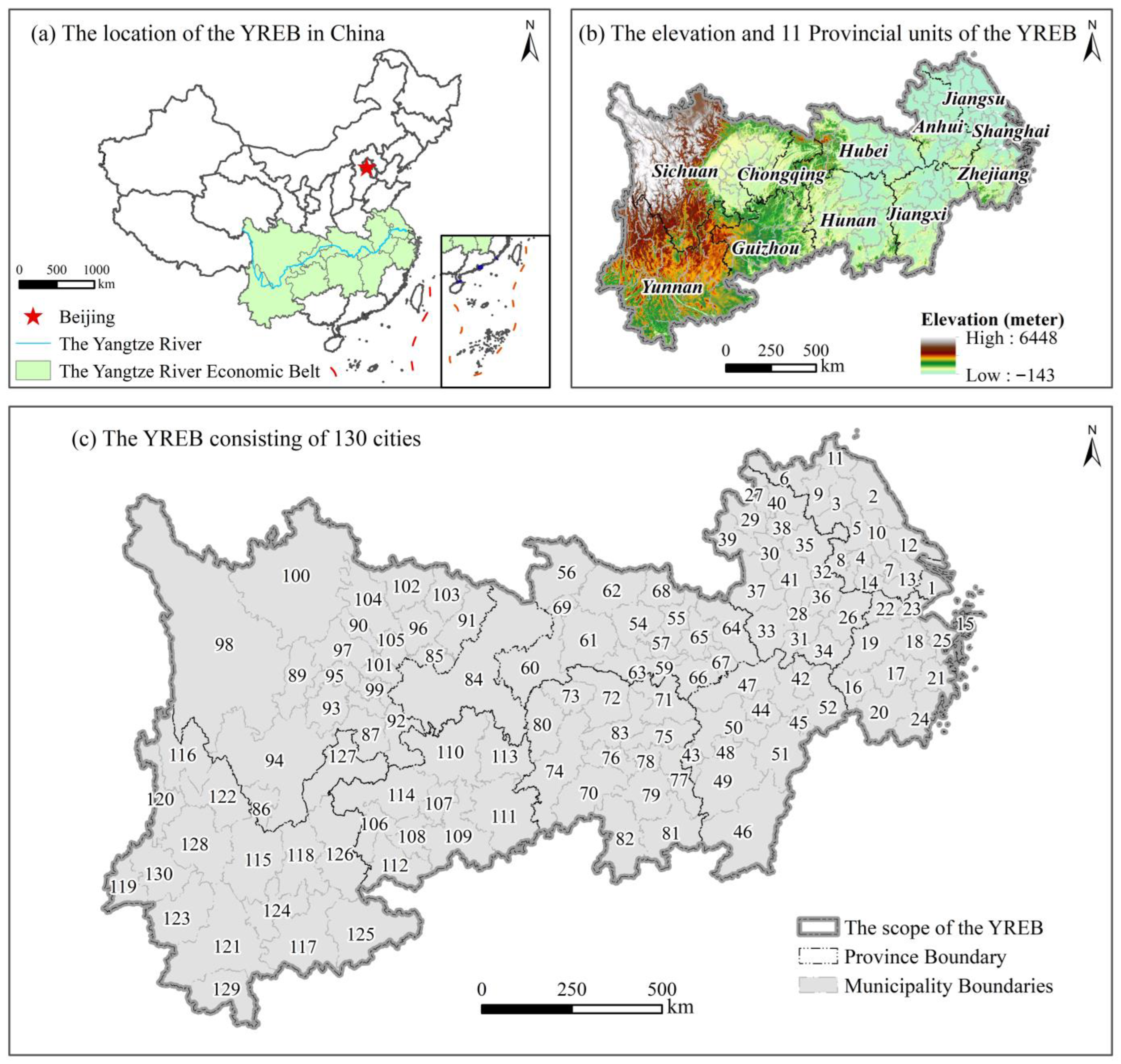
The Yangtze River Economic Belt (YREB) spans the eastern, central, and western regions of China, covering 11 provinces and municipalities: Shanghai, Jiangsu, Zhejiang, Anhui, Jiangxi, Hubei, Hunan, Chongqing, Sichuan, Guizhou, and Yunnan (Figure 1). It covers approximately 2.05 × 10⁶ km2, accounting for 21.4% of the country’s total land area.
According to geographical and economic characteristics, the YREB is divided into three sections: the lower reaches (Shanghai, Jiangsu, Zhejiang, and Anhui), the middle reaches (Jiangxi, Hubei, and Hunan), and the upper reaches (Chongqing, Sichuan, Guizhou, and Yunnan).
As of 2023, the YREB had a total population of approximately 5.99 × 10⁸ (42.9% of the national total) and a GDP of CNY 5.84 × 10¹³. As a key grain production region, the YREB covers approximately 2.7 × 10⁷ hectares of cultivated land area, accounting for nearly 31% of China’s total [25]. This makes the YREB one of China’s most important grain production regions and most densely populated and economically dynamic strategic areas. Therefore, it was selected as the study area for this research.
To offer a global perspective, the YREB can be compared to the Mississippi River Economic Belt in the United States [26]. Both regions span vast inland and coastal territories, integrate economically diverse areas, serve as crucial agricultural and industrial corridors, and function as major demographic and economic hubs within their respective countries.
This study focuses on the YREB, using the prefecture-level division as the fundamental spatial unit for analysis. On one hand, prefecture-level division data, which are complete and more standardized, can ensure the reliability of large-scale and cross-provincial network analysis. On the other hand, using county-level units would result in an excessive number of nodes, leading to an overly complex and dense network structure that would obscure macro-level characteristics and key influencing mechanisms of spatial correlations. Additionally, the prefecture-level division serves as a critical policy unit that connects higher and lower administrative tiers, ensuring that research findings can be more readily applied to the formulation and implementation of regional strategies for cultivated land protection and agricultural restructuring.
Furthermore, Chongqing and Shanghai are cities under the direct jurisdiction of the State Council, but considering their unique administrative status and factors such as their comparable spatial extent, economic volume, population size, and policy implementation consistency with typical prefecture-level cities, the municipalities of Chongqing and Shanghai were each treated as single prefecture-level units. Therefore, this study takes the prefecture-level cities as its basic research unit and divides the YREB into 130 research units.

2.2. Data Sources and Processing

As a key grain production region in China, the YREB has experienced distinct phases of NGLU evolution from 2010 to 2023 (Table 1). This period also coincided with a shift in China’s cultivated land protection policies, which has evolved from an emphasis on “quantity control” to “quality control”, and more recently to “use type control”.
Considering data availability and completeness, this analysis is based on panel data on cultivated land use for 130 cities from 2010 to 2023. Vector data for administrative boundaries and a digital elevation model (DEM) covering the YREB were obtained from the Resource and Environmental Science and Data Platform of the Chinese Academy of Sciences (https://www.resdc.cn/), with a spatial resolution of 250 m. Socioeconomic and agricultural indicators—such as crop sown area, food crop sown area, cultivated land area; the multiple cropping index; total expenditure on agriculture, forestry, and water; the non-agricultural employment rate of rural permanent; and total investment in agricultural fixed assets—were collected from provincial and municipal statistical yearbooks (2010–2023) and the China statistical Yearbooks (2010–2023). Missing data were supplemented using interpolation methods.
Inter-city geographical distances were calculated using ArcGIS 10.8. To accurately quantify the degree of NGLU and the spatial correlation of cultivated land, a spatial correlation gravity matrix was constructed using statistical measurements derived from cultivated land use data. The gravity matrix was binarized and served as the basis for SNA.

3. Materials and Methods

3.1. Evolution of Cultivated Land Protection Policies and Practices in China

China’s cultivated land protection paradigm has undergone a significant transformation, evolving from an initial focus on quantity control to an integrated approach emphasizing quality management, and most recently, to the strict regulation of land use types (land use regulation system) [27,28]. To maintain the total national cultivated area, policies such as the system for offsetting cultivated land that has been put to other uses were first implemented, requiring that any land converted for non-agricultural purposes be offset by reclaiming an equivalent area of new cultivated land [29]. Subsequently, the policy focus expanded to include soil quality and ecological functions, exemplified by initiatives such as the high-standard farmland construction program. Around 2020, policy emphasis shifted sharply toward curbing NGLU, explicitly prioritizing the use of farmland for grain production (e.g., rice, wheat, corn) over cash crops or non-agricultural uses. This evolution reflects a growing recognition that ensuring national food security requires not only a sufficient quantity of cultivated land but also its dedicated use for staple grain crops.
China’s land protection system is implemented through several key institutions and policy instruments. The most stringent of these is the “permanent basic farmland protection redline”, which designates high-quality cropland for permanent, inflexible protection, mainly for grain production. This is complemented by the system for offsetting cultivated land that has been put to other uses, which aims to maintain a dynamic balance in the total cultivated land area [30]. At a strategic level, the designation of “grain production functional zones” and “important agricultural product production protection zones” (together referred to as the “two areas”) delineates specific regions where agricultural policies are designed to maximize grain output. These tools collectively form a multi-layered defense system, aiming to preserve prime farmland, stabilize the total area of farmland, and the zone core production bases.
As summarized in Table 1, the Chinese government has implemented a series of targeted policies to curb the NGLU trend. Early initiatives, such as the Plan for a New 100-Billion-Kilogram Increase in Grain Production Capacity (2009–2020), began by identifying and protecting core production areas. A pivotal shift occurred with the Opinions on Preventing the NGLU and Stabilizing Food Production ([2020] No. 44), the first nationwide policy document to directly address non-grain conversion, which required provincial governments to formulate remediation plans. This was followed by stricter controls on land use changes, as outlined in the Circular on Issues Regarding the Strict Control of Cultivated Land Use ([2021] No. 166). The ongoing evolution of this policy trajectory is reflected in the Food Security Law of the People’s Republic of China (Draft), which aims to codify these measures into a robust legal framework, establishing incentive mechanisms and imposing strict controls on changes in cultivated land use.
These policies have played a crucial role in slowing the loss of cultivated land and stabilizing grain production capacity, contributing to China’s food self-sufficiency in recent decades. The functional zoning designations have also helped concentrate agricultural support policies. However, their effectiveness in completely halting NGLU has been limited, as evidenced by the continued rise in the non-grain rate shown in this study. A central challenge lies in the strong economic incentives, such as comparative benefit gaps and regional development pressures, which often run counter to grain production objectives. This tension between regulatory control and socioeconomic reality constitutes a key theme in the formation of the NGLU correlation network, as local governments and farmers navigate complex interactions between top-down protection mandates and bottom-up economic opportunities.

3.2. Formation Mechanism of the SCN of NGLU

Despite the comprehensive protection regime outlined in Section 3.1, the YREB continues to exhibit a pronounced and evolving NGLU trend under the persistent pressures from rapid industrialization and urbanization. This indicates that the drivers of cultivated land conversion extend beyond the localized attributes of individual plots and are deeply embedded in a complex web of inter-regional interactions. The SCN captures these interactions, offering a relational perspective for deciphering the cross-regional evolution of NGLU, which cannot be fully explained by isolated policies or local economic conditions alone.
In SCN, geographic units are conceptualized as nodes, and their interactions—encompassing economic, social, ecological, and material flows—are represented as edges [31]. The network consists of three core components:
(1)
Nodes, the fundamental units of the network, refer to spatial management units such as plots, administrative villages, townships, or counties within the cultivated land system;
(2)
Edges, representing spatial correlations between nodes, include capital flows, technology diffusion, labor migration, material transfer, and information exchange;
(3)
Weight and direction, which quantify the strength and direction of correlations, such as the intensity of non-grain driving forces or the spatial reach of impacts.
The non-grain phenomenon is not only constrained by inherent land properties but also embedded within the SCN structure and resilience interactions of the regional cultivated land system [32] (Figure 2). This study posits that the network formation is driven by the following interconnected mechanisms:
(1)
Resource and economic differentiation. Spatial disparities in the baseline value of cultivated land and potential economic returns initiate NGLU transformation at core nodes. External capital and technology then flow to these advantageous locations, accelerating non-grain conversion [33,34].
(2)
Industrial chain pressure and spatial contagion. Industrial transformation in core areas creates chain pressure. spreading market demand and price signals along the supply chain. This factor, combined with the imitation of micro-level decisions under the influence of information and social networks, leads to the spatial clustering of NGLU along in geographically adjacent areas, economic radiation belts, and infrastructure corridors [35,36].
(3)
Spillover effects and network reshaping. NGLU generates ecological, economic, and regional-level spillover effects, the intensity of which depends on node centrality. Concurrently, management entities and multi-agent governance can reshape the network structure through policy interventions, market tools, and engineering measures, thereby influencing the spatial spread of NGLU [37,38].
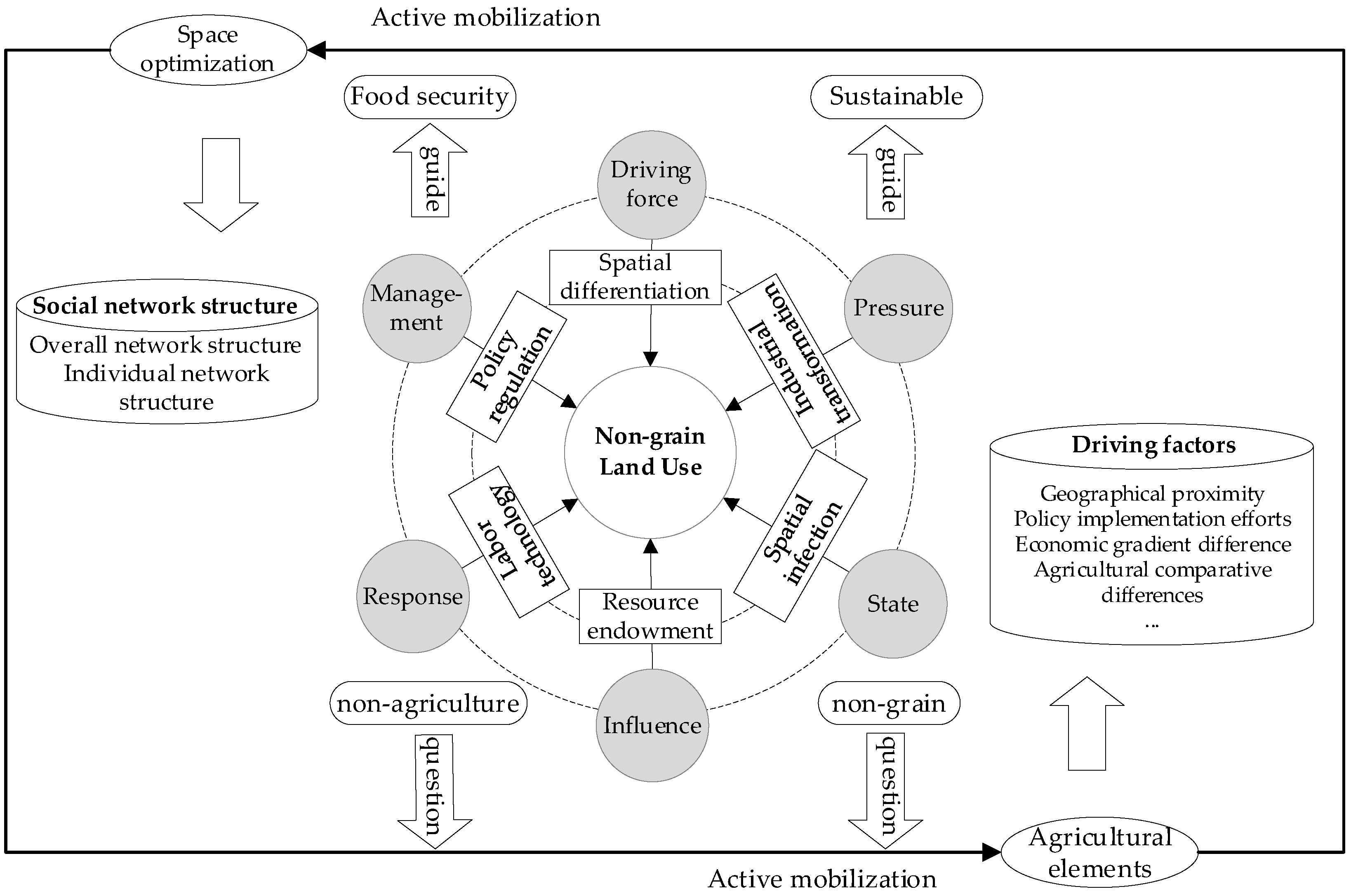
Figure 2. Formation mechanism of SCN of NGLU.
Land 14 02149 g002
Based on this theoretical framework, we employed the DPSIRM (Driving Force-Pressure-State-Influence-Response-Management) model to deconstruct causal feedback loops within the NGLU network. This approach strengthens the resilience of key nodes and supports the maintenance of the food security function of the system.

3.3. Measurement of NGLU

The measurement of NGLU is generally categorized into three main approaches:
(1)
The planting structure index, which is measured via the ratio of the grain planting area to the total crop planting area [39].
(2)
The land transfer index, which is measured via the ratio of the proportion of the transferred cultivated land area used for non-grain planting to the total transferred cultivated land area [40].
(3)
The land use type index, determined via the remote sensing interpretation of cultivated land converted to non-grain uses (e.g., garden land and forest land). However, this approach is constrained by limited accuracy [41].
Based on the policies in Table 1, the statistical yearbooks and national economic and social development statistical bulletins of cities within the YREB, other public data sources, agricultural production realities, and previous research, this study defines grain crops as cereals (i.e., rice, wheat, and corn), legumes, and potatoes.
Considering data availability and following the non-grain calculation method proposed by Yuan et al. [42], this study measured the non-grain level of cultivated land at the prefectural level. Specifically, this study used the ratio of the grain crop sown area (adjusted for multiple cropping) to the total cultivated land area. The calculation formula is as follows:
P = ( 1 G C × I ) × 100 %
where P is the rate of NGLU (0 ≤ P ≤ 1), G is the sown area of grain crops, C is the area of cultivated land, and I is the multiple cropping index.

3.4. Kernel Density Estimation

Kernel density estimation (KDE) is a non-parametric estimation method used to estimate the probability density function of a random variable. Through the application of a kernel function, the distribution of data samples is smoothed, enabling the identification of underlying patterns. KDE is employed to reveal the spatial distribution, variation trends, and morphological characteristics of the investigated variables. To clearly identify distribution patterns of regions with varying levels of NGLU, reflect regional heterogeneity, and demonstrate subtle annual variations, the KDE bandwidth parameter was set to 0.3, following related research [43] and validated through sensitivity analysis. This bandwidth is considered to ensure a robust representation of spatial differentiation patterns in cultivated land utilization across the Yangtze River Economic Belt, providing precise empirical evidence for differentiated policy formulation. The formula for KDE is expressed as:
f ( x ) = 1 n h i = 1 n K ( x X i h )
where K is the kernel function, n is the total number of samples, Xi is the sample observation value, x is the point where the density is estimated, and h is the bandwidth that controls the degree of smoothing.

3.5. SCN Analysis

3.5.1. Modified Gravity Model

The gravity model is widely applied to study spatial correlations. Its core principle is based on representing the transmission mechanism of NGLU between regions through spatial interaction forces. Building on relevant research [34,35] and considering the specific characteristics of NGLU, per capita GDP was introduced as an additional factor to comprehensively measure the combined impact of economic driving forces and geographical distance on spatial correlations.
To account for regional heterogeneity, the proportion of the NGLU level in one area relative to the total land use in a pair of related areas was adopted as an adjustment factor to correct the gravity coefficient. The calculation method is given as follows:
R i j = U i U i + U j × U i × U j D i j / ( g i g j ) 2
where Rij is the degree of spatial correlation of NGLU between city (district) i and city (district) j, Dij is the geographical spatial distance between city (district) i and city (district) j, U and g are the level of NGLU and per capita GDP in each city, respectively.

3.5.2. Social Network Analysis

The governance of NGLU in the YREB is not limited to the protection and utilization efficiency of cultivated land within individual cities. Instead, emphasis is placed on resource synergies and ecological linkages between cities. While traditional regional analysis often focuses on individual plots or areas, spatial economics enables the analysis of spatial interactions between regional units and their impact on land use eco-efficiency.
Among available methodologies, SNA is recognized as an effective tool for unraveling the relationship between cities and their spillover effects [36]. Specifically, SNA employs graph theory tools and algebraic models to explore spatial correlation structures, allowing the quantitative analysis of correlation pathways between nodes and enabling the identification of roles that overall and individual characteristics of the SCN of NGLU in the YREB, with further exploration of its impact from the perspective of network node centrality.
(1)
Overall network characteristics. Overall network characteristics include network density, network correlation, network hierarchy, and network efficiency. Among them, network density measures the closeness of the non-grain spatial correlation of new cultivated land in each unit. The degree of network correlation reveals the extent of direct or indirect reachability between each unit. Network hierarchy reflects the degree of asymmetric reachability between nodes. Network efficiency evaluates the redundancy of correlation pathways within the network. The calculation formulas of these measures are as follows:
D = L / N × ( N 1 )
C = 1 2 V / N × ( N 1 )
H = 1 K / m a x ( K )
E = 1 K / m a x ( M )
where D, C, H, E represent network density, network correlation degree, network grade degree, and network efficiency, respectively; N is the number of nodes (members) in the SCN; L is the number of actual relationships between nodes; V is the number of unreachable node pairs in the network; K is the number of symmetric reachable node pairs in the network; and M is the number of redundant pathways in the network.
(2)
Individual network characteristics. Individual network characteristics include degree centrality, closeness centrality, and betweenness centrality. Among them, degree centrality measures the number of direct path connections that a node has with other nodes in the network. Closeness centrality characterizes the sum of the shortest distances between a node and all other nodes in the network. Betweenness centrality reflects the extent to which a node acts as a “bridge” on the shortest paths connecting other pairs of nodes. The calculation formulas are as follows:
D C = n / ( N 1 )
C C = j = 1 k d i j
B C = 2 j N k N b i k ( i ) / ( N 2 3 N + 2 ) b j k ( i ) = g j k ( i ) / g j k
where DC, CC and BC are degree centrality, closeness centrality and betweenness centrality, respectively; N is the number of nodes directly associated with a given node in the network; dij is the shortest distance between city i and city j; gjk is the number of shortest pathways between city i and city k; gjk (i) is the number of shortest pathways between city i and city k that pass through city i; bjk (i) is the probability that city i lies on the shortest path between city i and city k, where jki and j < k.

3.6. Quadratic Assignment Procedure

As shown in Section 3.1, the formation of the cultivated land non-grain SCN in the YREB is driven by multiple internal factors across provinces and cities. To further reveal the driving mechanism of this network, it is critical to identify potential influencing factors. However, SCN data are expressed as a relational matrix, which violates the fundamental assumption of “variable independence” in traditional econometric methods. Using conventional analysis methods would therefore likely cause multicollinearity problems.
To address this issue, the quadratic assignment procedure (QAP) was applied in this study. As a non-parametric regression method, QAP is appropriate for relational matrix analysis—it relaxes the assumption of variable independence, does not require normal distribution, and is therefore more robust and effective during such analyses. With this regression method, we constructed an econometric model to systematically identify the driving mechanisms behind the formation and evolution of the cultivated land non-grain SCN in the YREB.
Prior to conducting QAP regression analysis, this study first performed QAP correlation analysis to diagnose potential multicollinearity issues among the independent variable matrices. QAP correlation analysis calculates correlation coefficients and their significance levels between two relationship matrices through permutation tests. This method is also independent of normal distribution assumptions and demonstrates robustness in handling dependent relationship data [44].
Based on the theory of regional spatial interactions [35] and previous empirical studies, we selected the driving factors from two dimensions: endogenous dynamics and external constraints. The indicators are detailed as follows:
(1)
Geographical proximity (Distance): According to the first law of geography [45], spatial distance affects the cost of production factor flows and the efficiency of information transmission. Neighboring areas are more likely to imitate or compete with cultivated land use decisions implemented elsewhere. As such, geographical proximity was represented via a binary adjacency matrix, where 1 indicated a shared administrative boundary and 0 indicated the lack of such a boundary.
(2)
Cultivated land protection policy differences (Finance): Variations in local government regulation intensity regarding cultivated land protection may generate policy gradient effects [46]. To reflect this issue, this study used the proportion of fiscal expenditure on agriculture, forestry, and water affairs relative to total fiscal expenditure. The difference matrix was expressed via the absolute difference in the fiscal expenditure ratio between any two cities, representing the degree of difference in the investment intensity of different city governments regarding farmland protection.
(3)
Economic gradient difference (Econ): Regional disparities in economic development act as a key driver of cross-regional transmission of non-grain production [47]. High-gradient downstream regions may induce cultivated land use transformation in mid- and upstream areas through mechanisms such as capital outflow and demand pull. Per capita GDP was therefore used to quantify the inter-regional economic disparity. The difference matrix was expressed via the absolute difference in per capita GDP between any two cities, quantifying the gap in economic development level between cities and providing the key potential energy driving the cross-regional flow of factors.
(4)
Agricultural comparative benefit difference (Struct): NGLU essentially reflects profit-seeking behavior [48]. This study measured this factor via the ratio of net income per hectare from cash crops to that from grain crops, reflecting the relative incentives driving planting structure adjustment. The difference matrix was expressed via the absolute difference in income ratio between any two cities, reflecting the different levels of economic incentive intensity faced by farmers in different regions and acting as the spatial embodiment of micro-decision-making motivation.
(5)
Non-agricultural employment opportunity difference (Labor): The shift in rural labor to non-agricultural sectors directly influences cultivated land use intensity [49]. This was measured via the non-agricultural employment rate of the rural resident population, characterizing the weakening effect of labor loss on grain production. The difference matrix was expressed via the absolute difference in the non-agricultural employment rate between any two cities, characterizing the spatial heterogeneity of rural labor transfer pressure and directly affecting the input cost of the agricultural labor force.
(6)
Factor mobility intensity (Mobility): The cross-regional flow of capital and technology mediates the spatial correlation of non-grain production [50]. This was measured via the sum of the average municipal agricultural fixed asset investment (in CNY 10,000) and the average number of agricultural technology cooperation patents. The difference matrix was expressed via the absolute difference between any two cities on the composite index, which comprehensively reflects the availability differences in capital and technology, two key factors of production, between different cities.
Accordingly, the econometric model of the driving mechanisms is expressed as follows:
N g = f ( D i s t a n c e , F i n a n c e , E c o n , S t r u c t , L a b o r , M o b i l i t y )
where Ng represents the SCN matrix of NGLU in the YREB, constructed from the absolute differences in indicators across cities. Distance, Finance, Econ, Struct, Labor, and Mobility represent the standardized matrices of geographical proximity, policy implementation, economic gradient difference, agricultural comparative benefit difference, non-agricultural employment opportunity difference, and factor mobility intensity, respectively.

4. Results

4.1. Spatial Pattern Characteristics of NGLU

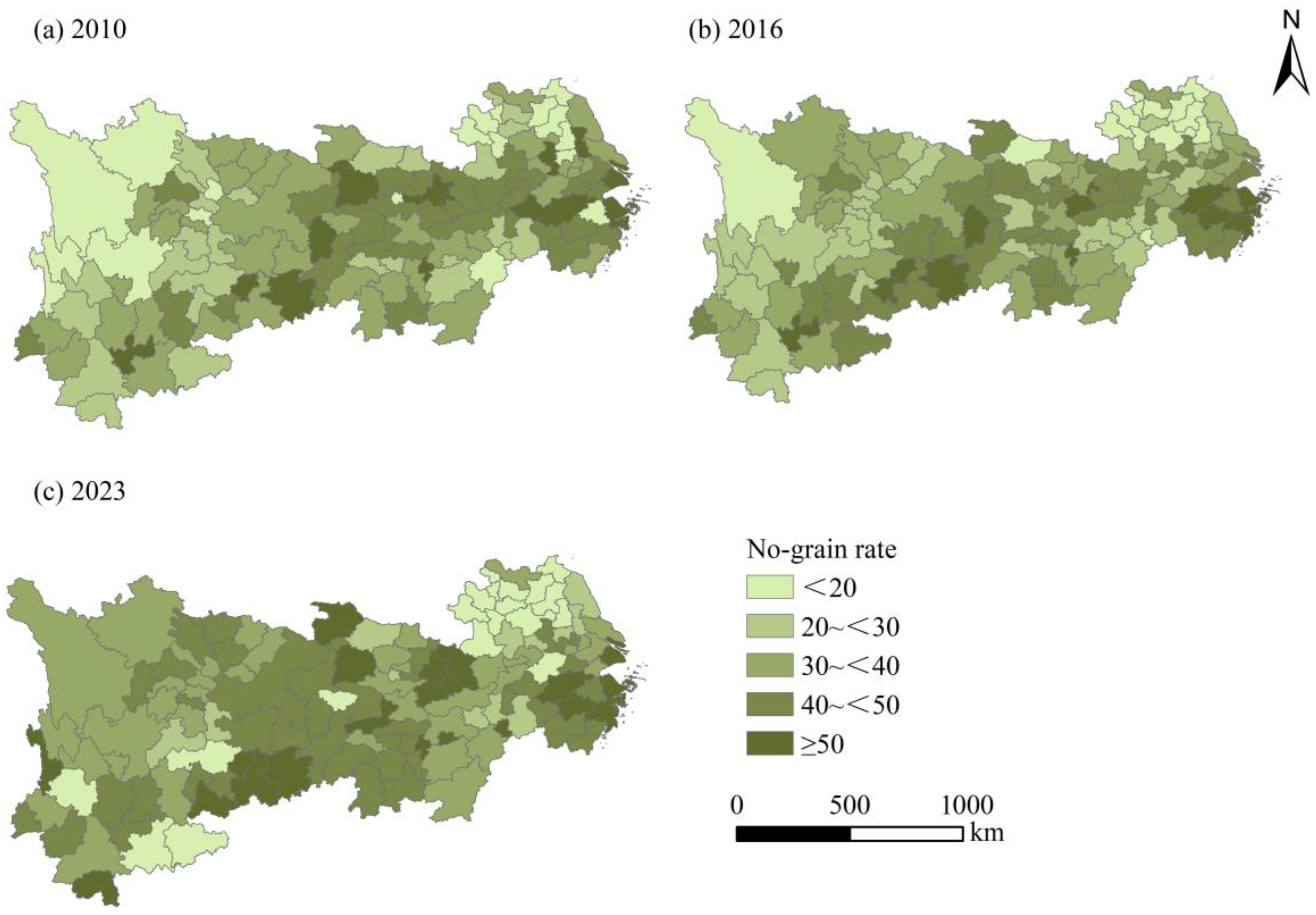
From 2010 to 2023, the spatial pattern of non-grain conversion in the YREB underwent significant transformation. Overall, a clear core–periphery structure emerged, characterized by the continued polarization of high-value areas in the lower reaches, accelerated spatial diffusion in the middle reaches, and localized point-source development in the upper reaches. This evolution demonstrates a distinct “stepped expansion from east to west, shifting from scattered points to contiguous zones”, reflecting the cross-regional transmission of non-grain risk in the context of regional coordinated development (Figure 3). A steady increase in the non-grain crop area was accompanied by a relative decrease in grain crop cultivation.
In 2010, the spatial pattern was dominated by a single downstream core, with sporadic non-grain distribution in the middle and upper reaches. The non-grain rate in Shanghai, southern Jiangsu, and northern Zhejiang was generally above 40%, resulting in a contiguous high-value cluster. In the middle reaches, particularly the Jianghan Plain (central and southern Hubei Province) and Dongting Lake Plain (northern Hunan Province and southern Hubei Province), non-grain conversion rates ranged between 30% and 40%. In the upstream reaches, the Yunnan–Guizhou Plateau and western Sichuan mountains had non-grain rates generally below 20%.
By 2016, non-grain land diffusion accelerated in the middle reaches, whereas localized point-source breakthroughs were observed upstream. The non-grain rate in Shanghai, Jiangsu, and Hangzhou further climbed above 50%, with high-value areas extending into Anhui’s Yangtze River corridor, reflecting the initial impacts of industrial gradient transfer. In the Jianghan Plain and the Changsha–Zhuzhou–Xiangtan region (eastern Hunan), contiguous areas with 30–40% conversion expanded. This revealed ongoing adjustments to cropping structure (e.g., shifts from rice to cash crops and from grain to forage) and policy incentives that encouraged land use conversion. Around the Chengdu–Chongqing urban agglomeration (Chengdu Plain and Chongqing hills), patches with 40% conversion were identified, reflecting the growth of leisure and facility agriculture during urban–rural integration and signaling point-source expansion upstream.
By 2023, a continuous high-value corridor (40% conversion and above) had solidified from Shanghai to Wuhan. This spatial continuity was not a coincidence but a direct manifestation of the “industrial chain pressure and spatial contagion” mechanism outlined in Section 3.2. The lower-reach megacities (e.g., Shanghai), constrained by soaring land costs and stringent environmental regulations, acted as primary sources of capital outflow and market demand. This economic potential “gradient” (Econ) propelled agricultural enterprises and capital upstream along the Yangtze River’s transportation arteries. Consequently, mid-reach hubs such as Wuhan, with their relatively lower factor costs and strategic locations, became receptive “springboards”, absorbing these flows and experiencing accelerated non-grain conversion to serve downstream markets. Thus, the corridor physically maps the pathway of cross-regional economic spillovers. Large areas of the Poyang Lake Plain (Jiangxi Province) and Jianghuai region (northern Jiangsu Province and northern and central Anhui Province) reached 40–50% conversion, reflecting intensive cash crop production driven by deepening land use conversion. The Yunnan-Guizhou Plateau (including peripheral areas around Kunming and Guiyang) reached non-grain rates above 30%. These patterns highlight regional heterogeneity, driven by mountain-specific agriculture (e.g., flowers in Yunan Province and Chinese herbal medicines in Guizhou Province) and ecological restoration policies, leading to multi-core agglomeration in the upstream reaches.

4.2. Analysis of KDE Results

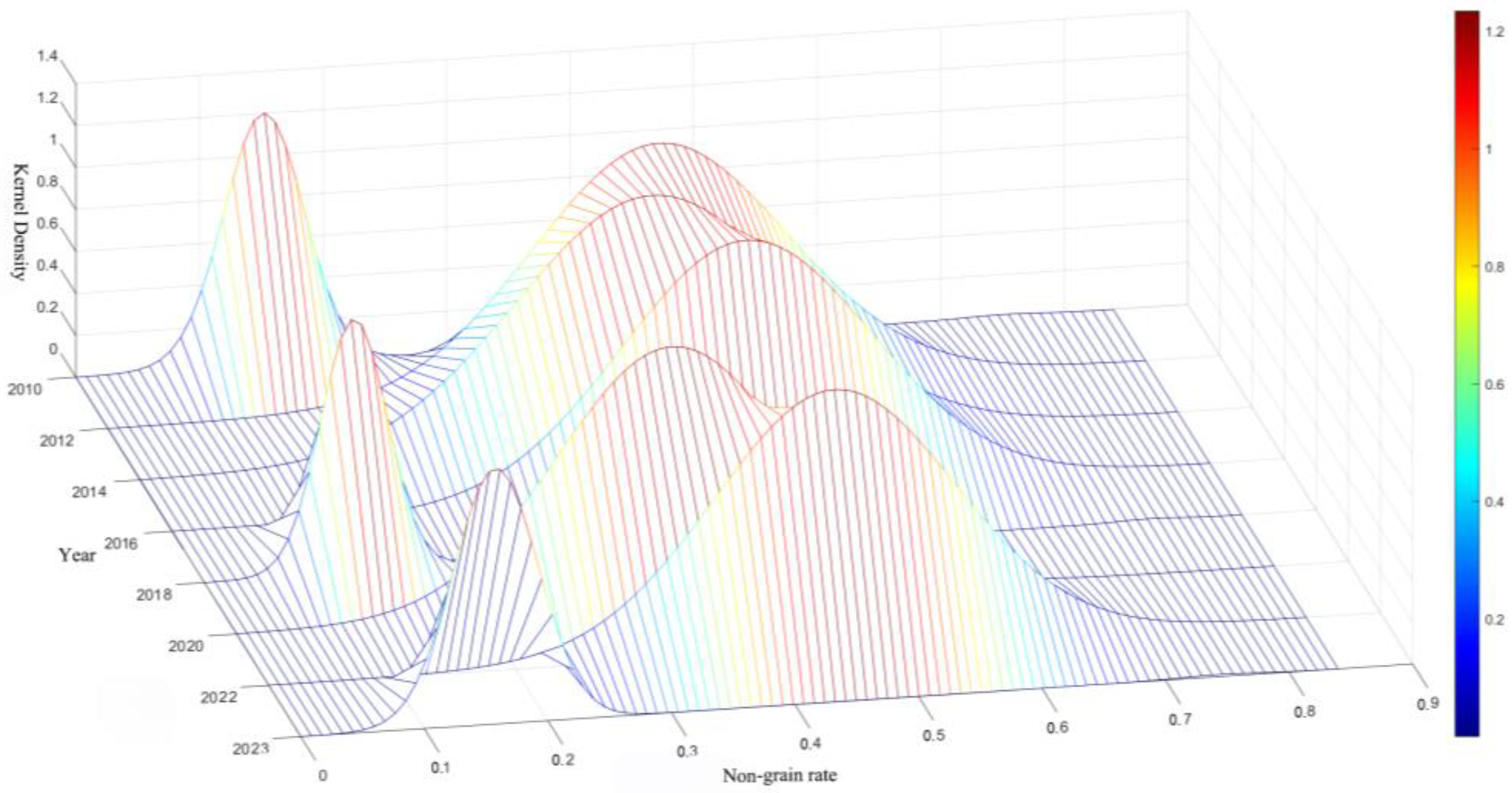
As described in Section 3.2 and Section 3.3, we calculated the non-grain rate from 2010 to 2023, conducted kernel density estimation, and produced a kernel density distribution map of NGLU in the YREB (Figure 4). The results were analyzed in terms of the overall trend, peak distribution, and polarization characteristics.
The kernel density curves for the entire sample revealed distinct evolutionary patterns, characterized by a rightward shift, peak splitting, and right-tail expansion. From 2010 to 2023, the distribution center gradually migrated from medium-low to high values, indicating a systematic increase in regional non-grain risk. Concurrently, the peak shape evolved from a narrow single peak to a broad multi-peak structure.
Furthermore, the remarkable right-tail extension and densification of the kernel density curve signify an increasing “polarization” of non-grain risk. This trend can be attributed to a self-reinforcing “siphon effect” originating from core urban agglomerations. High-value nodes such as those in the Yangtze River Delta not only maintained their elevated non-grain levels but also continuously attracted capital, technology, and skilled labor (factor mobility), thereby further intensifying their own non-grain production capacity and widening the gap with less-developed regions. The increasing density in the tail indicates that more cities are being “locked into” this high-risk club, moving beyond a few isolated hotspots to form contiguous high-risk zones, as shown in Figure 3c. This trend reflects the combined influences of the siphon effect and radiation effect generated by industrial chain linkages in core regions. Under these effects, contiguous high-value areas emerged, further intensifying spatial differentiation.
The polarization trajectory evolved from a “single peak right deviation” to a “multi-peak coexistence” pattern. As a result, the spatial distribution and evolution of non-grain risk became highly complex.
The “three staple grains exclusion + multiple cropping index correction” method adopted in this study successfully captured the evolution of the NGLU rate dynamically over the 2010–2023 time series (Figure 3). The transformation of the kernel density estimation from a “single-peak right deviation” to a “multi-peak coexistence” pattern (Figure 4) vividly depicts the polarization and gradient transmission of non-grain risk. This dynamic assessment result validates the effectiveness and superiority of the method proposed in H2 in accurately quantifying the dynamic changes in NGLU, overcoming the limitations of traditional static metrics.

4.3. The Form and Characteristics of the SCN of NGLU

4.3.1. SCN Form of NGLU

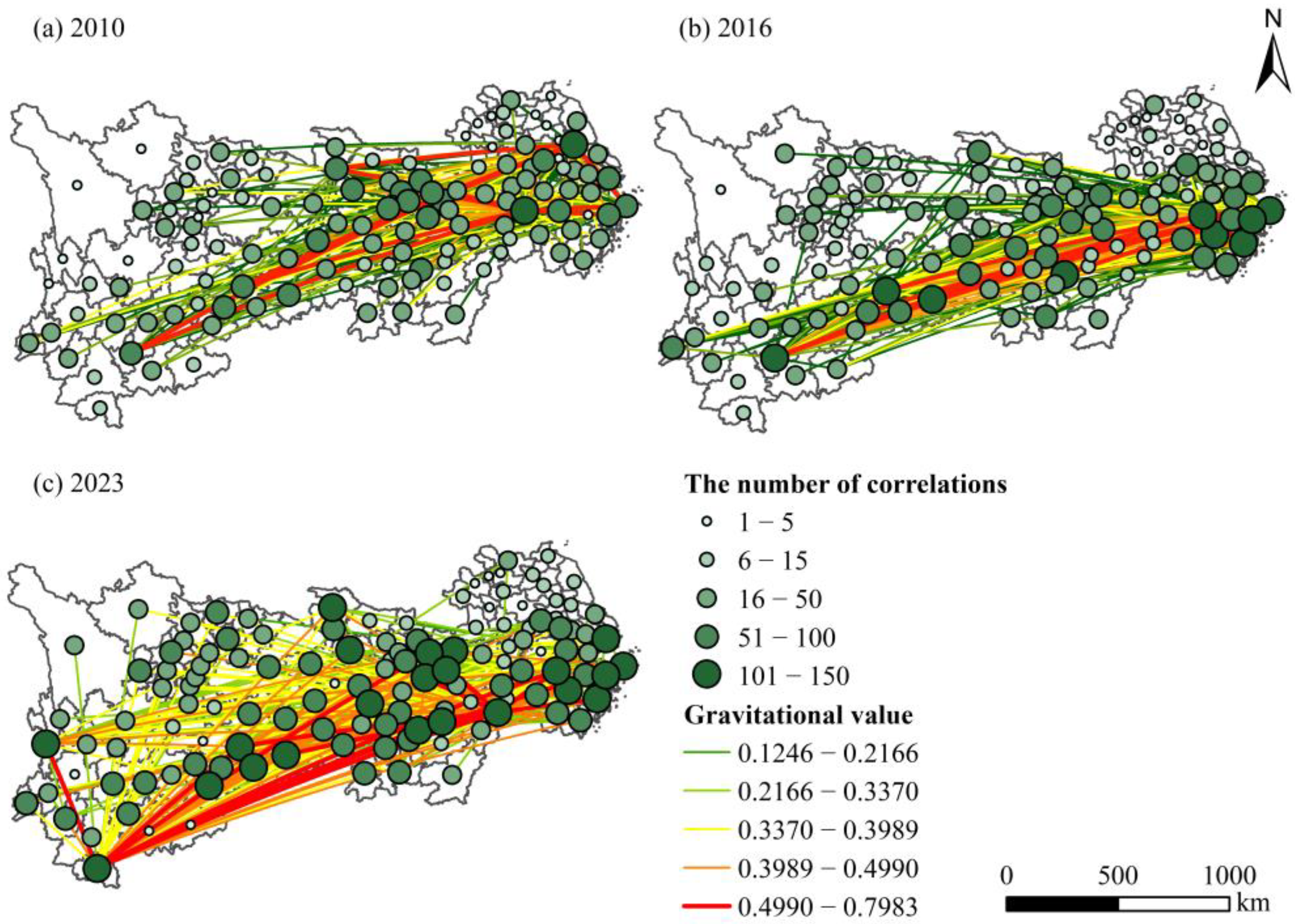
Figure 5 shows a distinct network structure in the spatial correlation of NGLU within the YREB. This indicates that NGLU-related interactions between counties extended beyond traditional geographical boundaries and were not confined to spillover effects on adjacent units. Overall, the SCN of NGLU exhibited a gradient evolutionary trajectory, progressing through the stages of “unipolar siphon → dual-core conduction → multi-level synergy”. To visually represent the spatial and temporal evolution of the non-grain rate, and based on the policies depicted in Table 1, 2010, 2016, and 2023 were selected.
In 2010, the “National Plan for Major Functional Areas” ([2010] No. 46), issued by China’s State Council in December 2010, designated the Yangtze River Delta as an optimized development zone, where the protection of cultivated land was subordinated to economic growth. Acting as a unipolar economic radiation source, the Yangtze River Delta had a siphon effect on cultivated land through rapid urban expansion. At that time, a cross-regional transmission chain for NGLU had not yet formed in the middle and upper reaches.
In 2016, following the implementation of the “Outline of the Yangtze River Economic Belt Development Plan”, the middle reaches began to function as a “springboard” for factor transfer. Wuhan (the capital city of Hubei Province) grew as a transmission hub, facilitating the establishment of a “Shanghai-Hankou Corridor” connected to the Yangtze River Delta.
In 2021, the enactment of the “Yangtze River Protection Law” strengthened ecological protection. However, uneven assessments of provincial cultivated land protection resulted in “policy arbitrage”.
By 2023, the SCN had deepened into a three-tier hub-and-spoke structure centered on “Shanghai–Hangzhou–Jiangsu–Wuhan–Chengdu–Chongqing”. Emerging nodes, such as the Poyang Lake Plain and the Central Yunnan Dam Area, became more prominent, while high-density correlation clusters emerged in the middle and lower reaches.
Meanwhile, contradictions between regional development strategies and localized cultivated land protection policies underscored the role of spatial synergy in the large-scale land transfers that accelerated NGLU. This process was reinforced by the dual forces of downstream capital outflow and the “policy depression” in the middle reaches, which encouraged the conversion of commercial grain fields for cash crop cultivation.
Conversely, weakly correlated areas in the southwestern periphery were constrained by the ecological red line and pressures from specialty agricultural development. To mitigate the risk of gradient transmission driven by regional economic differences, a collaborative governance system based on principles of “axial control + node classification + edge support” must be urgently established.

4.3.2. Analysis of the Overall Network Characteristics

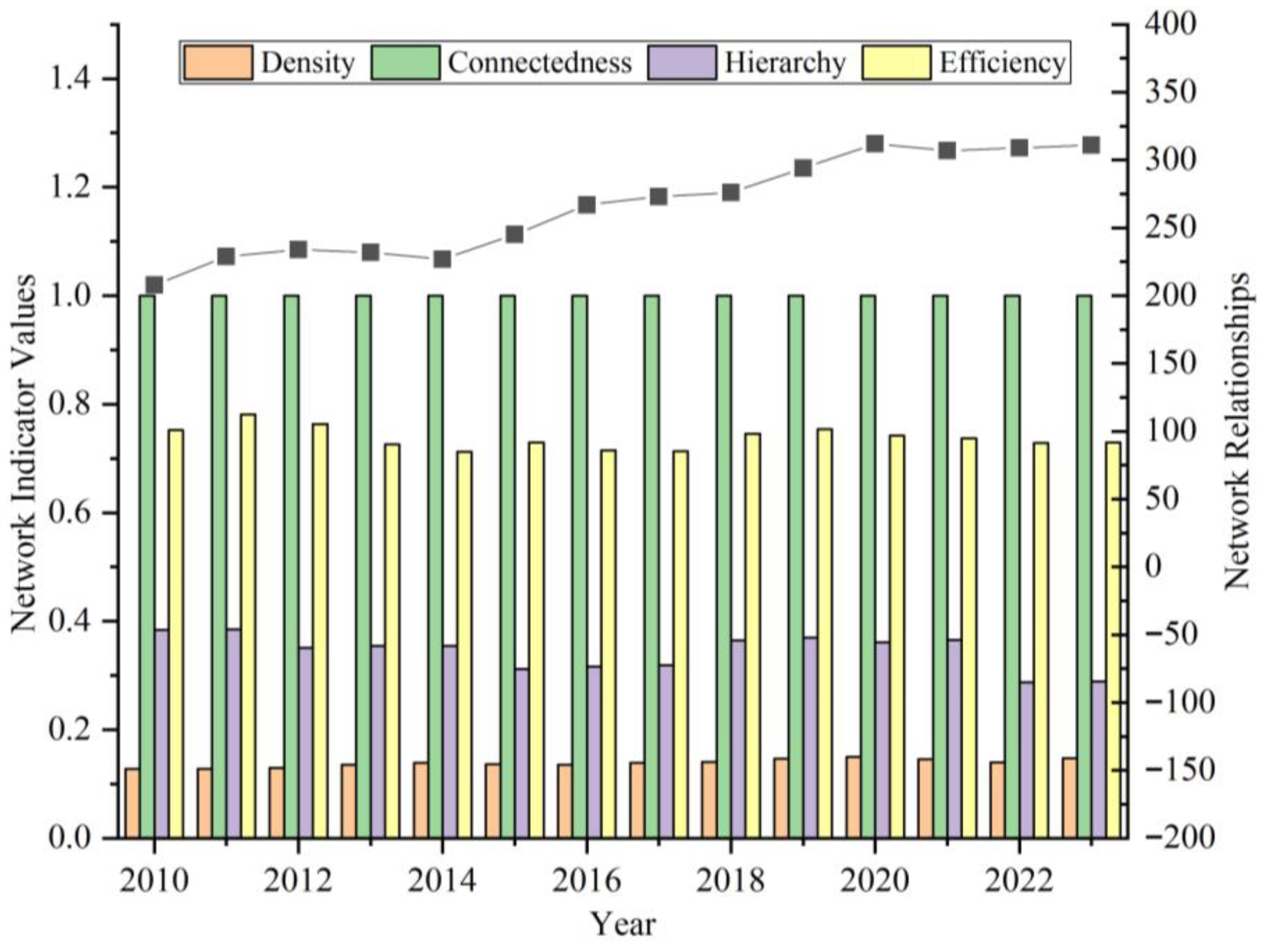
Overall, the network correlation degree of NGLU in the YREB remained relatively stable. The number of network relationships and network density increased initially and then stabilized, whereas network hierarchy and network efficiency initially fluctuated, followed by a gradual decline (Figure 6). Specifically, the degree of network correlation consistently remained at 1, indicating the absence of isolated nodes within the network. Between 2010 and 2023, the number of network relationships increased from 208 to 311, and the network density increased from 0.1276 to 0.1470. These trends demonstrate the existence of more active spatial connections in NGLU between cities and the gradual formation of an interconnected SCN. However, the average number of network relationships (266) and the network density (0.1387) remained significantly lower than the theoretical maximum (311 relationships, density = 1). These gaps suggest that regional cooperation, exchange, and collaborative efforts need to be further strengthened to increase the density and compactness of the network.
In contrast, network hierarchy decreased from 0.3841 to 0.2894, marking a transition in the SCN from a well- ordered hierarchical structure to a symmetrically accessible, flat structure. Concurrently, network efficiency decreased slightly from 0.7526 to 0.7297, indicating an increase in redundant pathways within the SCN. Nevertheless, network efficiency remained consistently high, implying that inter-regional correlation pathways were still relatively singular. As a result, there is a need for improvements in network connectivity and stability are needed.

4.3.3. Characteristic Analysis of Node Centrality

Node centrality was used to evaluate the functional roles of individual nodes within the network and to assess their influences. Taking 2023 as an example, three node-level structural characteristics—degree centrality, closeness centrality, and betweenness centrality—were quantitatively analyzed:
(1)
Degree centrality
Nodes with high centrality gradually formed non-grain control poles. Cities such as Yingtan in Jiangxi Province and Wuhan in Hubei Province dominated regional cultivated land conversion through leveraging capital accumulation, technological innovation, or policy advantages. Yingtan (Jiangxi) emerged as a typical “control pole” (high degree centrality), primarily due to its strategic specialization and policy path dependence. Historically, Yingtan capitalized on its favorable climatic conditions and location to develop a highly profitable seedling industry cluster. This created a significant “comparative benefit difference” (Struct) relative to traditional grain farming. Over time, this specialization attracted sustained “factor mobility” (Mobility), including specialized investments and market networks, forming a complete industrial chain. Consequently, Yingtan’s land use decisions exerted a powerful gravitational pull on neighboring counties, which supplied inputs, mimicked its cropping patterns, or became sales markets, thereby creating a dense network of non-grain correlations centered on itself. These nodes were shaped by policy gradient differences, and their control rights require restriction, for example, through “negative lists for specialty agriculture” and restrictions on the encroachment of cash crops on basic farmland.
Although not highly ranked in terms of degree centrality, some nodes played a key bridging role in regulating the cross-regional flow of resource elements. For example, Changsha exhibited high betweenness centrality, functioning as a critical “bridging hub” in the network. This role is intrinsically linked to its dual identity as a major regional metropolis and a transportation nexus. Located at the intersection of north–south and east–west transport corridors, Changsha naturally became a conduit for agricultural commodities, capital, and information flowing between the high-demand coastal regions and the resource-rich central and western hinterlands. The city itself did not necessarily initiate the strongest non-grain pressure (unlike Yingtan), but its strategic position forced a vast amount of inter-regional interaction to pass through it. This explains its pivotal role in facilitating and amplifying the cross-regional transmission of non-grain risk. Moreover, through their hub role, those nodes transformed previously scattered non-grain phenomena into more cohesive spatial correlations.
Additionally, the spatial distribution of degree centrality also reflected the regional development gradient. Eastern cities generally had higher values for both degree centrality and betweenness centrality compared to central and western cities. However, certain major cities in the central and western regions, such as Chengdu and Guangan, also demonstrated strong node influence due to their regional agglomeration effects. As a result, a pattern of node centrality emerged that was characterized as “eastern leading with key breakthroughs in central and western regions”. On one hand, this pattern reflects the fundamental role of economic development level in shaping node centrality. On the other hand, it highlights the effect of regional development strategies on shaping node functions in the SCN.
(2)
Closeness centrality
Nodes with low centrality experienced “protective marginalization”. For example, nodes such as Ganzi (Sichuan) experienced “protective marginalization” (low closeness centrality). This marginalization is a direct outcome of their stringent geographical and regulatory constraints, which severely limit their “receiving capacity” for external factors. Situated in the ecologically fragile Tibetan Plateau, Ganzi is bound by the “ecological protection red line”, legally prohibiting large-scale agricultural development. Furthermore, its remote location and complex terrain greatly increase the cost and difficulty of “factor mobility” (Mobility). As a result, despite potential economic incentives, Ganzi is effectively “disconnected” from the core network’s flows of capital and technology. Its marginality is, thus, not a sign of the absence of non-grain pressure, but rather an inability to participate in the networks that drive it elsewhere.
This marginalization indicates that ecological protection zones and major grain-producing regions were effectively “silent” in the factor flow network. Therefore, these areas were unable to participate in factor exchange, contributing to passive non-grain production. To address this issue, the establishment of a “green granary compensation fund” was proposed, compensating marginalized nodes based on closeness centrality rankings. This approach would help to reverse the “protection equals poverty” paradox, enabling such regions to create development opportunities and gain economic benefits while maintaining ecological and food production functions.
In contrast, developed cities such as Shanghai and Suzhou, with high closeness centrality, continuously attracted capital, technology, and labor from surrounding areas. This concentration further consolidated their core positions in the SCN, exacerbating regional imbalances in cultivated land use. Nodes with high closeness centrality significantly guided the direction and extent of non-grain production on cultivated land in adjacent low-centrality areas through industrial chain extension and market radiation. This reinforced a “core-edge” spatial division of labor: core nodes specialized in high-value-added cash crops and non-agricultural industries, whereas edge nodes were predominantly assigned staple grain production functions. However, the latter’s stability was challenged by economic incentives, exposing them to non-grain risk. Spatial variations in closeness centrality were also linked to the uneven implementation of cultivated land protection policies. High-centrality areas maintained a grain/economy balance through technological investment and scaled operations. Conversely, low-centrality areas faced passive non-grain cycles under the dual pressures of cultivated land protection mandates and economic growth due to resource constraints and limited development opportunities.
(3)
Betweenness centrality
Nodes with high centrality dominated cross-regional risk transmission. For example, inter-provincial border cities such as Yingtan and Pingxiang (both in Jiangxi) took advantage of “policy gaps”, highlighting regional policy imbalances. Wuhan, as a midstream hub, faced policy isolation due to strict farmland evaluation policies. Consequently, non-grain governance required reconstructing node functions. To adapt, Wuhan transformed its “cultivated land protection exchange” to coordinate inter-provincial index transactions, while border cities such as Yingtan strengthened circulation oversight to curb the disorderly infiltration of cross-border capital flows.
In contrast, nodes with low betweenness centrality were often passive recipients during risk transmission as they were located at the network edge. Their cultivated land use decisions were susceptible to the indirect influences of adjacent high-centrality nodes, with limited capacity to resist capital siphoning effects. The disparity in intermediary capability among nodes further aggravated the unbalanced diffusion of cultivated land non-grain risk across regions, fragmenting the network’s overall resilience. For example, remote agricultural counties lacking an effective intermediary coordination mechanism saw their cultivated land resources gradually marginalized within the industrial chain, thus weakening their comparative advantage in grain production.
Furthermore, the spatial differentiation of betweenness centrality affected the efficiency of regional collaborative governance. Cities with high centrality had greater influence in policy coordination and resource allocation. In contrast, cities with low centrality struggled to participate in regional cultivated land protection cooperation. This disparity often resulted in faults and deviations in cross-regional policy implementation.
As anticipated in H1, the results of SNA clearly reveal the connectivity features and hierarchical structure of the non-grain spatial structure. The increase in network density and correlation degree (Figure 6) indicates close connectivity between spatial units, while the significant differentiation in node centrality (e.g., high-centrality nodes such as Wuhan and Yingtan and low-centrality nodes such as Ganzi and Bozhou) confirms the distinct internal hierarchy. These findings strongly support H1, demonstrating that considering this issue from the perspective of SCN can more accurately reveal the organizational mode of the non-grain spatial structure.

4.4. Analysis of Driving Factors of the SCN of NGLU

The results of QAP correlation analysis of each driver factor matrix (Appendix A, Table A2) show that the correlation range between independent variables ranges from low to medium, and there is no serious multicollinearity.
Based on Equation (11), 6000 random QAP regressions were conducted at 4-year intervals from 2014 to 2023. On one hand, the four-year interval effectively mitigated autocorrelation issues in the panel data and better captured the evolution of the non-grain trend—a medium-to-long-term process—thereby enhancing the stability and explanatory power of the QAP regression results. On the other hand, 2022 marks the natural endpoint of this four-year interval within the time series. Moreover, as the strictest cropland protection policies in China were implemented between 2020 and 2023, analyzing data from 2023 allowed for the precise identification of the current state of driving mechanisms under this significant policy intervention and whether they were substantially influenced by policy effects. This greatly strengthened the practical relevance and policy implications of this study. This study employed the standard significance level widely used in statistics for evaluation: * p < 0.1 indicates significance at the 10% level with marginal significance; ** p < 0.05 indicates significance at the 5% level with statistical significance; *** p < 0.01 indicates significance at the 1% level with highly statistical significance. When the regression coefficient of a variable is significantly positive, an indicates in this factor difference will strengthen the spatial correlation of non-food utilization. When the regression coefficient of a variable is significantly negative, an increase in this factor difference will inhibit the spatial correlation of non-food utilization. However, since QAP analyzes relational matrices, its regression coefficients do not represent the “marginal effect of a unit change” in the traditional sense but should be interpreted as the influence intensity and direction of the relational variables on the relationship network of the dependent variable. As shown in Table 2, all coefficients were statistically significant at the 1% level (p < 0.01), with adjusted R2 values ranging from 0.115 to 0.258. The regressions were performed on the difference matrix, constructed from the absolute mean differences in the corresponding indicators across cities from 2010 to 2023.
The formation and evolution of the SCN of NGLU in the YREB were driven by variations in the direction and intensity of internal and external factors:
(1)
Geographical proximity. The regression coefficient for distance remained significantly positive across all years, indicating that inter-provincial geographical distance was a key factor in network formation.
(2)
Cultivated land protection policy implementation differences. The regression coefficients for policy implementation differences were consistently significantly negative. This implied that wider disparities in government agricultural financial support were positively correlated with the stronger spatial spillover of non-grain production. Conversely, more consistent policy implementation weakened the acquisition capacity of non-grain resources, thereby reducing spatial spillover effects.
(3)
Economic gradient. As its regression coefficient remained positive across all years, economic gradient disparity positively impacted on spatial correlations. This difference was found to drive NGLU through capital flows seeking profit, market demand traction, and industrial gradient transfer, jointly driving NGLU, implying that economic stratification reinforced spatial spillovers.
(4)
Agricultural comparative benefits. Its positive regression coefficients suggested that when the inter-regional income advantage of cash crops expanded, capital flowed from low-benefit to high-benefit areas. This capital reallocation, supported by economies of scale, accelerated the conversion of cultivated land toward non-grain use.
(5)
Non-agricultural employment opportunities. Differences in non-agricultural employment showed a significantly positive but fluctuating impact. The driving mechanism involved labor force loss, which accelerated land supply release and promoted large-scale capital integration. In areas with greater non-agricultural employment, cultivated land abandonment pressure increased, attracting capital from low-employment areas and driving the transition from small-scale grain production to large-scale cash crop cultivation.
(6)
Factor mobility. Factor mobility intensity also had a consistently significantly positive effect. The coupling of capital and technology promoted the large-scale transformation of cultivated land and strengthened spatial correlations. Enhanced regional factor interaction accelerated non-grain expansion through a dual mechanism: capital injection facilitated large-scale land circulation, while technology diffusion improved economic crop production efficiency.

5. Discussion

5.1. Overall Research Value

This study empirically tested the three core hypotheses proposed. Firstly, the results for the SCN confirmed the existence of a complex spatial correlation structure in the non-grain land use (NGLU) phenomenon, thereby supporting H1. Secondly, the refined quantification method successfully characterized the dynamic evolution of NGLU in detail, validating the feasibility of H2. Finally, the governance framework derived from the network analysis demonstrated broad applicability potential, addressing the expectations of H3. The following sections delve deeper into these findings.
The pervasive NGLU trend poses a critical challenge to food security and sustainable land management, not only in China but also in many rapidly developing regions worldwide. While a substantial body of the literature has been devoted to measuring NGLU rates, identifying local driving factors, and mapping its spatial patterns [6,7,8,14,15,16], the prevailing research paradigm has been constrained by two major limitations: a static and attribute-centric perspective that treats geographic units as independent entities, and a methodological focus on spatial proximity and agglomeration effects, which fails to capture the complex web of inter-regional interactions. This study breaks from this tradition by reconceptualizing the NGLU phenomenon in the Yangtze River Economic Belt (YREB) as a relational and structural issue embedded within a SCN.
In contrast to prior studies that primarily relied on spatial econometric models to detect local spillovers [21,22], this study introduces a comprehensive “comprehensive measurement–network construction–characterization–driving mechanism” analytical framework.
By integrating a modified gravity model, SNA, and quadratic assignment procedure (QAP) regression, this study shifts focus from investigating spatial agglomeration patterns to conducting in-depth examinations of inter-regional risk transmission pathways, the functional specialization of cities within the network, and how urban linkages (as opposed to attribute differences) drive these processes. These analyses significantly enhance the understanding of the conversion of cultivated land to NGLU.
The value of this study can be summarized by the following three aspects:
Firstly, empirical research reveals that the evolution of NGLU demonstrates network characteristics, with its core mechanisms manifesting as “gradient transmission” and “functional differentiation of nodes”. By categorizing cities into three types, namely “control poles” (high centrality), “bridge hubs” (high intermediate centrality), and “peripheral buffer zones” (low proximity centrality), this study uncovers complex regional division patterns in risk dissemination. This structural perspective explains why one-size-fits-all farmland protection policies often prove ineffective—these policies fail to adequately account for the unique roles and vulnerabilities of each node within the network, resulting in significantly compromised governance outcomes.
Secondly, this study applies SNA and QAP methodologies to NGLU governance research, further refining the field’s methodological framework. Unlike traditional regression techniques that violate the assumption of independence when applied to spatial interaction data, the QAP approach robustly identifies the driving forces behind network formation using relational matrices. This demonstrates that factors such as economic gradient differences and factor mobility intensity primarily strengthen NGLU networks through inter-regional linkages. Furthermore, the refined NGLU measurement method, which incorporates multiple cropping index correction, offers a more dynamic and accurate means of quantification than static land use type indices or simple planting structure ratios used in earlier studies [9,10,11].
Finally, while contextualized within the YREB, the analytical framework developed in this study possesses significant transferability. The mechanisms of core–periphery diffusion, node functional differentiation, and the interplay of economic potential with policy gradients are likely applicable to other major riverine economic belts, such as the Mississippi River Basin in the United States or the Ganges River Basin in India, facing similar pressures regarding economic integration and agricultural transition [50,51]. Thus, this study not only contributes to the governance of the YREB but also provides a generalized spatial network analysis paradigm for understanding and managing cross-regional land use challenges in a globalized context.
Through a comprehensive and in-depth analysis of the NGLU correlation network, this research elucidates the internal mechanisms within the YREB. Furthermore, more crucially, its “axial–node–edge” analytical framework, network structure identification approach, and driving mechanism model form a generalized spatial analysis framework. As discussed earlier in Section 5.1, this framework can be transferred to other major river basins confronted with analogous land pressures, such as the Mississippi River Economic Belt. Consequently, it attains the objective stipulated in H3 and offers a universal quantitative analysis instrument for the collaborative governance of the protection of cultivated land and food security.

5.2. Comparison of Research Findings with Existing Studies

This study both resonates with and substantially refines existing studies on NGLU. The persistent upward trend in non-grain risk and its spatially polarized manifestation align with previous studies that identify economic disparities and policy gradients as primary drivers of cultivated land transition [7,8,31]. However, the network-based analysis in this study moves beyond confirming these broad correlations to unveil the precise mechanisms and structural pathways through which these drivers operate across space.
Firstly, regarding spatial patterns, while prior research has successfully mapped the agglomeration of NGLU using hotspot analysis or spatial autocorrelation models [52,53,54], their interpretations often remain within the realm of “local clustering.” Kernel density estimation reveals a transition from a “single-peak right deviation” to a “multi-peak coexistence” pattern, capturing the more complex reality of three-level polarization and gradient transmission. This evolution signifies that NGLU is not merely spreading contagiously to adjacent areas but moving across regions to form new secondary cores, a process driven by economic potential disparities and industrial chain linkages that are inadequately explained by traditional proximity-based models.
Secondly, this study transcends the descriptive account of “where” NGLU is concentrated to provide an explanatory account of “how” it is interconnected. Existing research has acknowledged inter-regional influences but often treated them as diffuse spillovers [55]. In contrast, the results of the SNA conducted in this study crystallize these influences into a tangible, hierarchical network structure and identify and define specific node functionalities that are absent from conventional analyses:
(1)
“Control Poles” (High-Degree Centrality): Cities such as Yingtan and Wuhan act as dominant sources of non-grain influence, exerting control through capital accumulation and policy arbitrage. This concept extends beyond simply being a “hotspot” to describe a node’s active role in driving the network.
(2)
“Bridging Hubs” (High-Betweenness Centrality): Cities including Changsha are identified as critical intermediaries. This finding is pivotal, as it reveals that the spatial correlation of NGLU is not a seamless surface but channeled through specific strategic conduits. These hubs amplify and direct the flow of risk, explaining why certain regions become gateways for non-grain expansion.
(3)
“Protective Marginalization” (Low-Closeness Centrality): The identification of cities such as Ganzi and Bozhou as marginalized nodes highlights an unintended consequence of protection policies. This concept provides a network-based explanation for the vulnerability of protected areas, which, while shielded from direct conversion pressure, may suffer from economic stagnation due to their exclusion from factor flow networks.
Thirdly, previous studies using traditional econometrics have established a catalog of factors influencing local NGLU levels [56,57,58]. However, these models are ill suited for testing hypotheses about relational outcomes. Our analysis demonstrates that it is not merely the level of a city’s economic development or policy investment that matters, but the difference between cities. The significantly positive effects of economic gradient difference (Econ) and agricultural comparative benefit difference (Struct) indicate that NGLU spatial correlation is fundamentally driven by regional heterogeneities that create “potential energy” for cross-regional factor flows and decision-making imitation. Conversely, the significantly negative coefficient for cultivated land protection policy difference (Finance) offers a powerful, network-level insight: policy inconsistency between jurisdictions creates arbitrage opportunities that actively strengthen the NGLU network. This finding underscores the fact that synergistic governance is not merely beneficial but essential, as uncoordinated policies can themselves become a driver of risk transmission.
In summary, these findings not only confirm the broad drivers identified in earlier research but also radically deepen our understanding of their operational geometry. This study replaces the image of a uniformly diffusing phenomenon with a structured network of specialized nodes and shifts the policy focus from managing attributes in isolation to managing the relationships and differentials that bind regions together in a shared risk landscape.

5.3. Comparison of Research Methods with Existing Studies

This study introduces a significant methodological shift in the quantitative analysis of NGLU by moving from attribute-based to relation-based analytical frameworks. While previous research has heavily relied on spatial econometric models (e.g., SLM, SEM) to identify spillover effects [21,22] or used land use conversion matrices for static pattern description [9], these approaches are inherently limited in deciphering the relational structure and node-specific functions within a complex spatial system. Spatial econometrics, for instance, can indicate the presence of spatial dependence but cannot unveil the multi-directional, network-based pathways through which this dependence operates. This study integrates the modified gravity model, SNA, and QAP regression to provide a cohesive toolkit designed for relational data, which extends the methodology’s applicability in land system science.
Unlike traditional regression methods (e.g., OLS) that violate the assumption of independence when applied to spatial interaction data, leading to biased estimates and inflated Type I errors, QAP is a non-parametric method that uses random permutations of matrices to test hypotheses, making it robust for relational data analysis.
However, considering the multicollinearity between the relevant influencing factors, such as “economic gradient difference” and “factor mobility”, there may be correlations between factors. This study conducted a QAP correlation analysis before the regression analysis (Appendix A, Table A2) to diagnose the multicollinearity problem between the independent variable matrices. The results showed that correlation coefficients between the independent variables ranged from low to moderate, with no evidence of severe multicollinearity that would destabilize the model.
Furthermore, to comprehensively address potential multicollinearity among the driving factors, this study supplemented the QAP correlation analysis with Variance Inflation Factor (VIF) tests. The VIF values for all variables ranged between 1.61 and 3.77, well below the conventional threshold of 10, indicating no severe multicollinearity (Appendix A, Table A3). This result aligns with the QAP correlation analysis (Appendix A, Table A2), where correlation coefficients among independent variables were low to moderate, further confirming the stability of the model and the reliability of the regression outcomes.
The significance of the regression coefficients was determined through 6000 random permutations. The resulting p-values indicate the probability of obtaining a coefficient as extreme as that observed through random chance, providing a robust foundation for inference (Table 2).
Furthermore, the adj-R2 in QAP regressions (ranging from 0.111 to 0.256) are characteristic of models explaining complex spatial network structures. In social network and relational data analysis, where the formation of a tie between two nodes can be influenced by a multitude of latent, non-quantified factors (e.g., cultural practices, informal social networks, unobserved institutional contexts), it is common for R2 values to be moderate. The primary strength of QAP in this context is not in achieving perfect fit but in reliably identifying which specific relational factors have a statistically significant and persistent influence on the network structure, while controlling for the inherent dependencies in the data.
Finally, the construction of the SCN, which serves as the foundation for the SNA and QAP analysis, is dependent on the parameterization of the modified gravity model. While the choice of variables and the binarization threshold were informed by established research [41] and validated for their ability to represent macro-characteristics, a comprehensive sensitivity analysis—systematically varying these input parameters and weights to test the stability of the resulting network structure and subsequent regression findings—was not conducted. Therefore, to test the sensitivity of the research conclusion to the model parameters, the economic weight factor and the network binarization threshold in the gravity model were systematically adjusted (Appendix A, Table A4). The results show that under different parameter settings, the core structural characteristics of the network remain stable, the centrality ranking consistency of key nodes is more than 80%, and the symbols and significance of the main driving factors influencing QAP regression are basically the same. This shows that the main conclusions of this study are not sensitive to parameter selection and have good robustness.

5.4. Policy Implications and Recommendations

This study provides a scientific basis for transitioning from fragmented, one-size-fits-all cultivated land protection policies towards a differentiated and coordinated spatial governance system. The SCN perspective reveals that effective governance must not only manage the attributes of individual plots but, more importantly, regulate inter-regional flows of capital, technology, and information that drive NGLU. Accordingly, this study proposes a targeted governance strategy based on the principle of “Axial Control, Node Classification, and Edge Support”.

5.4.1. Implementing “Axial Control” to Block Gradient Risk Transmission

The “axis” refers to the primary economic corridors and riverine pathways that serve as the main channels for the spatial spillover of NGLU [59]. The goal of “axial control” is to install “gatekeepers” along these key transmission channels to intercept and prevent the expansion of non-grain risk-related disorder.
Therefore, it is necessary to establish cross-administrative joint supervision mechanisms along major economic axes for land transfers and agricultural investments. This involves using shared digital platforms for monitoring large-scale land transactions and real-time information exchange between upstream and downstream jurisdictions.
Furthermore, it is important to implement environmental impact and food security evaluations for significant agricultural restructuring initiatives with cross-regional implications, guaranteeing that the decisions made by one city do not impede the cultivated land protection objectives of neighboring cities within the same corridor.

5.4.2. Executing “Node Classification” Governance Based on Network Functions

The core of “Node Classification” governance lies in applying precise, role-specific policies to different types of network nodes, moving beyond uniform management [60].
For “Control Poles” (High-Degree Centrality Nodes, e.g., Yingtan, Wuhan), policymakers could take the following steps: Firstly, policymakers could take the following steps to implement “Negative Lists” for specialty agriculture. This policy tool would explicitly prohibit the cultivation of specific high-profit cash crops (e.g., certain fruits, ornamental plants, or aquaculture) on permanent basic farmland. The list should be dynamically adjusted based on local conditions and the severity of the non-grain risk. This directly restricts the ability of core nodes to drive regional land use conversion. Secondly, policymakers could strengthen oversight of capital flows. Possible approaches include scrutinizing and regulating large-scale external capital entering the agricultural sector in these nodes to prevent the formation of local monopolies that prioritize profit over grain production.
For “Bridging Hubs” (High-Betweenness Centrality Nodes, e.g., Changsha, Border Cities), policymakers could take the following steps: Firstly, they could establish inter-regional policy coordination platforms. These hubs are ideal locations for piloting “cultivated land protection compensation exchanges”. This mechanism would allow jurisdictions with strict protection quotas but limited development capacity to “trade” part of their protection responsibility with economically dynamic nodes that require more land for development, with appropriate financial compensation. Secondly, policymakers could enhance joint monitoring. Cities acting as bridges could form collaborative alliances with their neighbors to monitor and curb the disorderly flow of capital and technologies that promote non-grain production.
For “Marginalized Areas” (Low-Closeness Centrality Nodes, e.g., Ganzi, Bozhou), policymakers could take the following steps: They could create a “Green Granary Compensation Fund”. Such funds are designed to solve the “protection equals poverty” paradox. It would provide direct financial transfers to farmers and local governments in ecologically sensitive or core grain-producing areas that are marginalized in the economic network. Compensation could be calculated based on their contribution to national food security and ecosystem services, their closeness centrality ranking, and their opportunity costs for forgone economic development. Funding could be sourced from central government transfers and fiscal contributions from high-economic-growth nodes within the YREB.

5.4.3. Providing “Edge Support” to Enhance Network Stability

The “edge” refers to the vast, often less-developed areas and the systemic foundation of the entire network. Therefore, the focus of policy is to enhance the overall resilience of the cultivated land system and prevent the collapse of its “margin.”
Firstly, policymakers should promote agricultural infrastructure and technology diffusion. They can do so by directing targeted investments towards irrigation, high-standard farmland construction, and grain-production-oriented agrotechnology in marginalized but productive regions. Secondly, policymakers should strengthen the agricultural extension system [61]. This would ensure that advanced but sustainable grain production technologies and market information reach the most remote areas, improving their productivity and economic viability without resorting to non-grain conversion.
In summary, this multi-tiered governance framework leverages insights from network analysis to implement precise interventions. By controlling the pathways, classifying the nodes, and supporting the edges, policymakers can better manage the complex spatial interactions that drive NGLU, thereby fostering a new pattern of cultivated land protection characterized by “global linkage and precise governance”. This approach is essential for curbing cross-regional risk transmission and safeguarding national food security in an era of increasing economic integration.

6. Limitations and Future Research

This study has several limitations that also present avenues for future research. First, the reliance on city-level aggregated data obscures the micro-level decisions made by farmers and may not fully capture underlying spatial autocorrelation, necessitating future integration of household surveys. Second, the relatively low R2 values in the QAP regressions suggest unexplained variance, likely due to latent factors such as cultural or institutional influences, requiring the inclusion of additional relational variables. Third, the NGLU quantification method, while improved, remains aggregate and does not distinguish between distinct non-grain types (e.g., ecological restoration vs. cash crops), highlighting the need for high-resolution remote sensing and detailed land classification in subsequent research.

7. Conclusions

Using panel data from 130 cities in the YREB from 2010 to 2023, this study examined the SCN structure and driving mechanisms of NGLU through a modified gravity model, SNA, and QAP regression. The main conclusions are as follows:
(1)
The spatiotemporal evolution of NGLU exhibited a clear trend of increasing risk and spatial polarization. Kernel density estimation revealed a shift from a “single peak with right skewness” to a “multi-peak coexistence” pattern, indicating a transition from point-based outbreaks to gradient transmission, primarily driven by economic disparities.
(2)
The SCN of NGLU became increasingly interconnected and hierarchical, with significant functional differentiation among nodes. The centrality distribution exhibited an east-led pattern with key breakthroughs in central and western regions, highly consistent with regional development gradients.
(3)
The formation and evolution of the SCN were shaped by multiple factors. Geographical proximity, economic gradient differences, disparities in agricultural comparative benefits, variations in non-agricultural employment opportunities, and the intensity of factor mobility all positively contributed to spatial spillovers. In contrast, differences in the implementation of cultivated land protection policies exerted a significant inhibitory effect.
This study extends the application of SNA and relational data perspectives to the governance of cultivated land use, providing a dynamic framework for understanding spatial interdependencies. The integrated methodology offers a robust paradigm for diagnosing complex geographical issues with inherent network autocorrelation, thereby enriching the theoretical and methodological toolkit of land system science and spatial governance.

Author Contributions

Conceptualization, B.W., Q.Y., L.L. and W.L.; methodology, B.W. and Q.Y.; software, B.W.; validation, L.L. and W.L.; formal analysis, B.W. and M.M.; investigation, B.W. and L.L.; resources, Q.Y. and Y.W.; data curation, Q.Y. and Y.W.; writing—original draft preparation, B.W. and Q.Y.; writing—review and editing, W.L. and L.L.; visualization, L.L. and W.L.; supervision, L.L. and W.L.; project administration, W.L.; funding acquisition, B.W. All authors have read and agreed to the published version of the manuscript.

Funding

This research was funded by National Natural Science Foundation of China (Grant No.: 42501351), Anhui Social Science Federation (Grant No.: 2024CX062), The Key Laboratory of Jianghuai Cultivated Land Resources Protection and Ecological Restoration of Ministry of Natural Resources (Grant No.: ARPE-2023-KF04), Natural Resources Science and Technology Project of Anhui Province (Grant No.: 2023-K-9), Hefei Philosophy and Social Science Planning Project (Grant No.: HFSKQN202523).

Data Availability Statement

The original contributions presented in this study are included in the article. Further inquiries can be directed to the corresponding author.

Conflicts of Interest

The authors declare no conflicts of interest.

Appendix A

Table A1. Study area administrative division serial number.
CitiesNumberCitiesNumber
Shanghai1Xianning66
Yancheng2Huangshi67
Huaian3Suizhou68
Zhenjiang4Shennongjia Forestry District69
Yangzhou5Shaoyang70
Xuzhou6Yueyang71
Wuxi7Changde72
Nanjing8Zhangjiajie73
Suqian9Huaihua74
Taizhou10Changsha75
Lianyungang11Loudi76
Nantong12Zhuzhou77
Suzhou13Xiangtan78
Changzhou14Hengyang79
Zhoushan15Xiangxi Tujia and Miao Autonomous Prefecture80
Quzhou16Chenzhou81
Jinhua17Yongzhou82
Shaoxing18Yiyang83
Hangzhou19Chongqing84
Lishui20Guang’an85
Taizhou21Panzhihua86
Huzhou22Yibin87
Jiaxing23Zigong88
Wenzhou24Ya’an89
Ningbo25Deyang90
Xuancheng26Dazhou91
Huaibei27Luzhou92
Tongling28Leshan93
Bozhou29Liangshan Yi Autonomous Prefecture94
Huainan30Meishan95
Chizhou31Nanchong96
Maanshan32Chengdu97
Anqing33Garze Tibetan Autonomous Prefecture98
Huangshan34Neijiang99
Chuzhou35Aba Tibetan and Qiang Autonomous Prefecture100
Wuhu36Ziyang101
Lu’an37Guangyuan102
Bengbu38Bazhong103
Fuyang39Mianyang104
Suzhou40Suining105
Hefei41Liupanshui106
Jingdezhen42Guiyang107
Pingxiang43Anshun108
Nanchang44Qiannan Buyei and Miao Autonomous Prefecture109
Yingtan45Zunyi110
Ganzhou46Qiandongnan Miao and Dong Autonomous Prefecture111
Jiujiang47Qianxinan Buyei and Miao Autonomous Prefecture112
Xinyu48Tongren113
Ji’an49Bijie114
Yichun50Chuxiong Yi Autonomous Prefecture115
Fuzhou51Deqen Tibetan Autonomous Prefecture116
Shangrao52Honghe Hani and Yi Autonomous Prefecture117
Ezhou53Kunming118
Jingmen54Dehong Dai and Jingpo Autonomous Prefecture119
Xiaogan55Nujiang Lisu Autonomous Prefecture120
Shiyan56Pu’er121
Tianmen57Lijiang122
Qianjiang58Lincang123
Xiantao59Yuxi124
Enshi Tujia and Miao Autonomous Prefecture60Wenshan Zhuang and Miao Autonomous Prefecture125
Yichang61Qujing126
Xiangyang62Zhaotong127
Jingzhou63Dali Bai Autonomous Prefecture128
Huanggang64Xishuangbanna Dai Autonomous Prefecture129
Wuhan65Baoshan130
Table A2. The results of QAP correlation analysis of self-covariance matrix.
NGRDistanceFinanceEconStructLaborMobility
NGR1.0000 *** datadata
Distance0.0921 **1.0000 *** datadata
Finance0.0374 *−0.01521.0000 ***
Econ0.0652 *0.2563−0.00131.0000 ***
Struct0.1637 **0.34180.10450.08511.0000 ***
Labor−0.3485 ***0.14450.24780.04120.13251.0000 ***
Mobility0.2736 ***0.0423−0.03570.15840.16020.08711.0000 ***
Note: *, ** and *** denote statistical significance at 10%, 5% and 1% levels, respectively.
Table A3. VIF results for the driving factors in the QAP regression analysis.
VariableVIF1/VIF
Distance3.770.265359
Finance3.270.305442
Econ3.050.328331
Struct2.680.373522
Labor1.780.562524
Mobility1.610.621065
Table A4. Sensitivity analysis results.
Parameter ScenarioNetwork Density RangeCore Node StabilityQAP Coefficient Consistency
Basic parameters0.127–0.147BenchmarkBenchmark
No economic weight0.115–0.1328/10 Consistent5/6 variable symbols are consistent
Strong economic weight0.142–0.1619/10 Consistent6/6 variable symbols are consistent
High threshold (20%)0.085–0.1027/10 Consistent4/6 variable symbols are consistent

References

  1. Jin, W.; He, X.; Zhu, S.; Zhang, X. Geospatial lnnovation Breakthroughs: A Study on the Impact of Talent Birthplace Diversity and Multidimensional Proximity. Trop. Geogr. 2025, 45, 275–290. [Google Scholar]
  2. Kinnunen, P.; Guillaume, J.H.A.; Taka, M.; D’Odorico, P.; Siebert, S.; Puma, M.J.; Jalava, M.; Kummu, M. Local food crop production can fulfil demand for less than one-third of the population. Nat. Food 2020, 1, 229–237. [Google Scholar] [CrossRef]
  3. Bene, C. Resilience of local food systems and links to food security—A review of some important concepts in the context of COVID-19 and other shocks. Food Secur. 2020, 12, 11–18. [Google Scholar] [CrossRef]
  4. Shi, J.Y.; Wu, X.Q.; Dong, G.H. Spatial Pattern and Influencing Factors of Non-grain Cultivated Land in the Three River Basin (Yunnan Section). Acta Sci. Nat. Univ. Pekin. 2024, 60, 893–904. [Google Scholar]
  5. Karina, W.; Richard, F.; Mark, R.; Martin, H. Global land use changes are four times greater than previously estimated. Nat. Commun. 2021, 12, 2501. [Google Scholar] [CrossRef]
  6. Liu, S.; Lv, W.B.; Xu, Z.J.; Qi, Q.Q.; Jia, M.X.; Wang, J.K.; Li, T.L. Spatial Association Networks and Factors Influencing Ecological Security in the Yellow River Basin. Sustainability 2025, 17, 5364. [Google Scholar] [CrossRef]
  7. Zhou, J.; Fu, M.Y. Degree of non-grain production of cultivated land and its impact on grain production in China: Analysis of 2481 county-level units. Land Use Policy 2025, 155, 107586. [Google Scholar] [CrossRef]
  8. Luo, S.K.; Luo, Z.J. Spatial differentiation and associated factors of non-grain cultivated land in mineral grain composite area considering scale effects. Trans. Chin. Soc. Agric. Eng. 2024, 40, 265–275. [Google Scholar]
  9. Chardon, V.; Herrault, P.A.; Staentzel, C.; Skupinski, G.; Finance, O.; Wantzen, K.M.; Schmitt, L. Using transition matrices to assess the spatio-temporal land cover and ecotone changes in fluvial landscapes from historical planimetric data. Earth Surface Processes Landforms. 2022, 47, 2647–2659. [Google Scholar] [CrossRef]
  10. Pu, L. Impact of cropland use changes based on non-agriculturalization, non-grainization and abandonment on grain potential production in Northeast China. Sci. Rep. 2025, 15, 23596. [Google Scholar] [CrossRef]
  11. Wang, S.Q.; Ma, L. Impact of non-grain utilization of cultivated land on the technical efficiency of grain production and regional differences in major grain-consuming areas: A case study of Guangdong Province. J. China Agric. Univ. 2023, 28, 38–51. [Google Scholar]
  12. Sonderegger, G.; Oberlack, C.; Llopis, J.C.; Verburg, P.H.; Heinimann, A. Telecoupling visualizations through a network lens: A systematic review. Ecol. Soc. 2020, 25. [Google Scholar] [CrossRef]
  13. Hart, J.D.A.; Franks, D.W.; Brent, L.J.N.; Weiss, M.N. Accuracy and power analysis of social networks built from count data. Methods Ecol. Evol. 2021, 13, 157–166. [Google Scholar] [CrossRef]
  14. Wartenberg, A.C.; Moanga, D.; Butsic, V. Identifying drivers of change and predicting future land-use impacts in established farmlands. J. Land Use. Sci. 2022, 17, 161–180. [Google Scholar] [CrossRef]
  15. Mondal, T.; Sen, J.; Goswami, R.; Nag, P.K. Community Adaptation to Heat stress—Social Network Analysis. Clim. Risk Manag. 2024, 44, 100606. [Google Scholar] [CrossRef]
  16. Wang, B.Y.; Chen, T.; Liu, W.B. Accounting for the Logic and Spatiotemporal Evolution of the Comprehensive Value of Cultivated Land around Big Cities: Empirical Evidence Based on 35 Counties in the Hefei Metropolitan Area. Sustainability 2023, 15, 11048. [Google Scholar] [CrossRef]
  17. Xu, H.; Wu, M.; Ha, M. A county—Level estimation of renewable surface water and groundwater availability associated with potential large—Scale bioenergy feedstock production scenarios in the United States. GCB Bioenergy 2019, 11, 606–622. [Google Scholar] [CrossRef]
  18. Díaz, R.A.; Morales, P.A.; Sanleandro, M.P. Prevalence, causes, and consequences of agricultural land abandonment: A case study in the Region of Murcia, Spain. Catena 2024, 24, 1108071. [Google Scholar]
  19. Ohta, R.; Maiguma, K.; Yata, A.; Sano, C. Rebuilding Social Capital through Osekkai Conferences in Rural Communities: A Social Network Analysis. Int. J. Environ. Res. Public Health 2022, 19, 7912. [Google Scholar] [CrossRef]
  20. Sun, Y.; Chang, Y.Y.; Liu, J.N.; Ge, X.P.; Liu, G.J.; Chen, F. Spatial Differentiation of Non-Grain Production on Cultivated Land and Its Driving Factors in Coastal China. Sustainability 2021, 13, 13064. [Google Scholar] [CrossRef]
  21. Llaguno-Munitxa, M.; Bou-Zeid, E. The environmental neighborhoods of cities and their spatial extent. Environ. Res. Lett. 2020, 15, 74034. [Google Scholar] [CrossRef]
  22. Chen, H.; Meng, F.; Yu, Z.N.; Tan, Y.Z. Spatial-temporal characteristics and influencing factors of farmland expansion in different agricultural regions of Heilongjiang Province, China. Land Use Policy 2022, 115, 106007. [Google Scholar] [CrossRef]
  23. Hong, W.Y.; Li, Y.L.; Yang, X.C.; Guo, R.Z.; Liang, M.; Li, X. Identification of intercity ecological synergy regions and measurement of the corresponding policy network structure: A network analysis perspective. Landsc. Urban Plann. 2024, 245, 105008. [Google Scholar] [CrossRef]
  24. Dou, Y.; Yao, G.L.; Herzberger, A.; da Silva, R.F.B.; Song, Q.; Hovis, C.; Liu, J. Land-Use Changes in Distant Places: Implementation of a Telecoupled Agent-Based Model. J. Artif. Soc. Soc. Simul. 2020, 23, 1–29. [Google Scholar] [CrossRef]
  25. Xu, X.B.; Jiang, B.; Chen, M.K.; Bai, Y.; Yang, G.S. Strengthening the effectiveness of nature reserves in representing ecosystem services: The Yangtze River Economic Belt in China. Land Use Policy 2020, 96, 104717. [Google Scholar] [CrossRef]
  26. Elliot, S.A.; Keith, E.S.; Jerry, M.; Phillip, K.; Kelly, M.S. The spatial distribution of potential natural infrastructure practices in the Mississippi-Atchafalaya River Basin. Next Res. 2025, 2, 100858. [Google Scholar] [CrossRef]
  27. Zhang, K.; Wen, Z. Review and challenges of policies of environmental protection and sustainable development in China. J. Environ. Manag. 2008, 88, 1249–1261. [Google Scholar] [CrossRef]
  28. Zhang, K.; Zou, C.; Lin, N.; Qiu, J.; Pei, W.; Yang, Y.; Bao, X.; Zhang, Z. The ecological conservation redline program: A new model for improving China’s protected area network. Environ. Sci. Policy 2022, 131, 10–13. [Google Scholar] [CrossRef]
  29. Shengnan, M.A.; Zhou, J.; Yang, Y. Construction of legal system of China’s farmland protection under the coexistence of multiple objectives: Historical logic, practical problems and optimization paths. Asian Agric. Res. 2023, 15, 26–34. [Google Scholar]
  30. National Development and Reform Commission of the People’s Republic of China. Outline of the 14th Five-Year Plan for National Economic and Social Development of the People’s Republic of China; National Development and Reform Commission of the People’s Republic of China: Beijing, China, 2021. [Google Scholar]
  31. Mukherjee, R.; Liu, D.S. Spatial and Spectral Translation of Landsat 8 to Sentinel-2 Using Conditional Generative Adversarial Networks. Remote Sens. 2023, 15, 5502. [Google Scholar] [CrossRef]
  32. Franks, D.W.; Weiss, M.N.; Silk, M.J.; Perryman, R.J.Y.; Croft, D.P. Calculating effect sizes in animal social network analysis. Methods Ecol. Evol. 2020, 12, 33–41. [Google Scholar] [CrossRef]
  33. Zhang, N.; Liu, H.J.; Dong, H.J.; Cao, Z.J.; Zhan, R.X. Spatial association characteristics and evolutionary mechanisms of water pollution in China: A network structure dependence perspective. Ecol. Indic. 2025, 177, 113769. [Google Scholar] [CrossRef]
  34. Zhao, C.S.; Li, C.X.; Liu, J.X.; Lian, H.X.; Yamaka, W. Analysis of Factors Affecting the Spatial Association Network of Food Security Level in China. Agriculture 2024, 14, 1898. [Google Scholar] [CrossRef]
  35. Deng, G.Y.; Li, M.D.; Liu, Y.T. Study on spatial correlation network and influencing factors of environmental efficiency of major cities in Yellow River Basin. Energy Rep. 2025, 13, 525–537. [Google Scholar] [CrossRef]
  36. Gao, K.; Yu, L.H. Evaluation of marine ecological civilization construction and its spatial correlation network in China’s coastal provinces from the perspective of land-sea coordination. Front. Mar. Sci. 2024, 11, 1504771. [Google Scholar] [CrossRef]
  37. Shupryt, M.P.; Studinski, J.M. Spatial correlation of macroinvertebrate assemblages in streams and the implications for bioassessment programs. Environ. Monit. Assess. 2021, 193, 322. [Google Scholar] [CrossRef]
  38. Hamilton, M.; Fischer, A.P.; Ager, A. A social-ecological network approach for understanding wildfire risk governance. Global Environ. Change-Hum. Policy Dimens. 2019, 54, 113–123. [Google Scholar] [CrossRef]
  39. Song, Y.; Yang, Y.Y.; Wang, J.H.; Ke, X.L. Factors influencing farmers’ behavioral decision-making on “non-grain production” of cultivated land based on the theory of planned behavior. J. China Agric. Univ. 2023, 28, 247–259. [Google Scholar]
  40. Su, Y.; Zhou, M.M.; He, Y.; Zhu, C.M.; Li, Y.J.; Xia, P.P. Optimizing cultivated land under non-grain expansion in rural China: Unveiling the spatial dynamics of trade-offs and synergies among ecosystem services. Int. J. Sustain. Dev. World Ecol. 2024, 31, 1040–1056. [Google Scholar] [CrossRef]
  41. Shi, Y.J.; Li, H.P.; Geng, J.W.; Zhang, Y.P.; Zhu, C.H. Breaking the Boundary between Permanent Capital Farmland and Arable Land in China: Understanding State and Drivers of Permanent Capital Farmland Non-Grain Production in a Rapid Urbanizing County. Land 2024, 13, 1226. [Google Scholar] [CrossRef]
  42. Yuan, H.; Chen, Y.L.; Lin, J.P.; Zhang, Y.P.; Zhu, C.H. Analysis of the spatial differentiation and driving force of arable land abandonment and non-grain in the hilly mountainous areas of Gannan. Heliyon 2024, 10, e33481. [Google Scholar] [CrossRef] [PubMed]
  43. He, Y.; Fang, G.; Qi, C.; Gu, Y.M. Research on the Spatial Correlation Network and Driving Mechanism of Agricultural Green Development in China. Agriculture 2025, 15, 693. [Google Scholar] [CrossRef]
  44. Hannah, M.; Christiane, F. Hurdle-QAP models overcome dependency and sparsity in scientific collaboration count networks. J. Math. Sociol. 2024, 48, 100–127. [Google Scholar]
  45. Dai, C.; Liu, Y.Q.; Wang, J.Y. Revealing the process and mechanism of non-grain production of cropland in rapidly urbanized Deqing County of China. J. Environ. Manag. 2025, 374, 123948. [Google Scholar] [CrossRef]
  46. Xie, H.L.; Ouyang, Z.Y.; Chen, Q.R. Does Cultivated Land Fragmentation Promote “Non-grain” Utilization of Cultivated Land: Based on a Micro Survey of Farmers in the Hilly and Mountainous Areas of Fujian. China Land Sci. 2022, 36, 47–56. [Google Scholar]
  47. Wu, Z.J.; Li, S.F.; Wu, D.F.; Song, J.; Lin, T.; Gao, Z.Y. Analysis of Characteristics and Driving Mechanisms of Non-Grain Production of Cropland in Mountainous Areas at the Plot Scale—A Case Study of Lechang City. Foods 2024, 13, 1459. [Google Scholar] [CrossRef]
  48. Zhang, T.Z.; Zhang, F.R.; Li, J.; Xie, Z.; Chang, Y.Y. Unraveling patterns, causes, and nature-based remediation strategy for non-grain production on farmland in hilly regions. Environ. Res. 2024, 252, 118982. [Google Scholar] [CrossRef]
  49. Balasubramaniam, K.N.; Kaburu, S.S.K.; Marty, P.R.; Beisner, B.A.; Bliss-Moreau, E.; Arlet, M.E.; Ruppert, N.; Ismail, A.; Sah, S.A.M.; Mohan, L.; et al. Implementing social network analysis to understand the socioecology of wildlife co-occurrence and joint interactions with humans in anthropogenic environments. J. Anim. Ecol. 2021, 90, 2819–2833. [Google Scholar] [CrossRef]
  50. Makhtoumi, Y.; Aragon, U.N.; Lark, J.T. Opportunities for water quality improvements in a Mississippi River Basin watershed: Hotspots for agricultural conservation practices. J. Environ. Manag. 2025, 393, 126797. [Google Scholar] [CrossRef]
  51. Habib, A.; Uddin, S.M.; Shah, M.J. Agrarian transformation and rural community food security in the lower Gangetic basin: A household survey dataset. Data Brief 2024, 57, 111014. [Google Scholar] [CrossRef]
  52. Liu, M.B.; Zhang, A.L.; Xiong, Y.F. Spatial differences of urban land use ecological efficiency in the Yangtze River Economic Belt and its interactive spillover effects with industrial structure upgrading. China Popul. Resour. Environ. 2022, 32, 125–139. [Google Scholar]
  53. Chen, F.; Liu, J.N.; Chang, Y.Y. Spatial Pattern Differentiation of Non-grain Cultivated Land and lts Driving Factors in China. China Land Sci. 2021, 35, 33–43. [Google Scholar]
  54. Zhang, M.D.; Weng, A.H. Spatial correlation network and its formation mechanism of urban water utilization efficiency in the Yangtze River Economic Belt. Acta Geogr. Sin. 2022, 77, 2353–2373. [Google Scholar]
  55. Lu, D.; Wang, Z.P.; Su, K.C.; Zhou, Y.J.; Li, X.X.; Lin, A.W. Understanding the impact of cultivated land-use changes on China’s grain production potential and policy implications: A perspective of non-agriculturalization, non-grainization, and marginalization. J. Clean. Prod. 2024, 436, 140647. [Google Scholar] [CrossRef]
  56. Li, D.; Wu, X.Q. Understanding the structural imbalance in non-grain land utilization: Insights from China’s arable land policy. Appl. Geogr. 2025, 181, 103673. [Google Scholar] [CrossRef]
  57. Chen, S.C.; Zhang, Y.N.; Zhu, Y.L.; Ma, L.; Zhao, J.H. The battle of crops: Unveiling the shift from grain to non-grain use of farmland in China? Int. J. Agric. Sustain. 2023, 21, 2262752. [Google Scholar] [CrossRef]
  58. Chen, W.G.; Zhang, W.C.; Zhang, R.Q.; Zhao, Z.T.; Kong, X.B. Environmental effects and spatial inequalities of paddy field utilization are increasing in China. J. Environ. Manag. 2024, 370, 122912. [Google Scholar] [CrossRef]
  59. Liu, T.J.; Chen, M.Q. The status-quo and improvement path for the implementation of cultivated land protection policy in China. China Land Sci. 2020, 34, 32–37+47. [Google Scholar]
  60. Su, Y.; Qian, K.; Lin, L.; Wang, K.; Guan, T.; Gan, M.Y. Identifying the driving forces of non-grain production expansion in rural China and its implications for policies on cultivated land protection. Land Use Policy 2020, 92, 104435. [Google Scholar] [CrossRef]
  61. Wen, G.Y.; Wu, P. Does Proximity Enhance Compliance? Investigating the Geographical Distance Decay in Vertical Supervision of Non-Grain Cultivation on China’s Arable Land? Land 2025, 14, 701. [Google Scholar] [CrossRef]
Figure 1. The study area. (The red dashed line in the figure (a) indicates China’s maritime rights and boundaries in the South China Sea. The numbers in the figure (c) represent the location of each city, and the corresponding names are shown in Appendix A, Table A1).
Land 14 02149 g001
Figure 3. The spatiotemporal evolution of NGLU rate in YREB from 2010 to 2023. Note: The selected years correspond to key policy stages. (a) 2010: Initiation of grain production functional zones (Plan for a New 100-Billion-Kilogram Increase in Grain Production Capacity; (b) 2016: Implementation of the Outline of the Yangtze River Economic Belt Development and national functional zoning; (c) 2023: Enforcement of the Food Security Law (Draft) and strengthened cultivated land use controls.
Land 14 02149 g003
Figure 4. The kernel density estimation map of NGLU in the YREB. Note: The analysis spans 2010–2023, covering policy shifts from quantity control (pre-2014) to quality and use-type control (post-2020), as outlined in Table 1.
Land 14 02149 g004
Figure 5. Characteristics of the SCN of NGLU in the YREB from 2010 to 2023. Note: The network evolution aligns with major policy phases: 2010: National Plan for Major Functional Areas designating the Yangtze River Delta as an optimized development zone; 2016: Outline of the Yangtze River Economic Belt Development promoting industrial and factor transfer; 2023: Post-Yangtze River Protection Law era with enhanced ecological and cultivated land protection.
Land 14 02149 g005
Figure 6. Overall characteristics of the SCN of NGLU in the Yangtze River Economic Belt. Note: The period 2010–2023 encompasses key policy transitions, including the Rural Revitalization Strategy (2018) and the strictest cultivated land protection policies (2020–2023), which influenced network density, hierarchy, and efficiency.
Land 14 02149 g006
Table 1. Evolution of NGLU policies in China (2010–2023).
YearPolicy/EventContent and Implications
2010Plan for a New 100-Billion-Kilogram Increase in Grain Production Capacity (2009–2020)Introduced grain production functional zones in major producing regions; shifted policy focus from quantity preservation to functional zoning.
2012Ecological Civilization Construction Strategy (18th CPC National Congress)Cultivated land protection extended to ecological functions; initiated ecological red line pilot in the YREB; reinforced ‘returning farmland to forest’ on sloping land
2014Guiding Opinions on Relying on the Golden Waterway to Promote the Development of the Yangtze River Economic BeltAccelerated industrial park construction along the river, intensifying non-agricultural pressure on cultivated land; rural land contract rights registration indirectly promoted land transfer and non-grain production.
2016Outline of the Yangtze River Economic Belt Development + National delineation of functional zones.Industrial expansion restricted by ‘joint protection’ policy; leisure agriculture, orchards, and sightseeing farmland expanded; delineation of food production functional zones initiated across the country
2017State Council Guiding Opinions on Establishing Functional Areas for Grain Production and Protected Areas for Important Agricultural Products Production ([2017] No. 24)Required provinces in the YREB to complete delineation of the “two areas” and strengthen protection of functional areas for grain production.
2018Rural Revitalization Strategy (first year) Intensified conflicts over cultivated land use due to rural industrial diversification (e.g., tension between grain production and poverty alleviation in Jianli, a county-level city of southern Hubei Province).
2020State Council General Office ‘s Opinions on Preventing the Non-Grain Land Use and Stabilizing Food Production ([2020] No. 44)First nationwide policy document raising requirements for addressing non-grain conversion; remediation plans issued by provinces, e.g., Hubei Province in February 2021.
2022Circular on Issues Regarding the Strict Control of Cultivated Land Use
([2021] No. 166 of the Ministry of Natural Resources)
The requirement to maintain an annual “balance between the diversion and supplementation of cultivated land” through strict controls on its conversion to other agricultural uses is well-suited to China’s realities and consistent with international norms.
2023 to presentFood Security Law of the People’s Republic of China (Draft)Preventing the diversion of farmland to non-grain uses, establishing an incentive-based mechanism for cultivated land protection, and imposing strict controls on changes in cultivated land use.
Table 2. QAP regression analysis results.
Variable20102014201820222023Mean
Distance0.2853 ***
(0.680)
0.2583 ***
(0.744)
0.2950 ***
(0.684)
0.1894 ***
(0.551)
0.2846 ***
(0.753)
0.2011 ***
(0.681)
Finance−0.2425 ***
(0.996)
−0.3295 ***
(1.000)
−0.1410 **
(0.962)
−0.1167 *
(0.941)
−0.1533 **
(0.797)
−0.2188 ***
(0.994)
Econ0.1385 ***
(0.902)
0.1479 ***
(0.388)
0.1260 *
(0.932)
0.1032 **
(0.021)
0.1679 ***
(0.150)
0.2217 **
(0.985)
Struct0.1173 **
(0.024)
0.1520 ***
(0.002)
0.1291 ***
(0.003)
0.1423 ***
(0.047)
0.1751 ***
(0.078)
0.1188 **
(0.016)
Labor0.2225 ***
(0.992)
0.1708 **
(0.982)
0.1033 *
(0.924)
0.3249 ***
(0.968)
0.2522 ***
(0.772)
0.1631 **
(0.968)
Mobility0.2337 **
(0.976)
0.2187 ***
(0.993)
0.3001 ***
(1.000)
0.3147 ***
(0.997)
0.1723 ***
(0.818)
0.2407 **
(0.972)
R20.1150.1630.1220.1160.2580.177
Adj-R20.1110.1590.1170.1120.2560.172
p value0.0000.0000.0000.0000.0000.000
Observation980980980980980980
Permutation600060006000600060006000
Note: *, ** and *** denote statistical significance at 10%, 5% and 1% levels, respectively.
Disclaimer/Publisher’s Note: The statements, opinions and data contained in all publications are solely those of the individual author(s) and contributor(s) and not of MDPI and/or the editor(s). MDPI and/or the editor(s) disclaim responsibility for any injury to people or property resulting from any ideas, methods, instructions or products referred to in the content.