Article

Research on “Identification–Cognition–Perception” of the Pedestrian Spaces Around Subway Stations near Popular Tourist Attractions from the Tourists’ Perspective: A Case Study of Tianjin

1
School of Architecture, Tianjin University, Tianjin 300072, China
2
School of Architecture, Tianjin Ren’ai College, Tianjin 301636, China
3
School of Art & Design, Tianjin University of Technology, Tianjin 300384, China
*
Author to whom correspondence should be addressed.
Land 2025, 14(1), 145; https://doi.org/10.3390/land14010145
Submission received: 21 December 2024 / Revised: 7 January 2025 / Accepted: 10 January 2025 / Published: 12 January 2025

Abstract

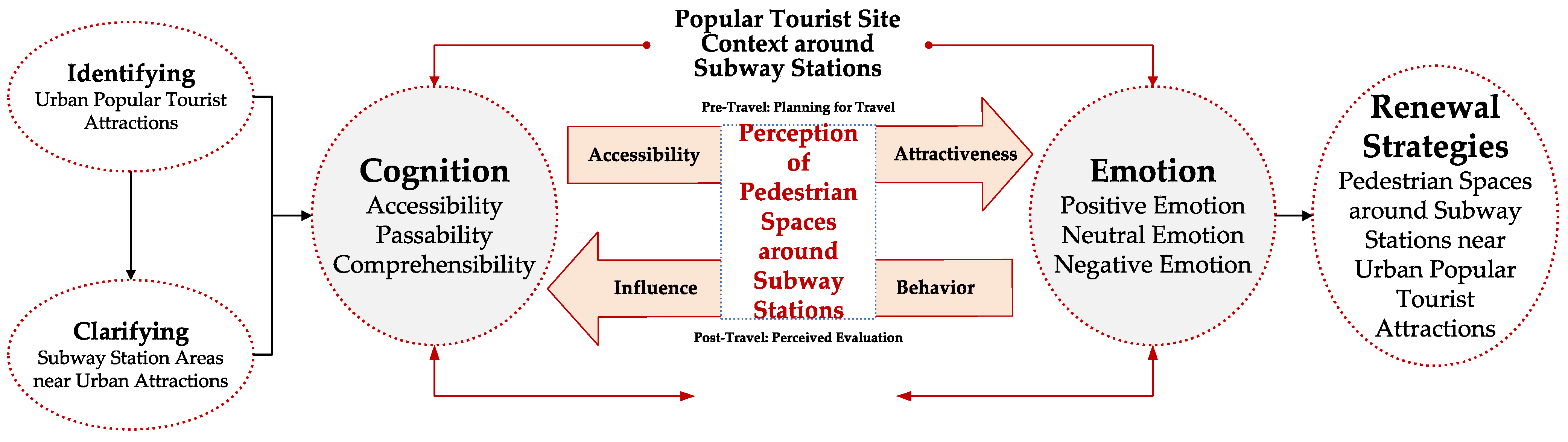
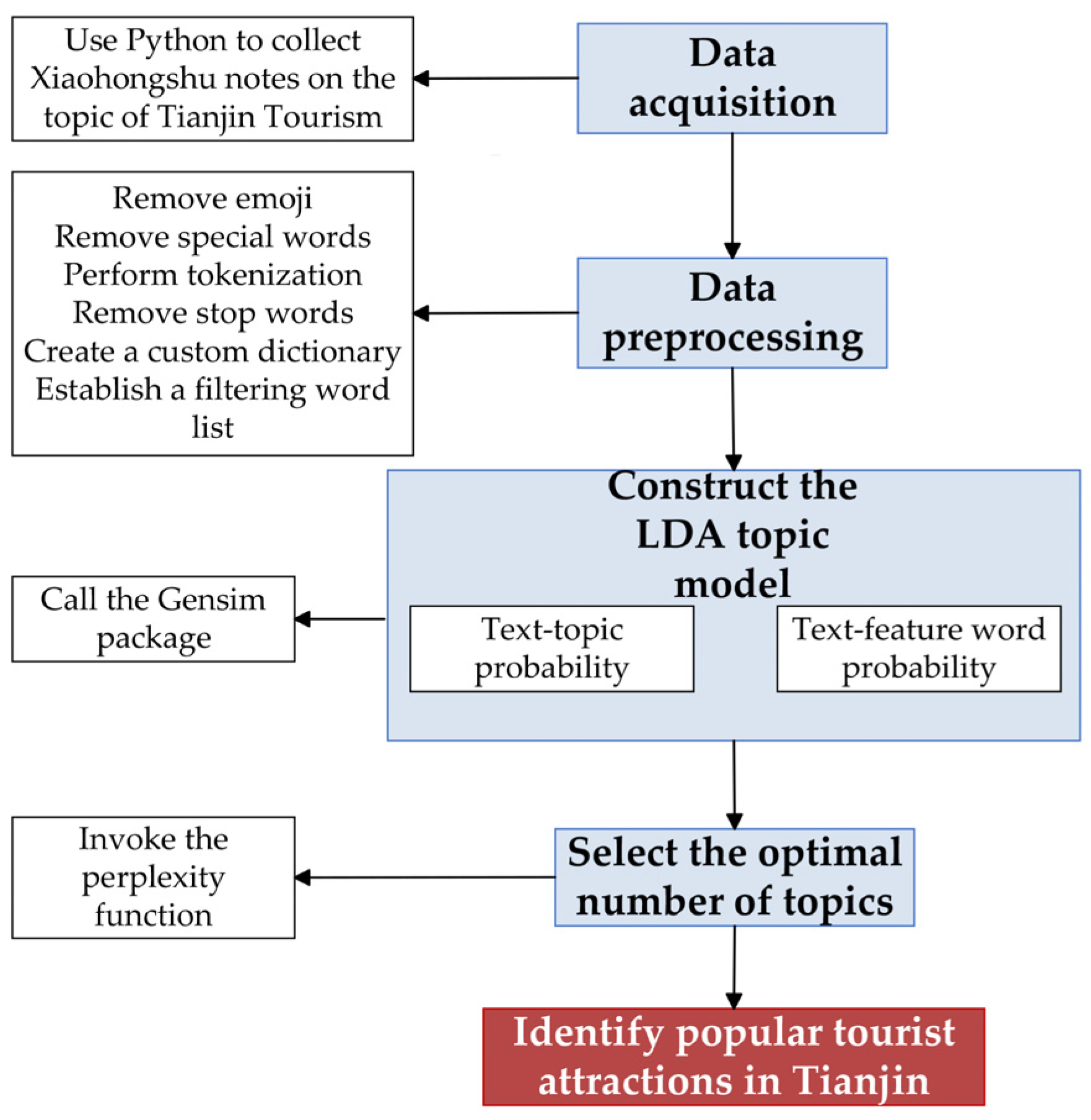
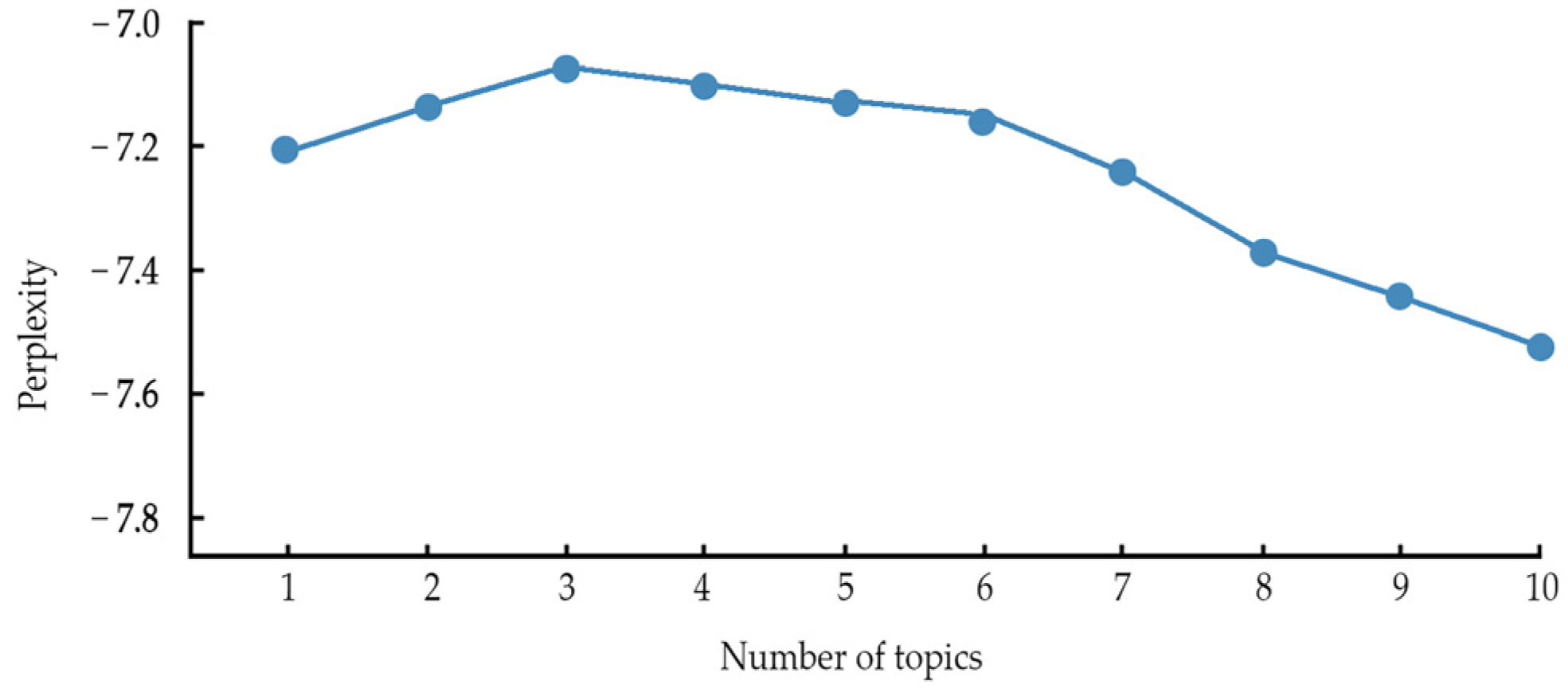
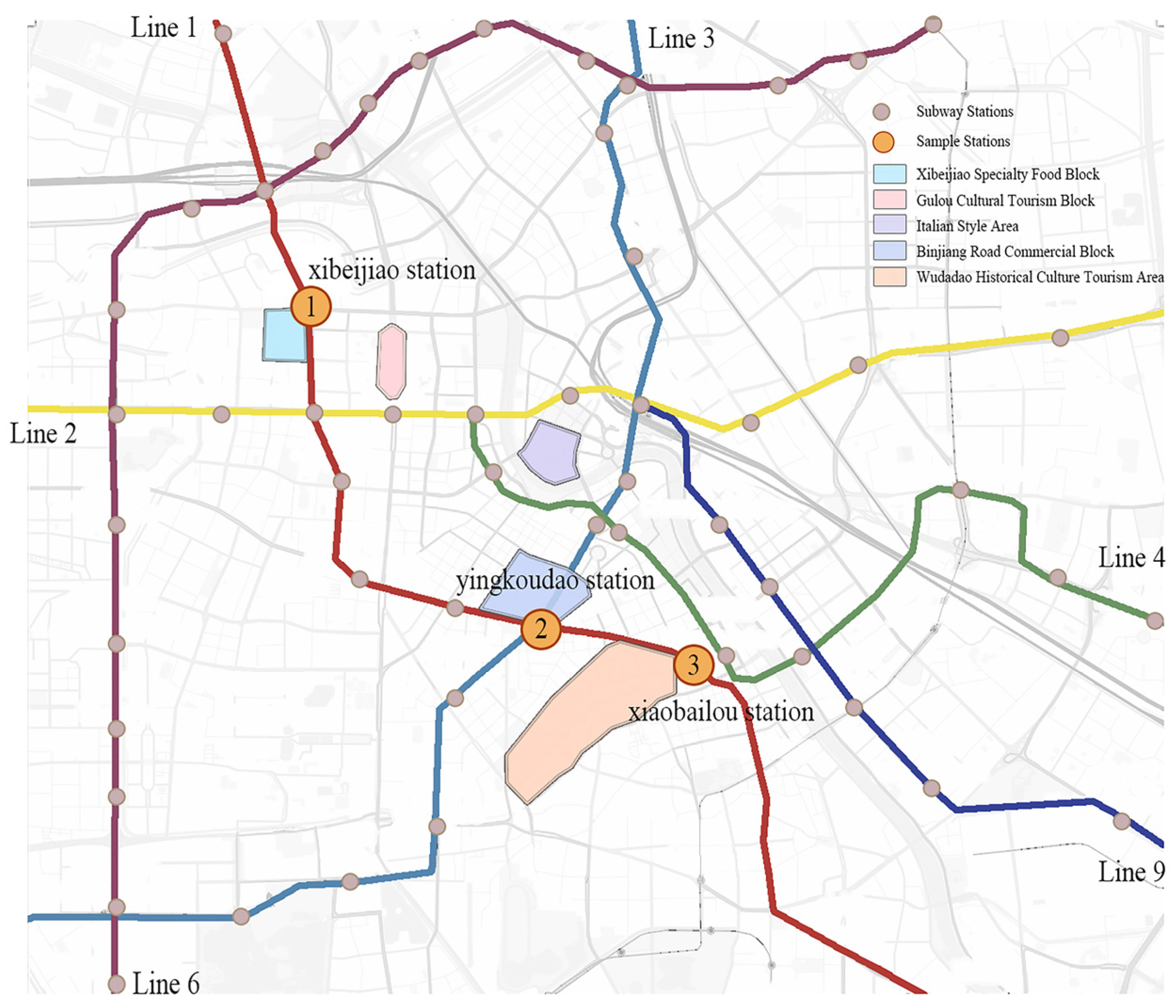
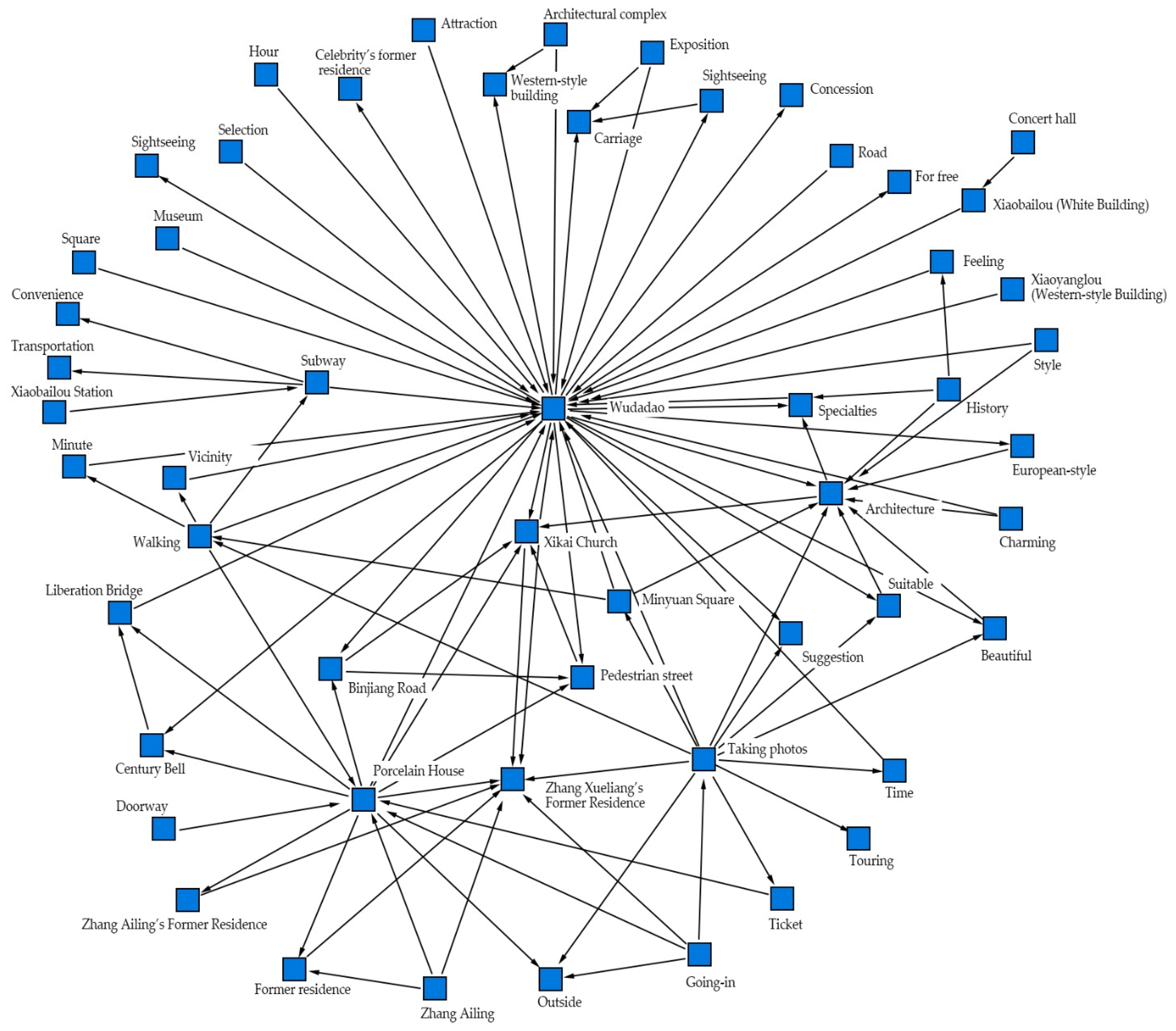
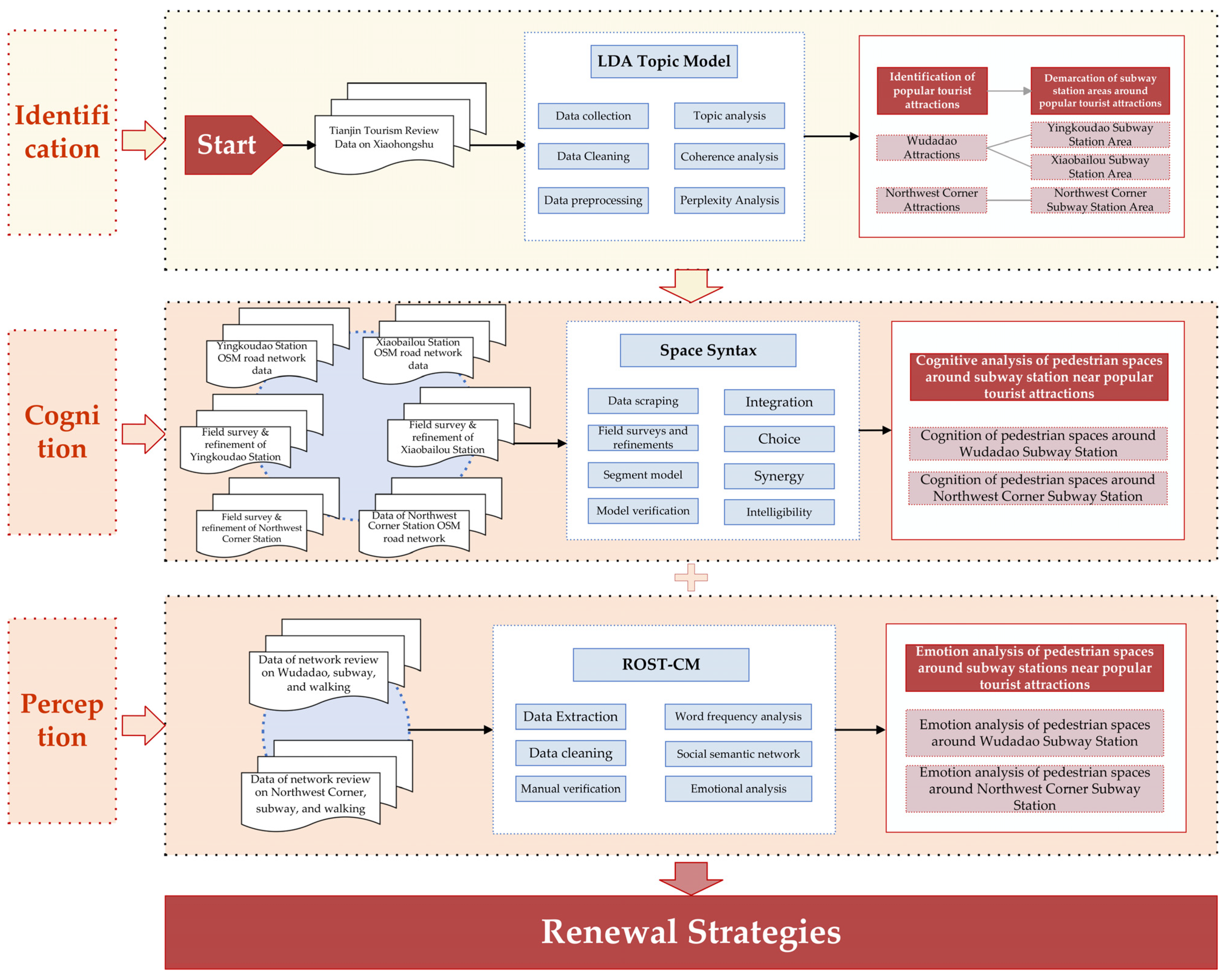
Public transportation serving urban tourism has a positive impact on sustainable urban development. With the rapid rise of “subway tourism” in China and the emergence of numerous popular attractions, the pedestrian spaces connecting subway stations and attractions are important public spaces for tourists’ perception. Identifying, cognizing, and perceiving the pedestrian spaces around subway stations near popular tourist attractions from the tourists’ perspective holds significant value for promoting station–city coordination and enhancing spatial quality. This paper establishes an optimization design framework for the pedestrian spaces around subway stations near urban popular tourist attractions, moving from identification to cognition and perception. Taking Tianjin, China as an example, we collected 11,405 travelogue data entries and street network data of the subway stations around popular attractions. (1) We constructed an LDA topic model to identify popular tourist attractions; (2) we applied space syntax to understand the features and forms of the pedestrian spaces around subway stations; (3) we utilized the ROST-CM network text analysis method to analyze tourists’ overall perception of the pedestrian spaces around subway stations; (4) we proposed suggestions for optimization. The contribution of this study lies in constructing a vertical analytical framework that transitions from “identification” to “cognition” to “perception”. The cognitive and perceptual dimensions can mutually corroborate some of their findings but are not interchangeable. Future urban spatial optimization research should consider both cognitive and perceptual dimensions, enhancing the comprehensiveness of the human-centered perspective. The research results provide empirical references and guidance for the management and practice of urban space renewal around subway stations near major cities’ tourist attractions.
Keywords: pedestrian spaces around subway stations; popular attractions; identification–cognition–perception; LDA topic model; space syntax; network text analysis pedestrian spaces around subway stations; popular attractions; identification–cognition–perception; LDA topic model; space syntax; network text analysis