Article

Digital Economy, Factor Allocation, and Resilience of Food Production

1
Institute of Geographical Sciences, Henan Academy of Sciences, Zhengzhou 450052, China
2
School of Business Administration, Zhongnan University of Economics and Law, Wuhan 430073, China
3
School of Economics and Management, Hubei University of Arts and Science, Xiangyang 441053, China
*
Authors to whom correspondence should be addressed.
Land 2025, 14(1), 139; https://doi.org/10.3390/land14010139
Submission received: 29 October 2024 / Revised: 2 January 2025 / Accepted: 9 January 2025 / Published: 10 January 2025
(This article belongs to the Special Issue Land Use Policy and Food Security)

Abstract

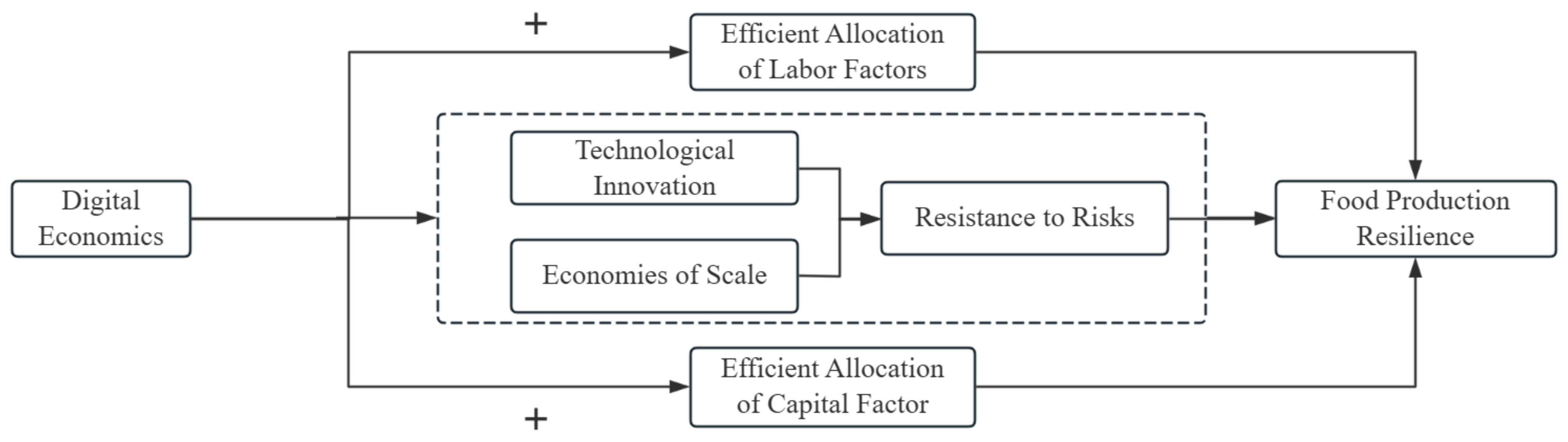
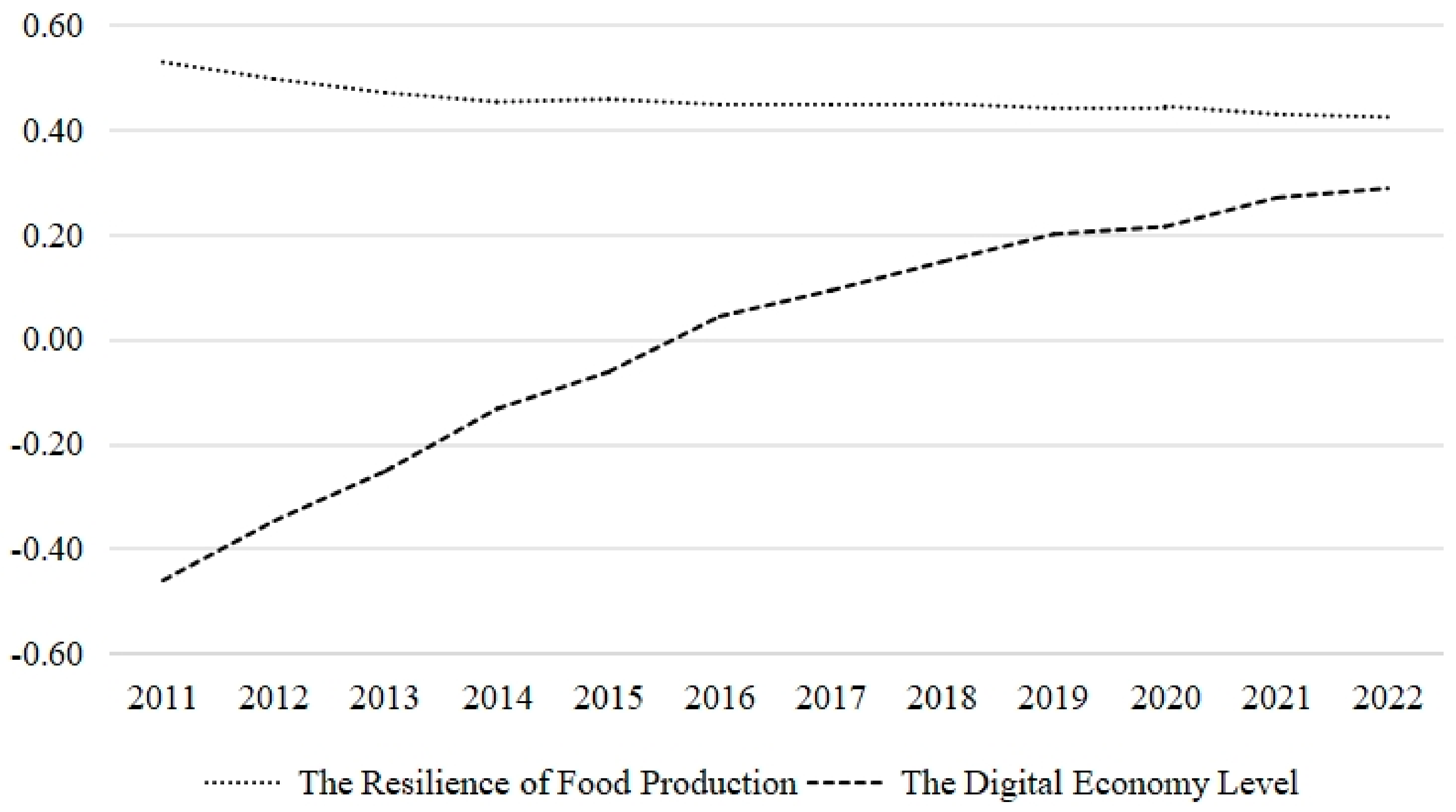
This paper systematically explores the impact of the digital economy on the resilience of food production and its mechanism of action based on panel data from 30 provincial-level administrative regions in China from 2011 to 2022. This study shows that the digital economy significantly enhances the ability of the food production system to cope with external shocks by improving resource allocation efficiency and mitigating factor mismatch. Specifically, the digital economy directly improves the stability and resilience of food production through the widespread application of digital technology; at the same time, it indirectly contributes to the enhancement of food production resilience by alleviating the mismatch of labor and capital factors. Heterogeneity analyses show that there are regional differences in the impact of the digital economy, in which the main food-producing regions benefit more significantly due to their agricultural resource advantages and policy support, and the improvement of food production resilience in the central region is particularly prominent. This study provides an important theoretical basis and practical reference for exploring the potential of the application of digital economy in agriculture and formulating policies to enhance food production resilience.
Keywords: digital economy; factor mismatch; food production resilience; food security digital economy; factor mismatch; food production resilience; food security