Article

Evaluation of Water–Carbon–Ecological Footprint and Its Spatial–Temporal Changes in the North China Plain
by
Keyi Lyu
1,
Jin Tian
1,
Jiayu Zheng
1,
Cuiling Zhang
1 and
Ling Yu
2,3,*
1
School of Land Science and Technology, China University of Geosciences, Beijing 100083, China
2
School of Urban Planning and Design, Peking University Shenzhen Graduate School, Shenzhen 518055, China
3
Key Laboratory of Earth Surface System and Human-Earth Relations of Ministry of Natural Resources of China, Shenzhen 518055, China
*
Author to whom correspondence should be addressed.
Land 2024, 13(8), 1327; https://doi.org/10.3390/land13081327
Submission received: 4 July 2024 / Revised: 13 August 2024 / Accepted: 19 August 2024 / Published: 22 August 2024

Abstract

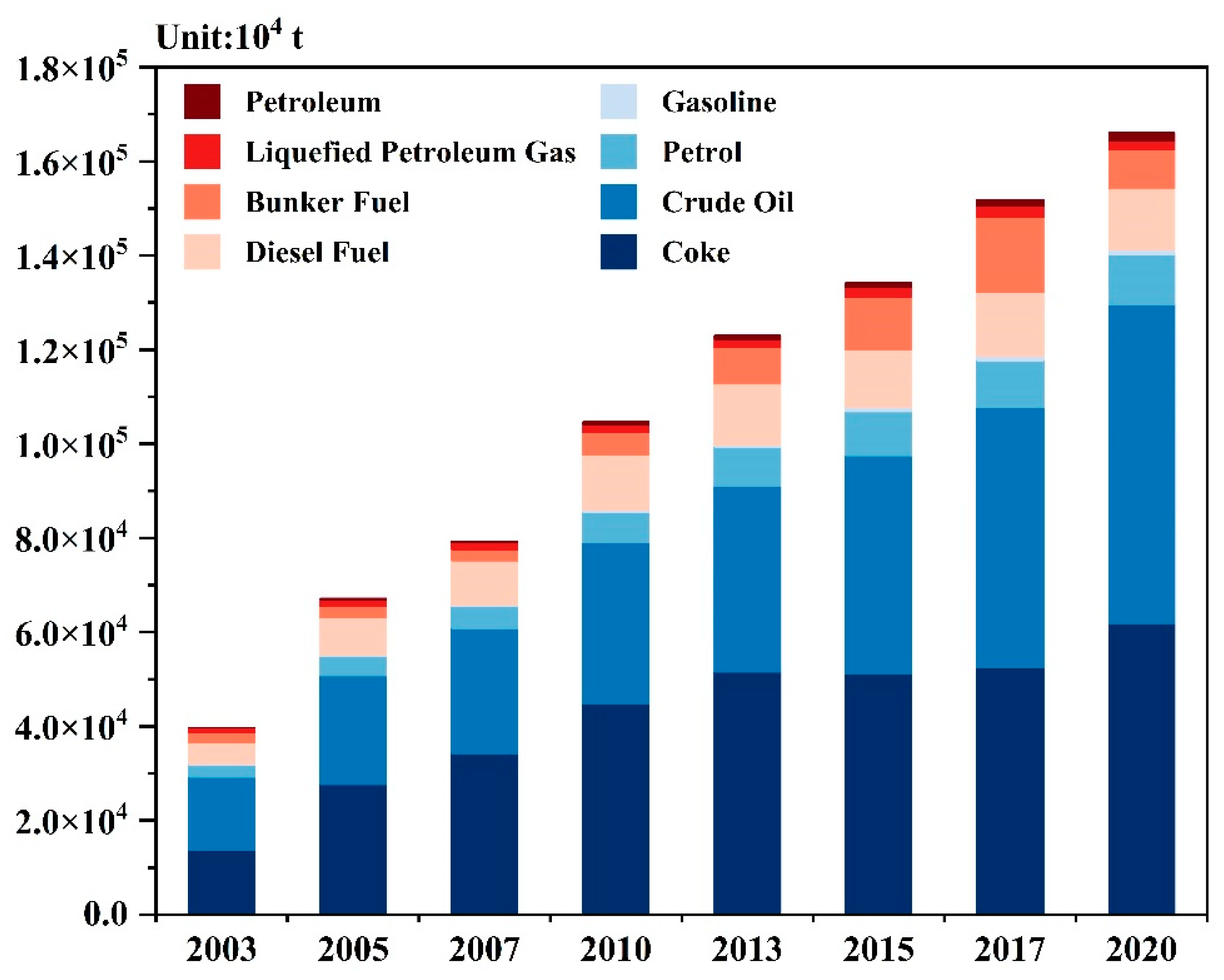
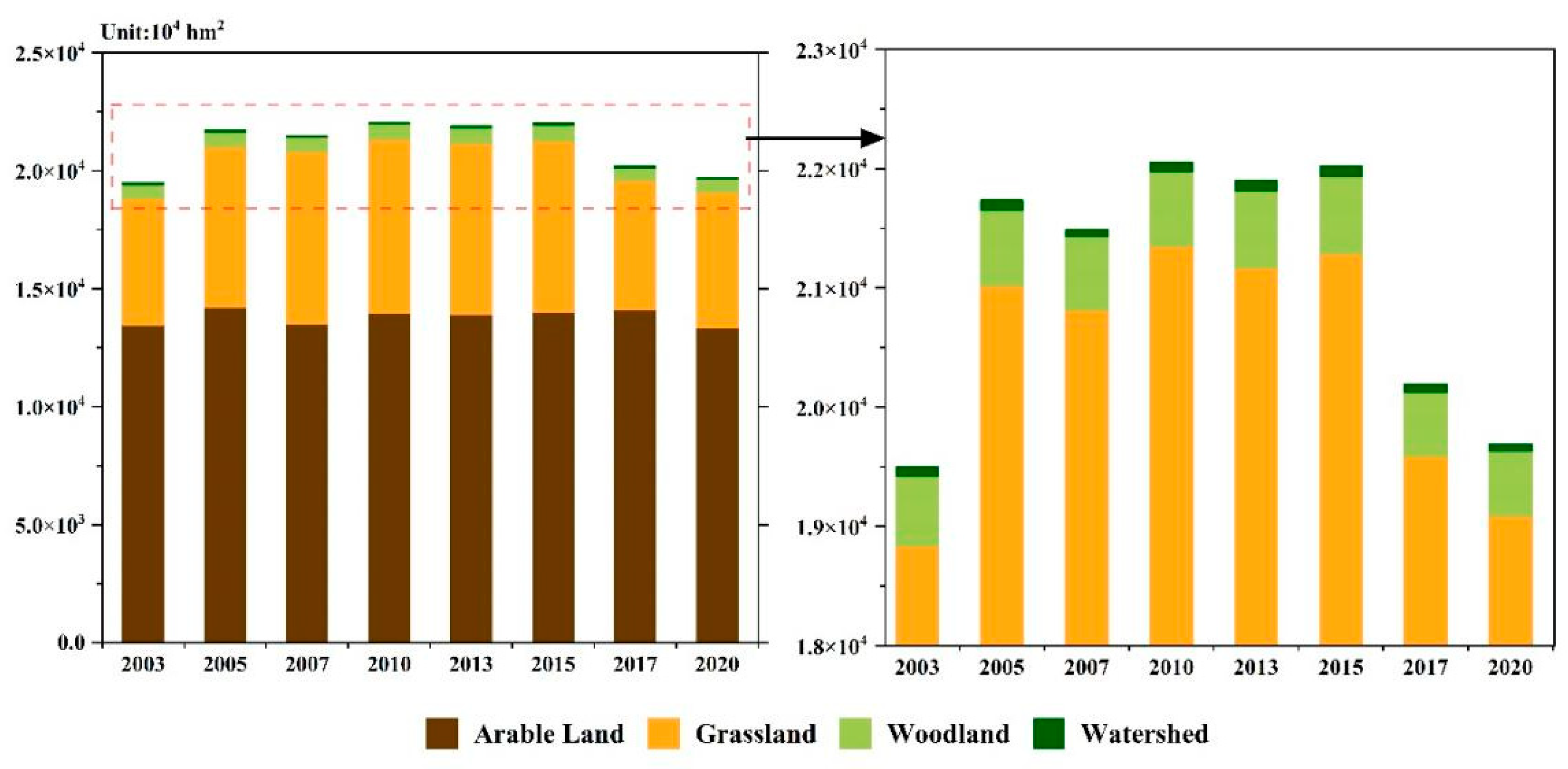
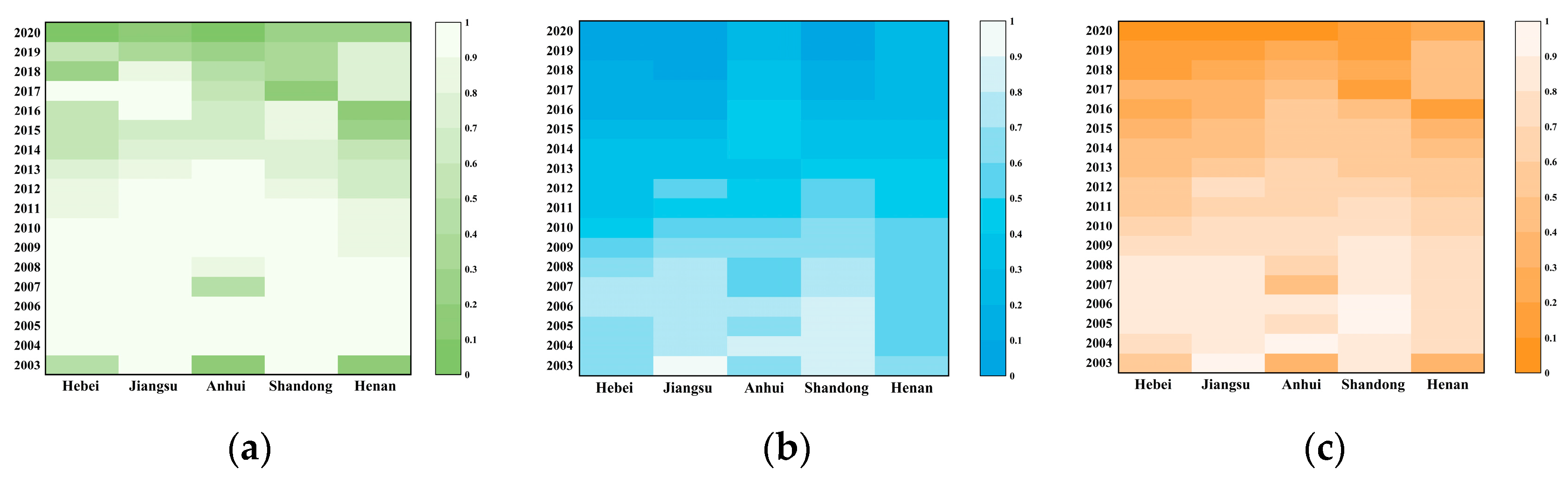
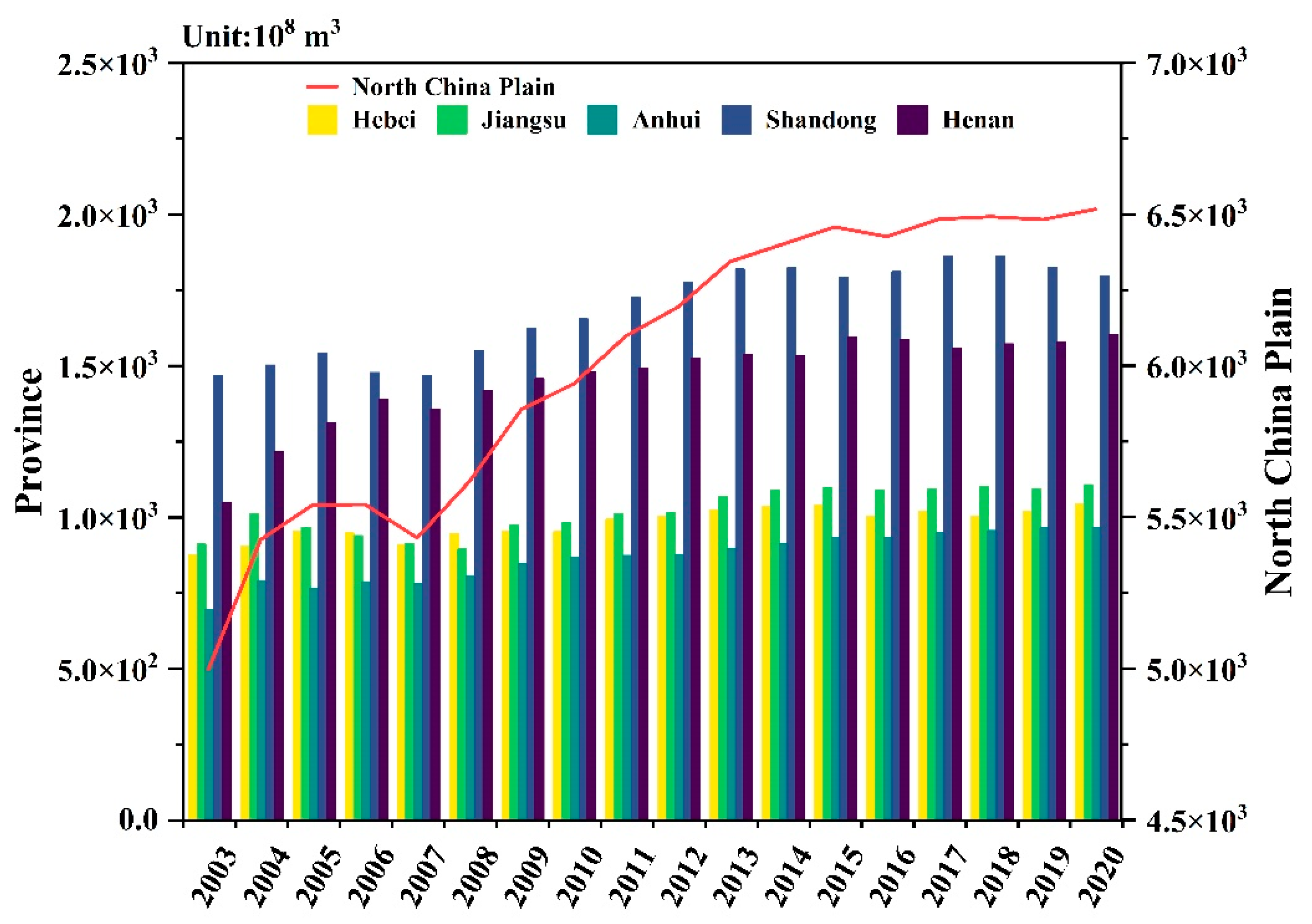
The North China Plain (NCP) serves as the main grain production land in China, functioning as a critical region for ensuring China’s food security. To address the multifaceted challenges confronting food security in the NCP, the study embarked on a comprehensive analysis of the synergistic interactions between agricultural water usage, carbon emissions, and ecosystem health. By proposing footprint family indicators and using the bottom-up IPCC coefficient approach, this study quantitatively evaluates the spatial–temporal changes of water–carbon–ecological footprints in NCP from 2003 to 2020. Furthermore, a coupling coordination degree model that focuses on the coordination of water–carbon–ecological footprints is established. The findings are as follows: (1) The total water footprint in the NCP showed a striking increasing trend with an increase of 1.52 × 10¹¹ m3, and the carbon footprint increased by 1.27 × 10⁹ t, with significant ecological impacts. (2) The NCP’s ecological footprint exhibited an “M”-shaped trend. The land structure maintained stable with negligible changes in the proportion of ecological footprints. (3) The coupling degree between the footprints of water, carbon, and ecology in the NCP is high, revealing a noteworthy interaction effect. This research can provide data support for effective resources allocation and sustainable social–economic development, offering reasonable insights for China to formulate more scientific policies of green transition in land use and ecological civilization construction.
Keywords: footprint family; water–carbon–ecological footprint; coupling coordination; resource–environment pressure; North China Plain footprint family; water–carbon–ecological footprint; coupling coordination; resource–environment pressure; North China Plain