Article

Key Factors Affecting Carbon-Saving Intensity and Efficiency Based on the Structure of Green Space

1
School of Information Science and Engineering, Lanzhou University, Lanzhou 730000, China
2
College of Landscape Architecture and Art and International Union Laboratory of Landscape Architecture, Henan Agricultural University, Zhengzhou 450002, China
3
Department of Landscape Planning and Regional Development, Institute of Landscape Architecture, Urban Planning and Garden Art, Hungarian University of Agriculture and Life Sciences, 1118 Budapest, Hungary
*
Authors to whom correspondence should be addressed.
Land 2024, 13(8), 1297; https://doi.org/10.3390/land13081297
Submission received: 9 July 2024 / Revised: 5 August 2024 / Accepted: 14 August 2024 / Published: 16 August 2024

Abstract

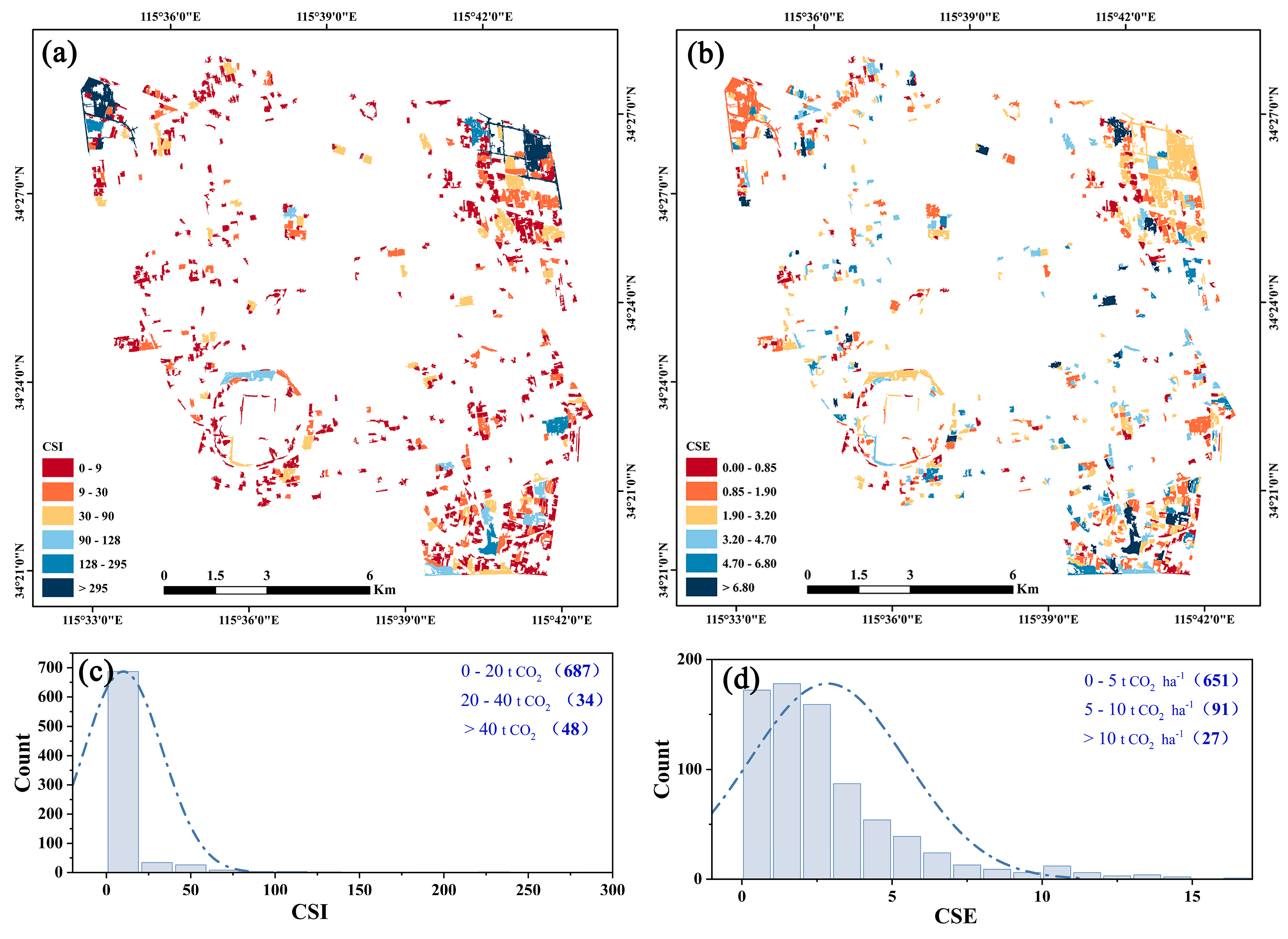
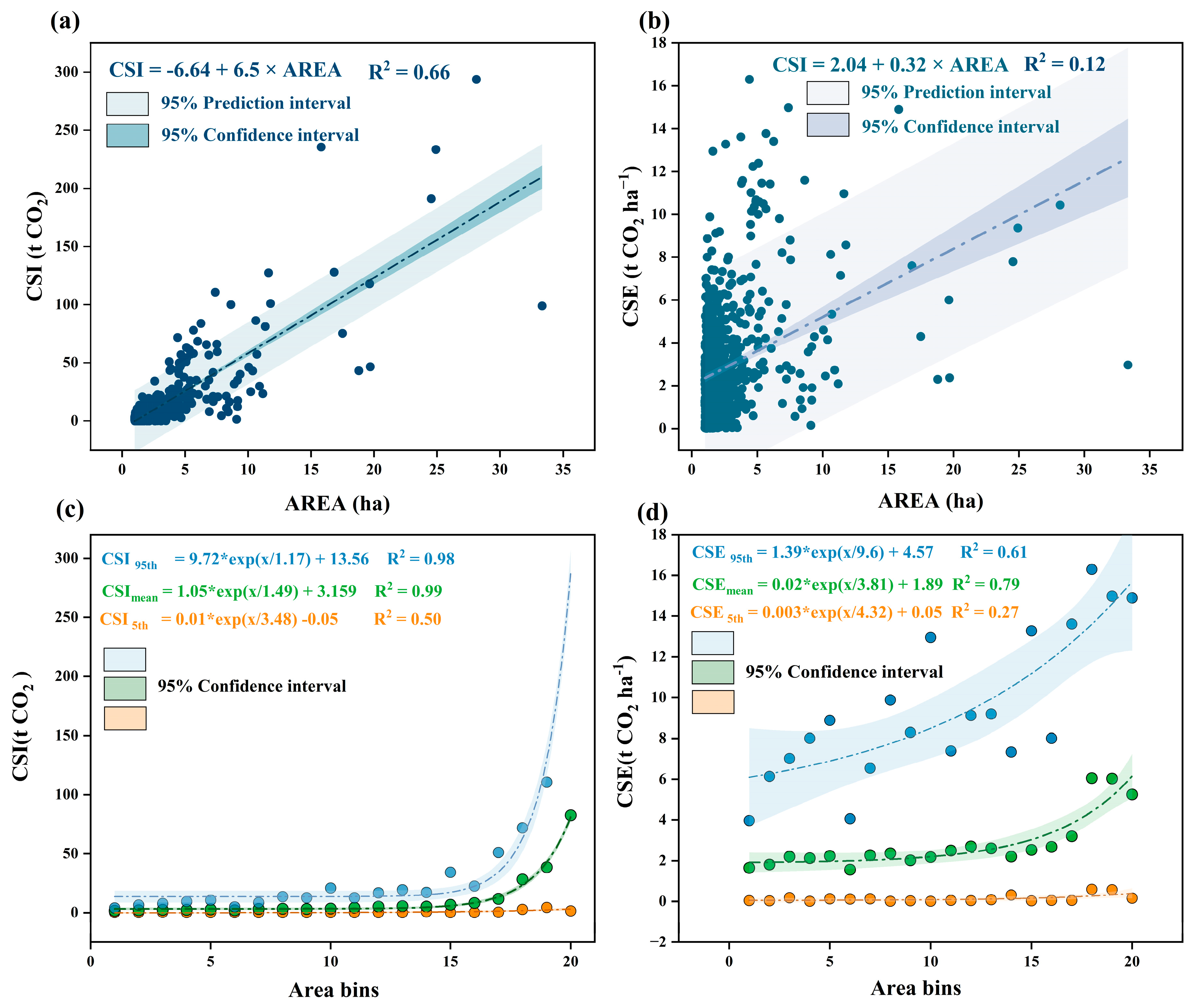
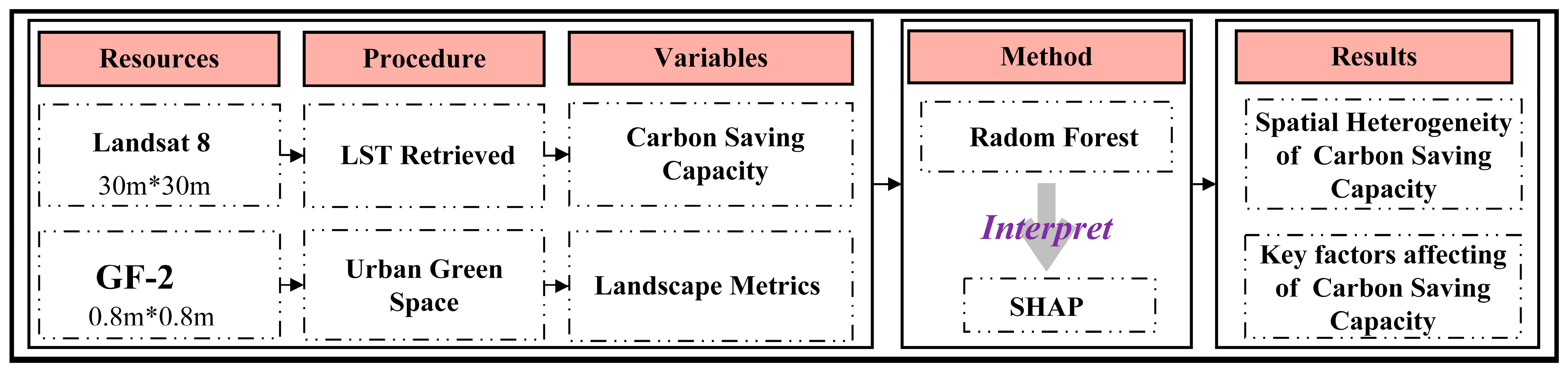
Urban green spaces (UGSs) play a critical role in regulating global carbon cycling and mitigating the increase in atmospheric CO2 concentrations. Research increasingly demonstrates that UGSs not only sequester carbon through photosynthesis but also effectively save carbon emissions by mitigating the urban heat island (UHI) effect. However, understanding the carbon-saving capacity (CSC) and the role of landscape patterns of UGSs in warming cities remains limited. Therefore, we have evaluated the carbon-saving capacity of UGSs in the main urban area of Shangqiu City by utilizing high-resolution remote sensing data and machine learning techniques. The study has focused on green patches larger than 10,000 m2 and has analyzed the influence of landscape patterns of UGSs on carbon saving intensity (CSI) and carbon saving efficiency (CSE). The results reveal that the total CSI and the average CSE of UGSs are 7716 t CO2 and 2.9 t CO2 ha−1 in Shangqiu, respectively. Landscape patterns of UGSs can explain 82% and 64% of the variability in CSI and CSE variance, respectively. Specifically, green space area is the critical determinant of CSI and CSE, followed by the perimeter–area ratio, shape index, and fractal dimension of UGSs. Therefore, this study advocates for the strategic integration of UGSs into city planning, emphasizing their spatial distribution and configuration to maximize their cooling and carbon-saving capacity.
Keywords: green space; carbon saving capacity; high-resolution remote sensing; machine learning; Shangqiu green space; carbon saving capacity; high-resolution remote sensing; machine learning; Shangqiu