Article

Landscape Metrics as Ecological Indicators for PM10 Prediction in European Cities

by
Seyedehmehrmanzar Sohrab
1,*,
Nándor Csikós
2,3 and
Péter Szilassi
1,*
1
Department of Physical and Environmental Geography, University of Szeged, Egyetem u. 2-6, H-6722 Szeged, Hungary
2
HUN-REN Institute of Soil Sciences, Centre for Agricultural Research, Fehérvári út 132-144, H-1116 Budapest, Hungary
3
MTA-SZTE Lendület Applied Ecology Research Group, Közép fasor 52, H-6726 Szeged, Hungary
*
Authors to whom correspondence should be addressed.
Land 2024, 13(12), 2245; https://doi.org/10.3390/land13122245
Submission received: 26 November 2024 / Revised: 16 December 2024 / Accepted: 17 December 2024 / Published: 21 December 2024

Abstract

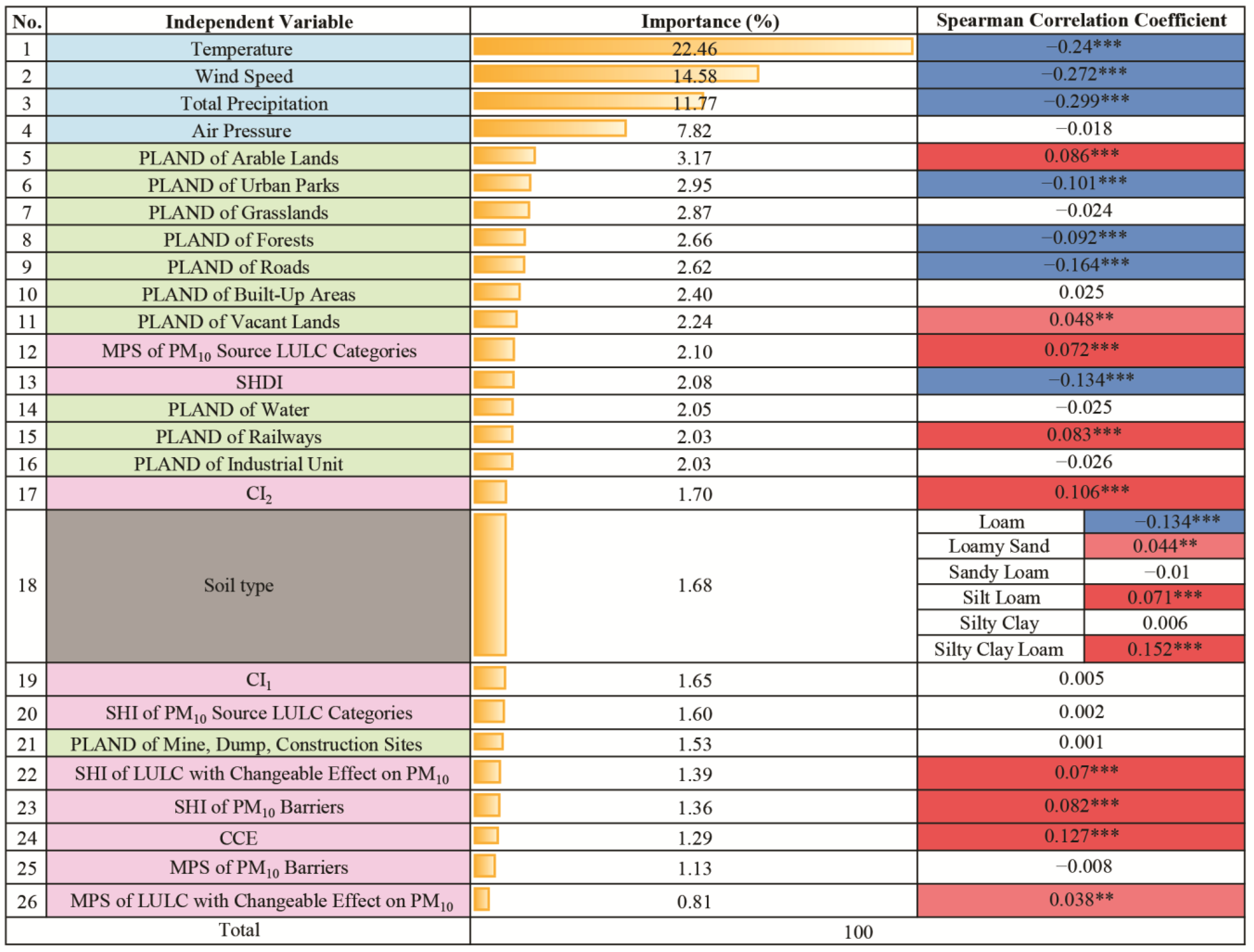
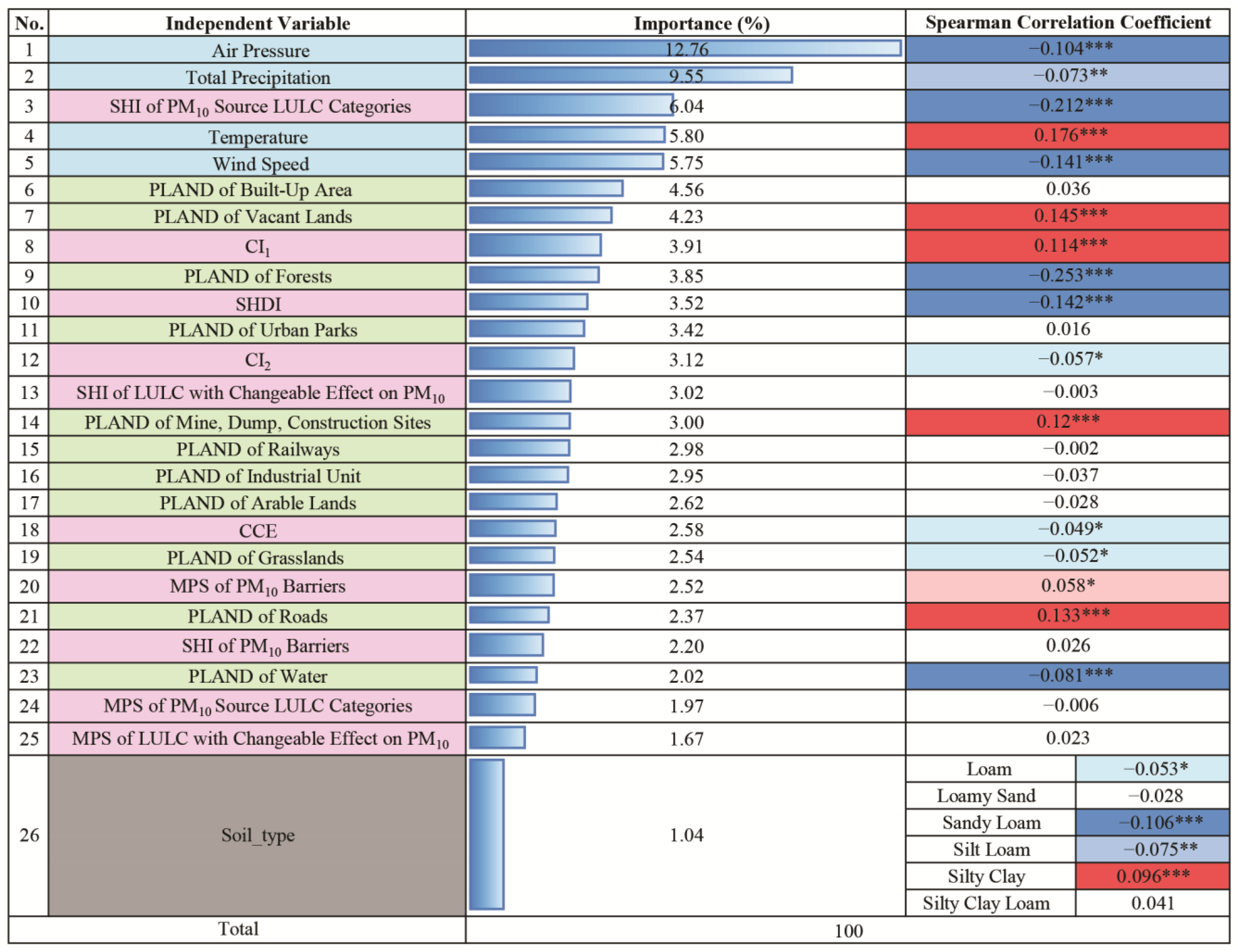
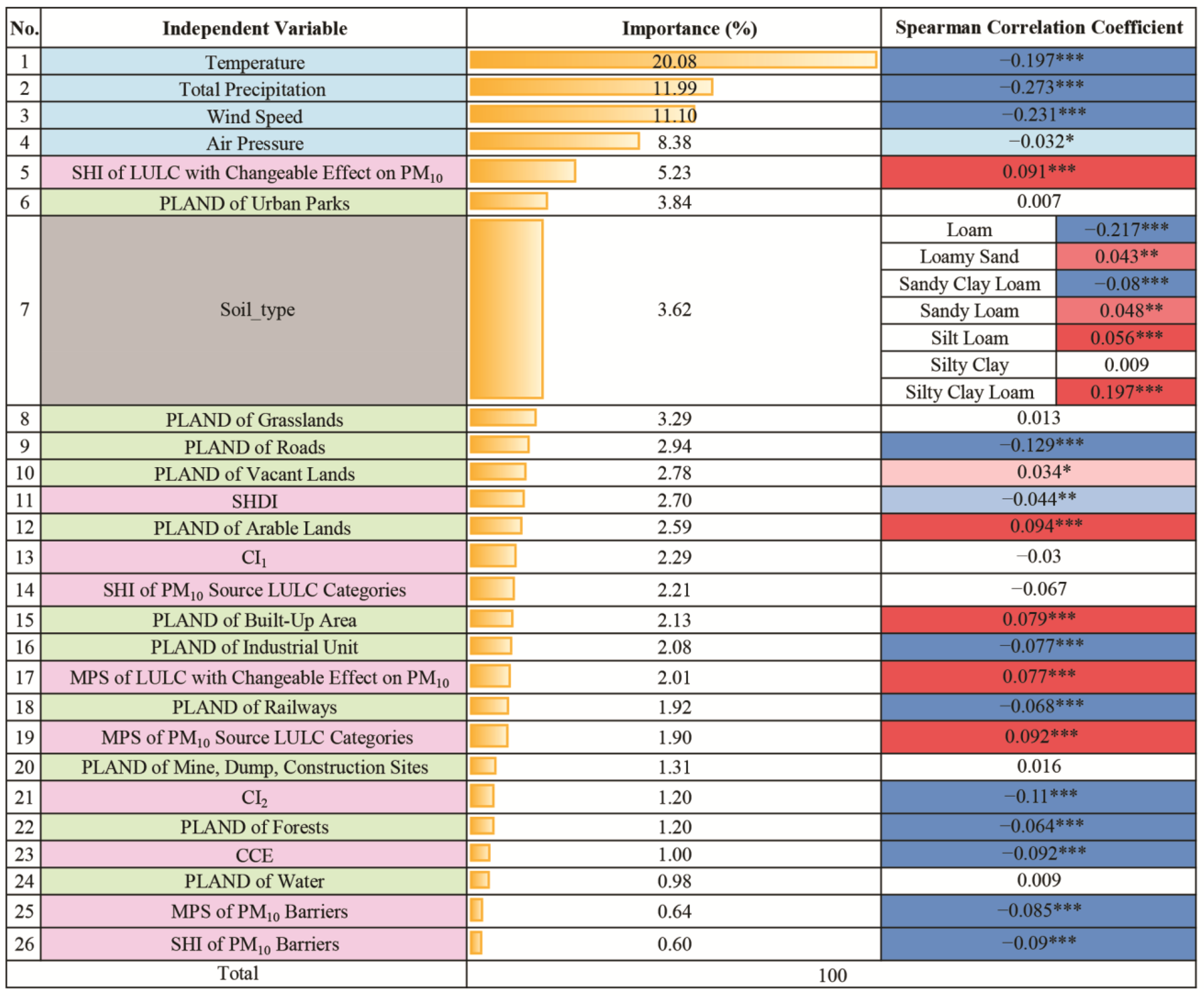
Despite significant progress in recent decades, air pollution remains the leading environmental cause of premature death in Europe. Urban populations are particularly exposed to high concentrations of air pollutants, such as particulate matter smaller than 10 µm (PM10). Understanding the spatiotemporal variations of PM10 is essential for developing effective control strategies. This study aimed to enhance PM10 prediction models by integrating landscape metrics as ecological indicators into our previous models, assessing their significance in monthly average PM10 concentrations, and analyzing their correlations with PM10 air pollution across European urban landscapes during heating (cold) and non-heating (warm) seasons. In our previous research, we only calculated the proportion of land uses (PLANDs), but according to our current research hypothesis, landscape metrics have a significant impact on PM10 air quality. Therefore, we expanded our independent variables by incorporating landscape metrics that capture compositional heterogeneity, including the Shannon diversity index (SHDI), as well as metrics that reflect configurational heterogeneity in urban landscapes, such as the Mean Patch Area (MPA) and Shape Index (SHI). Considering data from 1216 European air quality (AQ) stations, we applied the Random Forest model using cross-validation to discover patterns and complex relationships. Climatological factors, such as monthly average temperature, wind speed, precipitation, and mean sea level air pressure, emerged as key predictors, particularly during the heating season when the impact of temperature on PM10 prediction increased from 5.80% to 22.46% at 3 km. Landscape metrics, including the SHDI, MPA, and SHI, were significantly related to the monthly average PM10 concentration. The SHDI was negatively correlated with PM10 levels, suggesting that heterogeneous landscapes could help mitigate pollution. Our enhanced model achieved an R² of 0.58 in the 1000 m buffer zone and 0.66 in the 3000 m buffer zone, underscoring the utility of these variables in improving PM10 predictions. Our findings suggest that increased urban landscape complexity, smaller patch sizes, and more fragmented land uses associated with PM10 sources such as built-up areas, along with larger and more evenly distributed green spaces, can contribute to the control and reduction of PM10 pollution.
Keywords: urban ecology; random forest; land use; PM10; machine learning; European cities urban ecology; random forest; land use; PM10; machine learning; European cities