Article

The Soil and Water Conservation Effects of Different Plant Communities and Biological Soil Crust Symbiosis Patterns in the Ecologically Fragile Area of Central Ningxia


School of Ecology and Environment, Ningxia University, Yinchuan 750021, China
*
Author to whom correspondence should be addressed.
Land 2024, 13(12), 2069; https://doi.org/10.3390/land13122069
Submission received: 31 October 2024 / Revised: 24 November 2024 / Accepted: 26 November 2024 / Published: 2 December 2024

Abstract

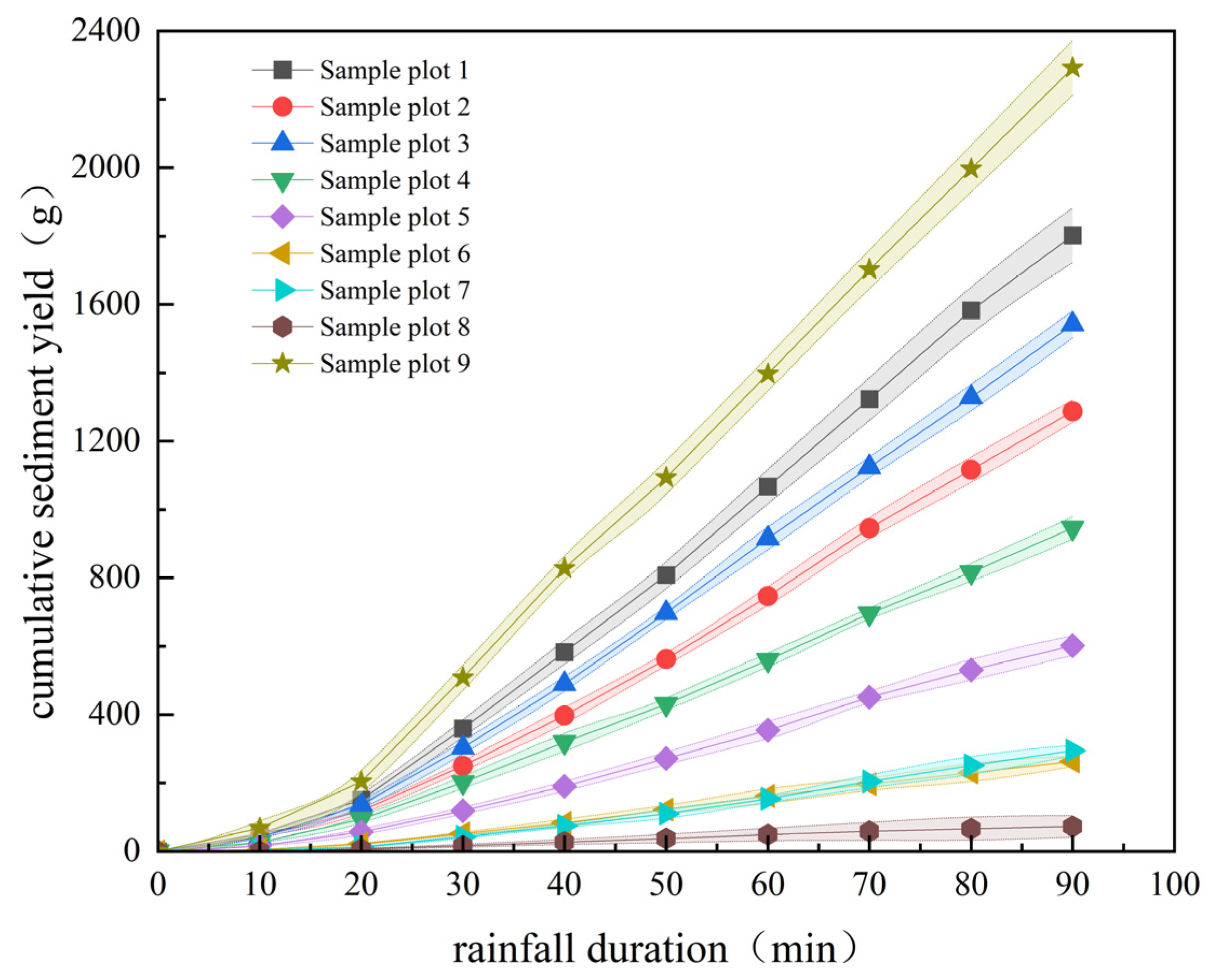
Biological soil crusts are complex biological soil layers formed by mosses, lichens, cyanobacteria, and the underlying soil, which together with plants affect rainfall infiltration, surface runoff, soil evaporation, and water movement in the soil. The soil desertification and soil erosion in the ecologically fragile areas of central Ningxia are serious problems, and the ecological environment is extremely fragile. Effective ecological restoration technologies are urgently needed. This study took the grassland in the ecologically fragile area of central Ningxia as the object and investigated the impact of three plant communities and symbiotic patterns of biological soil crusts on soil erosion through field simulated rainfall experiments. The results showed that: (1) At a rainfall intensity of 90 mm h−1, the initial runoff time of each slope was significantly positively correlated with plant community type and biological soil crust coverage, and prolonged with the increase of plant community type and biological soil crust coverage. (2) With the extension of rainfall duration, the cumulative runoff on each slope exhibited an increasing trend. (3) The sediment concentration in runoff on slopes under different plant community and biological soil crust symbiotic patterns was significantly different, with the sediment concentration decreasing as the type of plant community and the coverage of biological soil crusts increased. (4) With the increase in the diversity of plant communities and the coverage of biological crusts, there was a gradual reduction in the volume of accumulated sediment. This study offers scientific management strategies and practical guidance for soil and water conservation efforts in the ecologically vulnerable areas of central Ningxia, highlighting the importance of promoting these symbiotic models within the region.
Keywords: biological crust; plant community; simulated rainfall; soil erosion; soil and water conservation effect; ecologically fragile area biological crust; plant community; simulated rainfall; soil erosion; soil and water conservation effect; ecologically fragile area