Article

The Impact of Industrial Agglomeration on Urban Land Green Use Efficiency and Its Spatio-Temporal Pattern: Evidence from 283 Cities in China


1
Institute for Global Innovation and Development, East China Normal University, Shanghai 200062, China
2
School of Urban and Regional Science, East China Normal University, Shanghai 200241, China
3
Institute of Eco-Chongming, East China Normal University, Shanghai 202162, China
*
Author to whom correspondence should be addressed.
Land 2023, 12(4), 824; https://doi.org/10.3390/land12040824
Submission received: 24 February 2023 / Revised: 20 March 2023 / Accepted: 30 March 2023 / Published: 4 April 2023

Abstract

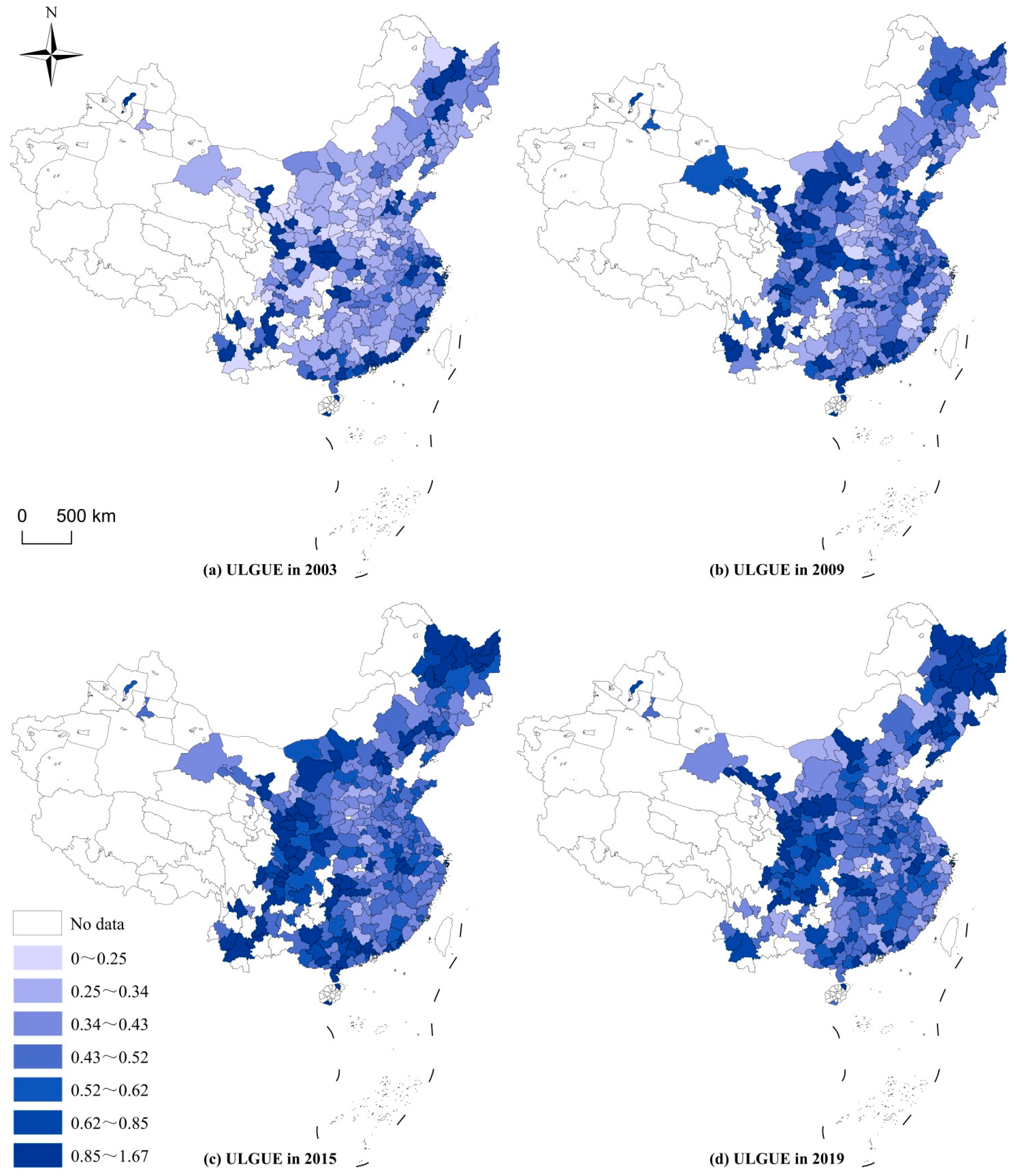
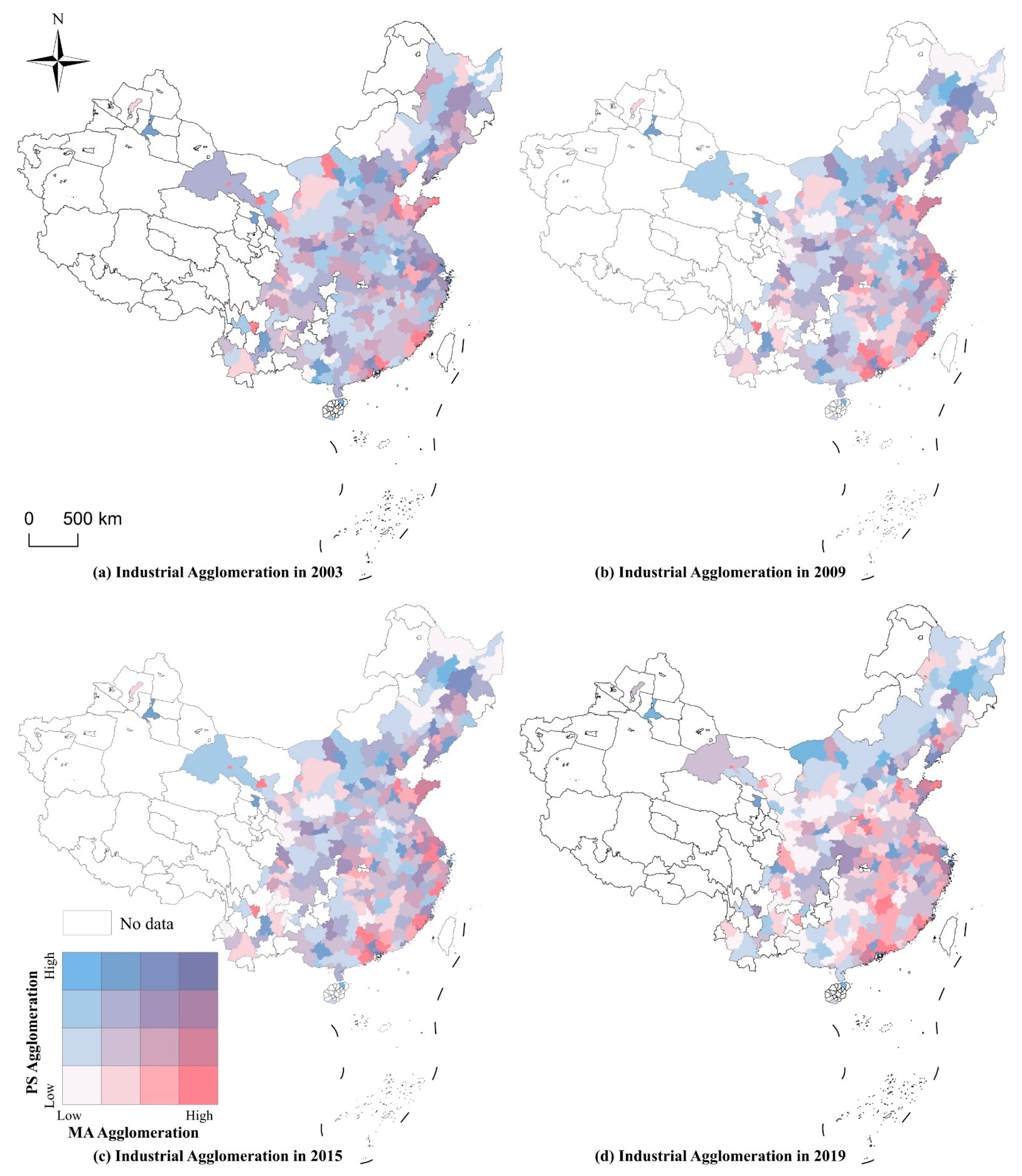
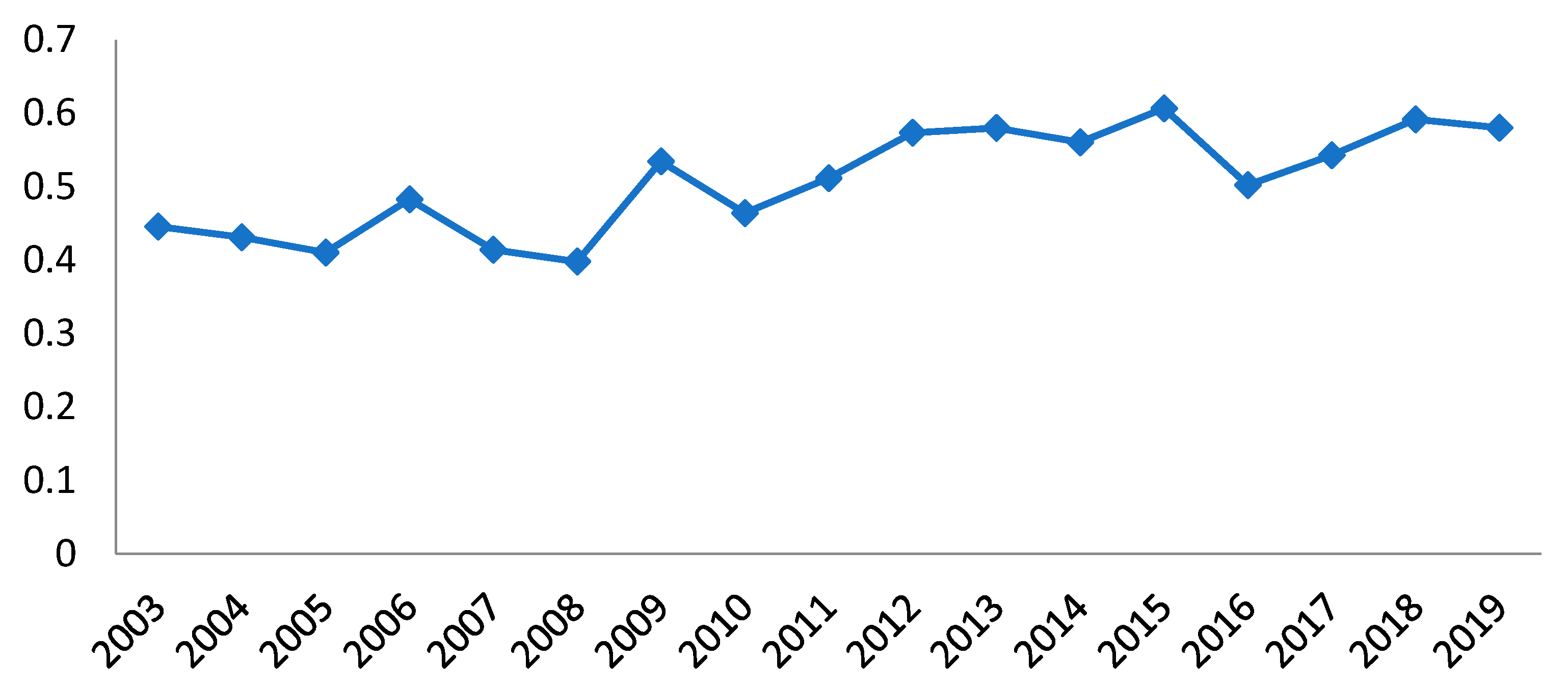
Industrial agglomeration is one of the primary driving factors in city creation, and the improvement of urban land green use efficiency (ULGUE) is an important part in green development. This study concentrates on the impact of industrial agglomeration on ULGUE in the process of urbanization. Based on the panel data of 283 cities in China from 2003 to 2019, this paper constructs a super efficiency SBM-DEA model including unexpected outputs to evaluate ULGUE. Using a spatial Durbin model, we examine the spatial spillover effects of manufacturing and productive services agglomeration on ULGUE. The results show the following: (1) There has been fluctuation over the study period, which can be classified into three stages, and ULGUE in China as a whole is on the rise. (2) Chinese ULGUE has increased greatly in the western and northeastern regions, changed massively in the eastern region, and stayed largely steady in the middle region. The degree of manufacturing agglomeration is further improved, exhibiting a feature resembling a ladder, with high concentrations in the southeast coastal region and low concentrations in the interior. Production service industry agglomeration intensity has declined, revealing a more dispersed spatial pattern. (3) The rise in local ULGUE will have a beneficial impact on the ULGUE of spatially correlated regions, according to ULGUE’s relatively strong spillover effect. (4) Manufacturing agglomerations can enhance the ULGUE in the neighborhood, but it is not obvious how this will impact the local regions. The agglomeration of production service industry can enhance the improvement of ULGUE in local and spatially correlated regions, but the direct effect is weak. (5) The integration of the manufacturing and productive service industry does not quite strengthen its stimulatory effects on the growth of ULGUE.
Keywords: urban land green use efficiency; manufacturing agglomeration; productive service agglomeration; super efficiency SBM-DEA model; spatial Durbin model urban land green use efficiency; manufacturing agglomeration; productive service agglomeration; super efficiency SBM-DEA model; spatial Durbin model