Article

Multiscenario Simulation of Land-Use Change in Hubei Province, China Based on the Markov-FLUS Model

1
Faculty of Resources and Environmental Science, Hubei University, Wuhan 430062, China
2
National School of Business and Management of Tangier, Abdelmalek Essaâdi University, Tangier 90000, Morocco
3
Department of Regional Science, Faculty of Science, Eötvös Loránd University, 1117 Budapest, Hungary
4
Doctoral School of Economic and Regional Sciences, Hungarian University of Agriculture and Life Sciences, 2100 Godollo, Hungary
5
Faculty of Urban and Regional Planning, Cairo University, Giza 12613, Egypt
6
Faculty of Economics and Business, University of Debrecen, 4031 Debrecen, Hungary
7
Faculty of Economics and Business, John von Neumann University, 6000 Kecskemet, Hungary
8
Institute of Rural Development and Sustainable Economy, Hungarian University of Agriculture and Life Sciences, 2100 Godollo, Hungary
*
Authors to whom correspondence should be addressed.
Land 2023, 12(4), 744; https://doi.org/10.3390/land12040744
Submission received: 20 February 2023 / Revised: 22 March 2023 / Accepted: 24 March 2023 / Published: 25 March 2023
(This article belongs to the Special Issue Spatial Planning and Land-Use Management)

Abstract

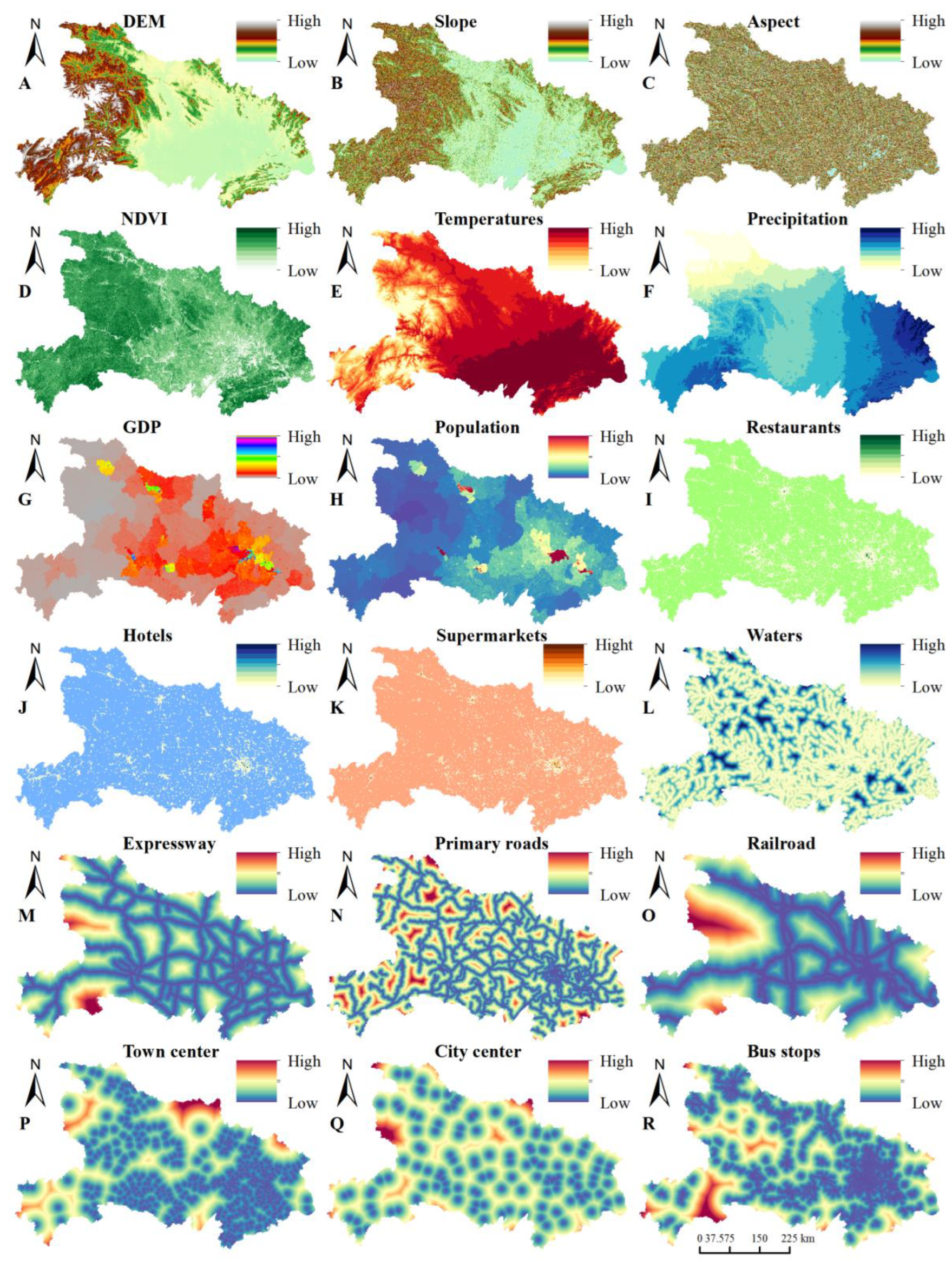
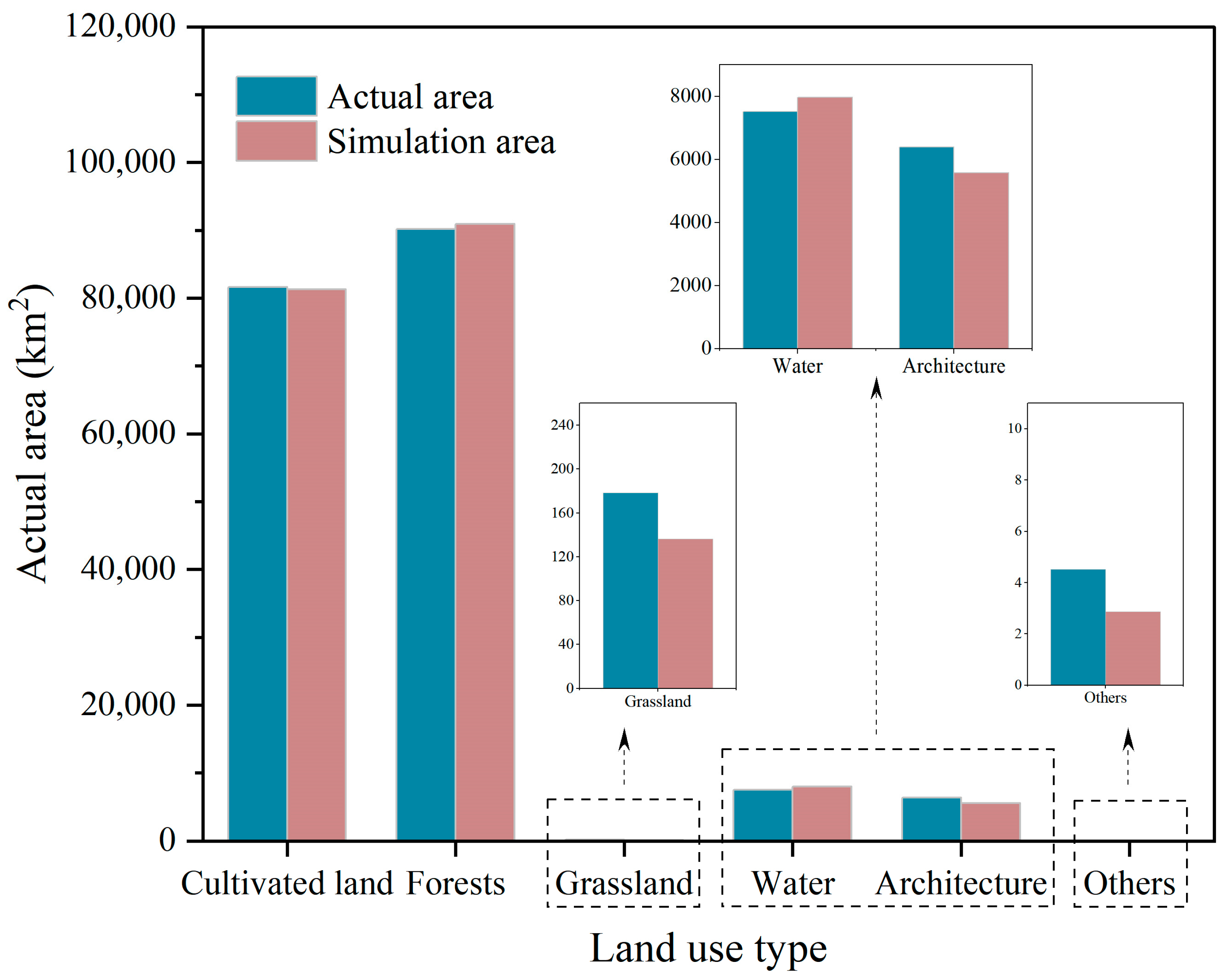
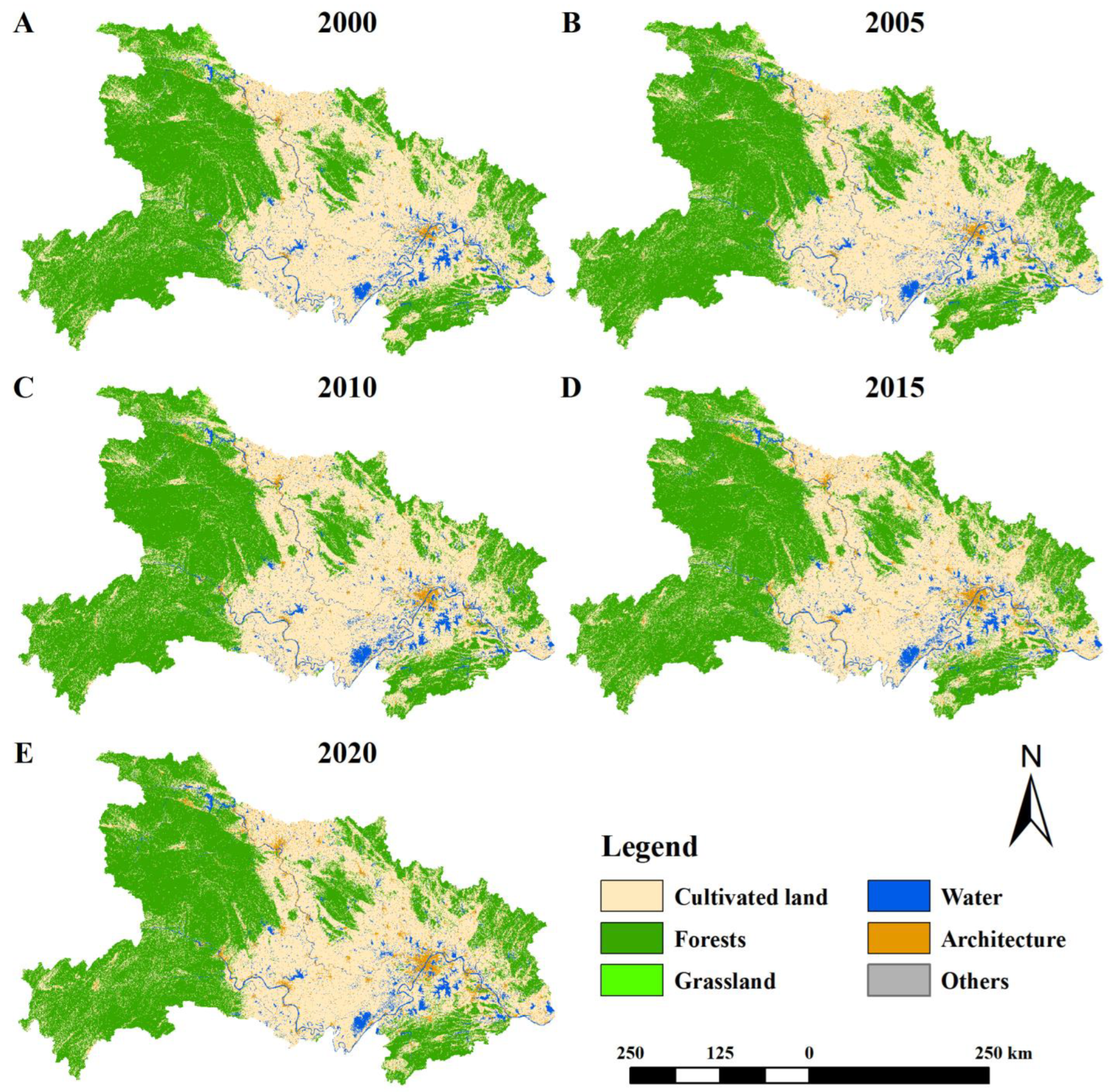
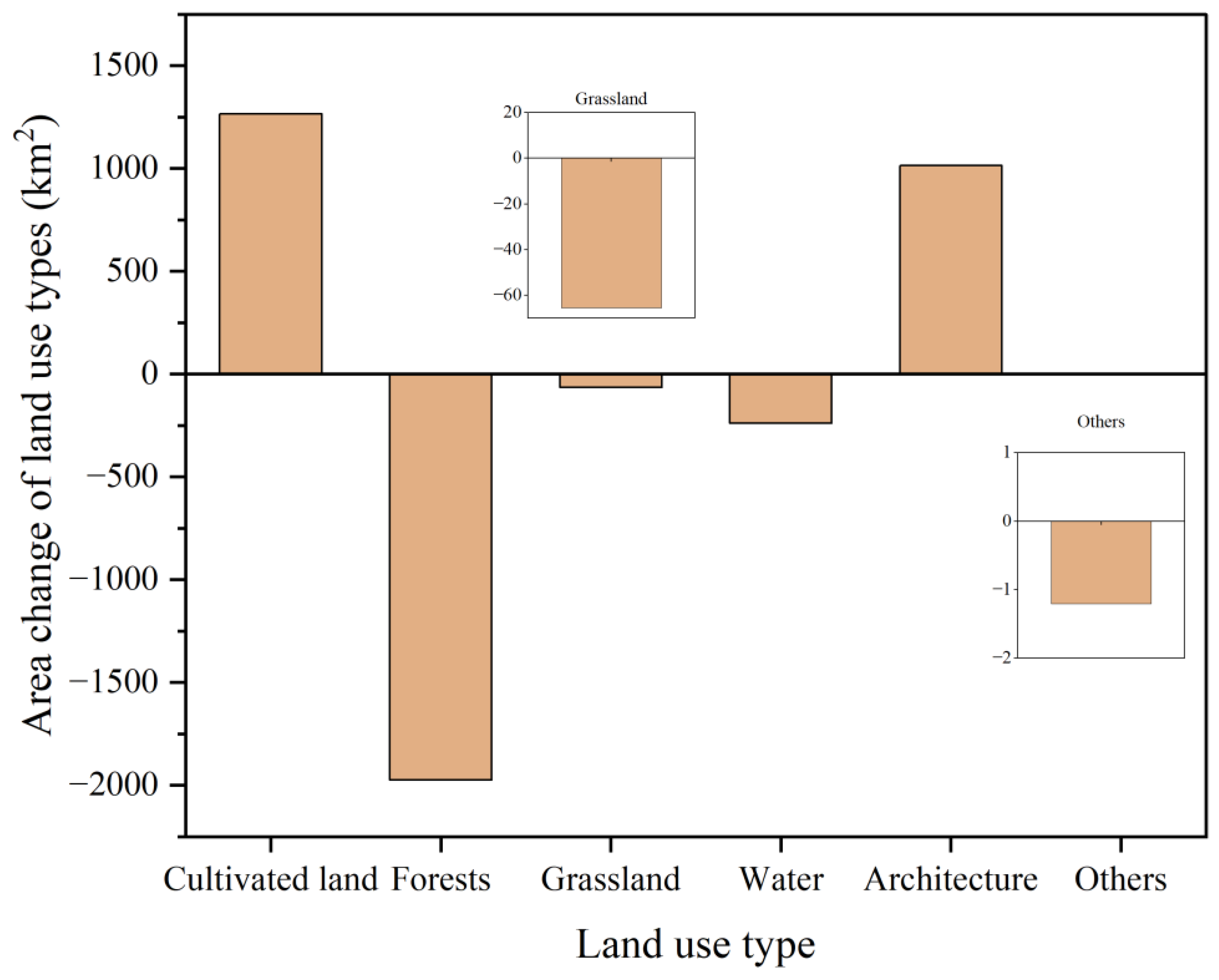
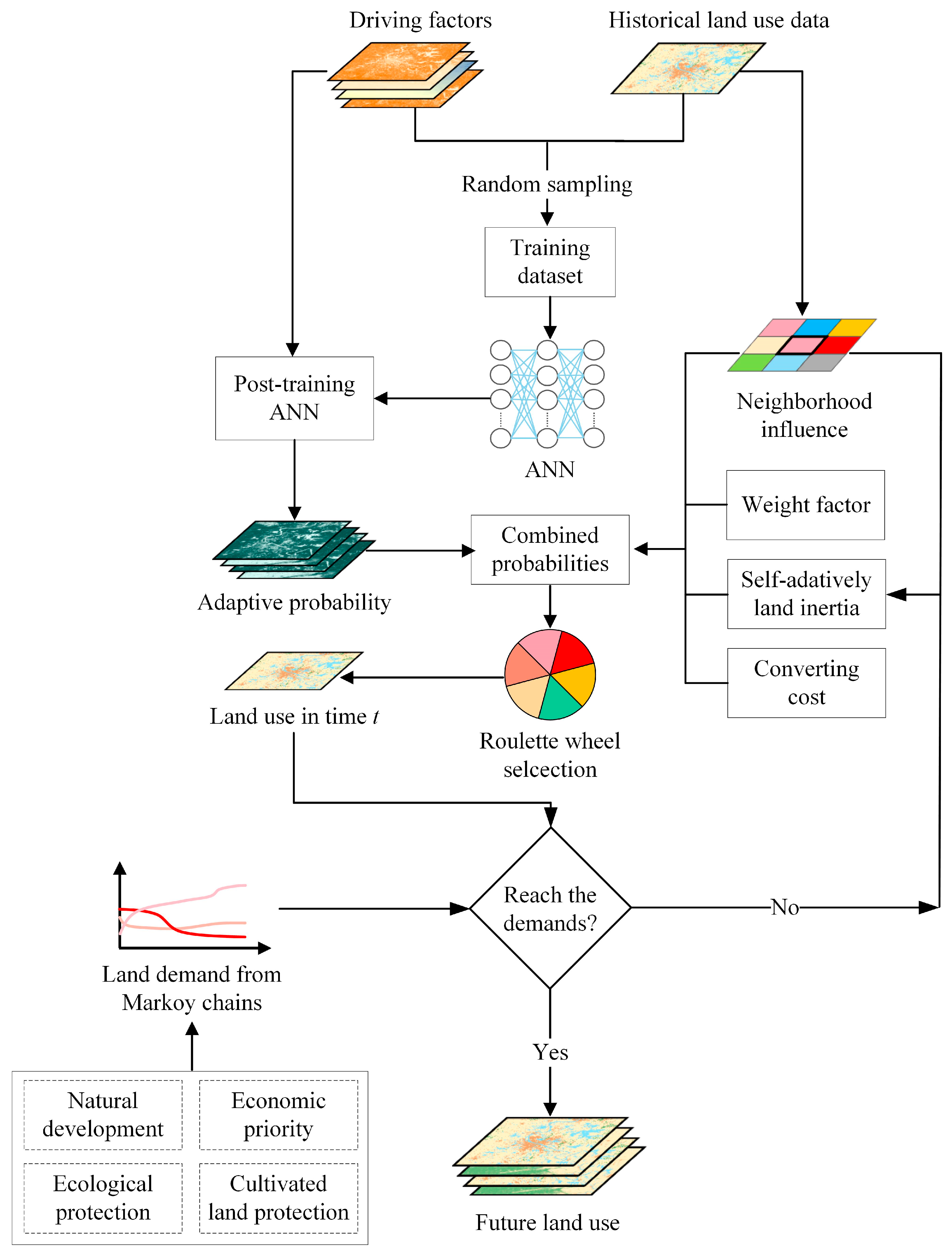
A goal of land change modelers should be to communicate scenarios of future change that show the variety of possible future landscapes based on the consequences of management decisions. This study employs the Markov-FLUS model to simulate land-use changes in Hubei Province in multiple scenarios that consider social, economic, and ecological policies using 18 driving factors, including point-of-interest data. First, the Markov-FLUS model was developed and validated with historical data from 2000 to 2020. The model was then used to simulate land-use changes from 2020 to 2035 in four scenarios: natural development, economic priority, ecological protection, and cultivated land protection. The results show that the Markov-FLUS model effectively simulates the land-use change pattern in Hubei Province, with an overall accuracy of 0.93 for land use simulation in 2020. The Kappa coefficient and FOM index also achieved 0.86 and 0.139, respectively. In all four scenarios, cultivated land remained the primary land use type in Hubei Province from 2020 to 2035, while construction land showed an increasing trend. However, there were large differences in the simulated land use patterns in different scenarios. Construction land expanded most rapidly in the economic priority scenario, while it expanded more slowly in the cultivated land protection scenario. We designed the protection scenario to restrict the rapid expansion of construction land. In the natural development and economic priority scenarios, construction land expanded and encroached on cultivated land and forests. In contrast, in the ecological protection scenario, forests and water areas were well-preserved, and the decrease in cultivated land and the increase in construction land were effectively suppressed, resulting in a large improvement in land use sustainability. Finally, in the cultivated land protection scenario, the cultivated land showed an increasing trend. The spread and expansion of construction land were effectively curbed. In conclusion, the Markov-FLUS model applied in this study to simulate land use in multiple scenarios has substantial implications for the effective utilization of land resources and the protection of the ecological environment in Hubei Province.
Keywords: land-use change; multiscenario simulation; Markov-FLUS model; regional sustainability; natural development; ecological protection; economic priority; cultivated land protection land-use change; multiscenario simulation; Markov-FLUS model; regional sustainability; natural development; ecological protection; economic priority; cultivated land protection