Article

Multidimensional Impact of Urbanization Process on Regional Net CO2 Emissions: Taking the Yangtze River Economic Belt as an Example
1
Green, Low-Carbon and Circular Economy Institute of Yancheng, Yancheng Institute of Technology, Yancheng 224051, China
2
School of Business, Hohai University, Nanjing 211100, China
3
College of Environmental Sciences and Engineering, Peking University, Beijing 100871, China
4
School of Humanities, Social Sciences and Law, Harbin Institute of Technology, Harbin 150001, China
5
School of Environment, Hohai University, Nanjing 210098, China
6
UNSW Business School, University of New South Wales, Sydney, NSW 2052, Australia
*
Author to whom correspondence should be addressed.
These authors contributed equally to this work.
Land 2022, 11(7), 1079; https://doi.org/10.3390/land11071079
Submission received: 28 June 2022 / Revised: 11 July 2022 / Accepted: 12 July 2022 / Published: 14 July 2022
(This article belongs to the Special Issue The Eco-Environmental Effects of Urban Land Use)

Abstract

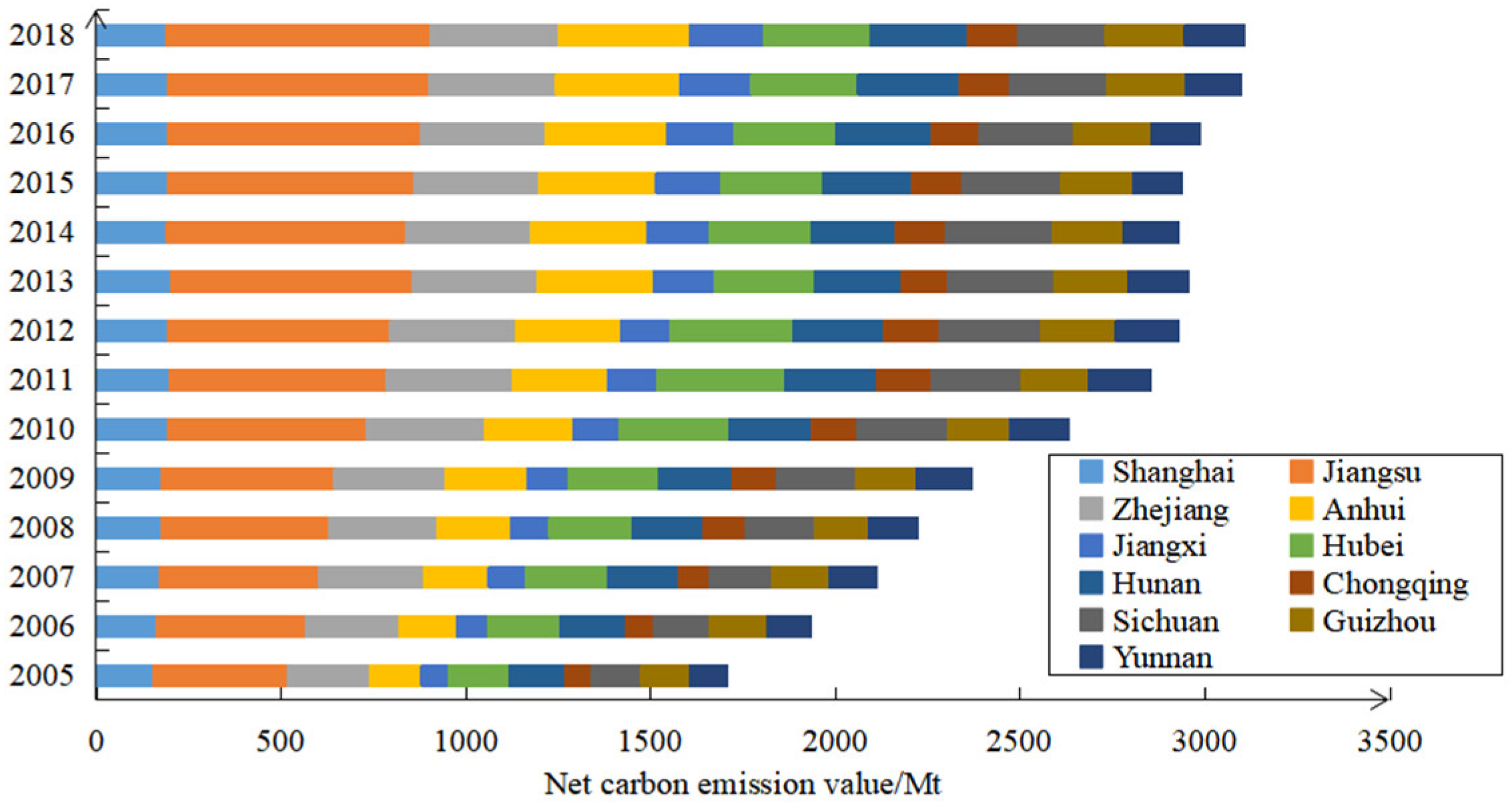
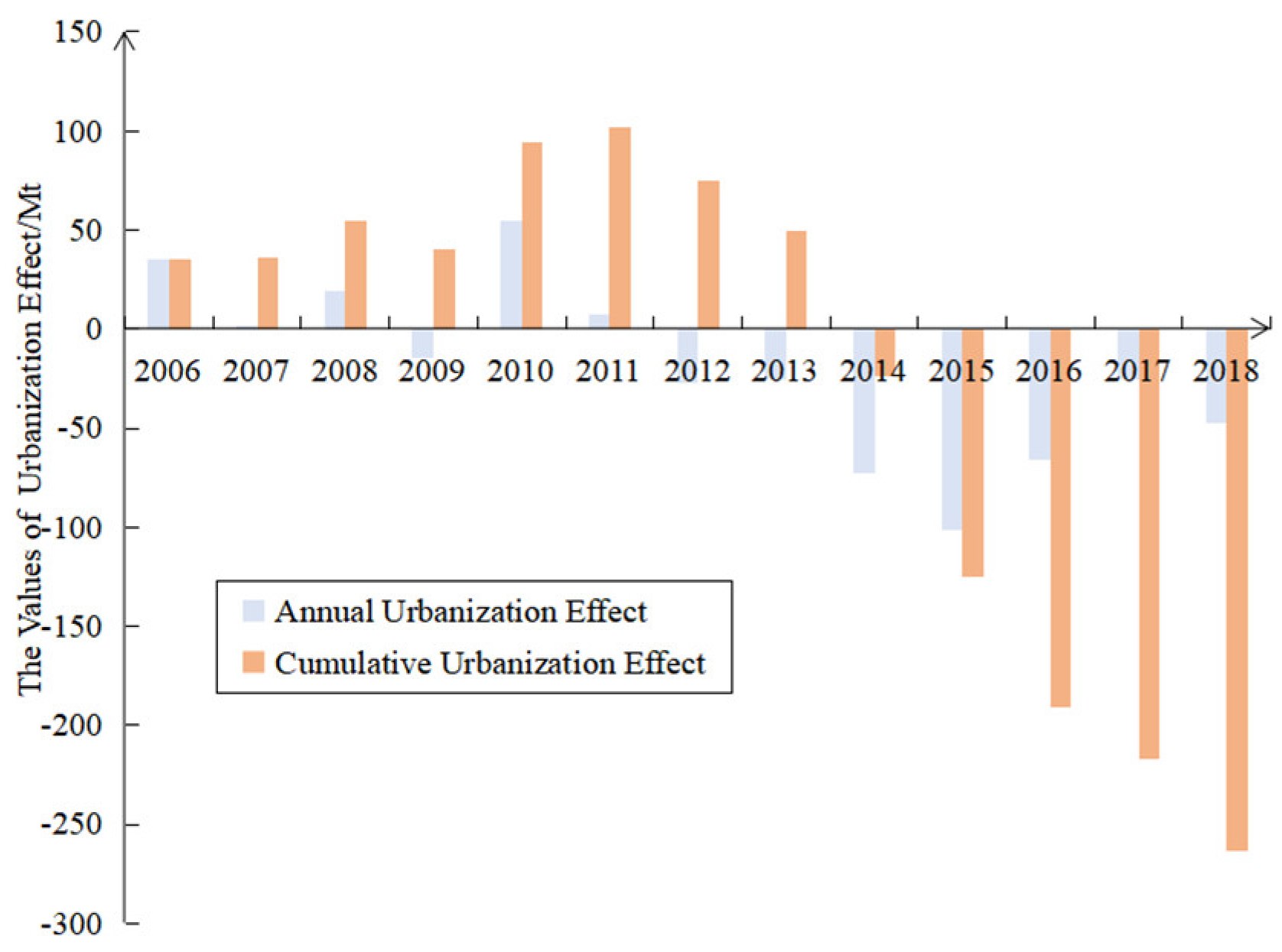
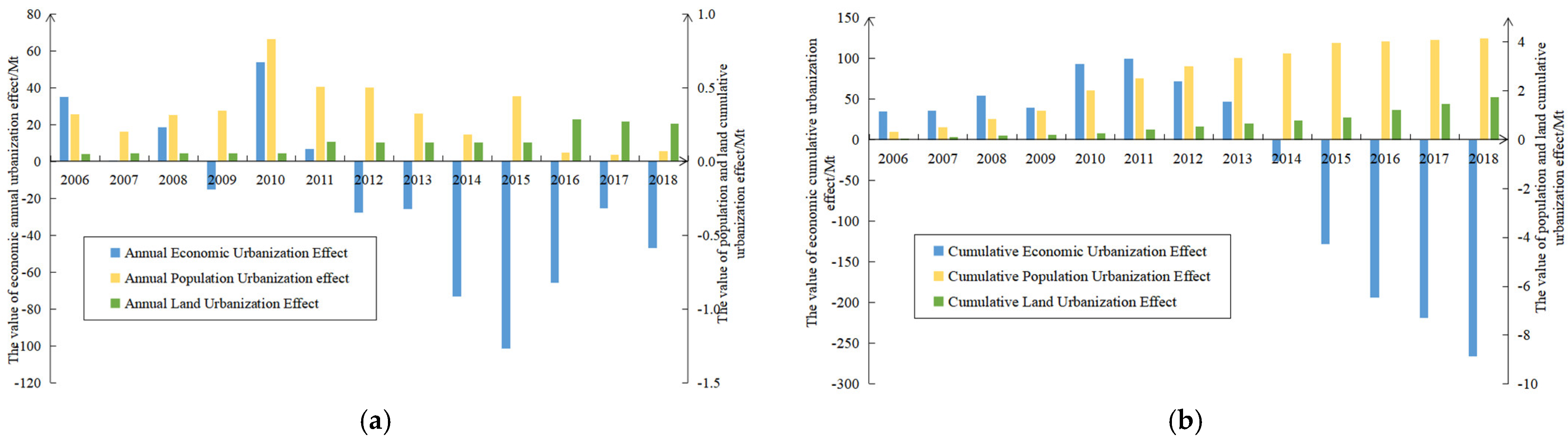
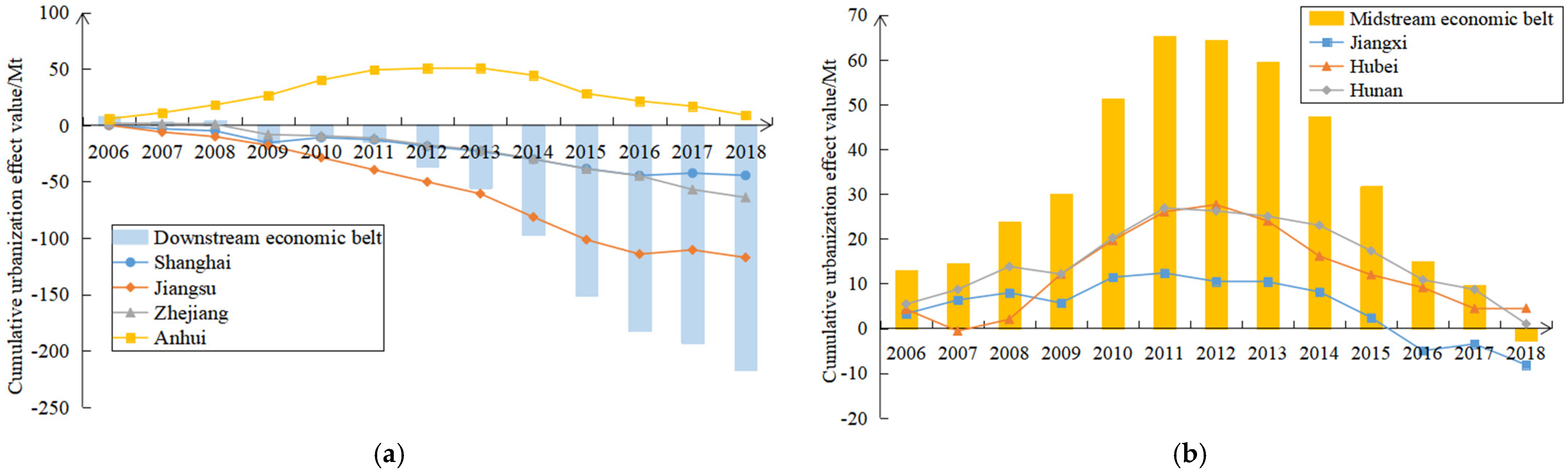
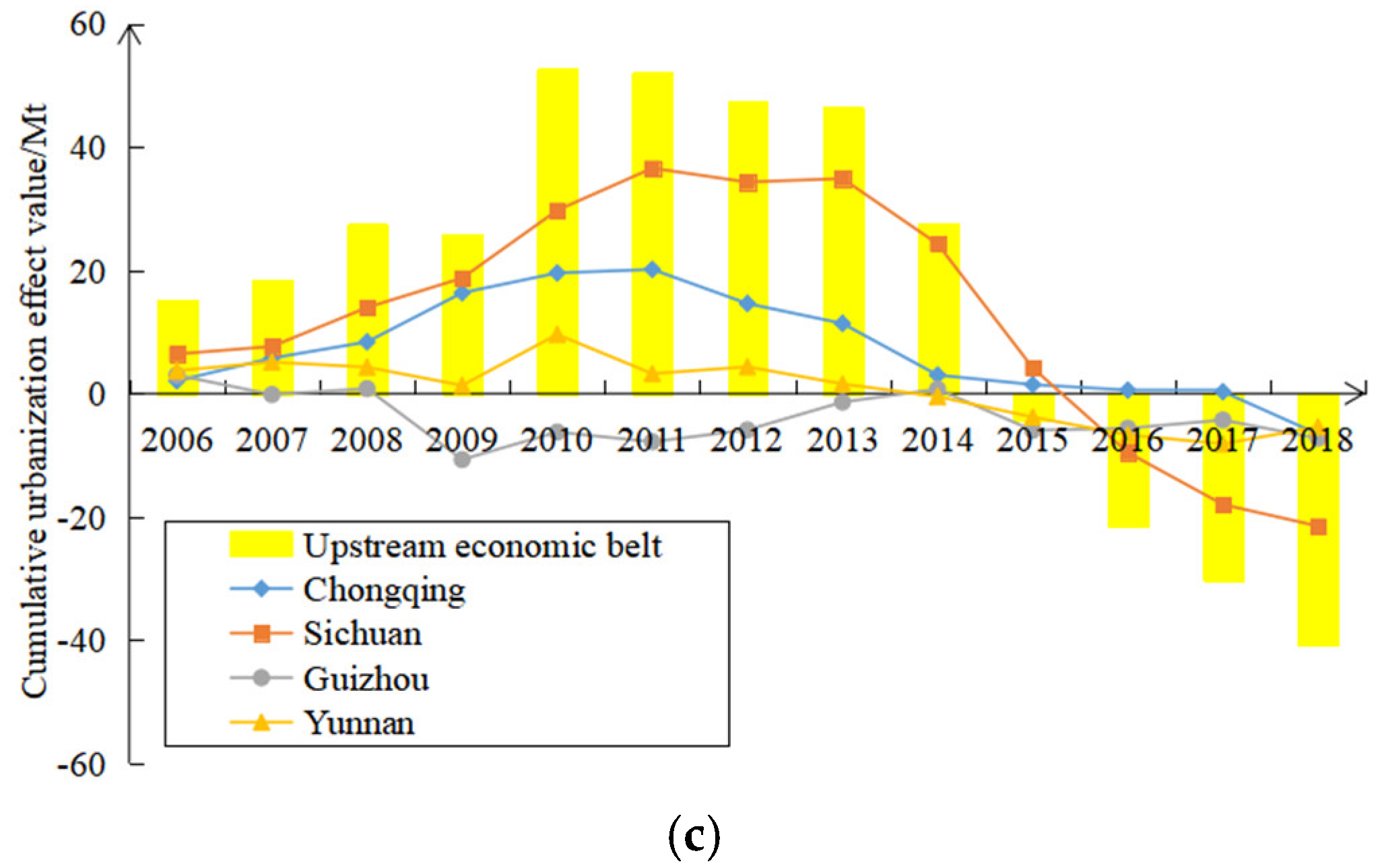
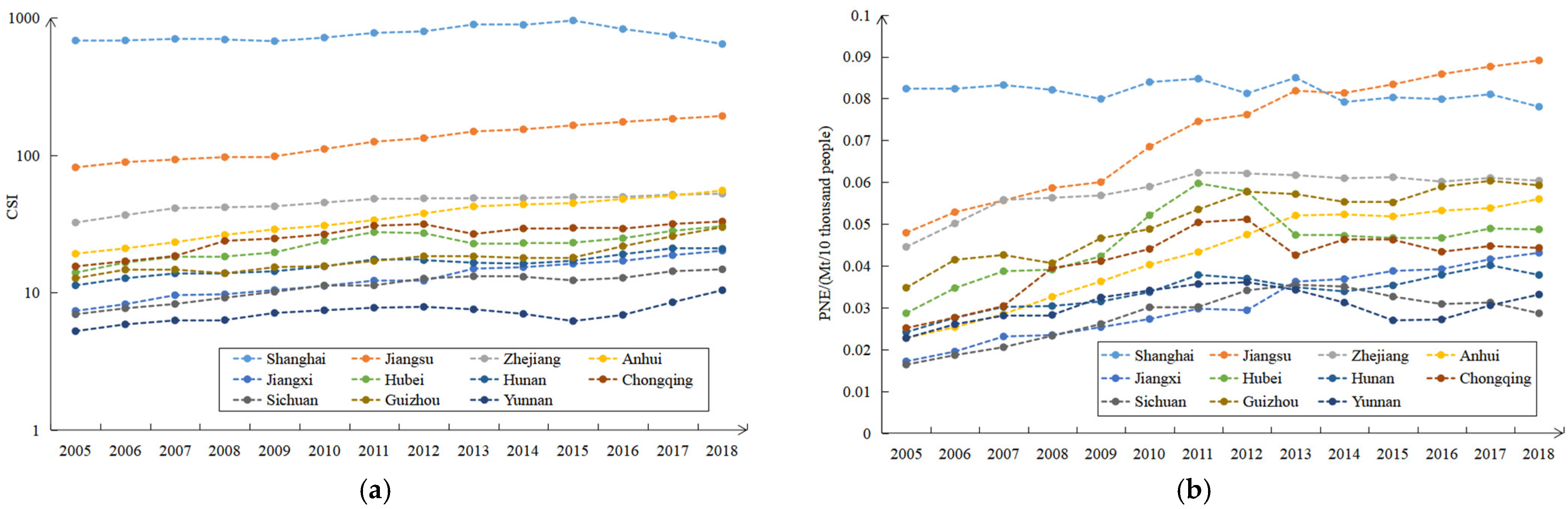
Urbanization is a powerful symbol and an inevitable human economic and social development trend. This process affects carbon dioxide emissions by changing the human output and lifestyle and encroaches over the carbon sink areas by adjusting the land use types impacting the regional carbon balance. We systematically analyzed the influence of urbanization on regional net CO2 emissions (NCE) and built a quantitative model for the impact of urbanization on NCE based on population, economy, and land use. Based on this, the Yangtze River Economic Belt (YREB) in China has been selected as an example to measure the characteristics of the spatial and temporal evolution of NCE from 2005 to 2018 by empirically testing the contributions of population urbanization, economic urbanization, and land urbanization to the NCE changes in YREB. According to the study’s findings, the carbon-neutral pressure index of the YREB increased over the study period, with an increase in NCE from 1706.50 Mt to 3106.05 Mt. The contribution of urbanization in this process increased and subsequently decreased in an inverted U pattern with a drop in the cumulative net emission of 260.32 Mt. The inflection points of the cumulative impact of urbanization on NCE in the midstream and upstream regions occurred in 2011 and 2010, respectively. Due to the high degree of urbanization and economic growth in the downstream area, the urbanization impact demonstrated a constant reduction of NCE over the research period. In terms of sub-dimensions, the population and land urbanization effects were consistently positive, while the economic urbanization affected the NCE and displayed an inverted U pattern during the study period. If the variation in regional carbon sink space is ignored, the impact of urbanization on CO2 emission reduction will be overestimated. We investigated the realization path of differentiated synergistic emission reduction strategies in the great river economic belts based on the empirical study on YREB.
Keywords: the net CO2 emissions; urbanization; multidimensional impacts; the Yangtze River Economic Belt; carbon neutralization the net CO2 emissions; urbanization; multidimensional impacts; the Yangtze River Economic Belt; carbon neutralization