Article

Study on Ecological Loss in Coal Mining Area Based on Net Primary Productivity of Vegetation
1
School of Land Science and Technology, China University of Geoscience, Beijing 100083, China
2
Key Laboratory of Land Consolidation and Rehabilitation, The Ministry of Natural Resources, Beijing 100035, China
*
Author to whom correspondence should be addressed.
Land 2022, 11(7), 1004; https://doi.org/10.3390/land11071004
Submission received: 22 May 2022 / Revised: 24 June 2022 / Accepted: 28 June 2022 / Published: 1 July 2022
(This article belongs to the Topic Climate Change and Environmental Sustainability)

Abstract

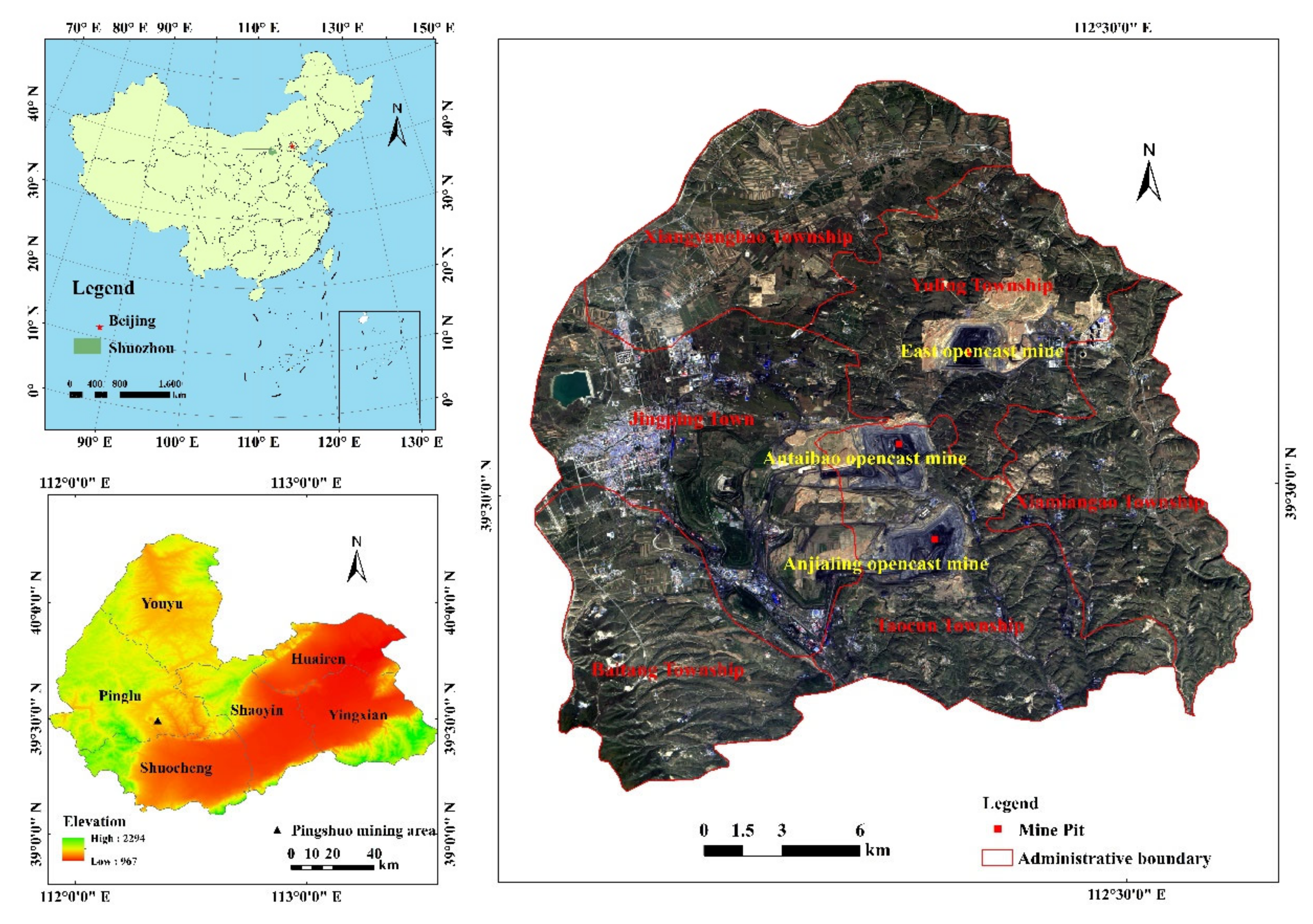
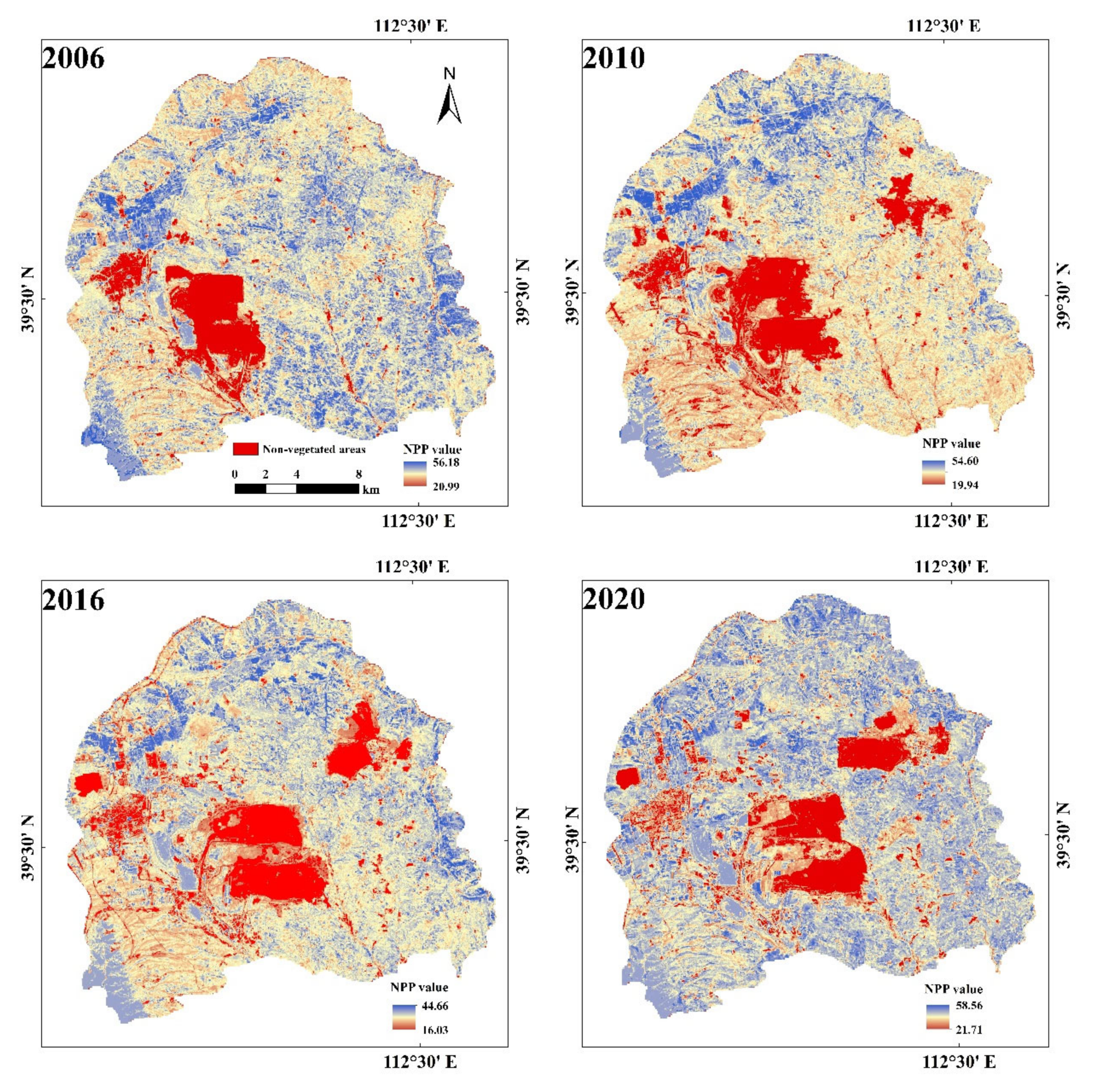
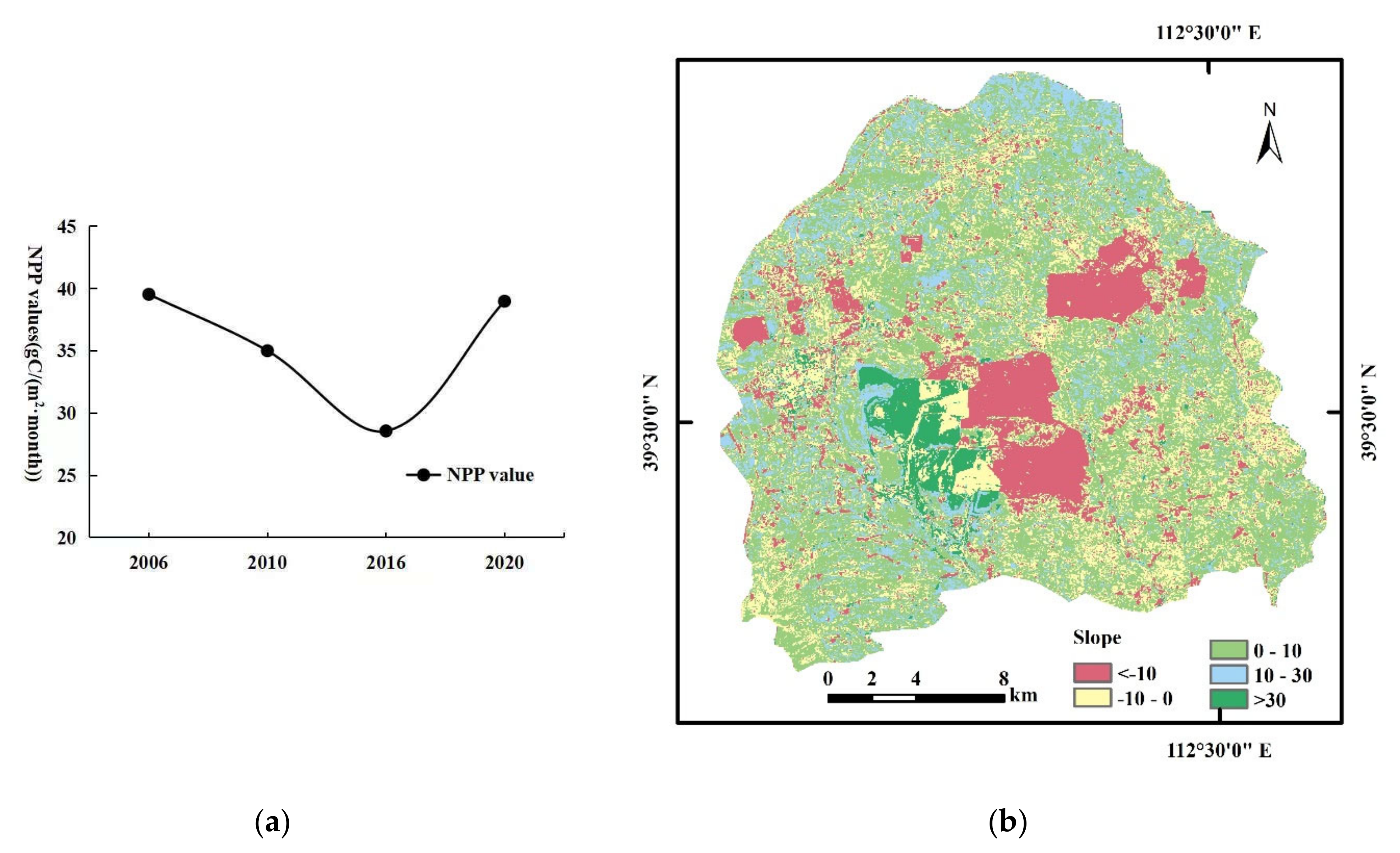
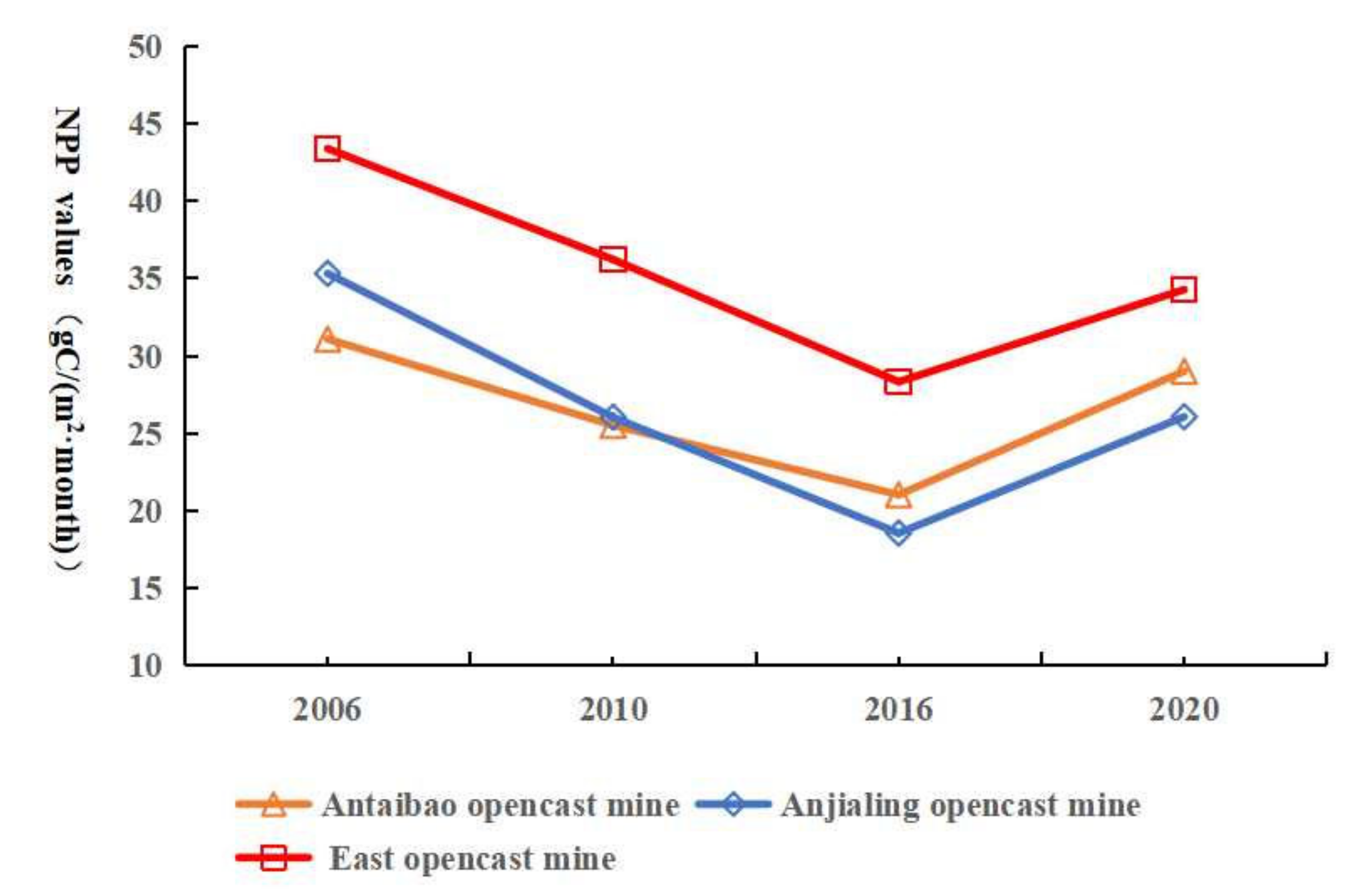
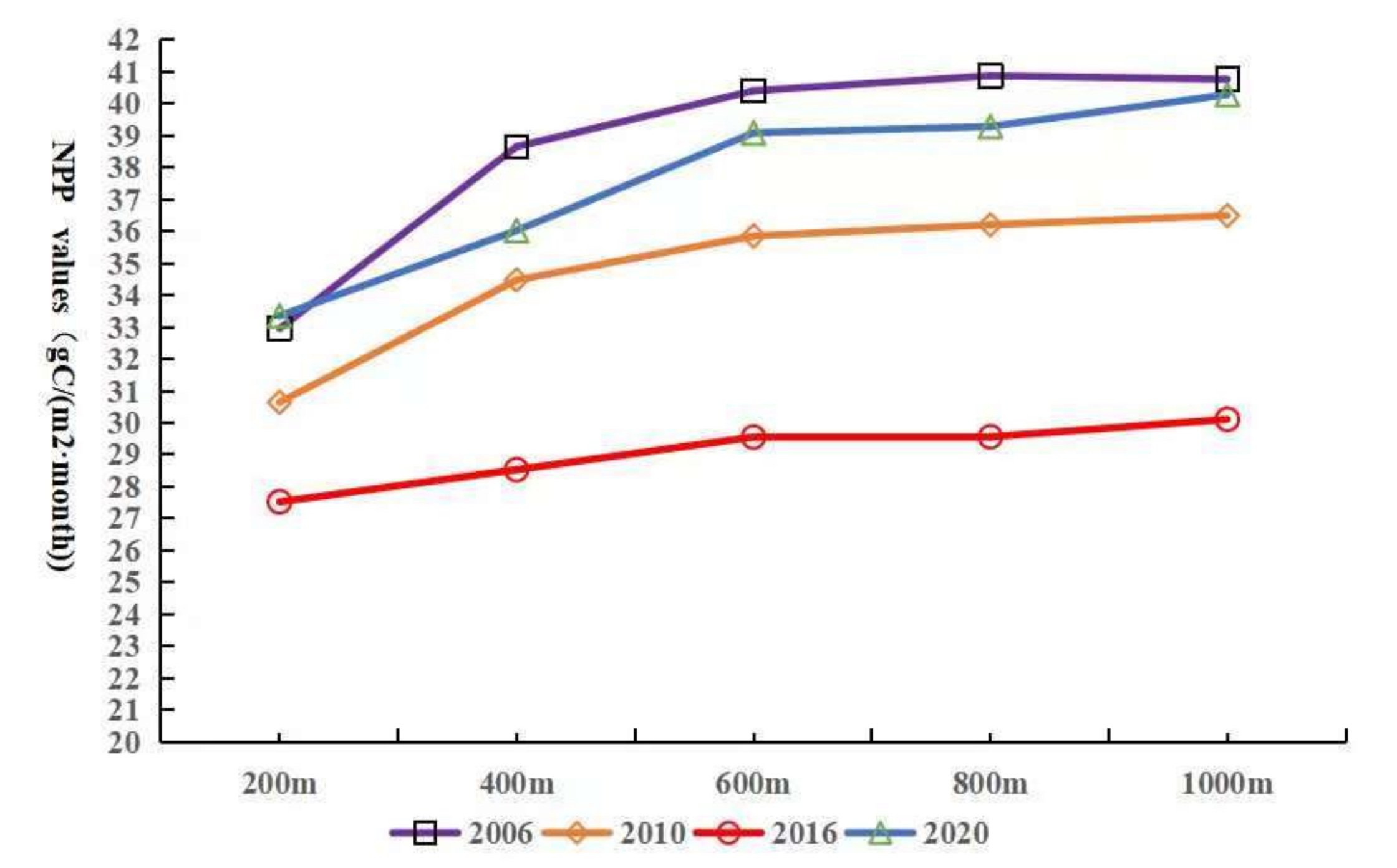
Opencast mining contributes to the severe disturbance of vegetation and serious damage to the ecological environment. Scientific assessment of the ecological losses may provide guidance for the sustainable land use in mining areas. This study uses the Carnegie Ames Stanford Approach (CASA) model to estimate the net primary productivity (NPP) of vegetation in the Pingshuo mining area from 2006 to 2020 and uses statistical analysis and mathematical models to study the impact of mining and land reclamation on NPP. The results show that NPP decreased slowly at a rate of 0.809 gC/(m2·month) per year. In 2006, the urban area of Pinglu and the opencast coal mining area were located in the western part of the study area, while the eastern part was distributed with a large amount of grassland, forested and cultivated land, and the NPP showed a high pattern in the east and low in the west. With the continued eastward movement of Antaibao and Anjialing mining areas, as well as the construction and continuous westward expansion of the East opencast mine, the pits of all three opencast mines moved to a central location in 2020, changing the spatial distribution of NPP to high in the surroundings and low in the middle. The NPP within the three opencast mines decreased significantly, but the change in NPP increased from −7.34 gC/(m2·month) to 7.15 gC/(m2·month) as the reclamation area increased, indicating that mining increased ecological losses while land reclamation mitigated them. The variation of NPP within 600 m outside the mining area is 2.06~7.45 gC/(m2·month), and 0.11~1.00 gC/(m2·month) from 600 m to 1000 m, indicating that NPP is sensitive to the influence of mining. The results may provide guidance for further analysis of the impact of mining on local environments and exploration of more appropriate land reclamation measures.
Keywords: ecological loss; net primary productivity (NPP); mining activity; land reclamation; Pingshuo opencast mine ecological loss; net primary productivity (NPP); mining activity; land reclamation; Pingshuo opencast mine