Article

Indicators as Mediators for Environmental Decision Making: The Case Study of Alessandria

Department of Planning, Design and Technology of Architecture, University of Rome—La Sapienza, 00185 Rome, Italy
*
Author to whom correspondence should be addressed.
Land 2022, 11(5), 607; https://doi.org/10.3390/land11050607
Submission received: 1 March 2022 / Revised: 11 April 2022 / Accepted: 14 April 2022 / Published: 21 April 2022
(This article belongs to the Special Issue Integrating Urban Design and Landscape Architecture)

Abstract

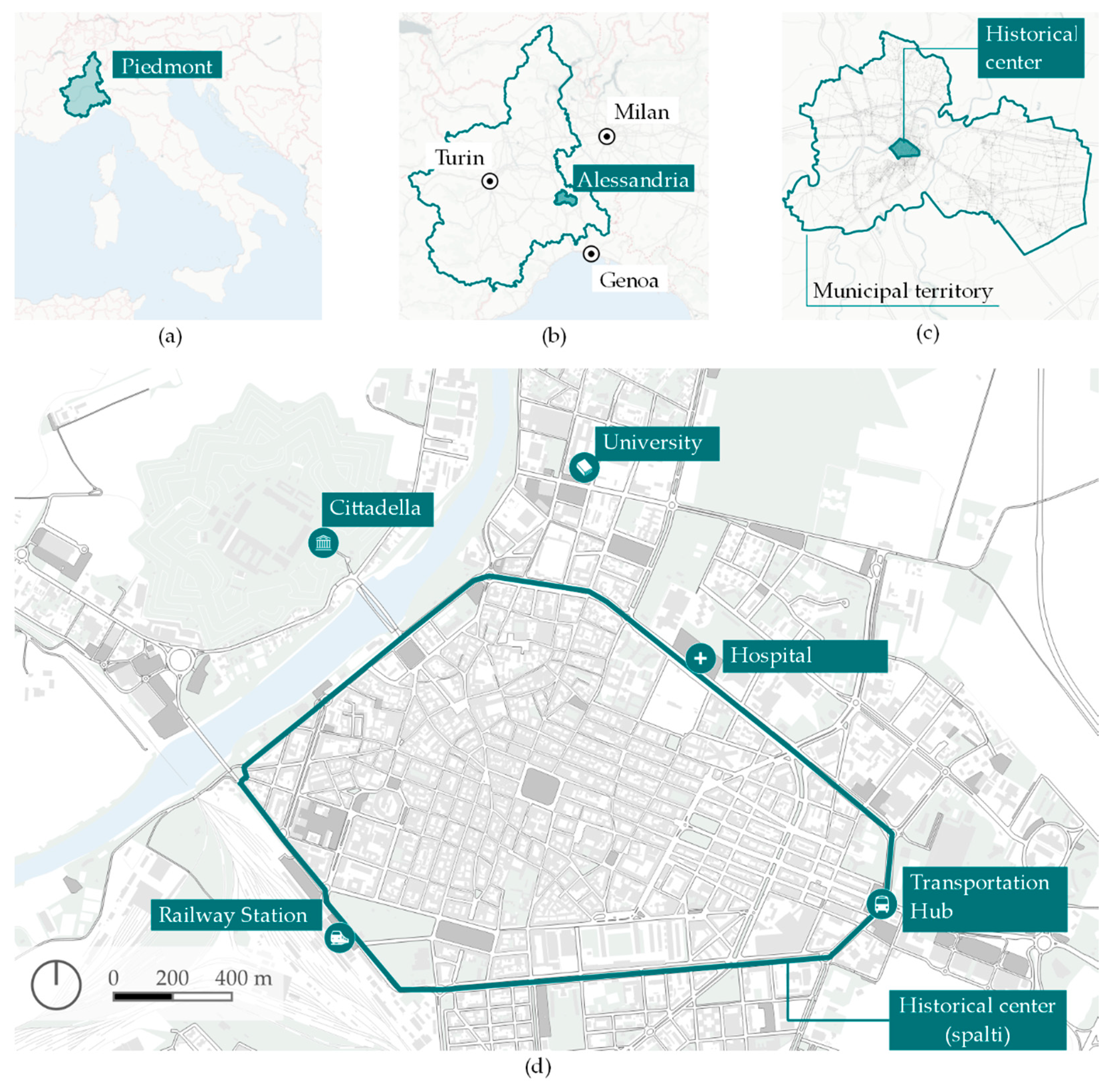
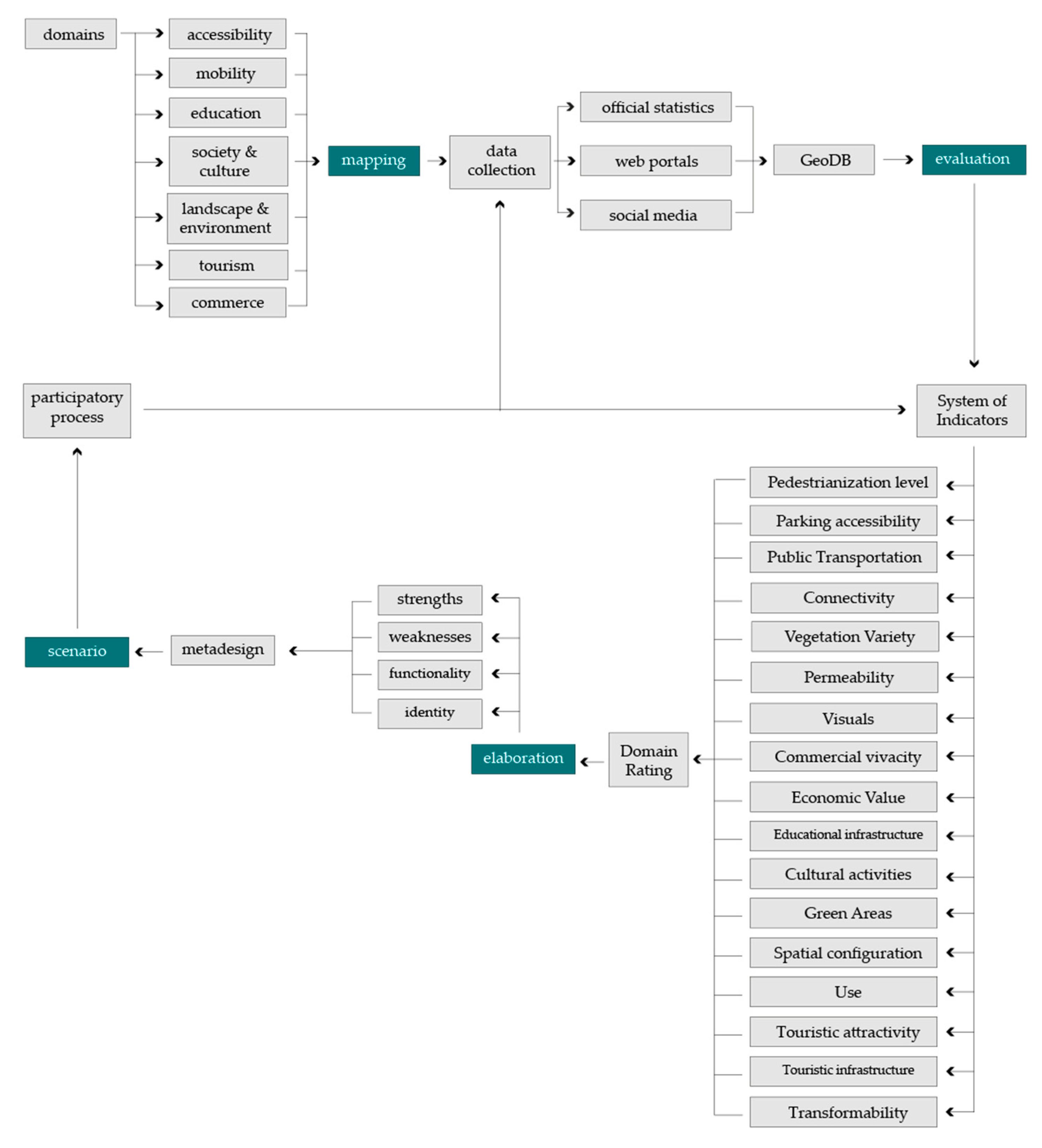
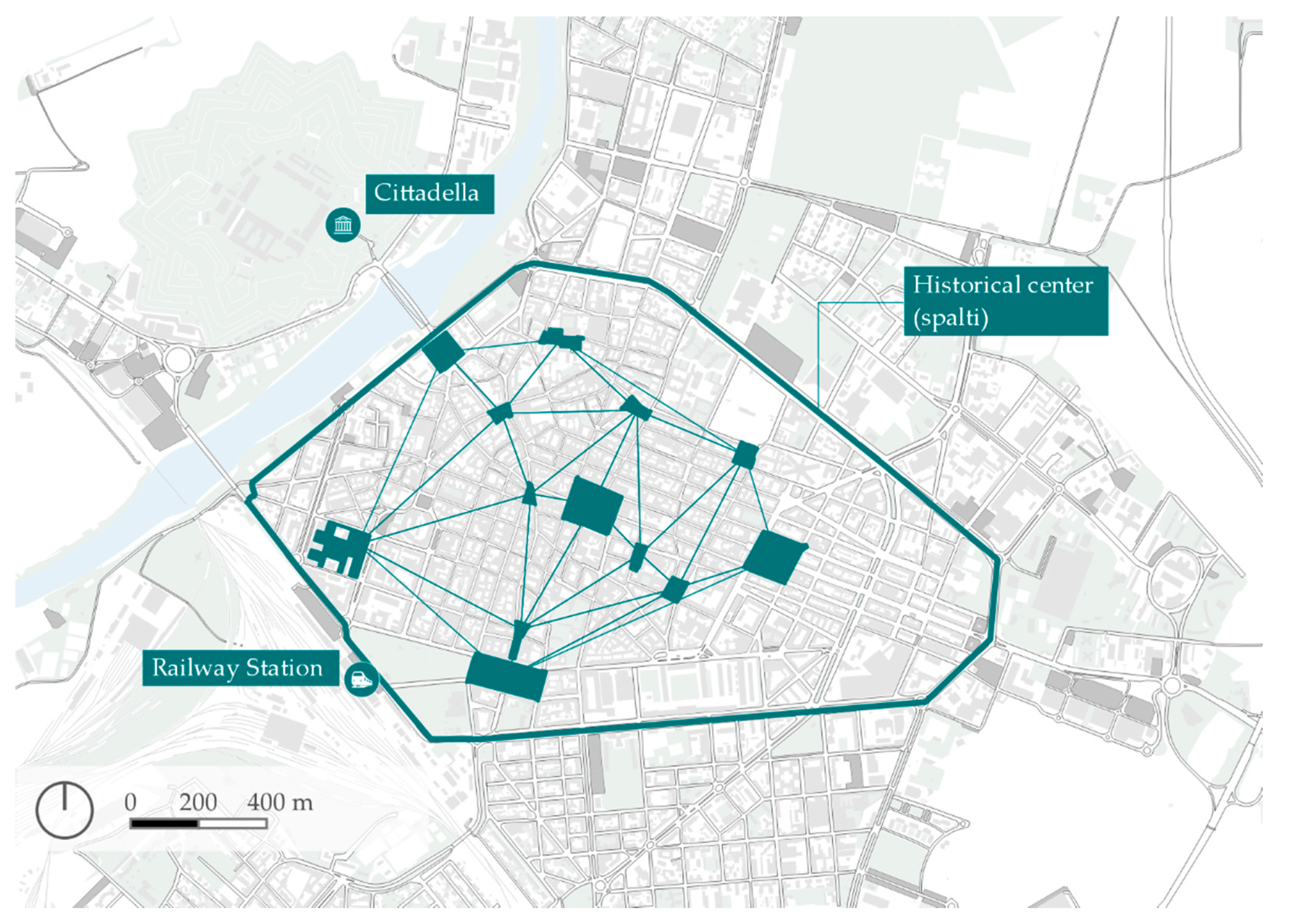
The design of urban public open spaces plays a key role in the development of micro-scale reactions to global phenomena (pandemic, climate change, etc.) that are currently reshaping the human habitat. Their transformability and healthy influence on the urban environment make them strategic nodes for acupunctural regeneration with systemic effects. Several methods, models, and indicators have been developed to face the complexity of these spaces, made up of tangible and intangible layers; however, there is a gap between theoretical investigation and the need for public administrations to devise feasible solutions, strategies, and guidelines. The paper focuses on this mediation, presenting, as a case study, an adopted methodology and the first results achieved according to guidelines for the regeneration of the system of squares in the historical center of Alessandria (Piedmont, Italy). In this case, a multidisciplinary approach and a Multi-Criteria Analysis (MCA) method, supported by geospatial analysis and GIS technology, have been employed to work as mediators for a participatory process which will involve public administration, stakeholders, experts, and researchers. The paper presents an overview of the workflow, with a focus on the first set of thematic indicators and an open conclusion. It will explain how they have been defined, integrated, and turned into a dialogic tool, with the aim of laying the foundation for the next stage of involvement by the public administration and stakeholders. Specific attention will be paid to the key role of vegetational and environmental parameters, which represents the requalification strategy’s backbone, for both local and systemic scales.
Keywords: open spaces; multi-criteria analysis; participation; decision making; GIS open spaces; multi-criteria analysis; participation; decision making; GIS