Article

Did Polycentric and Compact Structure Reduce Carbon Emissions? A Spatial Panel Data Analysis of 286 Chinese Cities from 2002 to 2019

1
School of Architecture, Southeast University, Nanjing 210096, China
2
School of Design and Architecture, Zhejiang University of Technology, Hangzhou 310023, China
*
Author to whom correspondence should be addressed.
Land 2022, 11(2), 185; https://doi.org/10.3390/land11020185
Submission received: 9 January 2022 / Revised: 22 January 2022 / Accepted: 23 January 2022 / Published: 24 January 2022
(This article belongs to the Special Issue The Eco-Environmental Effects of Urban Land Use)

Abstract

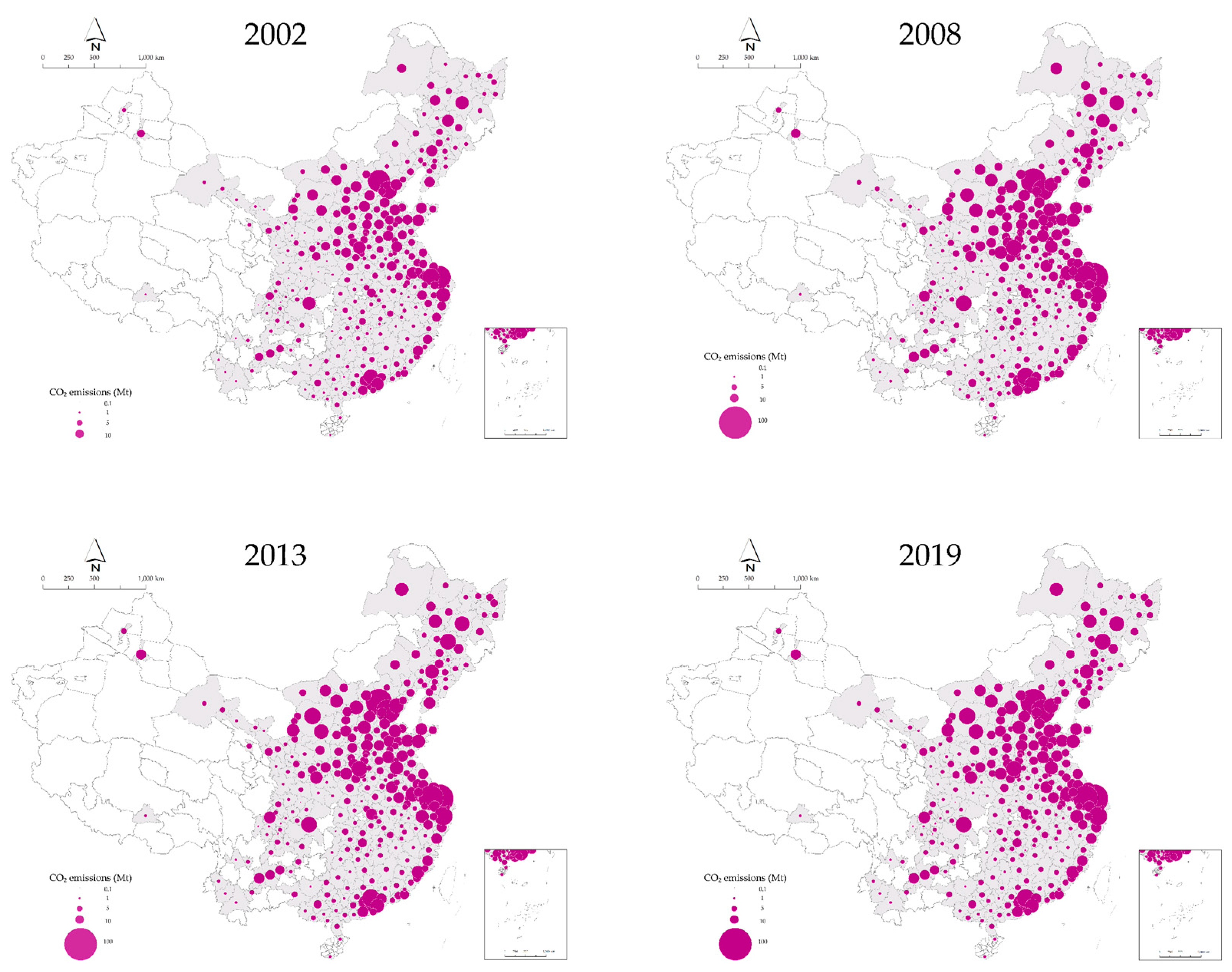
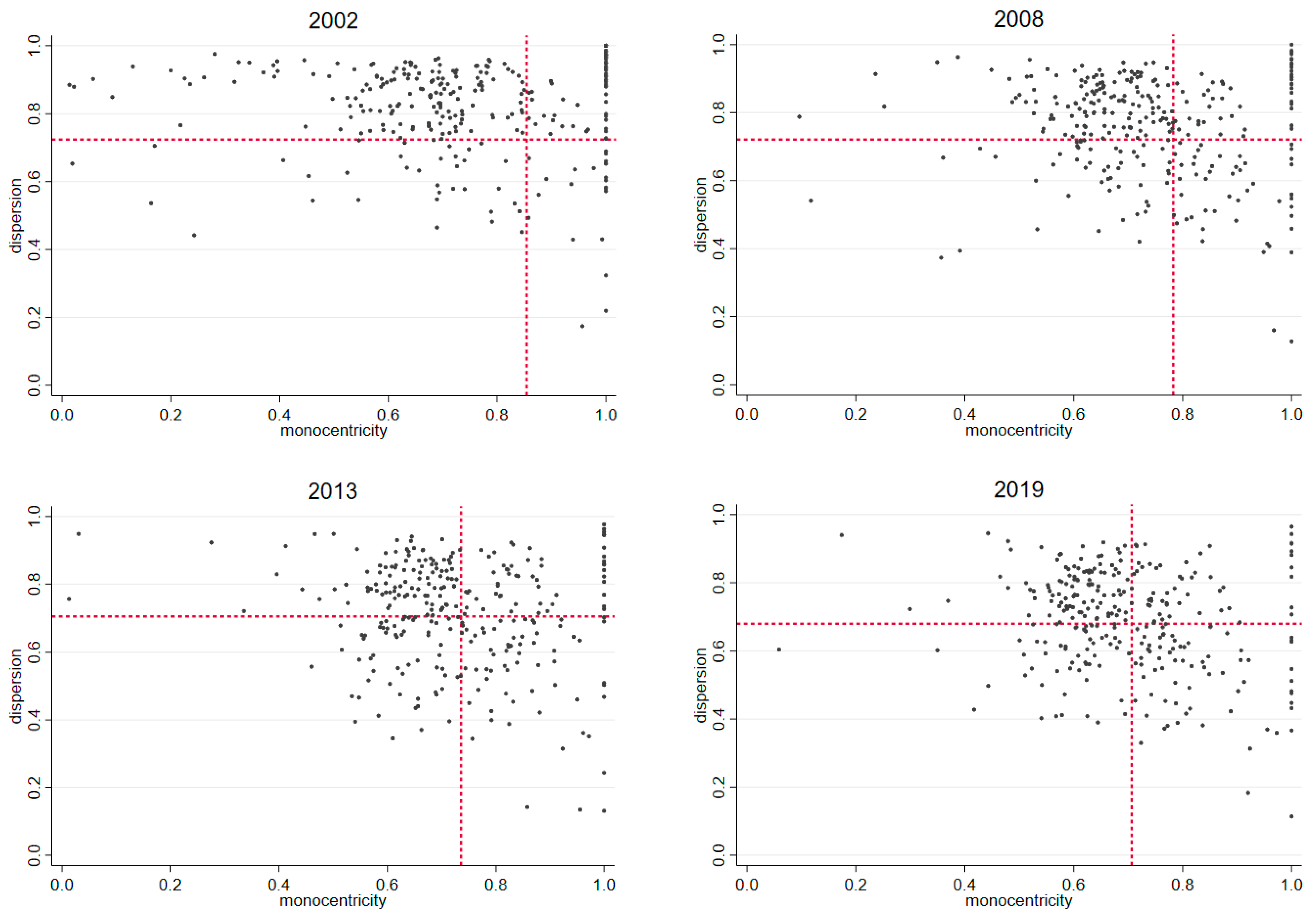
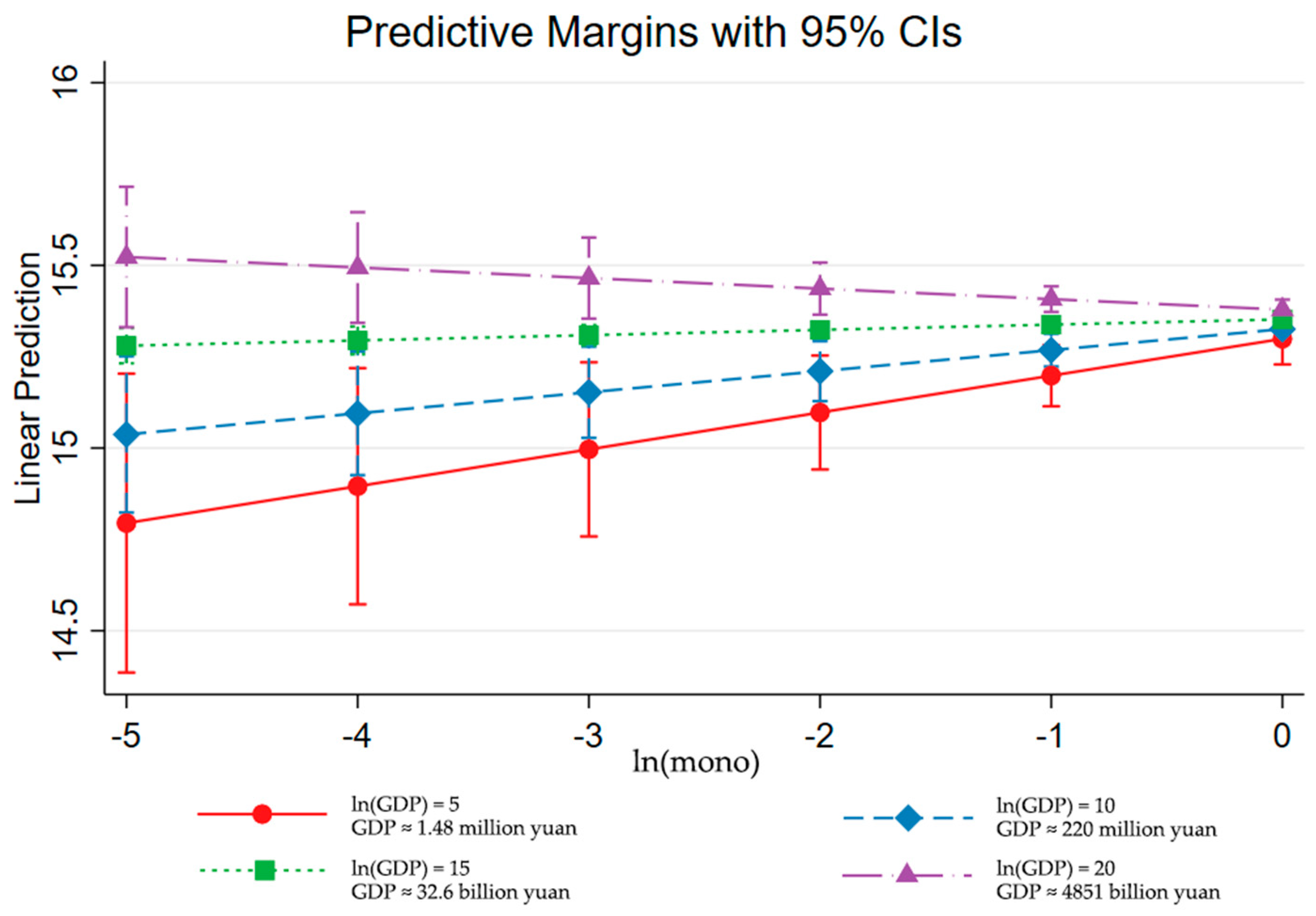
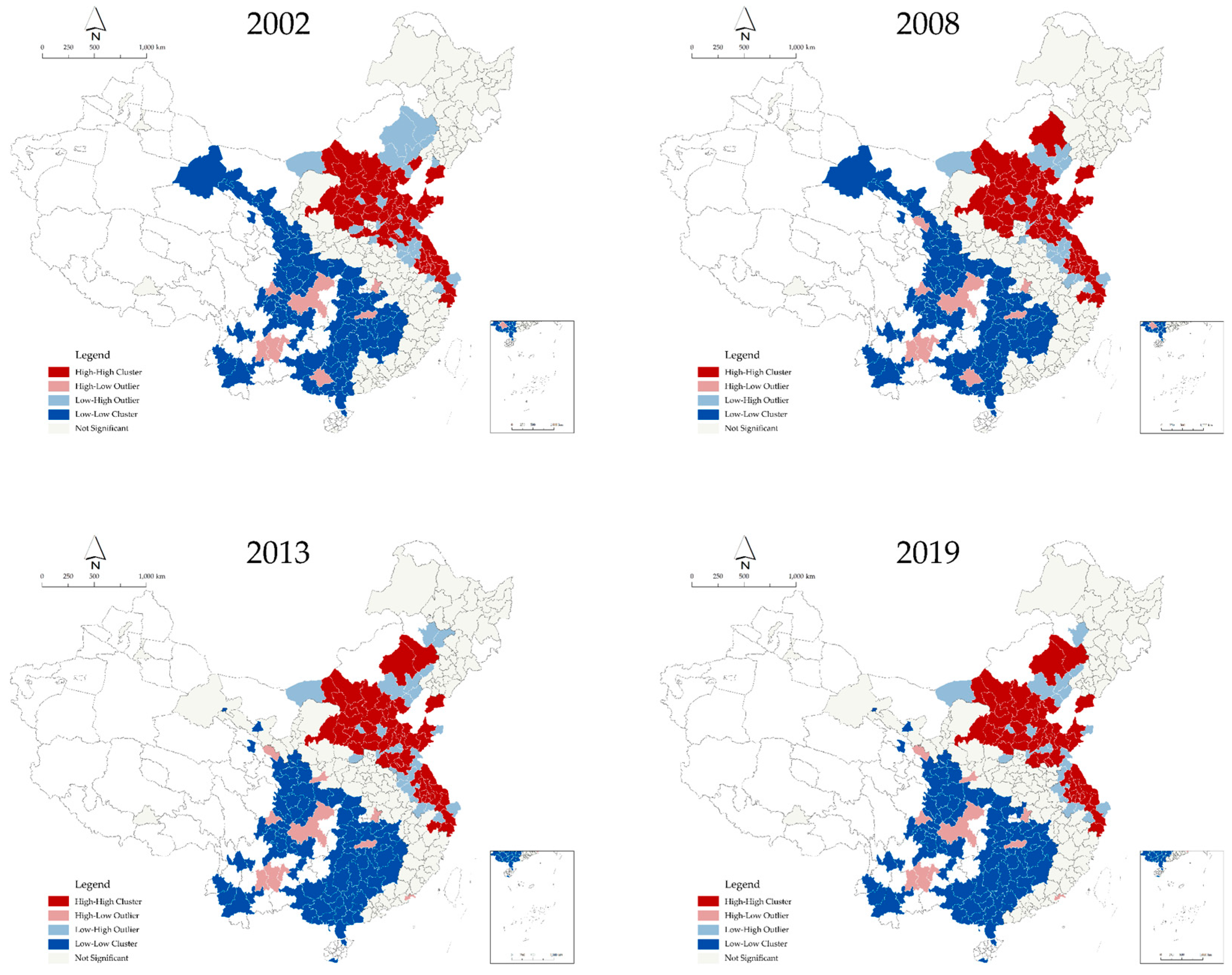
Curbing carbon emissions by restricting economic growth could decrease human well-being across the world and especially in developing countries, suggesting that we need to find alternative approaches to reducing carbon emissions. Against this background, this paper investigates the relationship between urban spatial structure and carbon emissions in the Chinese context from 2002 to 2019. Specifically, urban spatial structure of 286 Chinese cities, represented by the two dimensions of polycentricity and compactness, are calculated based on the gridded (1 km × 1 km) LandScan dataset on population, while carbon emissions of these cities are aggregated from the gridded (1 km × 1 km) Open-source Data Inventory for Anthropogenic CO2 (ODIAC) dataset on carbon emissions. The empirical results based on different regression models find that overall (1) more dispersed and less monocentric (i.e., less compact and more polycentric) cities are often associated with lower levels of carbon emissions, ceteris paribus; (2) the impact of polycentricity on carbon emissions could be moderated by the economic development levels of Chinese cities. For cities with gross domestic product of more than 173 billion yuan, a more polycentric spatial structure is usually associated with a higher level of carbon emissions; (3) a city’s urban spatial structure could have positive spatial spillovers on carbon emissions of its neighboring cities.
Keywords: carbon emission; polycentricity; compactness; urban spatial structure; spatial Durbin model carbon emission; polycentricity; compactness; urban spatial structure; spatial Durbin model