Article

Impacts of Urban Expansion on the Loss and Fragmentation of Cropland in the Major Grain Production Areas of China
1
Faculty of Geomatics, Lanzhou Jiaotong University, Lanzhou 730070, China
2
Institute of Geographic Sciences and Natural Resources Research, Chinese Academy of Sciences, Beijing 100101, China
3
Key Laboratory of Urban Land Resources Monitoring and Simulation, Ministry of Natural Resources, Shenzhen 518034, China
4
National-Local Joint Engineering Research Center of Technologies and Applications for National Geographic State Monitoring, Lanzhou 730070, China
5
Gansu Provincial Engineering Laboratory for National Geographic State Monitoring, Lanzhou 730070, China
*
Author to whom correspondence should be addressed.
Land 2022, 11(1), 130; https://doi.org/10.3390/land11010130
Submission received: 21 December 2021 / Revised: 10 January 2022 / Accepted: 12 January 2022 / Published: 14 January 2022

Abstract

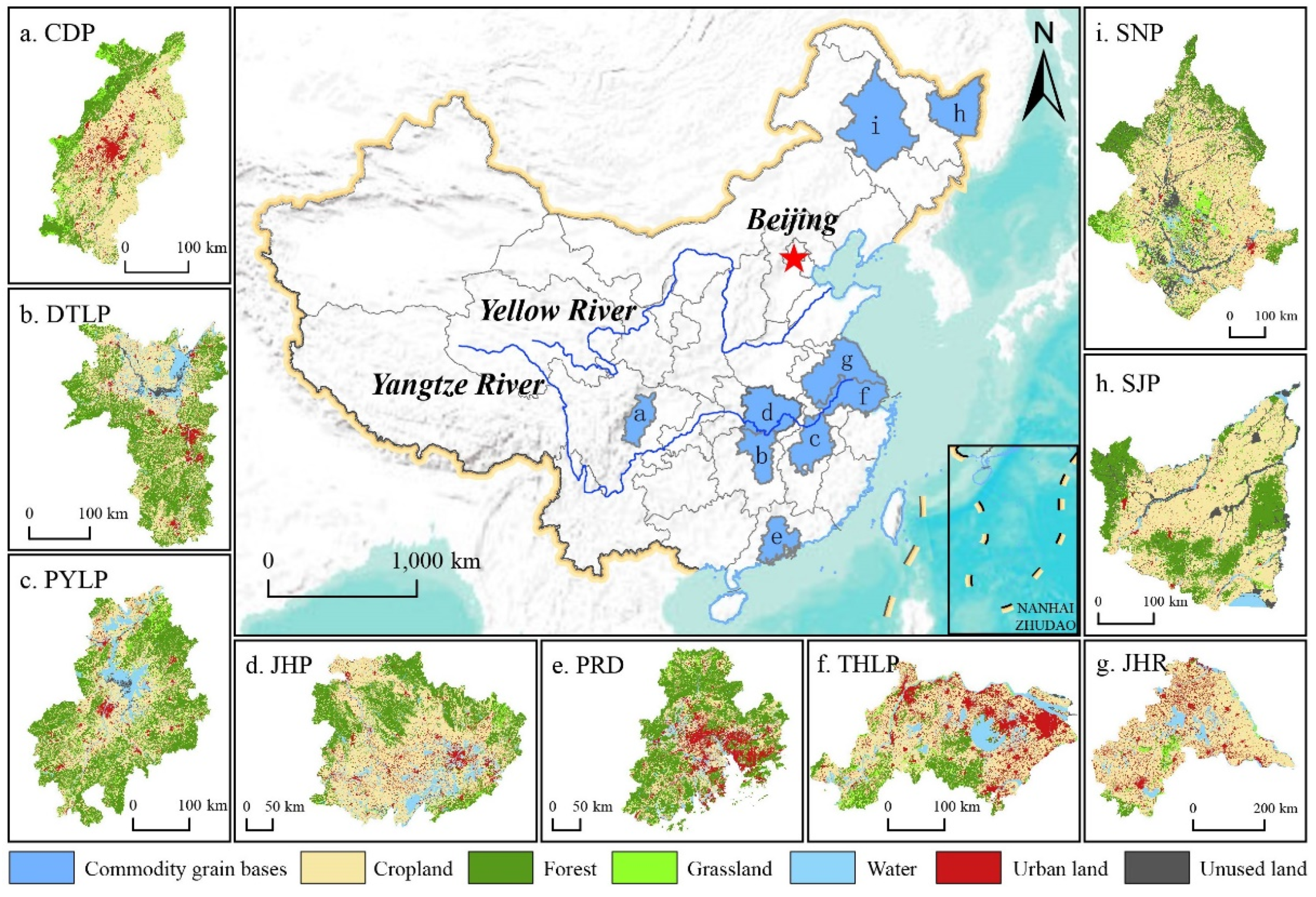
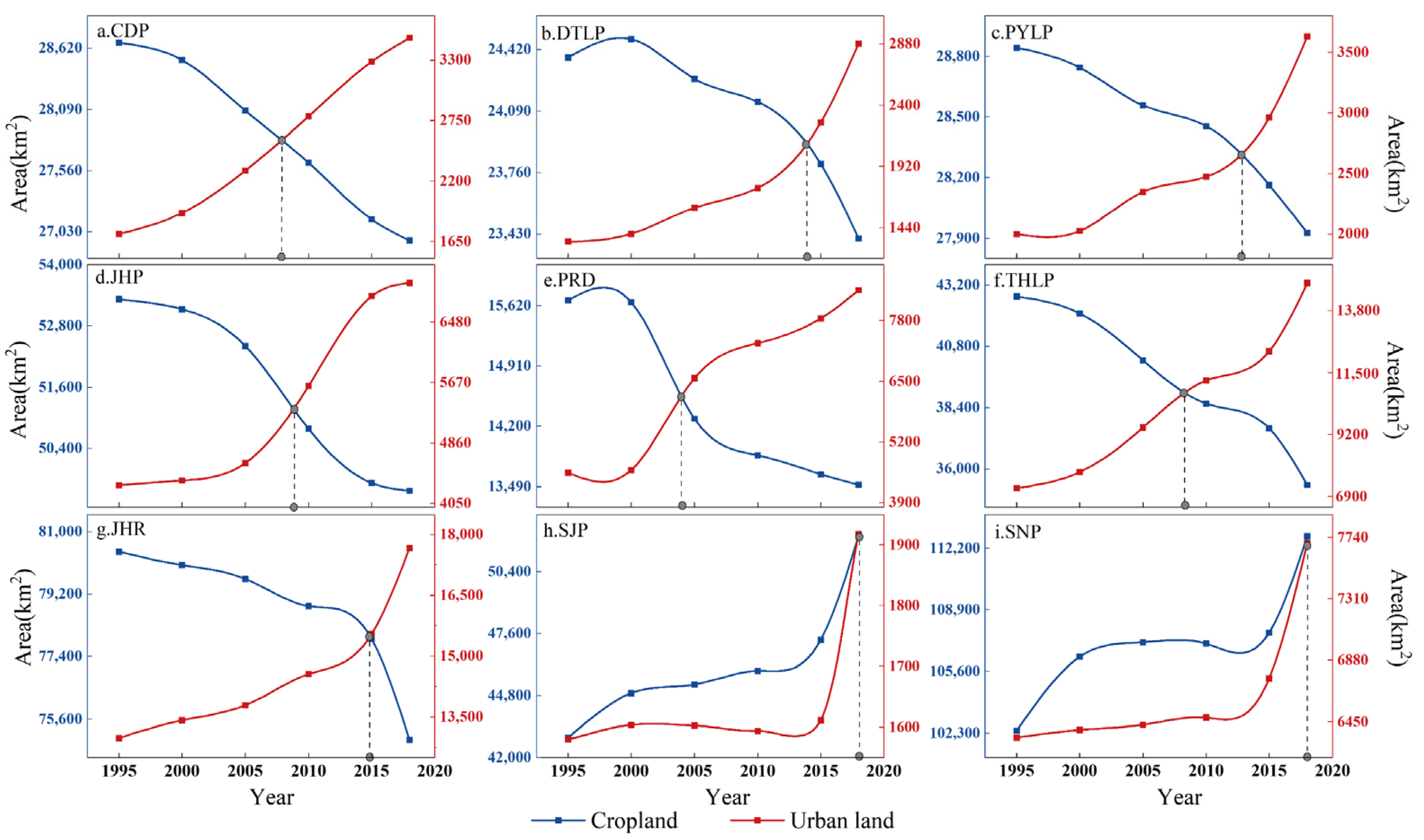
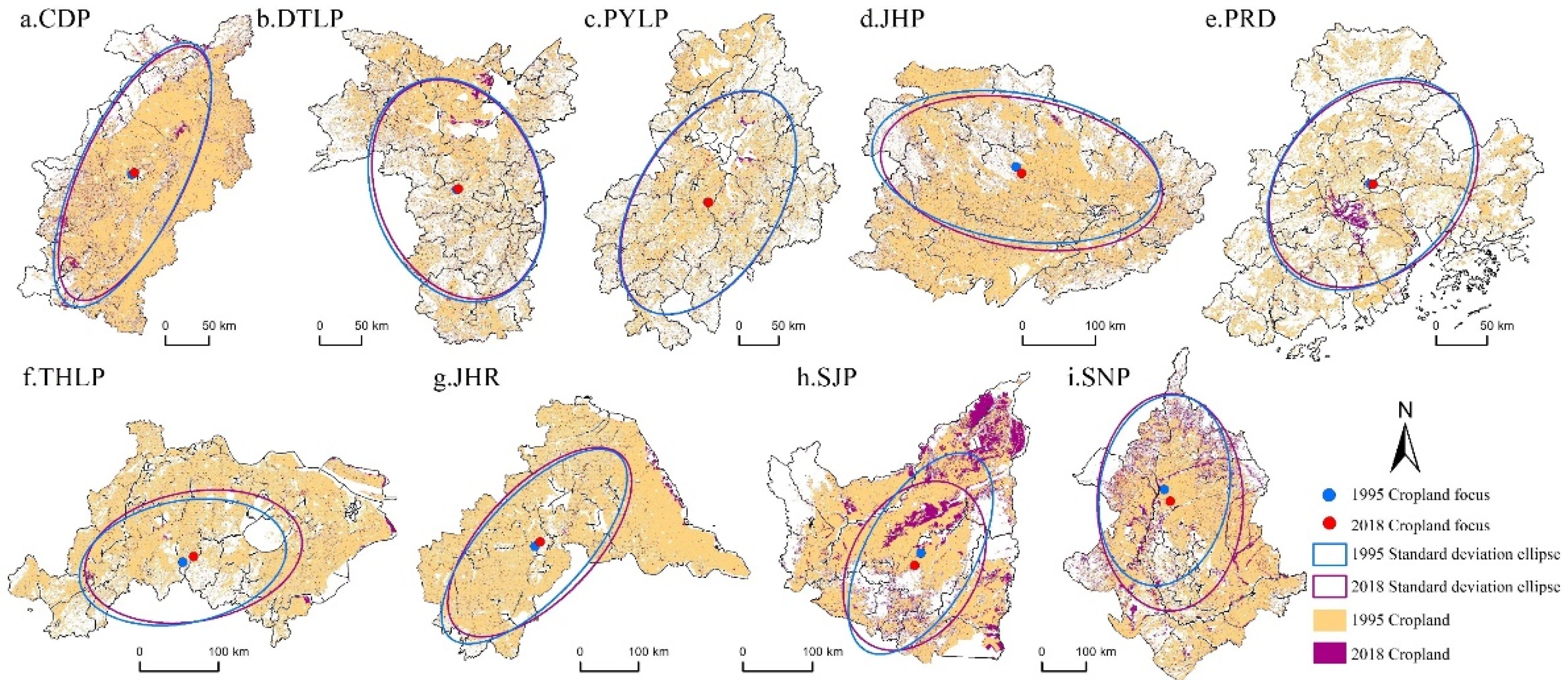
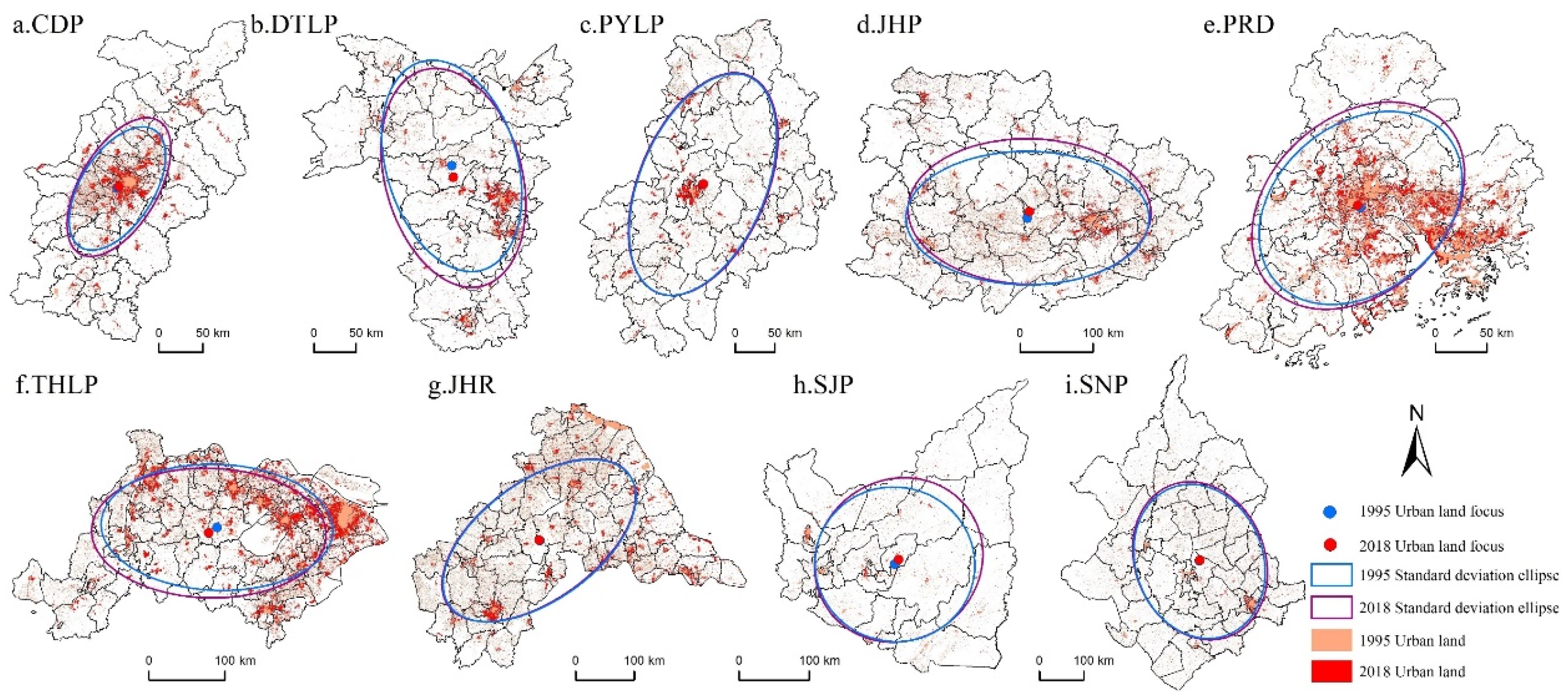
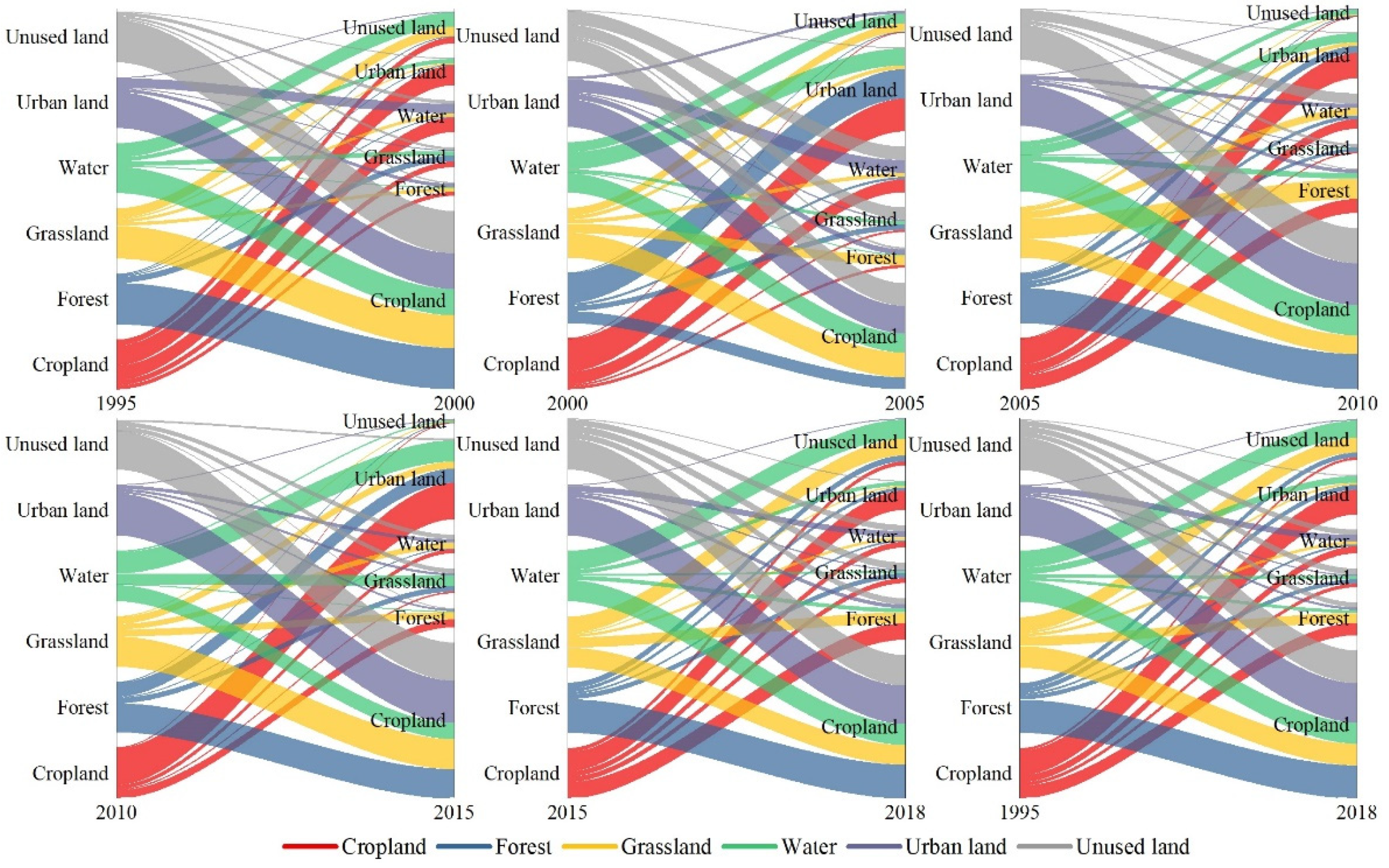
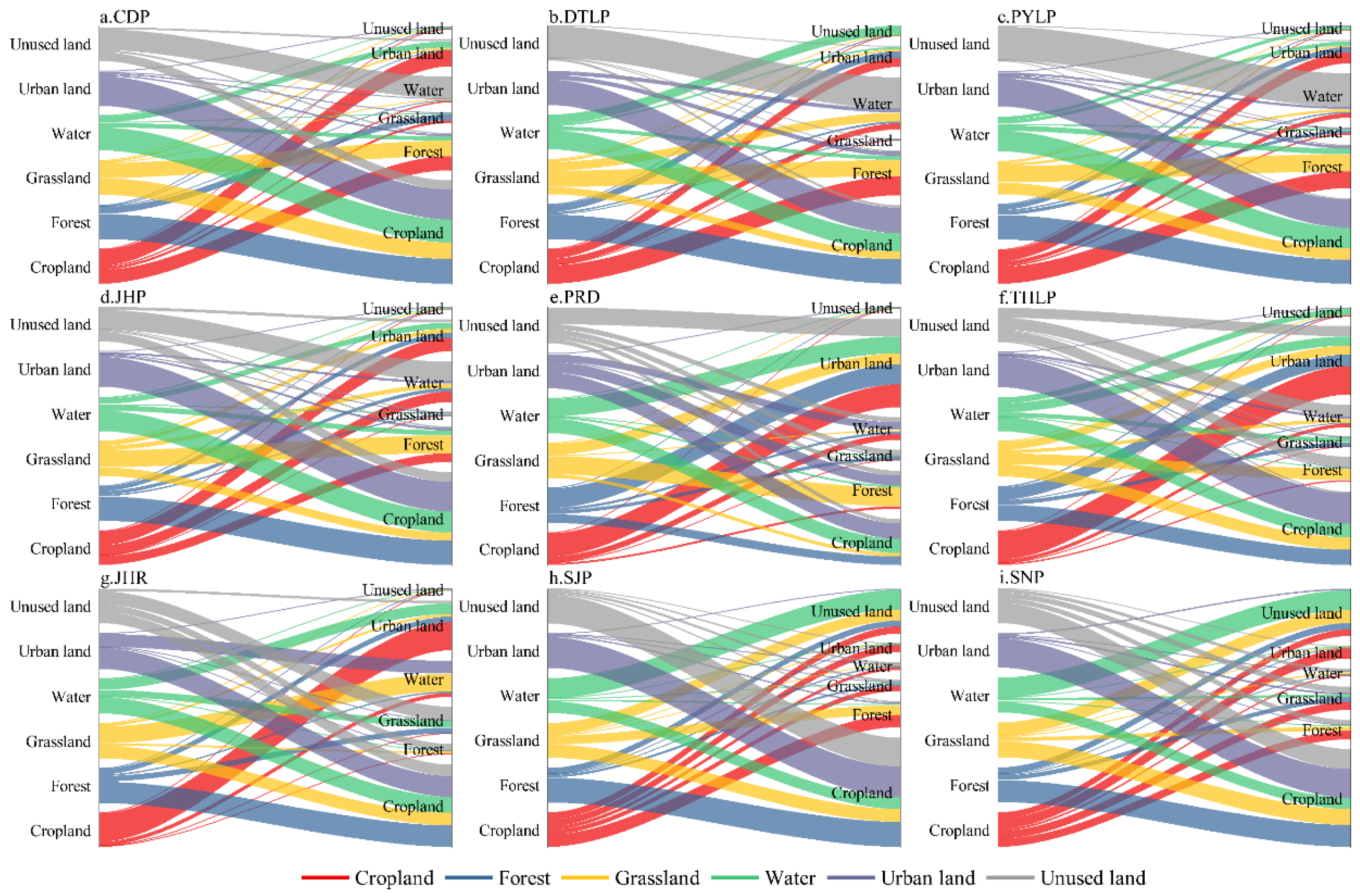
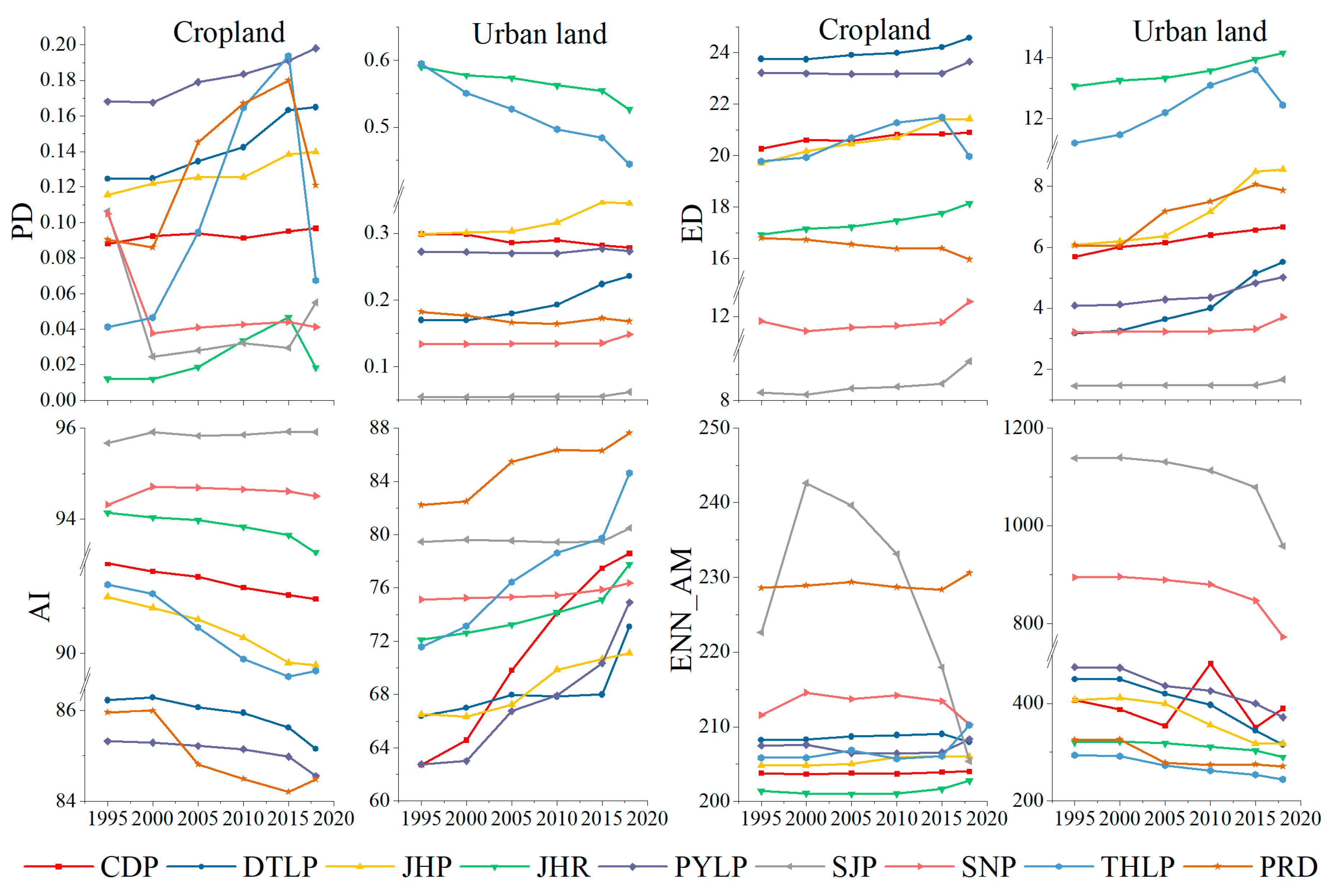
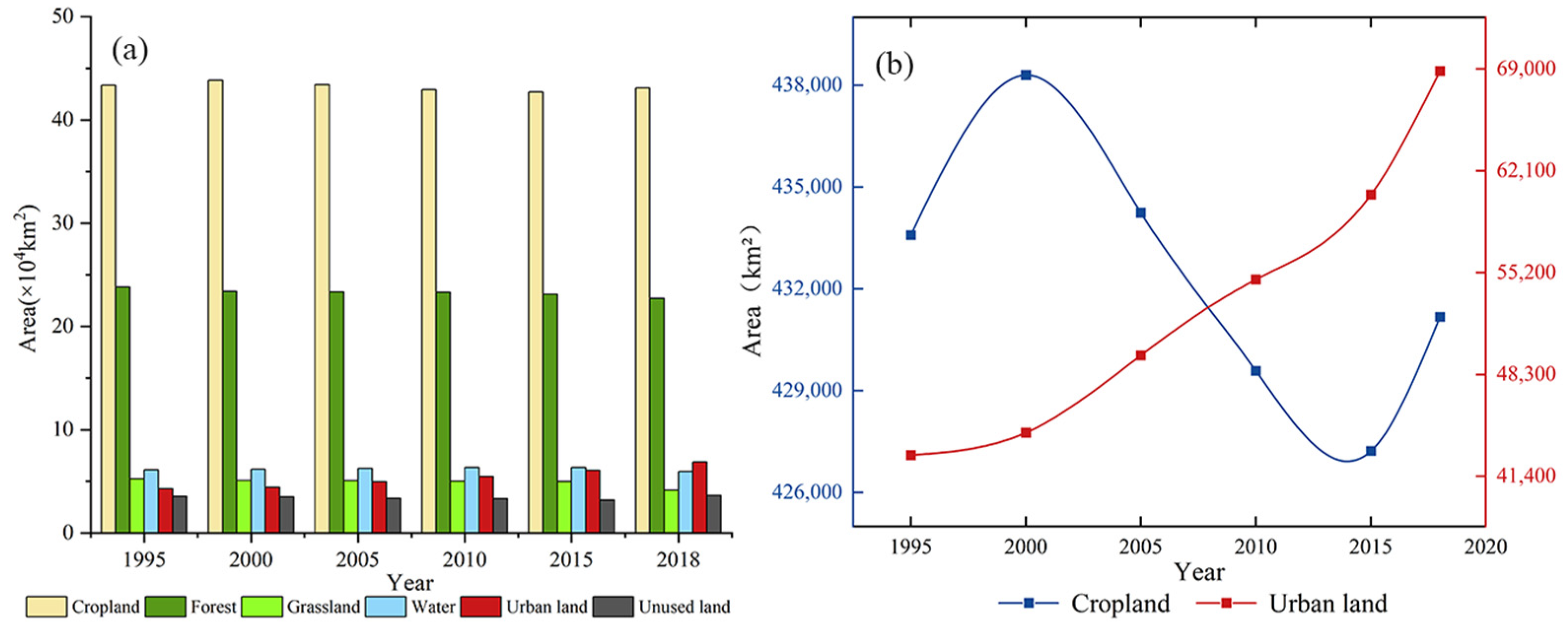
The continuous expansion of urban land has led to massive encroachment upon cropland. To examine the impacts of urban expansion on the loss and fragmentation of cropland in China’s nine major grain production areas (MGPAs), we used standard deviation ellipse, land use transfer matrix, land use dynamic degree, and landscape metric to explore the spatio-temporal evolutions, mutual transfer, and landscape patterns of cropland and urban land. The results show the following: (1) From 1995 to 2018, the areas of cropland in MGPAs showed a trend of “short-term increase—long-term decrease—short-term increase”, while that of urban land grew continuously; (2) Urban expansion is the main cause of cropland loss. The cropland area converted to urban land accounts for a large proportion (49.26%) of the total transfer of cropland to other land types, especially in the densely populated, rapidly urbanizing and industrializing Taihu Lake Plain, Jianghuai Region, and Pearl River Delta; (3) In most MGPAs, urban expansion has led to fragmentation of cropland, especially in the Pearl River Delta, as indicated by the significant change of patch density. However, in the Sanjiang Plain and Songnen Plain, a less pronounced or even reduced cropland fragmentation was observed due to the significant conversion of other land types to cropland under specific land policies. From these results, we suggest that the government should regulate the encroachment of urban land on cropland and the transfer of natural land to it, and encourage the rural land consolidation to increase the cropland.
Keywords: urban expansion; cropland loss; fragmentation; landscape metric; grain production areas urban expansion; cropland loss; fragmentation; landscape metric; grain production areas