Article

Identification of the Key Influencing Factors of Urban Rail Transit Station Resilience against Disasters Caused by Rainstorms

1
School of Economics and Management, Chongqing Jiaotong University, Chongqing 400074, China
2
College of Resources and Environment, Southwest University, Chongqing 400715, China
*
Author to whom correspondence should be addressed.
Land 2021, 10(12), 1298; https://doi.org/10.3390/land10121298
Submission received: 20 October 2021 / Revised: 14 November 2021 / Accepted: 23 November 2021 / Published: 25 November 2021
(This article belongs to the Section Urban Contexts and Urban-Rural Interactions)

Abstract

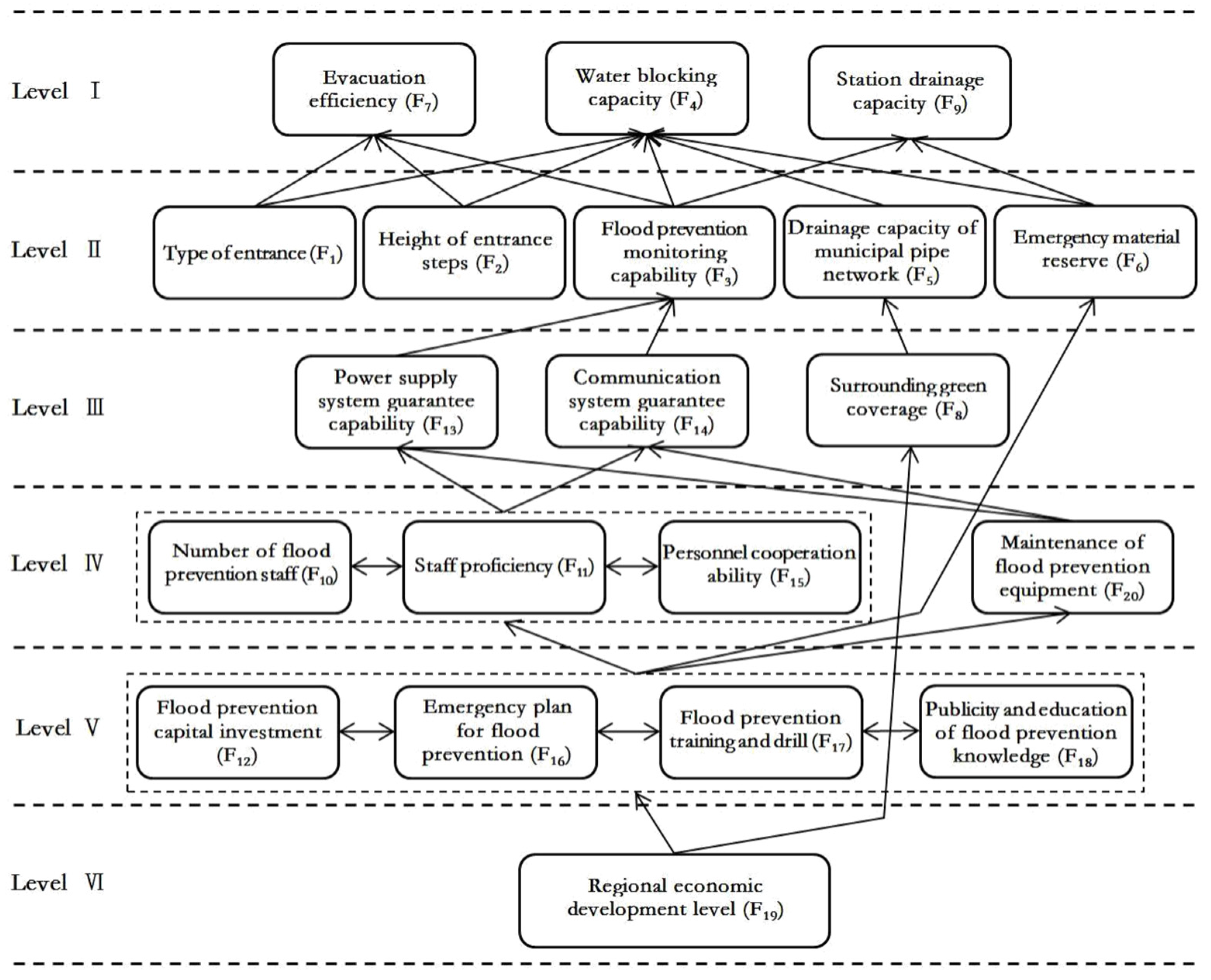
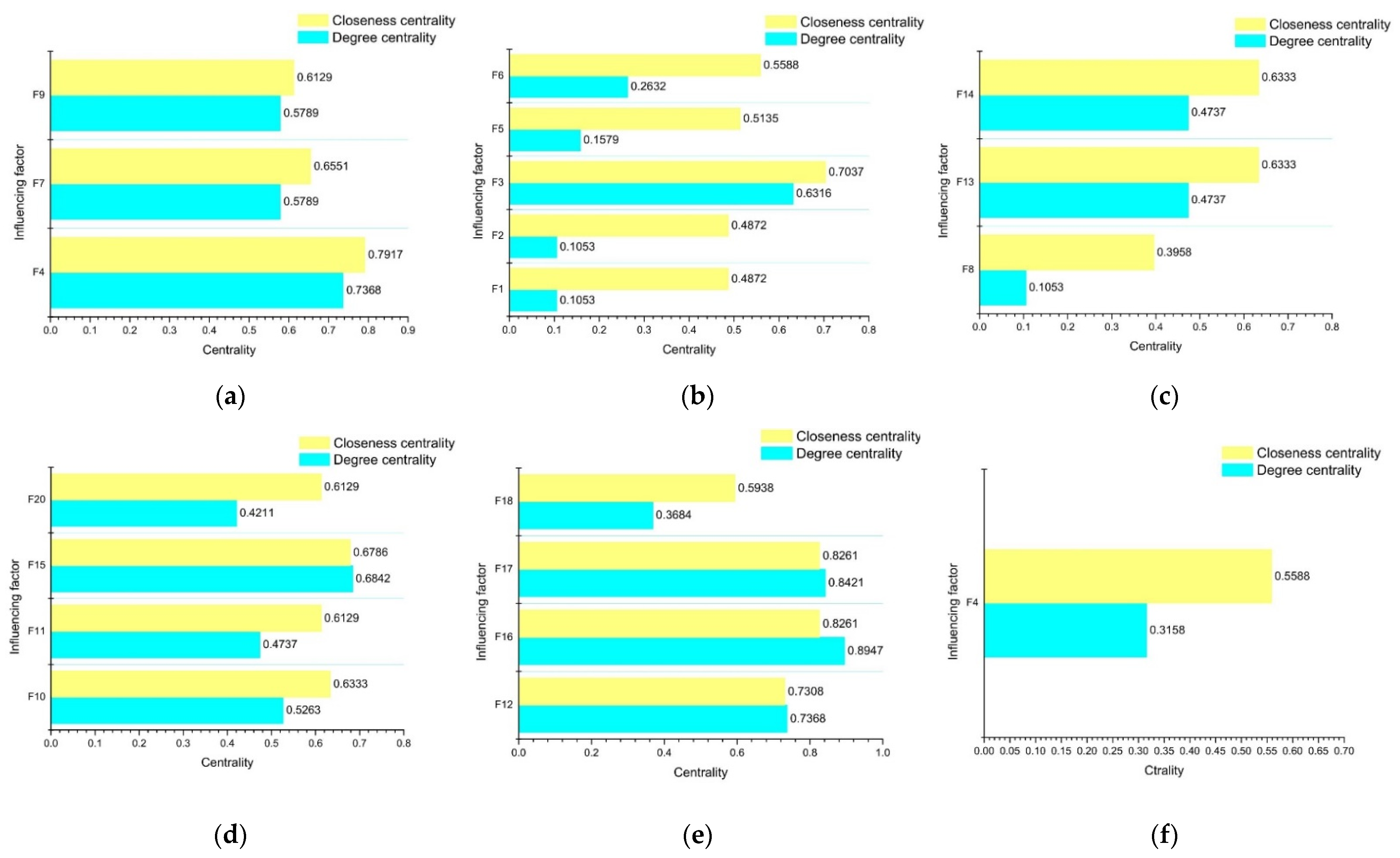
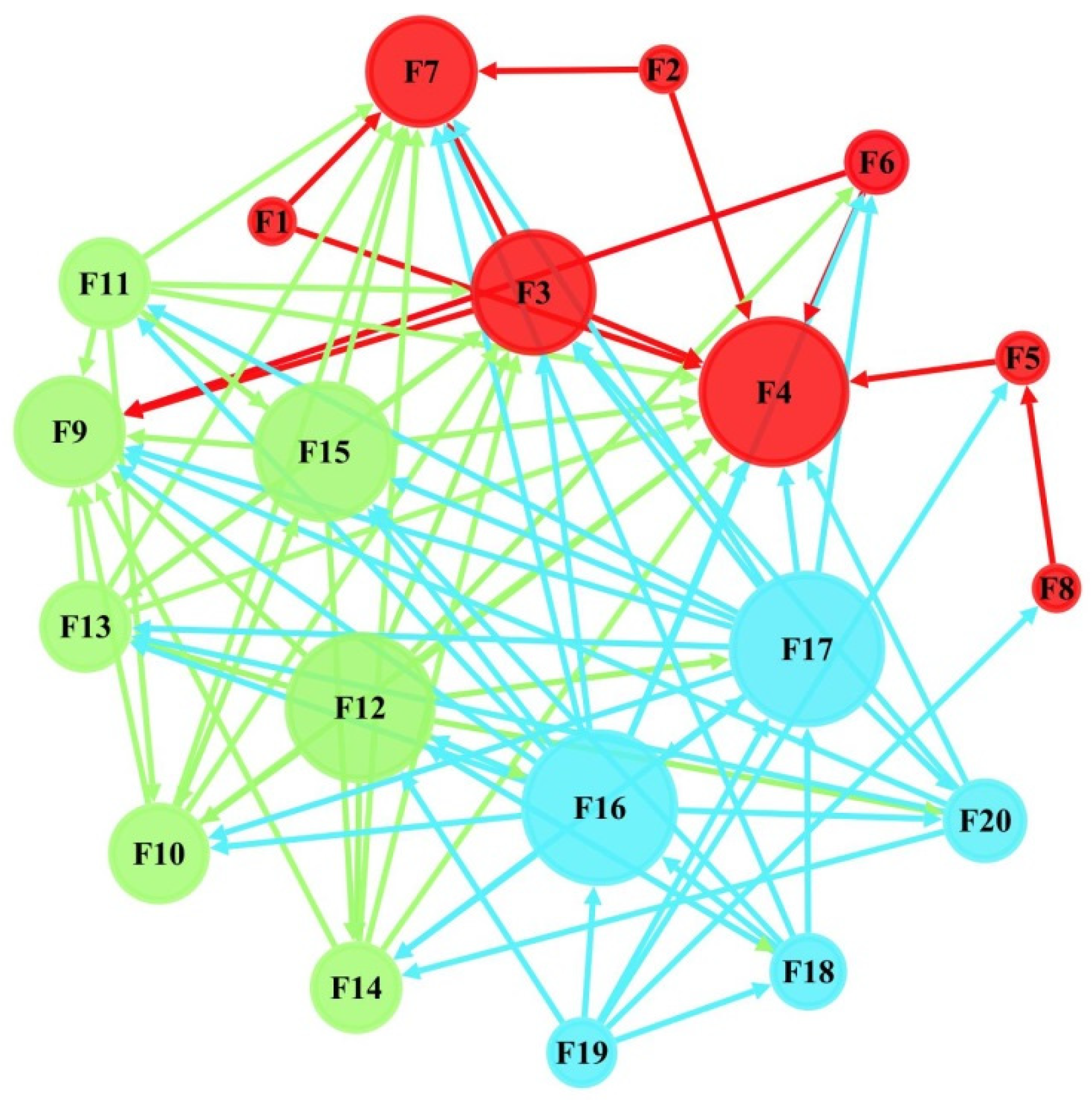
Improving the ability of the urban rail transit system to cope with rainstorm disasters is of great significance to ensure the safe travel of residents. In this study, a model of the hierarchical relationship of the influencing factors is constructed from the resilience perspective, in order to research the action mechanisms of the influencing factors of urban rail transit stations susceptible to rainstorm disaster. Firstly, the concept of resilience and the three attributes (resistance, recovery, and adaptability) are interpreted. Based on the relevant literature, 20 influencing factors are discerned from the 3 attributes of the resilience of urban rail transit stations. Subsequently, an interpretative structural model (ISM) is utilised to analyse the hierarchical relationship among the influencing factors. The key influencing factors of station resilience are screened out using social network analysis (SNA). Combined with ISM and SNA for analysis, the result shows that the key influencing factors are: “Flood prevention monitoring capability”; “Water blocking capacity”; “Flood prevention capital investment”; “Personnel cooperation ability”; “Emergency plan for flood prevention”; “Flood prevention training and drill”; “Publicity and education of flood prevention knowledge”; and “Regional economic development level”. Therefore, according to the critical influencing factors and the action path of the resilience influencing factors, station managers can carry out corresponding flood control work, providing a reference for enhancing the resilience of urban rail transit stations.
Keywords: rainstorm disaster; urban rail transit station; resilience; ISM; SNA rainstorm disaster; urban rail transit station; resilience; ISM; SNA